English日本語简体中文
Skip to main content
Dr. Peter C. Kang's Rhinoplasty Stories
PrologueBlogMy thoughtsNasal obstructionSurgical journalSurgical photos
About the surgeon

Rhinoplasty and revision rhinoplasty after autologous dermis graft

Revision rhinoplasty involving autologous dermis is easier to understand by first looking at where the dermis was initially placed. There are cases where autologous dermis previously placed in the nasal bridge was removed and reused to reinforce thinned nasal tip skin. These records show how the same tissue served different roles between its initial graft site and the current surgery.

This collection includes articles detailing the removal of gluteal dermis that had covered the bridge to the nasal tip and its subsequent reuse at the tip, as well as evaluations of the nasal bones alongside existing dermis. Dermal graft removal does not necessarily mean discarding the entire tissue or completely replacing it with another material. Review the extent of removal, the areas where it was reused, and the cartilage procedures performed concurrently.

View before-and-after cases ↓Comprehensive rhinoplasty guide

Searching for surgical cases matching your criteria.
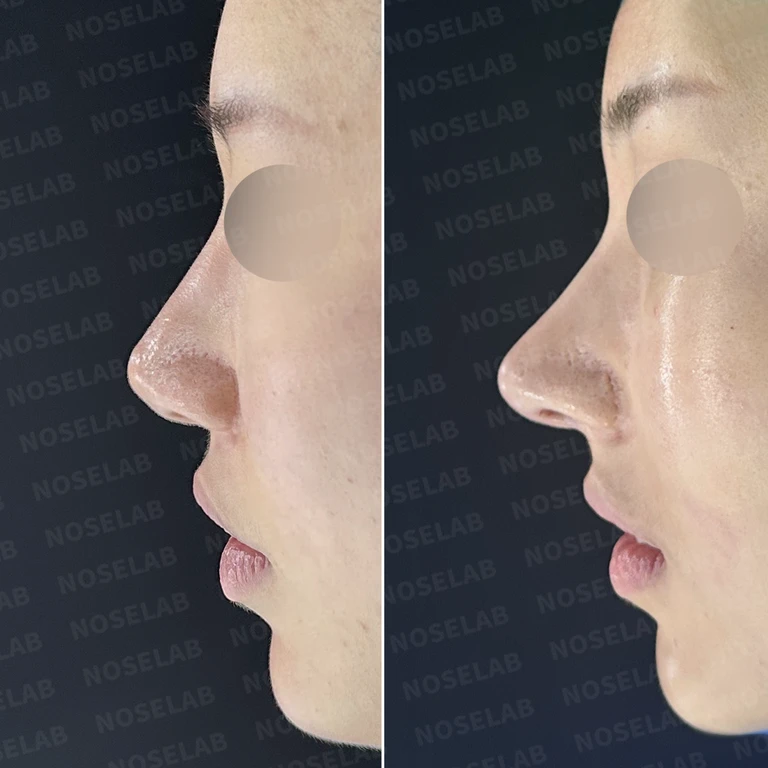
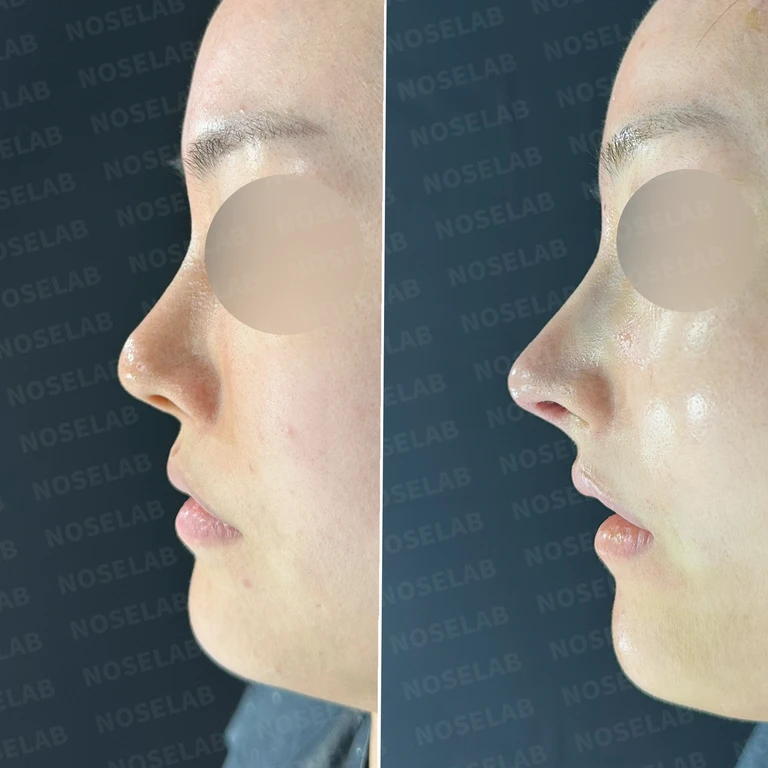
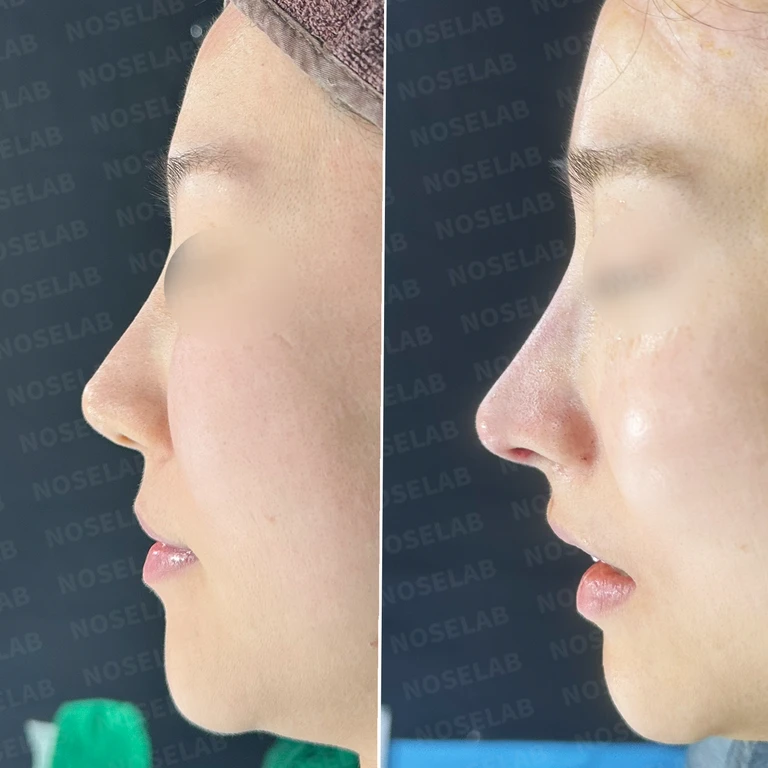
Why nasal tip skin thins after multiple surgeries: autologous dermis reinforcement and reconstruction methods — Before-and-after comparison
Before-and-after comparison

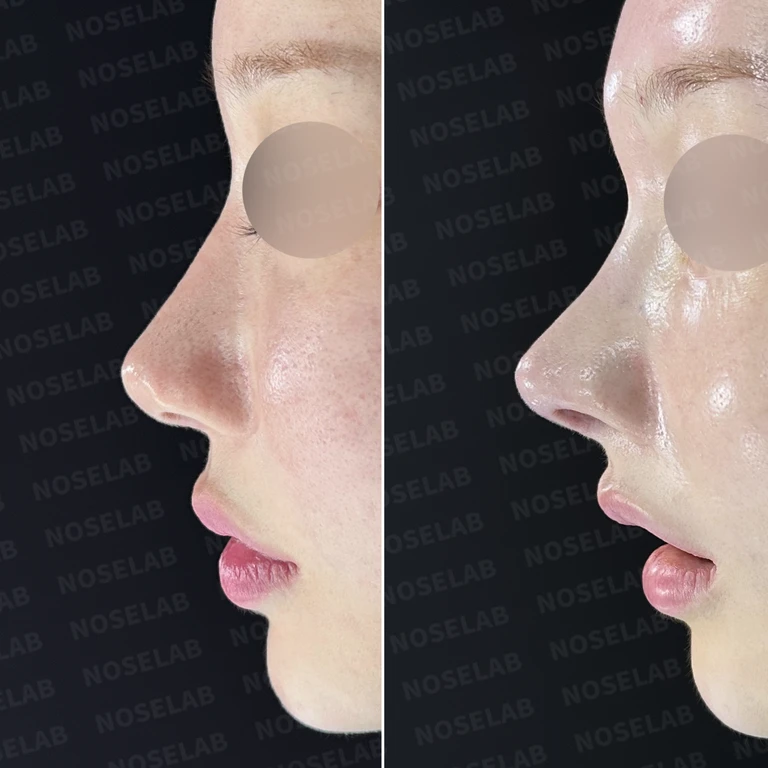
Why nasal tip skin thins after multiple surgeries: autologous dermis reinforcement and reconstruction methods

We removed previous foreign materials and implants, reconstructed the nasal tip using autologous rib cartilage, reinforced the thinned skin with autologous dermis, recarved a silicone implant, and performed fat grafting between the eyebrows.

Performed or used in this surgery
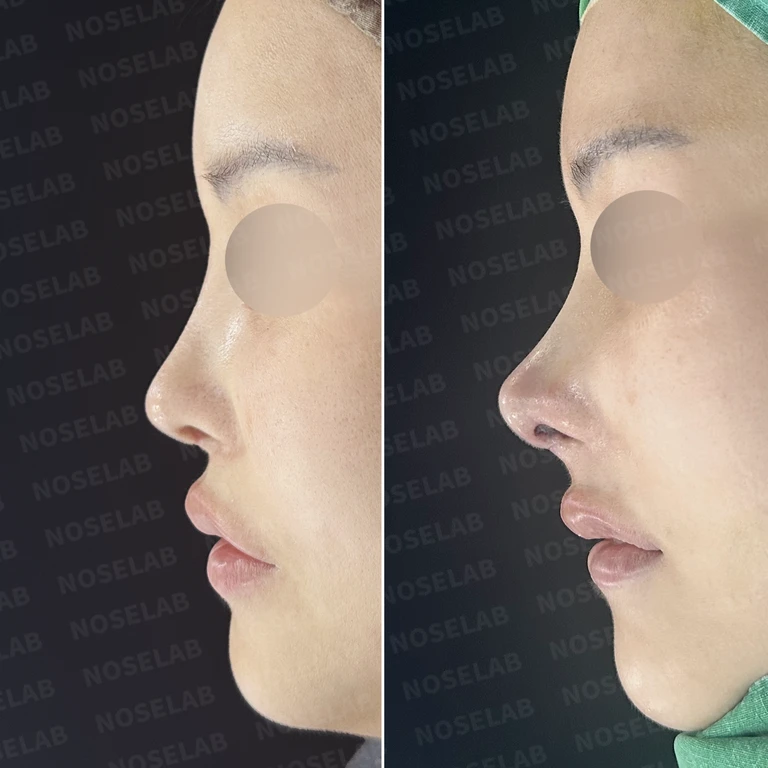
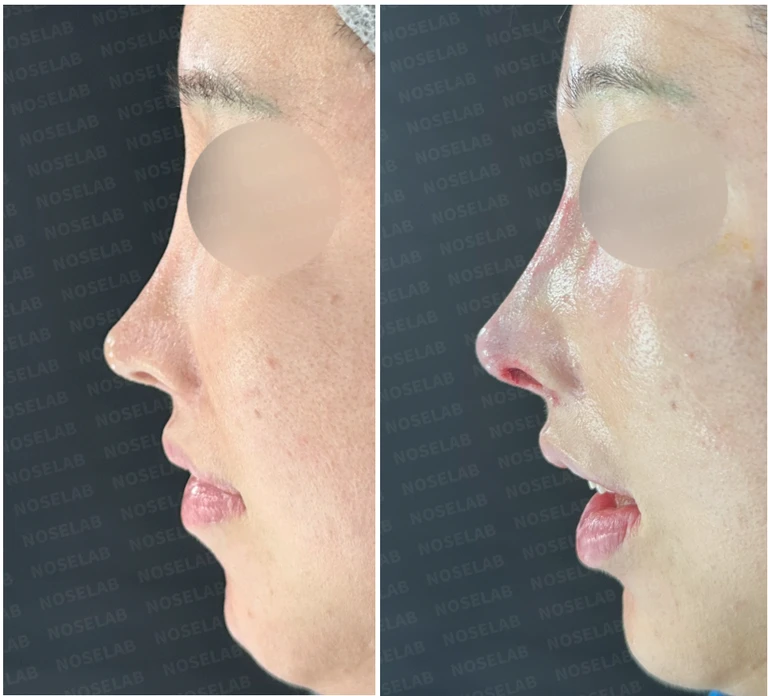
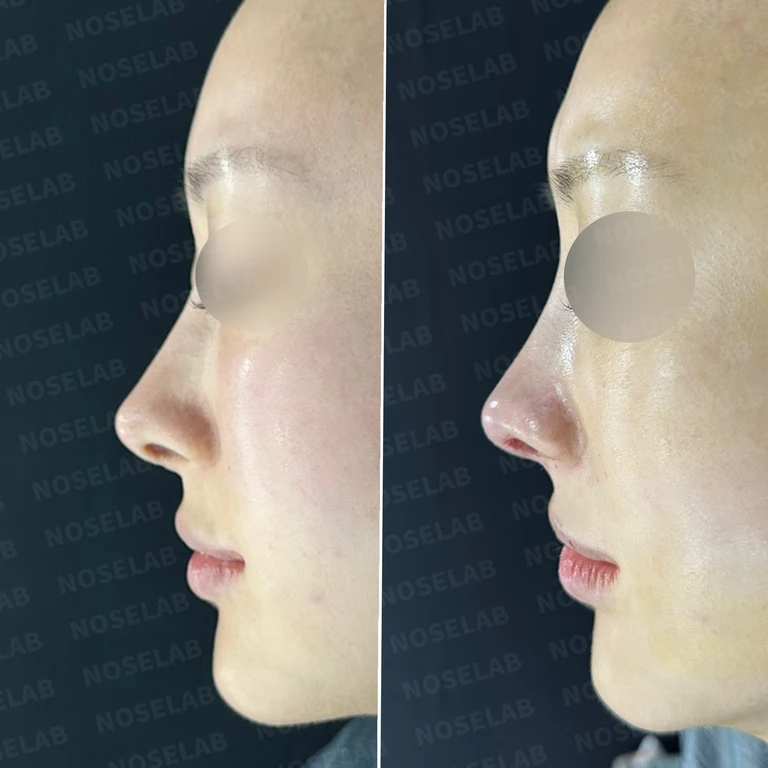
Why the nose flattens and widens after double-jaw surgery, and septal reconstruction — Before-and-after comparison
Before-and-after comparison

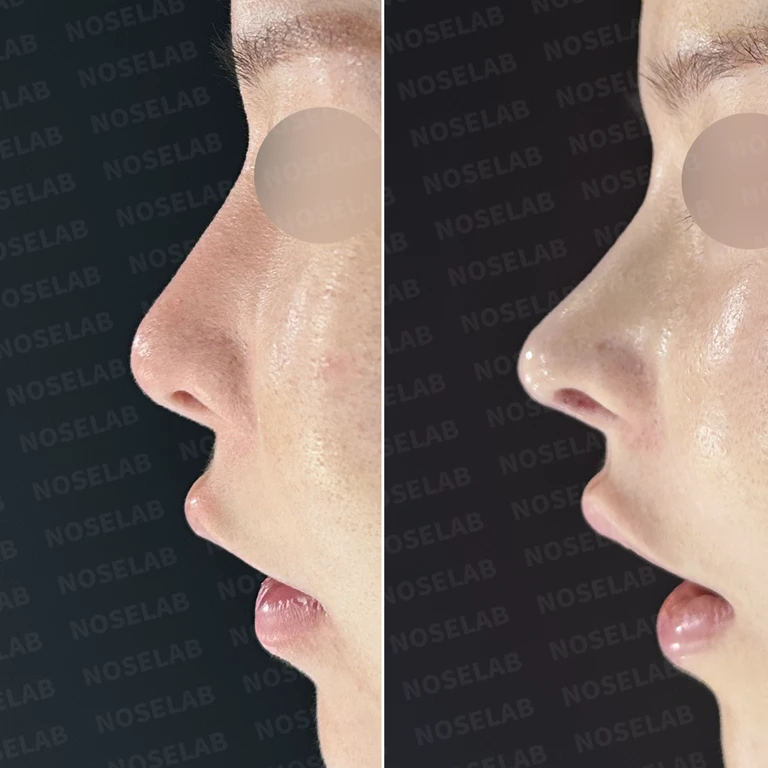
Why the nose flattens and widens after double-jaw surgery, and septal reconstruction

After double-jaw surgery weakened the septum, the nose became lower and wider; we reinforced it through septal reconstruction with autologous rib cartilage and completed a smooth profile using a customized silicone implant.

Previous surgeries and procedures

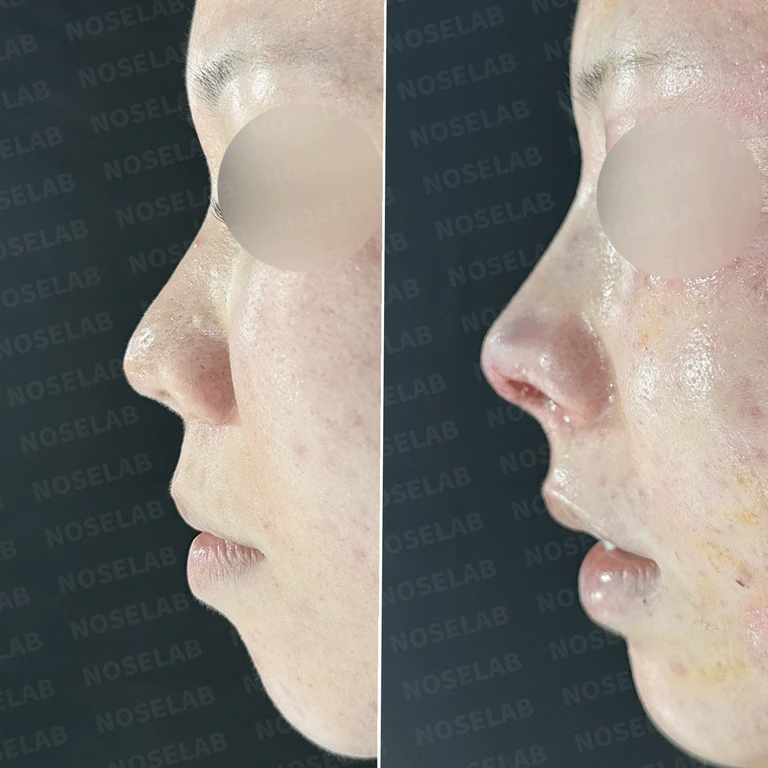
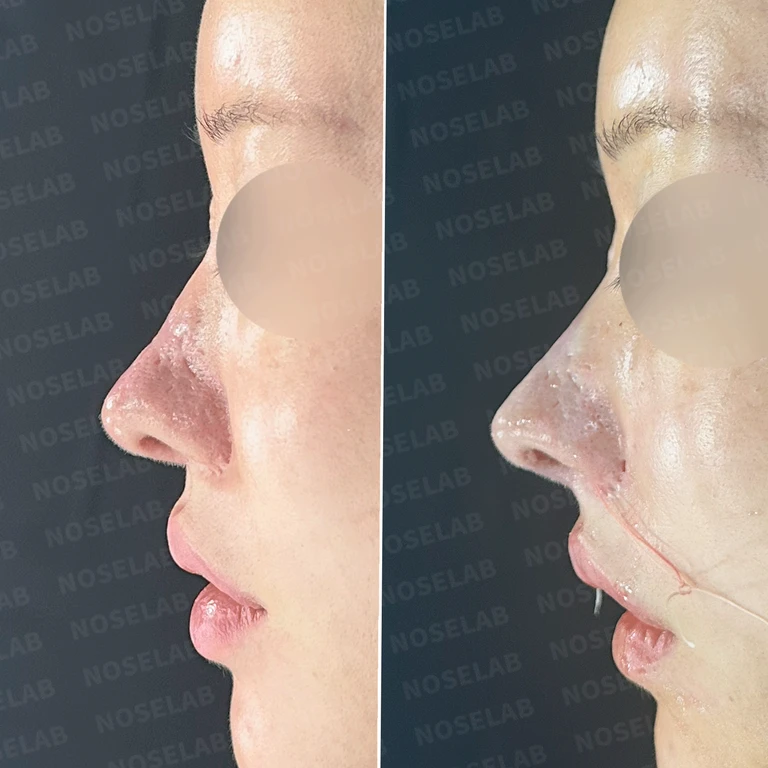
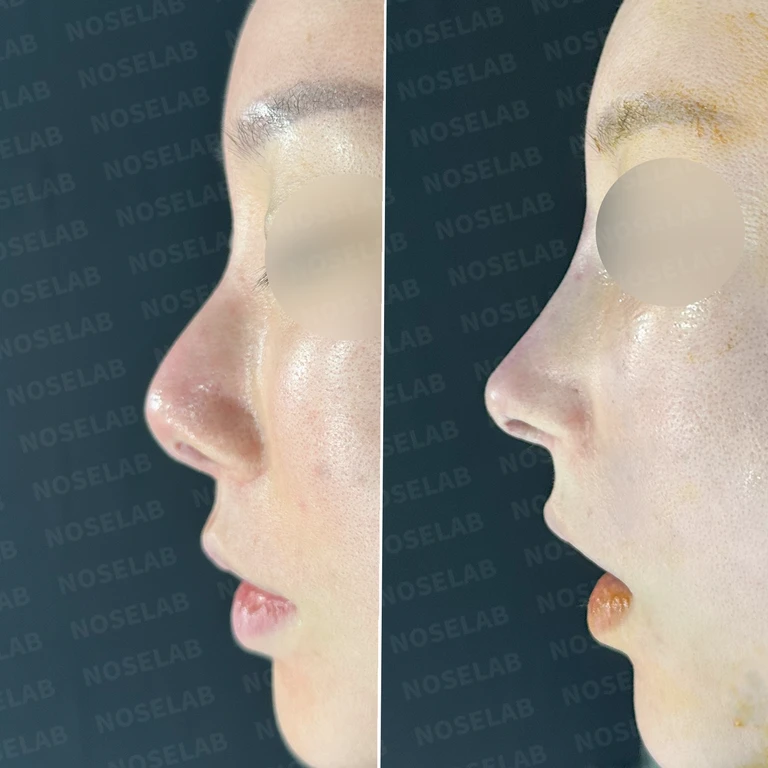
Why nasal tip cartilage shows through the skin and how dermis grafting reinforces it — Before-and-after comparison
Before-and-after comparison

Why nasal tip cartilage shows through the skin and how dermis grafting reinforces it

For a nose showing cartilage show-through through thinned skin, a widened nasal bridge, and nasal obstruction 7 years after surgery, autologous dermis reinforcement, autologous rib cartilage tip plasty, lateral osteotomy, and septoplasty were performed.

Performed or used in this surgery

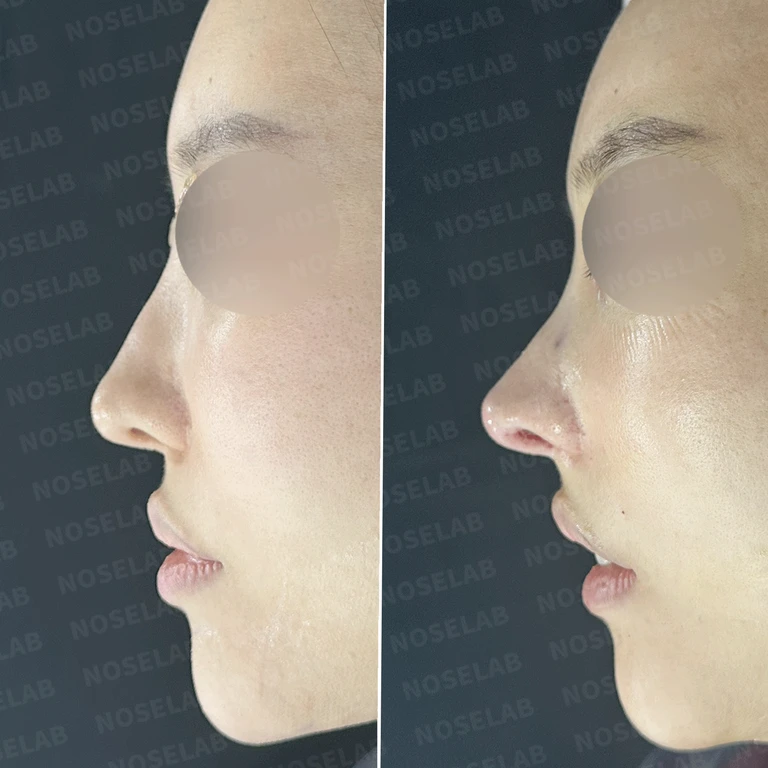
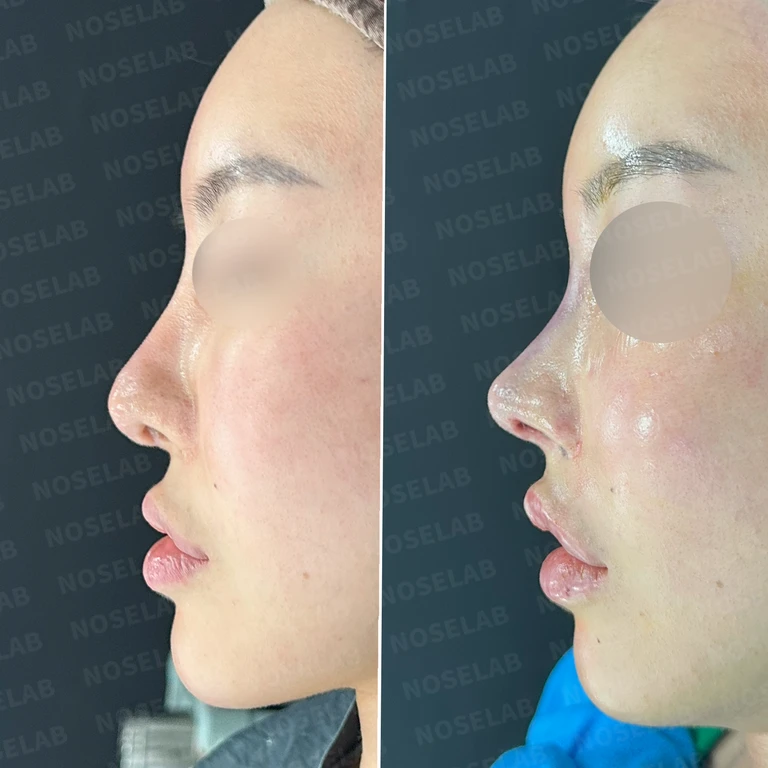
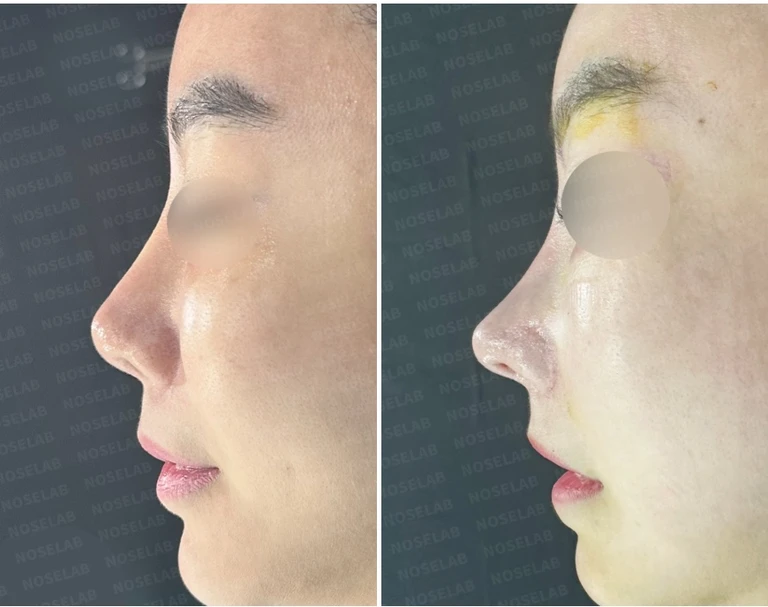
When tip skin is lacking after alar and philtrum reduction, how to determine the elevation limit — Before-and-after comparison
Before-and-after comparison

When tip skin is lacking after alar and philtrum reduction, how to determine the elevation limit

In a patient with limited skin elasticity and mucosal adhesion following multiple nasal surgeries along with alar and philtrum reductions, we performed septal reconstruction with autologous rib cartilage, nasolabial angle correction, columellar extension, and nasal synechia adhesiolysis.

Previous surgeries and procedures

Why an autologous dermal graft absorbs, leading to a widened bridge and upturned nose, and how to correct it — Before-and-after comparison
Before-and-after comparison

Why an autologous dermal graft absorbs, leading to a widened bridge and upturned nose, and how to correct it

A case of an upturned nose and widened bridge caused by dermal graft absorption. After removing nasal filler placed 2 years ago, a straight bridge line was established through septal extension, alar rim lowering, and correction of the depressed dorsum.

Previous surgeries and procedures

Why an L-shaped silicone implant can nearly perforate the columellar mucosa: removal and reconstruction with autologous rib cartilage — Before-and-after comparison
Before-and-after comparison

Why an L-shaped silicone implant can nearly perforate the columellar mucosa: removal and reconstruction with autologous rib cartilage

We removed an L-shaped silicone implant that was at imminent risk of perforating the left columellar mucosa, then reconstructed the contracted nose using autologous rib cartilage for septal extension and autologous dermis for tip reinforcement.

Performed or used in this surgery

Why the nasal tip turns upward and nostril show increases years after rhinoplasty: Medpor removal and autologous dermis reconstruction — Before-and-after comparison
Before-and-after comparison

Why the nasal tip turns upward and nostril show increases years after rhinoplasty: Medpor removal and autologous dermis reconstruction

To resolve an upturned nose and nostril asymmetry resulting from surgery performed 13 years ago, adhered Medpor was carefully dissected and removed, and the septum was reconstructed using autologous dermis.

Performed or used in this surgery
Why the glabella widens and the nasal tip upturns after repeated filler and thread treatments — Before-and-after comparison
Before-and-after comparison

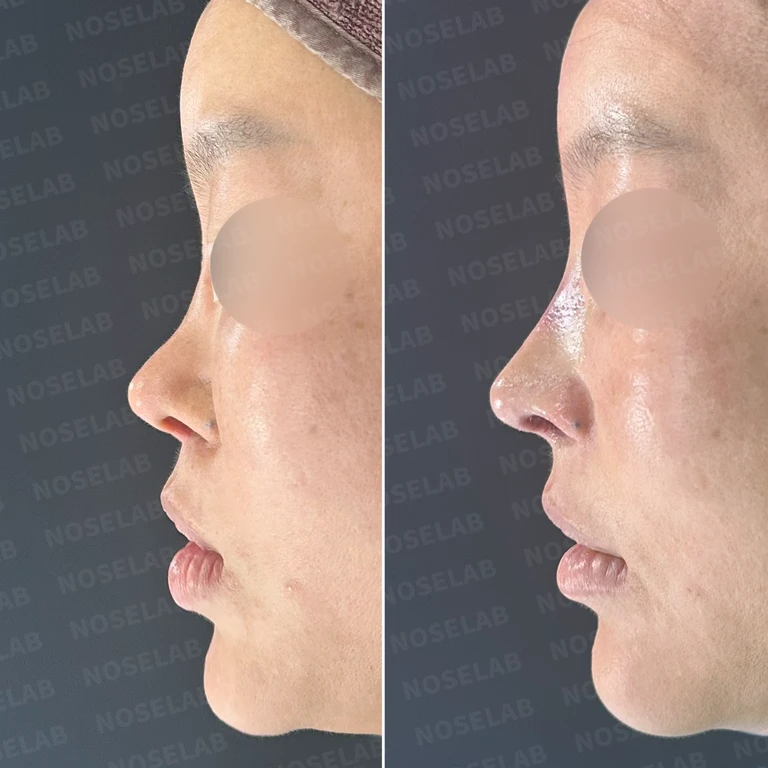
Why the glabella widens and the nasal tip upturns after repeated filler and thread treatments

Foreign materials that had widened the glabella along with the previous implant were removed, and the upturned nose was corrected through partial septal reconstruction using autologous rib cartilage and nasolabial angle adjustment.

Previous surgeries and procedures

Why a mass obstructing the nostril develops, and how to perform resection and reconstruction — Before-and-after comparison
Before-and-after comparison

Why a mass obstructing the nostril develops, and how to perform resection and reconstruction

This is a case where a chronic inflammatory mass that developed after repeated surgeries and obstructed the nostril was precisely resected, restoring breathing function and stabilizing the nasal tip structure.

Previous surgeries and procedures

Septal perforation and nasal tip cartilage show-through after repeated rhinoplasties: how reconstruction is performed — Before-and-after comparison
Before-and-after comparison

Septal perforation and nasal tip cartilage show-through after repeated rhinoplasties: how reconstruction is performed

A case where autologous rib cartilage was used for full septal reconstruction alongside dermis grafting to address repeated surgical history, septal perforation, and thinned nasal tip skin.

Previous surgeries and procedures

Causes of nasal tip show-through and correction methods to lower the tip defining point — Before-and-after comparison
Before-and-after comparison

Causes of nasal tip show-through and correction methods to lower the tip defining point

To correct persistent nasal tip show-through and an upturned nose that remained even after an ear dermis graft, past filler residue was completely removed, the tip defining point was naturally lowered, and nasal tip plasty using autologous rib cartilage was performed.

Previous surgeries and procedures

Why donor dermis absorbs after multiple revision surgeries and how to reconstruct the septum — Before-and-after comparison
Before-and-after comparison

Why donor dermis absorbs after multiple revision surgeries and how to reconstruct the septum

For a patient who experienced partial absorption of donor dermis on the nasal bridge and septal damage after multiple revision surgeries, the donor dermis was removed, the septum was reconstructed with autologous rib cartilage, and the skin was reinforced with retroauricular dermis.

Previous surgeries and procedures · Performed or used in this surgery

Changes following nasal bridge skin necrosis after rhinoplasty and how reconstruction is performed — Before-and-after comparison
Before-and-after comparison

Changes following nasal bridge skin necrosis after rhinoplasty and how reconstruction is performed

In a case with signs of nasal bridge skin necrosis and alar asymmetry after multiple rhinoplasties, the nasal bridge and nostril shape were reconstructed using autologous rib cartilage grafting, alar repositioning, and growth factor application.

Previous surgeries and procedures

Why contracture and a crooked nose occur after repeated revision rhinoplasty, and how they are corrected — Before-and-after comparison
Before-and-after comparison

Why contracture and a crooked nose occur after repeated revision rhinoplasty, and how they are corrected

A case of improving an upturned tip, crooked nose, and nostril asymmetry that developed after four prior nasal surgeries and filler injections, using foreign material removal, septal extension with autologous rib cartilage, and silicone implant supplementation.

Previous surgeries and procedures

Why nasal bridge and tip show-through happens after old silicone rhinoplasty: dermal reinforcement and rib cartilage reconstruction — Before-and-after comparison
Before-and-after comparison

Why nasal bridge and tip show-through happens after old silicone rhinoplasty: dermal reinforcement and rib cartilage reconstruction

To resolve show-through of an L-shaped silicone implant and cartilage beneath thinned skin, we removed the previous silicone implant, reinforced the skin with dermis, adjusted the tip height, reconstructed the nasal tip with autologous rib cartilage, and replaced the implant with a new one.

Performed or used in this surgery
Why repeat rhinoplasty thins the nasal tip skin causing cartilage show-through, and how autologous dermis reinforcement helps — Before-and-after comparison
Before-and-after comparison

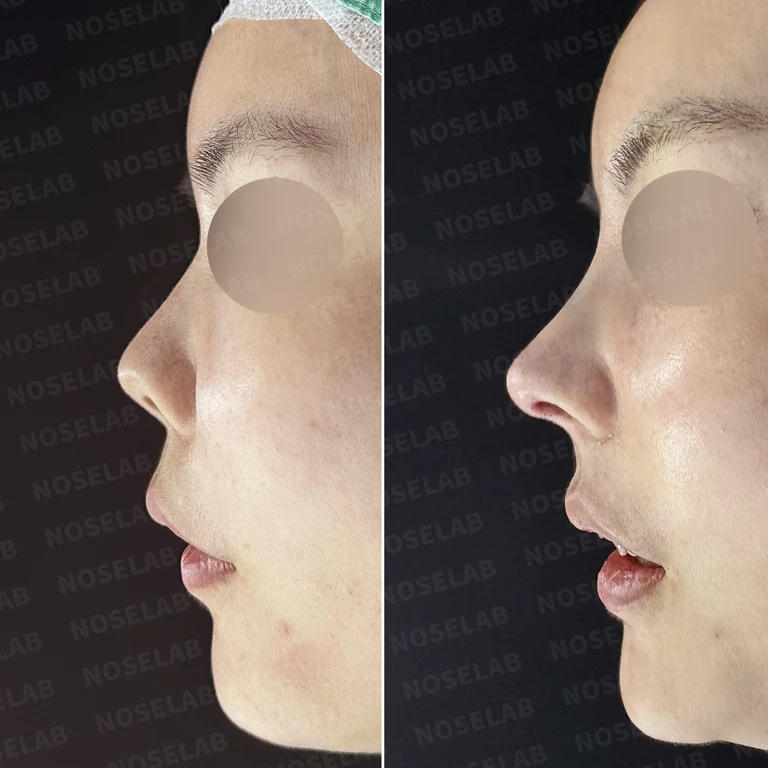
Why repeat rhinoplasty thins the nasal tip skin causing cartilage show-through, and how autologous dermis reinforcement helps

To resolve thinned nasal tip skin and cartilage show-through caused by repeated surgeries, retroauricular autologous dermis grafting, lateral osteotomy, and columellar elevation were performed.

Performed or used in this surgery
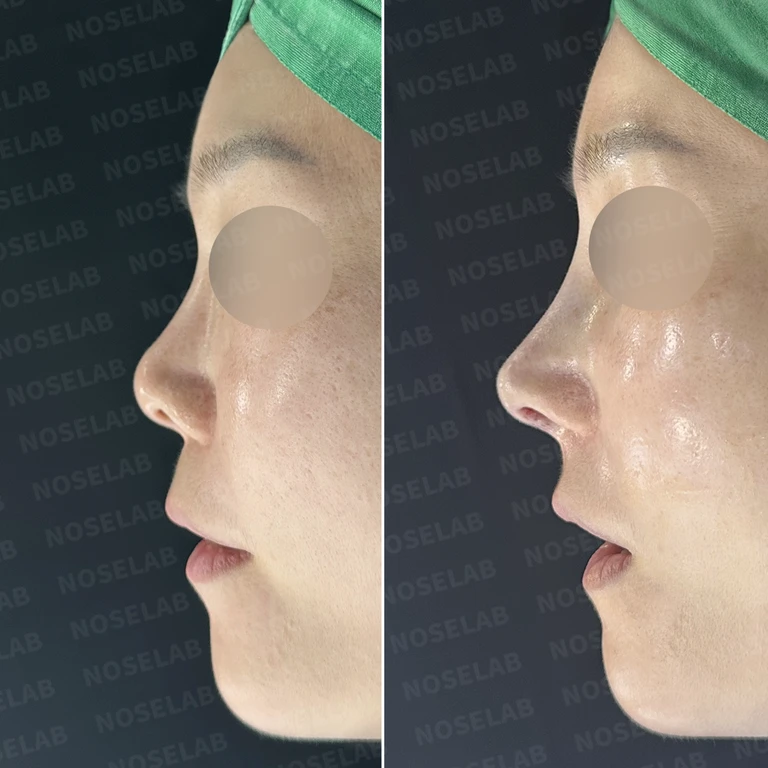
Why contracture and nasal obstruction develop together after multiple rhinoplasties, and how reconstruction is performed — Before-and-after comparison
Before-and-after comparison

Why contracture and nasal obstruction develop together after multiple rhinoplasties, and how reconstruction is performed

A case involving a patient who experienced septal cartilage damage, an upturned nasal tip, and severe nasal obstruction after 8 surgeries over 15 years, where the septum was reconstructed using autologous rib cartilage and reinforced with dermis.

Previous surgeries and procedures

Why grafted dermis repeatedly absorbs, and how to reconstruct the nose — Before-and-after comparison
Before-and-after comparison

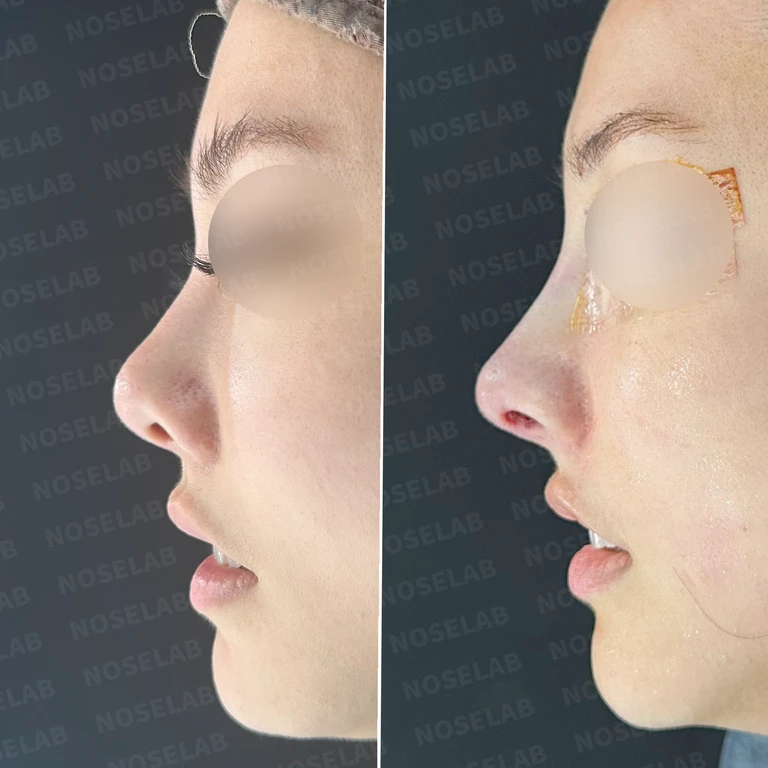
Why grafted dermis repeatedly absorbs, and how to reconstruct the nose

A case in which nasal deformity and septal damage caused by repeated dermal grafting and absorption were corrected through structural reconstruction with autologous rib cartilage and recycling of existing dermis.

Previous surgeries and procedures · Performed or used in this surgery
No search results found

Please try searching with different keywords.

Scroll to keep reading

1 / 2Next case

Common questions before reading the cases

Can previously grafted autologous dermis be reused?

Our surgical records include cases where autologous dermis removed from the existing nasal bridge was reused to reinforce thinned nasal tip skin. Some cases specifically detail reusing gluteal dermis at the nasal tip. Because these are operative notes based on inspecting the condition of the specific tissue, they should not be interpreted as a general rule that all autologous dermis can be reused.

In autologous dermis removal cases, should nasal bone or nasal tip reconstruction also be considered?

One article explains a case where, after removing the dermis, a significant defect in the nasal roof was identified, and the gap between the nasal bones was filled with autologous rib cartilage. This was a case where handling of the soft tissue coverage and internal structural work were performed together. Comparing only whether dermis was used may overlook the overall scope of such revisions, so reviewing the entire surgical course is recommended.

Related topics to explore

Skin and soft tissue reinforcementSynthetic and allogeneic dermisUnspecified dermal reinforcement materialsThin nasal skin

Surgical records referenced in this guide

  • Is it possible to correct a philtrum reduction and remove autologous dermis?
  • Revision rhinoplasty methods for alar and nostril asymmetry
  • How to plan nostril lowering (alar rim grafting) in an upturned nose
Original article

Read more records

Planning a visit to Seoul?Prepare your consultation with the NOSELAB team.

International patient guideWhatsApp ↗
Dr. Peter C. Kang's Rhinoplasty Stories
Rhinoplasty guideCases by topicDr. Peter C. KangNaver Blog ↗
View original photo
Enlarged photo
WhatsAppChat with NOSELAB↗