Hello, I am Dr. Peter C. Kang.
Today, I would like to share a case of a patient who suffered severe complications from an L-shaped silicone implant. The patient visited our clinic complaining that the nose was gradually becoming shorter and upturned. Upon examination, the end of the implant was in a critical state, on the verge of puncturing through the left columellar mucosa.
🔍 Surgical history
The patient had previously undergone rhinoplasty with an L-shaped silicone implant at another clinic. Over time, however, the following issues developed:
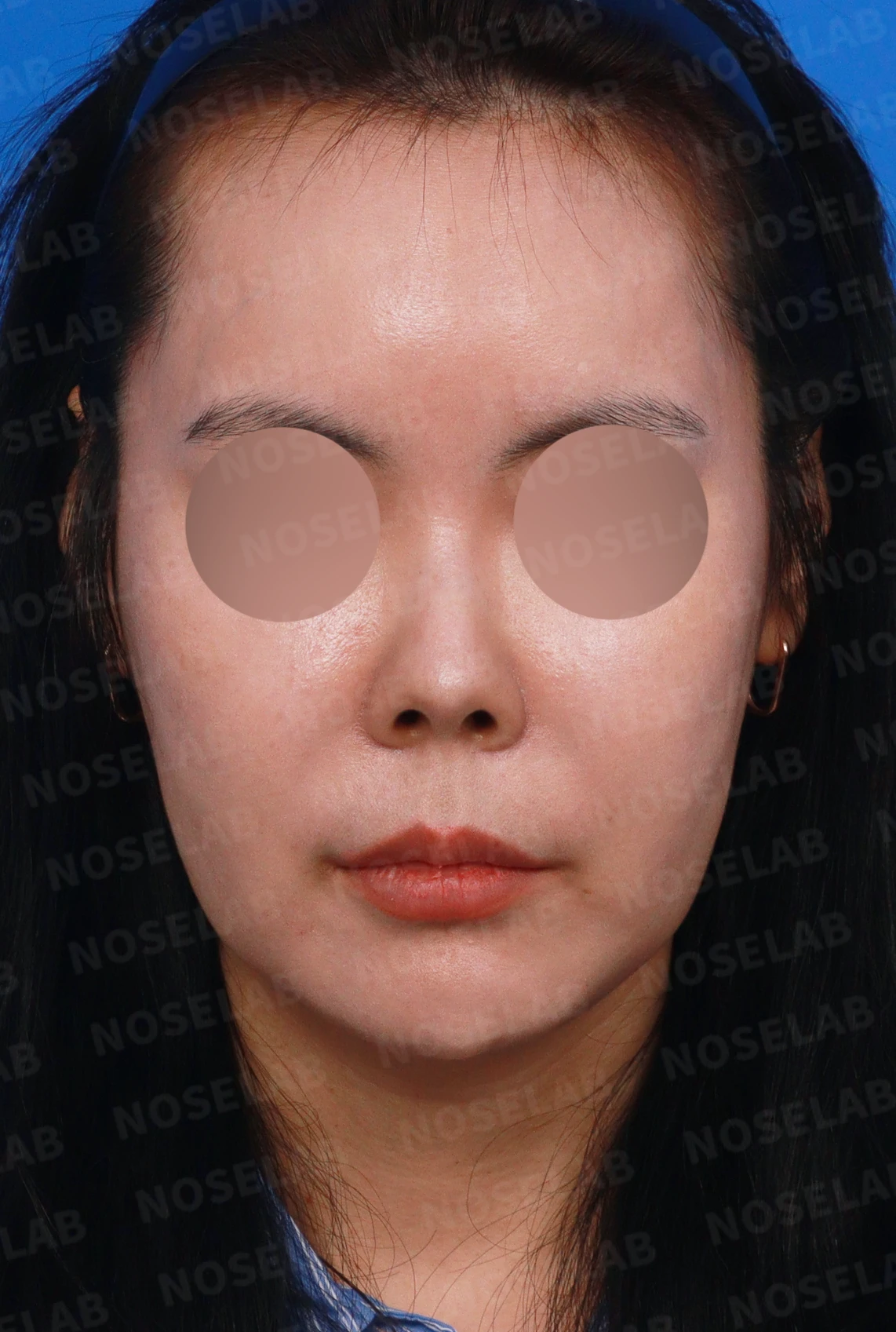
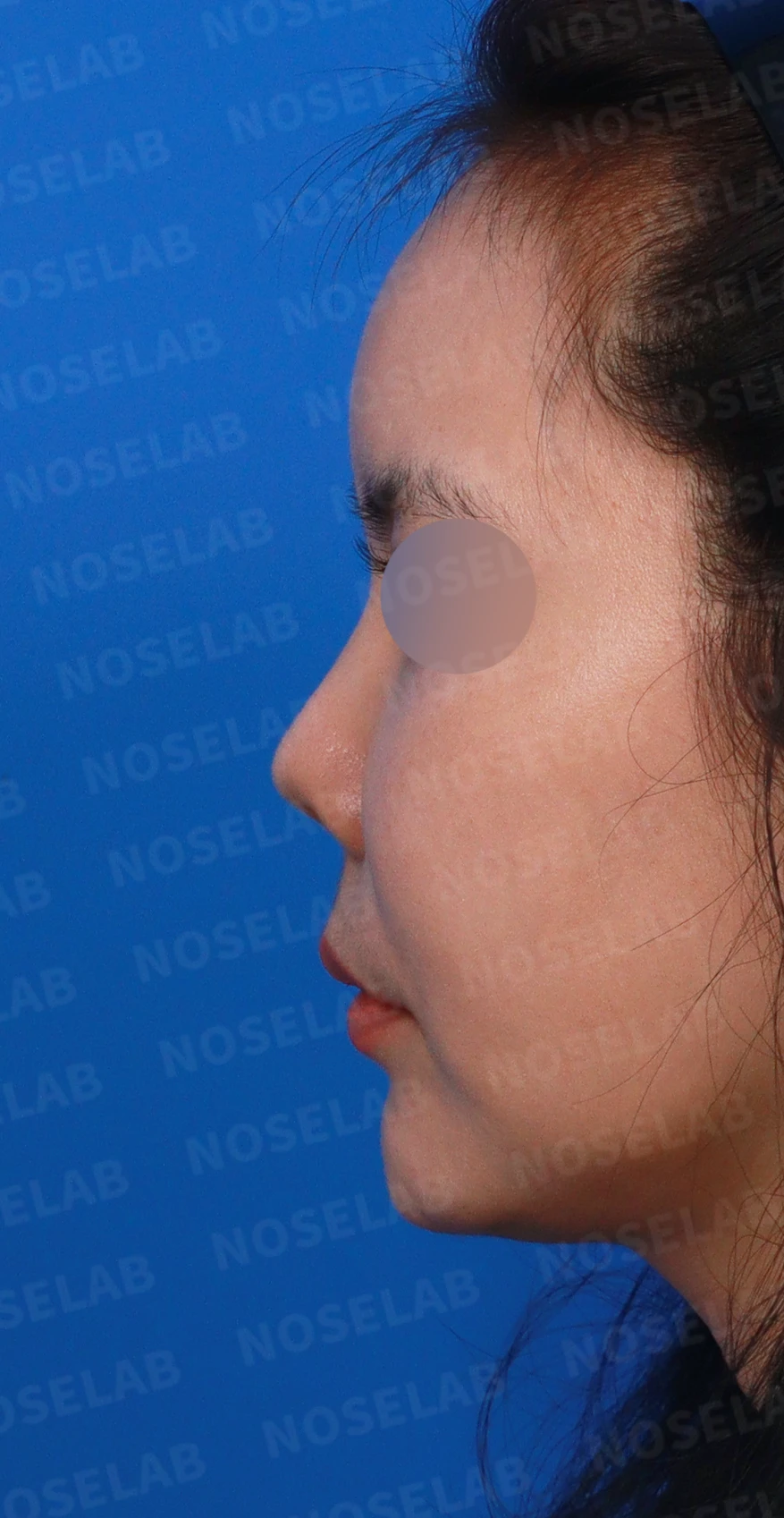
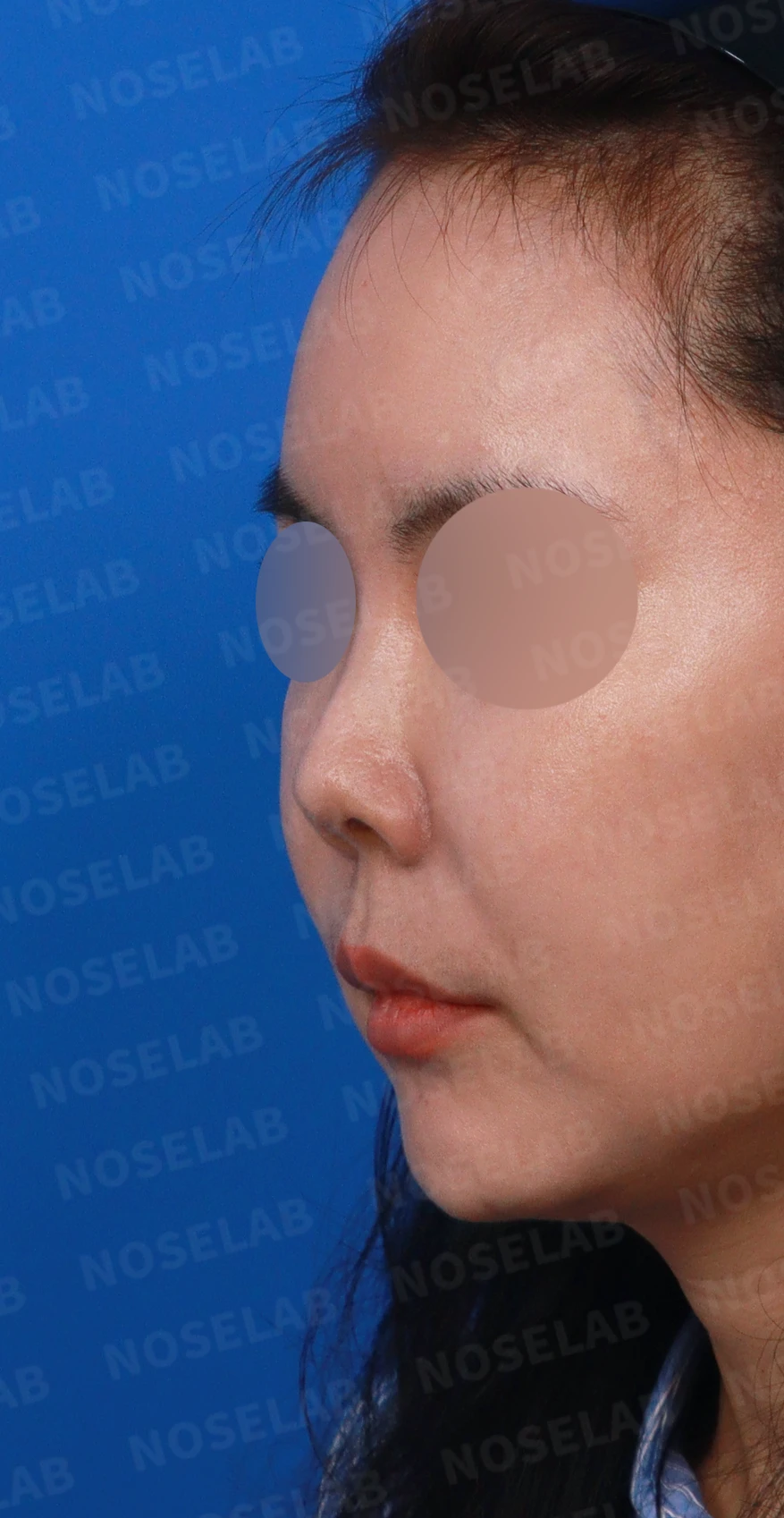
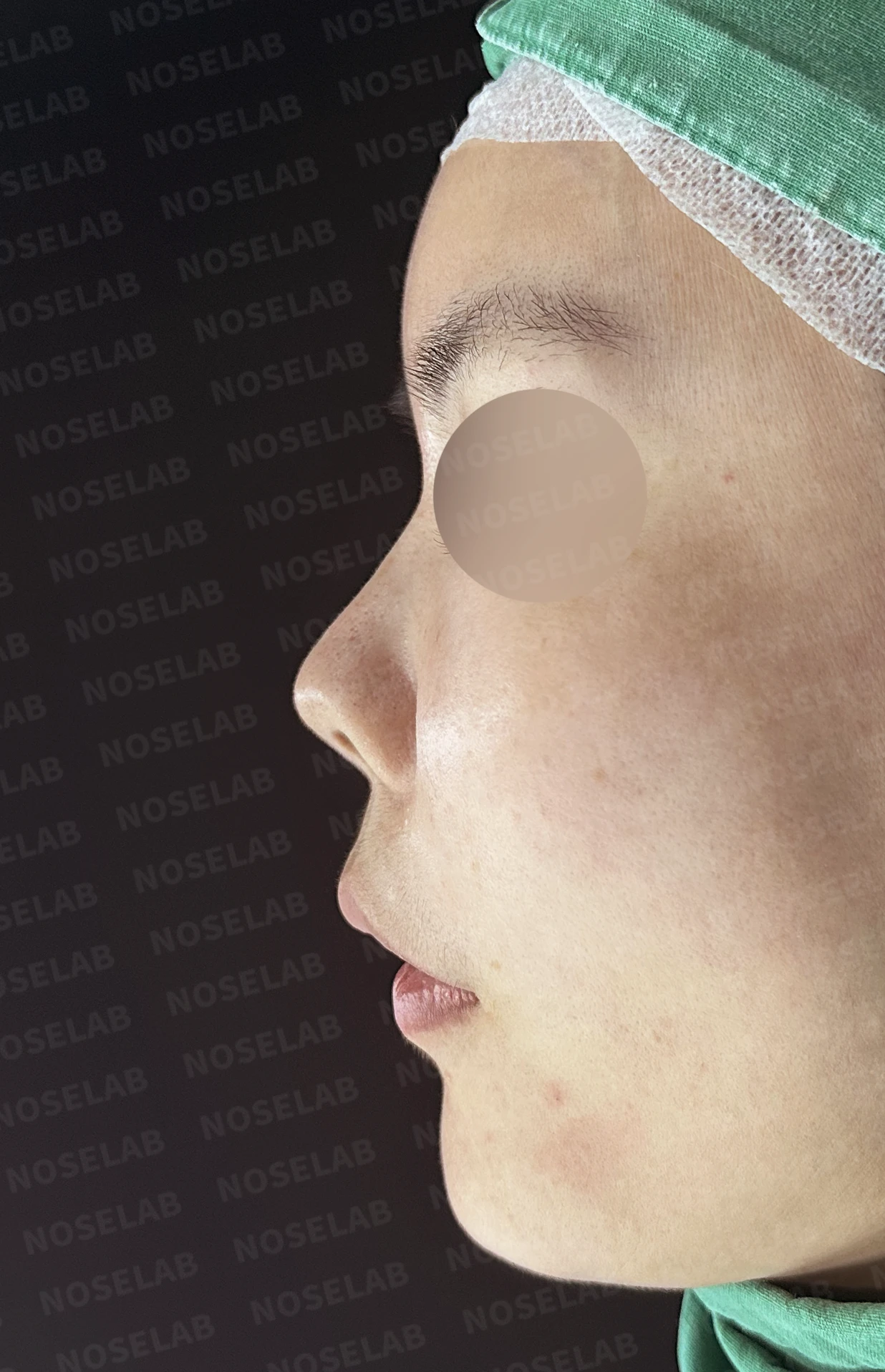
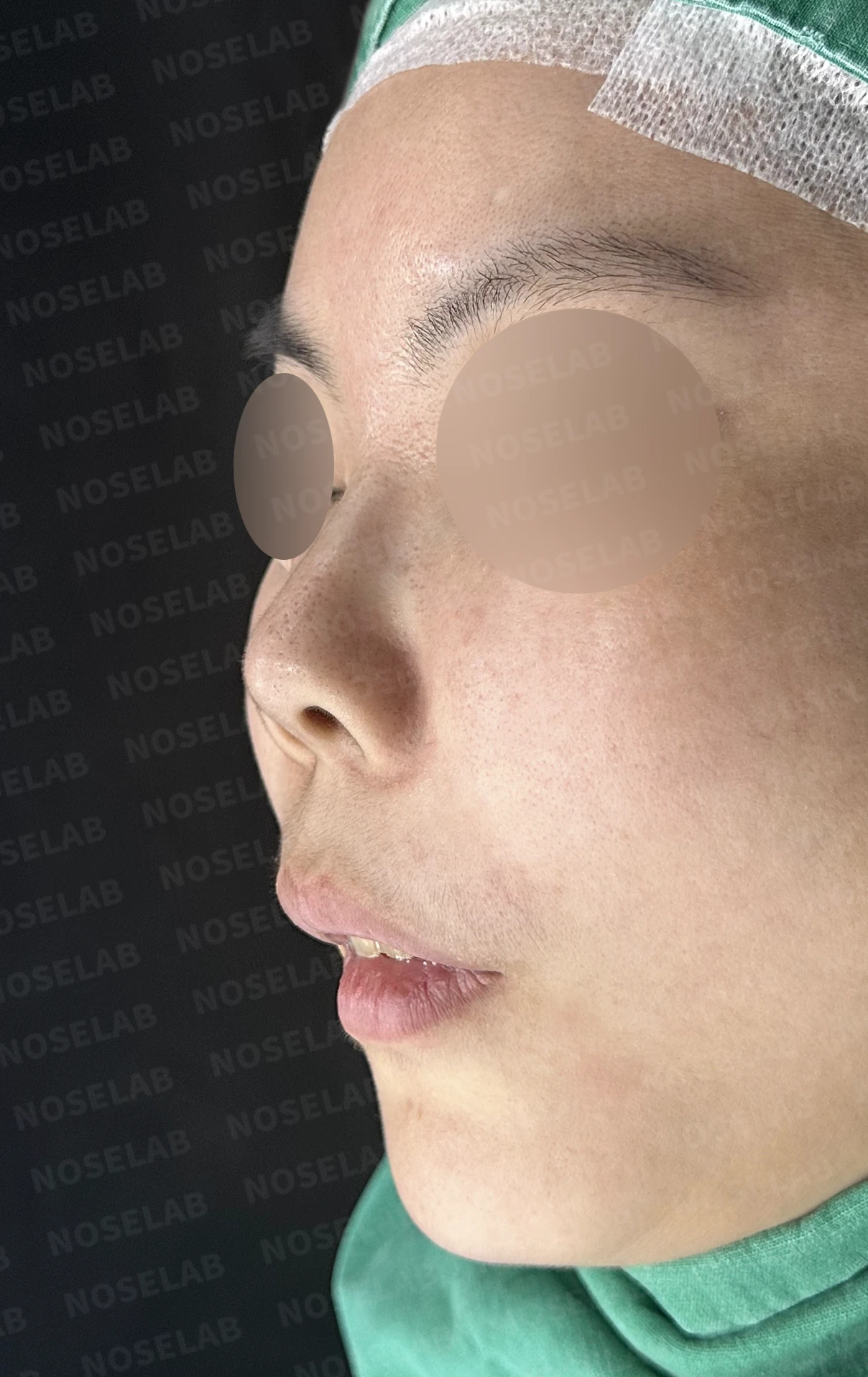
Front, left profile, and oblique views during design consultation
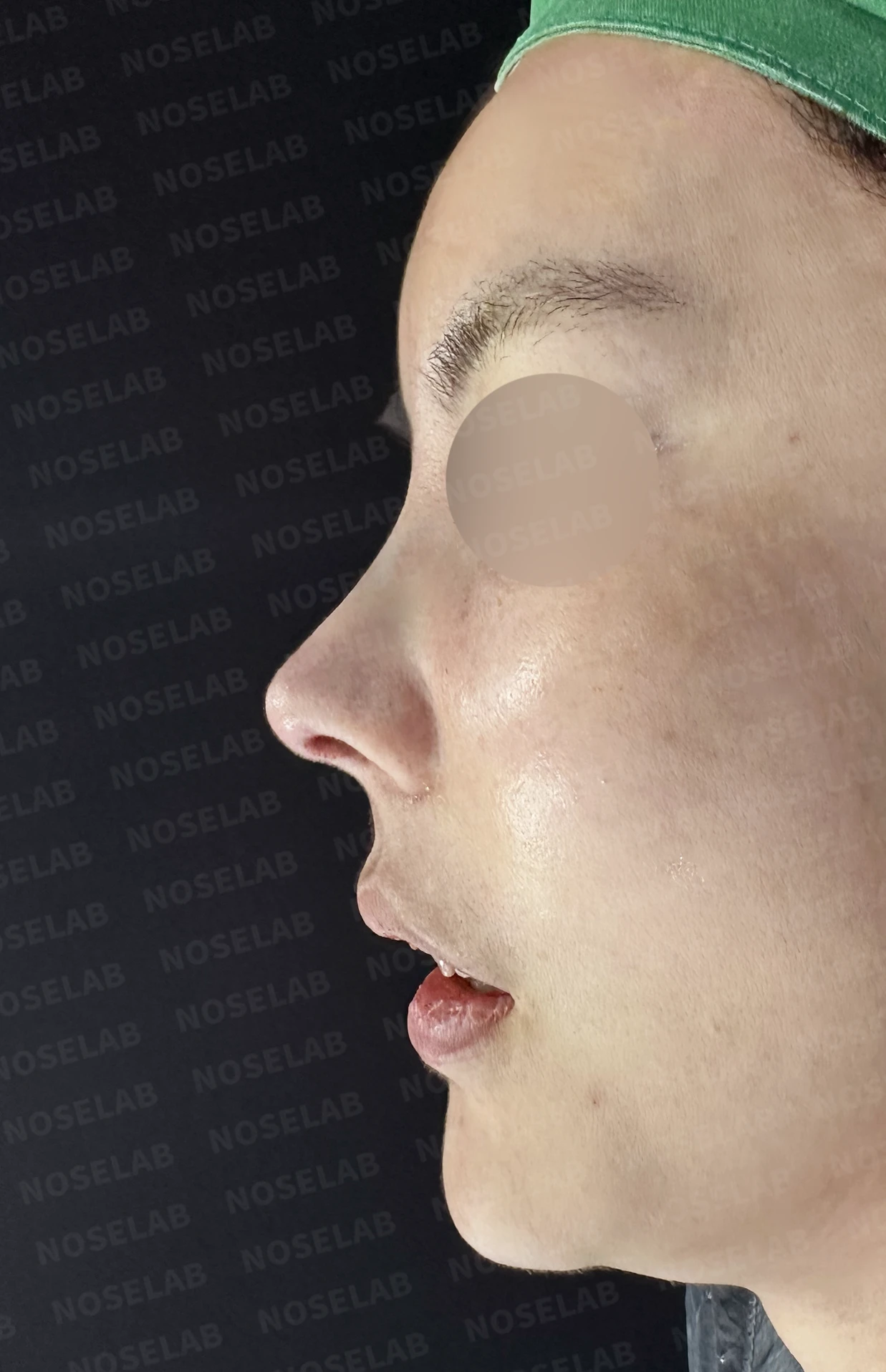
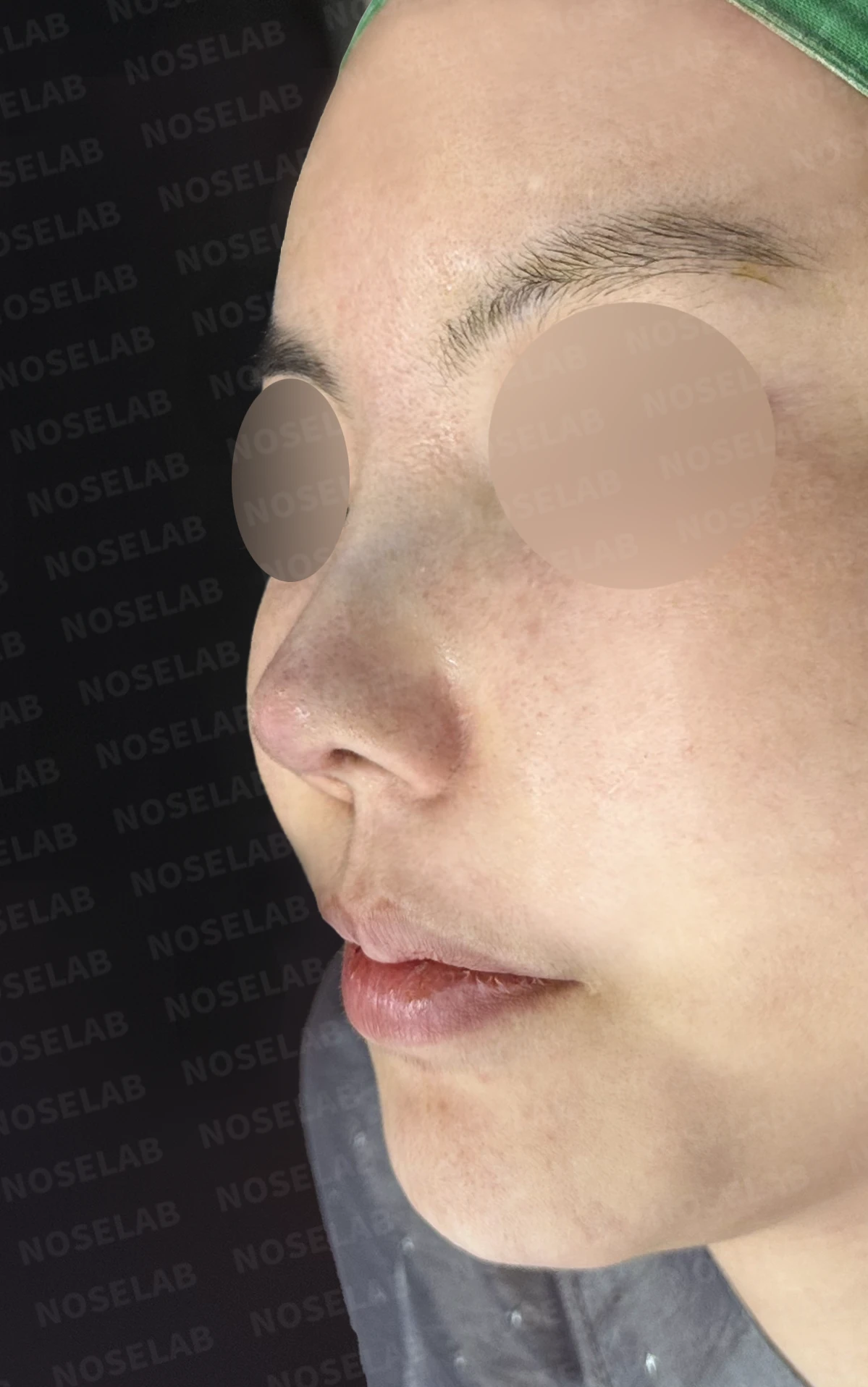
The nose gradually became shorter and upturned
The implant exerted pressure on the tissues, progressing nearly to mucosal perforation
The skin of the nasal tip became thin and weakened
The natural appearance was lost, resulting in an unnatural look
Because an L-shaped silicone implant extends a rigid structure all the way into the nasal tip, it exerts continuous pressure on the tip tissues over time, which can lead to complications like these.
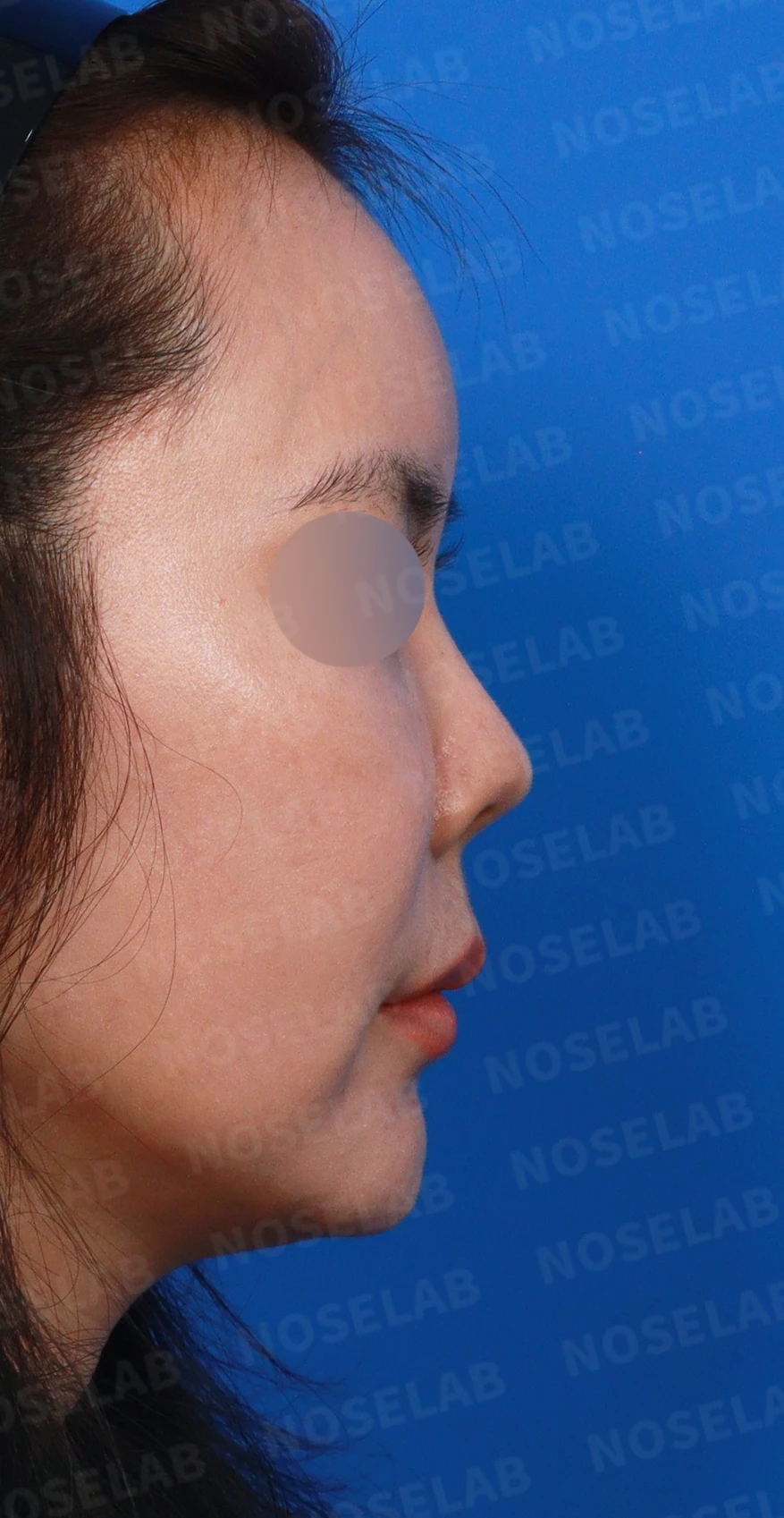
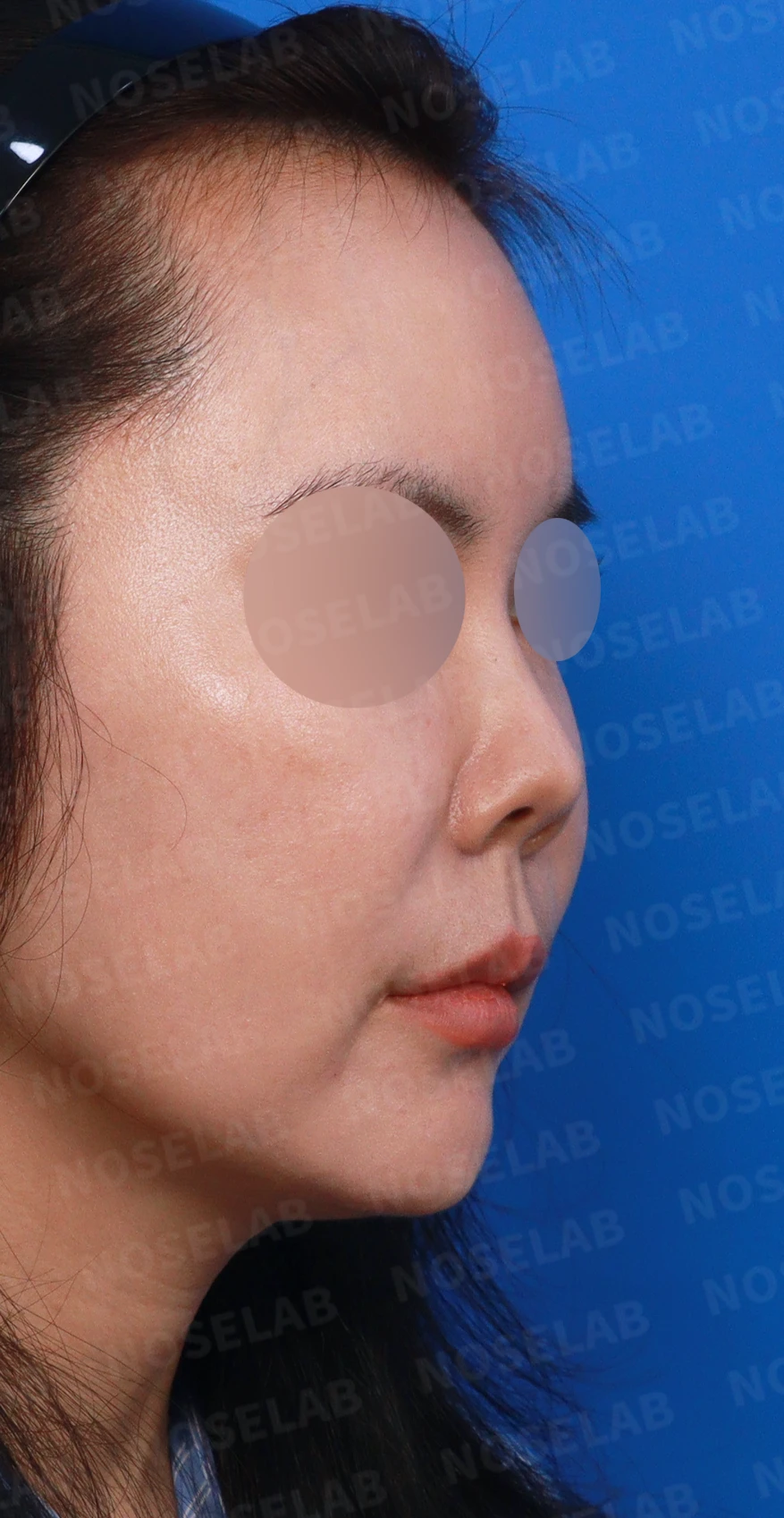
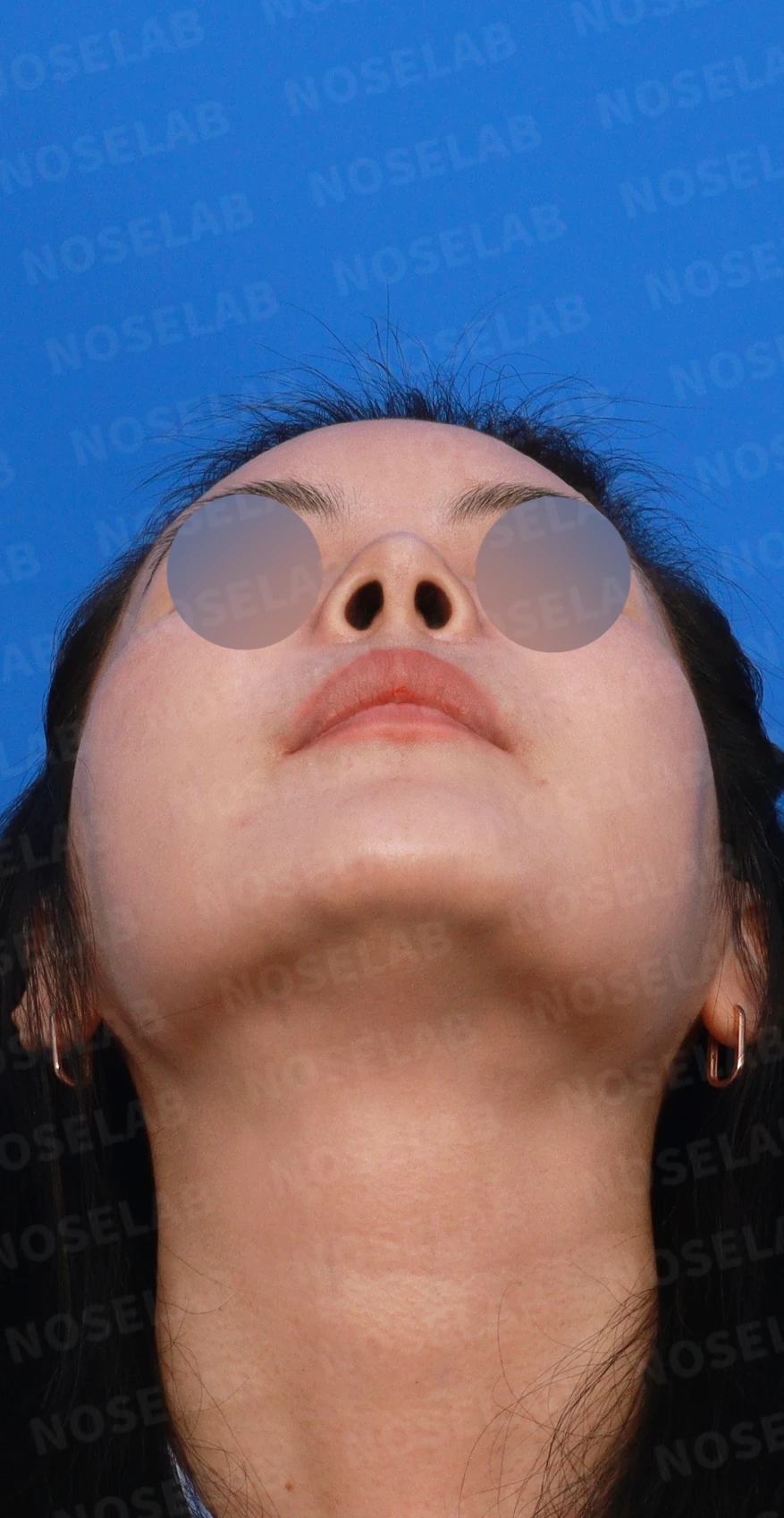
Right profile, oblique, and nostril views during design consultation
💉 Patient requests
The patient emphasized the following goals:
Safely remove the hazardous implant
Naturally bring down the upturned nasal tip
Reinforcement of thinned tip skin
Achieve a natural nasal contour rather than an excessively high or dramatic look
Reconstruct using safe and proven methods
🔧 Surgical plan and procedure
In a case like this, simply removing the implant was not sufficient. A comprehensive approach was required:
1. Safe removal of the L-shaped silicone implant
Careful removal while preventing mucosal perforation
Inspection and assessment of the damaged tissues
2. Septal extension using autologous rib cartilage
Safely lowering the upturned nasal tip
Providing long-term stable structural support
Creating a natural tip shape
3. Tip skin reinforcement using autologous dermis
Increasing the thickness of thinned tip skin
Preventing future risk of skin perforation
Maintaining a natural texture
4. Functional improvement
Restoring septal function
Improvement of breathing function
🌟 Surgical results
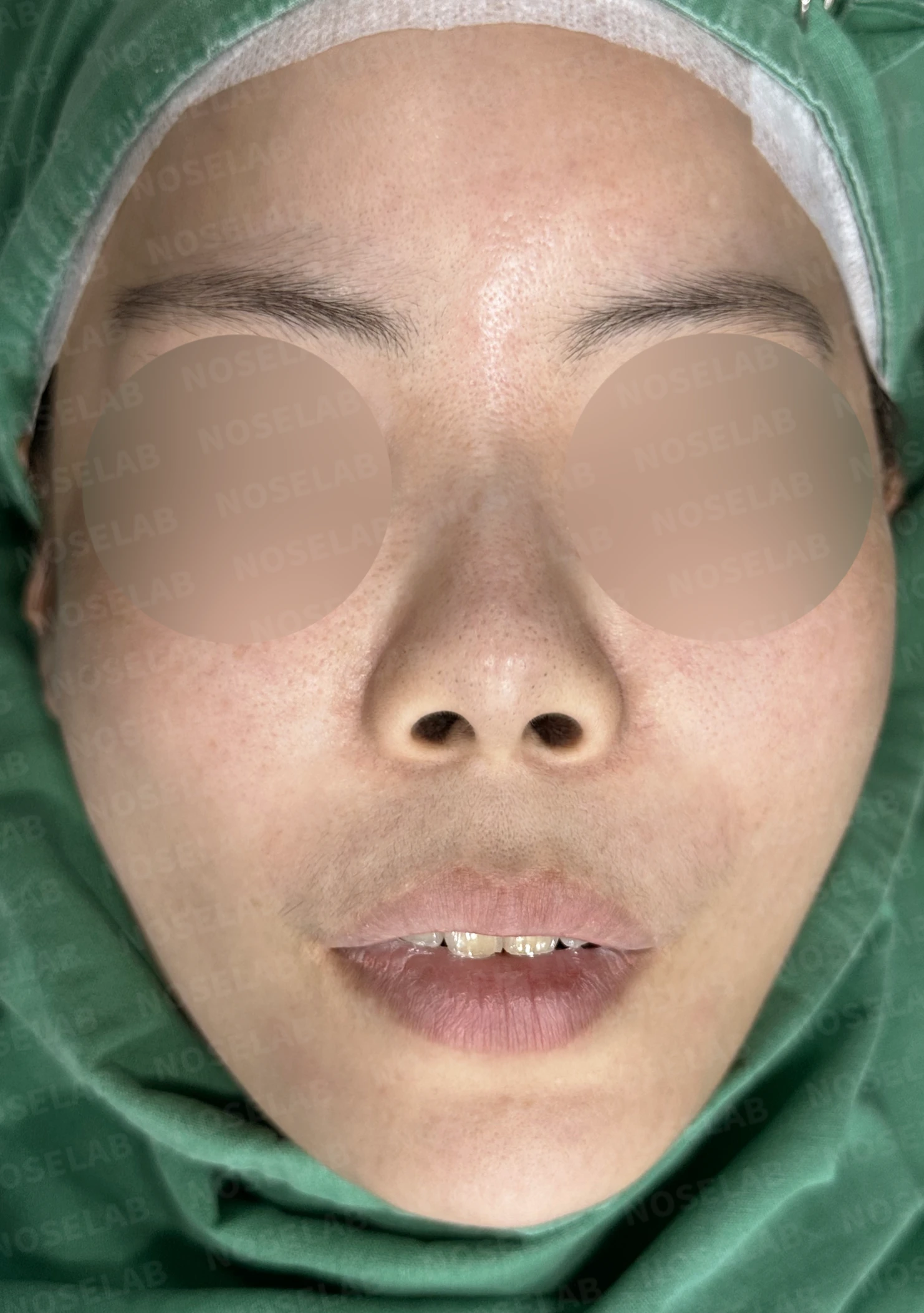
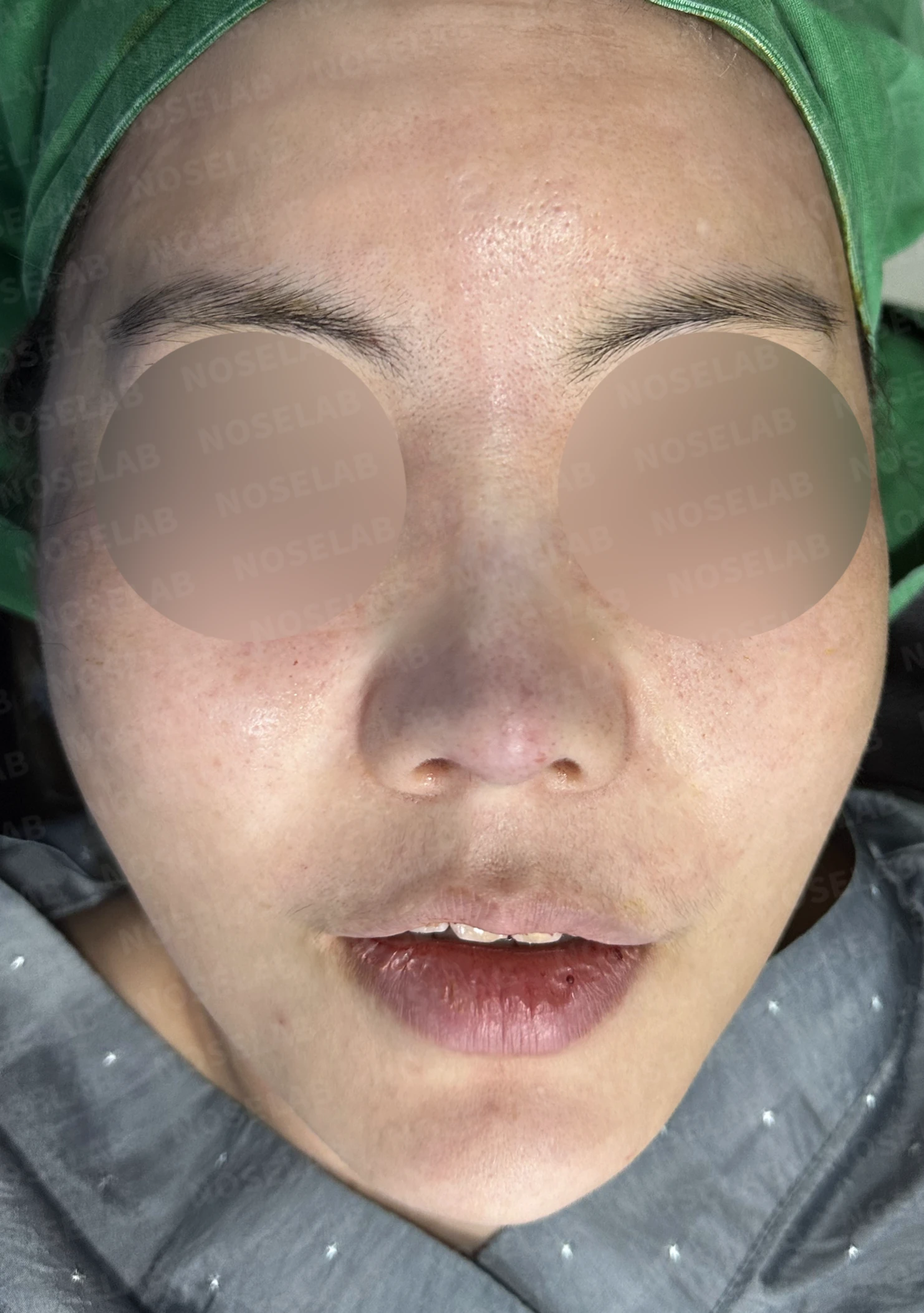
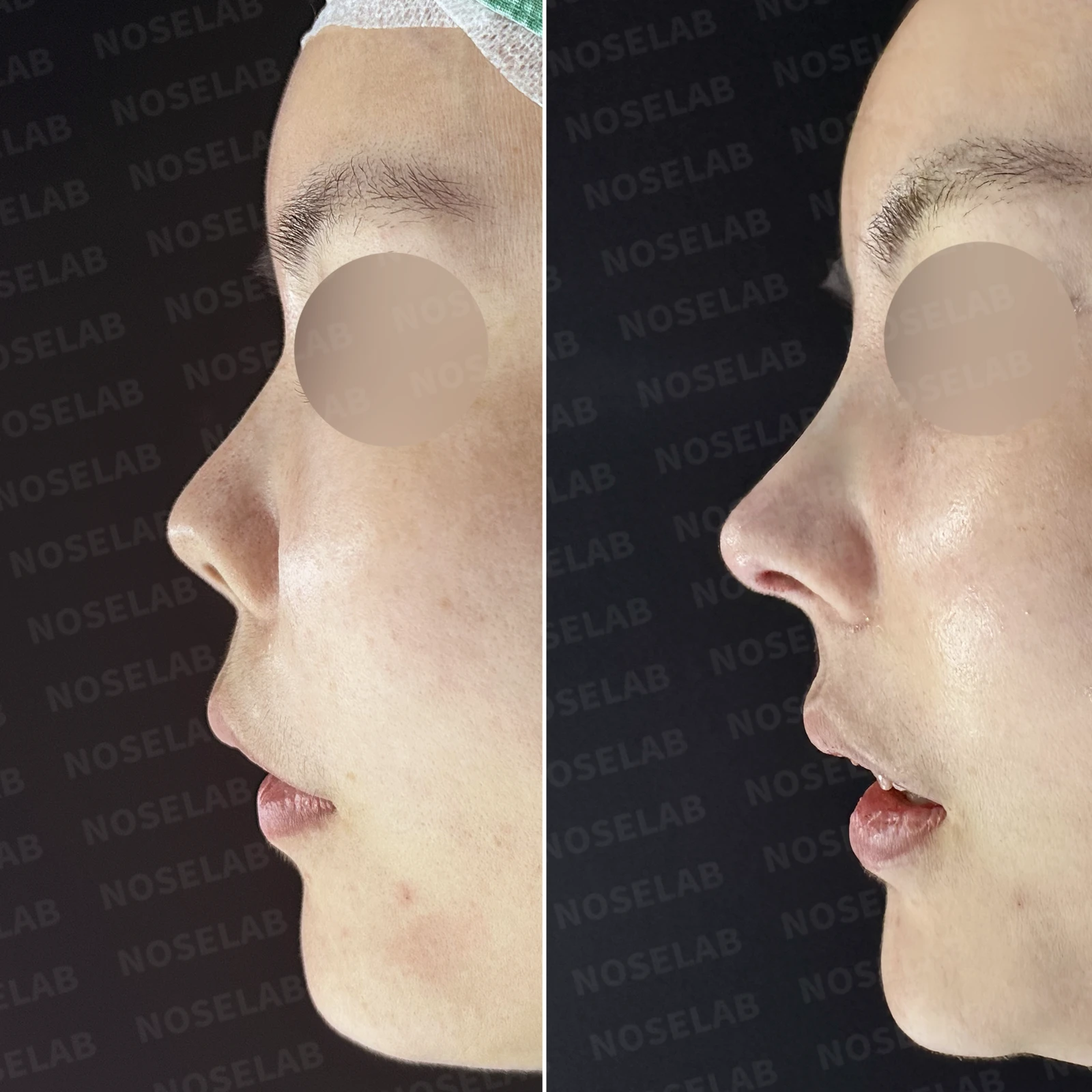
Before surgery / Day 0 immediately after surgery Photos taken immediately after surgery show swelling and may differ from the final result.
Before surgery / Day 0 immediately after surgery Photos taken immediately after surgery show swelling and may differ from the final result.
Before surgery / Day 0 immediately after surgery Photos taken immediately after surgery show swelling and may differ from the final result.
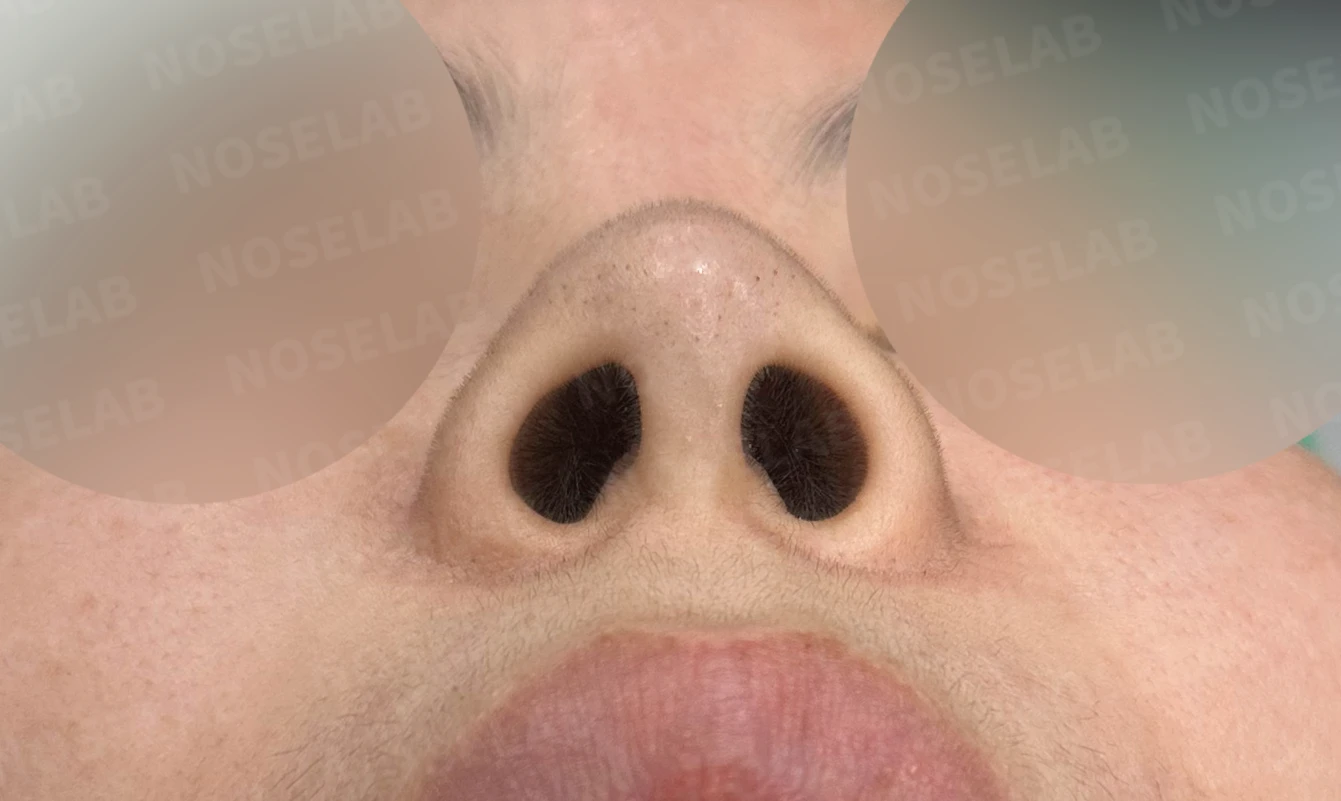
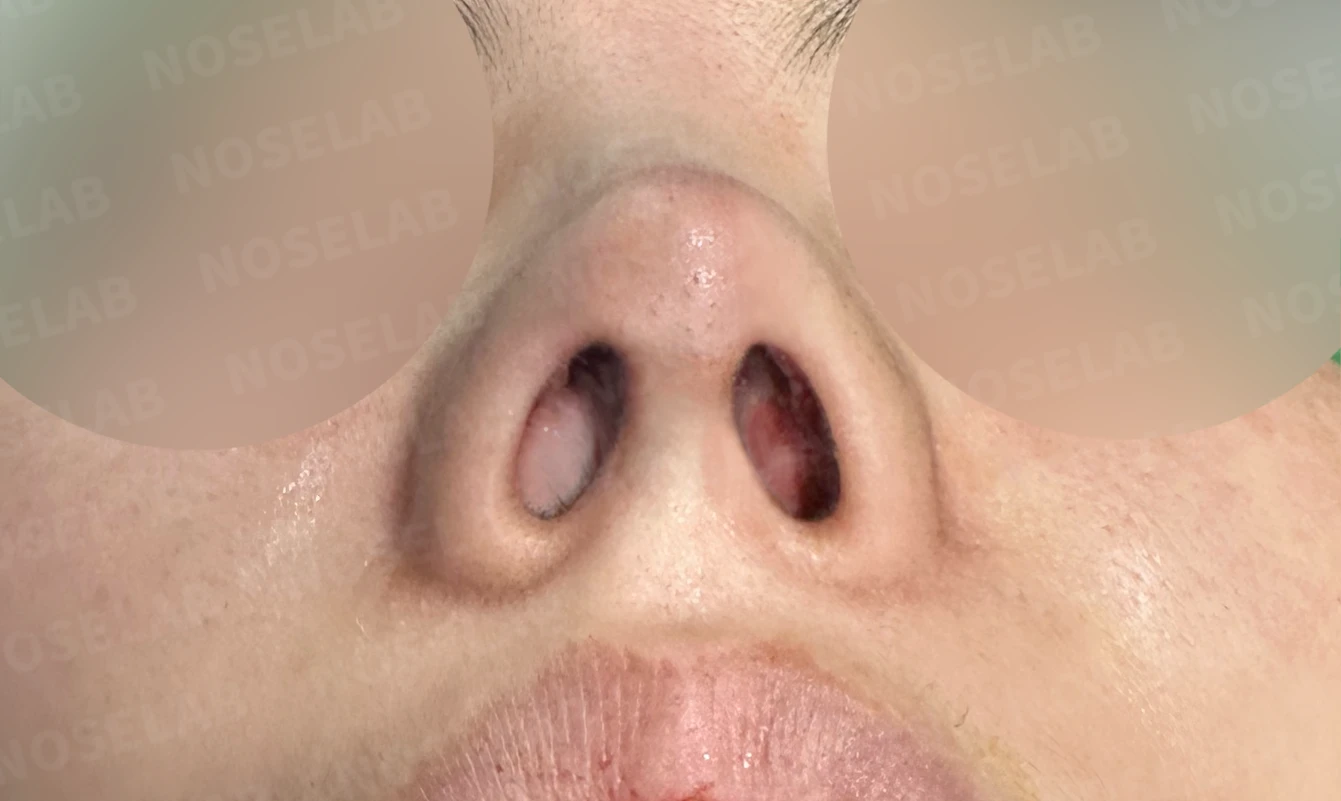
Before surgery / Day 0 immediately after surgery Photos taken immediately after surgery show swelling and may differ from the final result.
Key improvements:
Complete removal of the hazardous L-shaped silicone implant
Restoration of the upturned nasal tip to a natural position
Sturdy reinforcement of the thinned tip skin
Achieving a natural and stable nasal contour
Improvement in nasal breathing function as well
Using autologous rib cartilage and autologous dermis allowed us to reconstruct the nose safely, avoiding the risks of complications associated with alloplastic materials.
💡 Specialist opinion
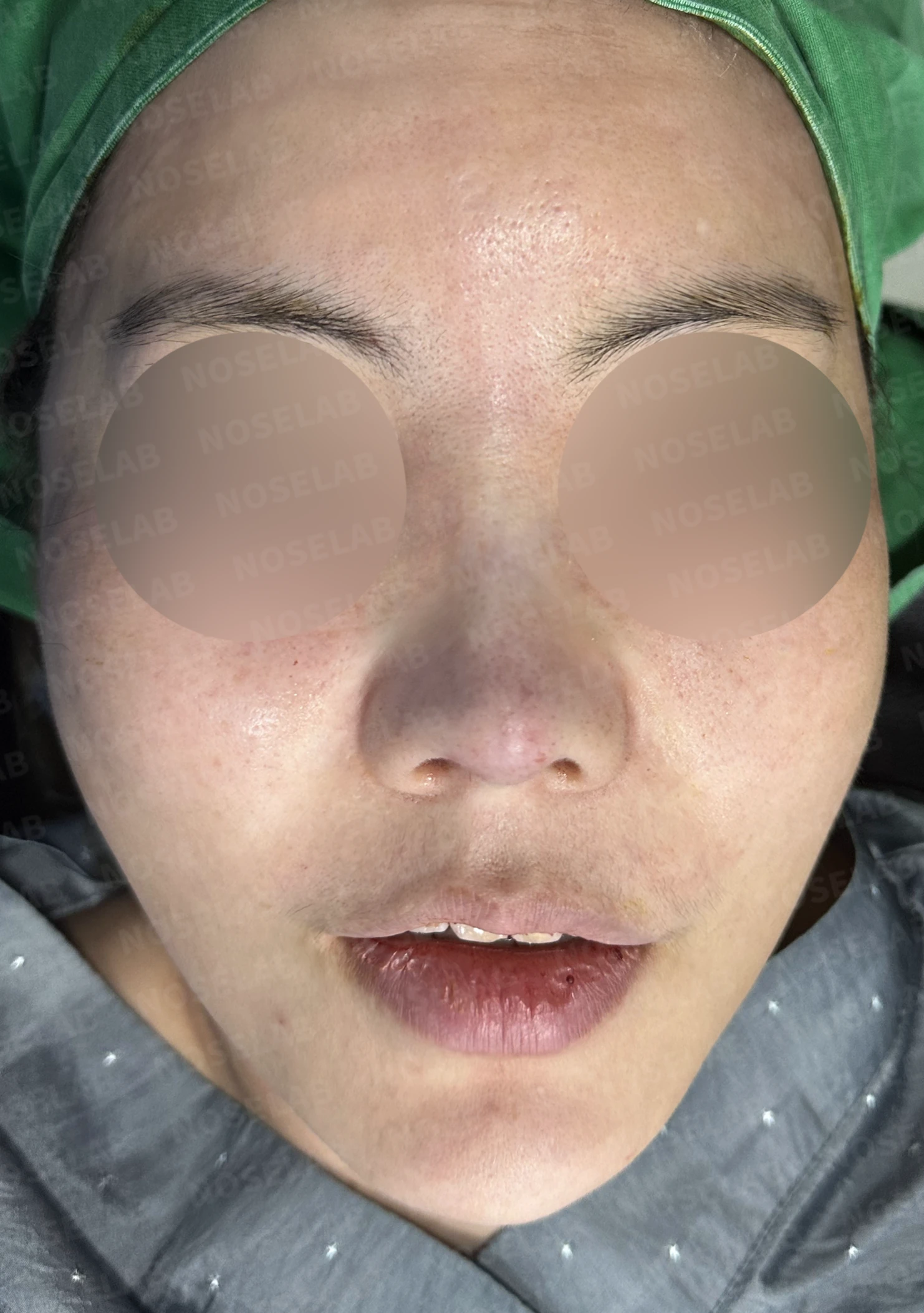
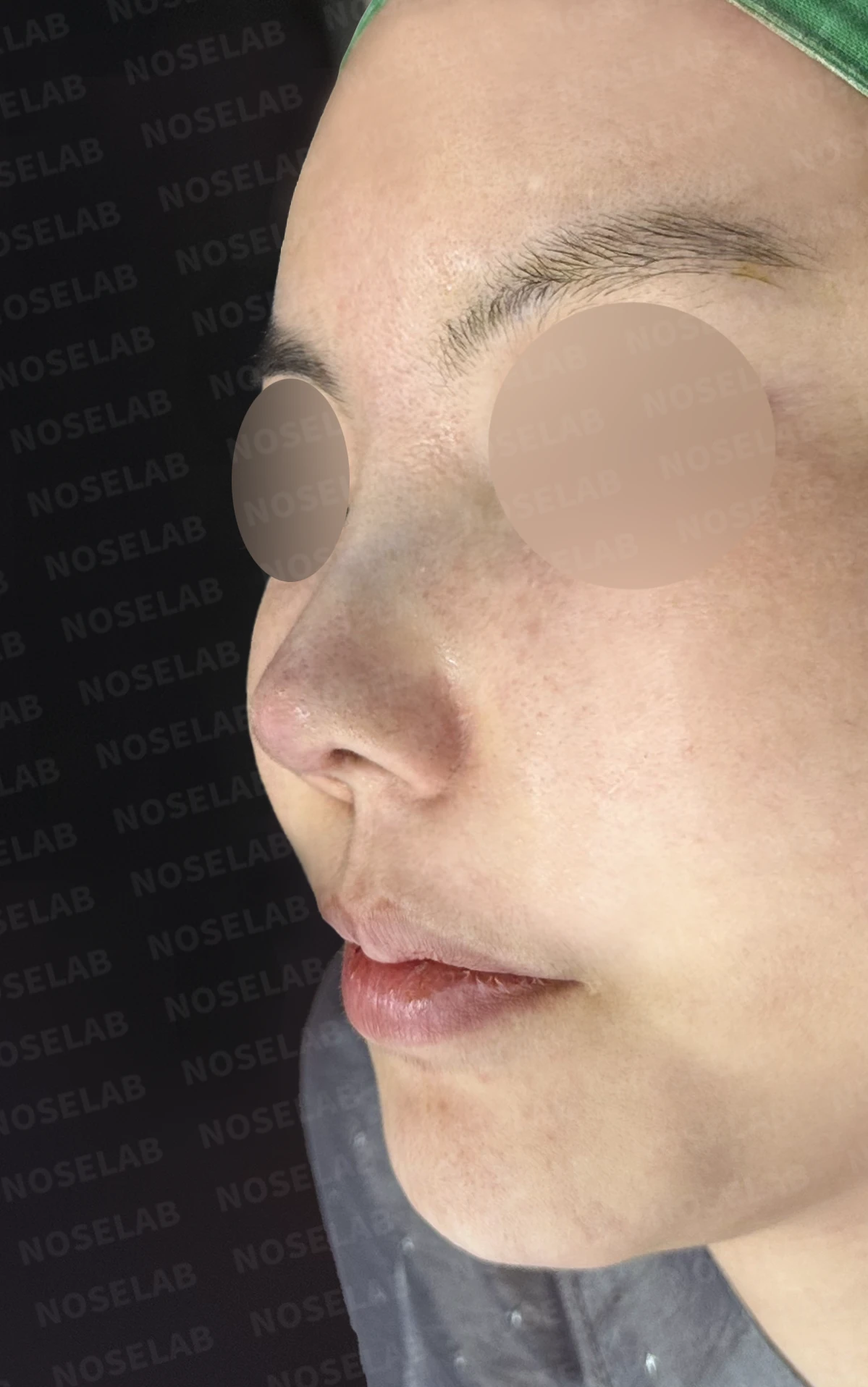
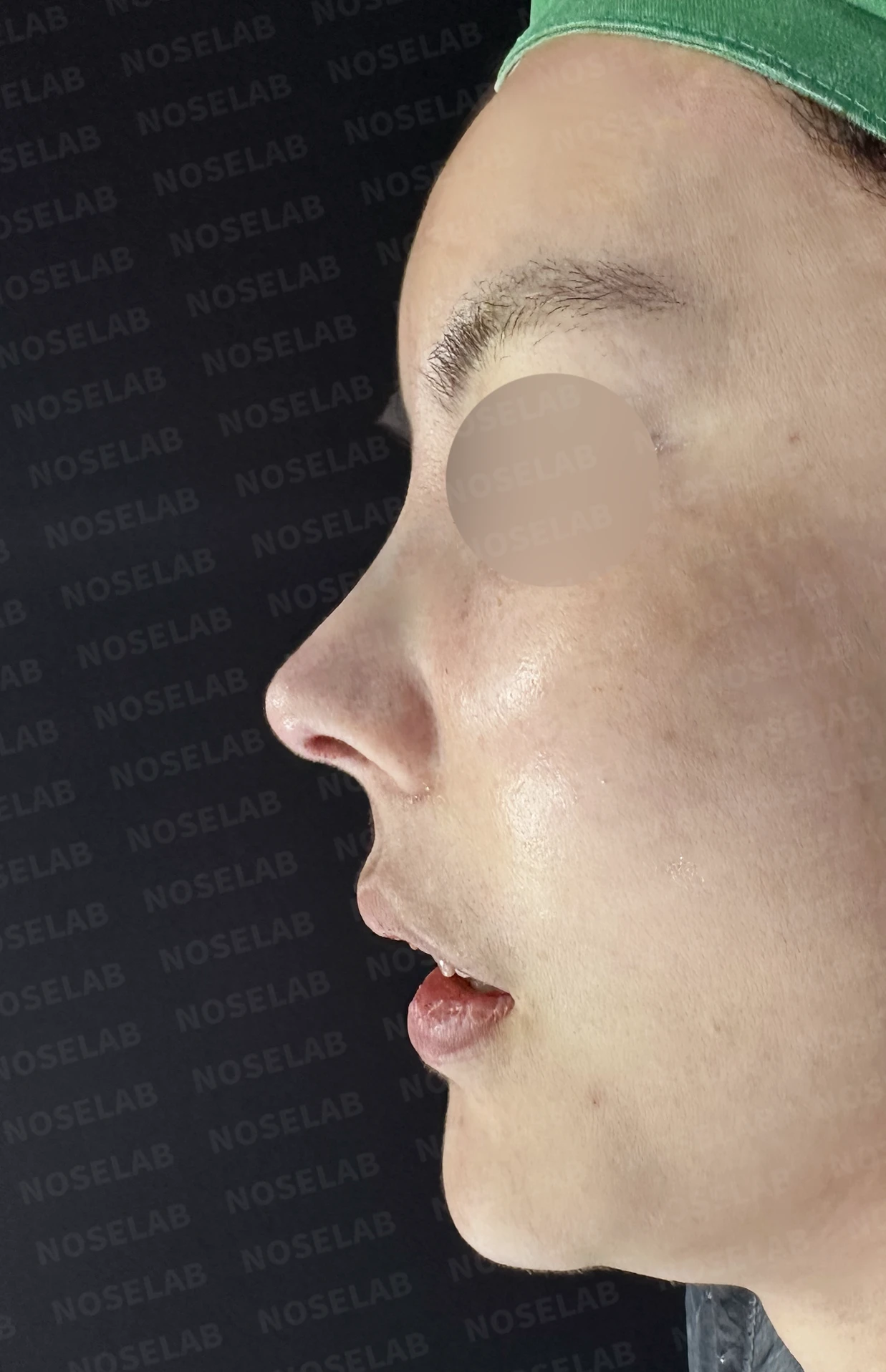
Front, oblique, and profile views on day 0 immediately after surgery Photos taken immediately after surgery show swelling and may differ from the final result.
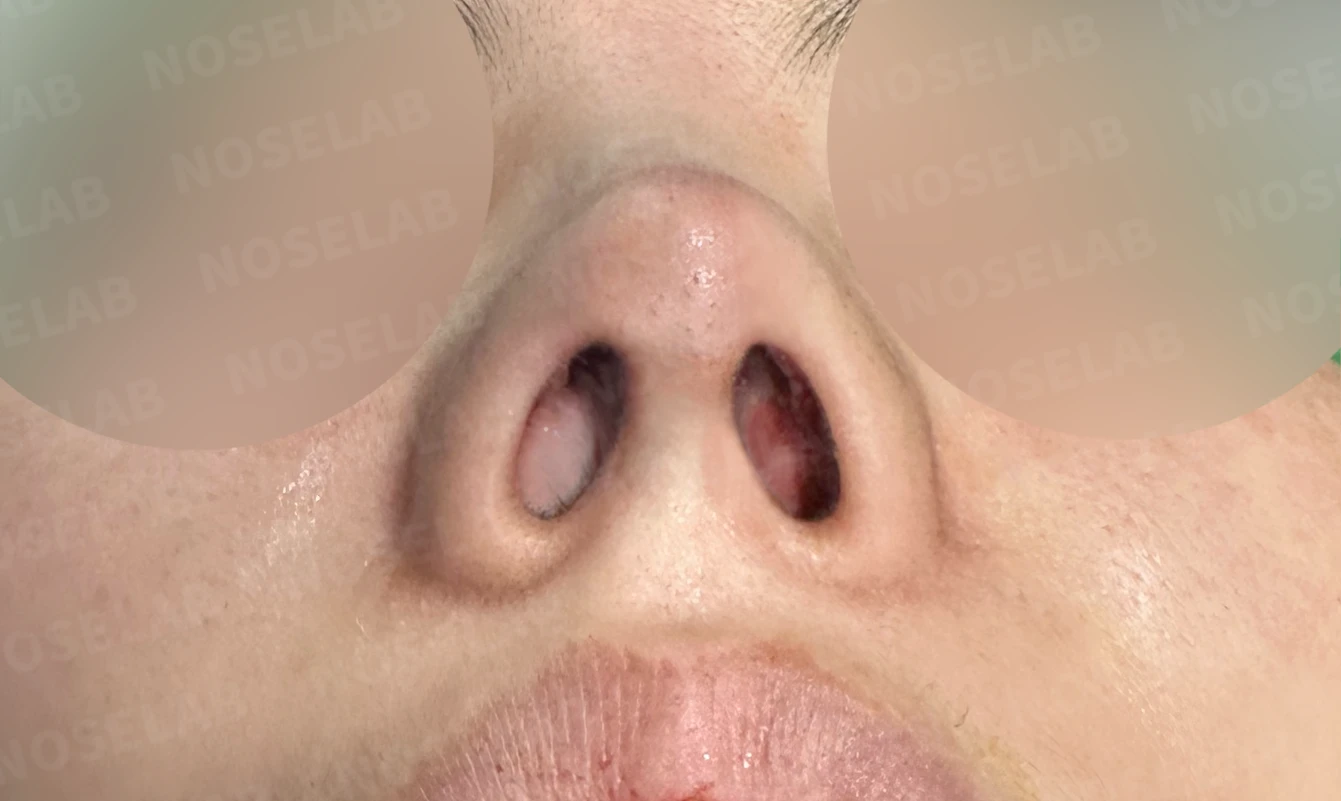
Nostril view on day 0 immediately after surgery Photos taken immediately after surgery show swelling and may differ from the final result.
Although L-shaped silicone implants were widely used in the past, many plastic surgeons now advise against them. The reasons include:
Problems with L-shaped silicone implants:
Continuous pressure from a rigid material on the nasal tip
Progressive shortening and upturning of the nasal tip over time
Thinning of the skin with risk of implant visibility or extrusion
An unnatural appearance
Potential compromise of tip blood circulation
In this case, the implant was already on the verge of puncturing the mucosa; any further delay would have made management considerably more complicated. Fortunately, we were able to intervene in a timely manner, safely remove the implant, and reconstruct the framework using autologous tissues.
Advantages of autologous rib cartilage:
No tissue rejection because it is autologous tissue
Provides stable structural support with sufficient volume and strength
A long-term stable and natural result
Minimizes the risk of infection or foreign body reactions
Importance of autologous dermis reinforcement:
Safely reinforces thinned skin
Prevents future complications
Maintaining a natural texture
Patient safety is always my primary focus, striving for long-term stable and natural results. If you are experiencing concerns related to an L-shaped silicone implant or other alloplastic materials, I recommend consulting with a specialist before complications progress. This has been Medical Director Dr. Peter C. Kang. Thank you.
#closedrhinoplasty #closedrevisionrhinoplasty #Lshapedsiliconeremoval #autologousribcartilage #revisionrhinoplasty #upturnednosecorrection #autologousdermis #rhinoplastycomplications #safelyplannedrhinoplasty #naturalnose

Limitations and risks
When autologous rib cartilage is used, scarring and pain may remain at the donor site on the chest, and pneumothorax (pleural injury) can occur rarely. Over time, the grafted cartilage may warp or undergo partial resorption.
When revising after implant removal, contracture may progress again after removal, the nasal height and length may decrease, and staged surgery may be necessary depending on the skin condition.
When the septum is corrected at the same time, nasal obstruction may persist or recur, and in rare cases, septal perforation or changes in smell may occur.
Common potential risks include infection, bleeding, asymmetry, scarring, skin necrosis, and insufficient improvement; results vary depending on individual skin condition and previous surgical history.