Hello, I am Dr. Peter C. Kang.
Today, I would like to share the case of a patient who previously underwent a 1st revision for a contracted nose at our clinic and later underwent revision rhinoplasty due to concerns about deformities caused by thinning skin.
🔍 Surgical history
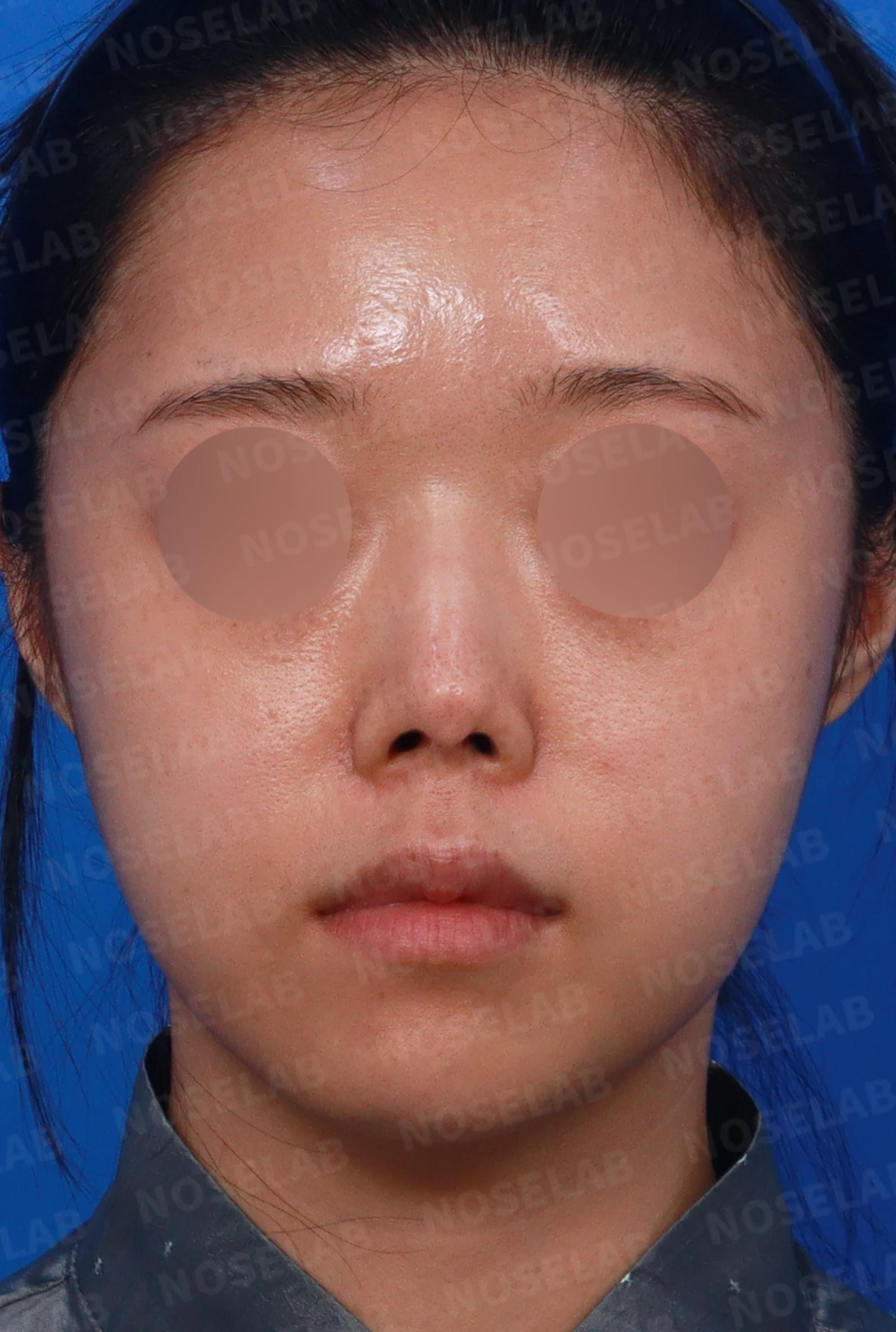
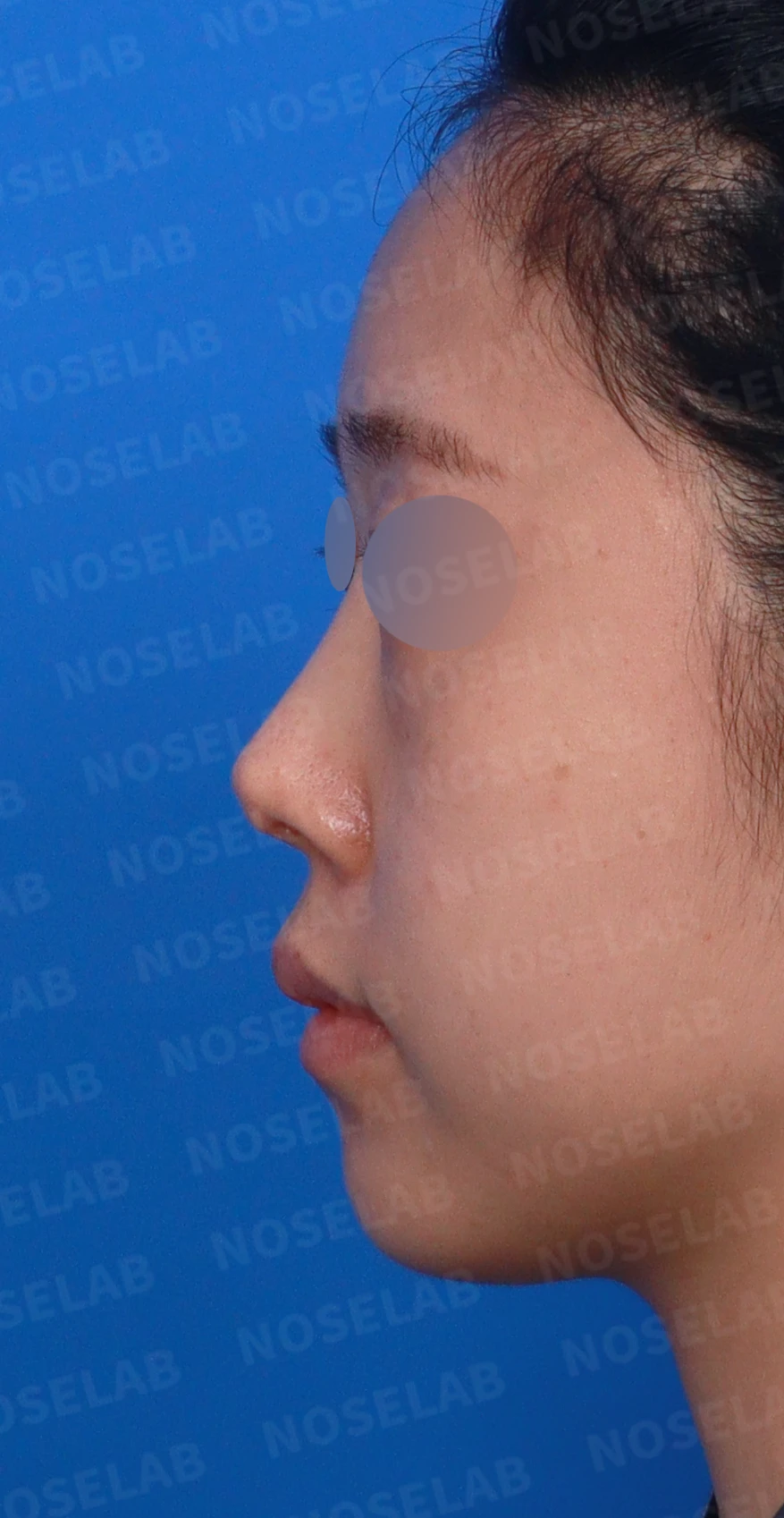
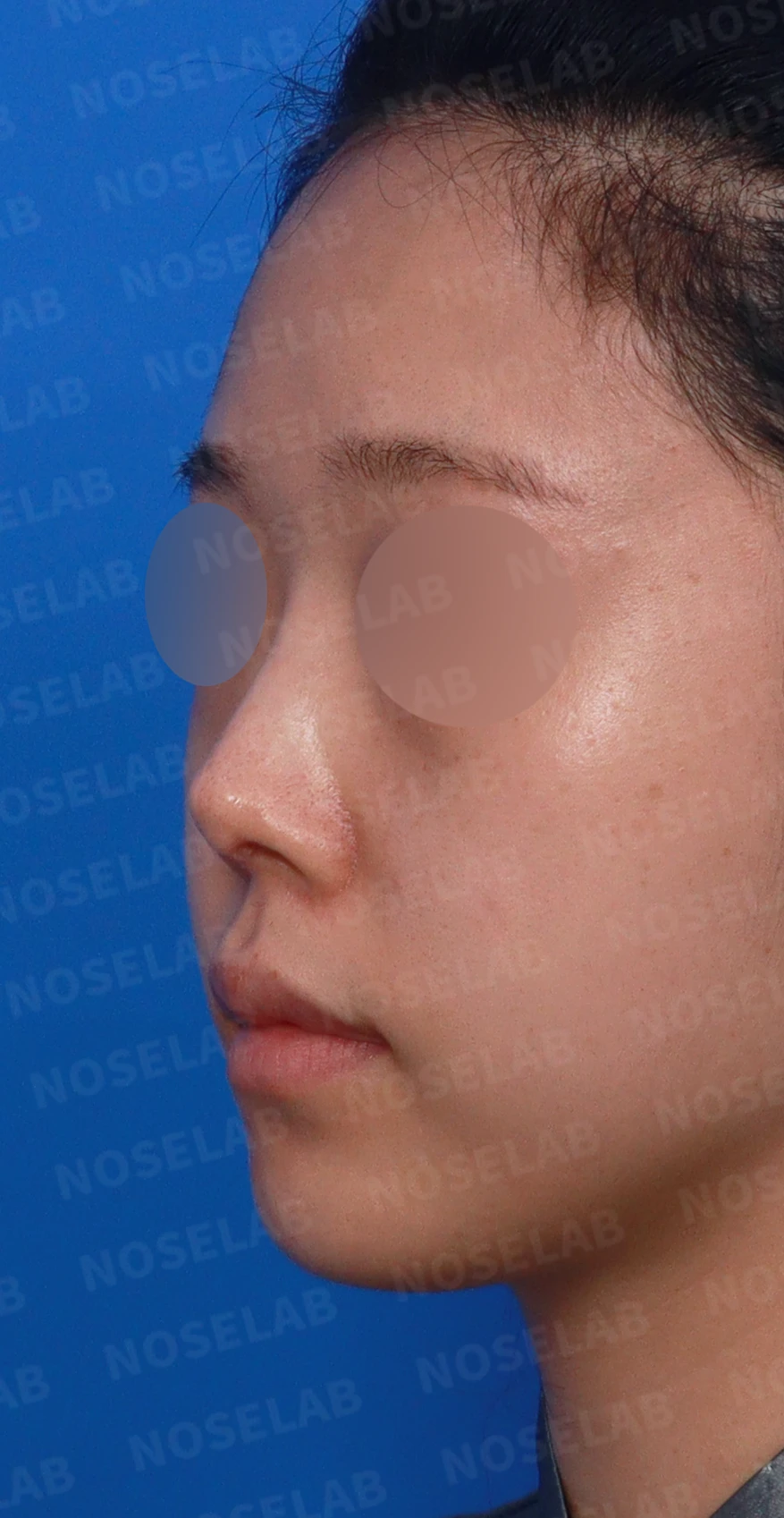
Front, left profile, and oblique views during design consultation.
About 5 years ago: Prior surgery with silicone implant + ear cartilage, functional nasal surgery
Stiffness developed after ear cartilage was used in the nasal tip
Contracture deformity developed as the skin gradually thinned
2 years ago: Contracted nose surgery performed at our clinic using autologous rib cartilage
The retracted columella was corrected, but as the tip skin thinned, the grafted cartilage began to show through and the nose appeared upturned. Nasal obstruction improved somewhat, but discomfort persisted
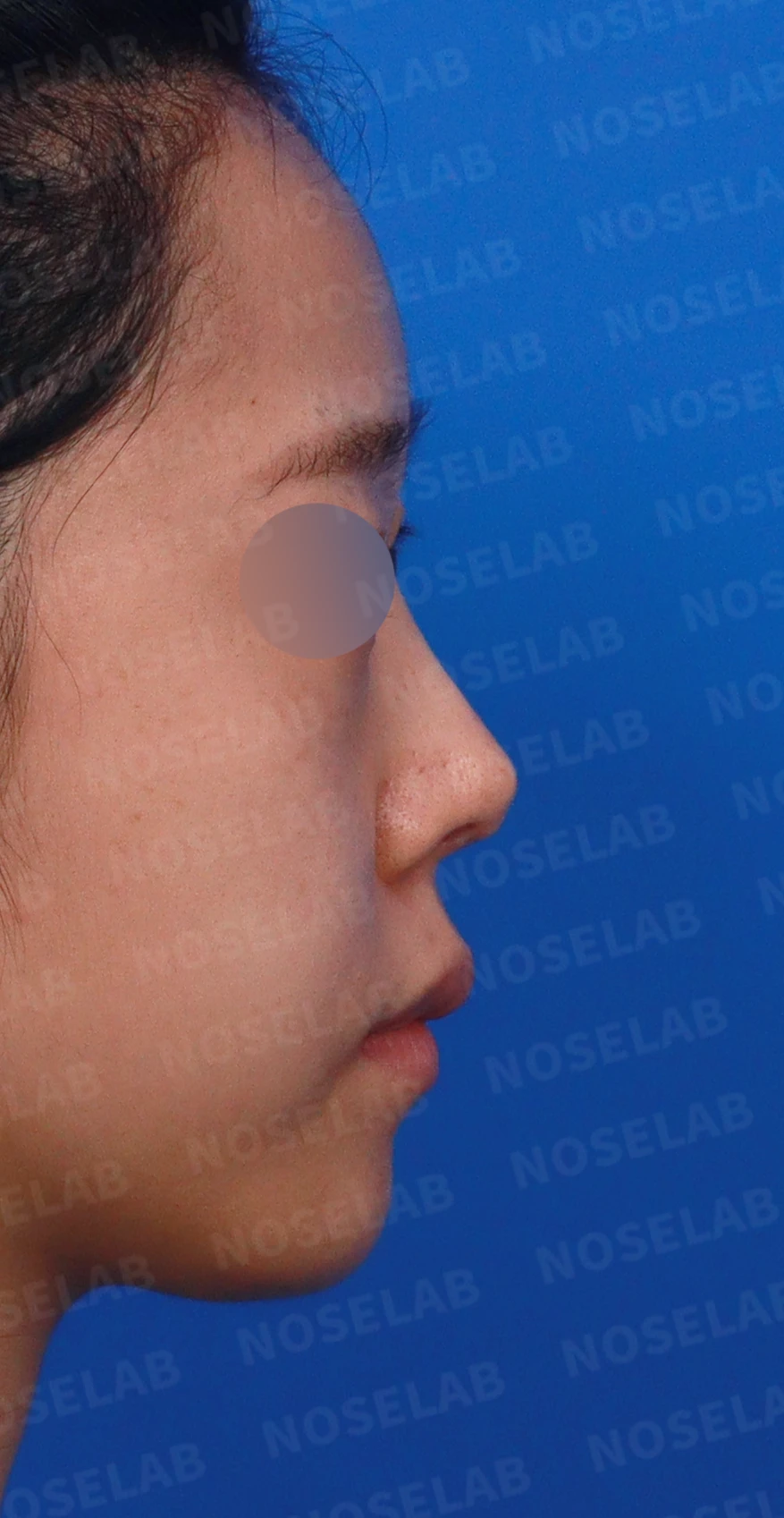
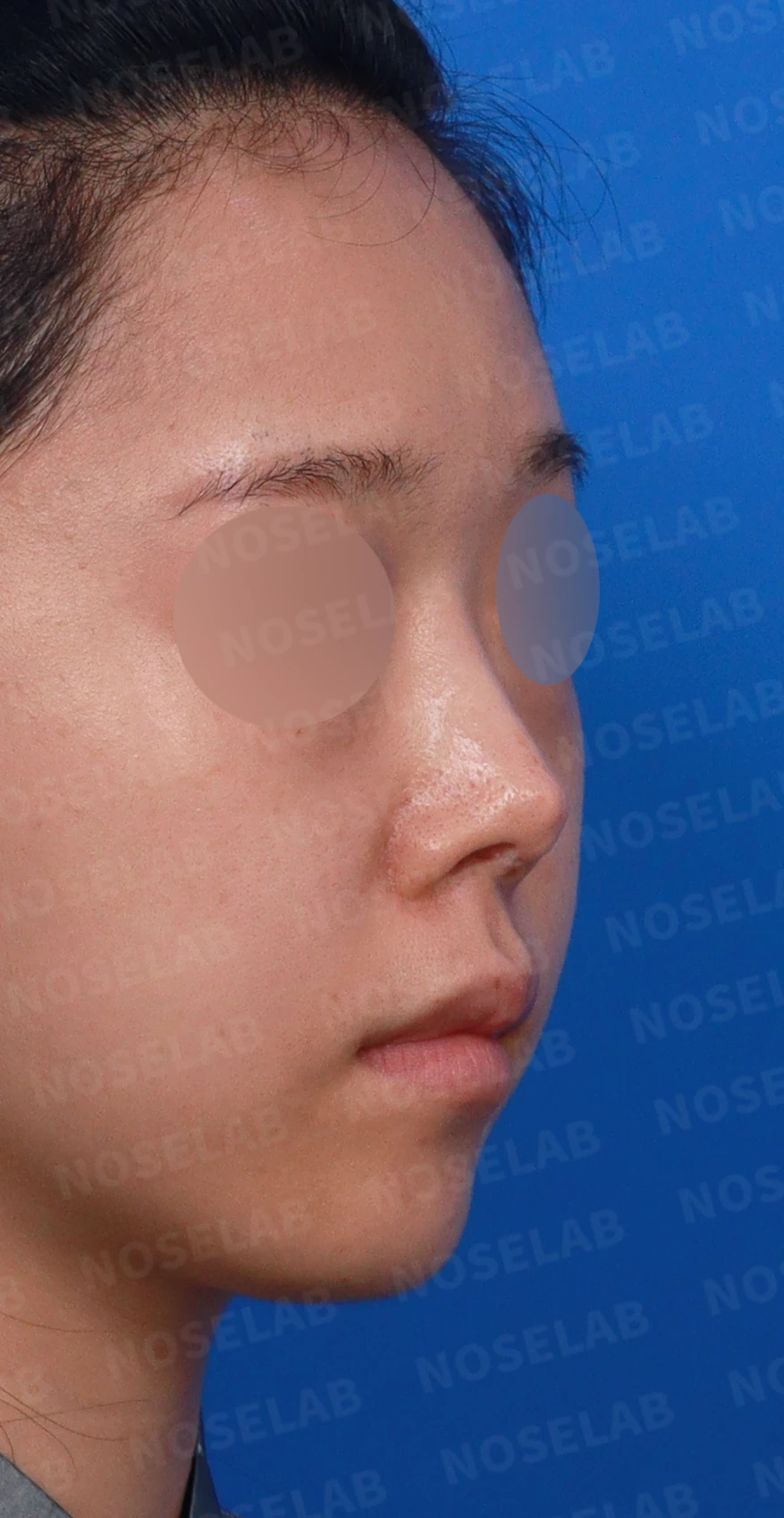
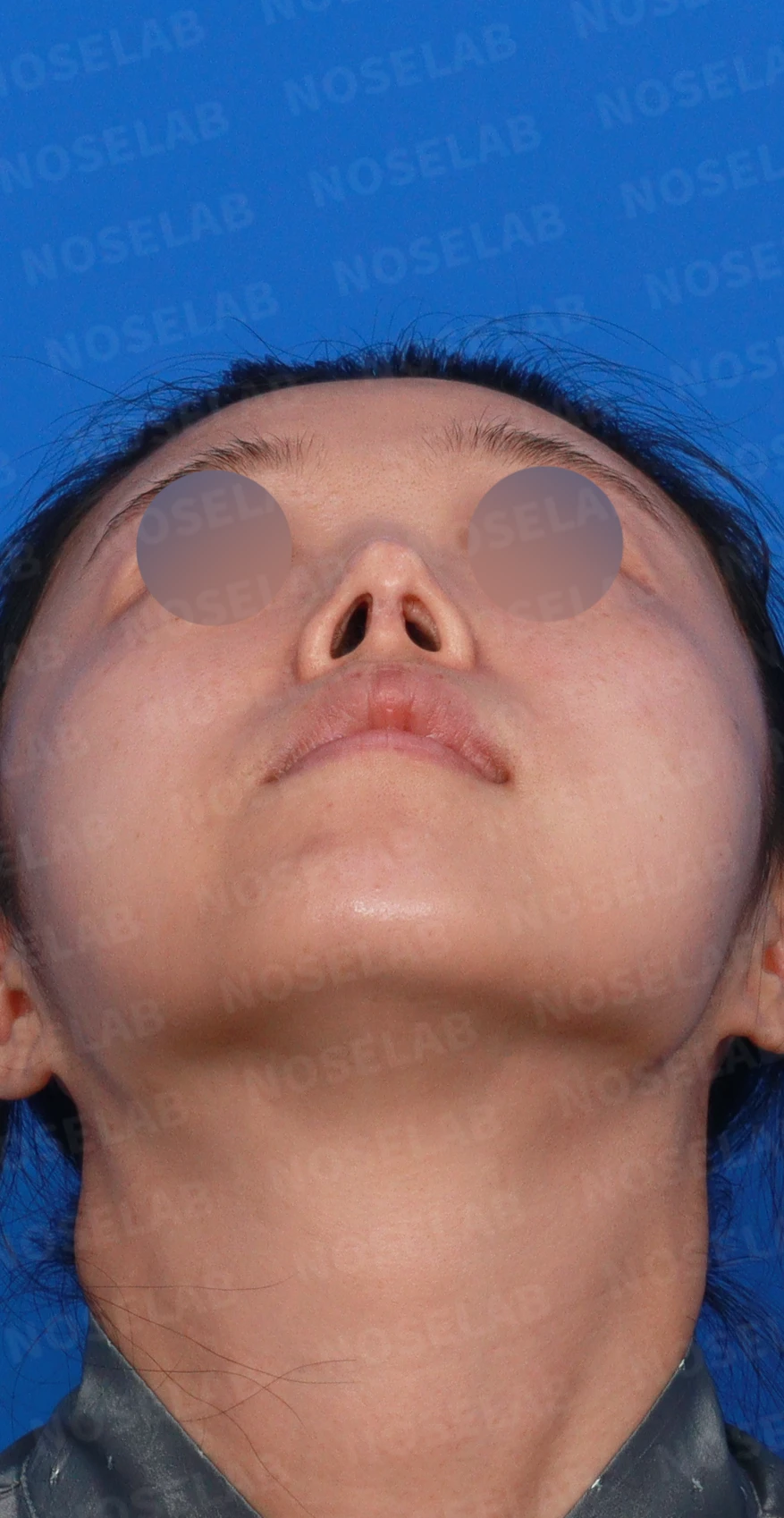
Right profile, oblique, and nostril views during design consultation.
💉 Patient requests
"I want to correct my upturned nose naturally"
"I want to balance the nostril asymmetry as much as possible"
"I want to add soft volume to my nasal tip"
"I am worried about my thinned skin"
"I want to prevent the tip cartilage from showing through"
"I want the surgery to be performed with safety in mind"
🔧 Surgical plan and procedure
In this surgery, the key was a safe approach to address the deformities caused by thinning skin and to prevent recurrence.
1. Existing implant removal and tissue evaluation
Removal of the silicone implant from previous surgery
Assessment and repositioning of the ear cartilage
Precise evaluation of thinned skin thickness
Formulation of a safe reconstructive plan
2. Safe height adjustment
Slight adjustment of height to reduce skin tension
Subtle changes that are barely noticeable to the patient
Finding an optimal balance point to prevent recurrence
A stable structure that does not strain the skin
3. Skin reinforcement using dermis
Reinforcement of thinned bridge skin with dermis
Simultaneous reinforcement of columella skin
Ensuring stability by increasing skin thickness
Preserving a natural feel to the touch
4. Double-layer reinforcement with autologous rib perichondrium
Minimizing the chance of tip cartilage show-through
Harvesting perichondrium alongside autologous rib cartilage
Layering the perichondrium in two folds for reinforcement
Creating soft volume at the nasal tip
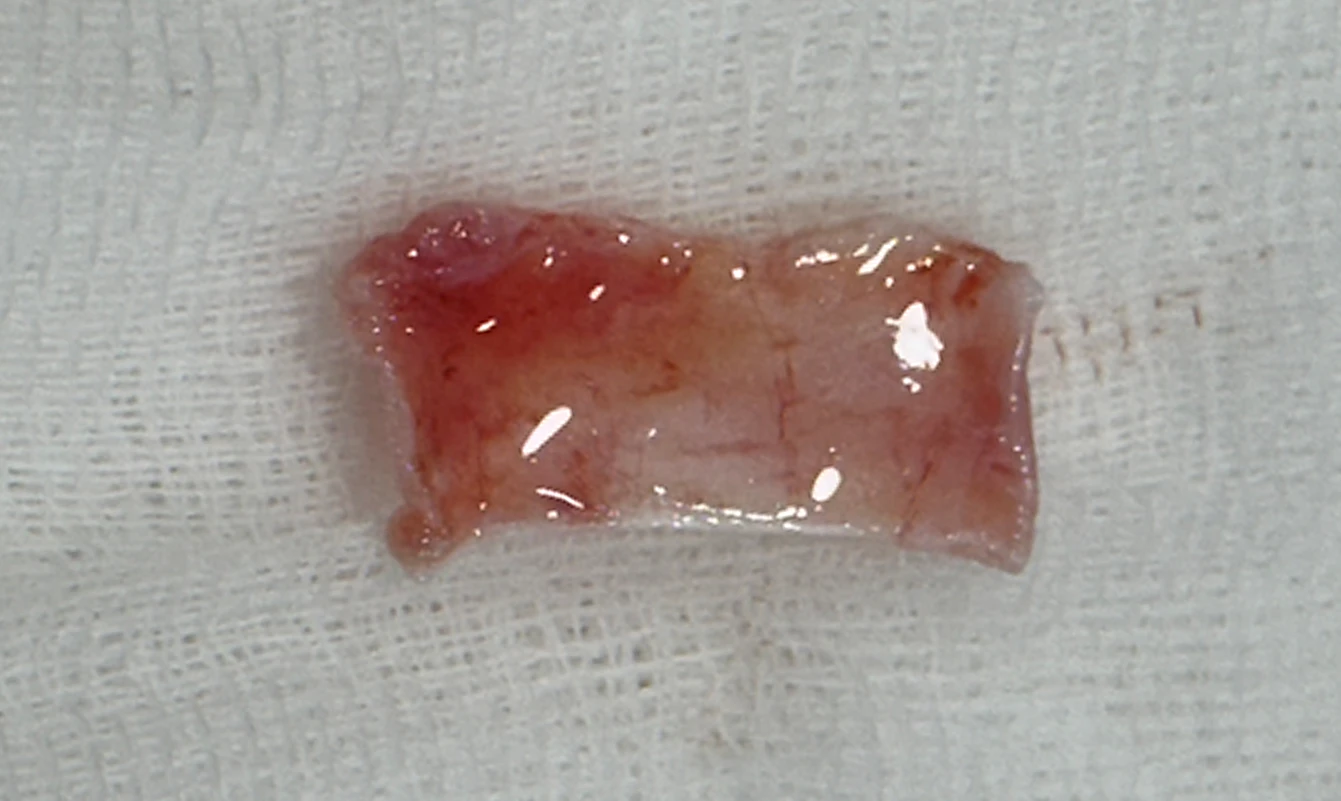
Autologous rib cartilage (perichondrium) - skin reinforcement
5. Correction of upturned nose
Septal extension using autologous rib cartilage
Natural repositioning of the nasal tip
Creating an appropriate nasolabial angle
Achieving an elegant profile line
6. Improvement of nostril asymmetry
Balancing the size of both nostrils
Alignment of the columellar midline
Natural nostril shape
Achieving overall symmetry
🌟 Surgical results
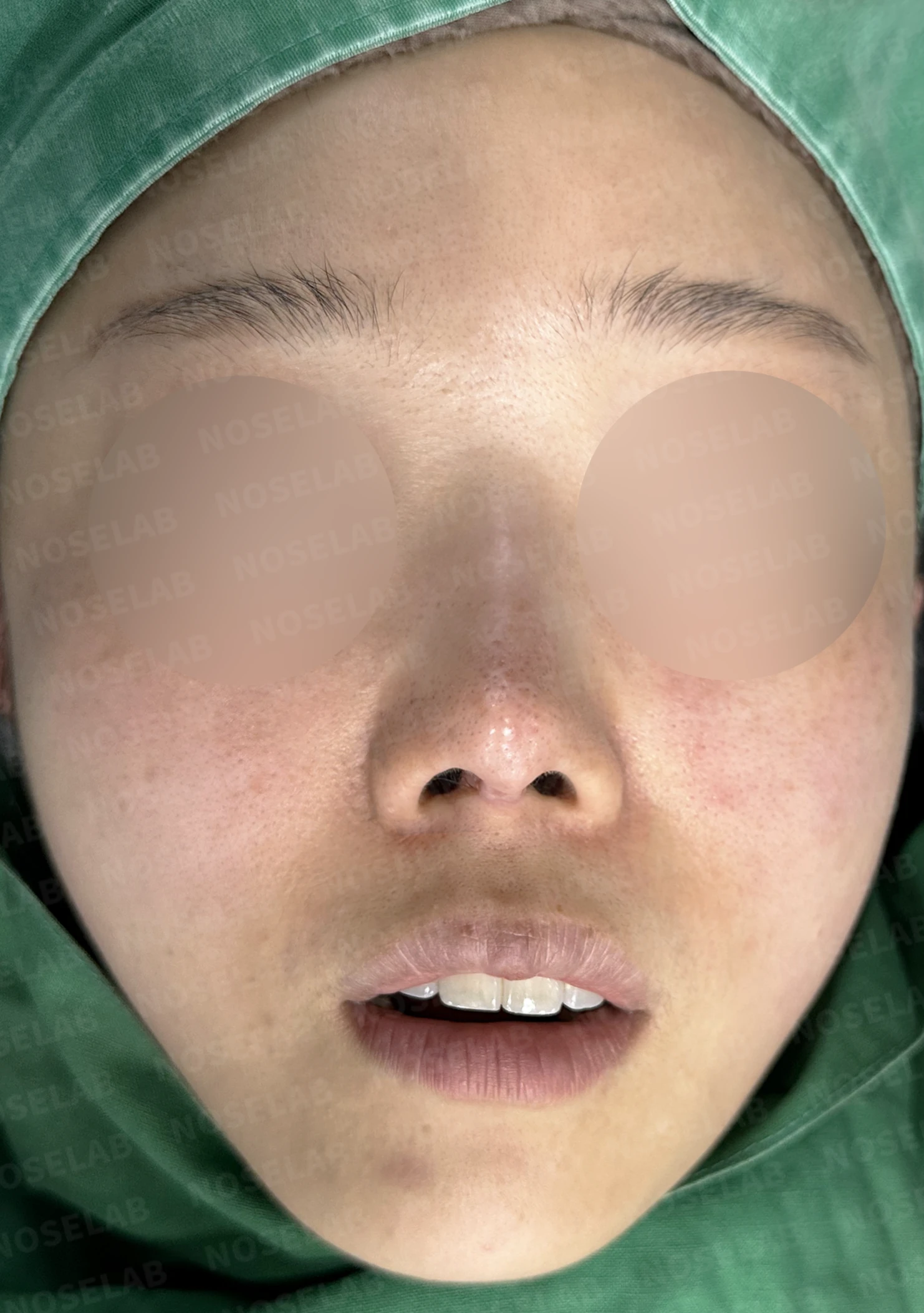
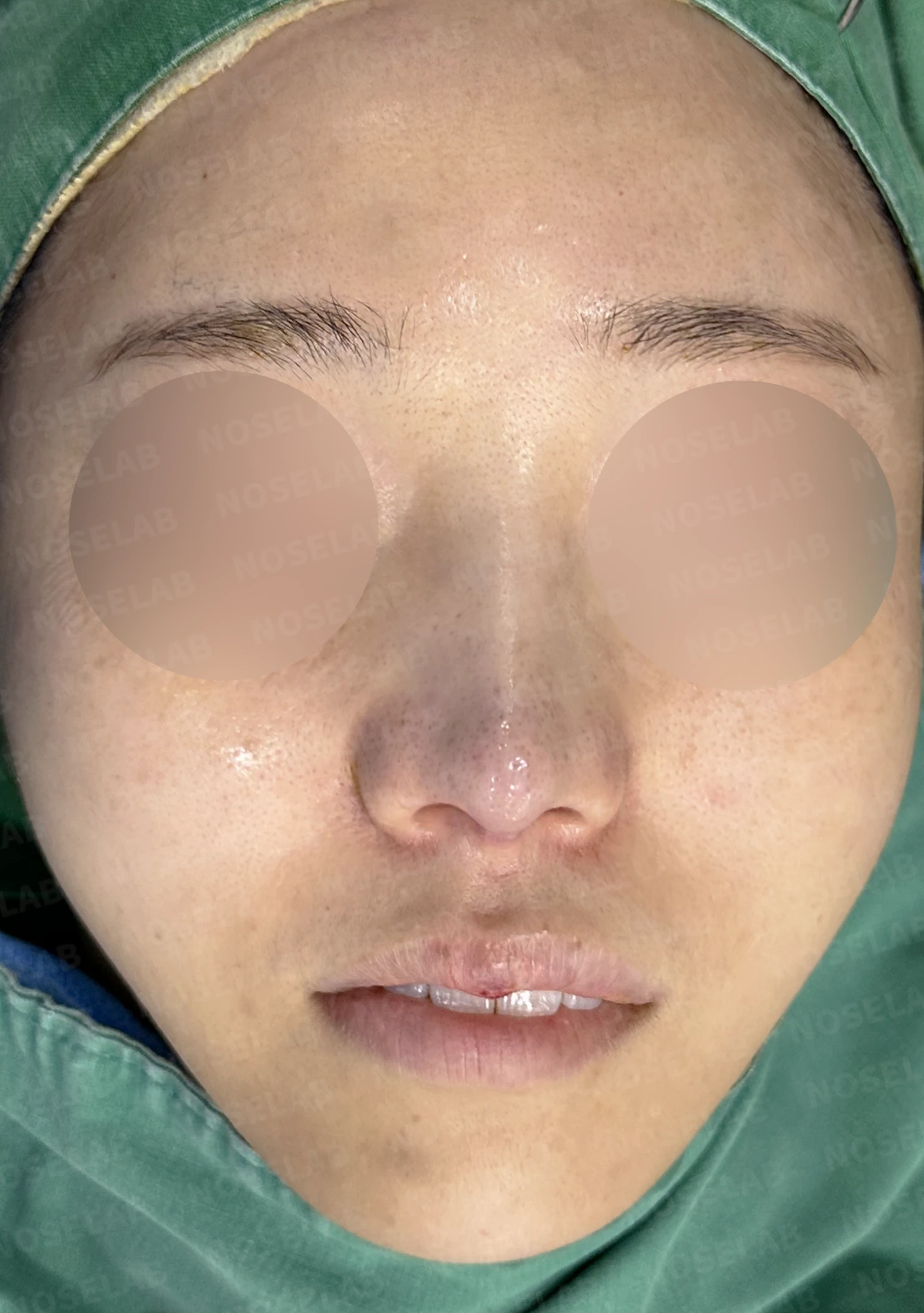
Before surgery / Day 0 immediately after surgery Photos taken immediately after surgery show swelling and may differ from the final result.
Front view changes:
Natural correction of the upturned nose
Balanced correction of nostril asymmetry
Previously thinned skin now looks healthy
Improvement in overall facial balance
Natural line from the front view
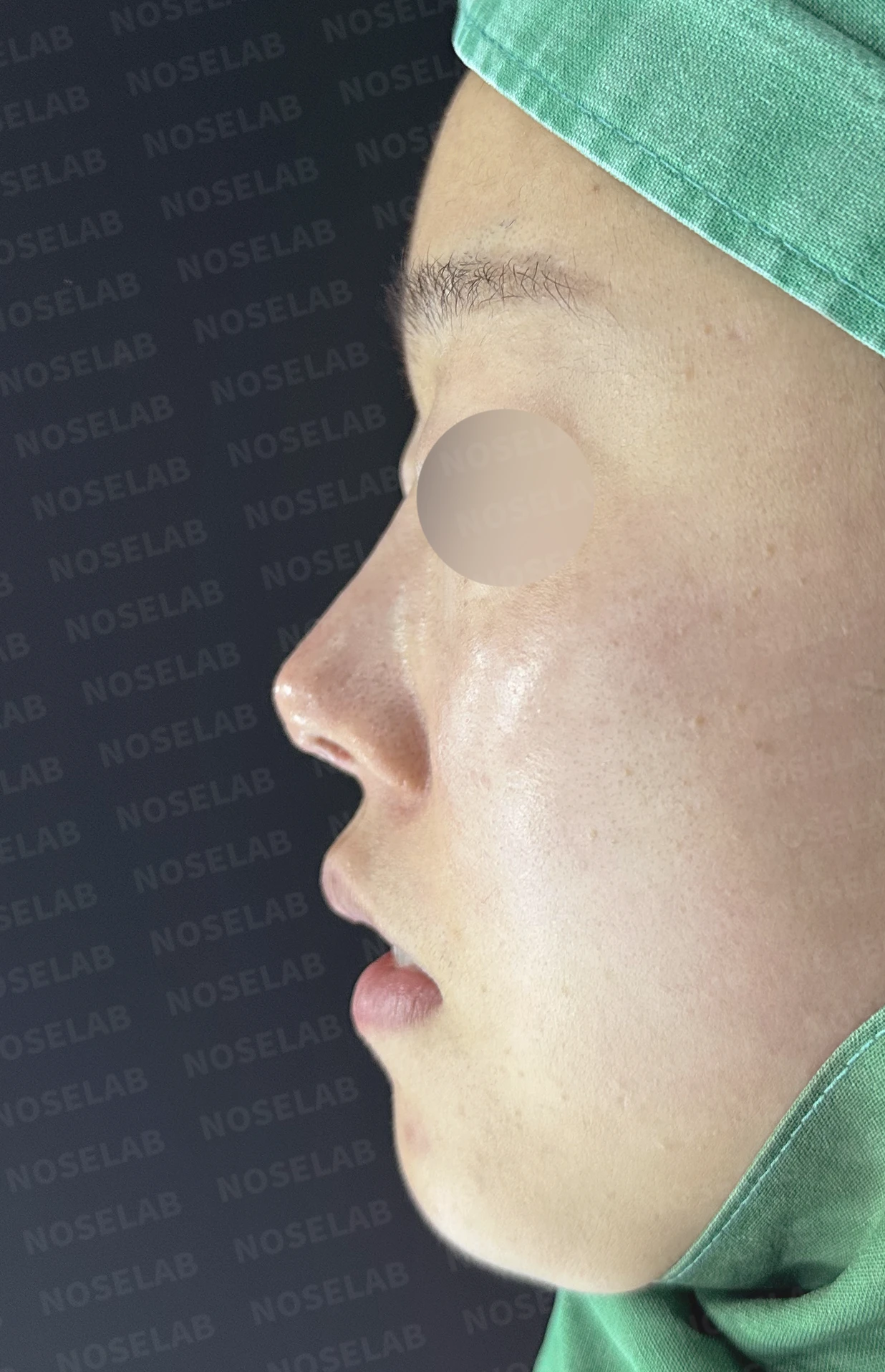
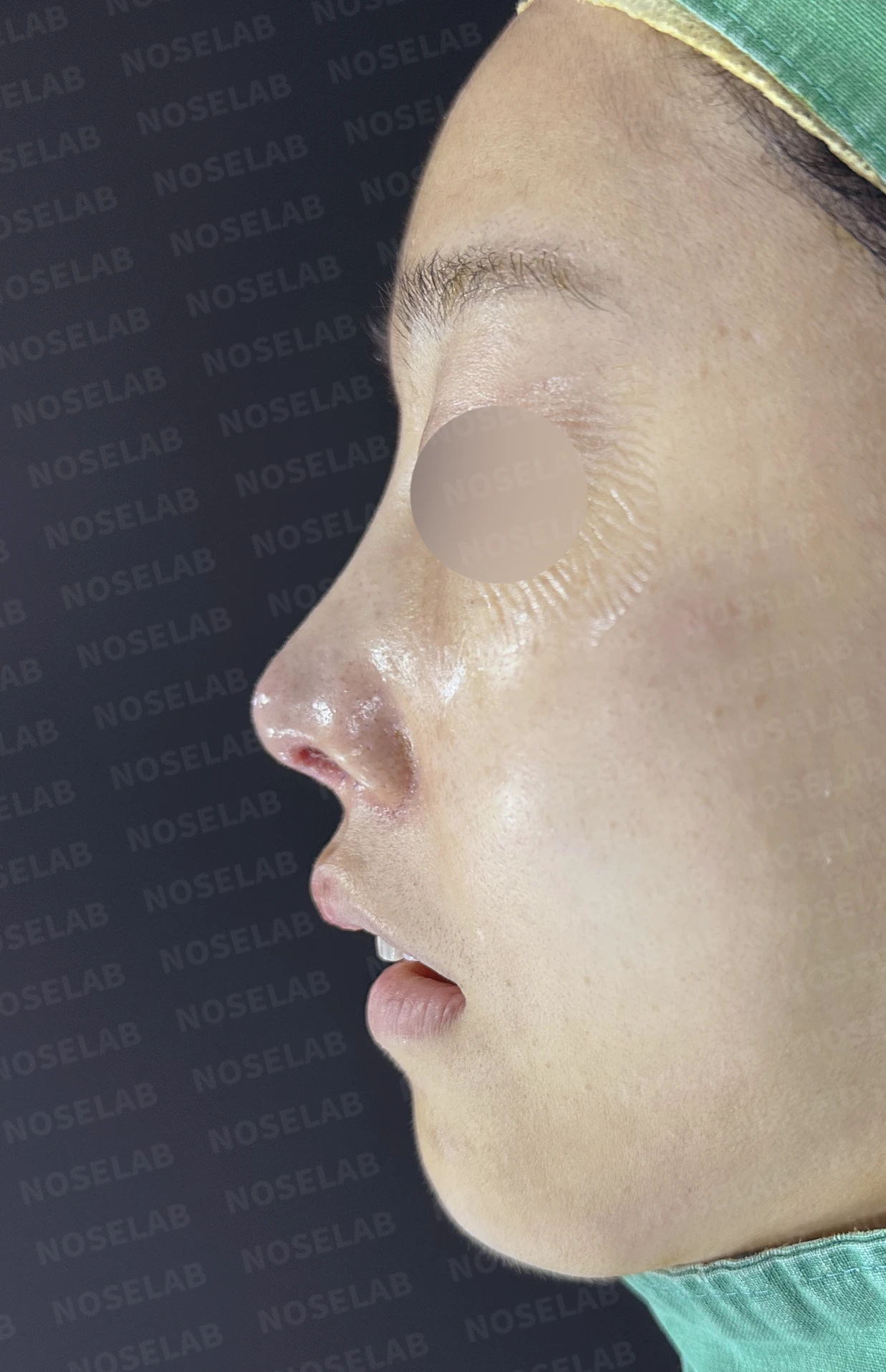
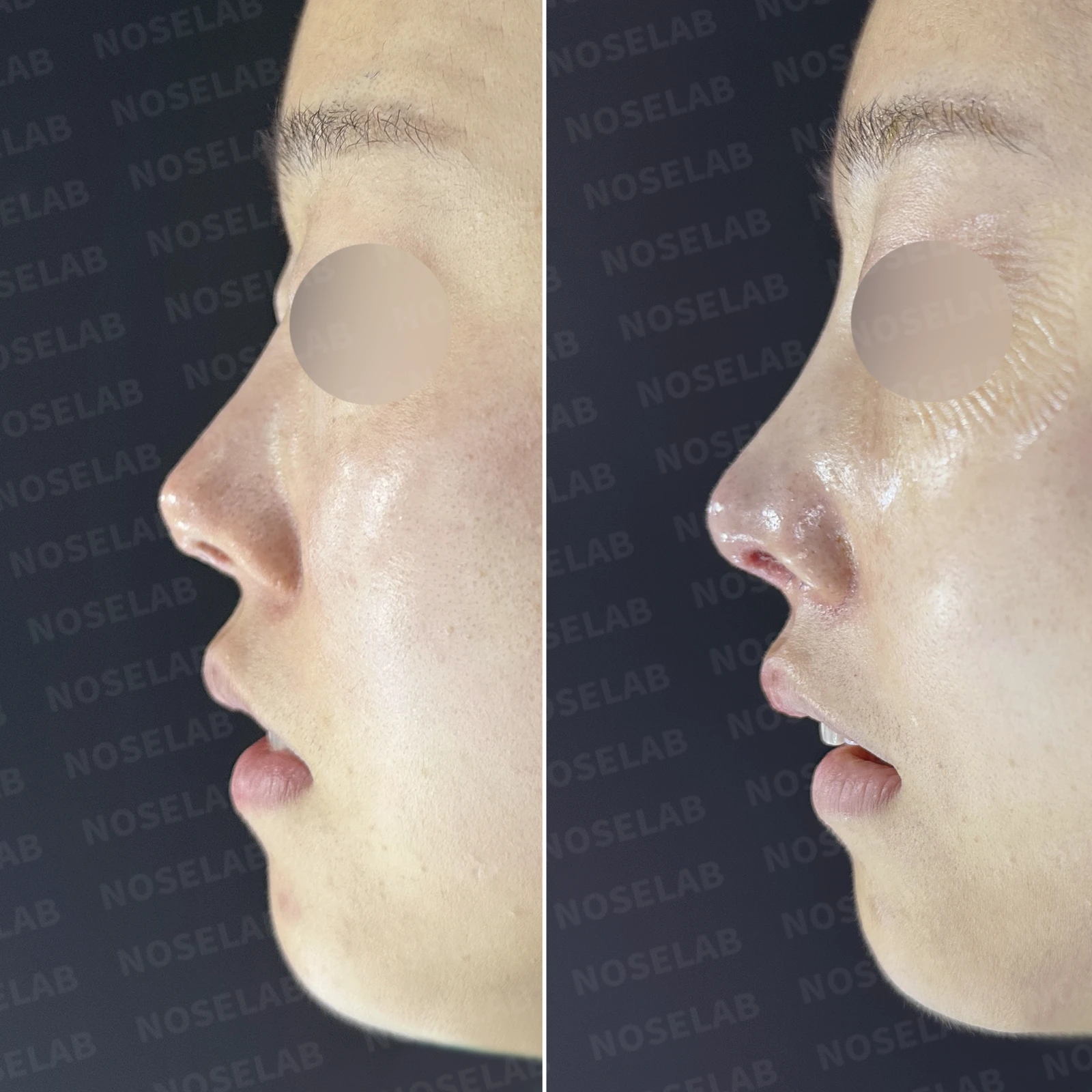
Before surgery / Day 0 immediately after surgery Photos taken immediately after surgery show swelling and may differ from the final result.
Profile view changes:
The upturned nasal tip was lowered naturally
An elegant line with an appropriate nasolabial angle
Creating soft volume at the nasal tip
A stable appearance achieved through skin reinforcement
A refined and natural profile silhouette
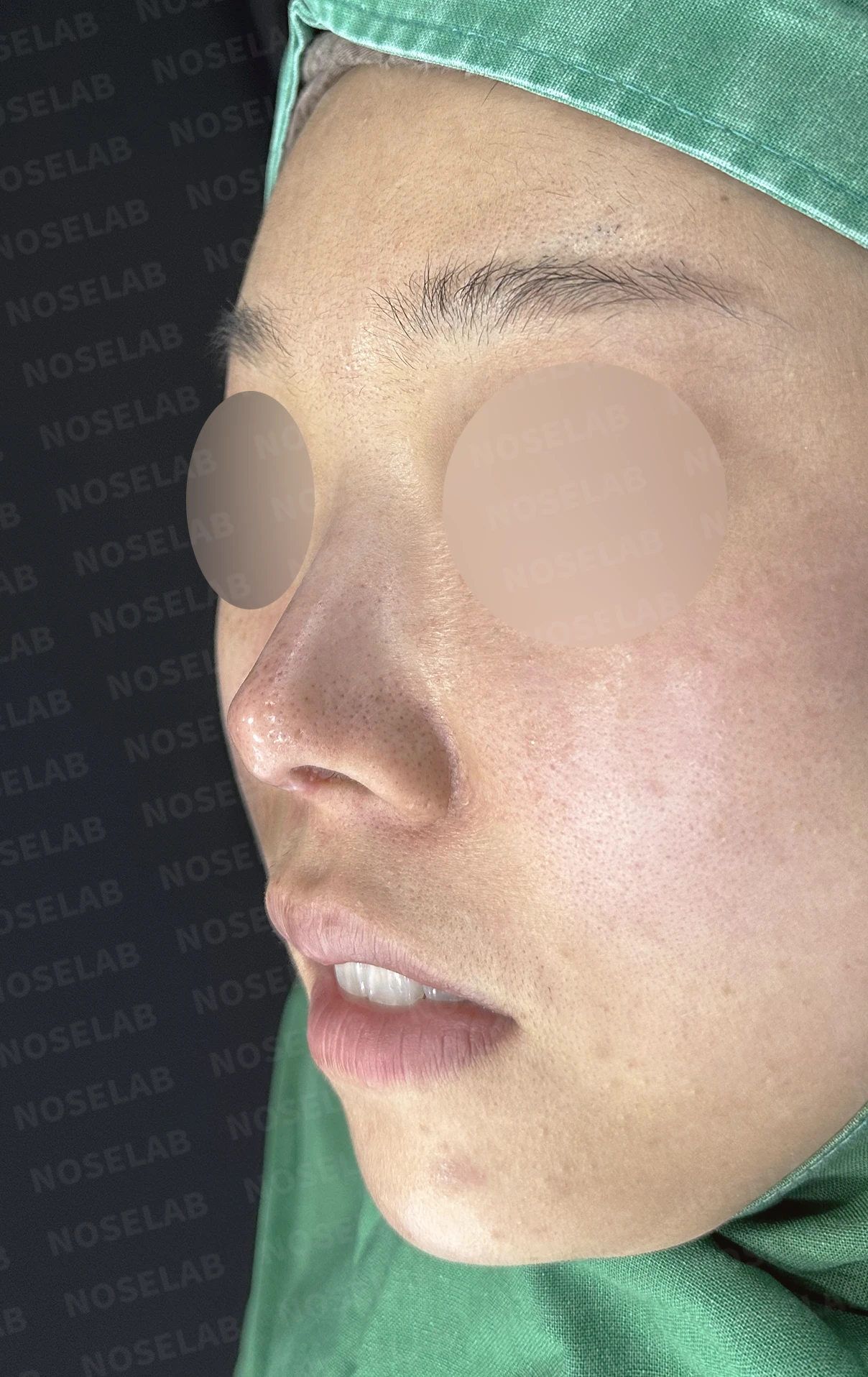
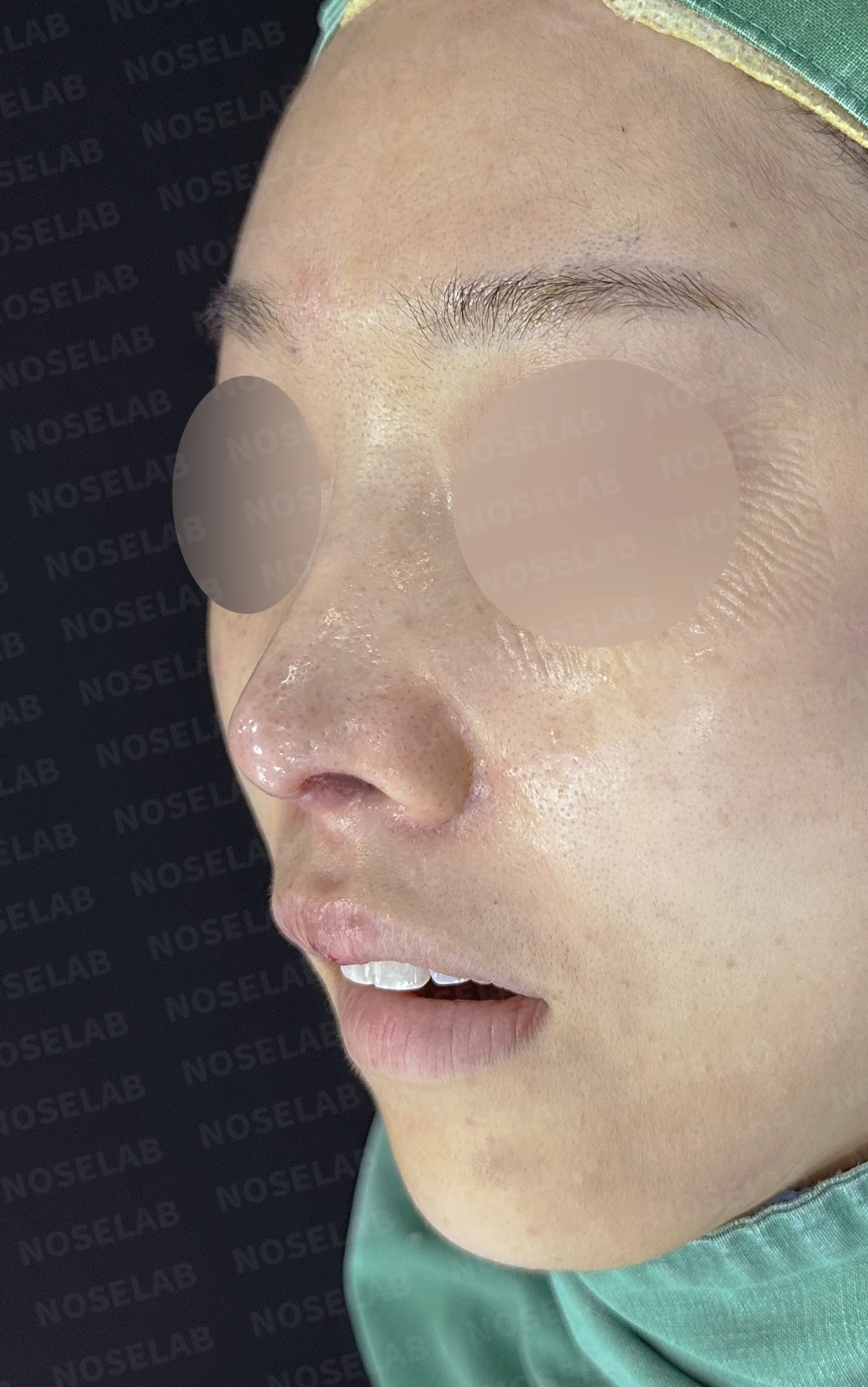
Before surgery / Day 0 immediately after surgery Photos taken immediately after surgery show swelling and may differ from the final result.
Nostril view changes:
Nostril asymmetry improved as much as possible
Alignment of the columellar midline
Achieving bilateral balance
Natural nostril shape
Improving overall symmetry
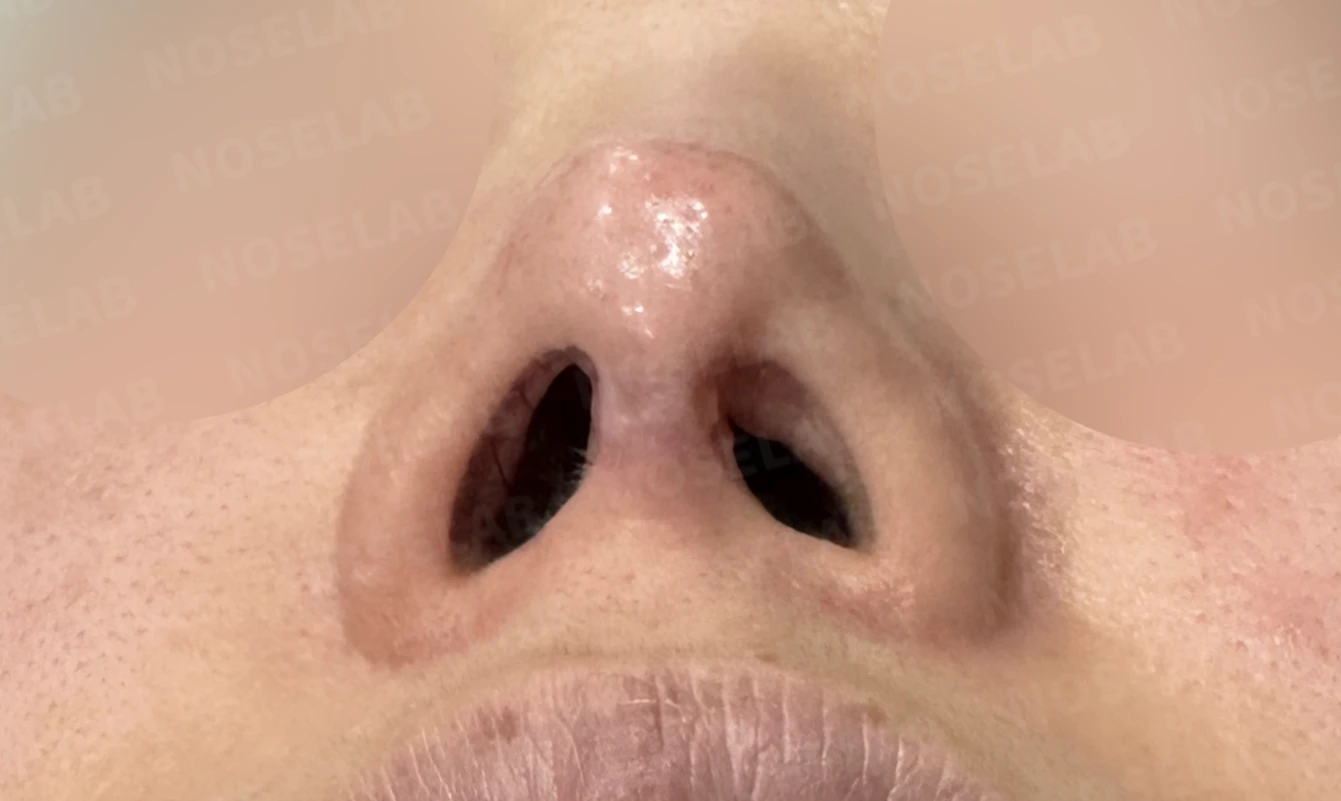
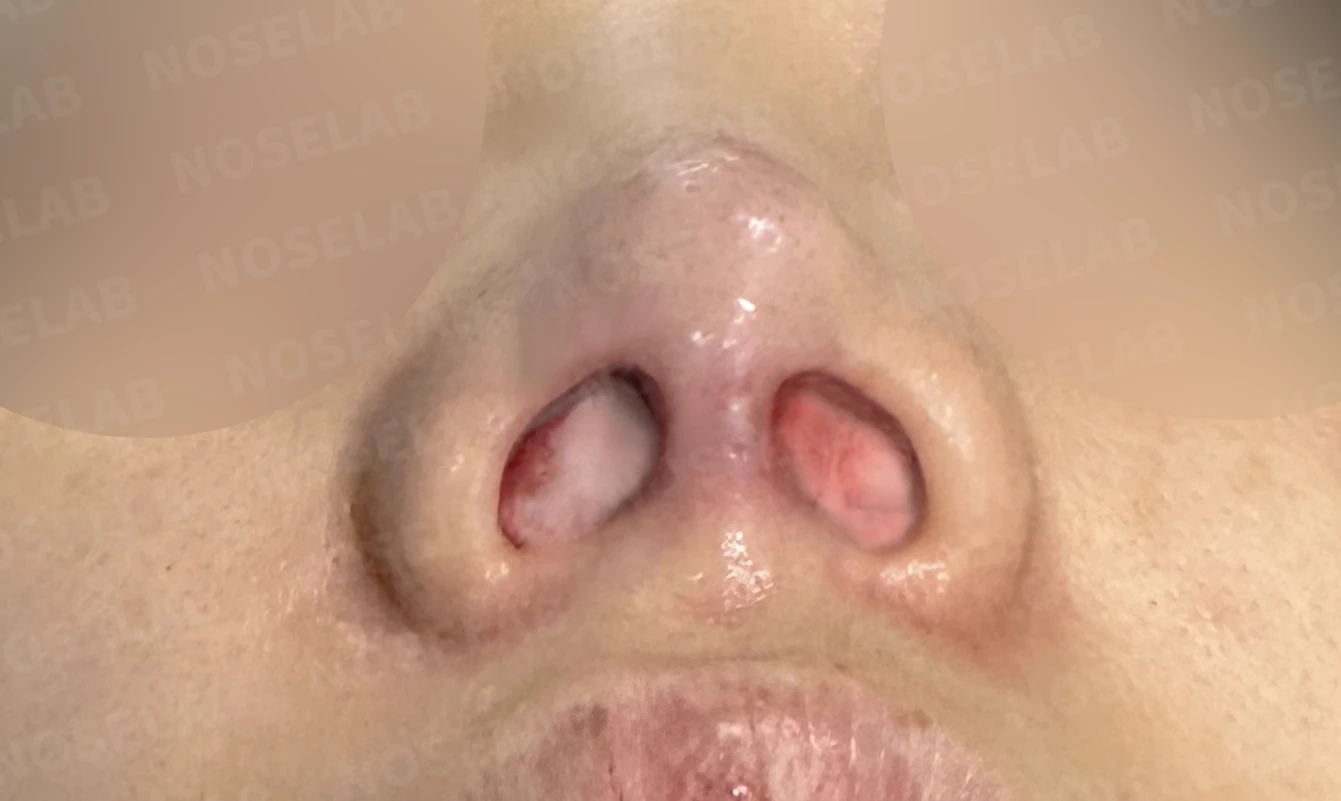
Before surgery / Day 0 immediately after surgery Photos taken immediately after surgery show swelling and may differ from the final result.
💡 Specialist opinion
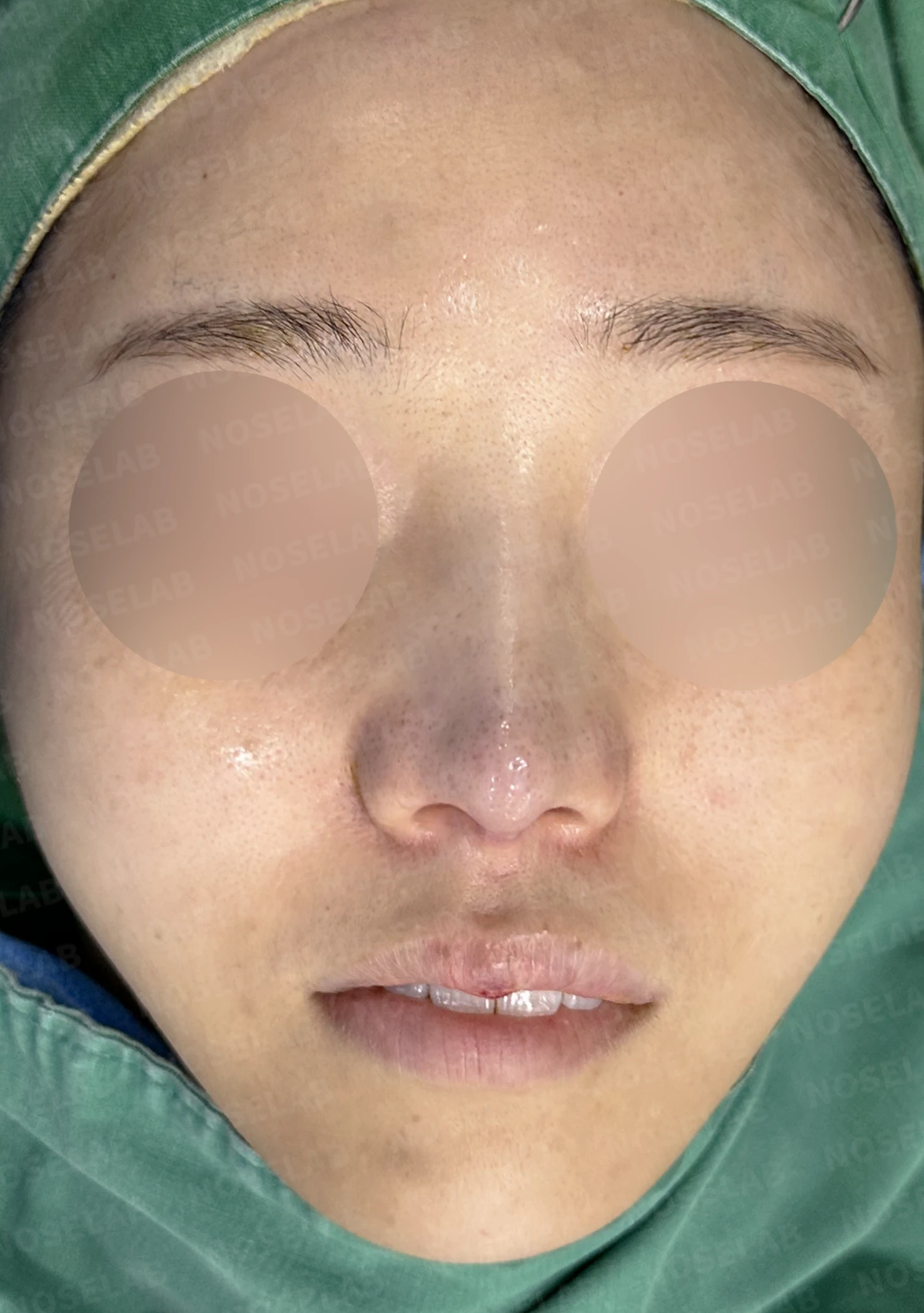
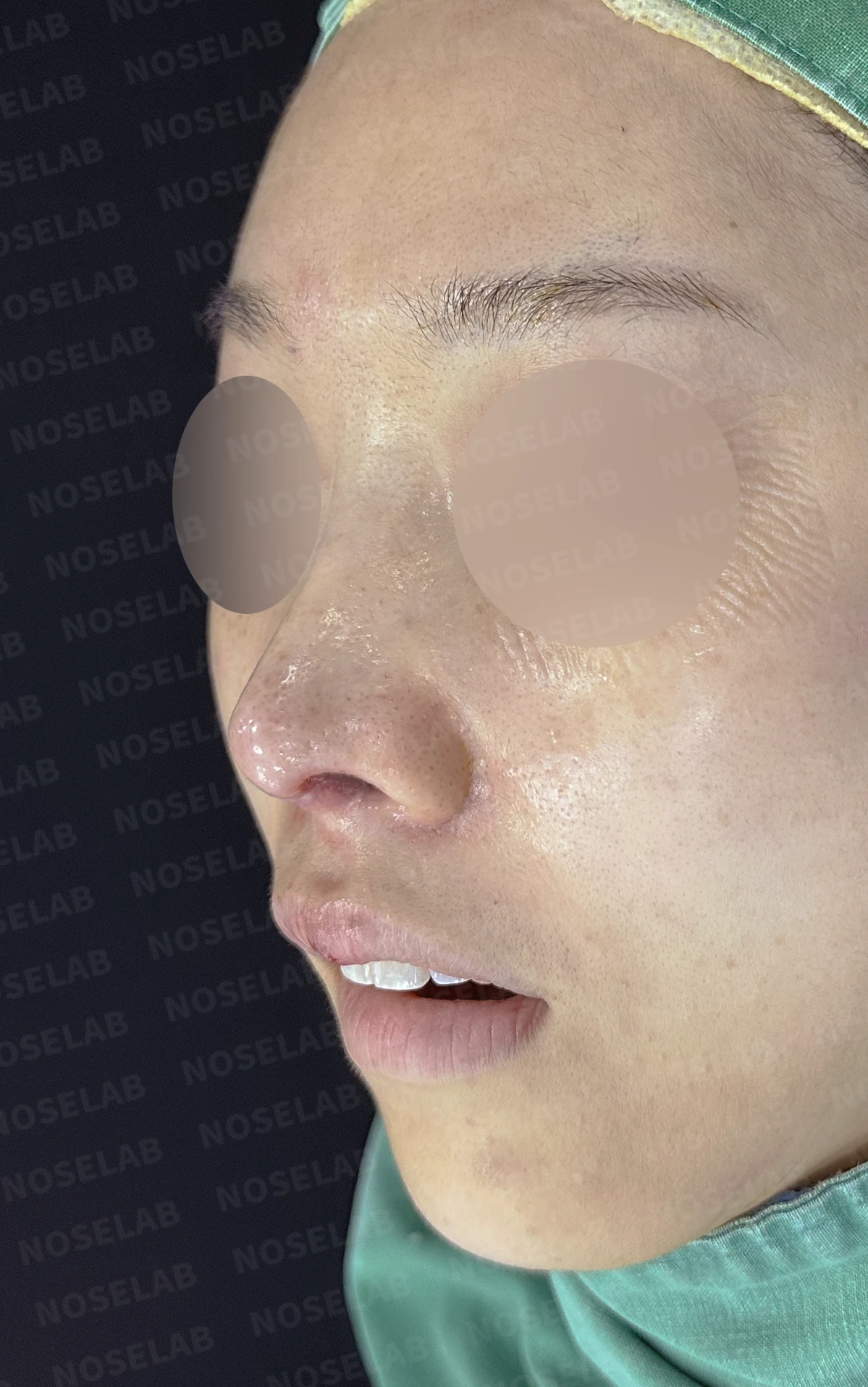
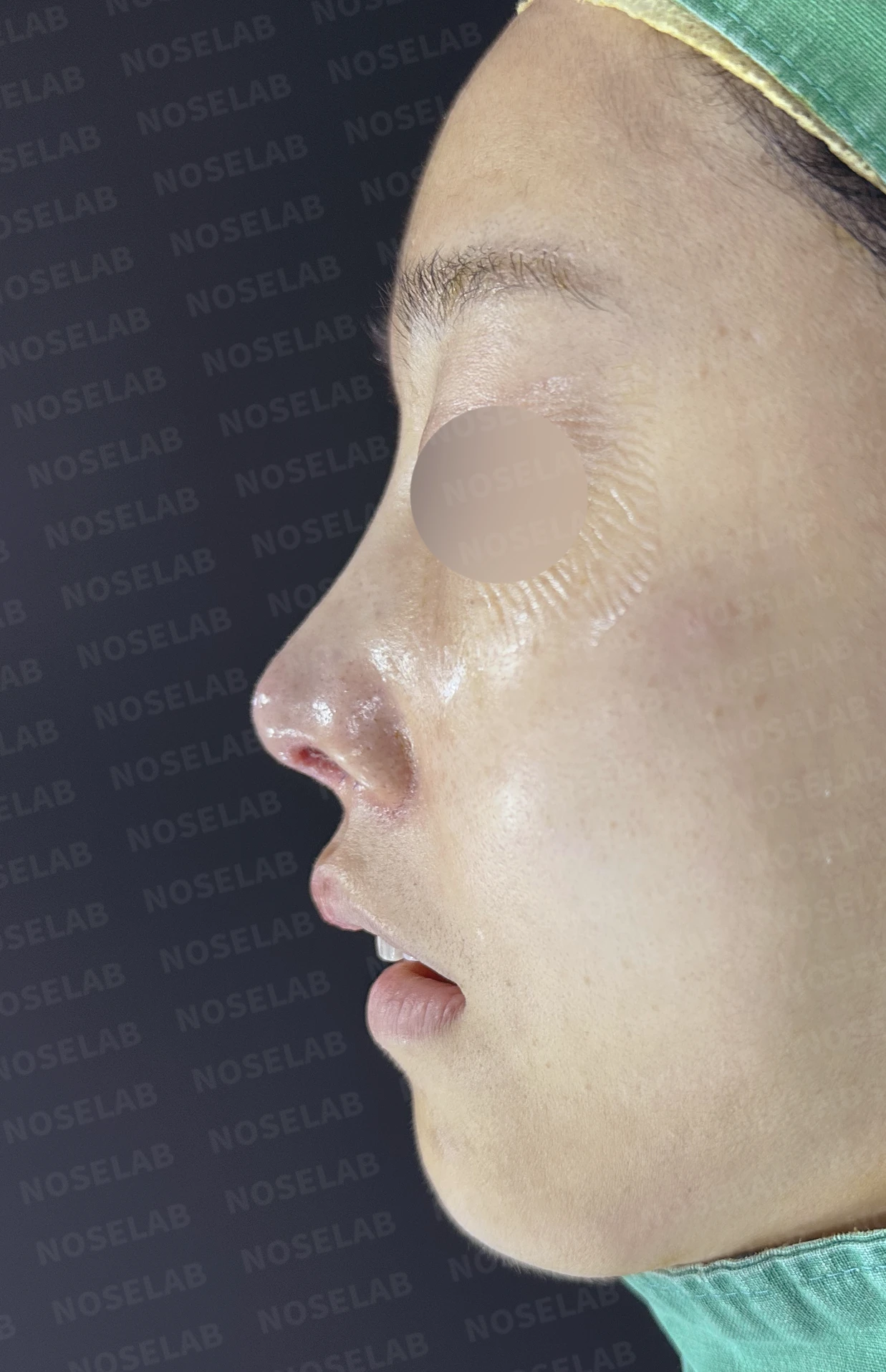
Front, oblique, and profile views on day 0 immediately after surgery. Photos taken immediately after surgery show swelling and may differ from the final result.
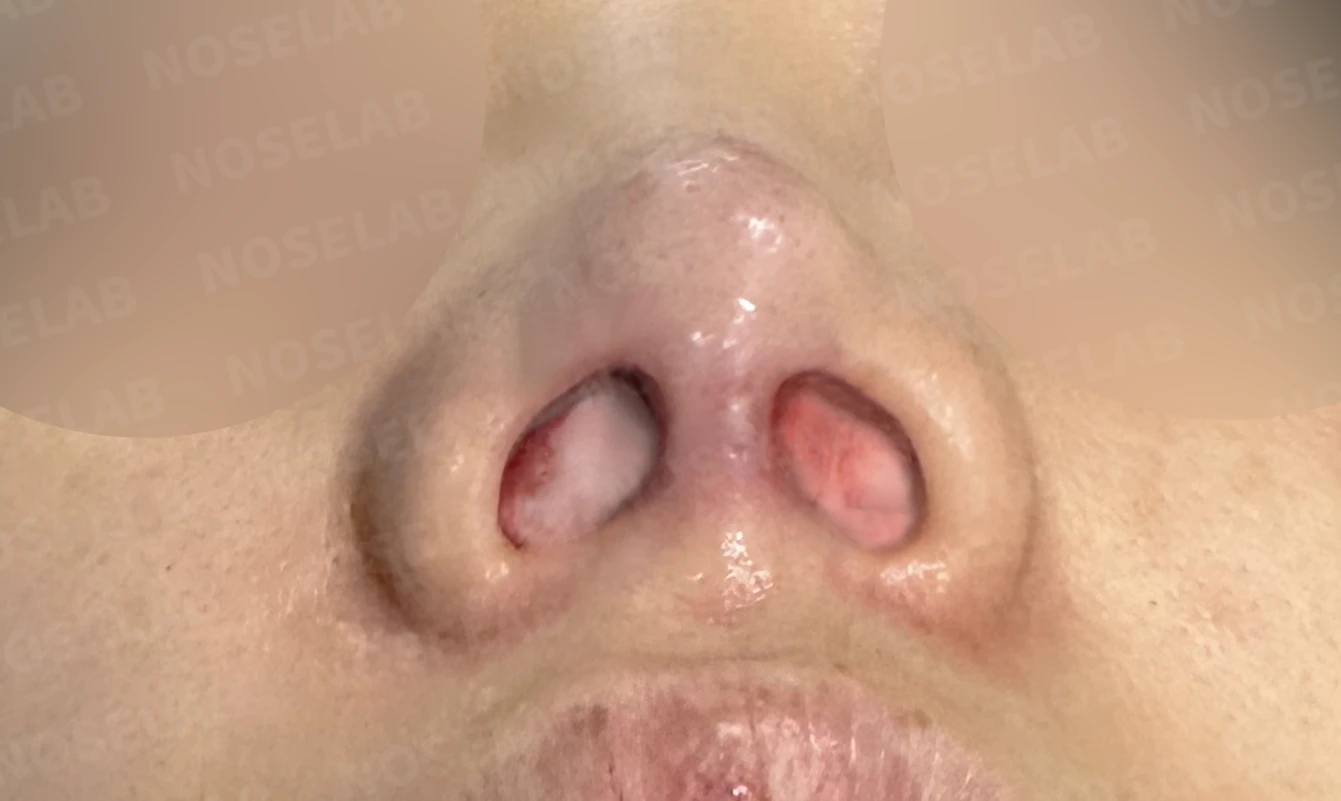
Nostril view on day 0 immediately after surgery. Photos taken immediately after surgery show swelling and may differ from the final result.
One of the most challenging scenarios in revision rhinoplasty is deformity caused by thinning skin. Over time after previous surgery, the skin may gradually thin out, which can cause the tip cartilage to show through or lead to deformities.
In such cases, it is crucial not only to resolve the deformities caused by thinned skin, but also to prevent the same problem from recurring. Merely correcting the visible deformity is not enough; addressing the underlying cause is essential to maintain long-term, stable results.
The most pivotal approach was reducing skin tension. While I was concerned the patient might feel disappointed if the height was lowered, we maintained as much height as possible within a safe range that placed no strain on the skin. Ultimately, the patient could barely perceive any change in height and was pleased with the more natural and stable appearance.
Skin reinforcement using dermis was a critical step. The thinned skin over the bridge and columella was reinforced with dermis to increase skin thickness. This does not simply add volume; it improves skin strength to provide long-term stability.
To minimize the possibility of tip cartilage show-through, perichondrium harvested from autologous rib cartilage was layered double for reinforcement. Perichondrium is very soft yet effective for reinforcement, serving exceptionally well to add natural volume to the nasal tip while preventing cartilage visibility.
Correction of the upturned nose and improvement of nostril asymmetry were carried out concurrently. Septal extension was utilized to bring the nasal tip down naturally, balancing both nostrils to achieve overall symmetry. Only when all of these steps harmonize can a natural and aesthetically pleasing result be achieved.
Revision surgery requires much more detailed and cautious planning than primary rhinoplasty. When the skin has thinned, an especially careful approach is needed to find fundamental solutions that prevent recurrence.
I will continue to provide customized surgeries that reflect each patient's individuality and requests through this meticulous approach. I hope this helps those with similar concerns.
This was Dr. Peter C. Kang. Thank you.
#upturnednosecorrection #nostrilasymmetry #thinskincorrection #dermisgraft #autologousribcartilage #perichondriumreinforcement #revisionrhinoplasty #naturalnasaltip #softnasaltip #skintension #saferhinoplasty #tipcartilage #columellareinforcement #closedrhinoplasty #closedrevisionrhinoplasty

Limitations and risks
When autologous rib cartilage is used, scarring and pain may remain at the donor site on the chest, and pneumothorax (pleural injury) can occur rarely. Over time, the grafted cartilage may warp or undergo partial resorption.
When revising after implant removal, contracture may progress again after removal, the nasal height and length may decrease, and staged surgery may be necessary depending on the skin condition.
When the septum is corrected at the same time, nasal obstruction may persist or recur, and in rare cases, septal perforation or changes in smell may occur.
Common potential risks include infection, bleeding, asymmetry, scarring, skin necrosis, and insufficient improvement; results vary depending on individual skin condition and previous surgical history.