Hello, I am Dr. Peter C. Kang.
Today, I would like to share the case of a patient who had a premaxillary implant from a previous surgery removed and achieved a natural yet refined nasal contour.
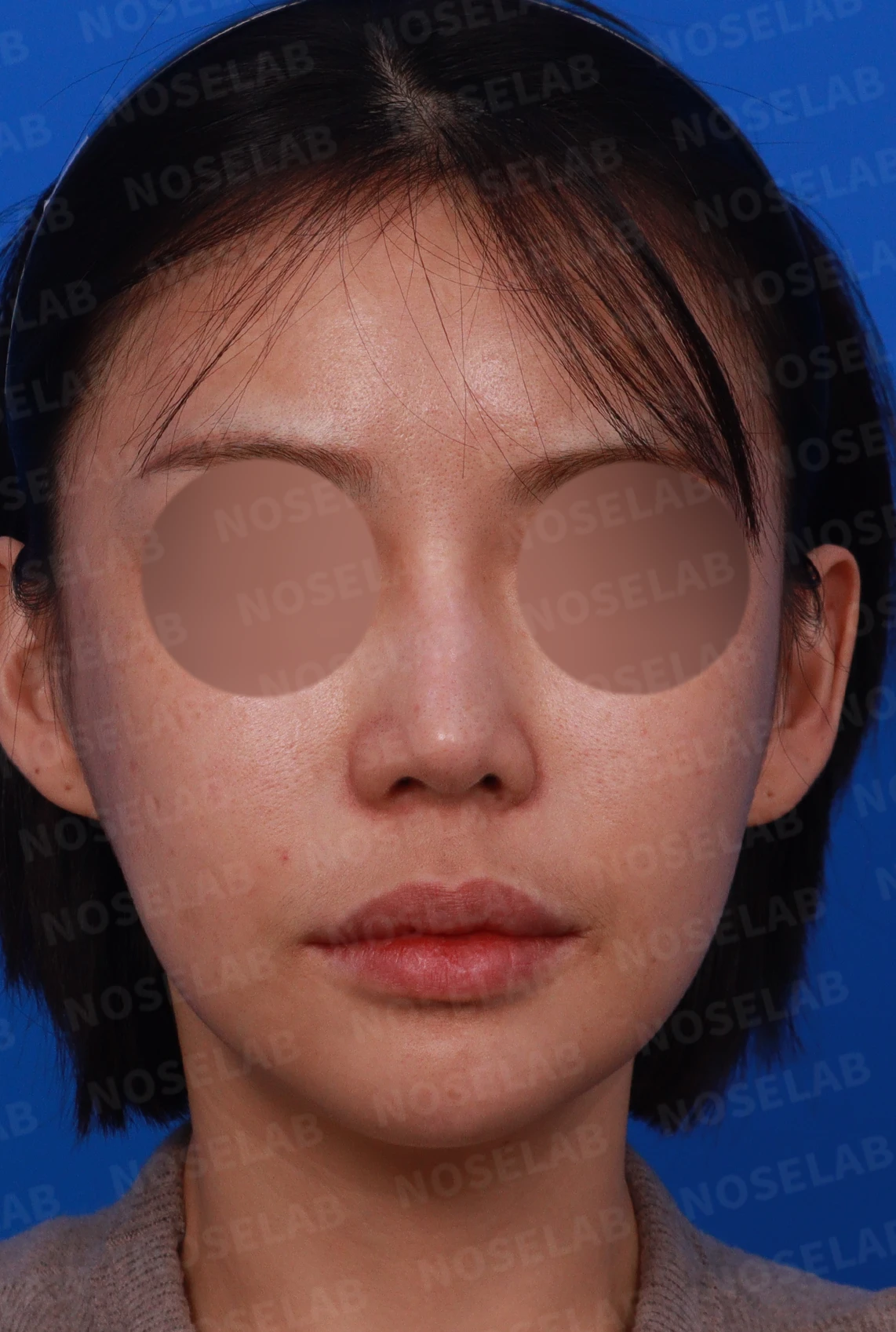
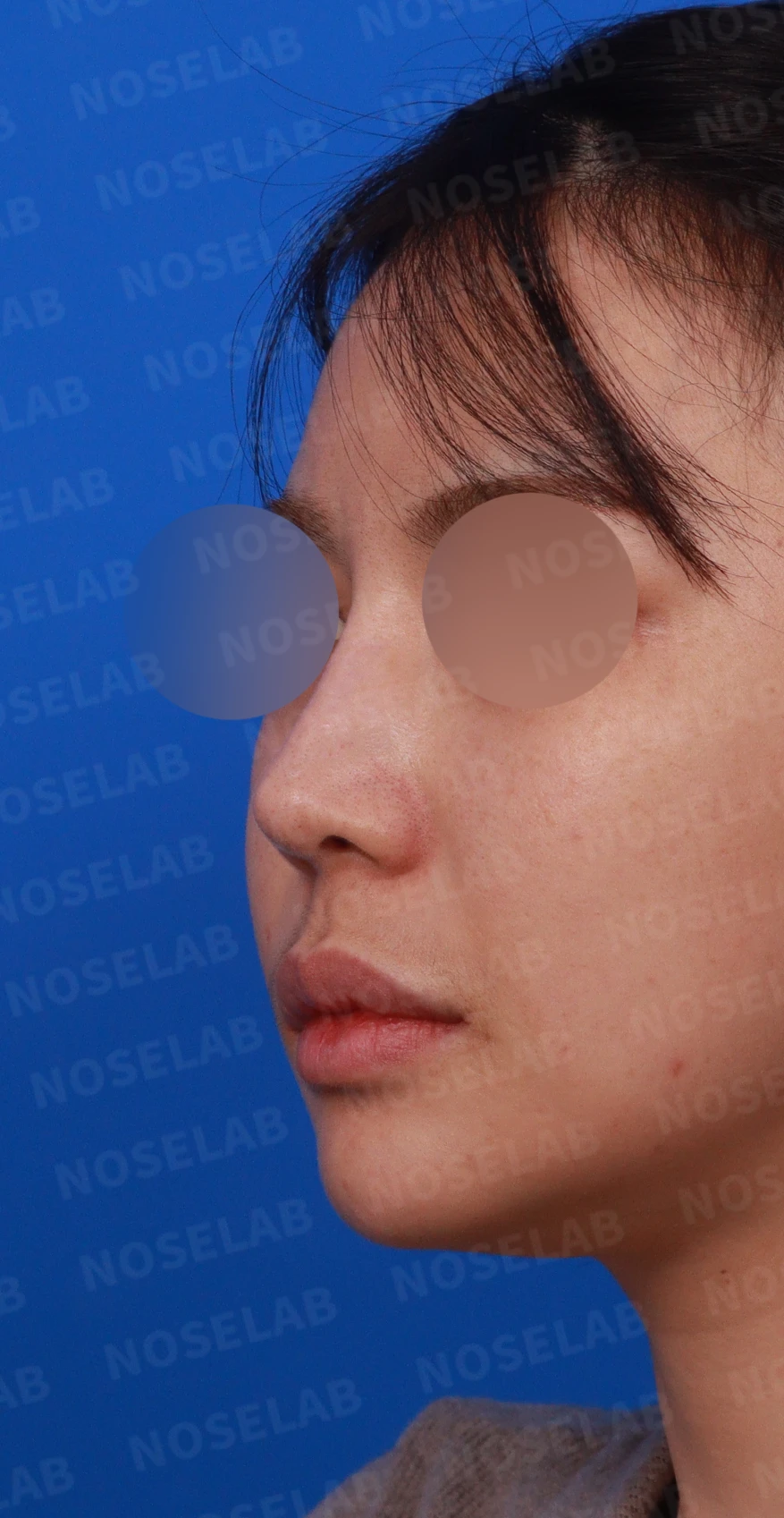
Front, left profile, and oblique views during design consultation
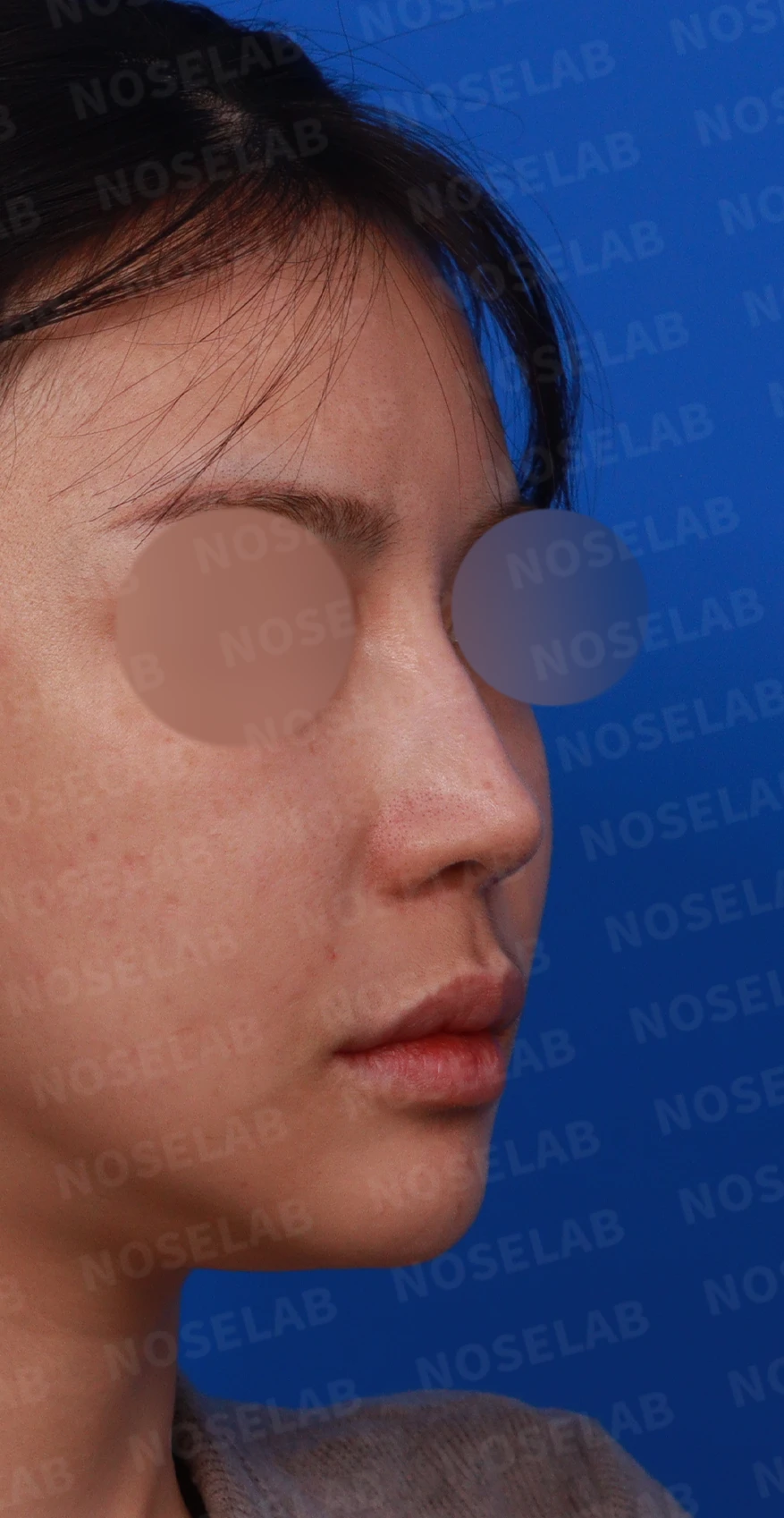
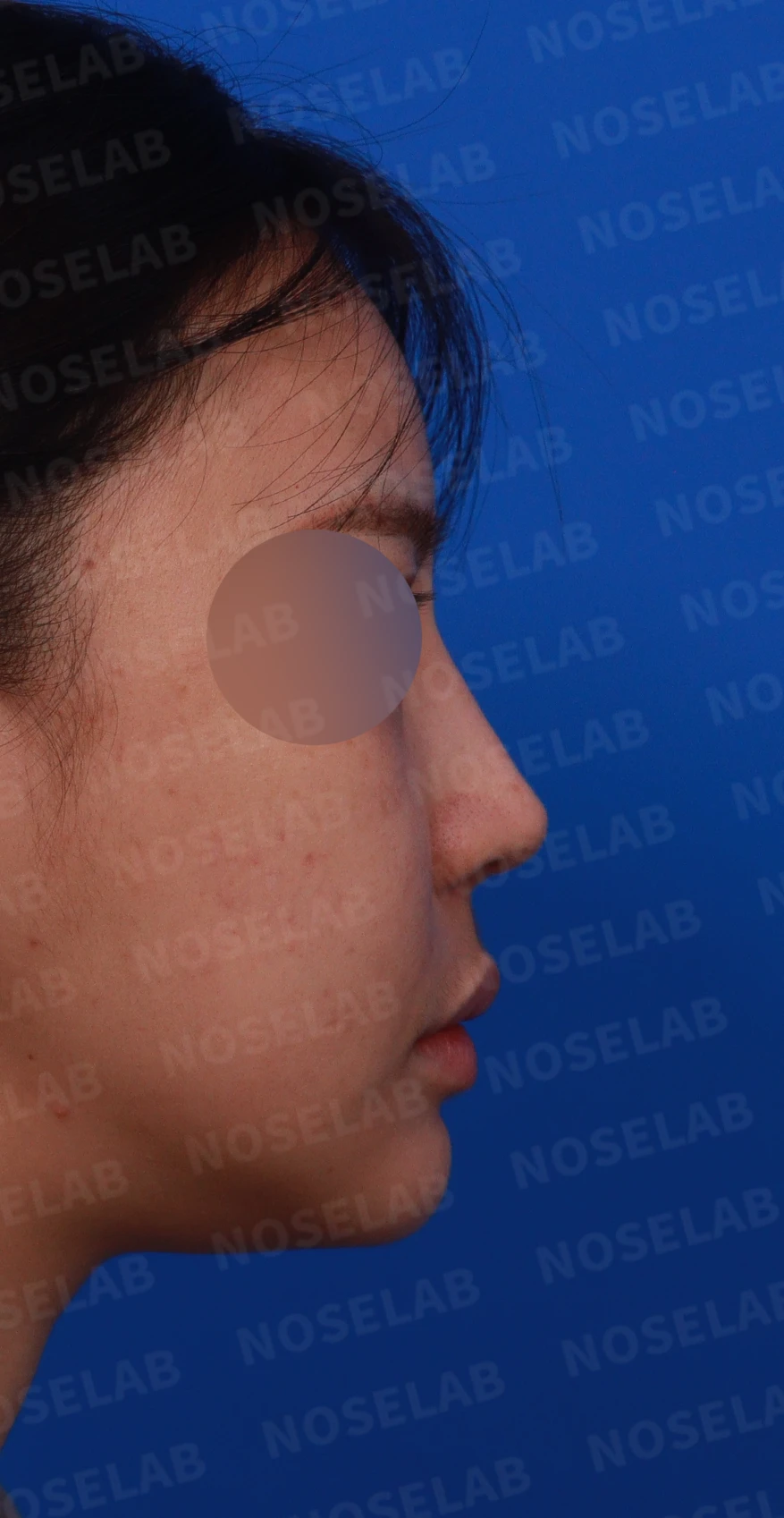
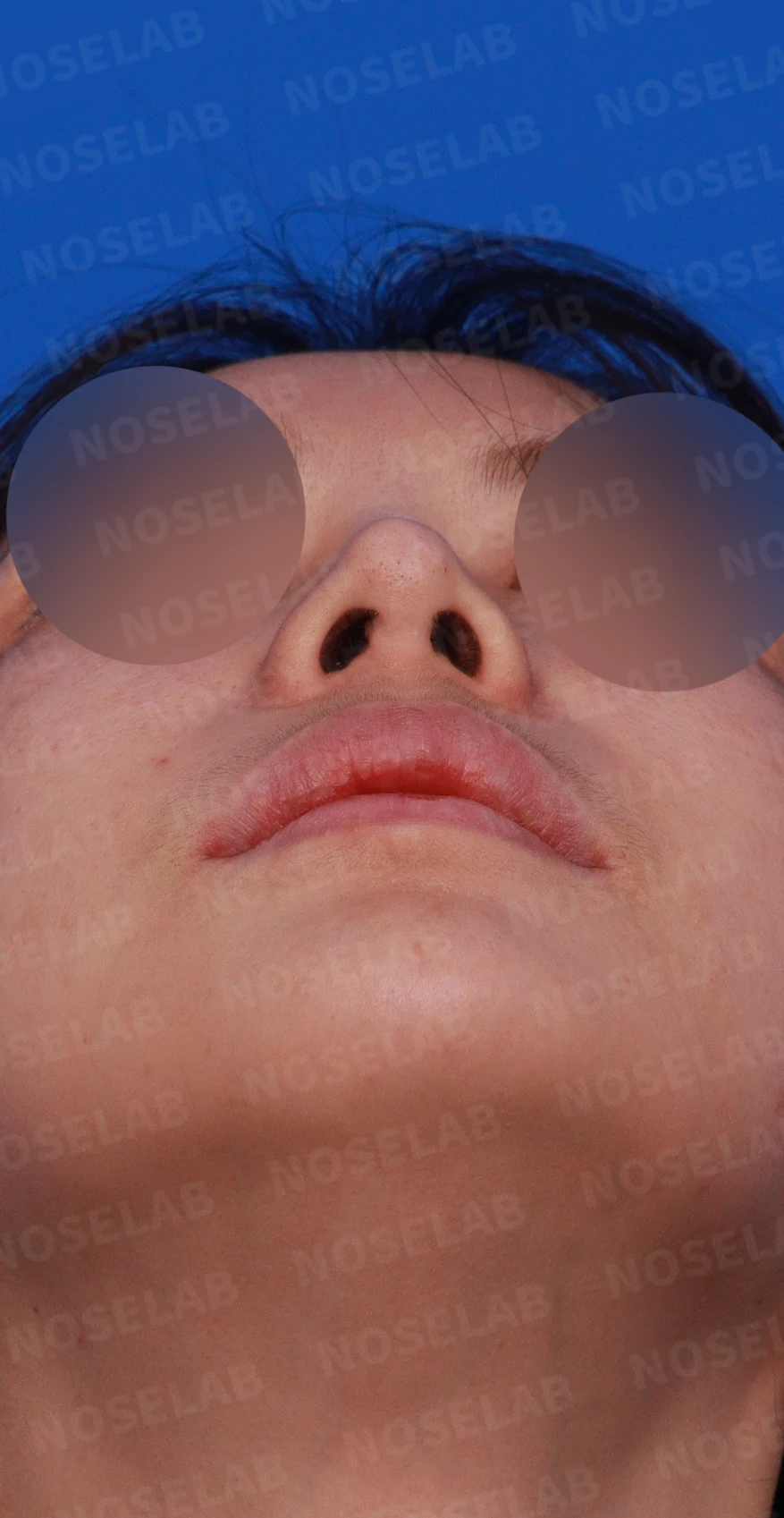
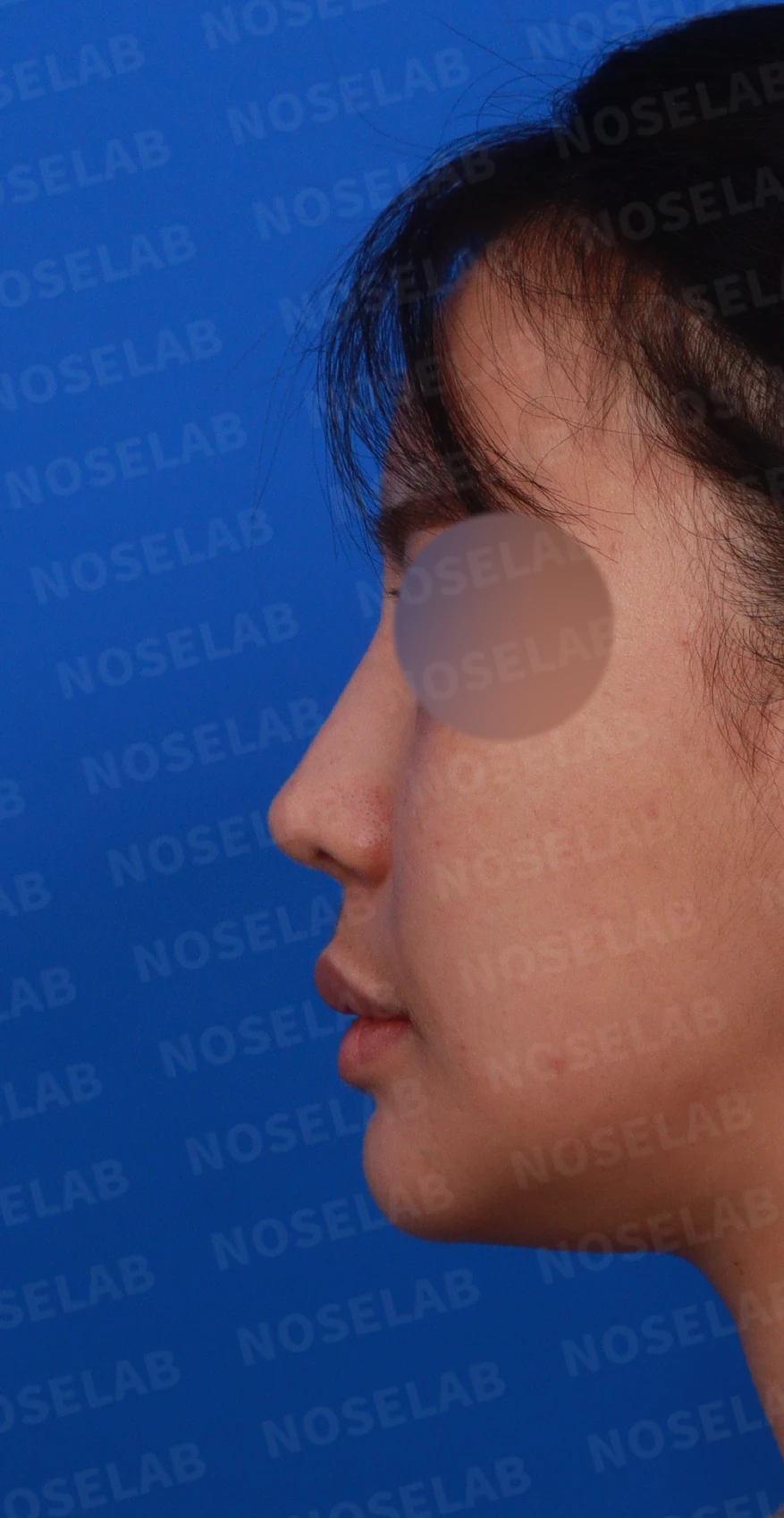
Design consultation: right oblique, profile, and basal (nostril) views
📍 Surgical history
13 years ago: Nasal filler procedure
10 years ago: Silicone implant + ear cartilage surgery
Same period: Revision surgery performed one week later due to a step-off between the bridge and tip
2024: 1 contouring injection treatment for nasal soft tissue
3–4 years ago: Forehead filler procedure
🔎 Initial consultation findings
Front view
Overall crooked nasal shape
A harsh impression caused by a high radix starting point
Uneven skin surface due to thin skin
An unnatural overall appearance
2. Profile view
High glabella
Nose appearing long
Uneven, irregular nasal dorsum surface
3. Nostrils
Asymmetry between the left and right nostrils
A columella noticeably tilted to the left
Overall state of imbalance
✨ Patient's requests
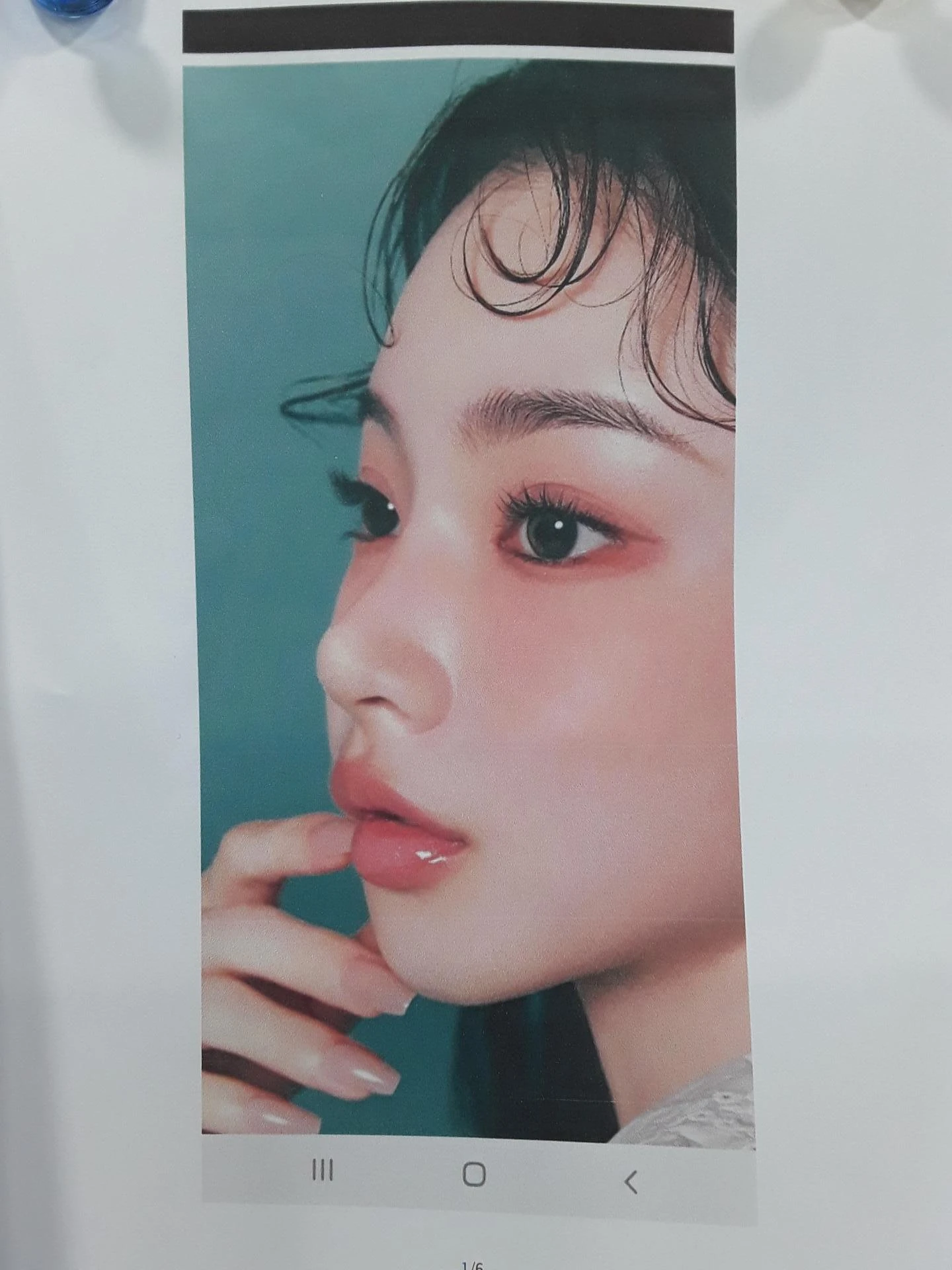
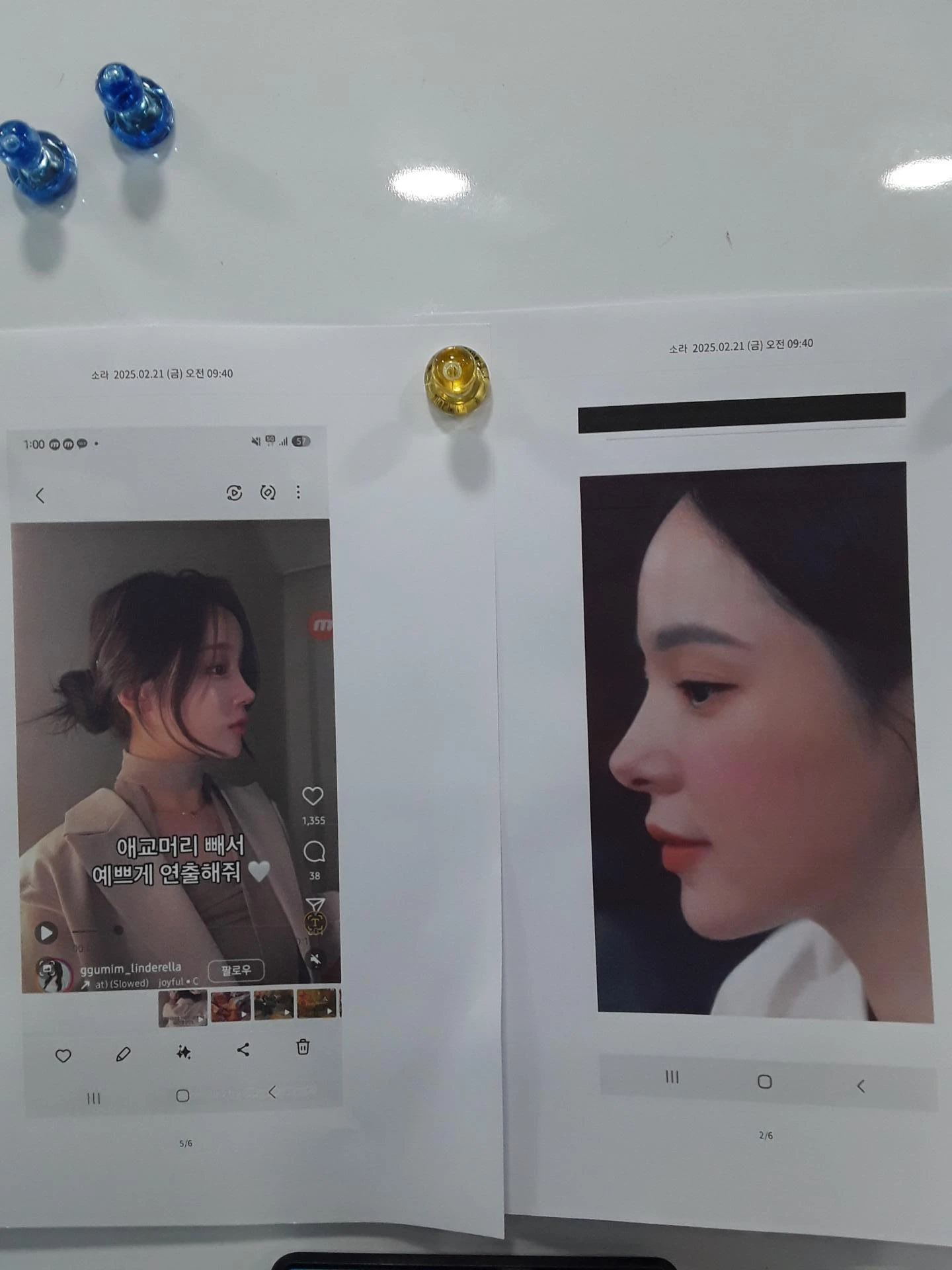
Natural yet defined nasal line
A softer, youthful nasal shape
Improvement of the uneven surface
Correction of crooked nose
💉 Surgical procedure details
Foreign material removal
Complete removal of foreign material in the glabella region
Naturally lowering the high radix starting point that caused a harsh impression
Careful removal of the premaxillary implant from the previous surgery
Removal of a large amount of ear cartilage irregularly grafted into the right dorsal skin
Dermal graft placement to achieve uniform skin thickness
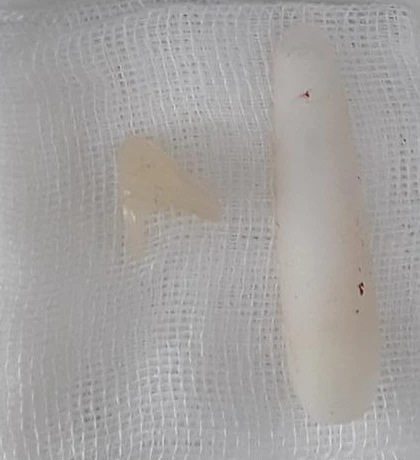
Photograph of the removed premaxillary implant and silicone implant
2. Structural improvement
Lateral nasal bone osteotomy performed to correct the crooked nose
Septal extension using autologous rib cartilage to secure structural stability
Lower lateral cartilage repositioning to improve tip shape
Cartilage suturing (tip binding) performed for a natural tip contour
3. Functional improvement
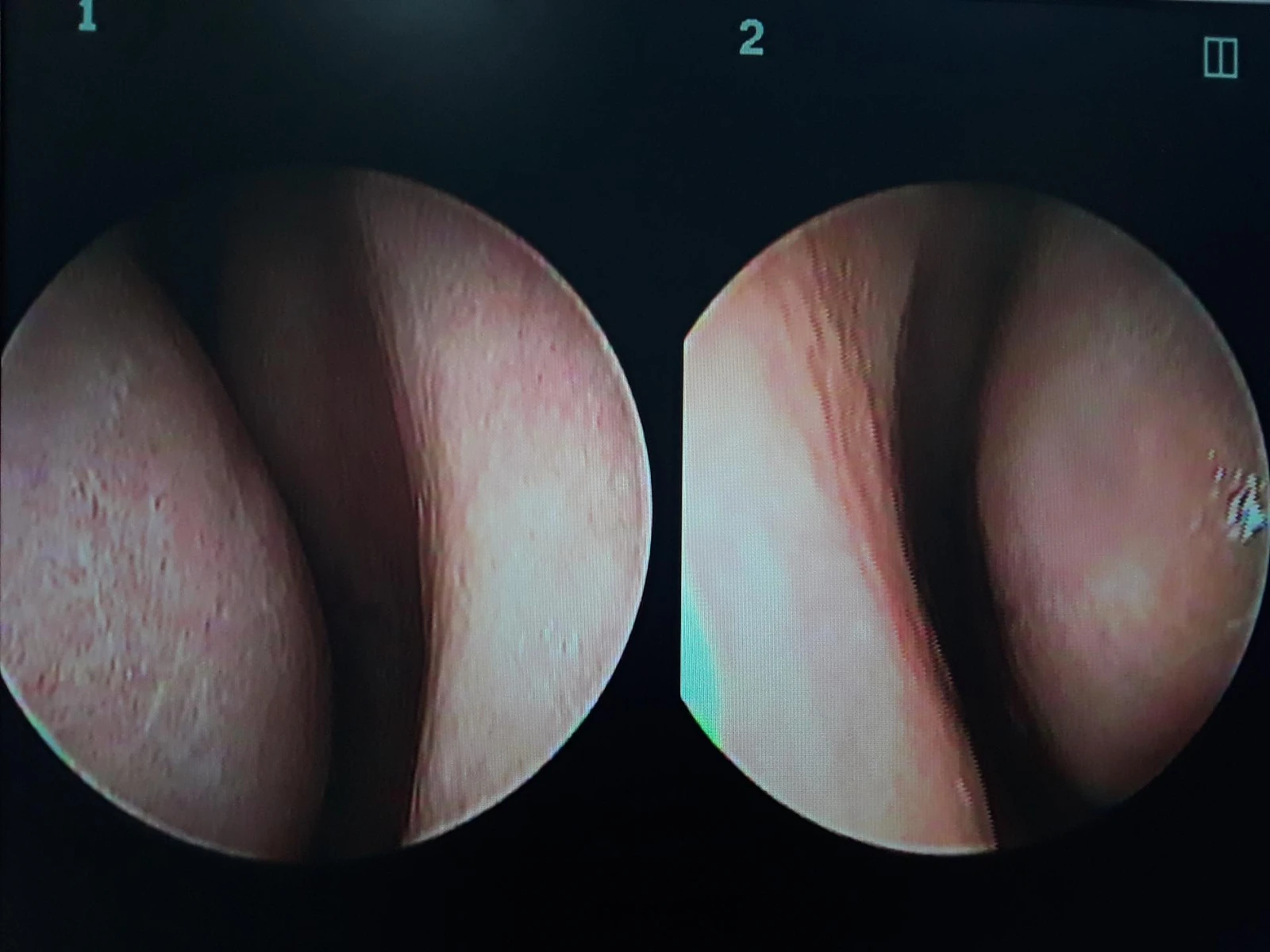
Nasal endoscopy photograph
Septoplasty for deviated septum correction
Radiofrequency submucosal resection of the inferior turbinates to treat hypertrophic rhinitis
Improvement in overall breathing function and nasal obstruction
✅ Surgical results
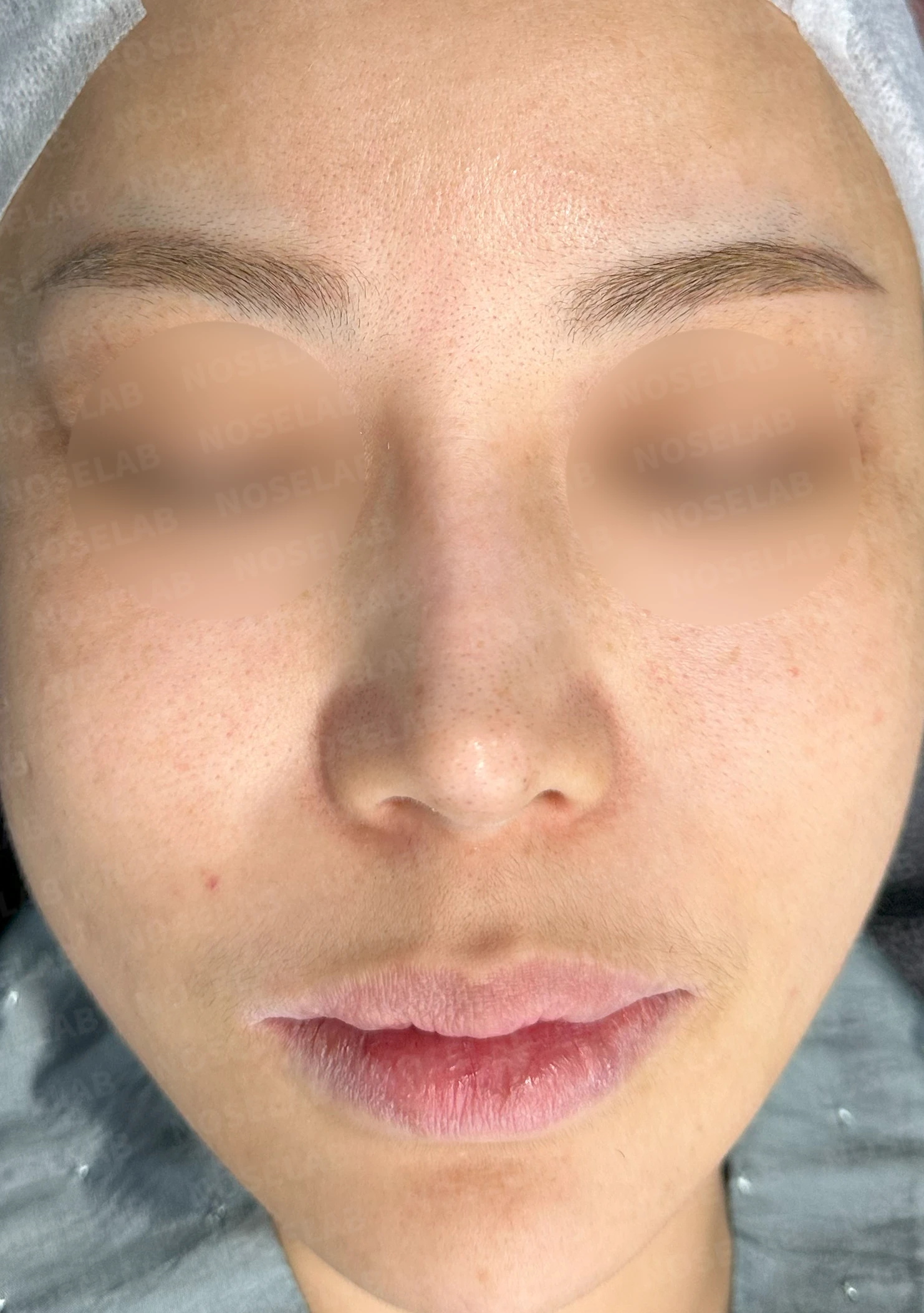
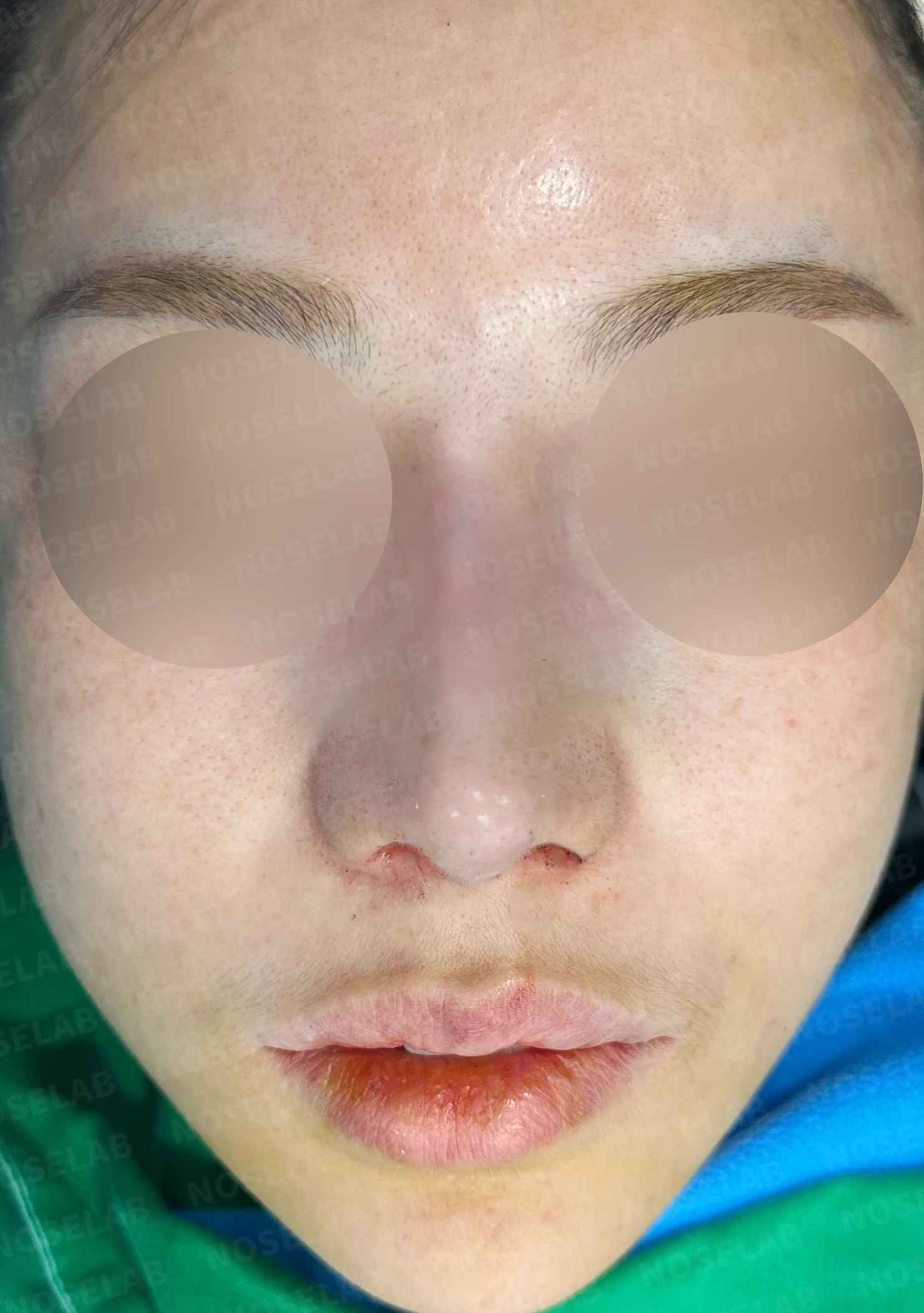
Before surgery / Day 0 immediately after surgery Photos taken immediately after surgery show swelling and may differ from the final result.
Front view
The crooked nose has been symmetrically realigned
The radix starting point was naturally adjusted to soften the harsh impression
The previously irregular surface was smoothed
A harmonious overall balance was established
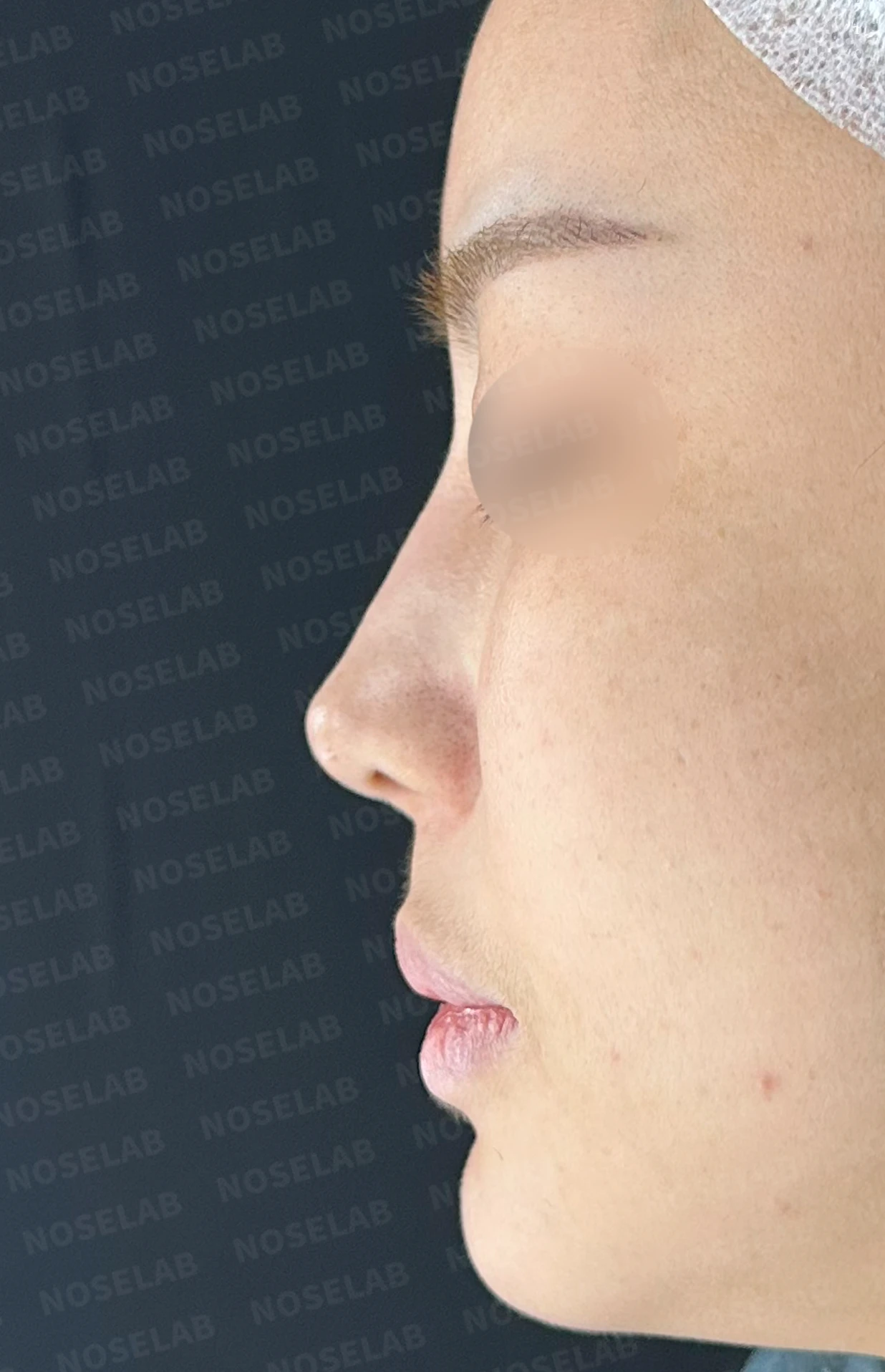
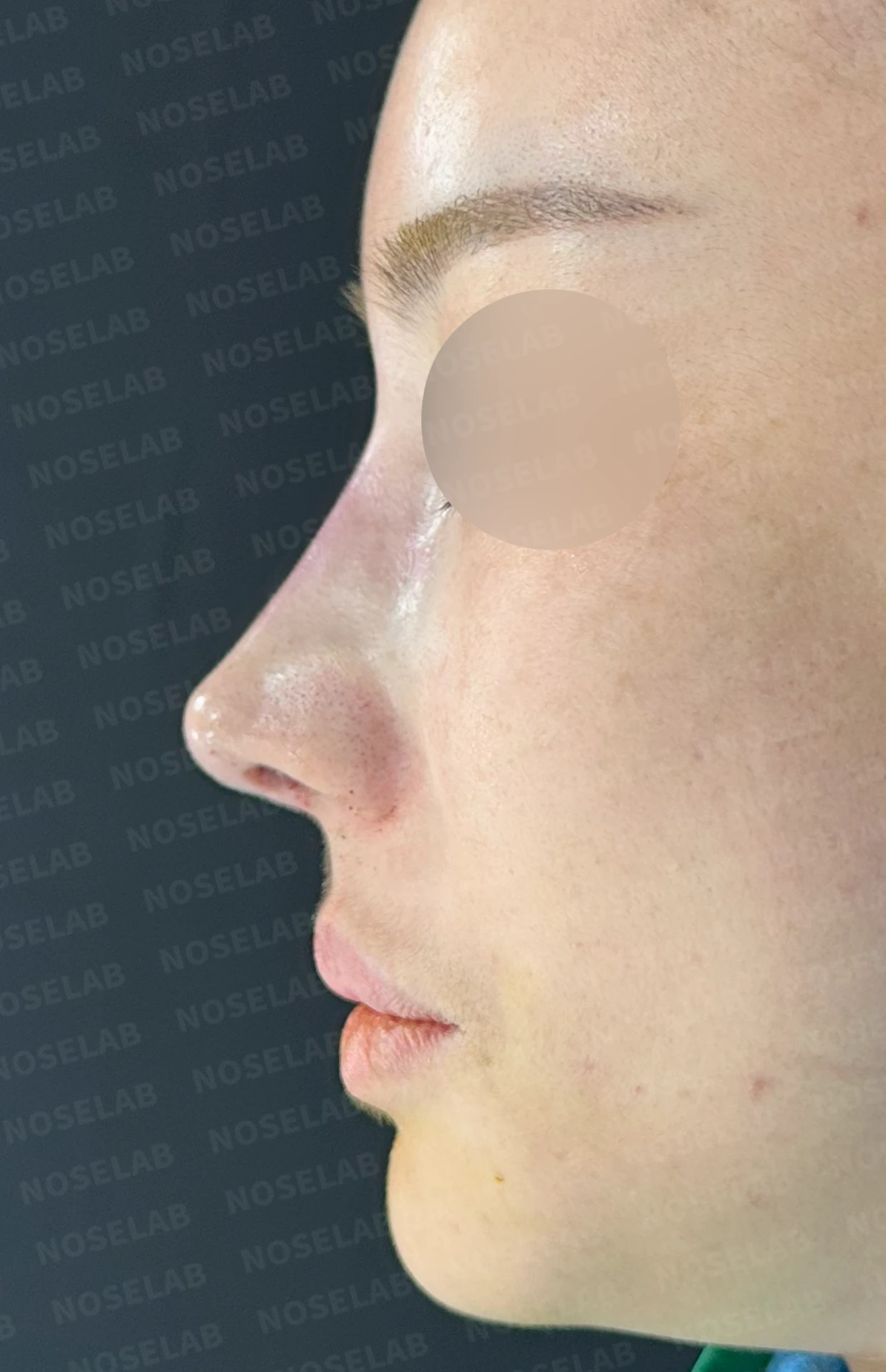
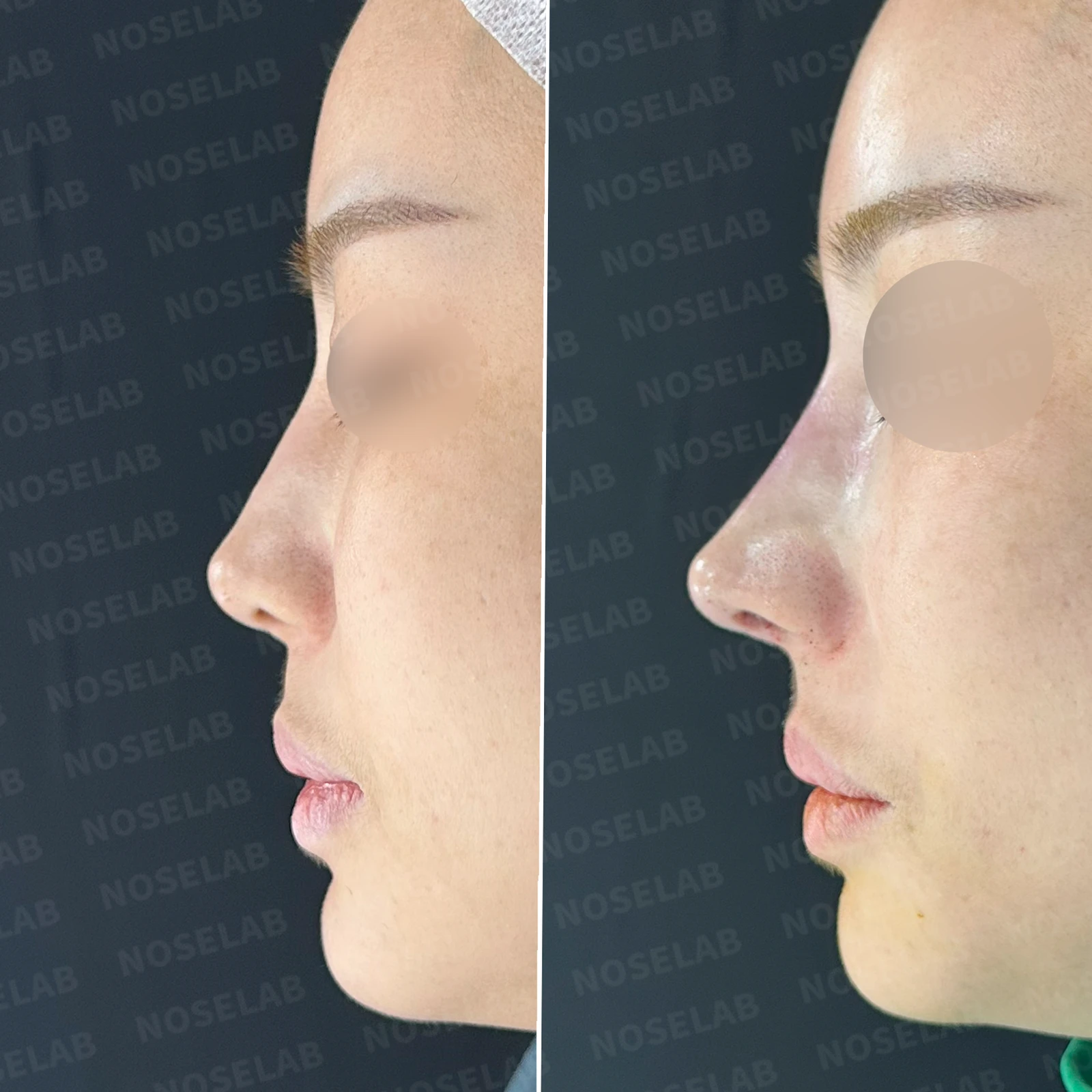
Before surgery / Day 0 immediately after surgery Photos taken immediately after surgery show swelling and may differ from the final result.
2. Profile view
Tip projection was appropriately increased, enhancing three-dimensional definition
Radix corrected to a natural height
A nose that previously appeared long was refined into balanced proportions
Creation of soft, feminine contours and three-dimensional definition
Improvement of the protruding mouth appearance by establishing a natural nasolabial angle after premaxillary implant removal
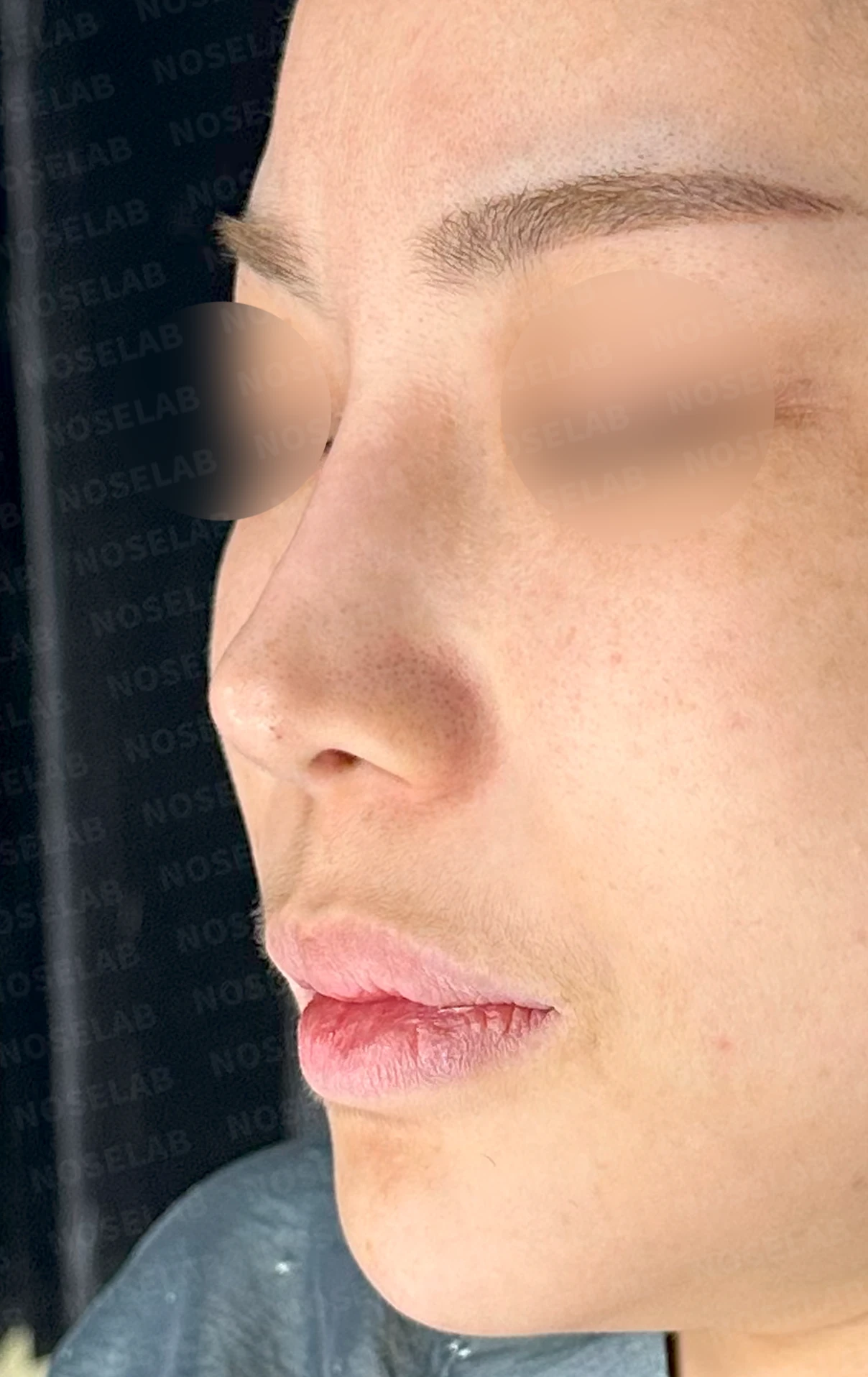
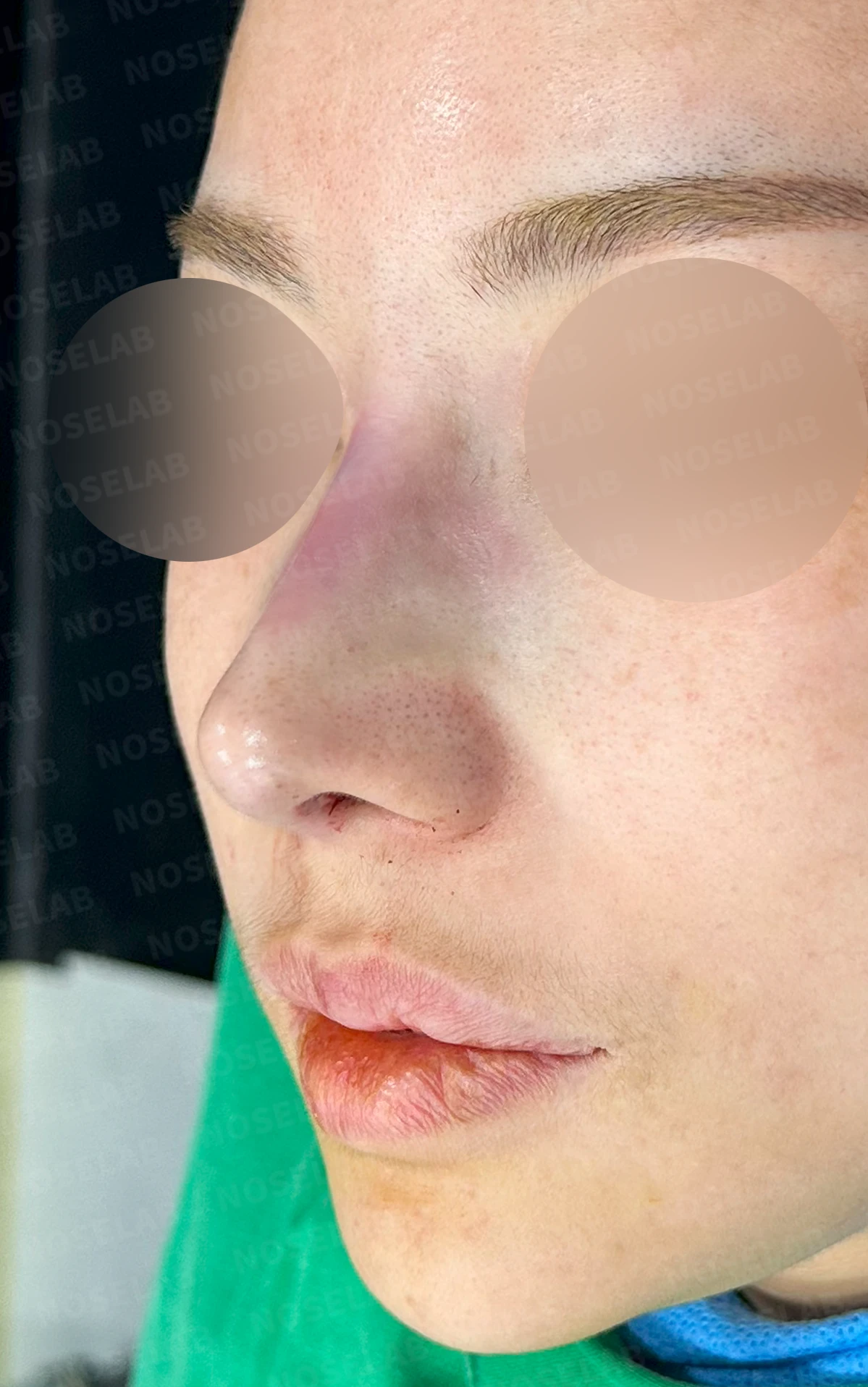
Before surgery / Day 0 immediately after surgery Photos taken immediately after surgery show swelling and may differ from the final result.
3. Nostrils
Improved symmetry between the left and right nostrils
The columella, which had been tilted to the left, was corrected
A refined and balanced nasal tip shape achieved
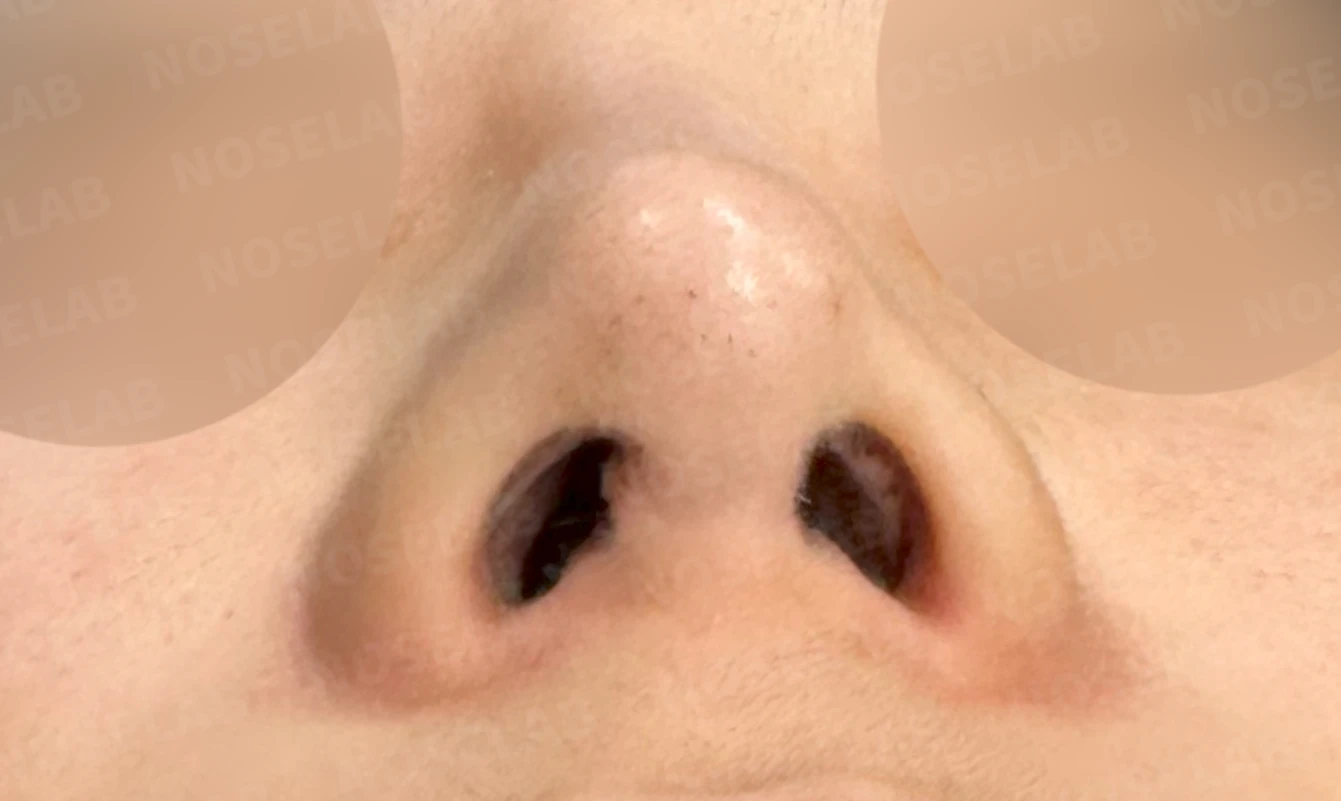
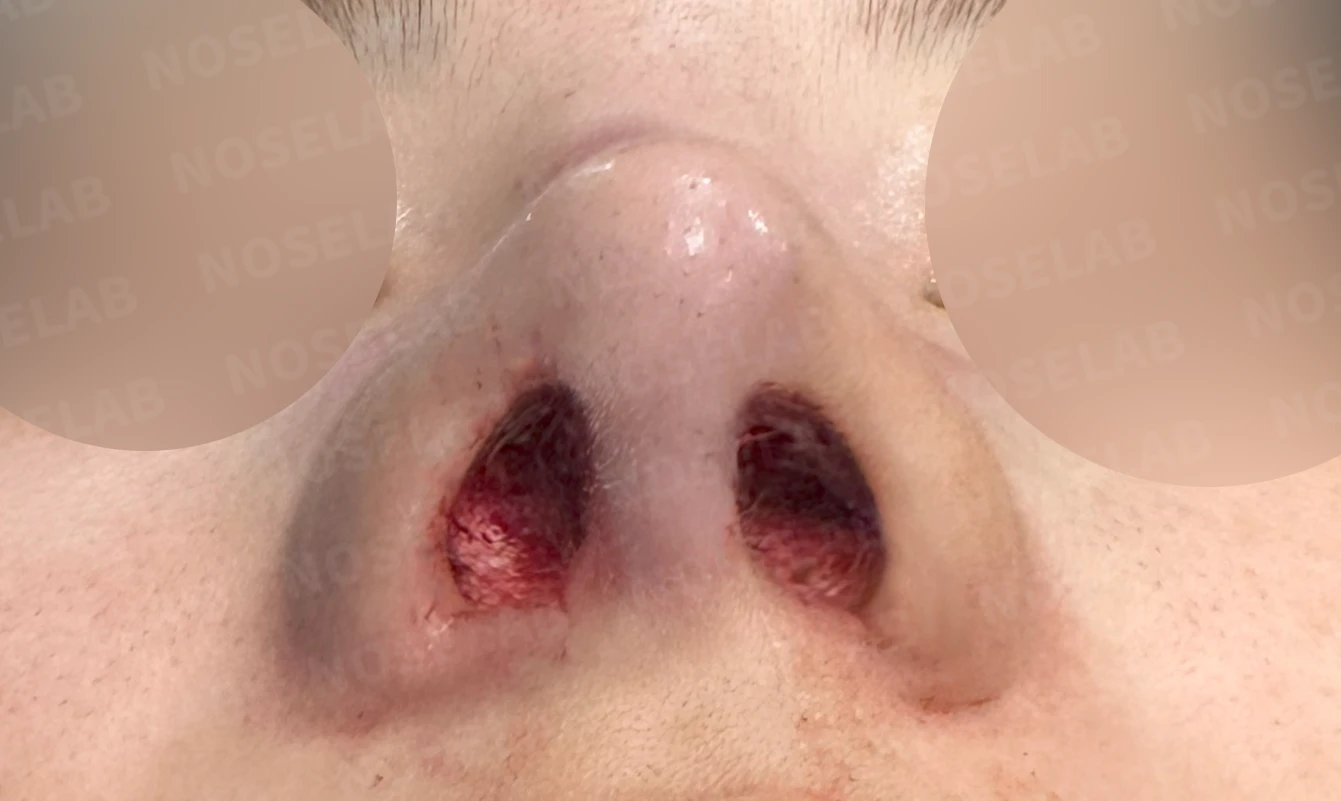
Before surgery / Day 0 immediately after surgery Photos taken immediately after surgery show swelling and may differ from the final result.
👨⚕️ Specialist's assessment
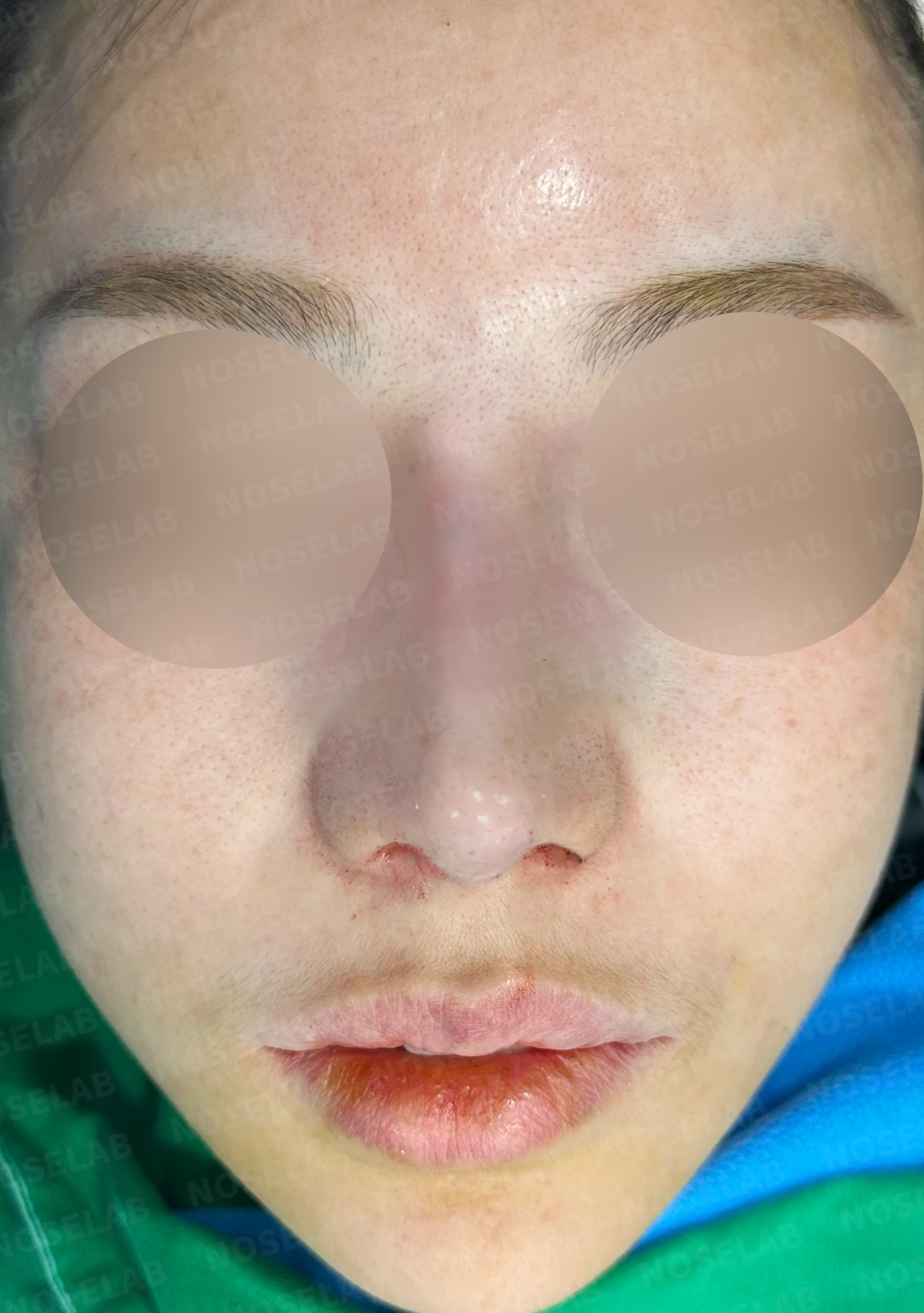
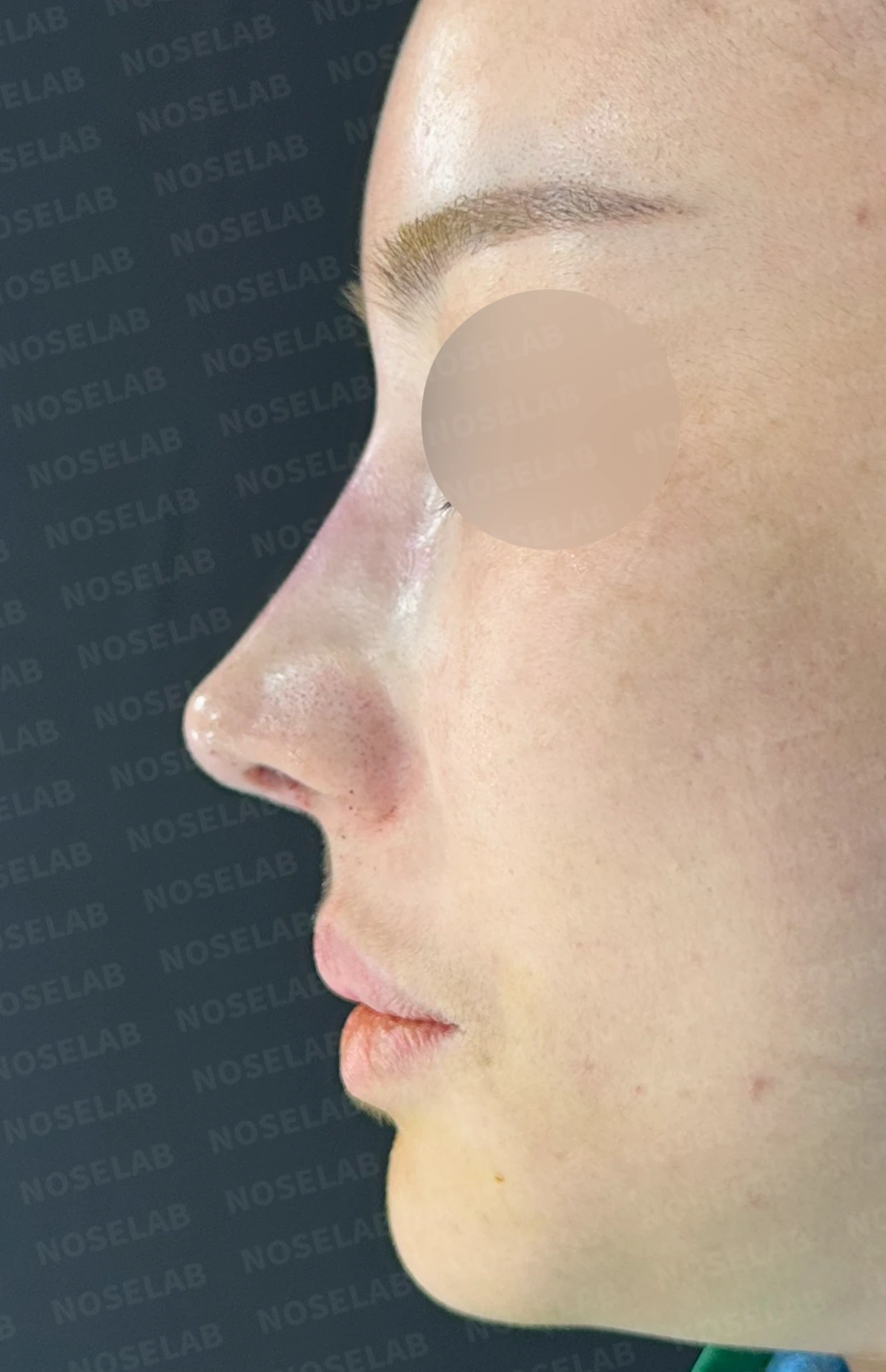
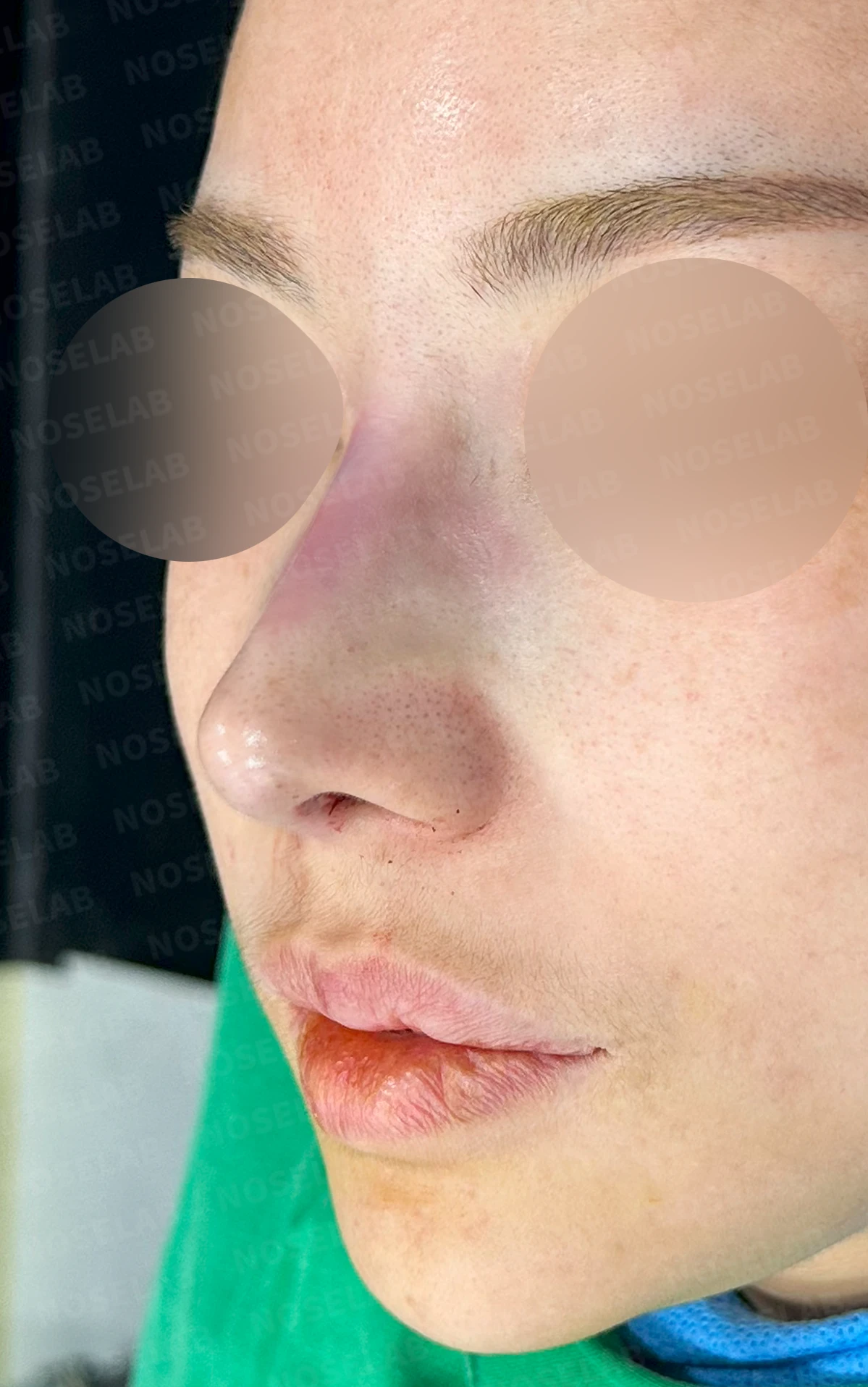
Front, profile, and oblique views immediately after surgery on day 0 Photos taken immediately after surgery show swelling and may differ from the final result.
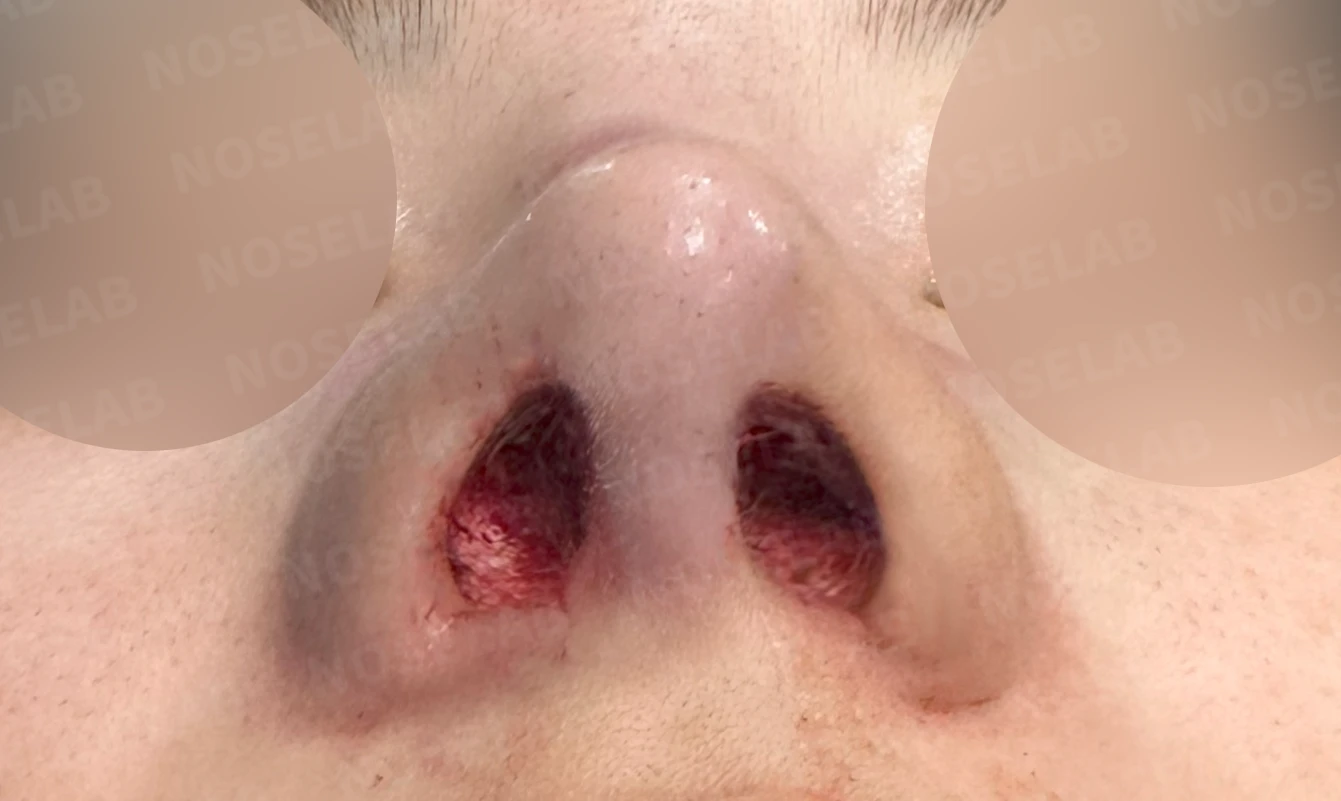
Nostril view on day 0 immediately after surgery Photos taken immediately after surgery show swelling and may differ from the final result.
This case presented complex problems resulting from irregularly grafted ear cartilage and a premaxillary implant from prior procedures. In particular, a large amount of ear cartilage placed beneath the right dorsal skin had created uneven skin thickness and an irregular surface.
To resolve these issues, we removed all of the existing ear cartilage and replaced it with a dermal graft to restore a more uniform skin thickness. In addition, we secured structural stability by performing septal extension with autologous rib cartilage and repositioning the lower lateral cartilages.
Although some unevenness may temporarily persist immediately after surgery, it is expected to smooth out naturally as the dermal graft stabilizes over time. By lowering the radix starting point and appropriately elevating the tip, we were able to deliver the natural, refined, and youthful look the patient desired.
This was Dr. Peter C. Kang. Thank you.
Thank you.
#closedrhinoplasty #revisionrhinoplasty #foreignbodyremoval #crookednosecorrection #customrhinoplasty

Limitations and risks
When autologous rib cartilage is used, scarring and pain may remain at the donor site on the chest, and pneumothorax (pleural injury) can occur rarely. Over time, the grafted cartilage may warp or undergo partial resorption.
When revising after implant removal, contracture may progress again after removal, the nasal height and length may decrease, and staged surgery may be necessary depending on the skin condition.
When foreign materials such as injected fillers are removed and reconstructed, contracture may recur, nasal height and length may decrease, and staged surgery may be necessary depending on the skin condition.
When the septum is corrected at the same time, nasal obstruction may persist or recur, and in rare cases, septal perforation or changes in smell may occur.
Common potential risks include infection, bleeding, asymmetry, scarring, skin necrosis, and insufficient improvement; results vary depending on individual skin condition and previous surgical history.