English日本語简体中文
Skip to main content
NOSELABDOCTOR KANG STORY
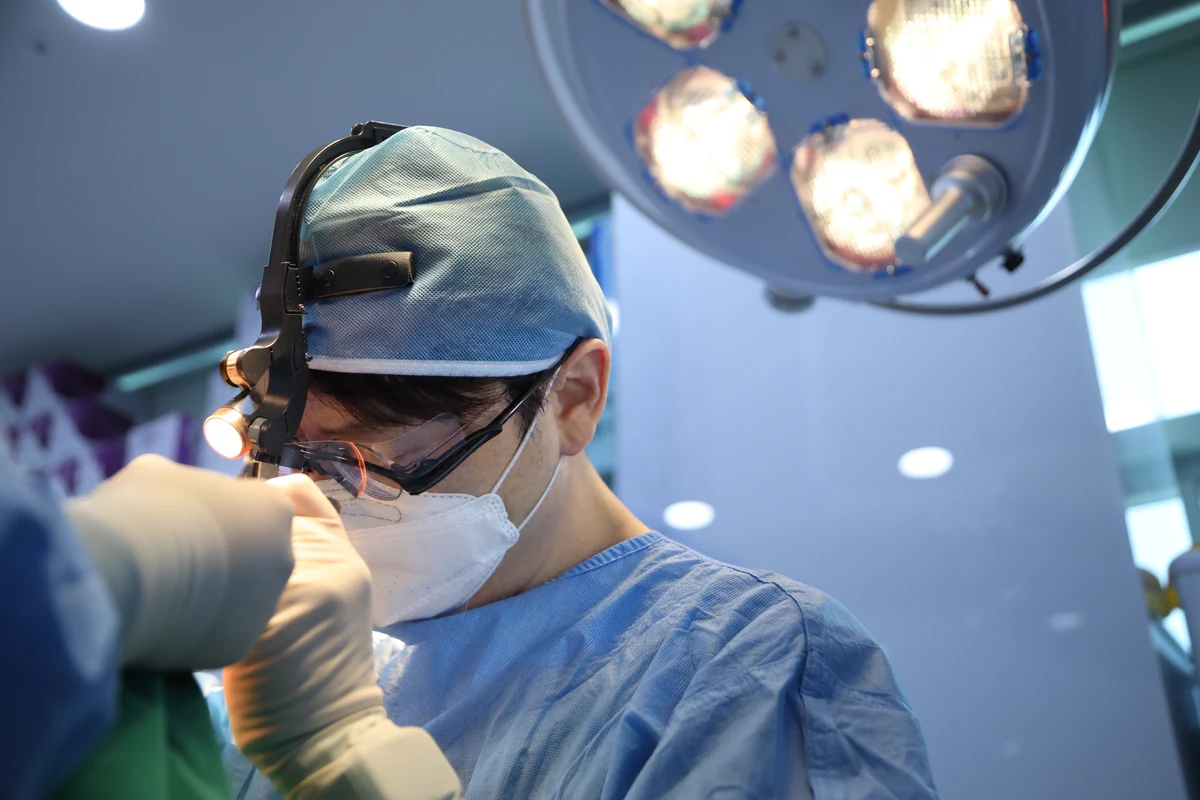
Dr. Peter C. Kang wearing surgical loupes and concentrating on surgery beneath the operating light

NOSELAB · DR. PETER C. KANG · SEOUL

Complex revisionrhinoplasty.A passion forrebuilding noses.

20
YEARS OF EXPERIENCEIN RHINOPLASTY

Dedicated to complex nasal reconstruction and revision rhinoplasty—where appearance, breathing and structural support must be considered together.

Dr. Peter C. Kang · Board-certified otolaryngologist · Medical Director, NOSELAB

Explore revision rhinoplasty →Discuss your consultation ↗
NOSELAB · RHINOPLASTY JOURNAL
PrologueBlogMy thoughtsNasal obstructionSurgical journalSurgical photos
About the surgeon

Before-and-after cases of rhinoplasty and revision rhinoplasty

Searching for surgical cases matching your criteria.
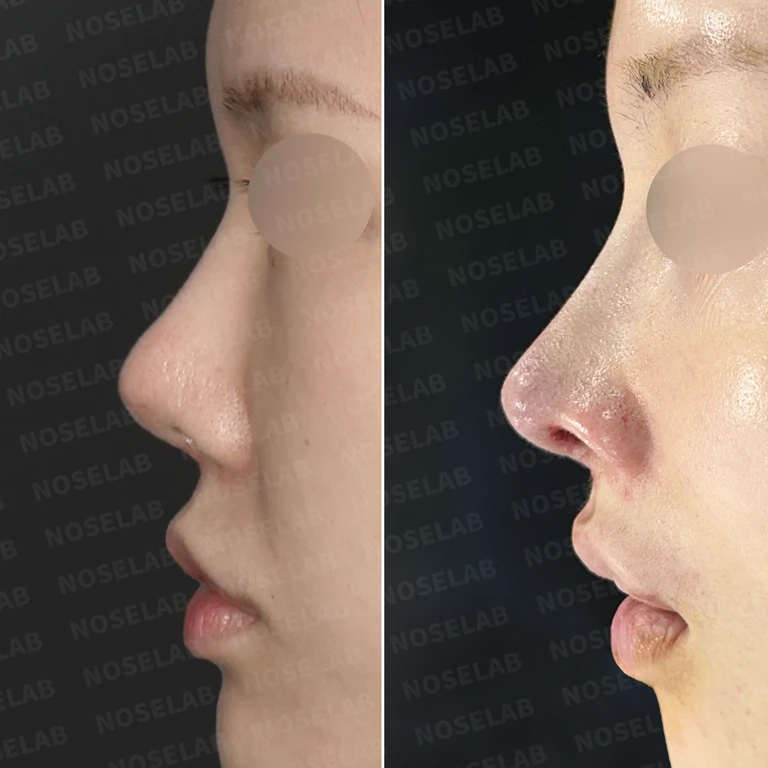
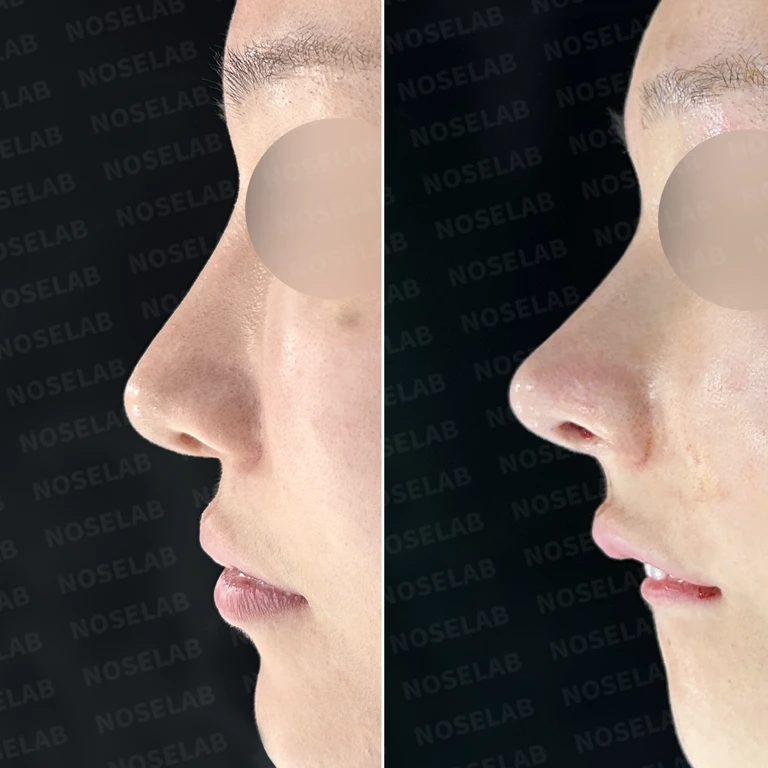
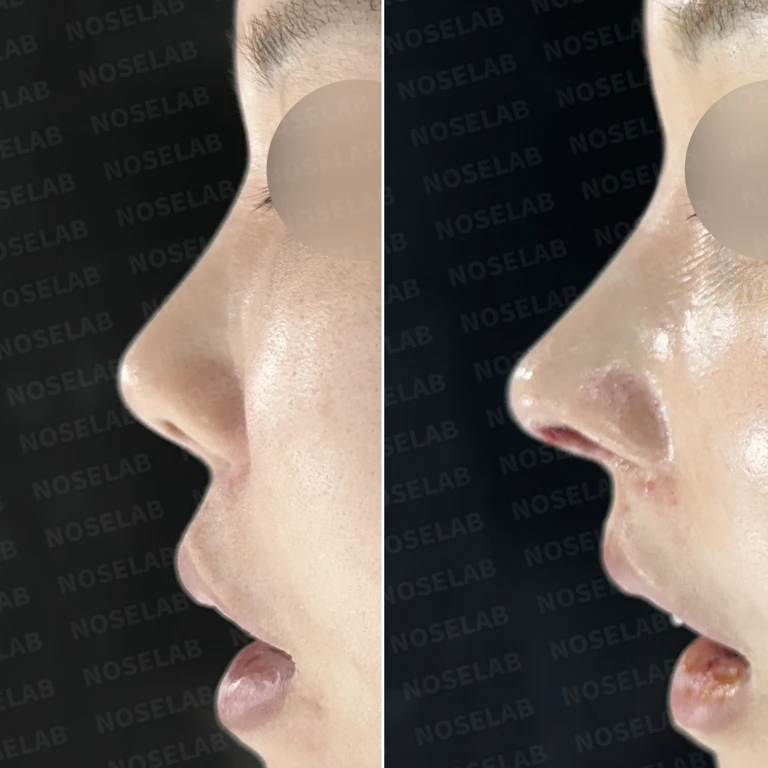
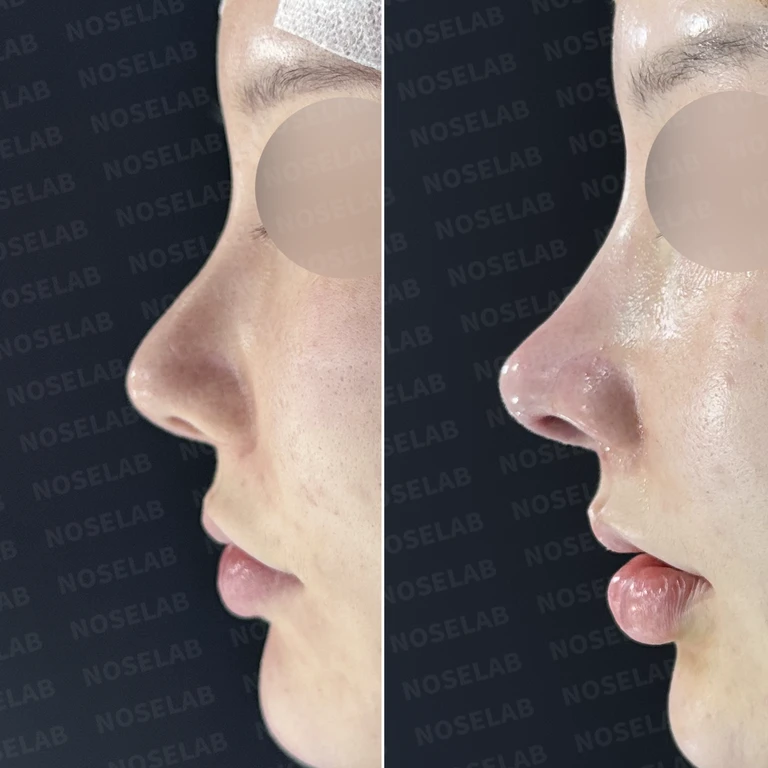
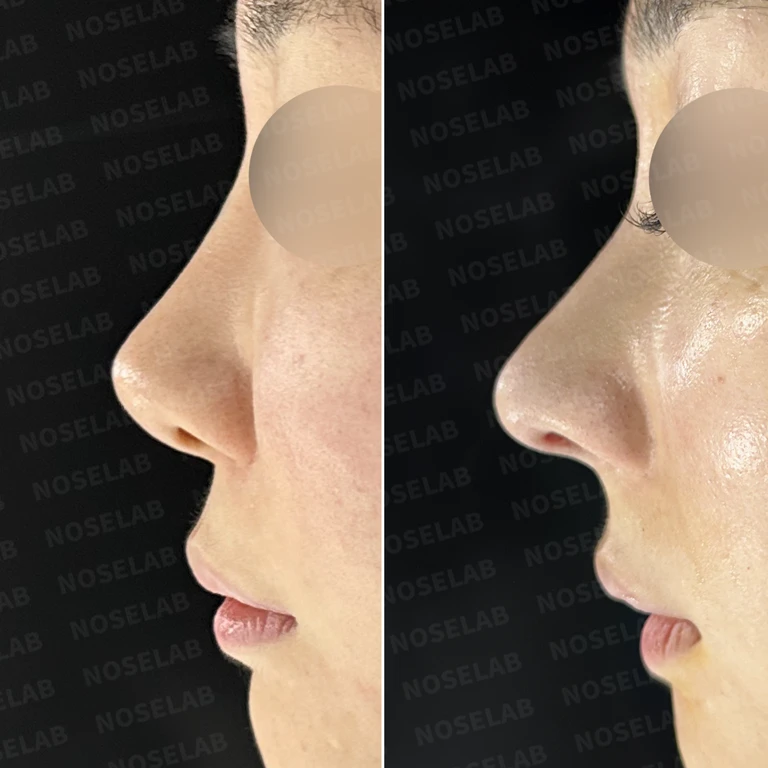
Why an L-shaped silicone implant gradually causes the nasal tip to become upturned: removal and reconstruction — Before-and-after comparison
Before-and-after comparison

Why an L-shaped silicone implant gradually causes the nasal tip to become upturned: removal and reconstruction

A case where an L-shaped implant placed about 10 years ago caused skin thinning and an upturned nasal tip. The L-shaped silicone implant was removed, and nasal tip reconstruction with autologous rib cartilage, septal correction, and dermal tissue reinforcement were performed.
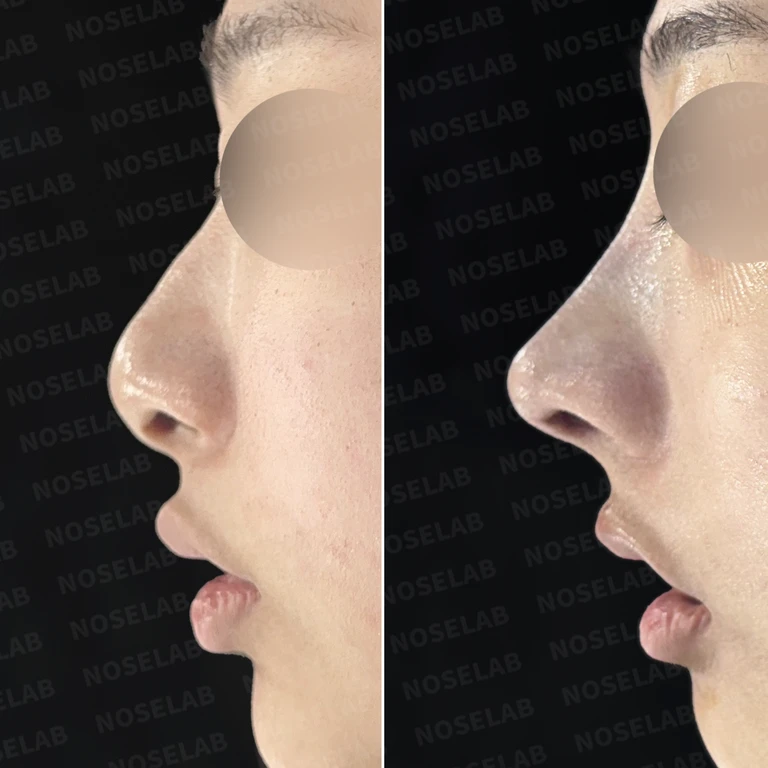
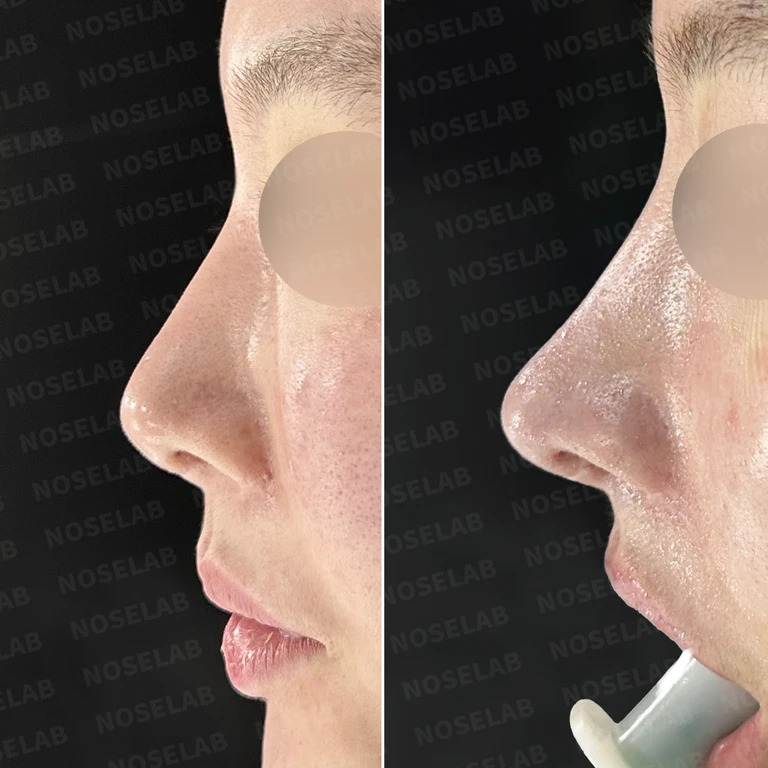
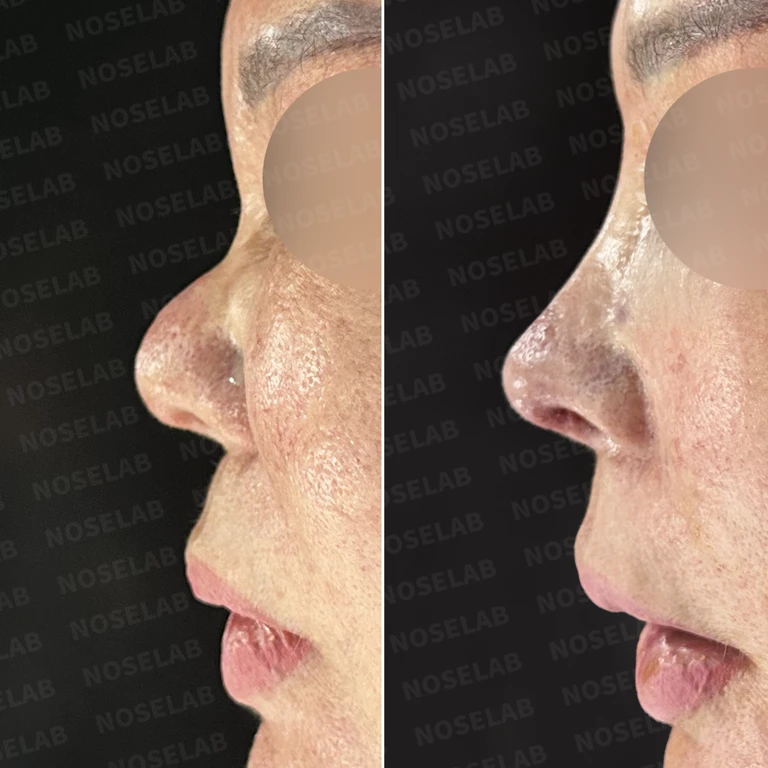
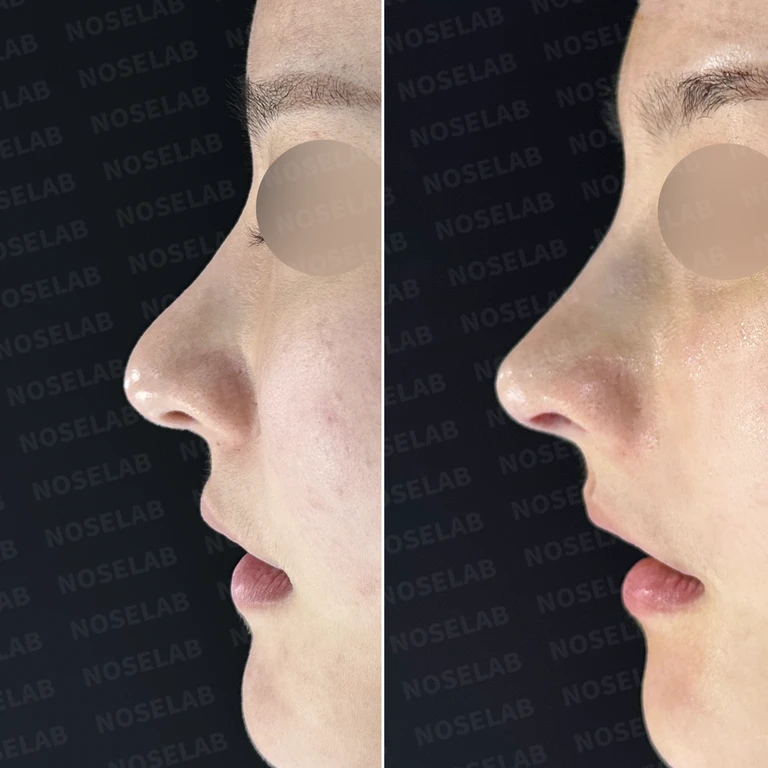
Key considerations when revising ear cartilage rhinoplasty with autologous rib cartilage — Before-and-after comparison
Before-and-after comparison

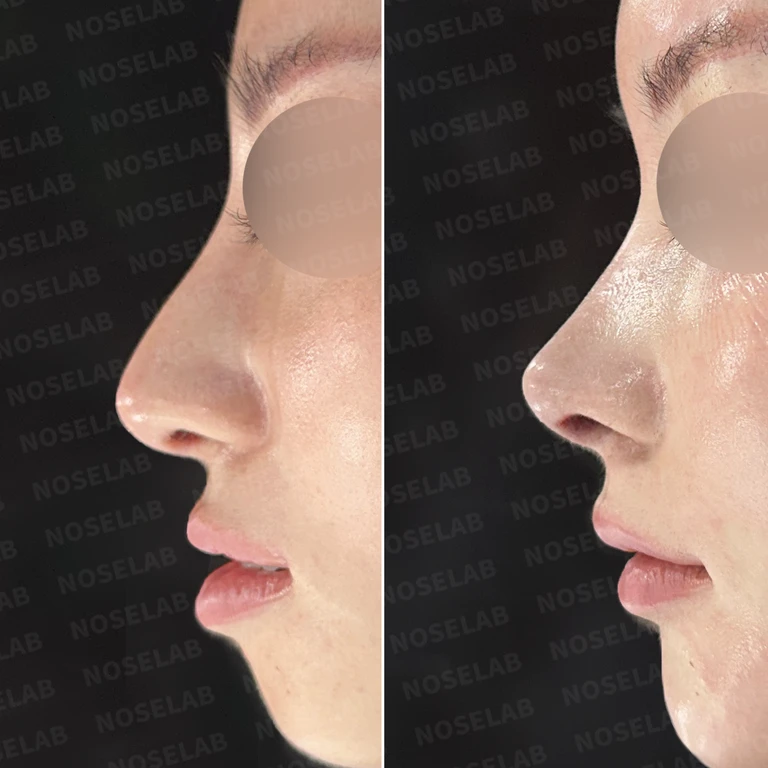
Key considerations when revising ear cartilage rhinoplasty with autologous rib cartilage

A case of a patient seeking a slimmer line after a previous rhinoplasty. Nasal tip reconstruction with autologous rib cartilage, nasal bridge implant replacement with lowering of the radix, nasal sill reduction, and full-face autologous fat grafting were performed together.

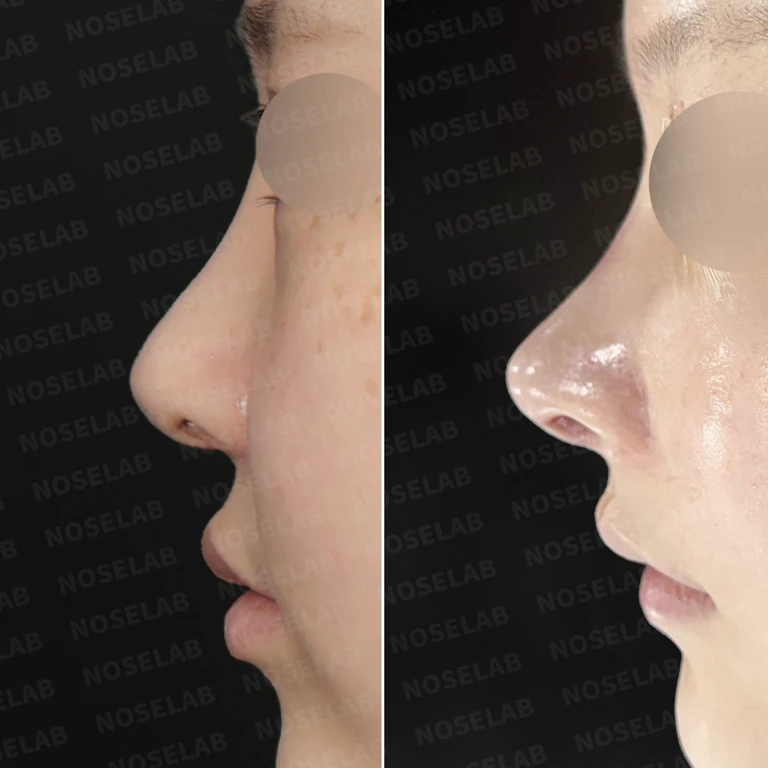
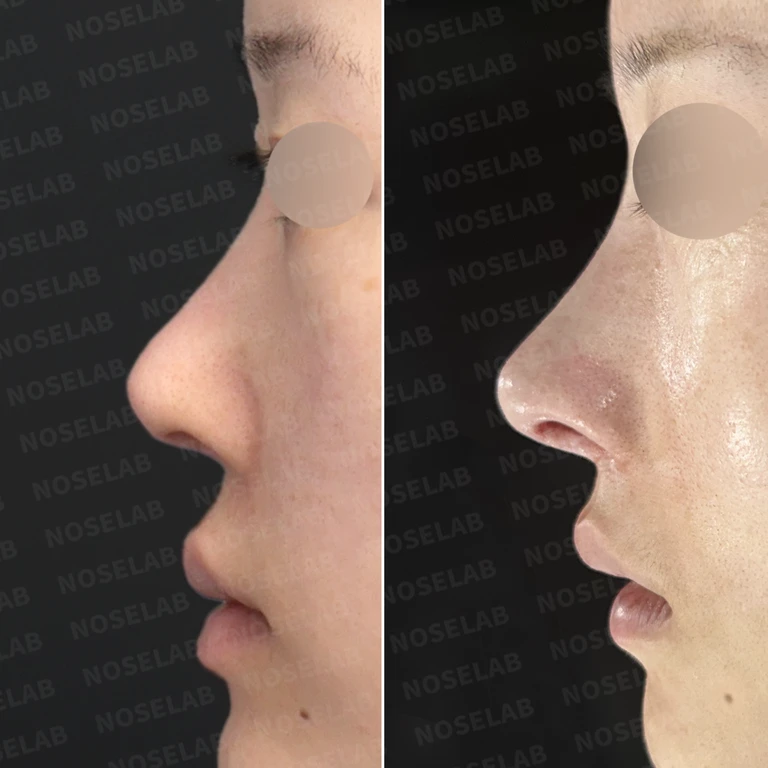
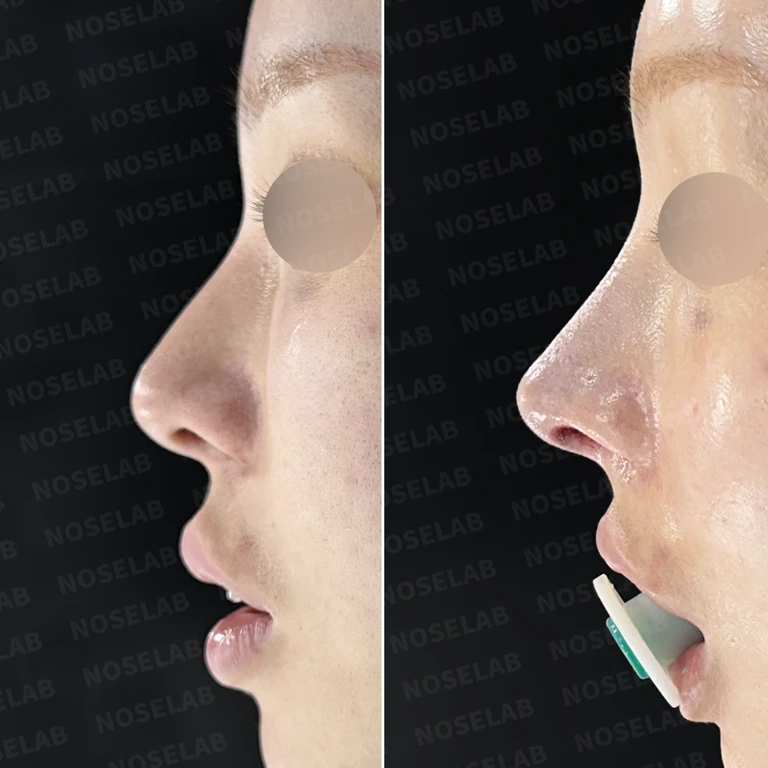
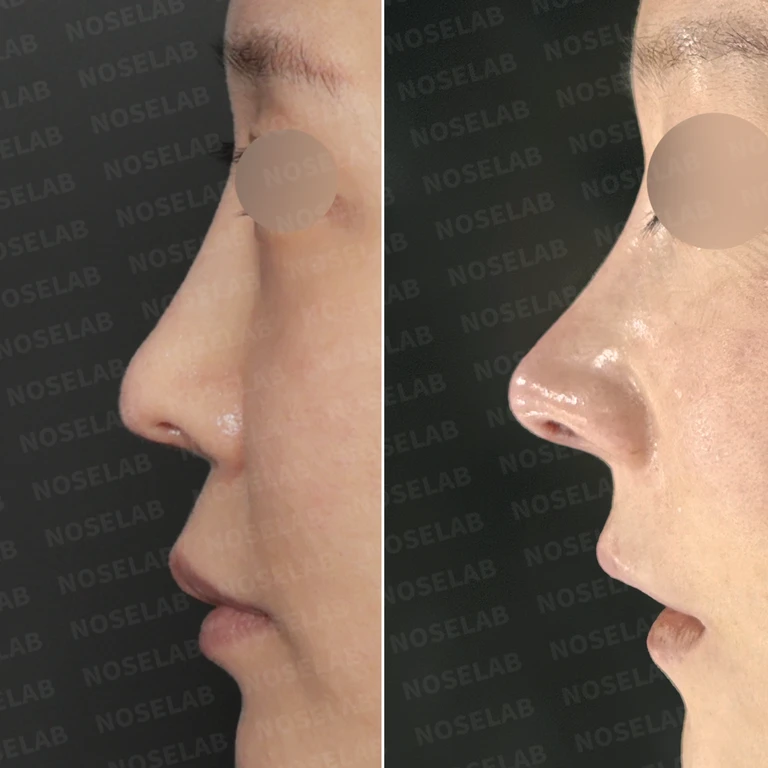
Nasal reconstruction when almost no septum remains after two nose surgeries — Before-and-after comparison
Before-and-after comparison

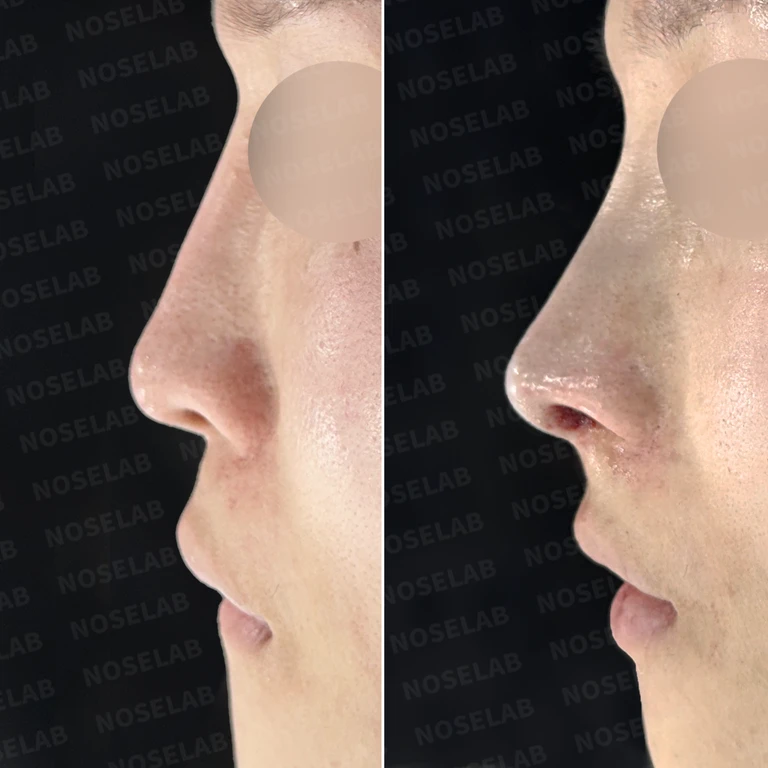
Nasal reconstruction when almost no septum remains after two nose surgeries

This is a case of septal cartilage deficit, nasal bone asymmetry, and nasal obstruction remaining after two surgeries. Through a closed approach, autologous rib cartilage was used for septal reconstruction, along with nasolabial angle correction, nasal bone asymmetry correction, and radix adjustment.

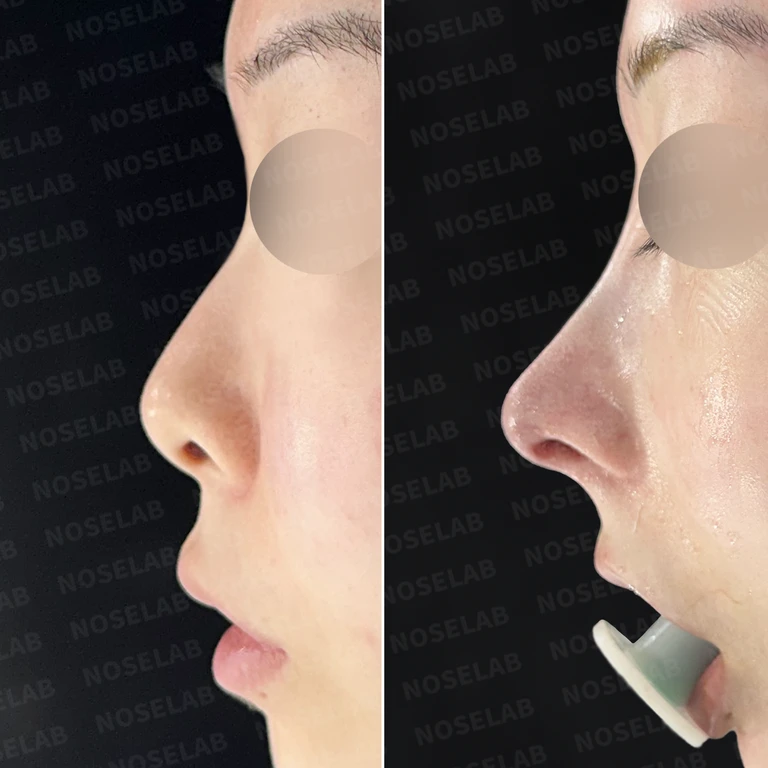
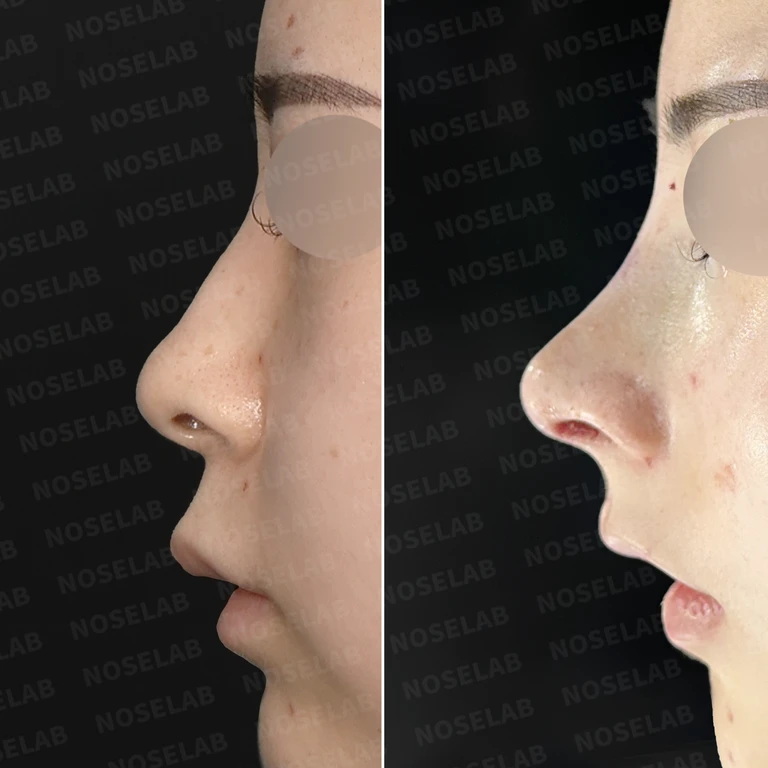
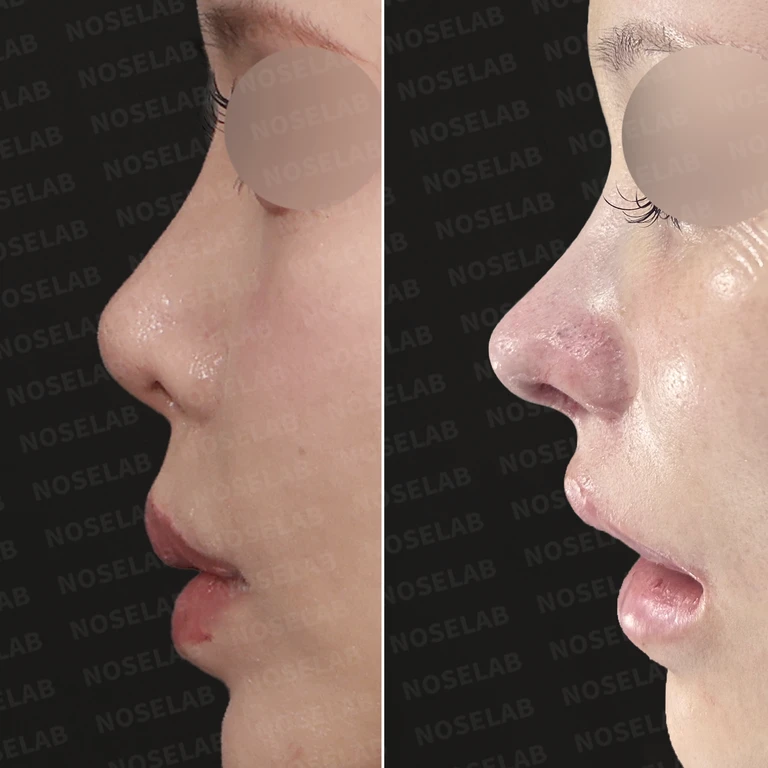
Why an implant is palpable and visible through the nasal tip: rib cartilage reconstruction and dermis reinforcement — Before-and-after comparison
Before-and-after comparison

Why an implant is palpable and visible through the nasal tip: rib cartilage reconstruction and dermis reinforcement

A case where a silicone implant became palpable, the nasal tip skin thinned, and asymmetry developed after a previous rhinoplasty. The implant was removed, the nasal tip and septum were reconstructed using sliced autologous rib cartilage, and artificial dermis was used for reinforcement.

Why the nasal tip turns up and the columella droops, and how septal extension is performed — Before-and-after comparison
Before-and-after comparison

Why the nasal tip turns up and the columella droops, and how septal extension is performed

A case where a short, upturned nasal tip and a drooping columella in an unoperated nose were corrected through septal extension. A strut was built using donor rib cartilage and septal cartilage, accompanied by columellar elevation and silicone implant placement.

Why noses deviate and bulbous tips persist after double jaw surgery, and how rib cartilage septal reconstruction is performed — Before-and-after comparison
Before-and-after comparison

Why noses deviate and bulbous tips persist after double jaw surgery, and how rib cartilage septal reconstruction is performed

This is a case of septal damage, a deviated nasal bridge, a bulbous nose, and nasal obstruction following double jaw surgery and two prior rhinoplasties. Autologous rib cartilage septal reconstruction, cartilage repositioning, lateral osteotomy, and functional nasal surgery were performed.

Why implants alone should not be placed in a small, low nose and nasal tip support structure — Before-and-after comparison
Before-and-after comparison

Why implants alone should not be placed in a small, low nose and nasal tip support structure

A primary rhinoplasty case involving a small, low nose and an upturned tip causing excessive nostril show. Using a closed approach, septal reconstruction with autologous rib cartilage, nasolabial angle correction, artificial dermis skin reinforcement, and a silicone implant were performed.

Why a high radix makes the nose look long and overly prominent — Before-and-after comparison
Before-and-after comparison

Why a high radix makes the nose look long and overly prominent

Following prior surgeries, a bulbous and drooping long nose with an excessively high radix and nasal obstruction was corrected using a closed approach. Scar tissue debridement, osteotomy, nasolabial angle correction, and septoplasty were performed concurrently.

Why mesh remaining in the septum causes an upturned nose, and reconstruction after removal — Before-and-after comparison
Before-and-after comparison

Why mesh remaining in the septum causes an upturned nose, and reconstruction after removal

This is a case where mesh left in the septum after previous surgeries resulted in an upturned nose and excessive nostril show. All foreign material was removed, followed by septal reconstruction using autologous rib cartilage, replacement of the silicone implant, and reinforcement of the skin with acellular dermal matrix.

Why a nose becomes upturned and the columella retracts after repeated revisions, and how to reconstruct the septum — Before-and-after comparison
Before-and-after comparison

Why a nose becomes upturned and the columella retracts after repeated revisions, and how to reconstruct the septum

A case where damage from previous surgeries led to collapse of the anterior septum and nostril asymmetry. The septum was reconstructed using autologous rib cartilage, followed by nasal tip rhinoplasty with donor rib cartilage and implant replacement.

Why a narrow nasolabial angle with a dorsal hump makes the mouth appear protruding and how to correct it — Before-and-after comparison
Before-and-after comparison

Why a narrow nasolabial angle with a dorsal hump makes the mouth appear protruding and how to correct it

This is a primary rhinoplasty case correcting an irregular dorsal hump and an acute nasolabial angle. Using a closed approach, we refined the dorsal hump, performed nasal tip plasty with autologous rib cartilage, reconstructed the septum, placed a silicone implant, and corrected the nasolabial angle.

Why noses become short and upturned after multiple revision surgeries, and methods for reconstruction — Before-and-after comparison
Before-and-after comparison

Why noses become short and upturned after multiple revision surgeries, and methods for reconstruction

A case correcting an upturned nasal tip caused by loss of the septum from repeated revision surgeries. Autologous rib cartilage septal reconstruction, nasal mucosal advancement flap, silicone implant adjustment, and rhinitis surgery were performed concurrently.

Why implant inflammation recurs, and how staged reconstruction with a resting period is performed — Before-and-after comparison
Before-and-after comparison

Why implant inflammation recurs, and how staged reconstruction with a resting period is performed

A case of staged nasal reconstruction for a nose damaged by recurrent implant inflammation. After foreign body removal, a 2-year resting period, and stem cell therapy, the structure was rebuilt using donor rib cartilage and an implant was inserted.

Why the nasal tip can look bulbous and crooked after rhinoplasty with ear cartilage — Before-and-after comparison
Before-and-after comparison

Why the nasal tip can look bulbous and crooked after rhinoplasty with ear cartilage

This is a revision rhinoplasty case where the patient experienced a drooping tip, a deviated septum, and nasal obstruction after previous surgery. The septum was reconstructed using autologous rib cartilage, and silicone implant replacement along with rhinitis surgery was performed using a closed approach.

Why rib cartilage reconstruction is needed when the septum is weak, even in primary rhinoplasty — Before-and-after comparison
Before-and-after comparison

Why rib cartilage reconstruction is needed when the septum is weak, even in primary rhinoplasty

A case of correcting a short, upturned nasal tip and a pinched nostril caused by congenital septal cartilage weakness. Autologous rib cartilage was used to reconstruct the septum and lower lateral cartilage, combined with lowering the nostril rim and lateral osteotomy.

Why a operated nose deviates and nostrils become asymmetric after physical trauma, and how septal reconstruction is performed — Before-and-after comparison
Before-and-after comparison

Why a operated nose deviates and nostrils become asymmetric after physical trauma, and how septal reconstruction is performed

A case where post-surgical trauma caused a septal tear, resulting in a crooked nose and nostril asymmetry. Septal reconstruction was performed using autologous rib cartilage, along with realigning the columellar central axis and replacing the implant.

Why the nasal tip elongates and droops years after rhinoplasty, and how to correct it — Before-and-after comparison
Before-and-after comparison

Why the nasal tip elongates and droops years after rhinoplasty, and how to correct it

A case involving a long, drooping nasal tip and nasal obstruction following previous rhinoplasty with a silicone implant and septal cartilage. The nasal tip was corrected using autologous rib cartilage, performed concurrently with septoplasty, inferior turbinate reduction, and synechia adhesiolysis.

Why nasal tip skin depresses and implants show through after inflammation, and how to reconstruct it — Before-and-after comparison
Before-and-after comparison

Why nasal tip skin depresses and implants show through after inflammation, and how to reconstruct it

A case where repeated surgeries and inflammation led to depressed nasal tip skin and implant show-through. The damaged skin was revised, dermal and cartilage grafts were placed, the septum was reinforced with autologous rib cartilage, and the implant was replaced.

No search results found

Please try searching with different keywords.

Scroll to keep reading

1 / 25Next case

Understanding rhinoplasty and revision rhinoplasty through real clinical records

Explore nasal shape and function, surgical methods, and materials through surgical records documented by Dr. Peter C. Kang, a board-certified otolaryngologist.

  • Revision rhinoplastyCases assessing shape, structure, and function together following previous surgery
  • Closed rhinoplastyRecords of primary and revision surgeries performed via a closed approach
  • Autologous rib cartilage rhinoplastyRecords distinguishing current use of autologous rib cartilage from previous surgical history
  • Contracted nose revisionCases addressing contracture deformities and reconstruction of the tip and septum
  • Nasal implant removalRecords of silicone implant removal and subsequent structural correction
  • Implant-free rhinoplastyActual materials and techniques used in surgeries performed without implants
  • Crooked nose correctionCases examining asymmetry across the nasal bone, septum, and tip
  • Bulbous nose and tip rhinoplastyCases addressing a bulbous tip and its overlying skin and cartilage framework
  • Dorsal hump correctionCases recording dorsal hump reduction alongside tip and functional correction
  • Nasal obstruction and functional nasal surgerySurgical records addressing breathing discomfort and nasal appearance together
  • Upturned nose and short nose correctionCases distinguishing between an upturned tip and nostril show
  • Septal reconstructionRecords addressing septal injury or defect and the supportive nasal framework
Read comprehensive guide to rhinoplasty ↗
Original article

Read more records

When another nose operation needs a deeper plan.

A previous operation can leave more than an unwanted shape. Scar tissue, weakened support, displaced implants or persistent breathing problems may change what the next surgery needs to address.

At NOSELAB, the conversation begins with what happened before, what concerns you now, and what structure remains. The aim is to understand the problem before choosing the technique.

Complex revision rhinoplasty

Explore cases involving repeated operations, asymmetry, implants and changes in nasal shape.

Nasal reconstruction

Understand why the remaining septum, cartilage, skin and scar tissue matter when planning reconstruction.

Form and breathing

Learn how septal support and the nasal valve relate to both the shape of the nose and nasal airflow.

See the reasoning behind the result.

A before-and-after photograph shows a change. A surgical record helps explain it. Explore 439 documented rhinoplasty and revision cases, with descriptions of previous procedures, structural problems and surgical approaches.

Use the records to ask better questions: Why was support reconstructed? Why was cartilage selected? Which functional concerns were addressed alongside appearance?

Browse the surgical journal →Read the rhinoplasty guide →Meet Dr. Peter C. Kang →

Published cases describe individual patients. Photographs and case descriptions do not predict another patient’s outcome.

Considering revision rhinoplasty in Korea?

Start your preparation before you book your flight. Patients travelling from the United States, Singapore, Europe and elsewhere can contact the NOSELAB team about consultation availability, records to prepare, language needs and follow-up planning.

Plan your consultation in Seoul

Planning a visit to Seoul?Prepare your consultation with the NOSELAB team.

International patient guideWhatsApp ↗
Dr. Peter C. Kang's Rhinoplasty Stories
Rhinoplasty guideCases by topicDr. Peter C. KangNaver Blog ↗
View original photo
Enlarged photo
WhatsAppChat with NOSELAB↗