English日本語简体中文
Skip to main content
Dr. Peter C. Kang's Rhinoplasty Stories
PrologueBlogMy thoughtsNasal obstructionSurgical journalSurgical photos
About the surgeon

Dorsal hump cases: the relationship between dorsal protrusion and nasal tip

Records addressing a dorsal hump describe both the prominent area of the bridge and the surrounding contour together. In some primary rhinoplasty patients, a dorsal hump was accompanied by a crooked bridge and nasal obstruction from a deviated septum; in others, a low nasal tip with insufficient volume and an acute nasolabial angle were documented together.

This list does not merely compare how much the dorsal hump was reduced. Alongside the main text, you can read whether the nasal tip was drooping, what the angle between the nose and upper lip looked like on profile view, and whether deviation on the frontal view was also a concern. Even with a similar dorsal protrusion, identifying the changes the patient wanted and the areas addressed at the same time helps clarify the differences between cases.

View before-and-after cases ↓Comprehensive rhinoplasty guide

Searching for surgical cases matching your criteria.
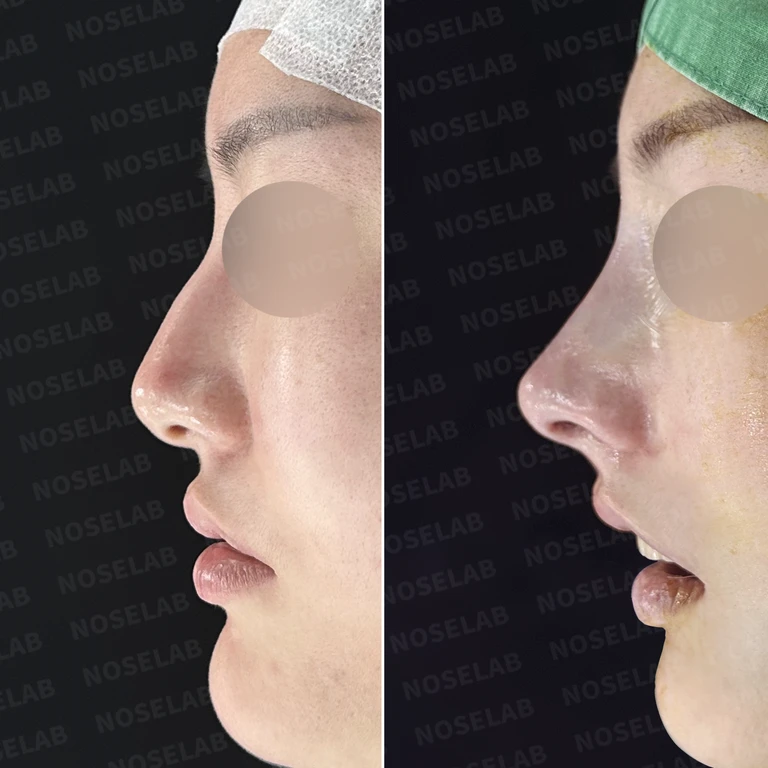
Why mesh remaining in the septum causes an upturned nose, and reconstruction after removal — Before-and-after comparison
Before-and-after comparison

Why mesh remaining in the septum causes an upturned nose, and reconstruction after removal

This is a case where mesh left in the septum after previous surgeries resulted in an upturned nose and excessive nostril show. All foreign material was removed, followed by septal reconstruction using autologous rib cartilage, replacement of the silicone implant, and reinforcement of the skin with acellular dermal matrix.

Previous surgeries and procedures
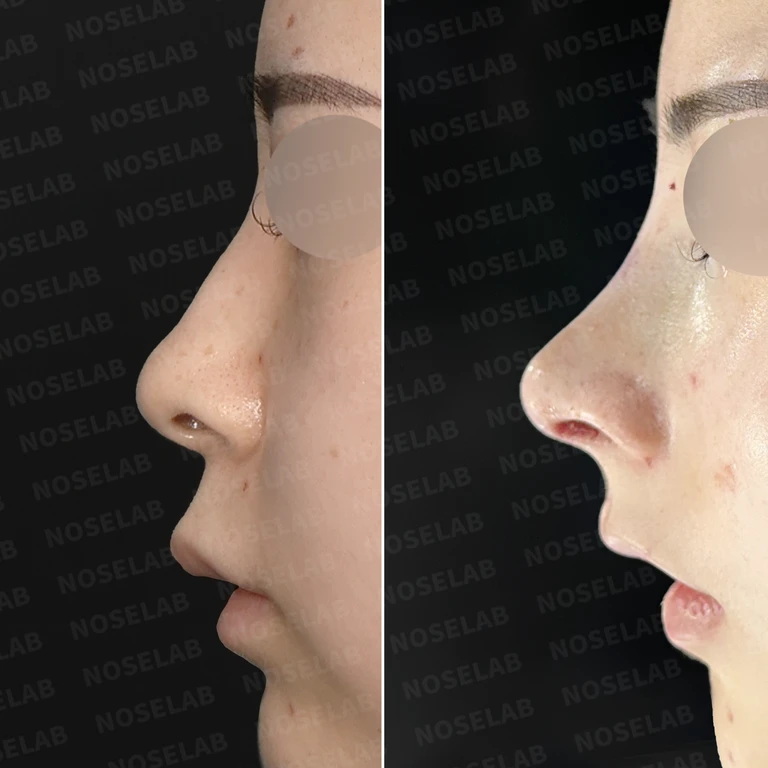
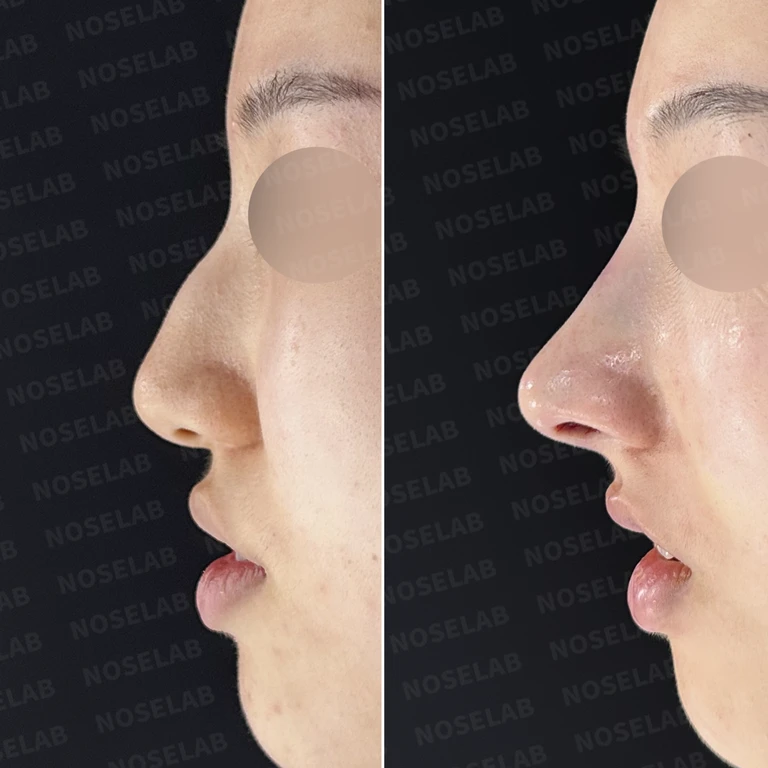
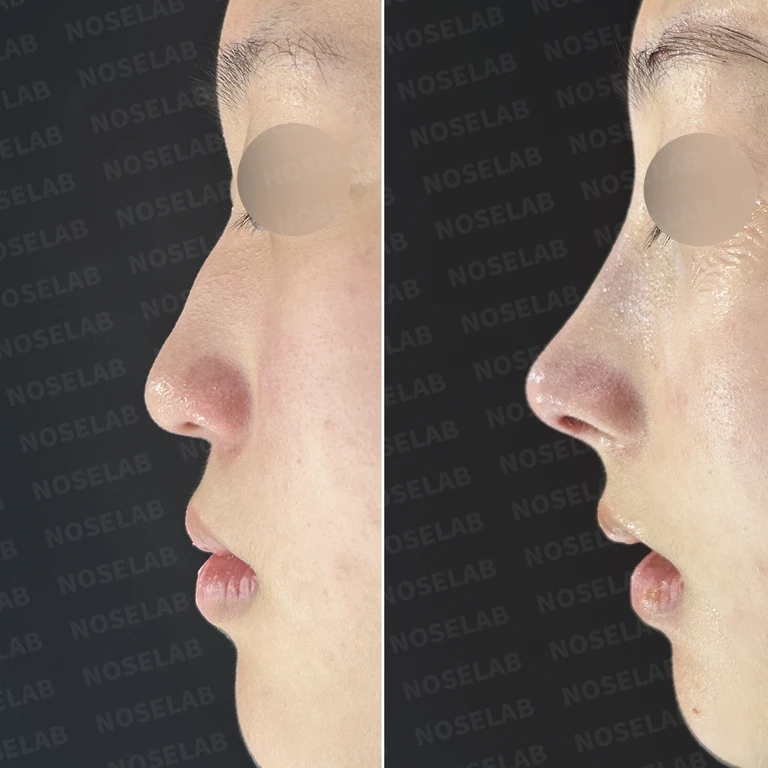
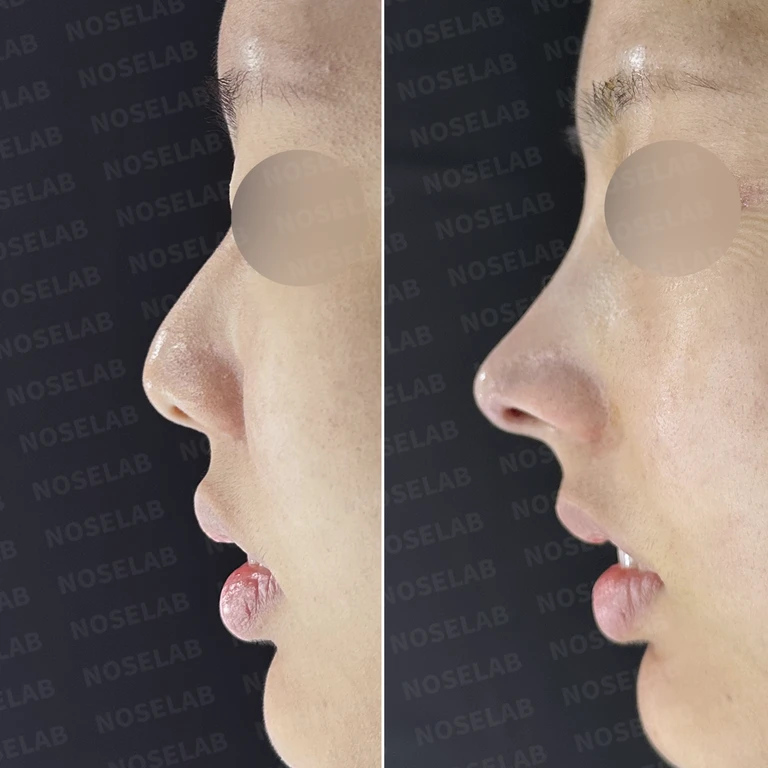
Why a narrow nasolabial angle with a dorsal hump makes the mouth appear protruding and how to correct it — Before-and-after comparison
Before-and-after comparison

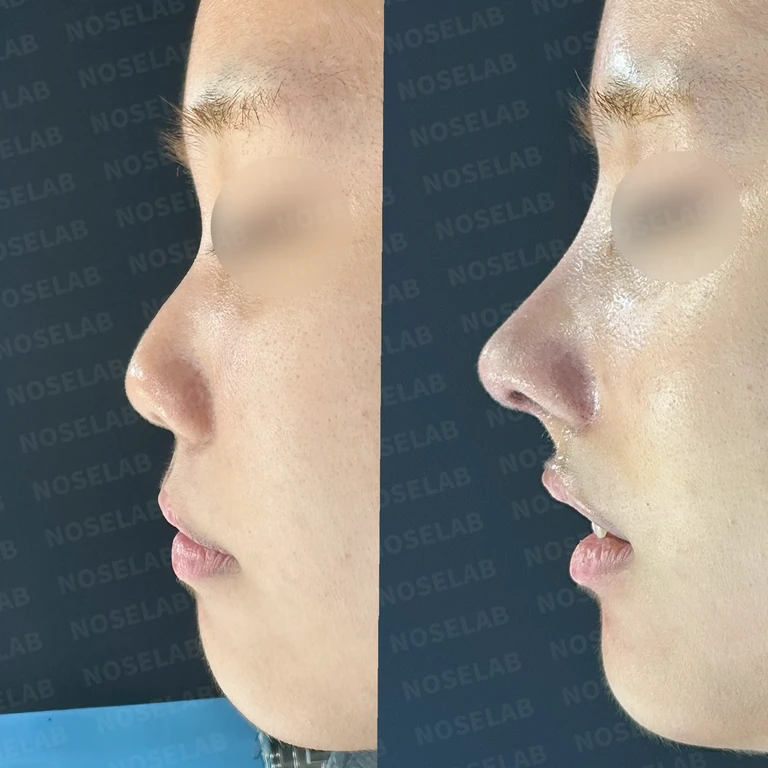
Why a narrow nasolabial angle with a dorsal hump makes the mouth appear protruding and how to correct it

This is a primary rhinoplasty case correcting an irregular dorsal hump and an acute nasolabial angle. Using a closed approach, we refined the dorsal hump, performed nasal tip plasty with autologous rib cartilage, reconstructed the septum, placed a silicone implant, and corrected the nasolabial angle.

Preoperative condition

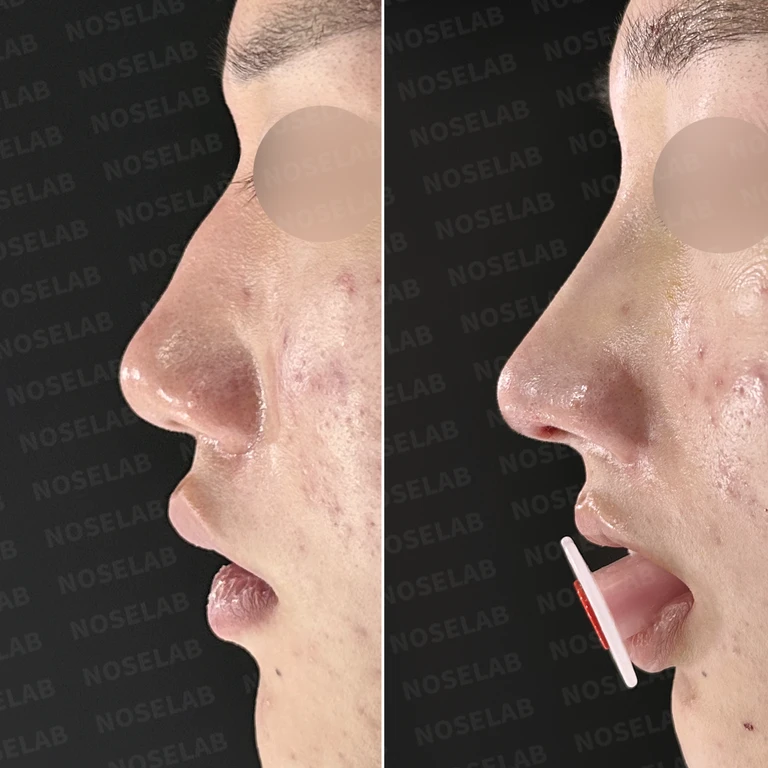
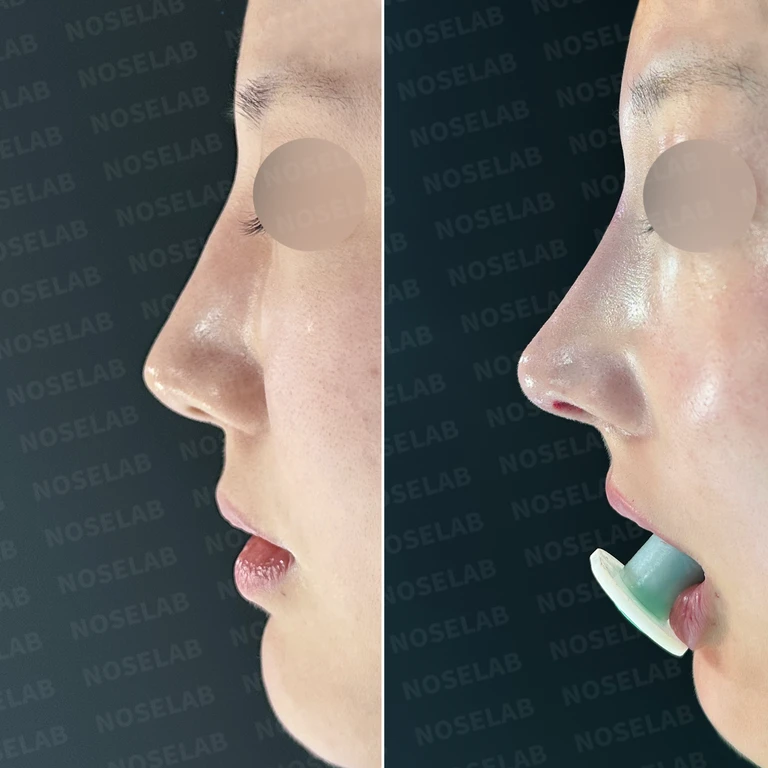
Why a dorsal hump looks prominent and how to correct it along with the nasal tip — Before-and-after comparison
Before-and-after comparison

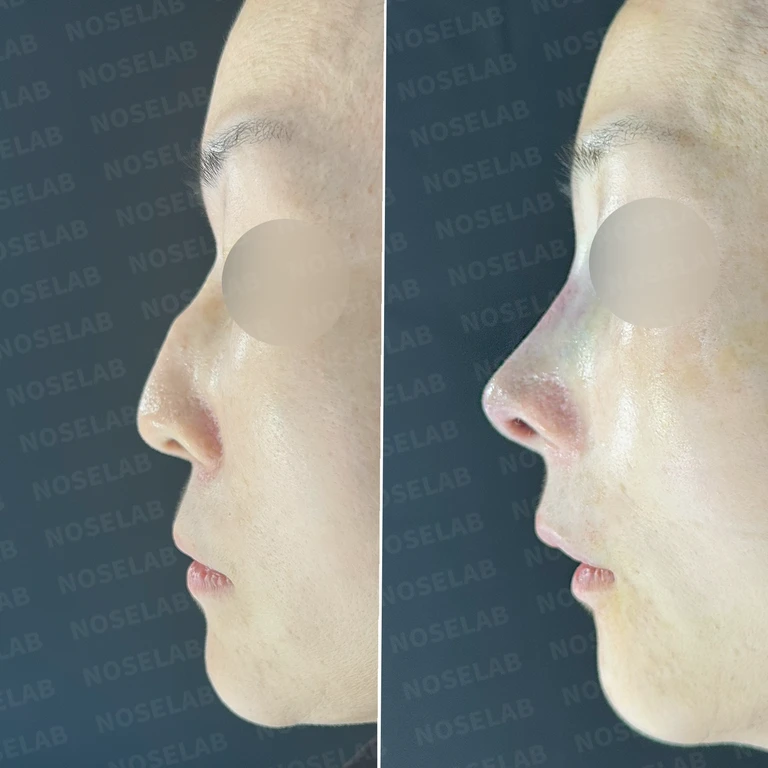
Why a dorsal hump looks prominent and how to correct it along with the nasal tip

Previously injected nasal filler was removed, the protruding dorsal hump was rasped, and lateral osteotomies were performed. The blunt nasal tip was elevated using autologous rib cartilage, and both the nasolabial angle and septum were corrected.

Preoperative condition · Postoperative record

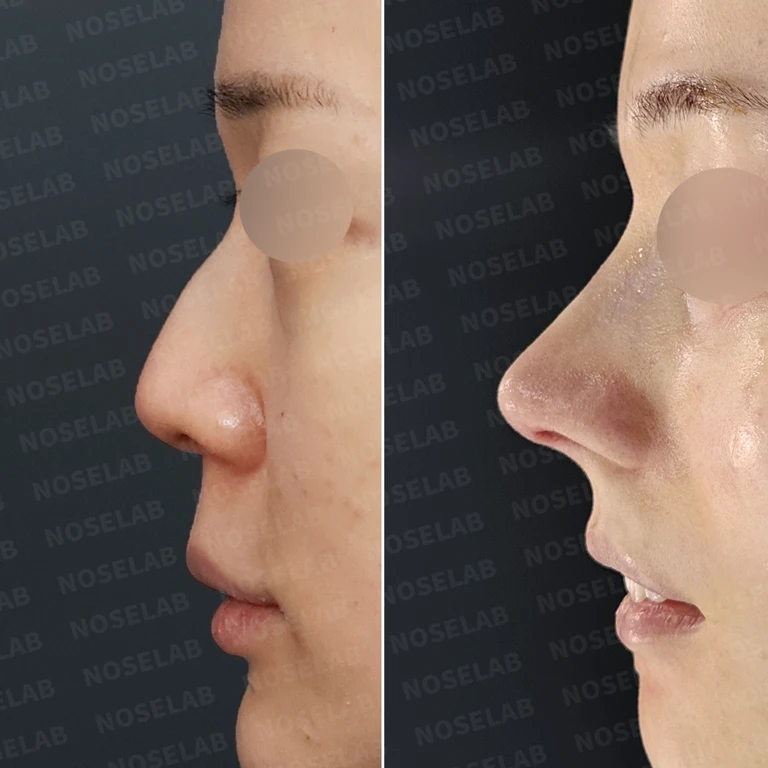
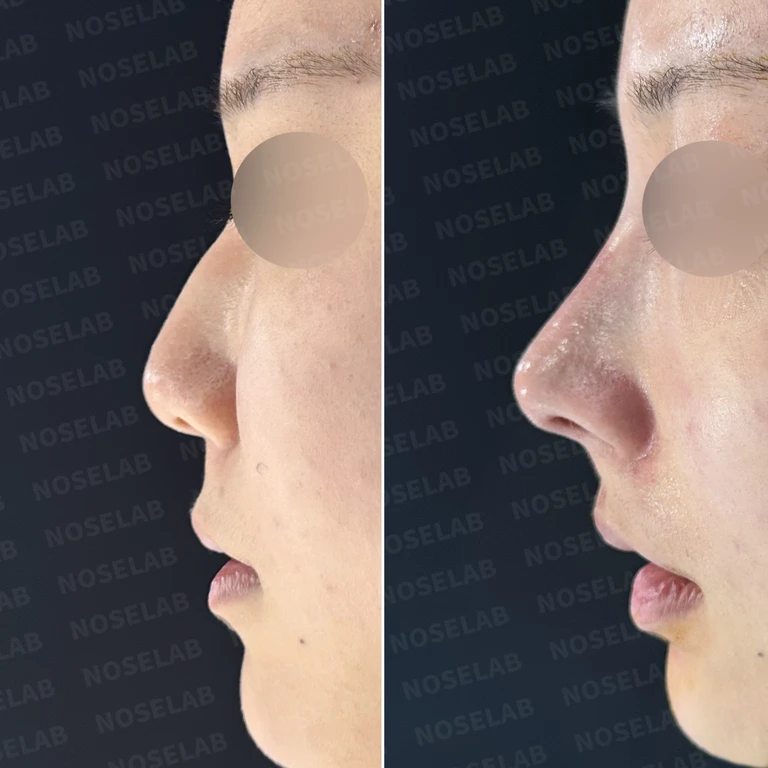
Why dorsal hump, long nose, and drooping tip appear together and how to correct them — Before-and-after comparison
Before-and-after comparison

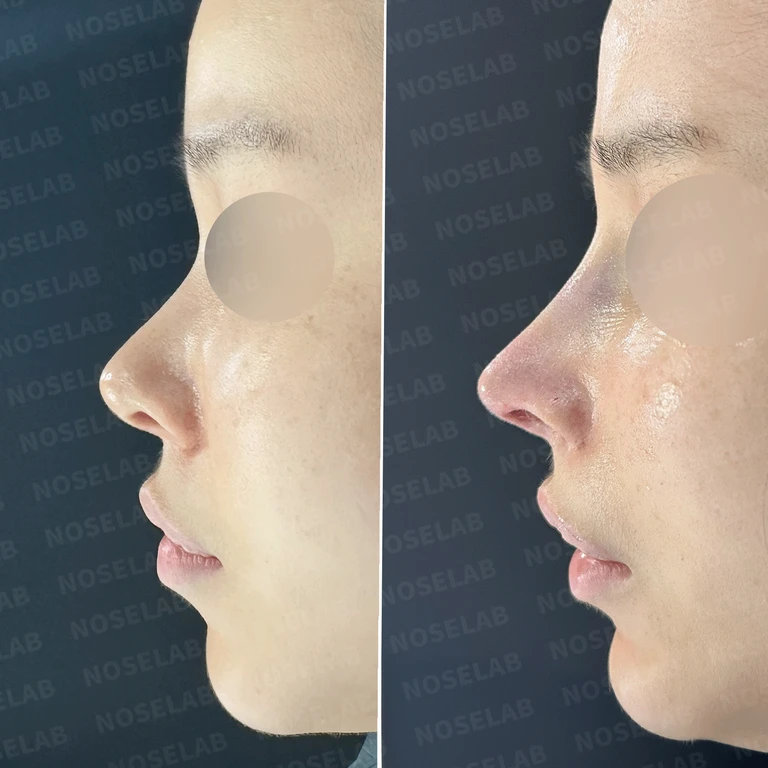
Why dorsal hump, long nose, and drooping tip appear together and how to correct them

A protruding dorsal hump, drooping long nose, crooked nose, and nasal obstruction were addressed together using autologous rib cartilage tip support, lateral osteotomy, septoplasty for a deviated septum, and inferior turbinate surgery.

Preoperative condition · Postoperative record

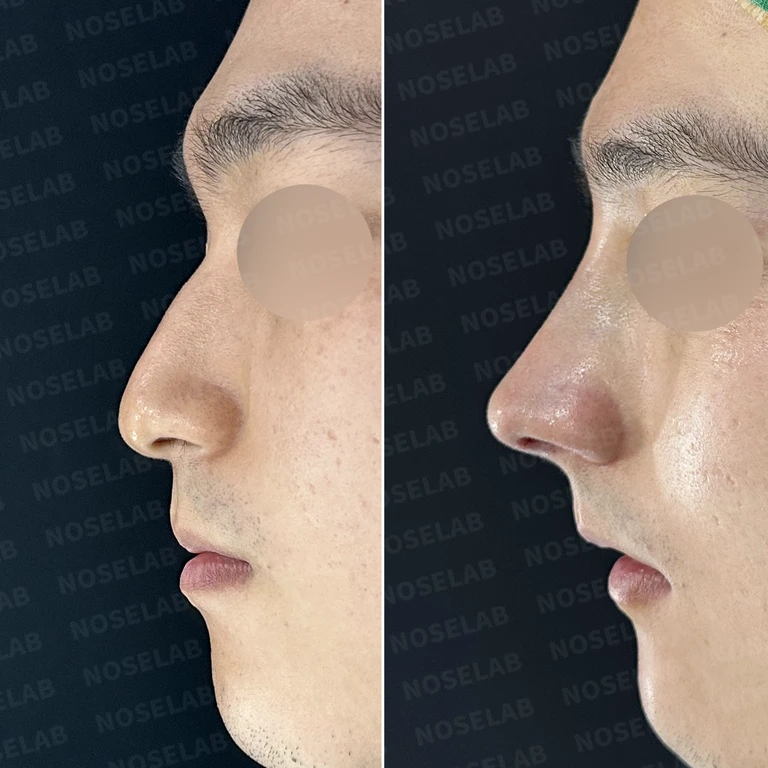
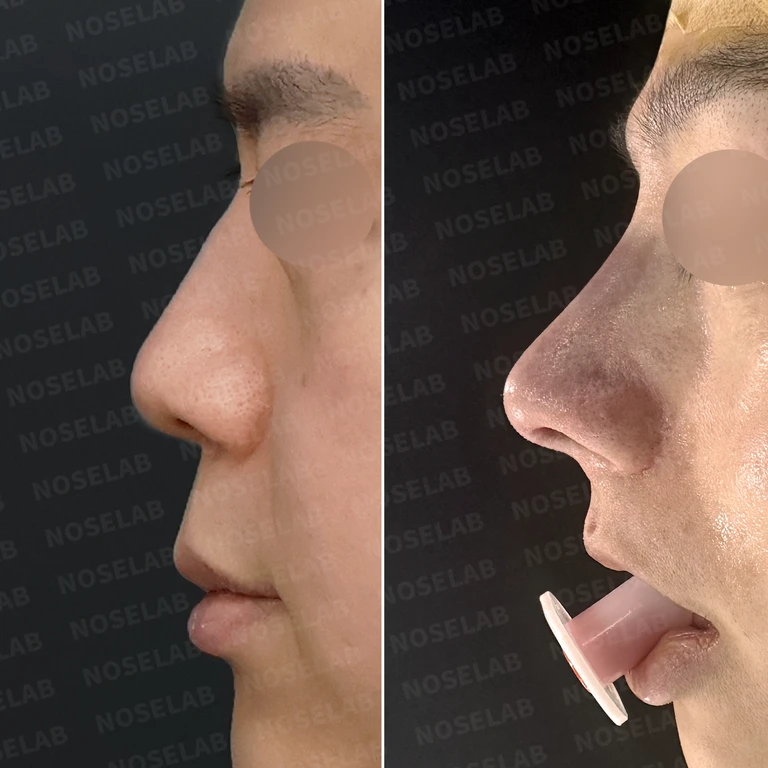
Why a crooked nose and dorsal hump appear together, and how to approach male rhinoplasty — Before-and-after comparison
Before-and-after comparison

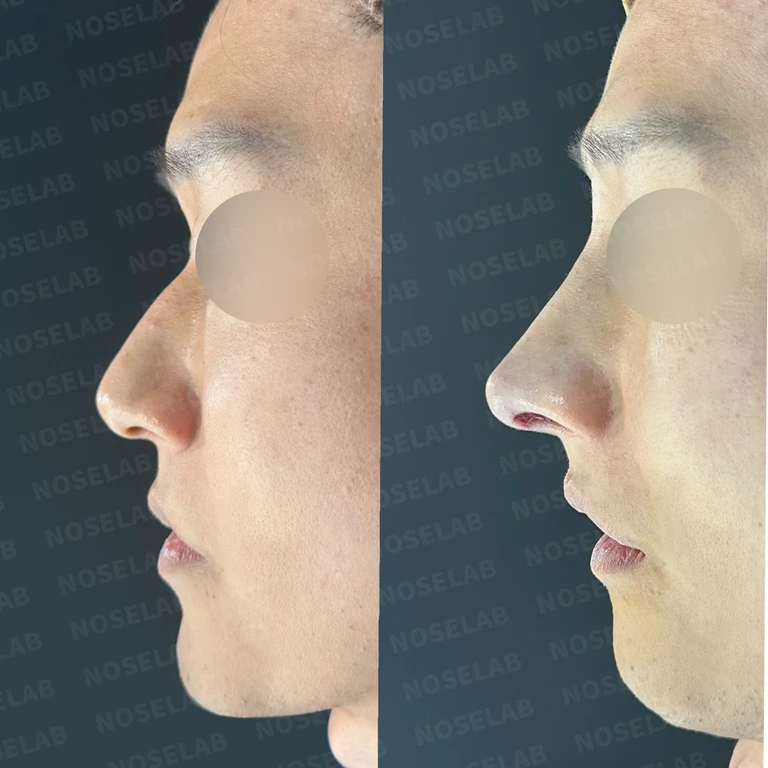
Why a crooked nose and dorsal hump appear together, and how to approach male rhinoplasty

In a male patient in his early 20s presenting with a crooked nose, dorsal hump, and nasal obstruction, osteotomy, tip rhinoplasty using donor rib cartilage and septal cartilage, and columellar correction were performed.

Preoperative condition · Postoperative record

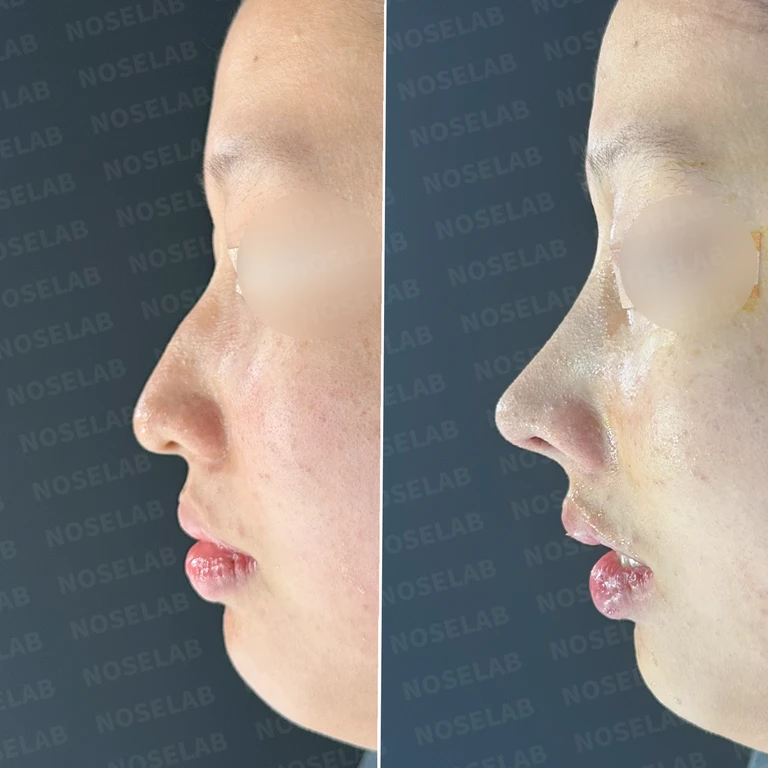
Why dorsal humps and drooping tips appear together, and how hump reduction and osteotomy are performed — Before-and-after comparison
Before-and-after comparison

Why dorsal humps and drooping tips appear together, and how hump reduction and osteotomy are performed

A dorsal hump and drooping tip were smoothly refined through a closed approach using autologous rib cartilage tip plasty, hump reduction, lateral osteotomy, and nasolabial angle correction.

Preoperative condition · Postoperative record

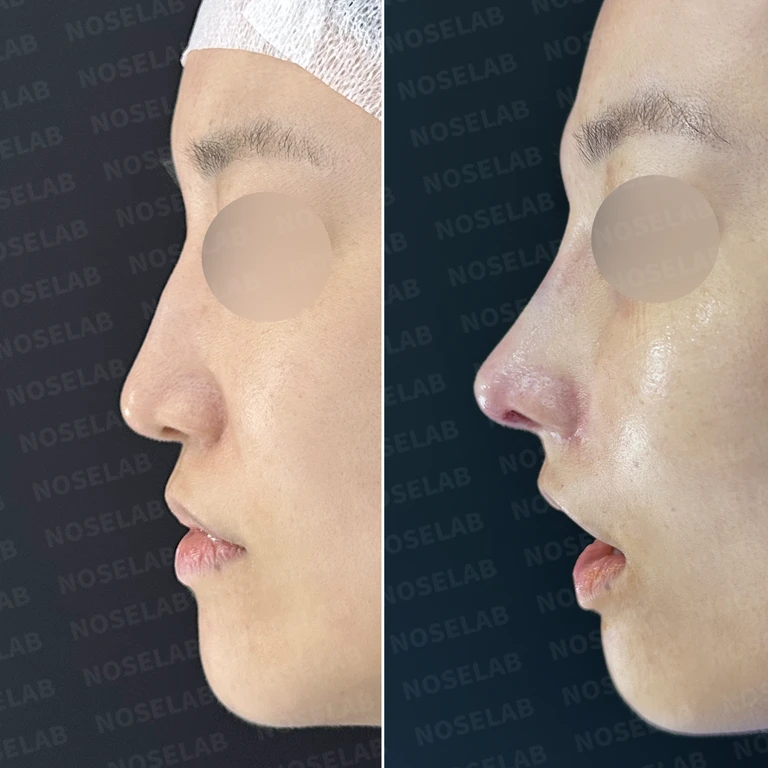
Why small lower lateral cartilages cause a drooping tip: rib cartilage reinforcement and osteotomy methods — Before-and-after comparison
Before-and-after comparison

Why small lower lateral cartilages cause a drooping tip: rib cartilage reinforcement and osteotomy methods

A drooping nasal tip and crooked dorsal hump caused by small lower lateral cartilages were refined through autologous rib cartilage support reinforcement, lateral osteotomy, a silicone implant, and nasolabial angle correction.

Preoperative condition · Postoperative record

Why nasal bone deviation and dorsal humps remain after rhinoplasty: lateral osteotomy and autologous rib cartilage correction methods — Before-and-after comparison
Before-and-after comparison

Why nasal bone deviation and dorsal humps remain after rhinoplasty: lateral osteotomy and autologous rib cartilage correction methods

To correct the residual deviated nasal bone, dorsal hump, and nasal obstruction remaining after a previous silicone rhinoplasty, the existing implant was removed and lateral osteotomy, autologous rib cartilage tip plasty, and septoplasty were performed.

Preoperative condition · Postoperative record

Why nasal filler cannot correct a drooping tip and dorsal hump, and the reconstruction method after removal — Before-and-after comparison
Before-and-after comparison

Why nasal filler cannot correct a drooping tip and dorsal hump, and the reconstruction method after removal

To resolve a persistent drooping tip and dorsal hump deformity after filler and PDO thread lifting, foreign material was removed, followed by nasal tip reconstruction using autologous rib cartilage, a silicone implant on the nasal bridge, and septoplasty.

Preoperative condition · Postoperative record

Why a deviated septum causes both nasal obstruction and a crooked nose, and how reconstruction is performed — Before-and-after comparison
Before-and-after comparison

Why a deviated septum causes both nasal obstruction and a crooked nose, and how reconstruction is performed

Nasal obstruction, a dorsal hump, and maxillary protrusion caused by a septum severely deviated to the left were addressed simultaneously through septal reconstruction using autologous rib cartilage, lateral osteotomy, and nasolabial angle correction.

Preoperative condition · Postoperative record

Why a dorsal hump and a crooked nose often occur together, and correction methods using osteotomy and autologous rib cartilage — Before-and-after comparison
Before-and-after comparison

Why a dorsal hump and a crooked nose often occur together, and correction methods using osteotomy and autologous rib cartilage

For a male primary rhinoplasty patient with a bulbous, crooked nose with a dorsal hump, lateral osteotomy, cartilage tying, nasal tip plasty with autologous rib cartilage, and a customized silicone implant were performed.

Preoperative condition · Postoperative record

Why a crooked dorsal hump and drooping tip occur, and how septal extension is performed — Before-and-after comparison
Before-and-after comparison

Why a crooked dorsal hump and drooping tip occur, and how septal extension is performed

A crooked dorsal hump, drooping tip, and nasal obstruction were refined using lateral osteotomy, septal extension with donor rib cartilage and septal cartilage, nasal tip volume refinement with ear cartilage, and nasolabial angle correction.

Preoperative condition · Postoperative record

Why artificial dermis on the nasal bridge can remain as a dorsal hump and how it is reconstructed after removal — Before-and-after comparison
Before-and-after comparison

Why artificial dermis on the nasal bridge can remain as a dorsal hump and how it is reconstructed after removal

In a case where residual artificial dermis from a previous procedure formed a dorsal hump and weakened the septal support, the artificial dermis was dissected and removed, lateral osteotomy and dorsal hump reduction were performed, the nasal tip was reconstructed using autologous rib cartilage, and the silicone implant was replaced.

Preoperative condition · Postoperative record

How to balance the nasal bridge and tip when a dorsal hump and drooping tip coexist — Before-and-after comparison
Before-and-after comparison

How to balance the nasal bridge and tip when a dorsal hump and drooping tip coexist

A dorsal hump, drooping tip, and rhinitis-related nasal obstruction were addressed by resecting the hump, combining autologous rib cartilage and a silicone implant, and performing nasolabial angle and septal correction.

Preoperative condition

How high can a small, blunt nose be raised? — Skin limitations and reconstruction methods — Before-and-after comparison
Before-and-after comparison

How high can a small, blunt nose be raised? — Skin limitations and reconstruction methods

A primary rhinoplasty case for a patient with a small, wide nasal tip, drooping, a minor dorsal hump, and chronic nasal obstruction, treated through gradual expansion accounting for skin elasticity, autologous rib cartilage reconstruction, and septal correction.

Preoperative condition · Postoperative record

Why an old silicone implant capsule calcifies and causes a dorsal hump and crooked nose — Before-and-after comparison
Before-and-after comparison

Why an old silicone implant capsule calcifies and causes a dorsal hump and crooked nose

A case of complete reconstruction using autologous rib cartilage after removing an L-shaped silicone implant and its calcified capsule inserted 30 years ago, which had caused a dorsal hump and a crooked nose.

Preoperative condition · Postoperative record

Changes that occur when supporting the nasal tip with ear cartilage alone and reconstruction methods using rib cartilage — Before-and-after comparison
Before-and-after comparison

Changes that occur when supporting the nasal tip with ear cartilage alone and reconstruction methods using rib cartilage

To resolve persistent nasal obstruction, a crooked nose, and a retracted columella following a prior surgery, complete reconstruction using autologous rib cartilage and septoplasty were performed.

Preoperative condition · Postoperative record

Why a custom-fit implant is used for a nose with facial asymmetry, and methods for dorsal hump correction — Before-and-after comparison
Before-and-after comparison

Why a custom-fit implant is used for a nose with facial asymmetry, and methods for dorsal hump correction

Considering congenital facial asymmetry and prominent brow bones, the dorsal hump was corrected with a 3D-printed custom implant, combined with nasal tip plasty using autologous rib cartilage and rhinitis surgery to achieve improvement.

Preoperative condition · Postoperative record

No search results found

Please try searching with different keywords.

Scroll to keep reading

1 / 5Next case

Common questions before reading the cases

Are there cases where nasal obstruction is discussed alongside a dorsal hump?

Yes. Among the primary rhinoplasty cases, nasal obstruction due to a deviated septum is documented alongside a dorsal hump on the profile view and a crooked bridge on the frontal view. These patients had both aesthetic concerns and functional discomfort. When reading these articles, try distinguishing between the plan for the dorsal hump and the details regarding the septum and breathing.

When evaluating a dorsal hump, can I also compare a low nasal tip or the nasolabial angle?

One article explains an uneven nasal dorsum and dorsal hump alongside a low nasal tip height, insufficient volume, and an acute nasolabial angle. Another primary rhinoplasty record noted small lower lateral cartilages and a drooping tip. Therefore, rather than focusing only on cases with a similar hump size, looking for articles with similar surrounding structural findings will provide more specific insight.

Related topics to explore

Crooked noseDrooping tipDorsal hump correctionNasal obstruction and breathing discomfort

Surgical records referenced in this guide

  • Why a crooked nose and dorsal hump appear together, and how to approach male rhinoplasty
  • Why a narrow nasolabial angle with a dorsal hump makes the mouth appear protruding and how to correct it
  • Why small lower lateral cartilages cause a drooping tip: rib cartilage reinforcement and osteotomy methods
Original article

Read more records

Planning a visit to Seoul?Prepare your consultation with the NOSELAB team.

International patient guideWhatsApp ↗
Dr. Peter C. Kang's Rhinoplasty Stories
Rhinoplasty guideCases by topicDr. Peter C. KangNaver Blog ↗
View original photo
Enlarged photo
WhatsAppChat with NOSELAB↗