Hello, I am Dr. Peter C. Kang.
Today, I would like to introduce the case of a male patient in his early 20s who visited our clinic seeking help for a crooked nose, a dorsal hump, and nasal obstruction.
🔍 Preoperative condition
The patient was undergoing nasal surgery for the first time, with no prior surgical history. On the front view, the nasal bridge deviated to one side, and on the profile view, the mid-dorsum showed a prominent dorsal hump. Along with these aesthetic concerns, nasal obstruction caused by a deviated septum required simultaneous functional improvement. In addition, the columella was retracted, resulting in an unfavorable nasolabial angle on the profile view.
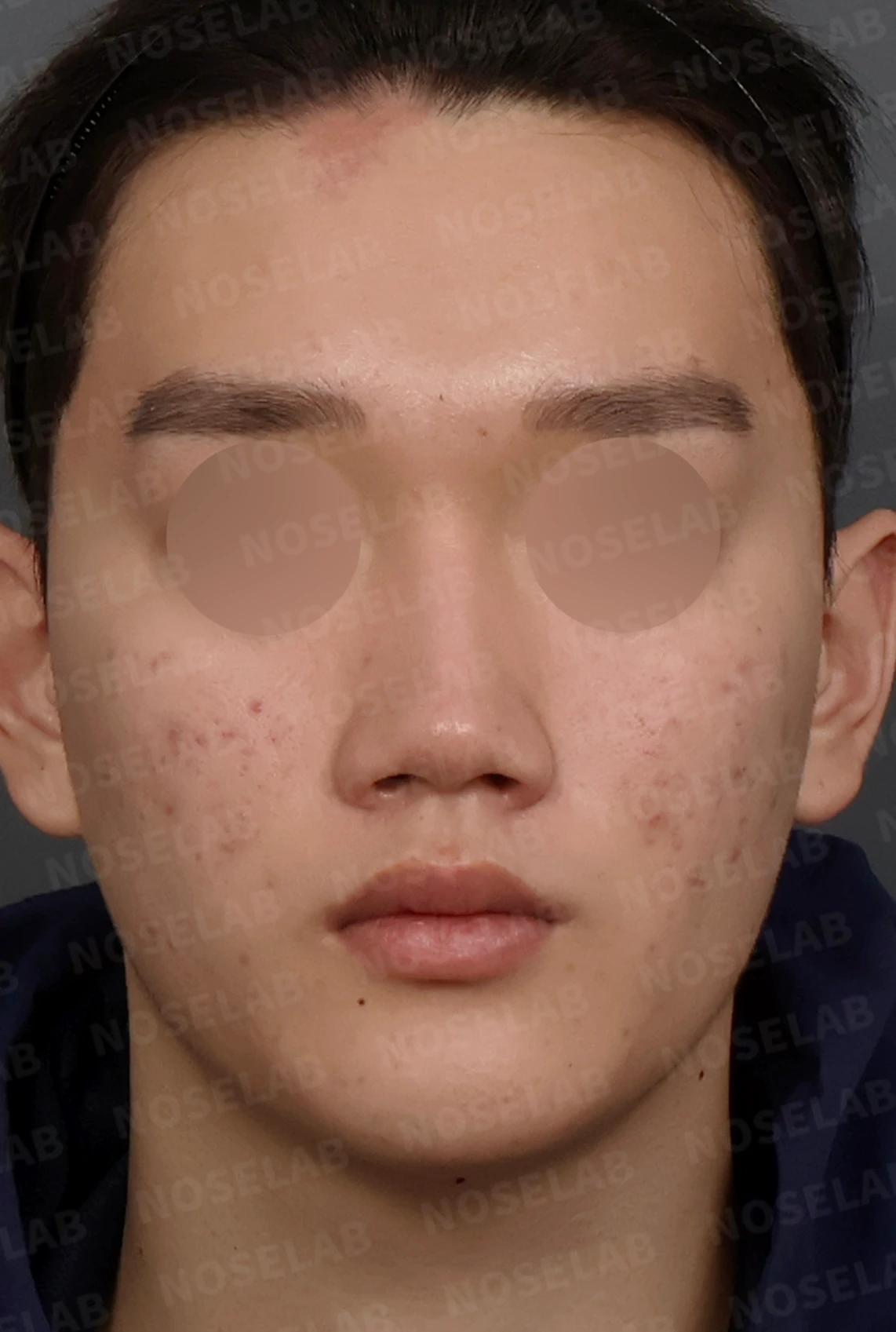
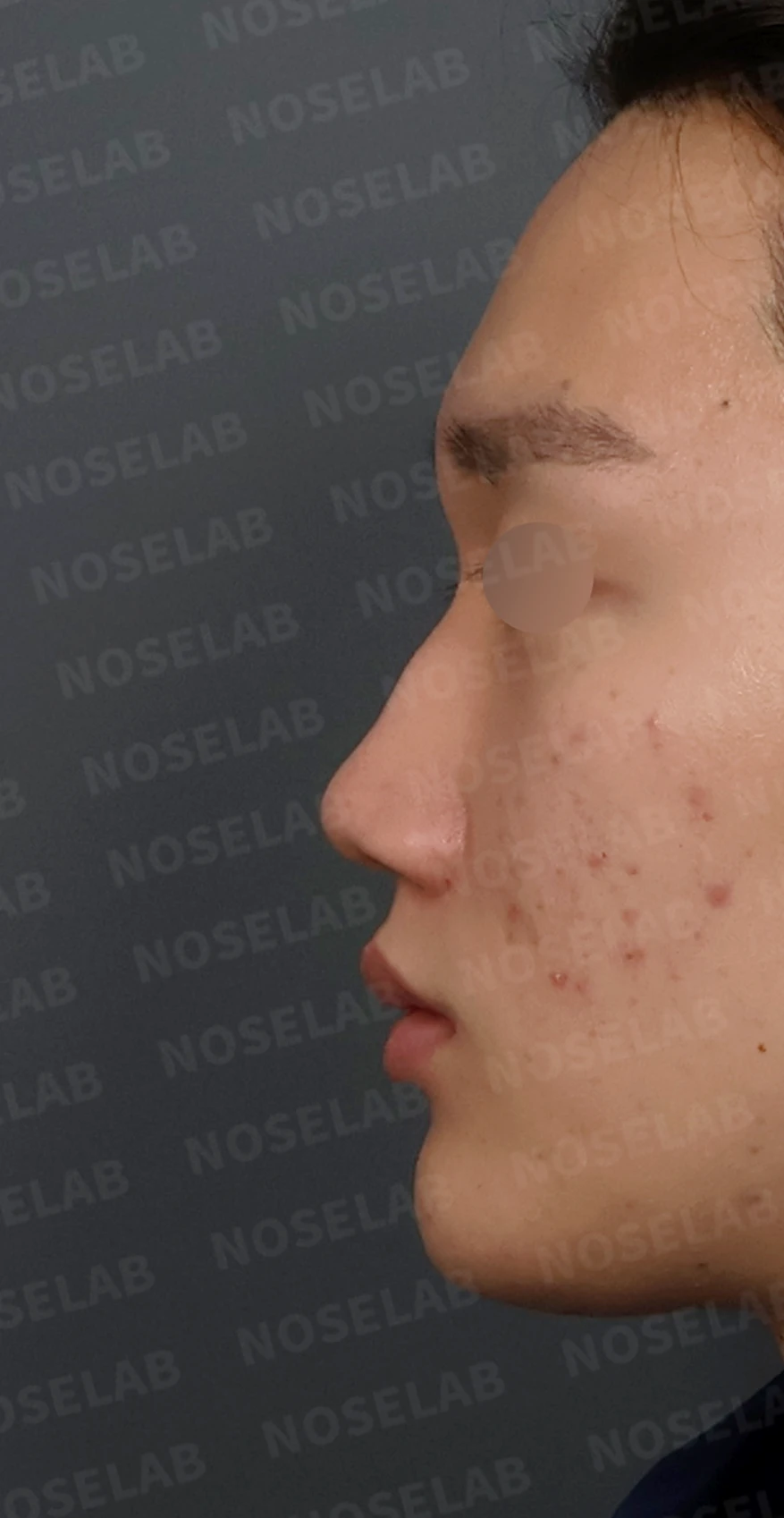
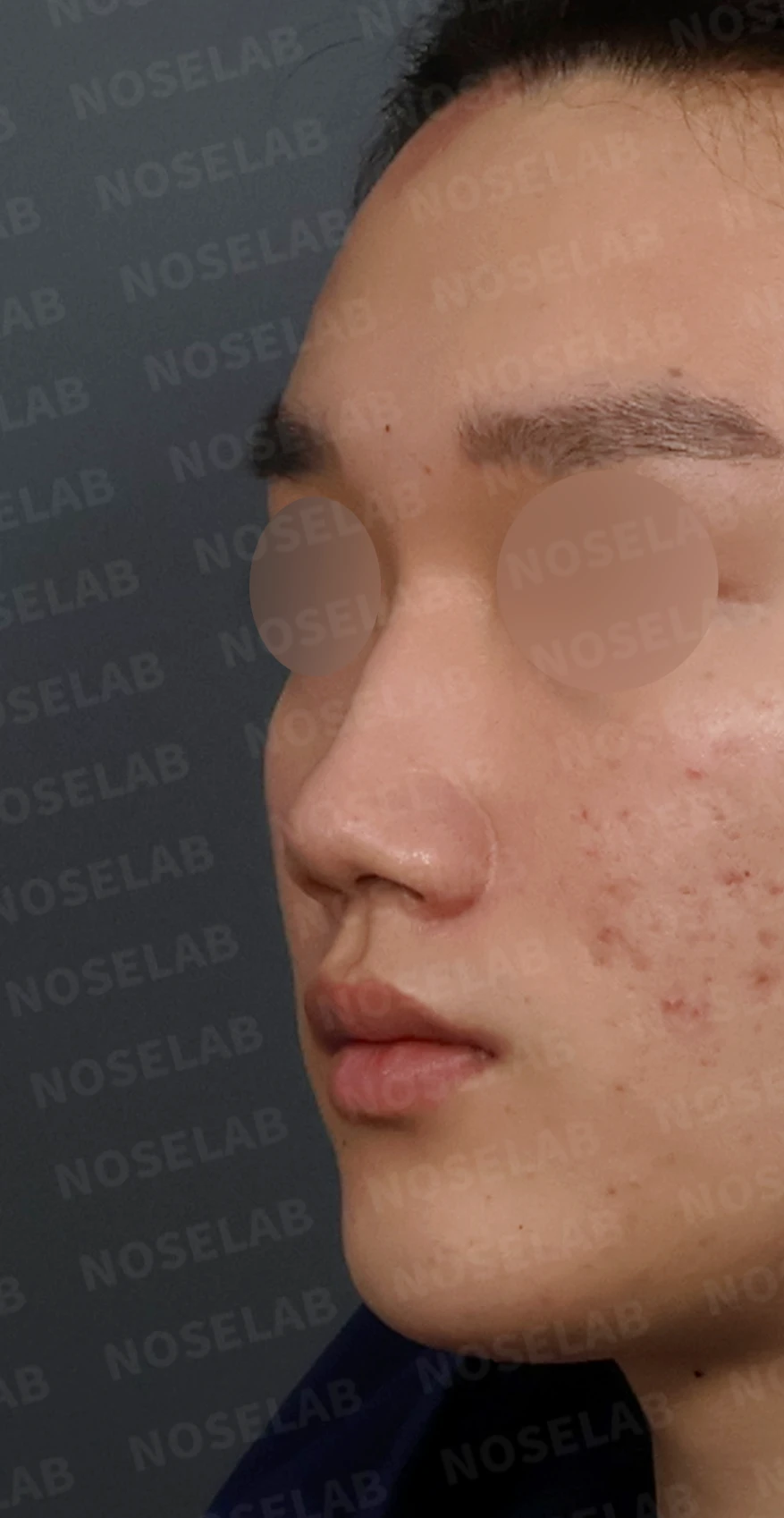
Front, left profile, and oblique views during design consultation.
💉 Patient requests
The patient's primary concerns were as follows:
Wished to straighten the noticeably crooked nose seen on the front view
Wished to smoothly improve the prominent dorsal hump seen on the profile view
Wished to resolve chronic nasal obstruction symptoms
As a male patient, he particularly desired a natural, masculine nasal contour rather than an excessively high or artificial appearance.
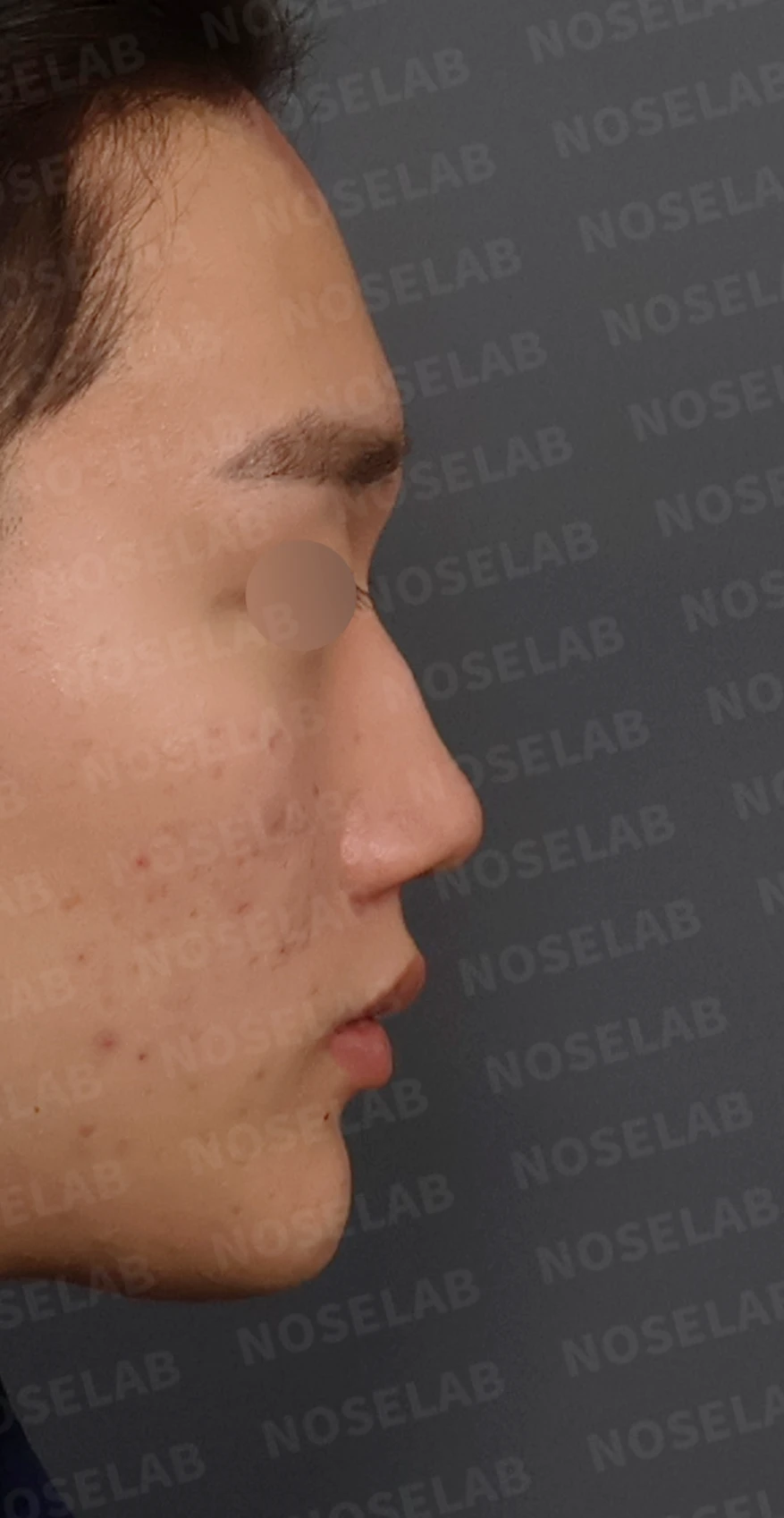
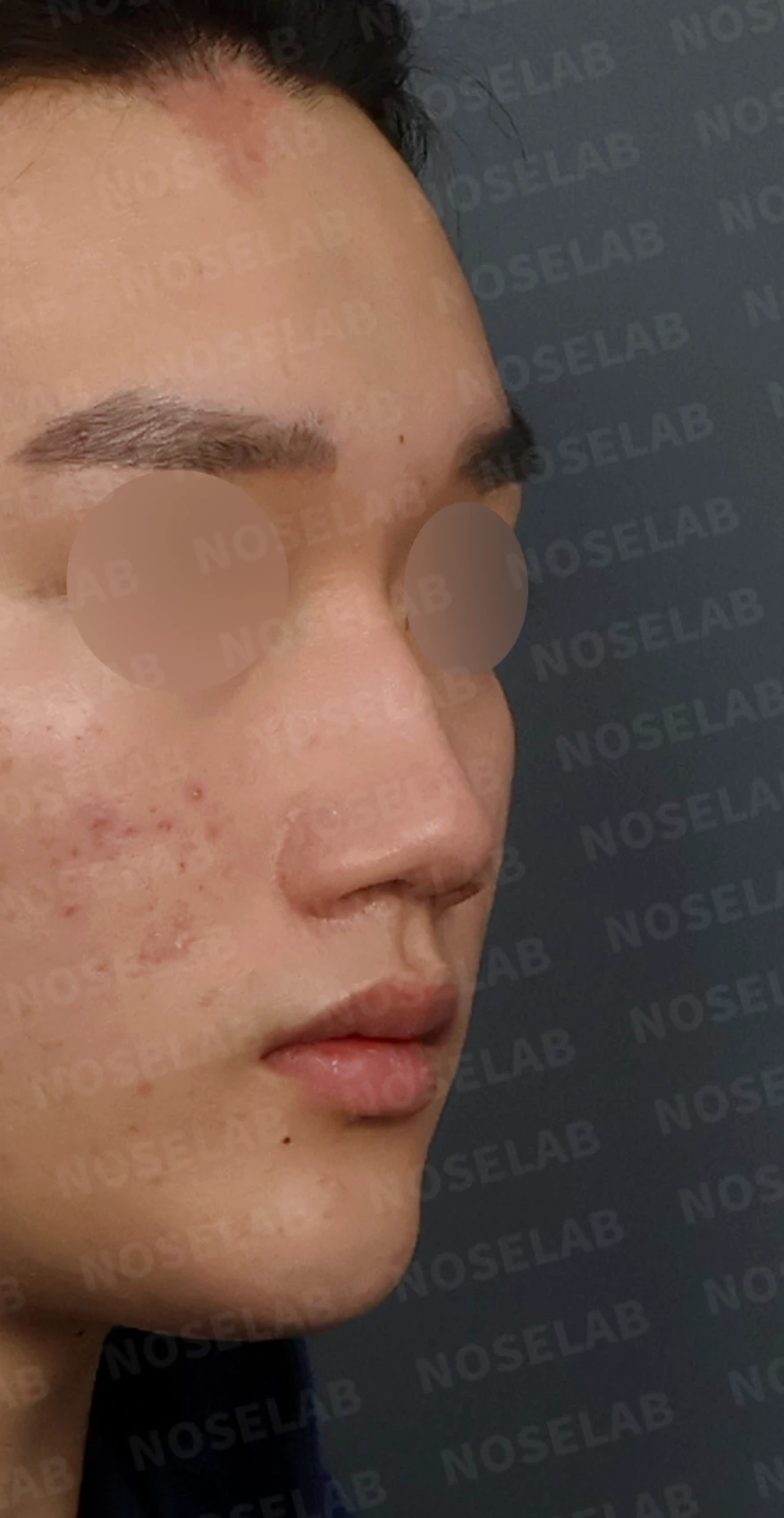
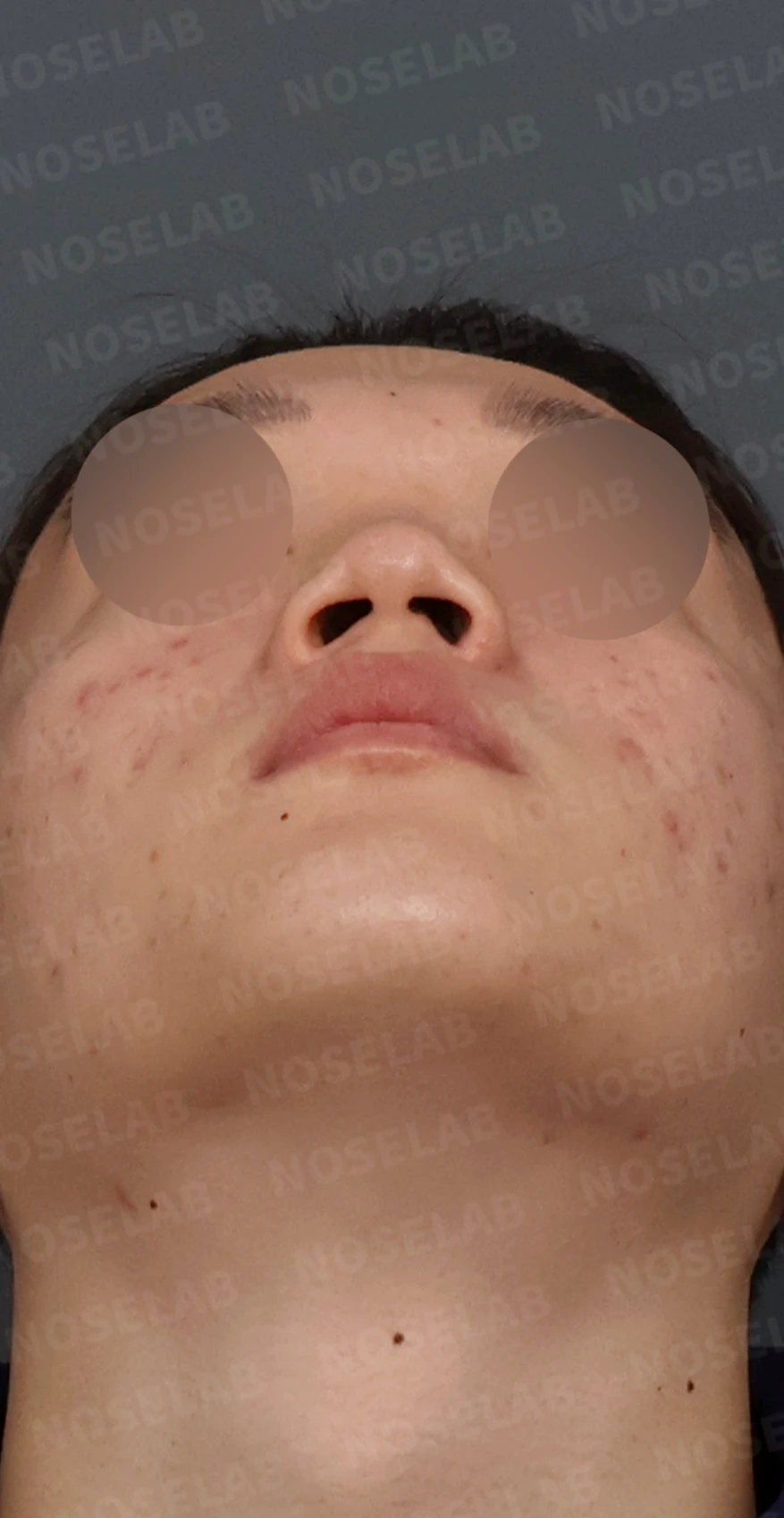
Right profile, oblique, and nostril views during design consultation.
🔧 Surgical plan and procedure
Taking into thorough consideration the patient's condition and requests, the surgery was performed as follows.
1. Lateral osteotomy of the nasal bones
Shifted the deviated nasal bones to the right to properly align the midline of the nasal bridge on the front view
Simultaneously trimmed the prominent portion of the dorsal hump to create a smooth bridge line
2. Nasal tip rhinoplasty using donor rib cartilage and septal cartilage
Utilized donor rib cartilage alongside the patient's own septal cartilage to build a solid structural support for the nasal tip
Established a masculine yet natural tip height and angle
3. Deviated septum and rhinitis surgery
Corrected the deviated septum and performed concurrent rhinitis surgery to address the root cause of the nasal obstruction symptoms
4. Insertion of a customized silicone implant
Placed a silicone implant precisely sculpted to fit the contour of the patient's nasal bones, achieving a natural bridge height
5. Correction of retracted columella and nasolabial angle
Lowered the retracted columella to an appropriate position to refine the profile silhouette
Adjusted the angle between the nose and upper lip appropriately to create a refined profile
🌟 Surgical results
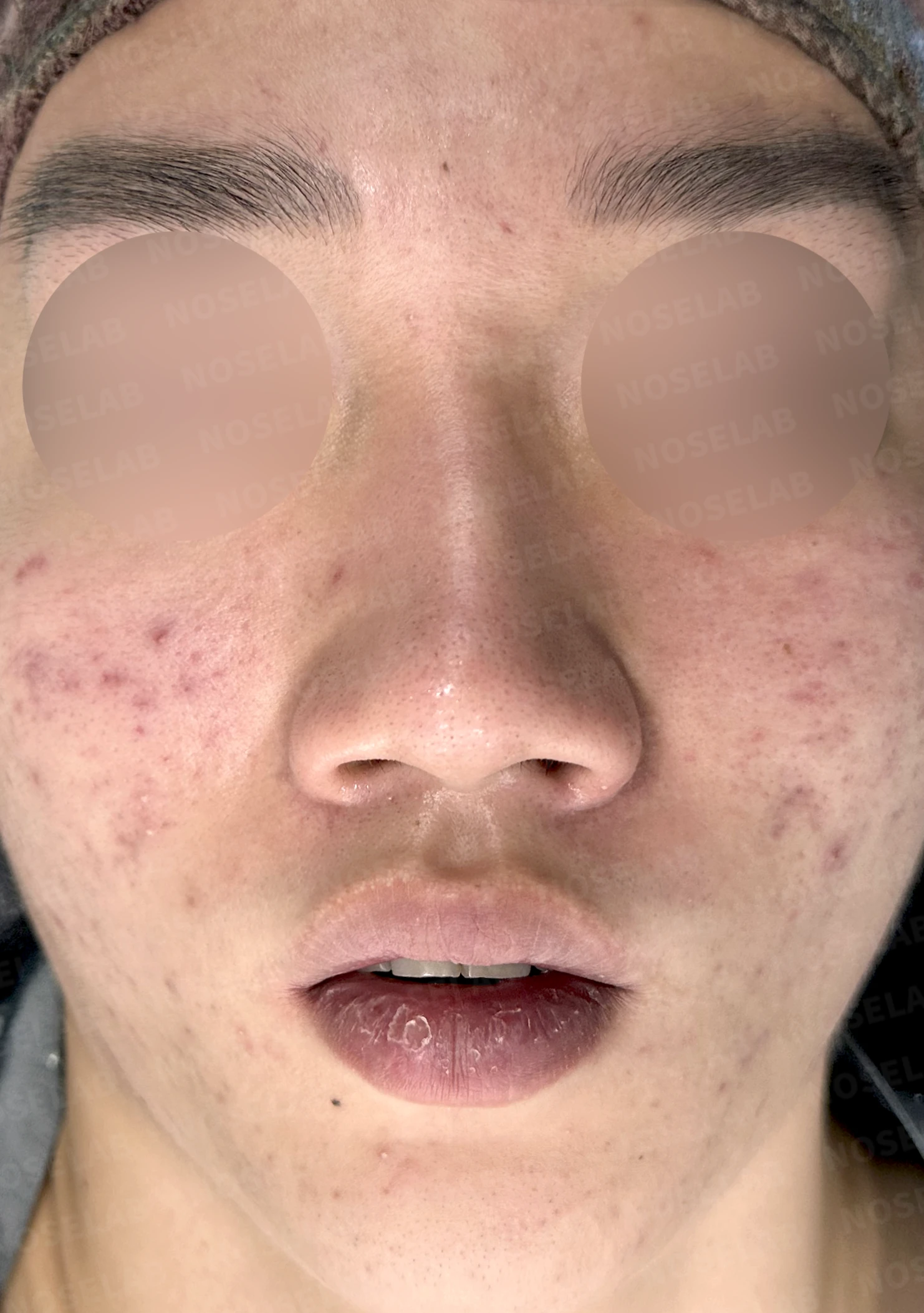
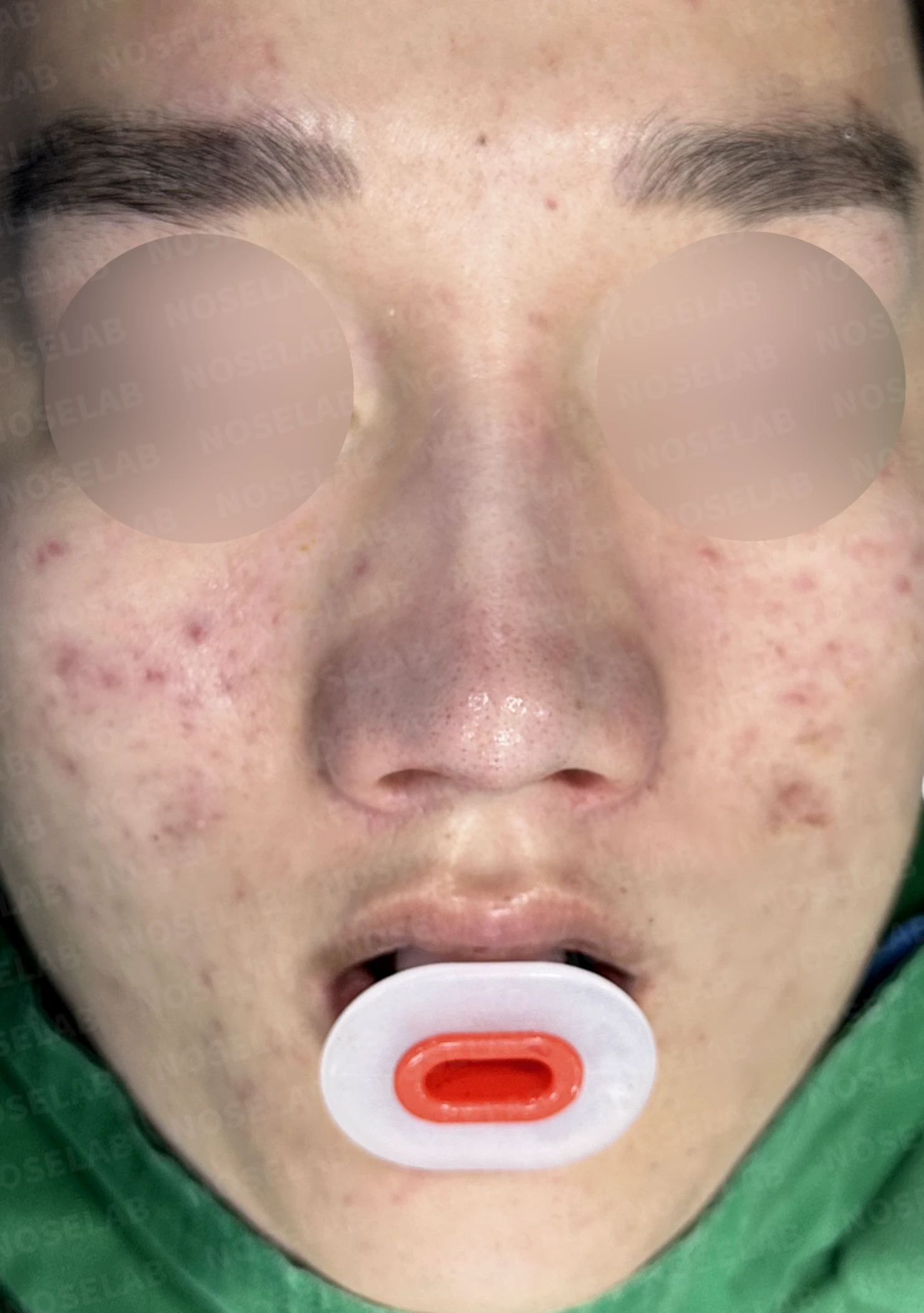
Before surgery / Day 0 immediately after surgery Photos taken immediately after surgery show swelling and may differ from the final result.
Front view changes:
The nasal bridge that deviated to one side was aligned with the midline
Achieved an overall straight, well-balanced nasal contour
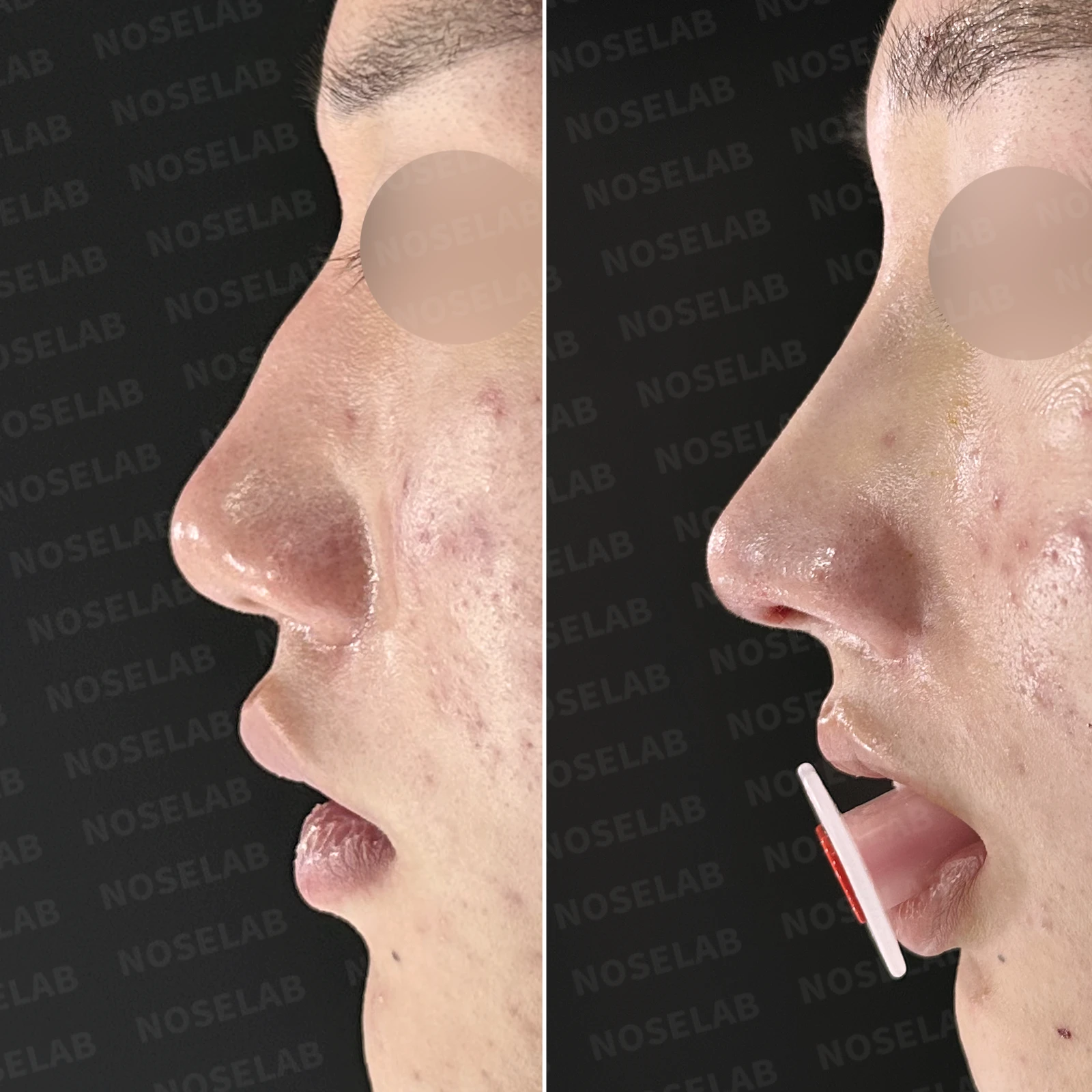
Before surgery / Day 0 immediately after surgery Photos taken immediately after surgery show swelling and may differ from the final result.
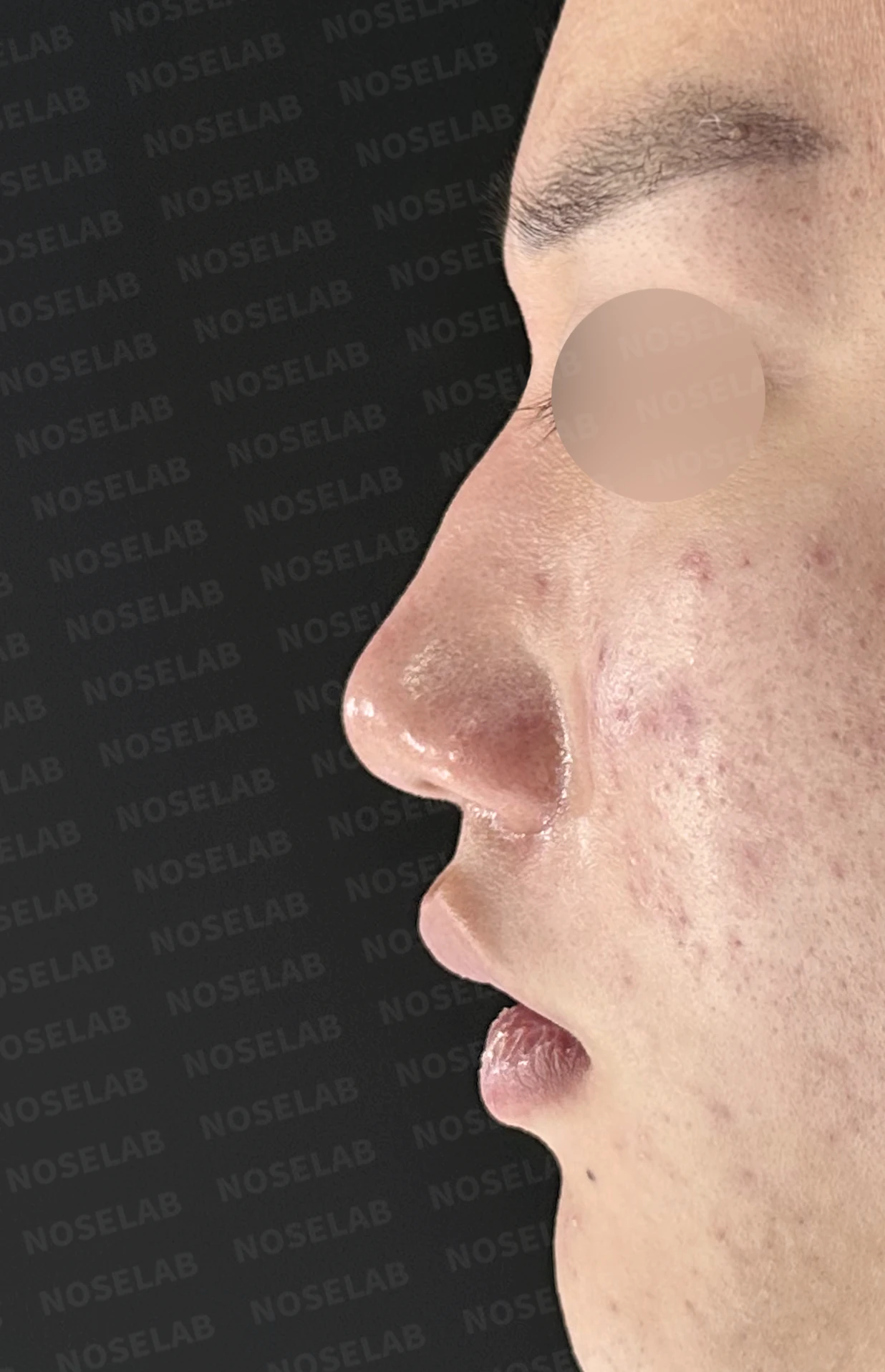
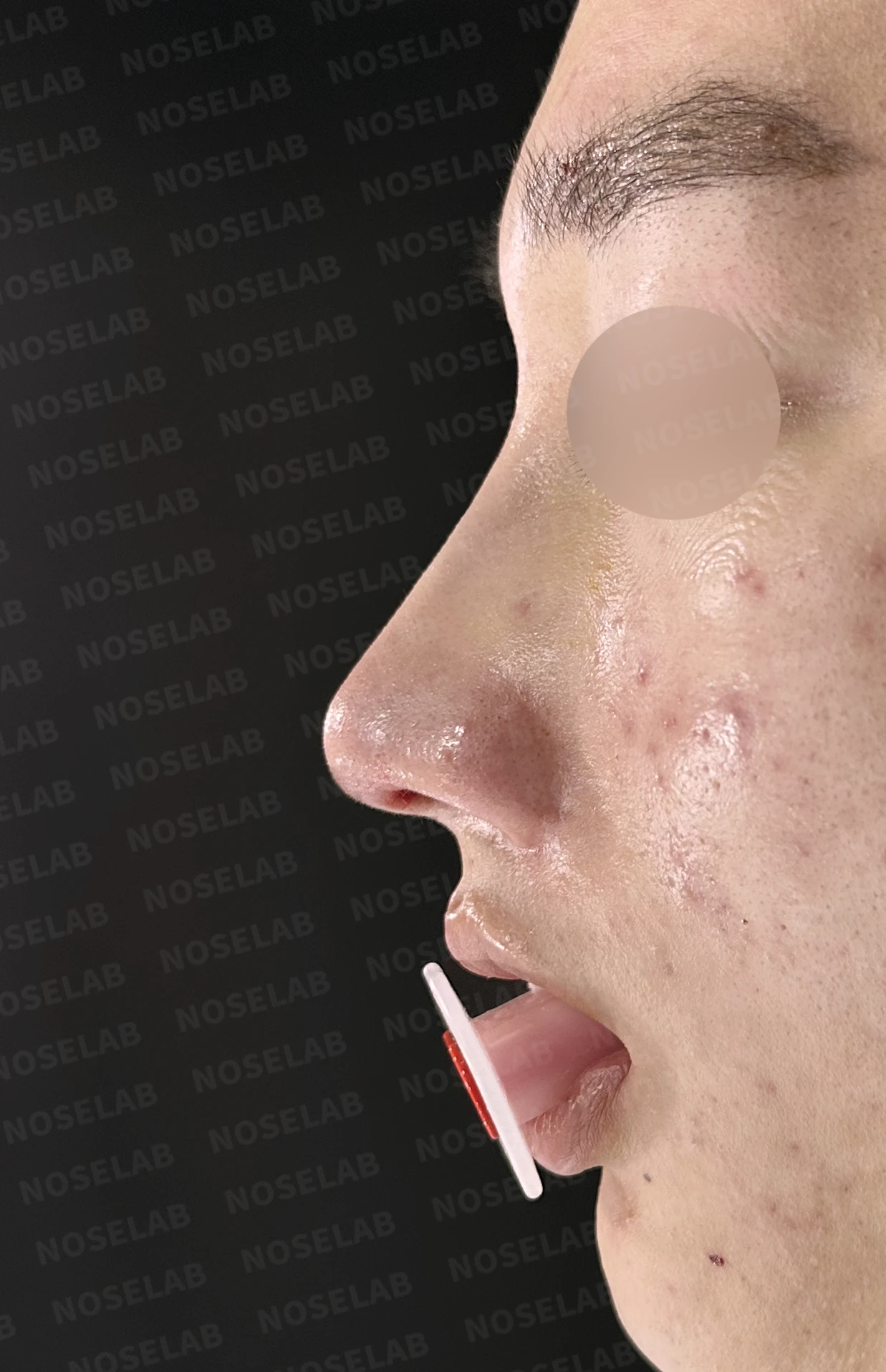
Profile view changes:
The prominent dorsal hump was smoothly corrected
Secured a natural, unexaggerated bridge height
The retracted columella was corrected and the nasolabial angle adjusted, completing a refined profile line
Masculine and refined profile line
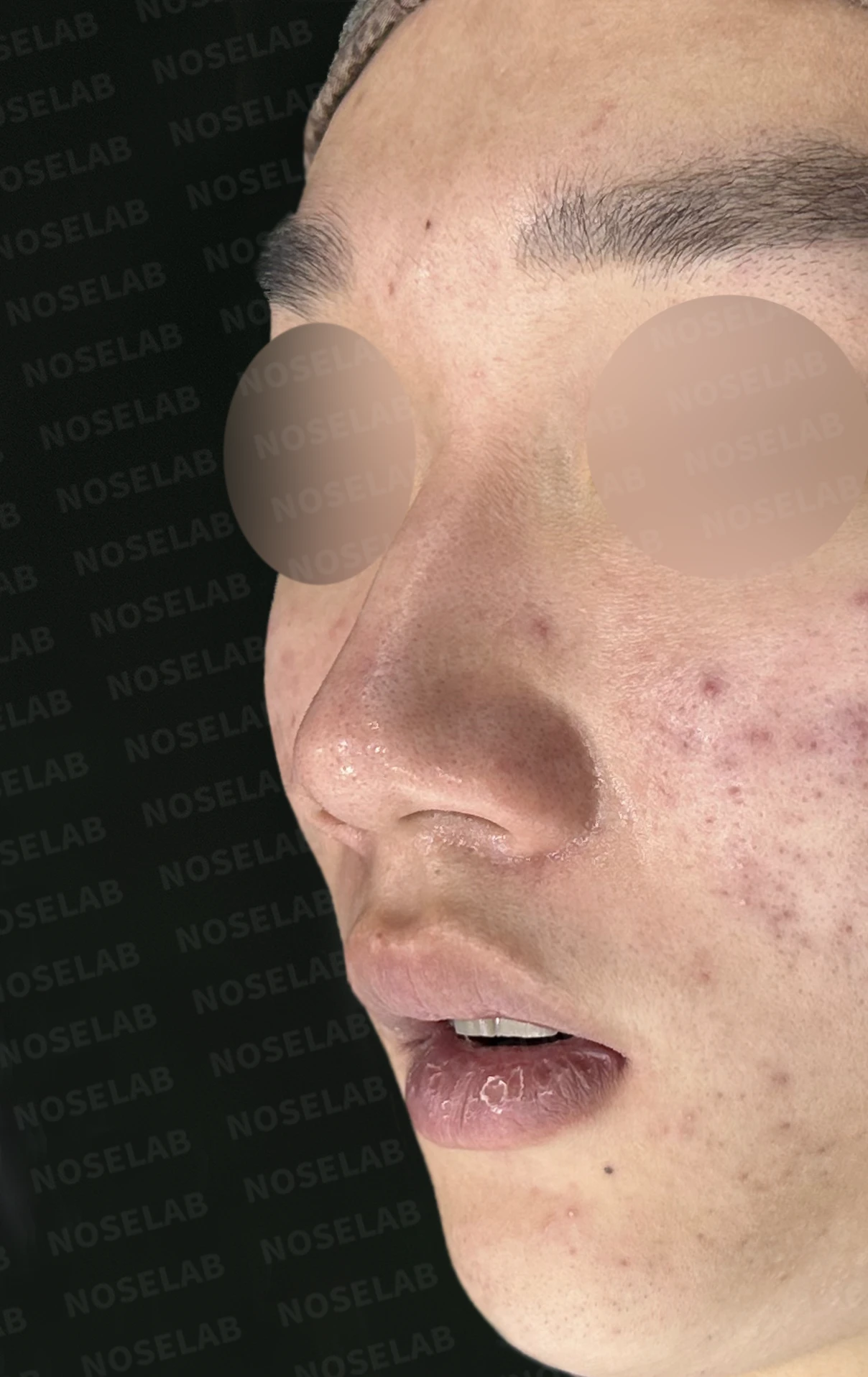
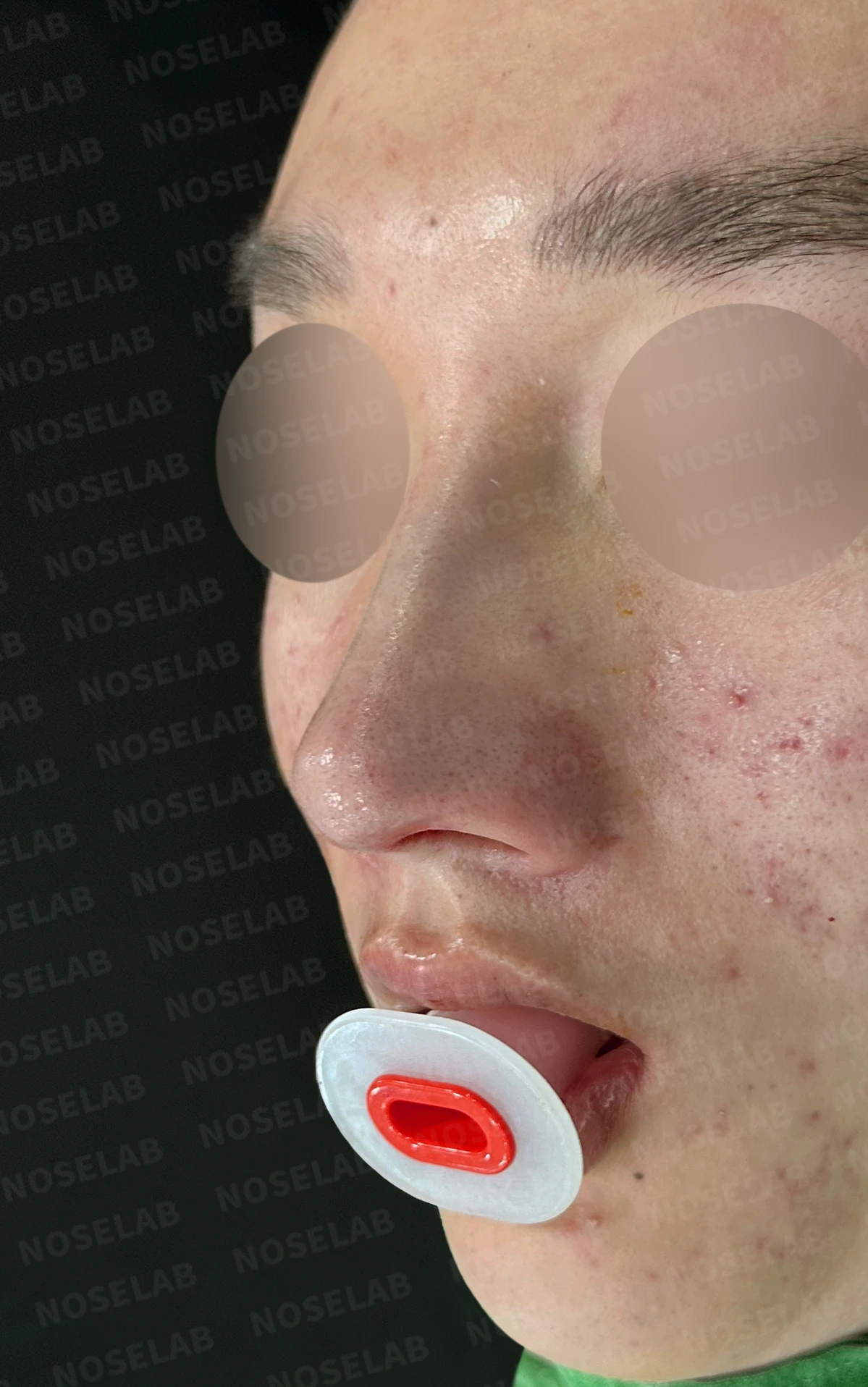
Before surgery / Day 0 immediately after surgery Photos taken immediately after surgery show swelling and may differ from the final result.
Functional improvement:
Relief of nasal obstruction symptoms through correction of the deviated septum
Improved breathing function through concurrent rhinitis surgery
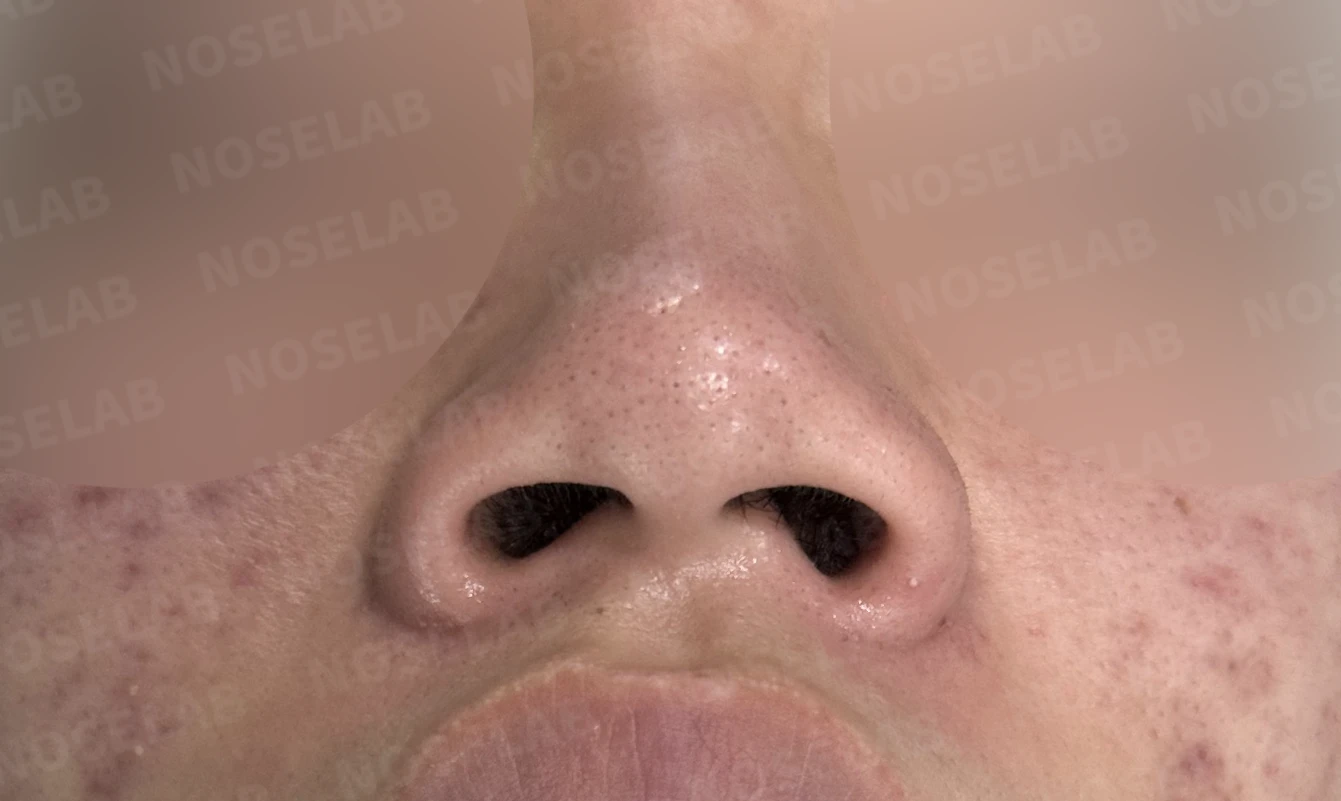
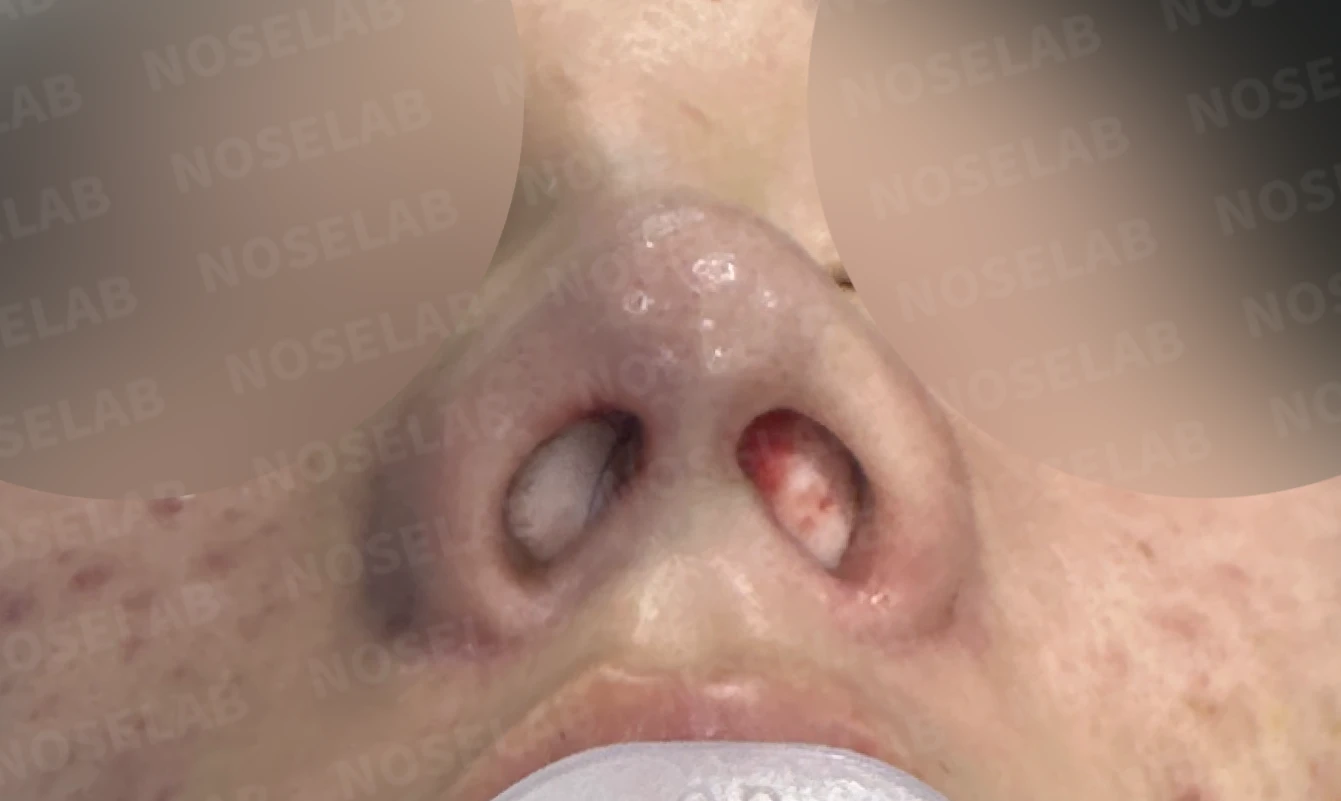
Before surgery / Day 0 immediately after surgery Photos taken immediately after surgery show swelling and may differ from the final result.
💡 Specialist opinion
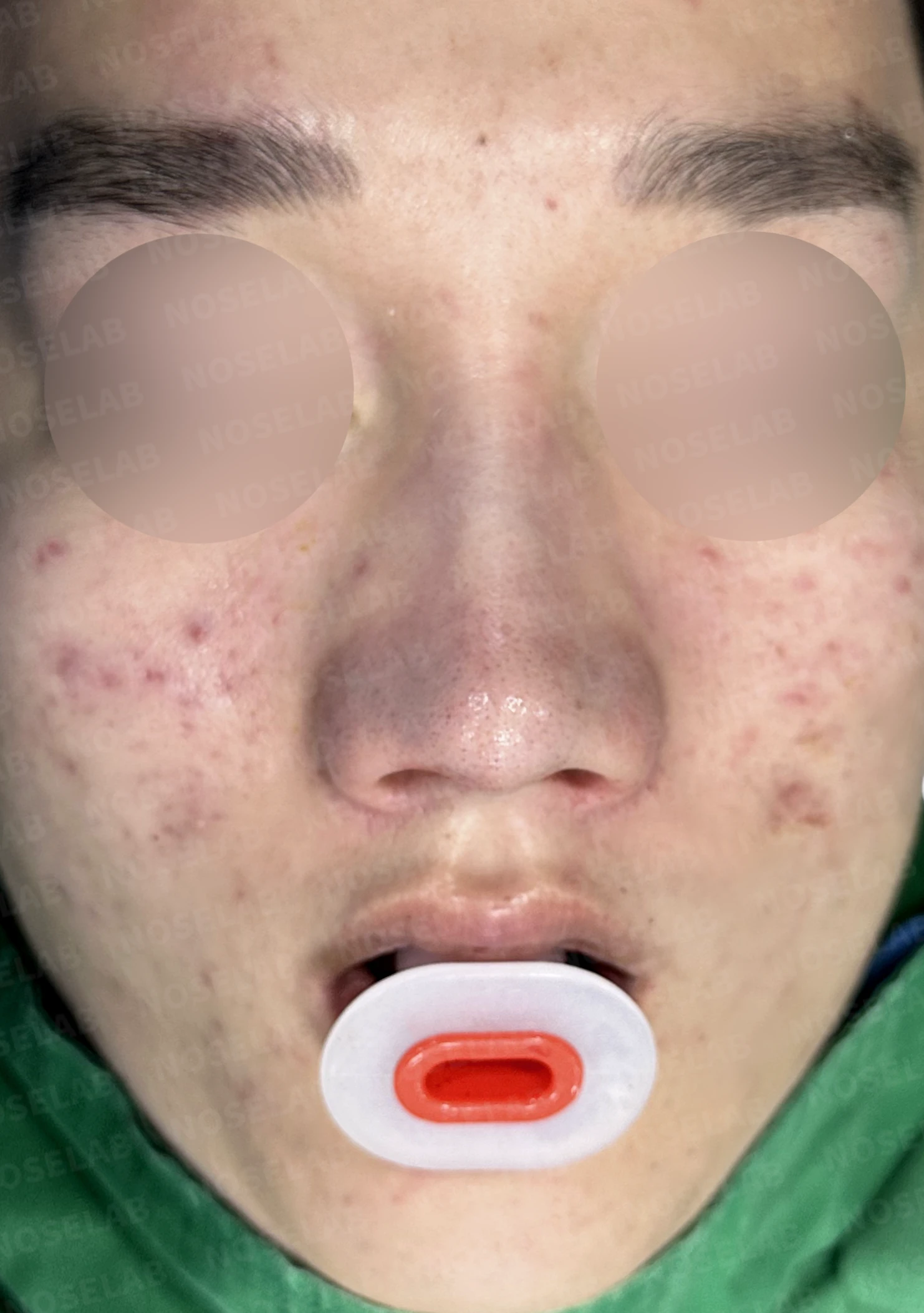
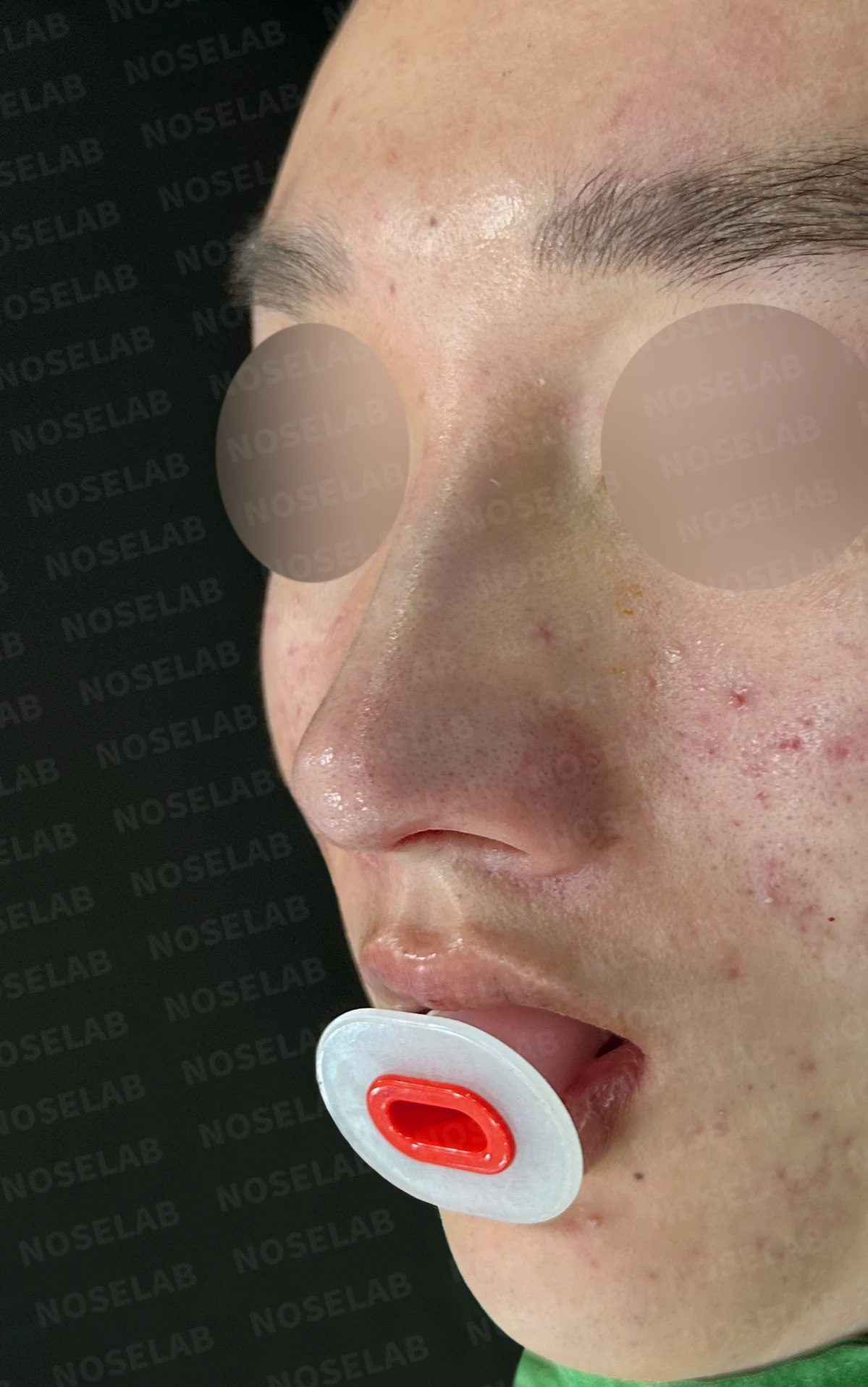
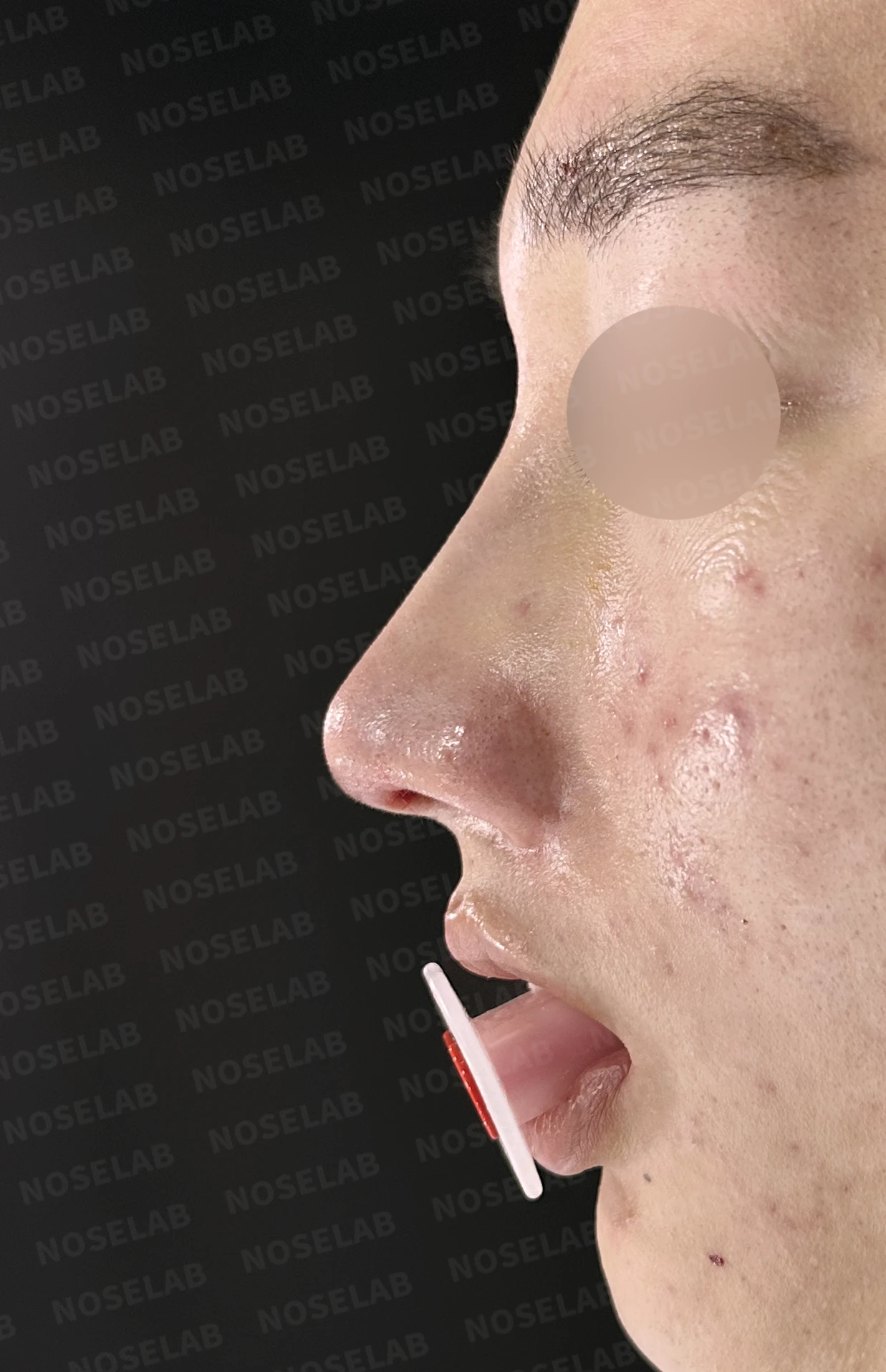
Front, oblique, and profile views on day 0 immediately after surgery. Photos taken immediately after surgery show swelling and may differ from the final result.
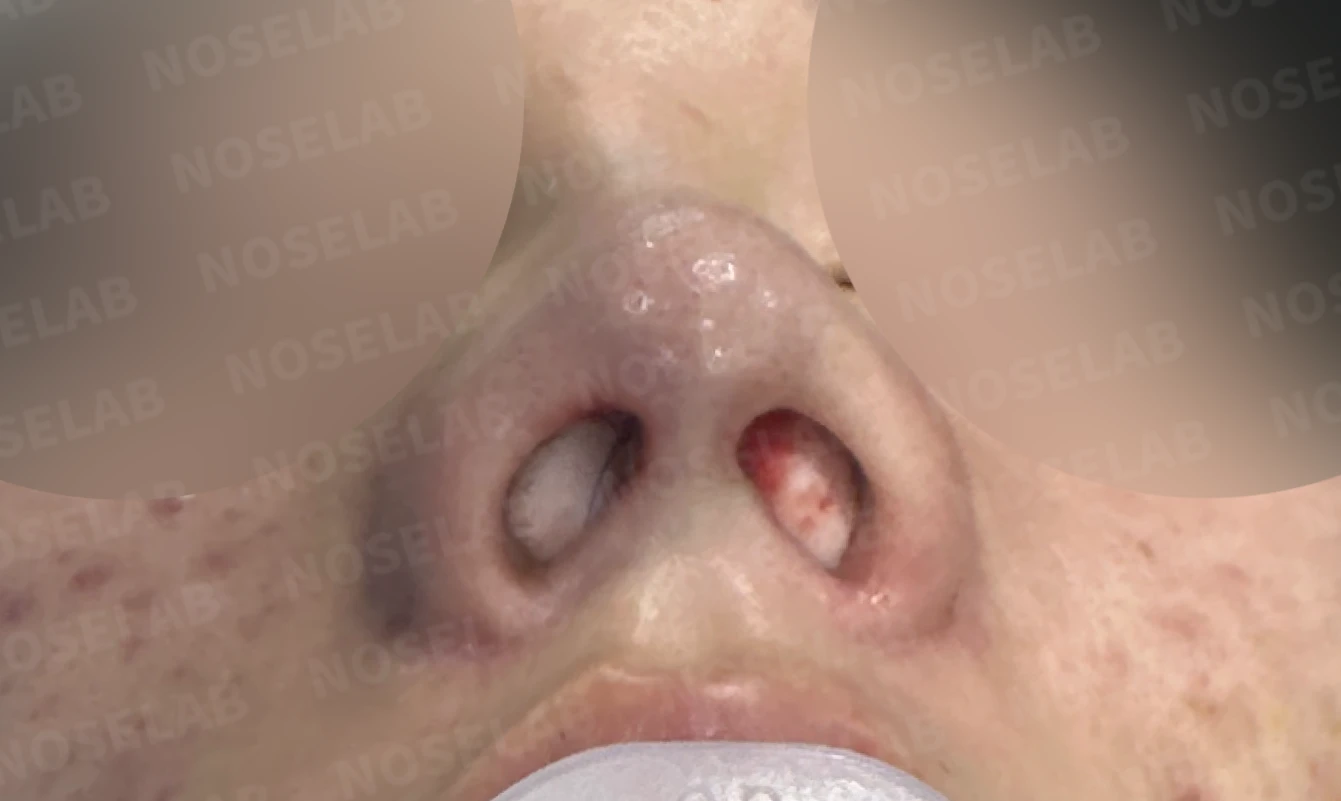
Nostril view on day 0 immediately after surgery. Photos taken immediately after surgery show swelling and may differ from the final result.
The most important factor in male rhinoplasty is naturalness. Unlike female rhinoplasty, an excessively high or overly sharp line can create an awkward impression, so the balance with the overall facial structure must be carefully considered.
In this type of case, multiple issues—including a crooked nose, dorsal hump, nasal obstruction, and a retracted columella—were addressed simultaneously in a single surgery. The nasal bones were repositioned through osteotomy, firm tip support was established using donor rib cartilage and septal cartilage, and a natural bridge line was achieved with a custom-sculpted implant. By correcting the retracted columella and refining the nasolabial angle, a balanced and refined profile silhouette was successfully created.
I hope this case helps those who are considering male rhinoplasty.
This was Dr. Peter C. Kang. Thank you.
#malerhinoplasty #crookednosecorrection #dorsalhumpcorrection #nasalobstructionsurgery #deviatedseptum #closedrhinoplasty #menrhinoplasty #osteotomy #nasolabialanglecorrection

Limitations and risks
When using donor rib cartilage, long-term follow-up is necessary because the grafted cartilage may resorb or warp.
When the septum is corrected at the same time, nasal obstruction may persist or recur, and in rare cases, septal perforation or changes in smell may occur.
Common potential risks include infection, bleeding, asymmetry, scarring, skin necrosis, and insufficient improvement; results vary depending on individual skin condition and previous surgical history.