Hello, I am Dr. Peter C. Kang.
Today, I would like to present a corrective surgery case
for a patient who had a bulbous tip, dorsal hump, drooping tip, and crooked nose concurrently.
This patient also wished to resolve symptoms caused by rhinitis,
including rhinorrhea, nasal obstruction, and post-nasal drip.
First, let us review the surgical methods for bulbous nose correction.
Surgical methods for bulbous nose correction
Bulbous nose correction is an important, frequently performed procedure in rhinoplasty.
The surgical techniques include the following:
1. Subcutaneous fat removal:
- Excessive subcutaneous fat in the nasal tip is partially removed.
- This reduces the volume of the nasal tip and creates a more refined contour.
2. Cartilage repositioning and reshaping:
- The lower lateral cartilages are repositioned to improve the shape of the nasal tip.
- As needed, the cartilage is trimmed or reinforced to create the desired shape.
3. Dome division technique:
- The dome area of the nasal tip cartilage is divided and repositioned to create a more defined shape.
4. Septal extension:
- Septal cartilage is used to support and project the nasal tip.
- This provides height and definition to a flat, wide nasal tip.
5. Shield graft:
- A cartilage graft is placed at the nasal tip to increase projection and improve contour.
6. Tip sutures:
- Specialized suture techniques are used to bind the nasal tip cartilages, creating a slimmer shape.
7. Lateral crural strut graft:
- The lateral crus is reinforced to strengthen tip support and refine its shape.
8. Alar reduction:
- If necessary, the size of the alae is reduced to achieve overall facial balance.
9. Soft tissue rearrangement:
- Soft tissue around the nasal tip is rearranged to create a sharper contour.
10. Autologous tissue grafting:
- Ear cartilage or rib cartilage is used to reinforce the nasal tip and refine its shape.
11. Columellar reduction and adjustment:
- The length and position of the columella are adjusted to improve the overall appearance of the nasal tip.
12. Tip rotation control:
- The rotation angle of the nasal tip is adjusted to improve the overall profile.
These techniques must be chosen and combined appropriately by considering
each patient's nasal anatomy, skin characteristics, and desired outcome.
Furthermore, correcting a bulbous nose is not simply about altering the tip alone;
it requires balancing the overall nose and harmonizing it with the entire face.
Therefore, the height of the nasal bridge, nasolabial angle, and alar size must all be evaluated
to achieve balanced proportions.
Postoperative taping and proper compression help maintain the newly sculpted shape,
while systematic follow-up care such as swelling management and massage is also vital.
Because final results emerge gradually over several months,
patients need to monitor their progress with patience.
1. Preoperative design consultation
Let us analyze the patient's preoperative condition in detail:
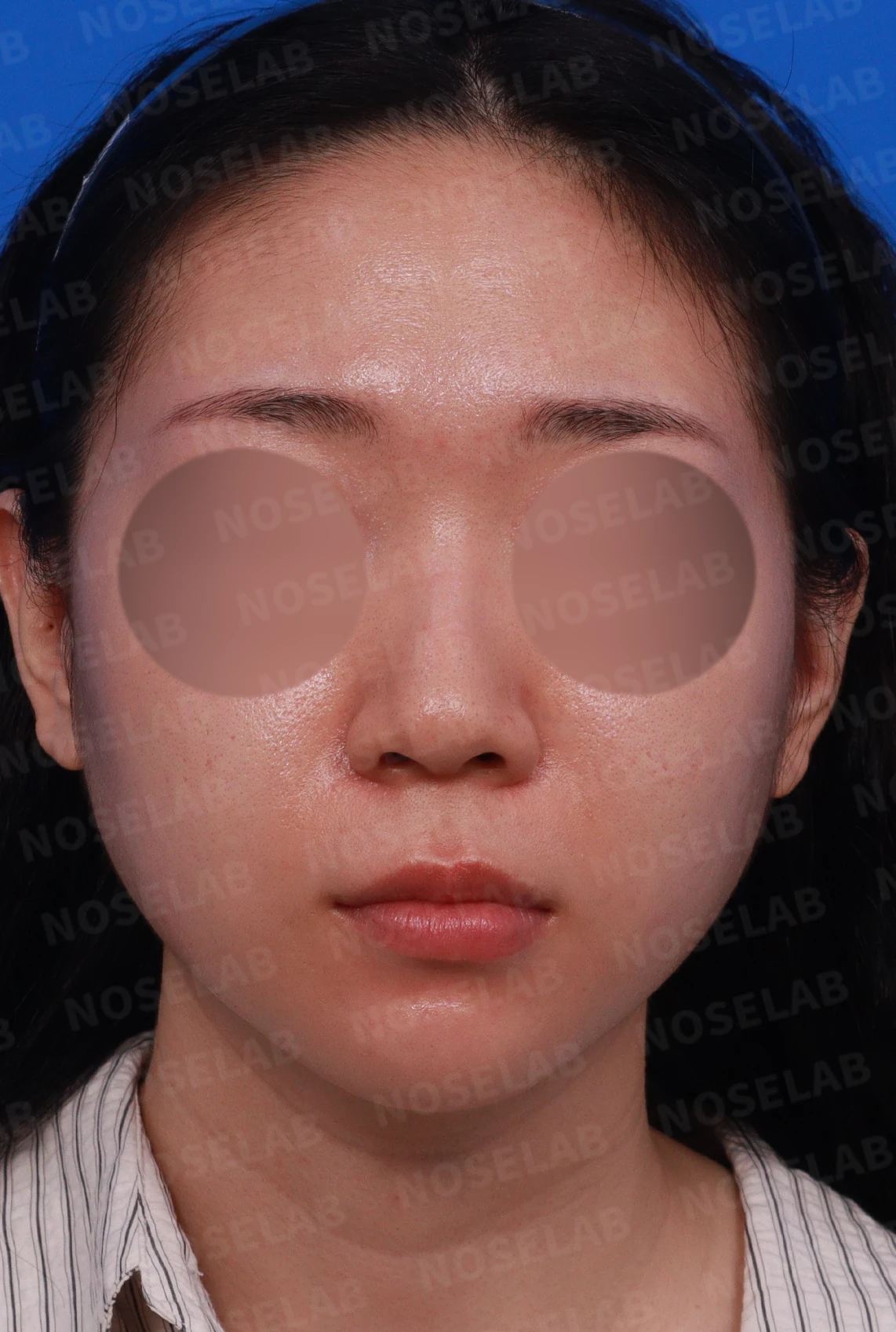
Preoperative design photo, front view.
Front view:
- The nasal tip appears wide and spread out
- Flat glabella
- The nasal bridge appears crooked
- Typical bulbous tip appearance
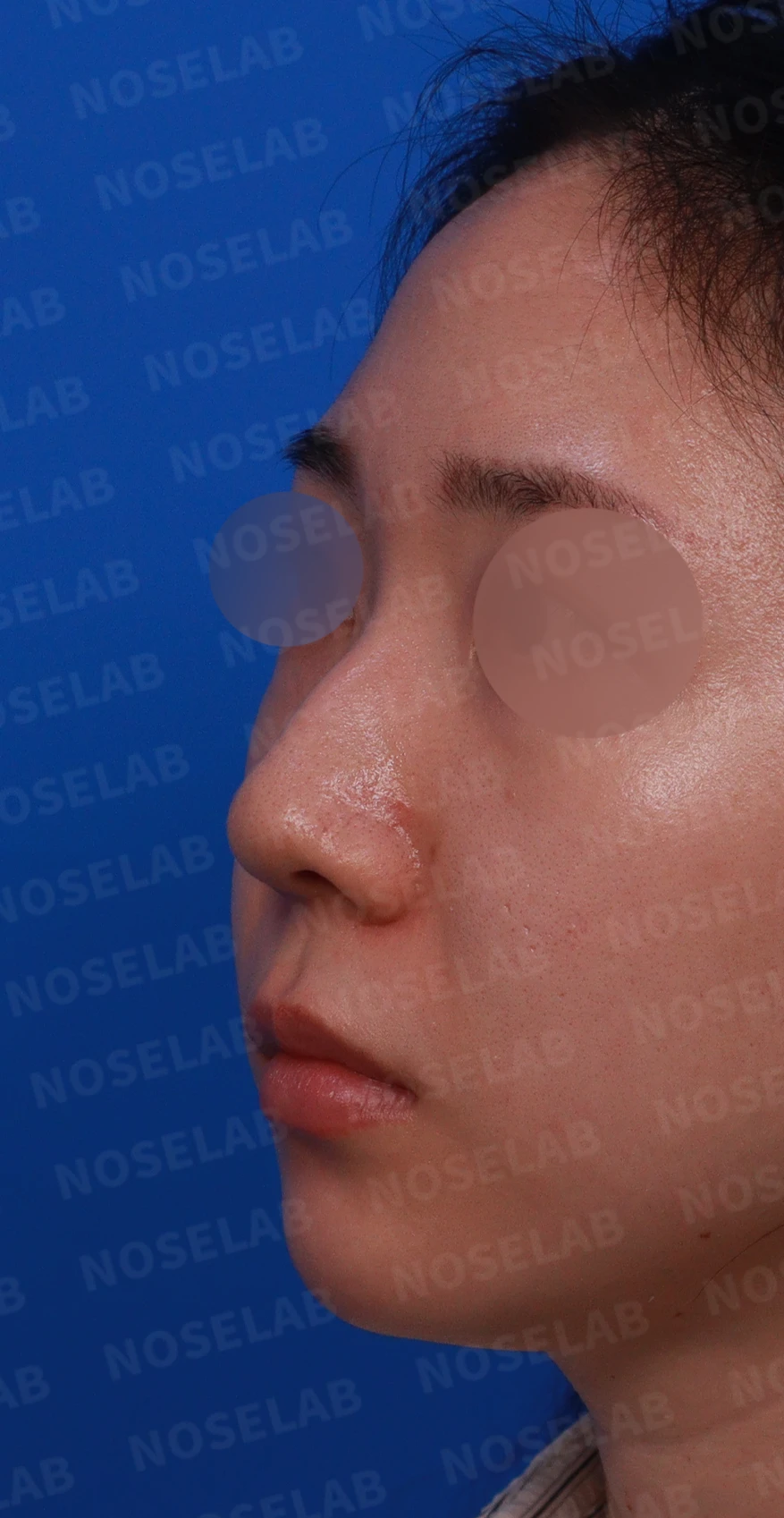
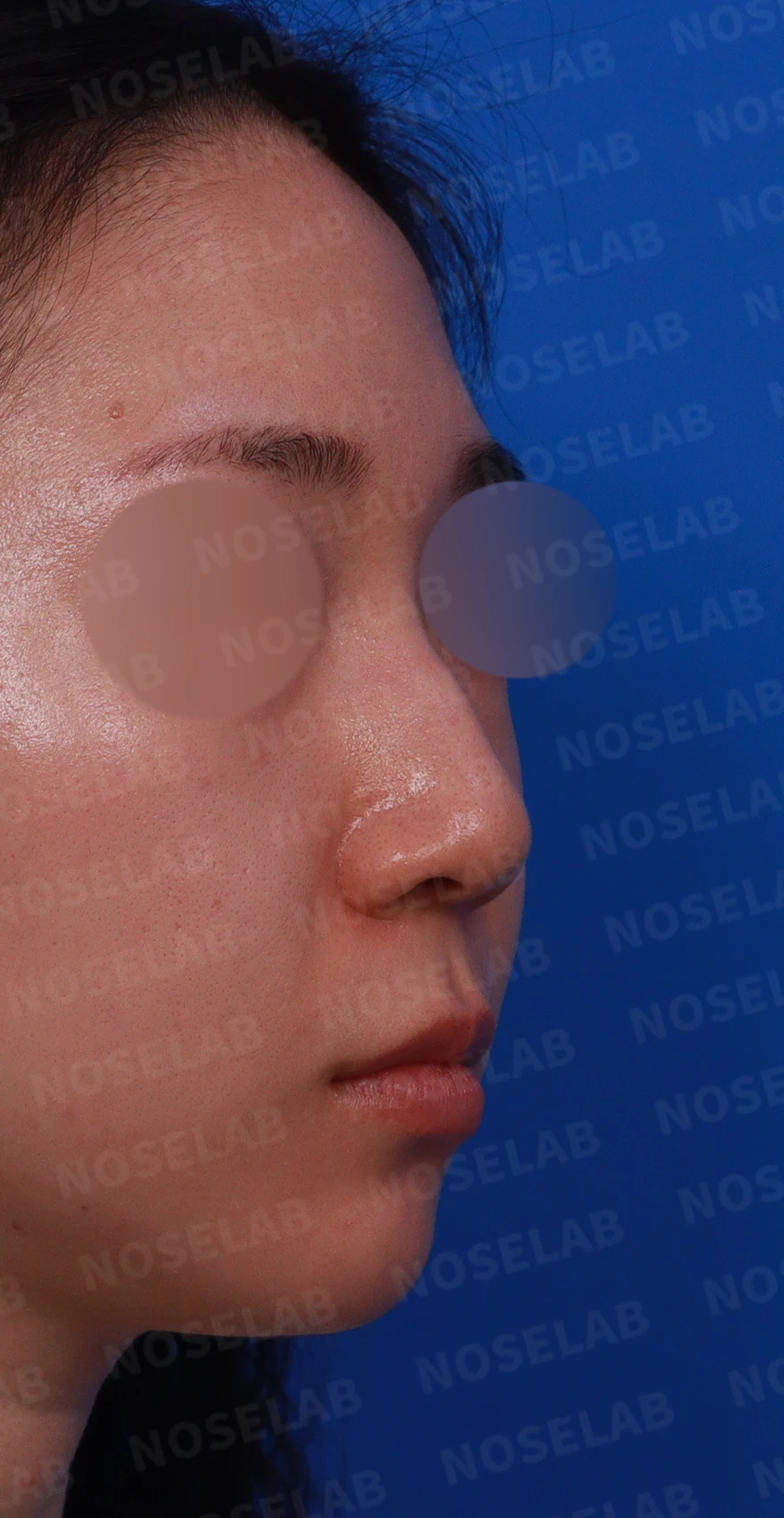
Preoperative design photo, oblique view.
Oblique view:
- The nasal tip is drooping
- The nose appears long
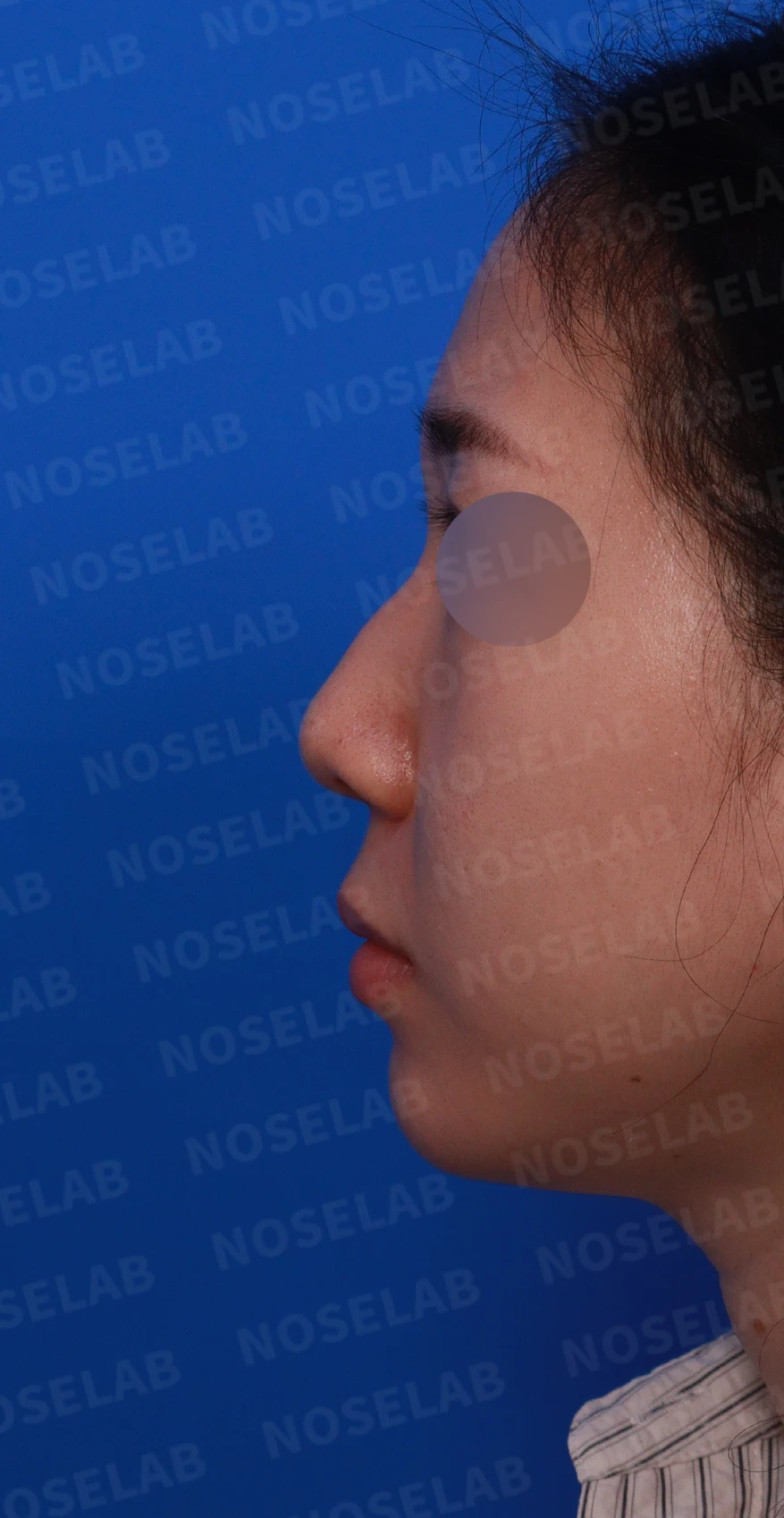
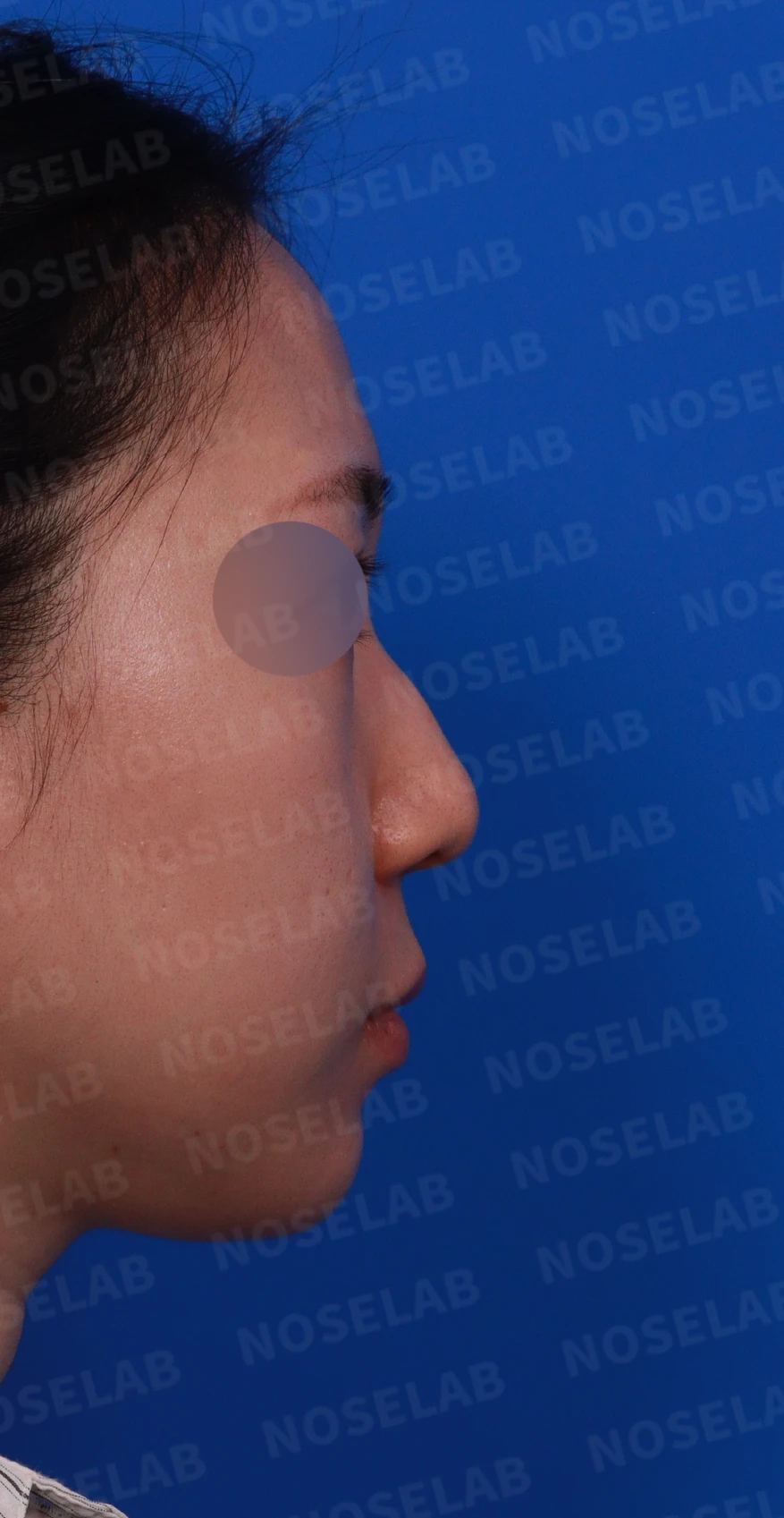
Preoperative design photo, profile view.
Profile view:
- Signs of a protruding mouth
- Noticeable dorsal hump
- The nasal tip appears drooping
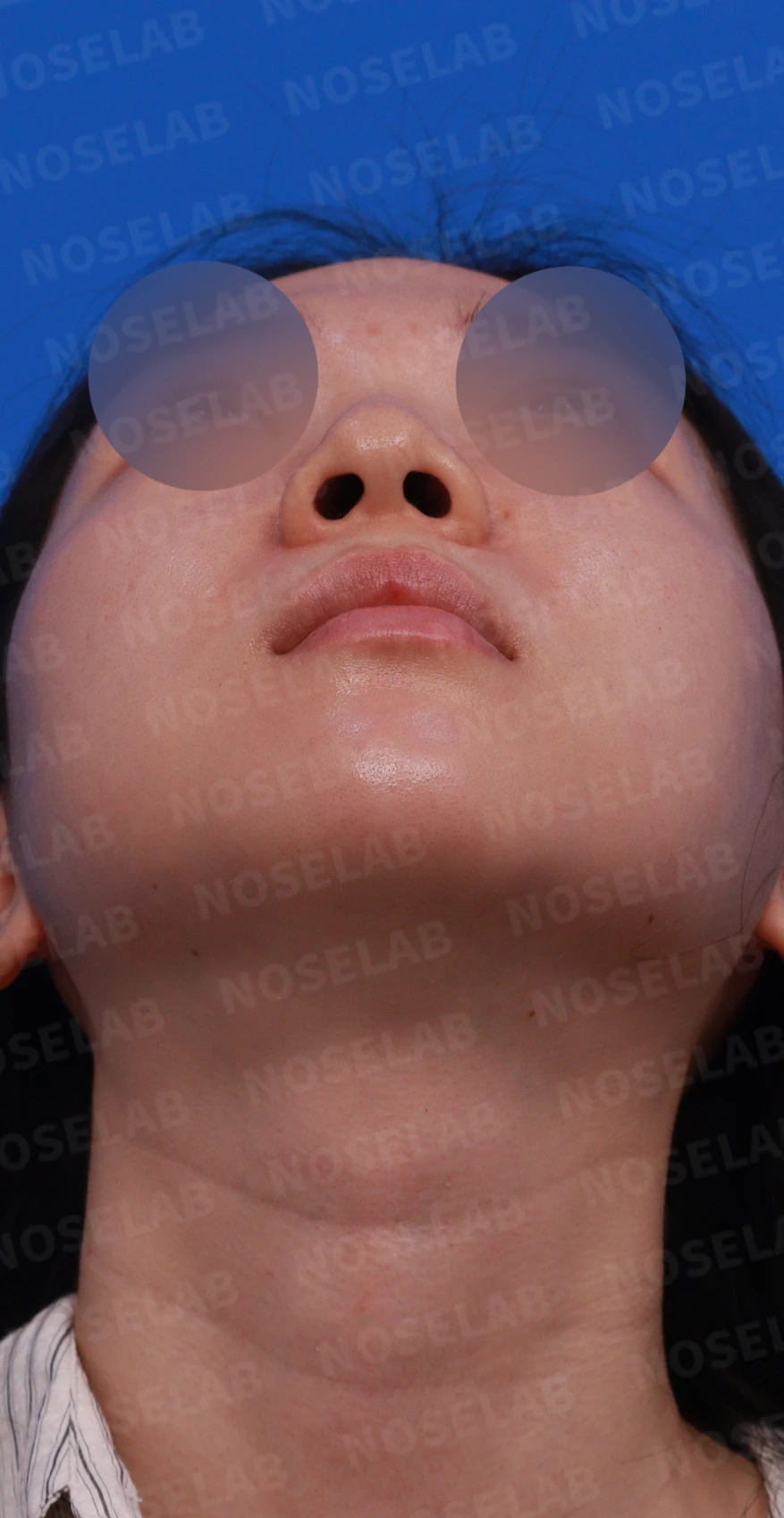
Preoperative design photo, nostril view.
Nostrils:
- Blunt and broad nasal tip
2. Surgical plan
Taking into account the patient's condition and requests, the following surgical plan was established:
a) Septal extension:
- Use of donor rib cartilage and septal cartilage
- Correction of drooping and wide tip
b) Lateral nasal osteotomy:
- Correction of dorsal hump and crooked nose
c) Silicone implant placement:
- Refinement of the nasal bridge line
d) Bulbous nose correction:
- Partial resection of subcutaneous tissue to reduce nasal tip skin thickness
- Lower lateral cartilage repositioning and suturing
- Nasal tip elevation to add projection
e) Lowering the columella and nasolabial angle correction:
- Improvement of protruding mouth appearance
f) Rhinitis treatment:
- Correction of deviated septum
- Inferior turbinate reduction
3. Surgical procedure
The following procedures were performed using a closed approach:
a) Septal extension:
- Reinforcement of the nasal tip support framework using donor rib cartilage and septal cartilage
- Improvement of nasal tip drooping and spreading
b) Lateral nasal osteotomy:
- Straightening of the deviated nasal bridge and correction of the dorsal hump
c) Silicone implant placement:
- Creation of appropriate height and curve along the nasal bridge
d) Bulbous nose correction:
- Reduction of thickness through partial removal of subcutaneous tissue in the nasal tip
- Improvement of tip definition through lower lateral cartilage repositioning and suturing
- Nasal tip elevation to add projection
e) Lowering the columella and nasolabial angle correction:
- Formation of a natural nasolabial angle by appropriately lowering the columella
f) Treatment of nasal obstruction:
- Balanced airway volume restored through septoplasty
- Relief of nasal obstruction via radiofrequency submucosal resection of the inferior turbinates
4. Comparison of before-and-after photos
Evaluating the Day 0 photos immediately after surgery demonstrates the following improvements: Immediate postoperative photos show swelling and may differ from the final result.
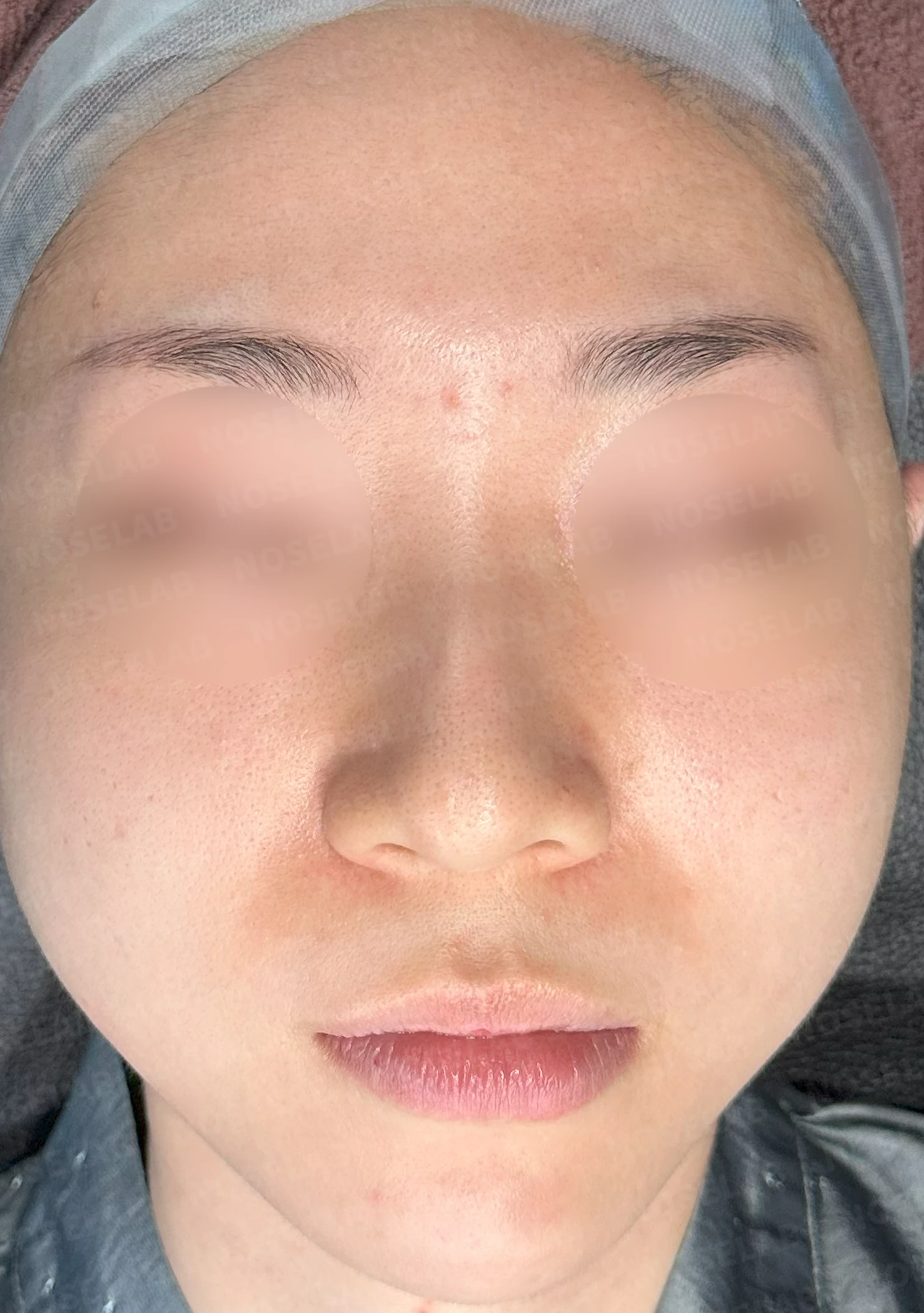
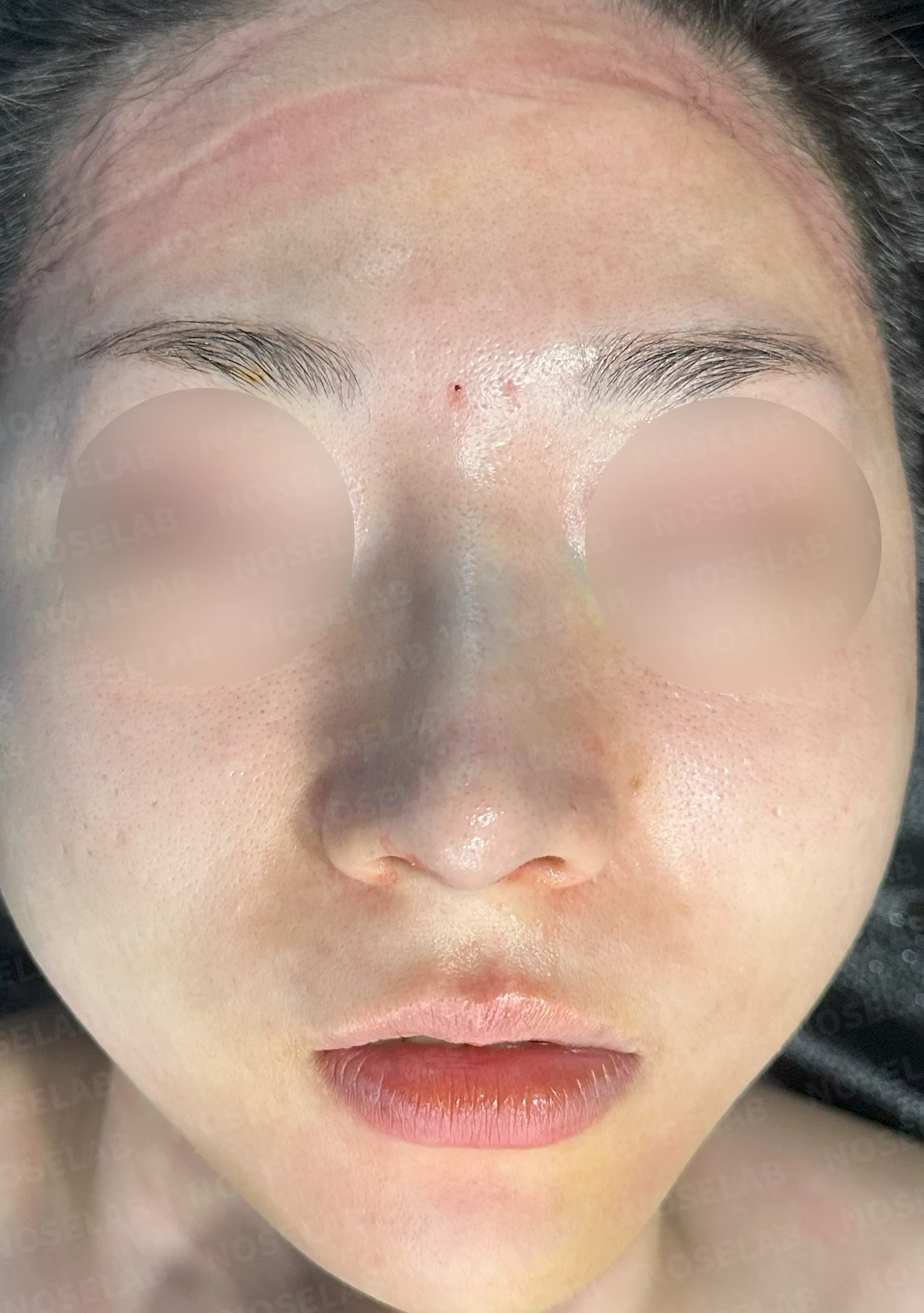
Before surgery / Day 0 immediately after surgery Photos taken immediately after surgery show swelling and may differ from the final result.
Front view:
- The previously deviated nasal bridge was straightened
- The previously blunt nasal tip now transitions naturally into the bridge
- A more defined, refined overall impression is achieved
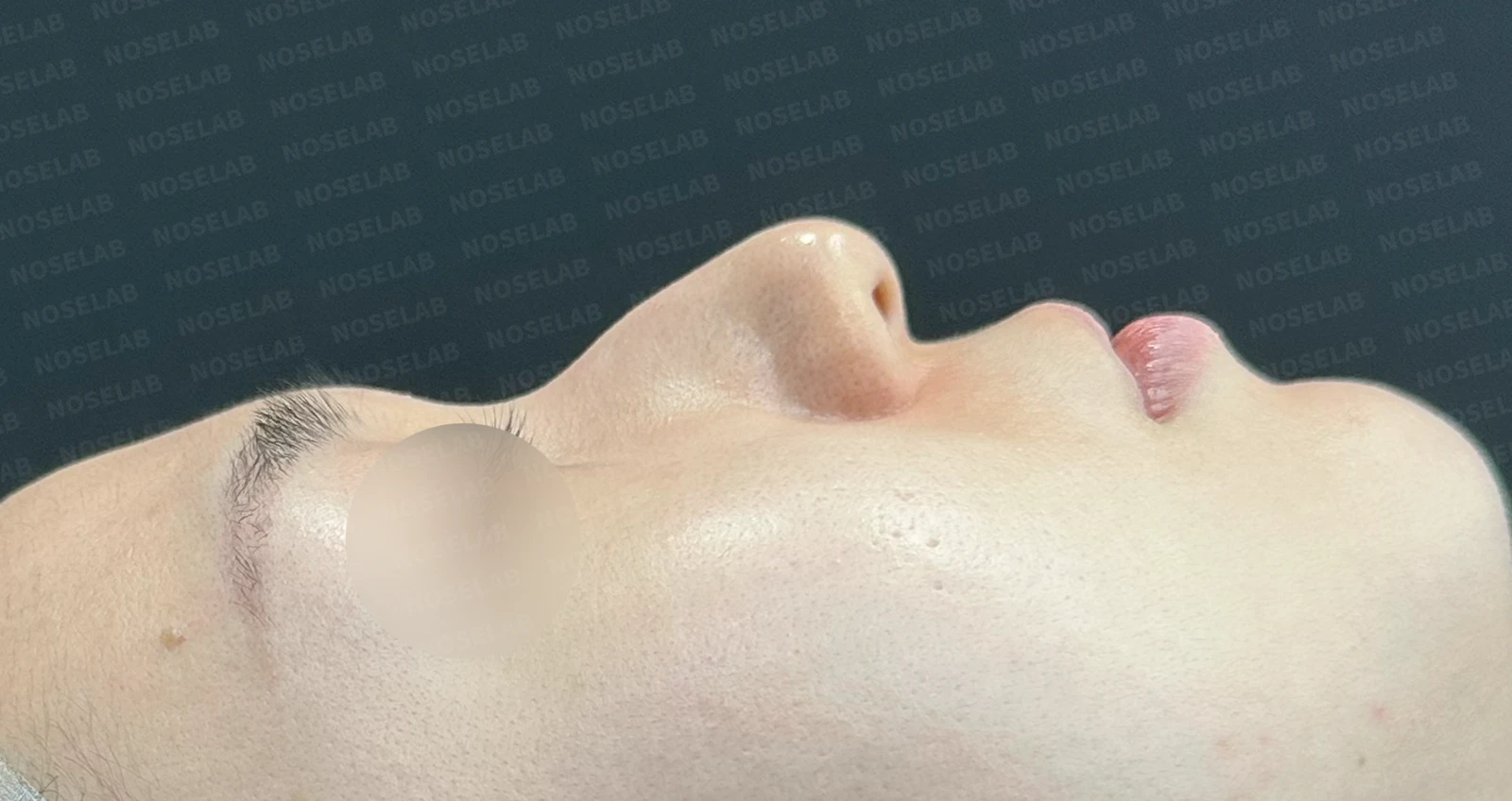
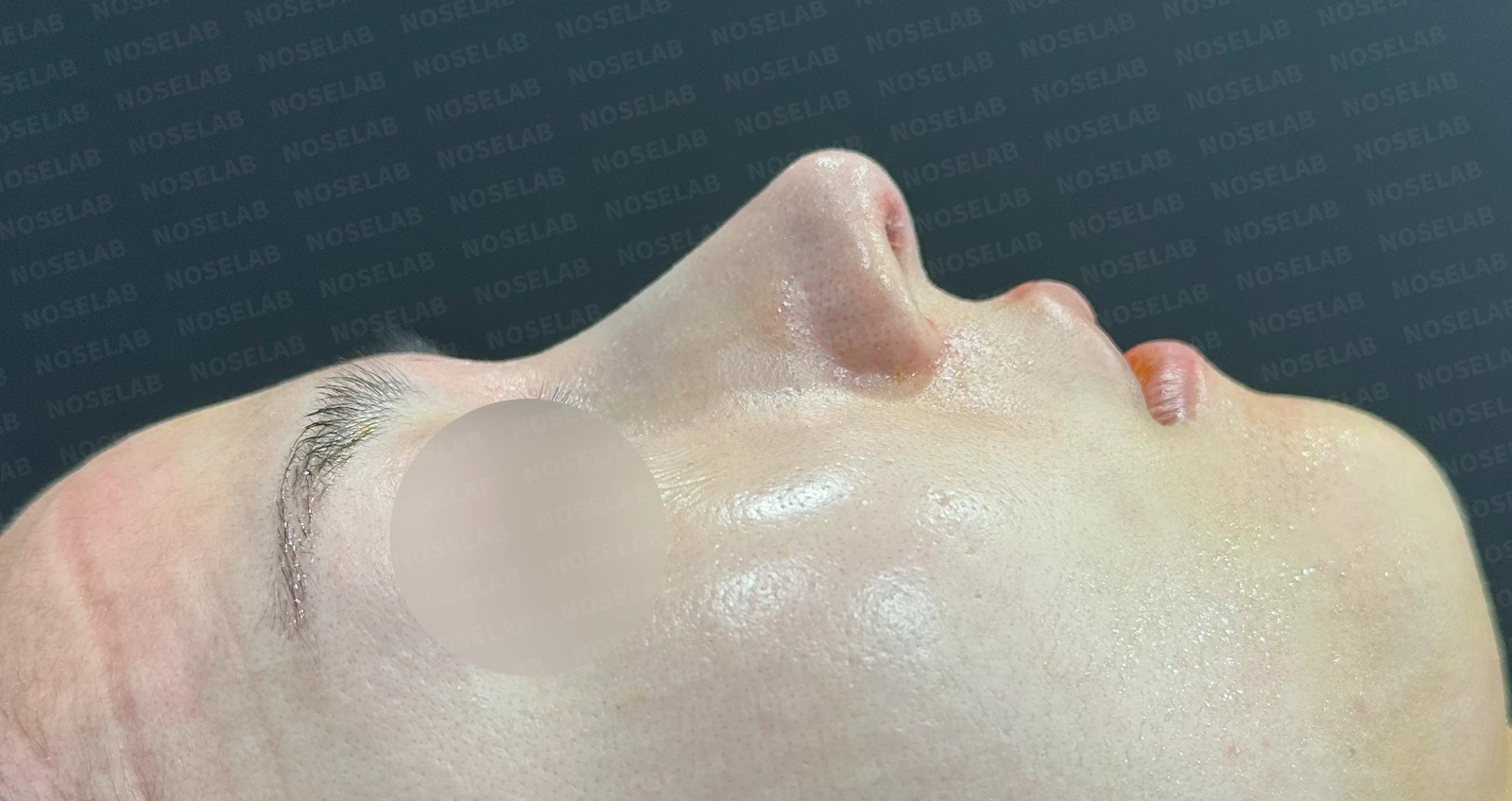
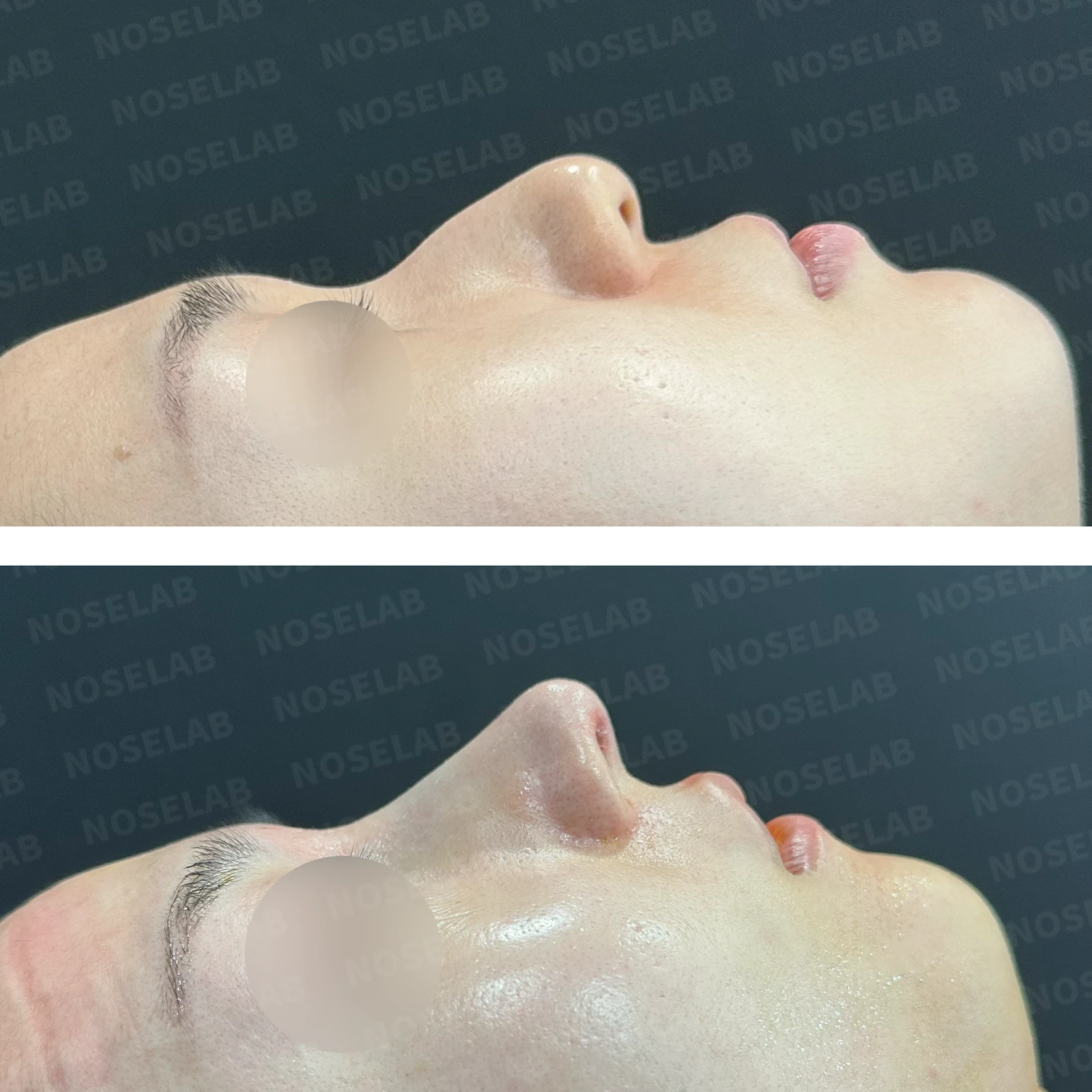
Before surgery / Day 0 immediately after surgery Photos taken immediately after surgery show swelling and may differ from the final result.
Profile view:
- The dorsal hump has been smoothed into a straight profile
- The drooping nasal tip is elevated and projected
- Nasolabial angle correction visibly softens the protruding mouth
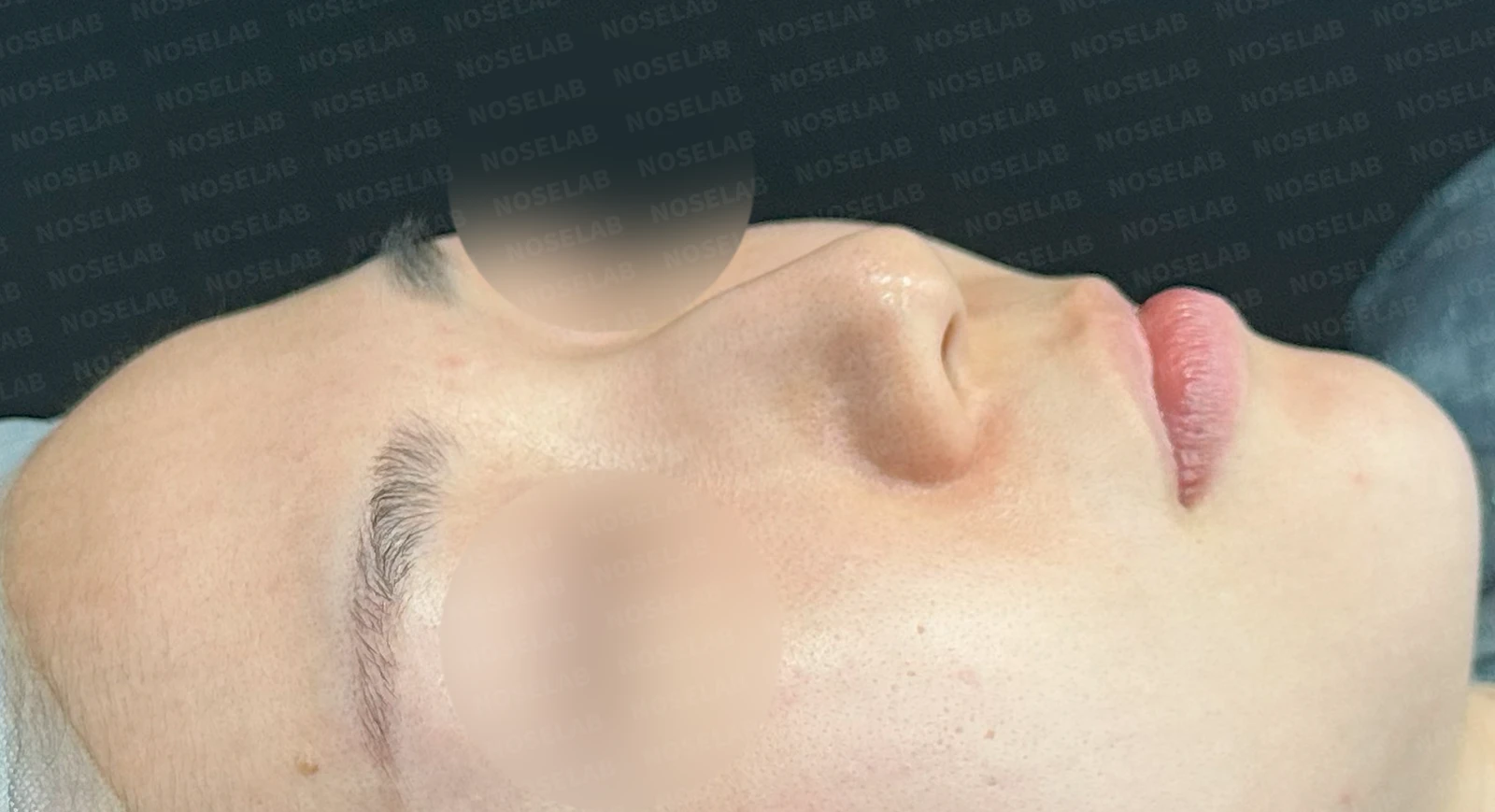
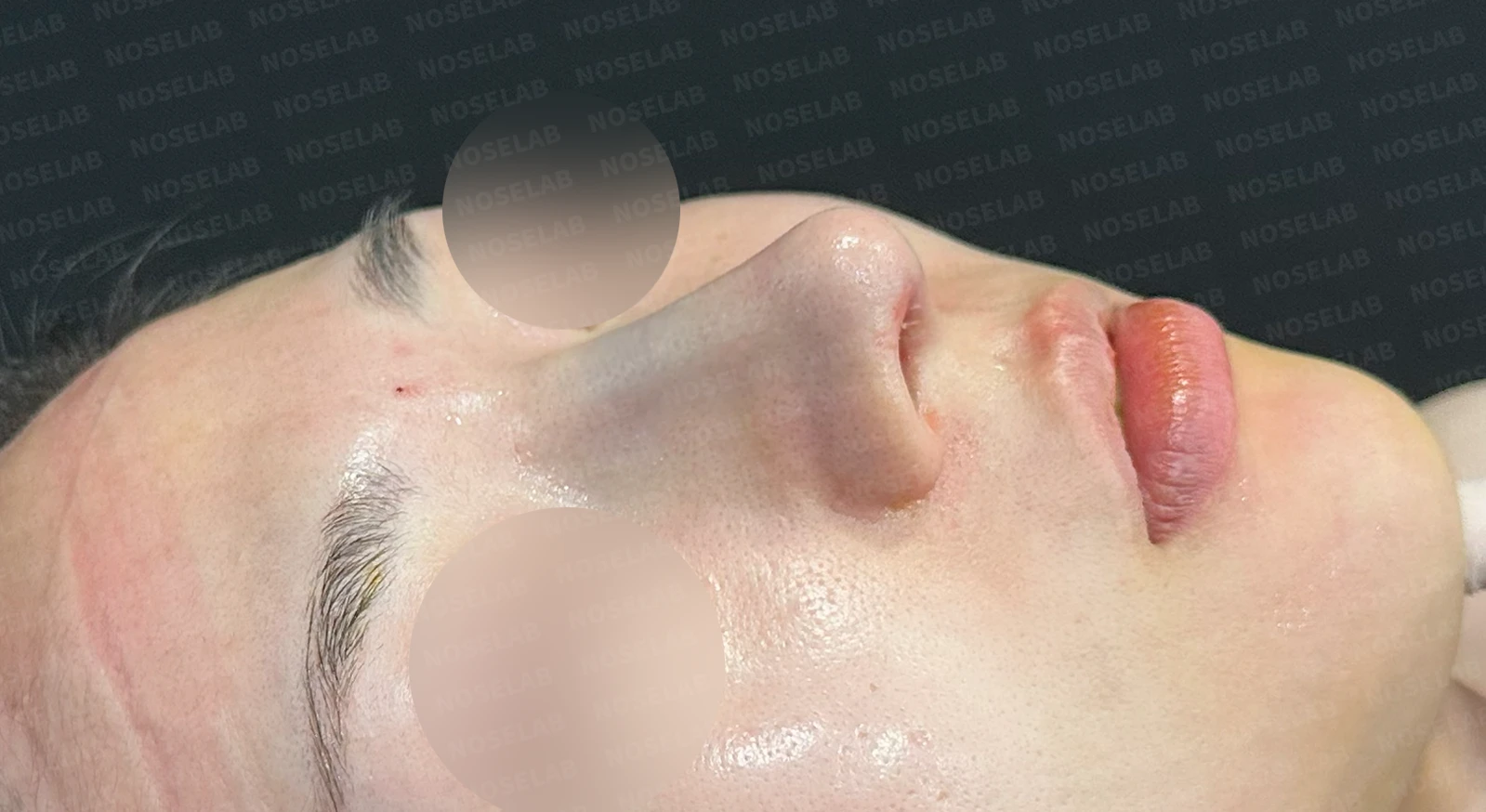
Before surgery / Day 0 immediately after surgery Photos taken immediately after surgery show swelling and may differ from the final result.
Oblique view:
- A previously long and drooping shape is now natural and well balanced
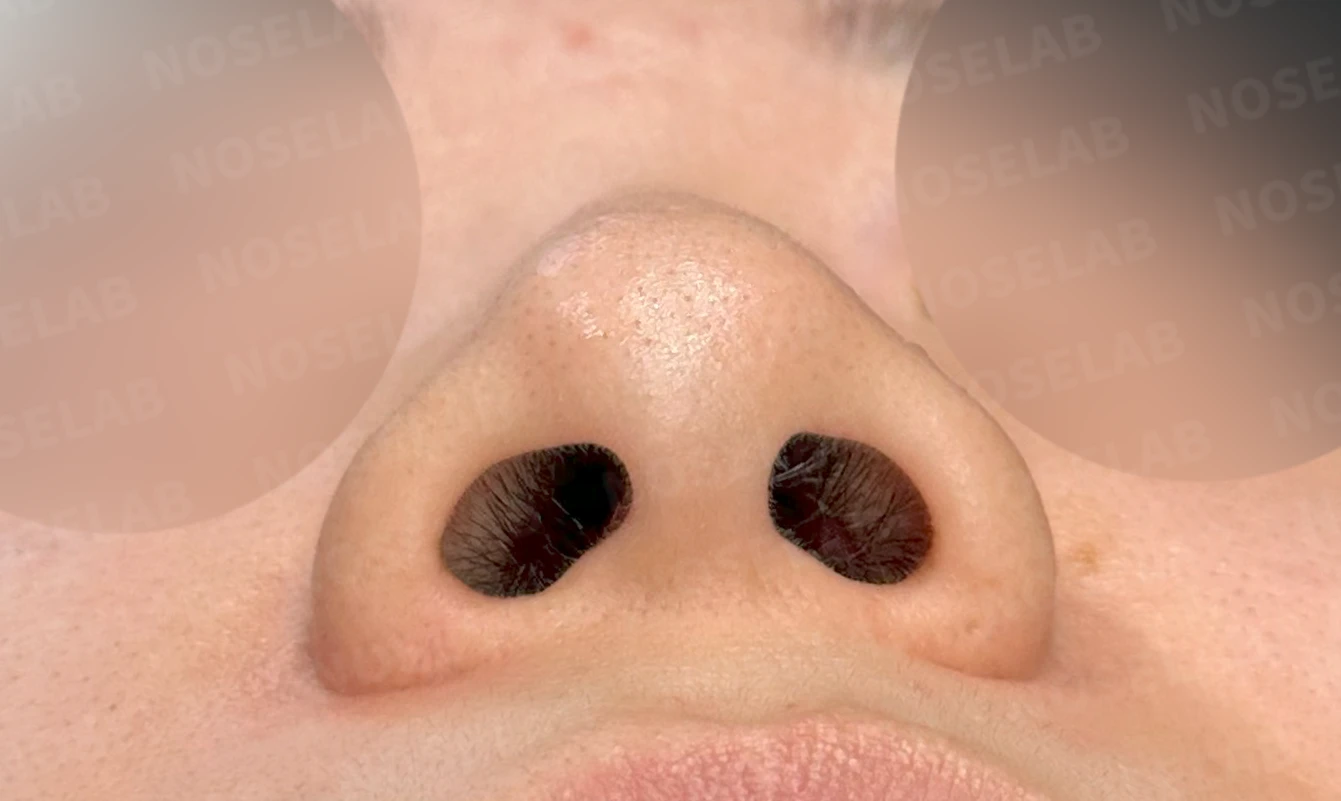
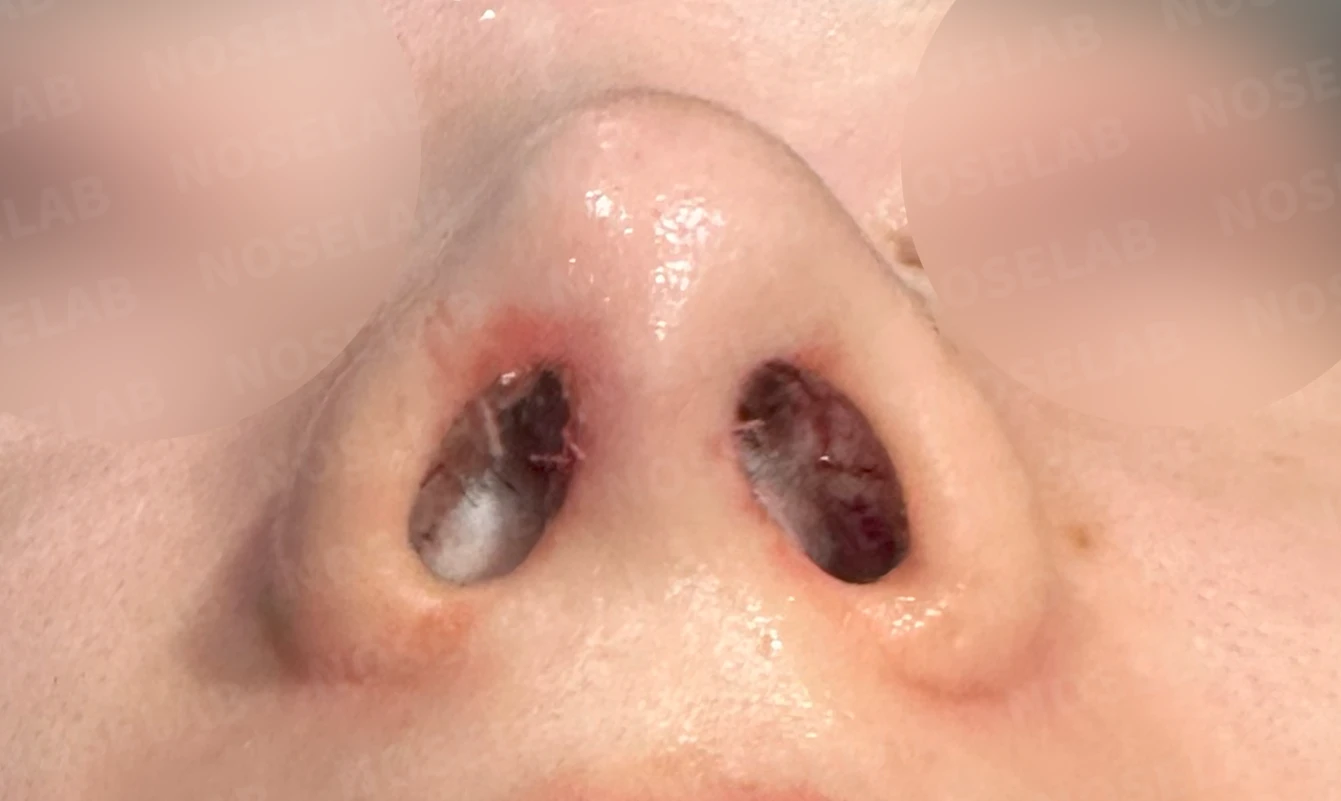
Before surgery / Day 0 immediately after surgery Photos taken immediately after surgery show swelling and may differ from the final result.
Nostrils:
- The wide, blunt nasal tip has gained refined definition
- Round nostrils have transformed into natural ovals
5. Photos immediately after surgery on day 0 Photos taken immediately after surgery show swelling and may differ from the final result.
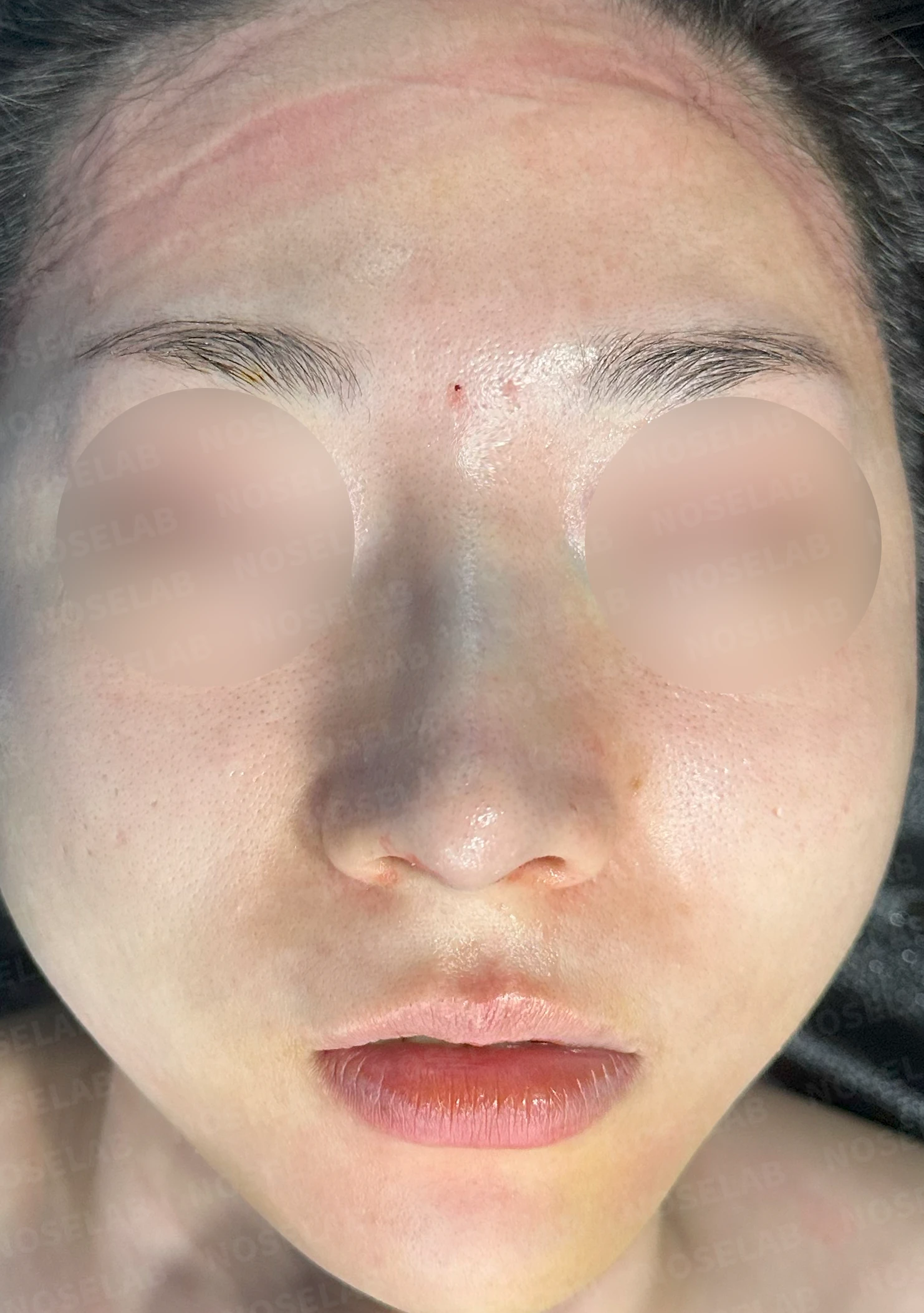
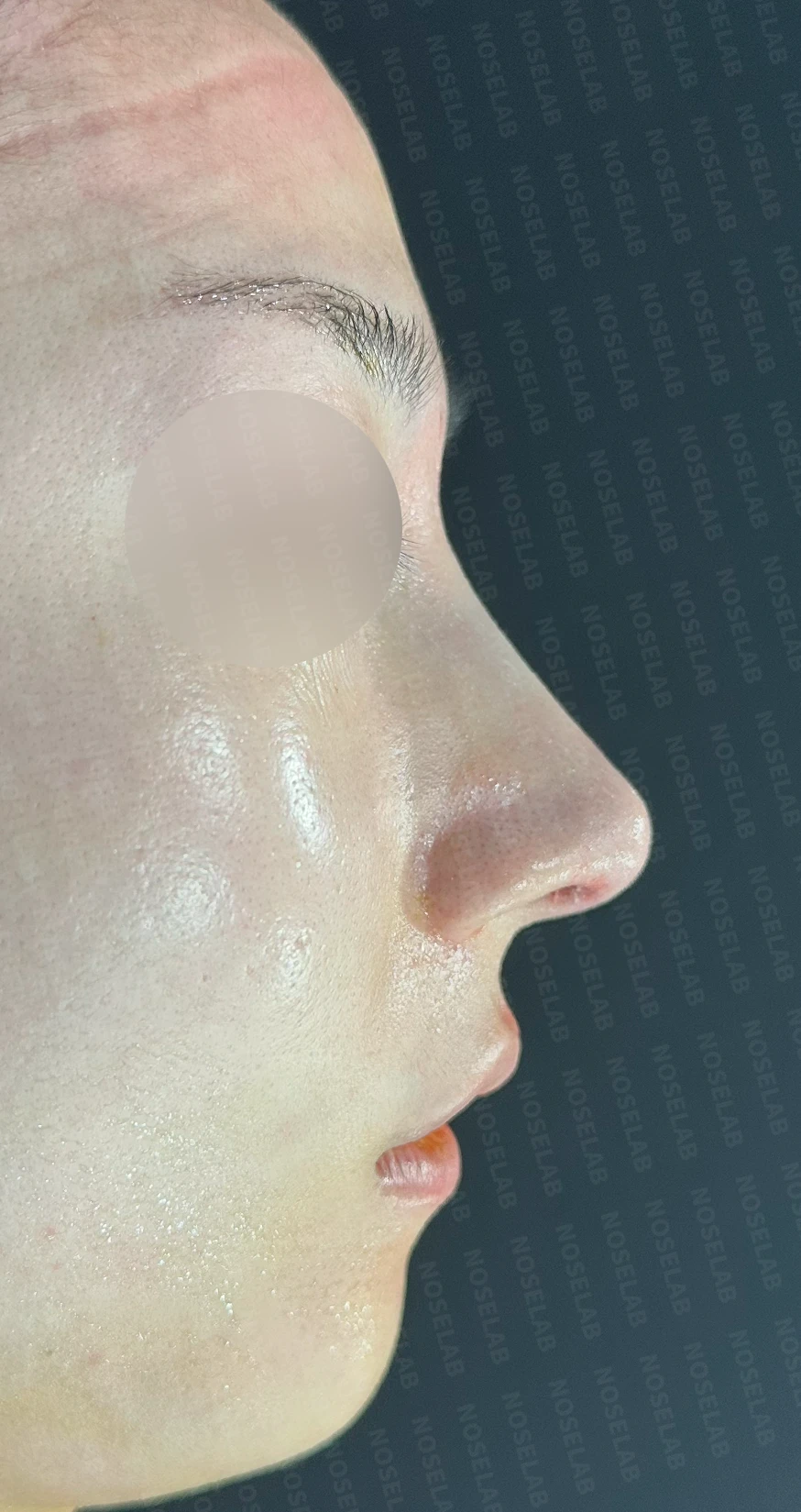
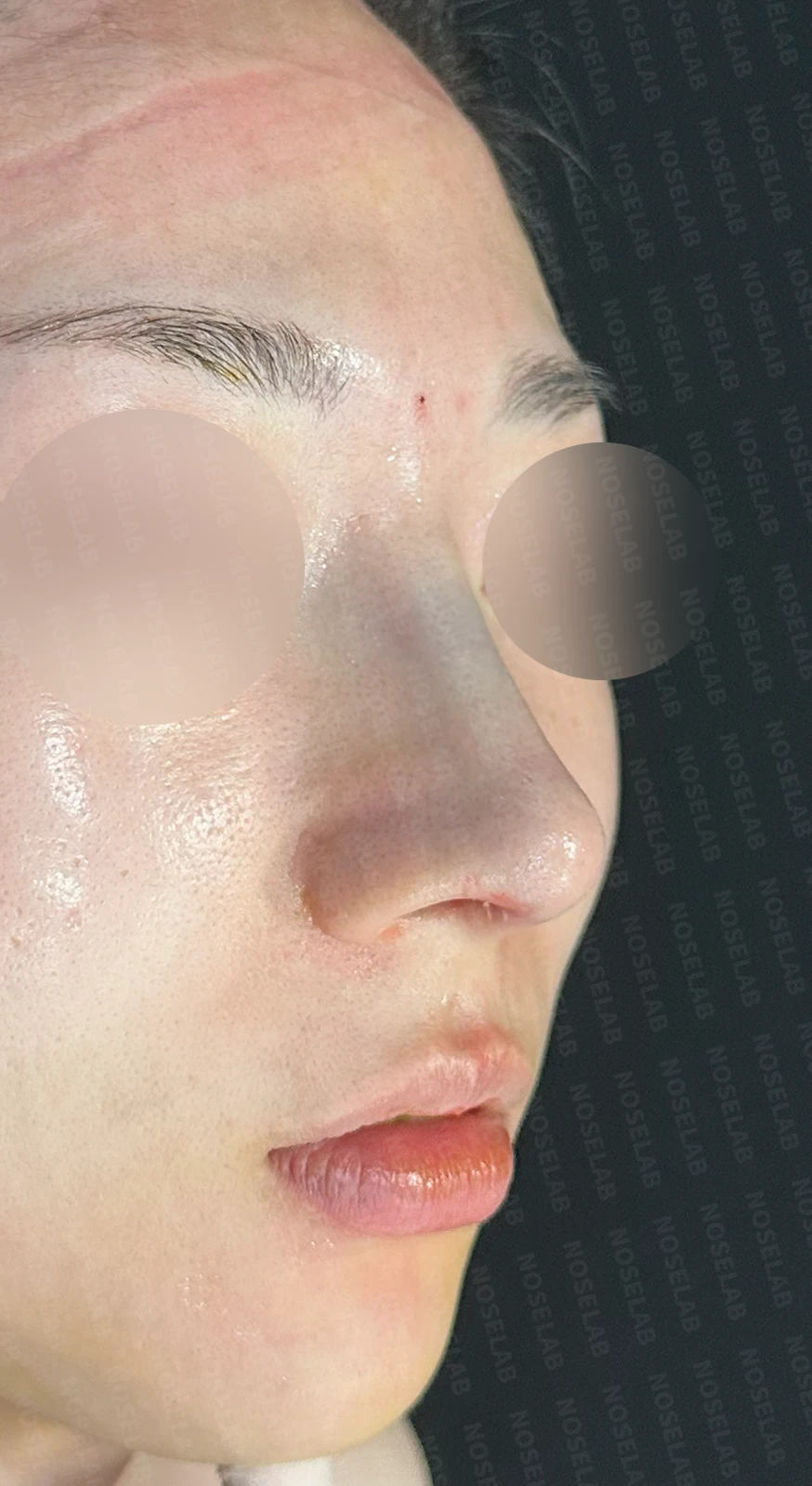
Photos immediately after surgery (Day 0): front, profile, and oblique views. Immediate postoperative photos show swelling and may differ from the final result.
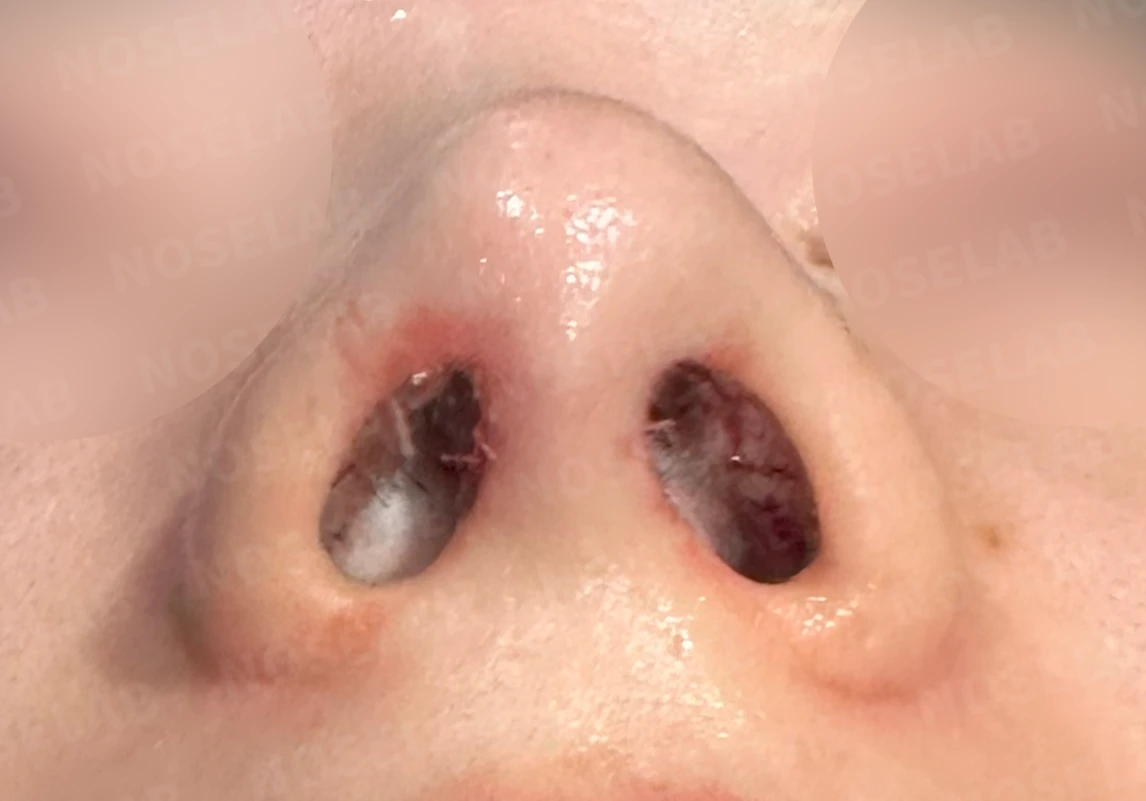
Basal (nostril) view immediately after surgery (Day 0).Immediate postoperative photos show swelling and may differ from the final result.
6. Overall evaluation
This was a complex rhinoplasty case addressing multiple concerns
including a bulbous tip, dorsal hump, drooping tip, and crooked nose simultaneously.
Using a closed approach, all of these issues were resolved without external scarring.
Notably, a combination of subcutaneous tissue removal, cartilage repositioning, and tip elevation
was utilized to correct the bulbous tip.
Functionally, septoplasty and inferior turbinate reduction were also performed
to relieve rhinitis symptoms.
This is anticipated to bring substantial improvement to quality of life as well as aesthetic appearance.
7. Conclusion
For those troubled by complex nasal concerns such as a bulbous tip, dorsal hump,
drooping tip, or crooked bridge, I hope this case provides helpful perspective.
Even when multiple issues coexist,
an aesthetic and functional nose can be achieved through tailored planning and technique.
I always take into account each patient's individual facial traits and goals
to design an optimal surgical plan.
Furthermore, functional restoration is kept firmly in focus alongside cosmetic improvement.
If you are considering rhinoplasty, I encourage you to consult with a specialist
to determine the surgical approach best suited for you.
I will be with you every step of the way to achieve a beautiful and healthy nose.
This was Dr. Peter C. Kang. Thank you.
Thank you.
#rhinoplasty #bulbousrhinoplasty #dorsalhumpcorrection #droopingtipcorrection #crookedrhinoplasty #closedrhinoplasty #rhinitistreatment #protrudingmouthcorrection #ENTrhinoplasty #safelyplannedrhinoplasty #naturalnose

Limitations and risks
When using donor rib cartilage, long-term follow-up is necessary because the grafted cartilage may resorb or warp.
When the septum is corrected at the same time, nasal obstruction may persist or recur, and in rare cases, septal perforation or changes in smell may occur.
Common potential risks include infection, bleeding, asymmetry, scarring, skin necrosis, and insufficient improvement; results vary depending on individual skin condition and previous surgical history.