Hello, I am Dr. Peter C. Kang.
Today, I would like to share a rhinoplasty case of a patient who was concerned about a dorsal hump and a long nose.
This patient desired a natural nasal contour while also requiring functional improvement due to symptoms of nasal obstruction.
I will explain in detail how a balanced and healthy nose was achieved through a closed approach.
1. Preoperative design consultation
Let us analyze the patient's preoperative condition in detail:
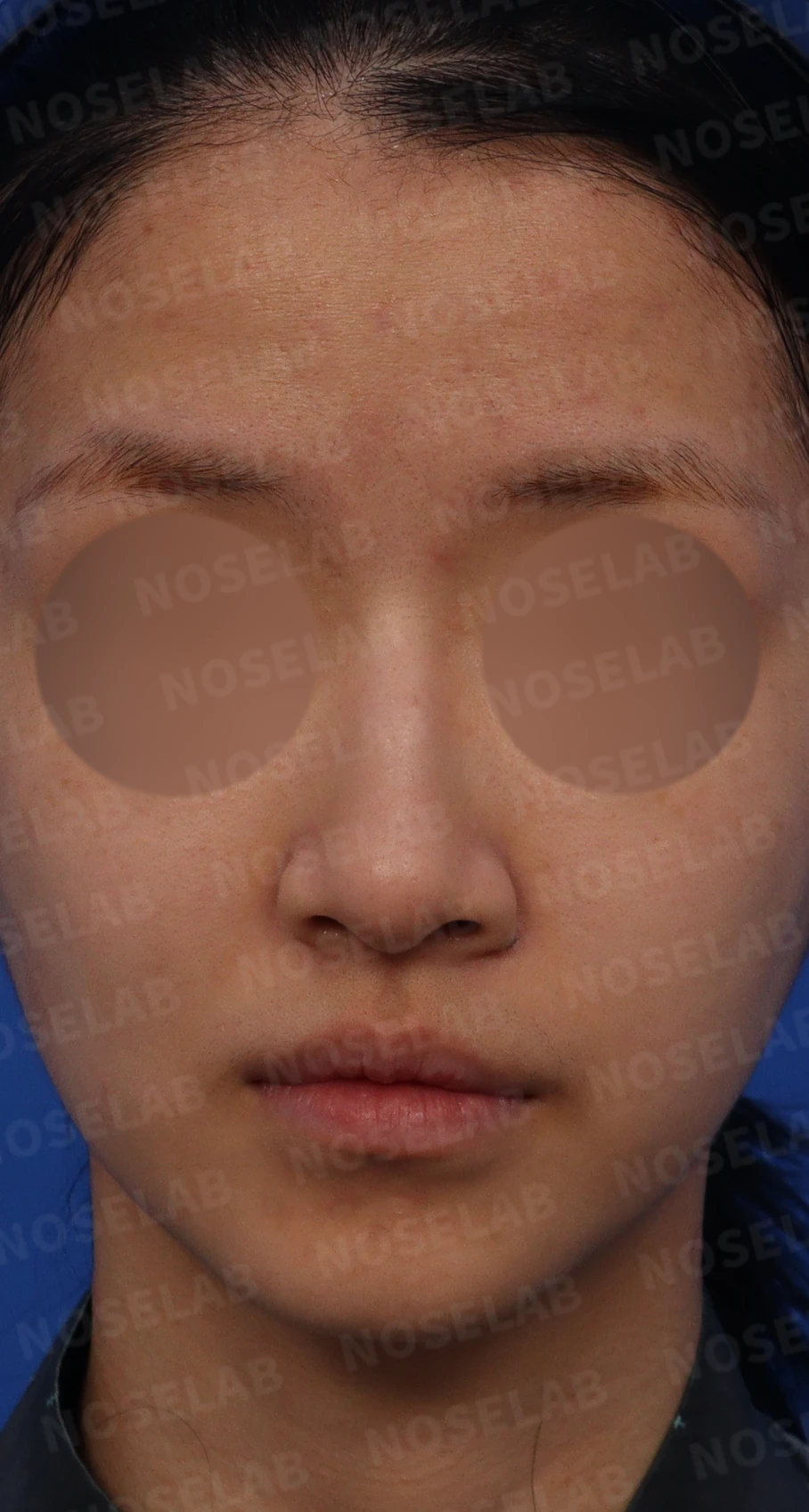
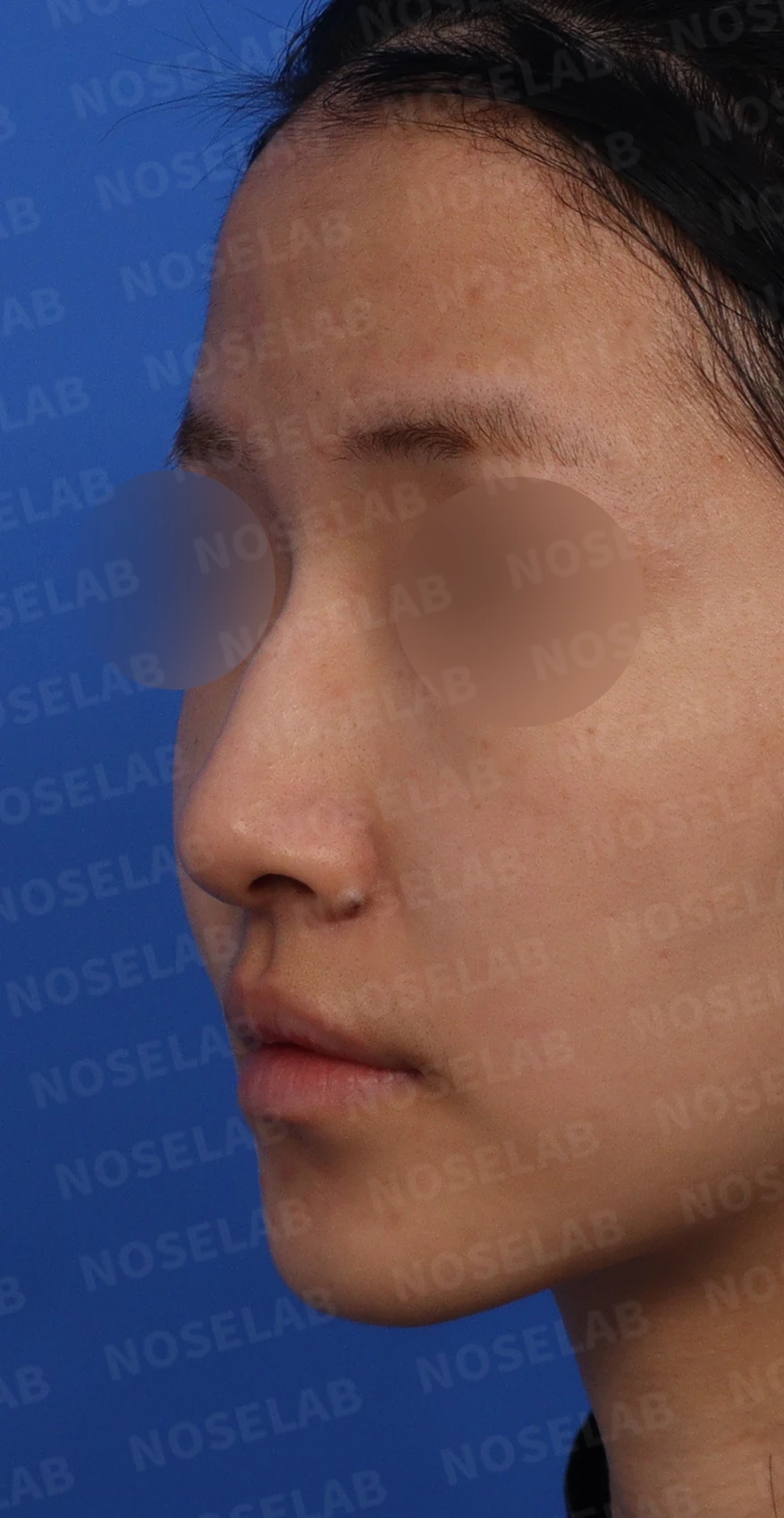
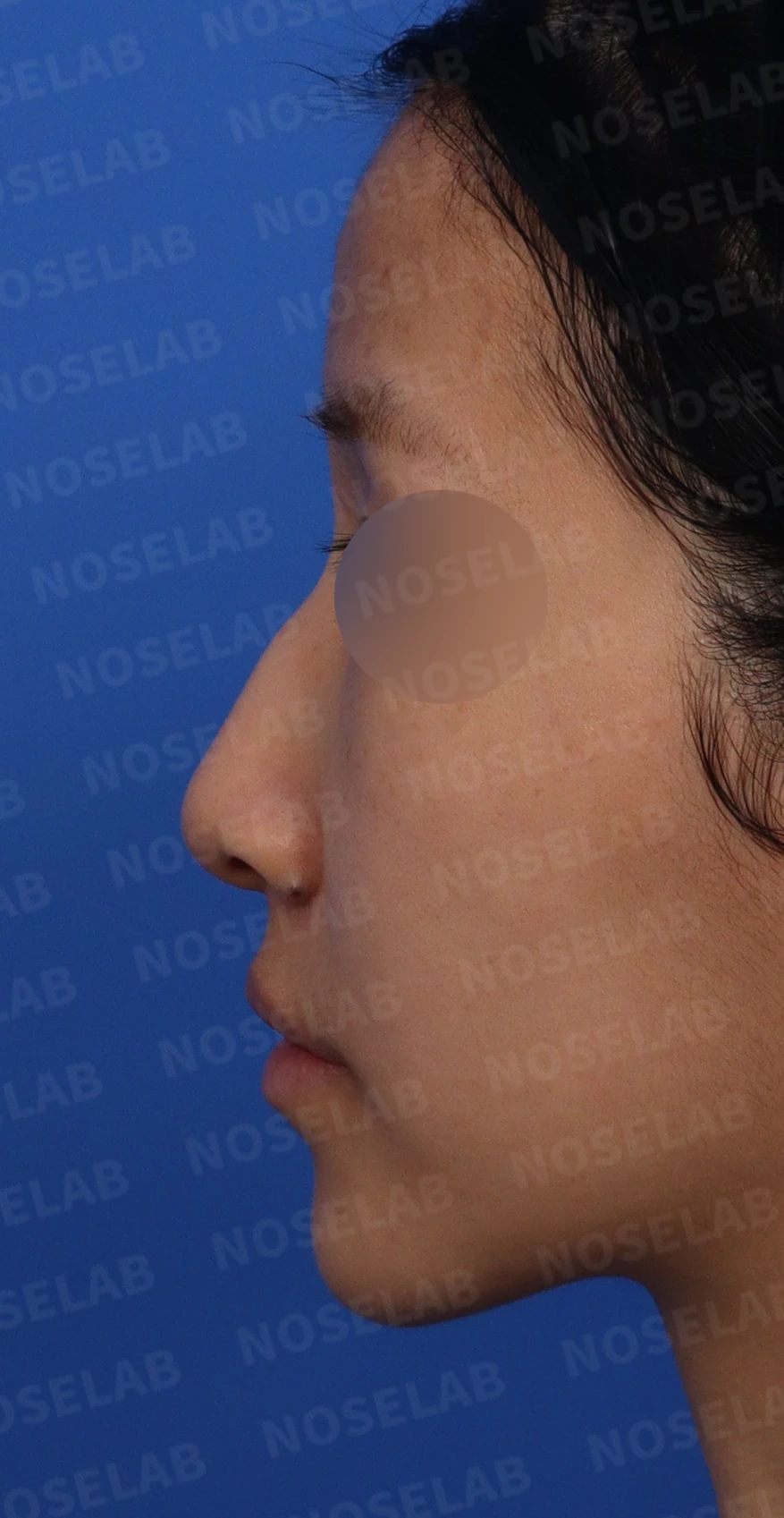
Front, left oblique, and profile views from the preoperative design.
Front view:
- A long nasal tip and drooping columella giving an arrow-like appearance
- An overall elongated nasal appearance
- Nostril asymmetry observed
Profile view:
- A distinct dorsal hump
- The nose appears long overall
- The nasal tip is drooping
Oblique view:
- The dorsal hump appears more prominent
- Drooping of the nasal tip is clearly visible
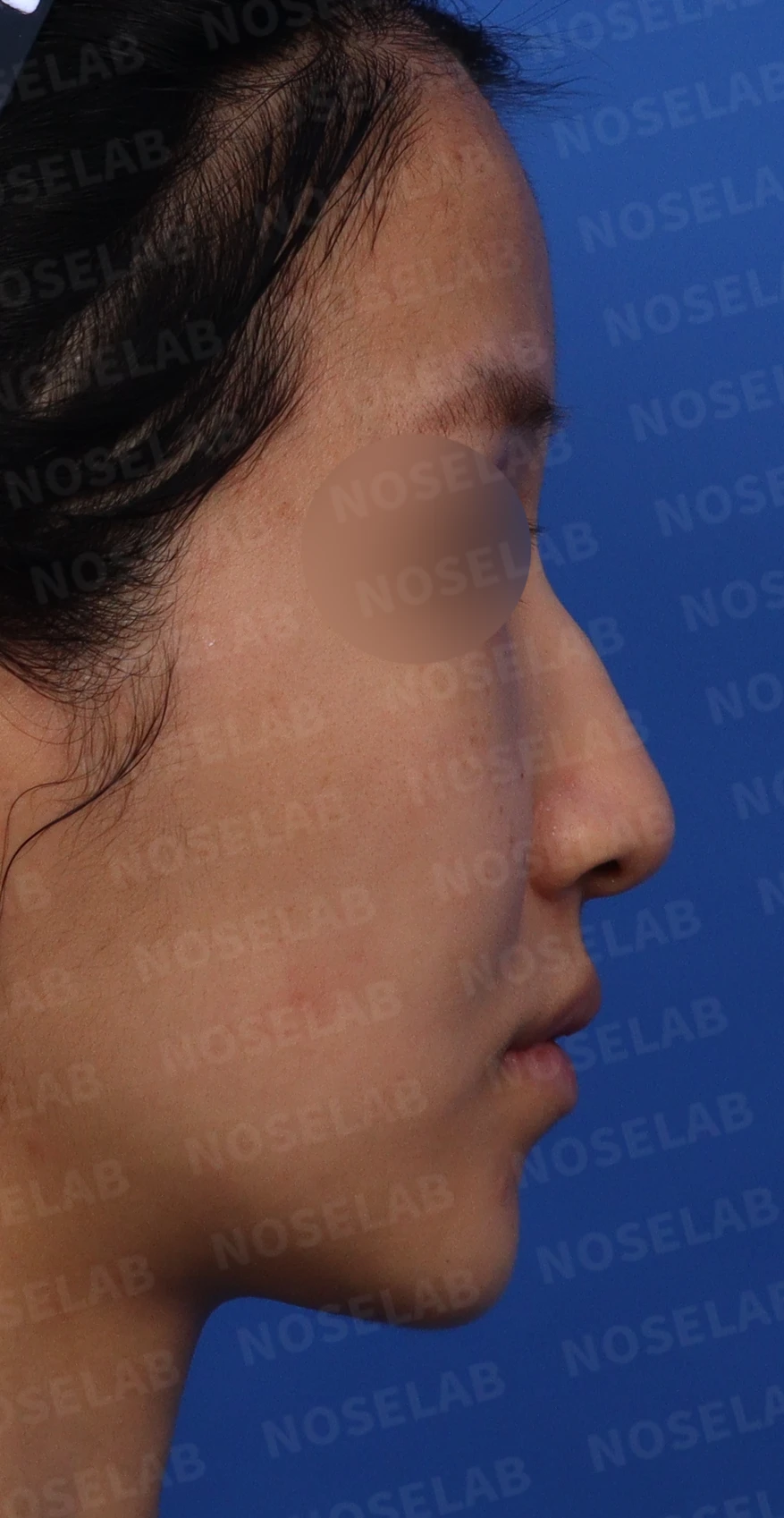
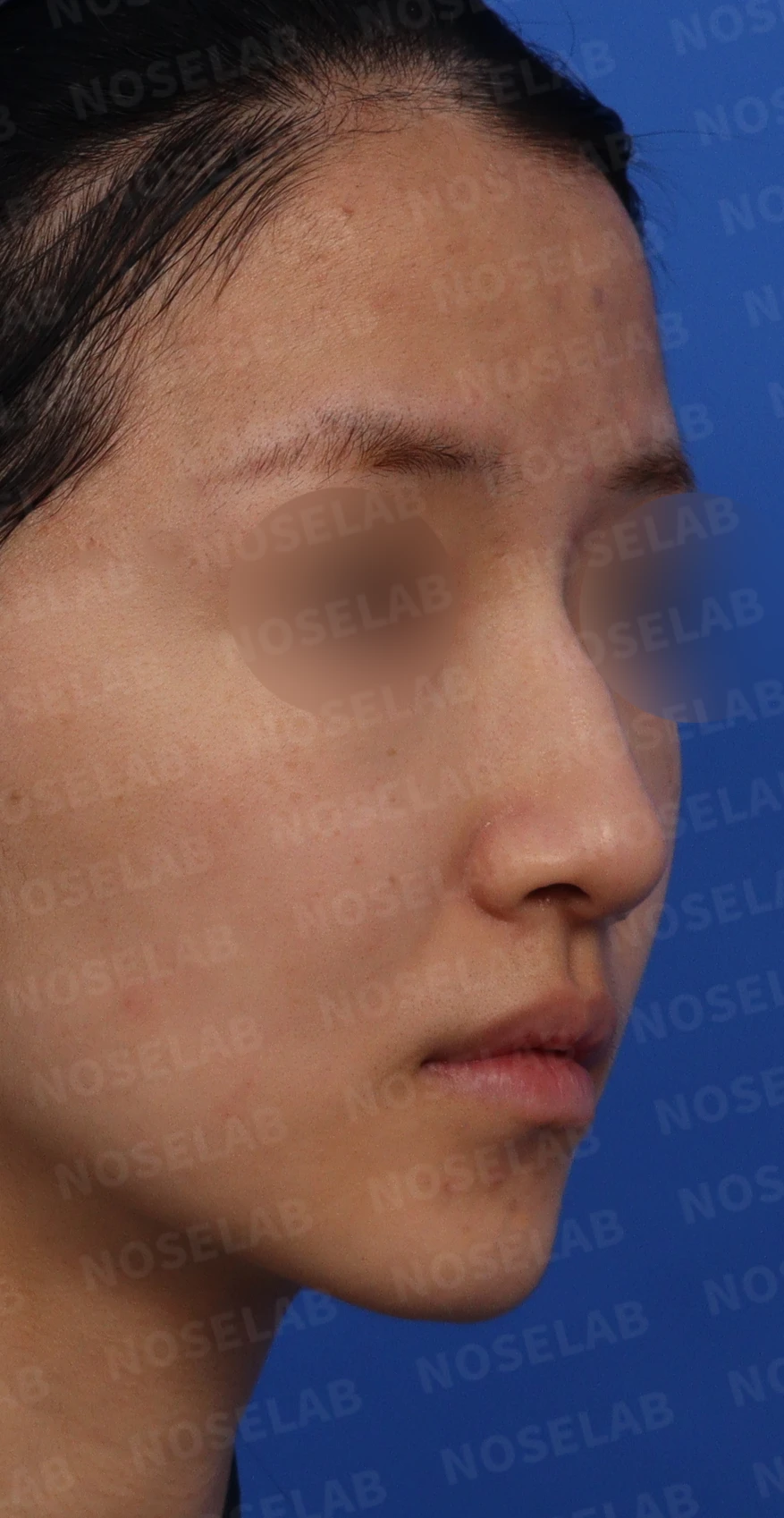
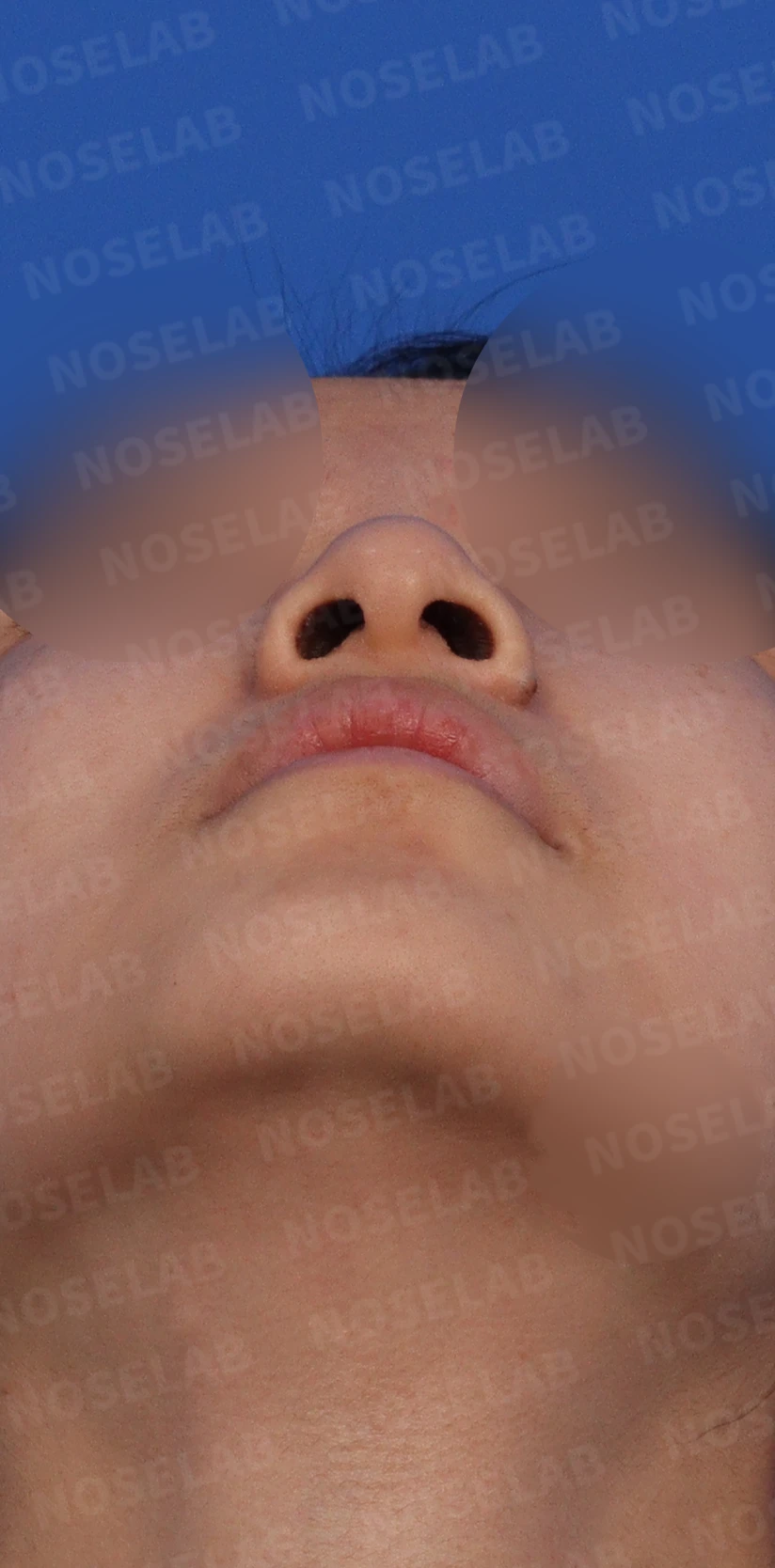
Right profile, right oblique, and basal (nostril) views from the preoperative design consultation.
Nostrils:
- Nostril asymmetry is evident
- The columella is slightly tilted to the right
Additionally, the patient reported symptoms of nasal obstruction. A CT scan performed at our clinic revealed the following findings:
- Septal deviation to the left
- Bilateral hypertrophy of the inferior turbinates
Accordingly, the patient was diagnosed with a deviated septum and hypertrophic rhinitis.
2. Surgical plan
Taking into account the patient's condition and requests, the following surgical plan was established:
a) Lateral osteotomy to prevent widening of the nasal bridge after dorsal hump reduction
b) Septal extension graft using autologous septal cartilage to correct the drooping nose
c) Septoplasty to correct the deviated septum
d) Radiofrequency submucosal resection of the inferior turbinates to treat hypertrophic rhinitis
e) Lower lateral cartilage repositioning and suture tip-binding
f) Correction of the nasolabial angle
3. Surgical procedure
Every step was performed using a closed approach. The surgical details are as follows:
a) Lateral osteotomy:
- After refining the dorsal hump, precise lateral osteotomies were performed to narrow the widened nasal bridge.
- This smoothed the contour of the nasal dorsum to establish a natural bridge line.
b) Septal extension graft:
- A septal extension graft was performed using the patient's own septal cartilage.
- Through this, the drooping nasal tip was elevated and the overall length of the nose was adjusted.
c) Septoplasty:
- The leftward deviated septum was straightened to relieve nasal obstruction.
- Structural stability of the septum was secured during this process to maintain stable long-term results.
d) Submucosal resection of the inferior turbinate:
- Hypertrophic inferior turbinate tissue was reduced using radiofrequency.
- This expanded the internal nasal airway and improved breathing function.
e) Tip refinement and improvement of the nasolabial angle:
- The lower lateral cartilages were repositioned, precisely contoured, and sutured together to create a natural tip shape.
- The nasolabial angle was adjusted appropriately to improve overall facial balance.
4. Comparison of before-and-after photos
Comparing photos taken immediately after surgery on day 0 shows the following improvements: Photos taken immediately after surgery show swelling and may differ from the final result.
Front view:
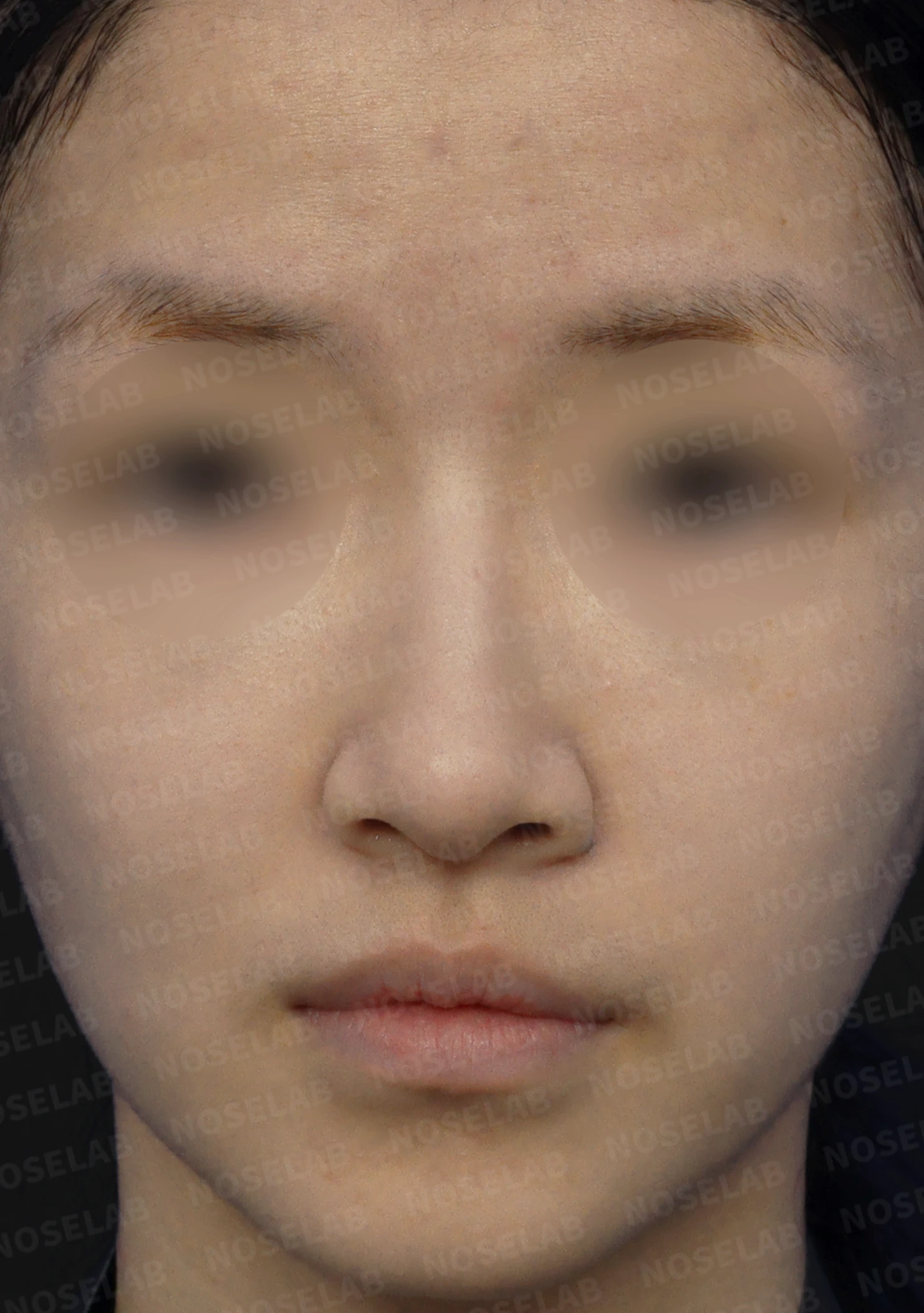
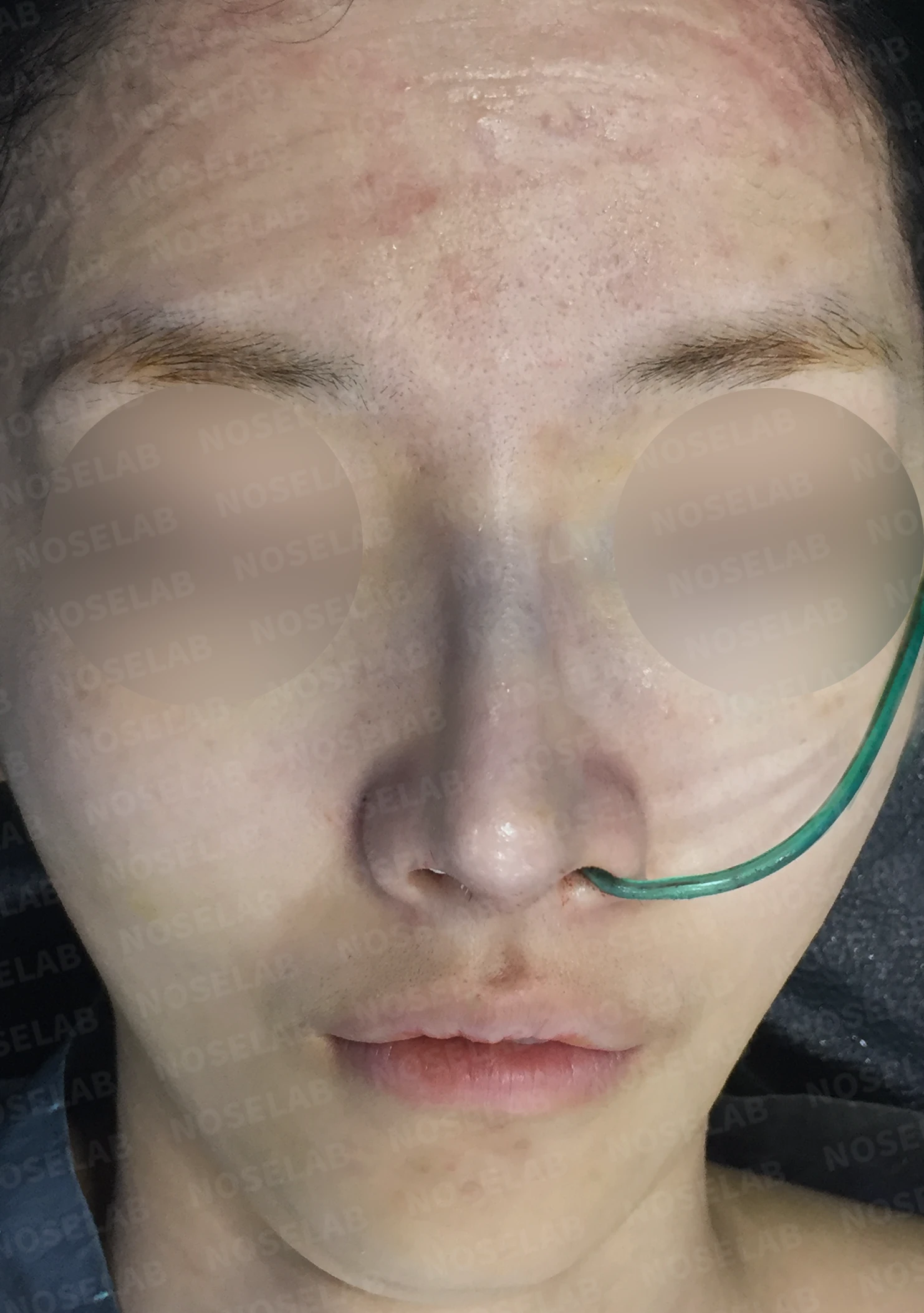
Before surgery / Day 0 immediately after surgery Photos taken immediately after surgery show swelling and may differ from the final result.
- The elongated, arrow-like nasal tip was naturally shortened.
- The nose, which previously appeared long, was suitably shortened, improving overall facial proportions.
- The previously blunt nasal tip gained a more defined, natural contour.
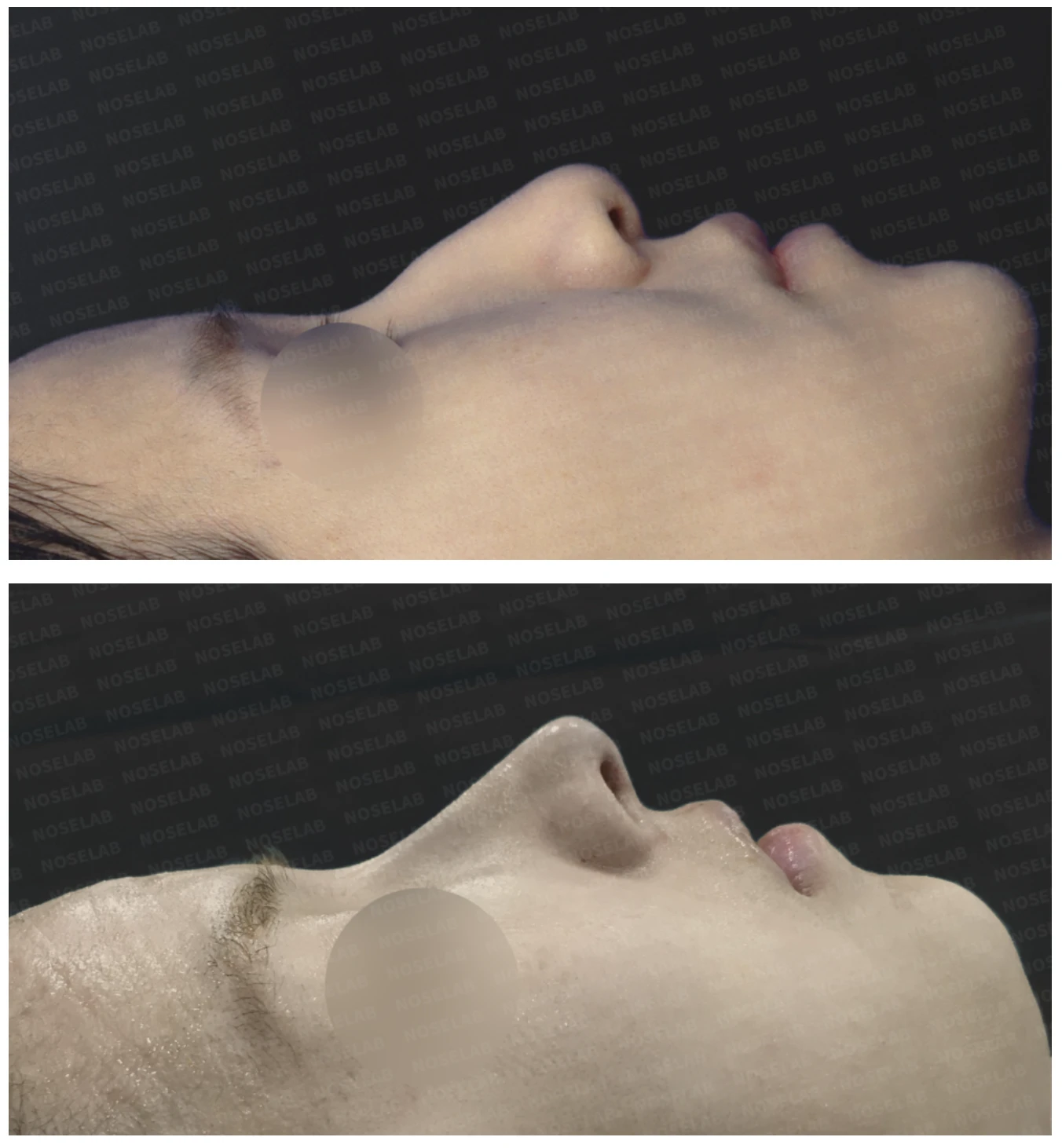
Profile view:
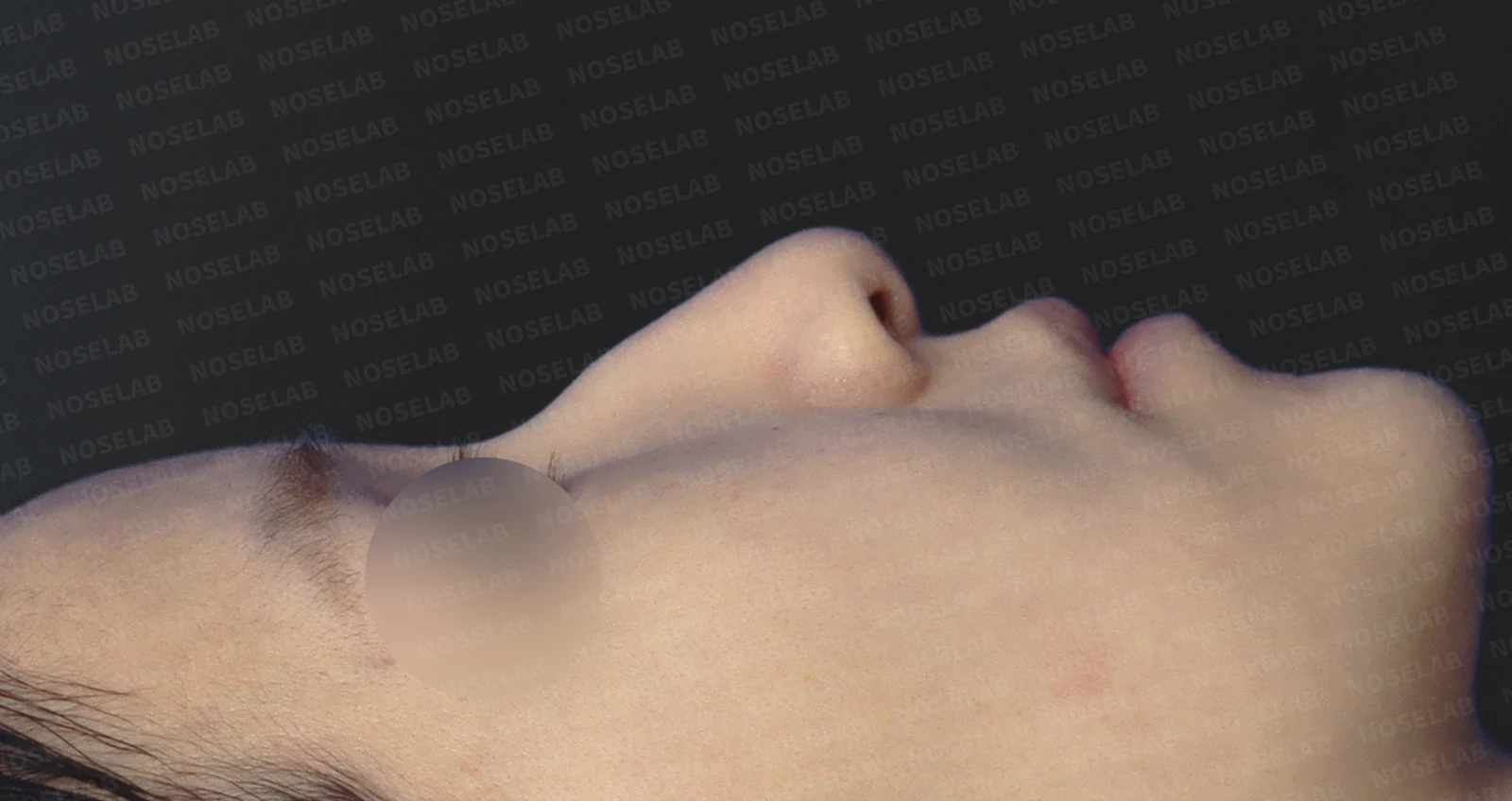
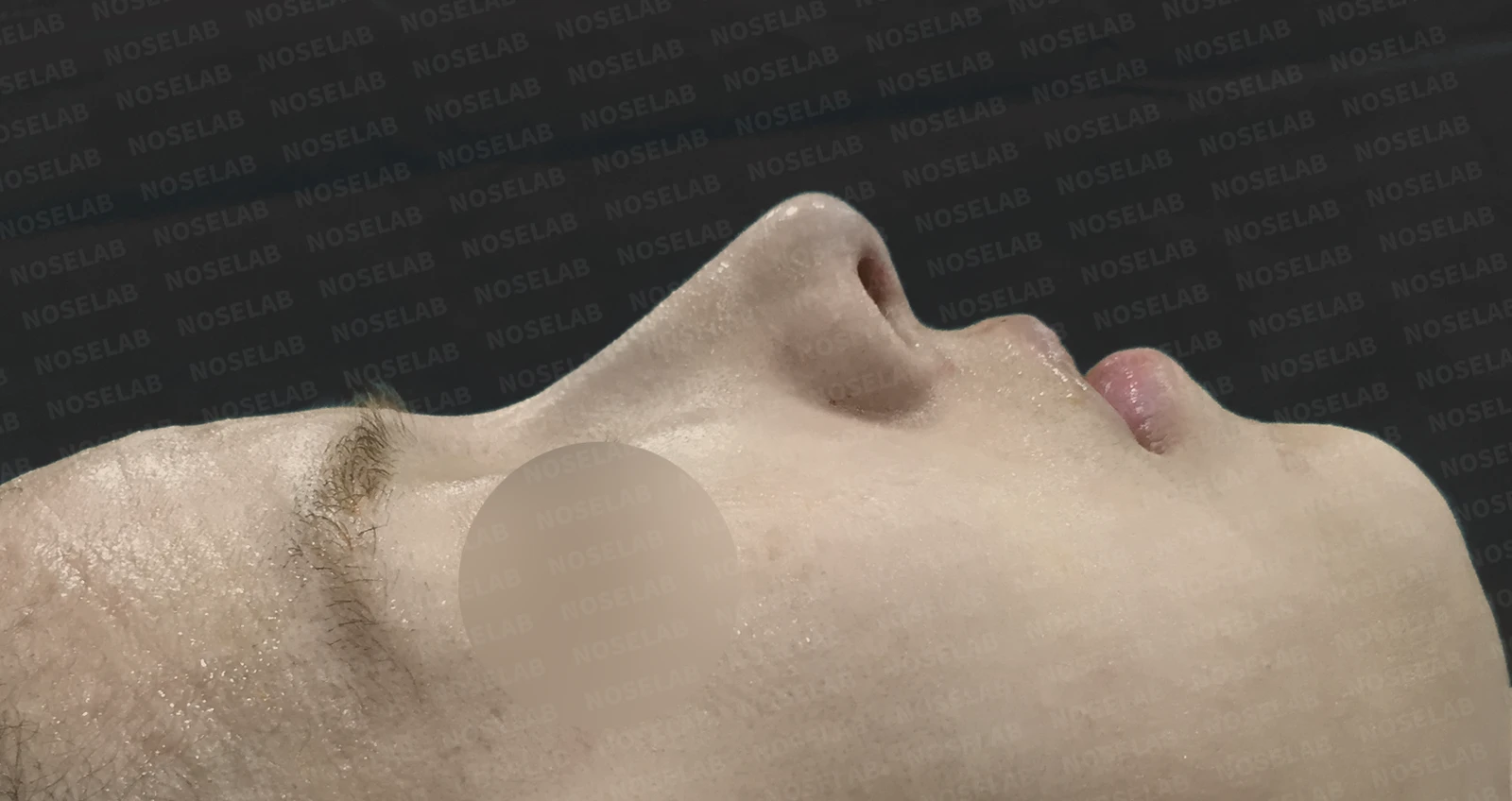
Before surgery / Day 0 immediately after surgery Photos taken immediately after surgery show swelling and may differ from the final result.
- The dorsal hump was cleanly reduced, creating a smooth profile line.
- The drooping nasal tip was corrected into a well-defined projection.
- The downward-drooping columella was corrected naturally, improving the nasolabial angle.
- The overall nasal length was appropriately adjusted to achieve a well-balanced profile.
Oblique view:
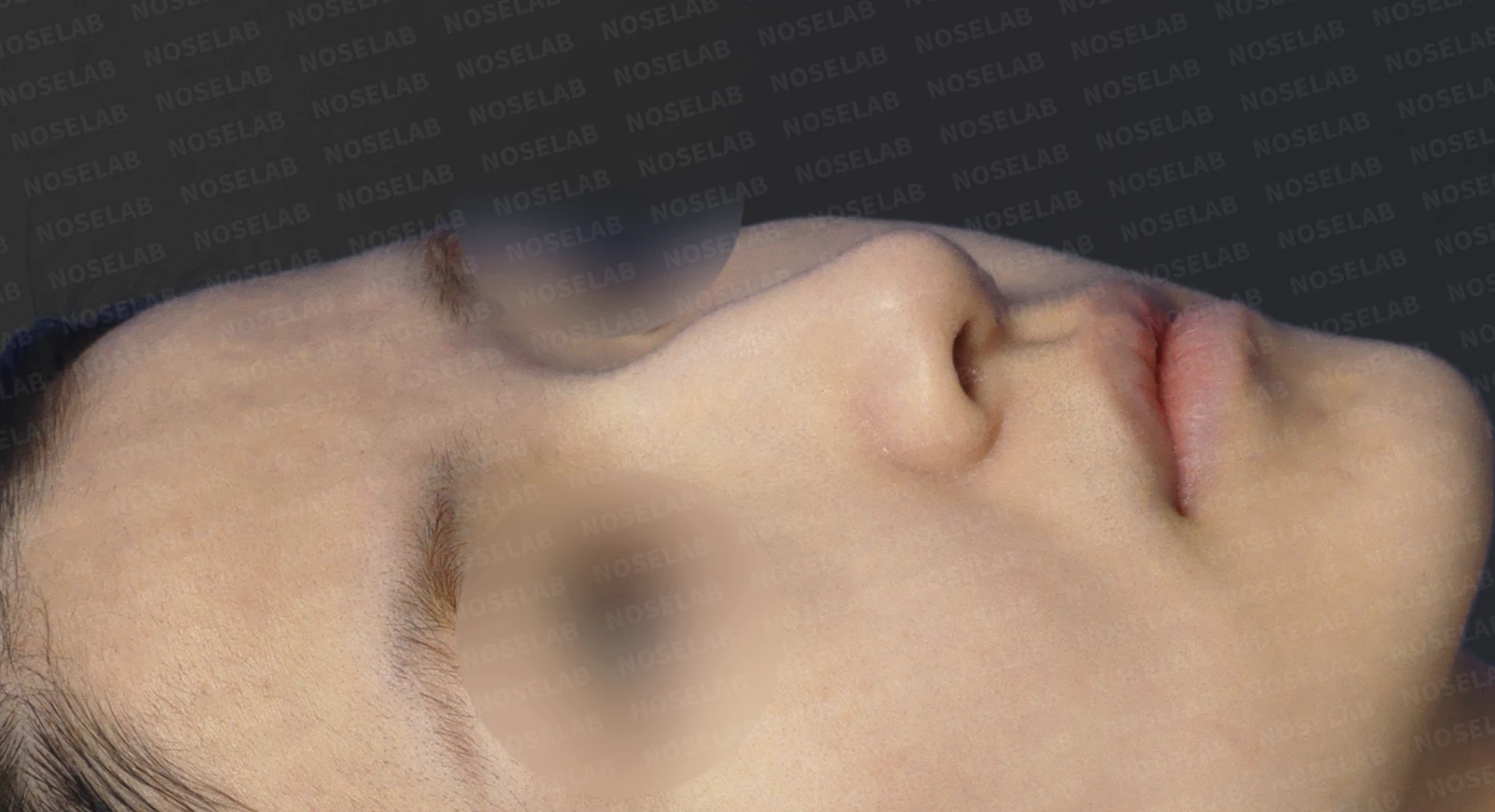
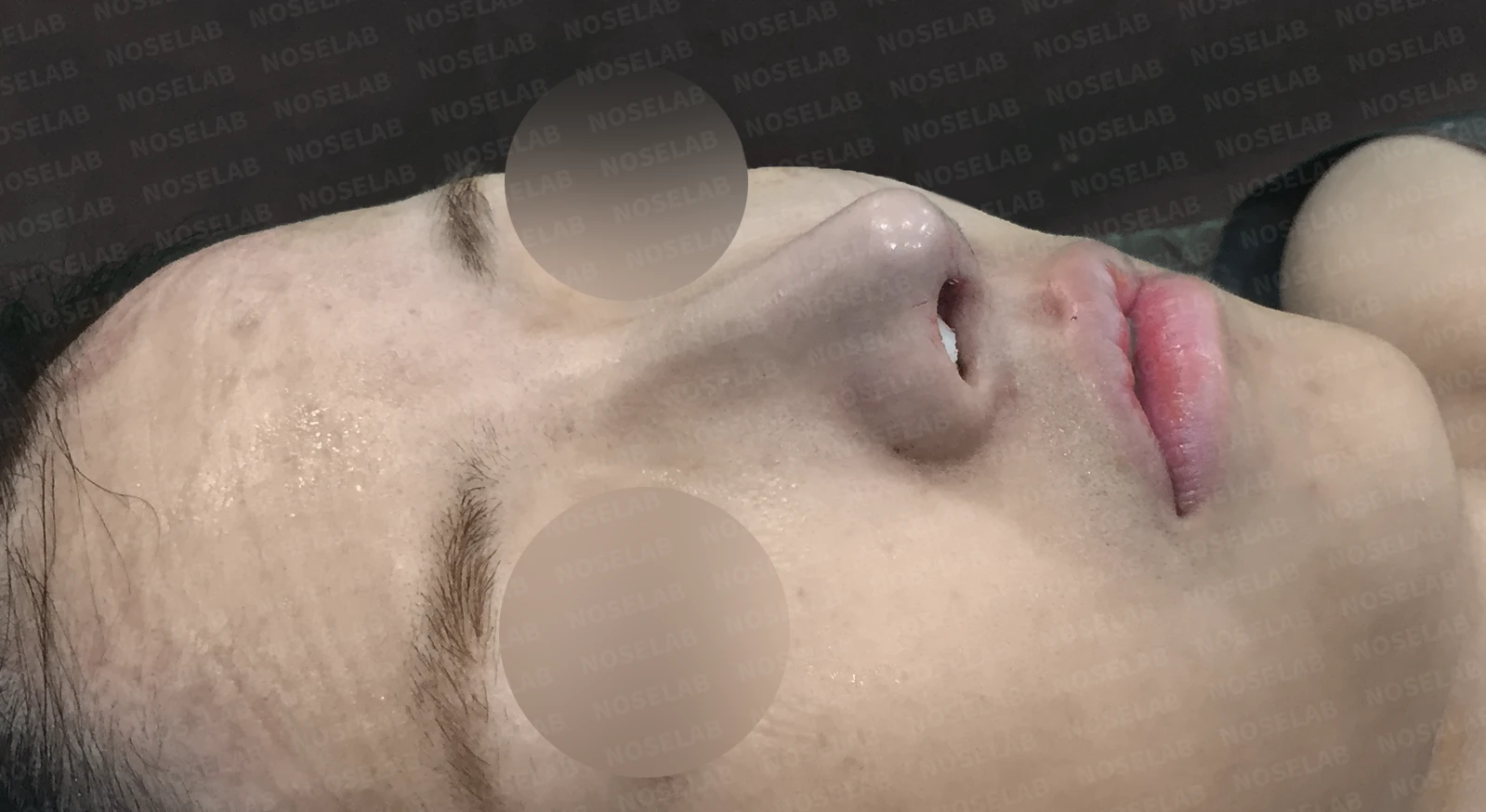
Before surgery / Day 0 immediately after surgery Photos taken immediately after surgery show swelling and may differ from the final result.
- The prominent dorsal hump was smoothly corrected.
- The bulbous, drooping nasal tip was refined into a softer, more feminine contour.
- The overall nasal profile line became smooth and natural.
Nostrils:
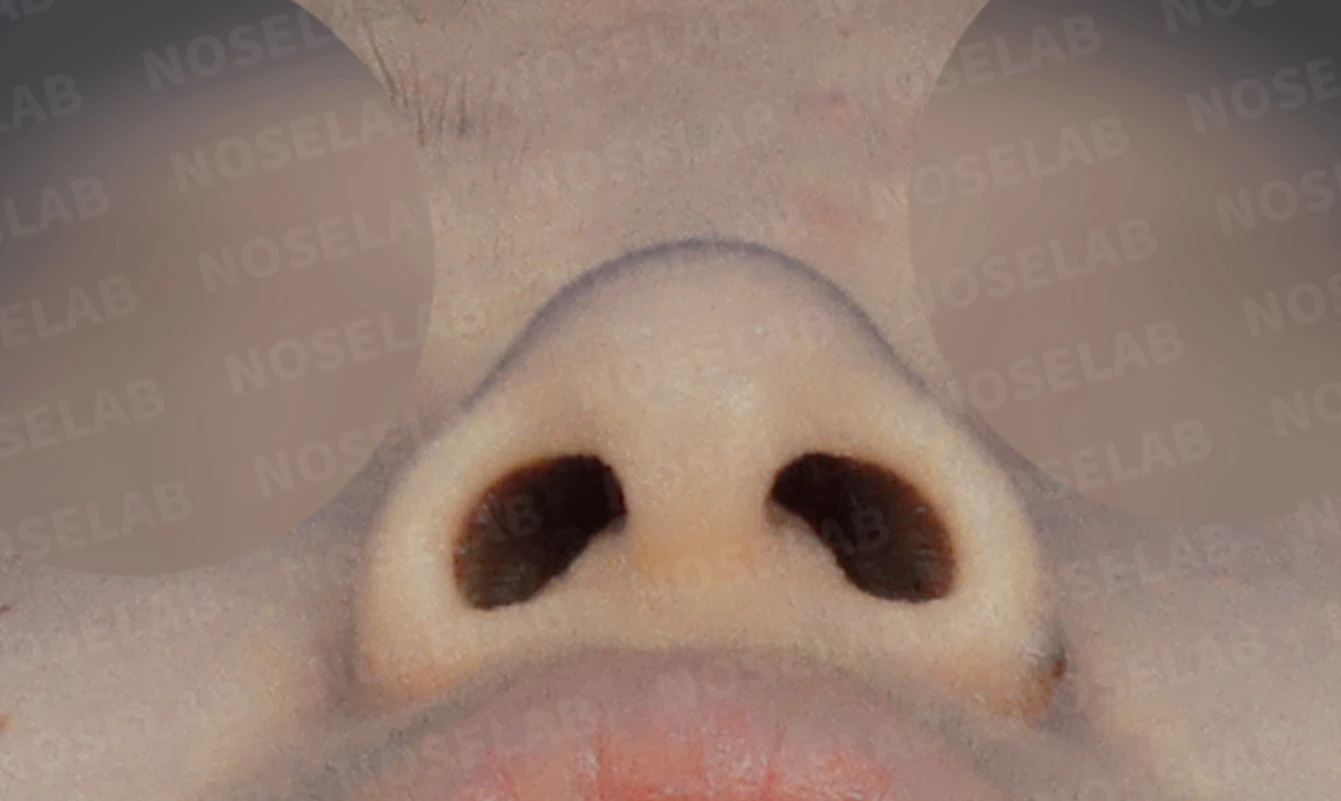
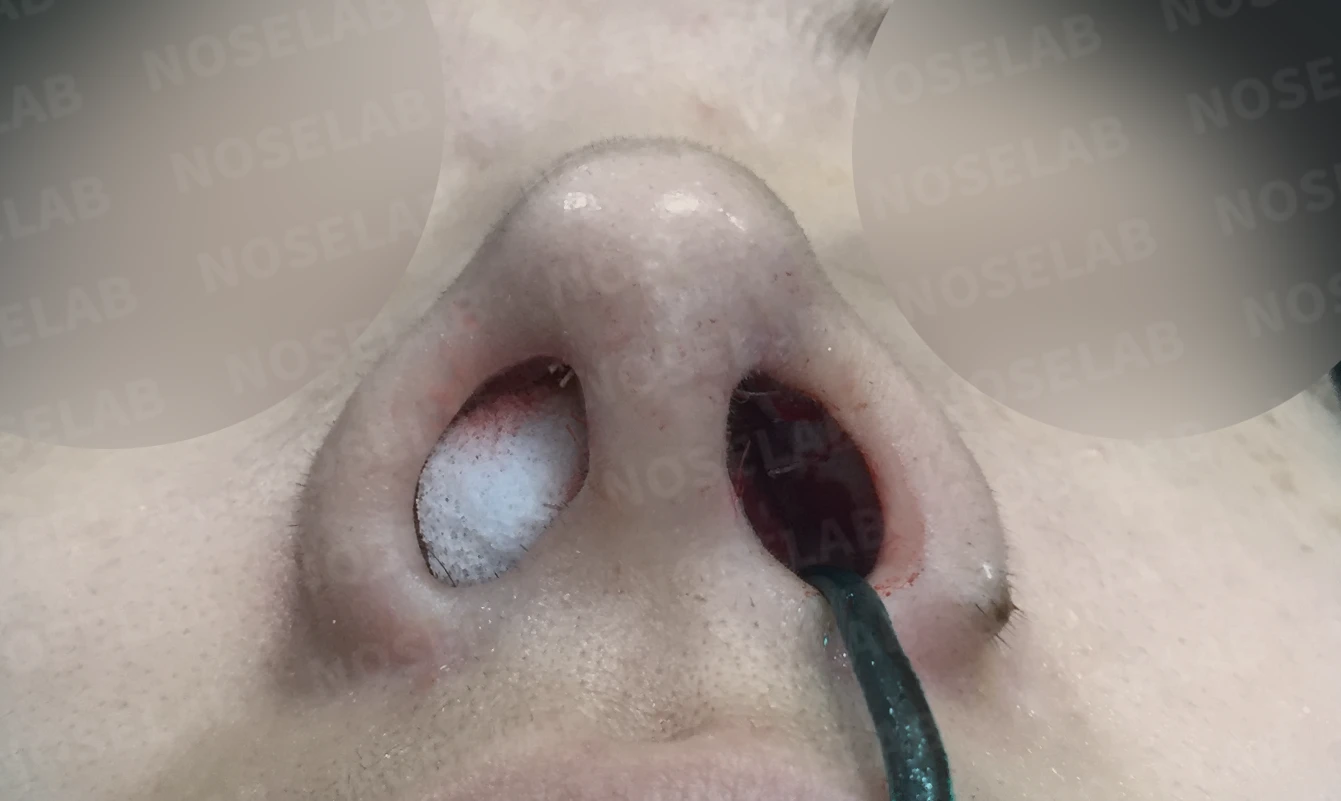
Before surgery / Day 0 immediately after surgery Photos taken immediately after surgery show swelling and may differ from the final result.
- Nostril asymmetry improved significantly.
- The columellar position was corrected, improving overall harmony.
5. Photos immediately after surgery on day 0 Photos taken immediately after surgery show swelling and may differ from the final result.
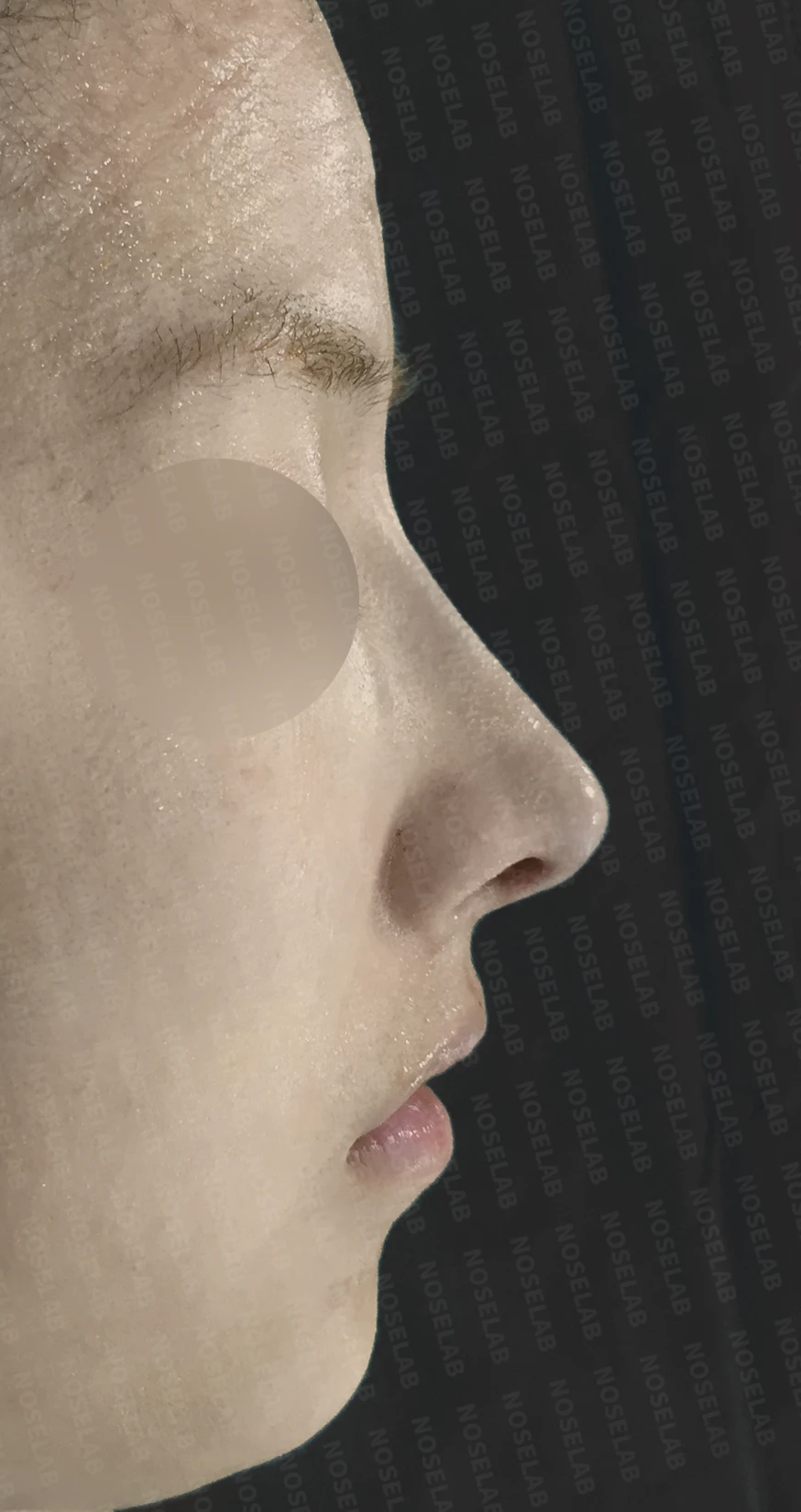
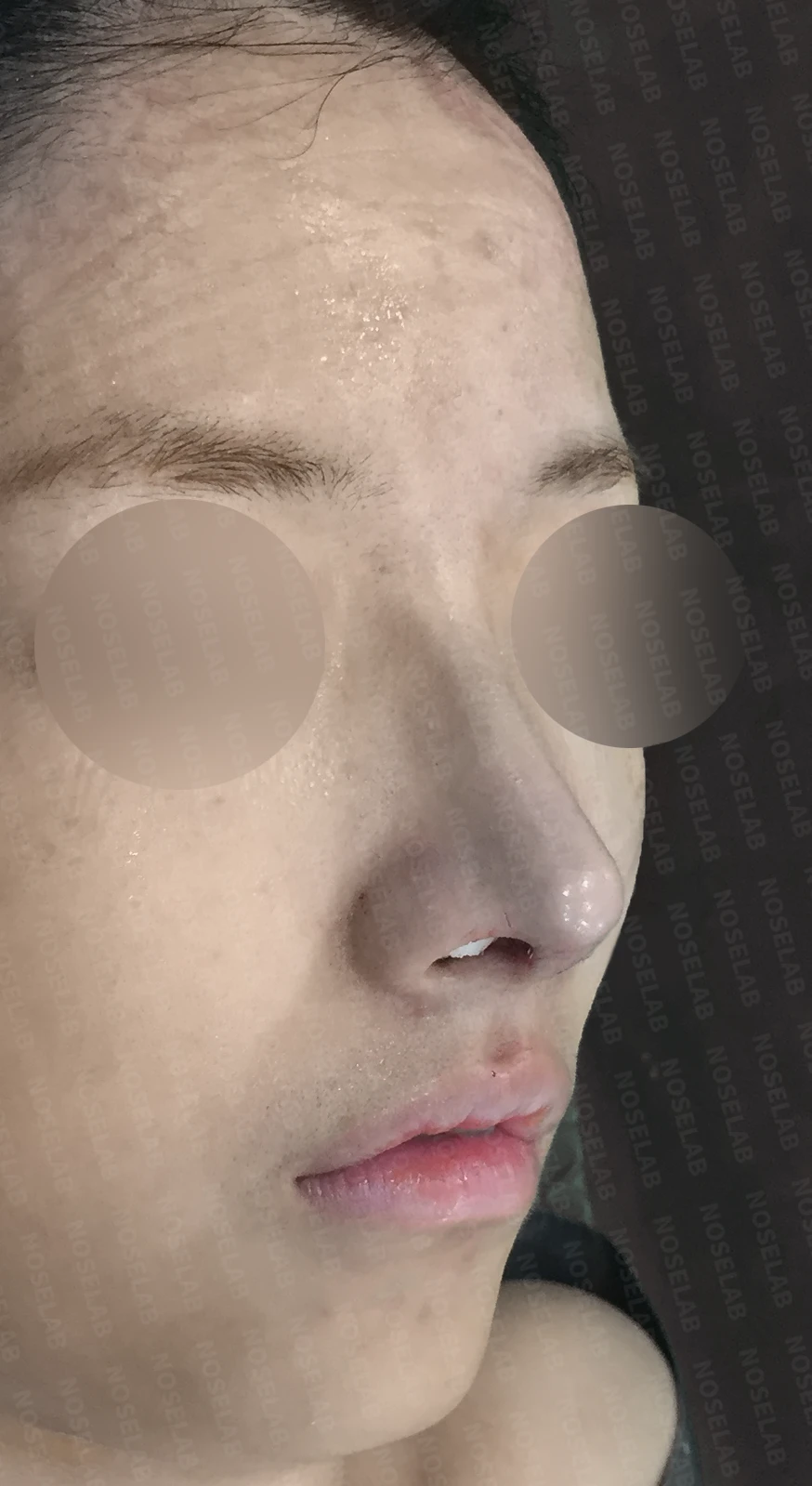
Front, profile, and oblique views taken immediately after surgery (day 0).Immediate postoperative photos show swelling and may differ from the final result.
This is the basal (nostril) view.
6. Overall evaluation
This case illustrates successful rhinoplasty for a patient with a combination of a long nose, dorsal hump, and functional airway concerns. Through a closed approach, all of these issues were addressed without external scars.
Most notably, both cosmetic refinement and functional improvement were achieved concurrently. Correcting the dorsal hump and long nose created a soft, feminine profile line, while treating the deviated septum and hypertrophic rhinitis resolved the patient's nasal obstruction.
Reducing the dorsal hump with lateral osteotomy smoothed the bridge line, which softened the patient's overall facial impression. Correcting the drooping tip with a septal extension graft elevated the nasal tip and adjusted the overall nasal length to restore balance.
Septoplasty and submucosal turbinate resection were essential steps that extended beyond cosmetic goals to significantly enhance the patient's quality of life. Relieving nasal obstruction positively affects daily comfort as well as sleep quality.
Performing all of these steps through a closed approach minimized external scarring and supported a smoother recovery period. While the closed approach requires advanced technical skill and extensive experience, it offers substantial benefits to the patient.
7. Conclusion
I hope this case offers helpful insight to those troubled by a long nose, a dorsal hump, or functional issues such as nasal obstruction. Rhinoplasty can bring meaningful change not only aesthetically, but also functionally.
What matters most is a tailored surgical plan that comprehensively takes into account each patient's unique facial anatomy, aesthetic goals, and medical condition. At NOSELAB, we offer well-matched solutions for each individual based on extensive experience and specialized expertise.
If you are considering rhinoplasty, please consult with a qualified specialist to select the surgical approach best suited for you. In particular, when functional concerns are present, a consultation with a board-certified otolaryngologist is essential.
We will continue to do our utmost to help you achieve a healthy, well-proportioned nose based on advanced medical techniques and accumulated clinical experience.
This was Dr. Peter C. Kang. Thank you.
Thank you.
#rhinoplasty #dorsalhumpcorrection #longnosecorrection #droopingtipcorrection #closedrhinoplasty #tiprhinoplasty #ENTspecialistrhinoplasty #naturalnose #femininenose #deviatedseptum #hypertrophicrhinitistreatment #nasalobstructionrelief #nasolabialanglecorrection

Limitations and risks
When the septum is corrected at the same time, nasal obstruction may persist or recur, and in rare cases, septal perforation or changes in smell may occur.
Common potential risks include infection, bleeding, asymmetry, scarring, skin necrosis, and insufficient improvement; results vary depending on individual skin condition and previous surgical history.