Hello, I am Dr. Peter C. Kang.
Today, I would like to introduce the case of a female patient who sought correction for a dorsal hump, improvement of a drooping nasal tip, and relief from nasal obstruction.
To achieve a natural result, we performed a tailored rhinoplasty using an implant-free technique with autologous rib cartilage.
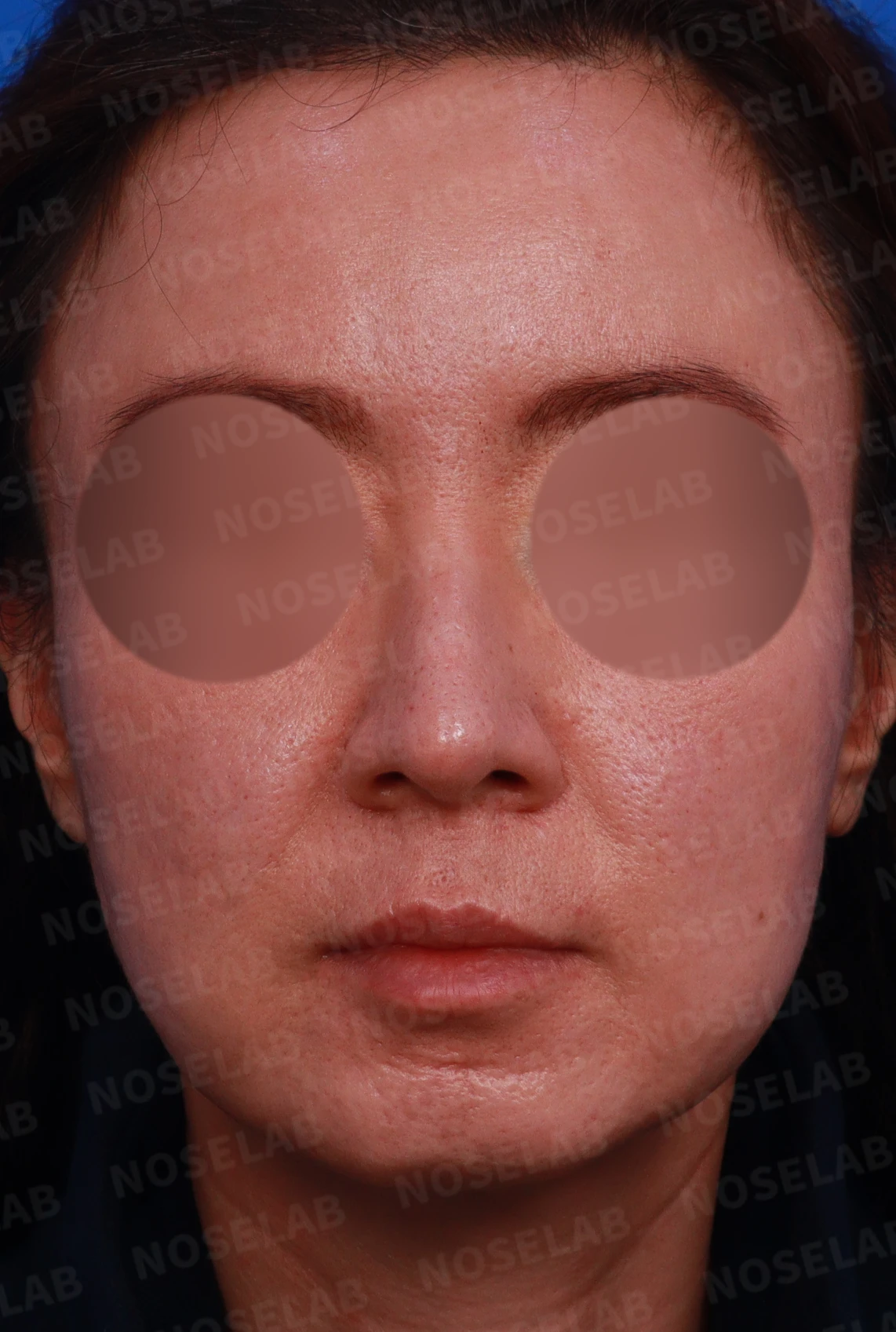
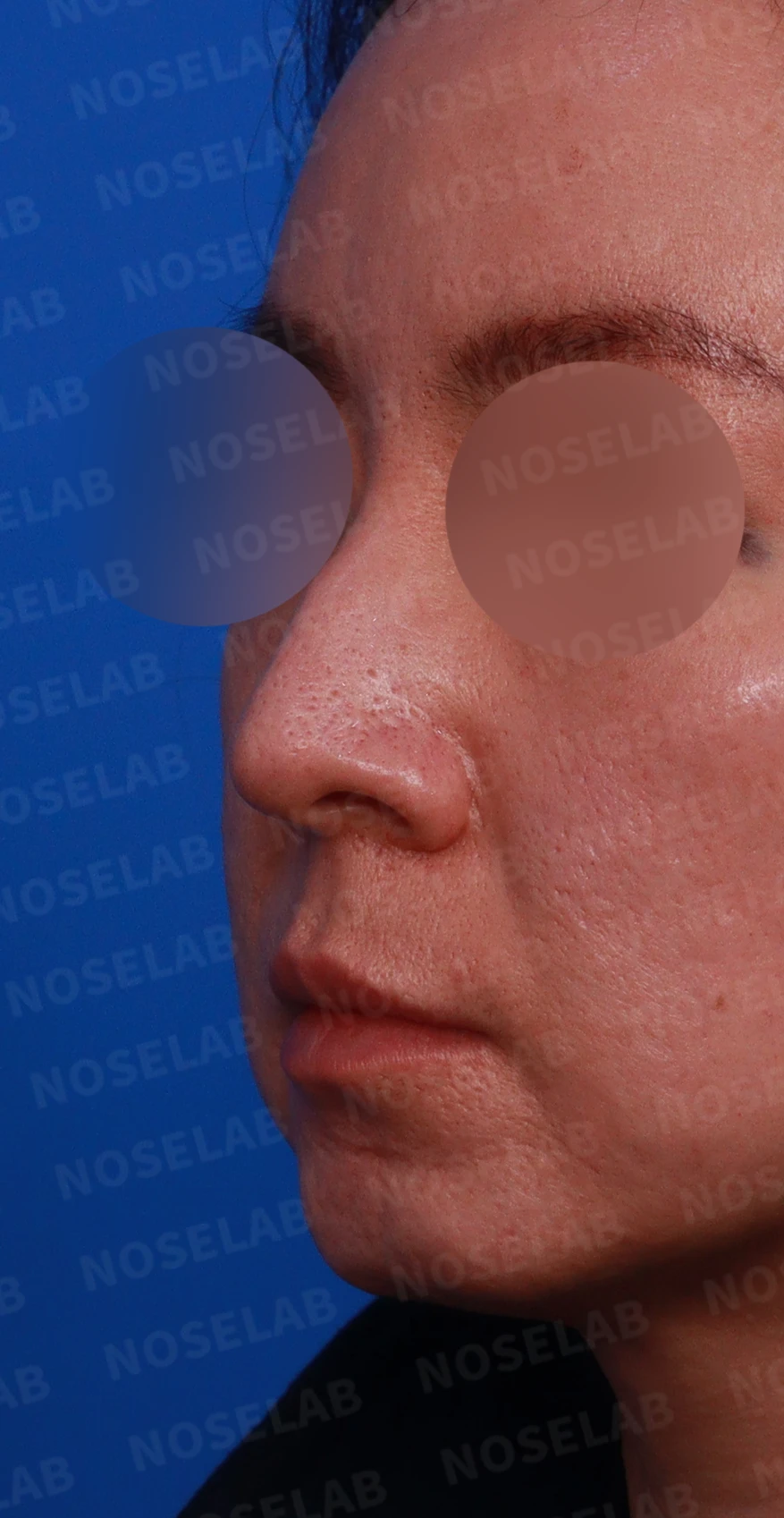
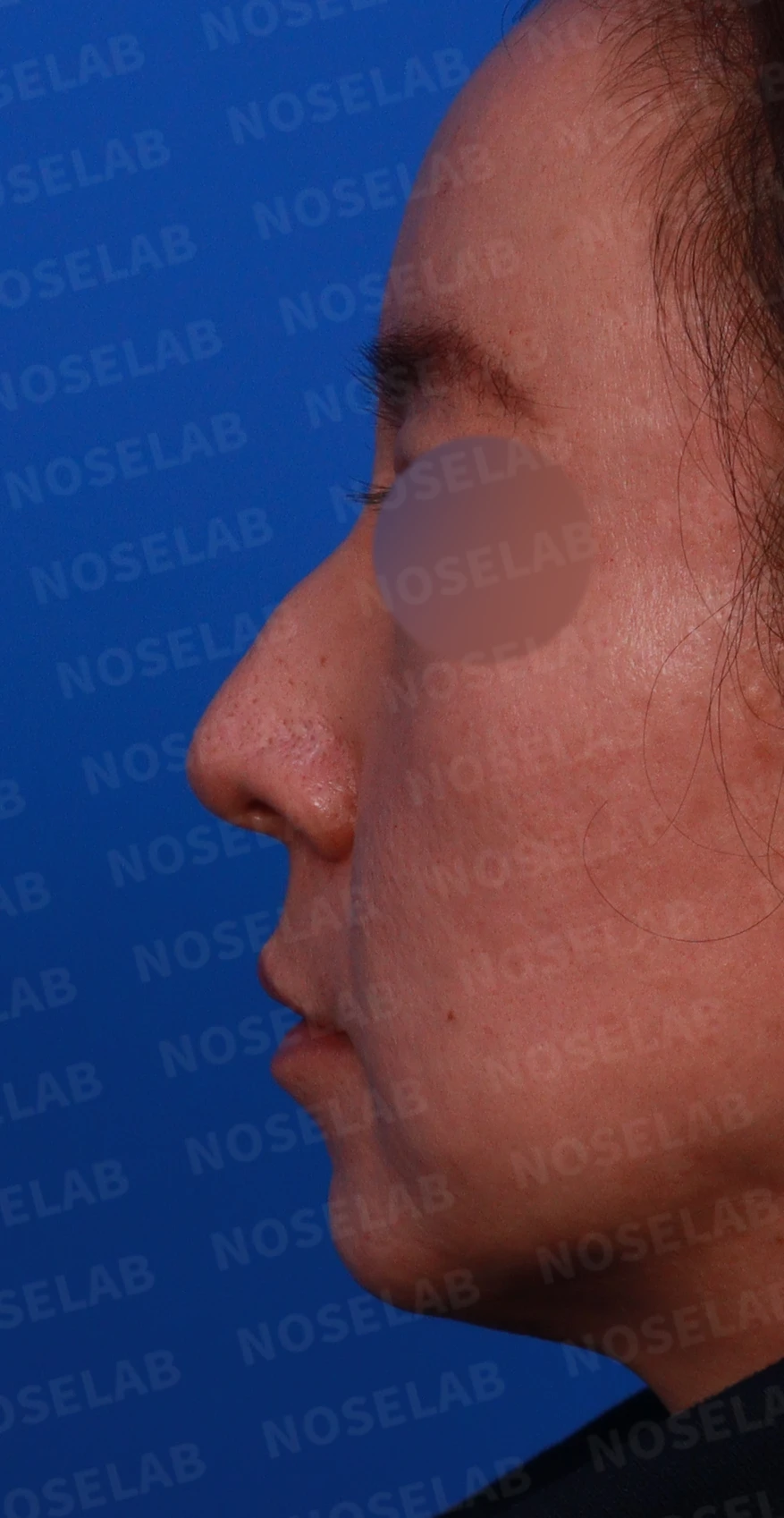
Design consultation: front, left oblique, and profile views
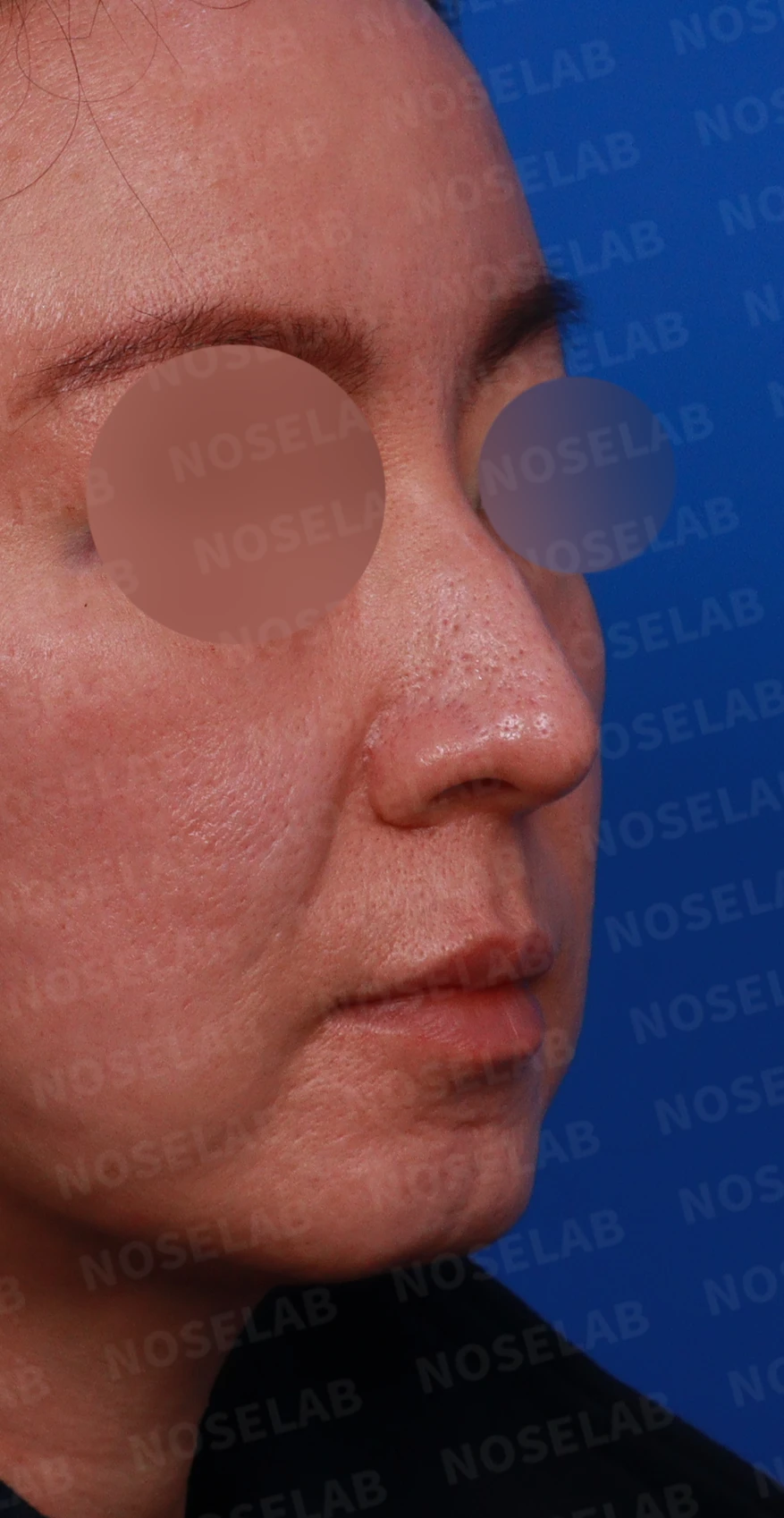
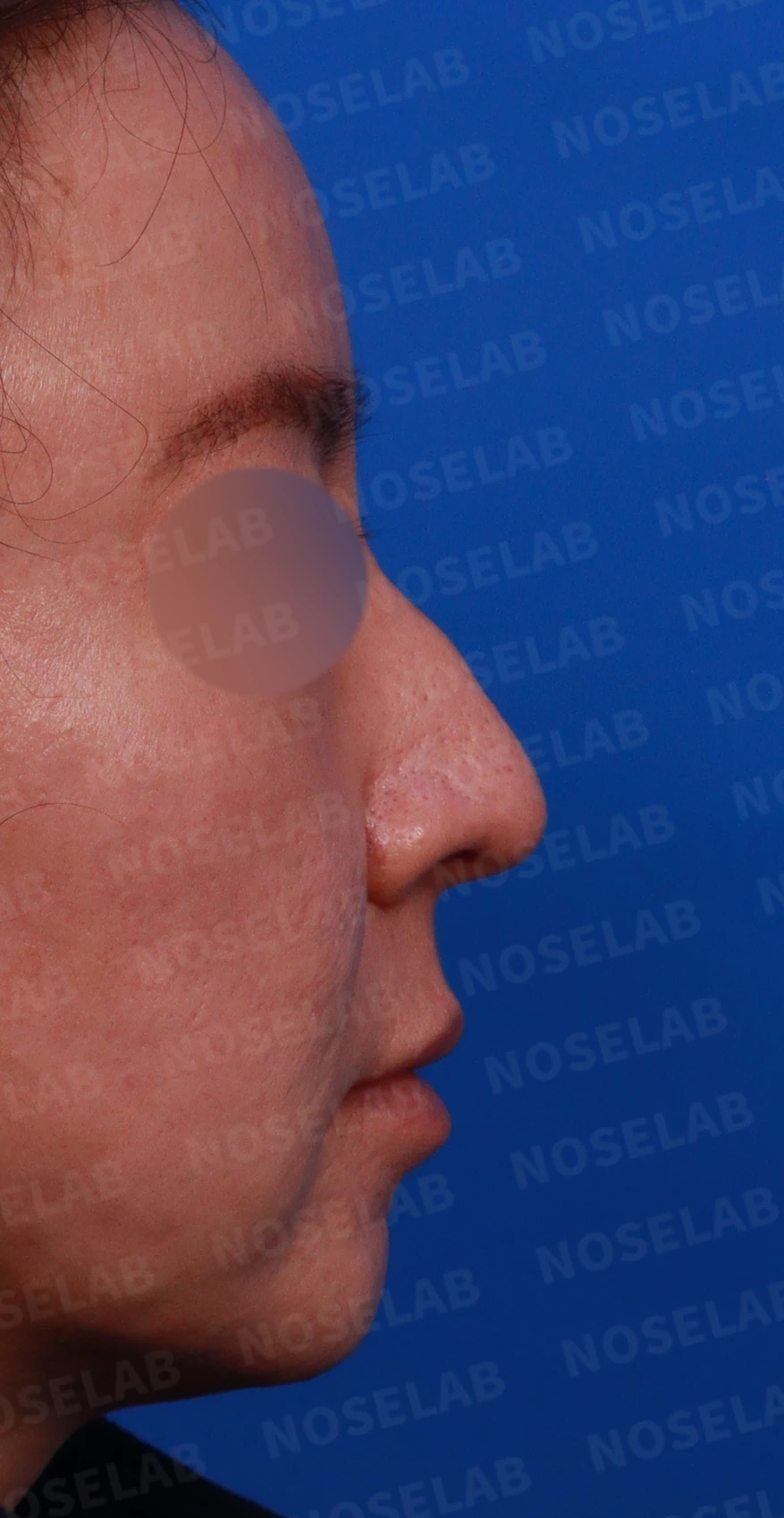
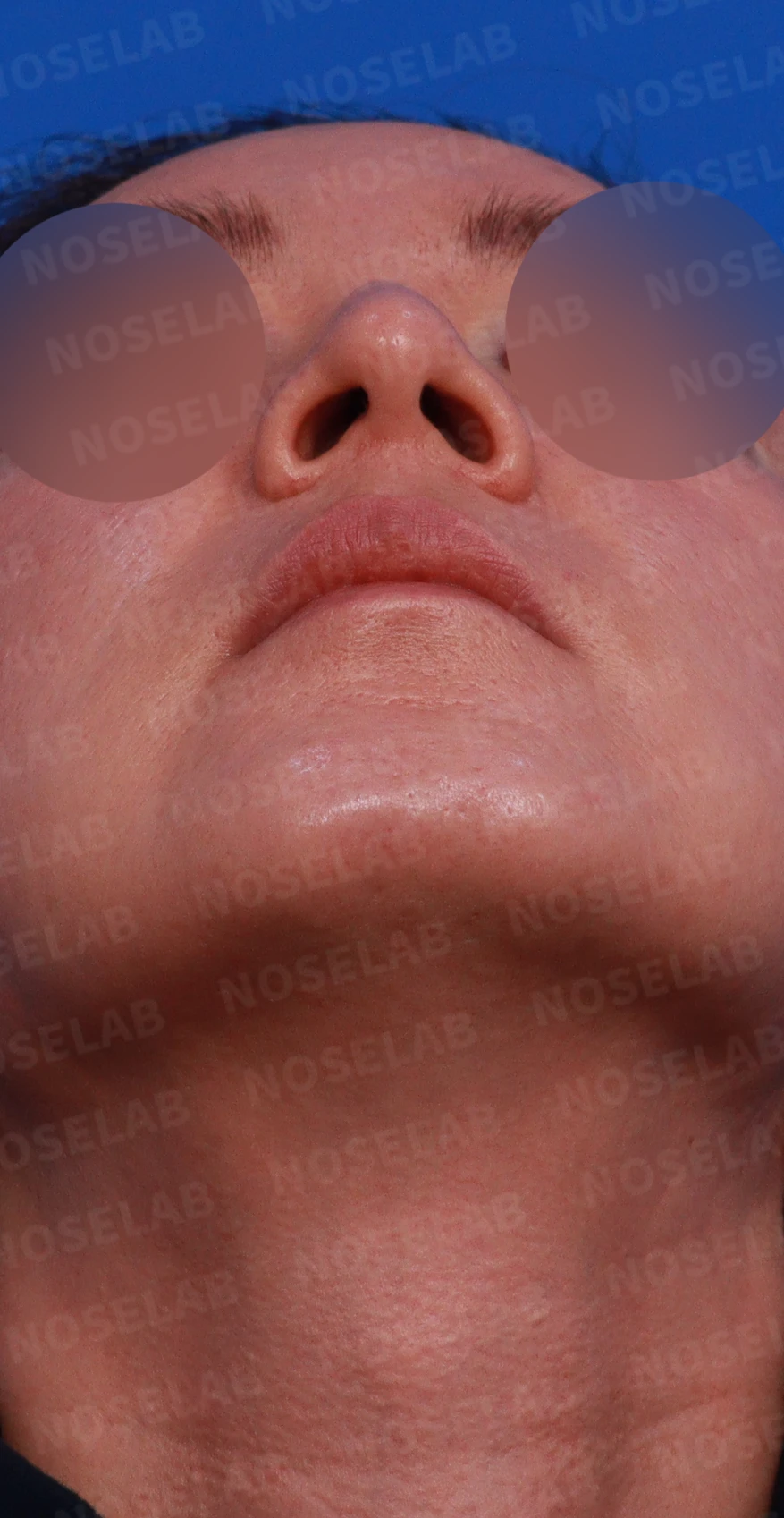
Design consultation: right oblique, profile, and basal (nostril) views
📊 Preoperative analysis
Analyzing the photographs taken during consultation:
1. Front view: The nasal tip appears spread and wide, and asymmetry of the nostrils and alae is observed.
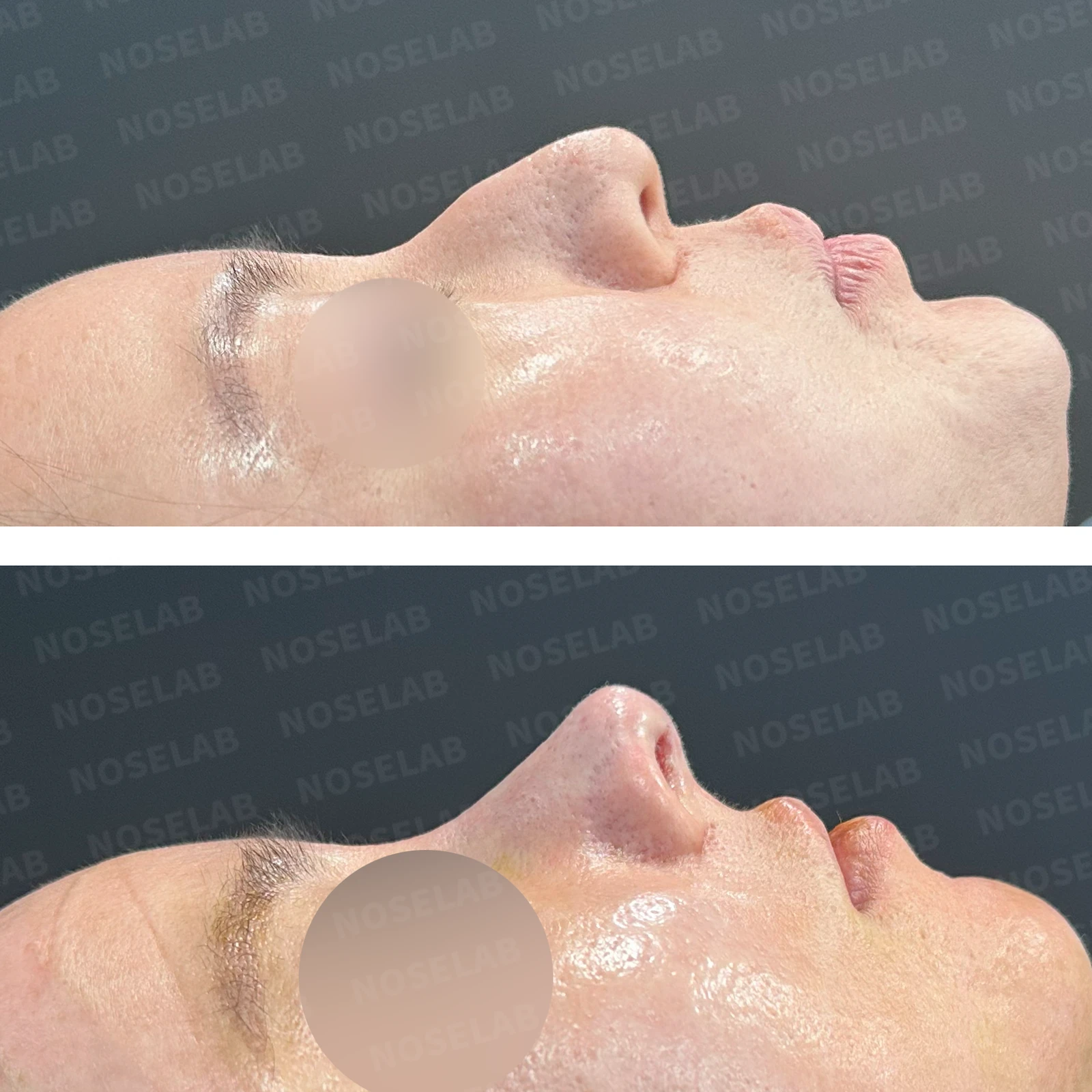
2. Profile view: A dorsal hump is present on the nasal bridge, and the nasal tip appears drooping. The nose looks elongated, and the nasolabial angle (the angle between the nose and upper lip) is less than 90 degrees.
🔧 Surgical plan and procedure
1. Nasal bridge and tip surgery using autologous rib cartilage
2. Dorsal bridge rasping to correct the dorsal hump
3. Lateral osteotomy
4. Septal extension to correct the drooping nasal tip
5. Septoplasty (deviated septum correction) to improve nasal obstruction
6. Submucosal resection of the inferior turbinates using radiofrequency laser (treatment for hypertrophic rhinitis) to improve nasal obstruction
Through this comprehensive approach, we aimed to achieve aesthetic refinement while also resolving functional issues.
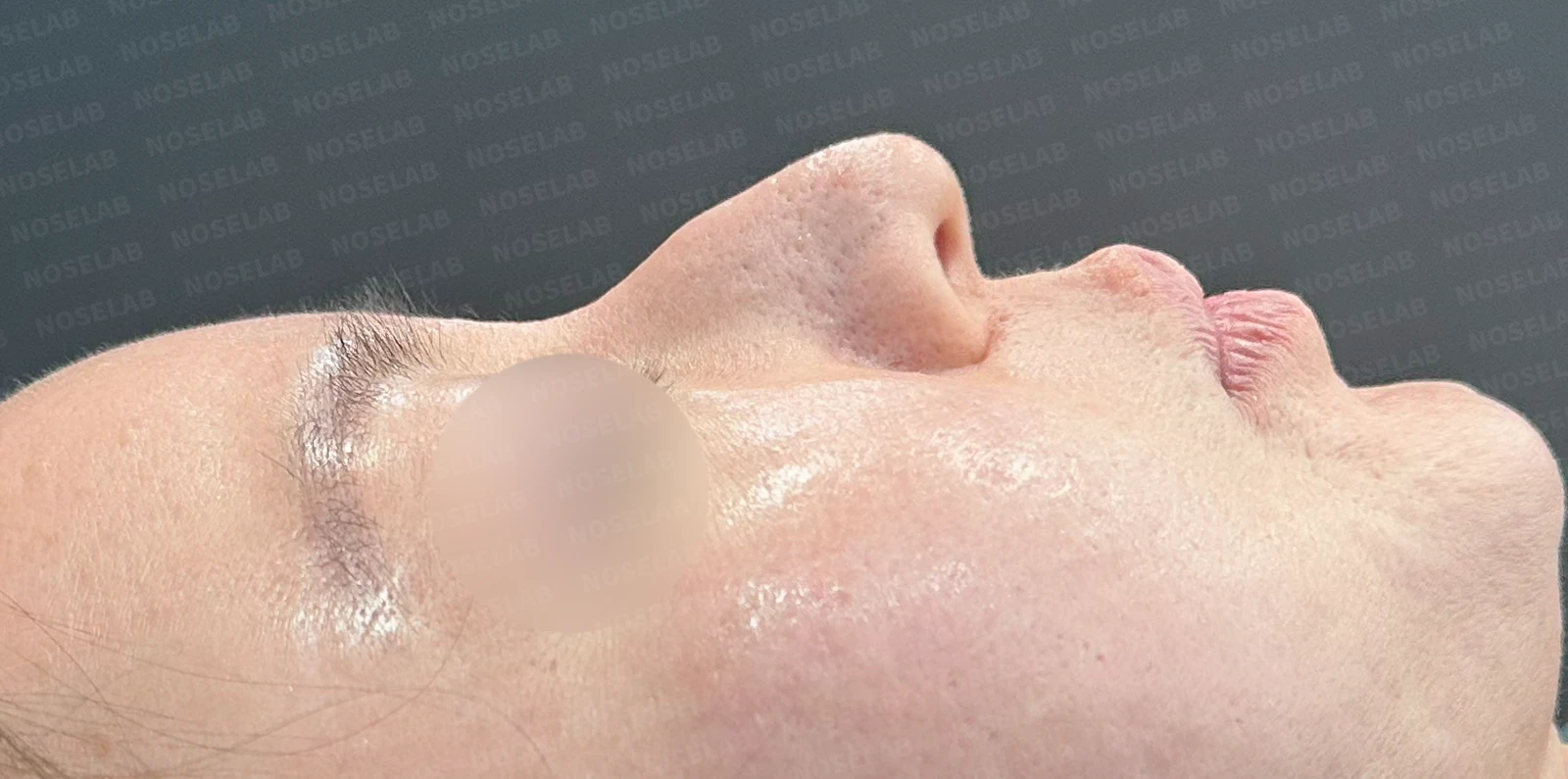
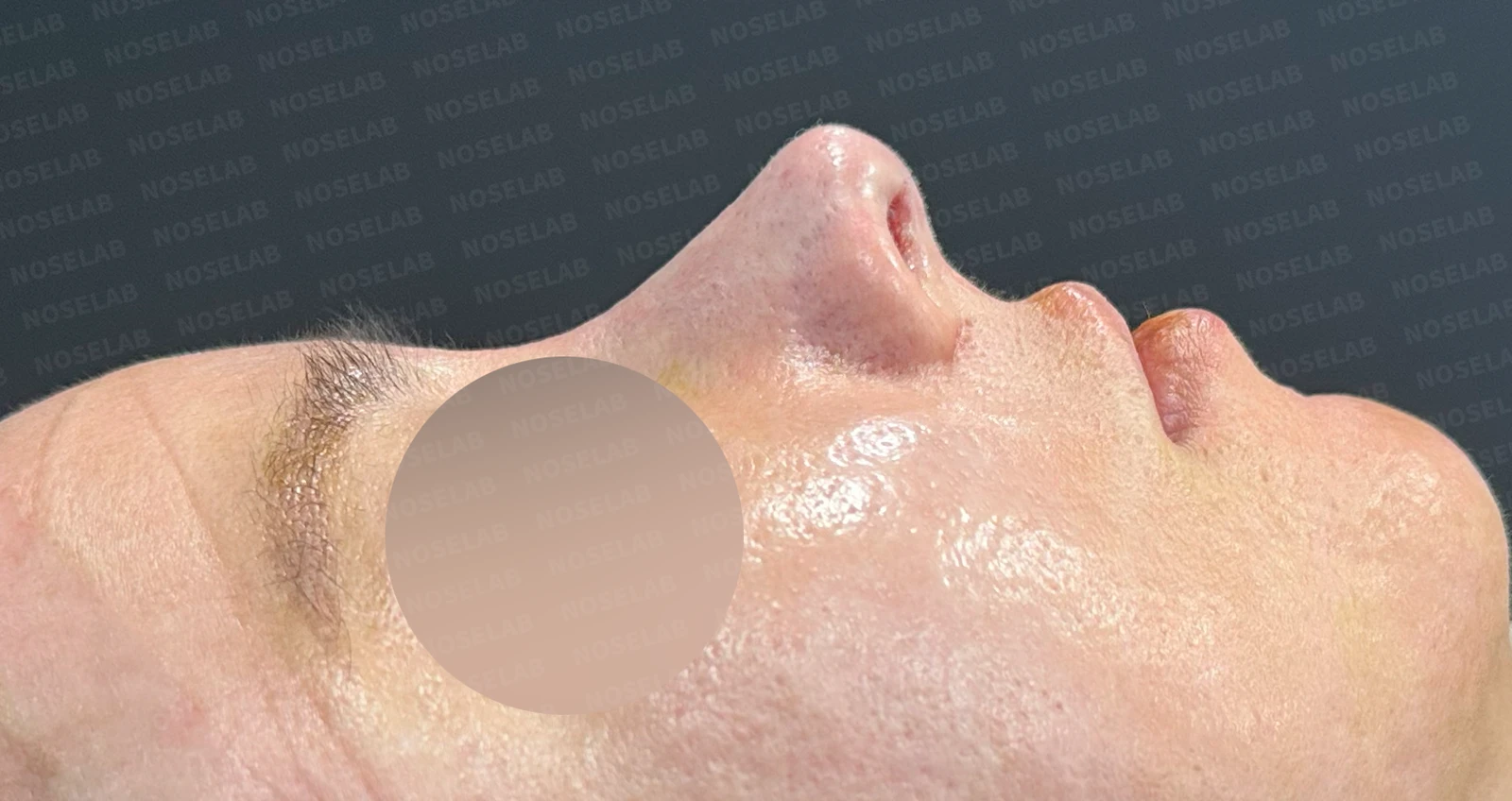
Before surgery / Day 0 immediately after surgery Photos taken immediately after surgery show swelling and may differ from the final result.
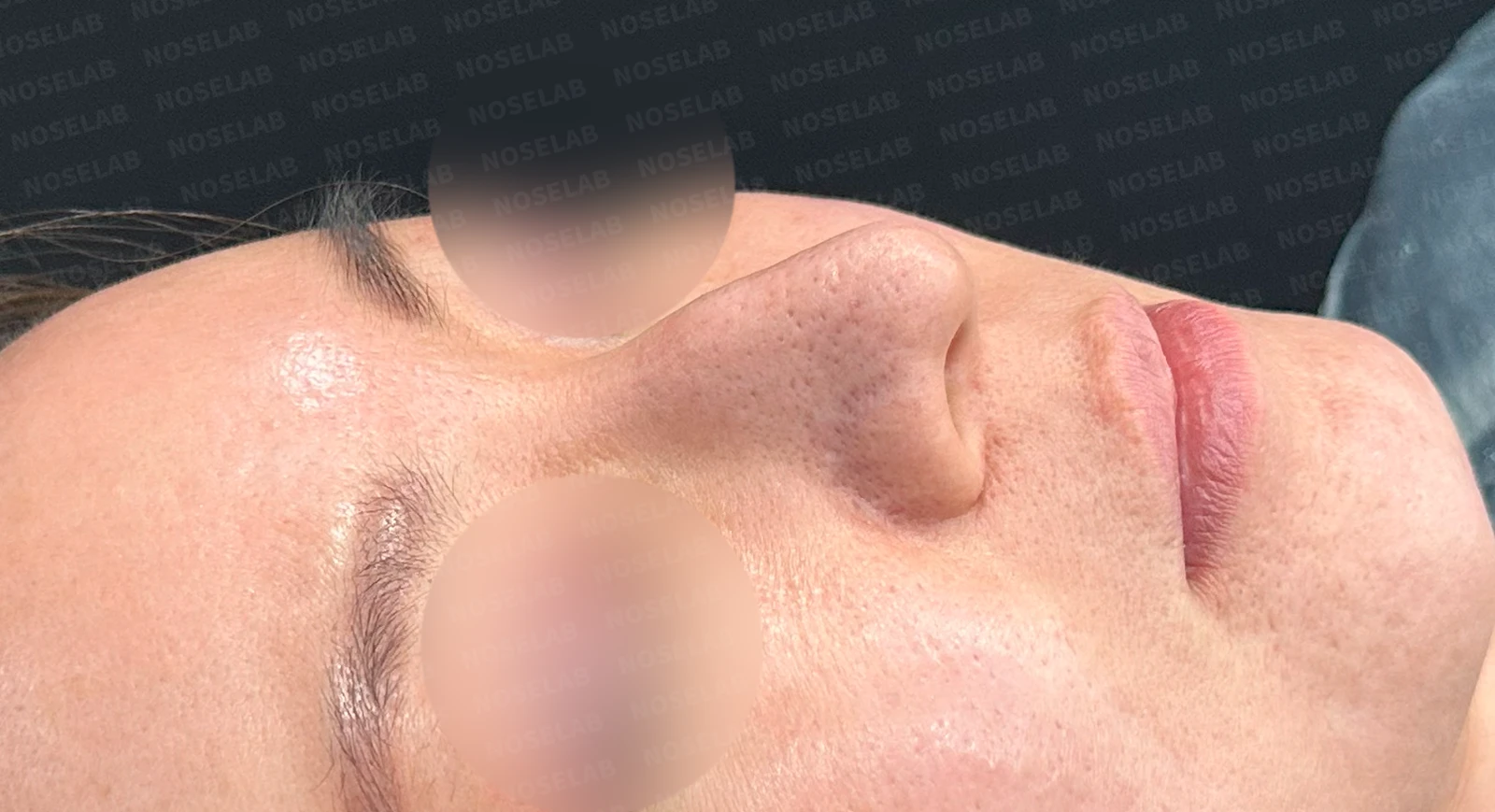
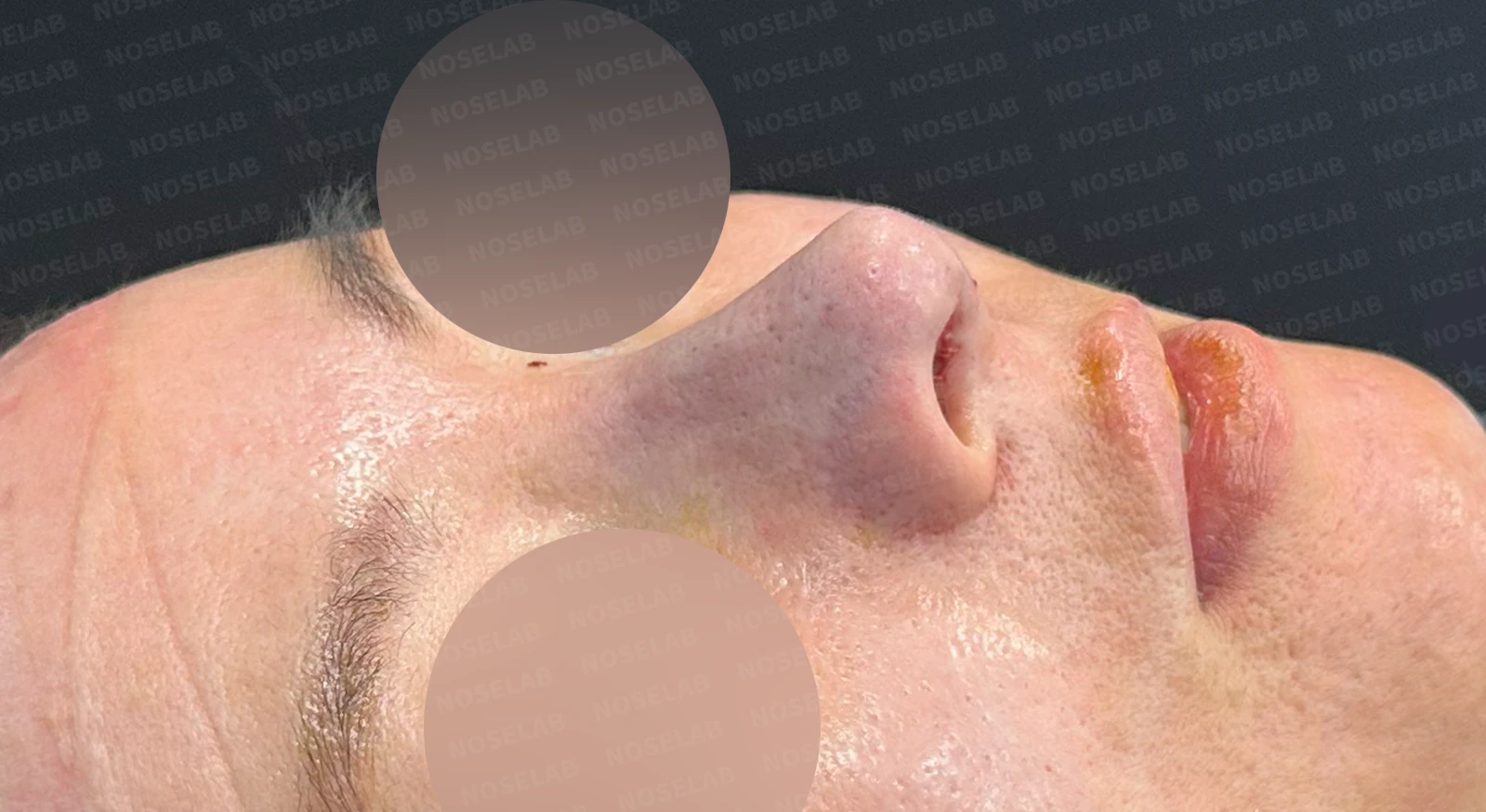
Before surgery / Day 0 immediately after surgery Photos taken immediately after surgery show swelling and may differ from the final result.
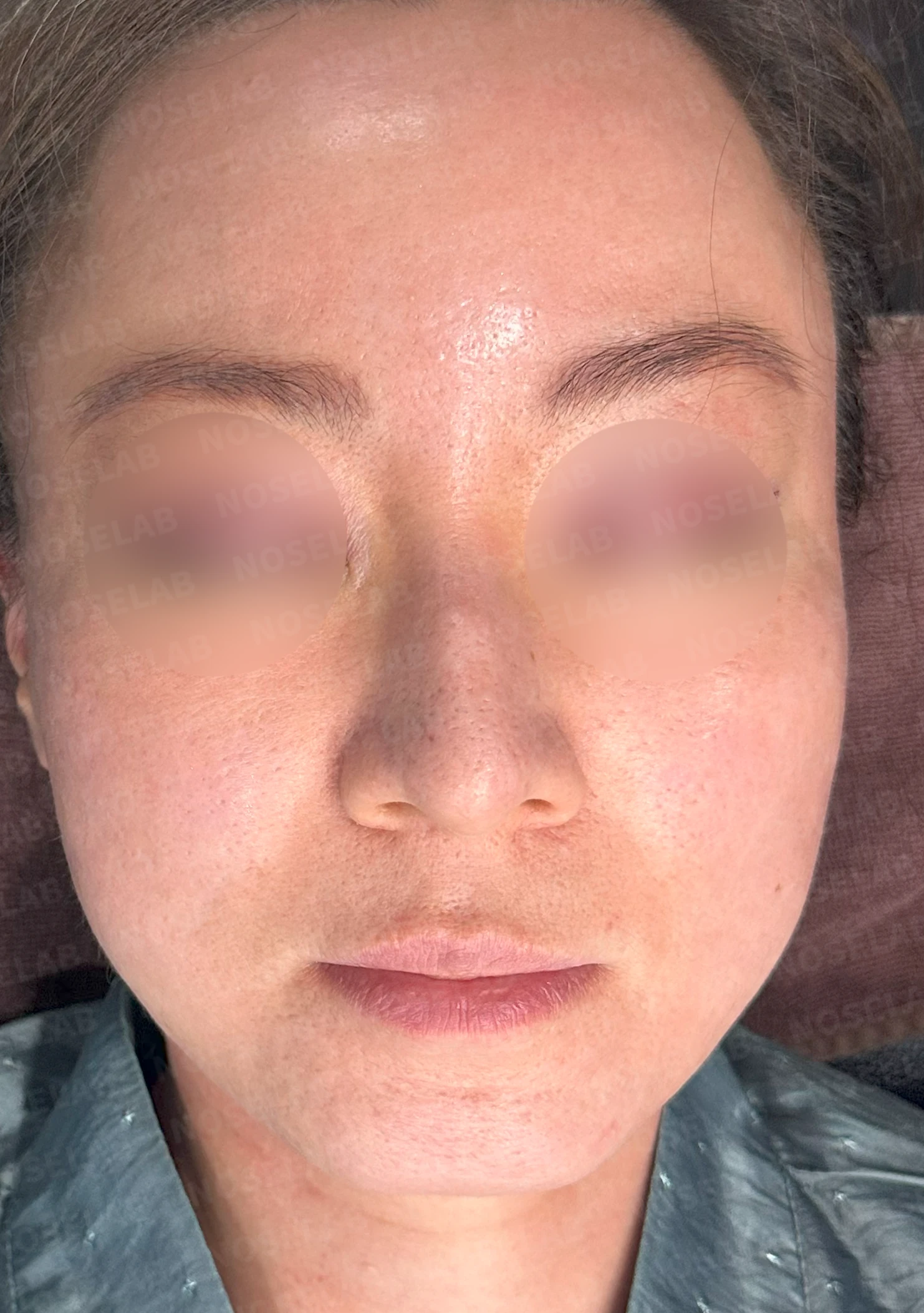
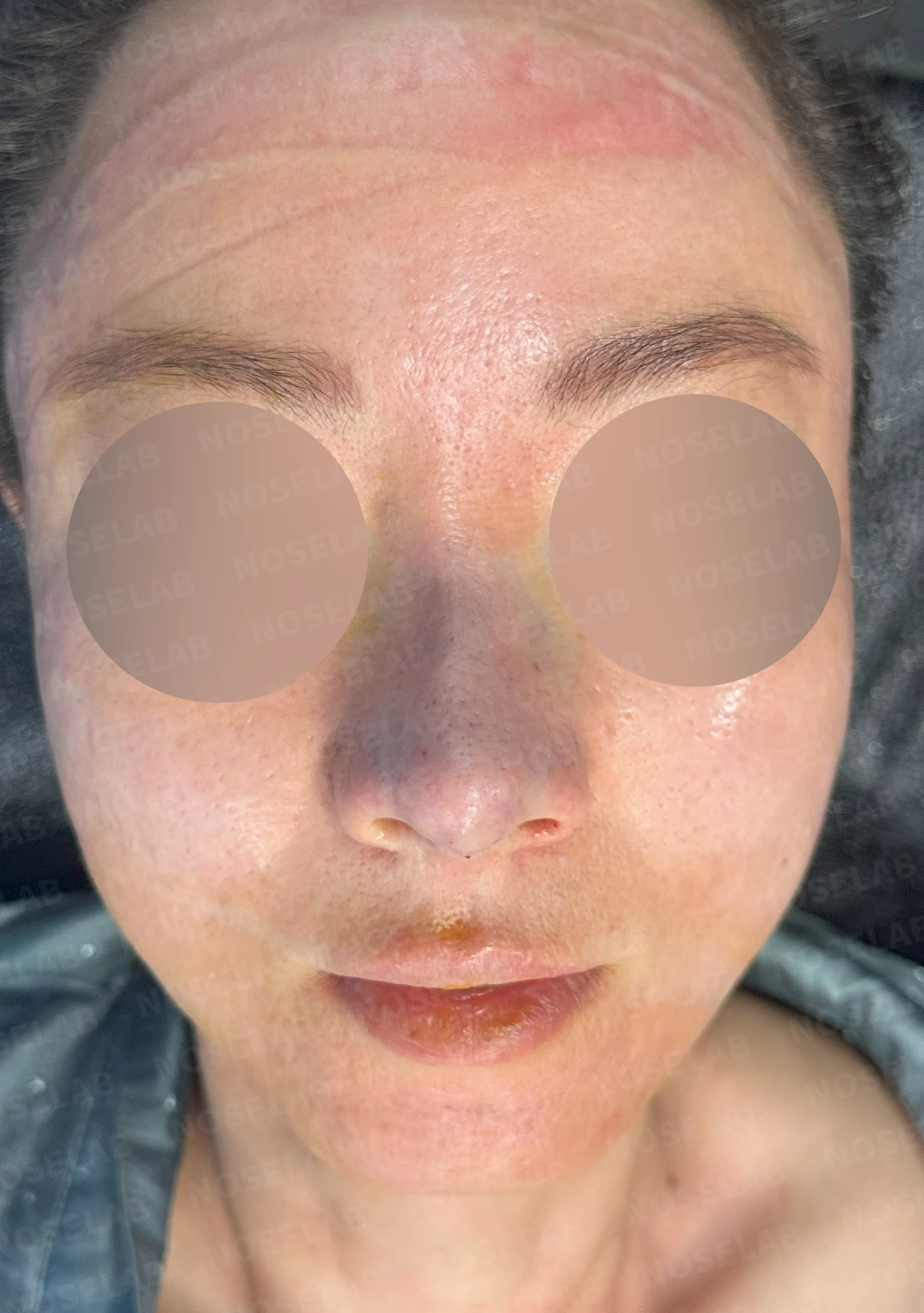
Before surgery / Day 0 immediately after surgery Photos taken immediately after surgery show swelling and may differ from the final result.
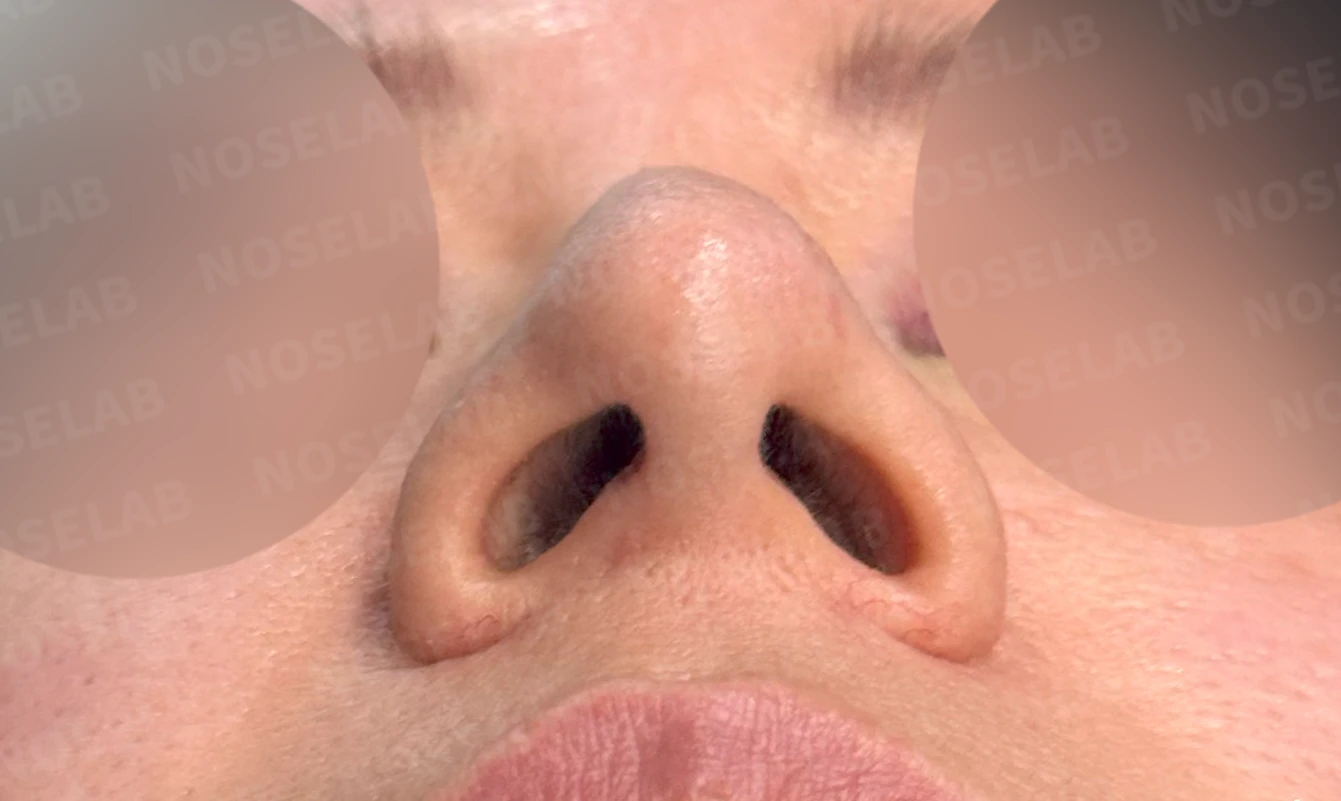
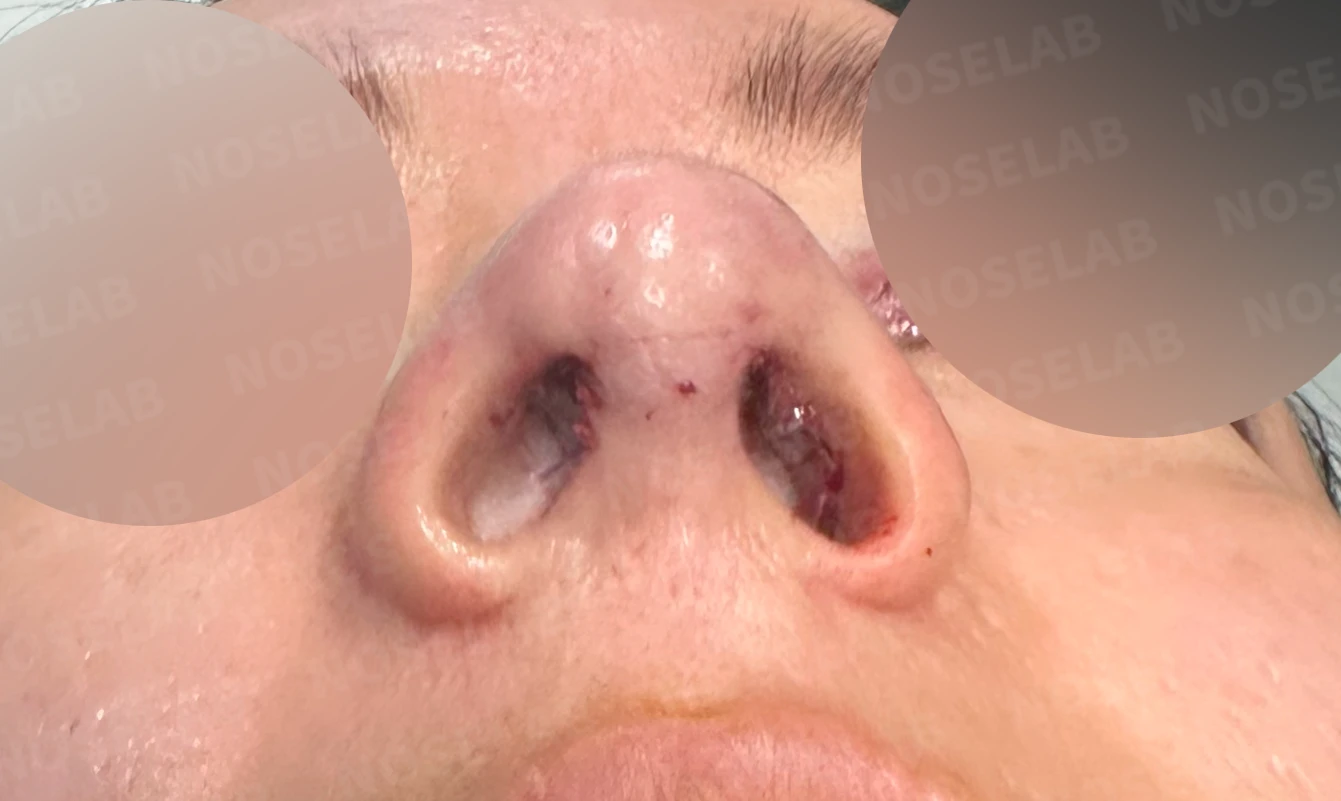
Before surgery / Day 0 immediately after surgery Photos taken immediately after surgery show swelling and may differ from the final result.
🌟 Surgical results
Comparing the photographs immediately after surgery on day 0: Photographs taken immediately after surgery show swelling and may differ from the final healed result.
1. Front view: The previously widened nasal tip is refined, and the asymmetry of the nostrils and alae has significantly improved.
2. Profile view: The dorsal hump has been smoothly corrected, and the previously drooping nasal tip is elevated and well-supported.
Overall, the impression transformed into a natural, feminine look, enhancing her soft features.
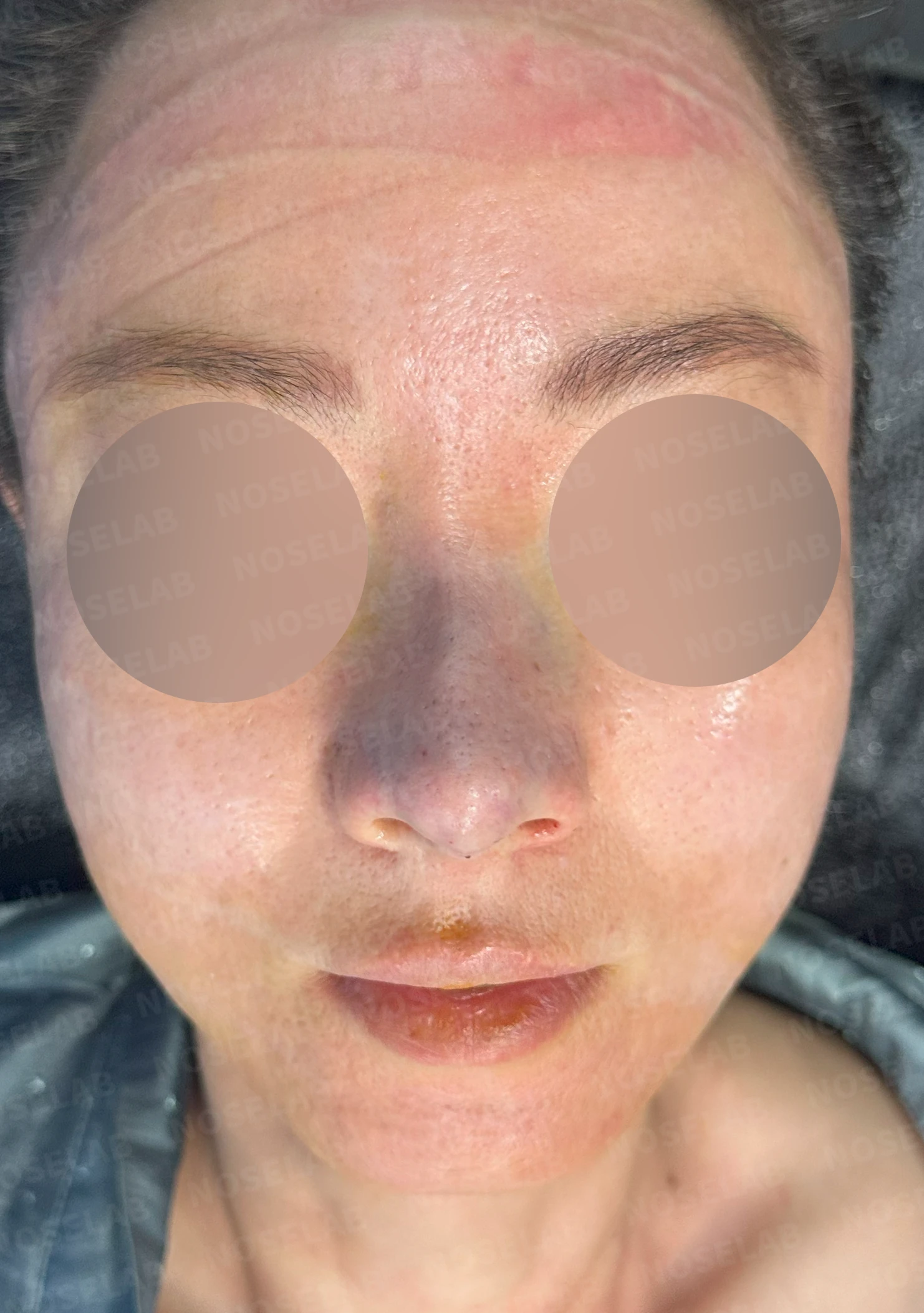
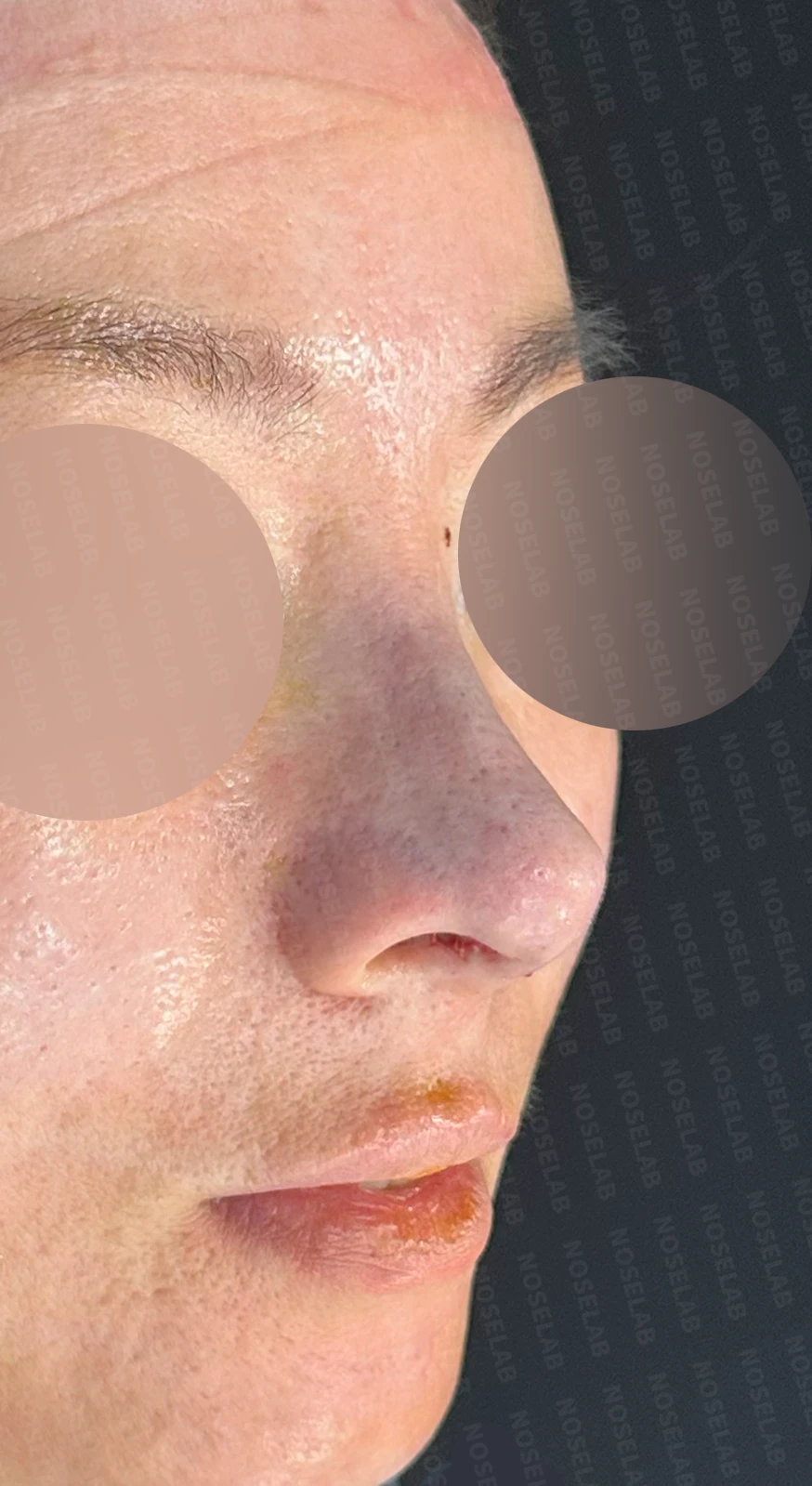
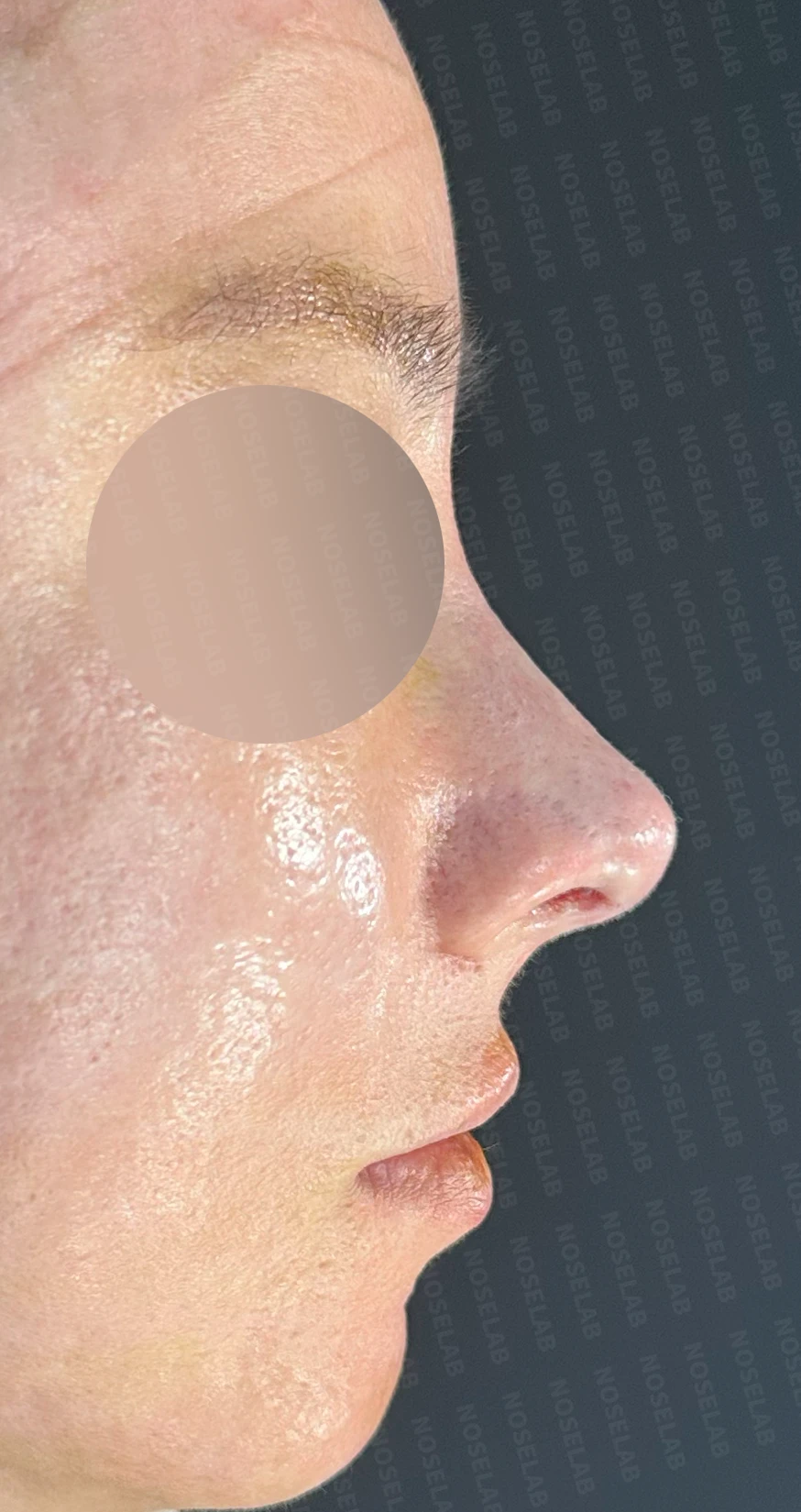
Front, oblique, and profile views immediately after surgery on day 0. Photos taken immediately after surgery show swelling and may differ from the final result.
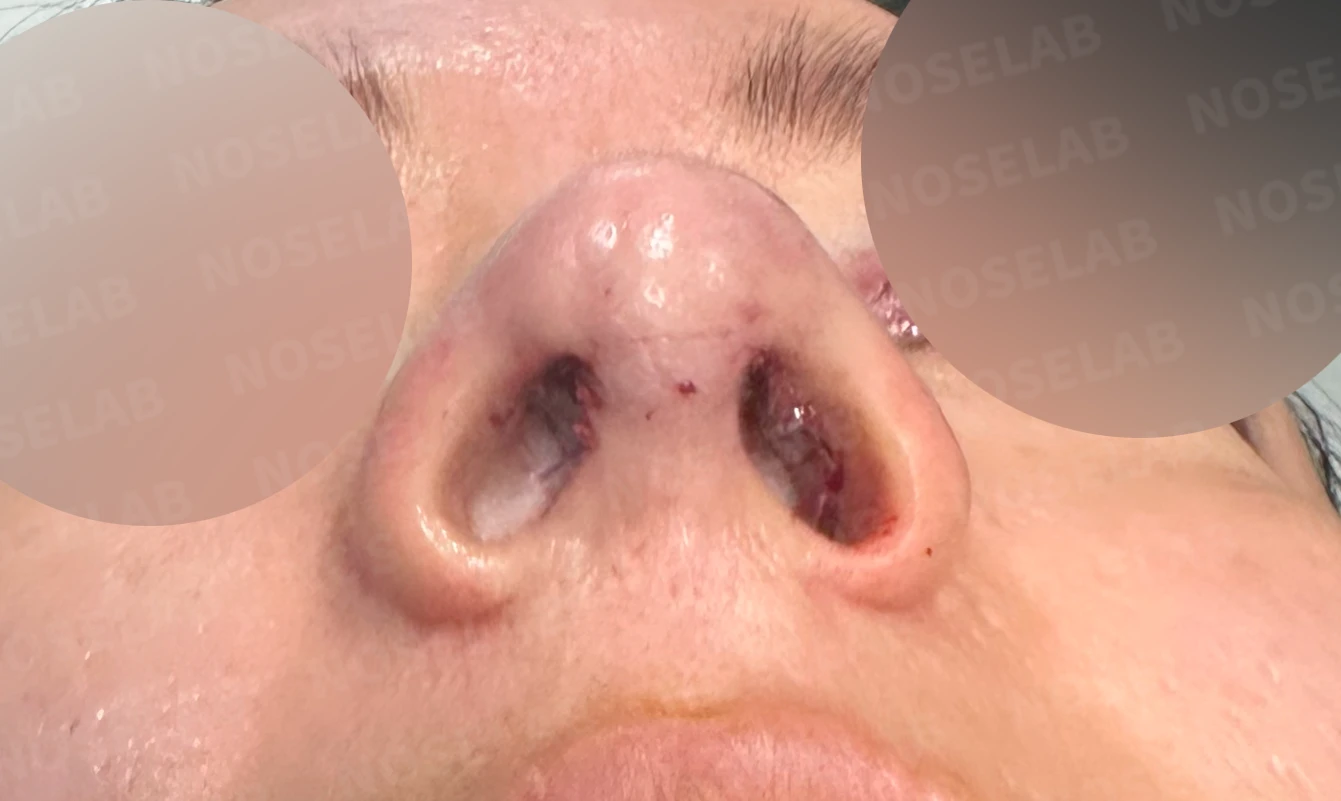
Nostrils
The significance of rhinoplasty
Rhinoplasty does not merely alter the shape of the nose. It plays an important role in refining the overall facial impression. Rhinoplasty alone can produce a masculine, strong profile, or it can create a feminine, refined image.
This patient presented with a dorsal hump and a long, drooping nose; correcting these areas served as a good example of achieving a more feminine, sophisticated appearance.
We always perform customized surgery considering each patient's facial features and desired outcome. Our goal is to achieve natural beauty while simultaneously addressing functional concerns.
If you are considering rhinoplasty, I recommend consulting with a specialist to find the approach best suited to you. We will always do our best for your aesthetic refinement and nasal health.
If you have any questions, please feel free to leave a comment. I will be glad to answer.
This was Dr. Peter C. Kang. Thank you.
Thank you.
#dorsalhumpcorrection #droopingtipcorrection #nasalobstructionsurgery #autologousribrhinoplasty #implantfreerhinoplasty #septalextension #rhinitissurgery #naturalrhinoplasty #femininenose #refinedfacialprofile

Limitations and risks
When autologous rib cartilage is used, scarring and pain may remain at the donor site on the chest, and pneumothorax (pleural injury) can occur rarely. Over time, the grafted cartilage may warp or undergo partial resorption.
When the septum is corrected at the same time, nasal obstruction may persist or recur, and in rare cases, septal perforation or changes in smell may occur.
Common potential risks include infection, bleeding, asymmetry, scarring, skin necrosis, and insufficient improvement; results vary depending on individual skin condition and previous surgical history.