Hello, I am Dr. Peter C. Kang.
Today, I would like to share a case of a patient who was concerned about a dorsal hump and a long nose.
In particular, this case was accompanied by severe rhinitis and nasal obstruction, making it a meaningful procedure that achieved both functional and aesthetic improvement simultaneously.
🔍 History and symptoms
June 2023: 1 thread lifting procedure on the nasal bridge and nasal tip
Severe bilateral nasal obstruction
Rhinitis accompanied by clear rhinorrhea
💉 Patient's requests
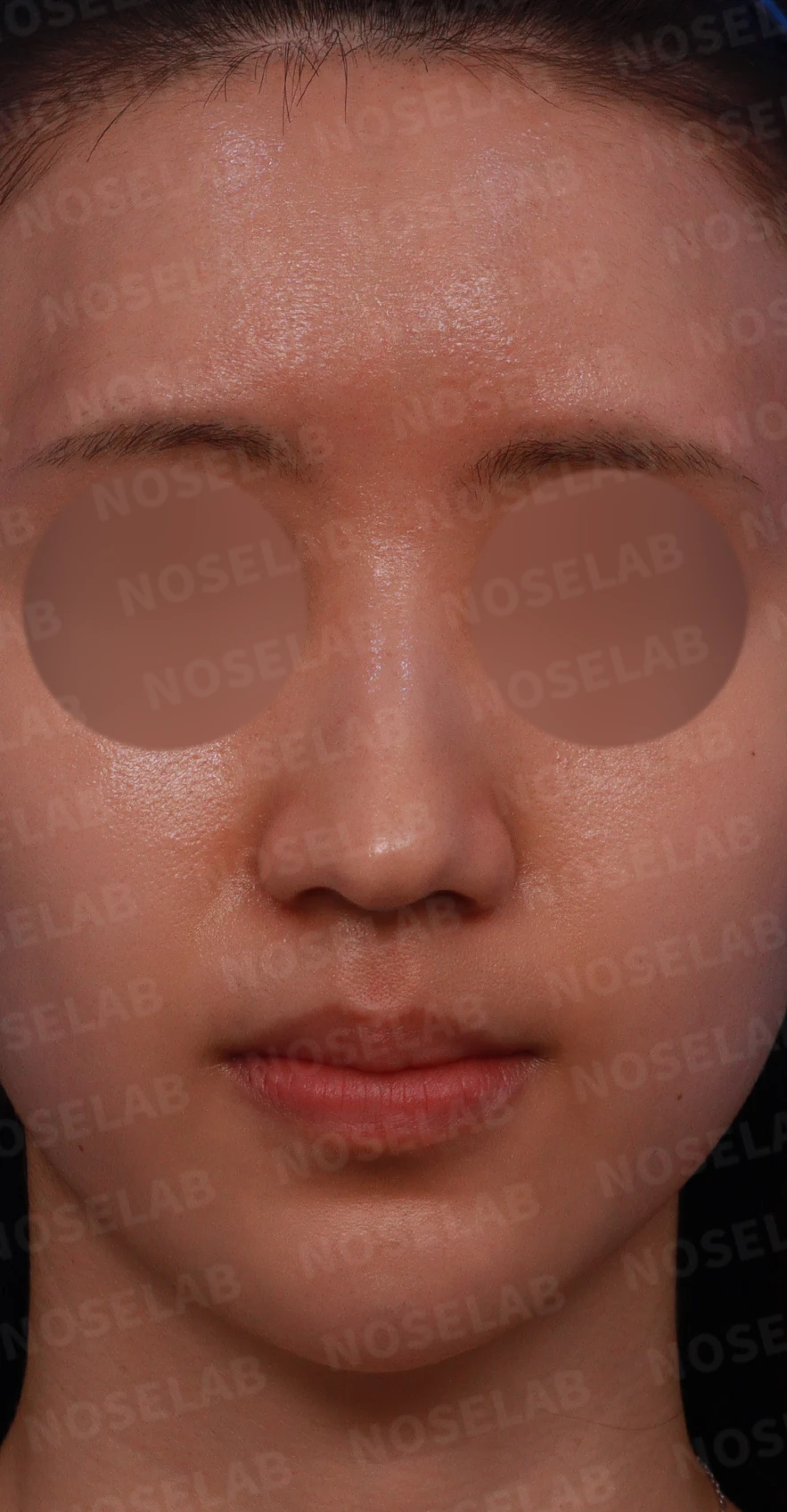
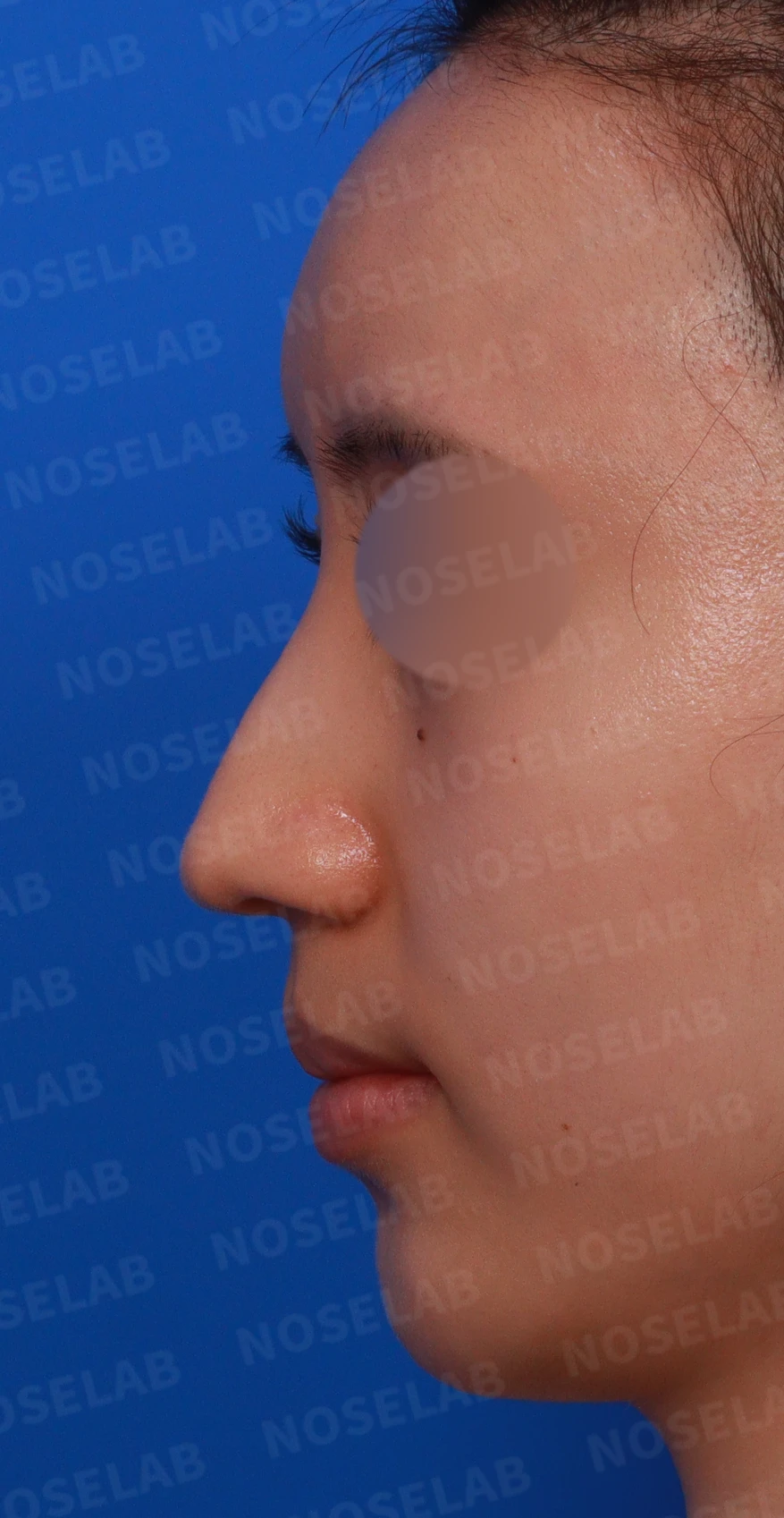
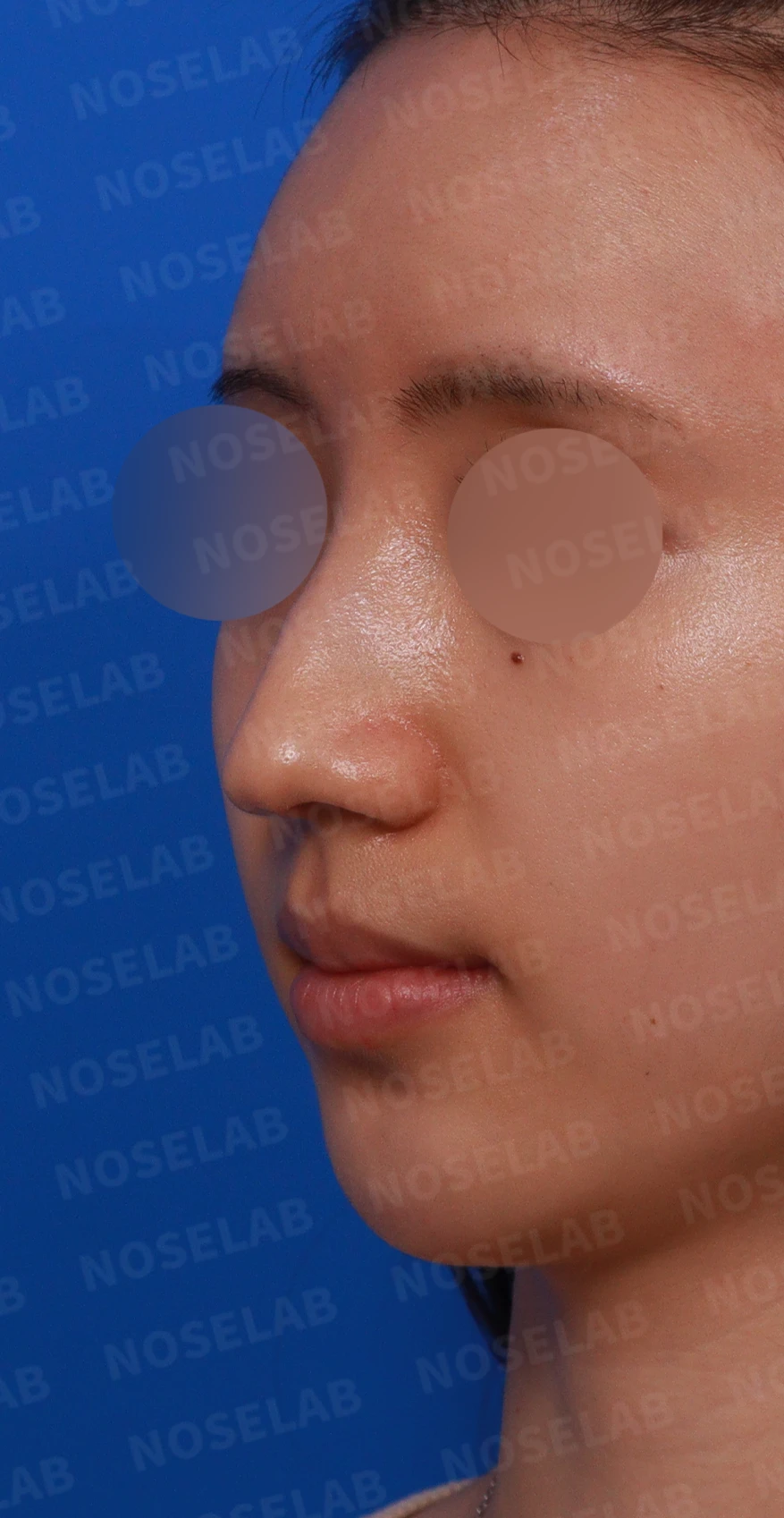
Front, left profile, and oblique views during design consultation.
Dorsal hump correction
Correction of a long nose
Correction of wide nose
Correction of a bifid (split) nasal tip
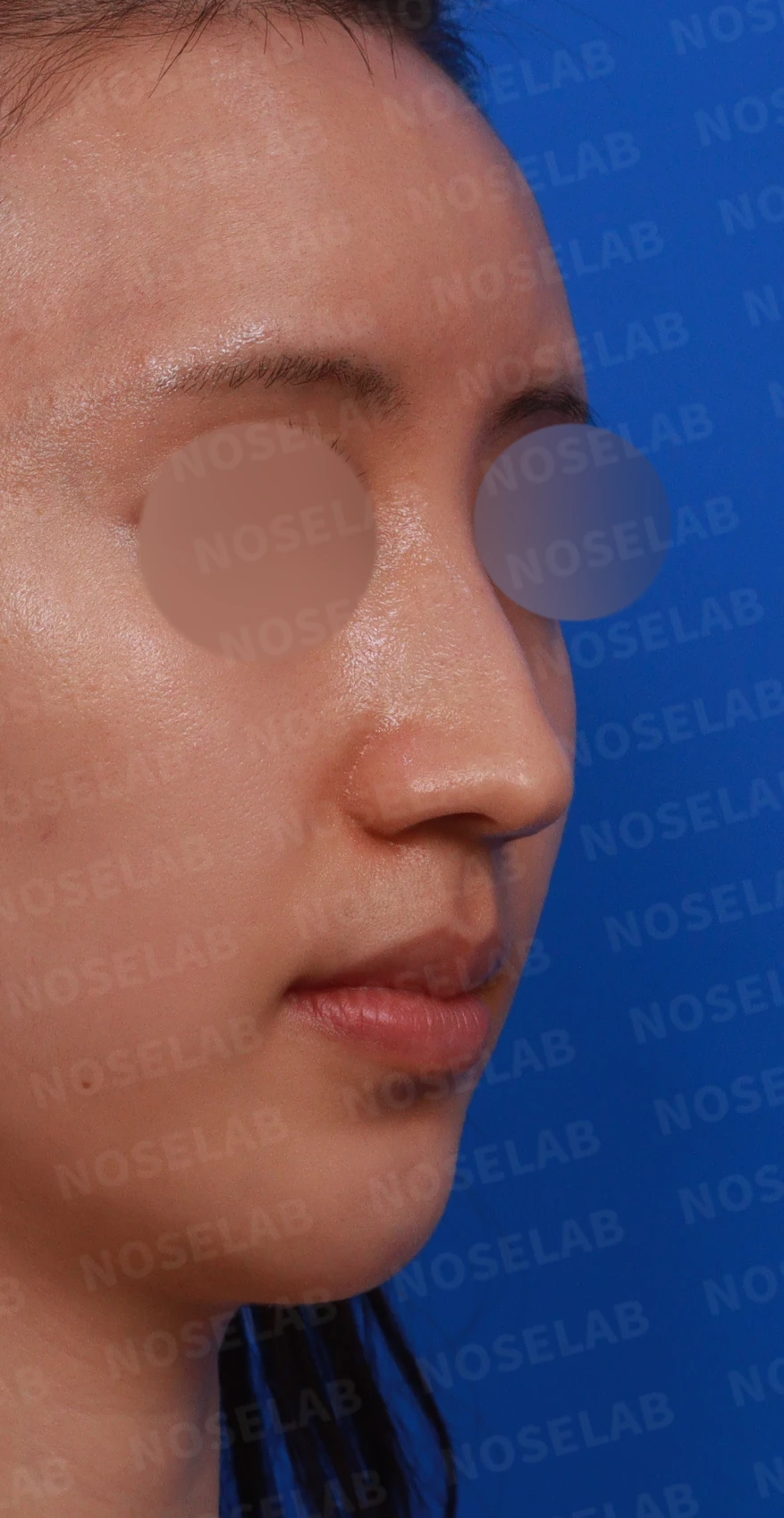
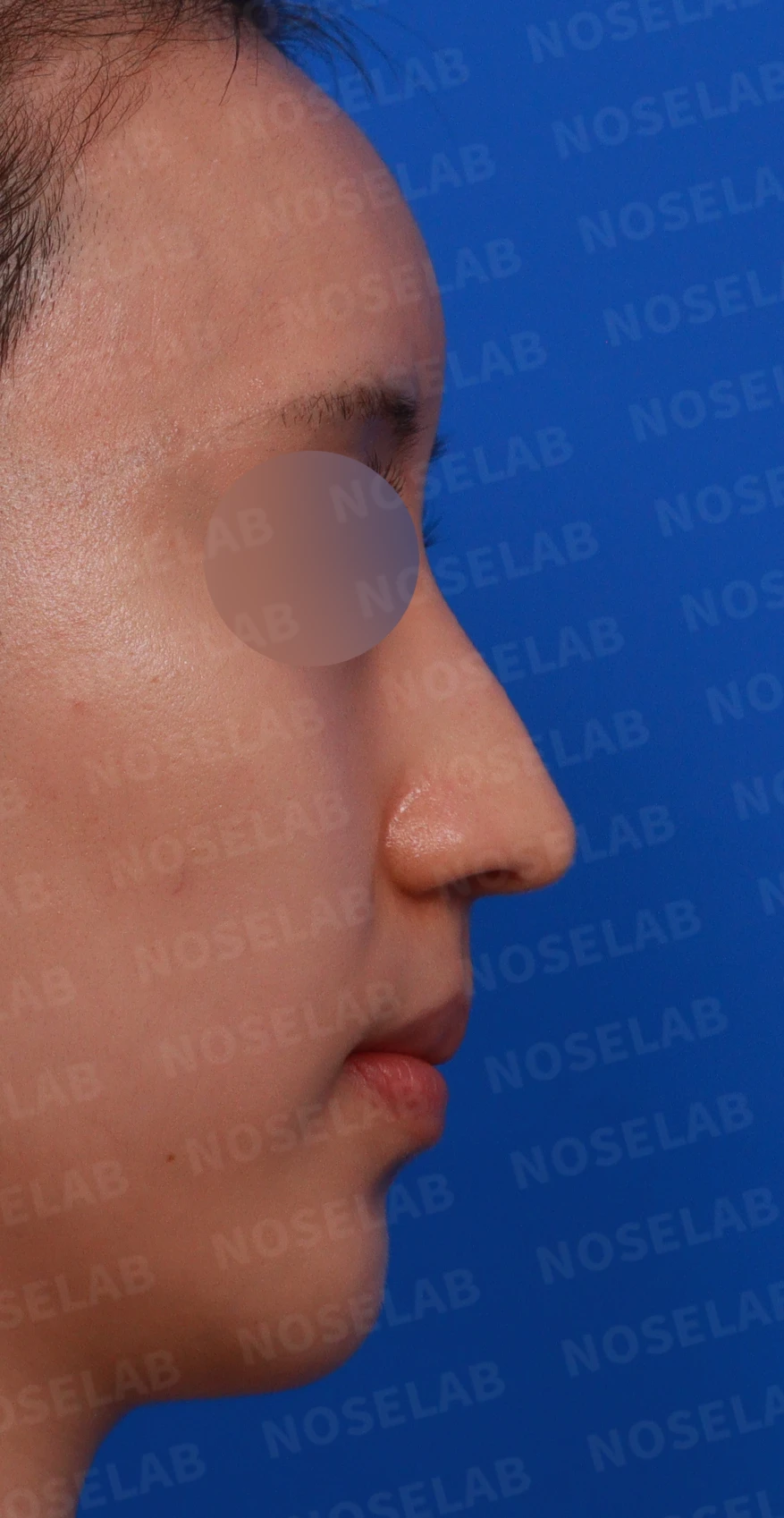
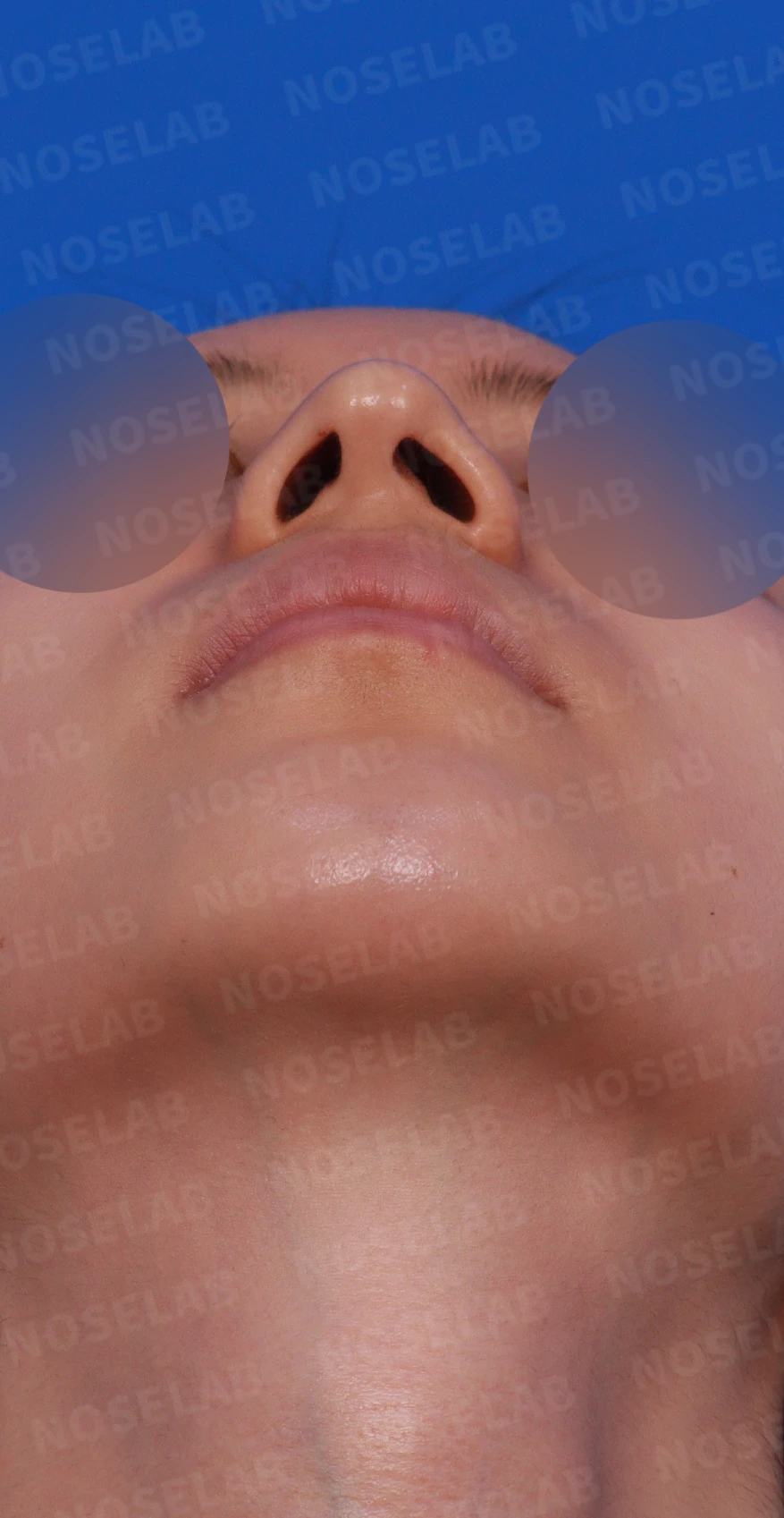
Design consultation: right oblique, profile, and basal (nostril) views.
🔧 Preoperative analysis
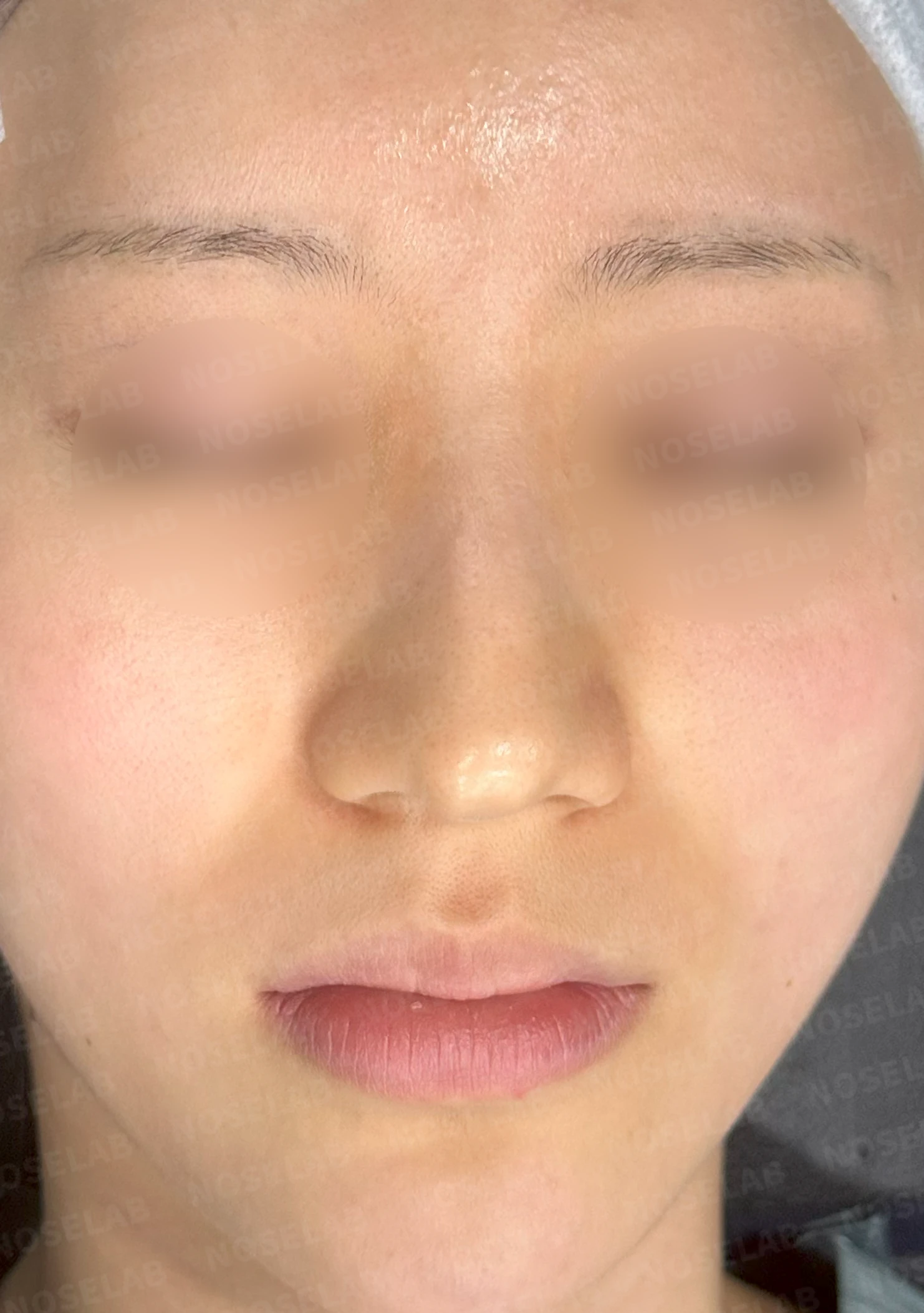
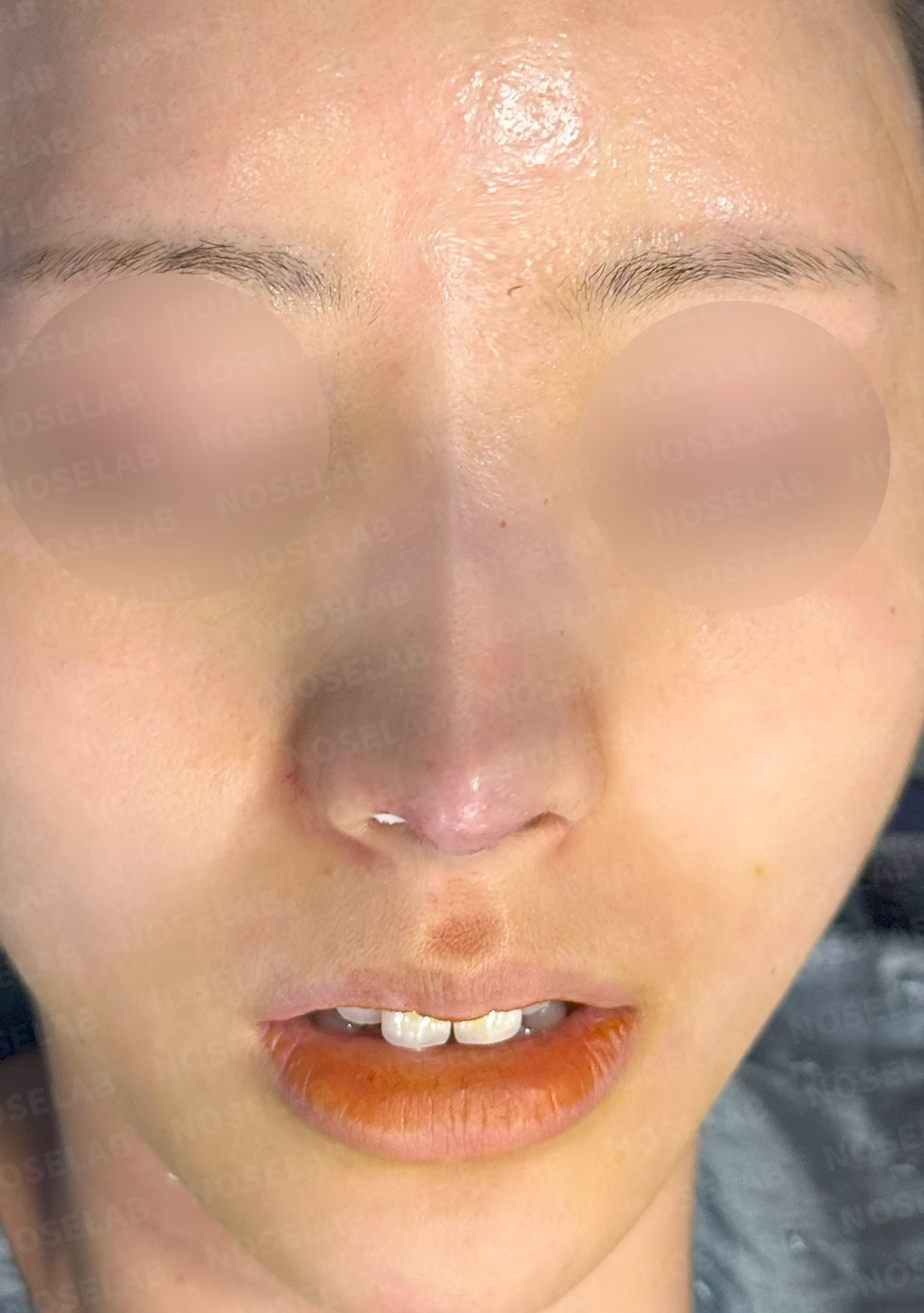
Before surgery / Day 0 immediately after surgery Photos taken immediately after surgery show swelling and may differ from the final result.
Front view
Long nose
Flared nasal tip
Visibility (show-through) of the nasal tip cartilage
Prominent asymmetry
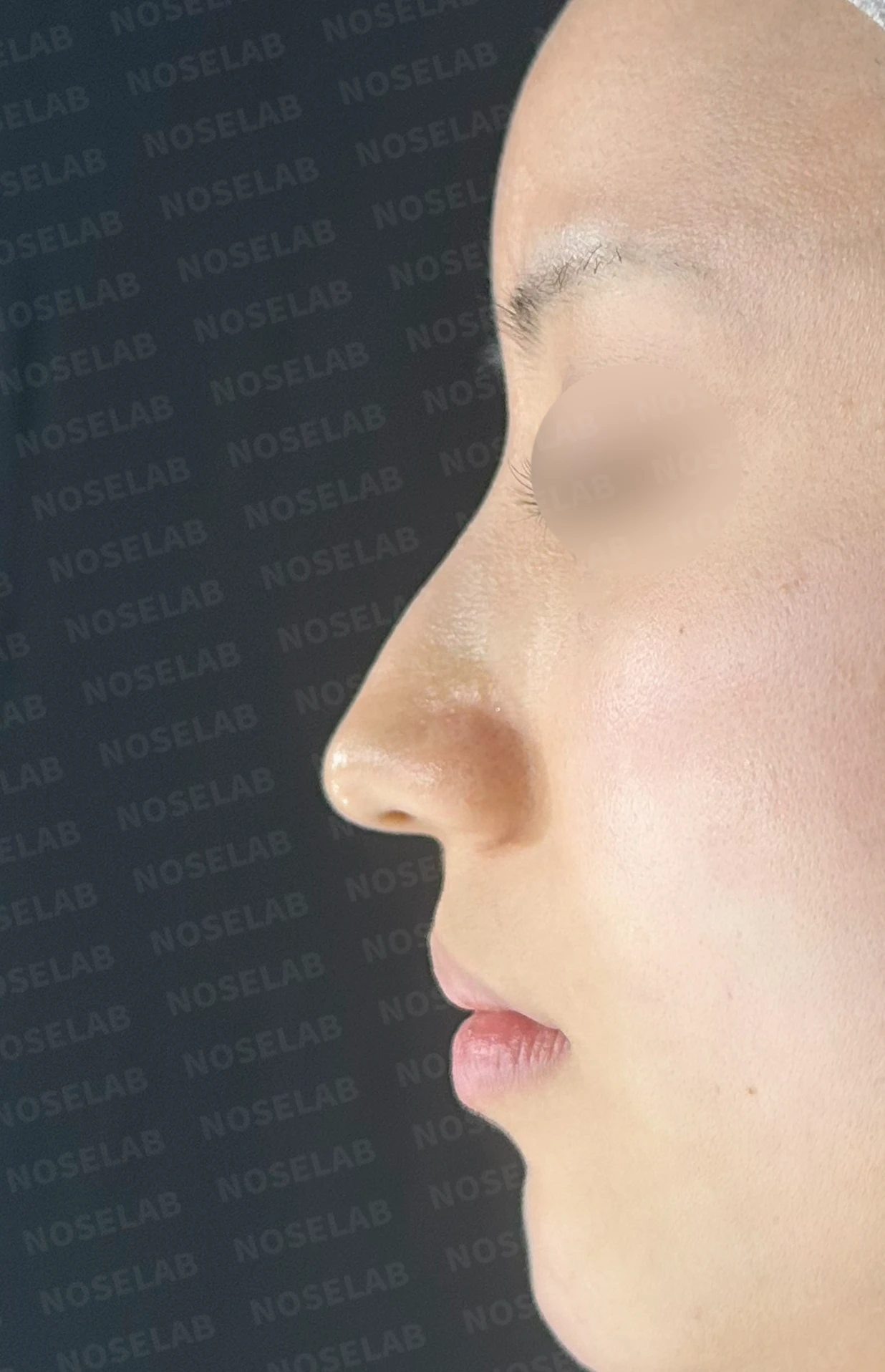
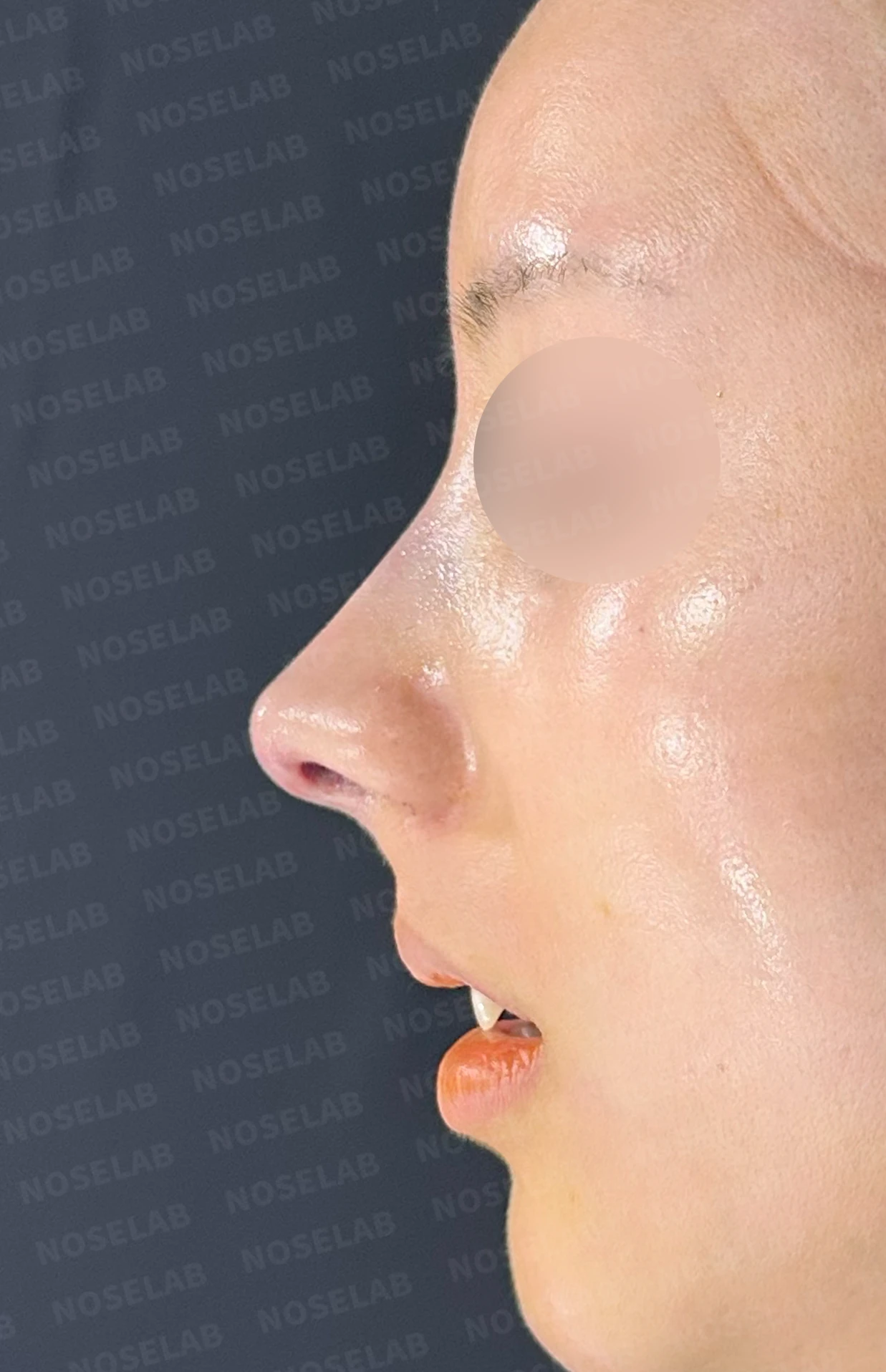
Before surgery / Day 0 immediately after surgery Photos taken immediately after surgery show swelling and may differ from the final result.
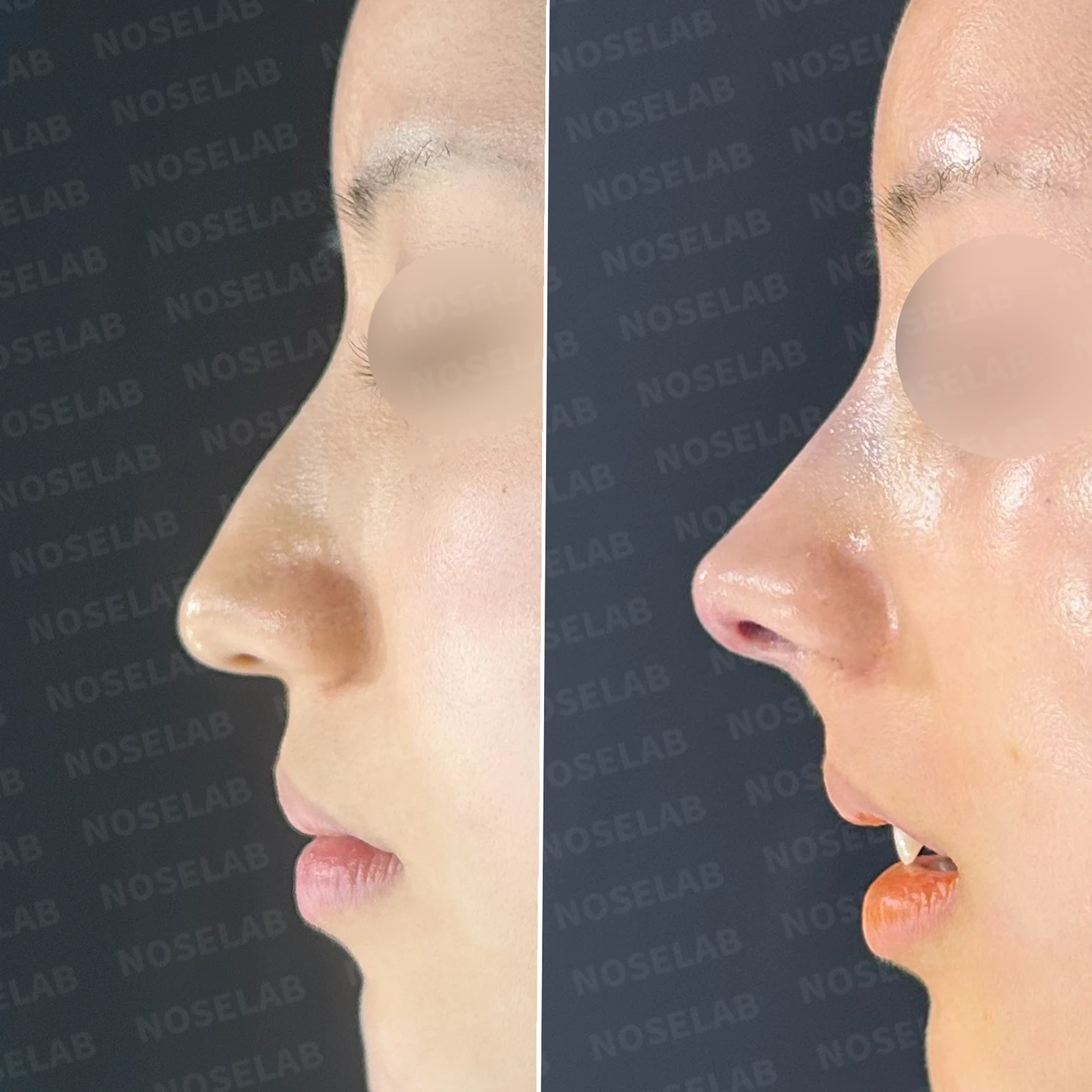
2. Profile view
Dorsal hump
Drooping tip
Long nose
Protruding mouth findings
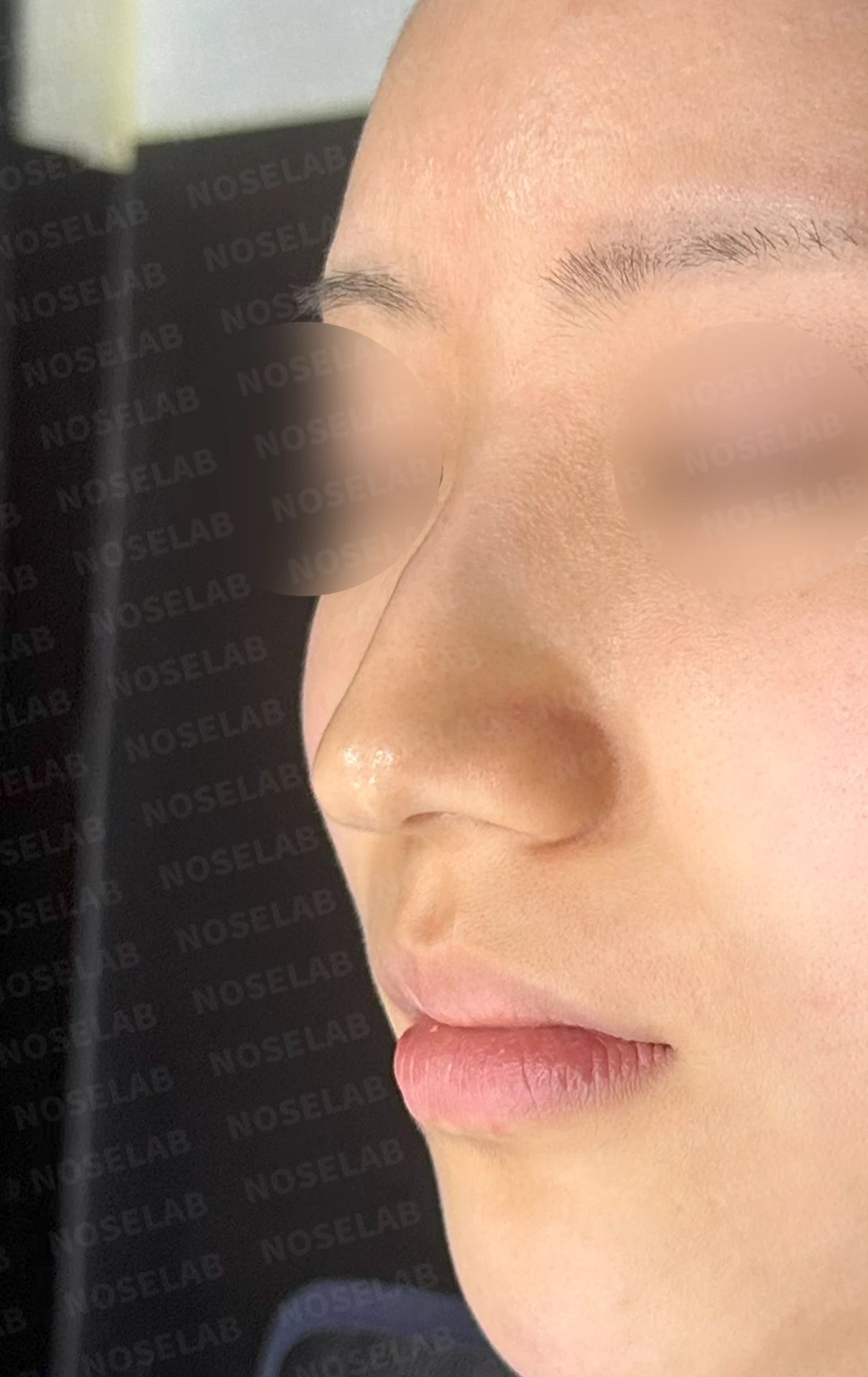
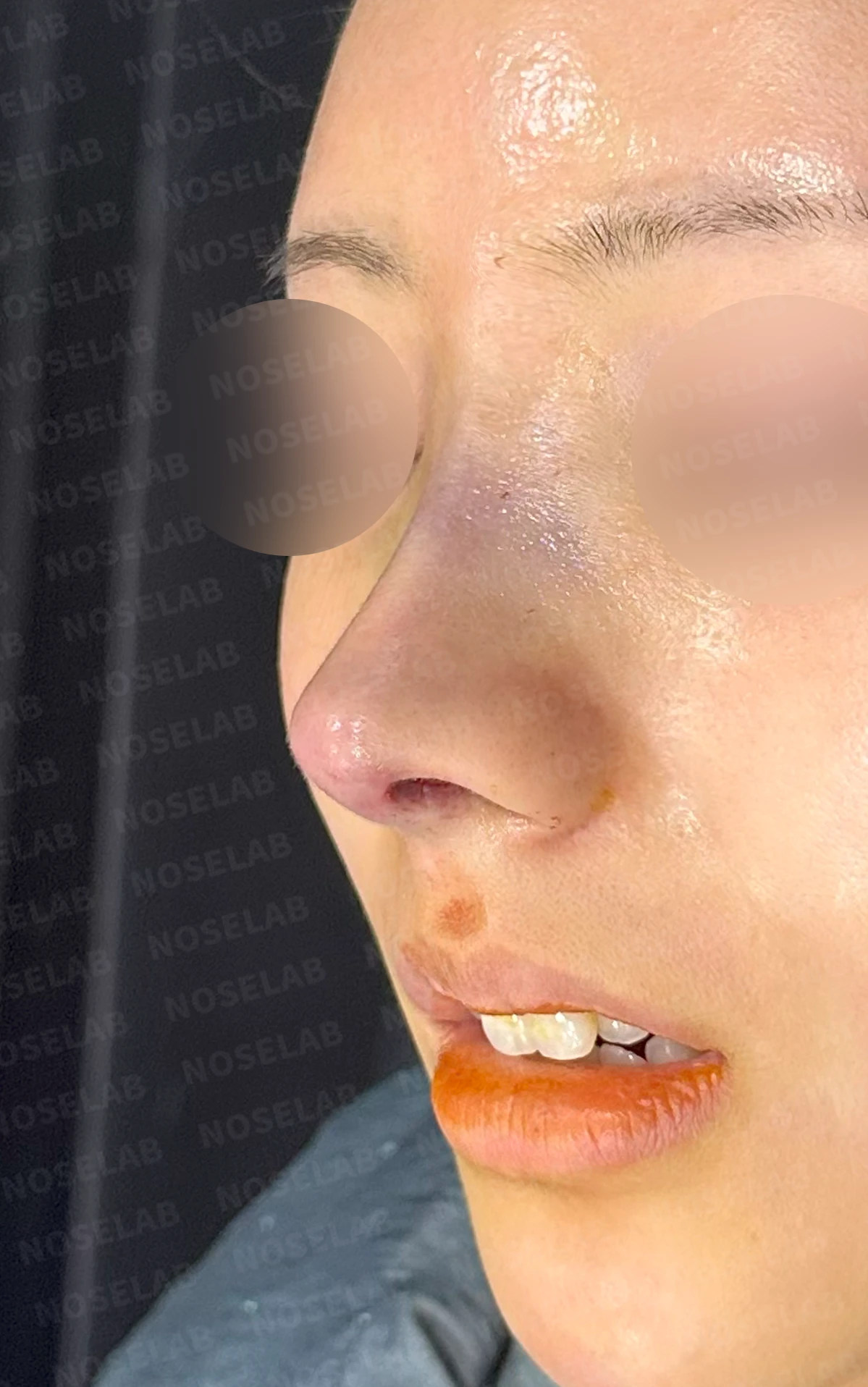
Before surgery / Day 0 immediately after surgery Photos taken immediately after surgery show swelling and may differ from the final result.
3. Nostrils
Severe asymmetry
Columella tilted to the left
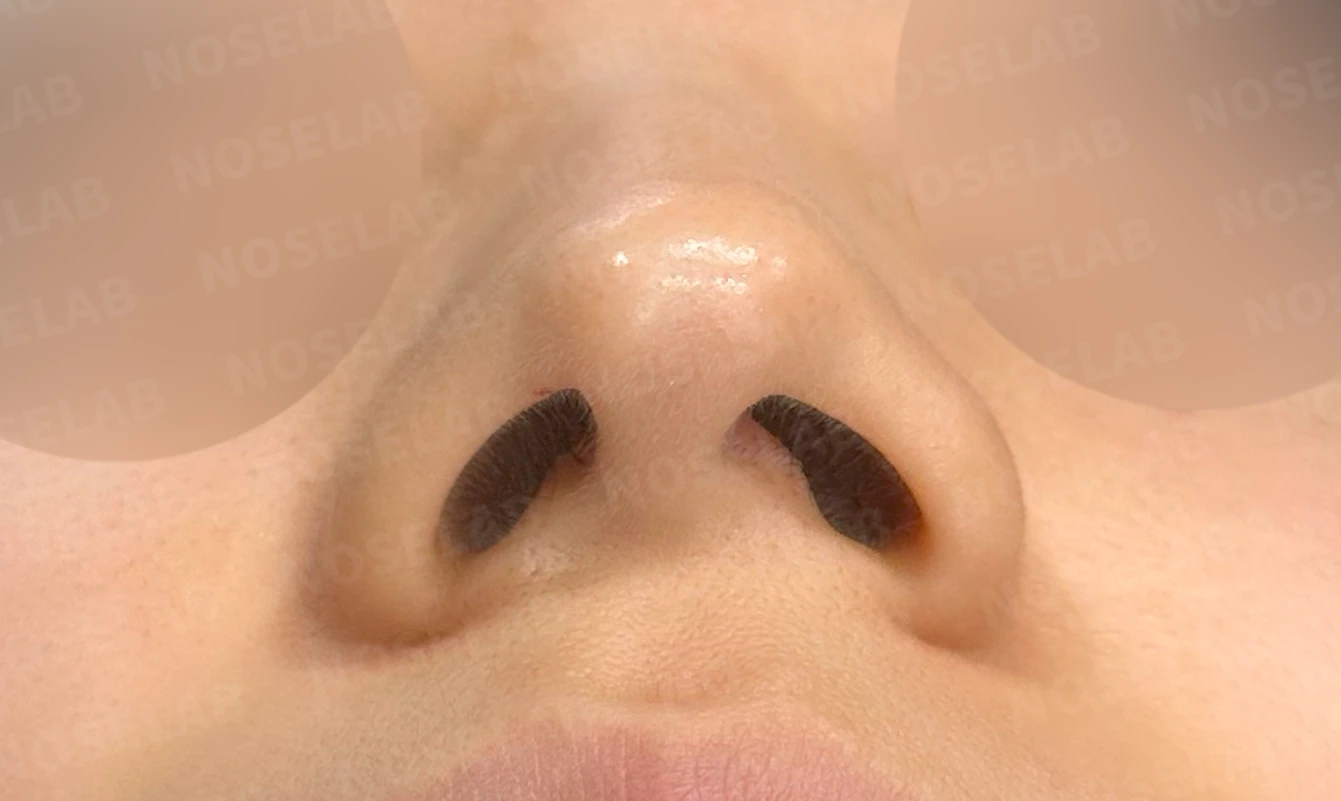
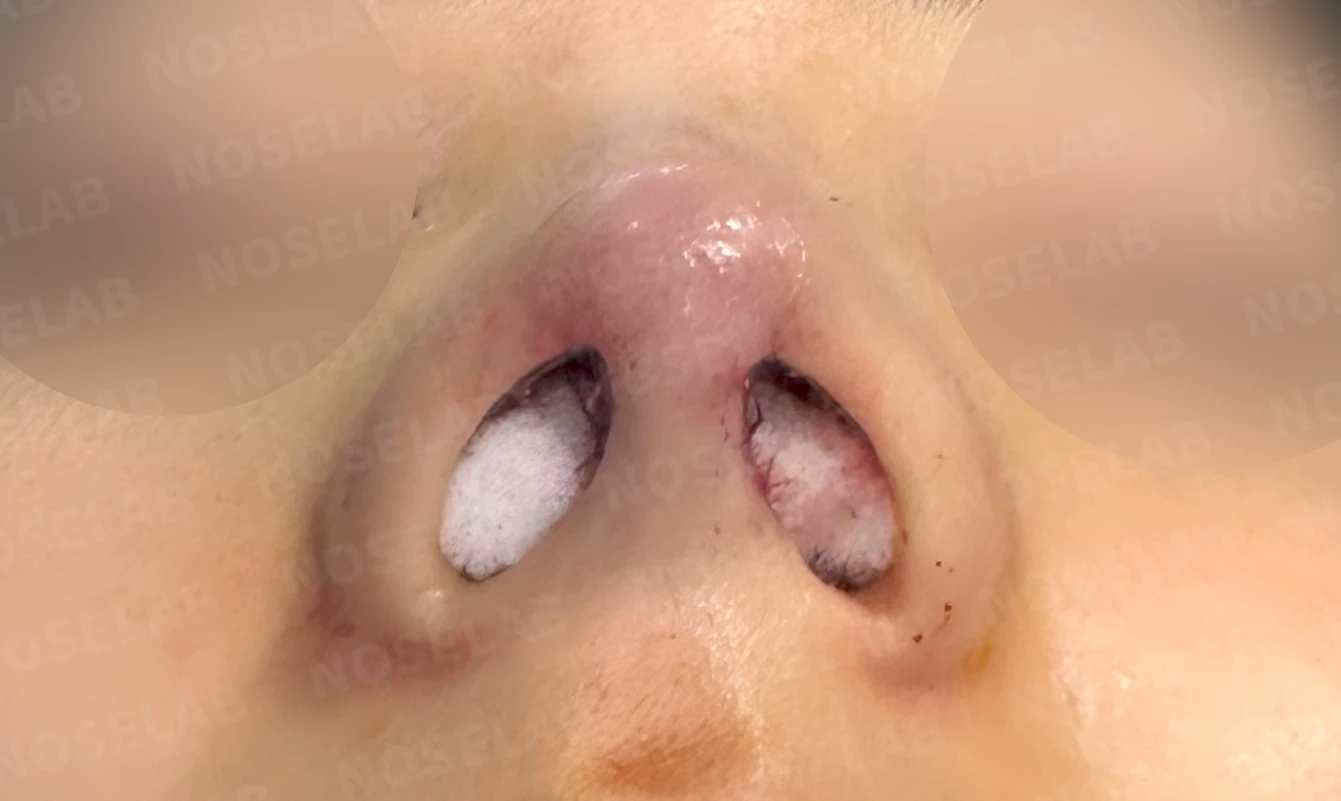
Before surgery / Day 0 immediately after surgery Photos taken immediately after surgery show swelling and may differ from the final result.
💉 Surgical procedure
Functional improvement
Septoplasty for deviated septum correction
Radiofrequency submucosal resection of the inferior turbinates
2. Structural correction
Correction of the deviated nasal bridge via lateral osteotomy
Removal of nasal bridge threads
Dorsal hump reduction
Placement of a thin silicone implant
3. Correction of nasal length
Septal extension using septal cartilage and donor rib cartilage
Overcorrected to support a stable result
Front, profile, and oblique views taken immediately after surgery (day 0).Immediate postoperative photos show swelling and may differ from the final result.
Nostril view on day 0 immediately after surgery. Photos taken immediately after surgery show swelling and may differ from the final result.
💡 Specialist opinion
Correcting a long nose is not merely about reducing length, but rather a surgery that requires repositioning the overall structure.
Because there is a strong tendency after surgery to relapse toward the original length, appropriate overcorrection is often necessary.
In addition, when congenital asymmetry is pronounced, achieving better symmetry can be challenging.
In such cases, the goal is to improve asymmetry as much as possible within a natural range.
I hope this case is helpful to anyone concerned about a long nose or a dorsal hump.
This was Dr. Peter C. Kang. Thank you.
Thank you.
#dorsalhumpsurgery #longnosecorrection #rhinitissurgery #nasalobstructionrelief #asymmetrycorrection #rhinoplastyreview #naturalnose

Limitations and risks
When using donor rib cartilage, long-term follow-up is necessary because the grafted cartilage may resorb or warp.
When the septum is corrected at the same time, nasal obstruction may persist or recur, and in rare cases, septal perforation or changes in smell may occur.
Common potential risks include infection, bleeding, asymmetry, scarring, skin necrosis, and insufficient improvement; results vary depending on individual skin condition and previous surgical history.