Hello, I am Dr. Peter C. Kang.
Today, I would like to share the case of a patient who improved bulbousness and an excessively long-looking nose that developed after alar reduction surgery.
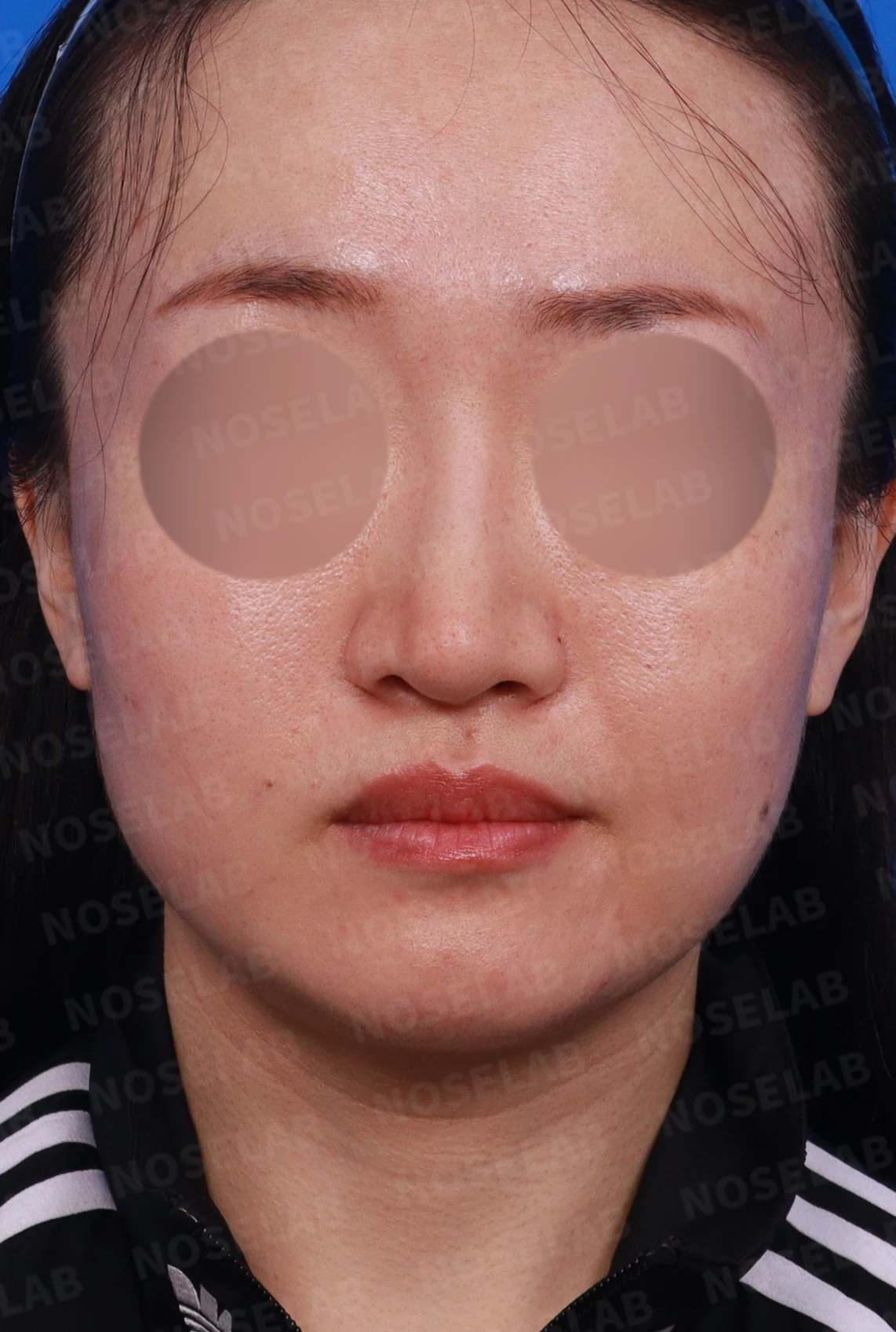
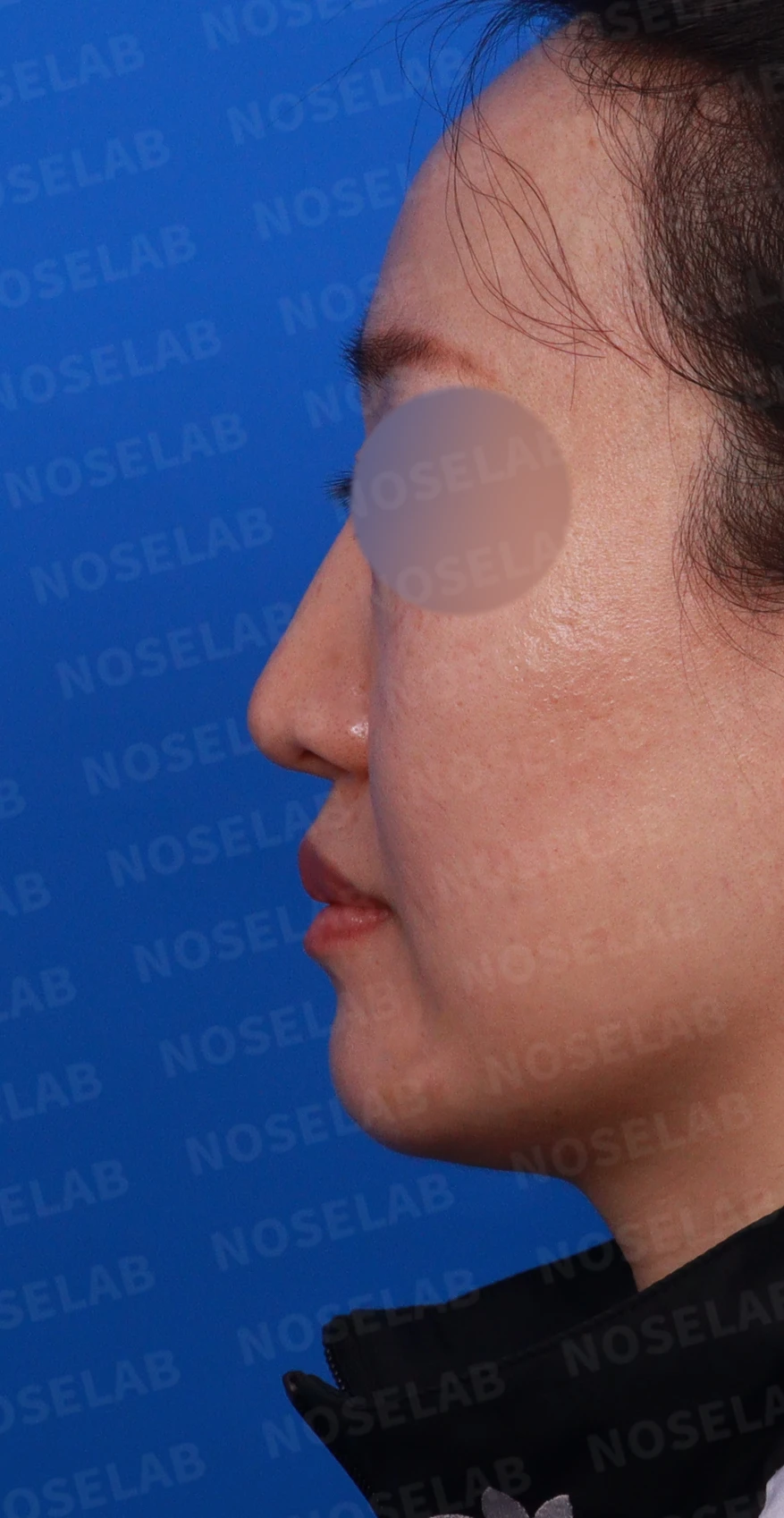
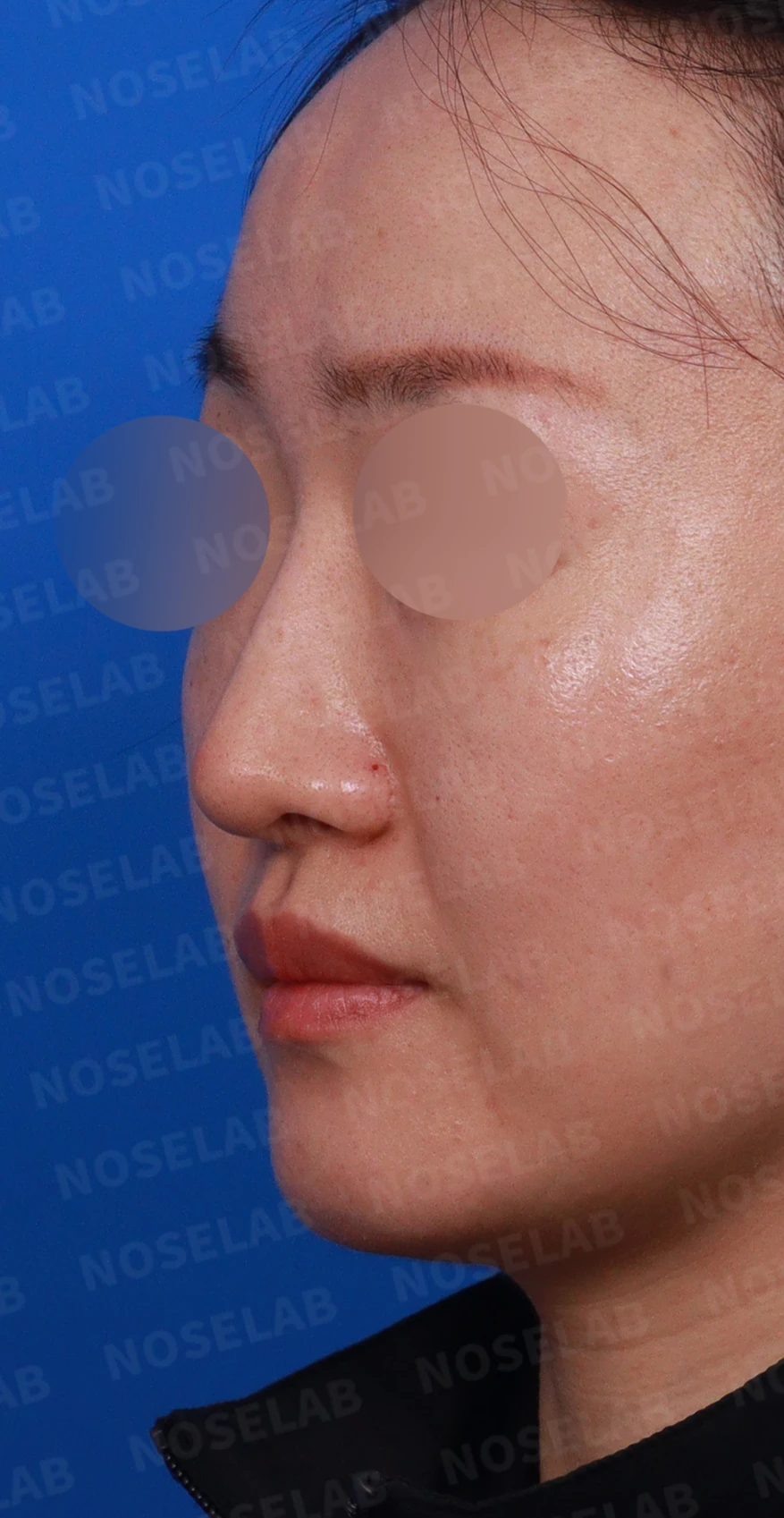
Front, left profile, and oblique views during design consultation
📍 Surgical history
12 years ago: Septal cartilage + silicone implant + alar reduction surgery
🔎 Initial consultation findings
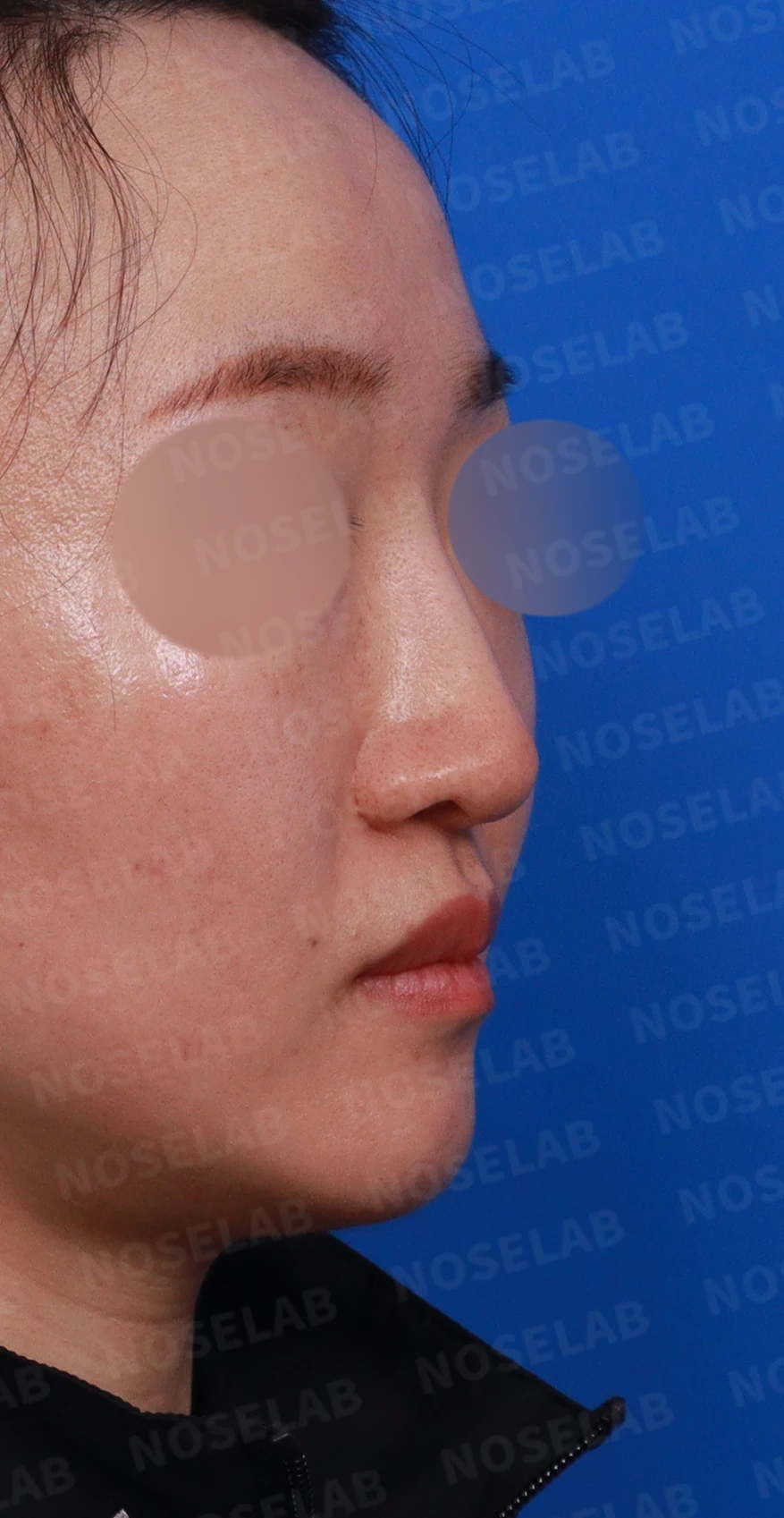
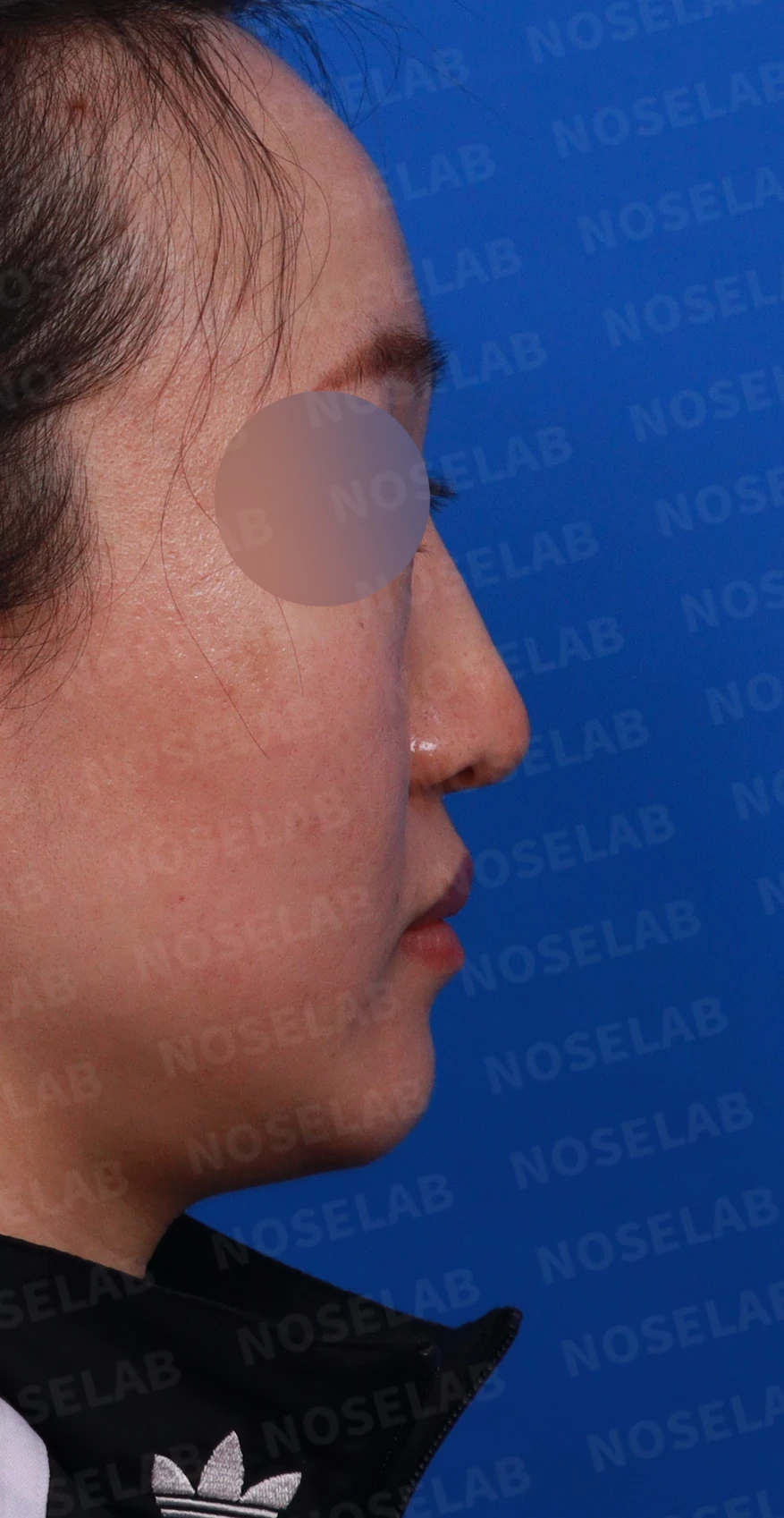
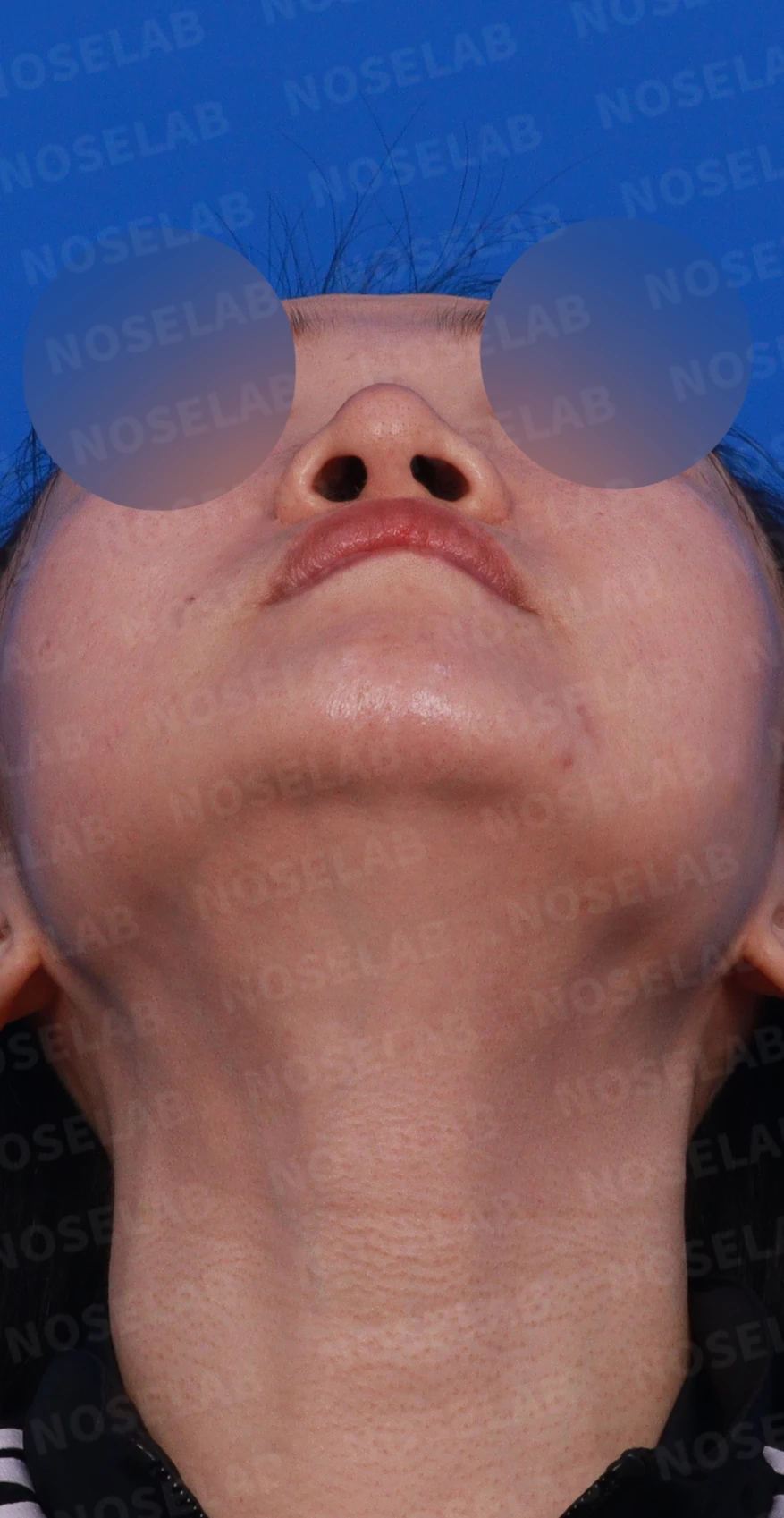
Design consultation: right oblique, profile, and basal (nostril) views
Front view
Bulbous nasal tip
Deviated nose
Arrow nose
2. Profile view
Nose appearing long
Drooping nasal tip
Noticeable dorsal hump appearance
Acute nasolabial angle
Protruding mouth findings
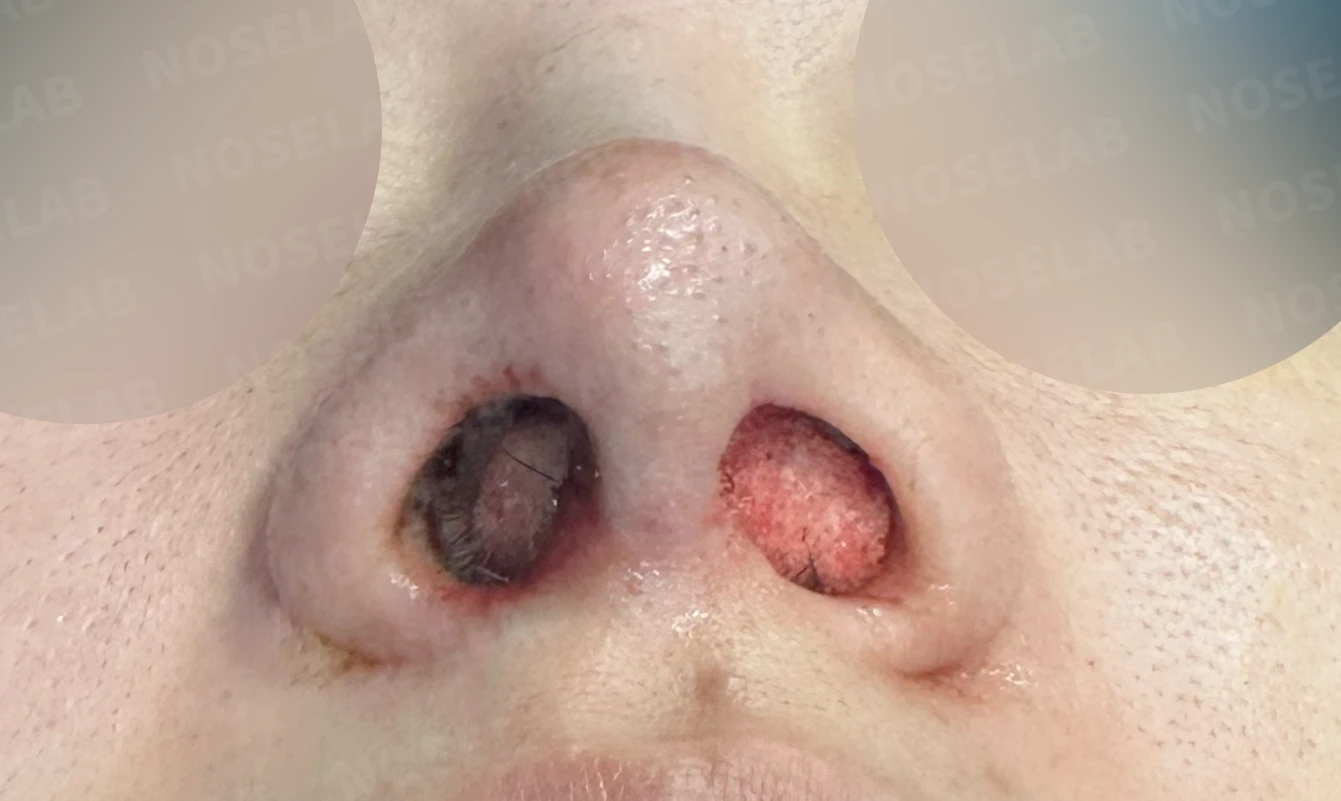
3. Nostrils
Nostril asymmetry
Columella deviated to the right
4. Function
Right-sided nasal obstruction (worse when lying down)
No allergies
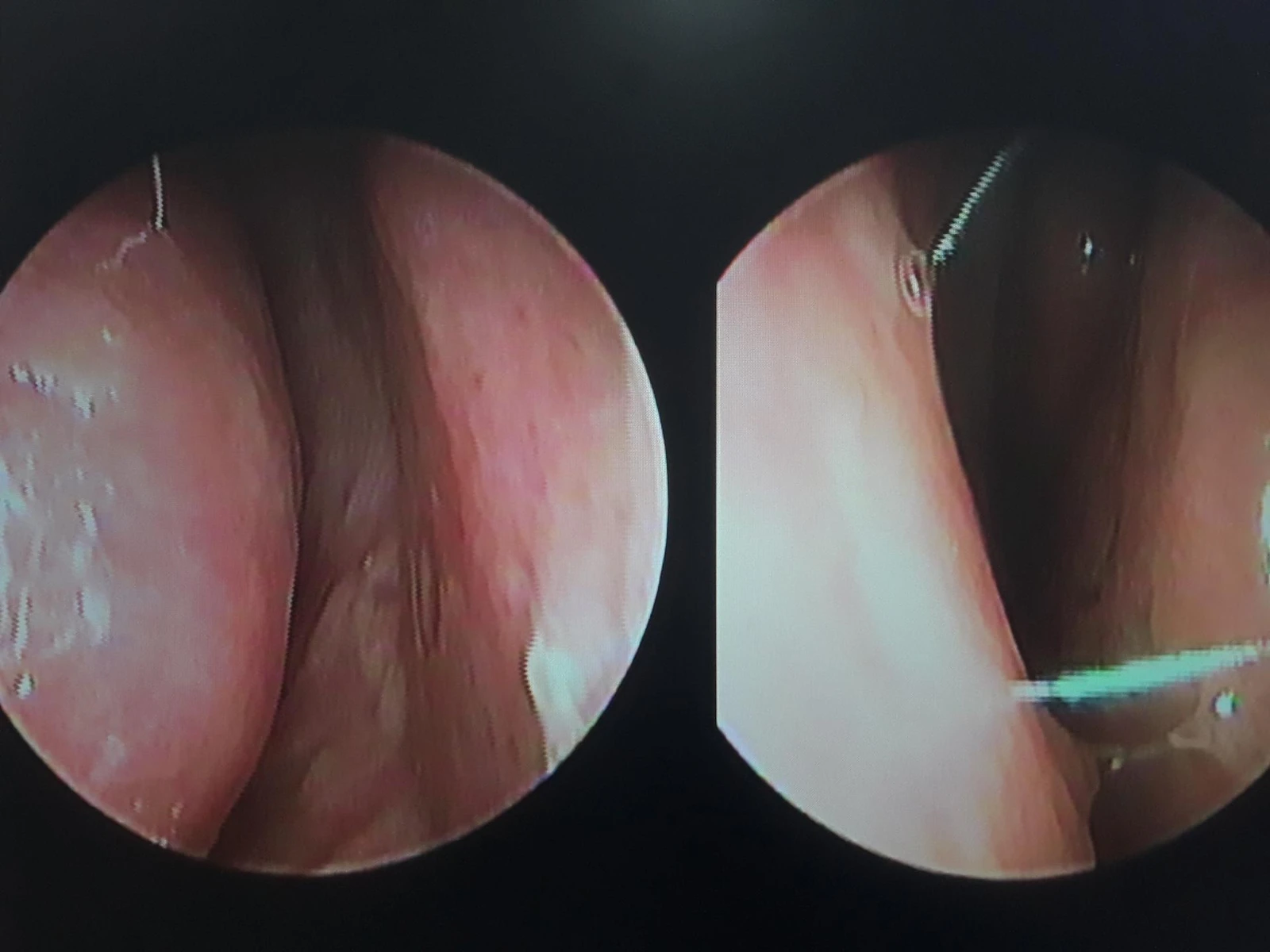
Nasal endoscopy photo
✨ Patient's requests
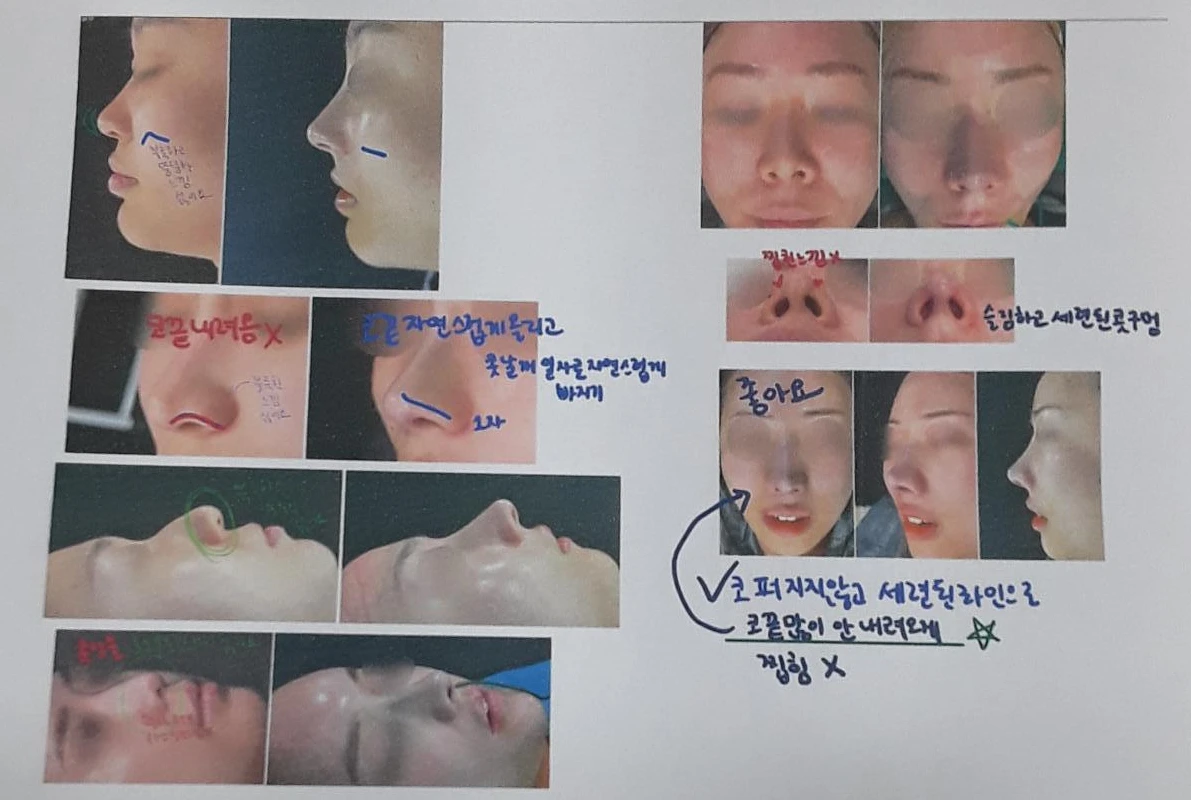

Improvement of bulbous nasal tip
Correction of the long-looking nose
Correction of nostril asymmetry; patient was aware of the limitations due to prior alar reduction
💉 Surgical procedure details
Structural improvement
Assessment of condition following alar reduction surgery
Septal reconstruction if necessary
Correction of crooked nose
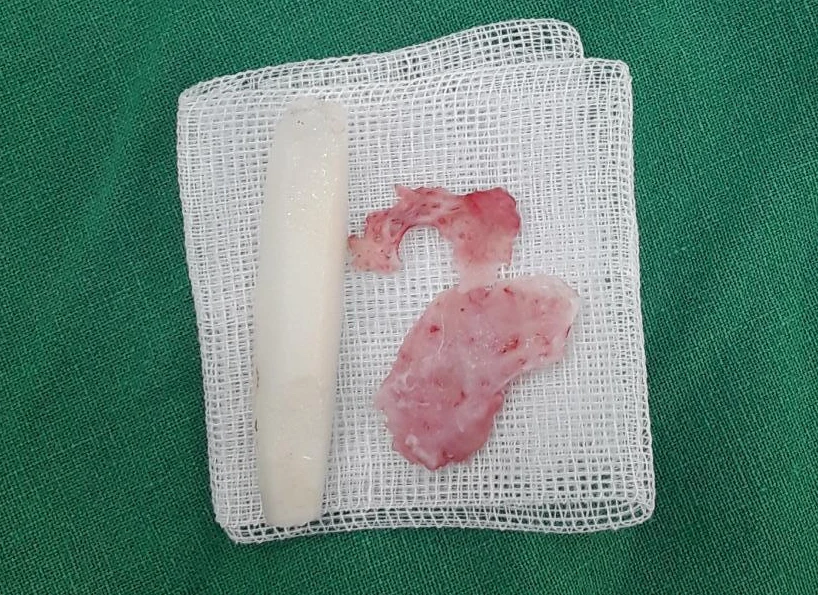
The removed silicone implant and the septal bone used for septal extension during the previous surgery
2. Shape improvement
Refining a blunt nasal tip
Procedures to reduce overall nasal length
Refining the dorsal hump area
3. Functional improvement
Septoplasty
Radiofrequency submucosal resection of the inferior turbinates
Improvement of right-sided nasal obstruction
✅ Surgical results
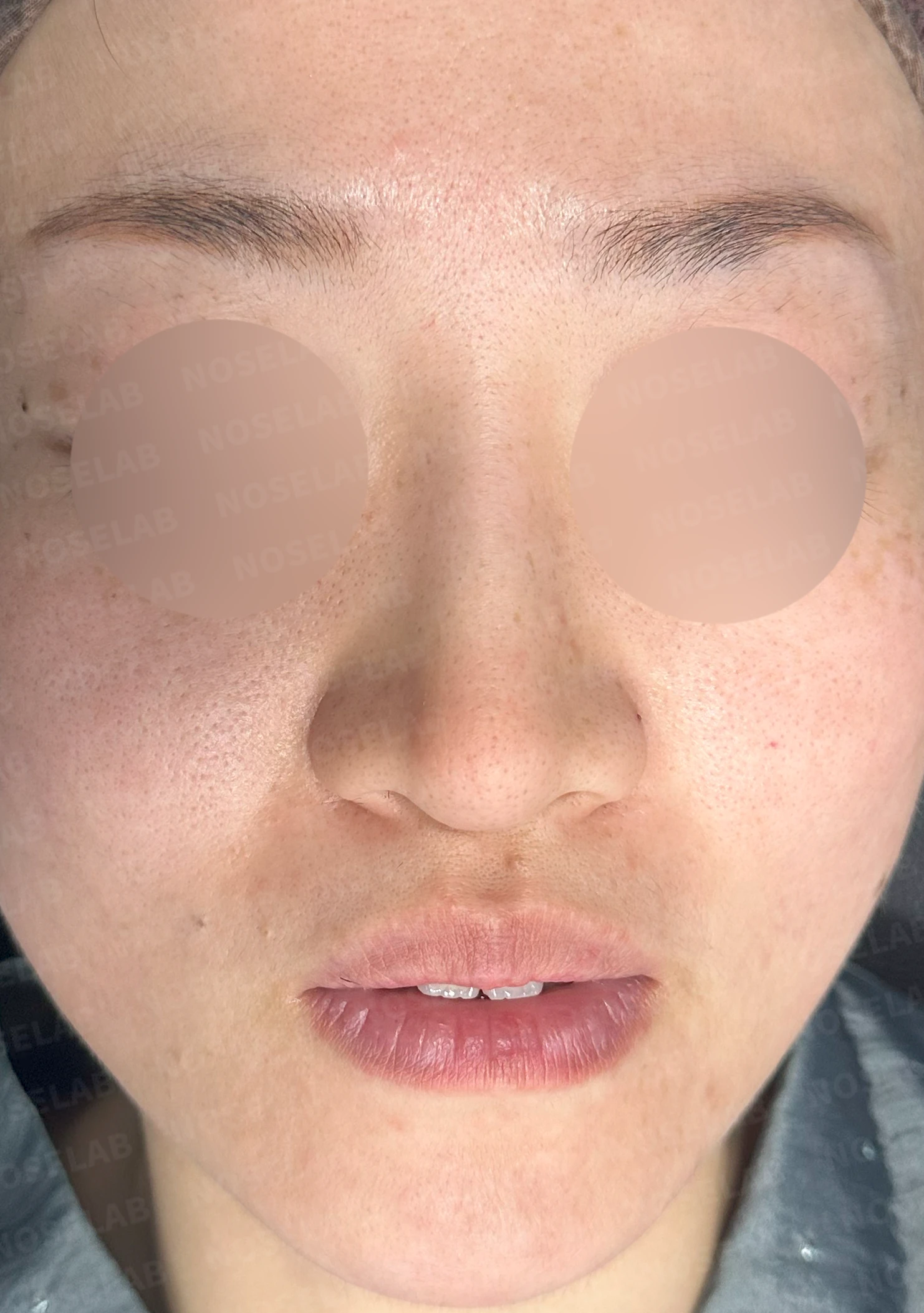
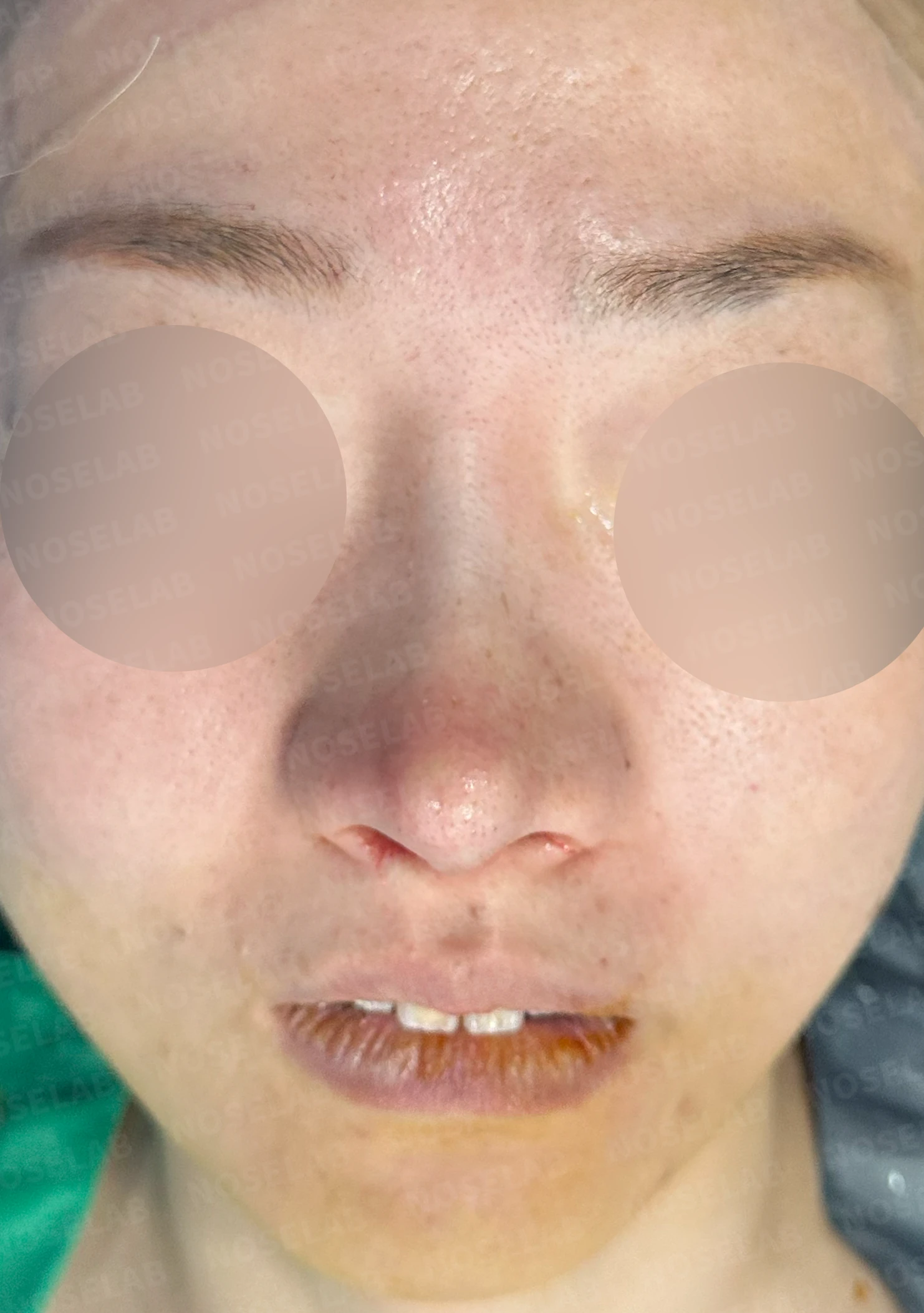
Before surgery / Day 0 immediately after surgery Photos taken immediately after surgery show swelling and may differ from the final result.
Front view
Refined tip shape
Correction of columellar tilt
Balanced nostrils
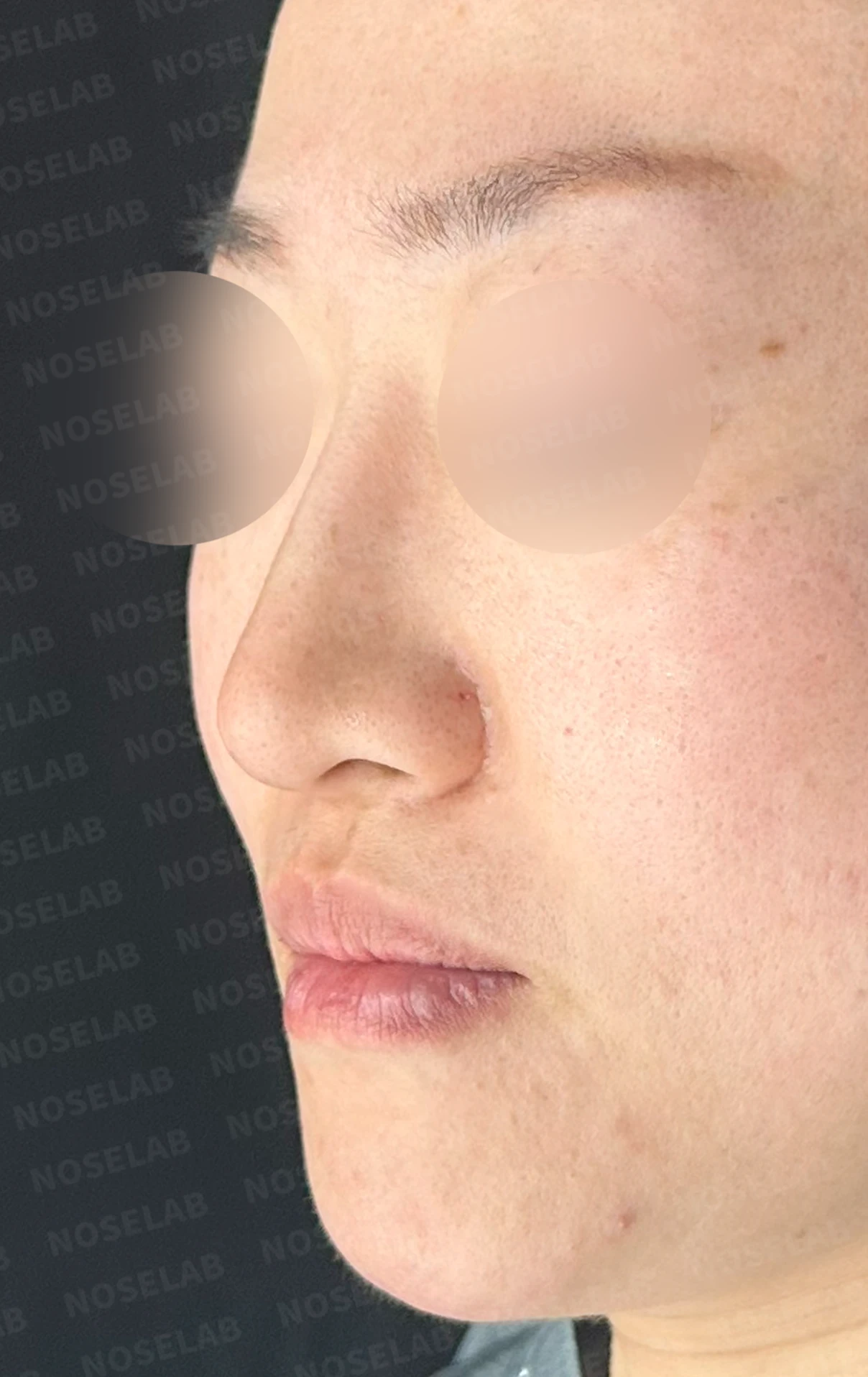
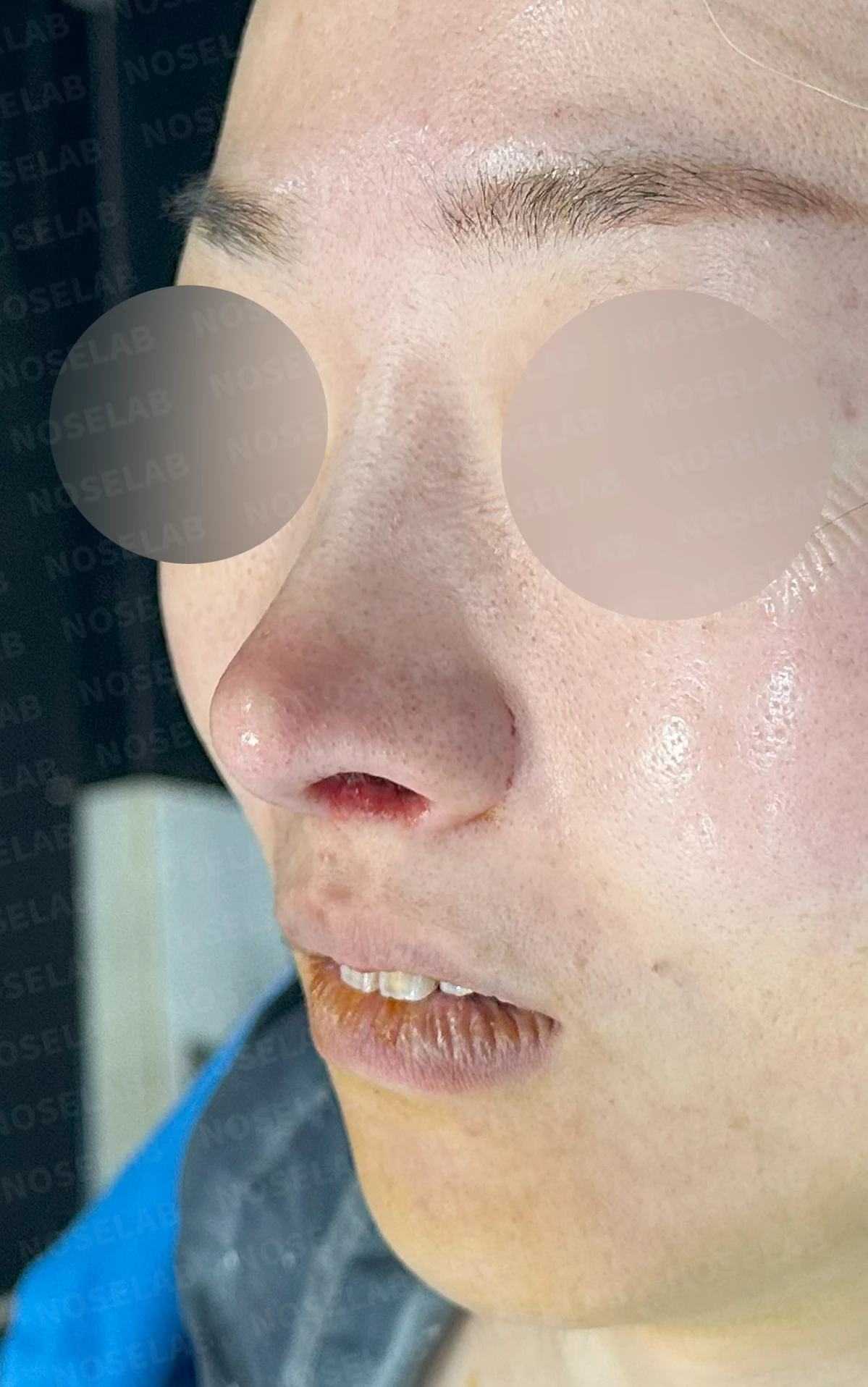
Before surgery / Day 0 immediately after surgery Photos taken immediately after surgery show swelling and may differ from the final result.
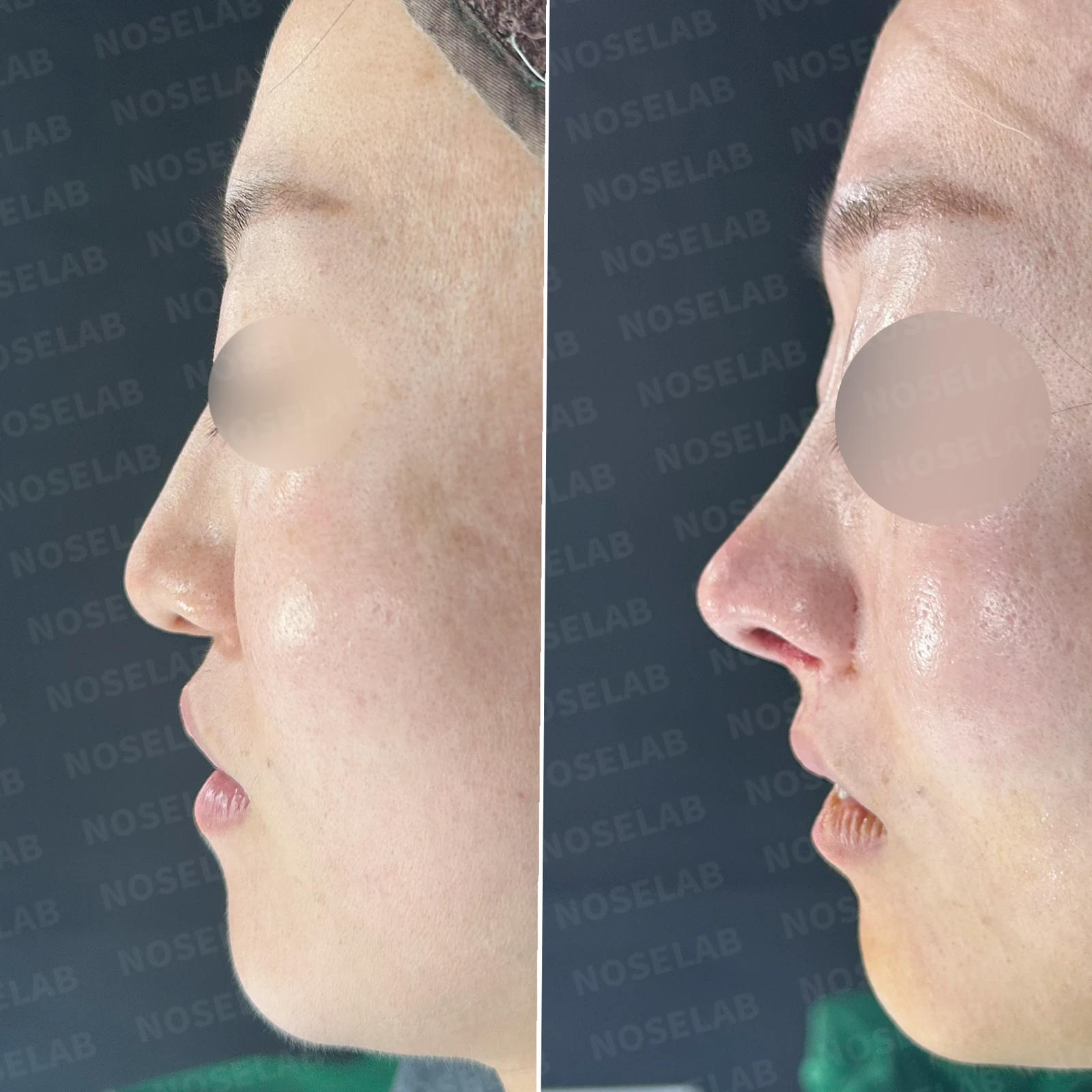
2. Profile view
Reduced nasal length
Natural dorsal hump line
Achieving an appropriate nasolabial angle
Improved protruding mouth
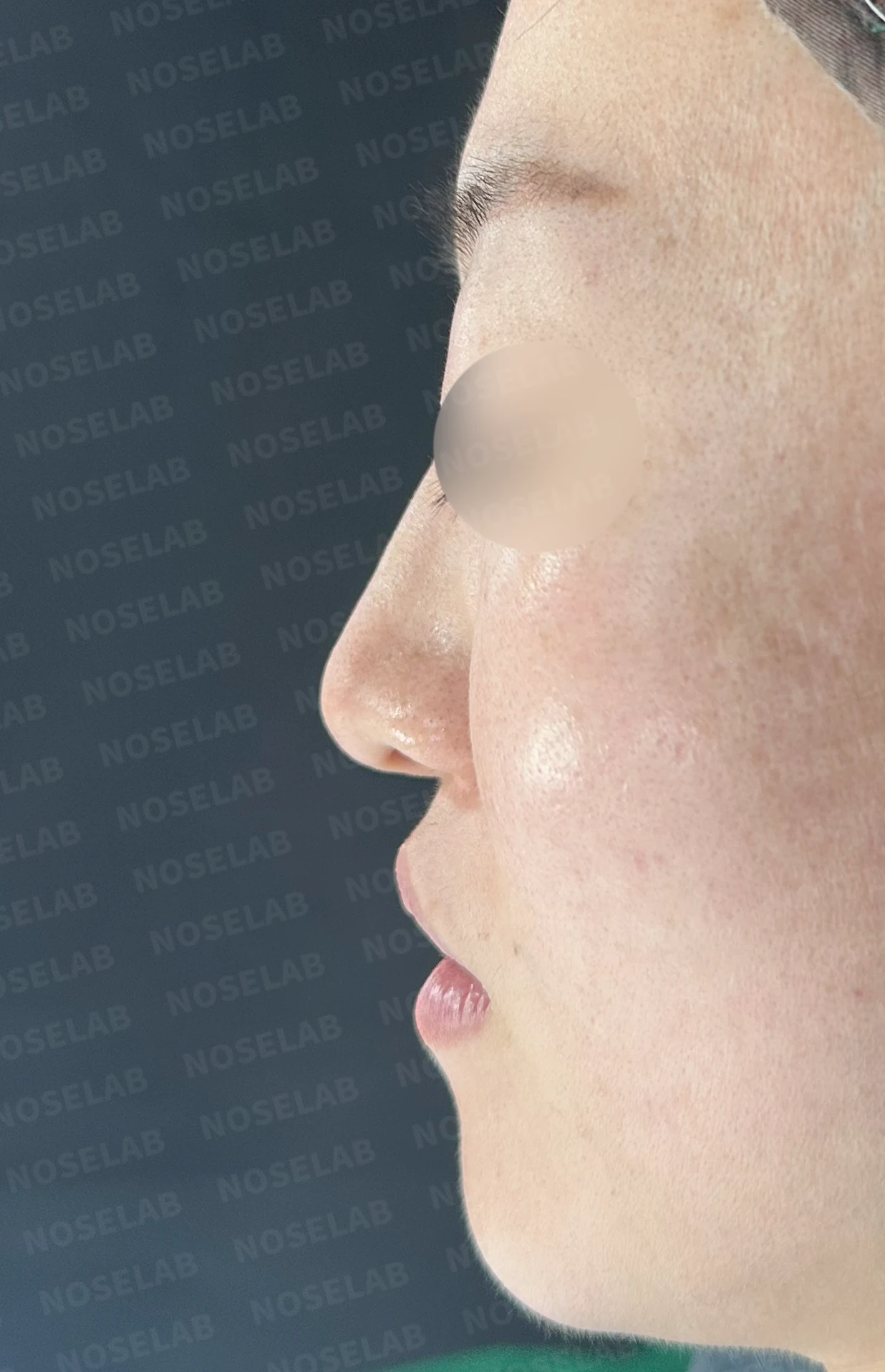
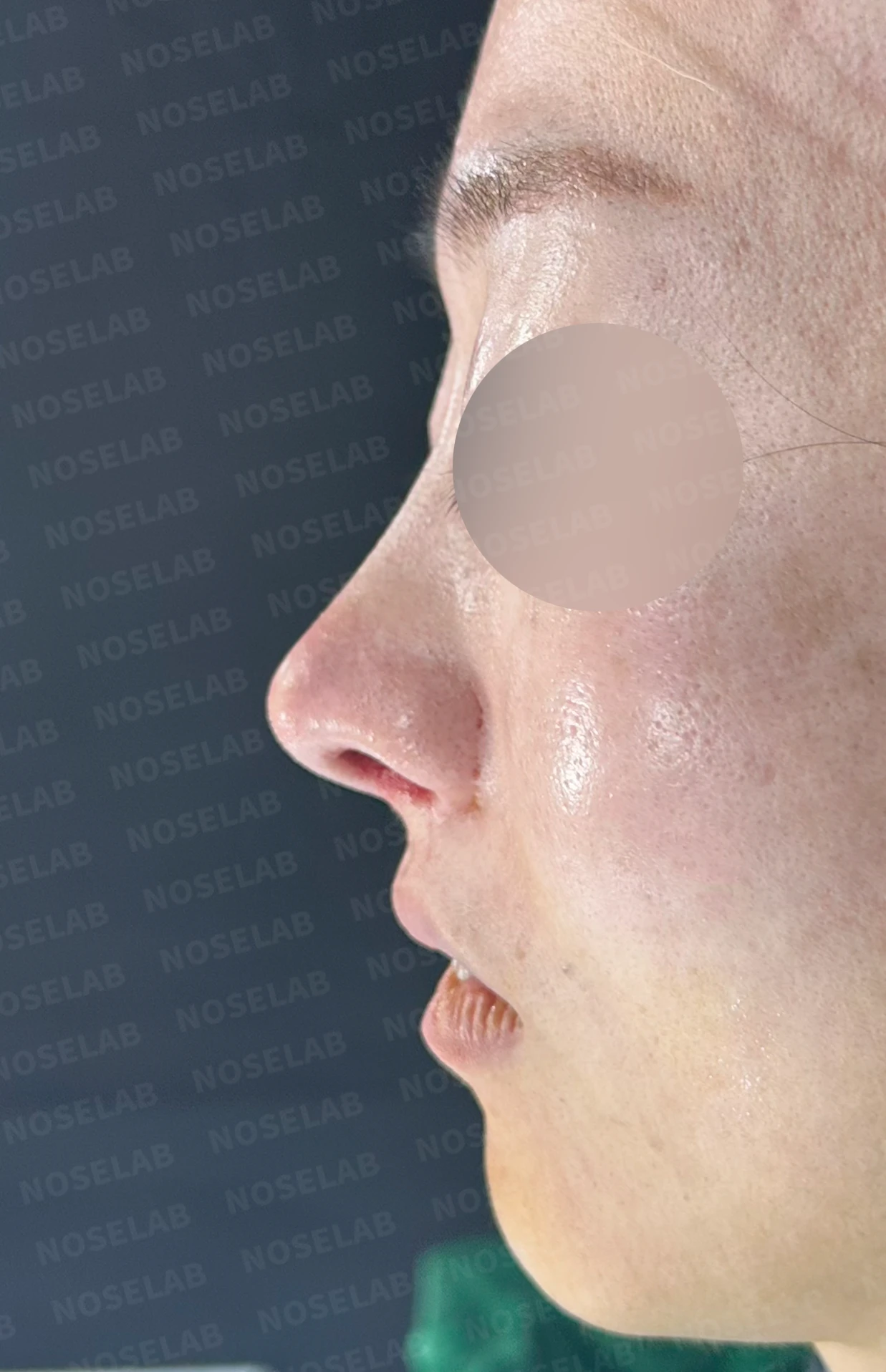
Before surgery / Day 0 immediately after surgery Photos taken immediately after surgery show swelling and may differ from the final result.
3. Function
Improved, unobstructed breathing
Relief of nasal obstruction
Stable structure
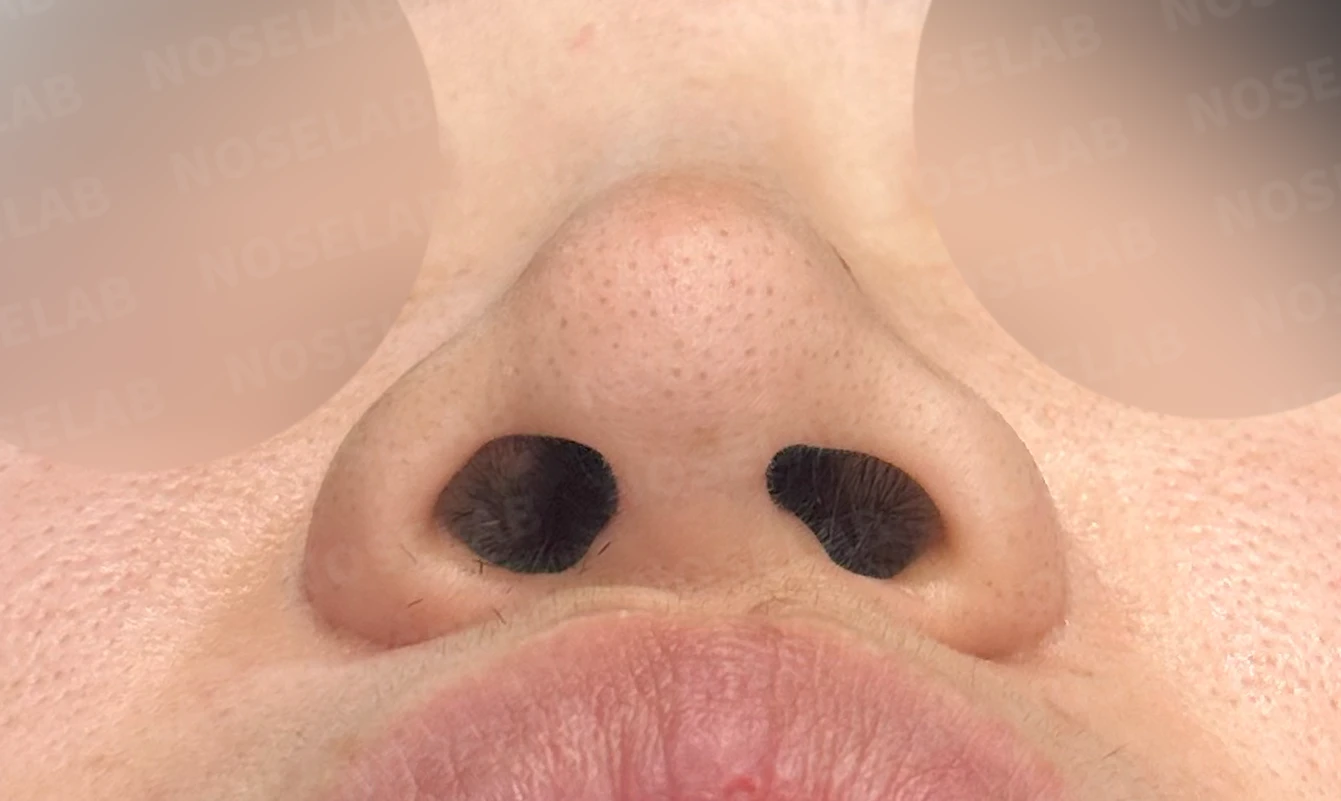
Before surgery / Day 0 immediately after surgery Photos taken immediately after surgery show swelling and may differ from the final result.
👨⚕️ Specialist's assessment
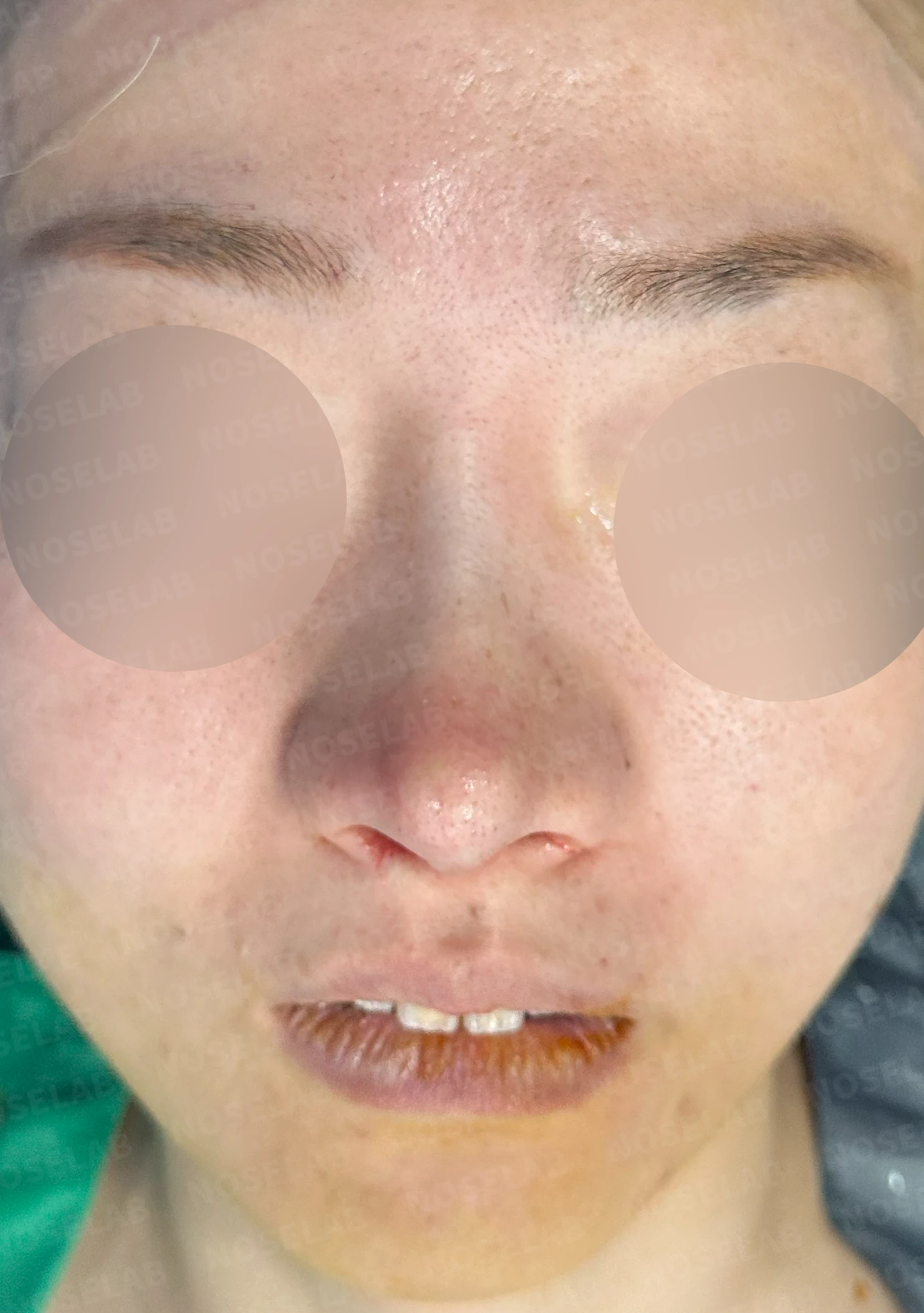
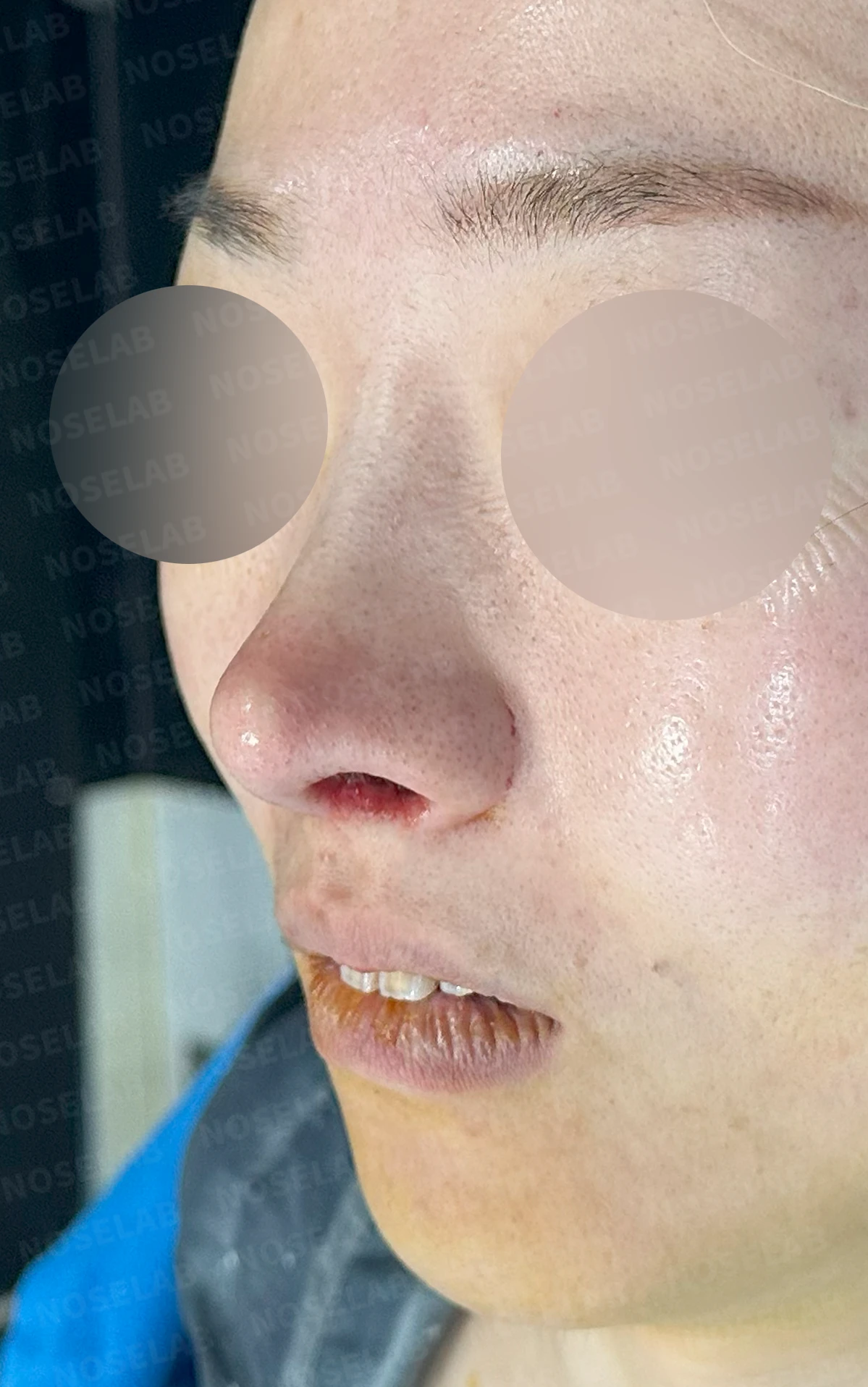
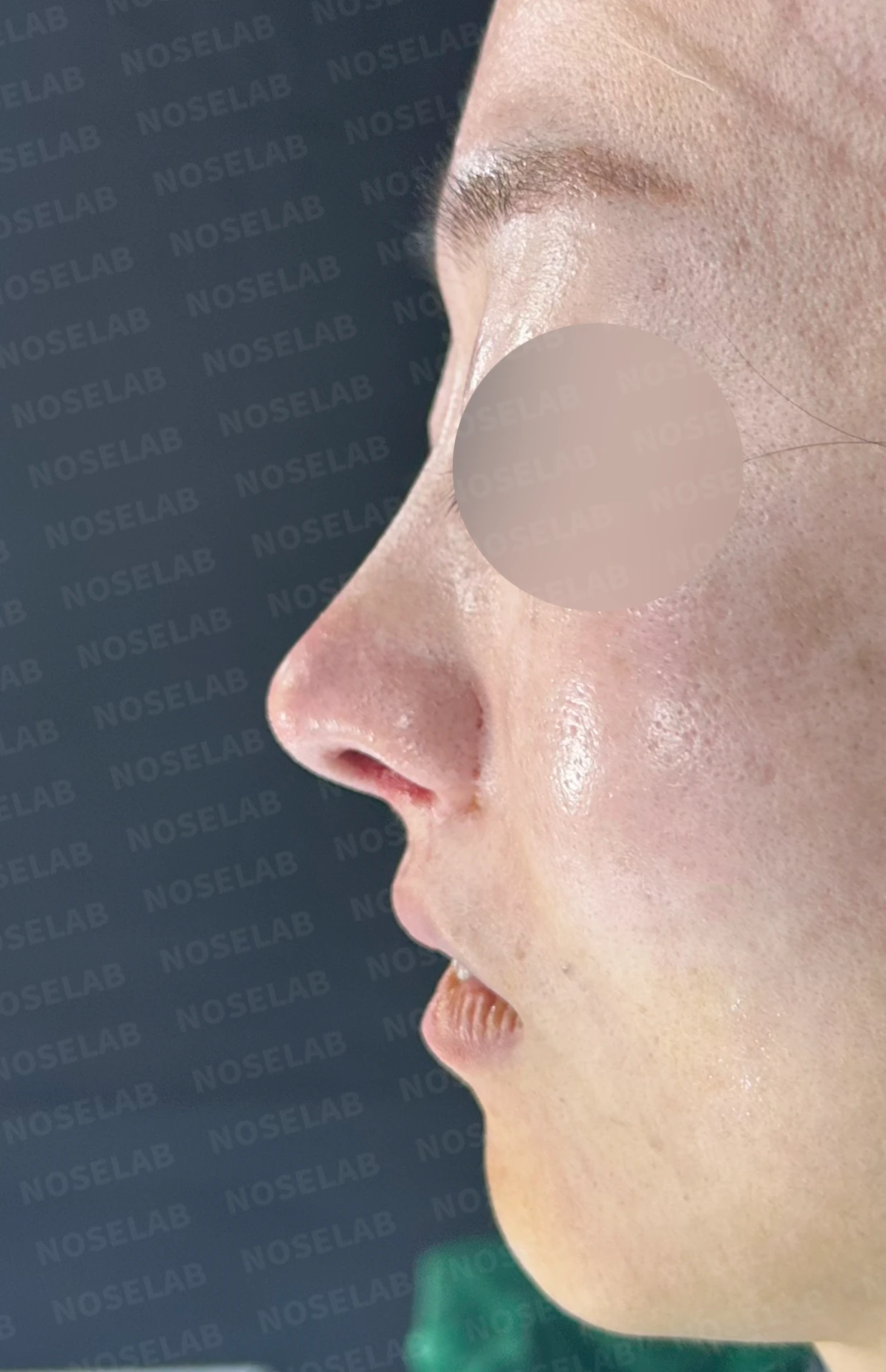
Front, oblique, and profile views on day 0 immediately after surgery Photos taken immediately after surgery show swelling and may differ from the final result.
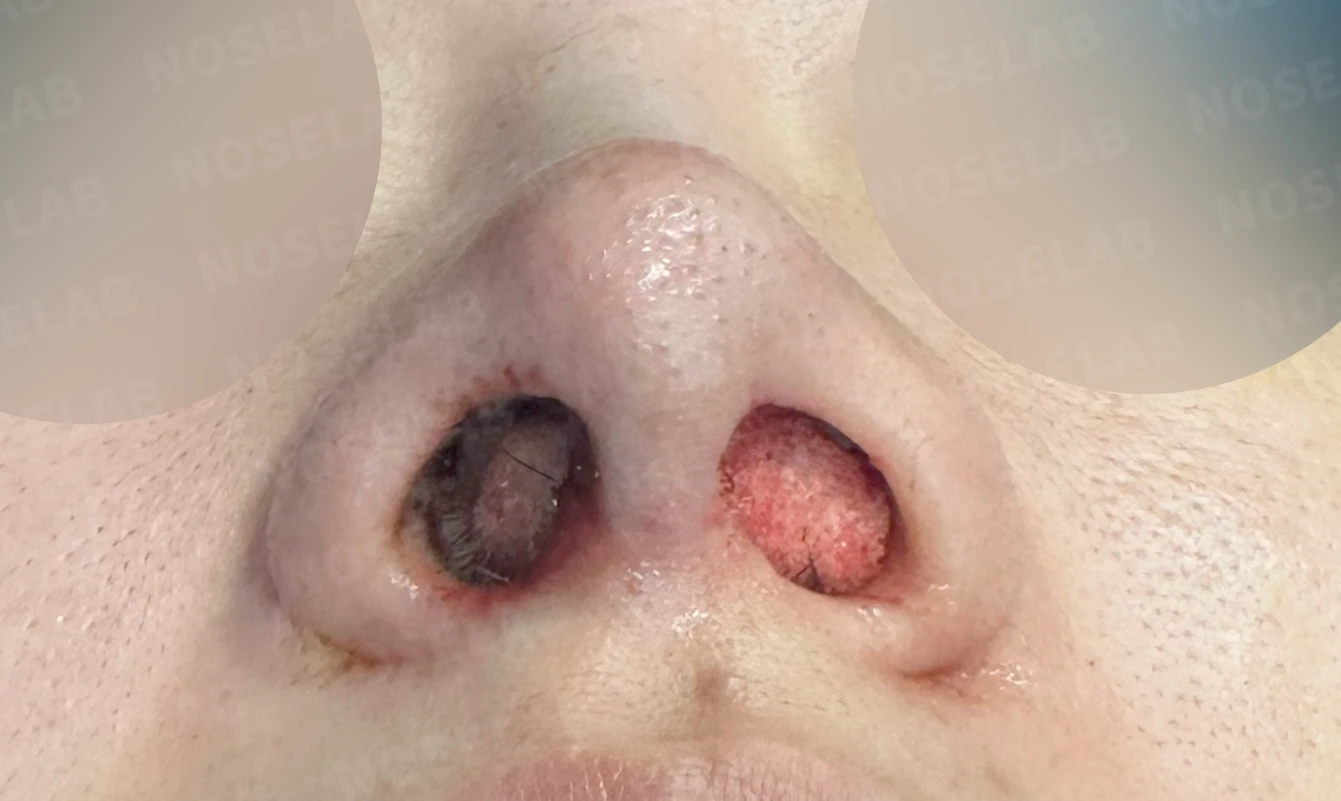
Nostril view on day 0 immediately after surgery Photos taken immediately after surgery show swelling and may differ from the final result.
This revision rhinoplasty had to be performed within the inherent limitations left by the alar reduction surgery done 12 years ago. Before surgery, I explained thoroughly that alar reduction, by its very nature, cannot be completely reversed and carries certain structural limits.
Nevertheless, we successfully refined the bulbous nasal tip and appropriately reduced the apparent nasal length. Correcting the nasolabial angle also improved the appearance of a protruding mouth, and the deviated nose along with the tilted columella were naturally corrected.
In this patient's septum, bone from the septum had been harvested and used as septal extension material in the previous surgery. When septal bone is overly harvested, it severely weakens the septum, which can cause the nasal tip to droop or deviate. Therefore, I performed a sturdy reconstruction of the septal cartilage using autologous rib cartilage alongside the revision to correct the long, drooping nasal tip.
In particular, the right-sided nasal obstruction caused by a deviated septum and rhinitis—which became worse when lying down—was significantly improved through septoplasty and an inferior turbinate procedure, achieving a satisfying functional outcome as well.
This was Dr. Peter C. Kang. Thank you.
Thank you.
#closedrhinoplasty #revisionrhinoplasty #bulbousnosecorrection #longnosecorrection #customrhinoplasty

Limitations and risks
When autologous rib cartilage is used, scarring and pain may remain at the donor site on the chest, and pneumothorax (pleural injury) can occur rarely. Over time, the grafted cartilage may warp or undergo partial resorption.
When the septum is corrected at the same time, nasal obstruction may persist or recur, and in rare cases, septal perforation or changes in smell may occur.
Common potential risks include infection, bleeding, asymmetry, scarring, skin necrosis, and insufficient improvement; results vary depending on individual skin condition and previous surgical history.