Hello, I am Dr. Peter C. Kang.
Today, I would like to introduce the surgical case of a patient who was concerned about a drooping, bulbous nose. This patient had undergone multiple rhinoplasty procedures since 2009, and this was their 6th surgery.
1. Preoperative design consultation
Let us take a detailed look at the patient's preoperative condition and requests:
Patient's surgical history:
- 2009: Surgery using septal cartilage and temporal fascia (implant-free)
- 2010: Surgery using a silicone implant, alar reduction, and artificial dermis
- 2010 (6 months later): Surgery to lower the height of the silicone implant
- 2015: Surgery reusing Gore-Tex, ear cartilage, and septal cartilage
- 2019: Surgery using donor rib cartilage and a silicone implant
Patient's main requests:
1. Lowering the radix (starting point between the eyebrows)
2. A natural, understated shape rather than a dramatic look
3. Shortening the overly long nasal appearance
4. Correcting the pinched appearance on the right side
5. Correcting the crooked nose, drooping tip, and nostril asymmetry
6. Creating a straight-subtle-curve bridge line
7. Relieving rhinitis and nasal obstruction
Analysis of preoperative condition:
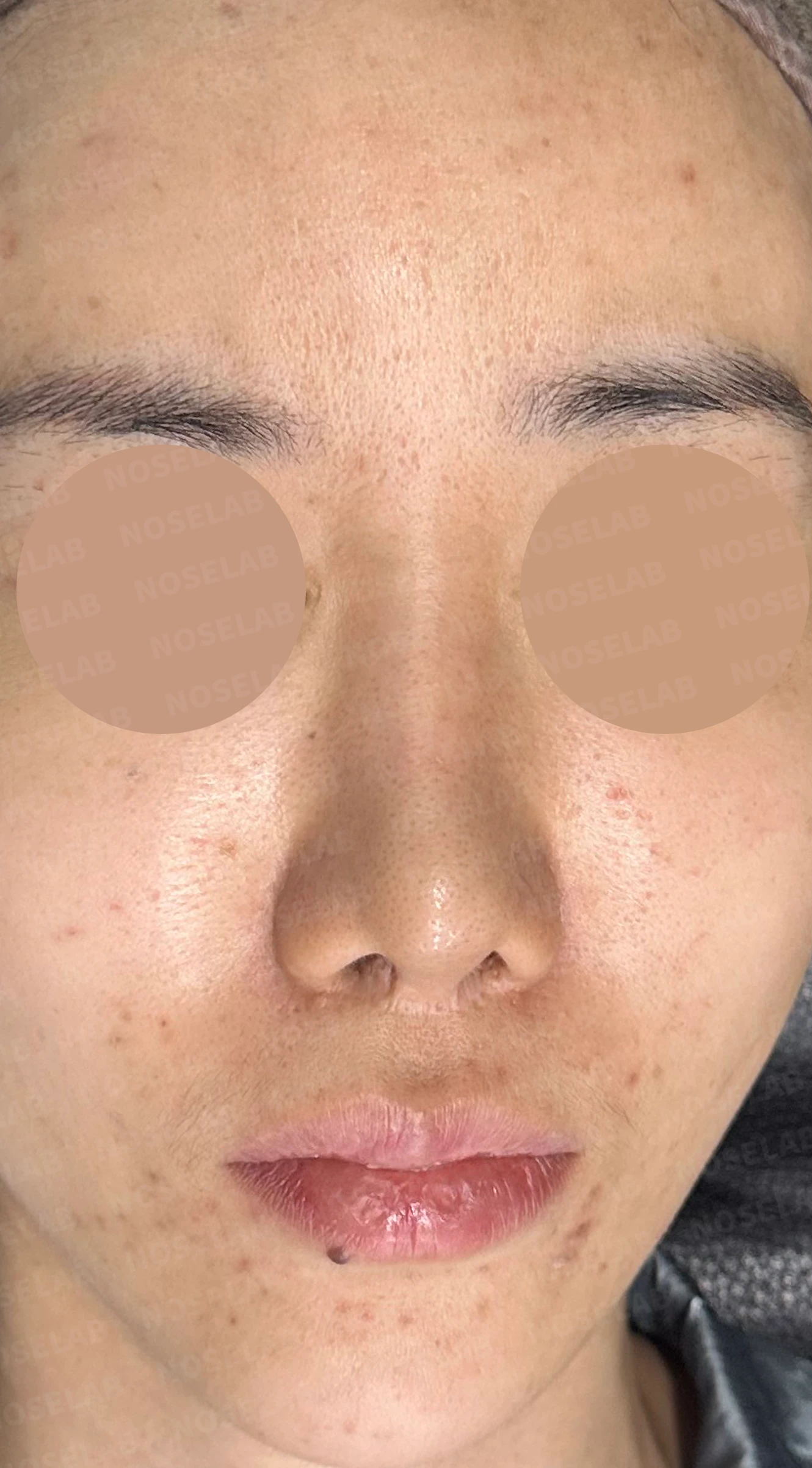
Front view:
- The nose appears crooked to one side
- Nostril asymmetry is observed
- A pinched appearance
Profile view:
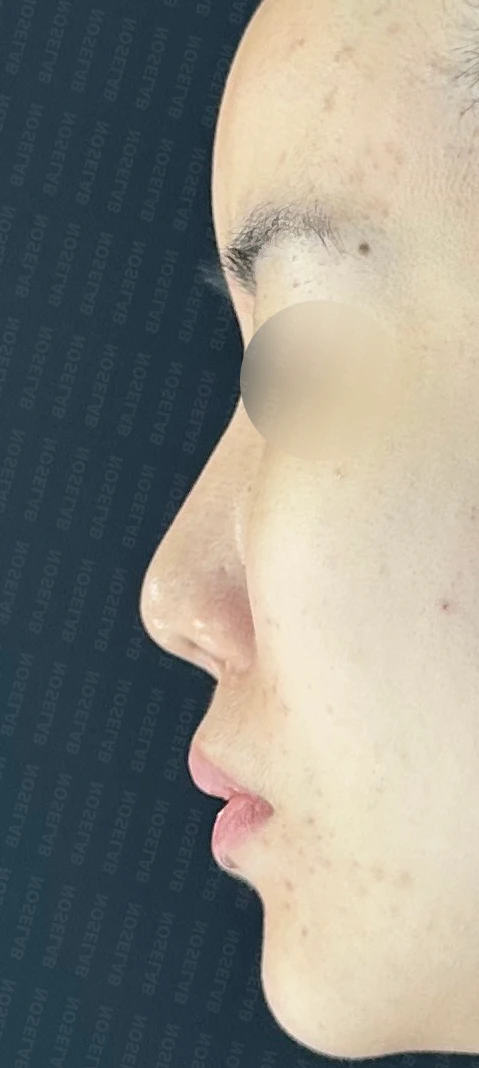
- The nasal tip appears drooping
- The radix appears high
- An overall overly long nasal appearance
Oblique view:
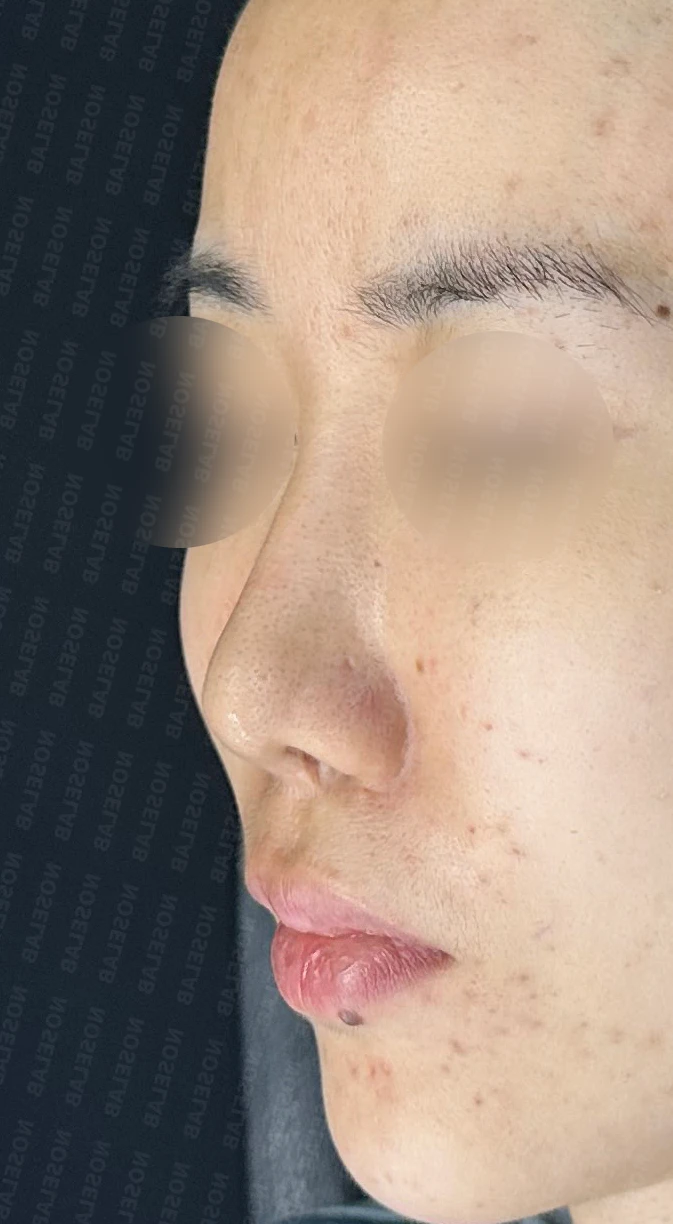
- A visibly pronounced nasal deviation
- Noticeable drooping and bulbousness of the nasal tip
Nostrils:
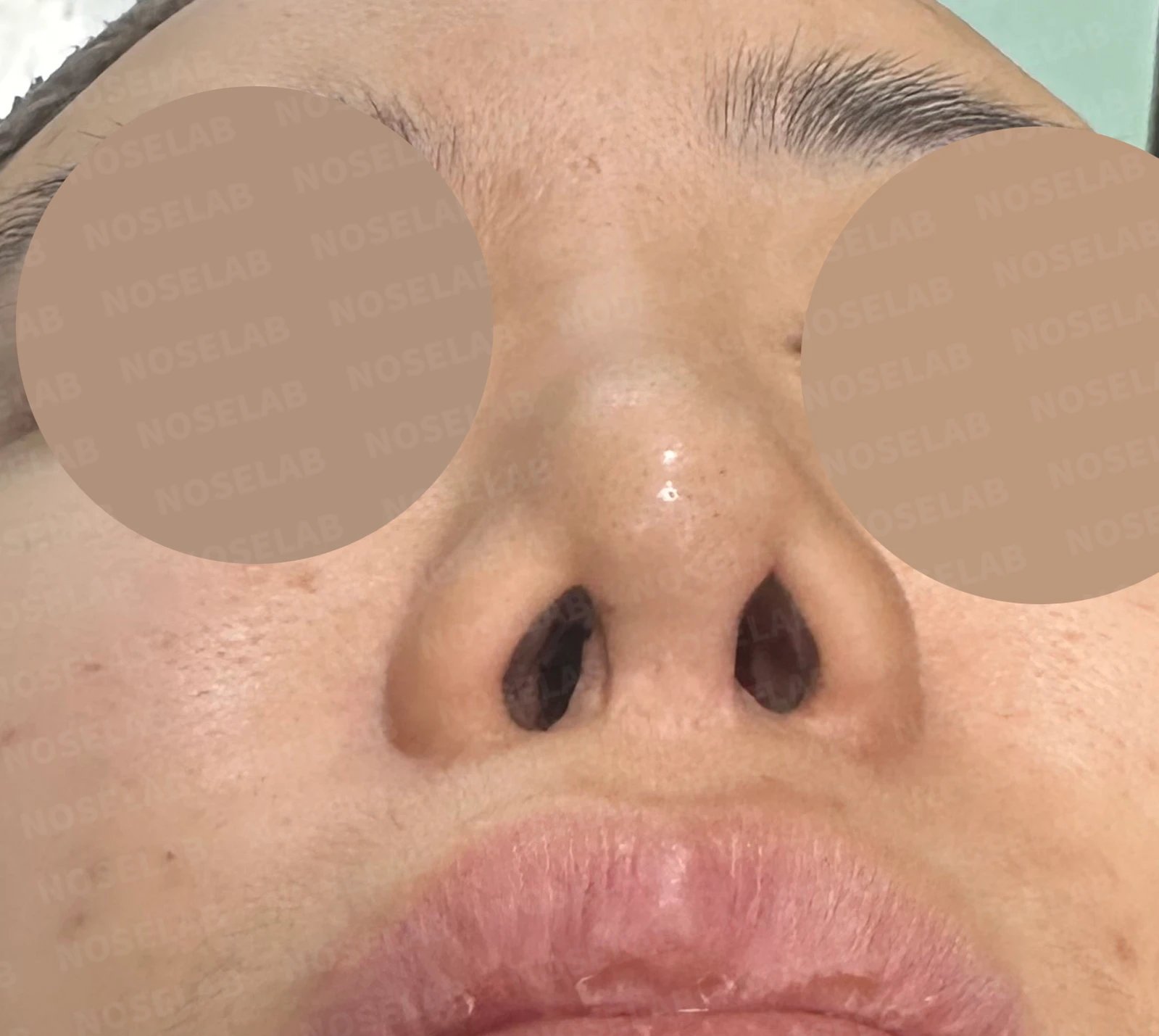
- Asymmetric shape
- A pinched appearance in the right nostril
Additional findings:
- Complaints of rhinitis and nasal obstruction symptoms
2. Surgical plan
Taking into account the patient's condition and requests, the following surgical plan was established:
a) Septal reconstruction using autologous rib cartilage
b) Septal extension
c) Nasal tip cartilage repositioning and cartilage suturing
d) Nasal tip elevation
e) Lowering the radix
f) Correction of the nasolabial angle
g) Septoplasty and radiofrequency submucosal resection of the inferior turbinates
3. Surgical procedure
The following procedures were performed using a closed approach:
a) Autologous rib cartilage harvest and septal reconstruction:
- Autologous rib cartilage was harvested to reconstruct the weakened septum.
- This enhanced the structural stability of the nose.
b) Septal extension graft:
- The septum was extended and reinforced using autologous rib cartilage.
- This lifted the drooping nasal tip and increased structural support.
c) Nasal tip cartilage repositioning and cartilage suturing:
- The tip cartilages were repositioned to correct nostril asymmetry.
- Cartilage suturing techniques were used to refine the shape of the nasal tip.
d) Nasal tip elevation:
- Autologous rib cartilage was used to properly elevate the nasal tip, adding three-dimensional definition.
e) Lowering the radix:
- The nasal bone was meticulously rasped to lower the radix.
- This reduced the overall overly long appearance of the nose.
f) Correction of the nasolabial angle:
- The nasolabial angle was adjusted to achieve overall facial balance.
g) Septoplasty and radiofrequency submucosal resection of the inferior turbinates:
- The deviated septum was straightened to relieve nasal obstruction.
- The hypertrophied inferior turbinates were reduced to relieve rhinitis symptoms.
All procedures were performed using a closed approach, completing the surgery without external scars.
4. Comparison of before-and-after photos
Comparing photos taken immediately after surgery on day 0 shows the following improvements: Photos taken immediately after surgery show swelling and may differ from the final result.
Front view:
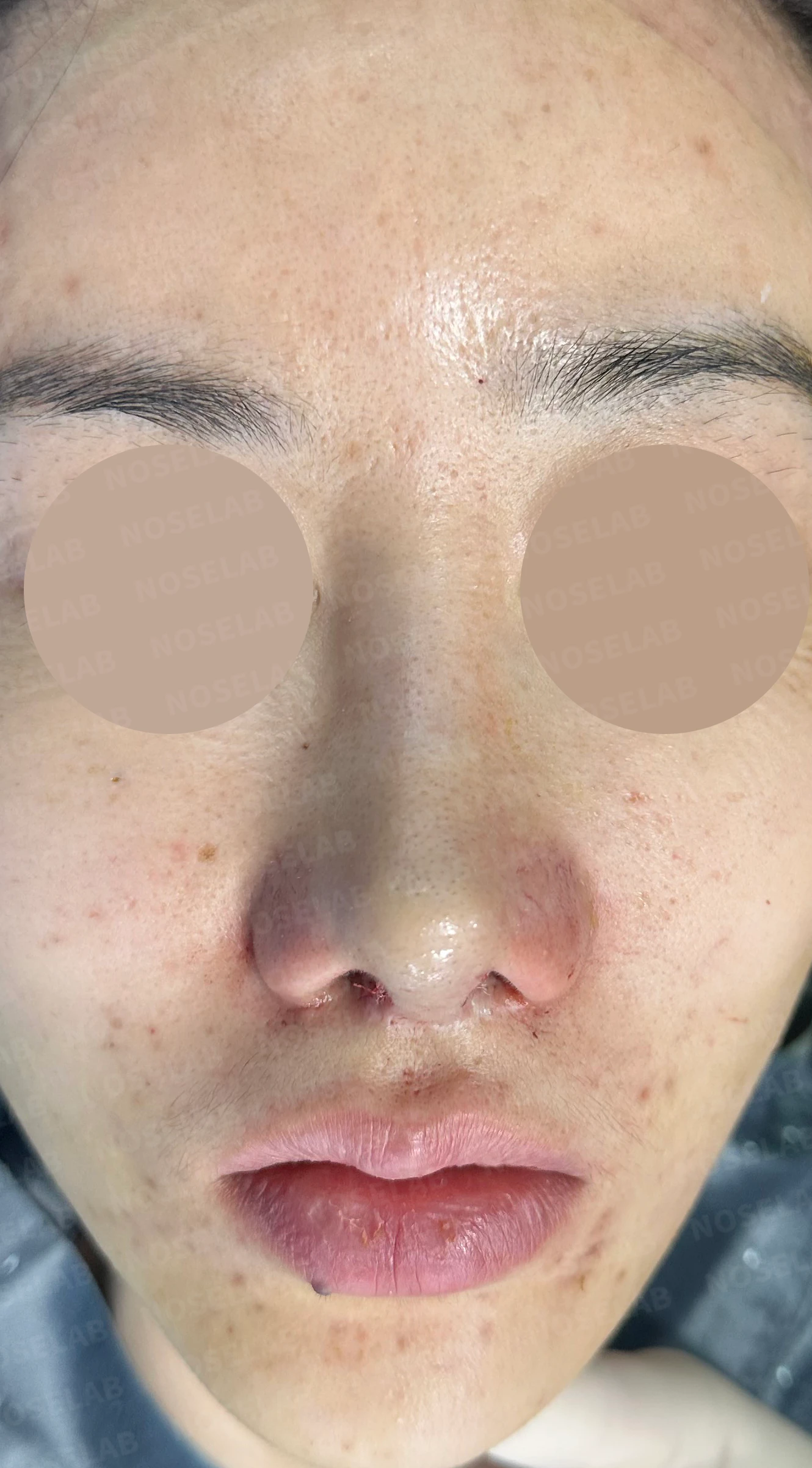
Before surgery / Day 0 immediately after surgery Photos taken immediately after surgery show swelling and may differ from the final result.
- The crooked nose was straightened.
- Nostril asymmetry improved significantly.
- The pinched appearance of the nasal tip was corrected.
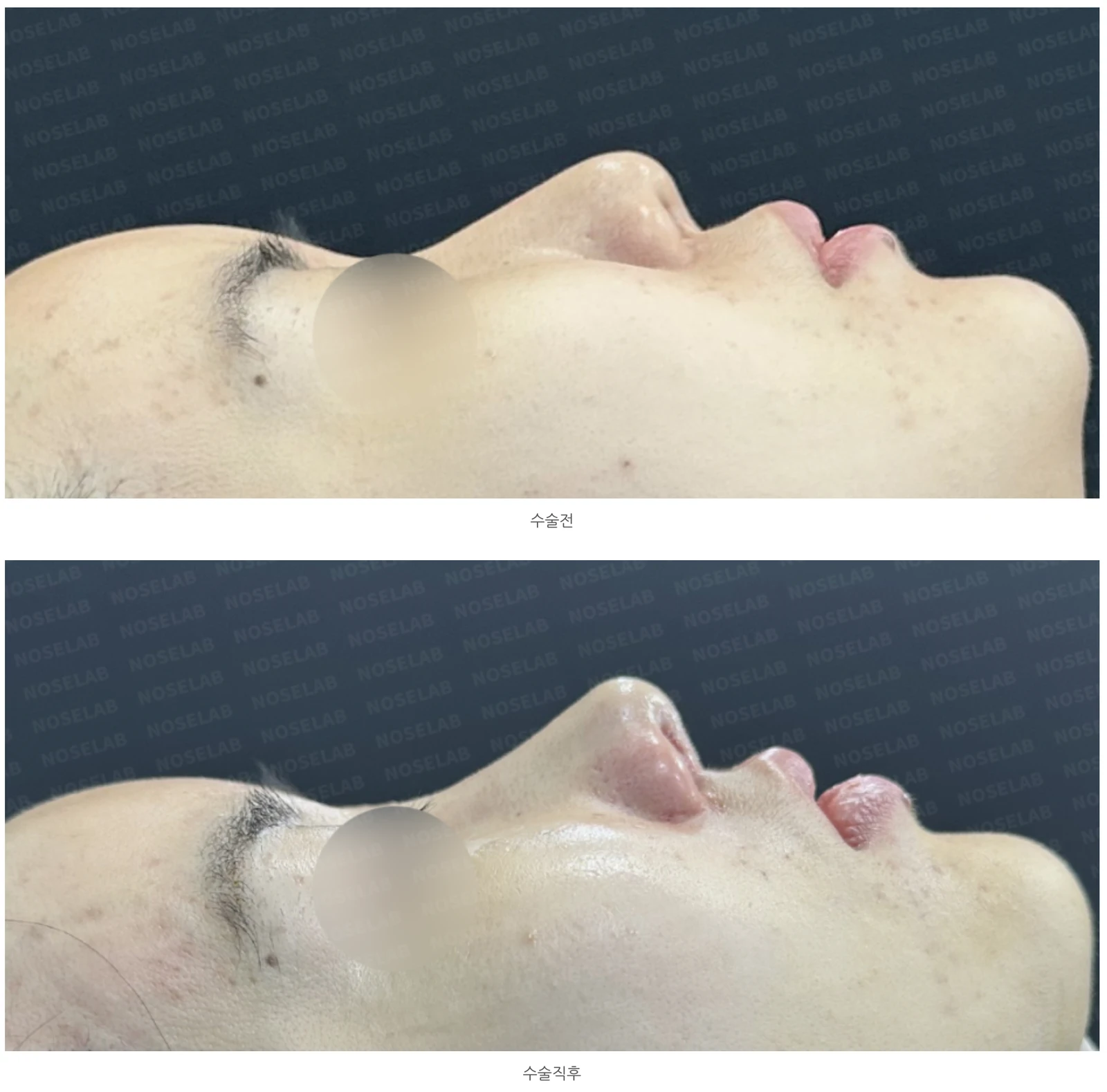
Profile view:
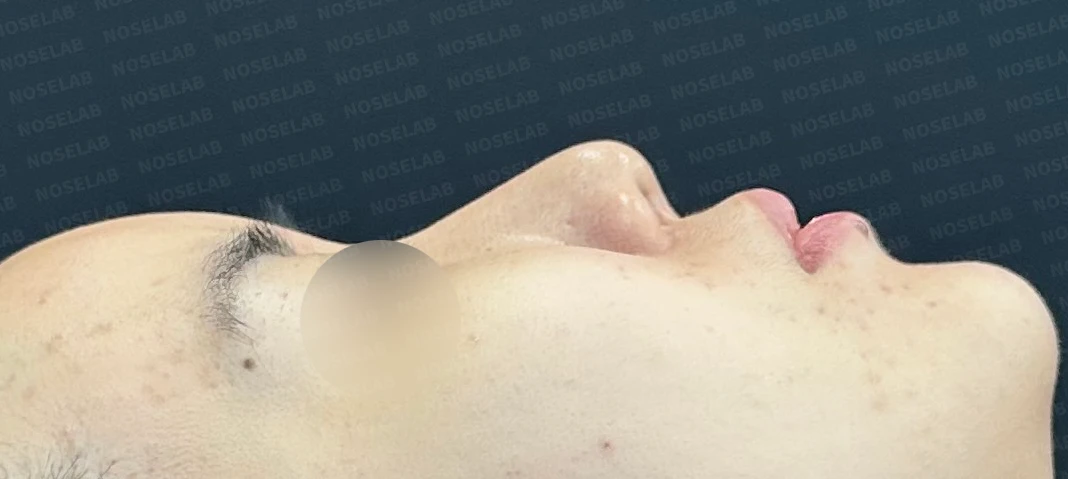
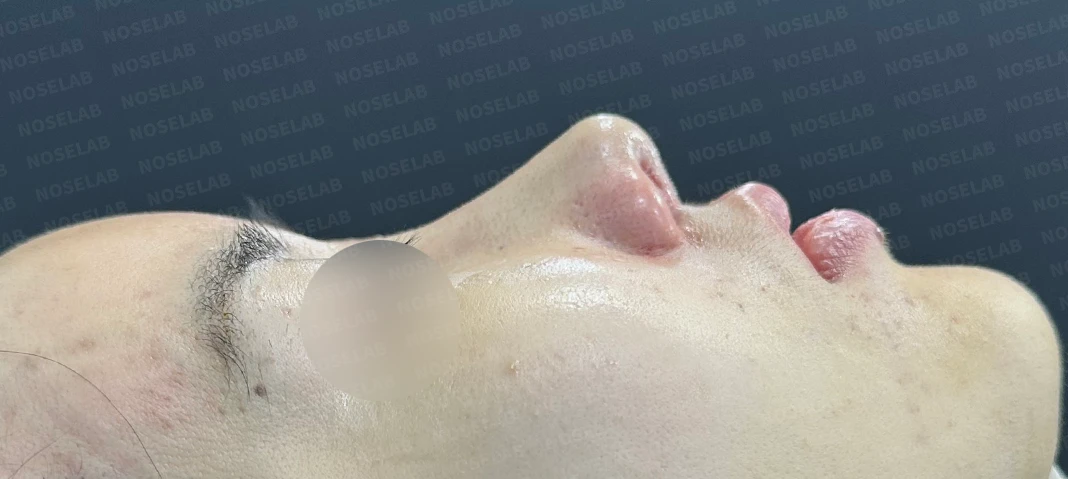
Before surgery / Day 0 immediately after surgery Photos taken immediately after surgery show swelling and may differ from the final result.
- The previously drooping nasal tip was appropriately elevated, creating better overall balance.
- Lowering the radix resulted in a natural, straight bridge line.
- The excessively long appearance was improved, achieving a length that harmonizes with the face.
Oblique view:
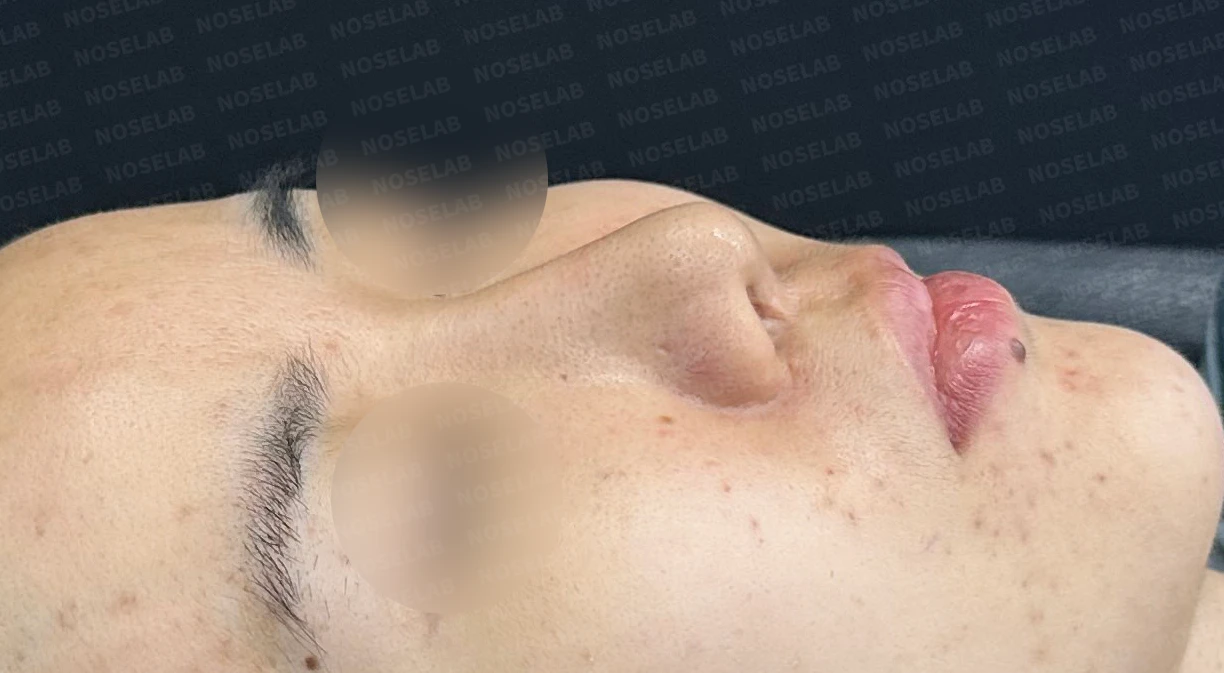
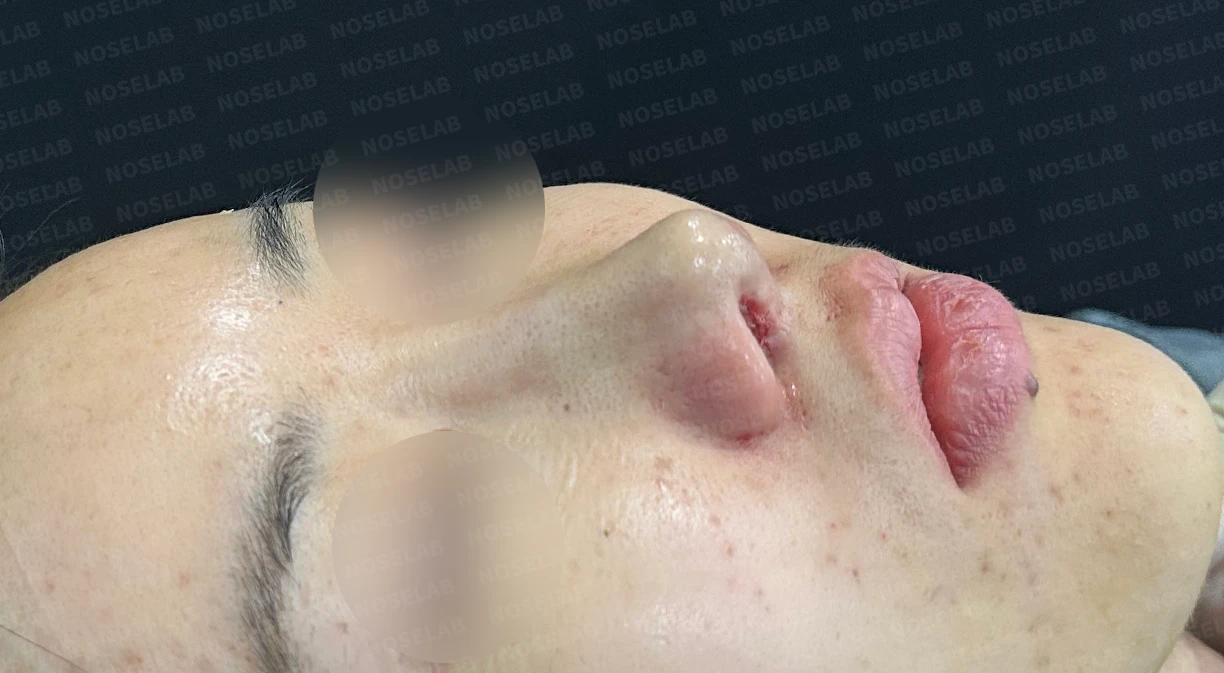
Before surgery / Day 0 immediately after surgery Photos taken immediately after surgery show swelling and may differ from the final result.
- Deviation was corrected, showing a smooth nasal line.
- The drooping and bulbous nasal tip was refined, producing a sleek appearance.
Nostrils:
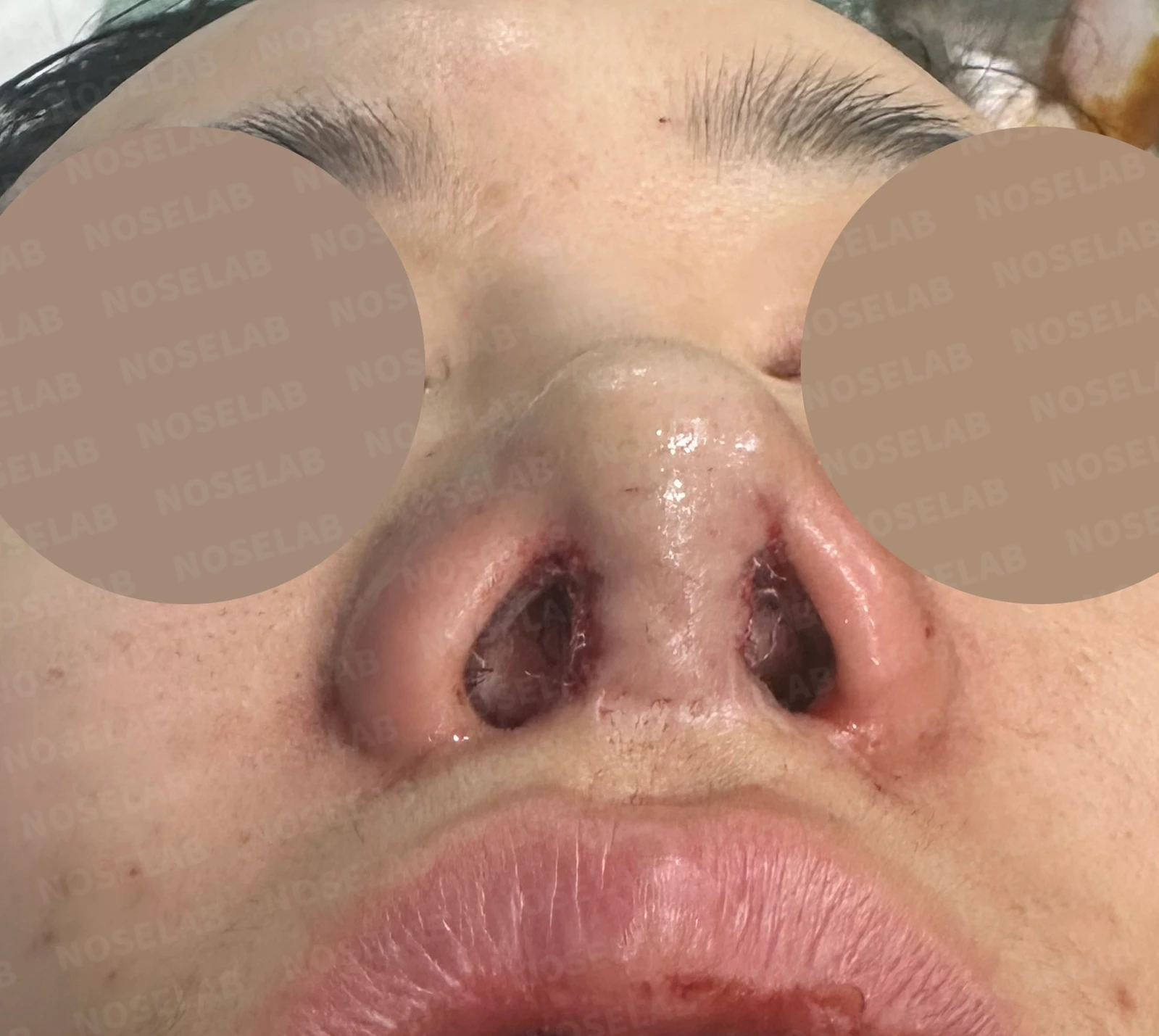
Before surgery / Day 0 immediately after surgery Photos taken immediately after surgery show swelling and may differ from the final result.
- Asymmetry improved significantly, achieving a balanced appearance.
- The pinched appearance of the nostril was resolved.
5. Photos immediately after surgery on day 0 Photos taken immediately after surgery show swelling and may differ from the final result.
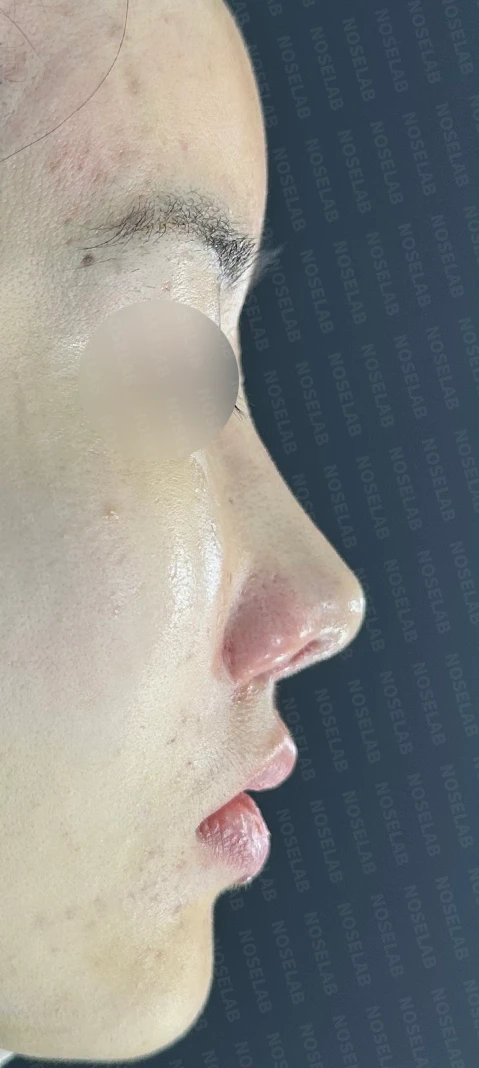
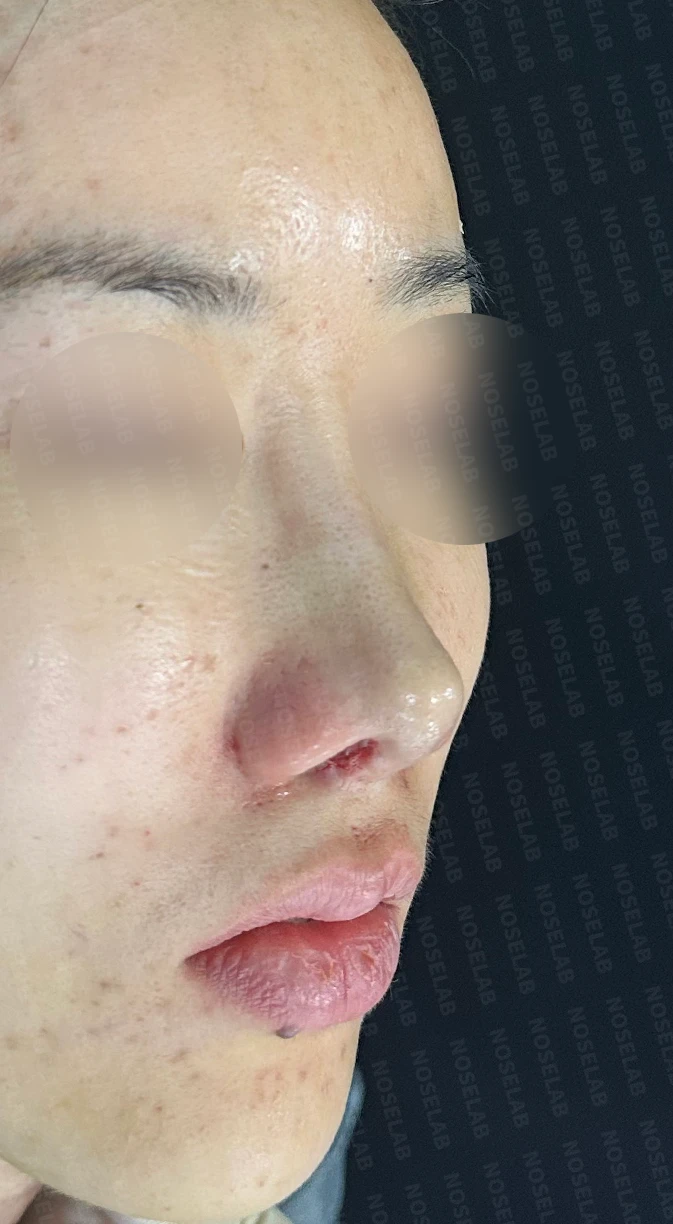
Front, profile, and oblique views on day 0 immediately after surgery Immediate postoperative photos show swelling and may differ from the final result.
Basal (nostril) view immediately after surgery (Day 0)Immediate postoperative photos show swelling and may differ from the final result.
6. Overall evaluation
This case addressed multiple complex problems that can arise after undergoing several rhinoplasty procedures. Specifically, multiple concerns including a crooked nose, a drooping tip, a bulbous tip, and nostril asymmetry were addressed simultaneously while delivering the natural, understated appearance the patient wanted.
Septal reconstruction and extension using autologous rib cartilage played a major role in reinforcing structural stability and elevating the drooping nasal tip. Additionally, correcting the deviated septum and treating hypertrophic rhinitis achieved both aesthetic and functional improvements.
Through tip cartilage repositioning and cartilage suturing techniques, the nostril asymmetry and bulbous tip were naturally refined, while lowering the radix and appropriately elevating the tip restored overall balance.
In particular, this surgery closely respected the patient's request for a 'natural and understated shape,' avoiding an excessively high or artificial look to achieve a natural nasal contour that harmonizes with the face.
Utilizing a closed approach shortened the postoperative recovery period and allowed the surgery to be completed with no external scars, providing a significant benefit for a patient who had already undergone multiple operations.
7. Conclusion
I hope this case offers reassurance to those troubled by complex nasal concerns such as a crooked, drooping, or bulbous nose, especially patients distressed by unsatisfactory outcomes despite repeated surgeries.
Revision rhinoplasty requires dissecting damaged scar tissue from prior operations and rebuilding a new structural framework, making it substantially more intricate and demanding than primary rhinoplasty. Therefore, seeking care from a highly experienced and specialized surgeon is essential.
Drawing on anatomical knowledge and extensive surgical experience as a board-certified otolaryngologist, I provide surgical plans tailored to each individual patient. Through a comprehensive approach that considers both functional and cosmetic improvement, I strive to create a beautiful and healthy nose.
I will be with you every step of the way to achieve a beautiful and healthy nose.
This was Dr. Peter C. Kang. Thank you.
Thank you.
#rhinoplasty #crookednosecorrection #droopingtipcorrection #bulboustipcorrection #nostrilasymmetrycorrection #revisionrhinoplasty #autologousribcartilagegraft #closedrhinoplasty #septalextension #ENTspecialistrhinoplasty #safelyplannedrhinoplasty #nasalbridgecorrection #nasaltiprhinoplasty #nasalobstructionrelief #rhinitistreatment

Limitations and risks
When autologous rib cartilage is used, scarring and pain may remain at the donor site on the chest, and pneumothorax (pleural injury) can occur rarely. Over time, the grafted cartilage may warp or undergo partial resorption.
When using donor rib cartilage, long-term follow-up is necessary because the grafted cartilage may resorb or warp.
When the septum is corrected at the same time, nasal obstruction may persist or recur, and in rare cases, septal perforation or changes in smell may occur.
Common potential risks include infection, bleeding, asymmetry, scarring, skin necrosis, and insufficient improvement; results vary depending on individual skin condition and previous surgical history.