Hello, I am Dr. Peter C. Kang.
Today, I would like to share a revision rhinoplasty case of a patient who was concerned about a short nose and an upturned nose.
The patient had undergone multiple surgeries previously, but had not achieved a satisfactory result.
For the past 2 years, the nose had become increasingly upturned, causing significant concern. The patient was also experiencing discomfort from nasal obstruction.
Through this case involving multiple complex issues, I will discuss the importance and effectiveness of customized rhinoplasty.
Patient surgical history
The surgical history in this case is as follows:
1. 10 years ago: Silicone implant + ear cartilage graft
2. 5 years ago: Silicone implant + ear cartilage + septal cartilage graft
3. 6 months later: Additional AlloDerm graft to correct cartilage show-through
Patient requests
a) Correction of short and upturned nose
b) Improvement of nasal obstruction
1. Design consultation
Let us analyze the patient's condition in detail:
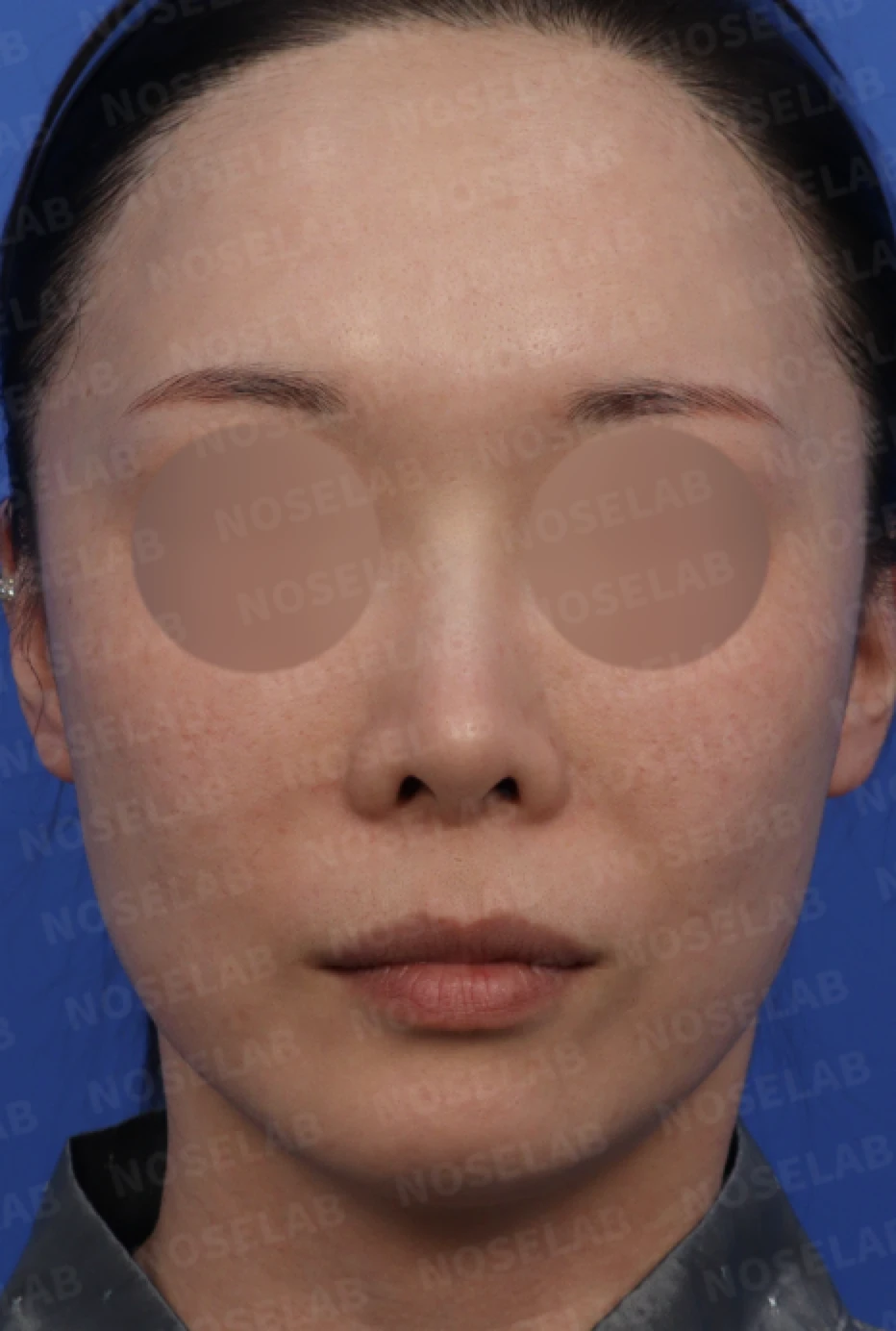
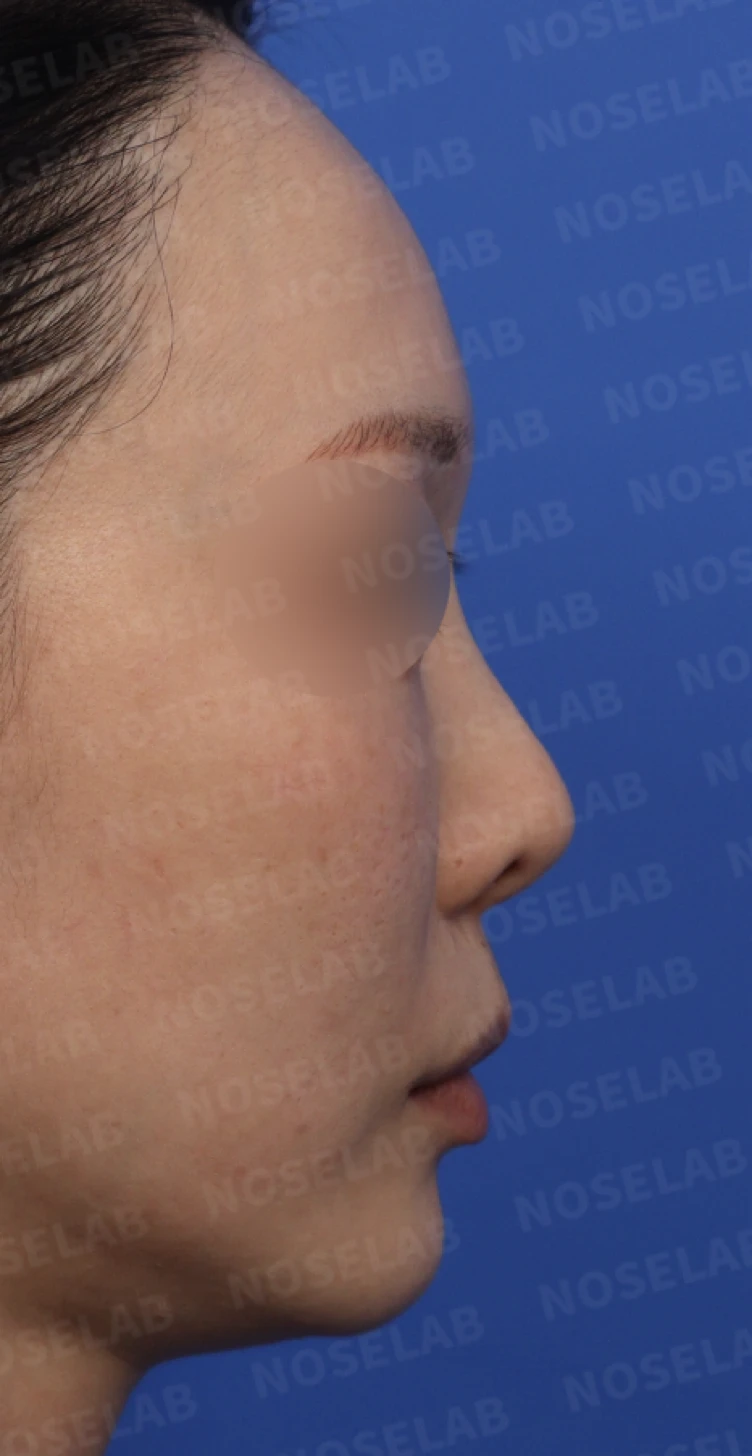
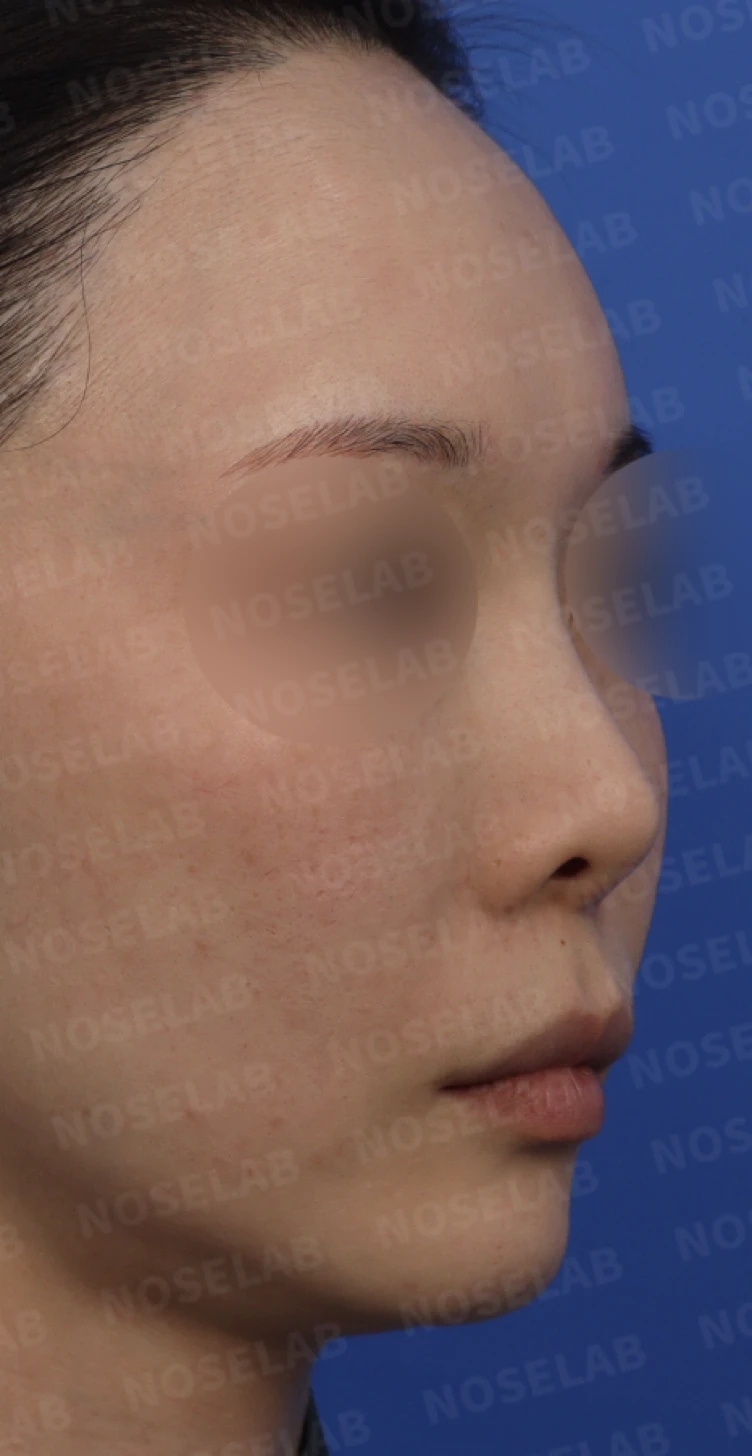
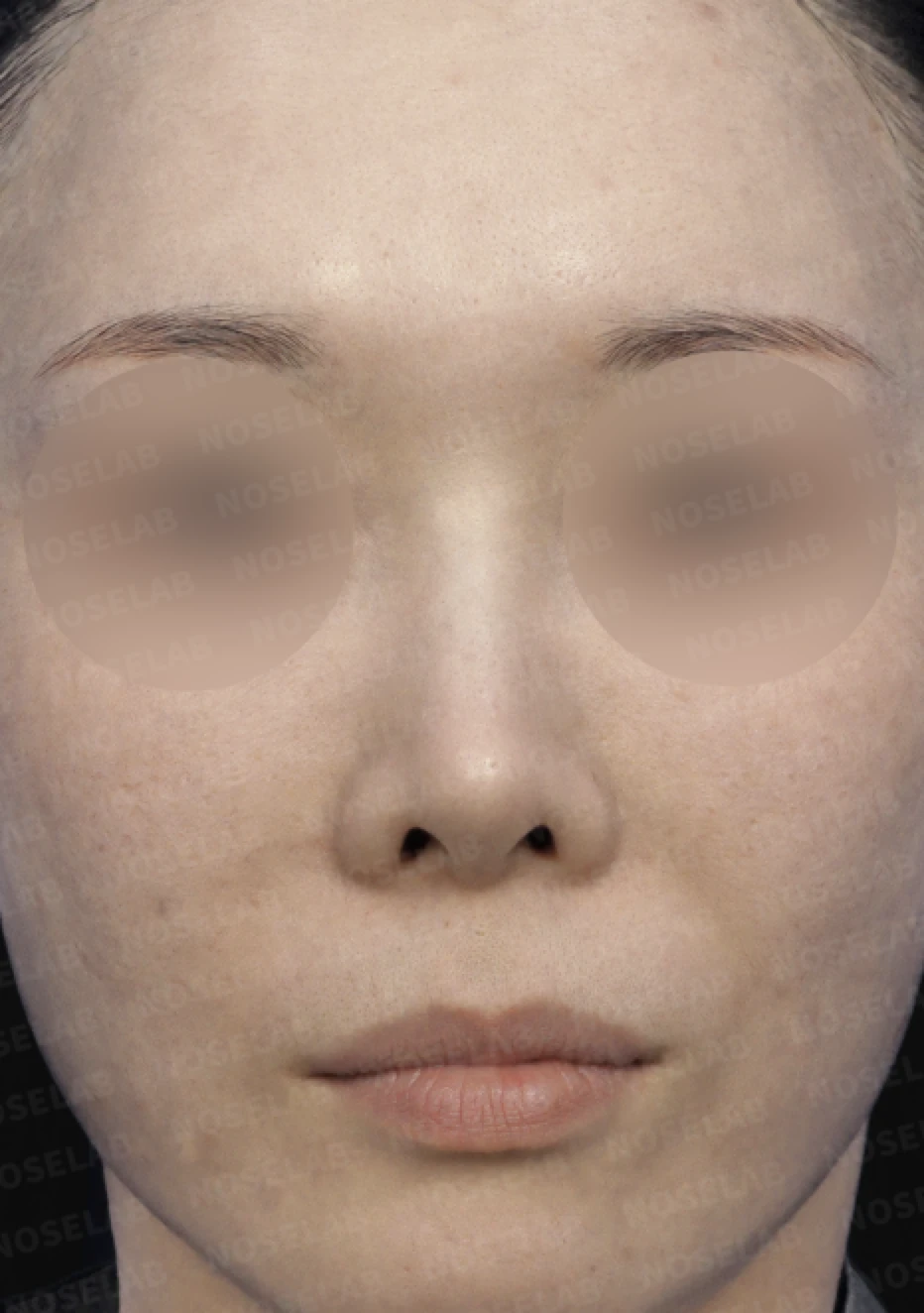
Design consultation photos
Front view:
- Significant nostril show
- Overall small and thin appearance
Profile view:
- Upturned while simultaneously appearing drooped
- The radix is high
- Bulbous appearance
Oblique view:
- Overall short appearance
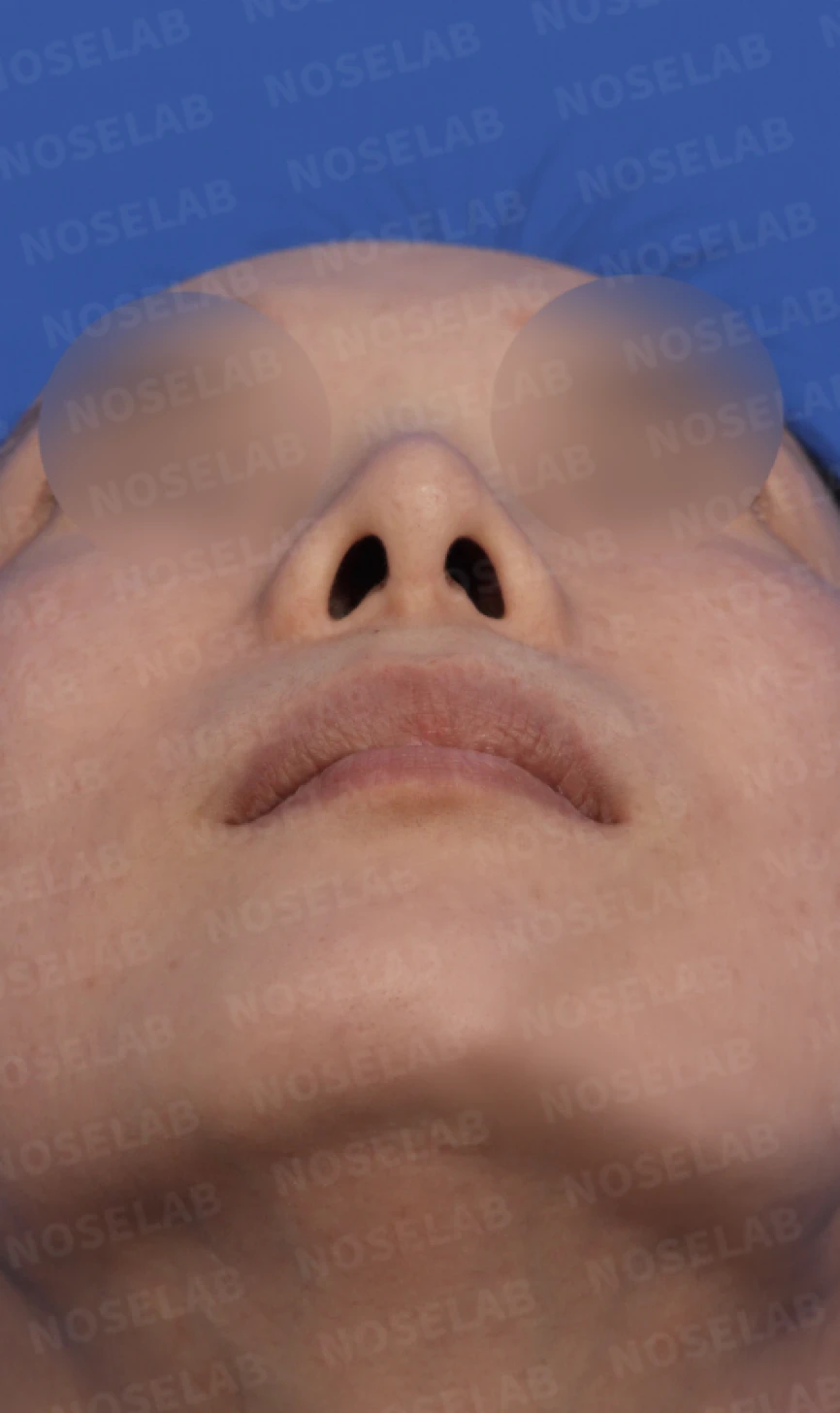
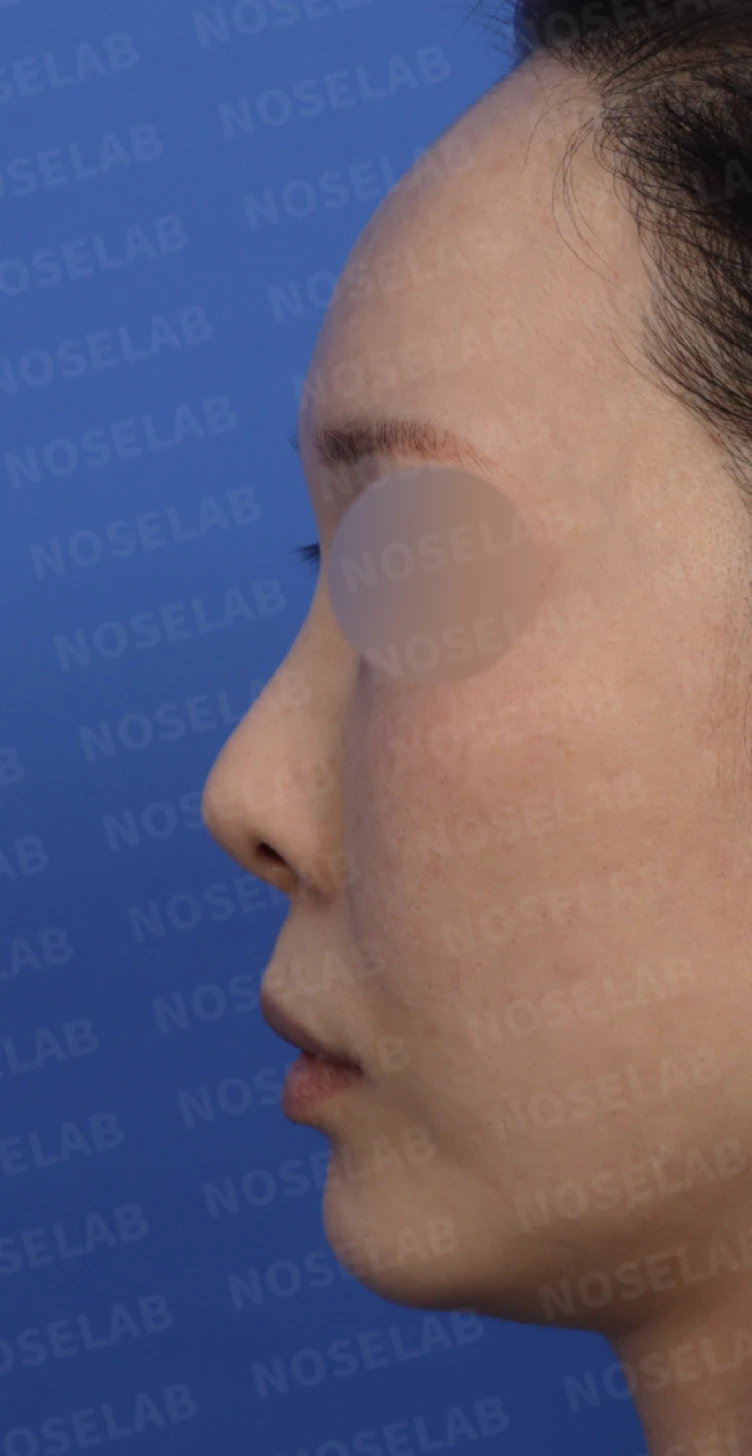
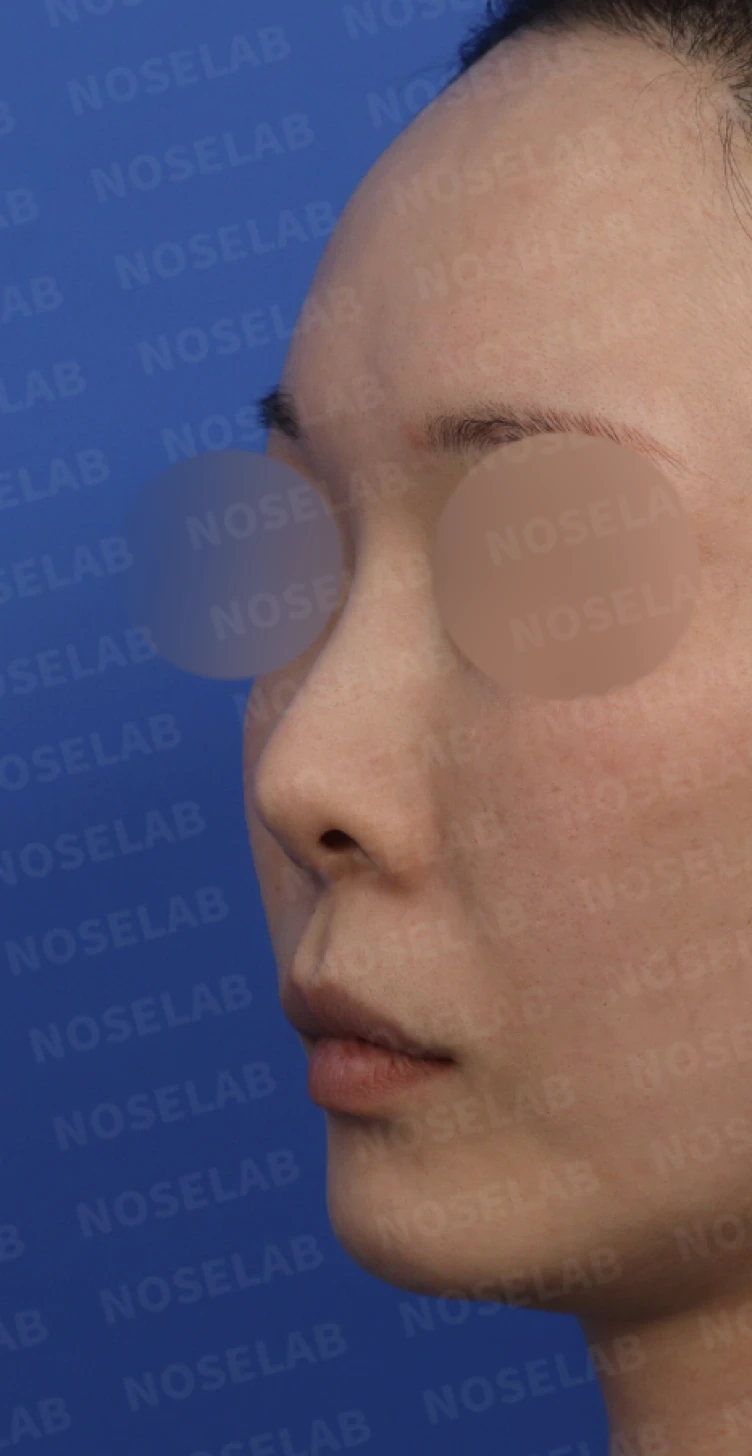
Design consultation photos
Nostrils:
- Slight nostril asymmetry observed
- The columella is slightly tilted to the right
2. Surgical plan
Considering the patient's condition and requests, the following surgical plan was established:
a) Reuse of previously placed cartilage:
- Reuse the previously harvested septal cartilage and ear cartilage to the extent possible
b) Donor rib cartilage grafting:
- Perform septal extension using donor rib cartilage as the primary material
c) Nasal bridge implant exchange:
- Removal of pre-existing implant
- Lower the radix and place a new silicone implant
d) Additional procedures to improve nasal obstruction:
- Septoplasty
- Submucosal resection of the inferior turbinate using radiofrequency
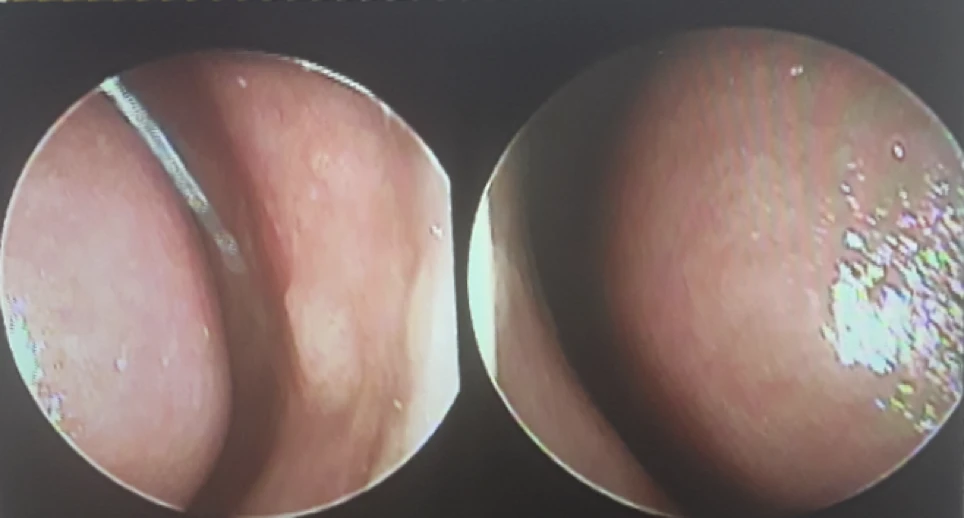
Endoscopy photos. 1. Right side 2. Left side
This plan was established based on preoperative nasal obstruction examinations. The findings revealed septal deviation to the left and bilateral hypertrophy of the inferior turbinates, leading to a diagnosis of deviated septum and hypertrophic rhinitis.
3. Surgical procedure
Using a closed approach, the surgery was performed as follows:
a) Donor rib cartilage grafting:
- Performed septal extension using donor rib cartilage combined with the previously placed septal cartilage.
b) Reuse of previously placed cartilage:
- The previously grafted septal and ear cartilages were carefully harvested without damage; the septal cartilage was used alongside donor rib cartilage for septal extension, while the ear cartilage was reused to elevate the nasal tip, minimizing unnecessary tissue loss.
c) Nasal bridge implant exchange:
- Removed the existing implant.
- Lowered the radix starting point and placed a new silicone implant to create a natural nasal bridge line.
d) Septoplasty:
- Corrected the septum deviated to the left.
e) Submucosal resection of the inferior turbinate:
- Hypertrophic inferior turbinate tissue was reduced using radiofrequency.
- Widened the nasal airway to improve breathing function.
f) Nasolabial angle adjustment:
- Appropriately adjusted the nasolabial angle, reducing the appearance of a protruding mouth.
g) Nostril and columellar correction:
- Improved nostril asymmetry and straightened the deviated columella.
All procedures were performed using a closed approach, completing the surgery without external scars.
4. Comparison of before-and-after photos
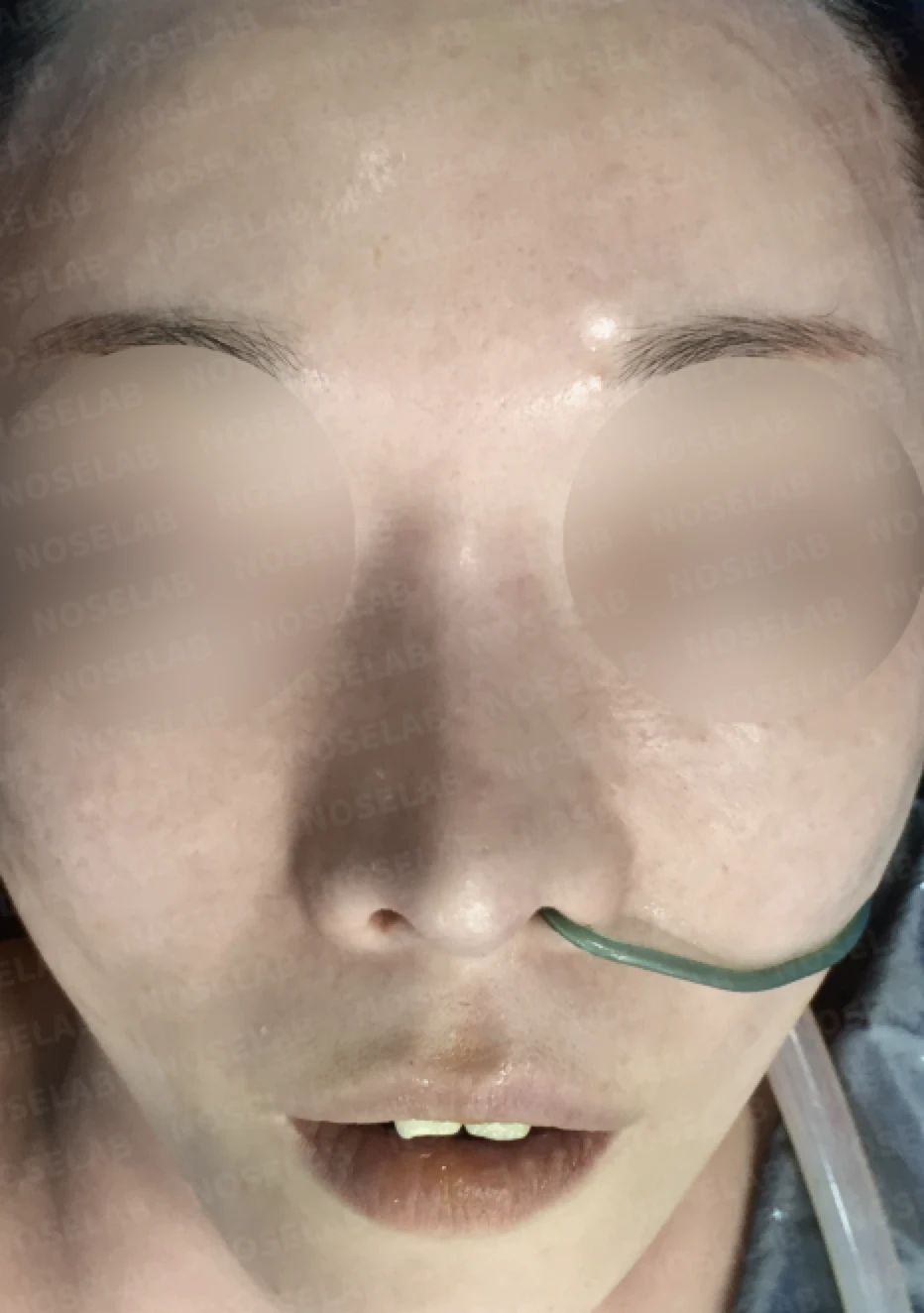
Before surgery / Day 0 immediately after surgery Photos taken immediately after surgery show swelling and may differ from the final result.
Front view:
- Excessive nostril show was naturally reduced and improved.
- The overall small and thin appearance gained better definition and balance.
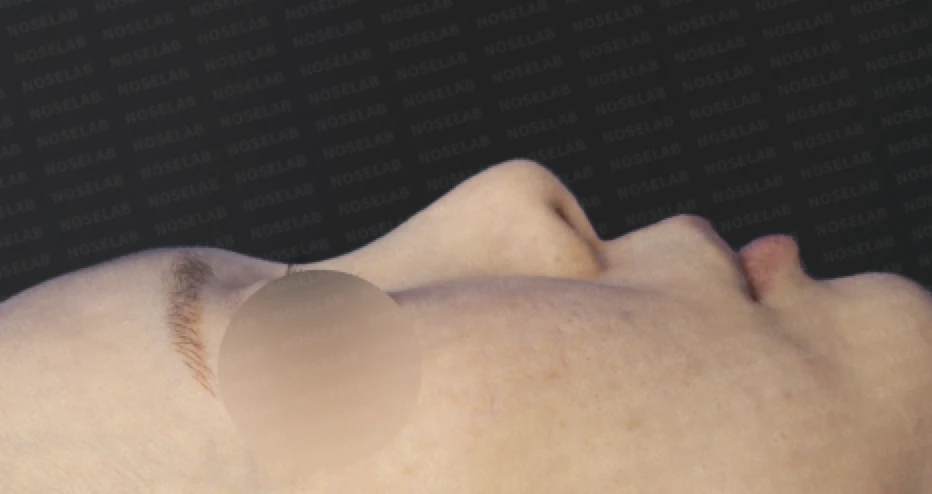
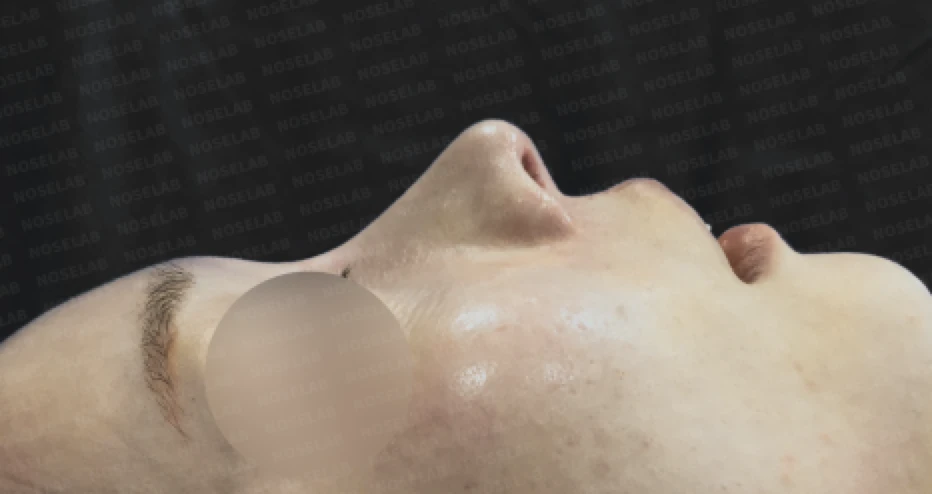
Before surgery / Day 0 immediately after surgery Photos taken immediately after surgery show swelling and may differ from the final result.
Profile view:
- The upturned and drooped appearance was naturally corrected.
- The high radix was lowered, improving overall nasal length proportion.
- The blunt tip area became more refined and natural.
- Adjustment of the nasolabial angle reduced the appearance of a protruding mouth.
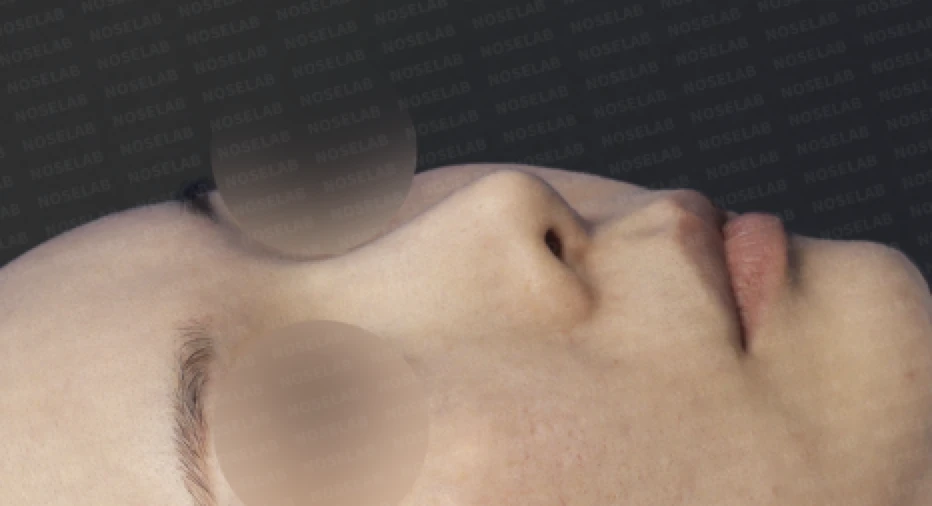
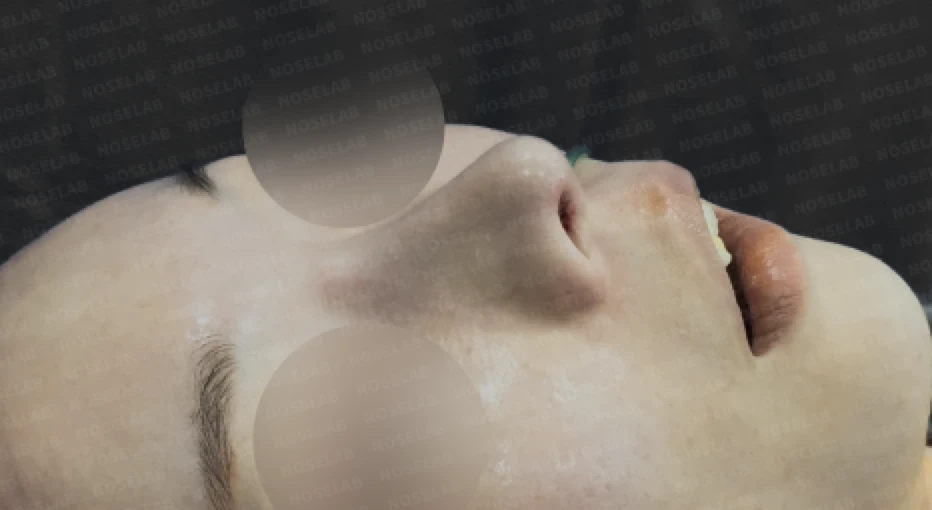
Before surgery / Day 0 immediately after surgery Photos taken immediately after surgery show swelling and may differ from the final result.
Oblique view:
- The shortened length was restored, improving facial proportions.
- The profile line from bridge to tip became smoother and more natural.
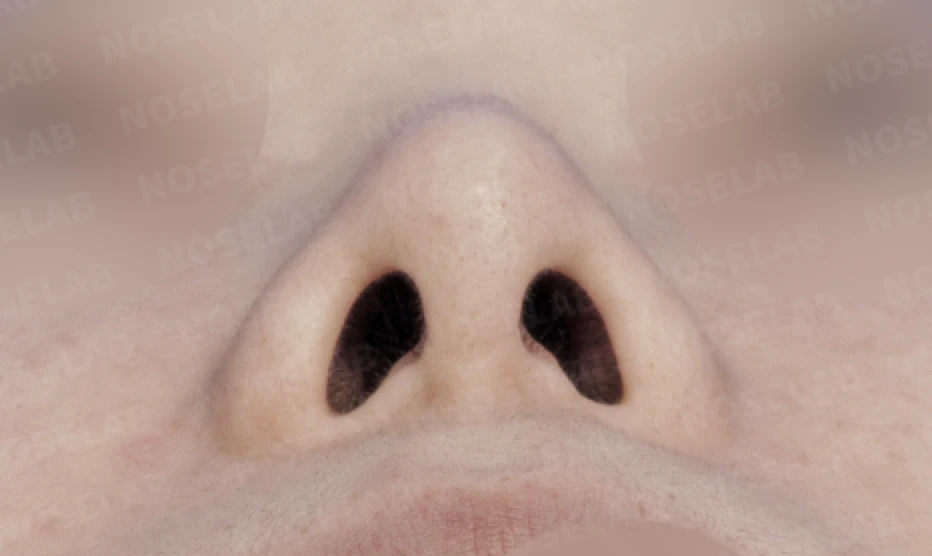
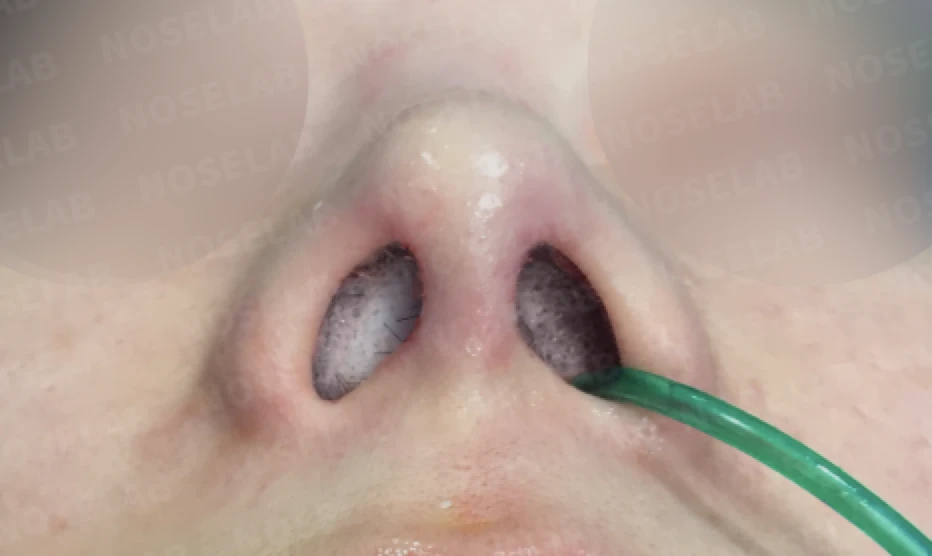
Before surgery / Day 0 immediately after surgery Photos taken immediately after surgery show swelling and may differ from the final result.
Nostrils:
- Mild nostril asymmetry was improved.
- The columella, which had deviated to the right, was straightened.
5. Photos taken immediately after surgery
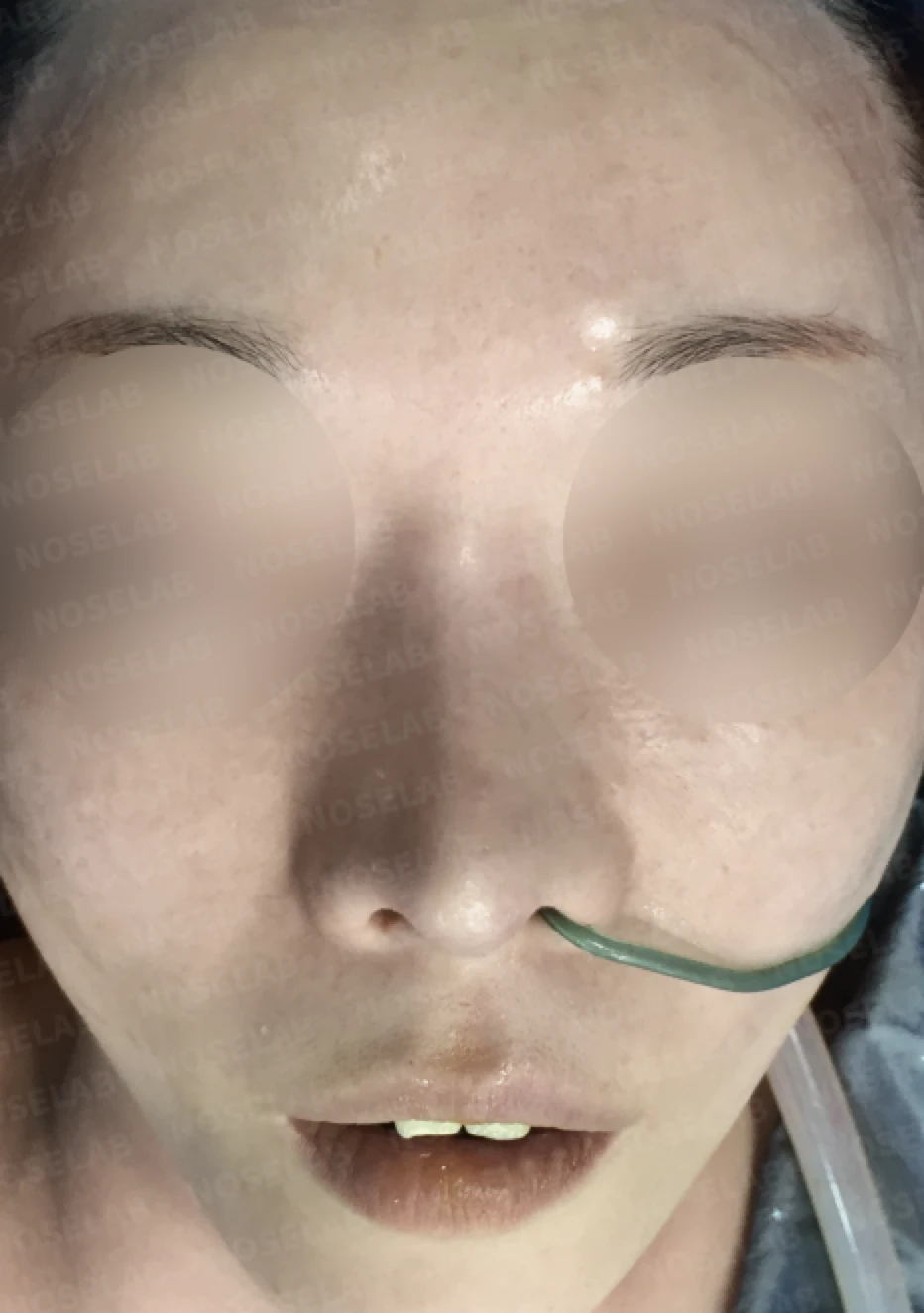
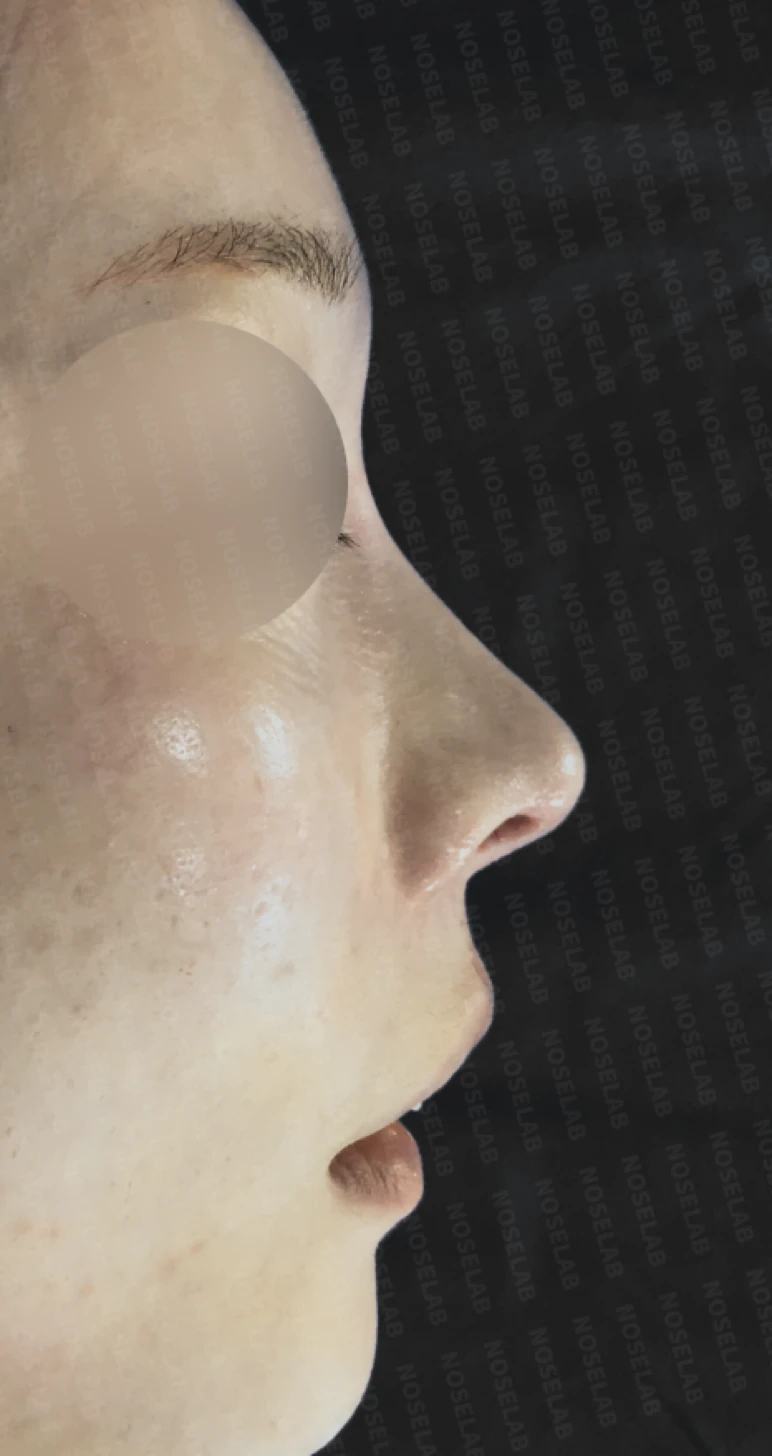
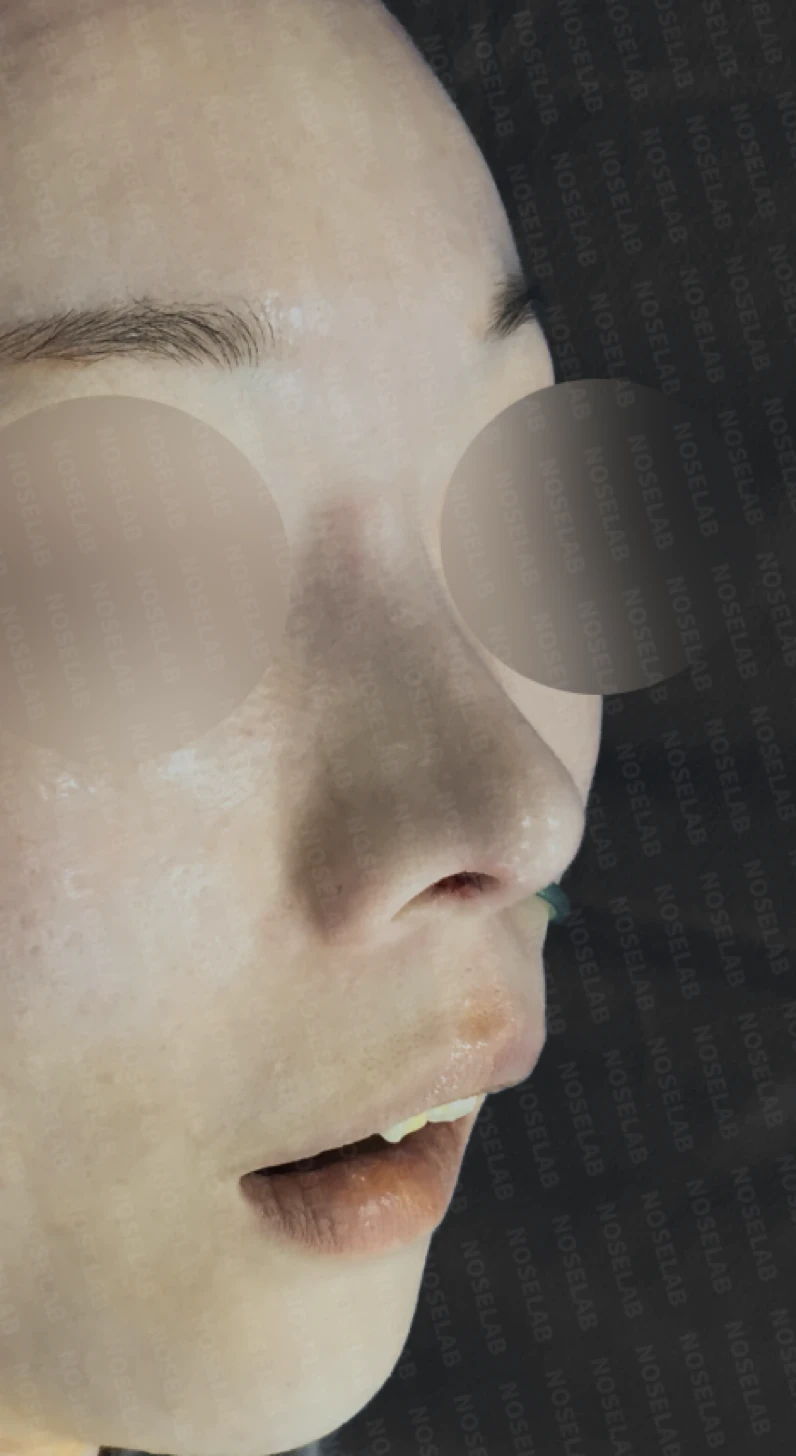
Front, profile, and oblique views taken immediately after surgery (day 0).Immediate postoperative photos show swelling and may differ from the final result.
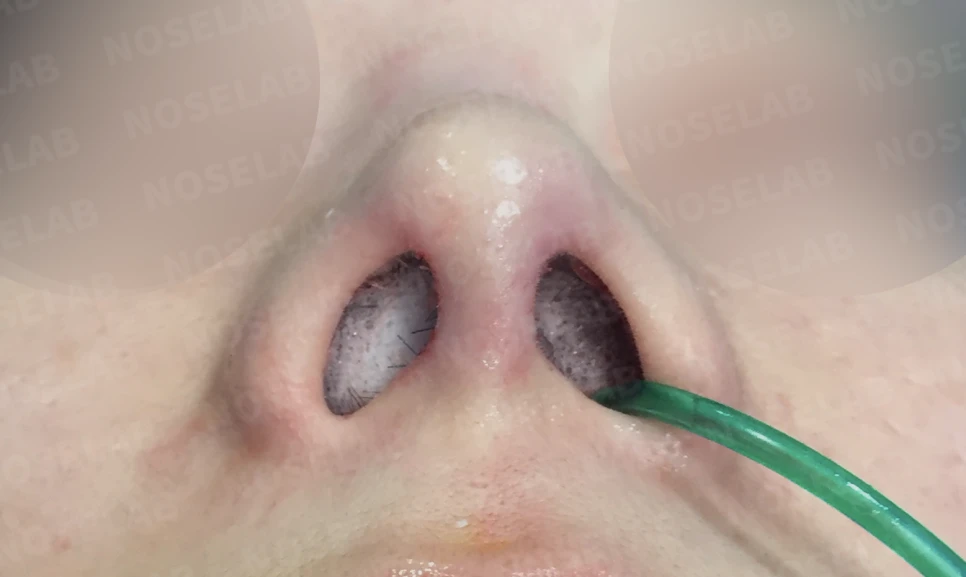
Base view (nostril) photo.
6. Overall evaluation
This case serves as a representative example of customized rhinoplasty performed in a complex scenario involving multiple prior surgeries.
Multiple concerns were resolved simultaneously while achieving a natural, harmonious result.
Key points to note include:
1. Combining autologous cartilage with donor rib cartilage to offset limitations:
To mitigate potential resorption of donor rib cartilage, the previously placed septal cartilage was reused in conjunction with donor rib cartilage for septal extension.
2. Recycling previously used cartilage:
Minimizing unnecessary tissue loss improved surgical efficiency.
3. Achieving both aesthetic and functional improvement simultaneously:
While refining the external shape, breathing function was enhanced through septoplasty and turbinate reduction.
4. Closed approach: Successfully performed complex surgery without external scars.
Through this surgery, the patient's primary concerns were addressed, and nasal obstruction improved. Furthermore, the overall facial harmony and balance became more refined.
7. Conclusion
I hope this case offers helpful insight for patients concerned about a short, upturned nose, as well as those hesitant about autologous rib cartilage harvesting. Revision rhinoplasty requires a meticulous approach tailored to each individual's anatomy and goals.
Drawing on extensive experience and clinical expertise, I provide surgical plans optimized for each patient. As a board-certified otolaryngologist, I pursue rhinoplasty that improves breathing function alongside aesthetic refinement through detailed anatomical understanding.
If you are considering rhinoplasty, I recommend consulting with a specialist to determine the most suitable surgical approach for your needs.
I will always do my best to support both the health and aesthetic harmony of your nose, so you can smile with confidence.
This was Dr. Peter C. Kang. Thank you.
Thank you.
#rhinoplasty #shortnose #upturnednose #nasalobstructionimprovement #capsularcontracture #donorribcartilagegraft #closedrhinoplasty #revisionrhinoplasty #entrhinoplasty #septoplasty #turbinatereduction #customrhinoplasty #naturalnose

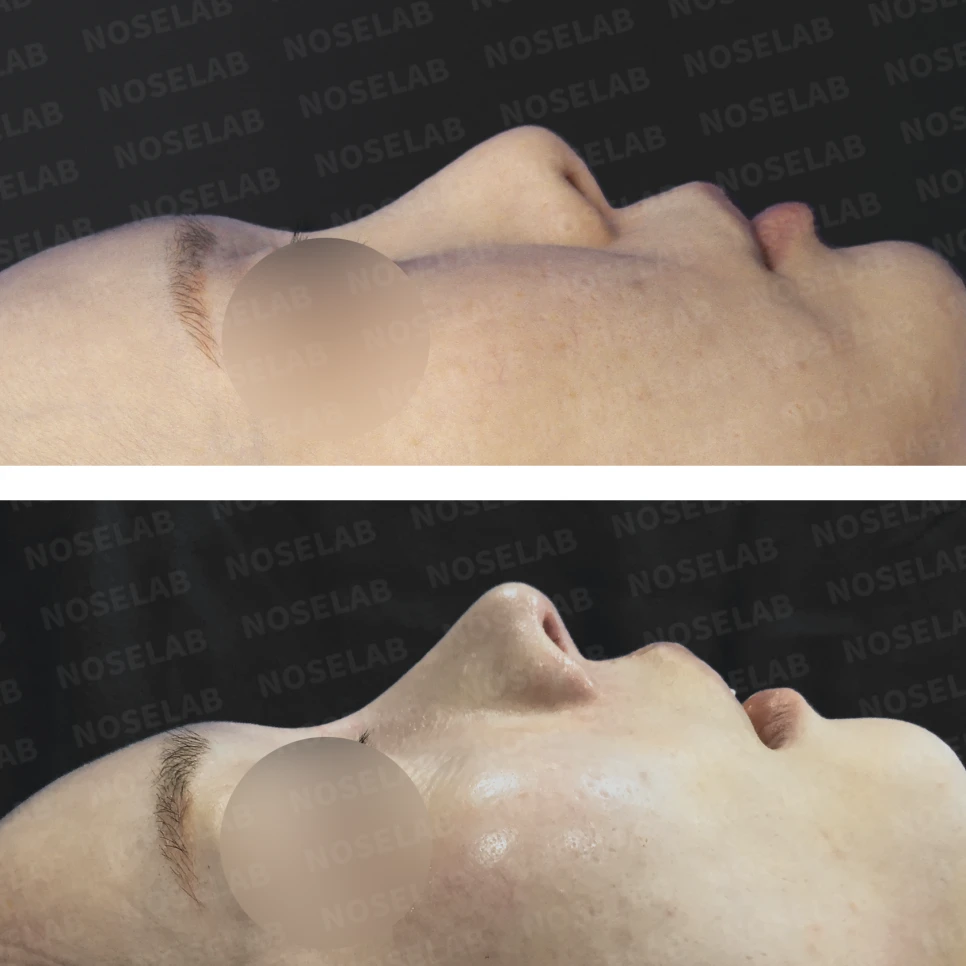
Limitations and risks
When autologous rib cartilage is used, scarring and pain may remain at the donor site on the chest, and pneumothorax (pleural injury) can occur rarely. Over time, the grafted cartilage may warp or undergo partial resorption.
When using donor rib cartilage, long-term follow-up is necessary because the grafted cartilage may resorb or warp.
When revising after implant removal, contracture may progress again after removal, the nasal height and length may decrease, and staged surgery may be necessary depending on the skin condition.
When the septum is corrected at the same time, nasal obstruction may persist or recur, and in rare cases, septal perforation or changes in smell may occur.
Common potential risks include infection, bleeding, asymmetry, scarring, skin necrosis, and insufficient improvement; results vary depending on individual skin condition and previous surgical history.