Hello, I am Dr. Peter C. Kang.
Today, I would like to share a revision rhinoplasty case of a patient with a visibly artificial implant outline and a crooked nose. The patient wanted to transform this unnatural nose into a natural-looking one. After an accurate analysis of the patient's face and nose, we proceeded with a customized rhinoplasty to restore overall balance.
1. Design consultation
Let us analyze the patient's condition in detail:
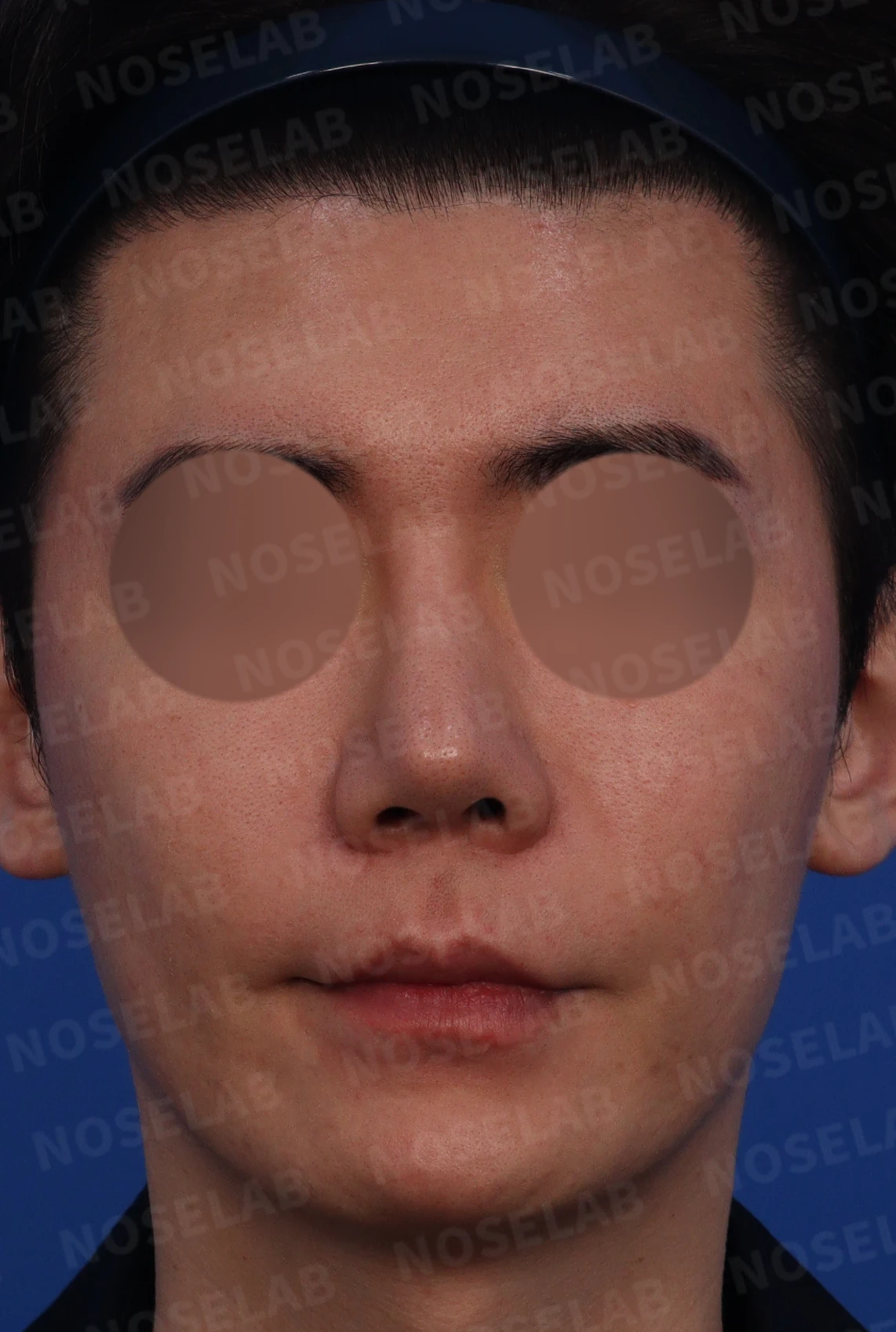
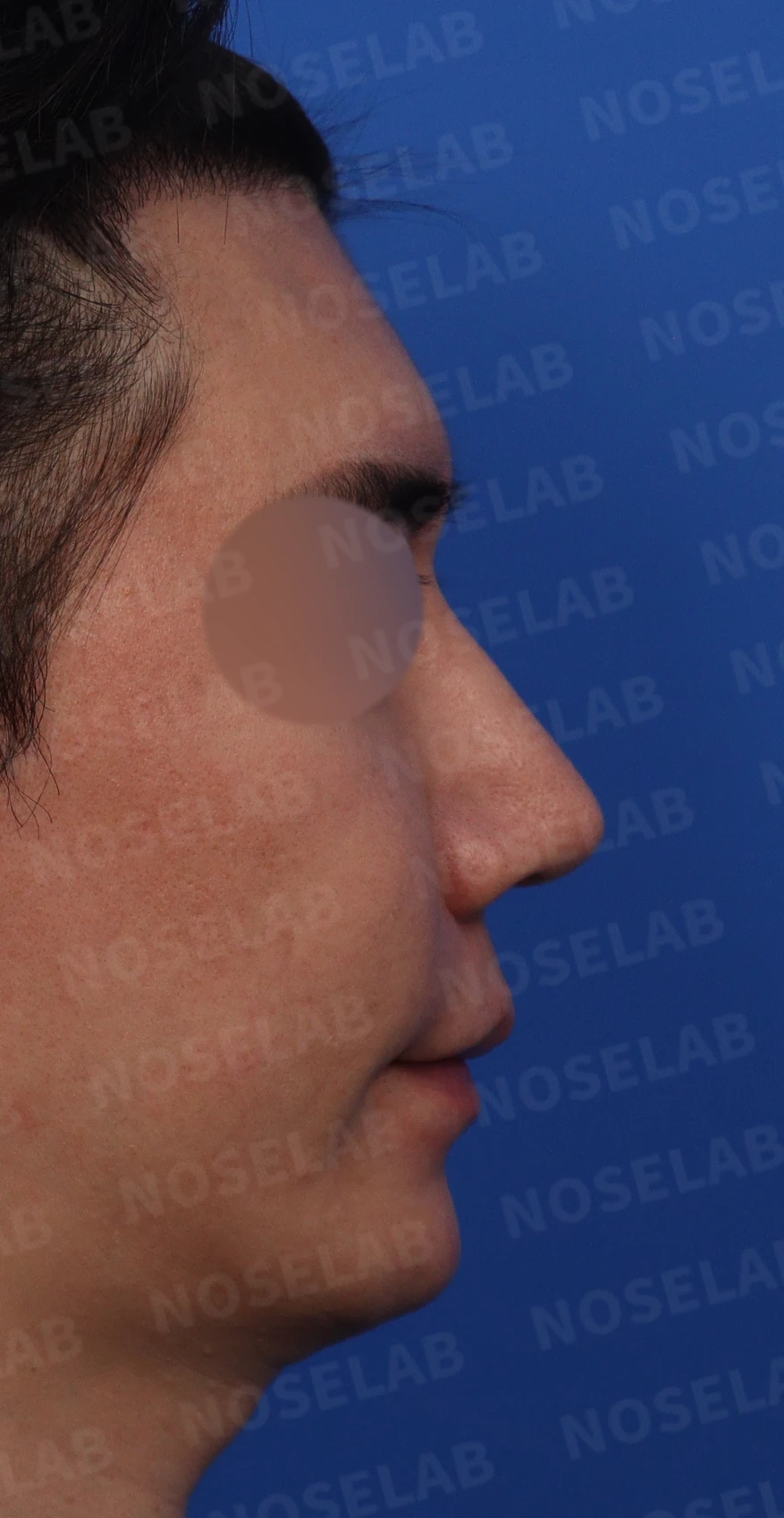
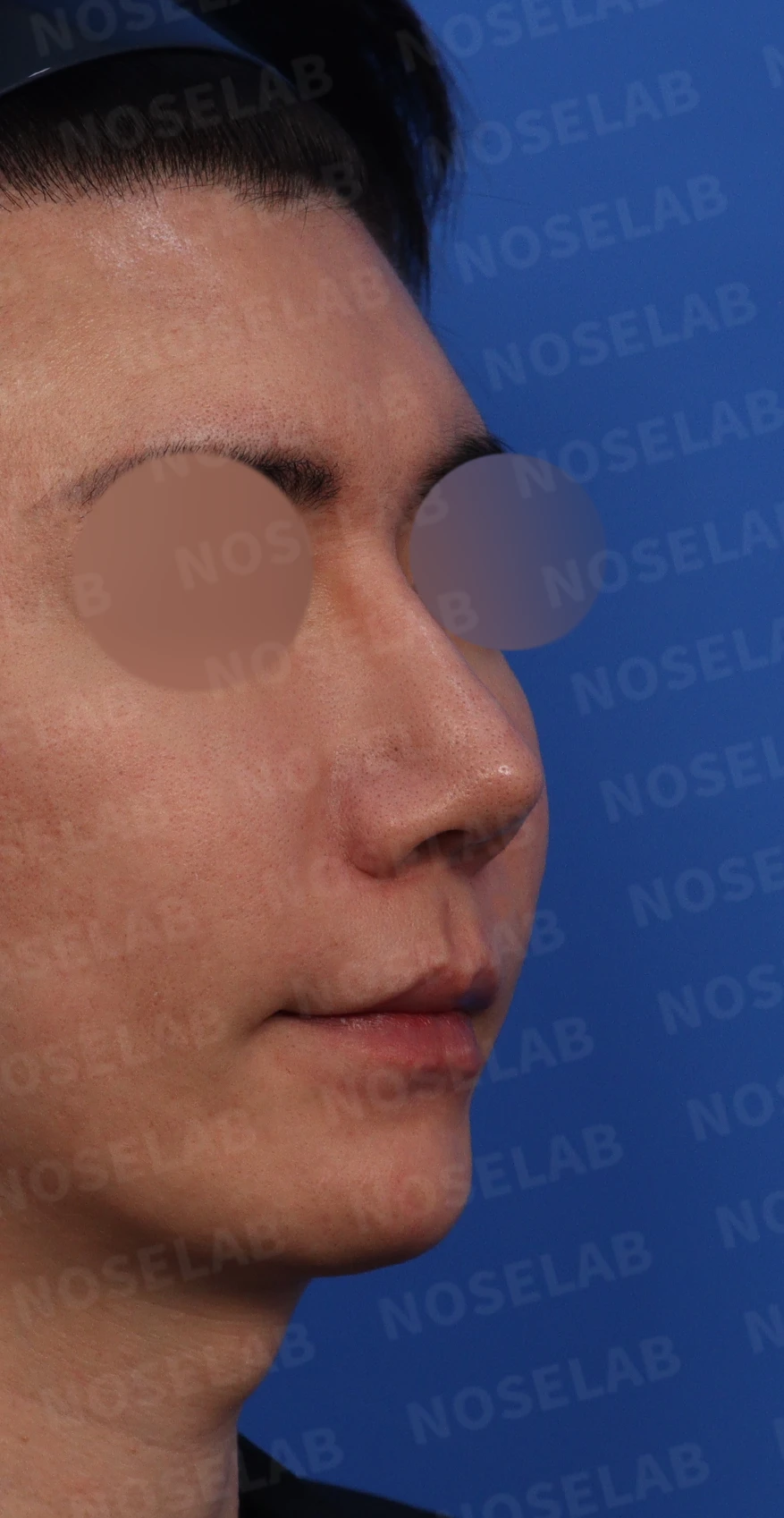
Design consultation: front, profile, and oblique views
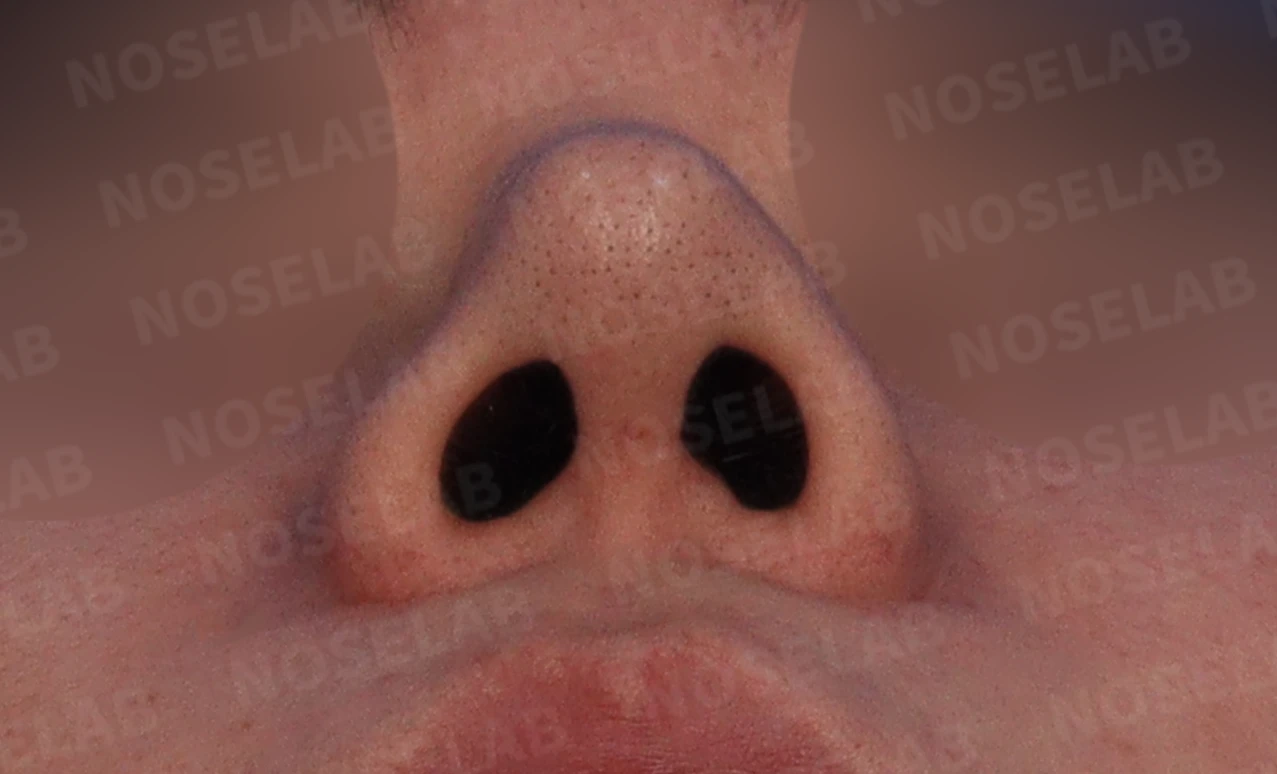
Base view (nostril) photo
Front view:
- The nose appears slightly crooked
- The columella and nasal tip appeared retracted higher than both alae
- Noticeable nostril asymmetry
- A depressed area was observed above the right alar wing
- An unnatural, operated look
Profile view:
- Tendency toward a dorsal hump
- The nasal tip appears drooping
- The columella was barely visible
- Only the alae appeared disproportionately prominent
Oblique view:
- The implant outline was clearly visible
- Nasal deviation is more pronounced
Nostrils:
- Noticeable nostril asymmetry
- The nasal tip appeared slightly deviated to the right
2. Surgical plan and procedure details
The following procedures were performed using a closed approach:
a) Nasal tip correction:
- Septal extension was performed using autologous rib cartilage to straighten and support the deviated nasal tip.
b) Lowering the columella and correcting the nasolabial angle:
- After correcting the septal cartilage and repositioning the lower lateral cartilages, autologous rib cartilage was used to naturally lower the columella and correct the nasolabial angle.
c) Reconstruction of the right lower lateral cartilage:
- The right lower lateral cartilage, suspected of being damaged, was reconstructed to correct the depressed area.
d) Lateral osteotomy:
- Precise osteotomy was performed to straighten the crooked nose.
e) Implant replacement:
- The existing implant was removed, and a wider implant was placed subperiosteally to reduce the visibility of the implant outline.
f) Septoplasty:
- The deviated septum was corrected to enhance the structural stability of the nose and improve breathing function.
g) Submucosal resection of the inferior turbinates:
- Hypertrophic inferior turbinate tissue was reduced using a radiofrequency laser to improve rhinitis symptoms.
3. Before-and-after photo comparison
Comparing photos taken immediately after surgery on day 0 shows the following improvements: Photos taken immediately after surgery show swelling and may differ from the final result.
Front view:
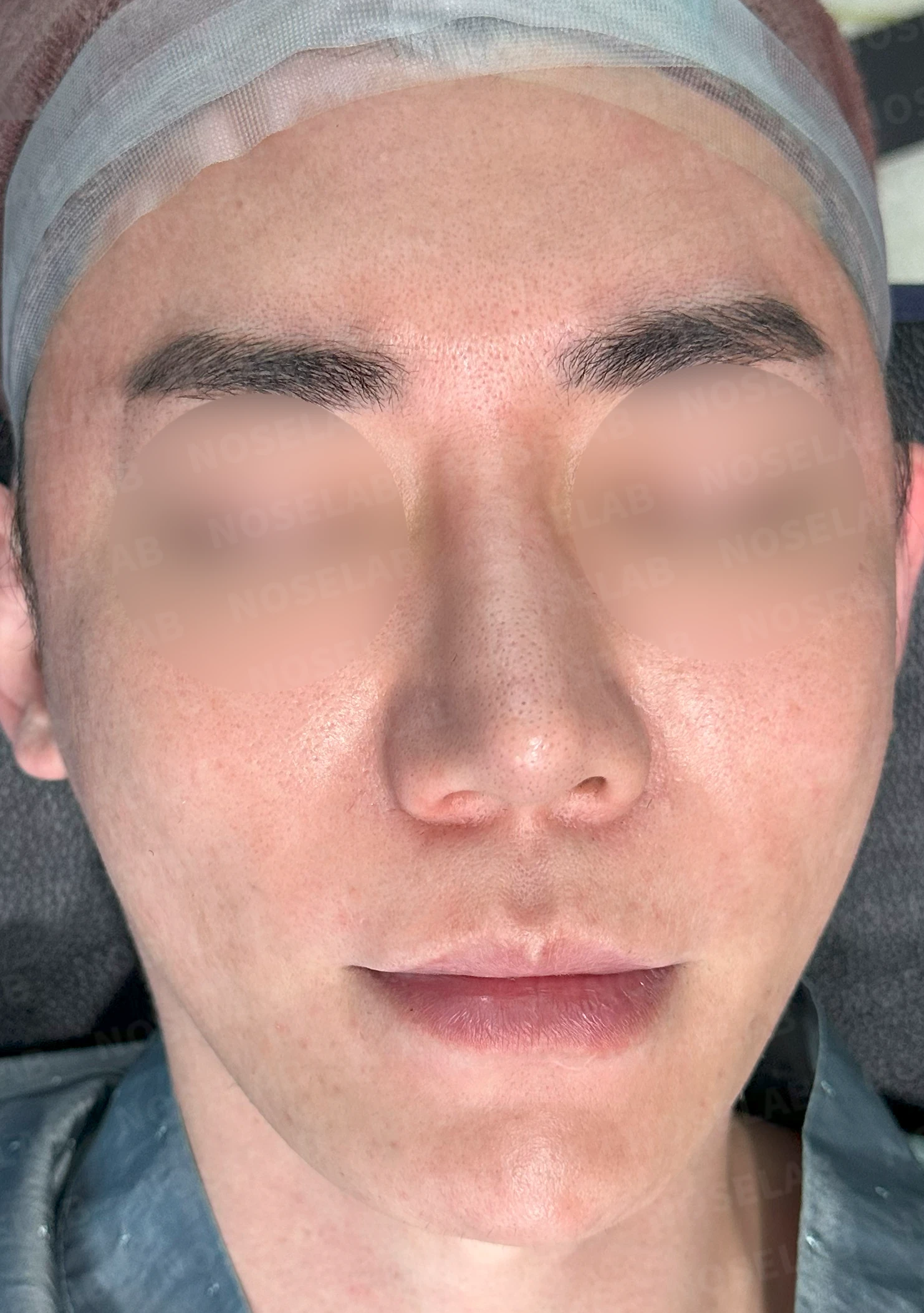
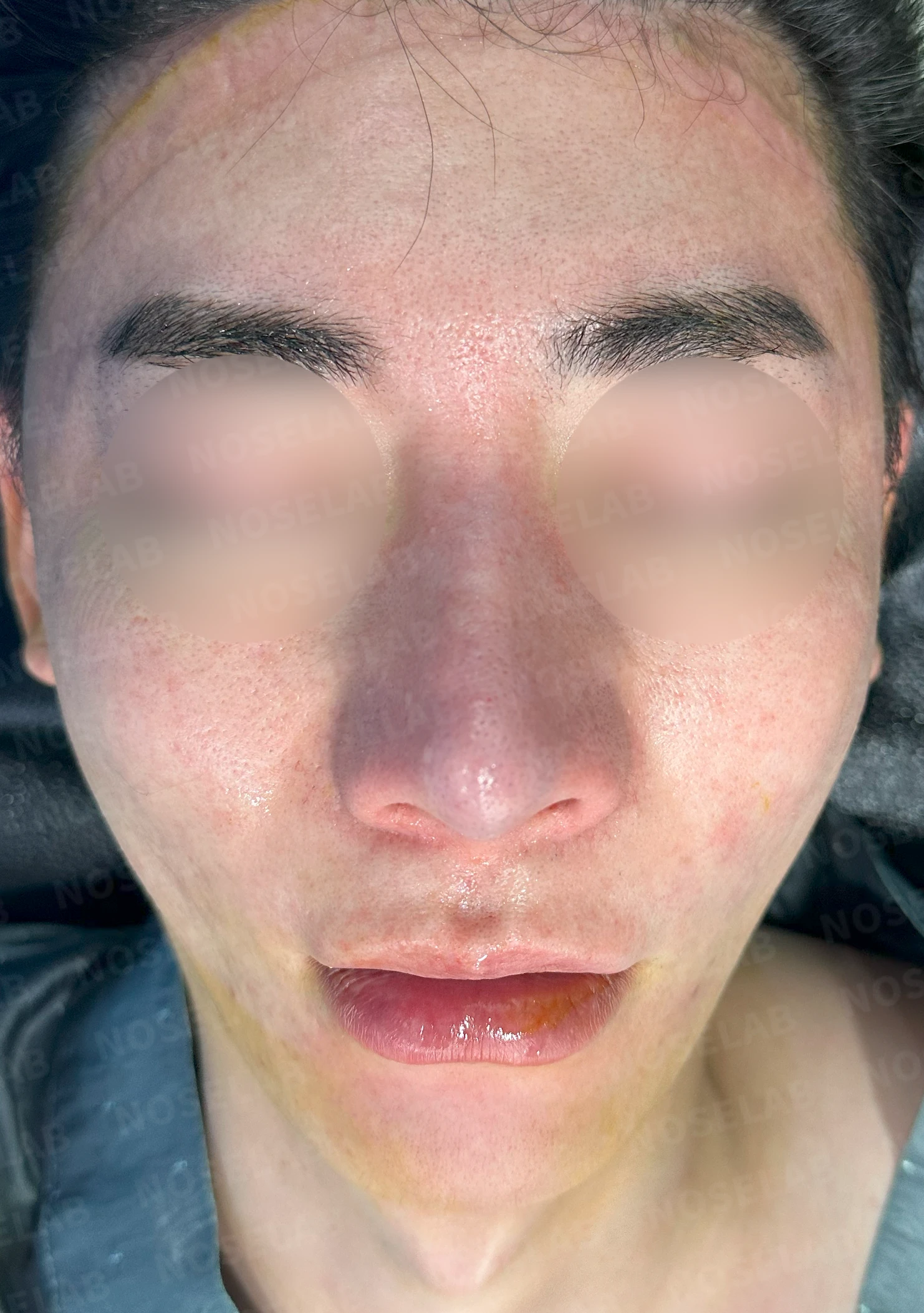
Before surgery / Day 0 immediately after surgery Photos taken immediately after surgery show swelling and may differ from the final result.
- The nose, which previously appeared diagonally deviated, has been straightened.
- The nasal tip, which previously appeared recessed relative to the alae, has been improved.
- Nostril asymmetry improved significantly.
- The depressed area above the right alar wing was naturally corrected.
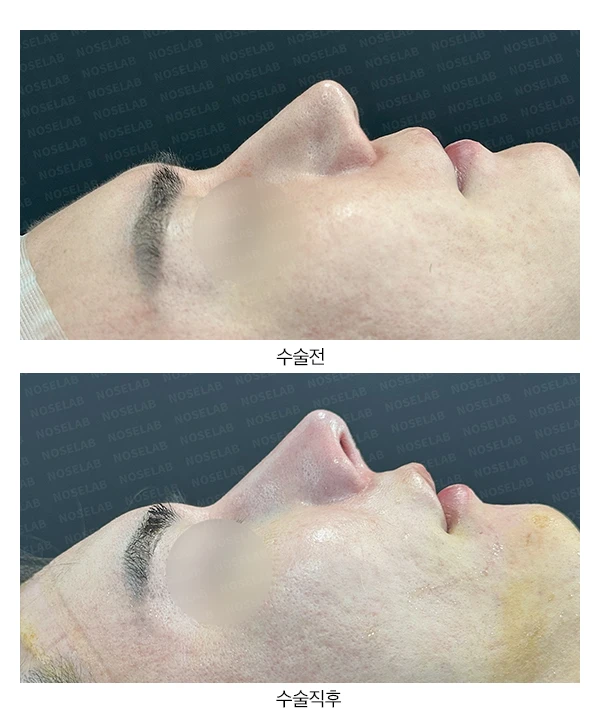
Profile view:
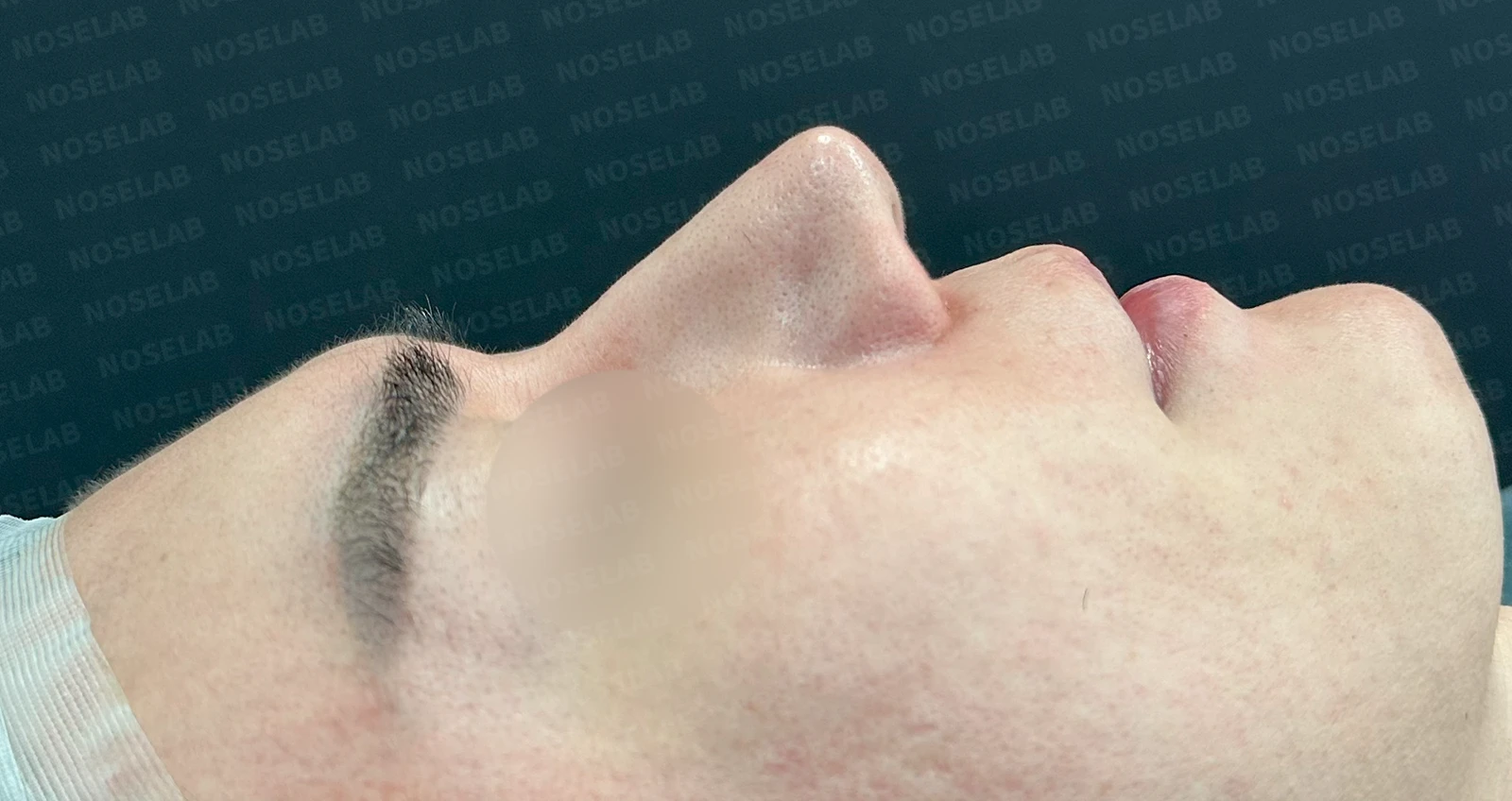
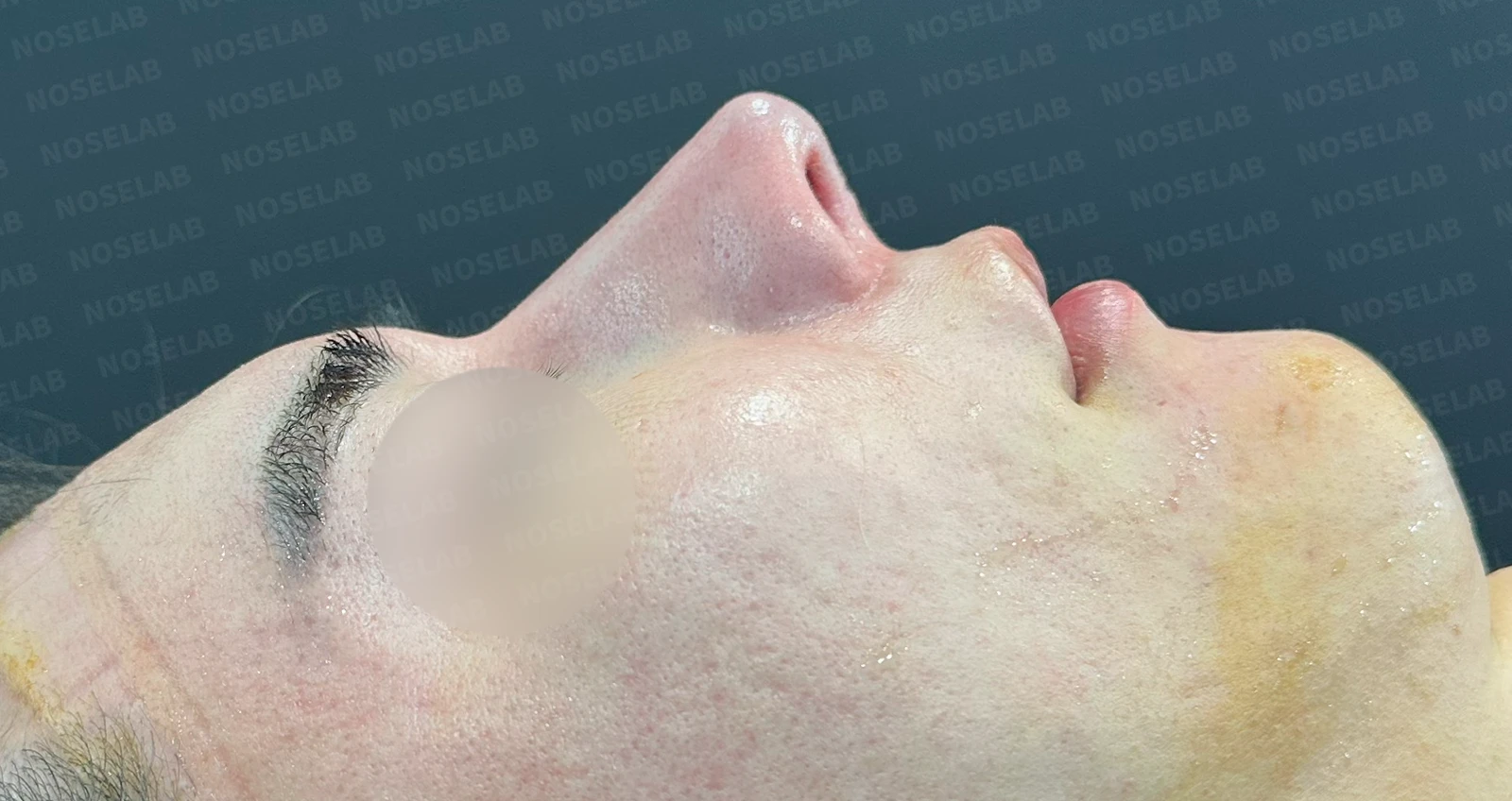
Before surgery / Day 0 immediately after surgery Photos taken immediately after surgery show swelling and may differ from the final result.
- The dorsal hump was removed, creating a smooth, straight bridge line.
- The drooping nasal tip was adequately elevated, improving overall balance.
- The columella has been naturally lowered, bringing harmony to the overall nasal shape.
- The balance between the alae and the columella has improved, presenting a much more natural appearance.
Oblique view:
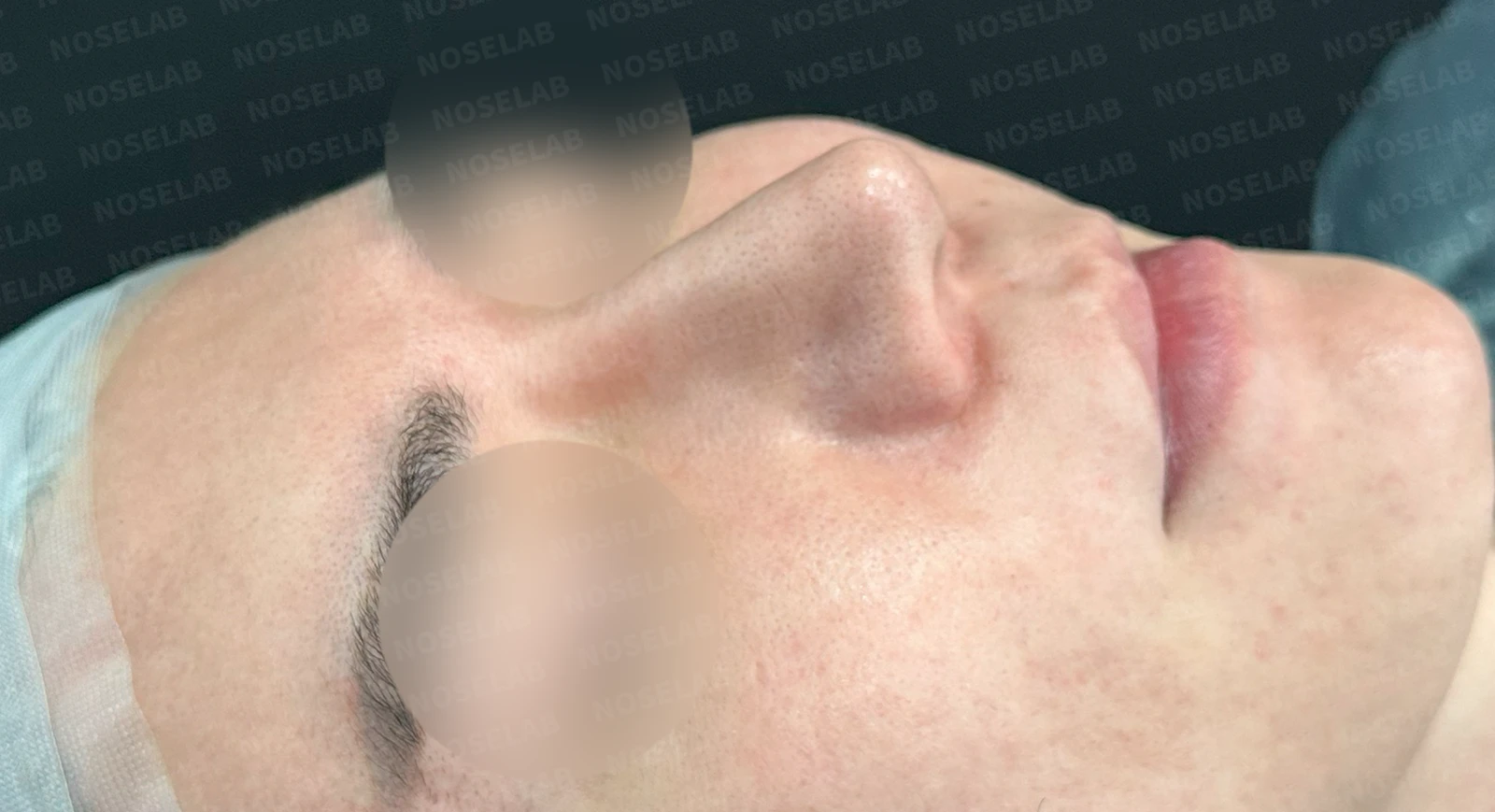
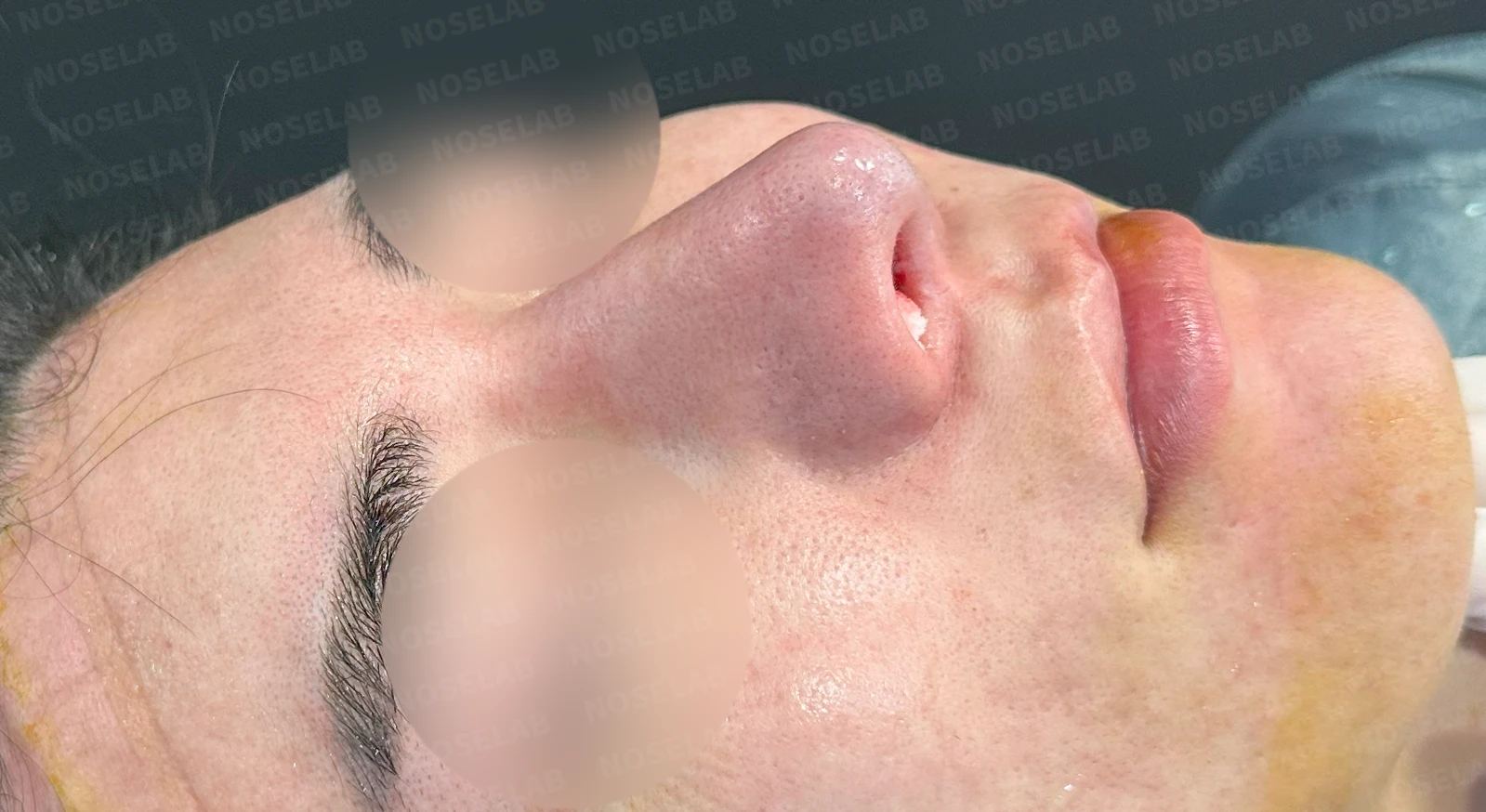
Before surgery / Day 0 immediately after surgery Photos taken immediately after surgery show swelling and may differ from the final result.
- Implant visibility has been significantly reduced, revealing a natural nasal contour.
- Nasal deviation was corrected, showing a smooth line.
- The projection of the nasal tip was naturally refined, improving overall balance.
Nostrils:
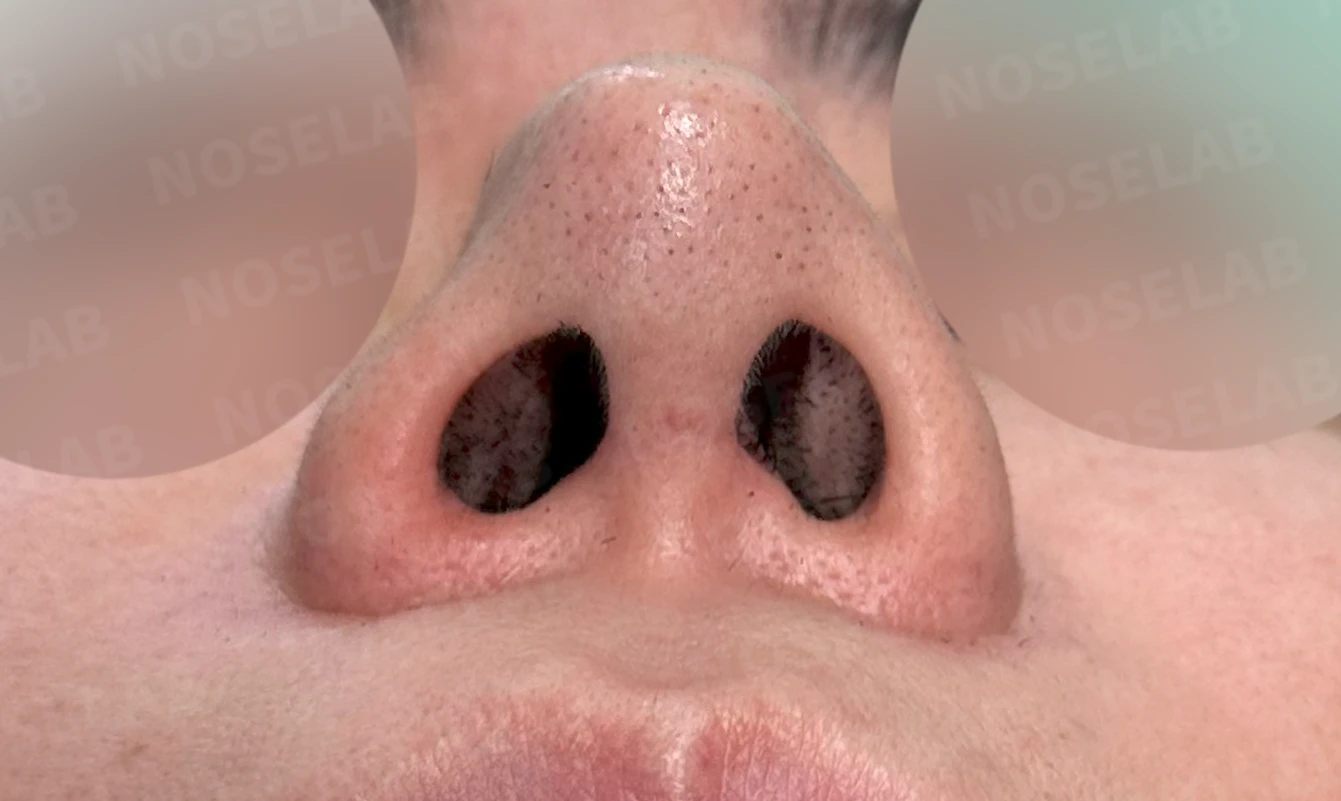
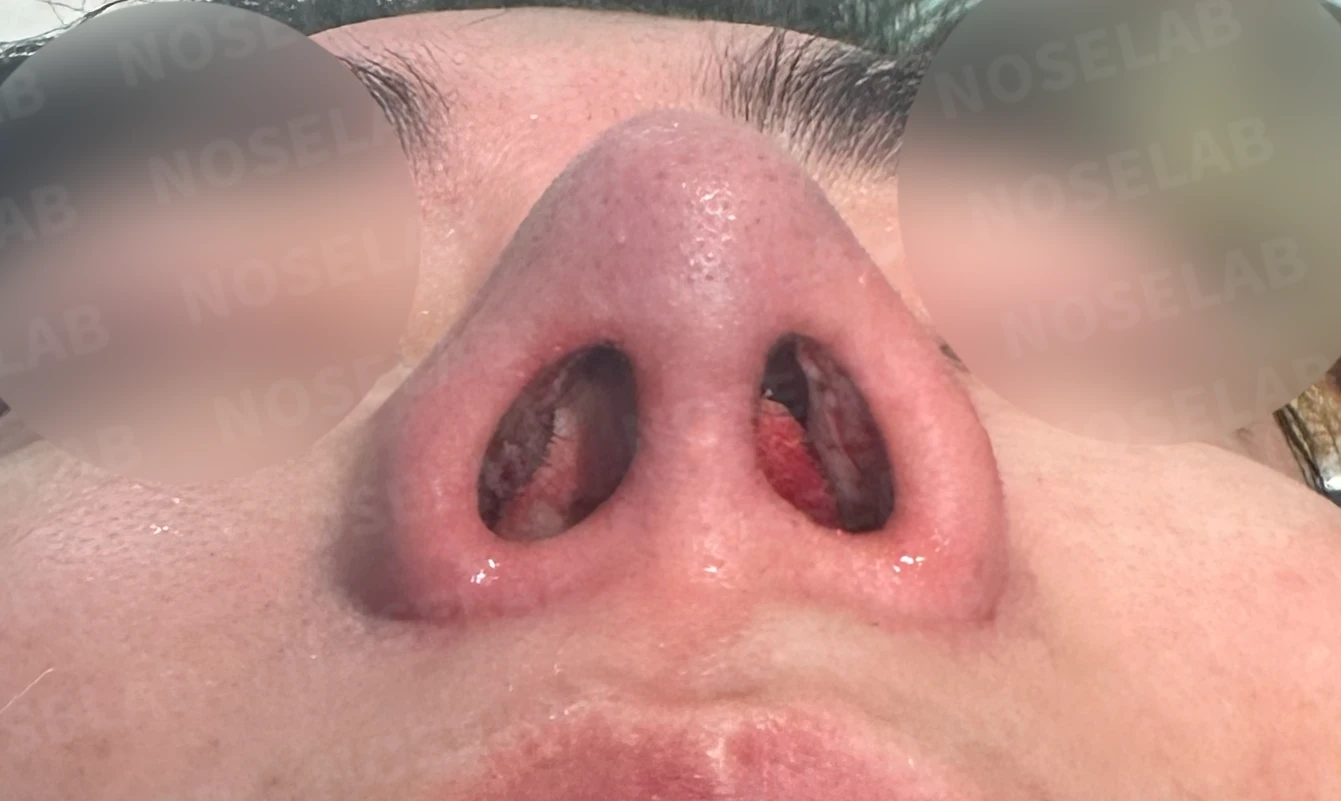
Before surgery / Day 0 immediately after surgery Photos taken immediately after surgery show swelling and may differ from the final result.
- Nostril asymmetry improved significantly.
- The deviation of the nasal tip was corrected, presenting a well-balanced look.
- The depression on the right alar wing was naturally corrected.
4. Photos taken immediately after surgery
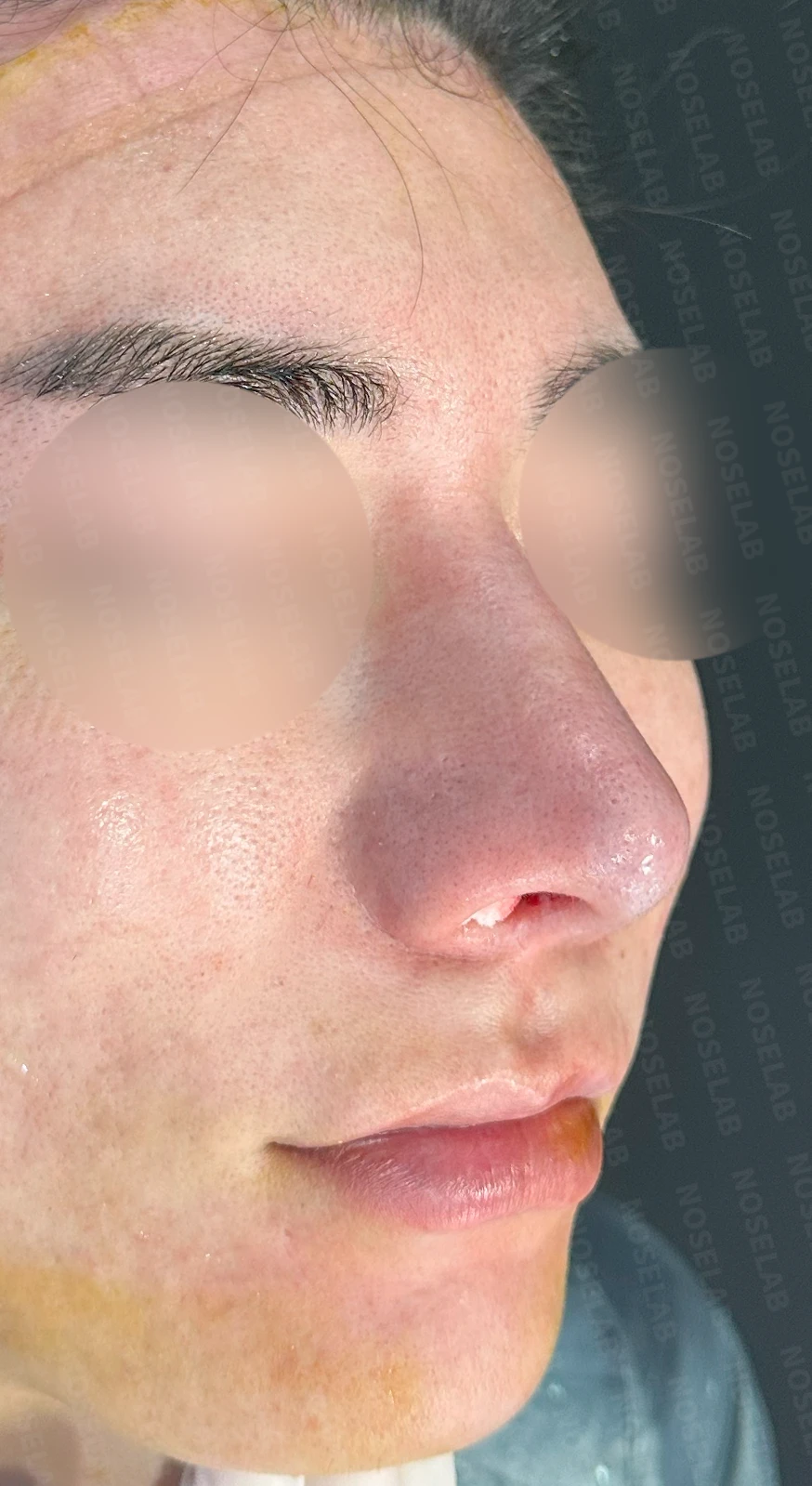
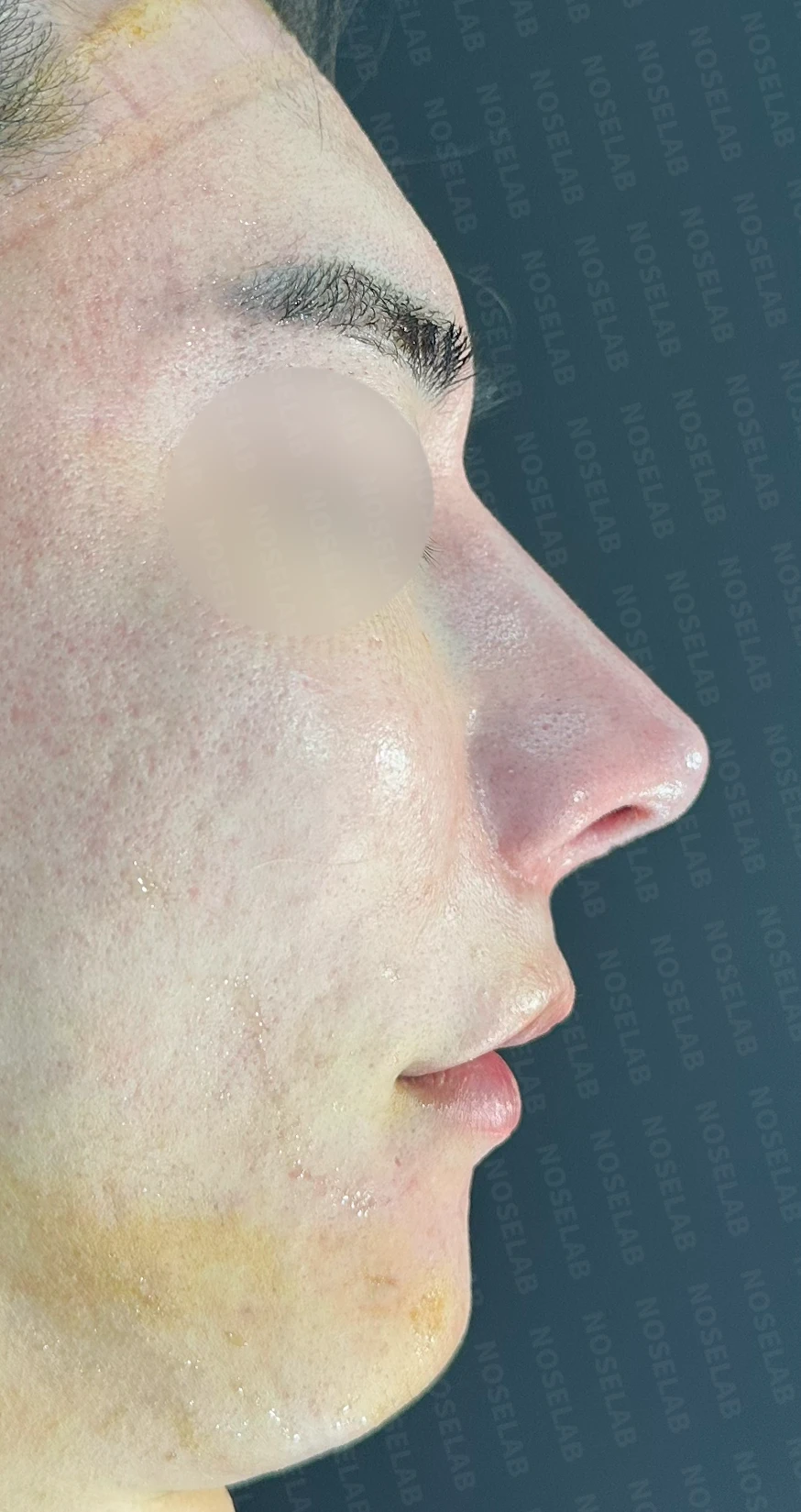
Front, oblique, and profile views immediately after surgery on day 0. Photos taken immediately after surgery show swelling and may differ from the final result.
Nostril view on day 0 immediately after surgery. Photos taken immediately after surgery show swelling and may differ from the final result.
5. Conclusion
The most important focus in this surgery was naturally lowering the columella. The columella plays a crucial role in the overall nasal profile. Although it may not stand out prominently, when the columella is out of its proper position, it creates an unnatural appearance. In this surgery, we successfully lowered the columella naturally through septal cartilage correction, lower lateral cartilage repositioning, and nasolabial angle correction using autologous rib cartilage.
In addition, for patients with thin nasal skin, implant or cartilage visibility is a very challenging issue to address. Correcting this often requires reducing height; however, in this case, we were able to achieve a favorable result without significantly lowering the height. This was possible through customized rhinoplasty techniques, such as broadening the implant width and adjusting its placement.
Addressing multiple issues simultaneously—including crooked nose correction, dorsal hump improvement, alar depression correction, and rhinitis treatment—while achieving an overall natural result was possible by making the most of the advantages of the closed approach. This technique helps minimize surgical scars and shortens the recovery period.
Transforming an unnatural nose into a natural one may sound simple, but it requires solving complex, multifaceted issues.
6. Conclusion
I hope this case offers encouragement to those concerned about visible implants or a crooked nose. Even with complex nasal concerns, a natural and aesthetically pleasing nose can be achieved through an appropriate surgical plan and customized rhinoplasty.
NOSELAB provides customized surgical plans for each patient based on up-to-date medical techniques and extensive clinical experience. If you are considering rhinoplasty, we encourage you to consult with a specialist to find the approach best suited to you.
NOSELAB is here to help you achieve a healthy, aesthetically pleasing nose. Thank you.
#rhinoplasty #crookednosecorrection #customrhinoplasty #dorsalhumpcorrection #retractedcolumellacorrection #unnaturalnose #autologousribcartilagegraft #closedrhinoplasty #nasalbridgeaugmentation #tipplasty #ENTrhinoplasty #naturalnose #rhinitistreatment #deviatedseptumcorrection #nostrilasymmetry

Limitations and risks
When autologous rib cartilage is used, scarring and pain may remain at the donor site on the chest, and pneumothorax (pleural injury) can occur rarely. Over time, the grafted cartilage may warp or undergo partial resorption.
When revising after implant removal, contracture may progress again after removal, the nasal height and length may decrease, and staged surgery may be necessary depending on the skin condition.
When the septum is corrected at the same time, nasal obstruction may persist or recur, and in rare cases, septal perforation or changes in smell may occur.
Common potential risks include infection, bleeding, asymmetry, scarring, skin necrosis, and insufficient improvement; results vary depending on individual skin condition and previous surgical history.