Hello, I am Dr. Peter C. Kang.
Today, I would like to share a revision rhinoplasty case of a patient who visited our clinic with persistent concerns about a deviated nasal bone, a dorsal hump shape, and nasal obstruction even after a previous rhinoplasty.
🔍 Surgical history
The patient had a history of prior nasal procedures and surgery.
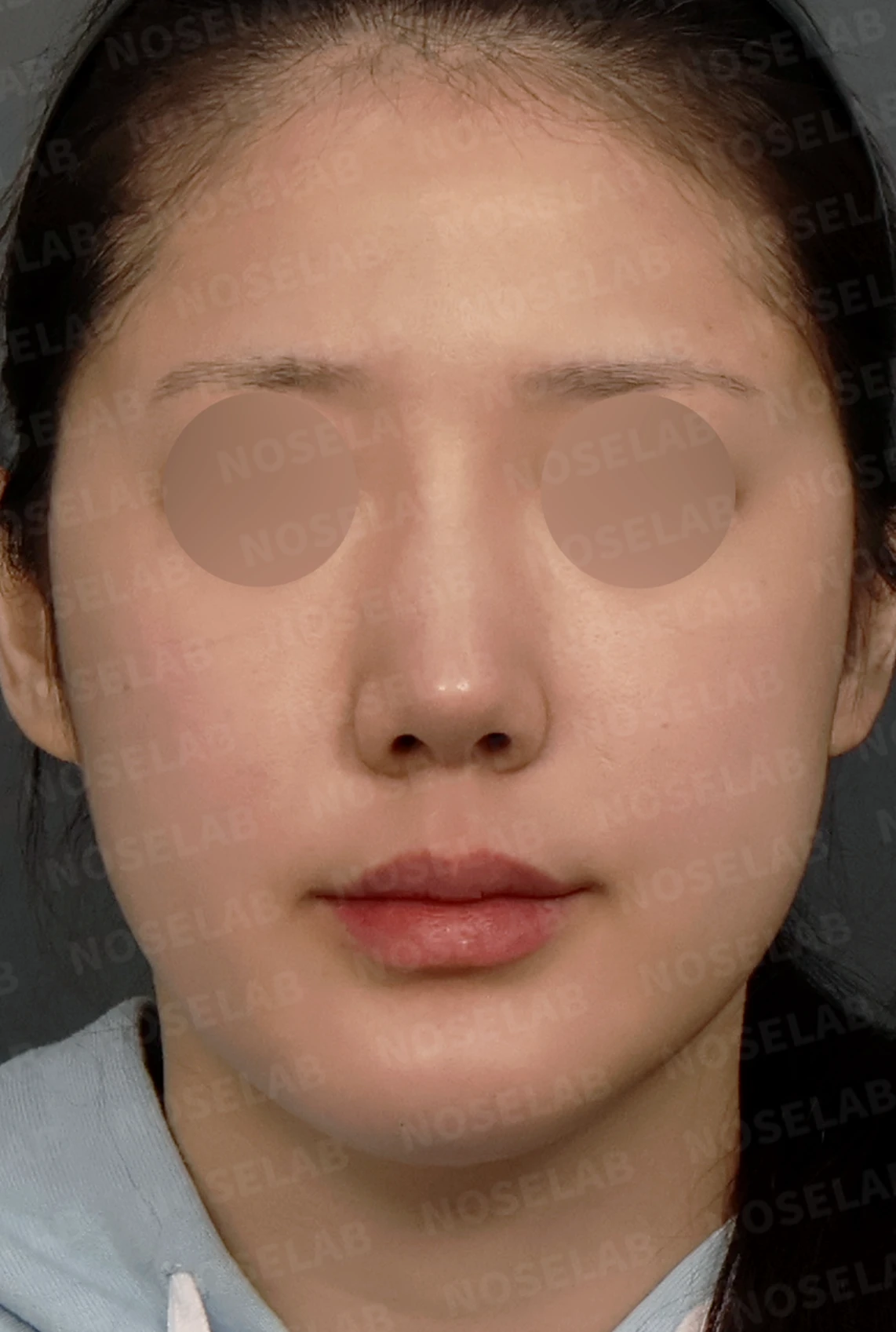
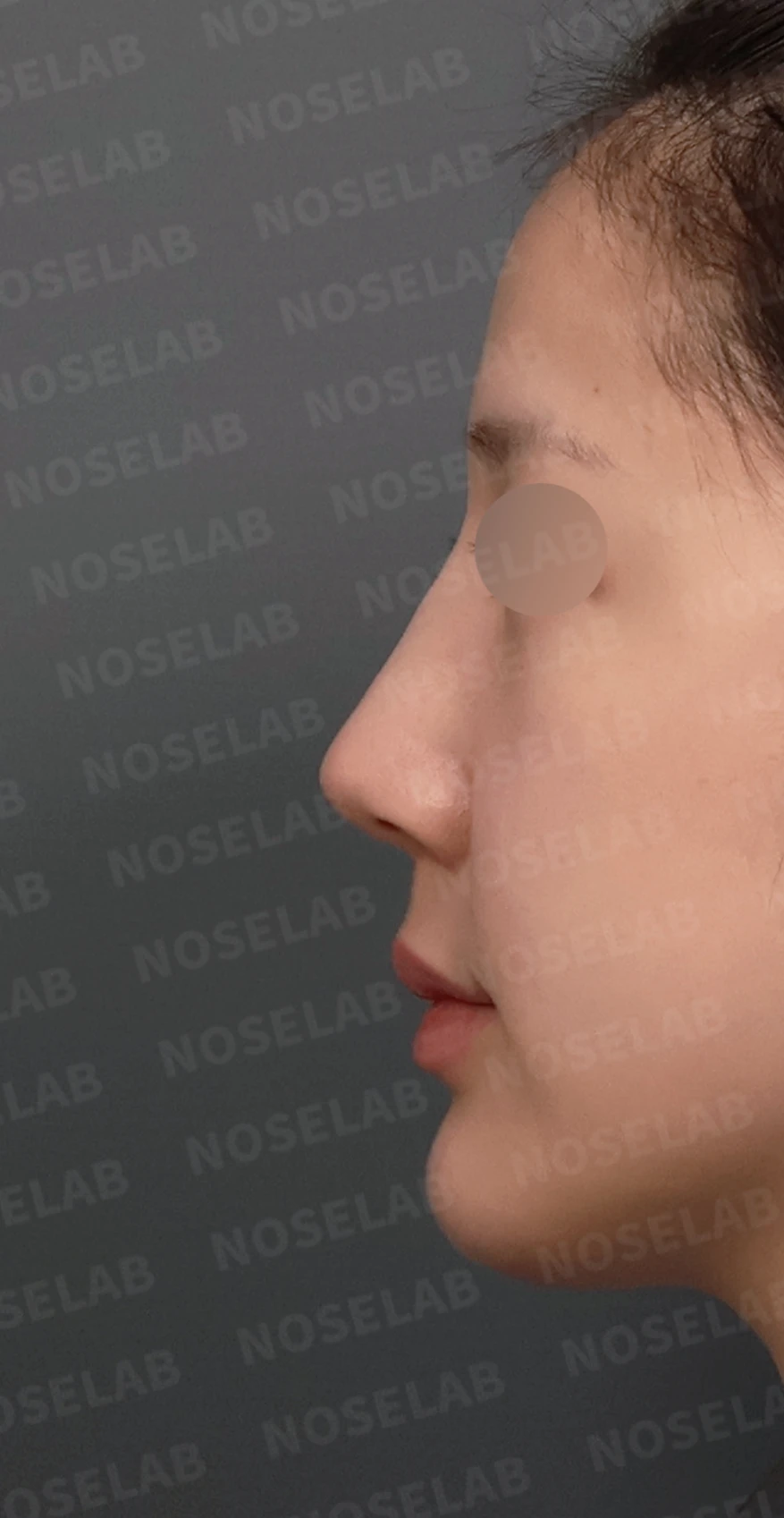
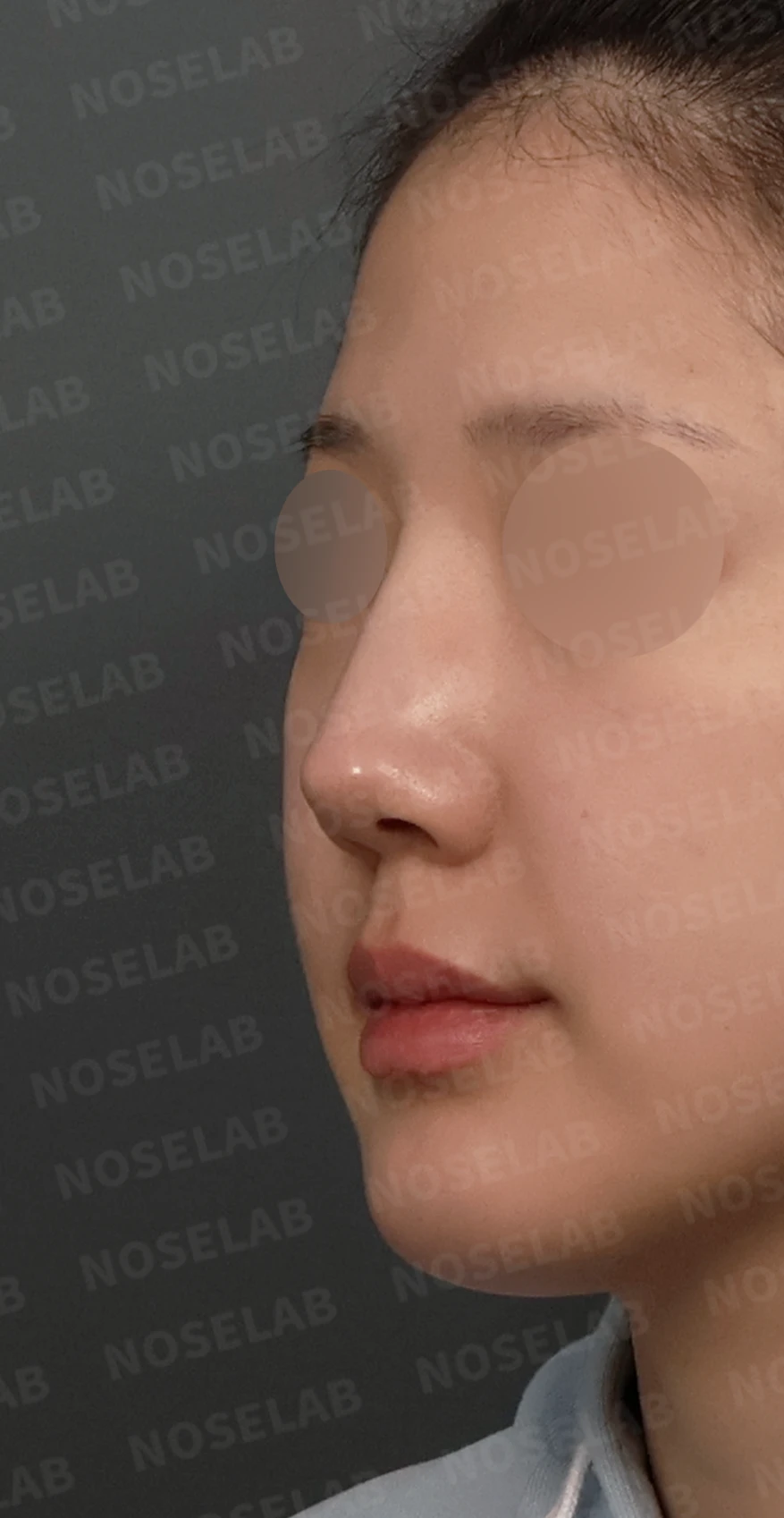
Front, left profile, and oblique views during design consultation.
Approximately 10 years ago: nasal filler procedure
Approximately 5 years ago: rhinoplasty with a silicone implant (including osteotomy, septal surgery, and rhinitis surgery)
Although some correction was achieved through the previous surgery, the deviation of the nasal bones and the dorsal hump shape were not sufficiently improved, and nasal obstruction symptoms still remained.
💉 Patient requests
The patient's specific requests were as follows:
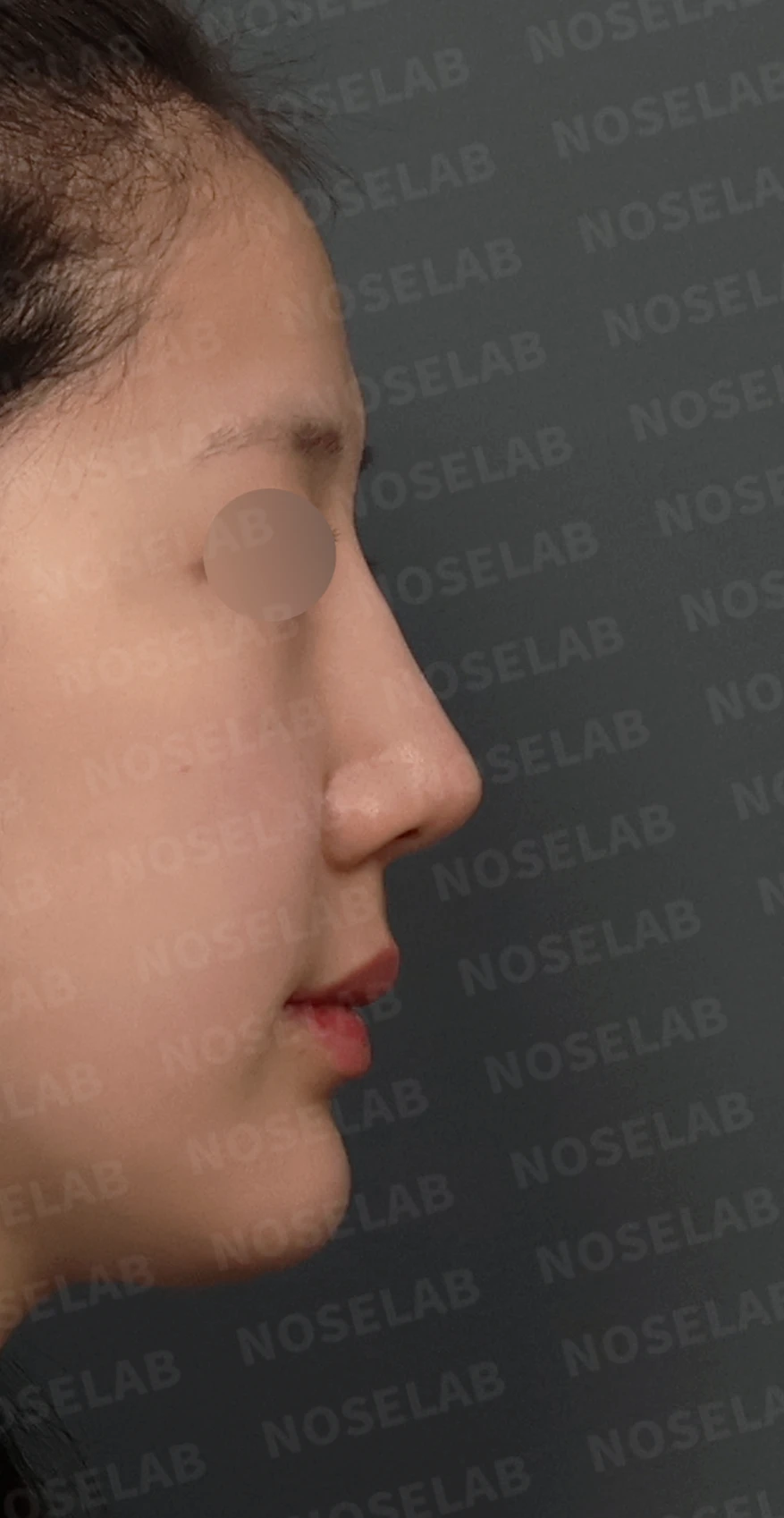
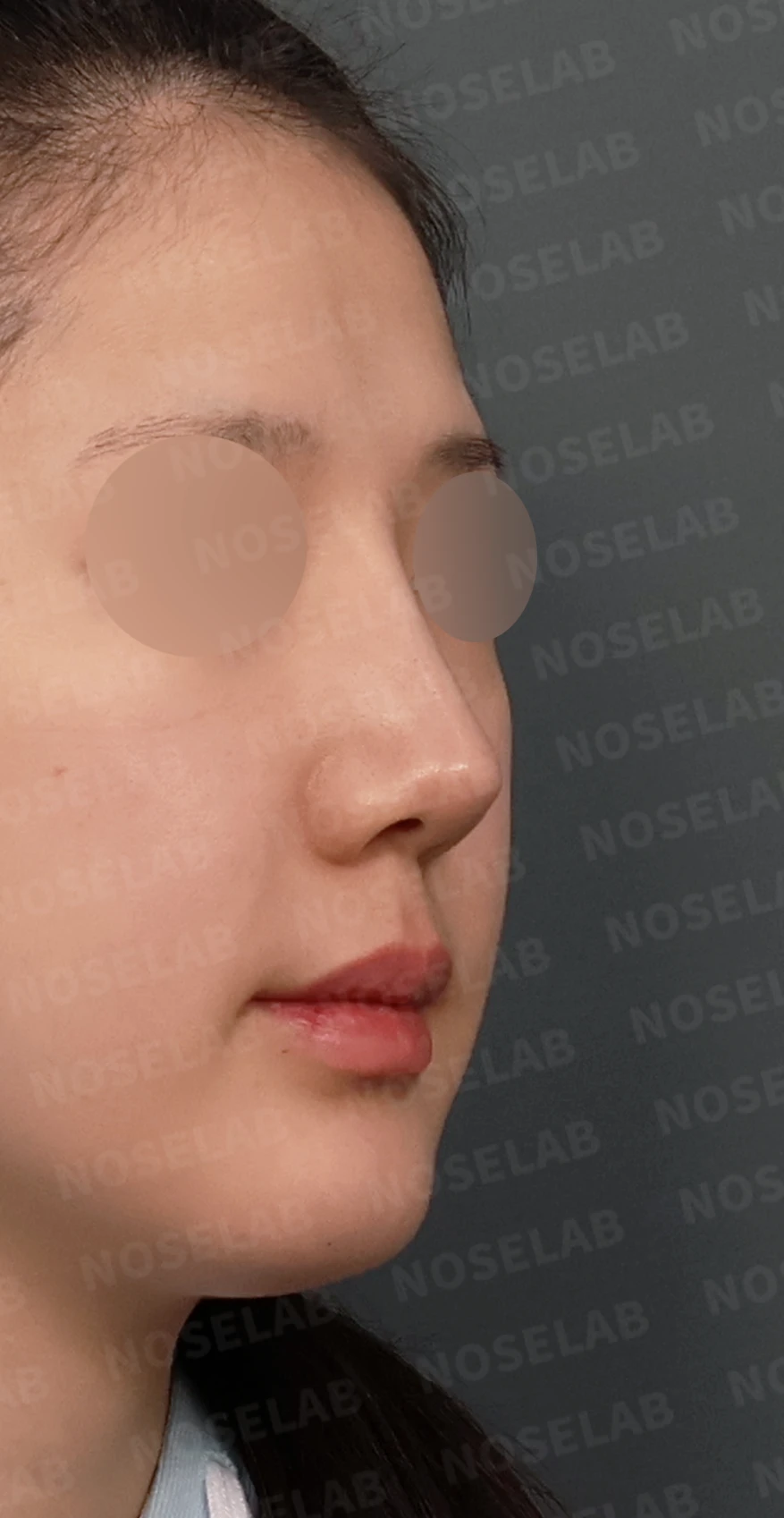
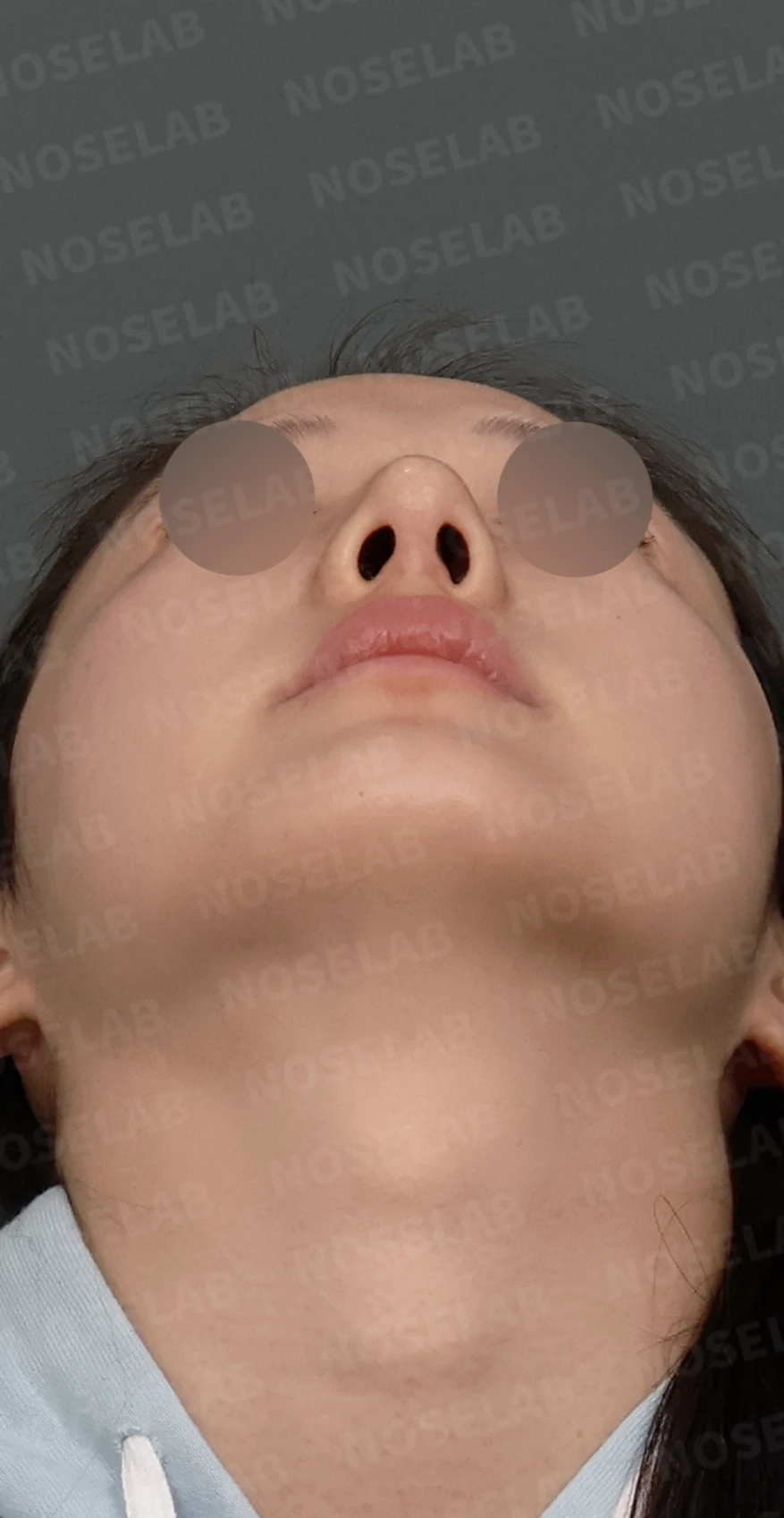
Right profile, oblique, and nostril views during design consultation.
Natural nasal line
Adjusting the radix (naturally lowering the high radix)
Improving the dorsal hump shape
Correction of deviated nasal bones
Correcting the appearance of an overly long nose
Improvement of nasal obstruction
In particular, the patient prioritized natural-looking results above all else and wanted meticulous correction of the areas that had not been adequately resolved in the previous surgery.
🔧 Surgical plan and procedure
1. Removal of existing implant and structural reconstruction
Removal of silicone implant placed during previous surgery
Clearing residual filler
Establishing a surgical plan after reassessing the altered tissue
2. Lateral osteotomy
Correction of deviated nasal bones
Narrowing the wide nasal bridge width
Improving the dorsal hump shape
Restoring nasal bone symmetry
3. Nasal tip plasty using autologous rib cartilage
Projecting the nasal tip to correct the appearance of an overly long nose
Reinforcement of the nasal tip support framework using autologous rib cartilage
Creating a natural yet refined tip line
4. Nasal bridge augmentation using a silicone implant
Silicone implant precisely carved to fit the nasal bone
Implant placed solely along the nasal dorsum to maintain a natural shape
Connecting from the forehead line to the nasal tip in a natural straight bridge line
5. Septoplasty and inferior turbinate reduction
Internal nasal structures realigned by correcting the deviated septum
Rhinitis symptoms improved by reducing hypertrophied inferior turbinates
Restoration of breathing function
🌟 Surgical results
Front view changes
The deviated nasal bones were straightened
The wide nasal bridge width was naturally reduced
Overall balanced nasal shape
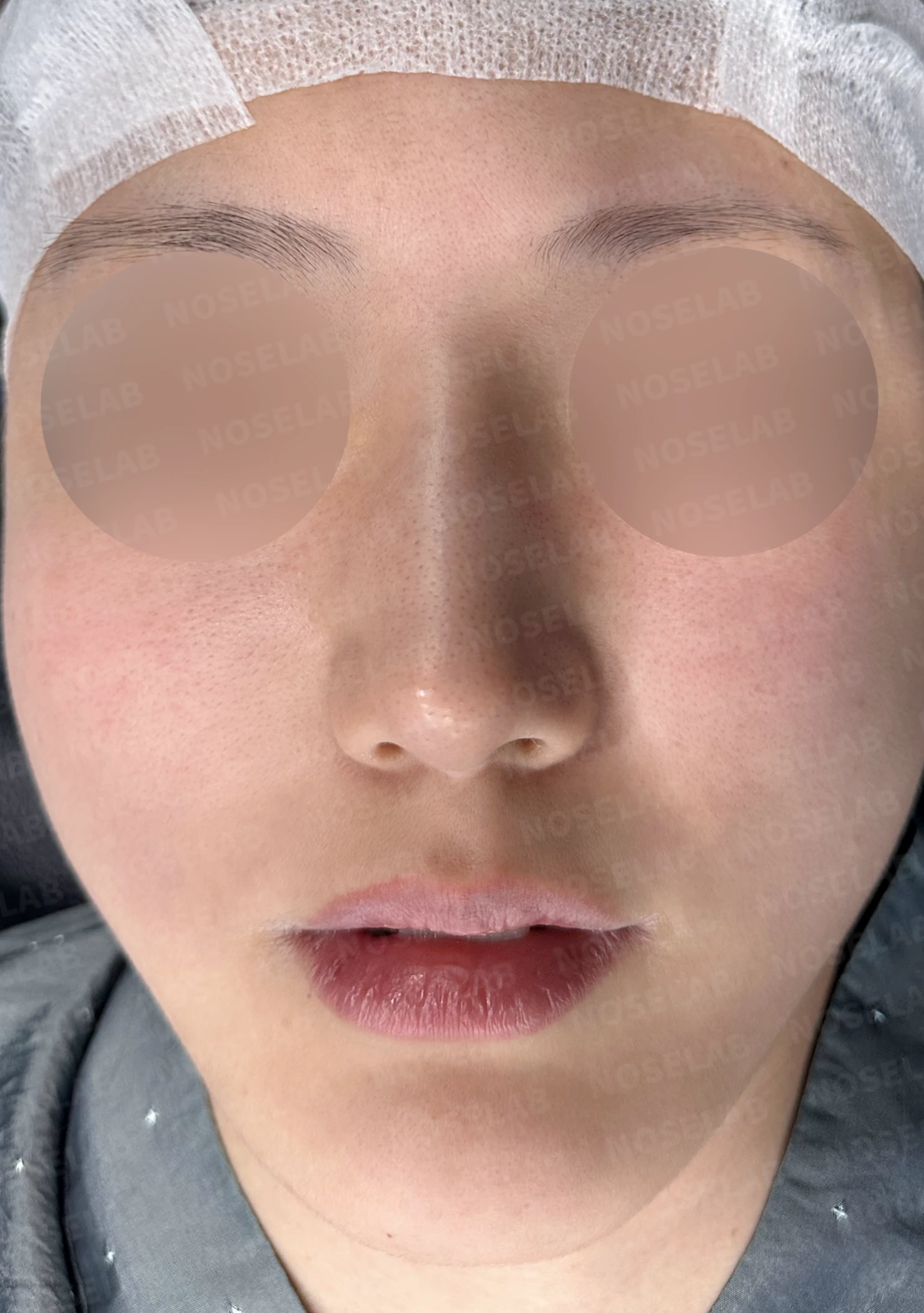
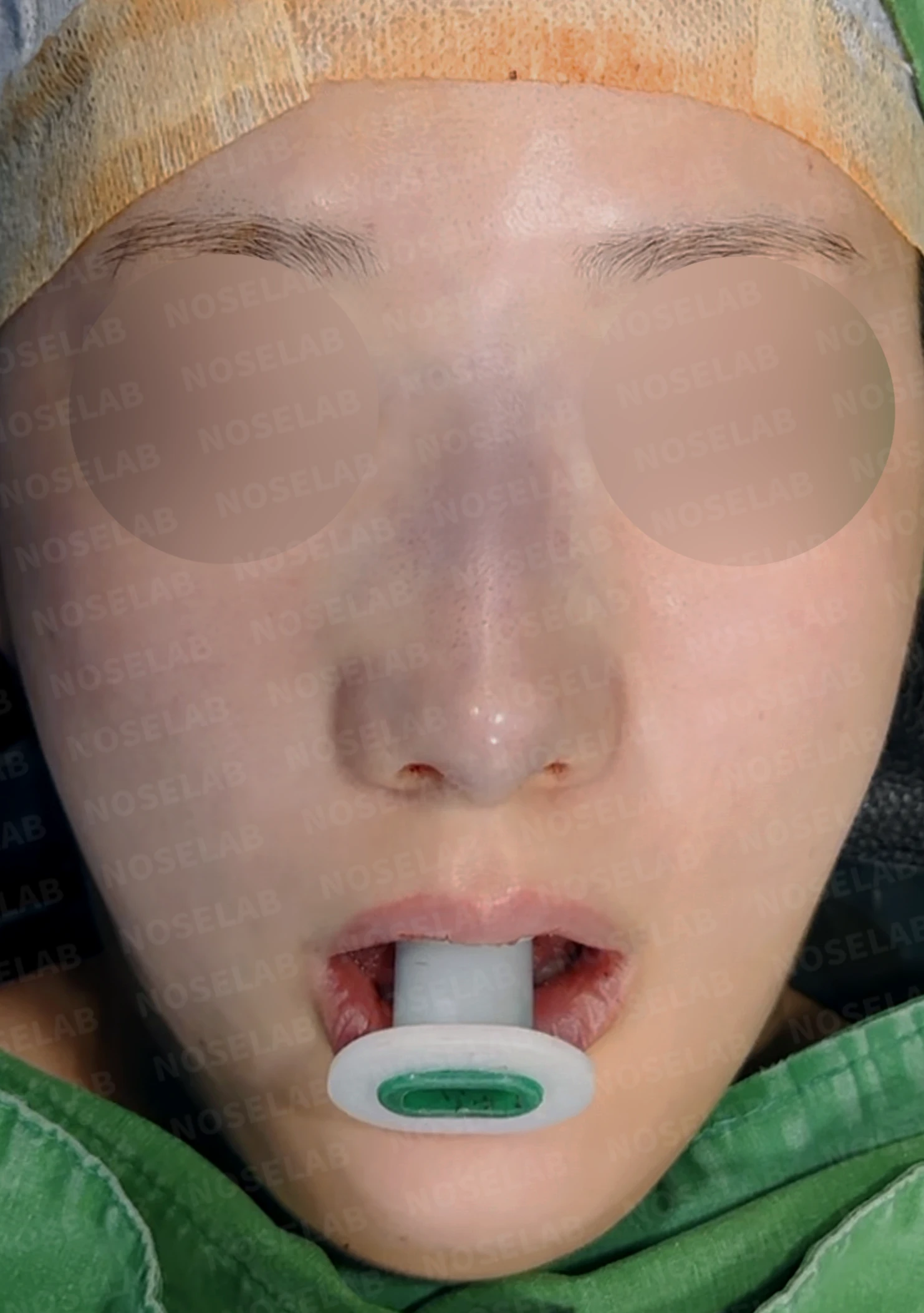
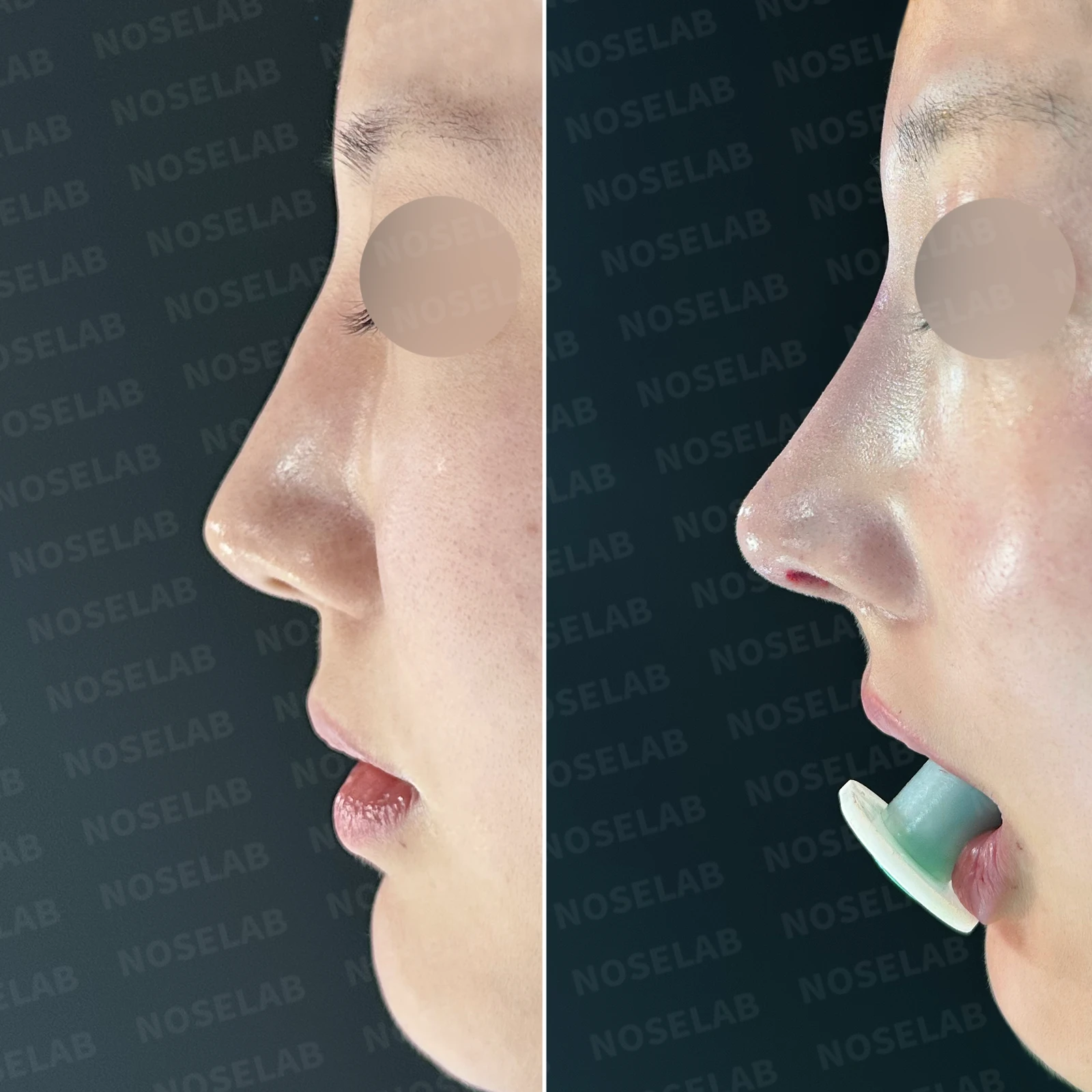
Before surgery / Day 0 immediately after surgery Photos taken immediately after surgery show swelling and may differ from the final result.
Profile view changes
The dorsal hump shape disappeared, creating a smooth bridge line
The nose, which previously appeared long, was corrected to proper proportions by elevating and projecting the tip
Natural straight bridge line created from forehead to nasal tip
The radix was naturally adjusted, creating a refined profile silhouette
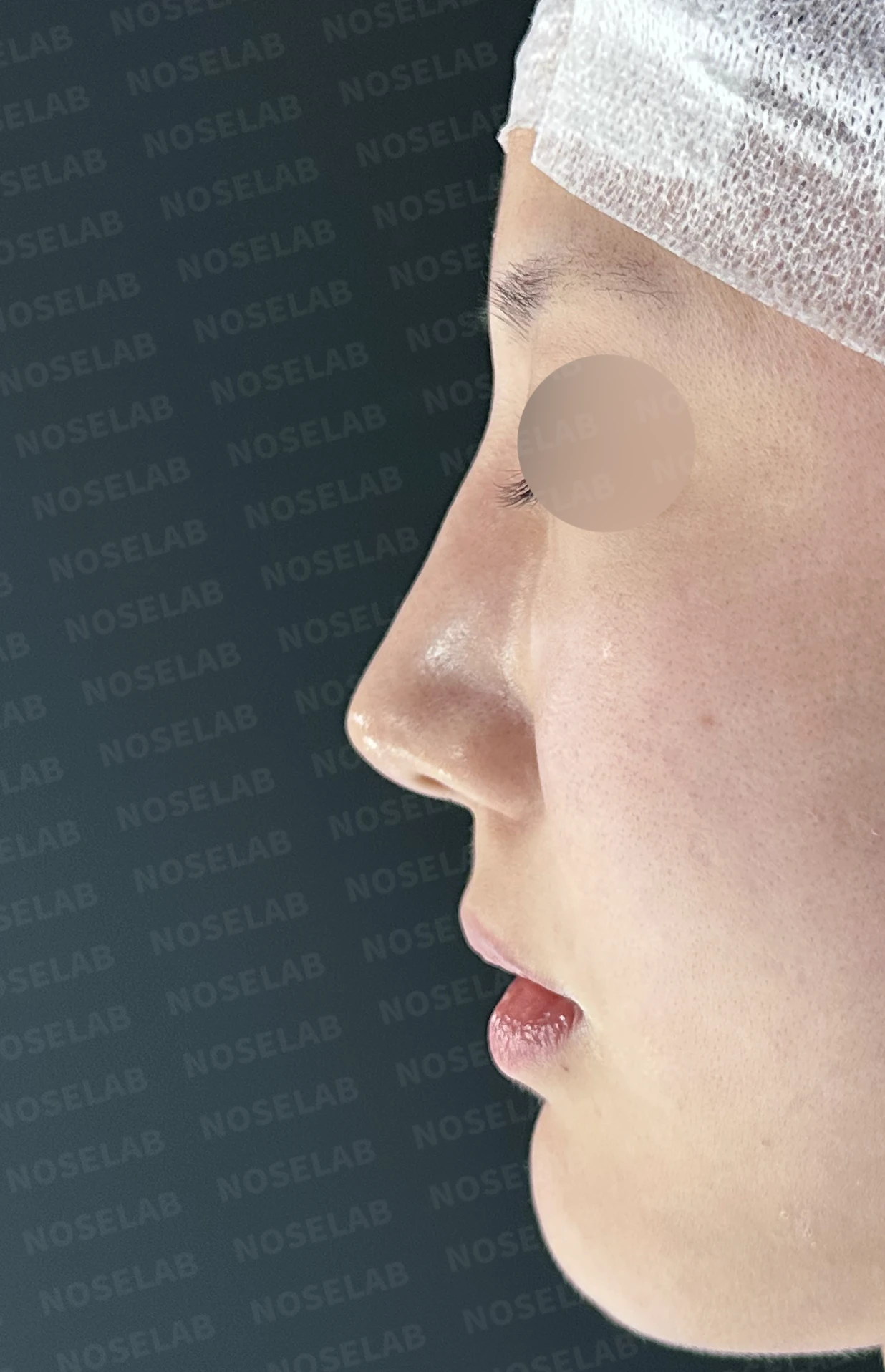
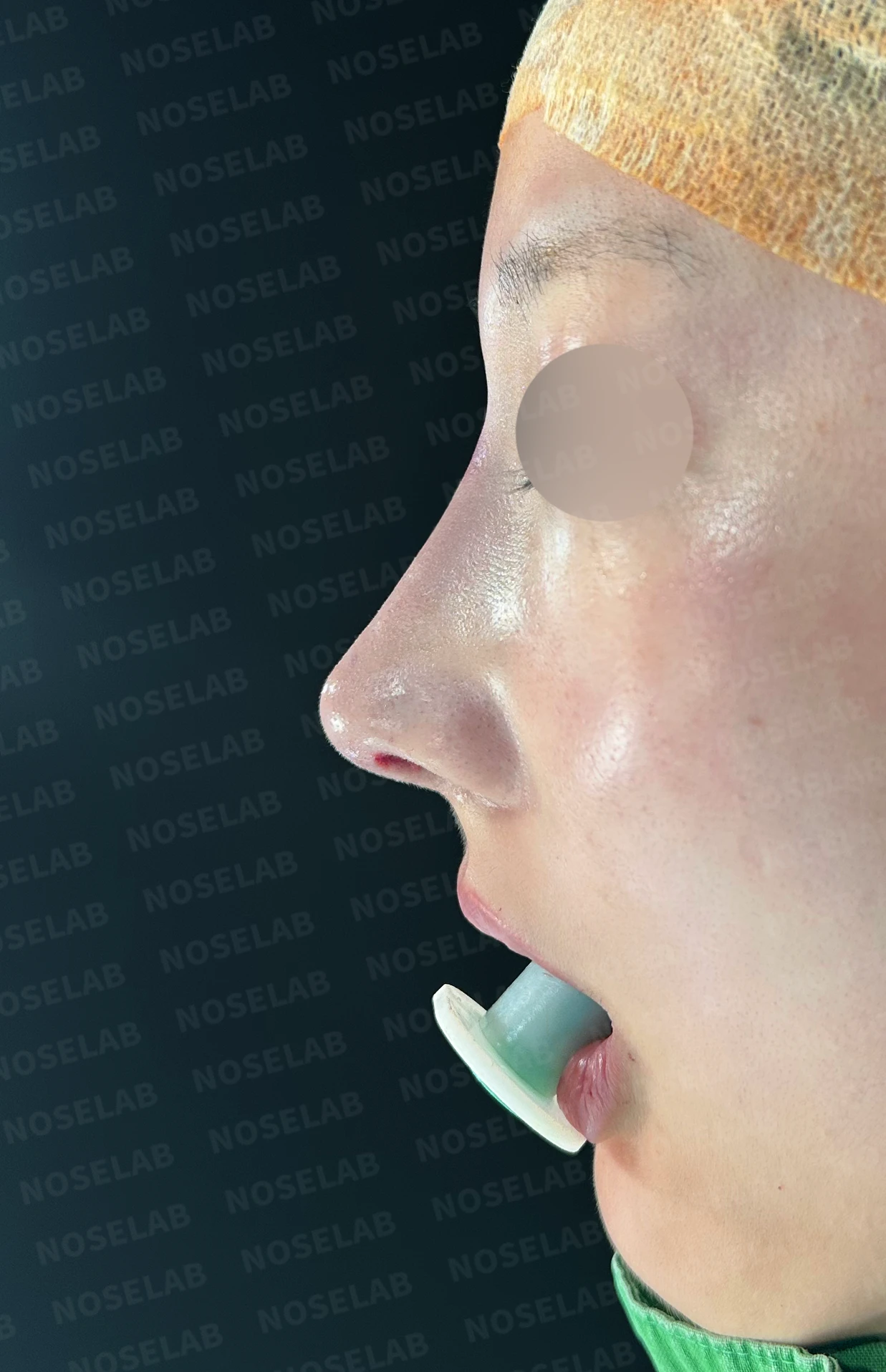
Before surgery / Day 0 immediately after surgery Photos taken immediately after surgery show swelling and may differ from the final result.
Changes on the oblique view
A smooth, natural bridge line even from the oblique 45-degree angle
A refined impression achieved by properly projecting the nasal tip
Nasal shape in harmony with the overall face
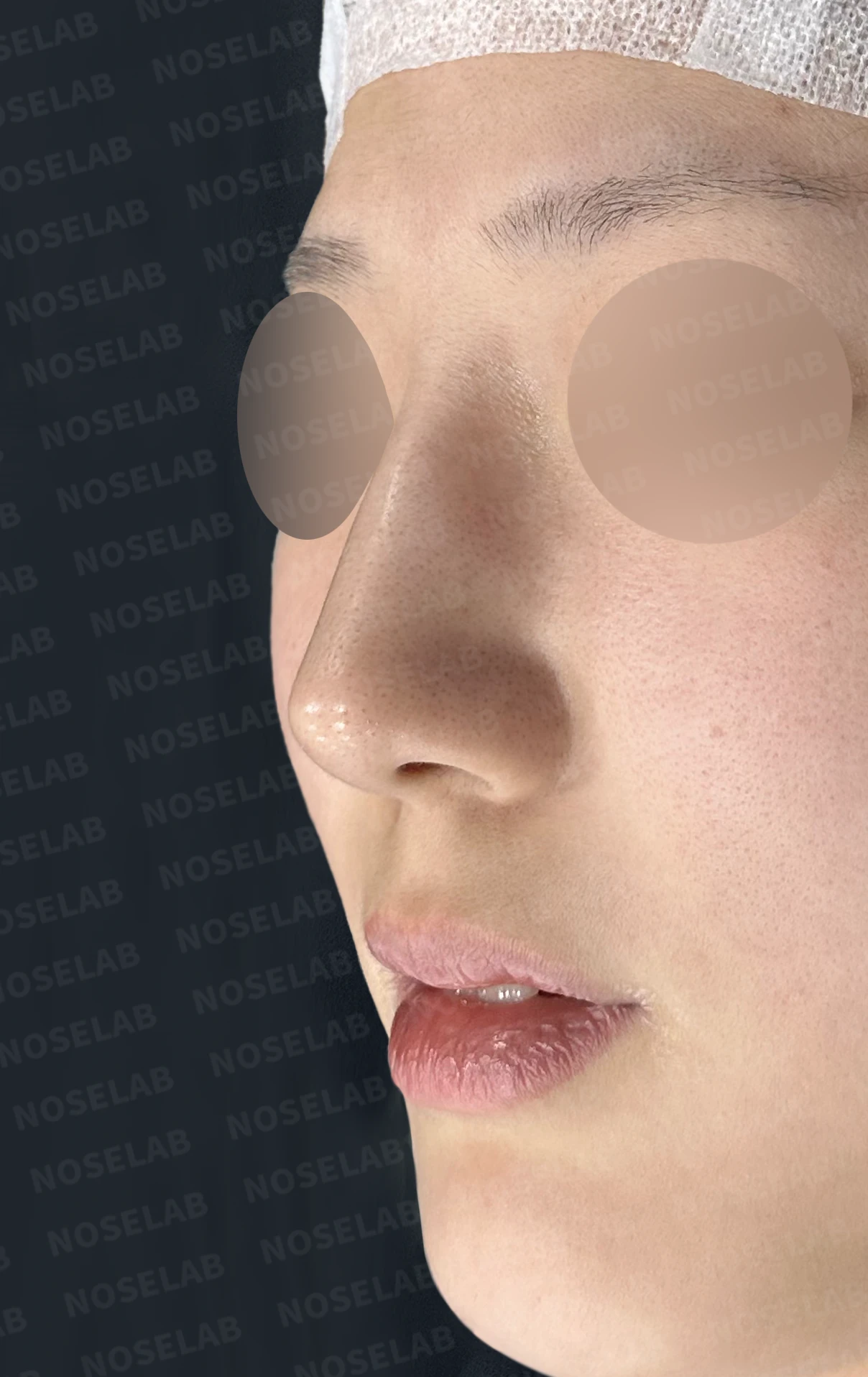
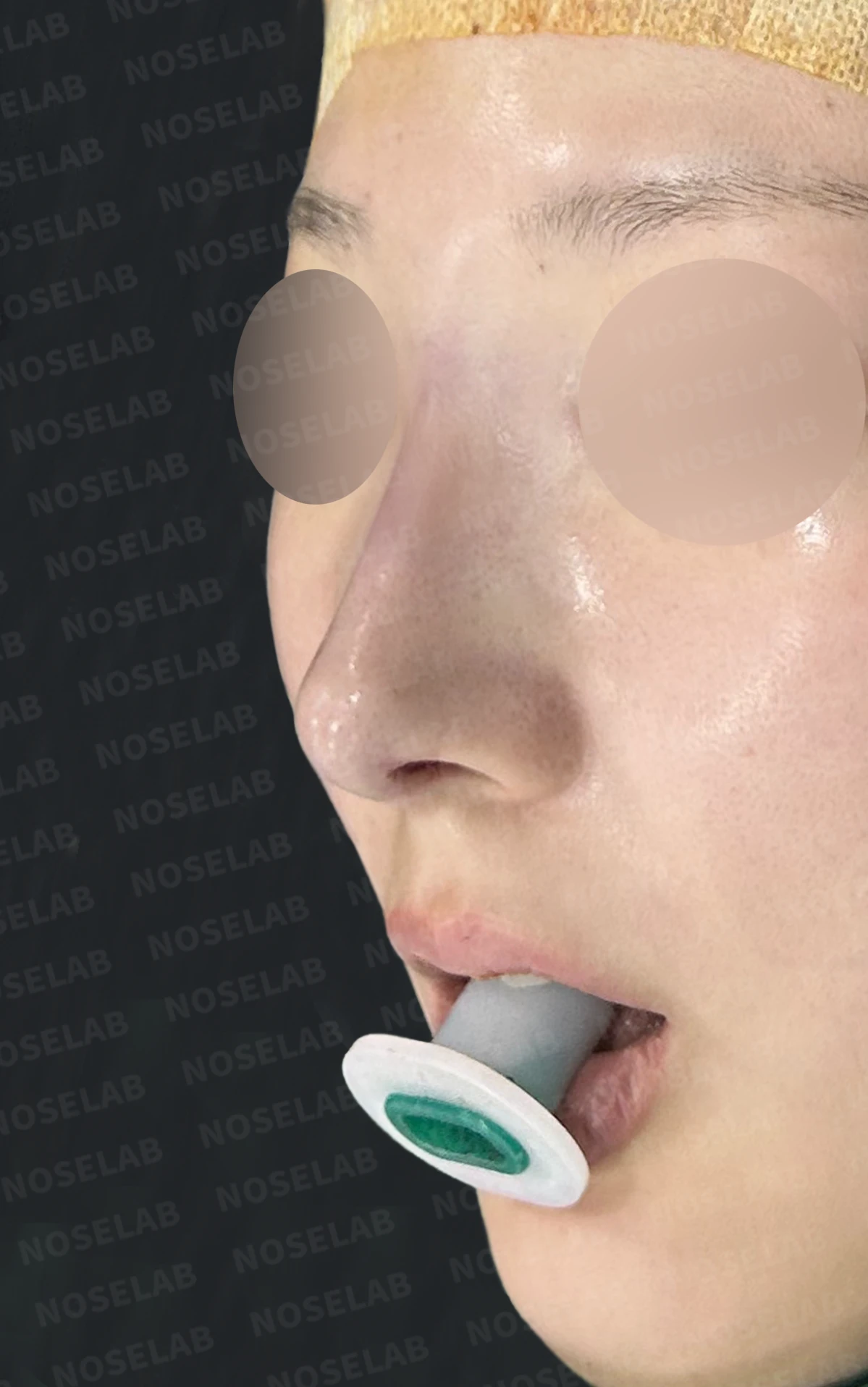
Before surgery / Day 0 immediately after surgery Photos taken immediately after surgery show swelling and may differ from the final result.
Changes in nostril shape
Nostril shape naturally changed as the nasal tip was projected
Balanced, symmetric nostril shape
An overall natural nasal base line
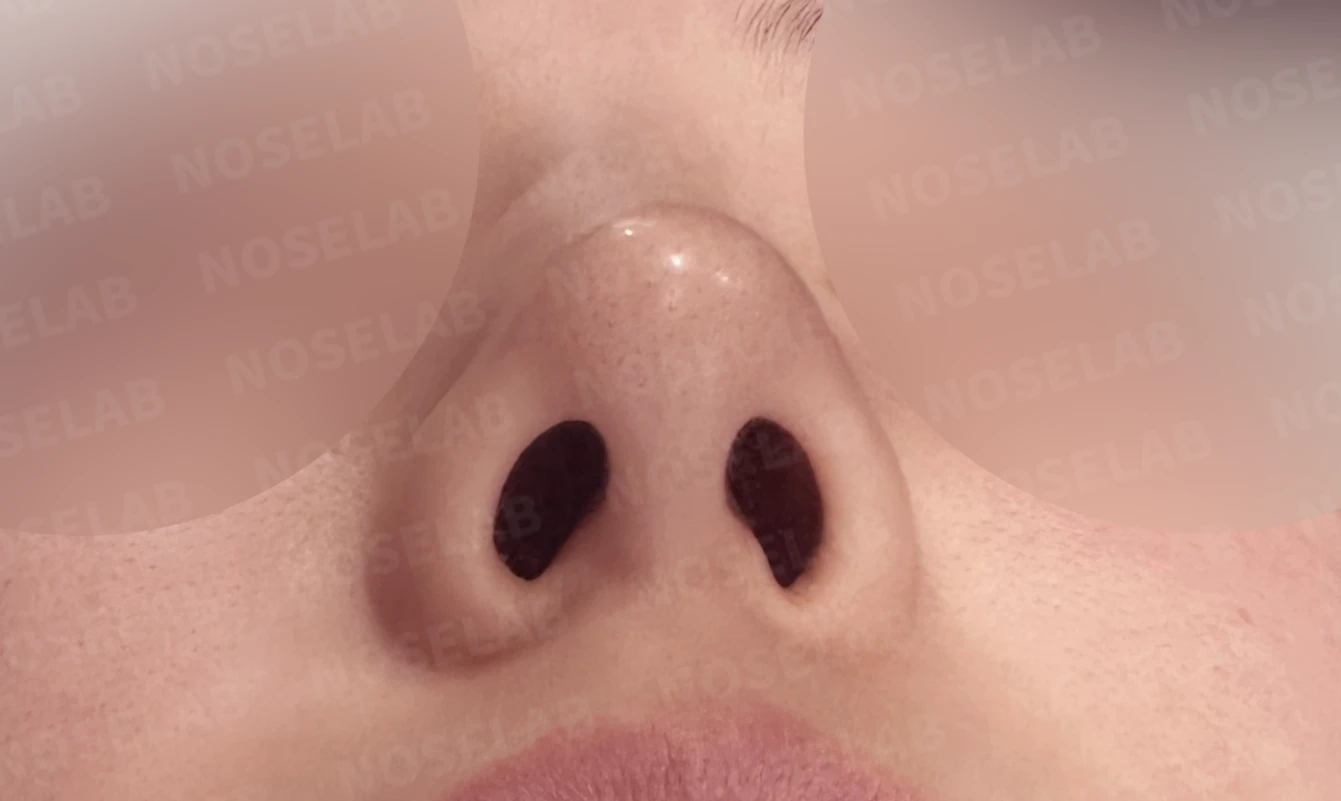
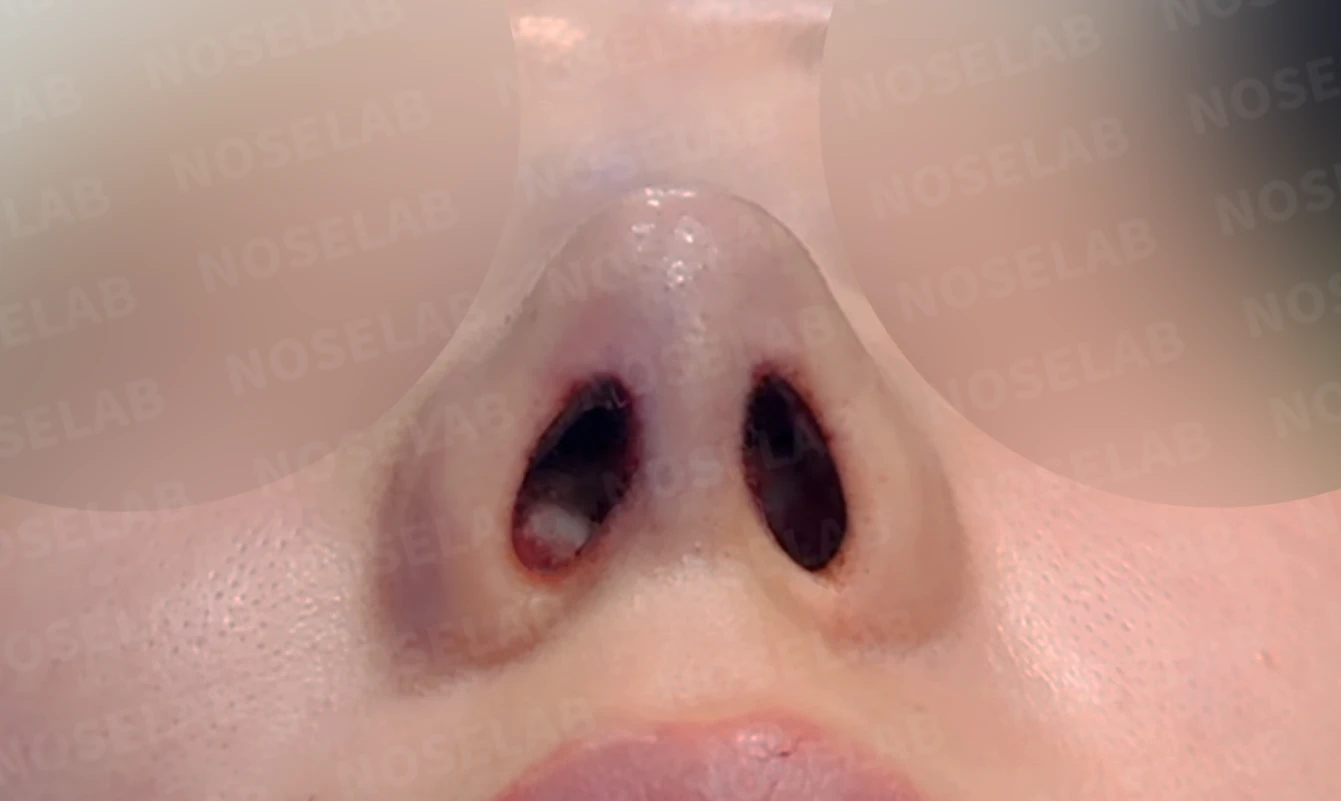
Before surgery / Day 0 immediately after surgery Photos taken immediately after surgery show swelling and may differ from the final result.
💡 Specialist assessment
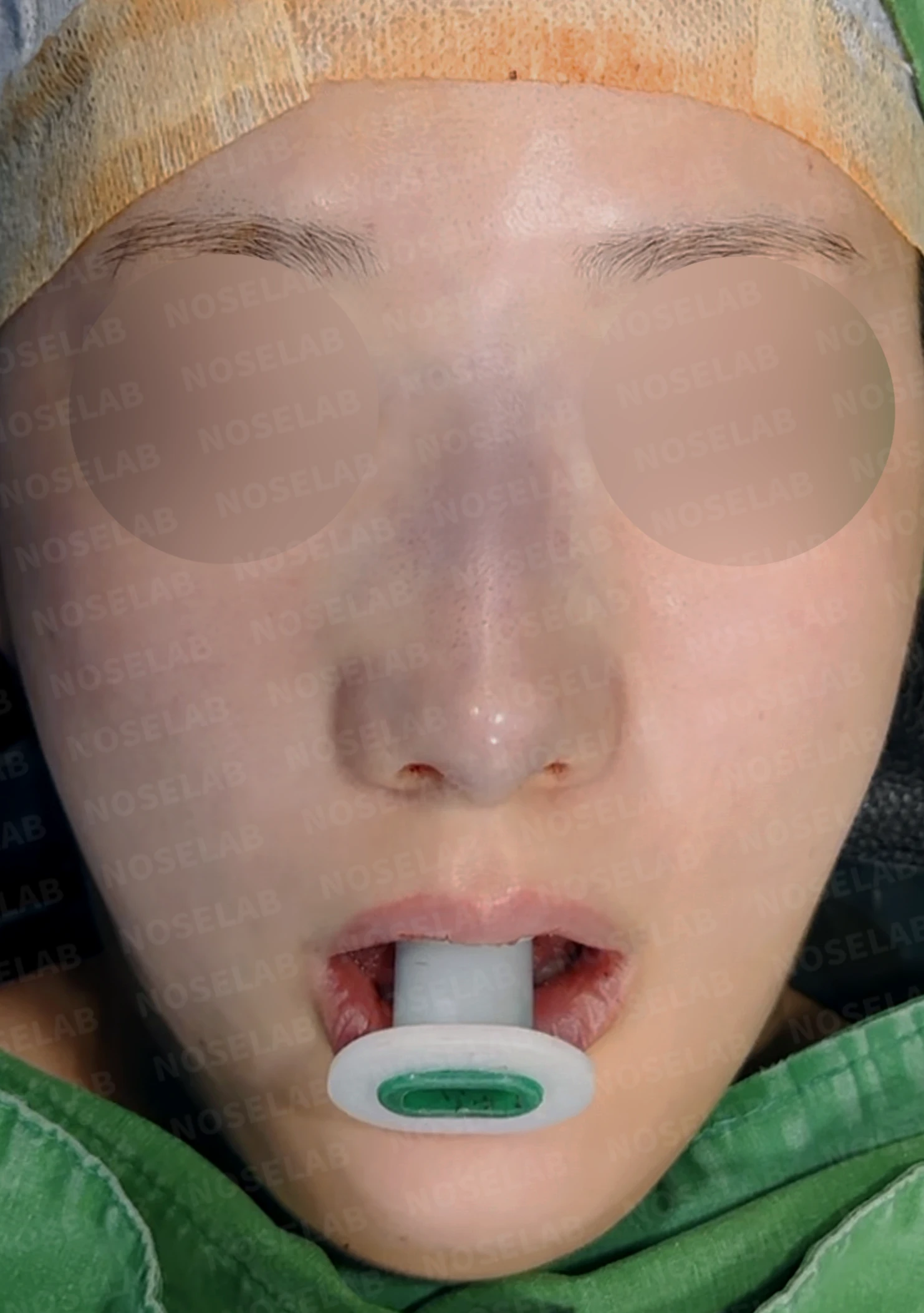
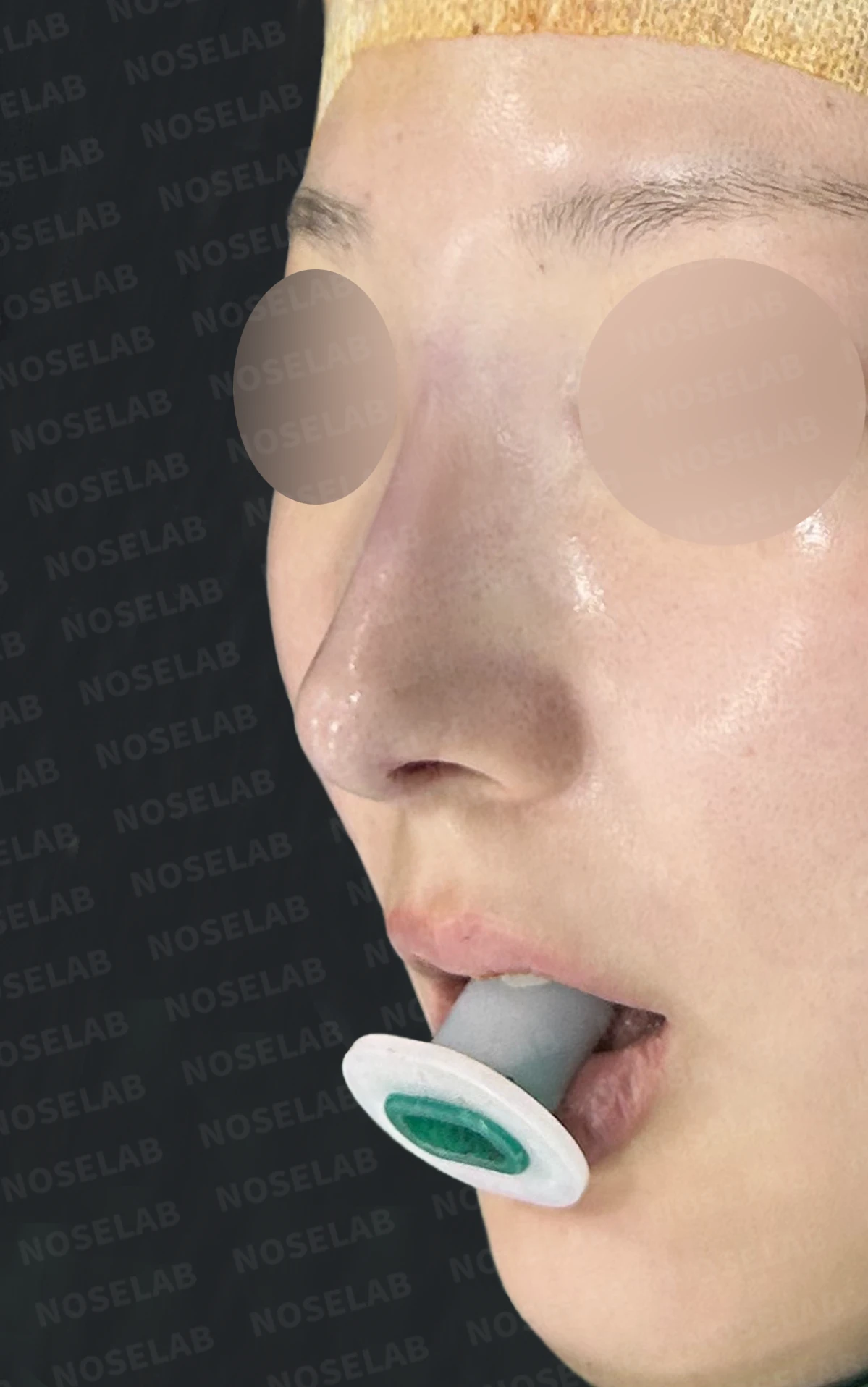
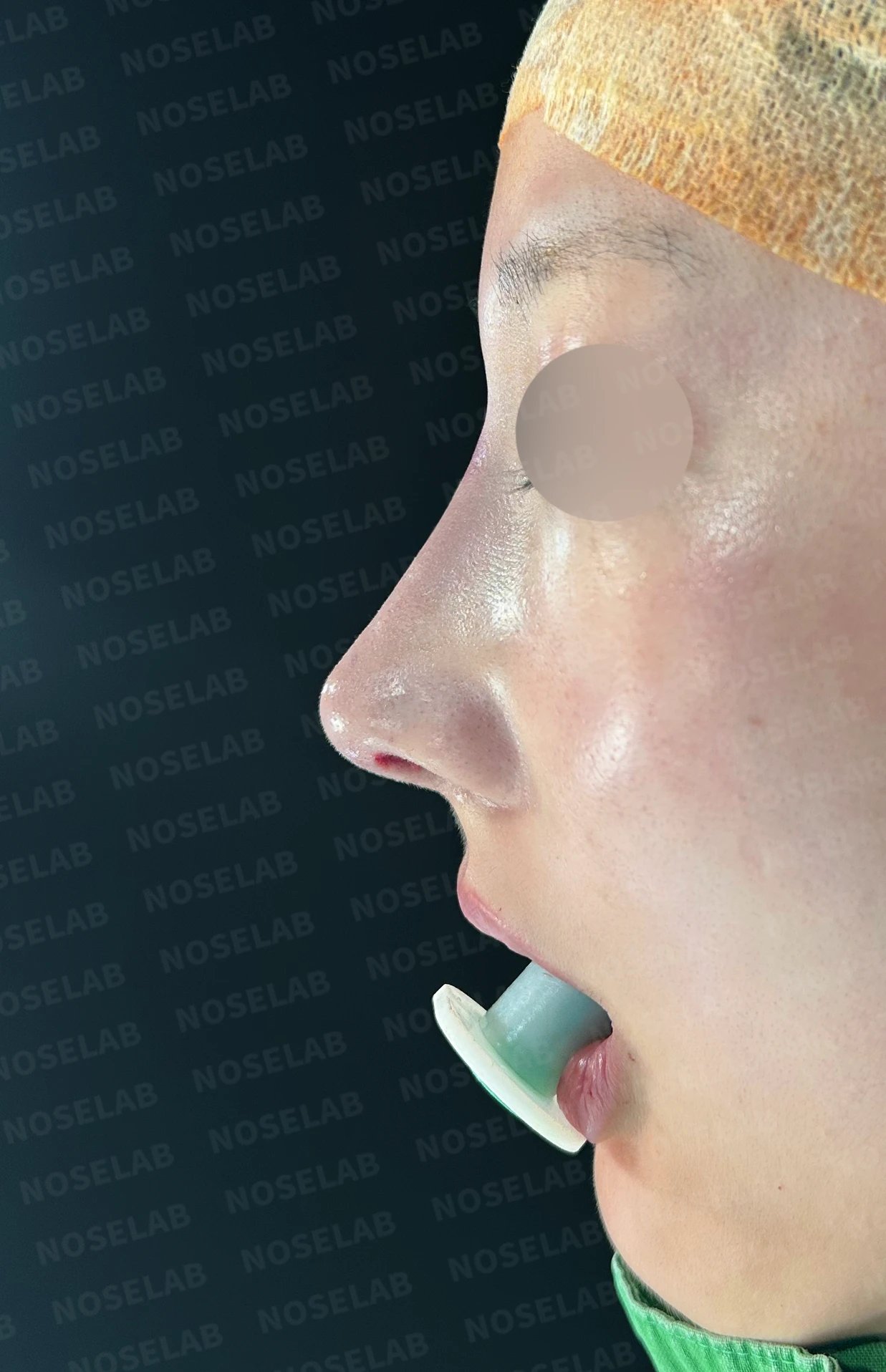
Front, oblique, and profile views on day 0 immediately after surgery. Photos taken immediately after surgery show swelling and may differ from the final result.
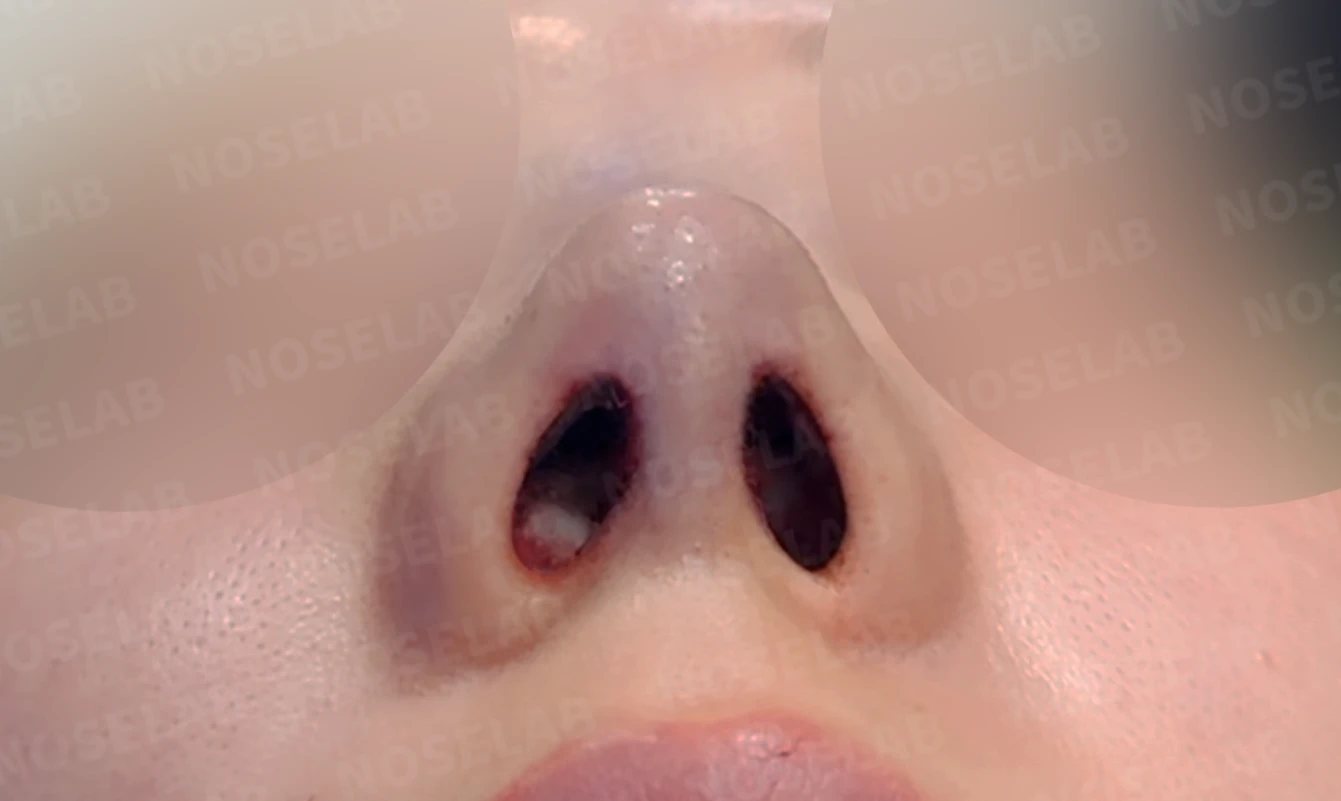
Nostril view on day 0 immediately after surgery. Photos taken immediately after surgery show swelling and may differ from the final result.
In this type of case, the patient decides on revision rhinoplasty because the nasal bone deviation, dorsal hump shape, and nasal obstruction were not adequately improved after a previous procedure. Because revision rhinoplasty requires addressing scar tissue and altered structures from previous surgeries, it demands more precise planning and a higher level of surgical skill than primary rhinoplasty.
The most essential part of this surgery was the lateral osteotomy. Because the nasal bones were deviated and wide, accompanied by a dorsal hump, osteotomy was used to realign the position of the nasal bones and narrow their width, creating a straight, smooth bridge line.
Additionally, the patient wanted to correct the impression of an overly long nose; by using autologous rib cartilage to elevate and project the nasal tip, the perceived length of the nose was visually reduced, creating a refined tip line. For the nasal bridge, a silicone implant was carved precisely to match the patient's nasal bone anatomy and placed only along the bridge, creating a natural straight bridge line flowing smoothly from the forehead down to the tip.
To resolve the nasal obstruction simultaneously, septoplasty and inferior turbinate reduction were performed together. During revision surgery, the difficulty of functional procedures increases because the altered internal structures from the prior surgery must also be accounted for. In this case, meticulous correction of the septum and inferior turbinates also improved respiratory function.
For those considering revision rhinoplasty, it is critical to develop a surgical plan through thorough consultation with a specialist who can accurately assess your surgical history and current nasal condition. NOSELAB strives to address each patient's concerns with care, even in these complex revision cases, to achieve the intended result.
This was Dr. Peter C. Kang. Thank you.

#closedrhinoplasty #closedrevisionrhinoplasty #revisionrhinoplasty #lateralosteotomy #dorsalhumpcorrection #autologousribcartilagerhinoplasty #crookednose #deviatedseptum #nasalobstructionsurgery #straightbridgeline
Limitations and risks
When autologous rib cartilage is used, scarring and pain may remain at the donor site on the chest, and pneumothorax (pleural injury) can occur rarely. Over time, the grafted cartilage may warp or undergo partial resorption.
When revising after implant removal, contracture may progress again after removal, the nasal height and length may decrease, and staged surgery may be necessary depending on the skin condition.
When the septum is corrected at the same time, nasal obstruction may persist or recur, and in rare cases, septal perforation or changes in smell may occur.
Common potential risks include infection, bleeding, asymmetry, scarring, skin necrosis, and insufficient improvement; results vary depending on individual skin condition and previous surgical history.