Hello, I am Dr. Peter C. Kang.
Today, I would like to share the case of a patient who visited our clinic seeking concurrent improvement for a long, drooping nasal tip and chronic nasal obstruction.
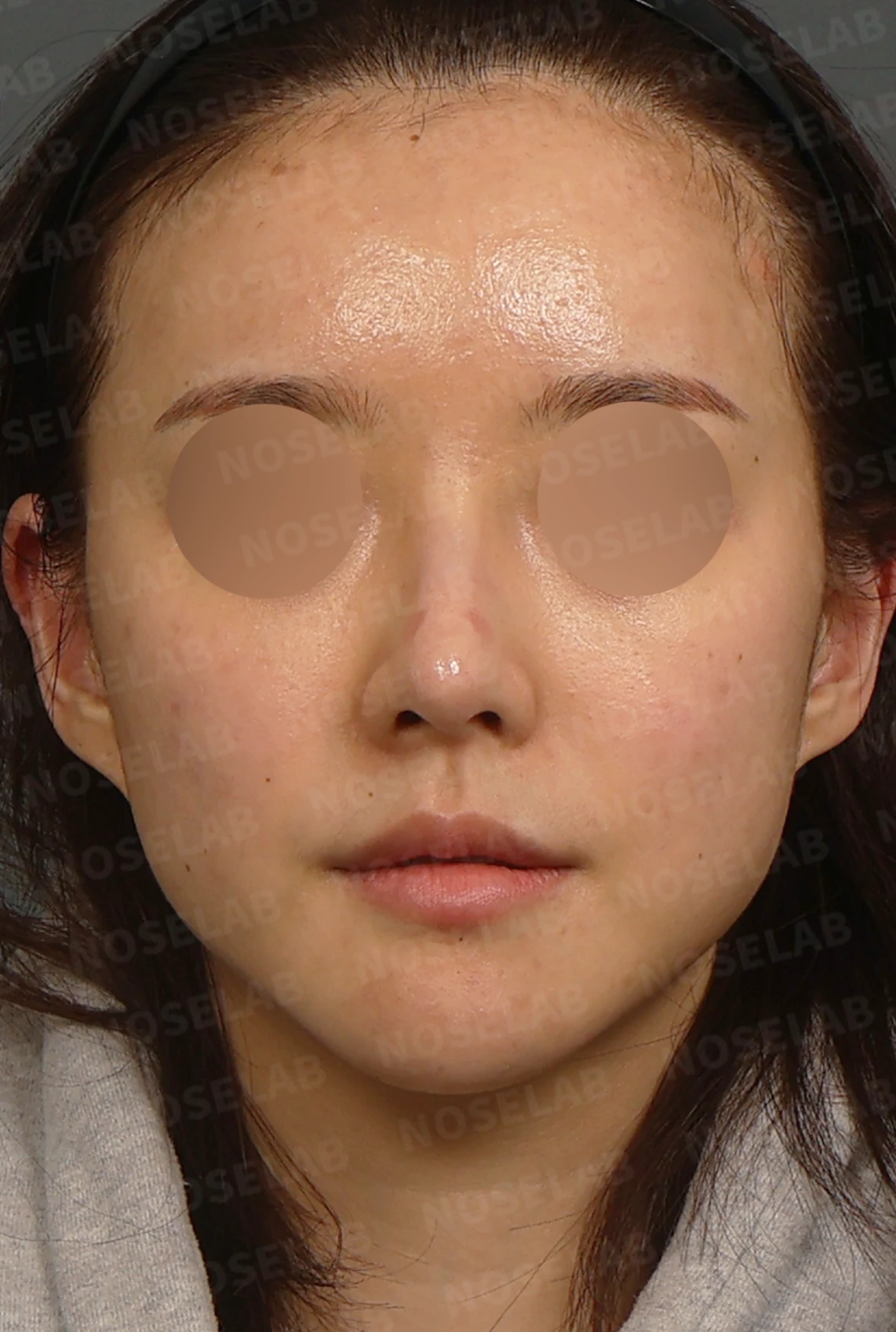
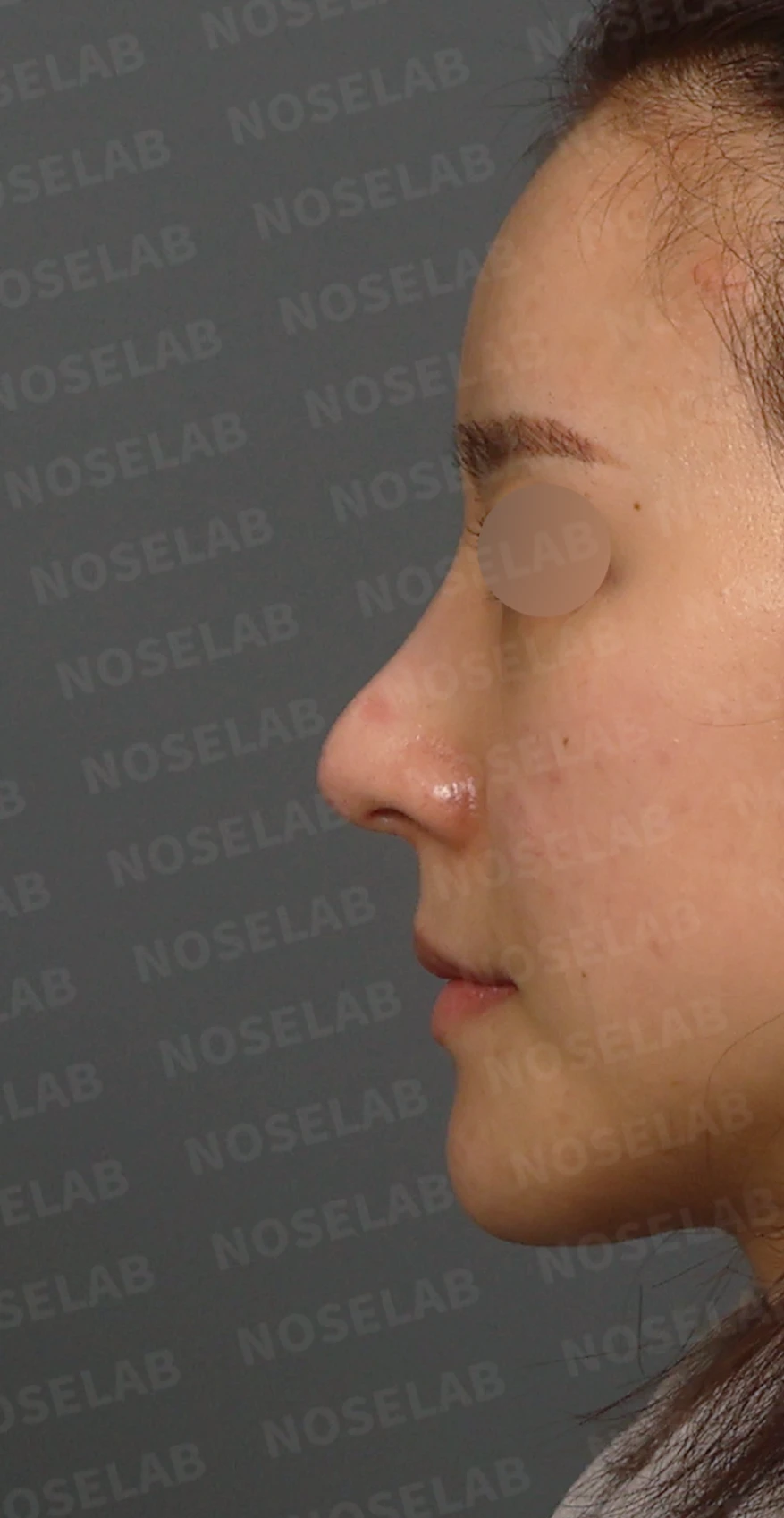
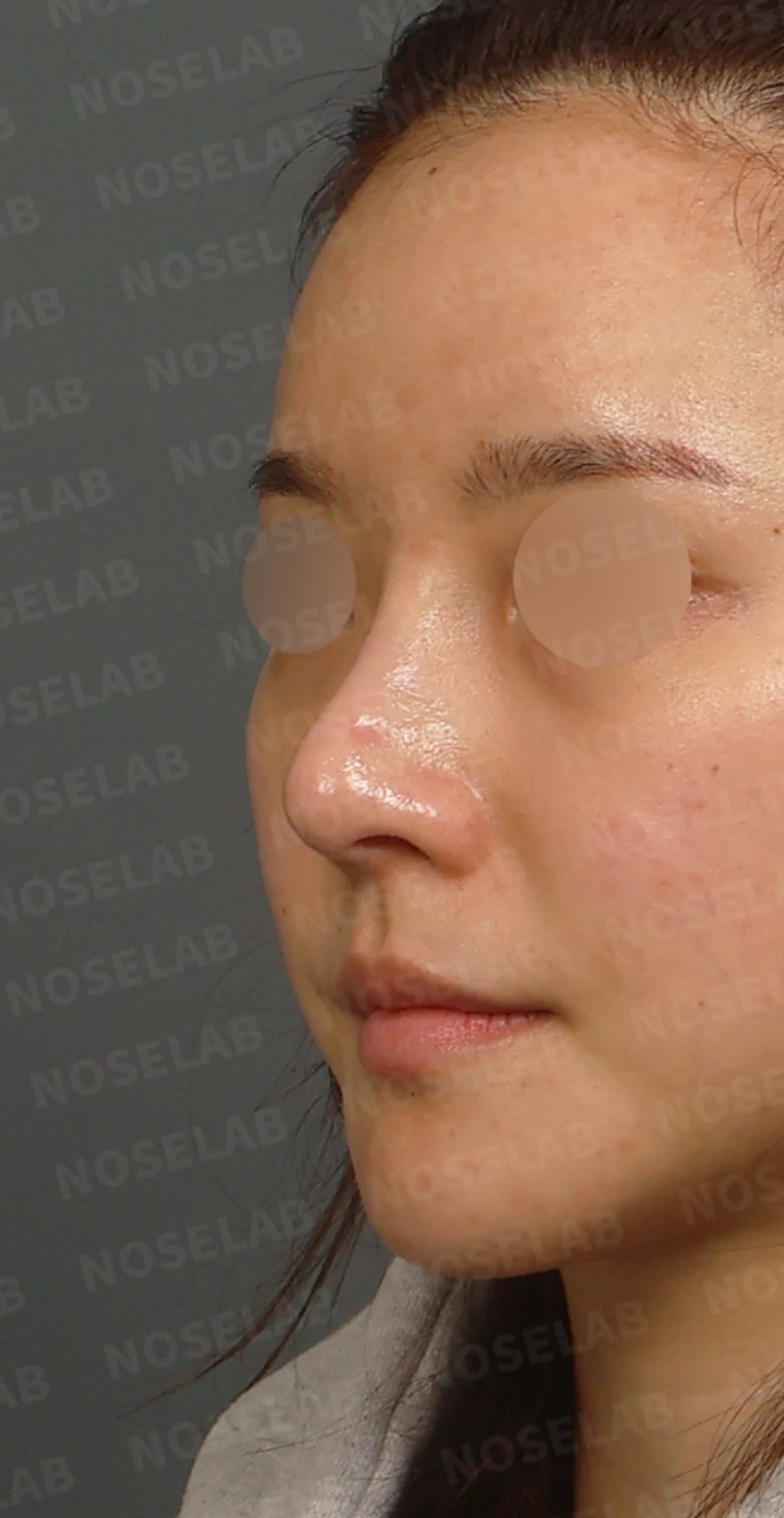
Design consultation front / left profile / oblique view
🔍 Surgical history
The patient had undergone rhinoplasty about 7 to 8 years earlier at another clinic using a silicone implant and septal cartilage. Over time, the nasal tip gradually appeared longer and began to droop, accompanied by nasal obstruction that caused discomfort in daily life.
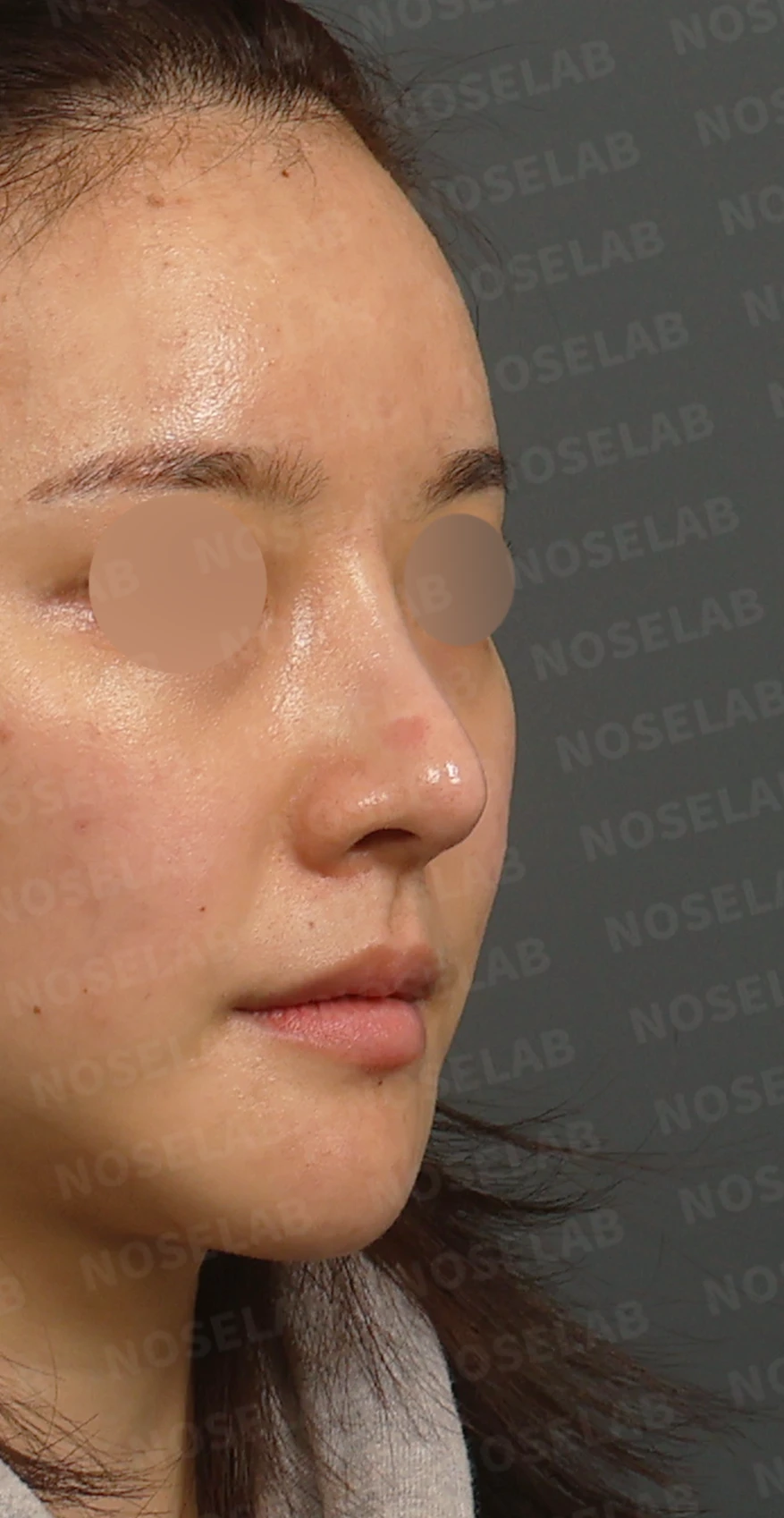
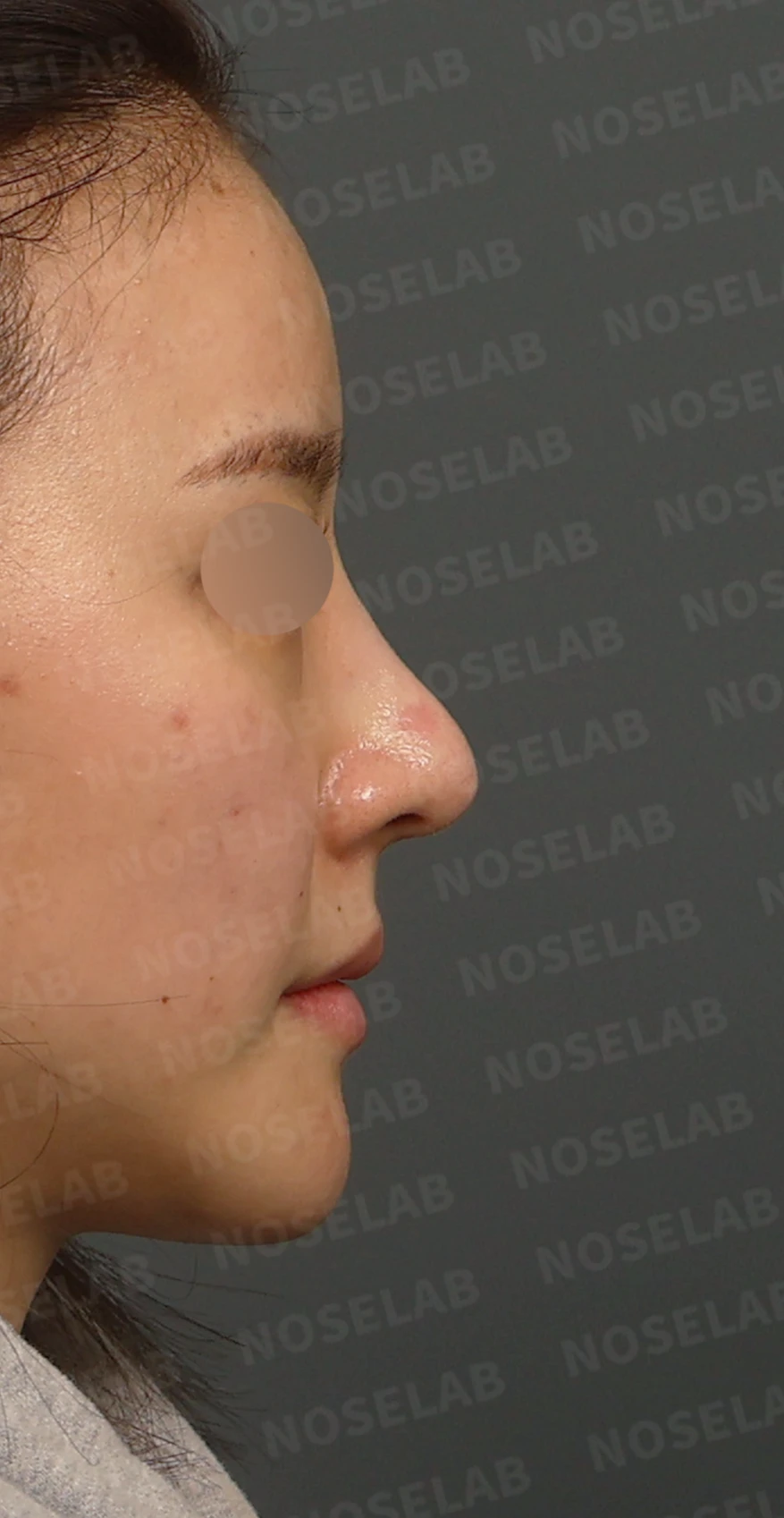
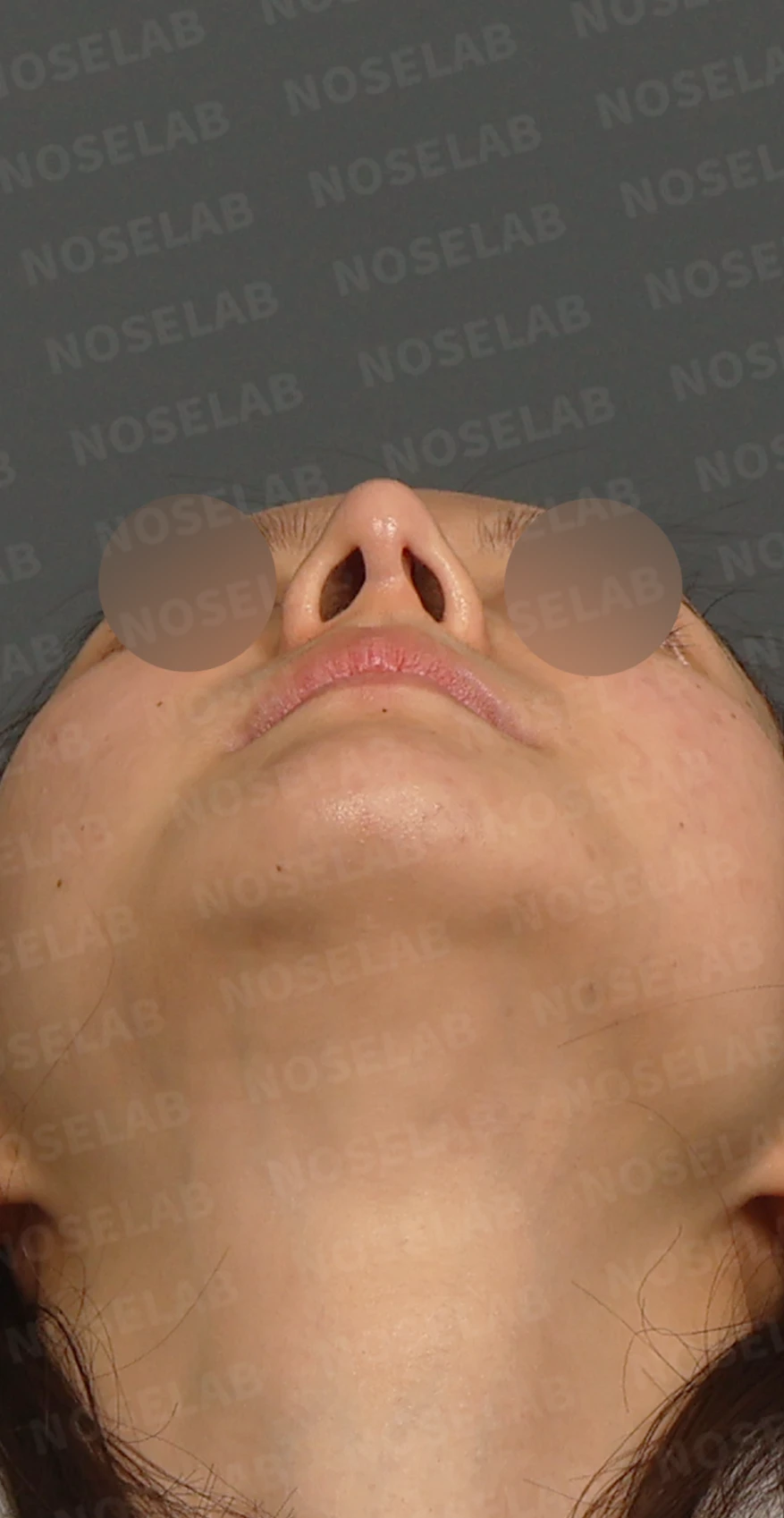
Design consultation right oblique view / profile / nostrils
💉 Patient requests
Natural correction of the long, drooping nasal tip
Achieving a well-defined yet natural nasal line
Improvement of chronic nasal obstruction
Refinement of asymmetric nostril contours
🔧 Surgical plan and procedure
Because the patient had both aesthetic concerns and functional discomfort, a comprehensive approach was required.
1. Septoplasty — Our examination revealed a septum (the cartilage dividing the inside of the nose) deviated to the right, and septoplasty was performed to straighten it.
2. Rhinitis surgery (inferior turbinate reduction) — Both inferior turbinates were hypertrophied and obstructing airflow; the enlarged portions were reduced to improve the blocked nose.
3. Adhesiolysis — Mucosal adhesions were identified in the right nasal cavity and divided to normalize the internal airway passage.
4. Nasal tip correction with autologous rib cartilage — The long, drooping nasal tip was corrected naturally and stably using the patient's own rib cartilage (autologous rib cartilage).
5. Adjustment of the radix — The starting point of the nasal bridge had been set somewhat high, so it was lowered naturally to restore harmony with the entire face.
6. Columella correction — The columella, which was tilted to the right, was straightened to improve bilateral symmetry of the nostrils as much as possible.
🌟 Surgical results
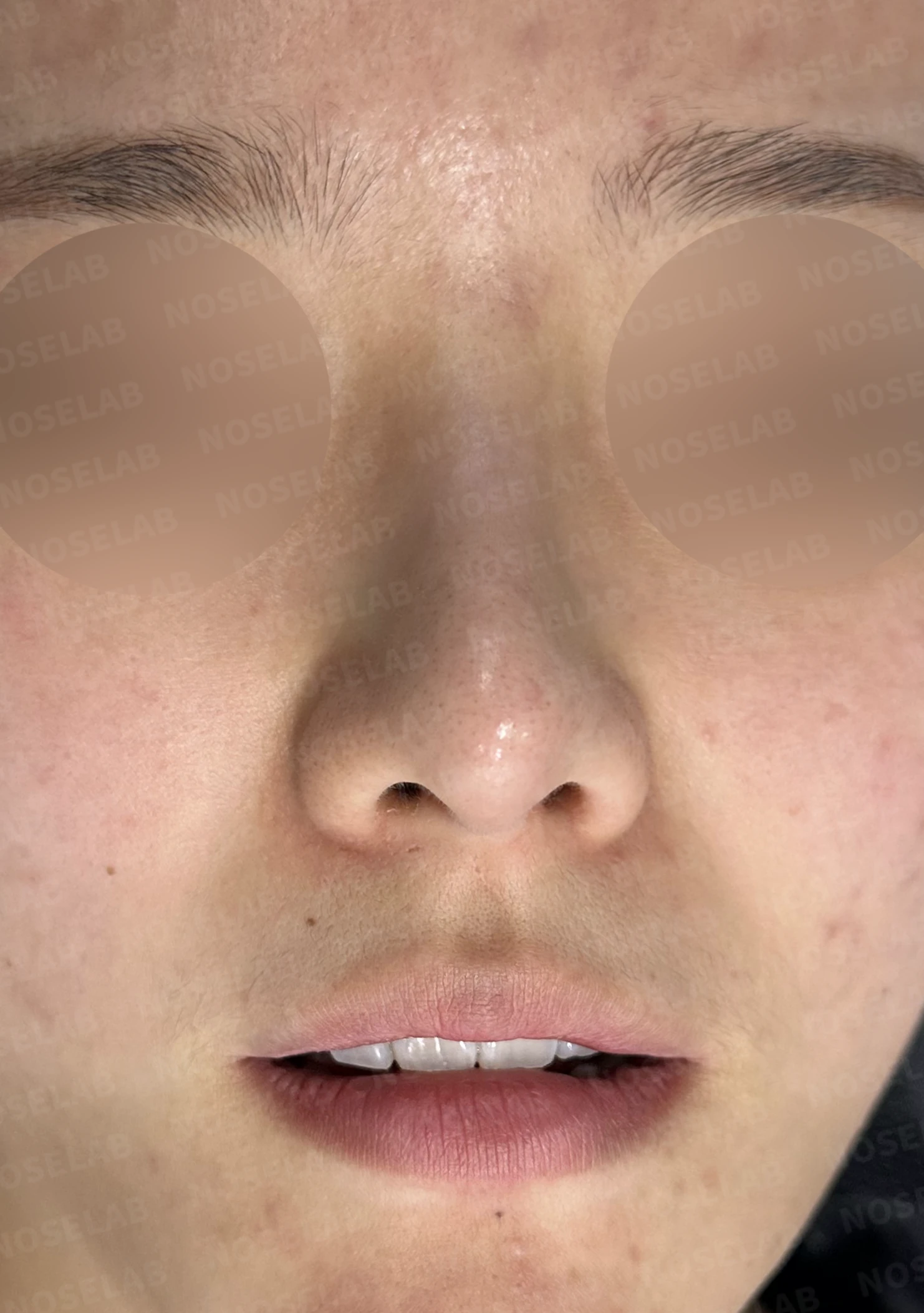
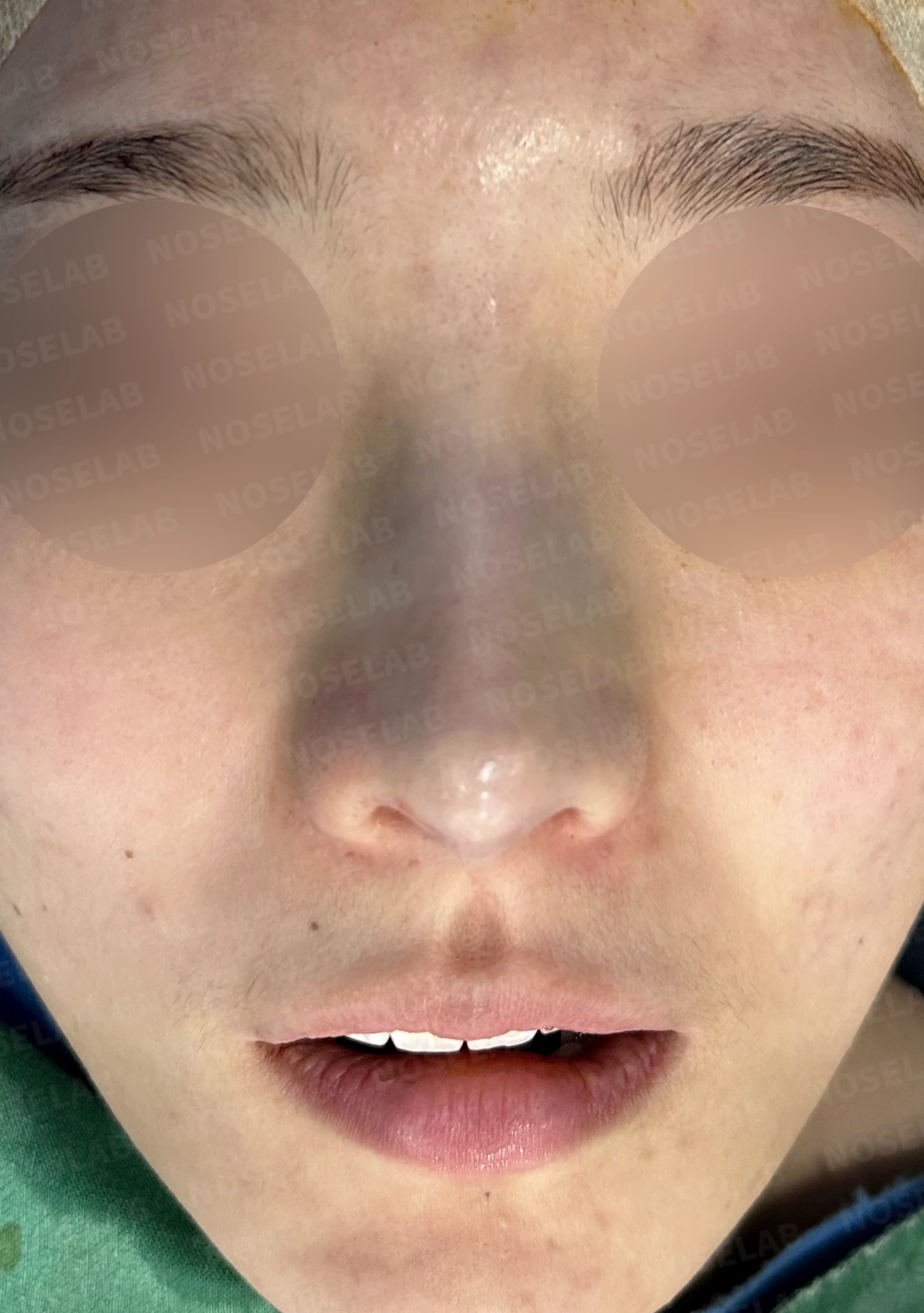
Before surgery / Day 0 immediately after surgery Photos taken immediately after surgery show swelling and may differ from the final result.
Front view changes
Natural elevation of the previously drooping nasal tip
Improvement of asymmetric nostril contours
Restoration of balance to the previously elongated nasal length
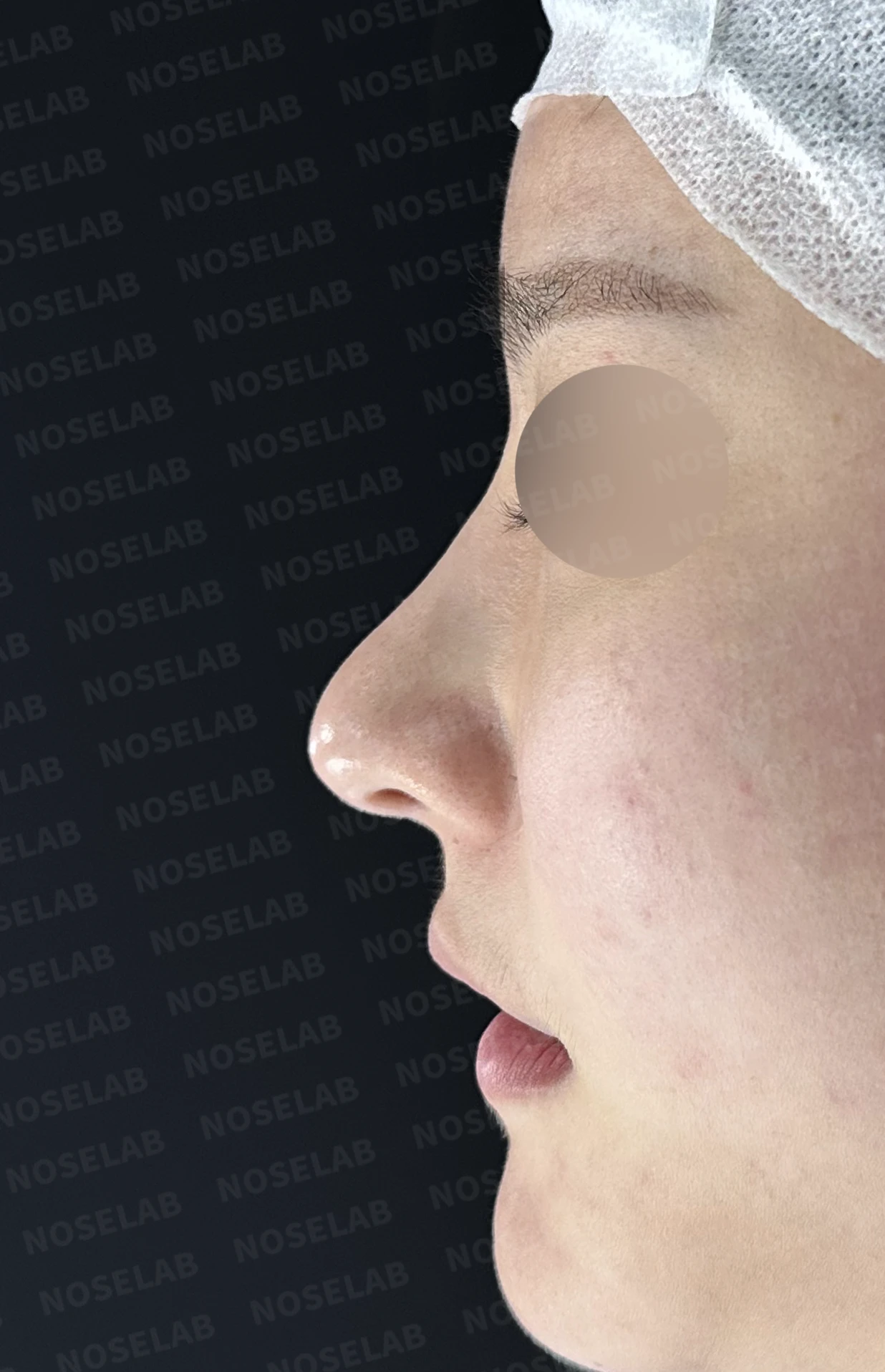
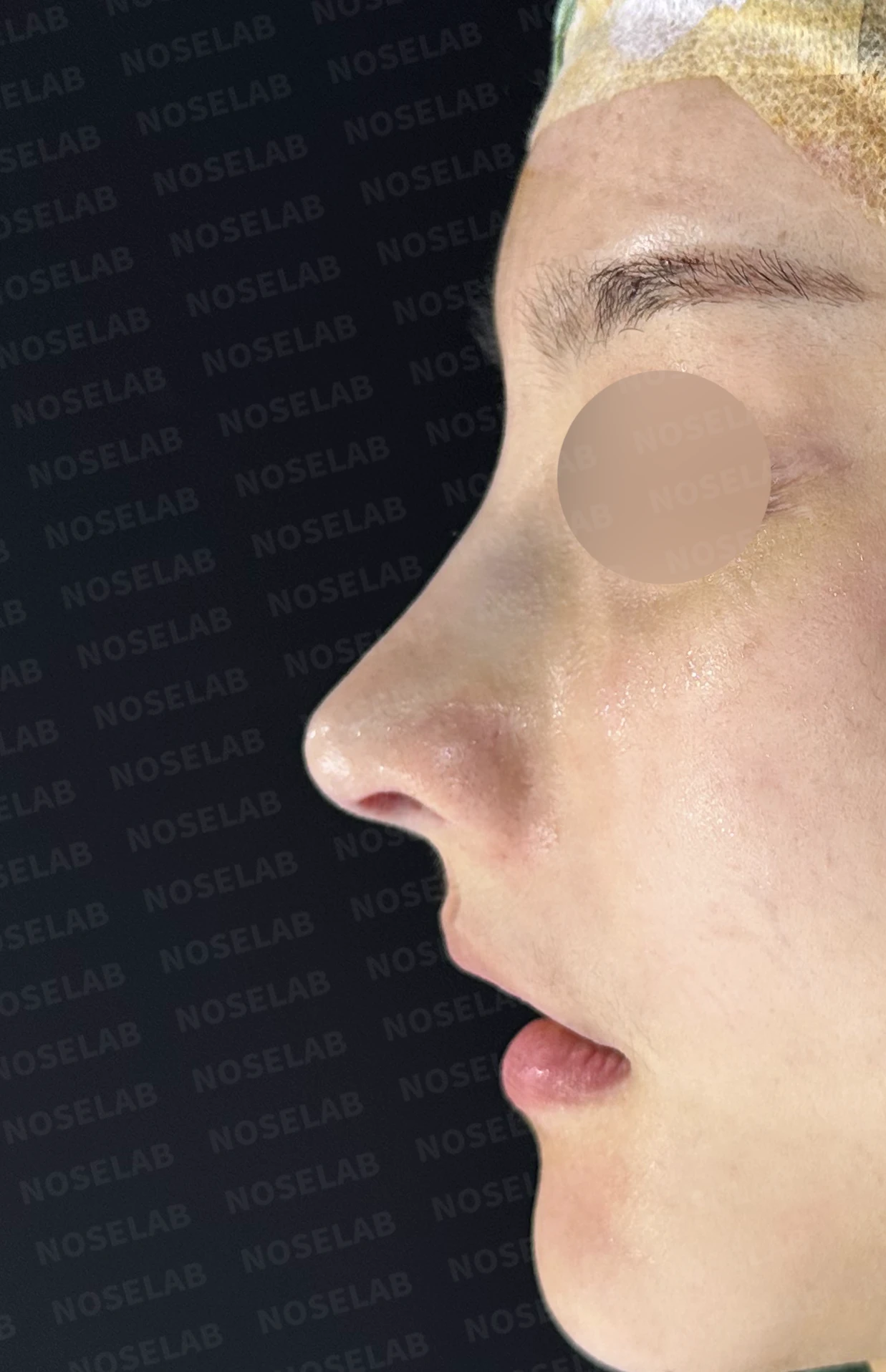
Before surgery / Day 0 immediately after surgery Photos taken immediately after surgery show swelling and may differ from the final result.
Profile view changes
Natural refinement of the high-starting bridge line
Correction of the drooping tip to create a refined profile
Stabilization of the lateral silhouette by correcting columella positioning
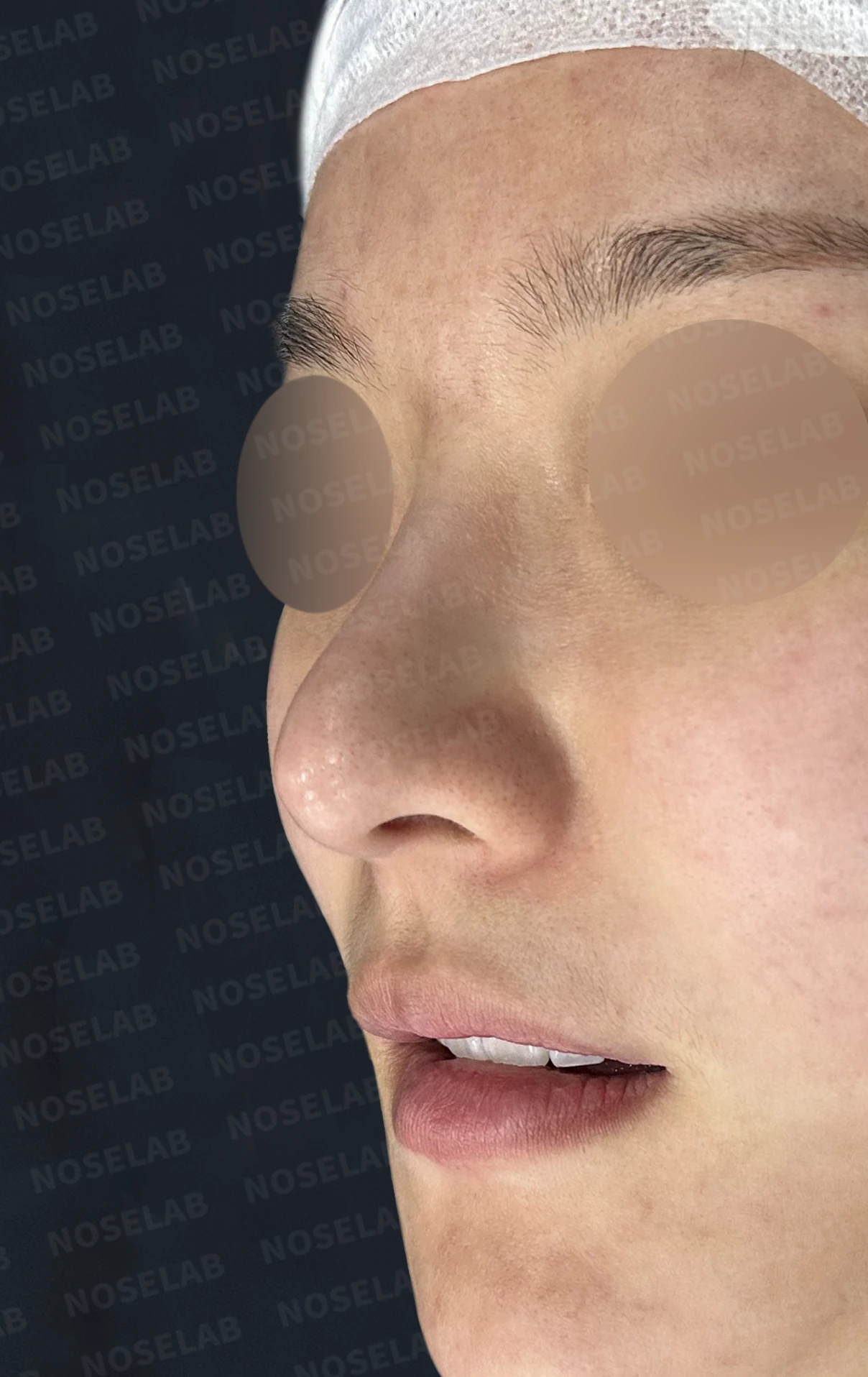
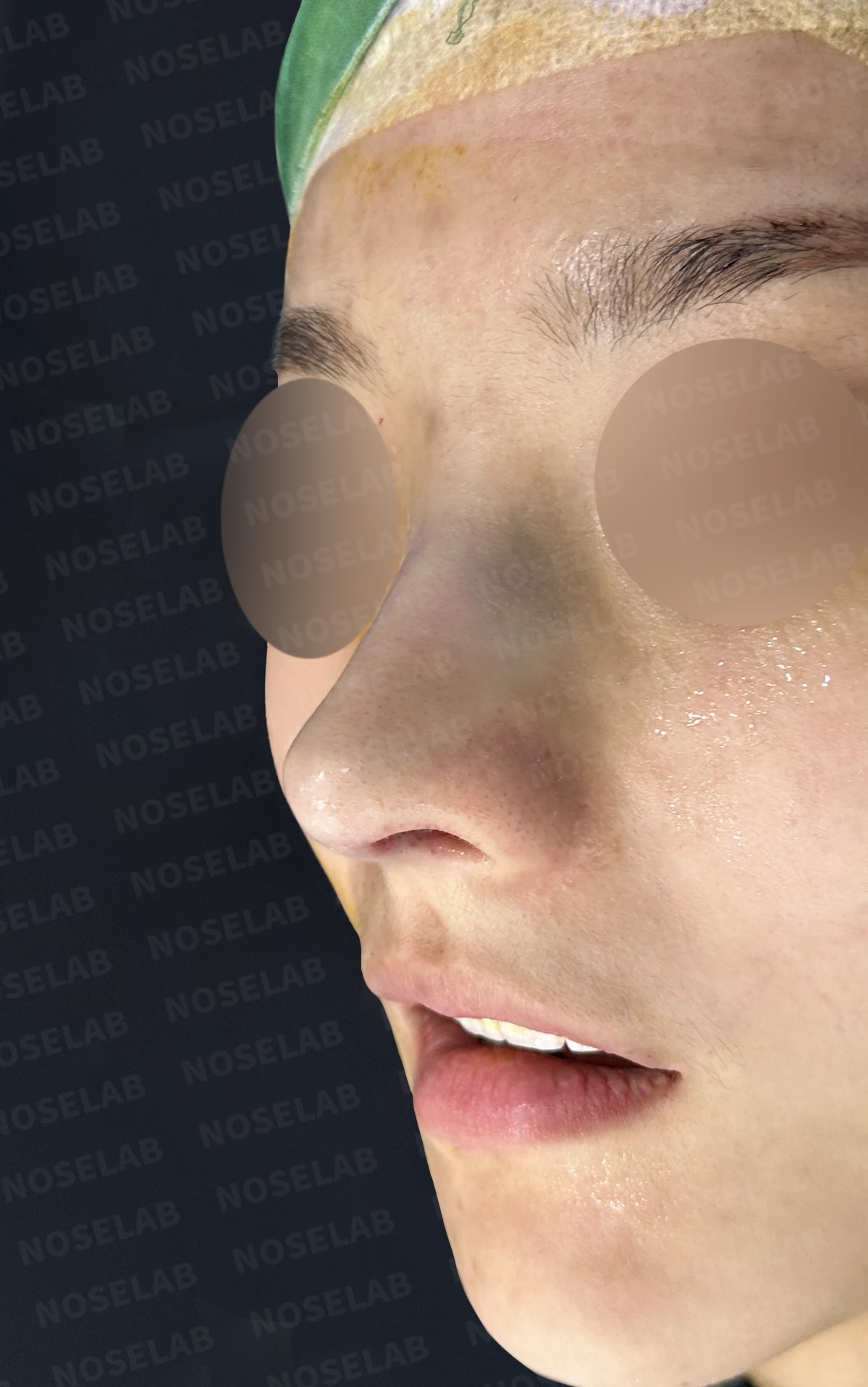
Before surgery / Day 0 immediately after surgery Photos taken immediately after surgery show swelling and may differ from the final result.
Functional changes
Relief of chronic nasal obstruction
Restoration of balanced airflow through both nasal passages
Normalization of the internal nasal airway through mucosal adhesiolysis
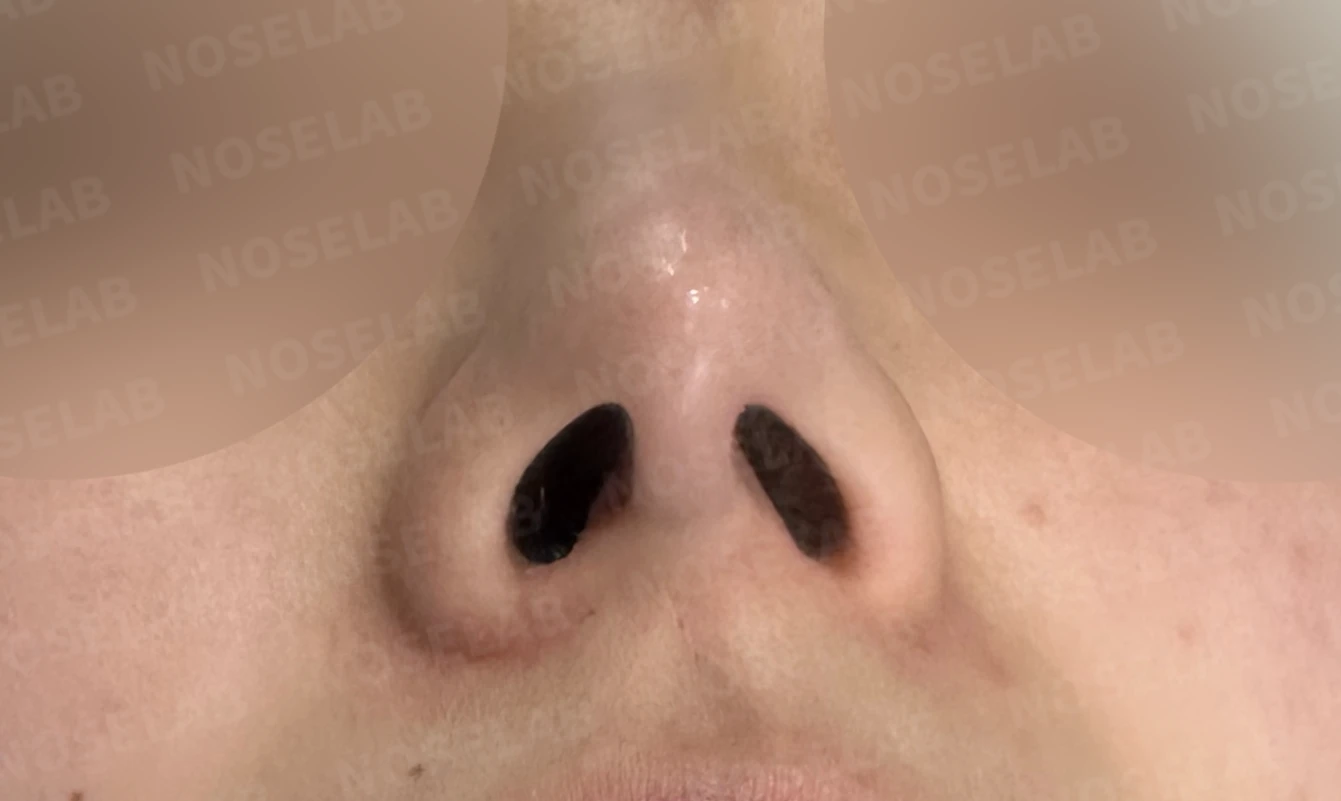
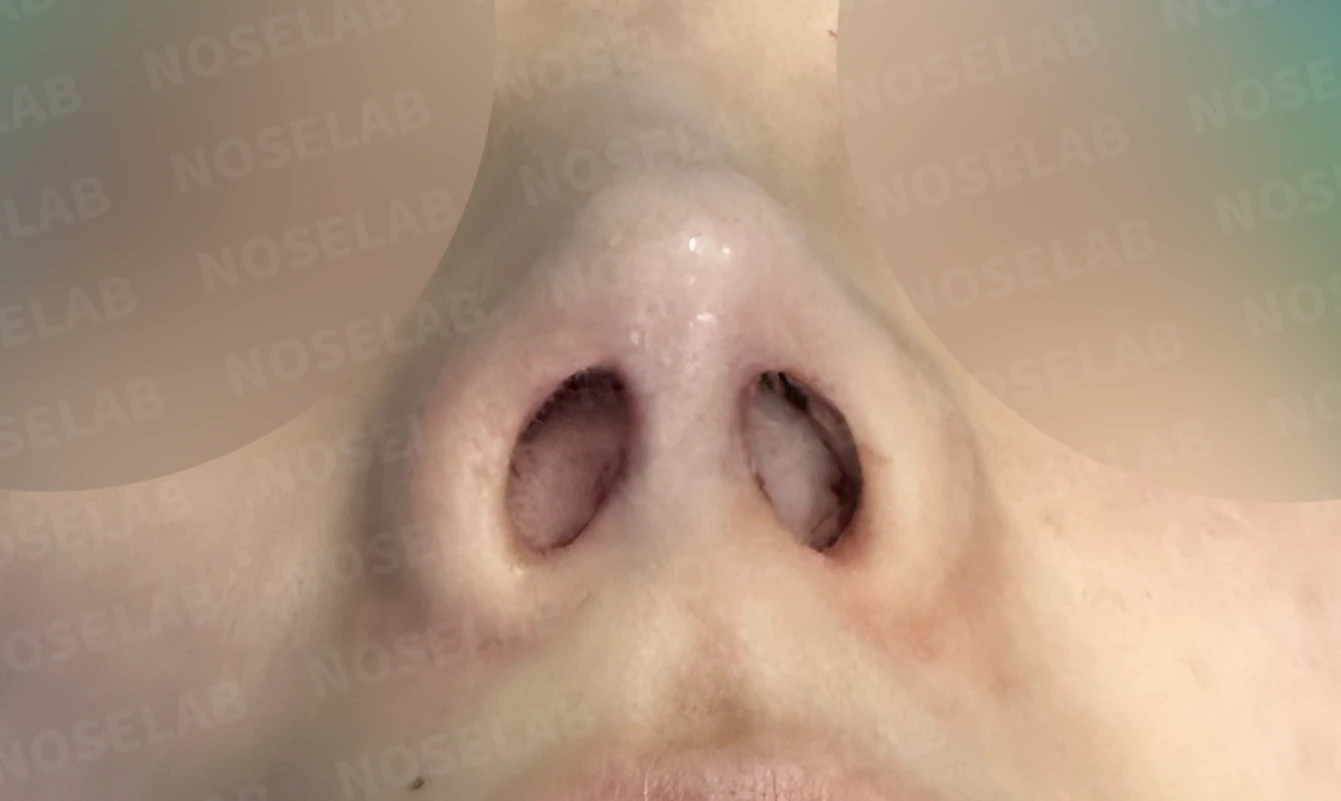
Before surgery / Day 0 immediately after surgery Photos taken immediately after surgery show swelling and may differ from the final result.
💡 Specialist opinion
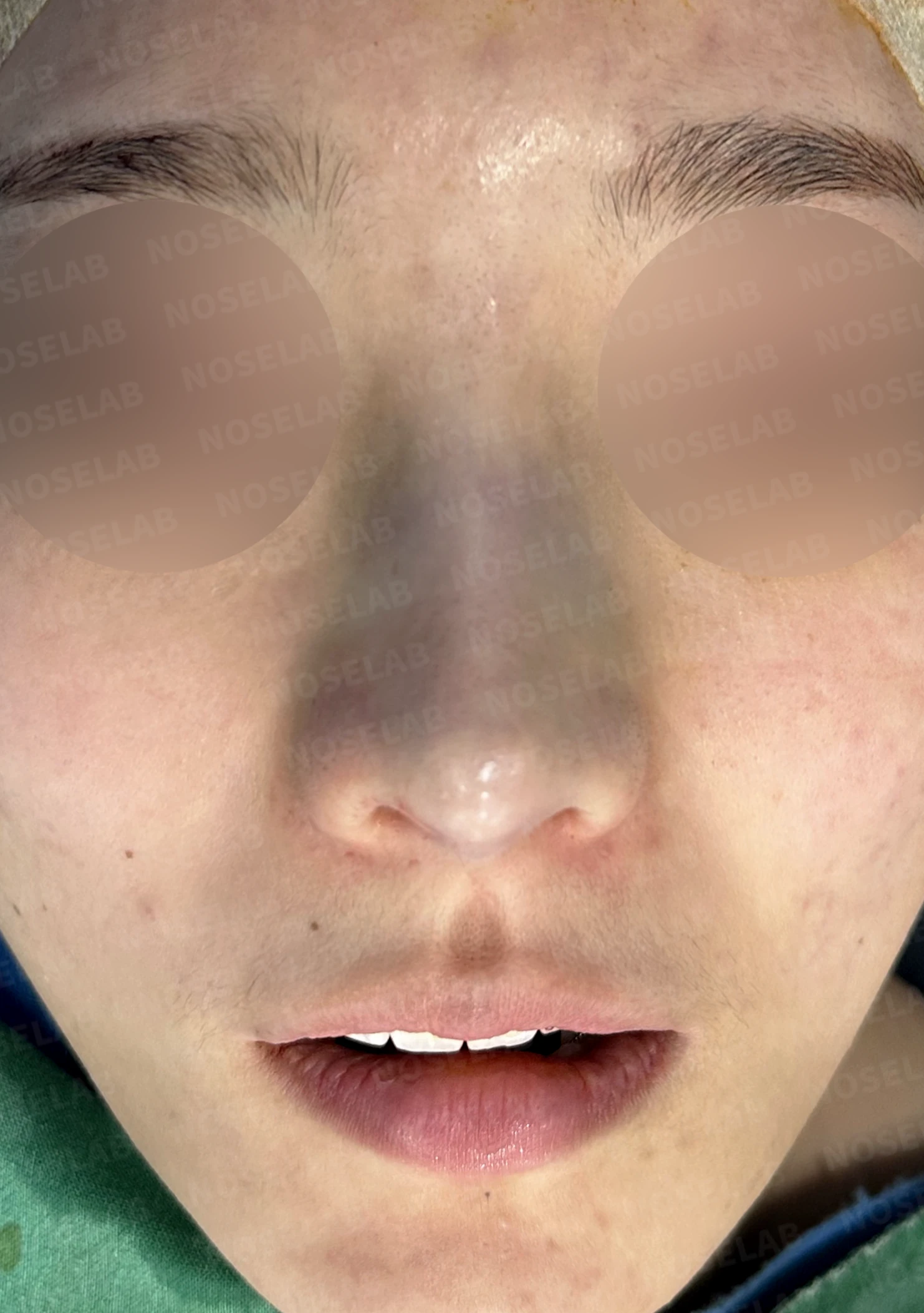
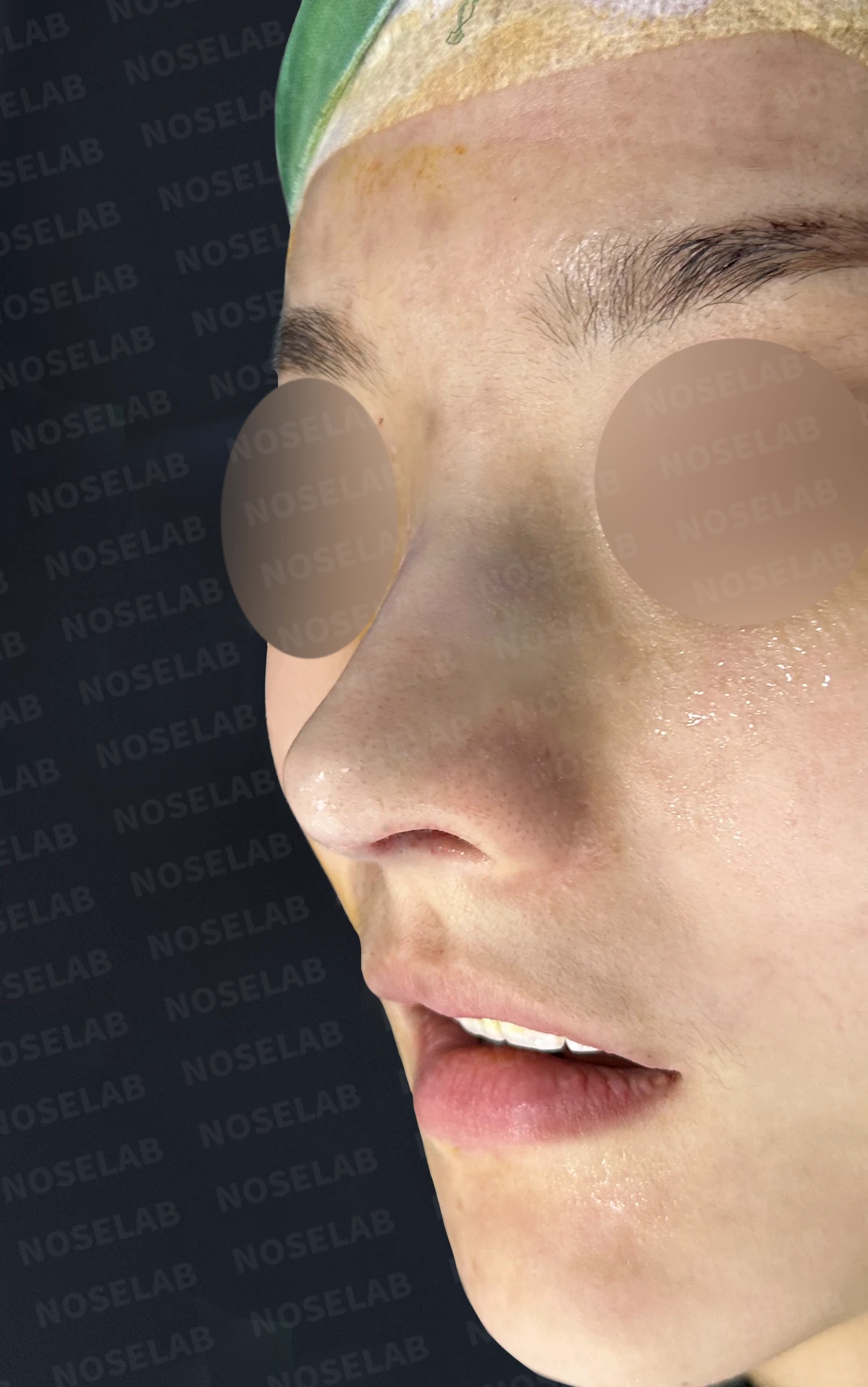
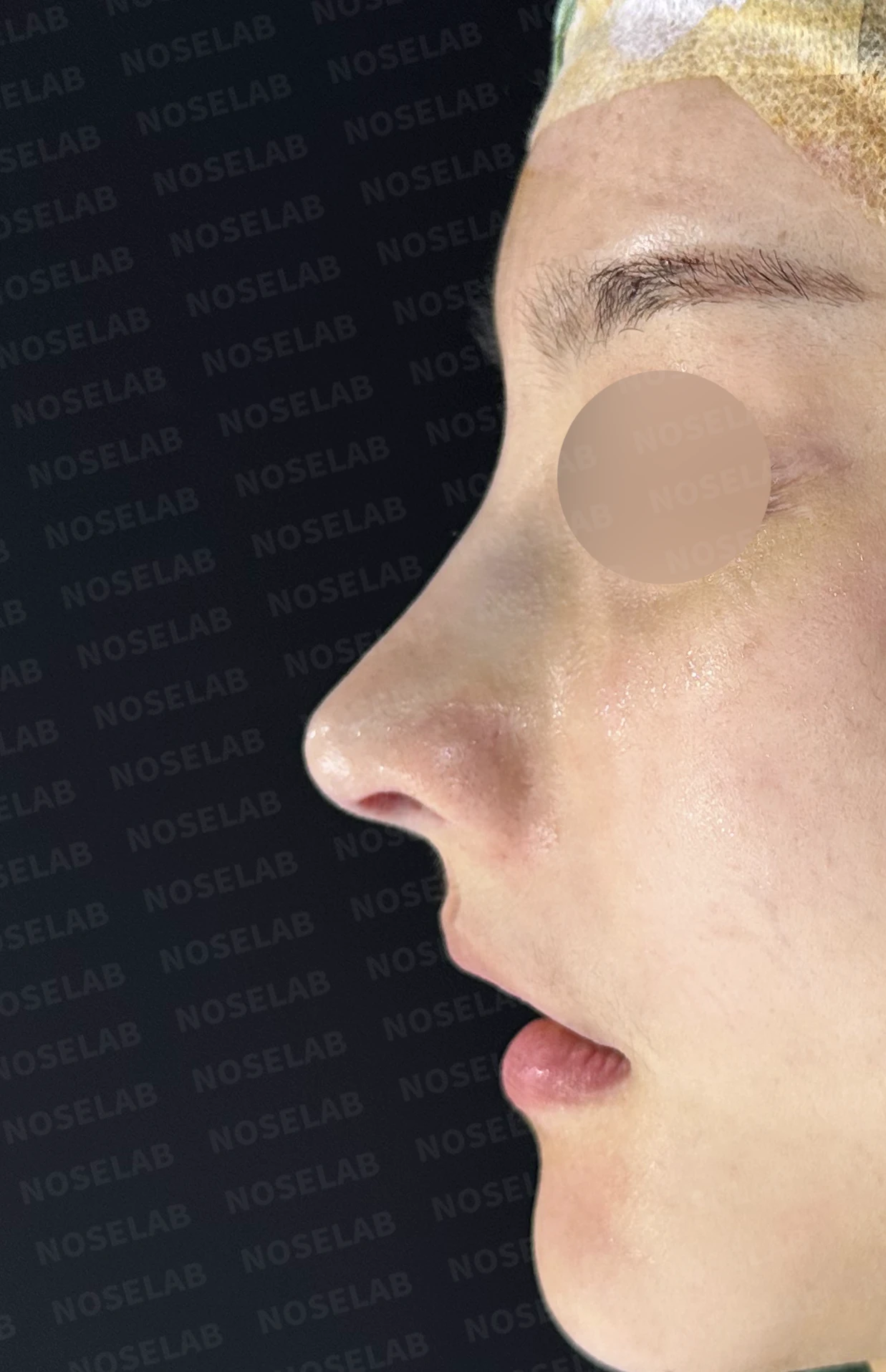
Immediately after surgery (day 0) front / oblique view / profile Immediate postoperative photos show swelling and may differ from the final result.
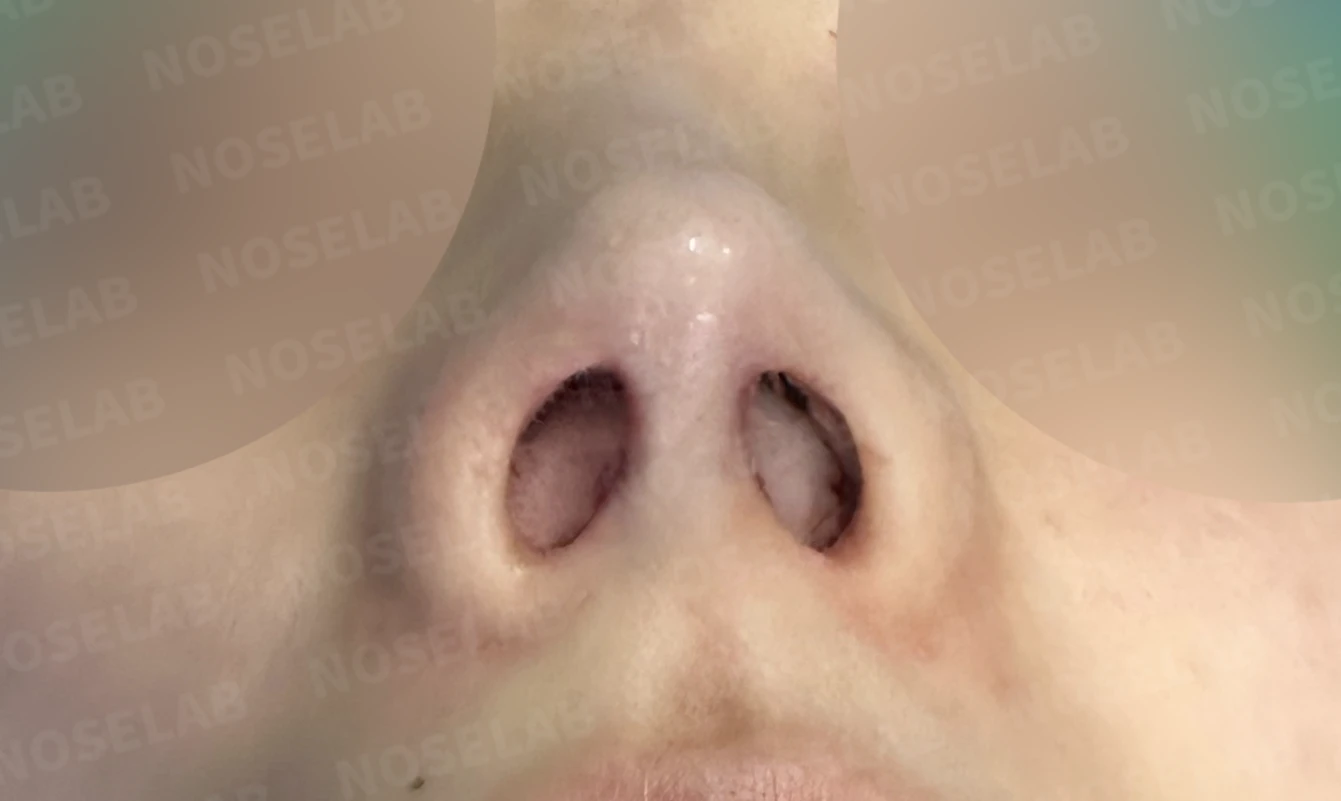
Immediately after surgery (Day 0) nostrilsImmediate postoperative photos show swelling and may differ from the final result.
Revision rhinoplasty requires a much more cautious and meticulous approach than primary surgery. Because tissues are often weakened or compromised by scar tissue from prior operations, establishing a stable support framework is paramount.
In cases like this where a long, drooping nasal tip must be corrected, autologous rib cartilage offering sufficient structural support is particularly valuable. Because it is the patient's own tissue, the risk of rejection is minimal, and its low likelihood of warping supports a stable long-term outcome.
Furthermore, when functional issues such as septal deviation, chronic rhinitis, and mucosal adhesions are present, addressing aesthetic correction and functional restoration together substantially improves the patient's quality of life.
This was Dr. Peter C. Kang. Thank you.
#closedrhinoplasty #closedrevisionrhinoplasty #autologousribcartilage #tiprhinoplasty #septoplasty #rhinitissurgery #droopingtipcorrection #revisionrhinoplasty #crookednosecorrection #functionalnasalsurgery

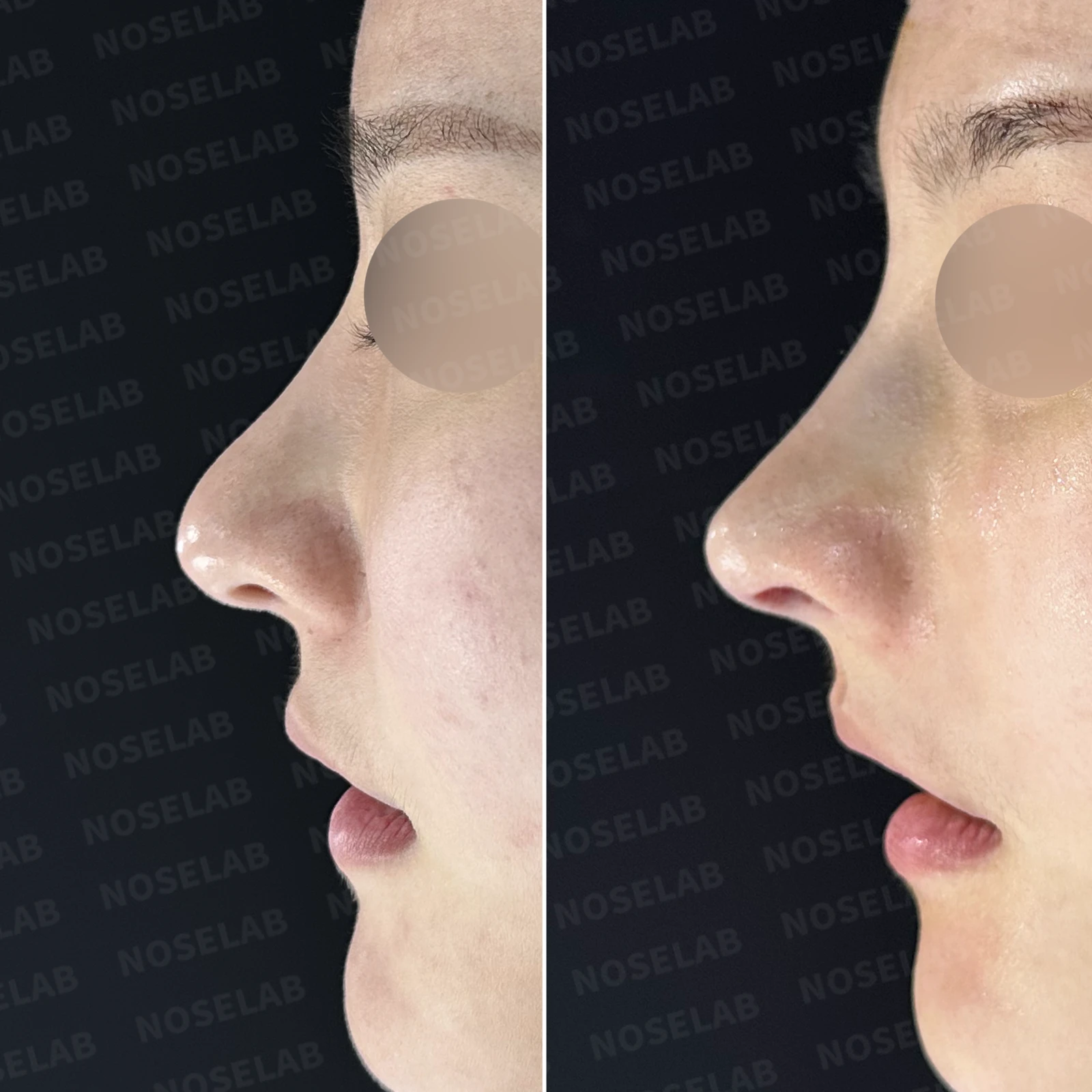
Limitations and risks
When autologous rib cartilage is used, scarring and pain may remain at the donor site on the chest, and pneumothorax (pleural injury) can occur rarely. Over time, the grafted cartilage may warp or undergo partial resorption.
When the septum is corrected at the same time, nasal obstruction may persist or recur, and in rare cases, septal perforation or changes in smell may occur.
Common potential risks include infection, bleeding, asymmetry, scarring, skin necrosis, and insufficient improvement; results vary depending on individual skin condition and previous surgical history.