Hello, I am Dr. Peter C. Kang.
Today, I would like to introduce a revision rhinoplasty case of a patient who visited our clinic seeking to correct an upturned nasal appearance and noticeable nostril show from the front view.
🔍 Surgical history
This is a revision case where the patient had their first rhinoplasty about 10 years ago and subsequently underwent two additional procedures.
First surgery: silicone implant insertion, ear cartilage graft, dorsal hump reduction, osteotomy
Second surgery: revision rhinoplasty
Third surgery: implant replacement, ear cartilage graft, tip dermis reinforcement (at another clinic)
Afterward, periodic Rejuran injections were administered to the nasal tip
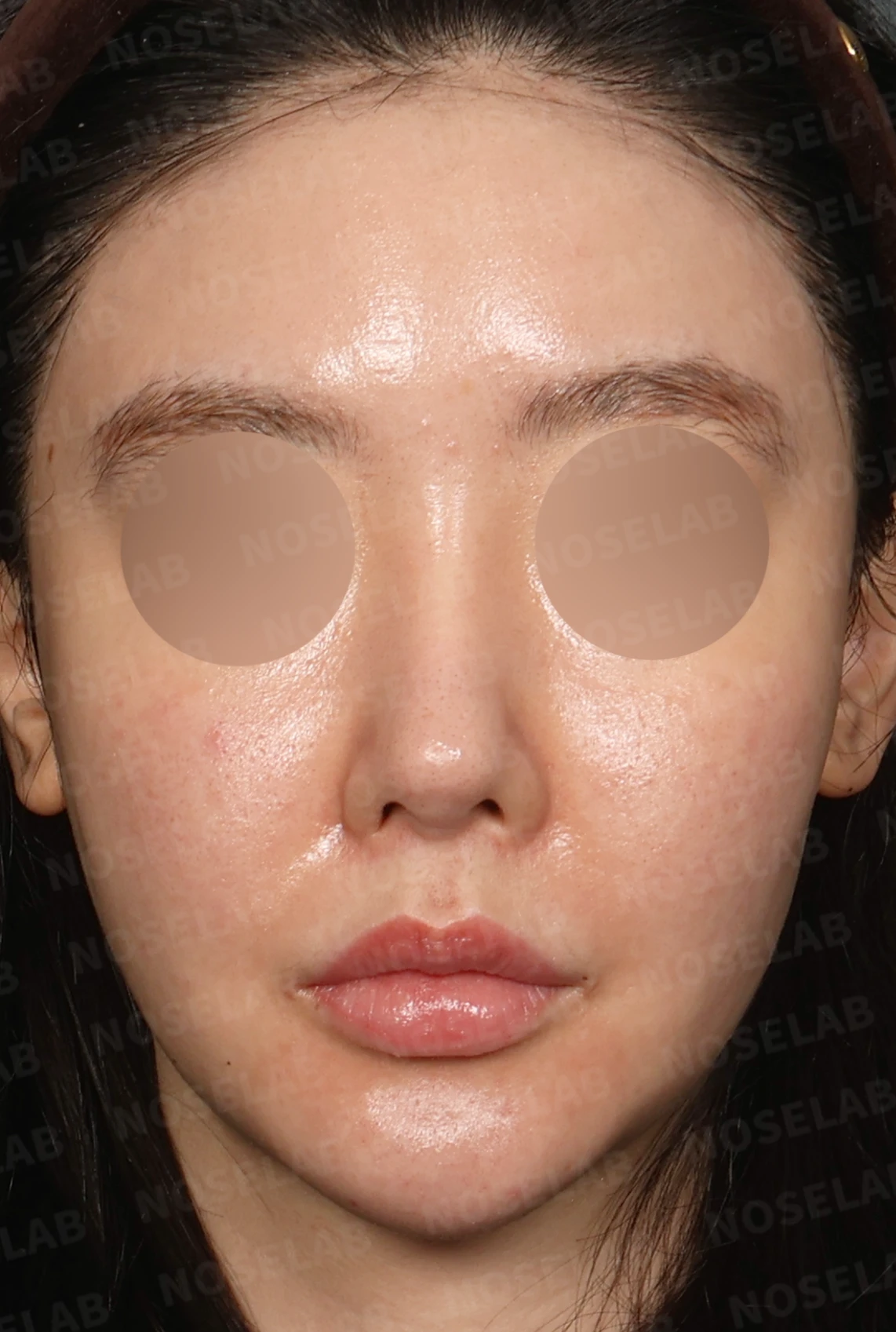
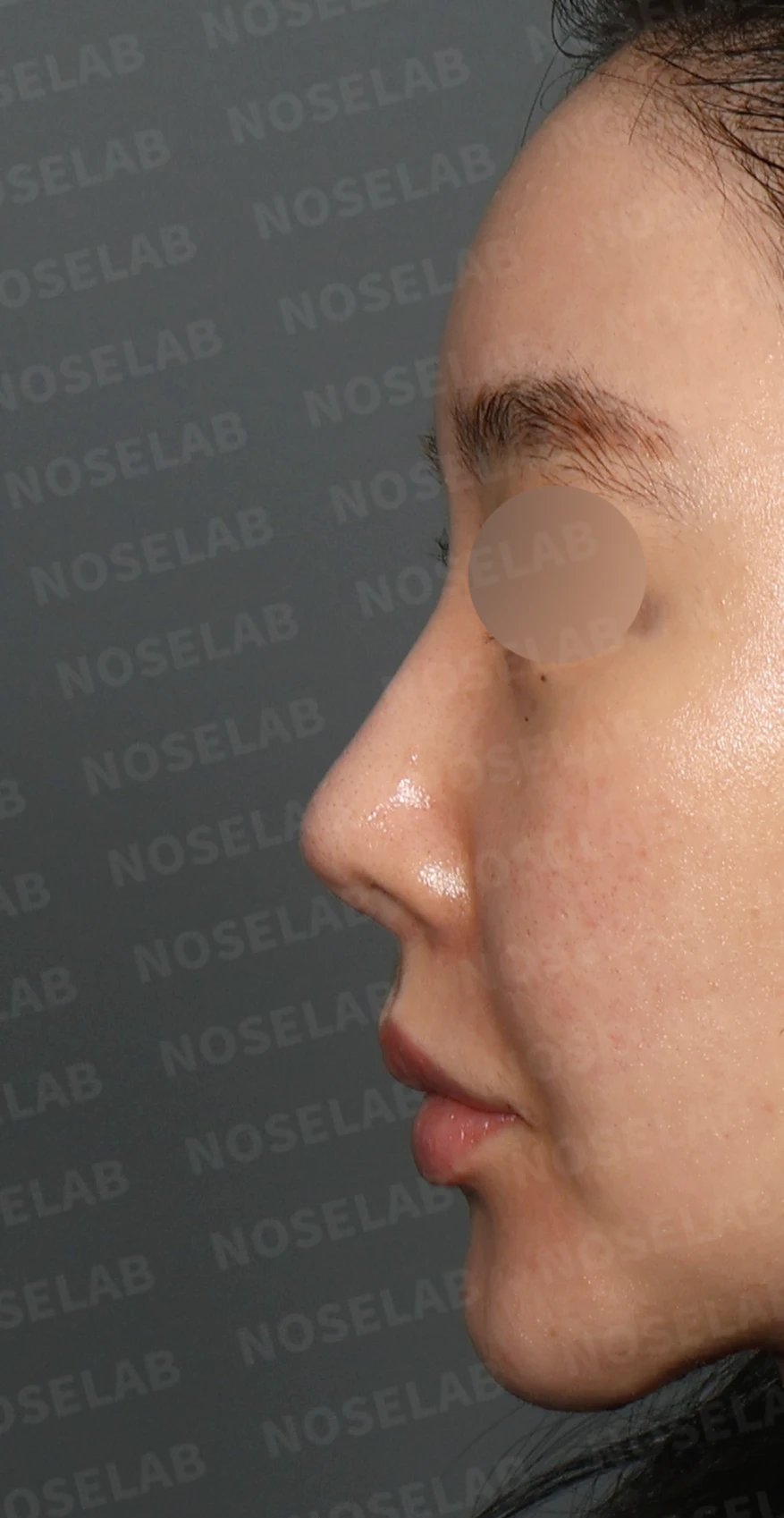
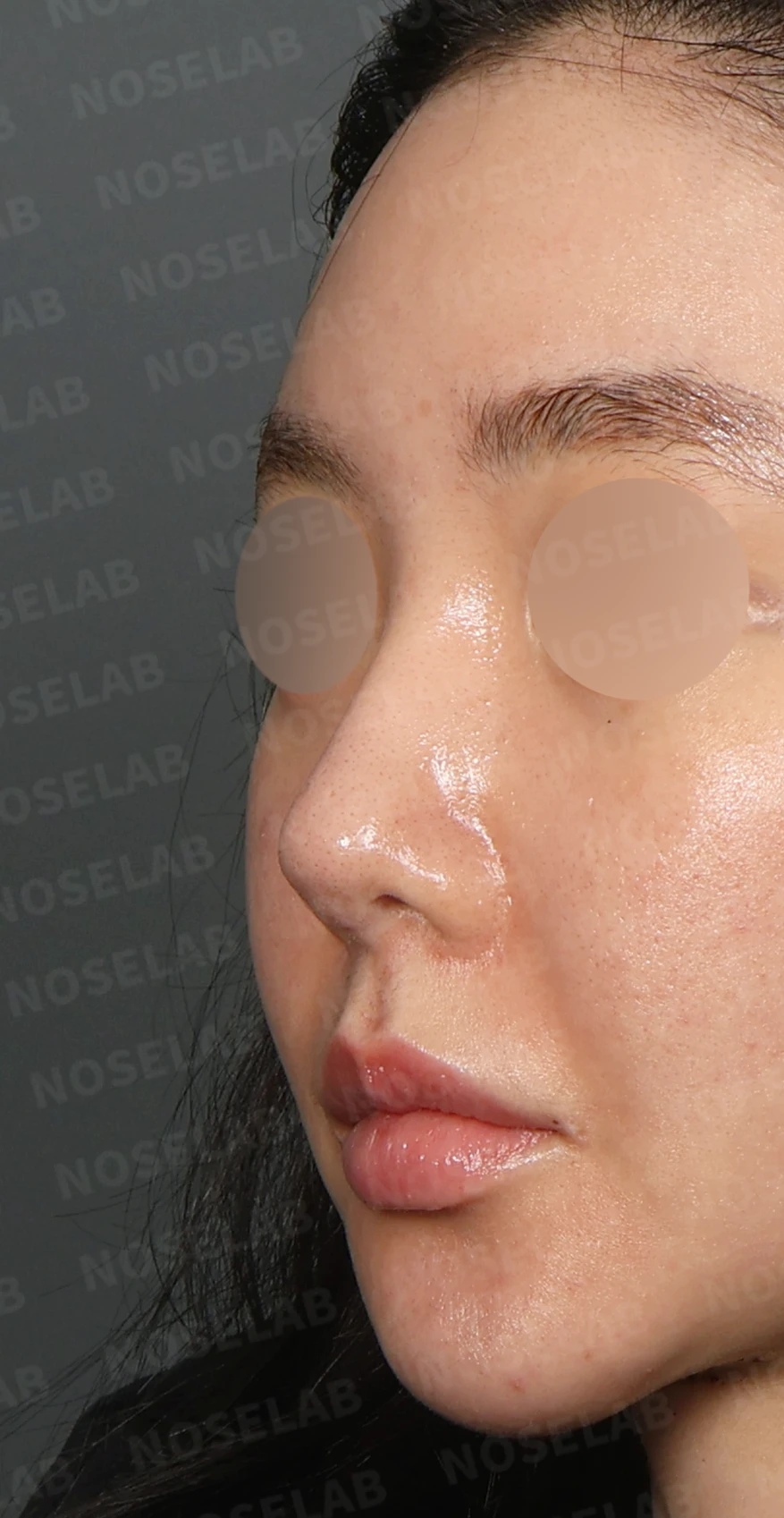
Front, left profile, and oblique views during design consultation.
💉 Patient requests
Correction of an upturned nose with excessive nostril show from the front view
Improvement of tip depression (sunken appearance)
Concern over whether surgery was possible due to thinned tip skin
Desire for a natural correction focused on addressing shortcomings rather than increasing height
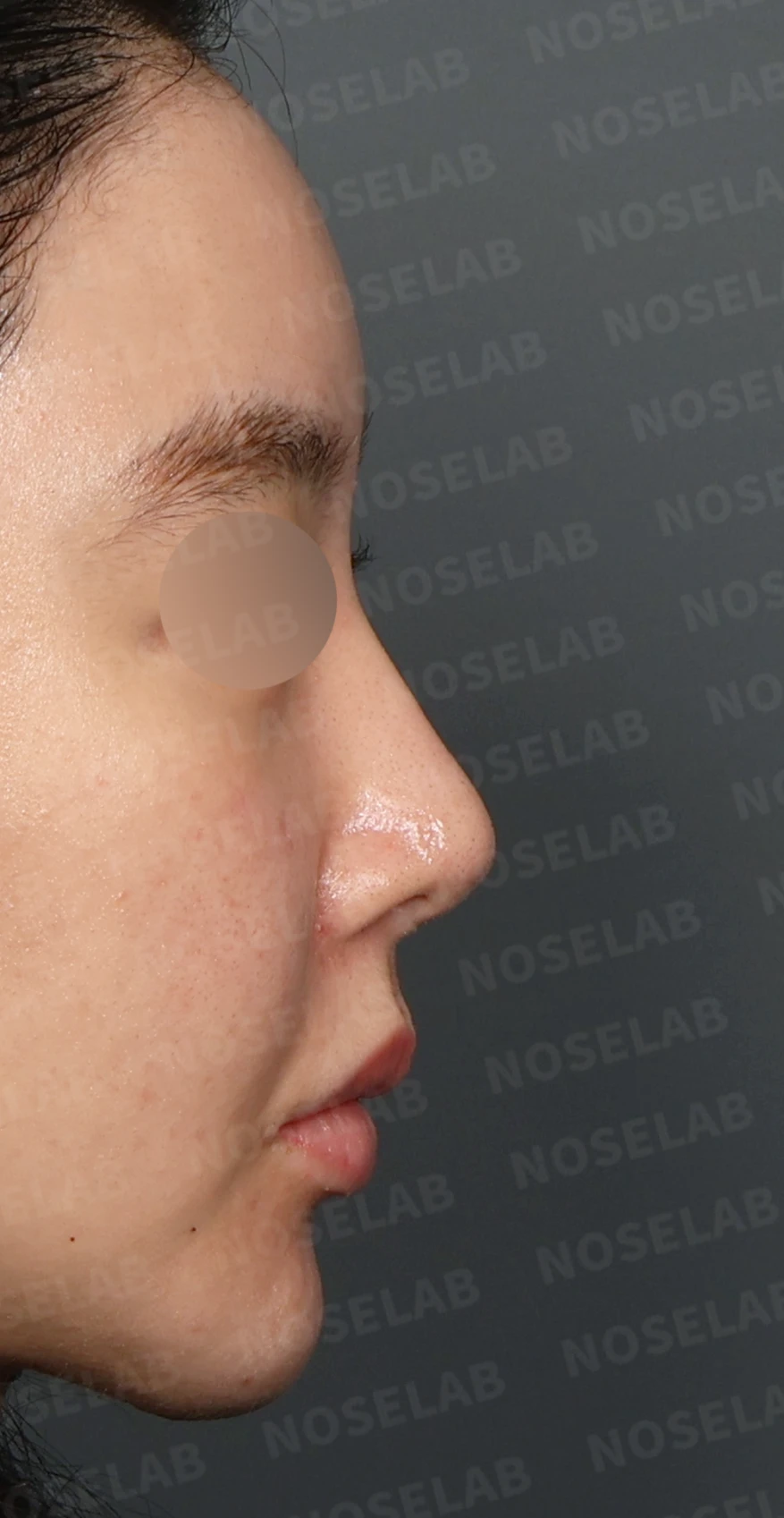
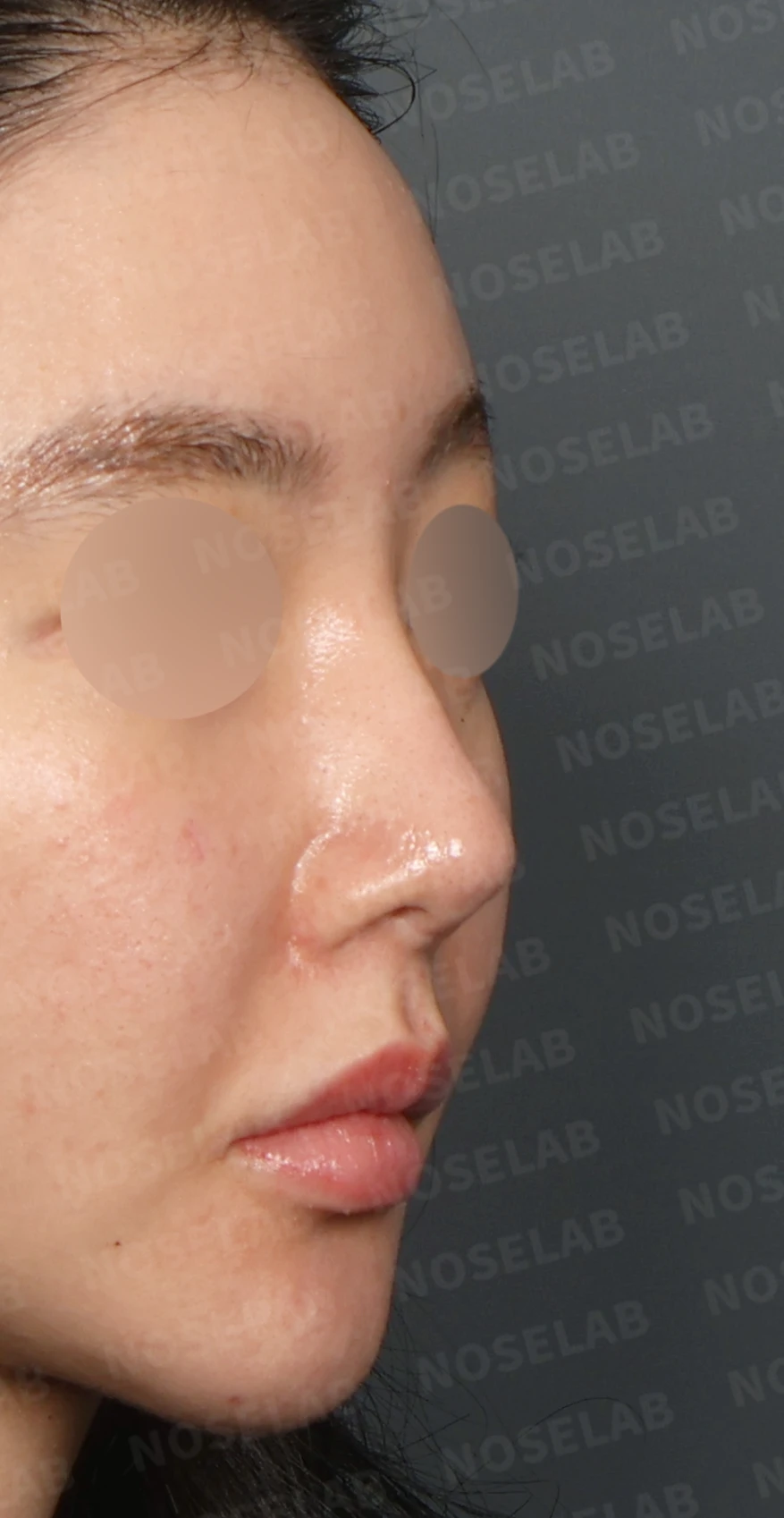
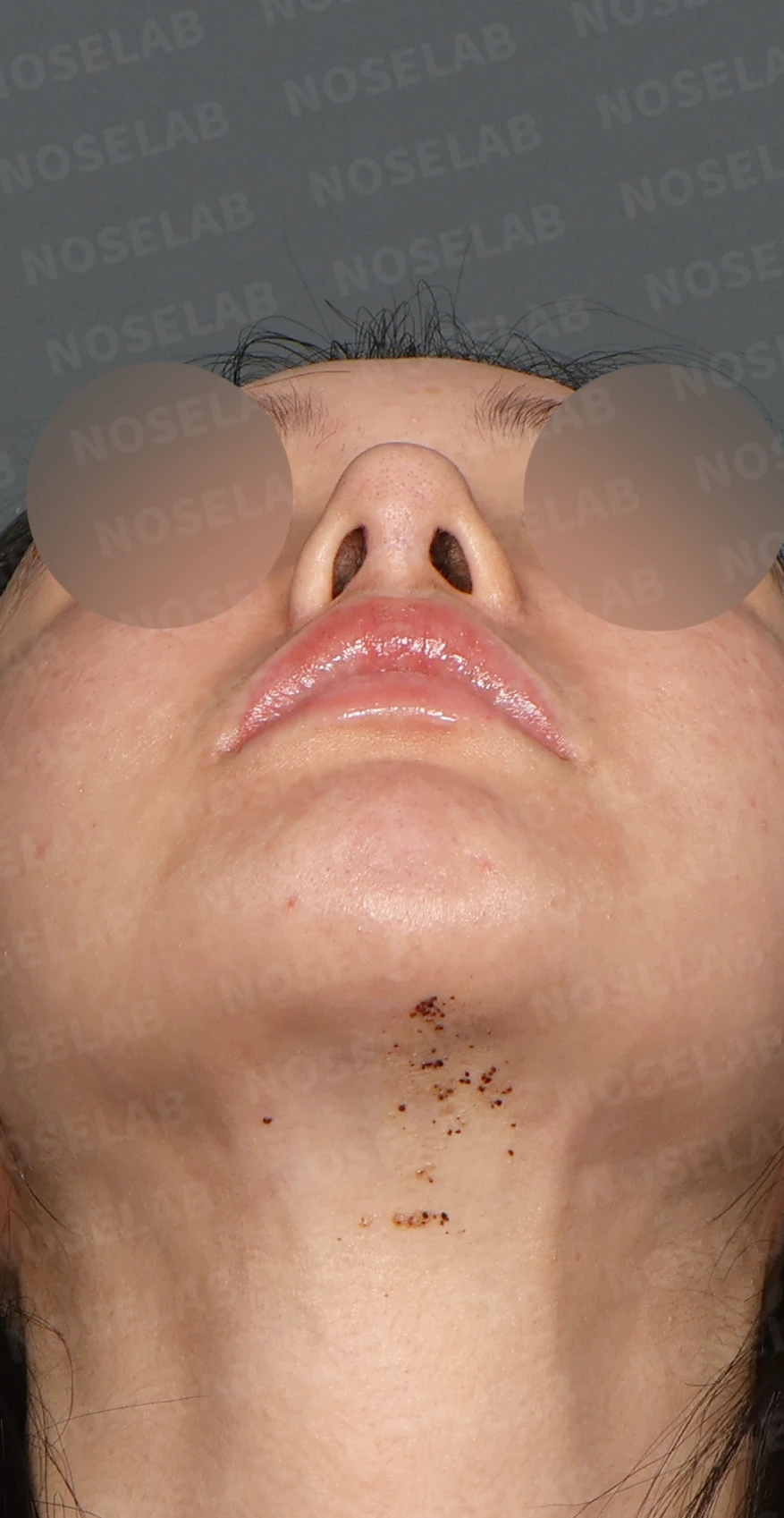
Right profile, oblique, and nostril views during design consultation.
🔧 Surgical plan and procedure
During surgery, foreign material (mesh) used in a previous surgery was discovered in the septum and was completely removed. It was determined that this mesh material had shortened the septum, causing the nose to turn upward.
1. Complete removal of foreign material (mesh): All mesh discovered in the septum was safely removed.
2. Septal reconstruction using autologous rib cartilage: After removal, the damaged septum was reconstructed using the patient's own rib cartilage.
3. Nasolabial angle correction: The angle of the upturned nose (the angle between the nose and the upper lip) was naturally improved.
4. Silicone implant replacement: The existing implant was removed, and a new silicone implant was placed only along the nasal dorsum.
5. Tip skin reinforcement using acellular dermal matrix: Acellular dermal matrix was applied to reinforce the thinned tip skin.
6. Septoplasty and turbinate reduction: Surgery to improve nasal function was performed concurrently.
🌟 Surgical results
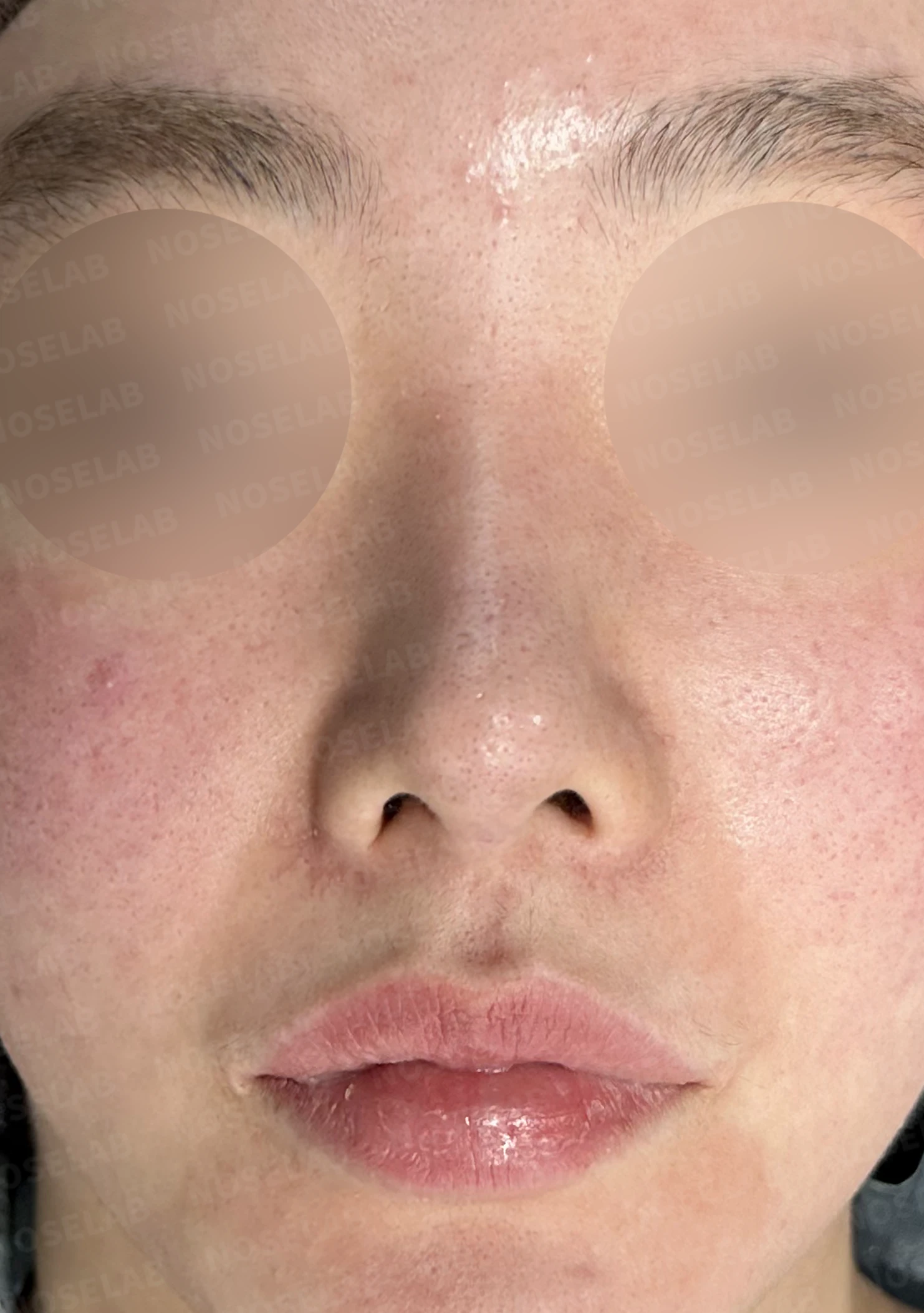
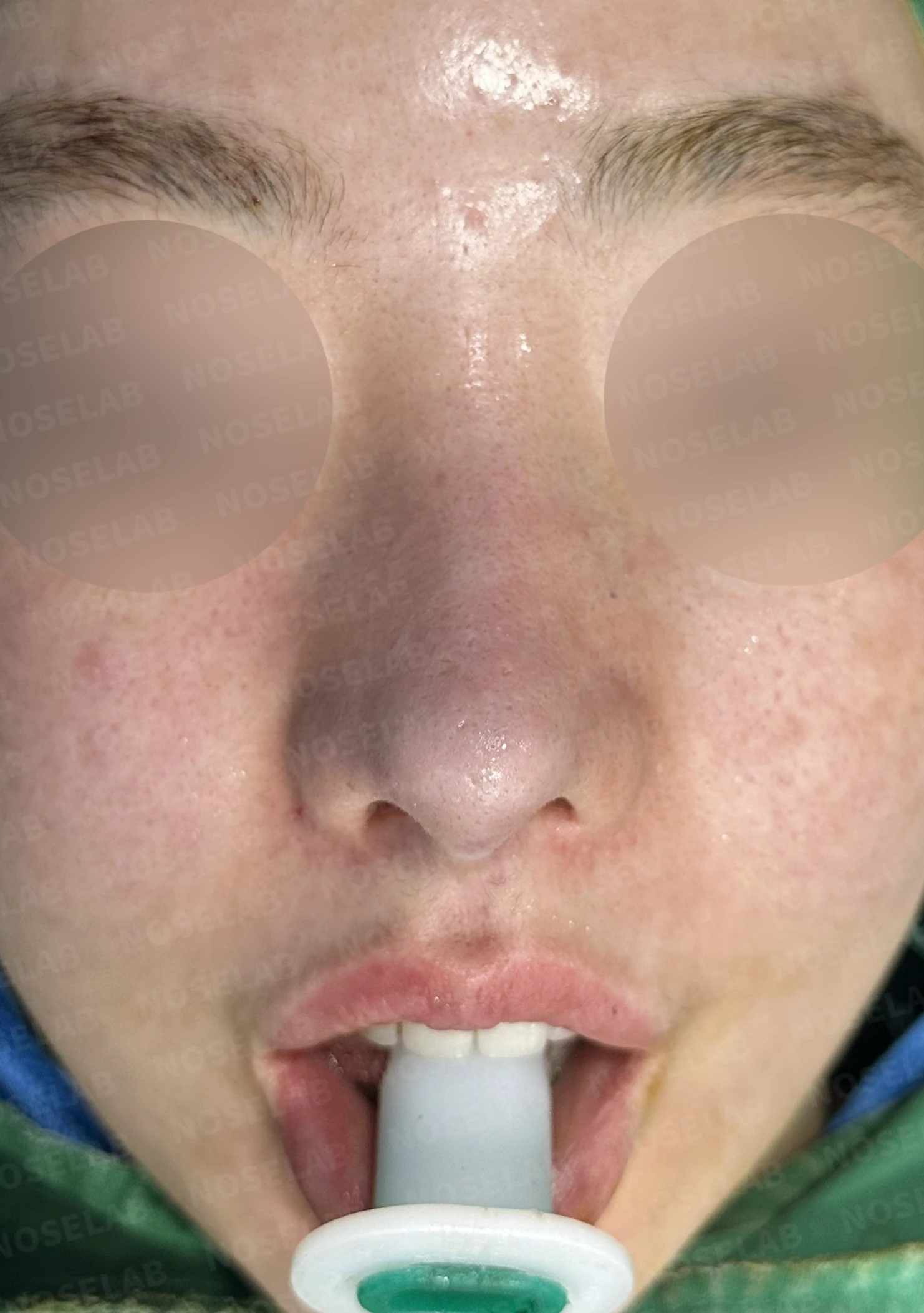
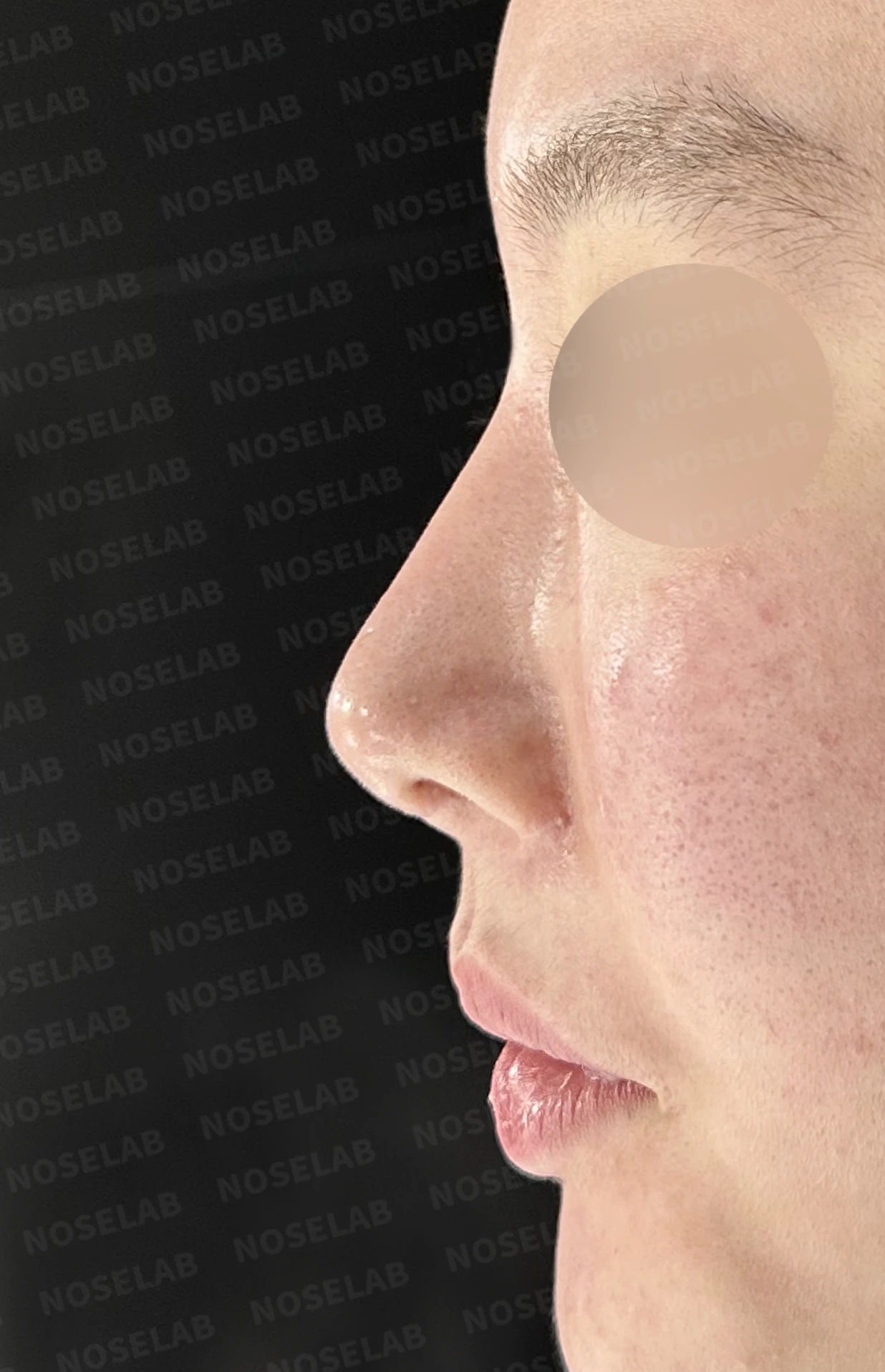
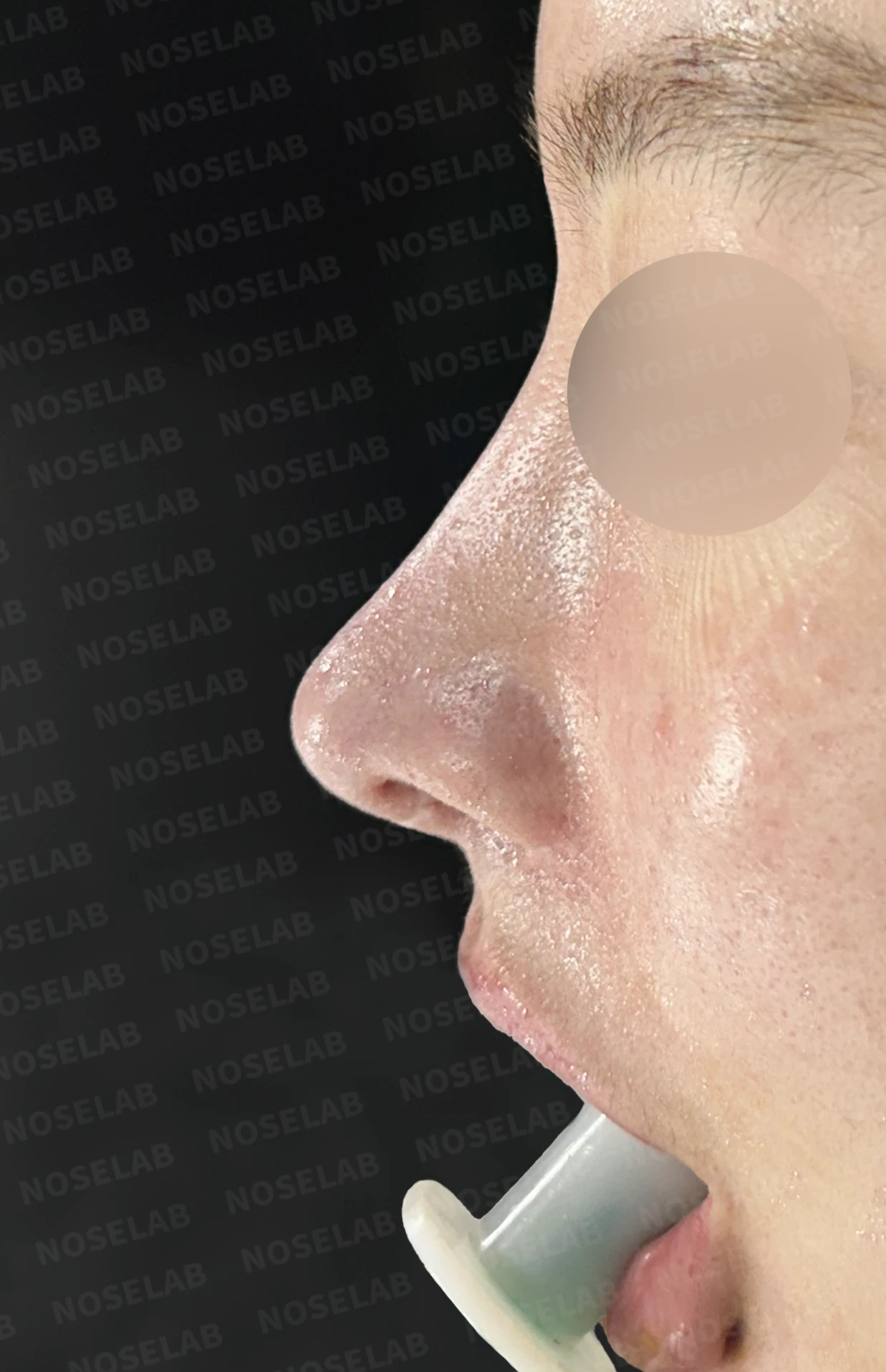
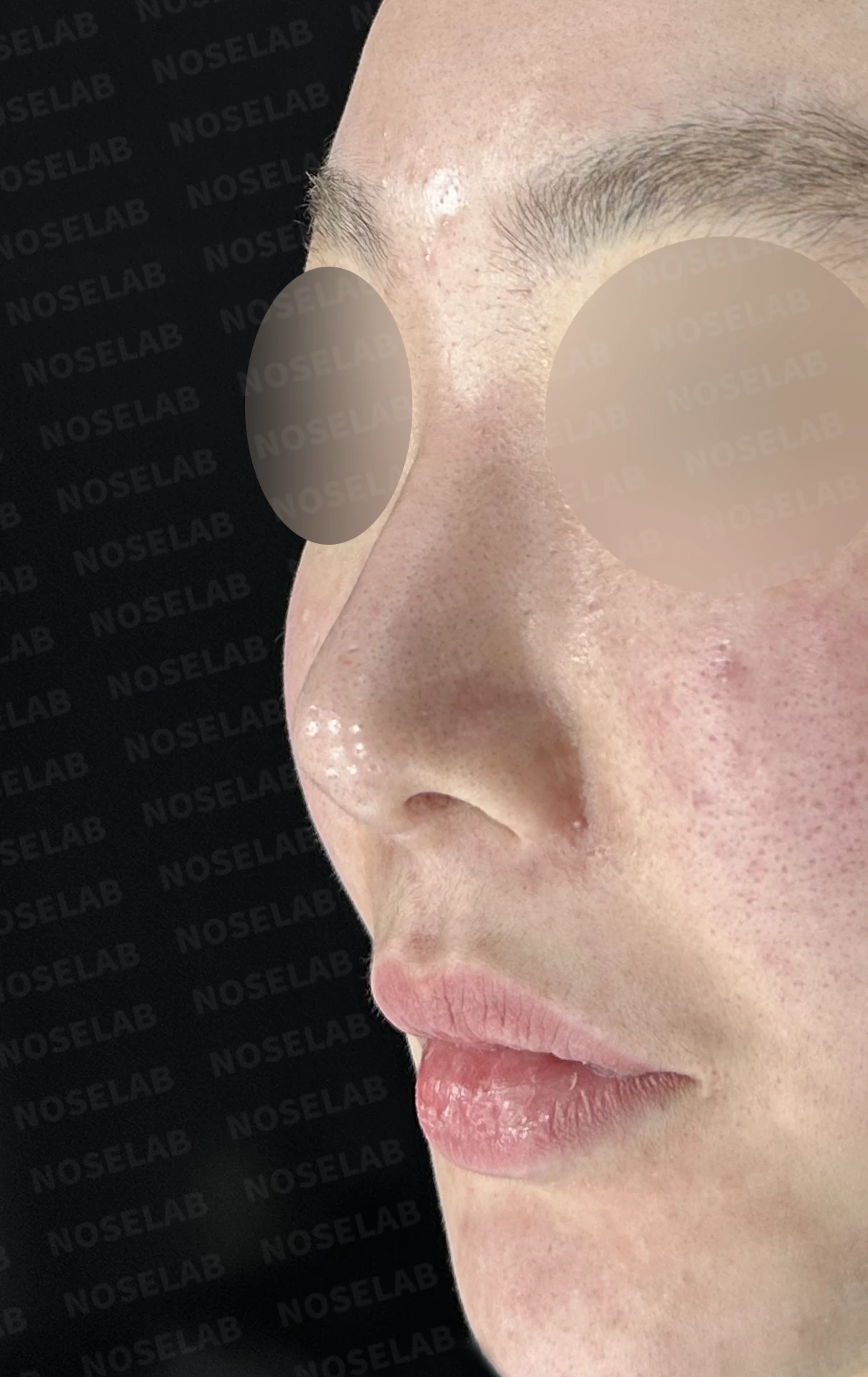
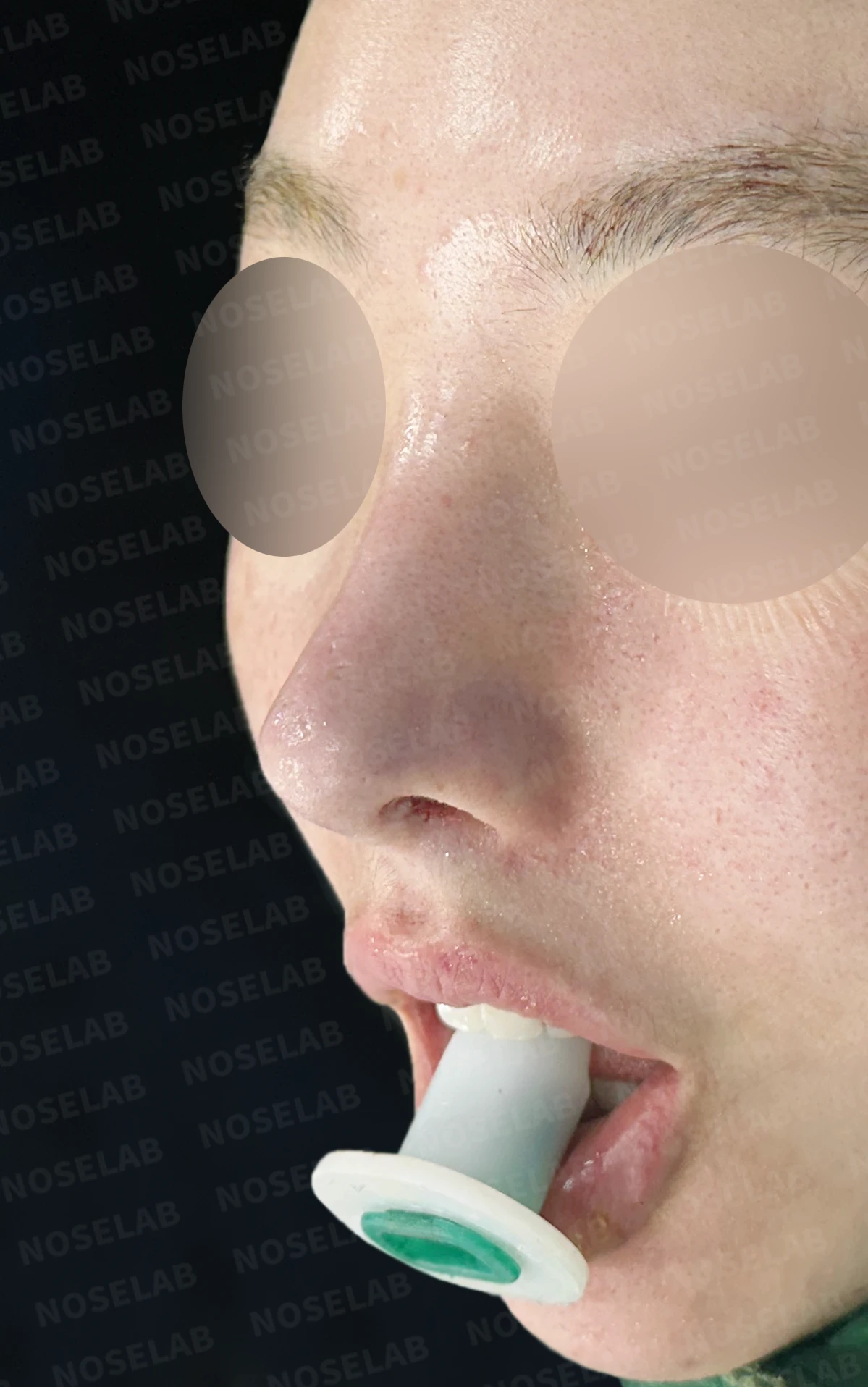
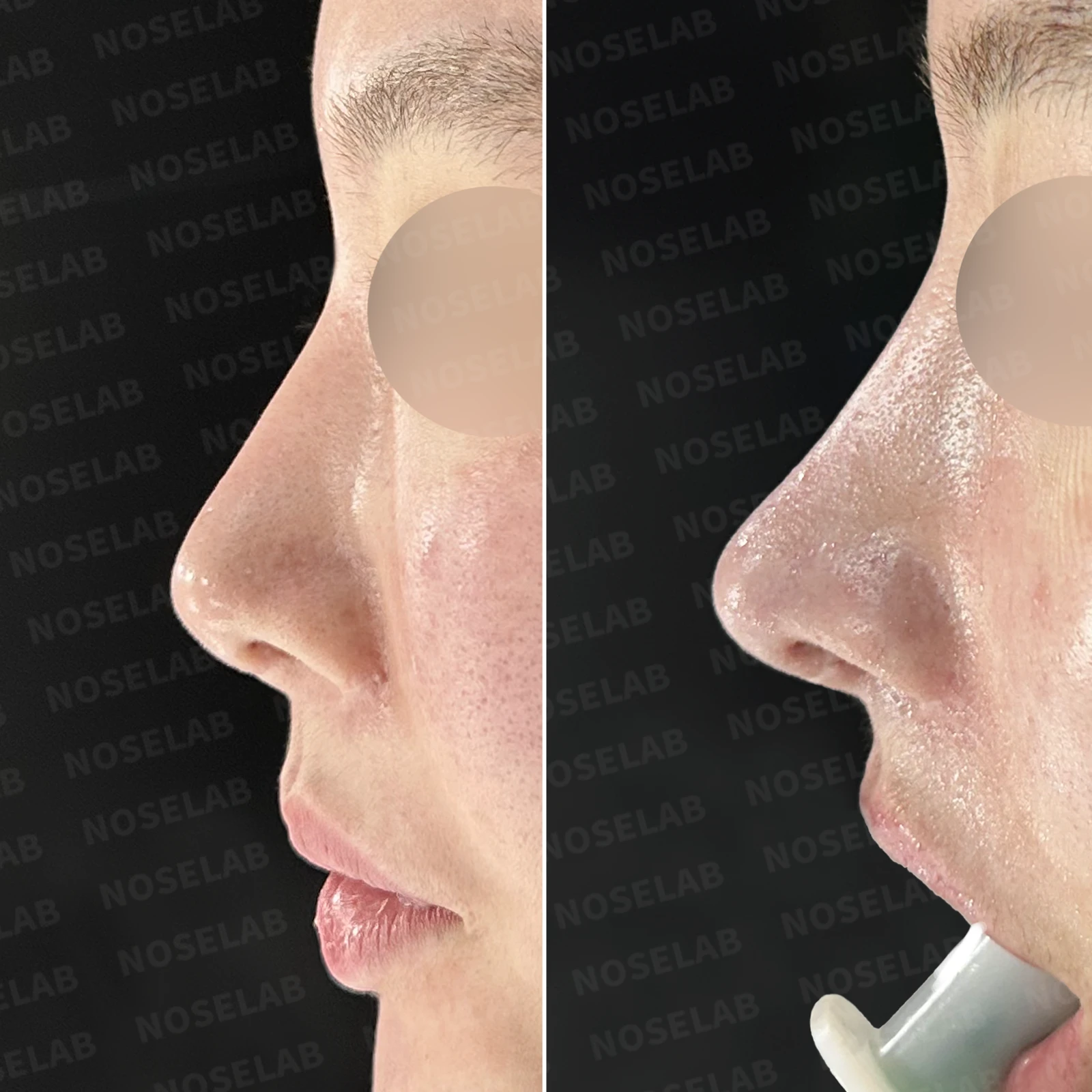
Before surgery / Day 0 immediately after surgery Photos taken immediately after surgery show swelling and may differ from the final result.
Front view changes
The previously upturned nasal shape was naturally corrected.
The nostrils, which were excessively visible from the front view, were noticeably reduced.
Before surgery / Day 0 immediately after surgery Photos taken immediately after surgery show swelling and may differ from the final result.
Profile view changes
The nasolabial angle was appropriately adjusted, improving the profile line.
The nasal dorsum maintained a natural height with the new implant.
Before surgery / Day 0 immediately after surgery Photos taken immediately after surgery show swelling and may differ from the final result.
Changes in the nasal tip
With dermal reinforcement, a natural shape was achieved without tip depression.
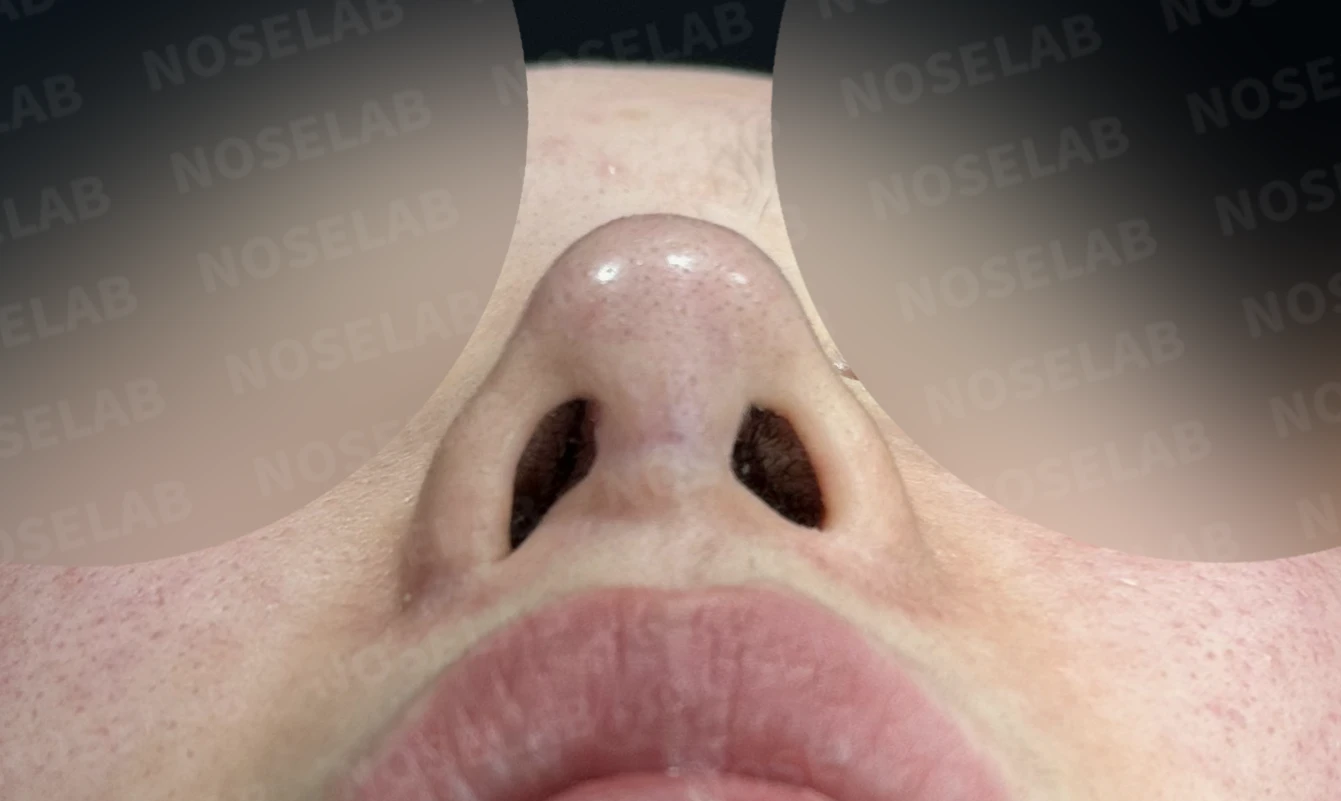
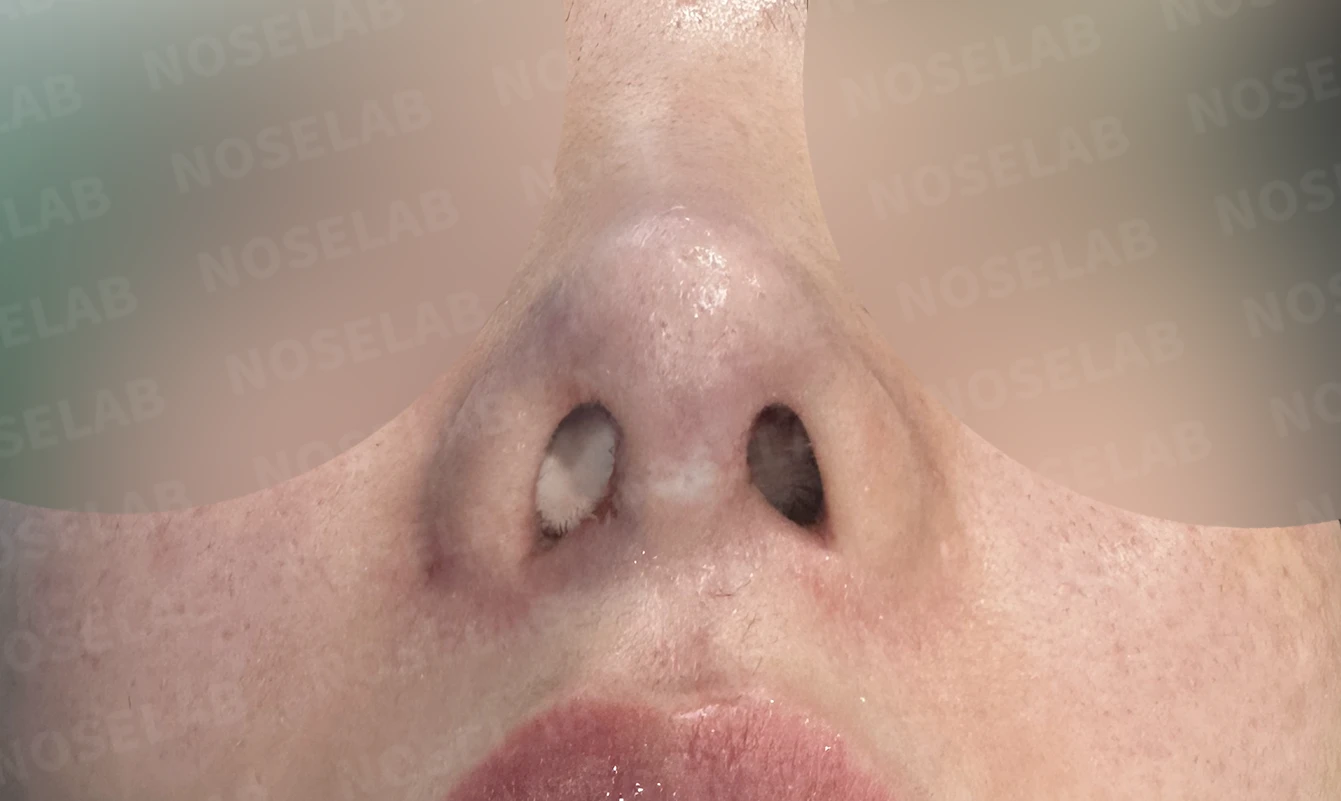
Before surgery / Day 0 immediately after surgery Photos taken immediately after surgery show swelling and may differ from the final result.
💡 Specialist opinion
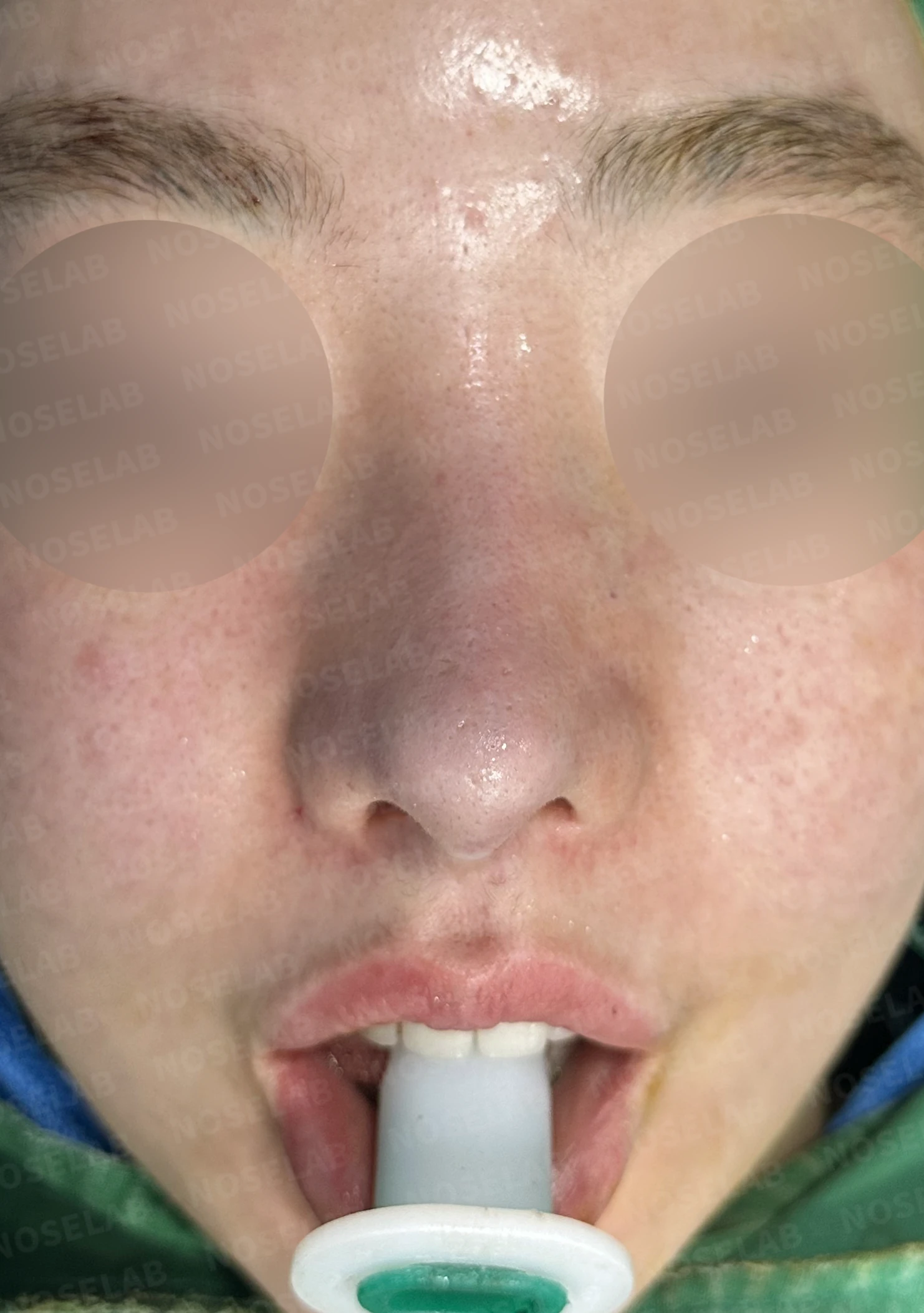
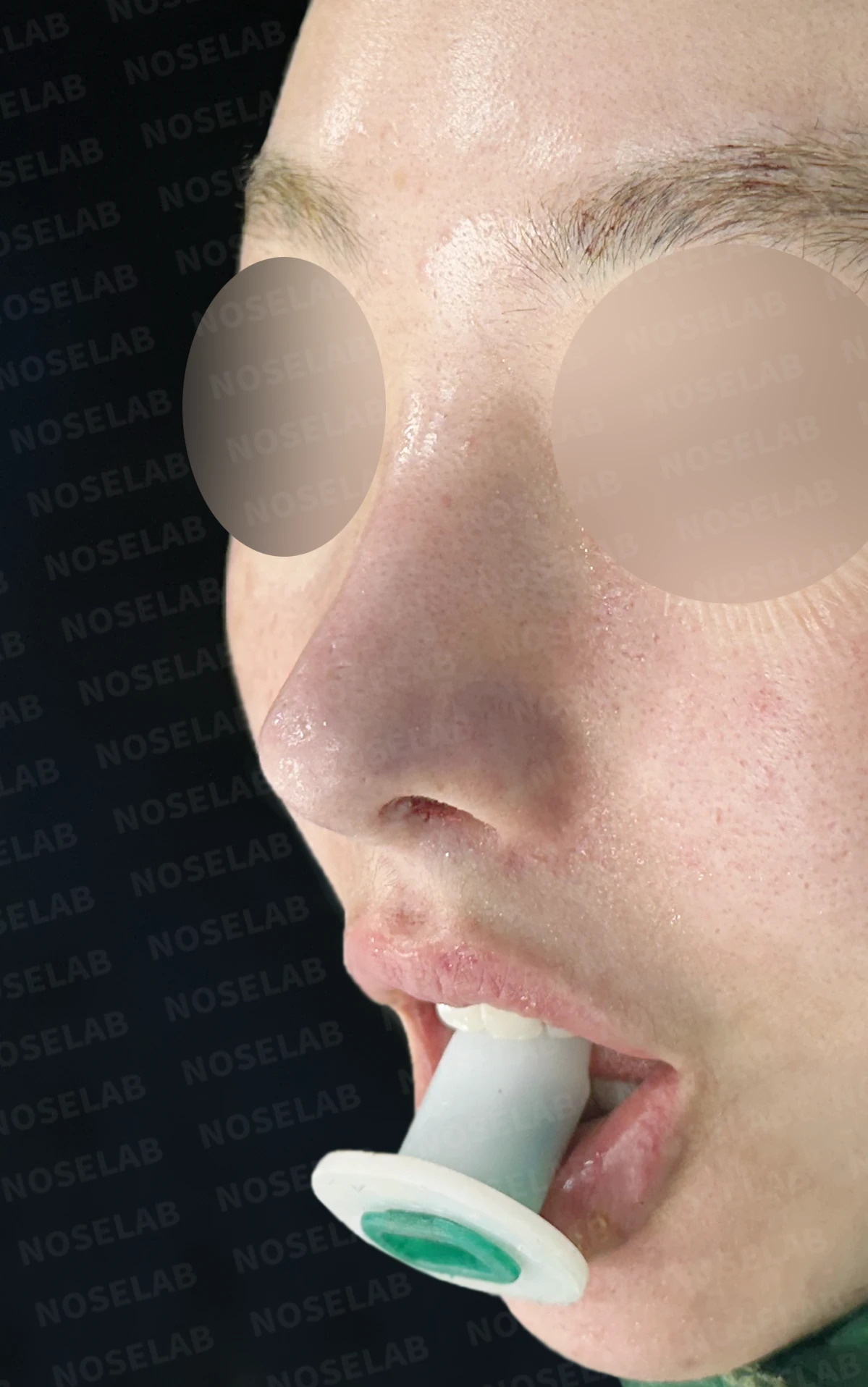
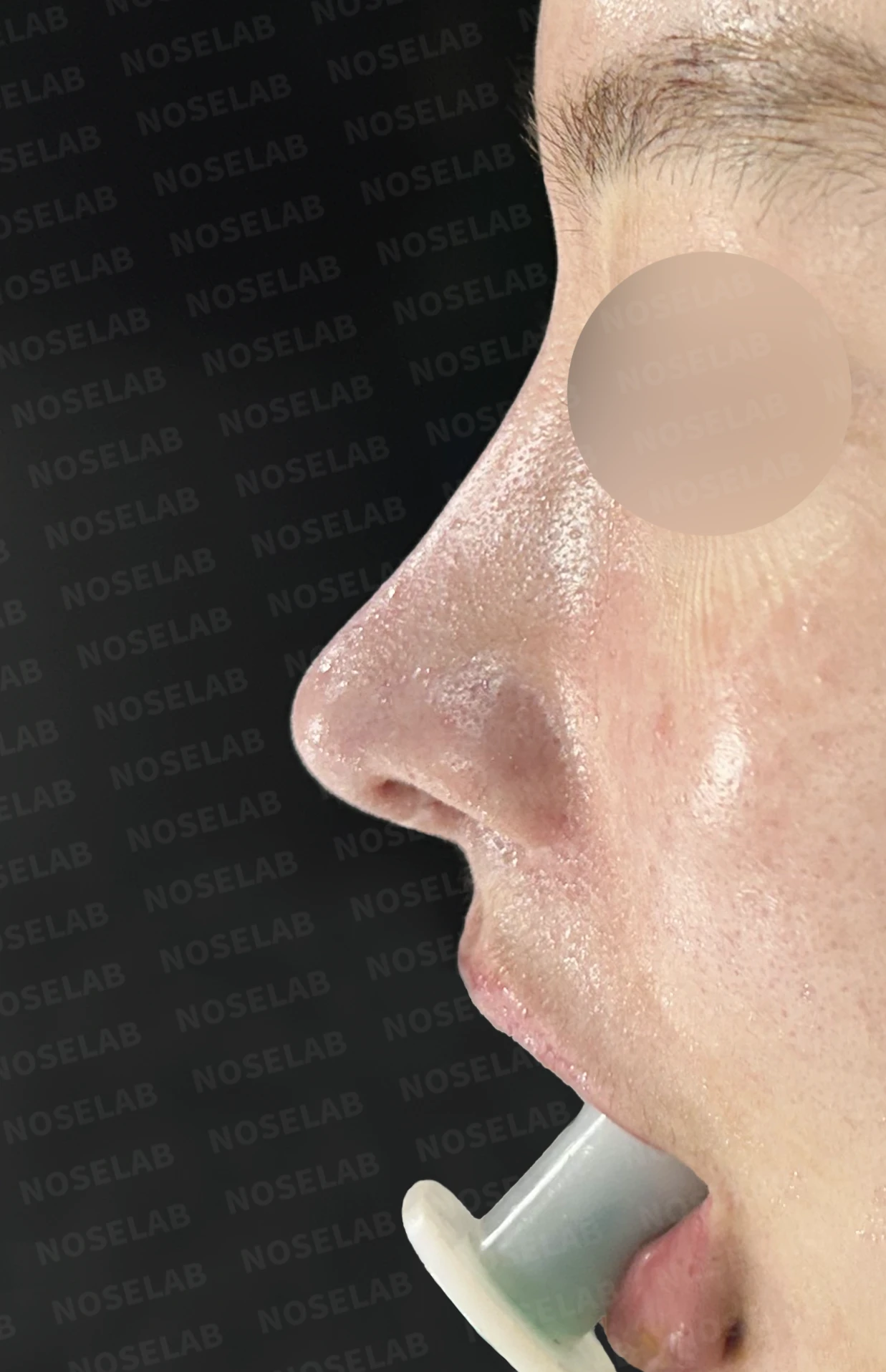
Front, oblique, and profile views on day 0 immediately after surgery. Photos taken immediately after surgery show swelling and may differ from the final result.
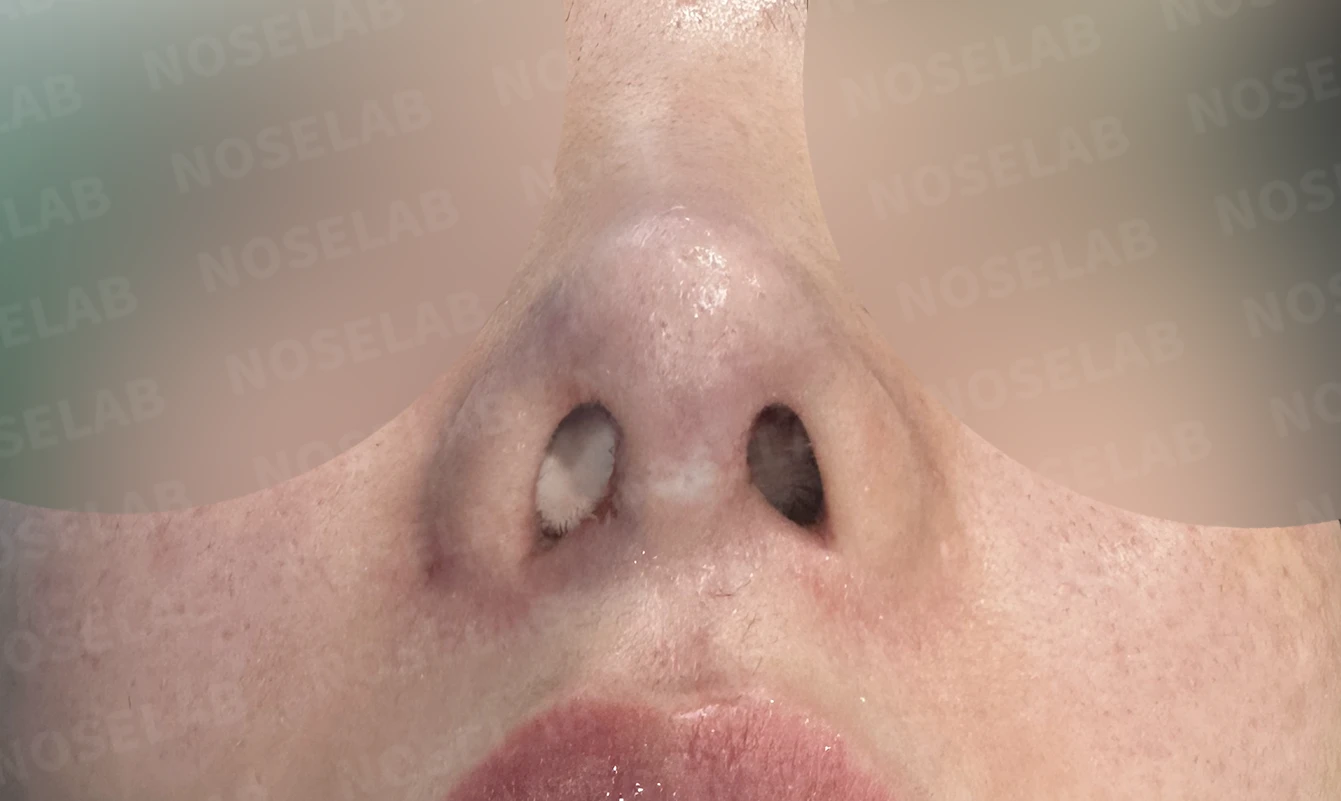
Nostril view on day 0 immediately after surgery. Photos taken immediately after surgery show swelling and may differ from the final result.
The most critical part of this case was the complete removal of the foreign material discovered during surgery.
The mesh material found in the septum had shortened it, serving as the main cause of the upturned nose. After removing all of the mesh, reconstructing the septum with autologous rib cartilage restored a stable structural foundation.
In addition, when undergoing multiple surgeries, the tip skin tends to become thin; reinforcing the skin with acellular dermal matrix helps prevent implant visibility and skin damage. Functional nasal surgery was also performed at the same time to address both appearance and function.
This was Dr. Peter C. Kang. Thank you.
#closedrhinoplasty #closedrevisionrhinoplasty #revisionrhinoplasty #autologousribcartilage #septalreconstruction #foreignbodyremoval #upturnednosecorrection #nostrilcorrection #acellulardermalmatrix #turbinatesurgery

Limitations and risks
When autologous rib cartilage is used, scarring and pain may remain at the donor site on the chest, and pneumothorax (pleural injury) can occur rarely. Over time, the grafted cartilage may warp or undergo partial resorption.
When revising after implant removal, contracture may progress again after removal, the nasal height and length may decrease, and staged surgery may be necessary depending on the skin condition.
When foreign materials such as injected fillers are removed and reconstructed, contracture may recur, nasal height and length may decrease, and staged surgery may be necessary depending on the skin condition.
When the septum is corrected at the same time, nasal obstruction may persist or recur, and in rare cases, septal perforation or changes in smell may occur.
Common potential risks include infection, bleeding, asymmetry, scarring, skin necrosis, and insufficient improvement; results vary depending on individual skin condition and previous surgical history.