Hello, I am Dr. Peter C. Kang.
Today, I would like to share the case of a patient who visited our clinic concerned about an upturned nasal tip and nostril asymmetry that persisted despite multiple previous operations.
🔍 Surgical history
The patient presented a complex history involving several surgical procedures:
4 to 5 years ago: Nasal bridge silicone implant, nasal tip autologous rib cartilage graft, and osteotomy
2 years ago: After double-jaw surgery: nasal bridge silicone implant, nasal tip ear cartilage and fascia graft, nasolabial angle correction, lowering the alar rims, philtrum reduction, and alar reduction
Despite these multiple procedures, the sharp, upturned tip remained unresolved, with persistent contracture of the columella and nostril asymmetry.
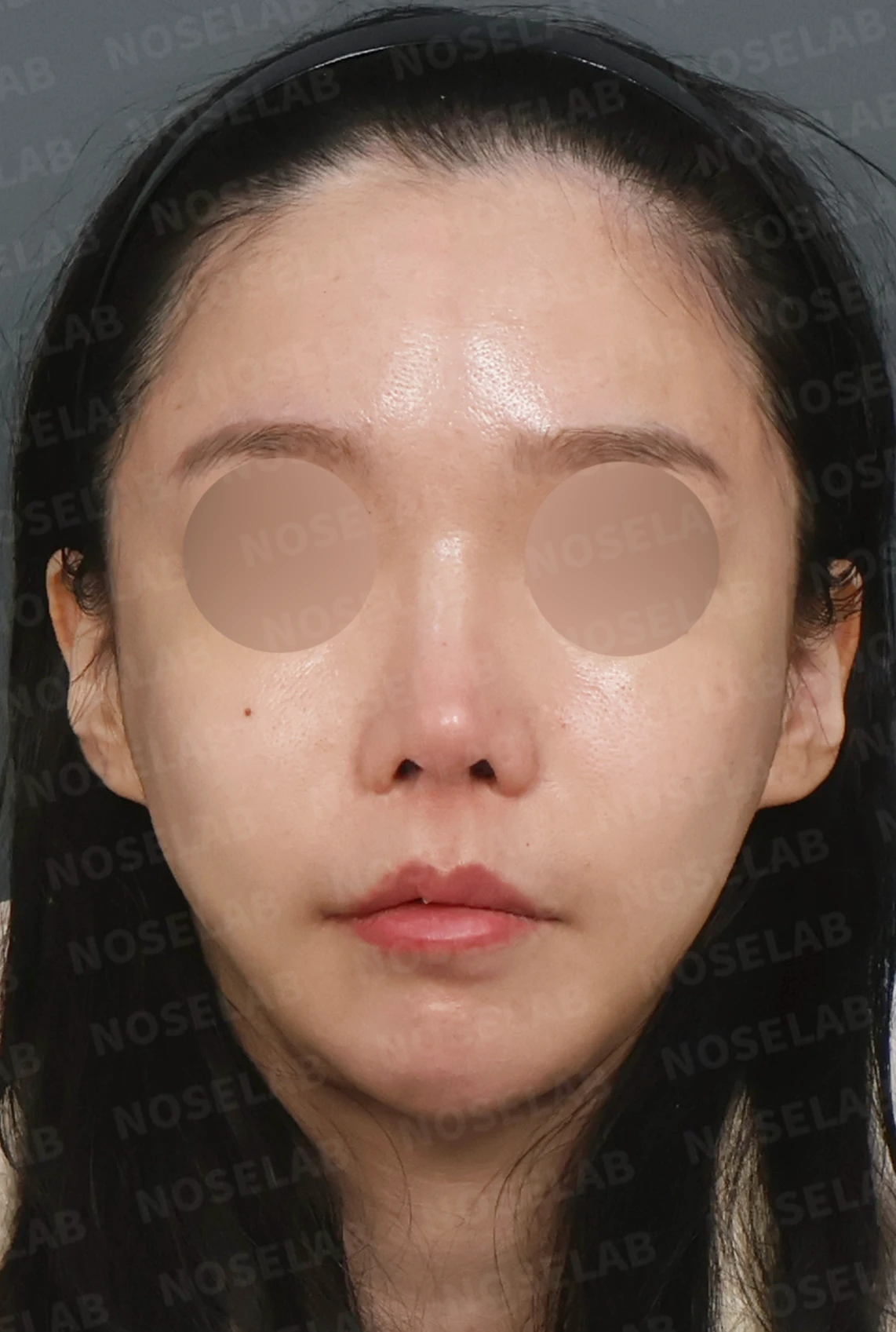
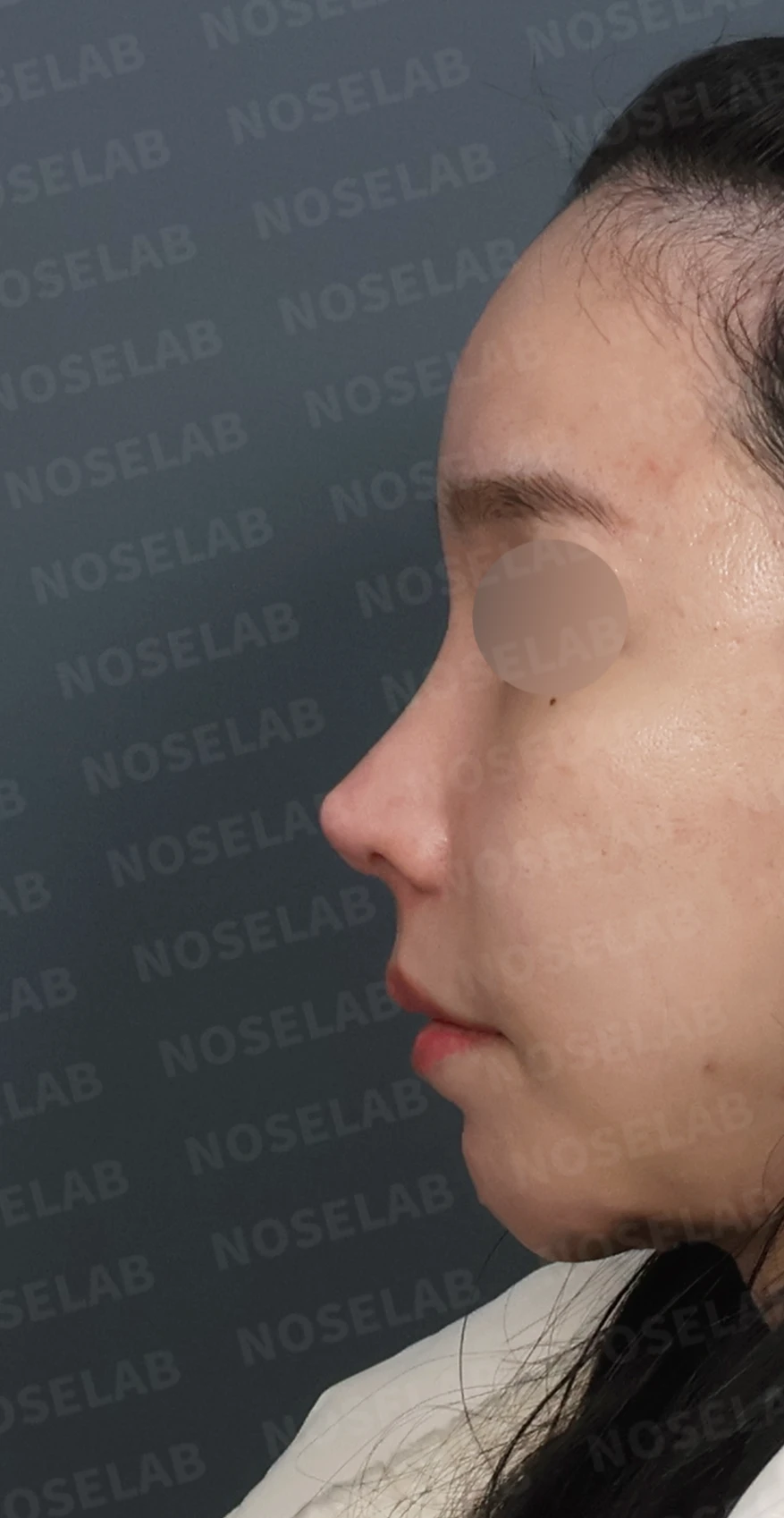
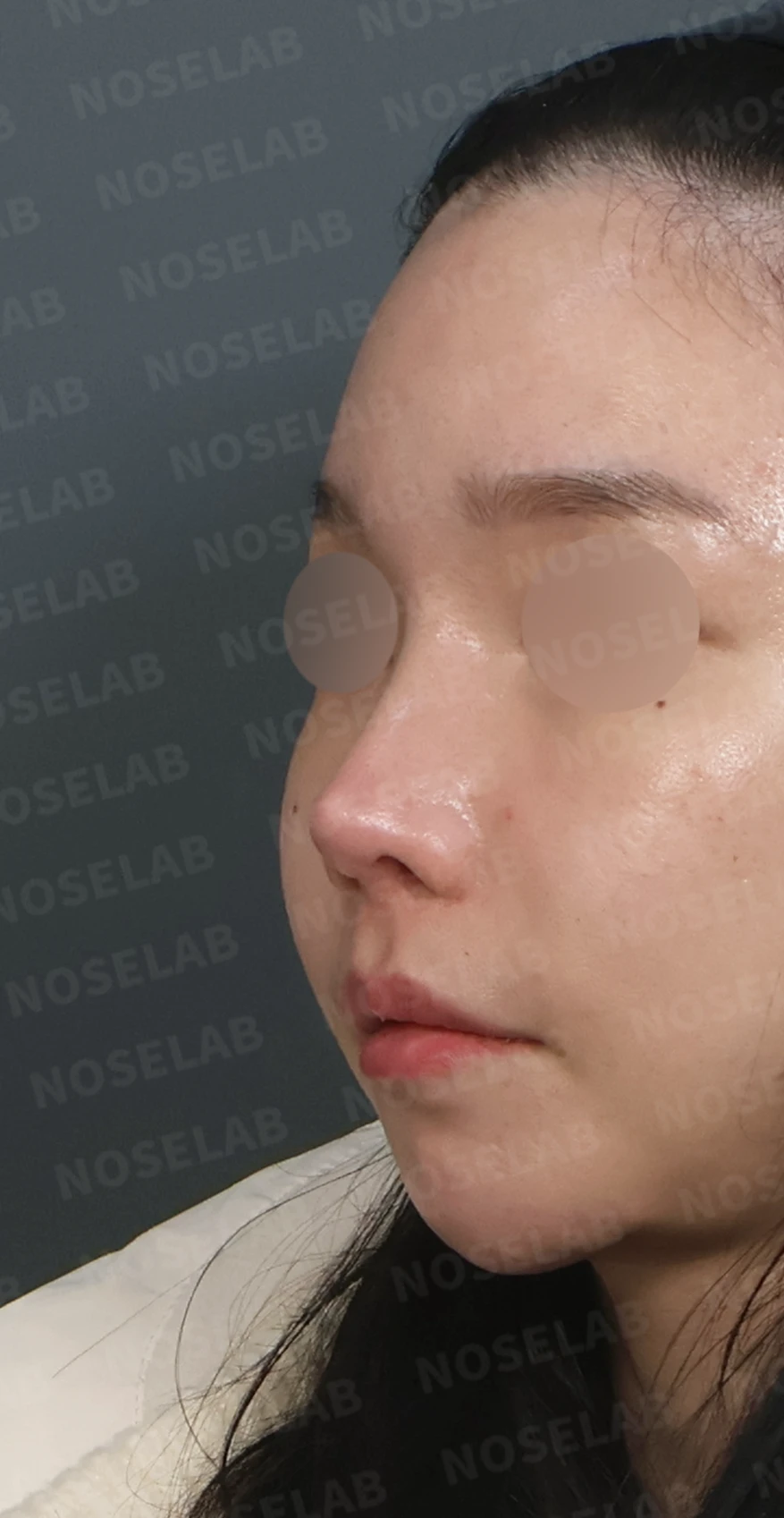
Front, left profile, and oblique views during design consultation.
💉 Patient requests
The patient's specific requests were as follows:
Correction of the upturned nasal tip
Reduced nostril show on the front view
Achieving a rounded yet refined, natural-looking tip along a straight bridge line
Resolving contracture in the columella
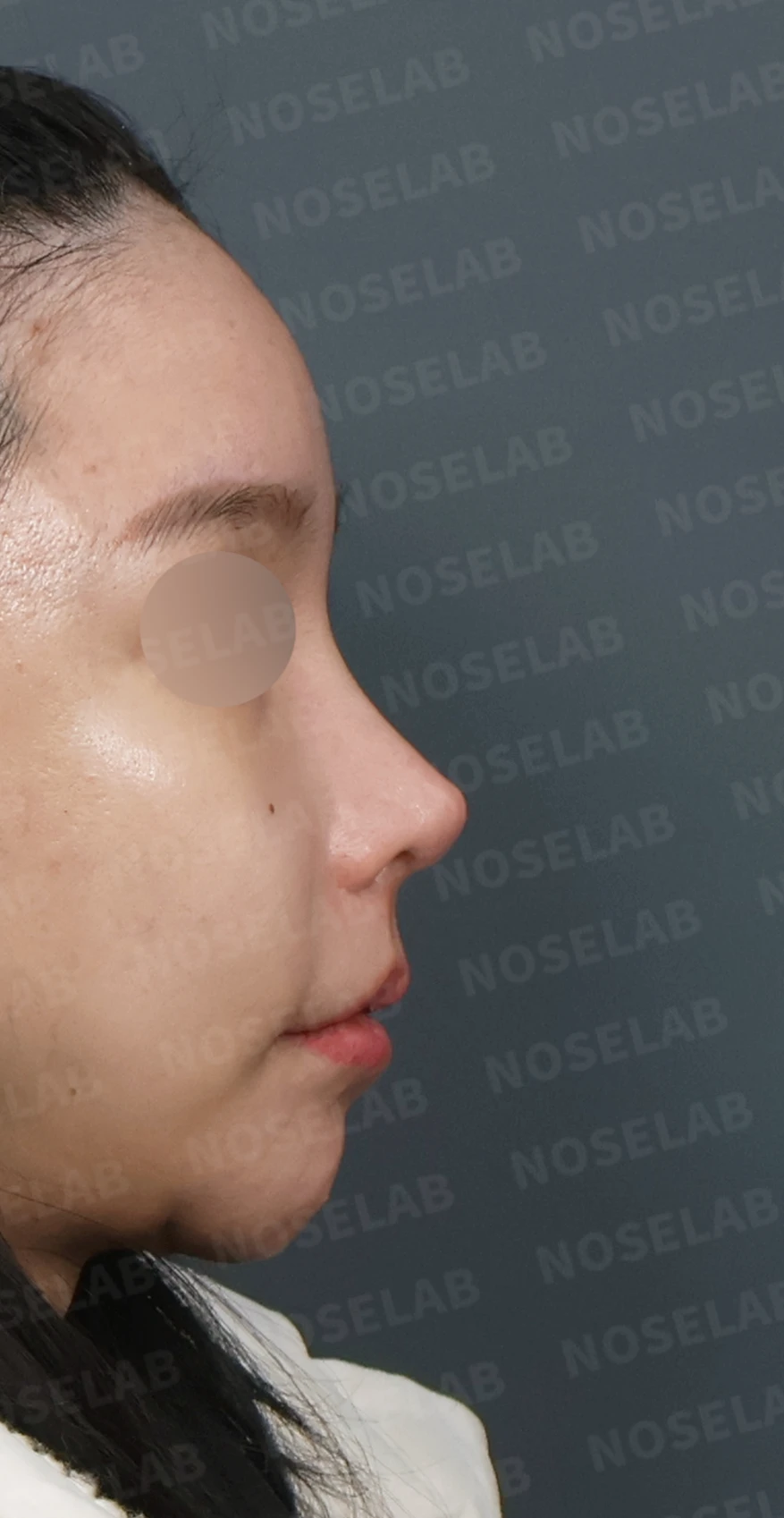
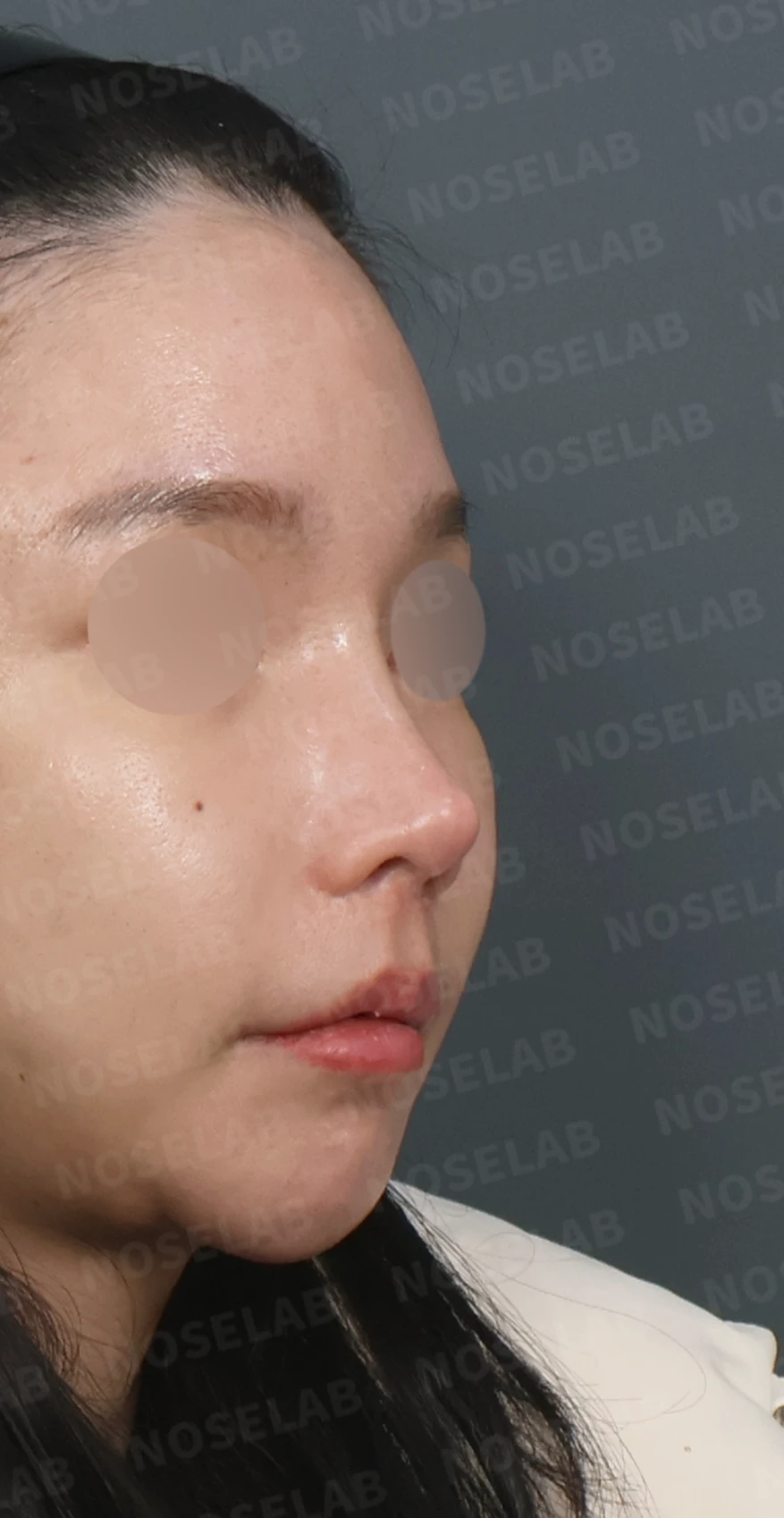
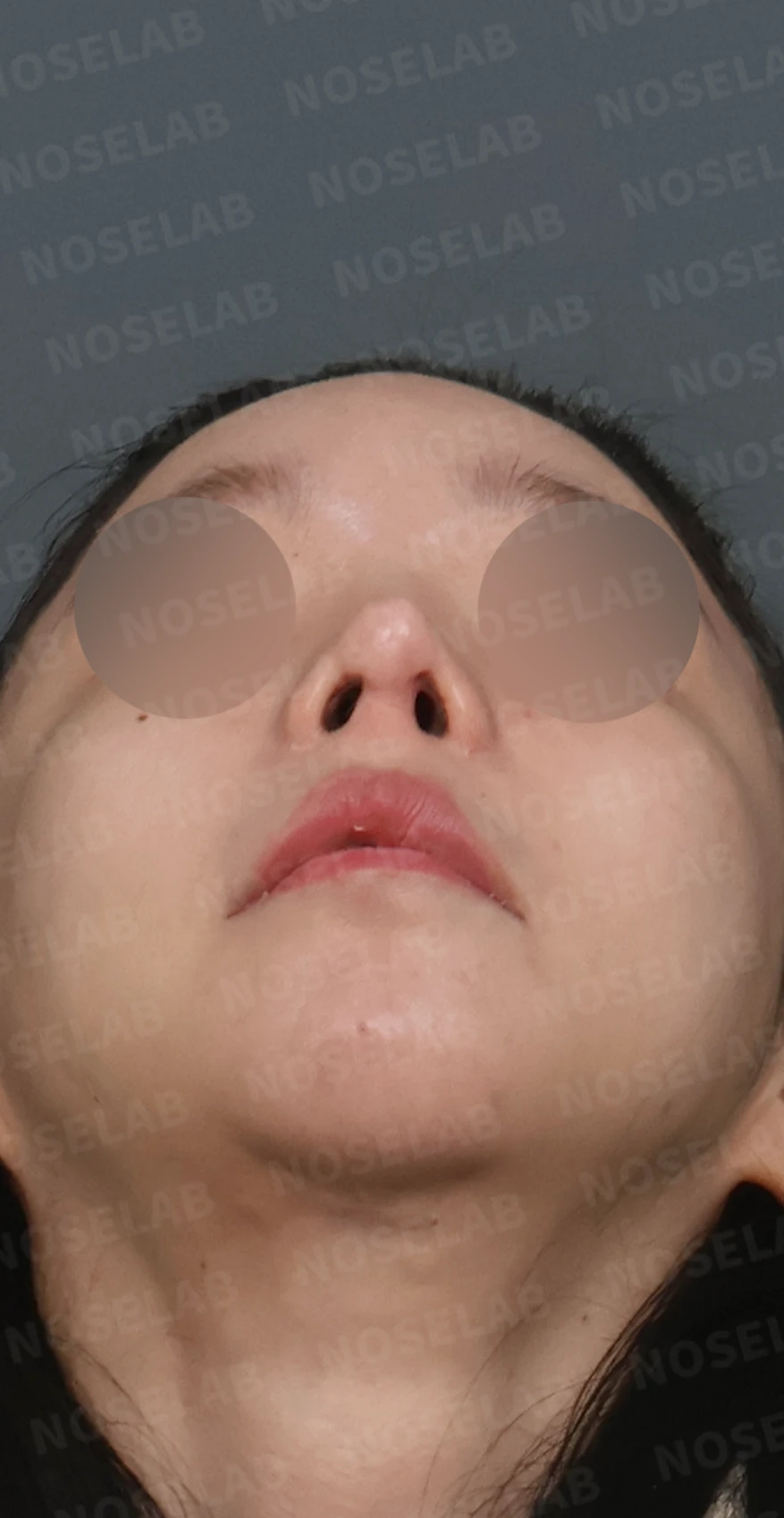
Right profile, oblique, and nostril views during design consultation.
Surgical plan and procedure
1. Septal reconstruction using donor rib cartilage
Because damage to the septal cartilage was severe, relying solely on autologous cartilage would not provide sufficient support. Using donor rib cartilage, a sturdy support framework was built to secure long-term structural stability.
2. Bilateral lower lateral cartilage reconstruction
The lower lateral cartilages weakened by prior procedures were reconstructed, simultaneously improving tip contour and structural support.
3. Dermis-fat composite graft to the right soft triangle
The soft triangle area causing nostril asymmetry was reinforced. Grafting dermis together with fat provided natural volume and improved symmetry.
4. Upturned nose correction and nostril asymmetry improvement
Relying on the reconstructed support framework, the nasal tip angle was carefully adjusted, and nasolabial angle correction created a natural lateral profile.
🌟 Surgical results
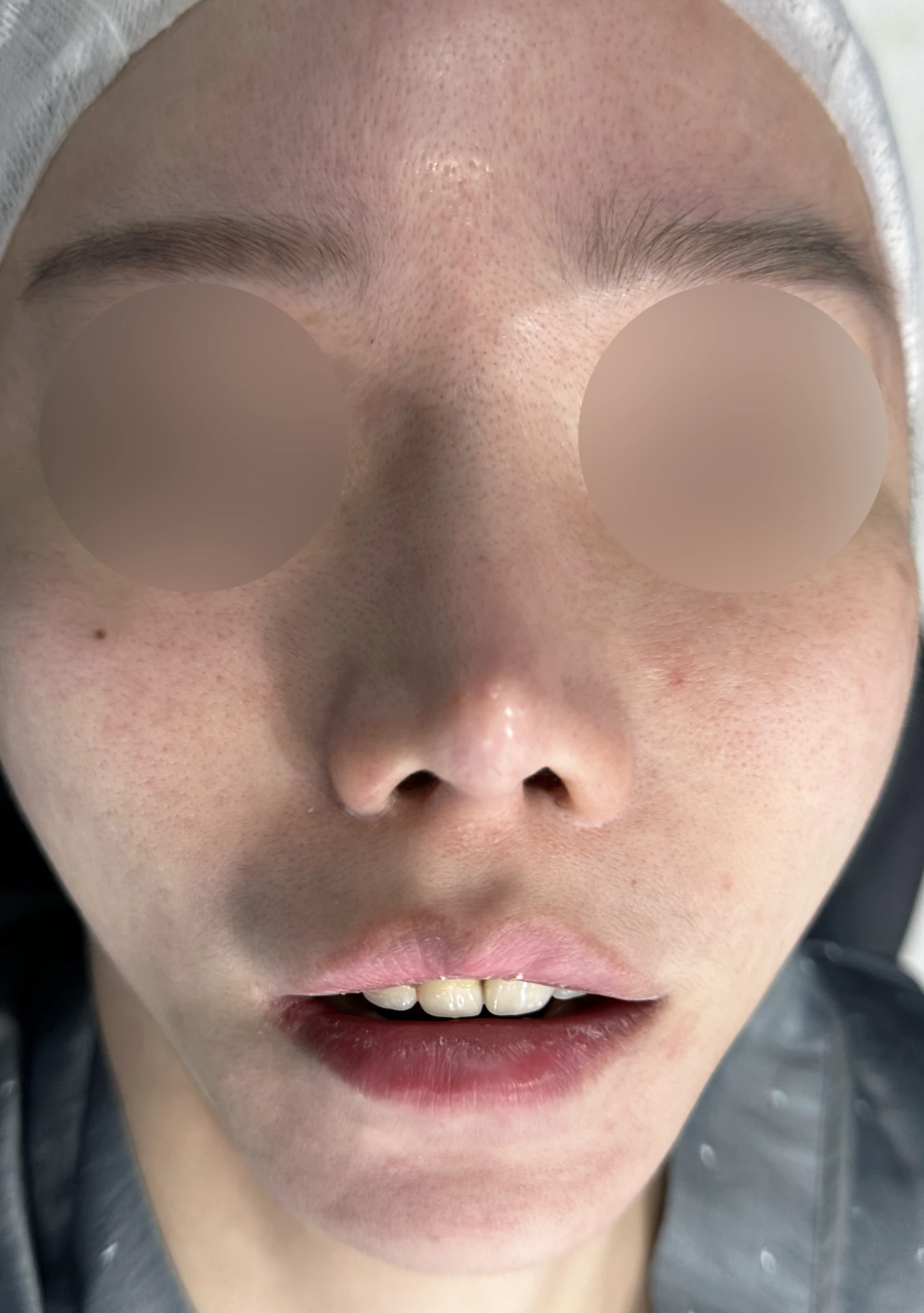
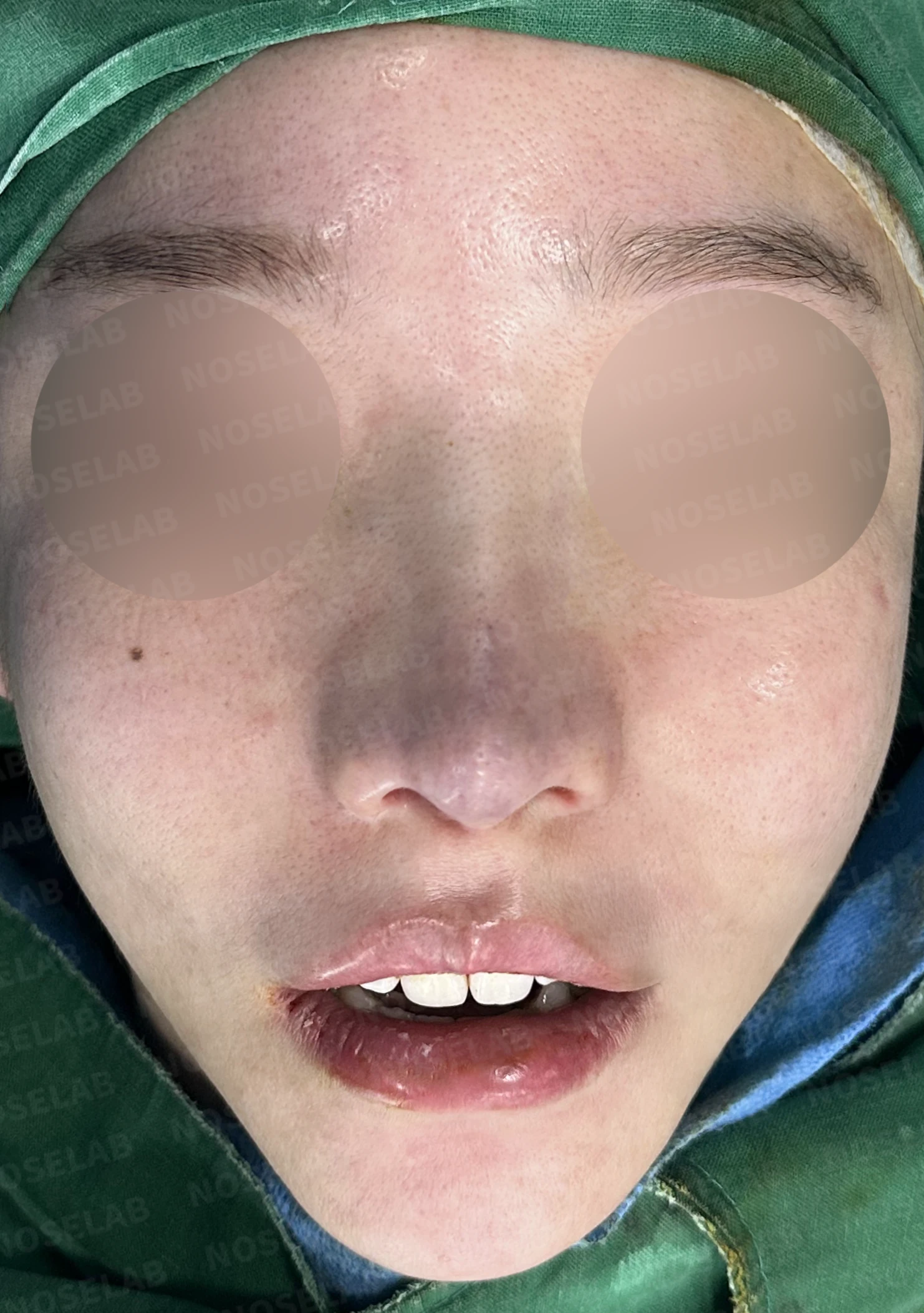
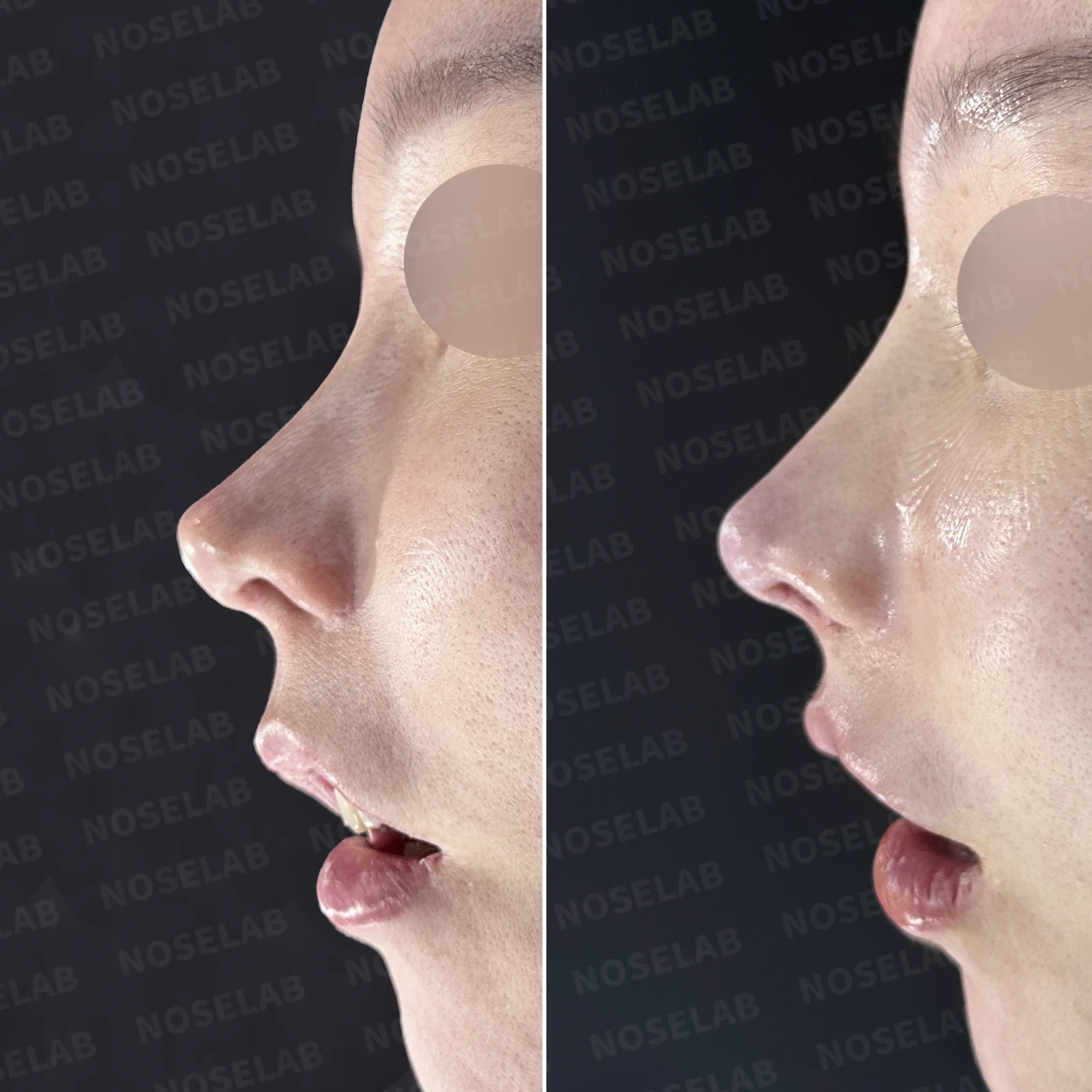
Before surgery / Day 0 immediately after surgery Photos taken immediately after surgery show swelling and may differ from the final result.
Front view changes
The upturned nasal tip was lowered to a natural angle
Nostril show was noticeably reduced
The previously sharp nasal tip changed to a rounded, refined contour
Nostril asymmetry was improved, creating a balanced front view
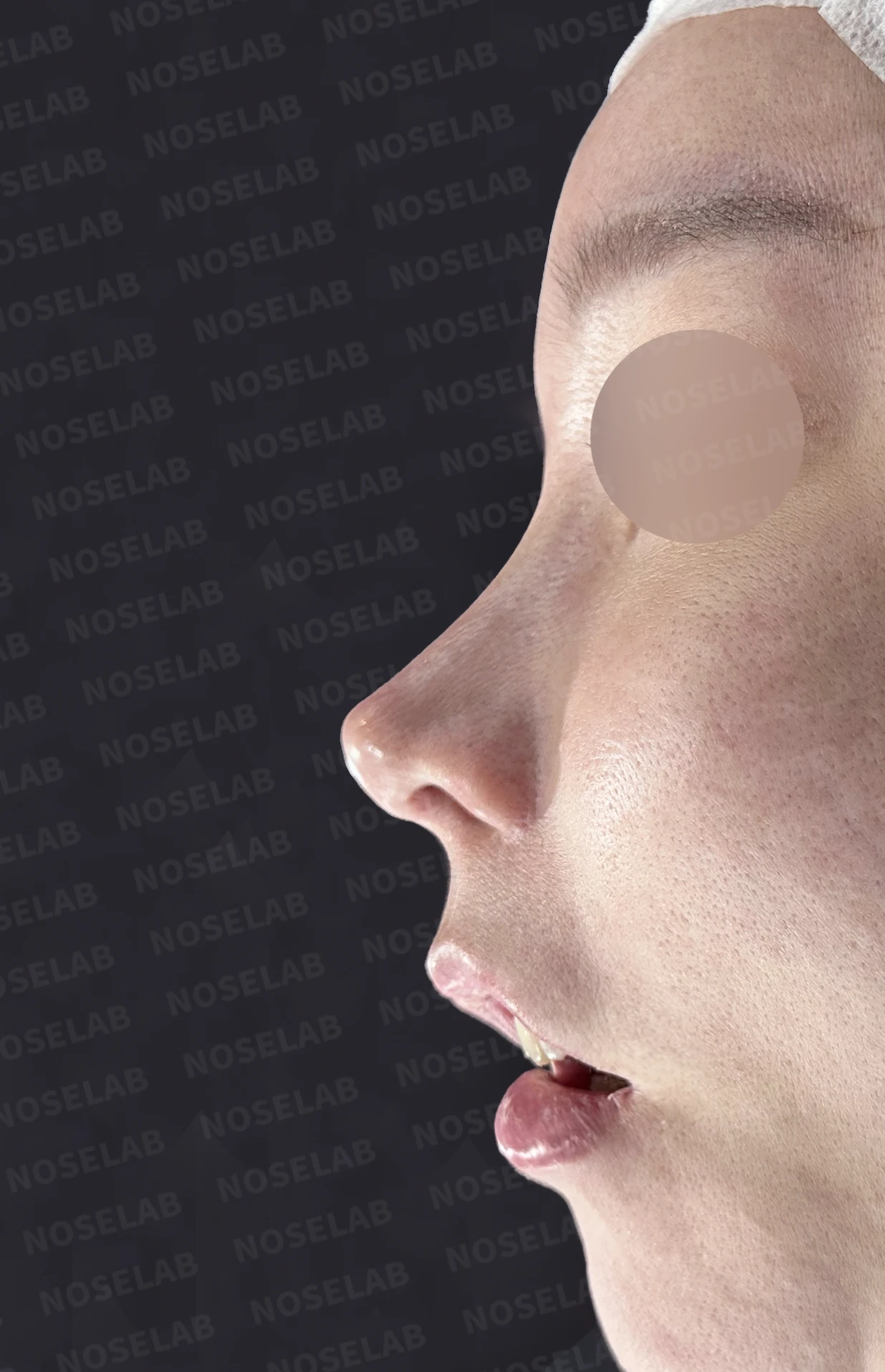
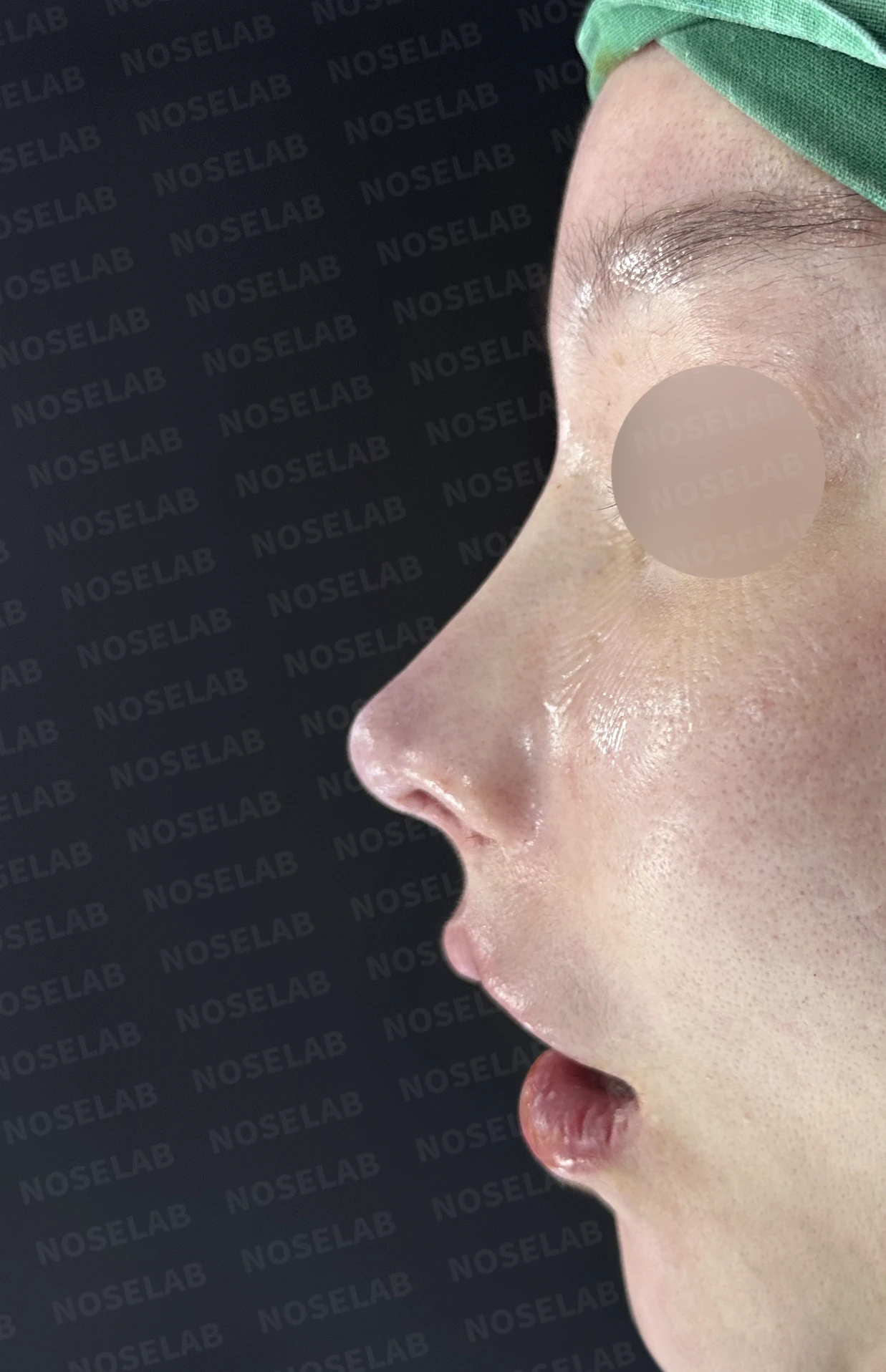
Before surgery / Day 0 immediately after surgery Photos taken immediately after surgery show swelling and may differ from the final result.
Profile view changes
A refined nasal silhouette following a straight bridge line
A natural lateral profile achieved by properly adjusting the nasolabial angle
Nasal tip height and angulation harmonizing naturally with the face
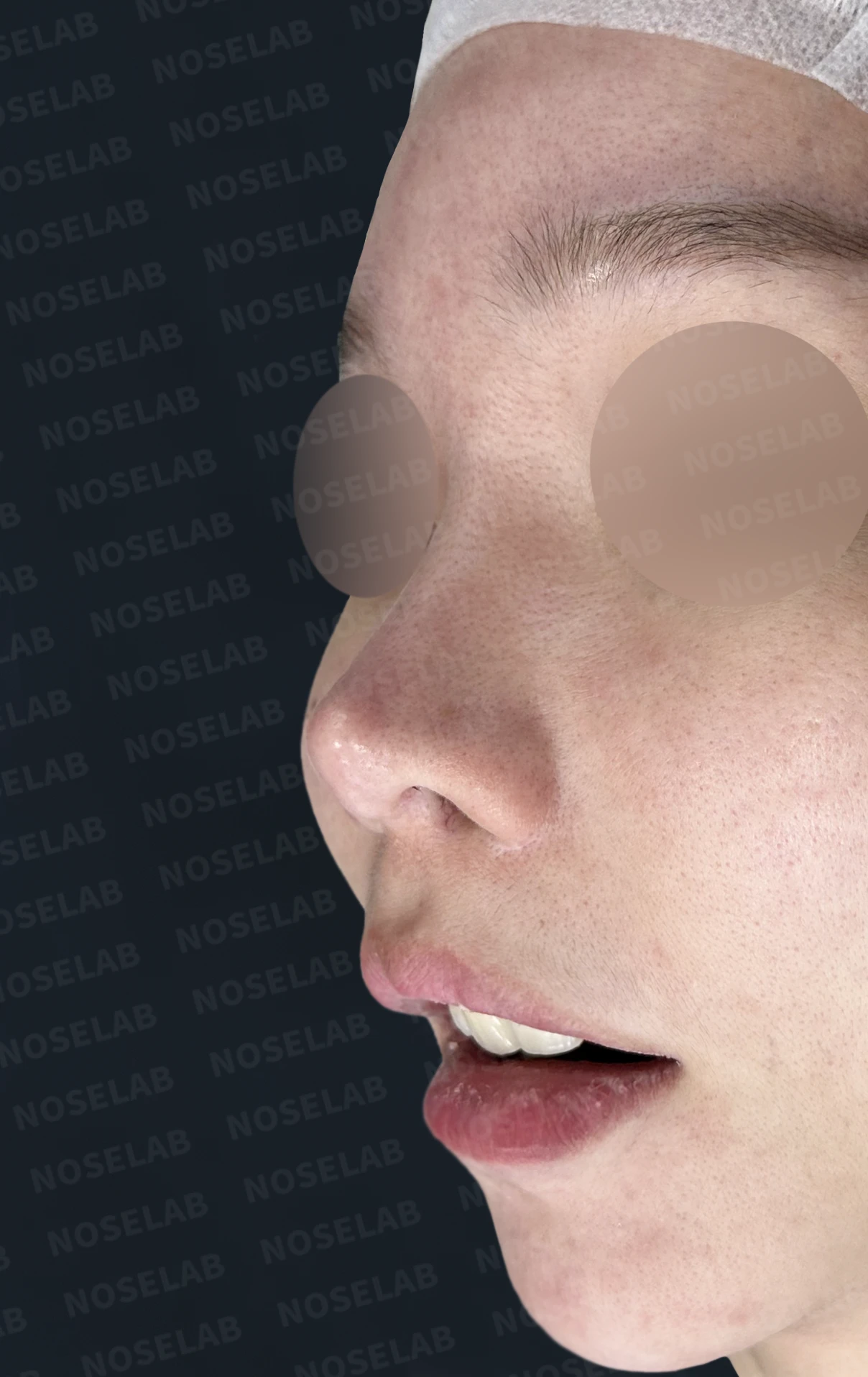
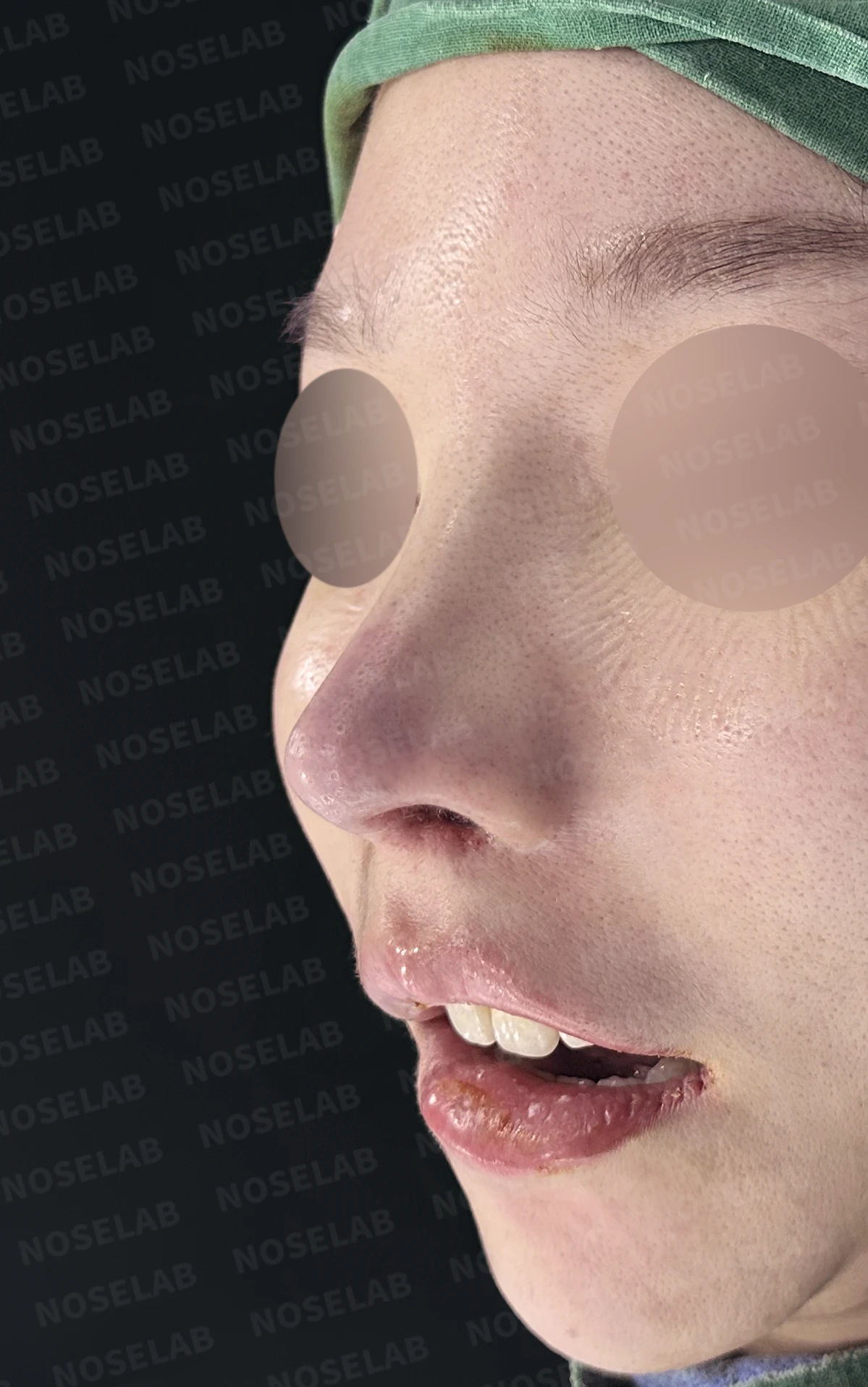
Before surgery / Day 0 immediately after surgery Photos taken immediately after surgery show swelling and may differ from the final result.
Changes in nostril shape
Significantly improved symmetry between the left and right nostril size and shape
Reinforcement of the soft triangle maintains stable nostril contours
Columellar contracture was resolved, restoring natural nostril shapes
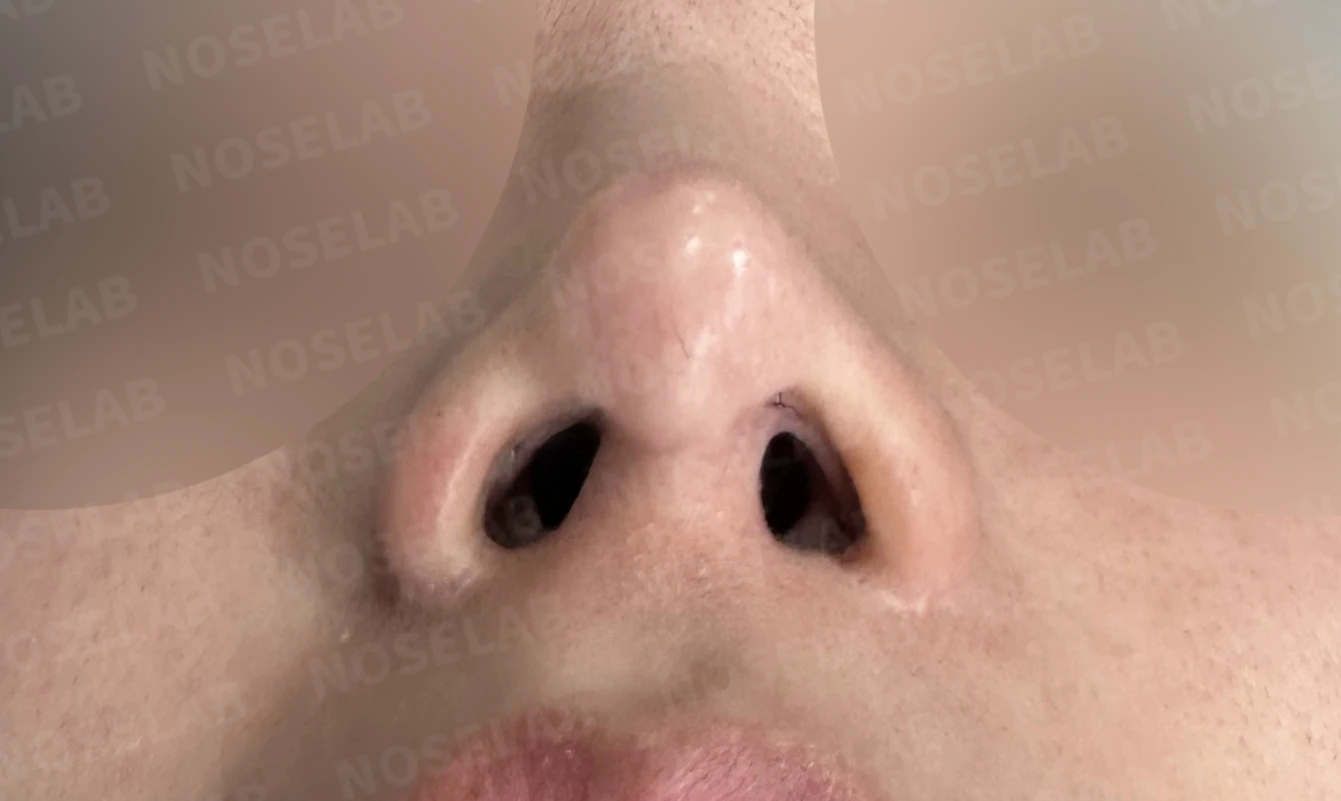
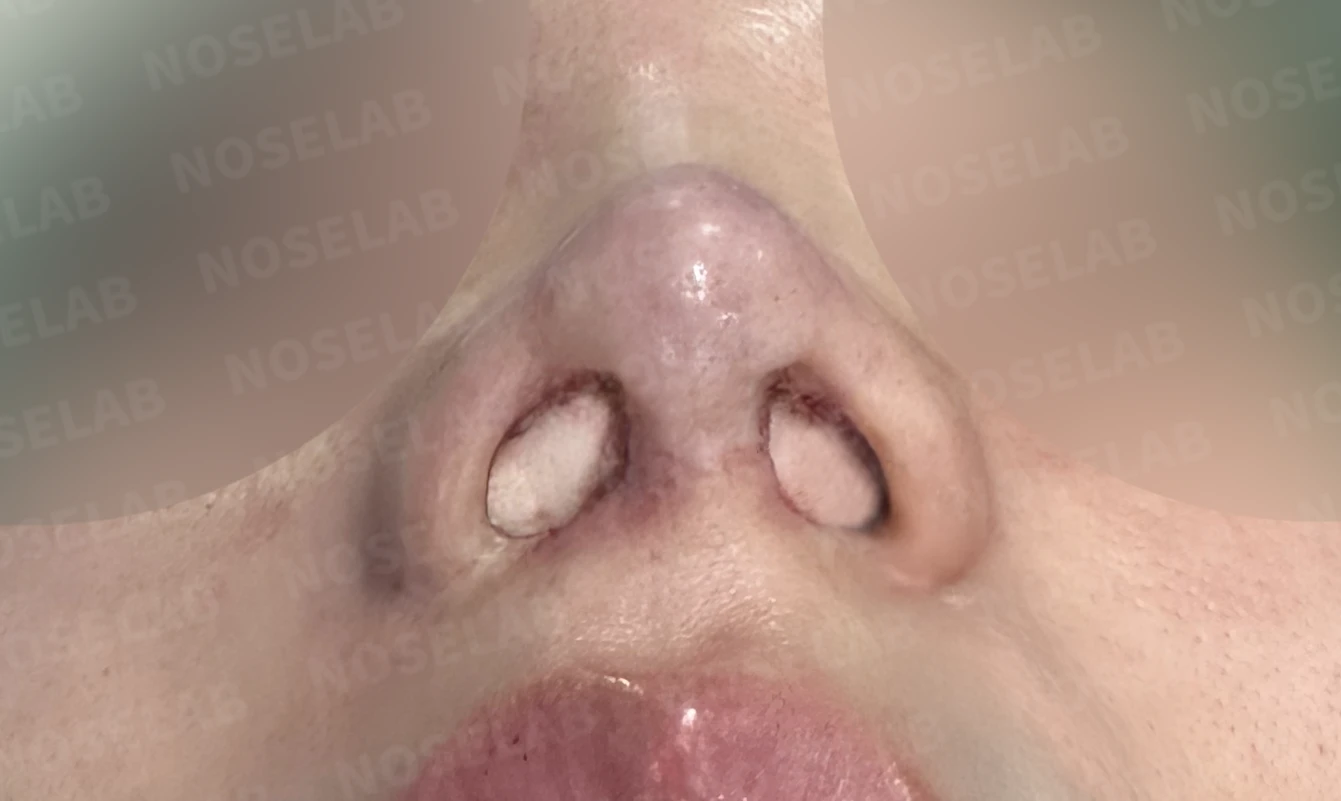
Before surgery / Day 0 immediately after surgery Photos taken immediately after surgery show swelling and may differ from the final result.
💡 Specialist assessment
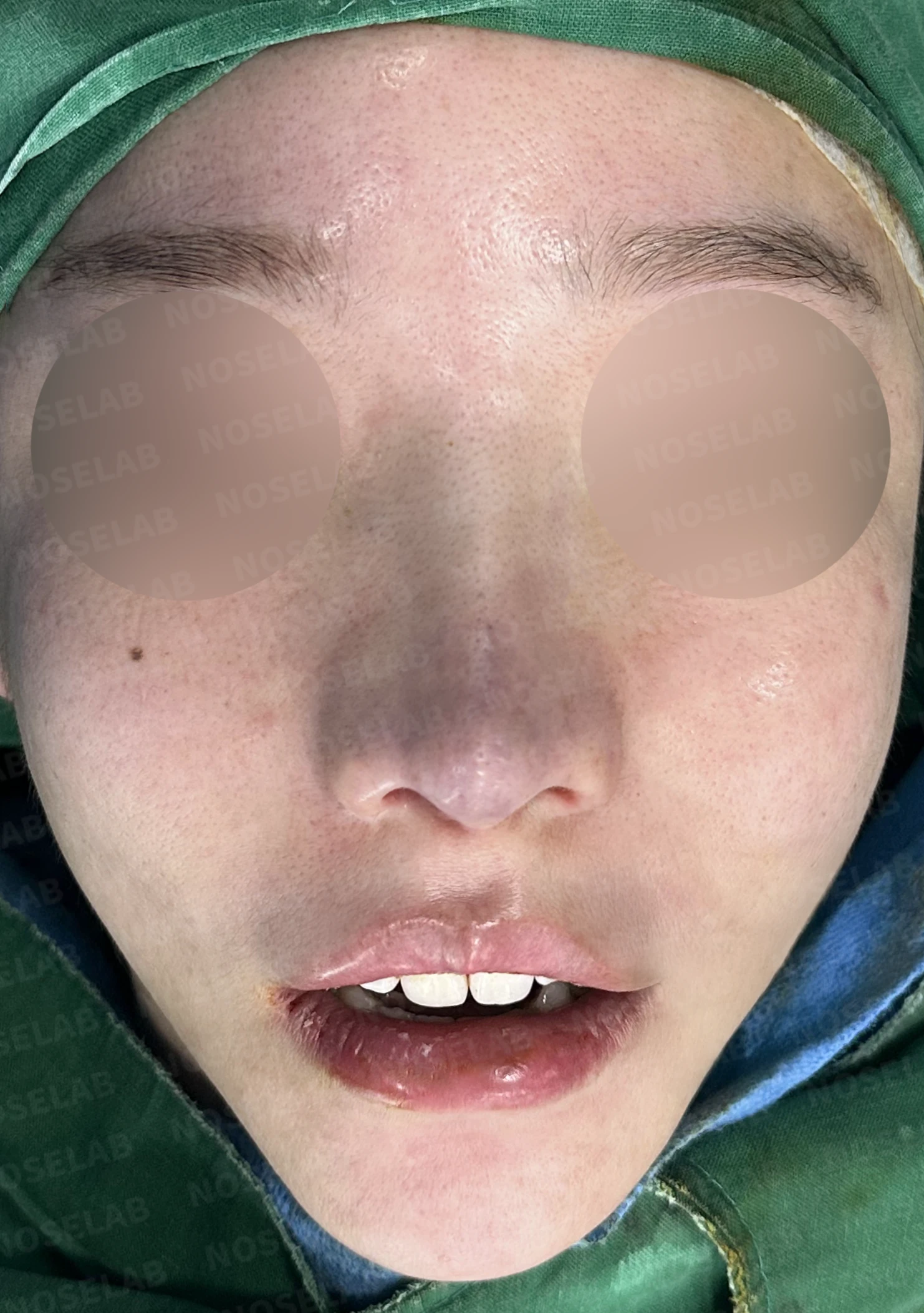
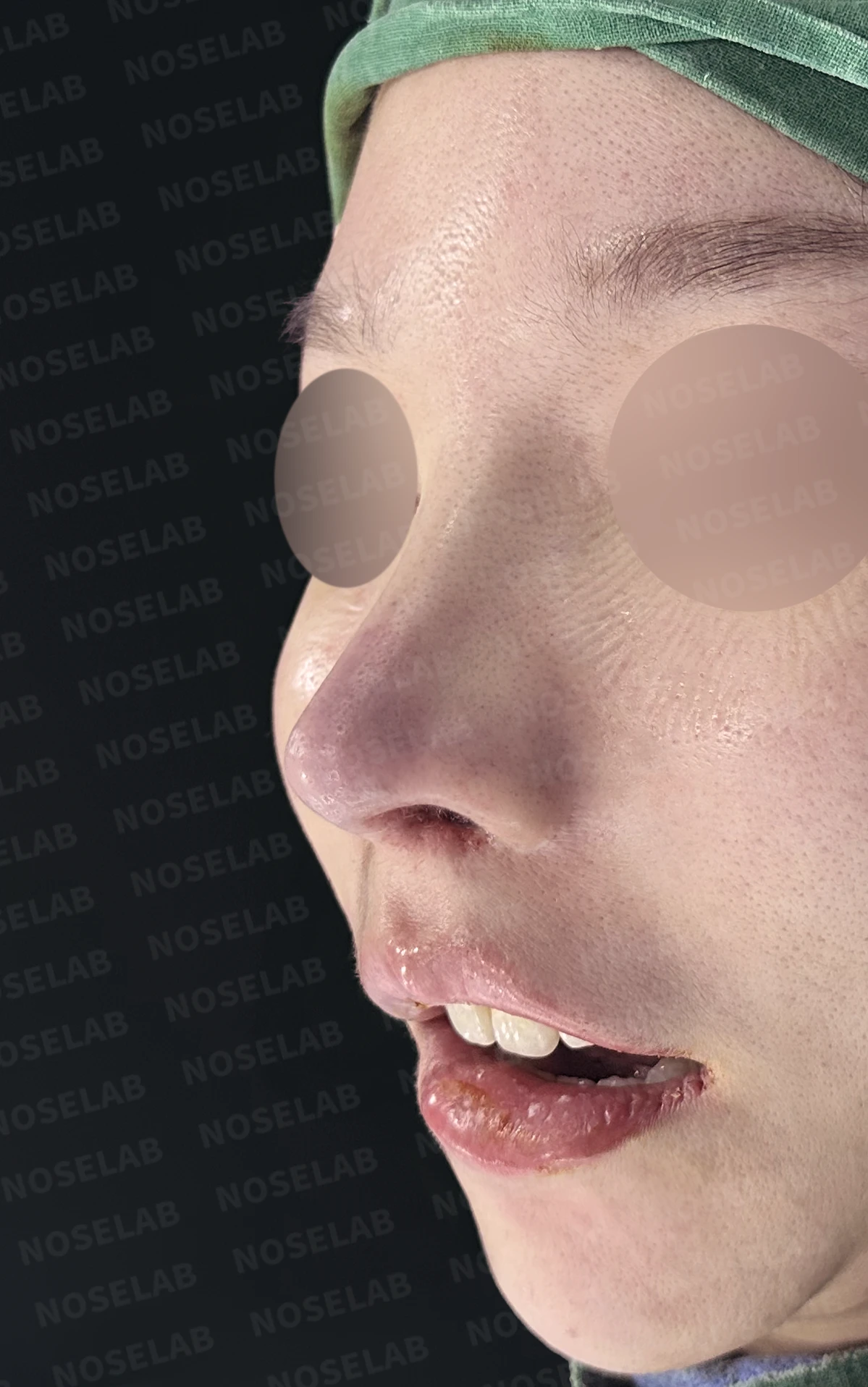
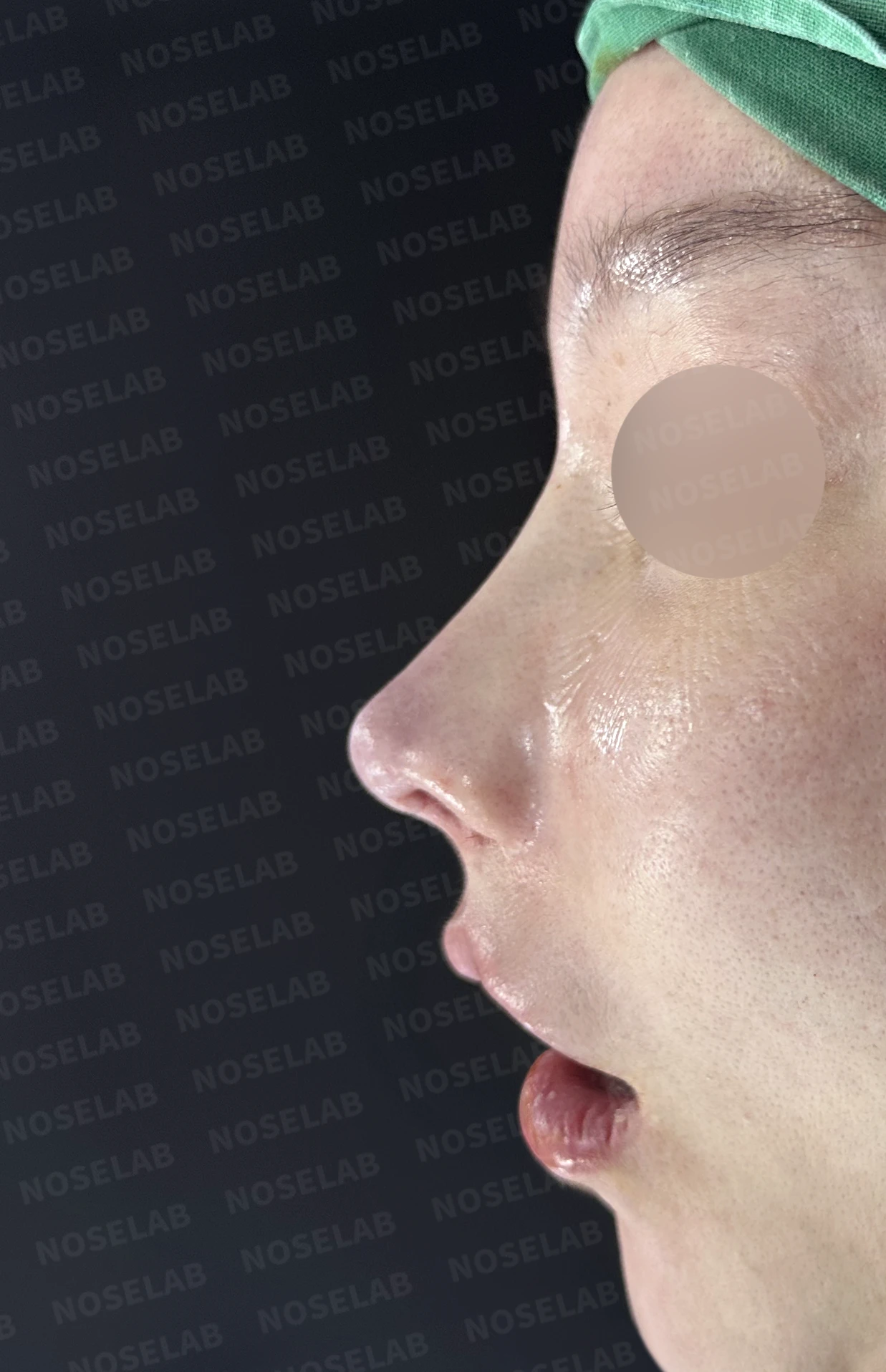
Front, oblique, and profile views on day 0 immediately after surgery. Photos taken immediately after surgery show swelling and may differ from the final result.
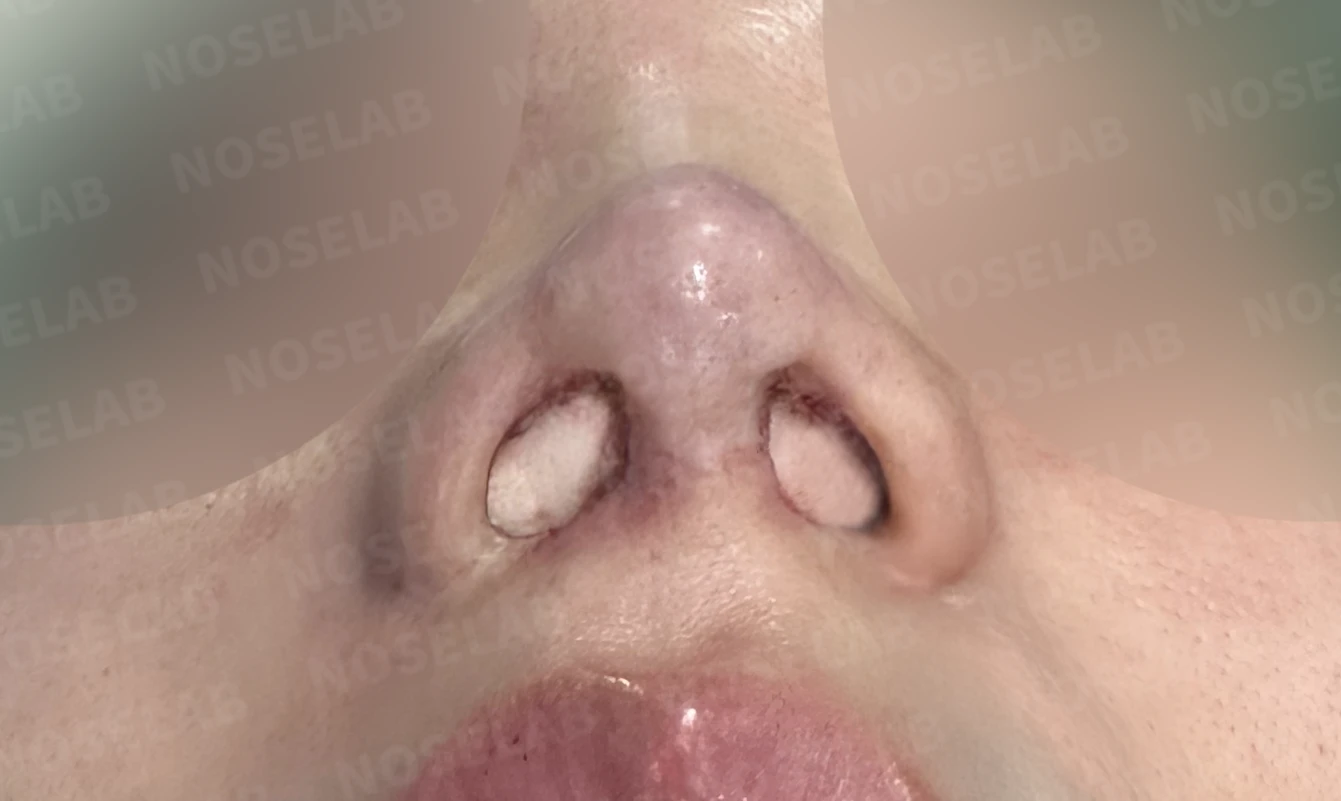
Nostril view on day 0 immediately after surgery. Photos taken immediately after surgery show swelling and may differ from the final result.
In this challenging revision case, repeated surgeries had severely damaged the septal cartilage, compounded by weakened lower lateral cartilages and marked nostril asymmetry.
Especially when septal cartilage damage is severe, autologous cartilage alone is often insufficient for complete reconstruction, making donor rib cartilage a safe and suitable option. Donor rib cartilage provides ample material, offering the advantage of reconstructing the septum and reinforcing the lower lateral cartilages simultaneously.
In addition, a dermis-fat composite graft to the soft triangle serves as a precise method for correcting nostril asymmetry. Rather than placing cartilage alone, it adds natural soft-tissue volume, making it effective for detailed adjustment of the nostril contour.
The most crucial aspect of revision rhinoplasty is accurately assessing the structures altered by previous surgeries and rebuilding a stable support framework. Even in such complex revision cases, NOSELAB focuses on addressing patient needs thoroughly to provide satisfying outcomes.
This was Dr. Peter C. Kang. Thank you.
#closedrhinoplasty #closedrevisionrhinoplasty #upturnednosecorrection #nostrilasymmetry #donorribcartilage #revisionrhinoplasty #septalreconstruction #lowerlateralcartilagereconstruction

Limitations and risks
When autologous rib cartilage is used, scarring and pain may remain at the donor site on the chest, and pneumothorax (pleural injury) can occur rarely. Over time, the grafted cartilage may warp or undergo partial resorption.
When using donor rib cartilage, long-term follow-up is necessary because the grafted cartilage may resorb or warp.
When revising after implant removal, contracture may progress again after removal, the nasal height and length may decrease, and staged surgery may be necessary depending on the skin condition.
When the septum is corrected at the same time, nasal obstruction may persist or recur, and in rare cases, septal perforation or changes in smell may occur.
Common potential risks include infection, bleeding, asymmetry, scarring, skin necrosis, and insufficient improvement; results vary depending on individual skin condition and previous surgical history.