English日本語简体中文
Skip to main content
Dr. Peter C. Kang's Rhinoplasty Stories
PrologueBlogMy thoughtsNasal obstructionSurgical journalSurgical photos
About the surgeon

Septal reconstruction and revision rhinoplasty for cartilage damage

To understand septal reconstruction, one must examine not only whether the septum is deviated, but also the condition of the remaining cartilage and supporting framework. This collection includes actual surgical records where the septum was reconstructed using autologous rib cartilage in cases where little cartilage remained due to previous harvesting, or where the remaining cartilage was severely damaged.

The original texts also explain the process of reinforcing nasal tip support by performing septal reconstruction alongside septal extension. Although reconstruction, correction of deviation, and extension for tip orientation may be performed together, these terms should not be used interchangeably. Connecting the preoperative defect or damage, the actual reconstructive materials, and the documented details regarding the nasal tip or breathing clarifies the surgical objective.

View before-and-after cases ↓Comprehensive rhinoplasty guide

Searching for surgical cases matching your criteria.
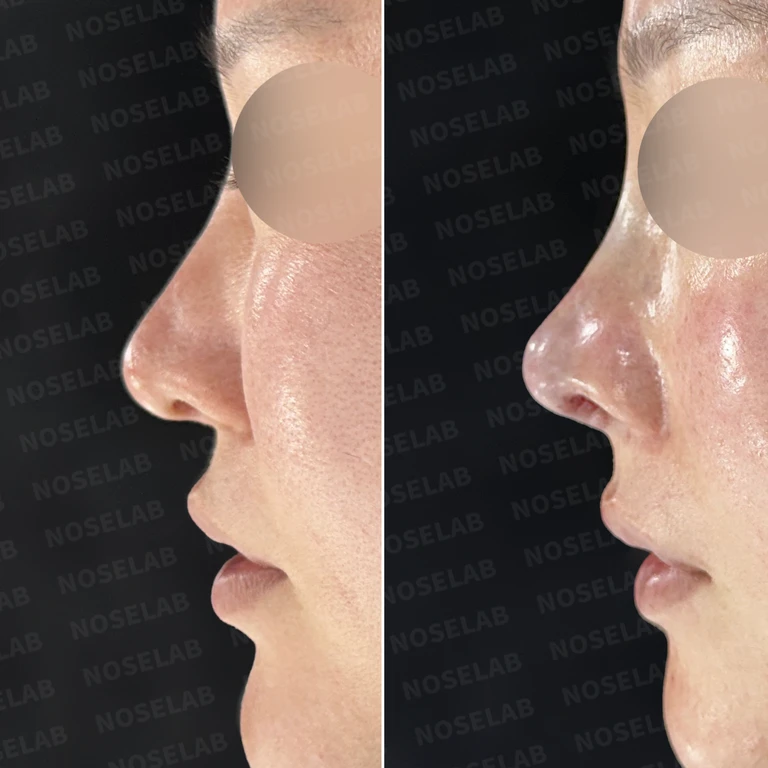
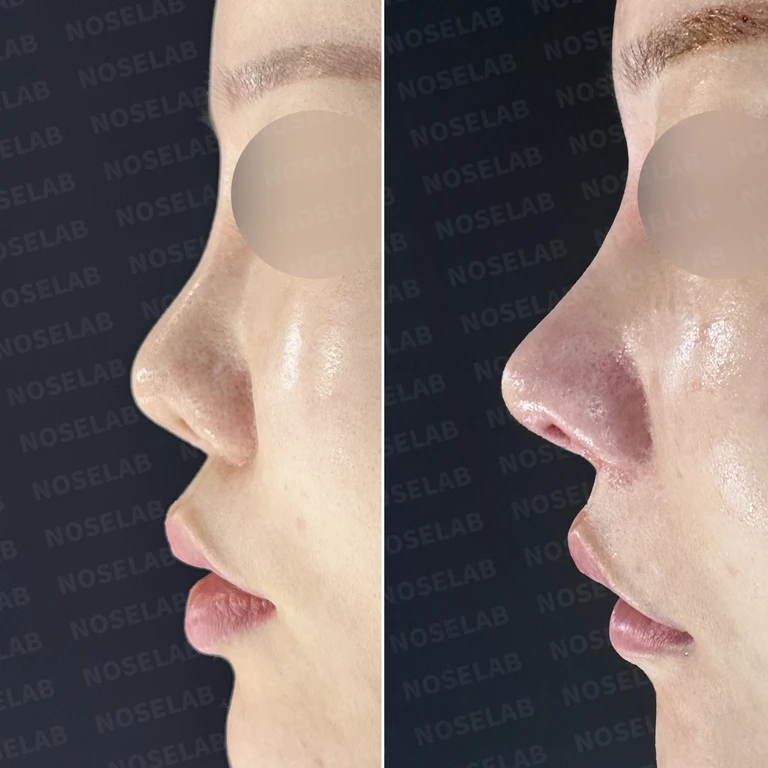
Nasal reconstruction when almost no septum remains after two nose surgeries — Before-and-after comparison
Before-and-after comparison

Nasal reconstruction when almost no septum remains after two nose surgeries

This is a case of septal cartilage deficit, nasal bone asymmetry, and nasal obstruction remaining after two surgeries. Through a closed approach, autologous rib cartilage was used for septal reconstruction, along with nasolabial angle correction, nasal bone asymmetry correction, and radix adjustment.

Performed or used in this surgery
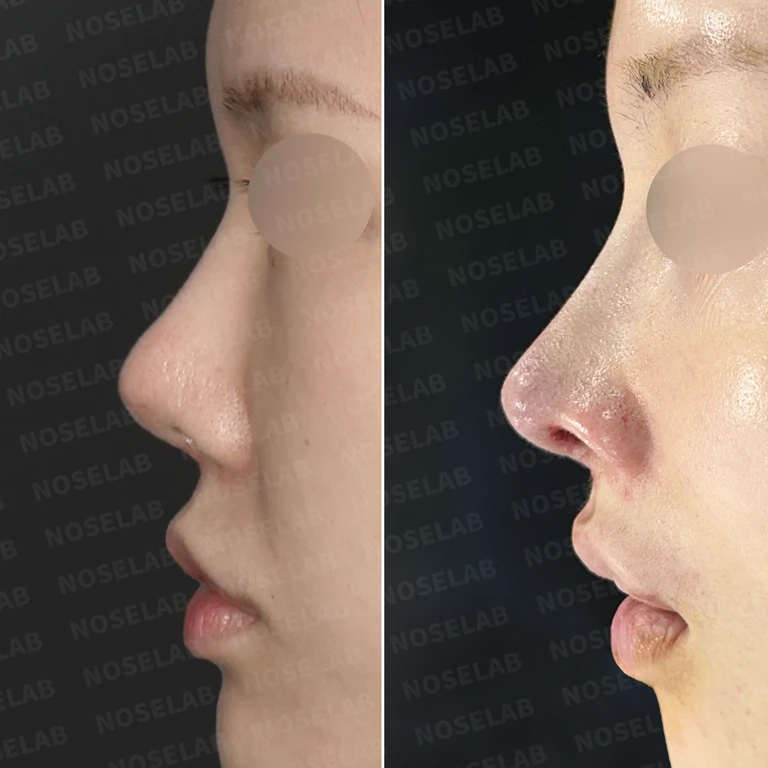
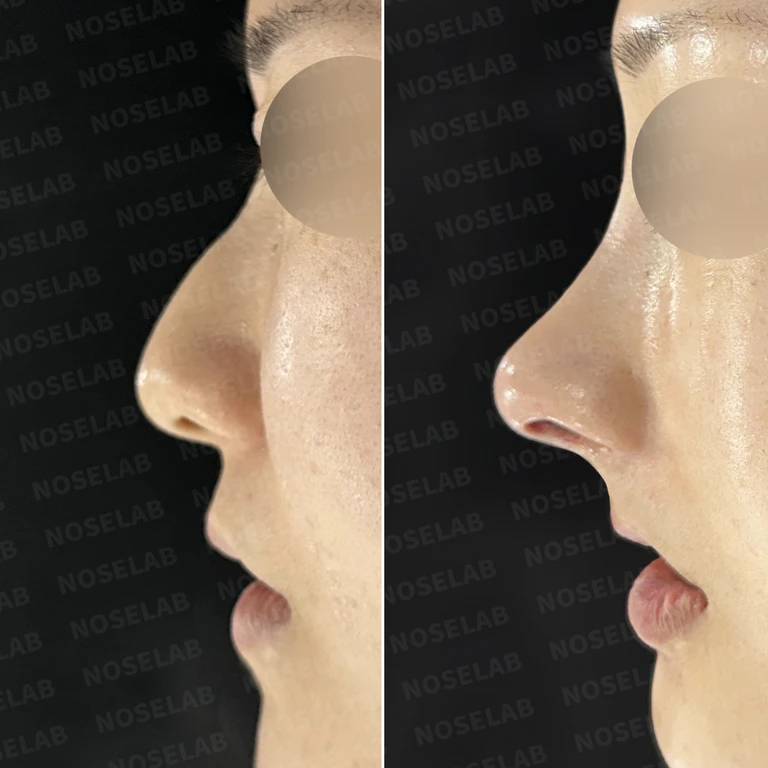
Why an implant is palpable and visible through the nasal tip: rib cartilage reconstruction and dermis reinforcement — Before-and-after comparison
Before-and-after comparison

Why an implant is palpable and visible through the nasal tip: rib cartilage reconstruction and dermis reinforcement

A case where a silicone implant became palpable, the nasal tip skin thinned, and asymmetry developed after a previous rhinoplasty. The implant was removed, the nasal tip and septum were reconstructed using sliced autologous rib cartilage, and artificial dermis was used for reinforcement.

Performed or used in this surgery
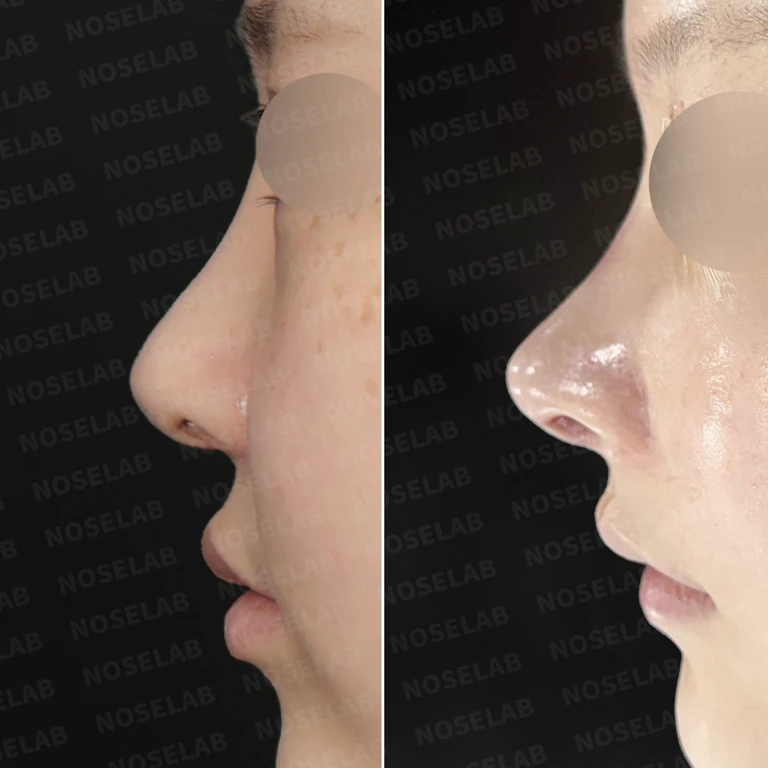
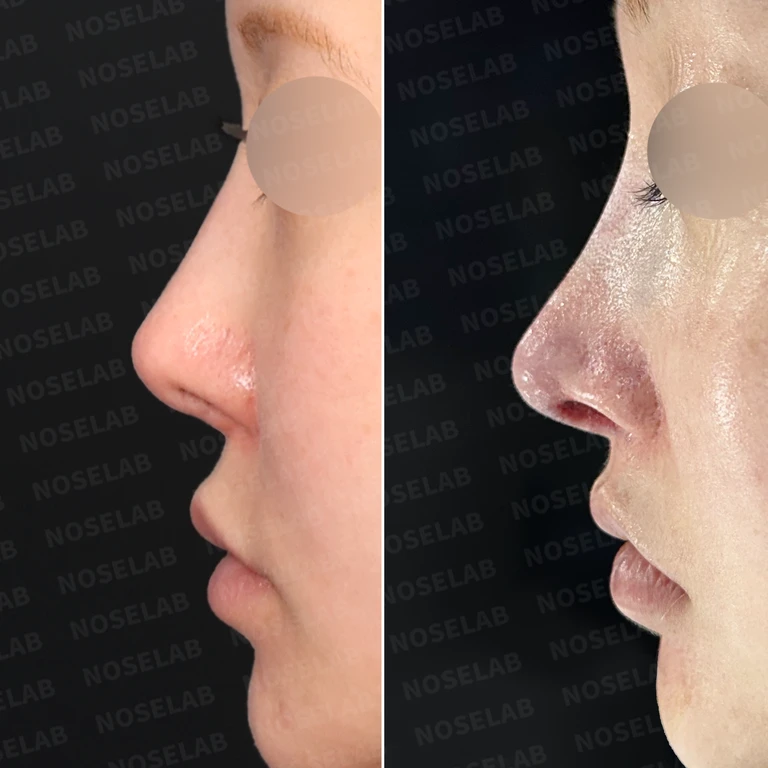
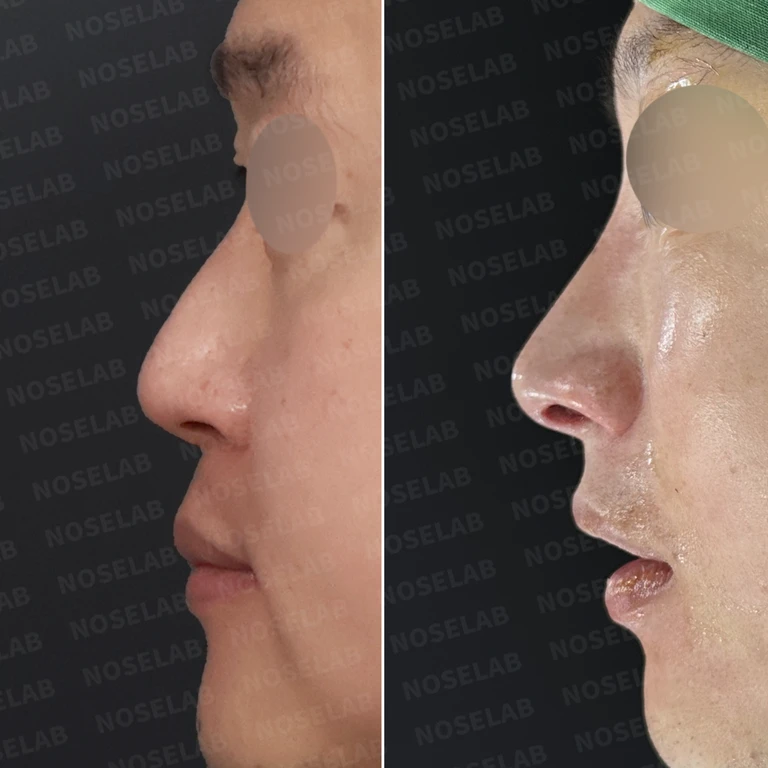
Why noses deviate and bulbous tips persist after double jaw surgery, and how rib cartilage septal reconstruction is performed — Before-and-after comparison
Before-and-after comparison

Why noses deviate and bulbous tips persist after double jaw surgery, and how rib cartilage septal reconstruction is performed

This is a case of septal damage, a deviated nasal bridge, a bulbous nose, and nasal obstruction following double jaw surgery and two prior rhinoplasties. Autologous rib cartilage septal reconstruction, cartilage repositioning, lateral osteotomy, and functional nasal surgery were performed.

Performed or used in this surgery

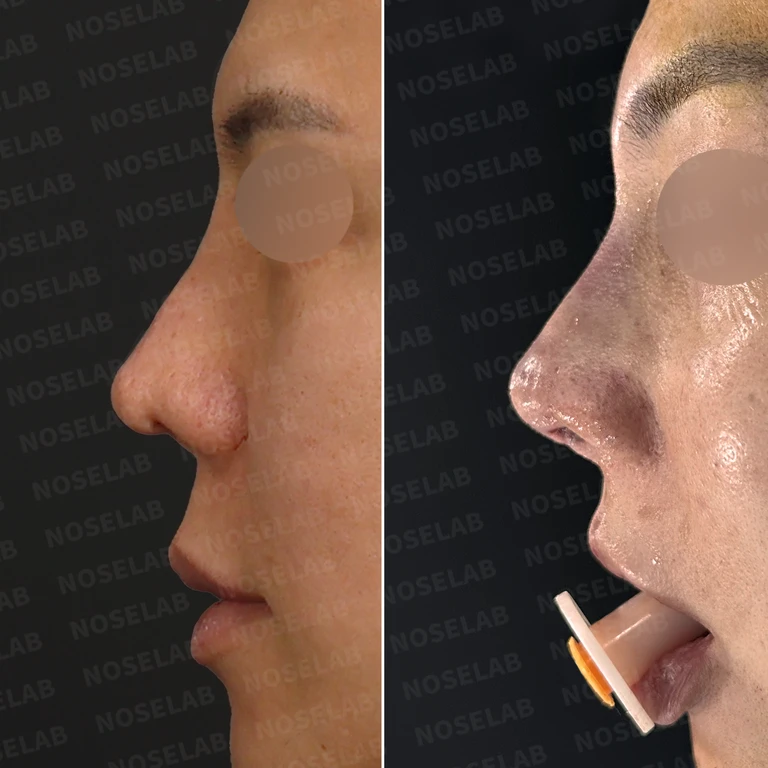
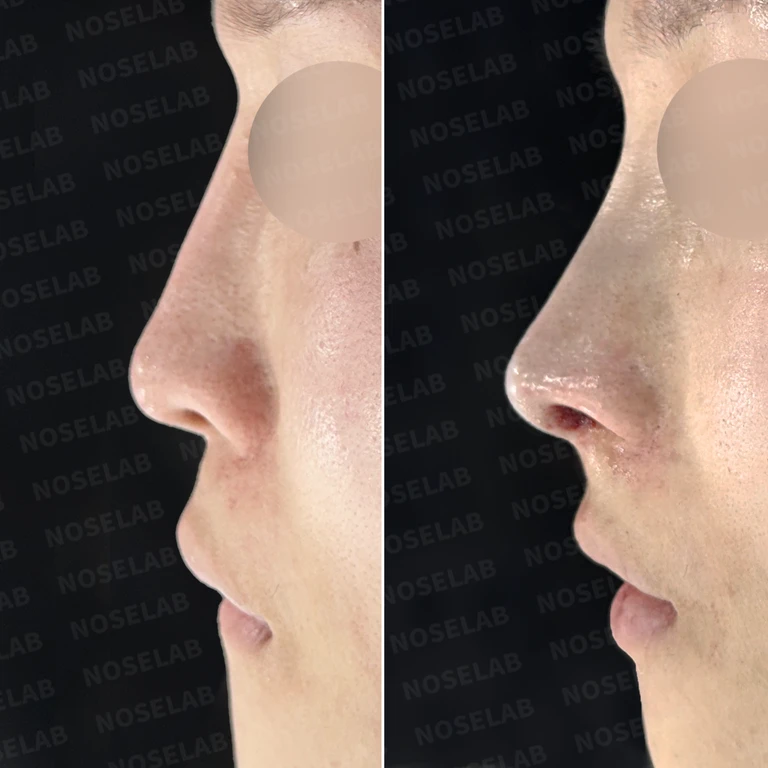
Why implants alone should not be placed in a small, low nose and nasal tip support structure — Before-and-after comparison
Before-and-after comparison

Why implants alone should not be placed in a small, low nose and nasal tip support structure

A primary rhinoplasty case involving a small, low nose and an upturned tip causing excessive nostril show. Using a closed approach, septal reconstruction with autologous rib cartilage, nasolabial angle correction, artificial dermis skin reinforcement, and a silicone implant were performed.

Performed or used in this surgery

Why mesh remaining in the septum causes an upturned nose, and reconstruction after removal — Before-and-after comparison
Before-and-after comparison

Why mesh remaining in the septum causes an upturned nose, and reconstruction after removal

This is a case where mesh left in the septum after previous surgeries resulted in an upturned nose and excessive nostril show. All foreign material was removed, followed by septal reconstruction using autologous rib cartilage, replacement of the silicone implant, and reinforcement of the skin with acellular dermal matrix.

Performed or used in this surgery

Why a nose becomes upturned and the columella retracts after repeated revisions, and how to reconstruct the septum — Before-and-after comparison
Before-and-after comparison

Why a nose becomes upturned and the columella retracts after repeated revisions, and how to reconstruct the septum

A case where damage from previous surgeries led to collapse of the anterior septum and nostril asymmetry. The septum was reconstructed using autologous rib cartilage, followed by nasal tip rhinoplasty with donor rib cartilage and implant replacement.

Performed or used in this surgery
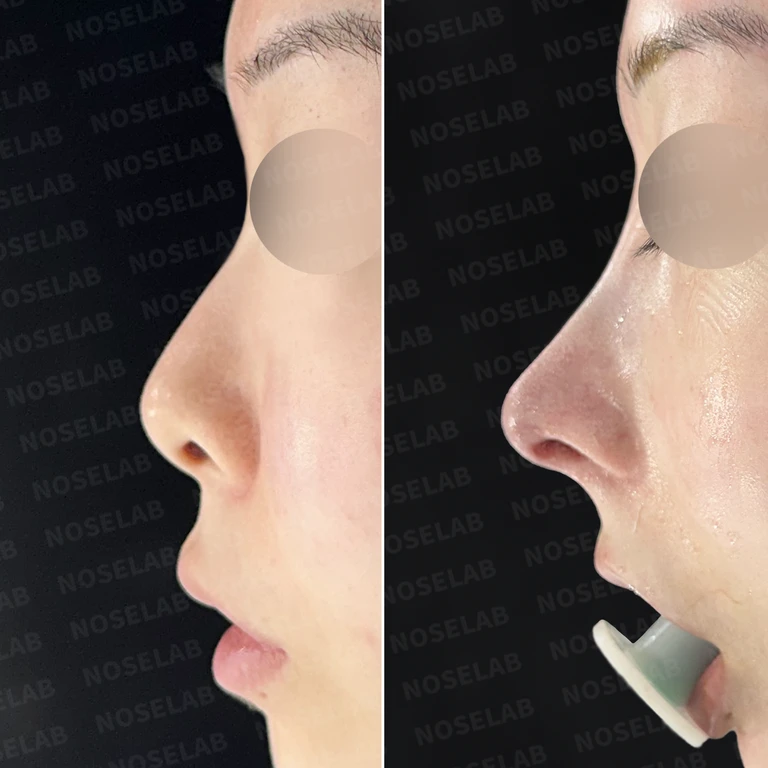
Why a narrow nasolabial angle with a dorsal hump makes the mouth appear protruding and how to correct it — Before-and-after comparison
Before-and-after comparison

Why a narrow nasolabial angle with a dorsal hump makes the mouth appear protruding and how to correct it

This is a primary rhinoplasty case correcting an irregular dorsal hump and an acute nasolabial angle. Using a closed approach, we refined the dorsal hump, performed nasal tip plasty with autologous rib cartilage, reconstructed the septum, placed a silicone implant, and corrected the nasolabial angle.

Performed or used in this surgery

Why noses become short and upturned after multiple revision surgeries, and methods for reconstruction — Before-and-after comparison
Before-and-after comparison

Why noses become short and upturned after multiple revision surgeries, and methods for reconstruction

A case correcting an upturned nasal tip caused by loss of the septum from repeated revision surgeries. Autologous rib cartilage septal reconstruction, nasal mucosal advancement flap, silicone implant adjustment, and rhinitis surgery were performed concurrently.

Performed or used in this surgery

Why the nasal tip can look bulbous and crooked after rhinoplasty with ear cartilage — Before-and-after comparison
Before-and-after comparison

Why the nasal tip can look bulbous and crooked after rhinoplasty with ear cartilage

This is a revision rhinoplasty case where the patient experienced a drooping tip, a deviated septum, and nasal obstruction after previous surgery. The septum was reconstructed using autologous rib cartilage, and silicone implant replacement along with rhinitis surgery was performed using a closed approach.

Performed or used in this surgery

Why rib cartilage reconstruction is needed when the septum is weak, even in primary rhinoplasty — Before-and-after comparison
Before-and-after comparison

Why rib cartilage reconstruction is needed when the septum is weak, even in primary rhinoplasty

A case of correcting a short, upturned nasal tip and a pinched nostril caused by congenital septal cartilage weakness. Autologous rib cartilage was used to reconstruct the septum and lower lateral cartilage, combined with lowering the nostril rim and lateral osteotomy.

Performed or used in this surgery

Why a operated nose deviates and nostrils become asymmetric after physical trauma, and how septal reconstruction is performed — Before-and-after comparison
Before-and-after comparison

Why a operated nose deviates and nostrils become asymmetric after physical trauma, and how septal reconstruction is performed

A case where post-surgical trauma caused a septal tear, resulting in a crooked nose and nostril asymmetry. Septal reconstruction was performed using autologous rib cartilage, along with realigning the columellar central axis and replacing the implant.

Performed or used in this surgery
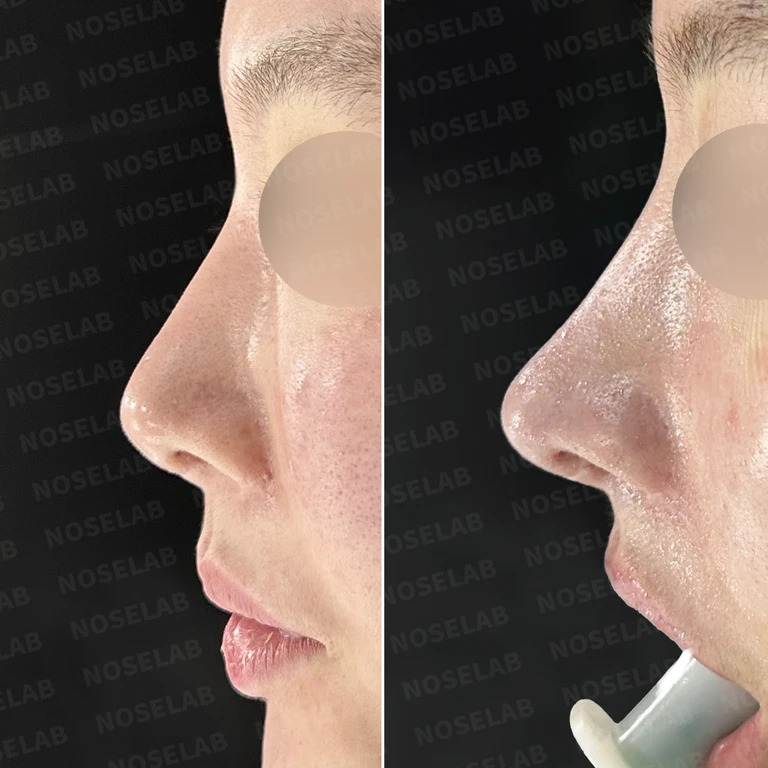
Why nasal tip skin depresses and implants show through after inflammation, and how to reconstruct it — Before-and-after comparison
Before-and-after comparison

Why nasal tip skin depresses and implants show through after inflammation, and how to reconstruct it

A case where repeated surgeries and inflammation led to depressed nasal tip skin and implant show-through. The damaged skin was revised, dermal and cartilage grafts were placed, the septum was reinforced with autologous rib cartilage, and the implant was replaced.

Performed or used in this surgery
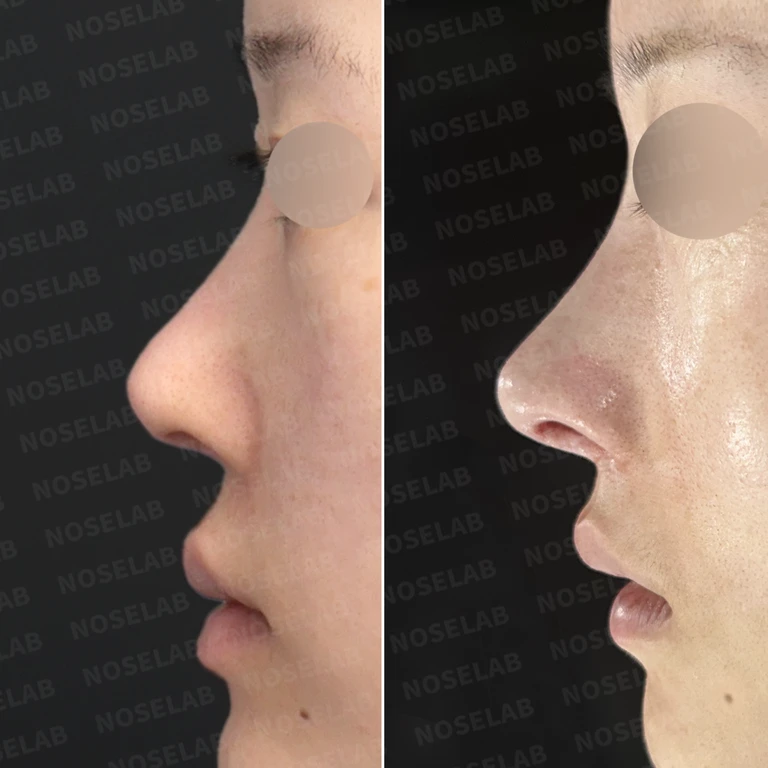
Why a nose operated on twice looks long and drooping, and how septal reconstruction using rib cartilage is performed — Before-and-after comparison
Before-and-after comparison

Why a nose operated on twice looks long and drooping, and how septal reconstruction using rib cartilage is performed

A revision rhinoplasty case where the septum was depleted due to excessive cartilage use in prior surgeries. The septum was reconstructed using autologous rib cartilage, a cartilage fragment on the bridge was removed, and silicone implant replacement was combined with osteotomy.

Performed or used in this surgery
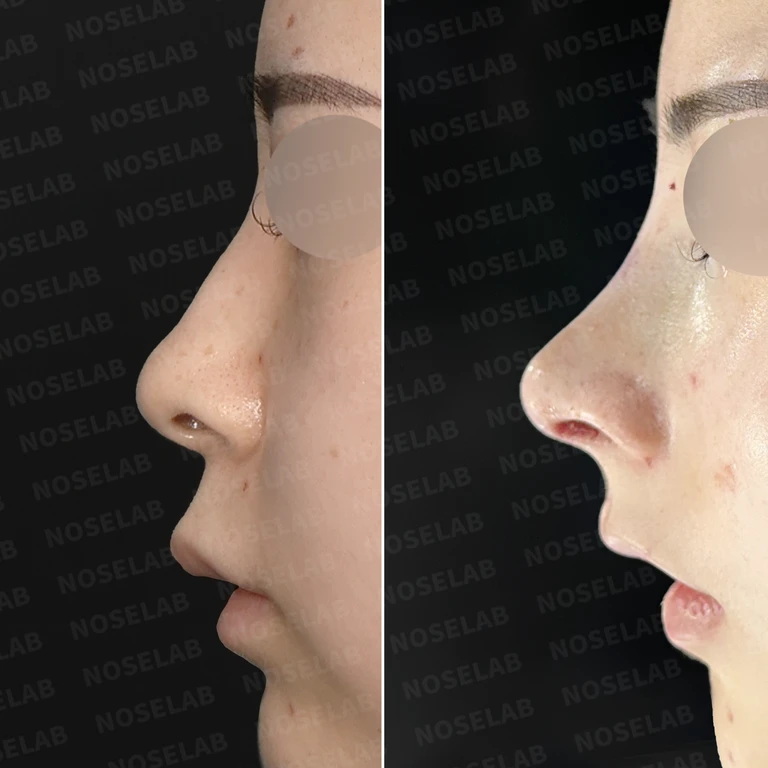
Why a nose looks more crooked with facial asymmetry and how to correct it — Before-and-after comparison
Before-and-after comparison

Why a nose looks more crooked with facial asymmetry and how to correct it

Residual facial asymmetry and a deviated septum following double jaw surgery were corrected using autologous rib cartilage reconstruction. Lateral osteotomy, precision carving of a silicone implant, and rhinitis surgery were performed concurrently.

Performed or used in this surgery
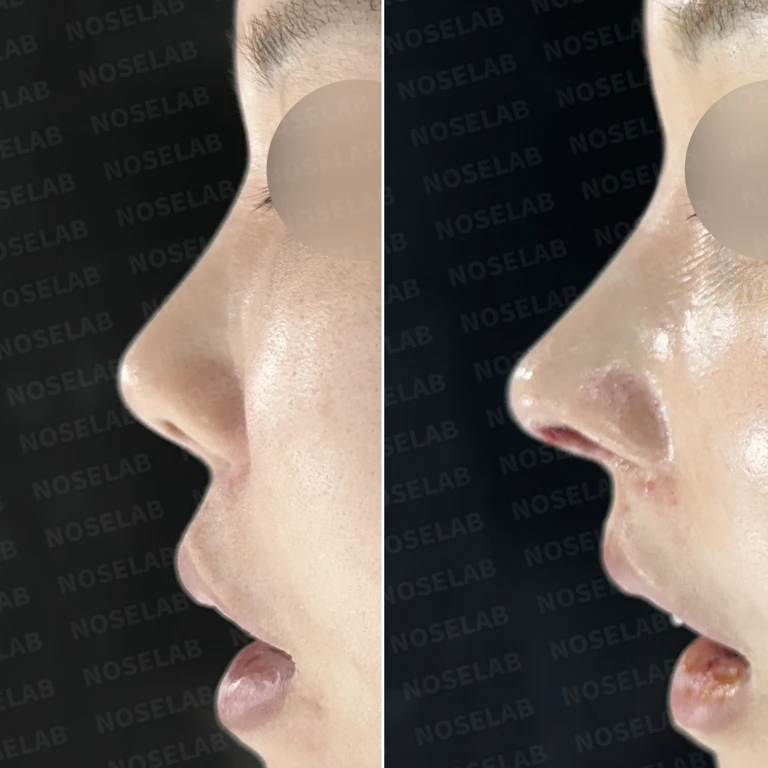
Why the nasal tip deviates to one side after rhinoplasty and methods for reconstructing its support structure — Before-and-after comparison
Before-and-after comparison

Why the nasal tip deviates to one side after rhinoplasty and methods for reconstructing its support structure

Septal cartilage damaged from previous surgeries was reconstructed using autologous rib cartilage, and the lower lateral cartilages were restored. Lateral osteotomy and rhinitis surgery were performed concurrently to correct the crooked nose and nostril asymmetry.

Performed or used in this surgery
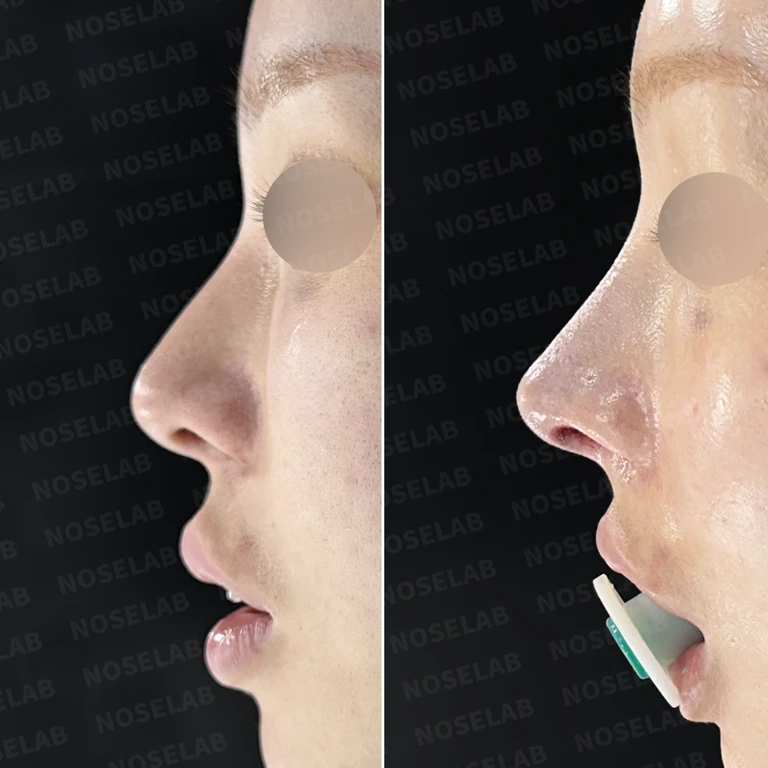
Why contracture remains in multiply operated noses: Reconstructing the columella and support framework — Before-and-after comparison
Before-and-after comparison

Why contracture remains in multiply operated noses: Reconstructing the columella and support framework

Contracture and septal defect resulting from repeated surgeries were reconstructed using autologous rib cartilage. For the retracted columella, retroauricular free skin flap grafting and perichondrium grafting were performed to restore its shape.

Performed or used in this surgery
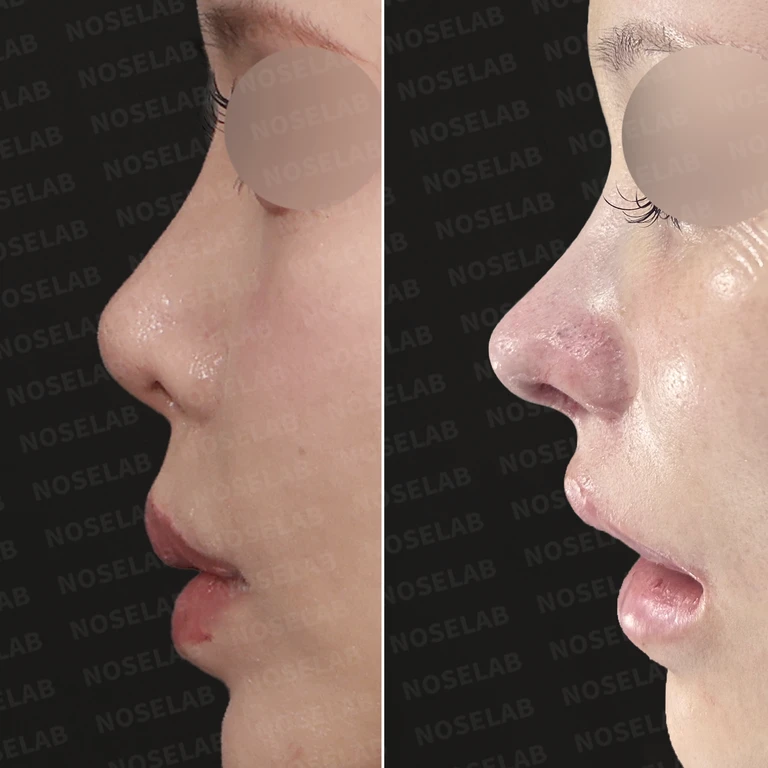
Why the nose looks short and the columella retracts after revision rhinoplasty, and how to reconstruct the septum — Before-and-after comparison
Before-and-after comparison

Why the nose looks short and the columella retracts after revision rhinoplasty, and how to reconstruct the septum

To correct septal cartilage loss from 3 prior surgeries, a short nose appearance, and a bulbous tip, the septum was reconstructed using autologous rib cartilage and the radix was lowered.

Performed or used in this surgery
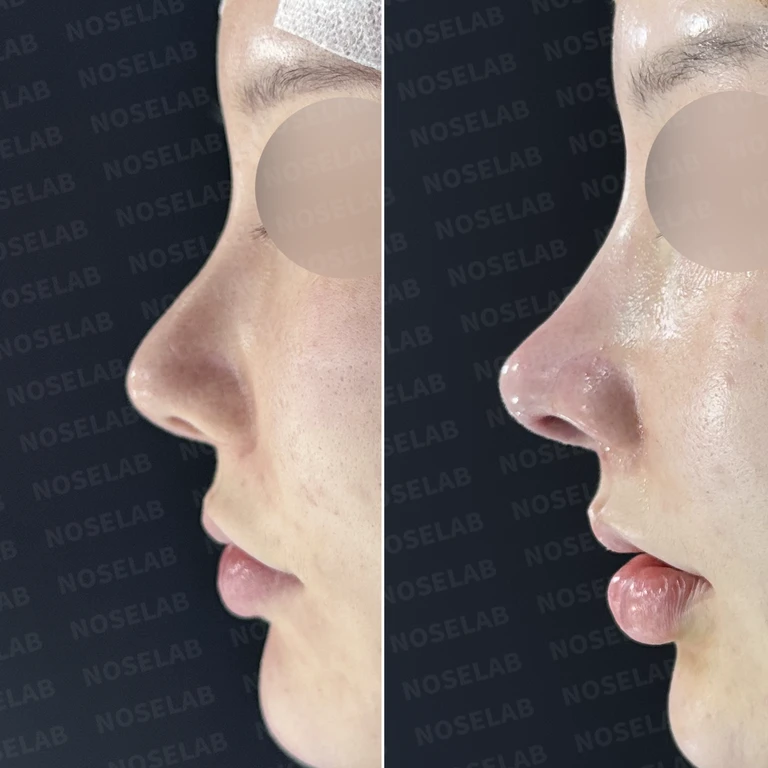
Nasal obstruction from a severely deviated septum: why cartilage reconstruction is necessary — Before-and-after comparison
Before-and-after comparison

Nasal obstruction from a severely deviated septum: why cartilage reconstruction is necessary

In a primary rhinoplasty patient, a severely deviated septum was reconstructed using autologous rib cartilage, and hypertrophied inferior turbinates were reduced. Dermis was grafted into the depressed alar region, and the nasolabial angle was adjusted.

Performed or used in this surgery
No search results found

Please try searching with different keywords.

Scroll to keep reading

1 / 10Next case

Common questions before reading the cases

Are septal reconstruction and septal correction the same surgery?

In these records, reconstruction is described as rebuilding a framework where little septal cartilage remained or where the structure was damaged. This distinction sets it apart from records of septal correction, which address a deviated septum. Because both procedures may appear together in a single surgery, it is helpful to review the specific sections on the structural deficiency and the actual reconstruction or correction performed, rather than comparing only the terminology.

Must autologous rib cartilage always be used for reconstruction if septal cartilage is deficient?

This collection includes cases where autologous rib cartilage was used when cartilage was deficient due to previous harvesting or damage. However, case records alone do not dictate that the same material is required for every state of cartilage deficiency. The purpose is to understand how the extent of remaining cartilage, the condition of nasal tip support, and the actual materials used during surgery were connected.

Related topics to explore

Septal damage and defectAutologous rib cartilageSeptal correctionSeptal extension

Surgical records referenced in this guide

  • Foreign body removal and autologous rib cartilage revision rhinoplasty for chronic foreign body reaction and a long nose
  • Revision rhinoplasty using autologous rib cartilage for an upturned nose, crooked nose, and nostril asymmetry
  • Correction methods for a retracted columella, bulbous nose, and nostril asymmetry
Original article

Read more records

Planning a visit to Seoul?Prepare your consultation with the NOSELAB team.

International patient guideWhatsApp ↗
Dr. Peter C. Kang's Rhinoplasty Stories
Rhinoplasty guideCases by topicDr. Peter C. KangNaver Blog ↗
View original photo
Enlarged photo
WhatsAppChat with NOSELAB↗