1. Preoperative consultation
In this case, the silicone implant in the nasal bridge had gradually shifted downward due to a chronic foreign body reaction, and the patient visited just before it broke through the columella. The glabella appeared high and widened due to residual filler (foreign material) injected in the past, the nasal bridge appeared bumpy because of granulation tissue formed from the chronic foreign body reaction, and the sharp tip of the silicone implant could be felt distinctly above the columella. There was nostril asymmetry, and the skin of the columella had become red.
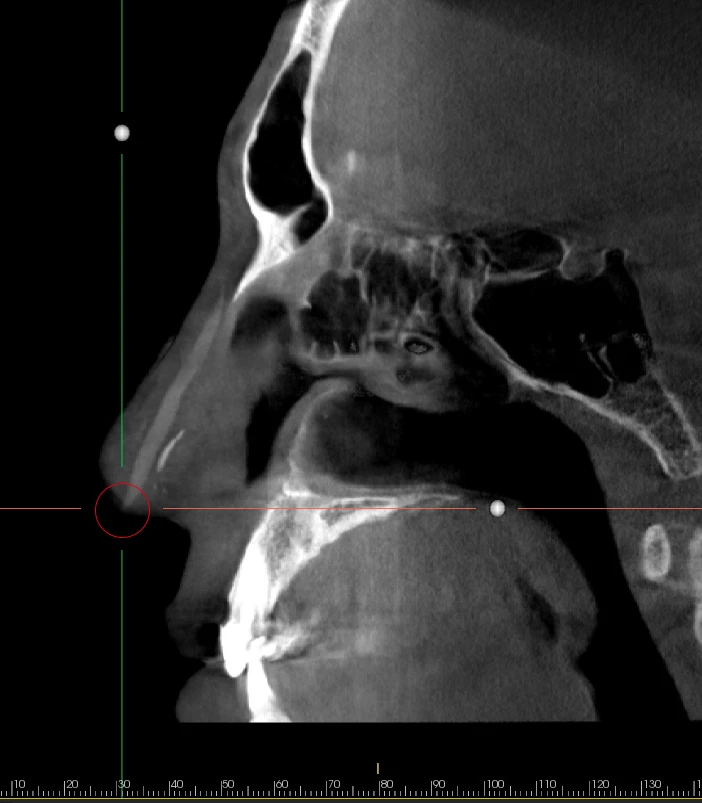
Looking inside the red circle, you can see the silicone implant in direct contact with the columellar skin.
2. Surgical plan
The plan was to remove the silicone implant along with the surrounding granulation tissue, as well as the residual filler in the glabella. Because patients undergoing a chronic foreign body reaction often have partially resorbed nasal bones and cartilage, reconstruction surgery using autologous rib cartilage was planned.
3. Surgical findings
As anticipated, residual filler (foreign material) was found in the glabella and removed. There was more granulation tissue on the nasal bridge than expected, and considerable bone resorption had melted away a large portion of the nasal bone roof. The upper lateral cartilage was also partially resorbed, the septal cartilage was deviated to the left, and very little septal cartilage remained because it had been excessively harvested in previous surgery. Therefore, the septal cartilage was reconstructed using autologous rib cartilage.
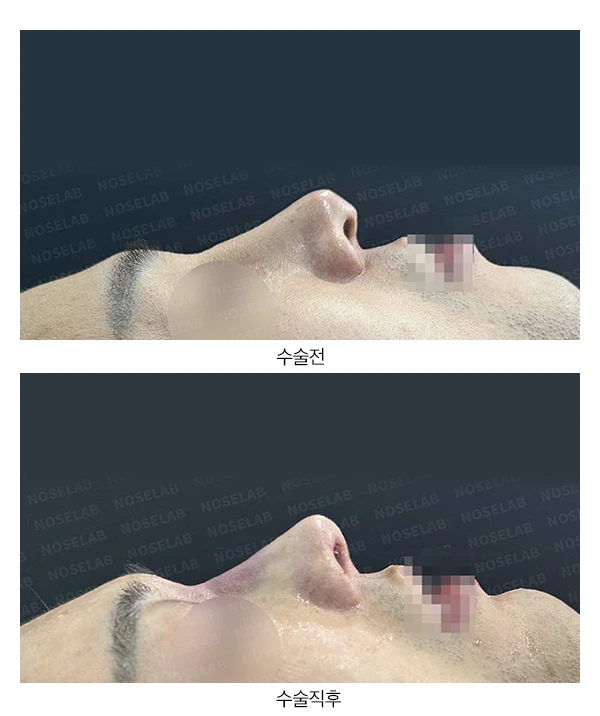
4. Immediately after surgery (Day 0)Immediate postoperative photos show swelling and may differ from the final result.
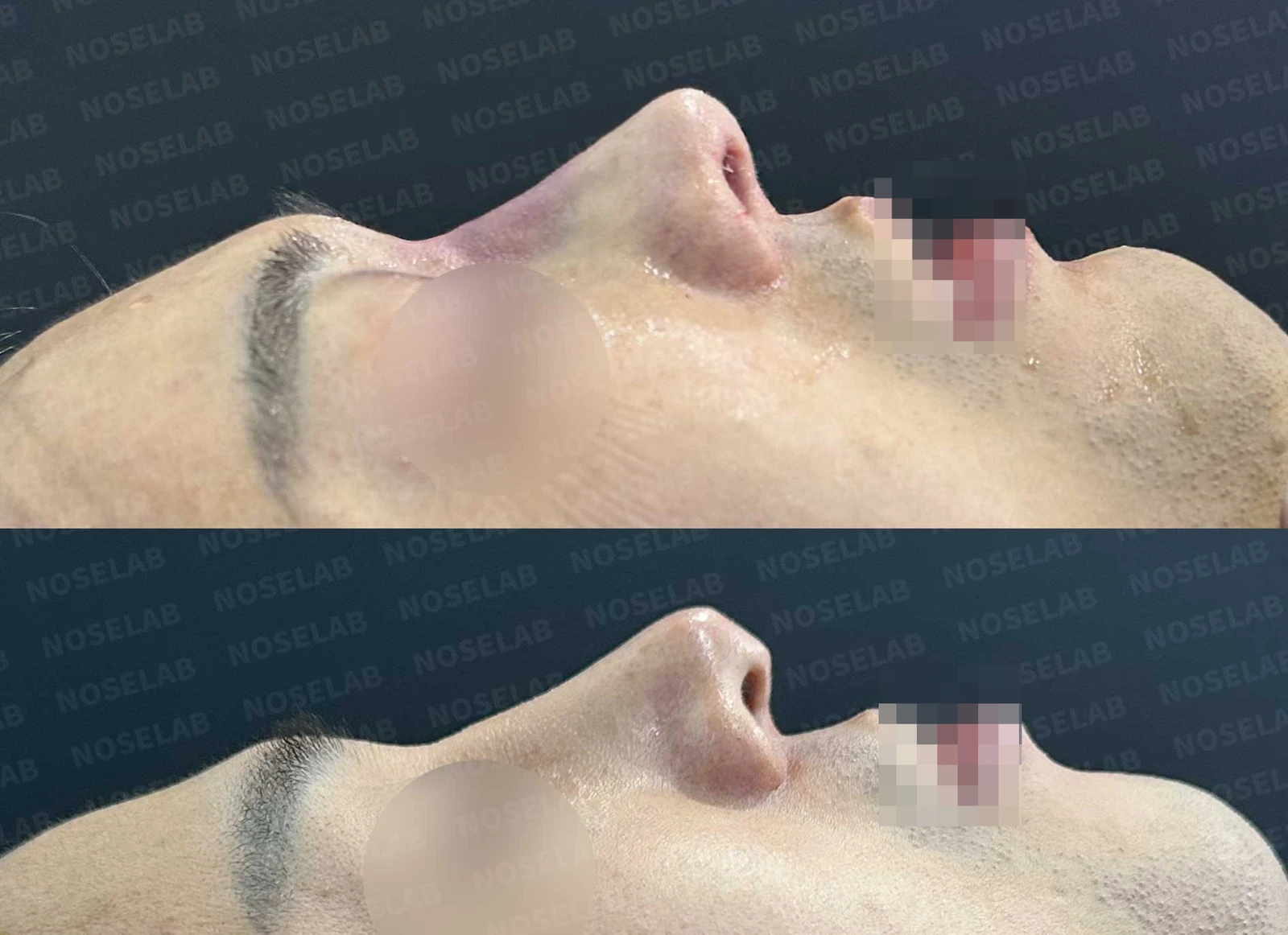
Before surgery / Day 0 immediately after surgery Photos taken immediately after surgery show swelling and may differ from the final result.
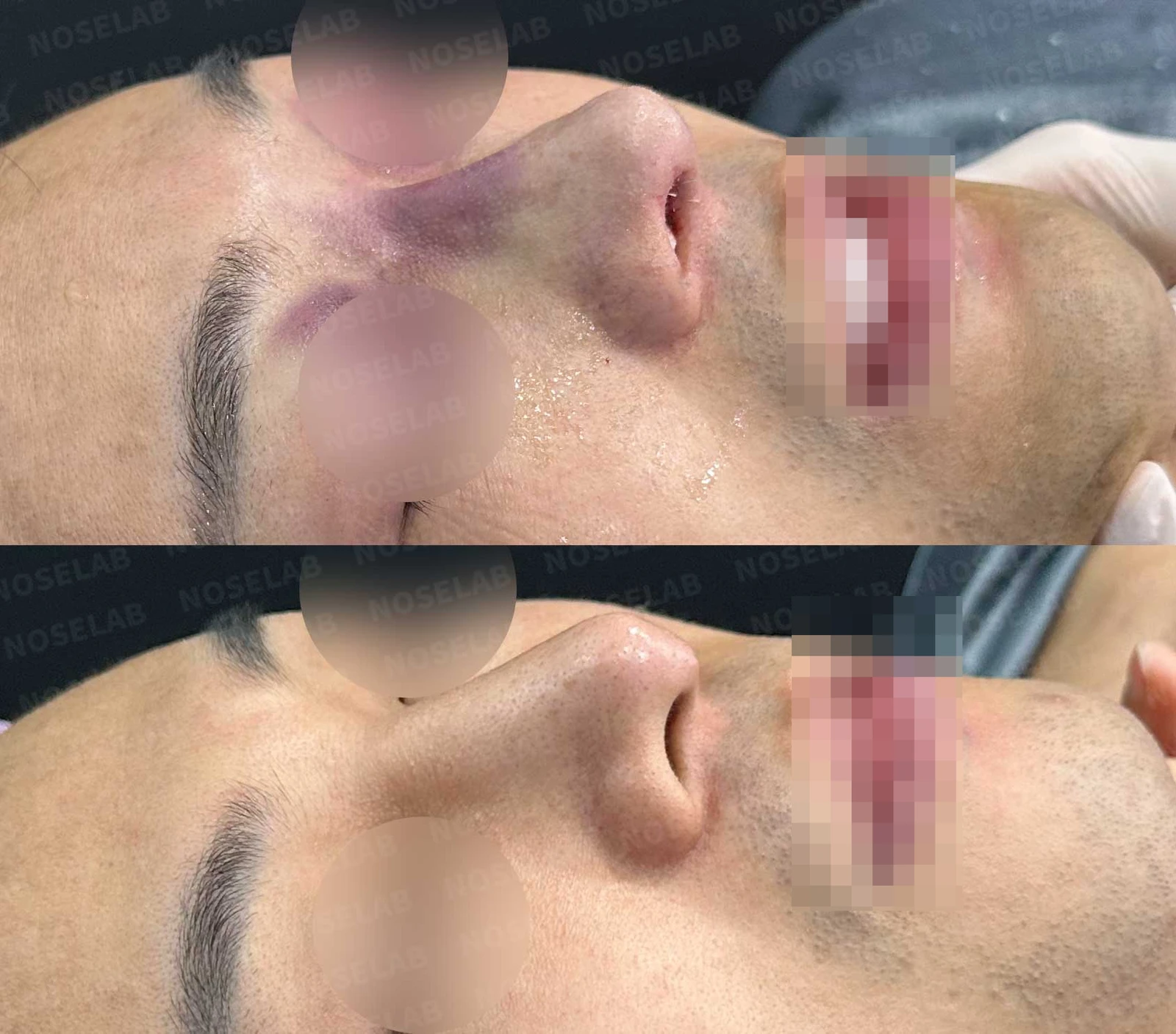
Before surgery / Day 0 immediately after surgery Photos taken immediately after surgery show swelling and may differ from the final result.
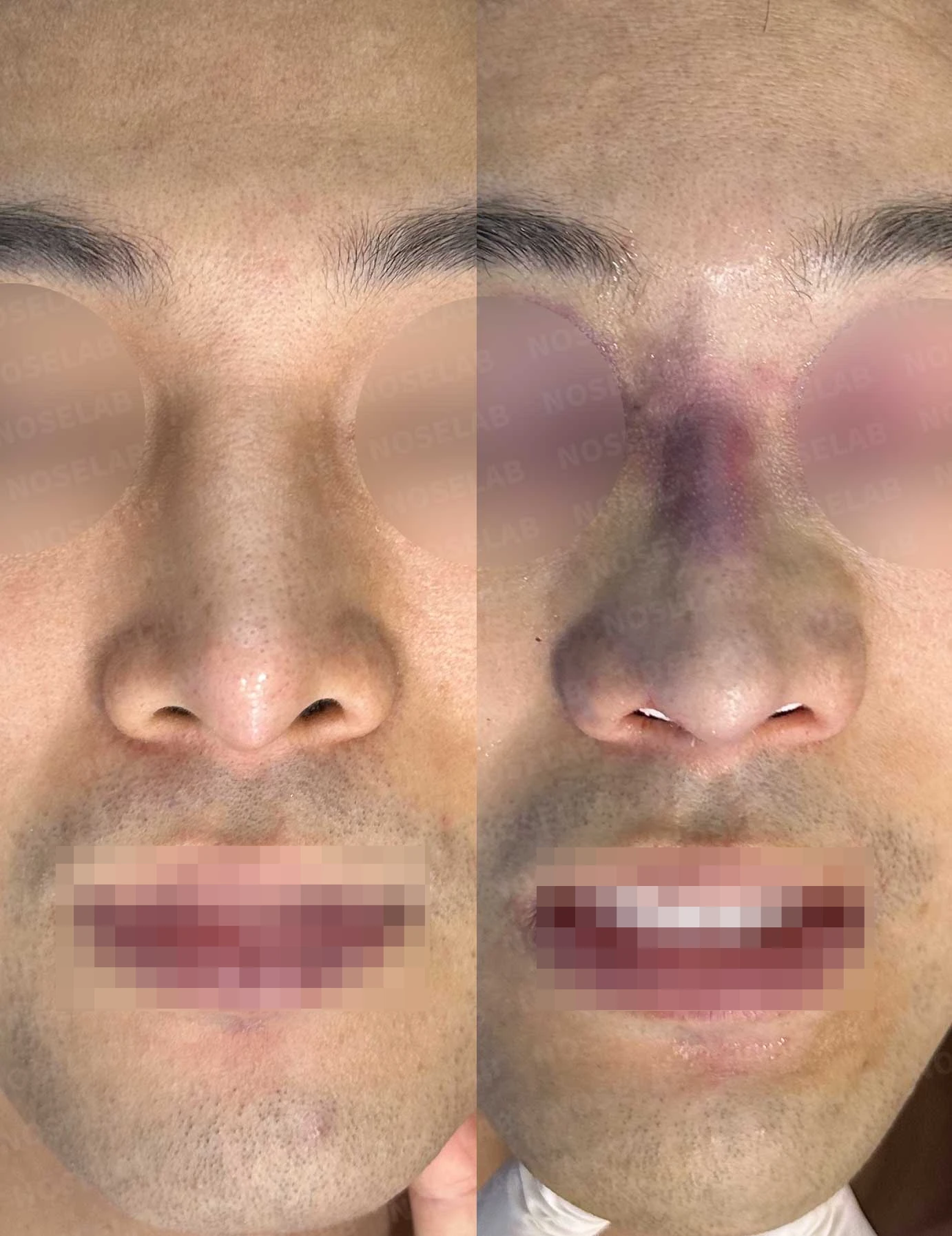
Before surgery / Day 0 immediately after surgery Photos taken immediately after surgery show swelling and may differ from the final result.
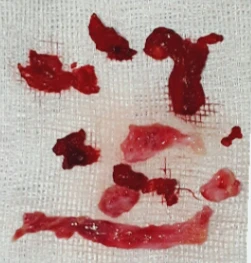
Photo of the removed foreign material (top), granulation tissue (middle), and implant capsule (bottom).
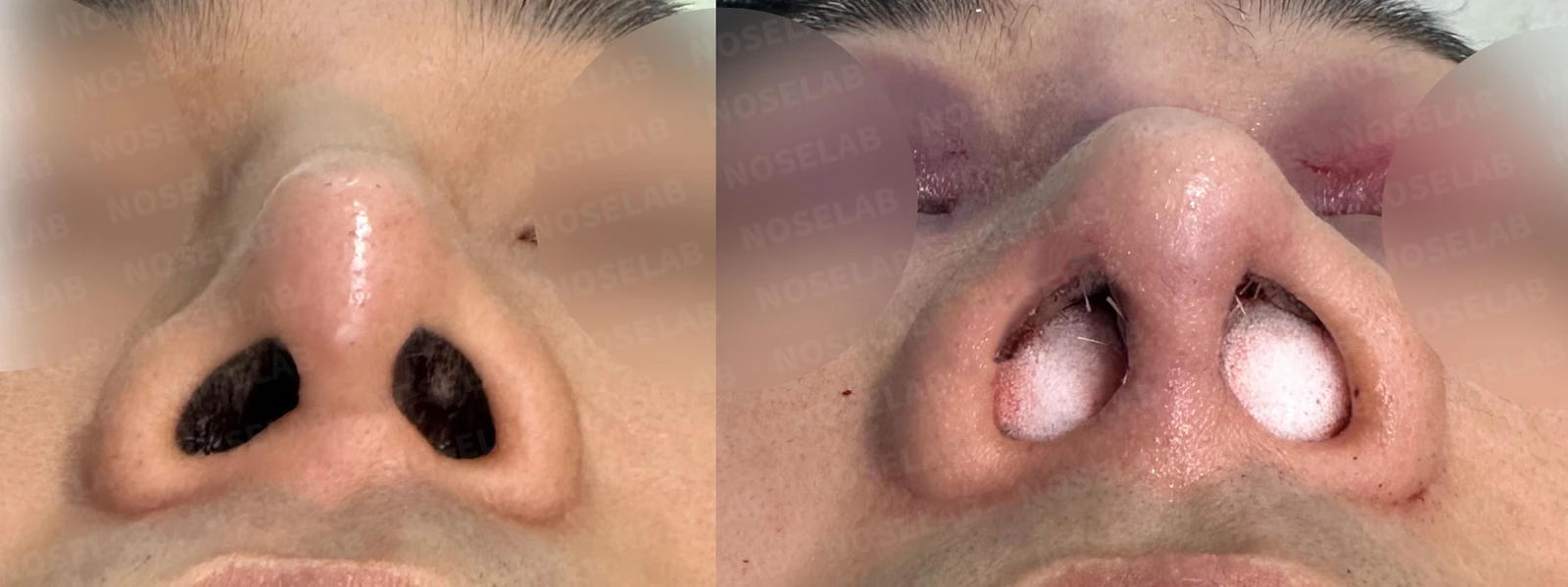
Before surgery / Day 0 immediately after surgery Photos taken immediately after surgery show swelling and may differ from the final result.
5. Conclusion
This surgery addressed an impending extrusion of a silicone implant caused by a chronic foreign body reaction. A chronic foreign body reaction causes extensive granulation tissue proliferation around the implant, which forces the silicone implant to migrate downward with gravity. The surrounding cartilage and bone also begin to resorb. In such cases, the existing silicone implant and all granulation tissue must be removed, and the damaged cartilage must be reconstructed.
Dr. Peter C. Kang
Limitations and risks
When autologous rib cartilage is used, scarring and pain may remain at the donor site on the chest, and pneumothorax (pleural injury) can occur rarely. Over time, the grafted cartilage may warp or undergo partial resorption.
When revising after implant removal, contracture may progress again after removal, the nasal height and length may decrease, and staged surgery may be necessary depending on the skin condition.
When the septum is corrected at the same time, nasal obstruction may persist or recur, and in rare cases, septal perforation or changes in smell may occur.
Common potential risks include infection, bleeding, asymmetry, scarring, skin necrosis, and insufficient improvement; results vary depending on individual skin condition and previous surgical history.