Hello, I am Dr. Peter C. Kang.
Today, I would like to introduce a case of a patient whose chronic foreign body reaction and septal damage from prior double jaw surgery were reconstructed using autologous rib cartilage.
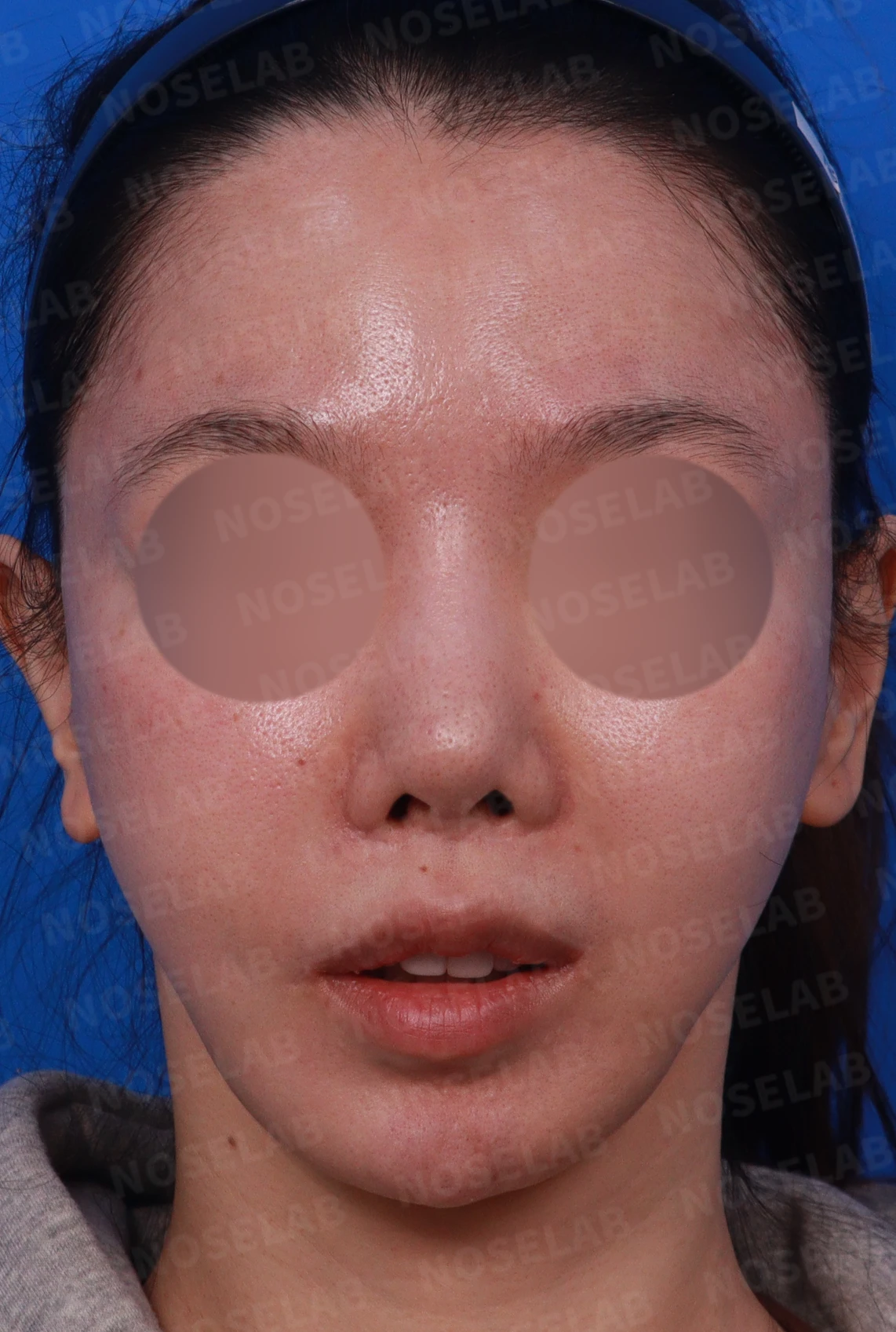
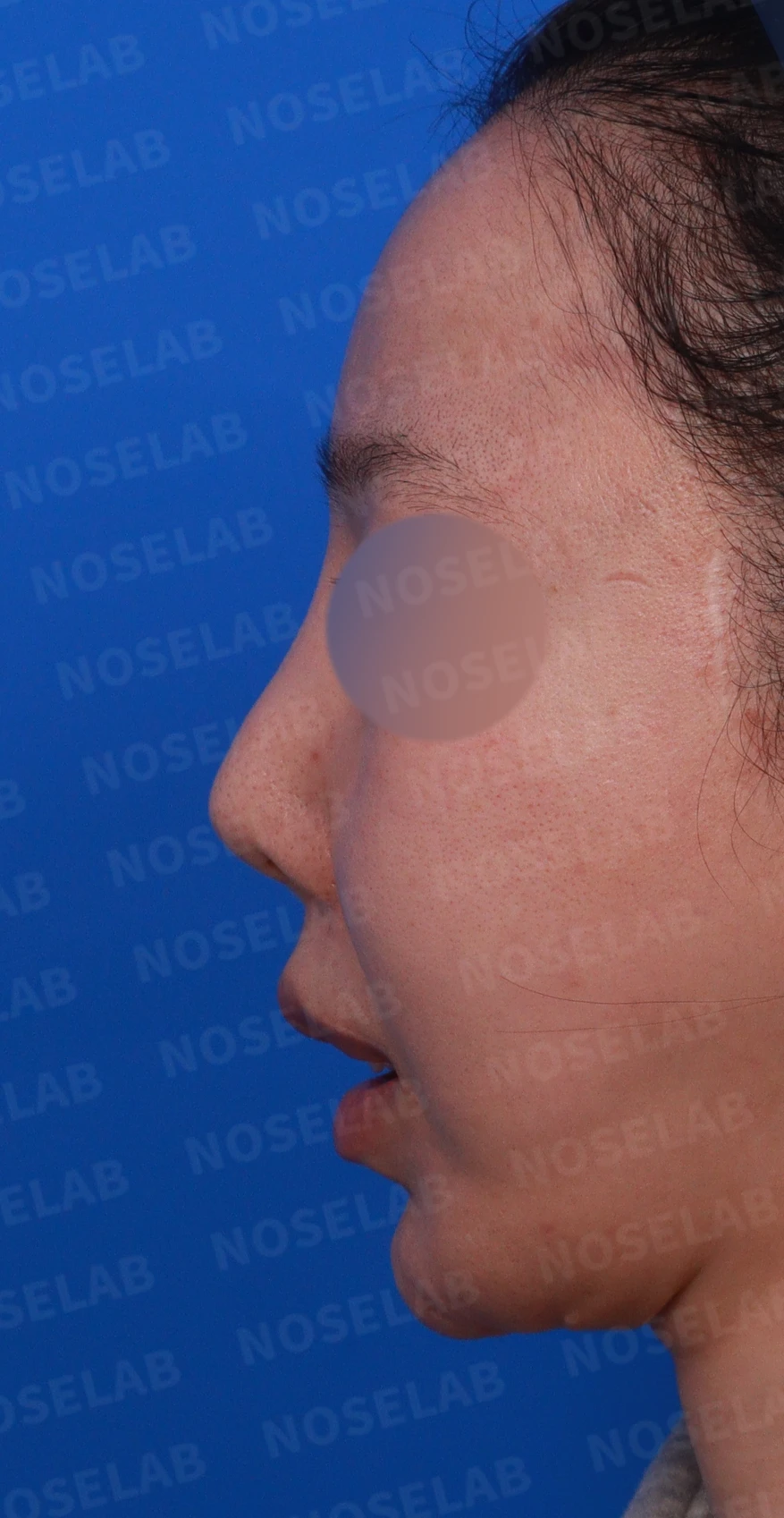
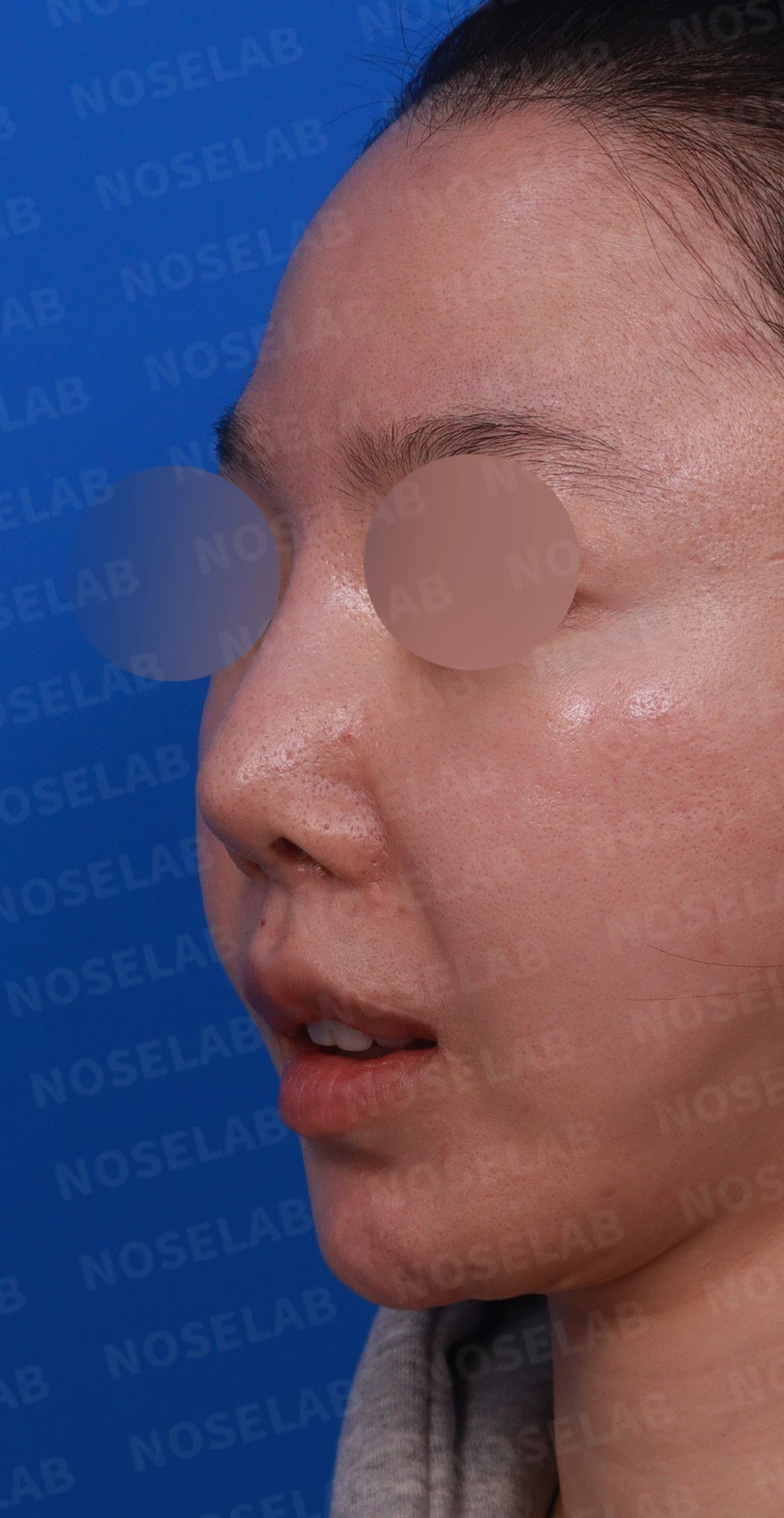
Front, left profile, and oblique views during design consultation
📍 Surgical history
15 years ago: Double jaw surgery
10 years ago: Nasal filler injection (subsequently dissolved)
10 years ago: Alar elevation
2 years ago: Rhinoplasty with donor rib cartilage and silicone implant
🔎 Initial consultation findings
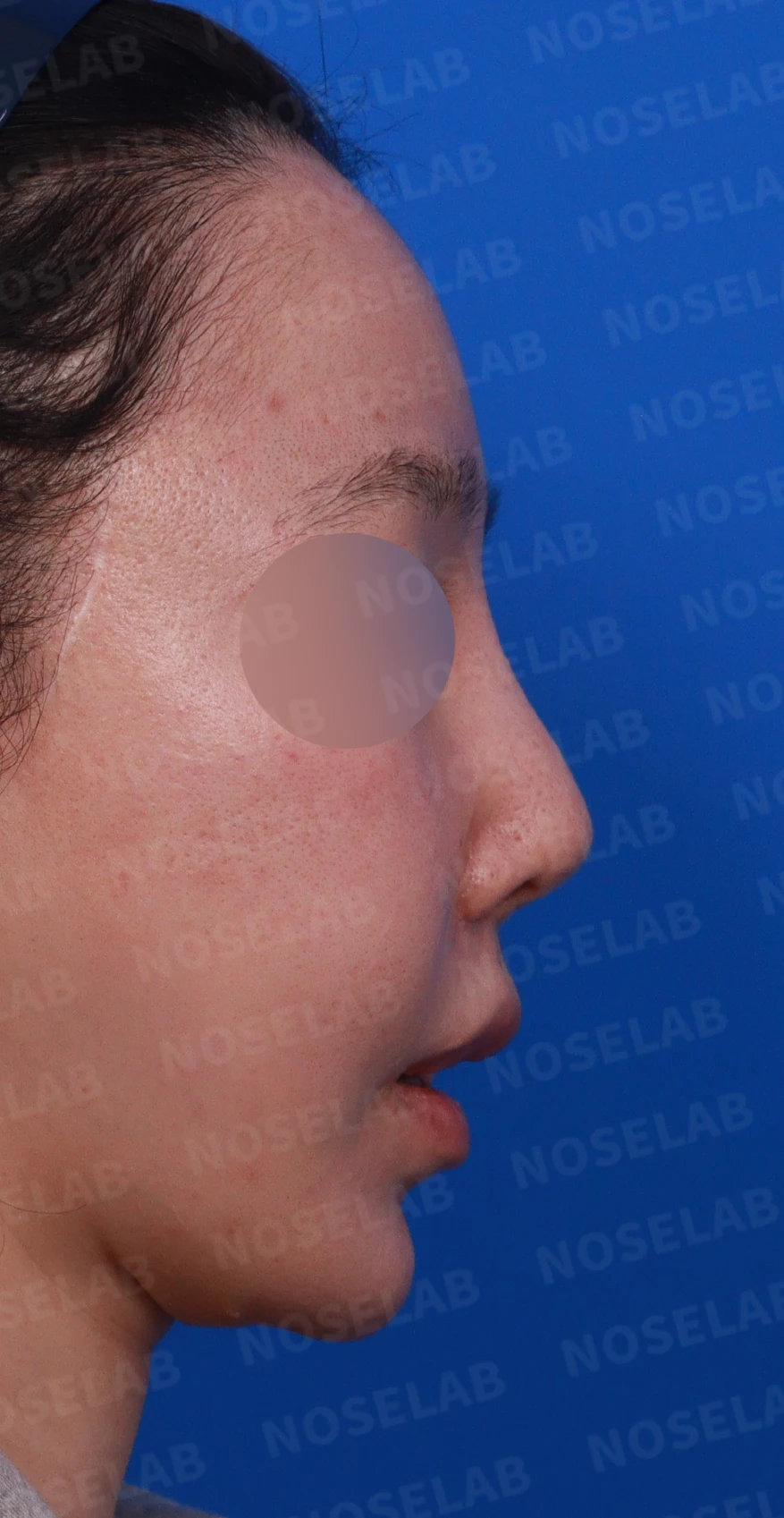
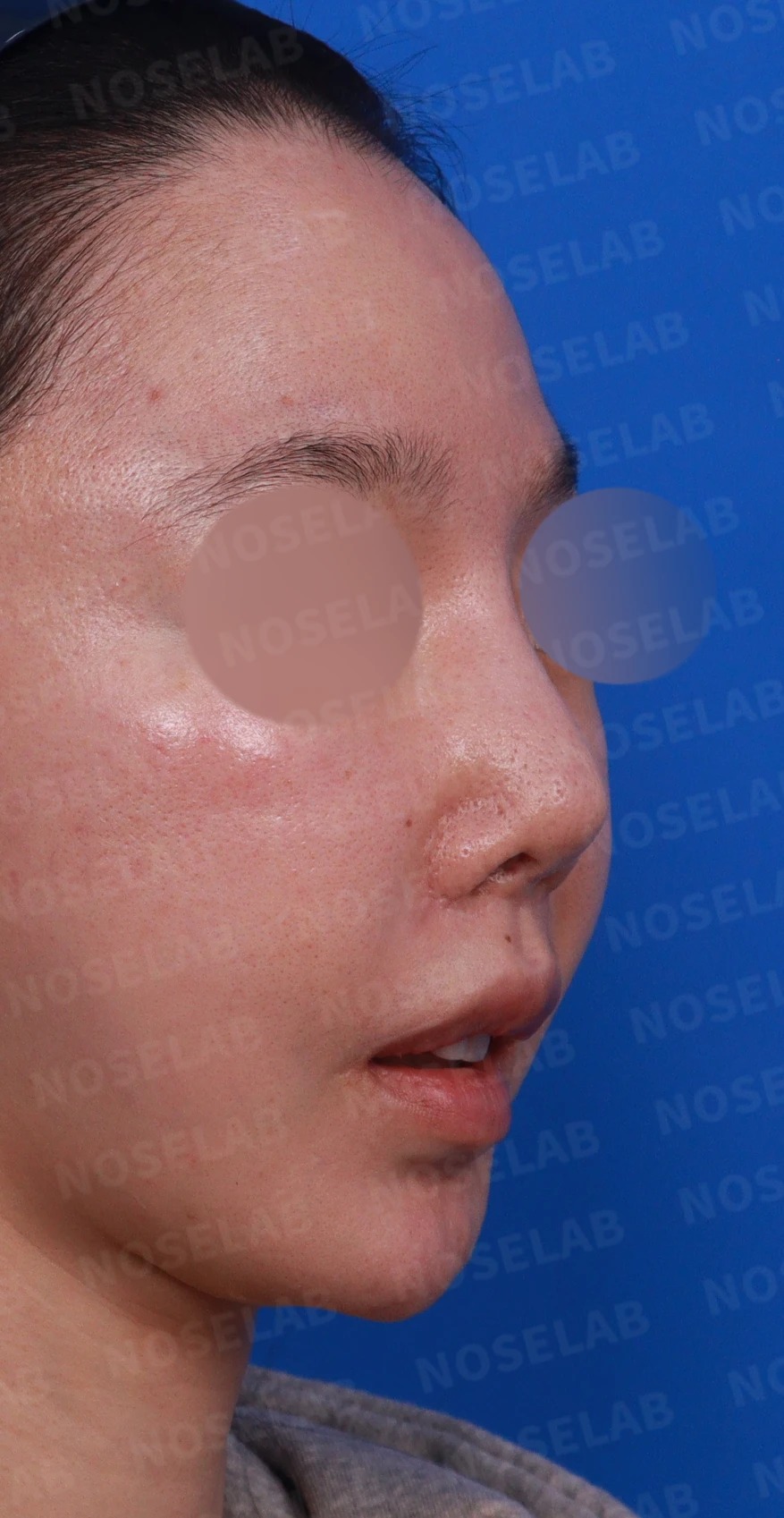
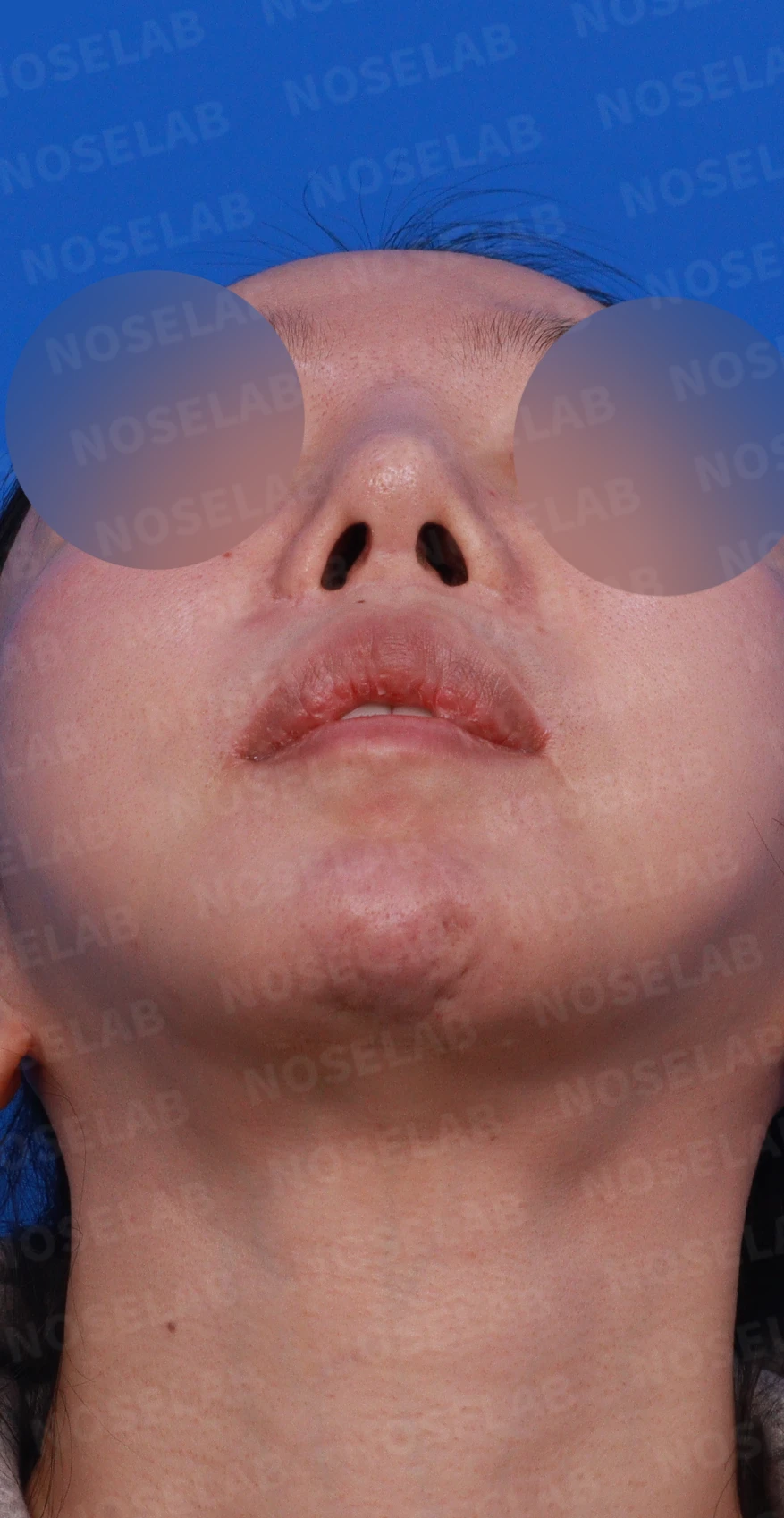
Design consultation: right oblique, profile, and basal (nostril) views
Front view
Broad nasal bridge
Blunt shape
Excessive nostril show
Nostril asymmetry
2. Profile view
High radix starting point
Upturned appearance
Awkward columella-to-bridge line
3. Oblique view
Protruding mouth findings
Overall blunt shape
4. Nostril view
Nostril asymmetry
Columella tilted to the left
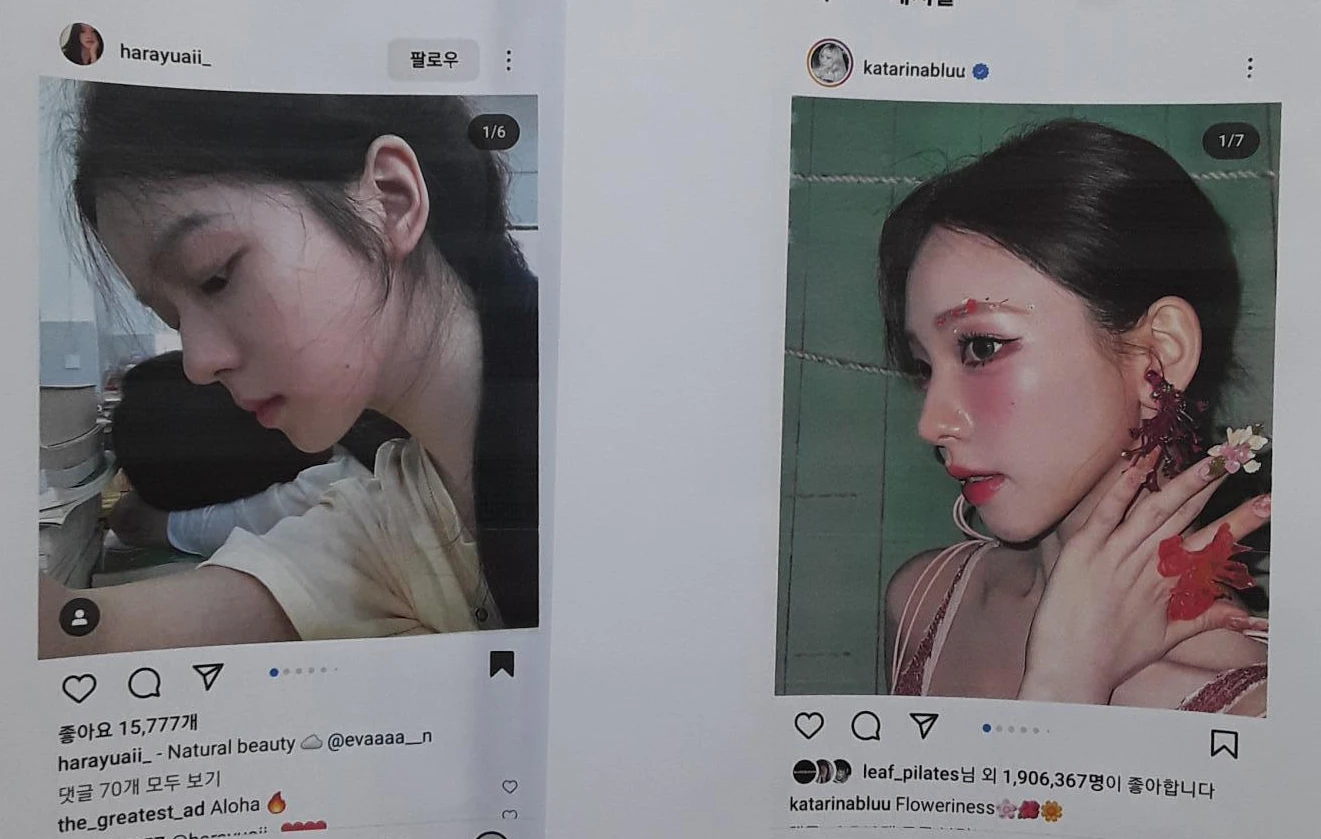
✨ Patient's requests
Correction of upturned nose
Correction of the nasolabial angle
Natural result
Non-pointed shape

💉 Surgical procedure details
Management of foreign body reaction
Discovery of serous fluid caused by a chronic foreign body reaction in the nasal bridge
Bacterial culture and antibiotic sensitivity testing requested
Irrigation and capsule removal
2. Structural reconstruction
Identification of septal damage from double jaw surgery
Septal reconstruction using autologous rib cartilage
Stabilization of the overall structure
3. Shape improvement
Correction of the nasolabial angle
Improvement in excessive nostril show
Creation of a natural columellar line
✅ Surgical results
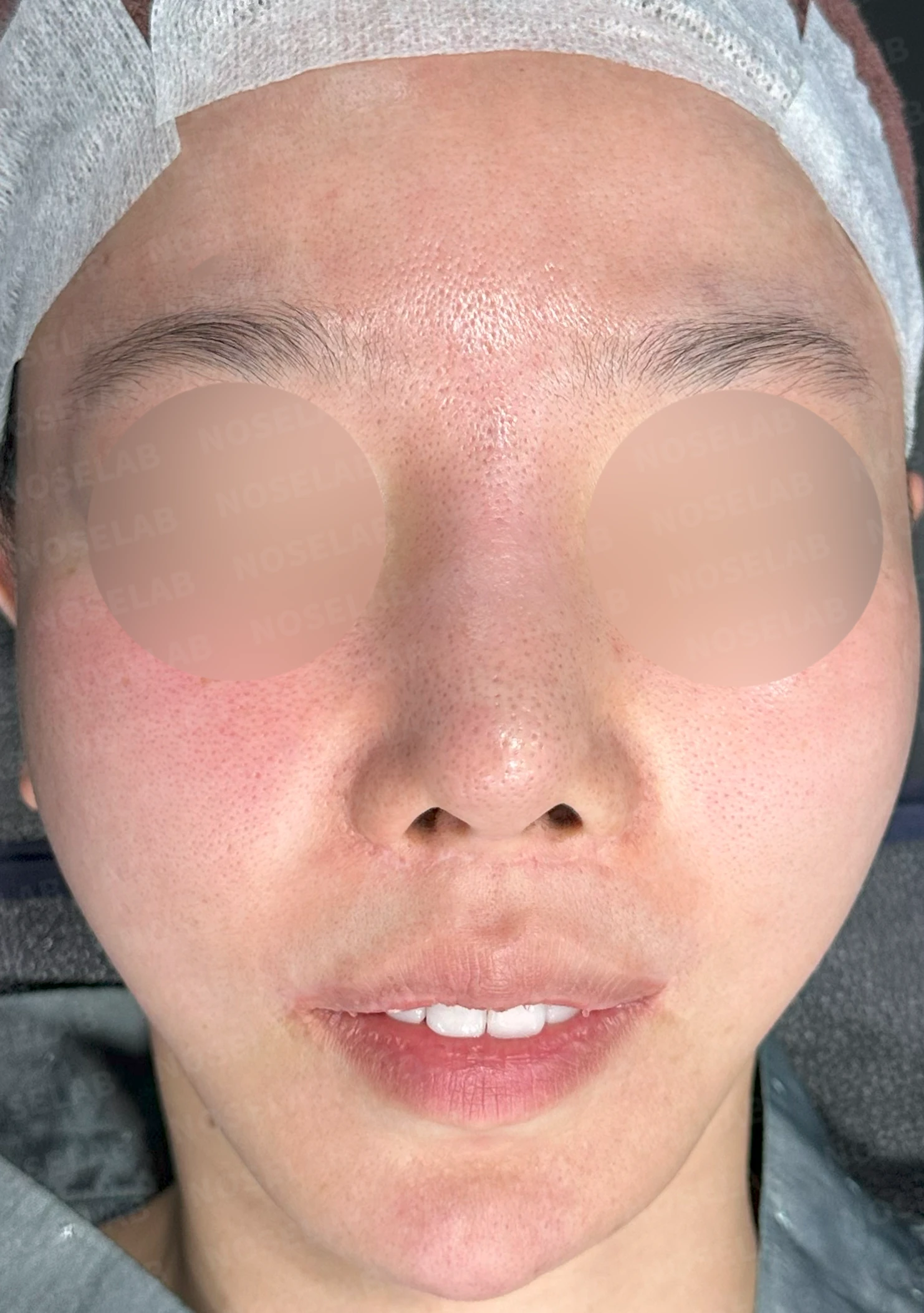
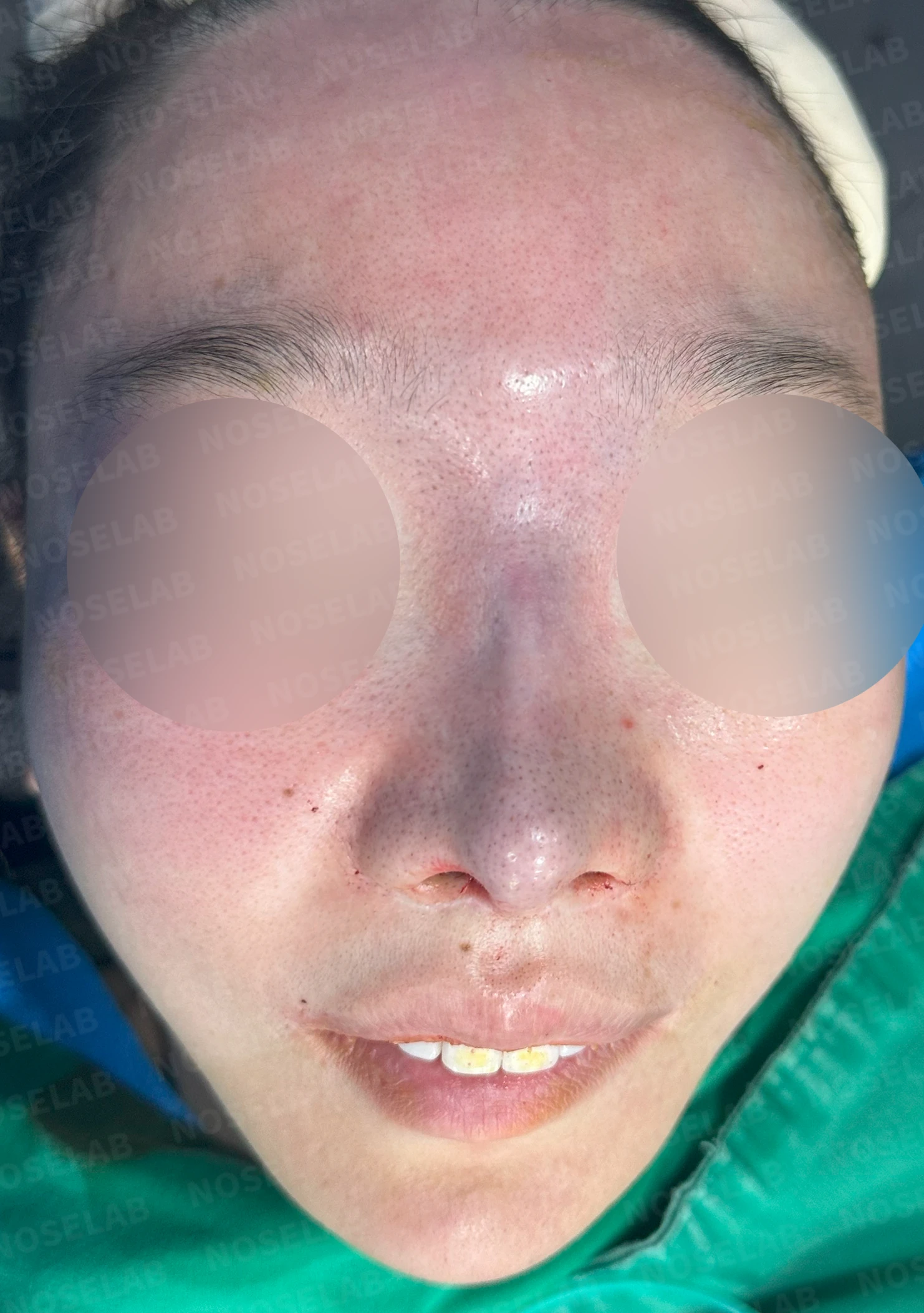
Before surgery / Day 0 immediately after surgery Photos taken immediately after surgery show swelling and may differ from the final result.
Front view
Slimmer nasal bridge
Improved bulbous appearance
Reduced nostril show
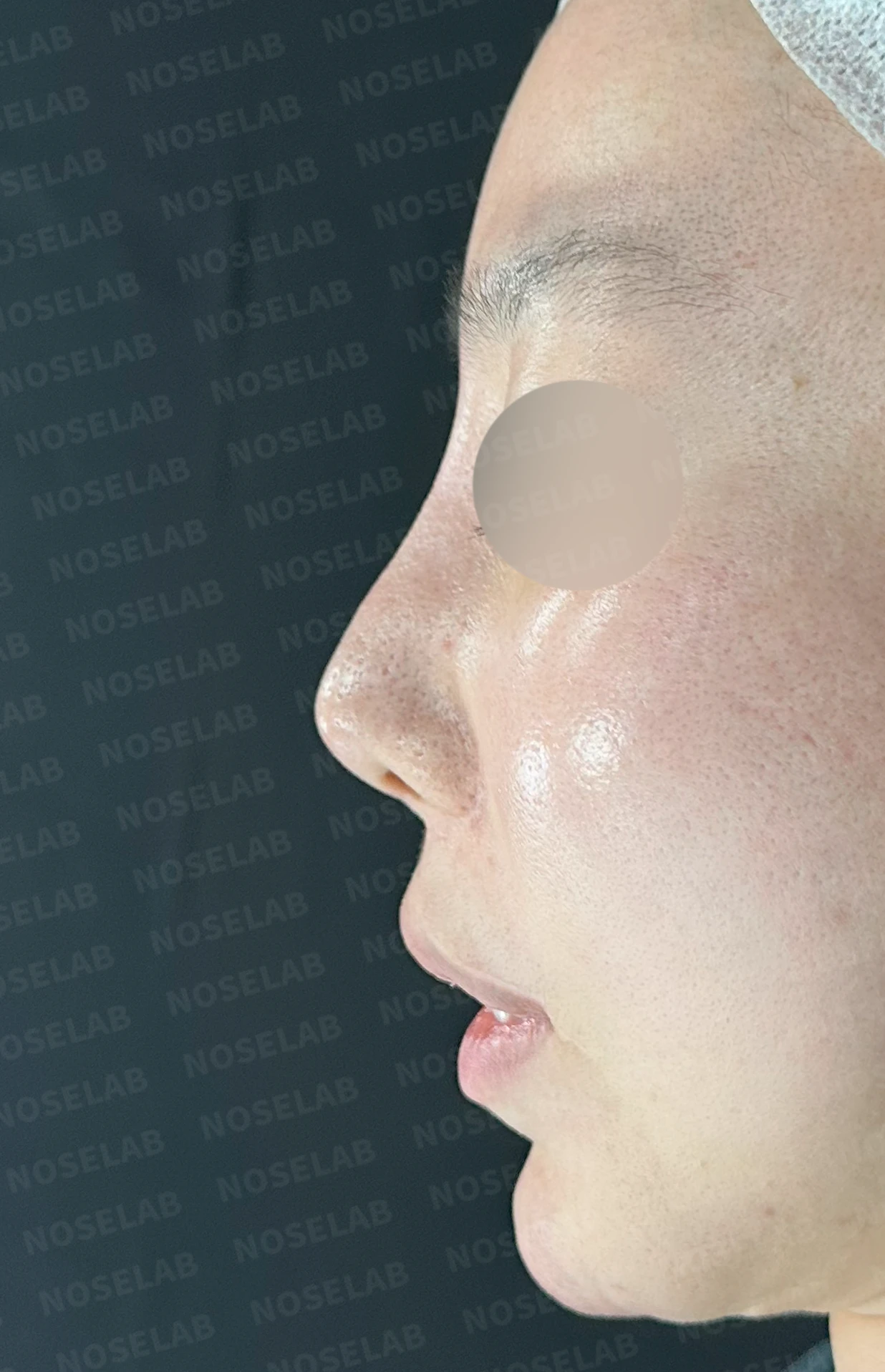
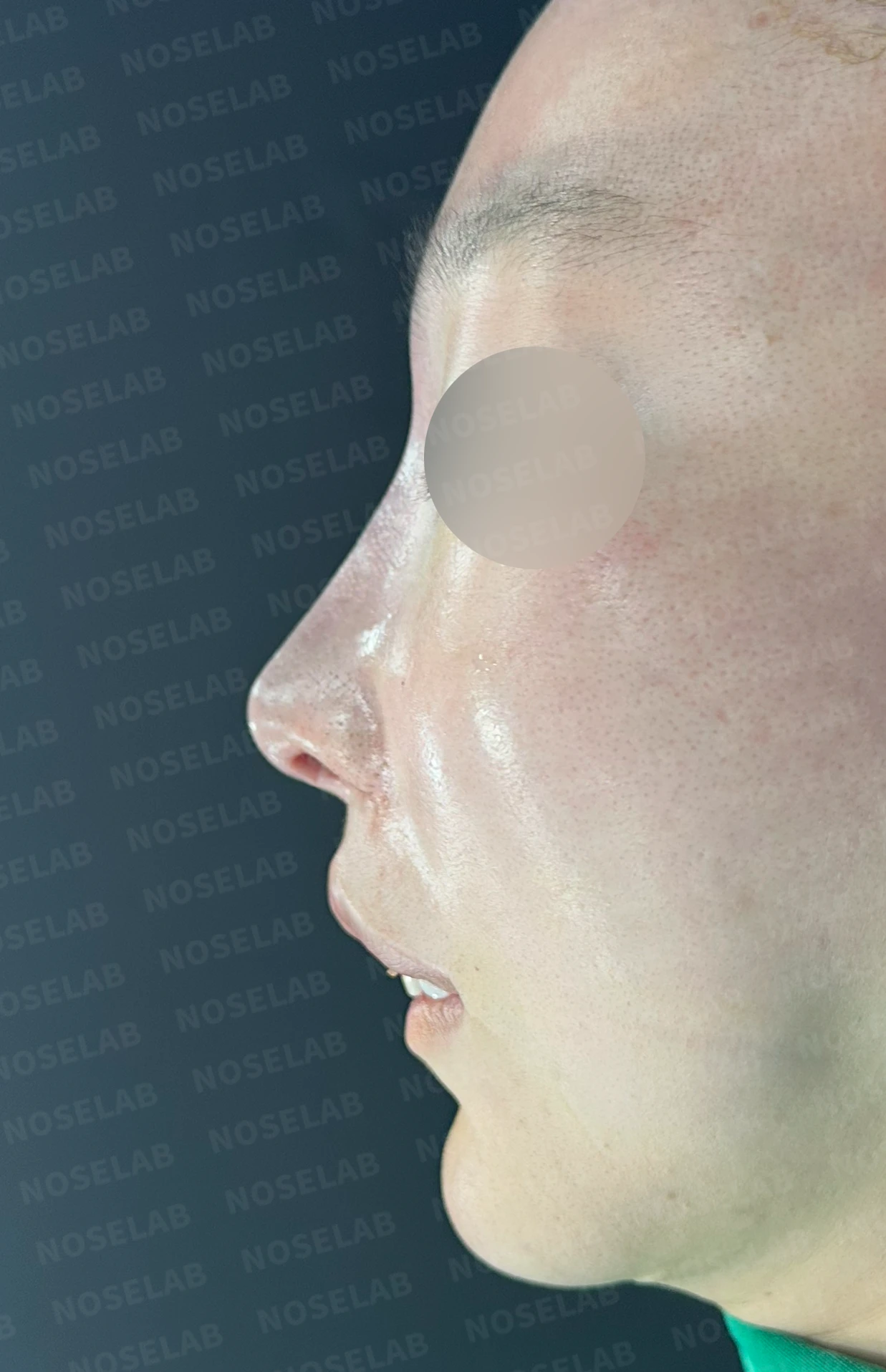
Before surgery / Day 0 immediately after surgery Photos taken immediately after surgery show swelling and may differ from the final result.
2. Profile view
Natural radix starting point
Stable columella-to-bridge transition
Improved upturned appearance
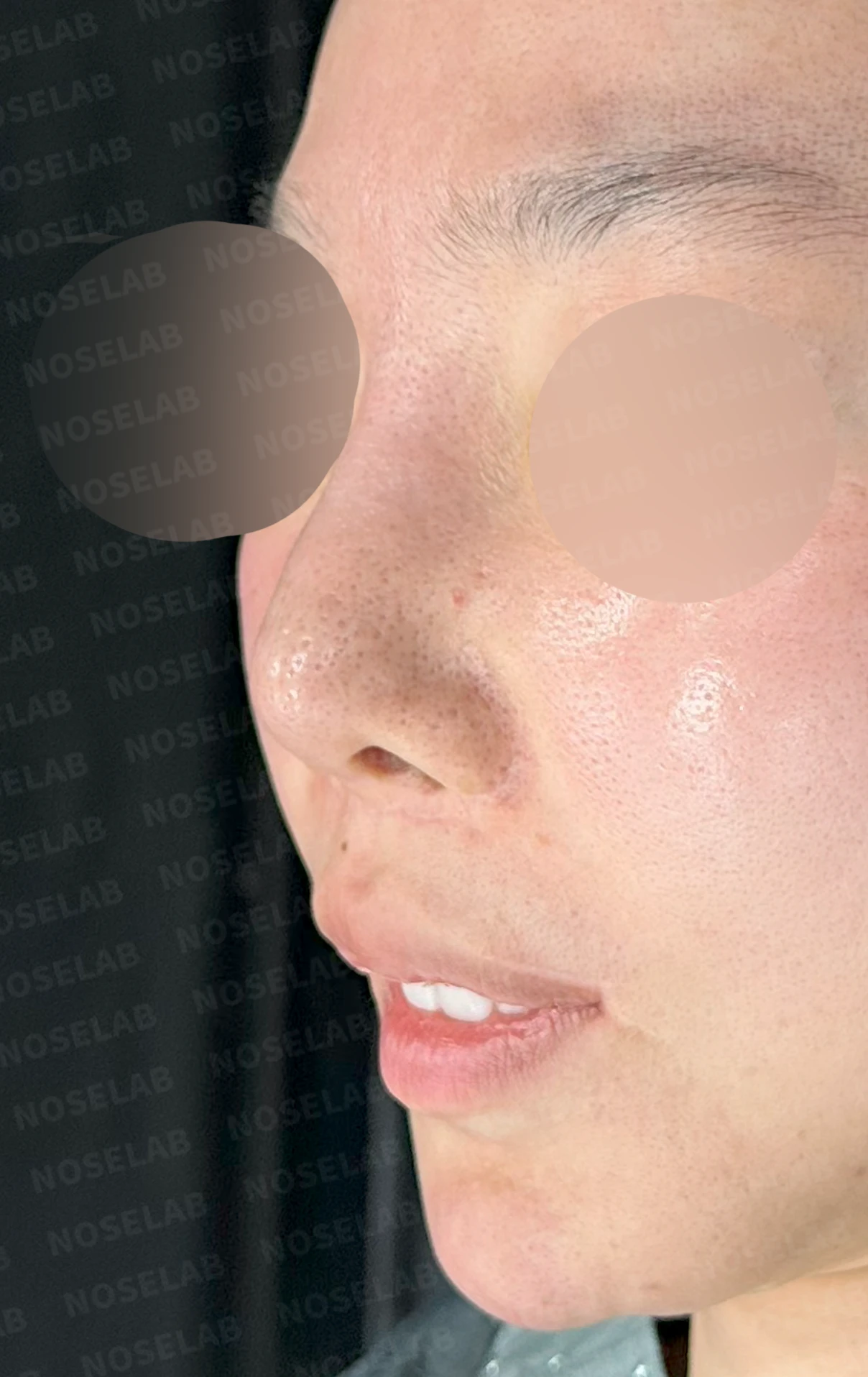
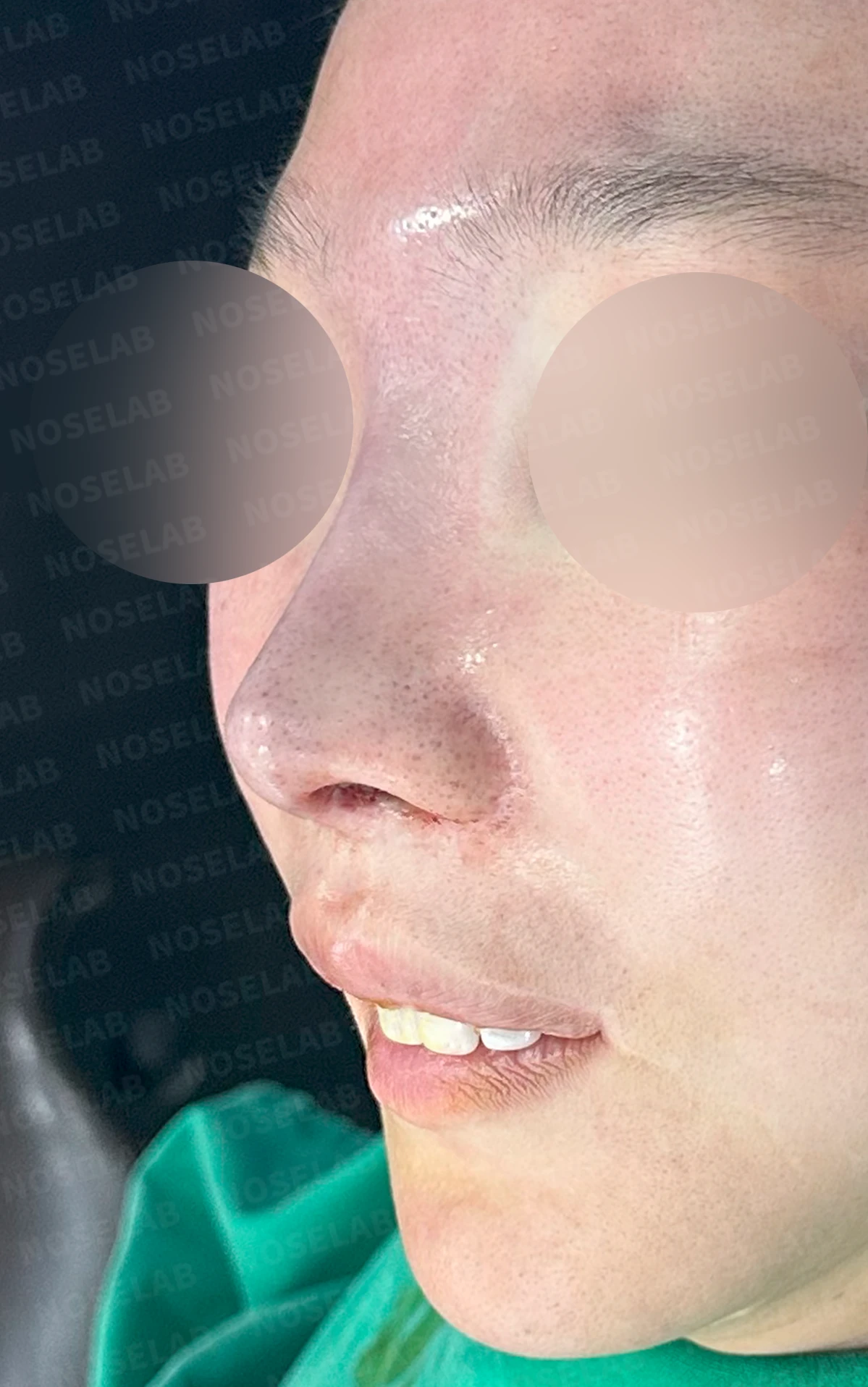
Before surgery / Day 0 immediately after surgery Photos taken immediately after surgery show swelling and may differ from the final result.
3. Nasolabial angle
Corrected nasolabial angle
Improved protruding mouth
Harmonious overall shape
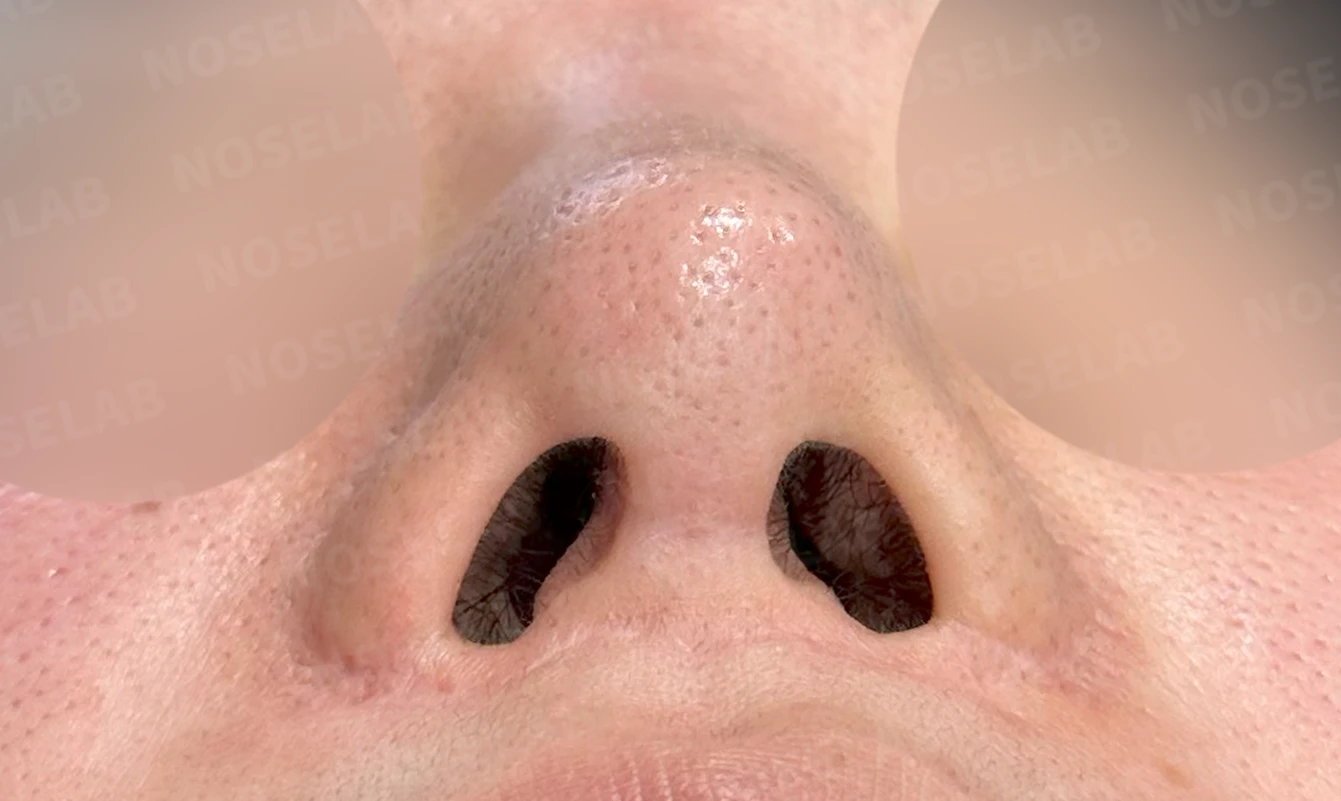
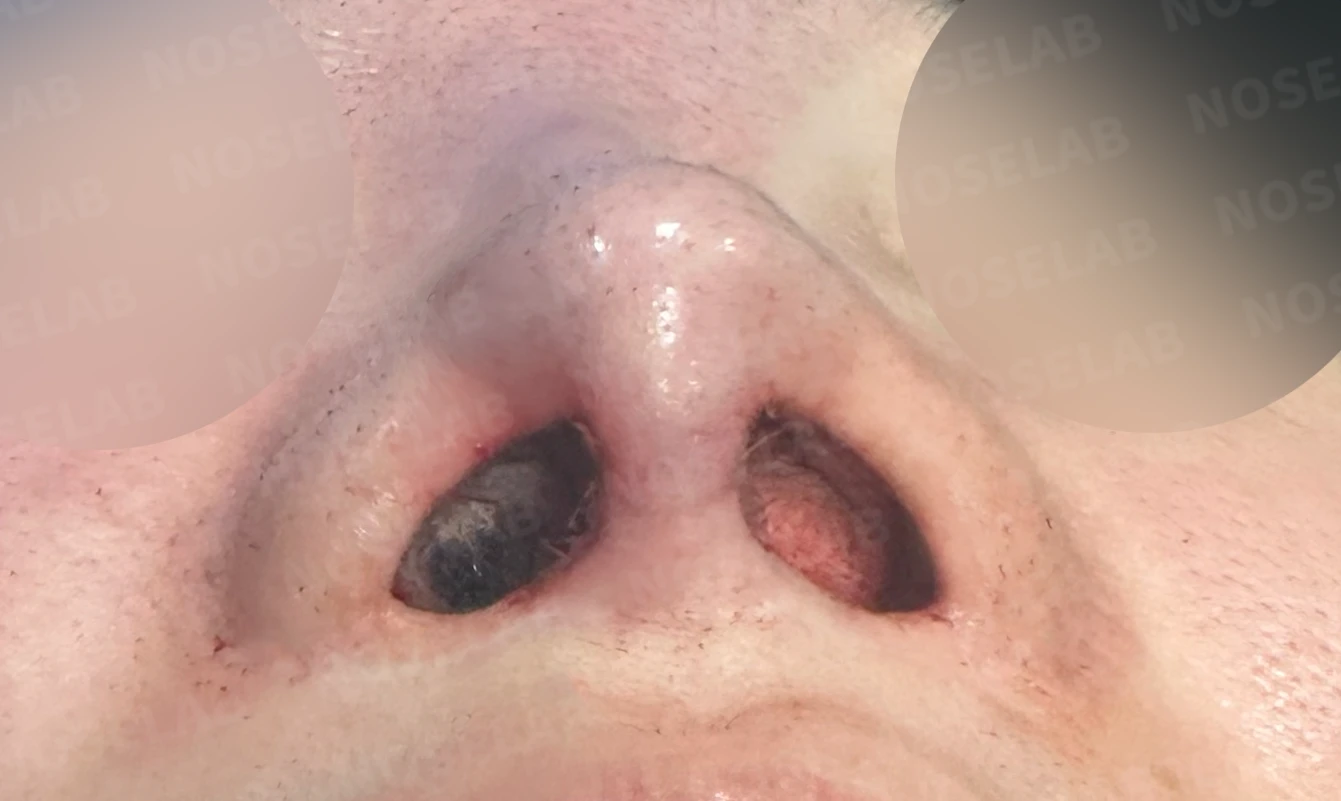
Before surgery / Day 0 immediately after surgery Photos taken immediately after surgery show swelling and may differ from the final result.
👨⚕️ Specialist's assessment
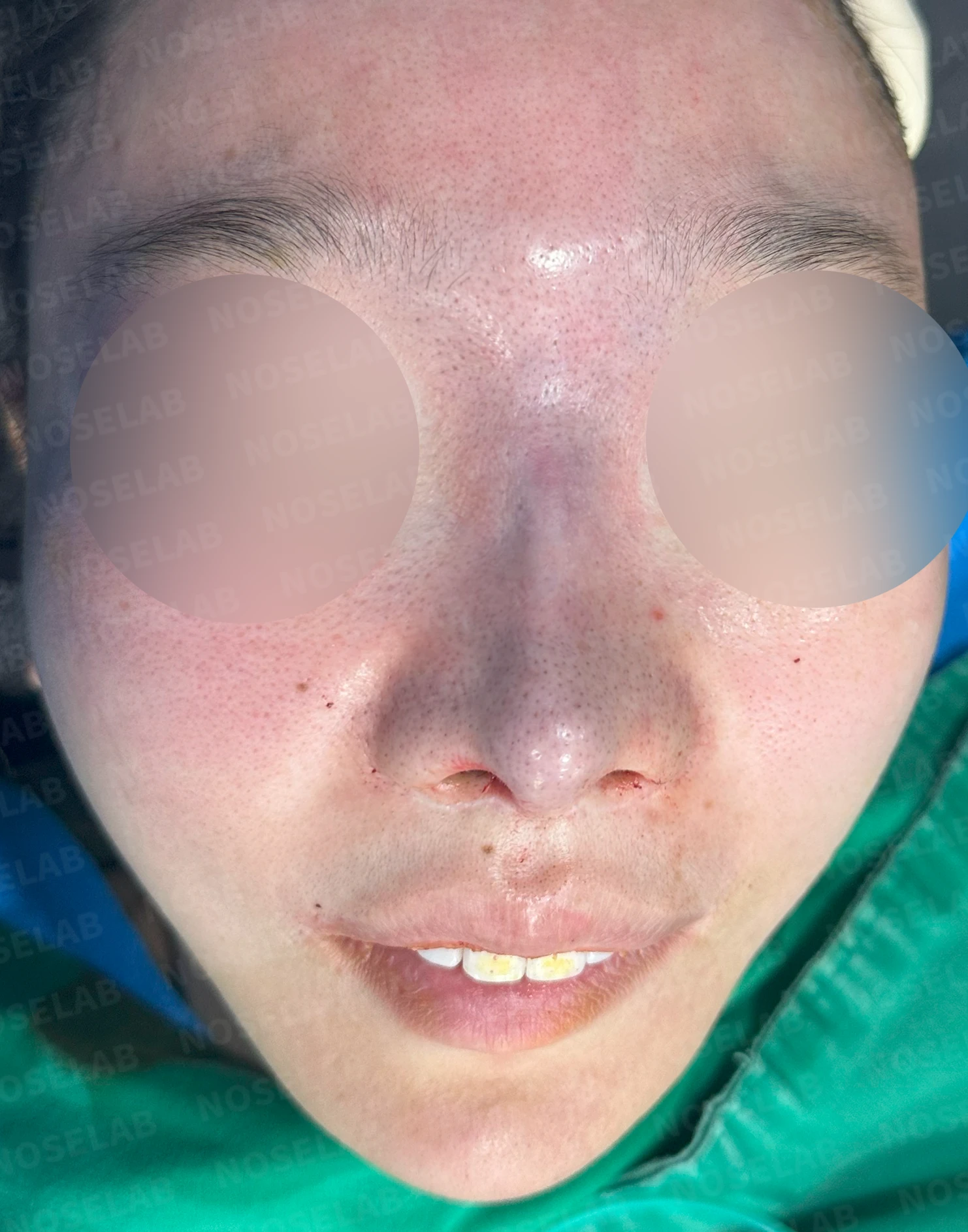
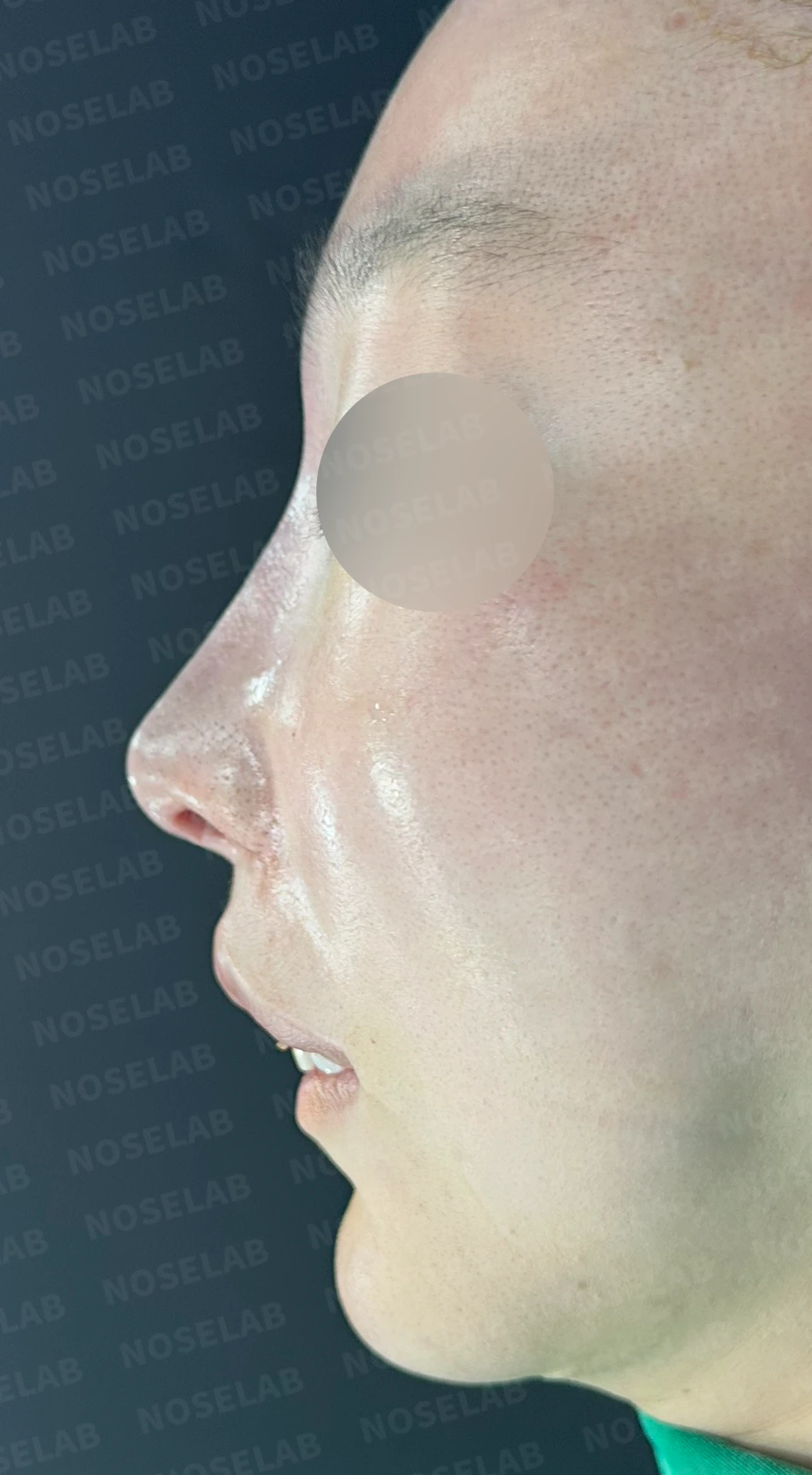
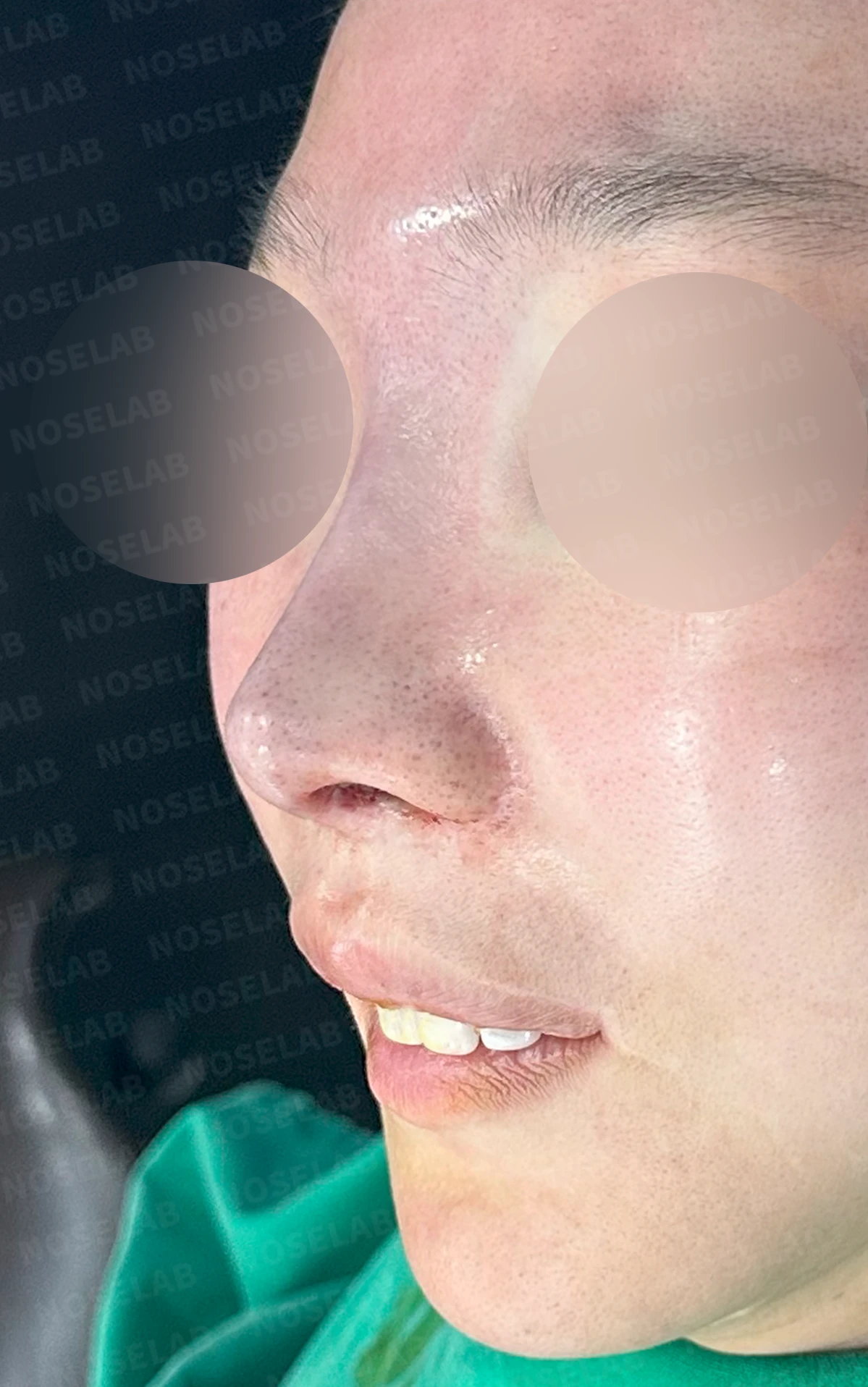
Front, profile, and oblique views immediately after surgery on day 0 Photos taken immediately after surgery show swelling and may differ from the final result.
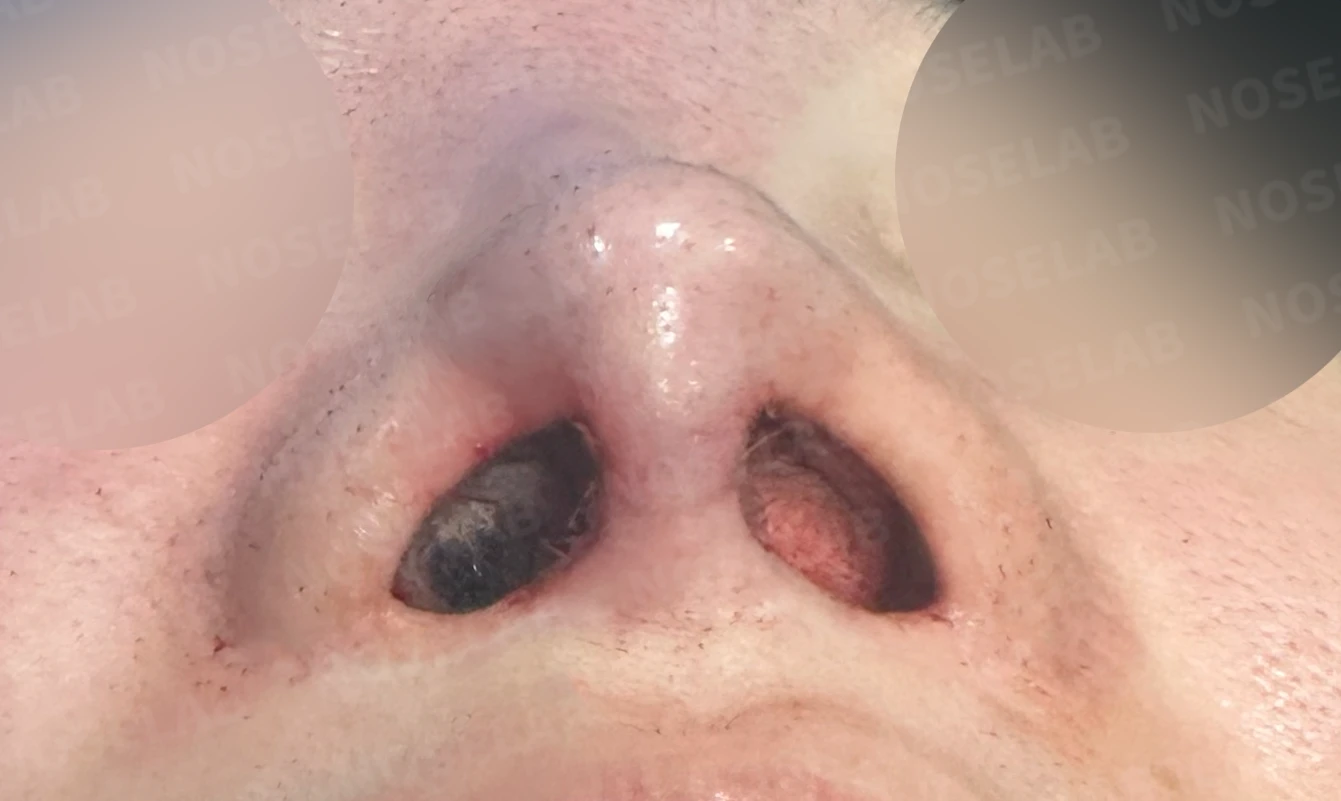
Nostril view on day 0 immediately after surgery Photos taken immediately after surgery show swelling and may differ from the final result.
This was a notable case with unexpected findings during surgery. The nasal bridge, which initially appeared blunt and widened, turned out to be swollen due to a chronic foreign body reaction. After irrigation and capsule removal, the true condition could be properly assessed.
Additionally, severe damage to the septal cartilage from double jaw surgery 15 years prior made septal reconstruction using autologous rib cartilage essential. Through this, structural stability was secured, and correction of the upturned nose and a natural nasolabial angle desired by the patient were achieved together.
Because there is a risk of postoperative inflammation, intravenous antibiotic therapy may be required, making continuous follow-up care crucial in this case.
This was Dr. Peter C. Kang. Thank you.
Thank you.
#closedrhinoplasty #revisionrhinoplasty #foreignbodyreaction #septalreconstruction #customrhinoplasty

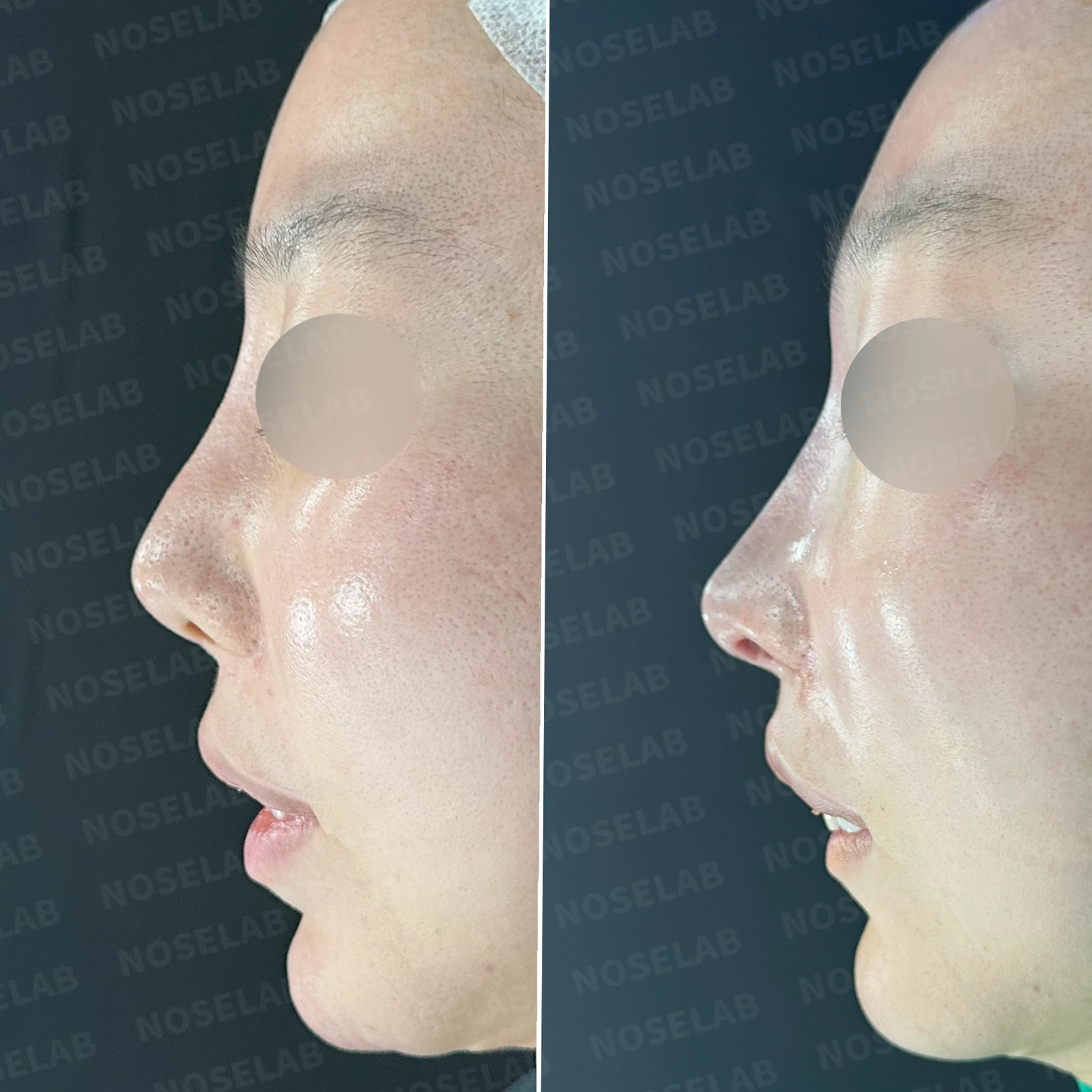
Limitations and risks
When autologous rib cartilage is used, scarring and pain may remain at the donor site on the chest, and pneumothorax (pleural injury) can occur rarely. Over time, the grafted cartilage may warp or undergo partial resorption.
When using donor rib cartilage, long-term follow-up is necessary because the grafted cartilage may resorb or warp.
When the septum is corrected at the same time, nasal obstruction may persist or recur, and in rare cases, septal perforation or changes in smell may occur.
Common potential risks include infection, bleeding, asymmetry, scarring, skin necrosis, and insufficient improvement; results vary depending on individual skin condition and previous surgical history.