Hello, I am Dr. Peter C. Kang.
Today, I would like to introduce the case of a patient who came to our clinic after struggling for a long time with a long and drooping tip, a crooked bridge, and dorsal irregularity even after two prior rhinoplasty procedures.
🔍 Surgical history
About 10 years ago: Rhinoplasty using silicone implant + ear cartilage → Decided on revision because the patient was dissatisfied with the shape
January 2025: silicone implant + autologous rib cartilage (the patient had no functional discomfort)
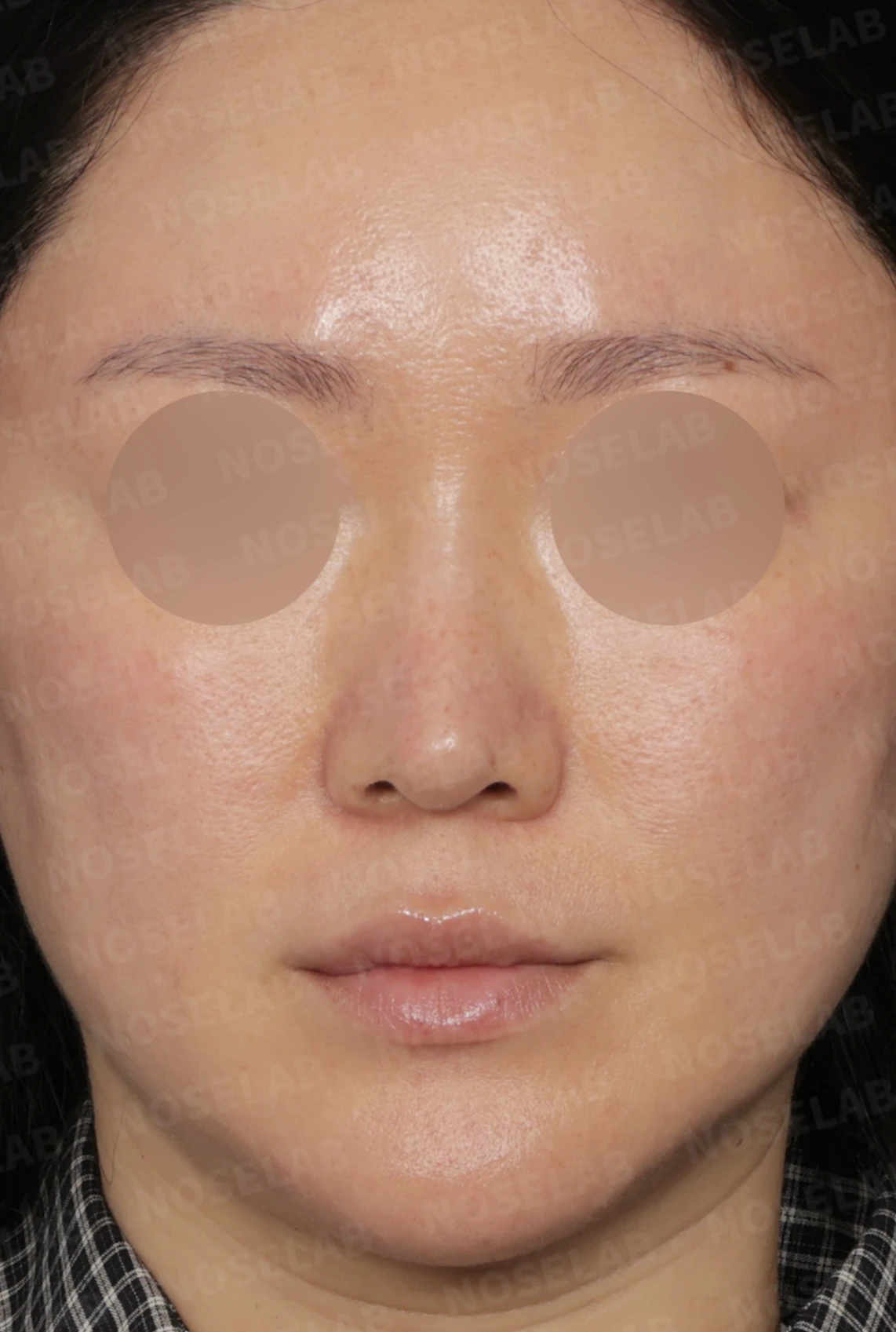
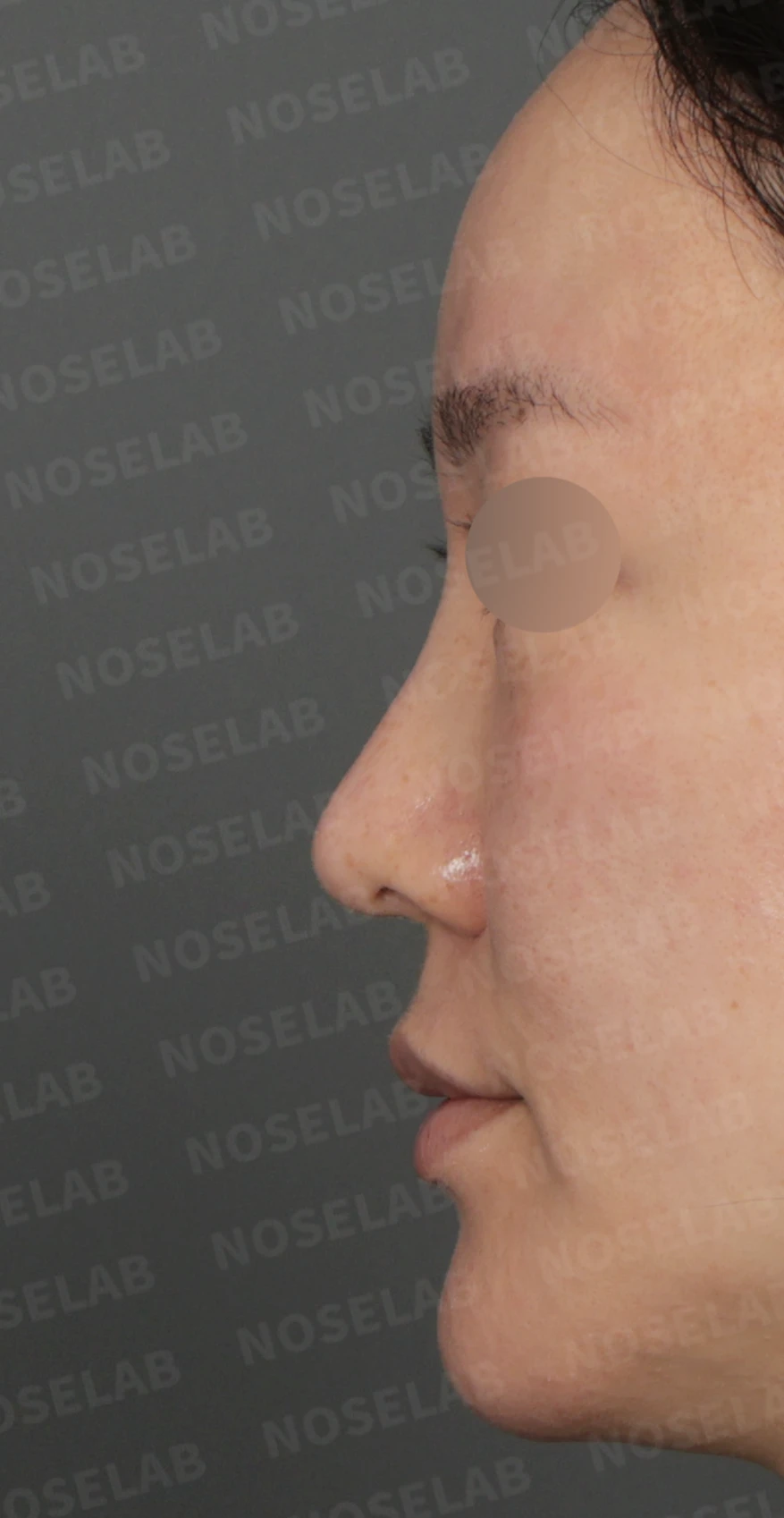
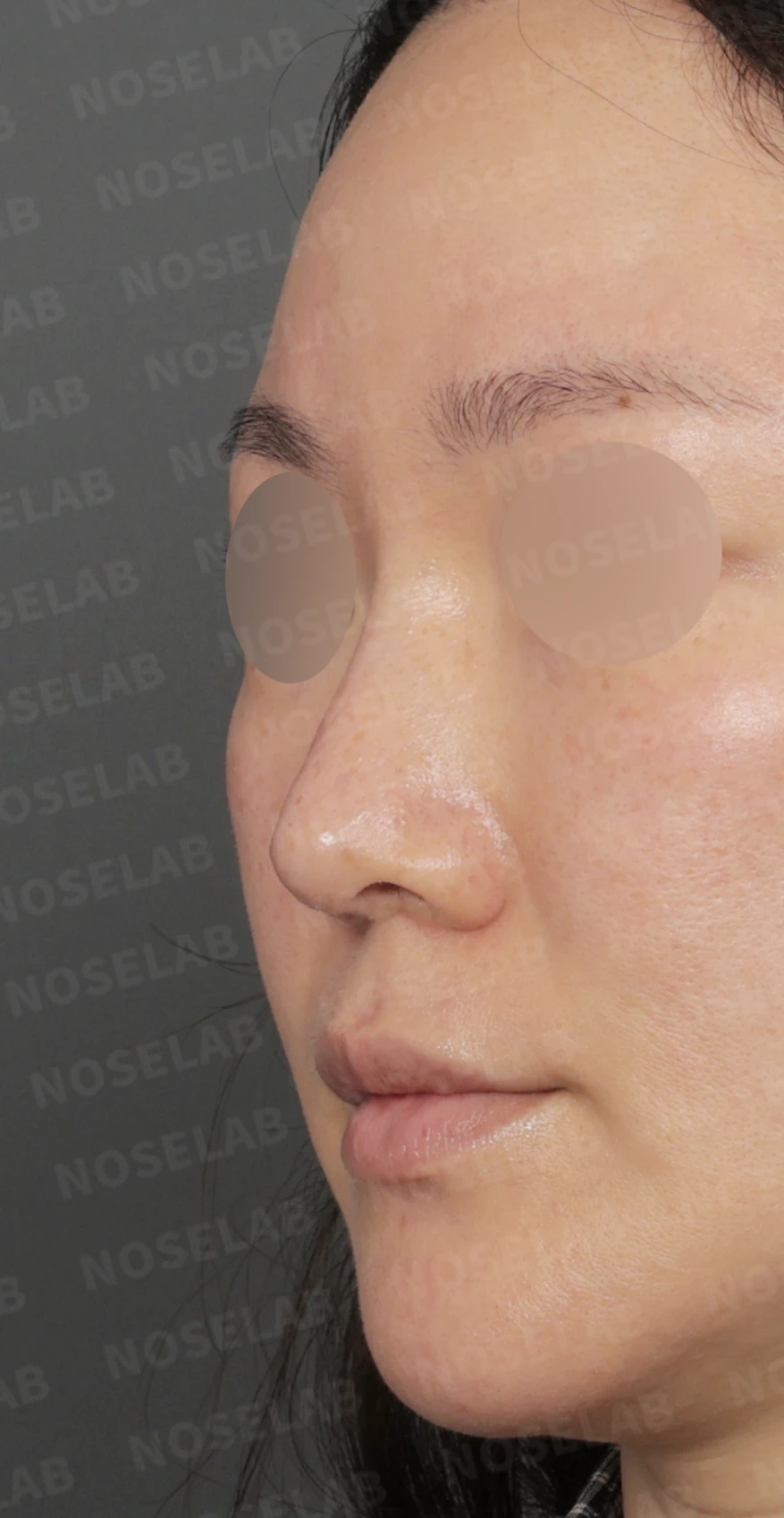
Front, left profile, and oblique view photos from the design consultation.
💉 Patient requests
Improvement of dorsal bridge irregularities
Refining the bulbous tip
Correction of crooked nose
Refining the columella line
A well-defined and prominent nasal profile line
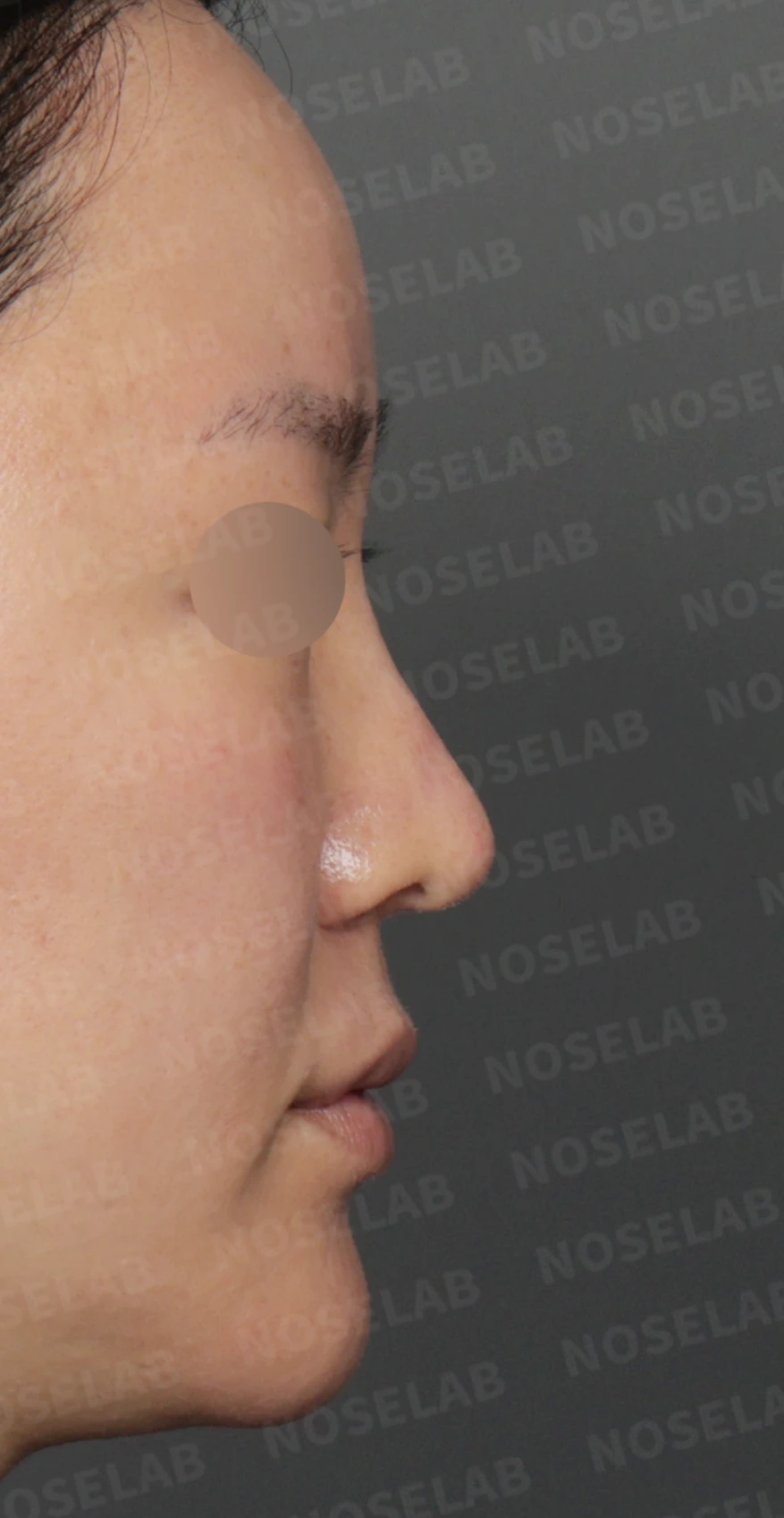
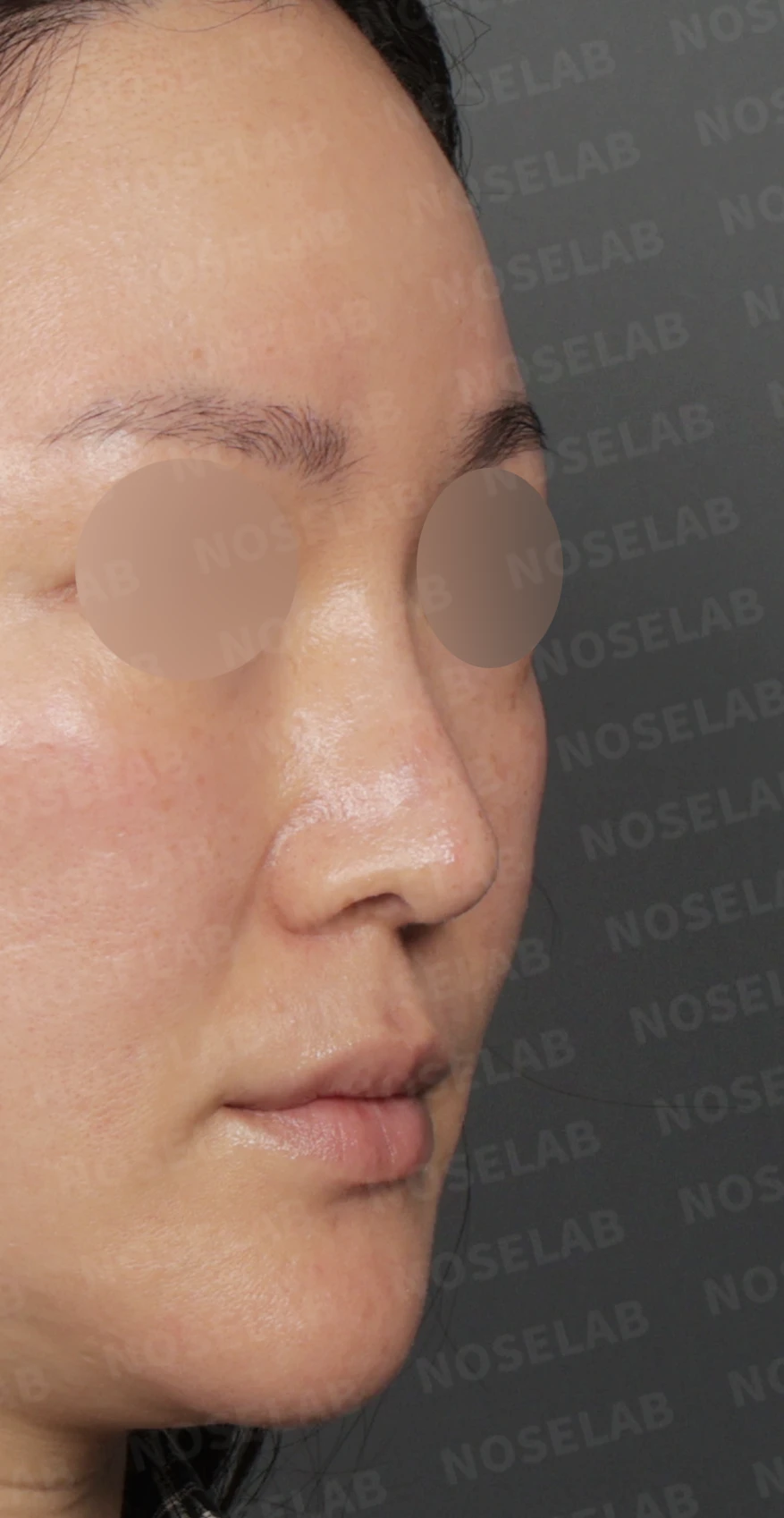
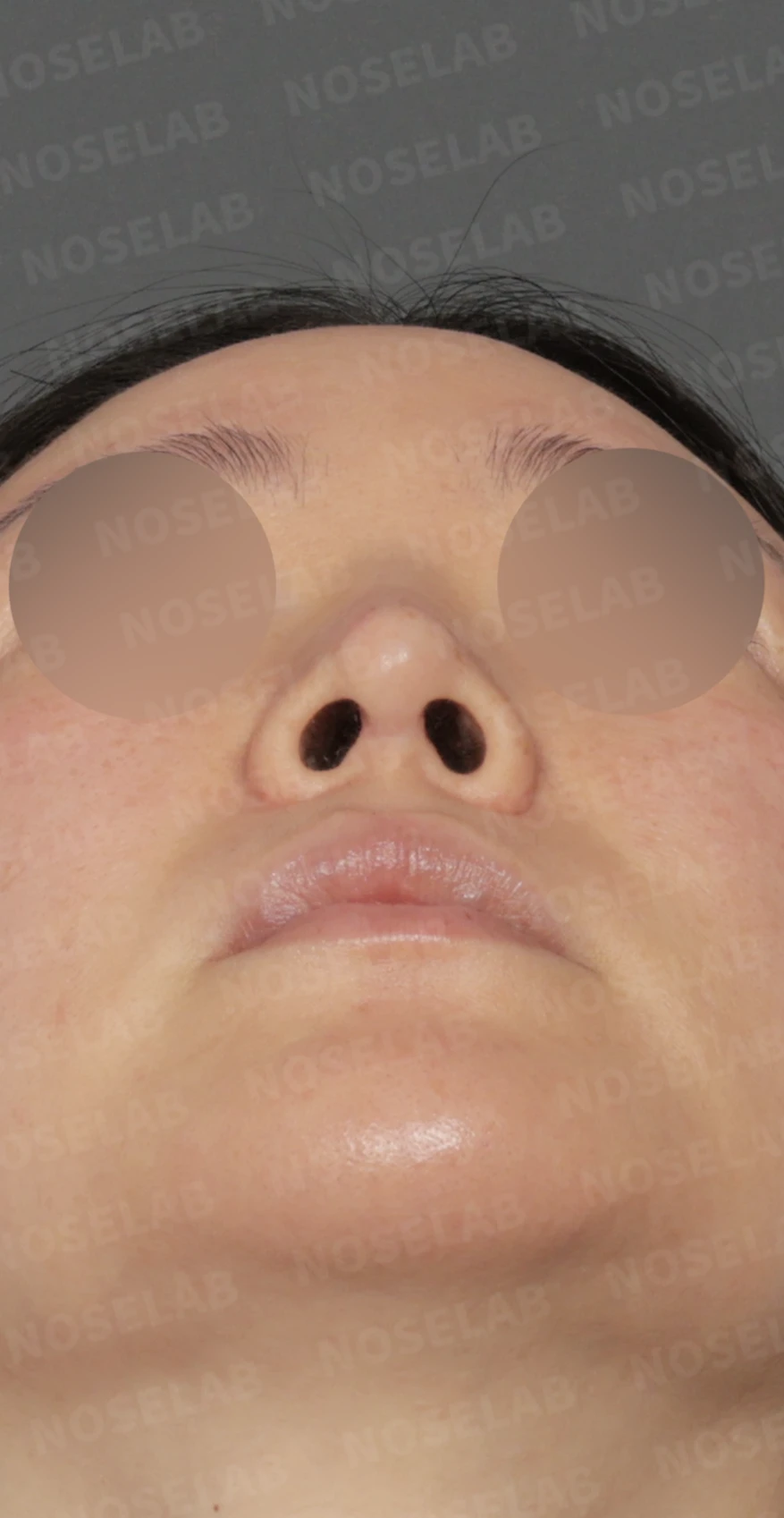
Right profile, oblique view, and nostril photos from the design consultation.
🔧 Surgical plan and procedure
1. Septal reconstruction using autologous rib cartilage
Because septal cartilage had been used excessively in previous surgeries, almost no cartilage remained.
Autologous rib cartilage was harvested to reliably reconstruct the weakened septum.
Securing stable support for the nasal tip
2. Safe removal of the protrusion on the right bridge
Intraoperative findings confirmed that this was an autologous rib cartilage fragment inserted during a previous surgery to correct a depression.
After safely removing the fragment, the depressed area was corrected by filling it naturally with cartilage and dermis.
3. Replacement of the bridge implant
Removal of existing silicone implant
A new implant was precisely carved to match the contours of the patient's nasal bone, naturally elevating the bridge.
4. Lateral nasal osteotomy
Narrowing the wide and splayed nasal bones to create a sleek bridge line
Achieved symmetry by correcting the deviated segment
5. Concurrent functional rhinitis surgery
Improvement in nasal obstruction symptoms
Restoration of breathing function
🌟 Surgical results
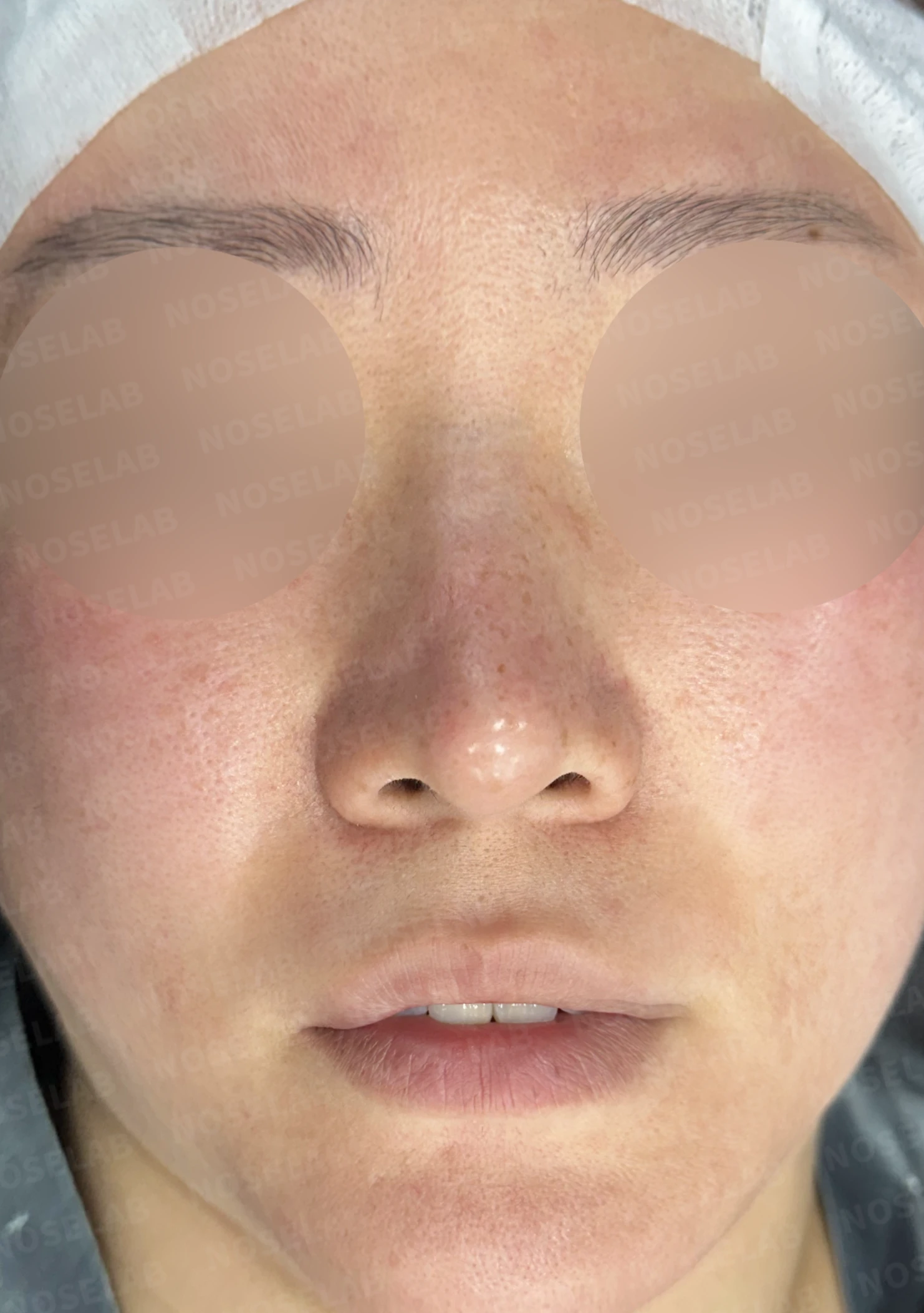
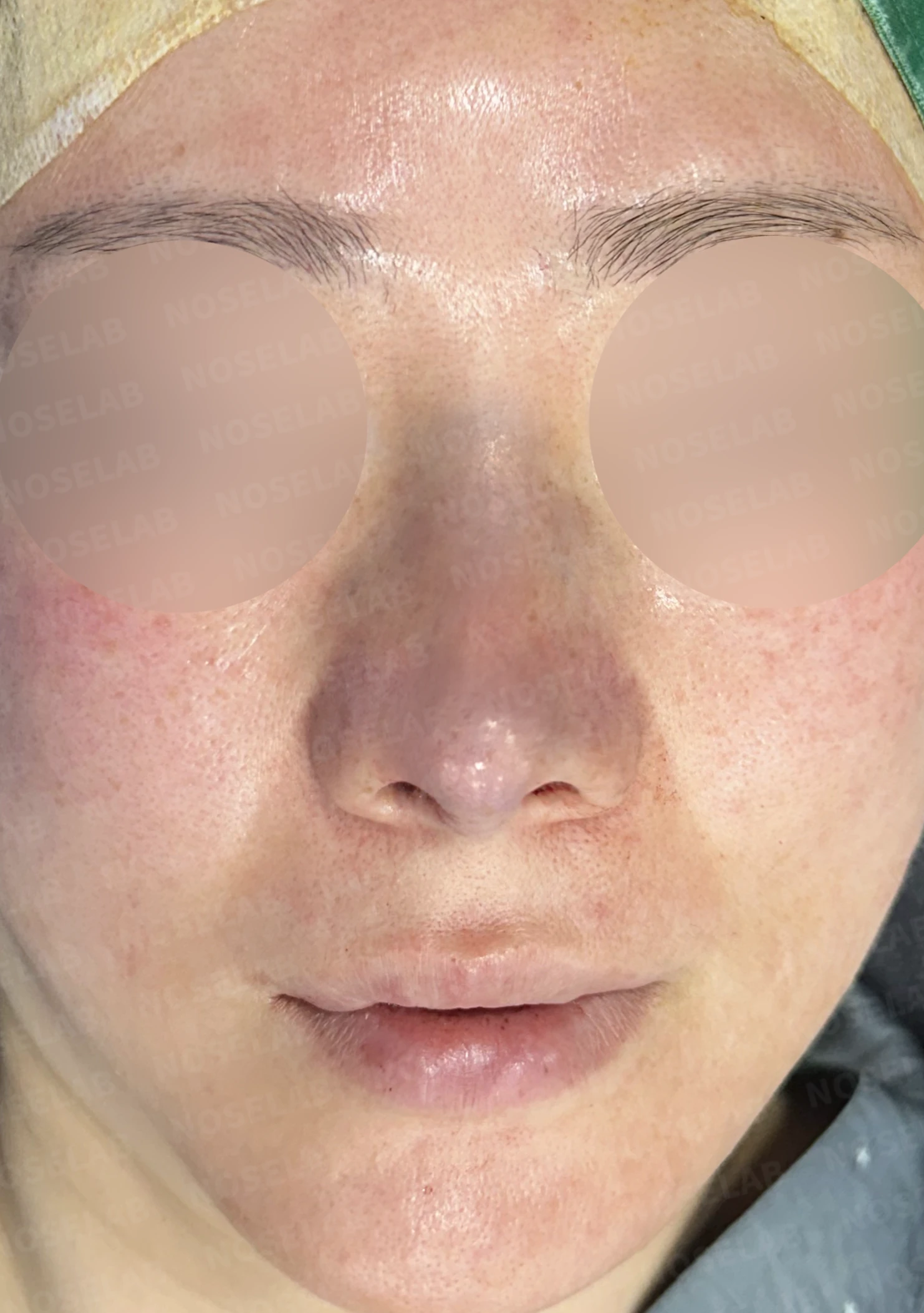
Before surgery / Day 0 immediately after surgery Photos taken immediately after surgery show swelling and may differ from the final result.
Front view changes:
The wide and splayed bridge was narrowed to create a clean line.
The crooked nose was straightened, securing symmetry.
The bulbous tip was refined, adding three-dimensional definition.
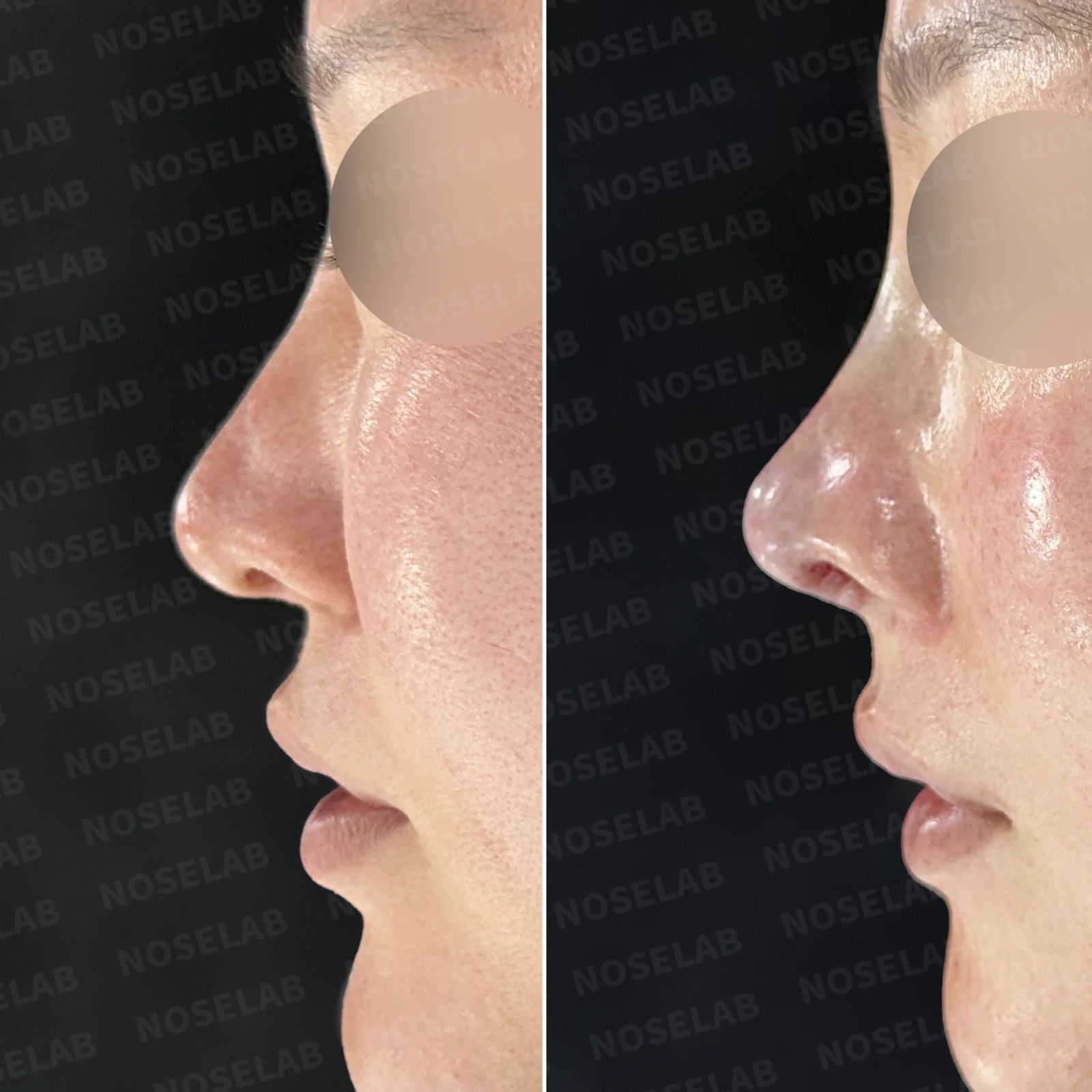
Before surgery / Day 0 immediately after surgery Photos taken immediately after surgery show swelling and may differ from the final result.
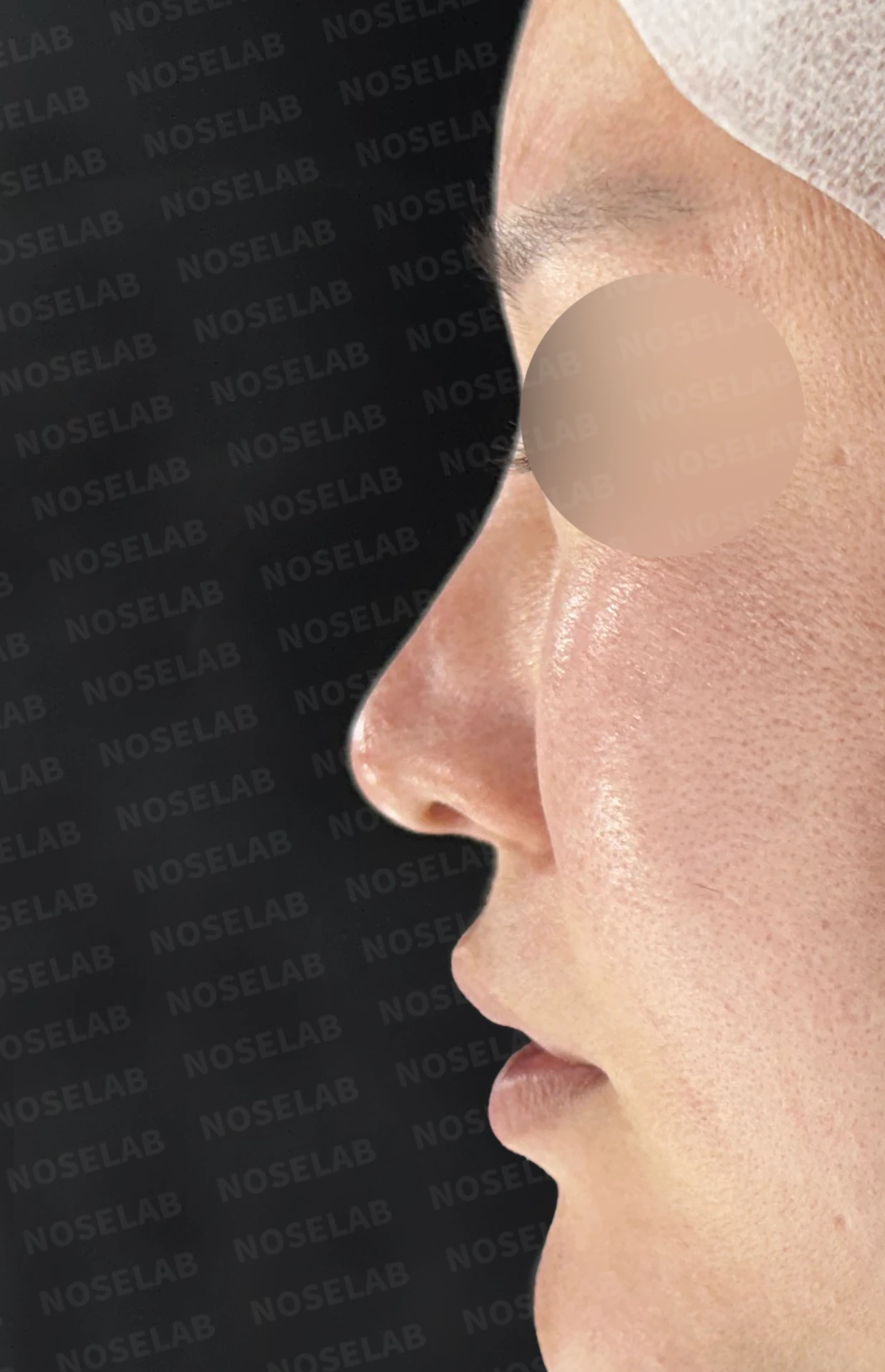
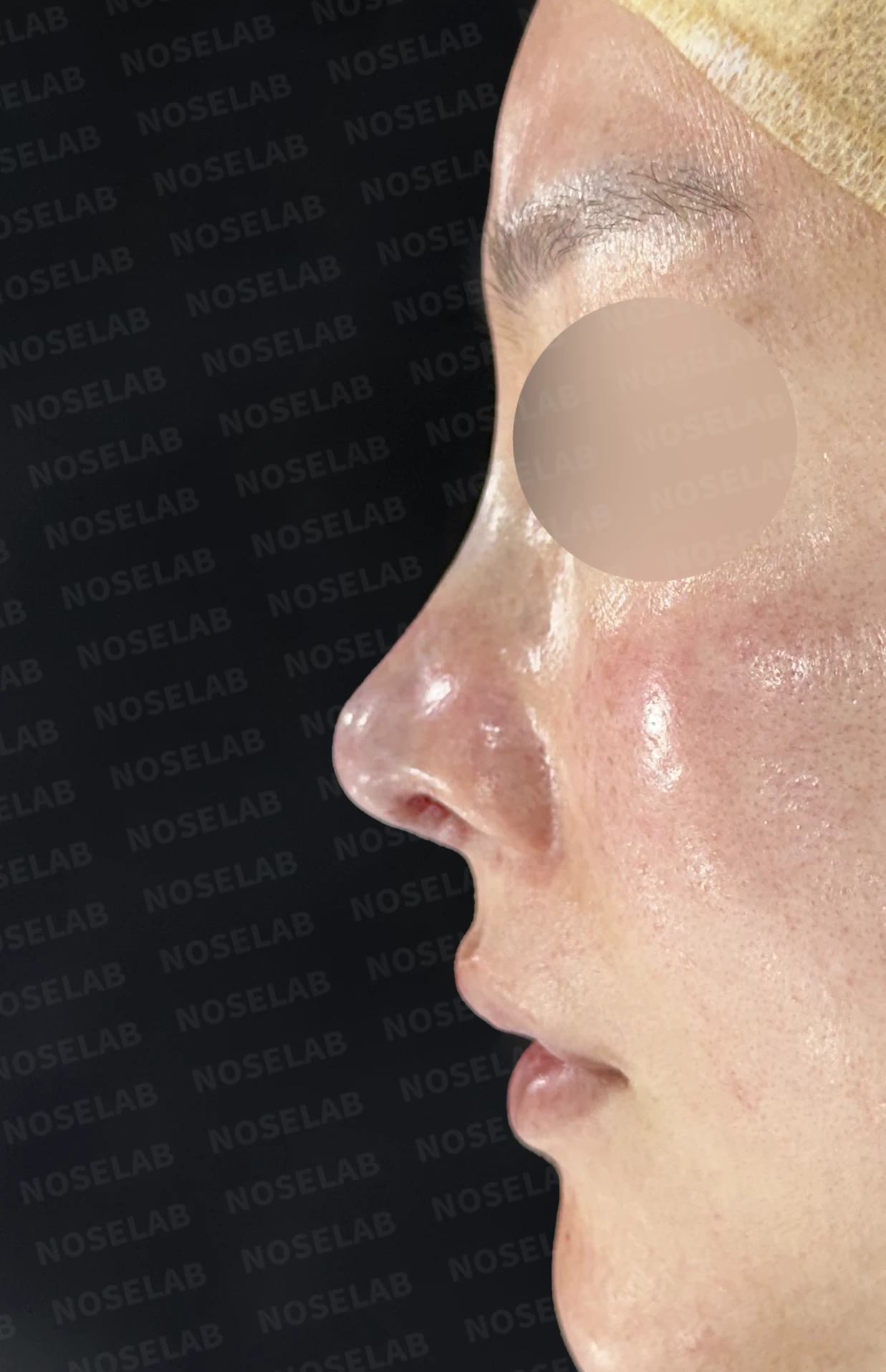
Profile view changes:
The drooping tip was slightly and naturally elevated, completing a prominent profile line.
A natural height suited to the patient's facial features rather than an excessive elevation
A smooth line achieved by resolving the uneven bridge
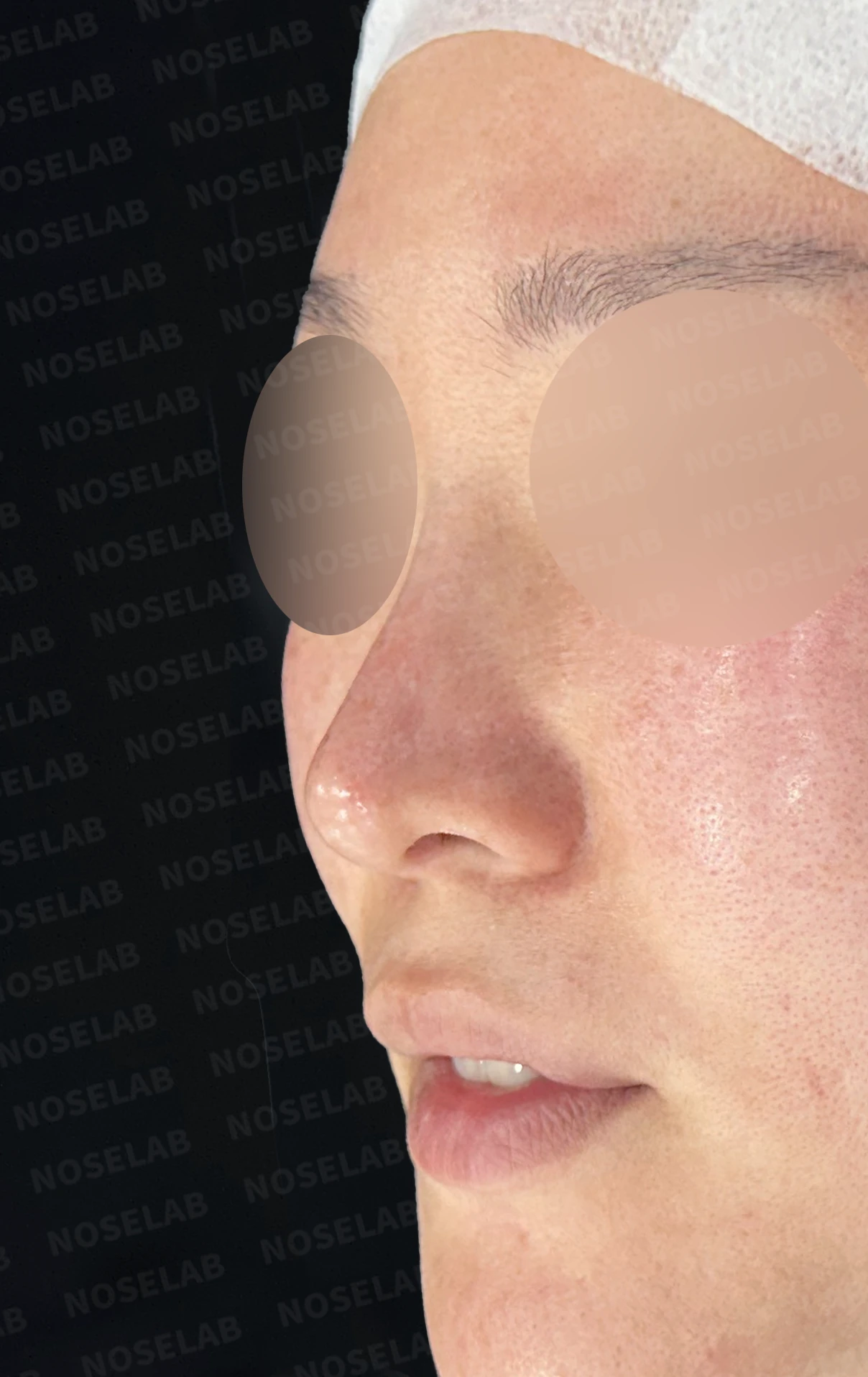
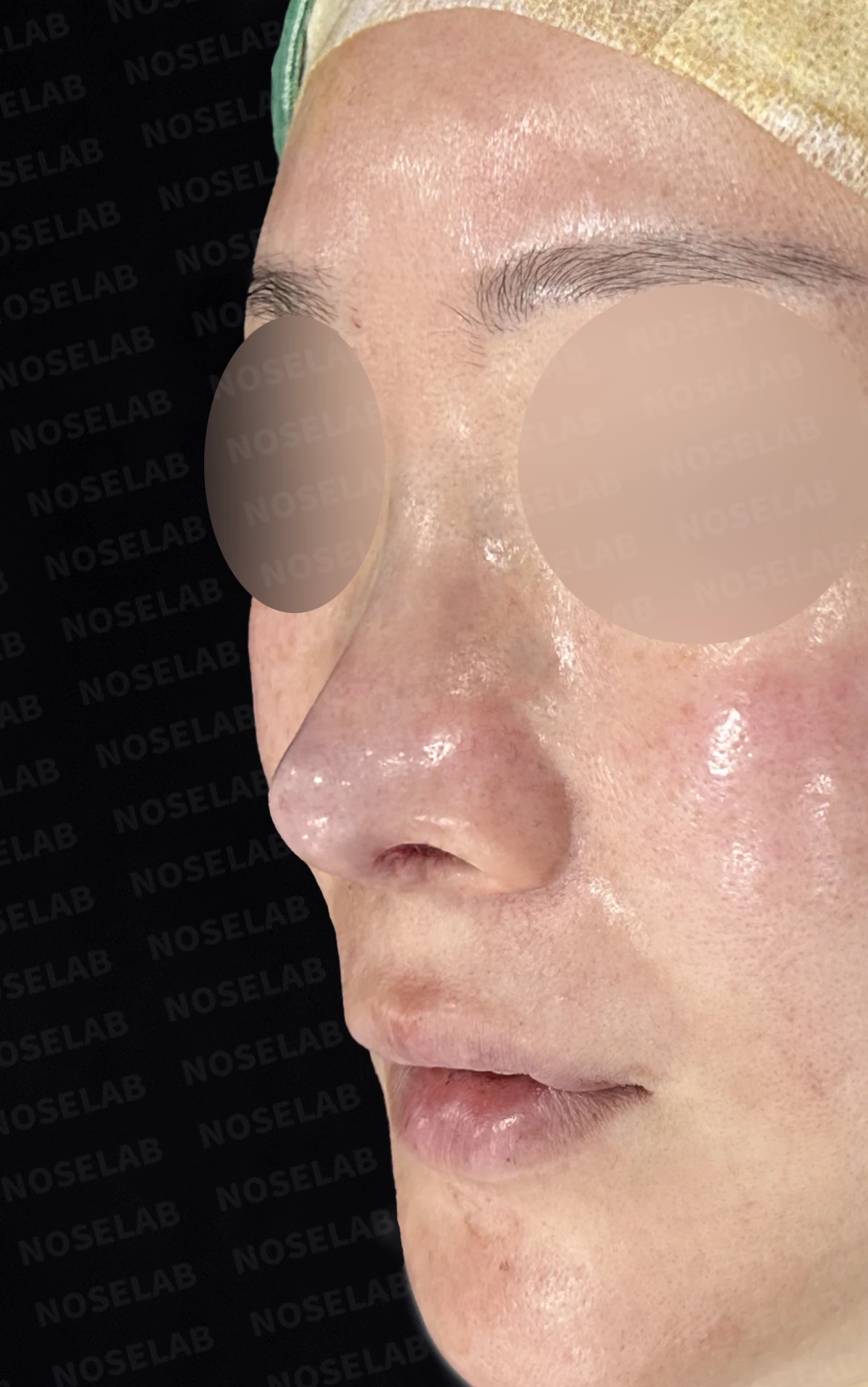
Before surgery / Day 0 immediately after surgery Photos taken immediately after surgery show swelling and may differ from the final result.
Nostril view changes:
A refined columella line
Improved balance between the left and right nostrils
Natural refinement of the tip shape
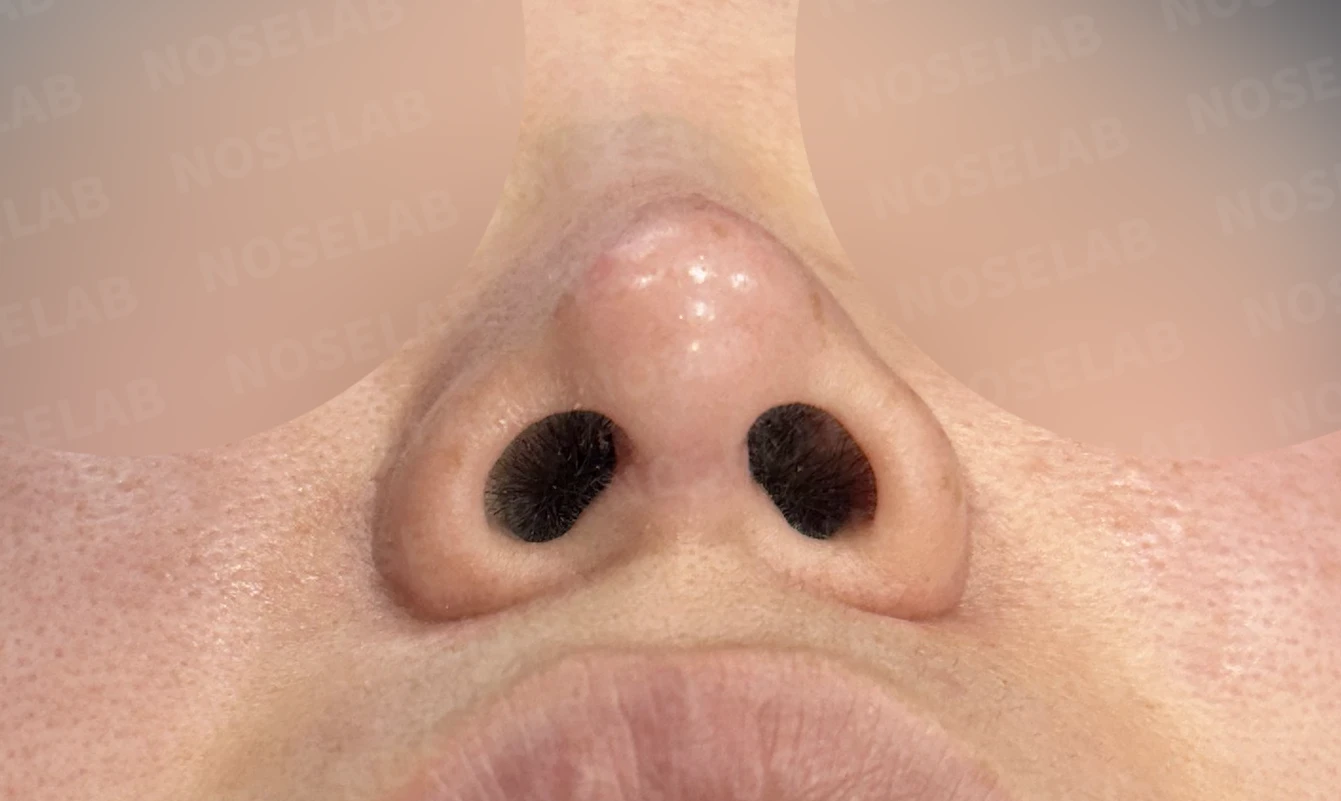
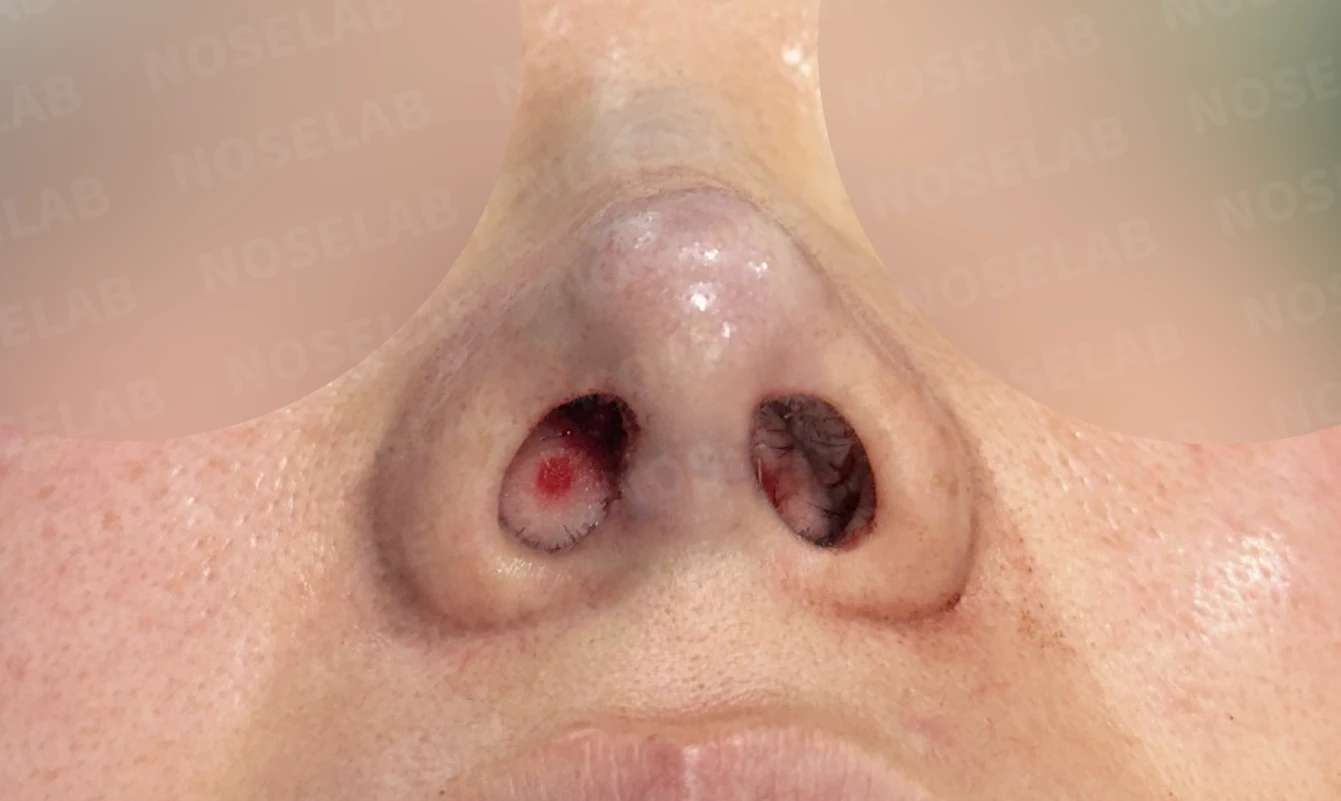
Before surgery / Day 0 immediately after surgery Photos taken immediately after surgery show swelling and may differ from the final result.
💡 Specialist opinion
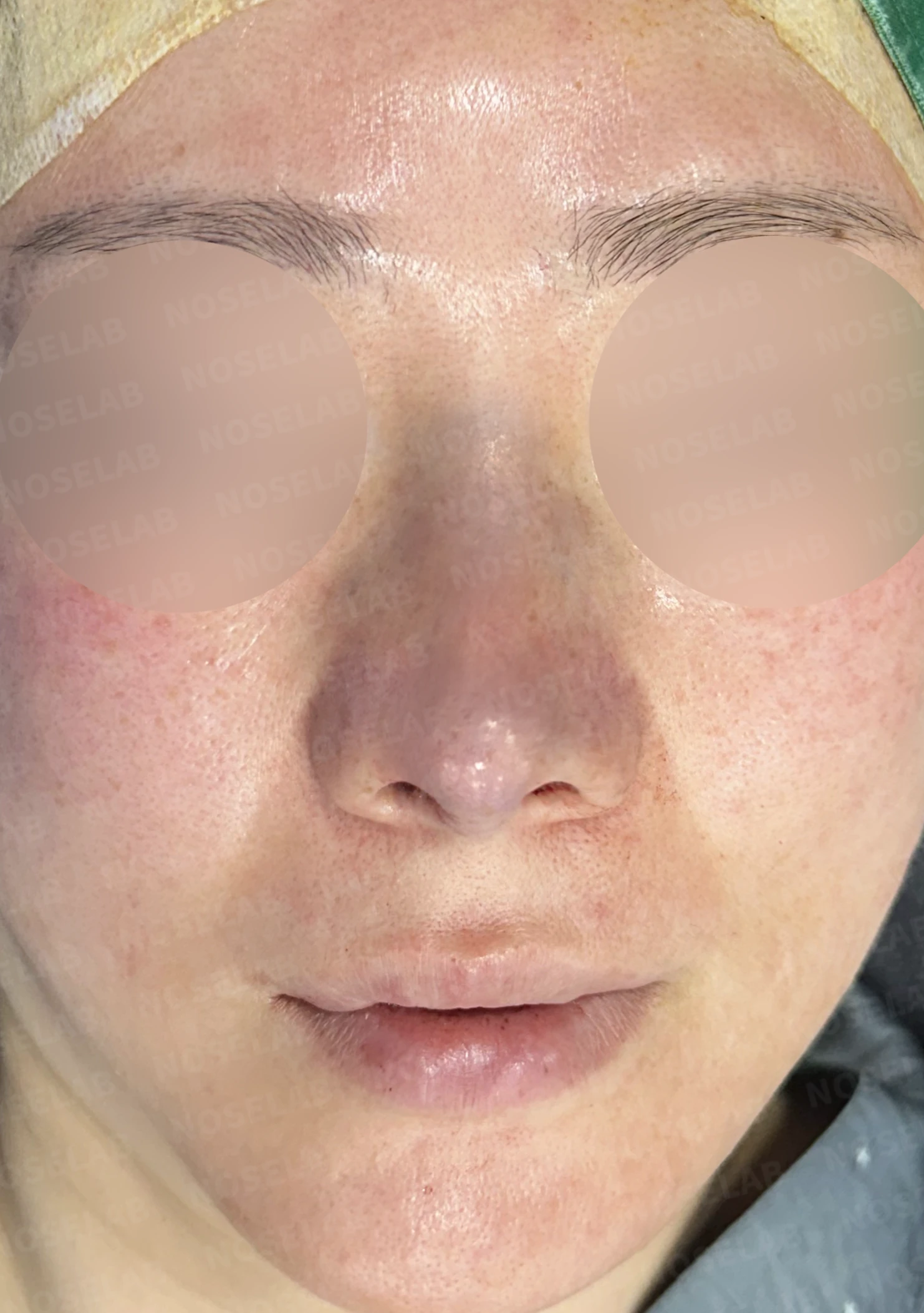
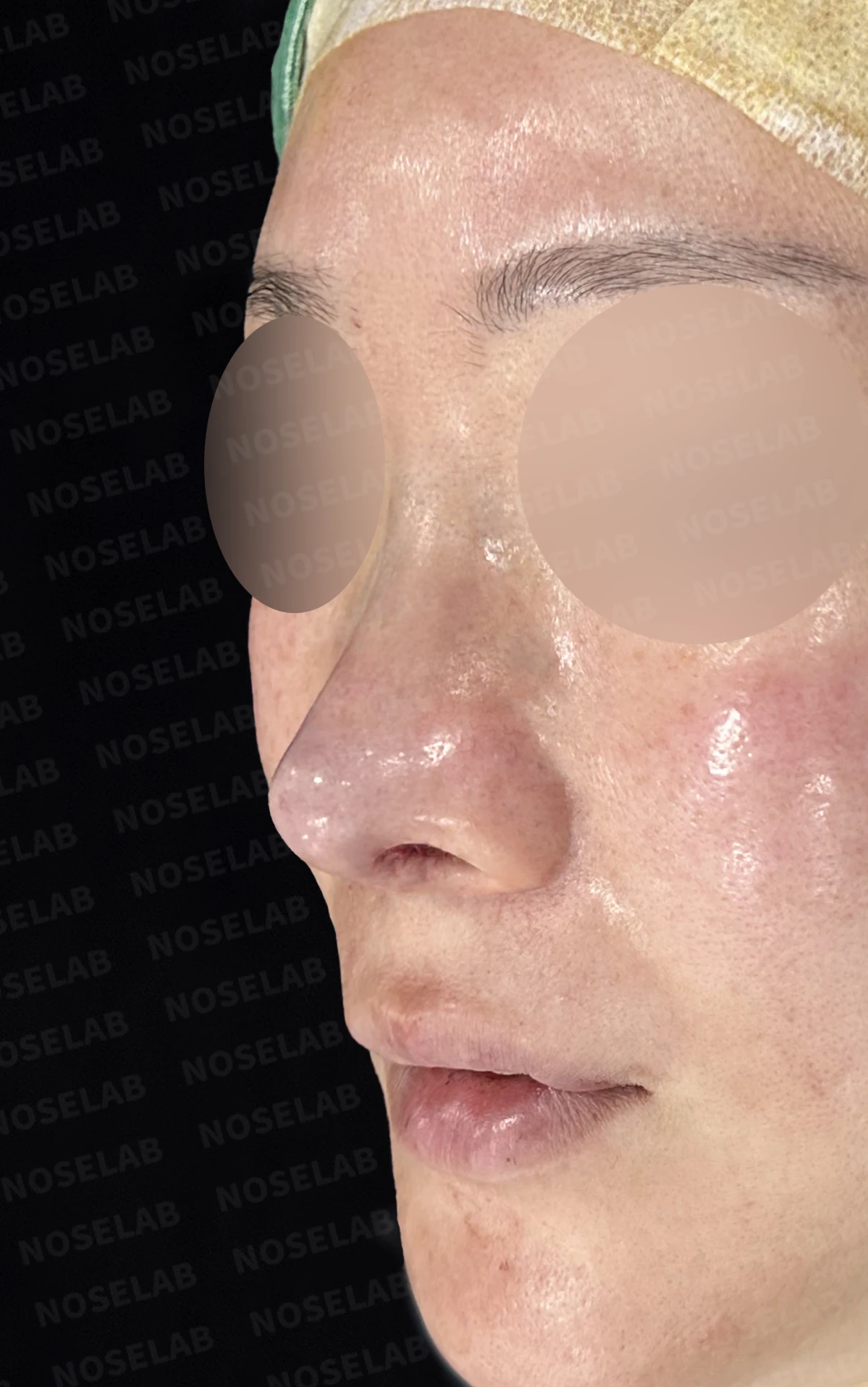
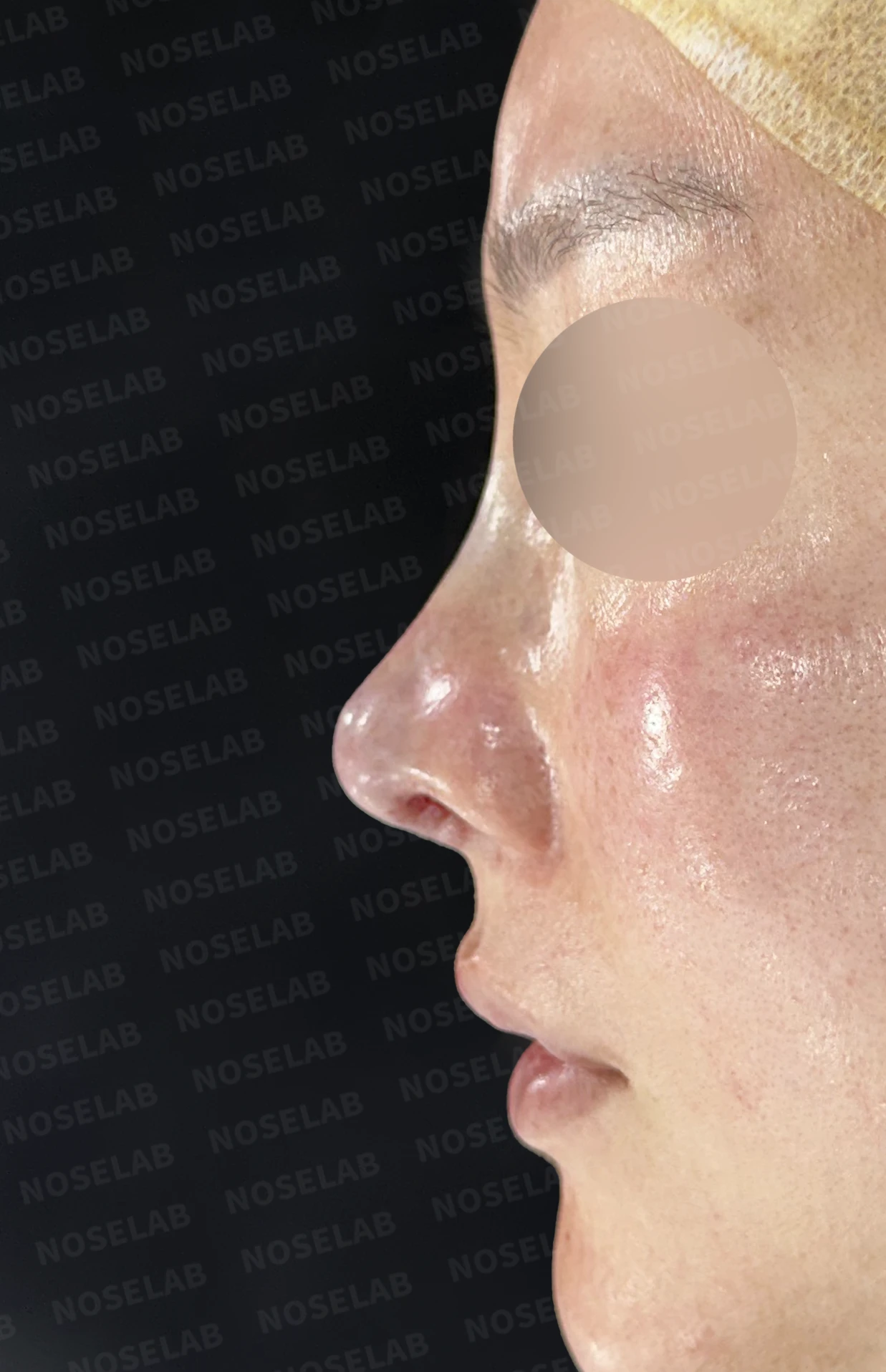
Immediately after surgery (day 0): front, oblique, and profile views. Immediate postoperative photos show swelling and may differ from the final result.
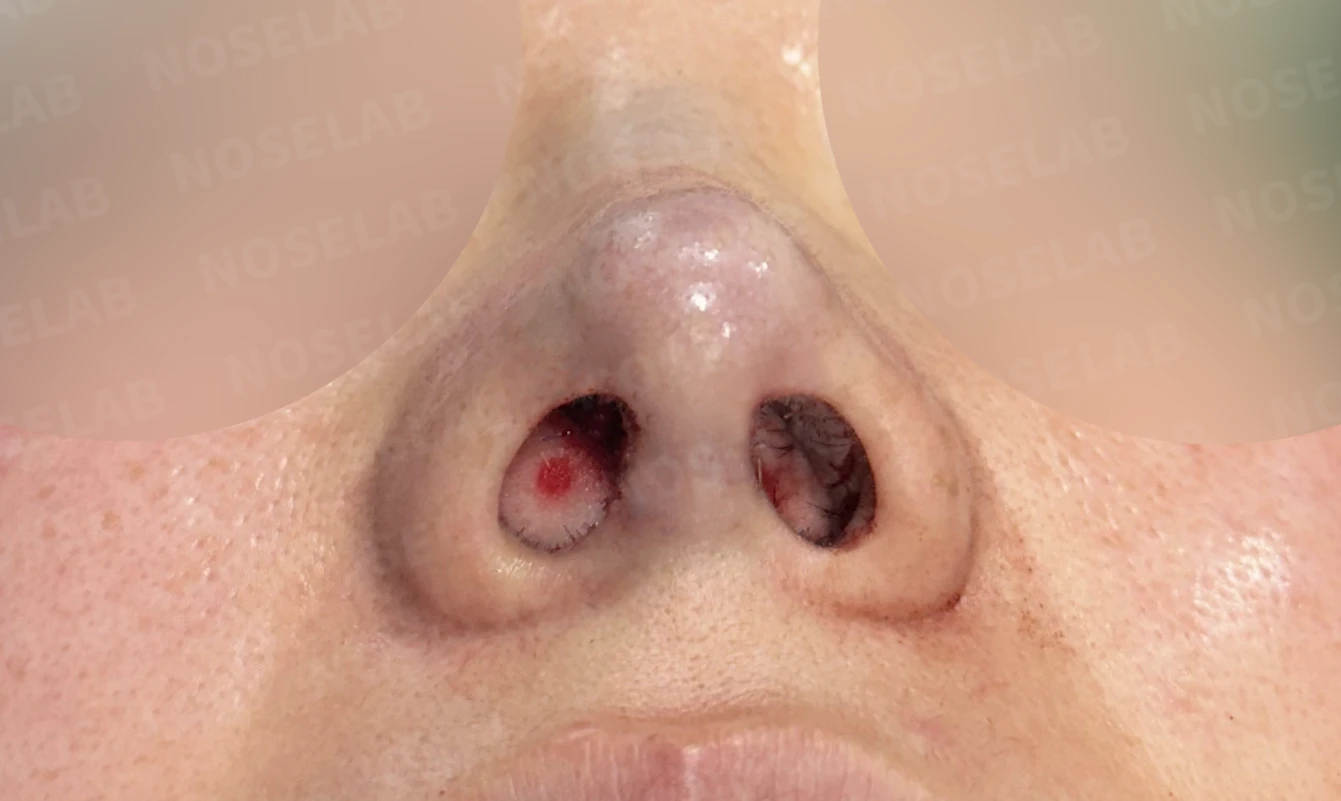
Immediately after surgery (day 0): nostril view. Immediate postoperative photos show swelling and may differ from the final result.
Revision rhinoplasty requires a level of precision entirely different from a primary procedure. In particular, when a large amount of septal cartilage was harvested during previous surgeries, the lack of remaining cartilage makes it very difficult to secure stable support for the nasal tip.
In this type of case, we utilized autologous rib cartilage to reconstruct the weakened septum, firmly rebuilding the nasal central pillar. Furthermore, the protrusion on the right bridge was confirmed during surgery to be a cartilage piece placed previously; this was safely removed, and the depressed area was precisely corrected with cartilage and dermis.
The most important aspect of revision rhinoplasty is creating a natural line that matches the patient's tissue condition and facial structure rather than pursuing excessive height. To achieve a prominent yet natural result, customized planning that comprehensively takes into account the condition of remaining cartilage, skin thickness, and facial balance is essential. At the same time, it is also beneficial to address functional concerns such as nasal obstruction so breathing is made comfortable.
I will continue to provide customized surgeries that reflect each patient's individuality and requests through this meticulous approach. I hope this helps those with similar concerns.
This was Dr. Peter C. Kang. Thank you.
#closedrhinoplasty #closedrevisionrhinoplasty #revisionrhinoplasty #autologousribcartilage #septalreconstruction #crookednosecorrection #droopingtip #bridgeimplantreplacement #rhinitissurgery #lateralosteotomy

Limitations and risks
When autologous rib cartilage is used, scarring and pain may remain at the donor site on the chest, and pneumothorax (pleural injury) can occur rarely. Over time, the grafted cartilage may warp or undergo partial resorption.
When revising after implant removal, contracture may progress again after removal, the nasal height and length may decrease, and staged surgery may be necessary depending on the skin condition.
When the septum is corrected at the same time, nasal obstruction may persist or recur, and in rare cases, septal perforation or changes in smell may occur.
Common potential risks include infection, bleeding, asymmetry, scarring, skin necrosis, and insufficient improvement; results vary depending on individual skin condition and previous surgical history.