Hello, I am Dr. Peter C. Kang.
Today, I would like to share the case of a patient who visited our clinic due to a nasal tip that deviated to the left and nostril asymmetry following prior procedures.
🔍 Surgical history
Approximately 7 years ago: Alar reduction surgery (suture technique)
2022: Rhinoplasty using an implant and septal cartilage
2025: Revision rhinoplasty using autologous rib cartilage and ear cartilage
The patient had a history of three surgeries. During these prior operations, the septal cartilage and lower lateral cartilages were severely damaged, causing the nasal tip to deviate to the left and the entire nose to tilt toward the left side.
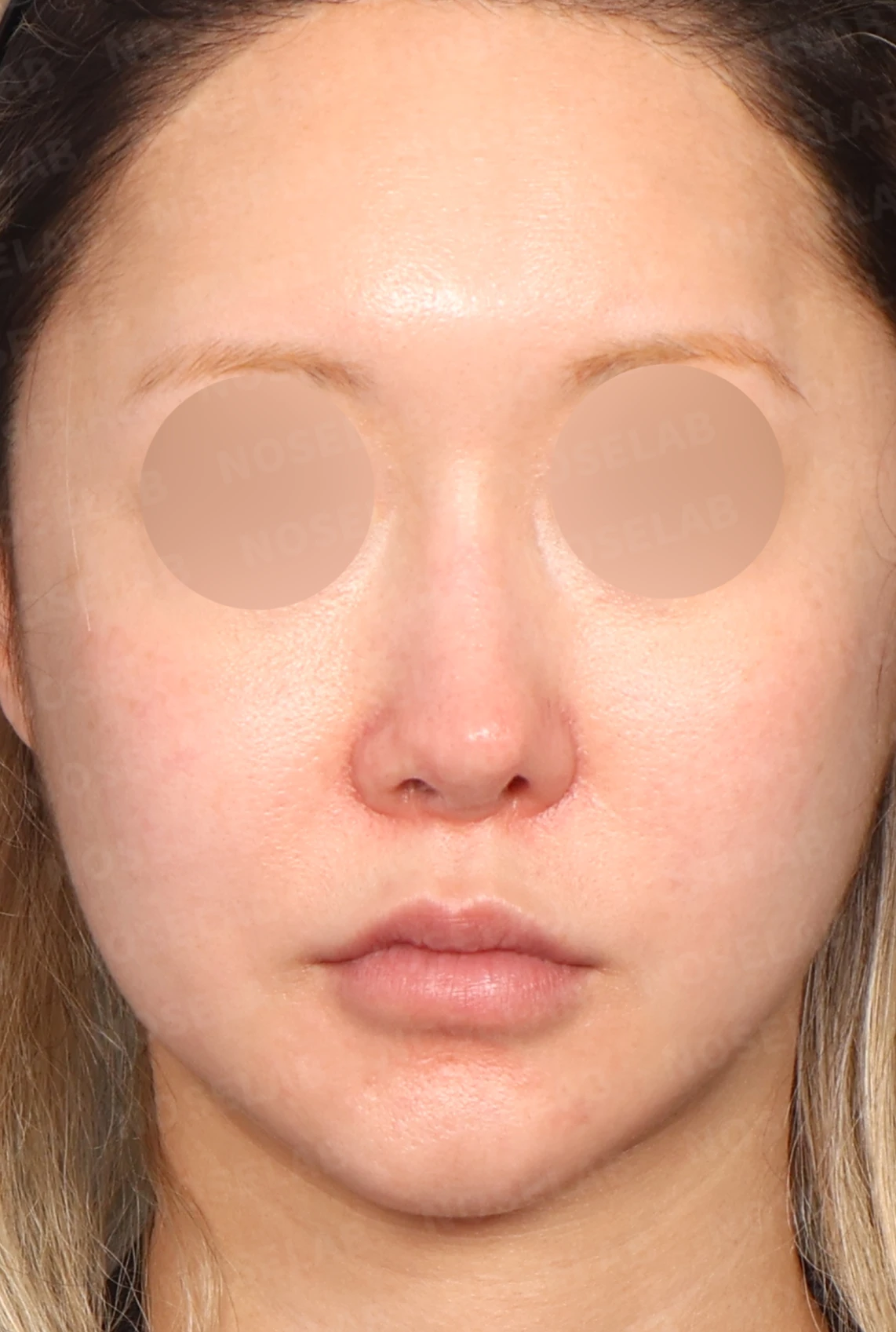
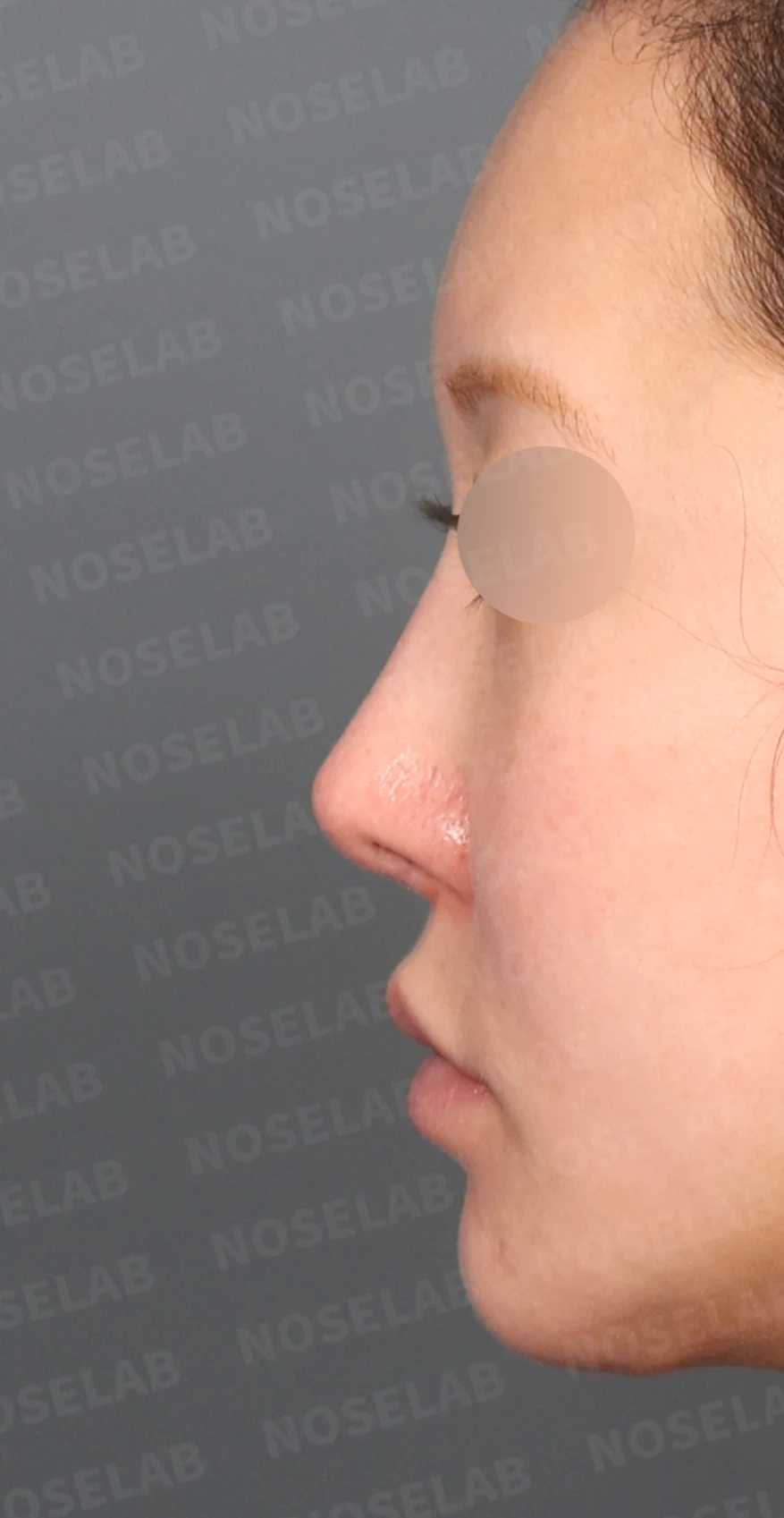
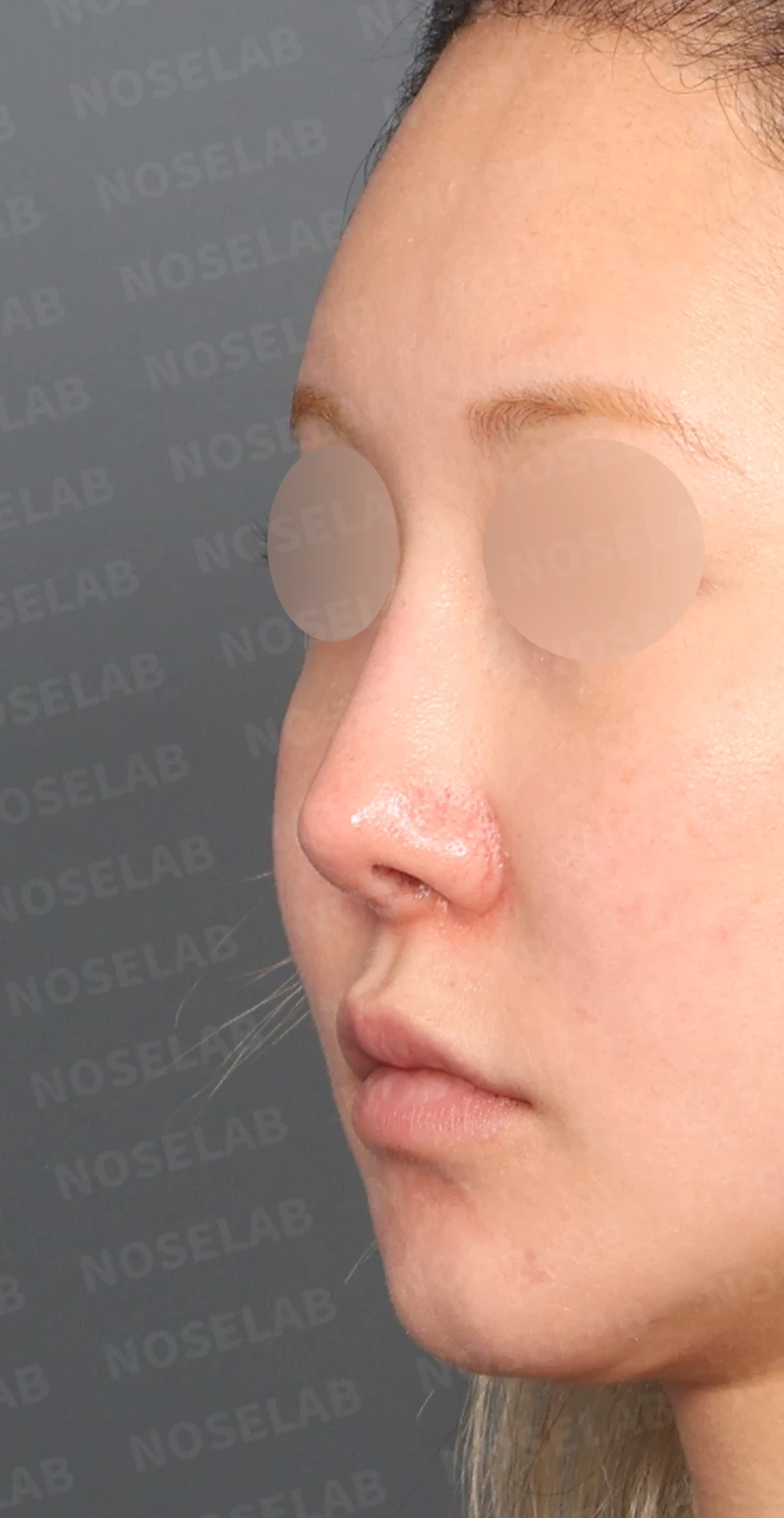
Front, left profile, and oblique views during design consultation
💉 Patient requests
The patient primarily sought correction of the leftward nasal deviation and improvement of the nostril asymmetry. While overall refinement of the nasal shape was important, the patient expressed a preference to prioritize my professional medical assessment. In addition, bilateral nasal obstruction and rhinorrhea were present, requiring functional improvements as well.
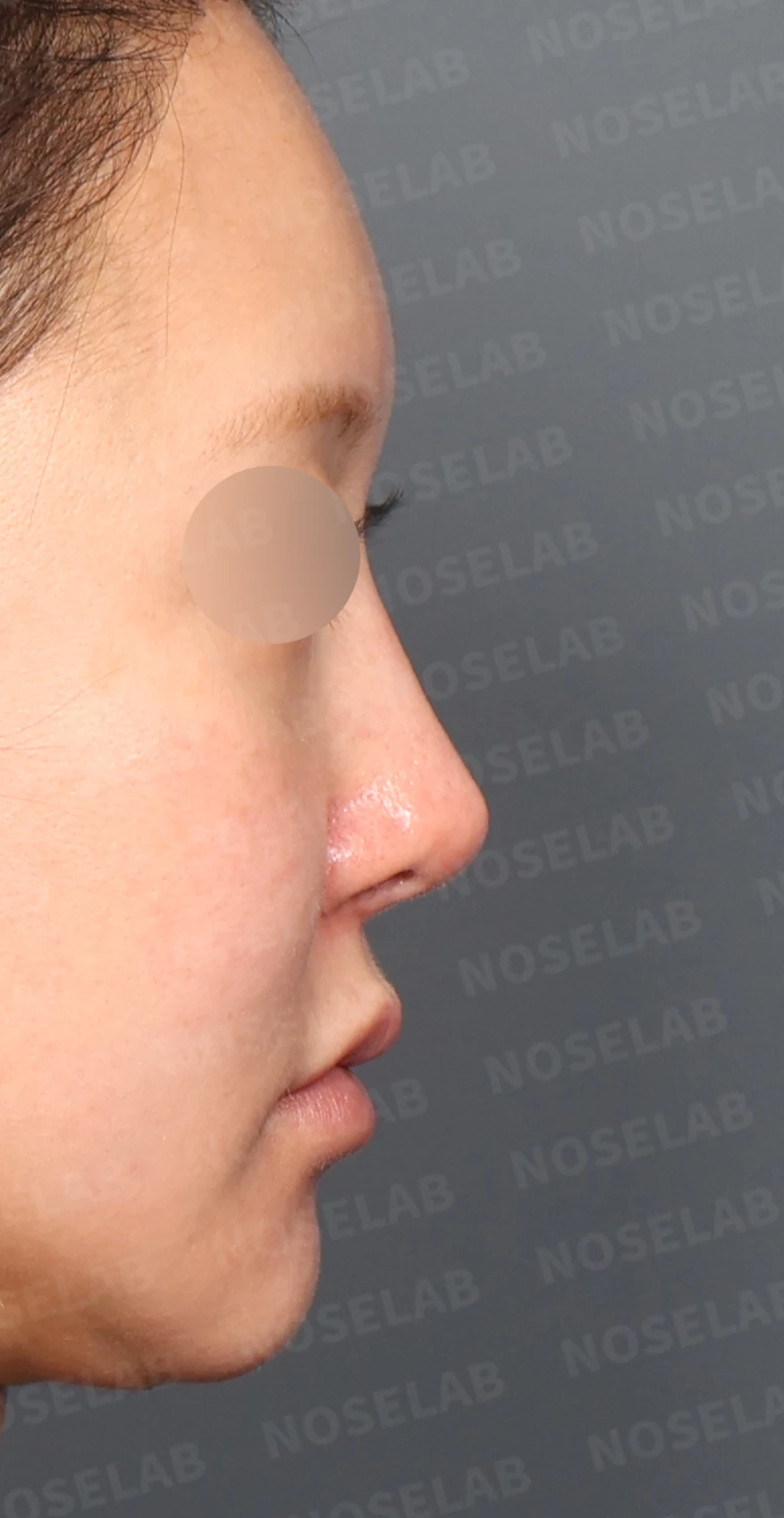
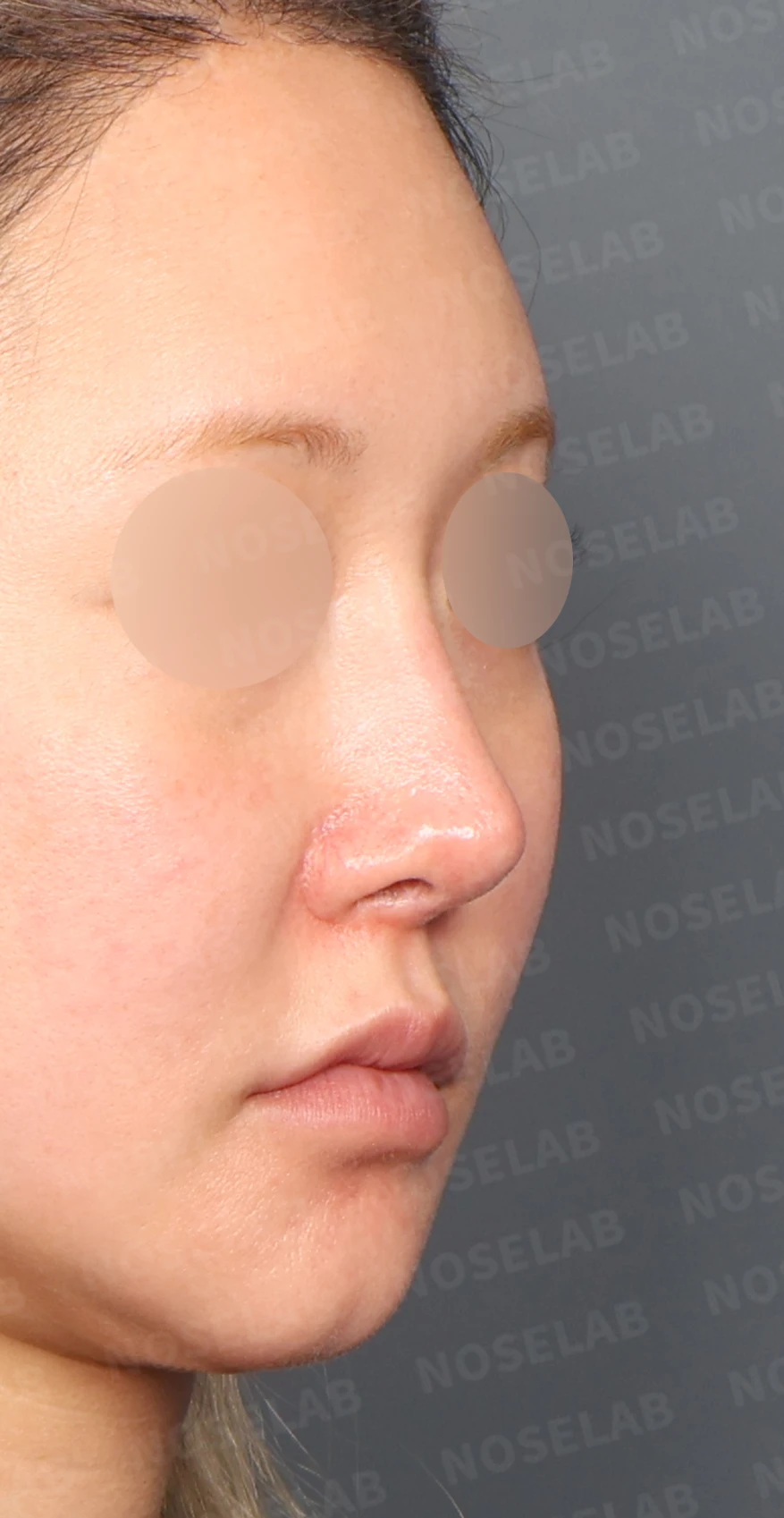
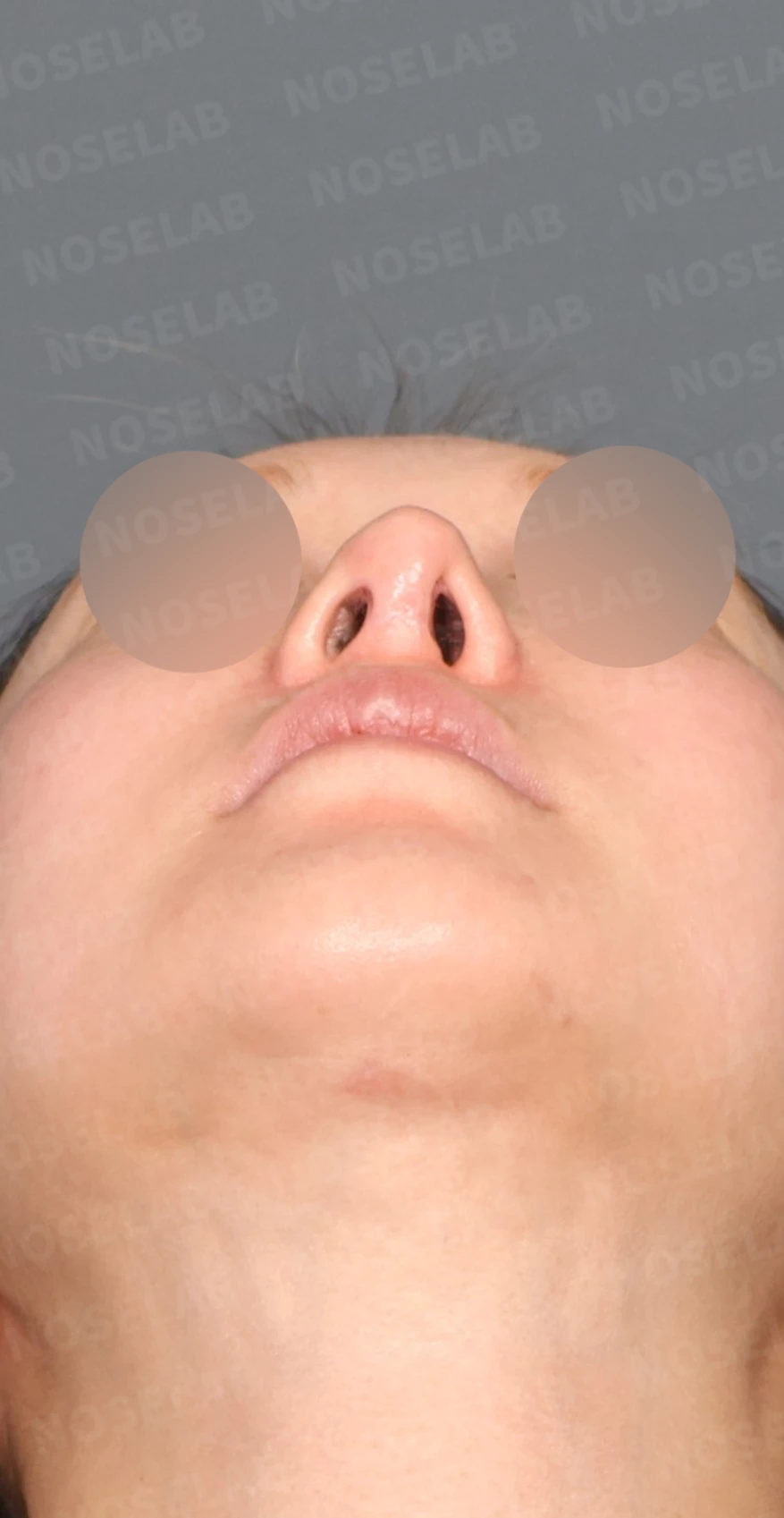
Right profile, oblique, and nostril views during design consultation
🔧 Surgical plan and procedure
1. Septal reconstruction using autologous rib cartilage
1. Septal reconstruction: The septal cartilage, which had been severely damaged during previous surgeries, was reconstructed using autologous rib cartilage to securely re-establish the central support structure of the nose.
2. Lower lateral cartilage reconstruction
The damaged bilateral lower lateral cartilages were reconstructed using the previously placed septal cartilage, restoring structural stability to the nasal tip.
3. Lateral osteotomy
3. Lateral osteotomy: The wide and asymmetric nasal bones were corrected to establish symmetry along the nasal bridge.
4. Septoplasty and rhinitis surgery
The deviated septum was corrected alongside rhinitis surgery to relieve bilateral nasal obstruction.
5. Nasal tip refinement
The bulbous nasal tip was refined, and the leftward deviated tip was aligned back to the midline.
🌟 Surgical results
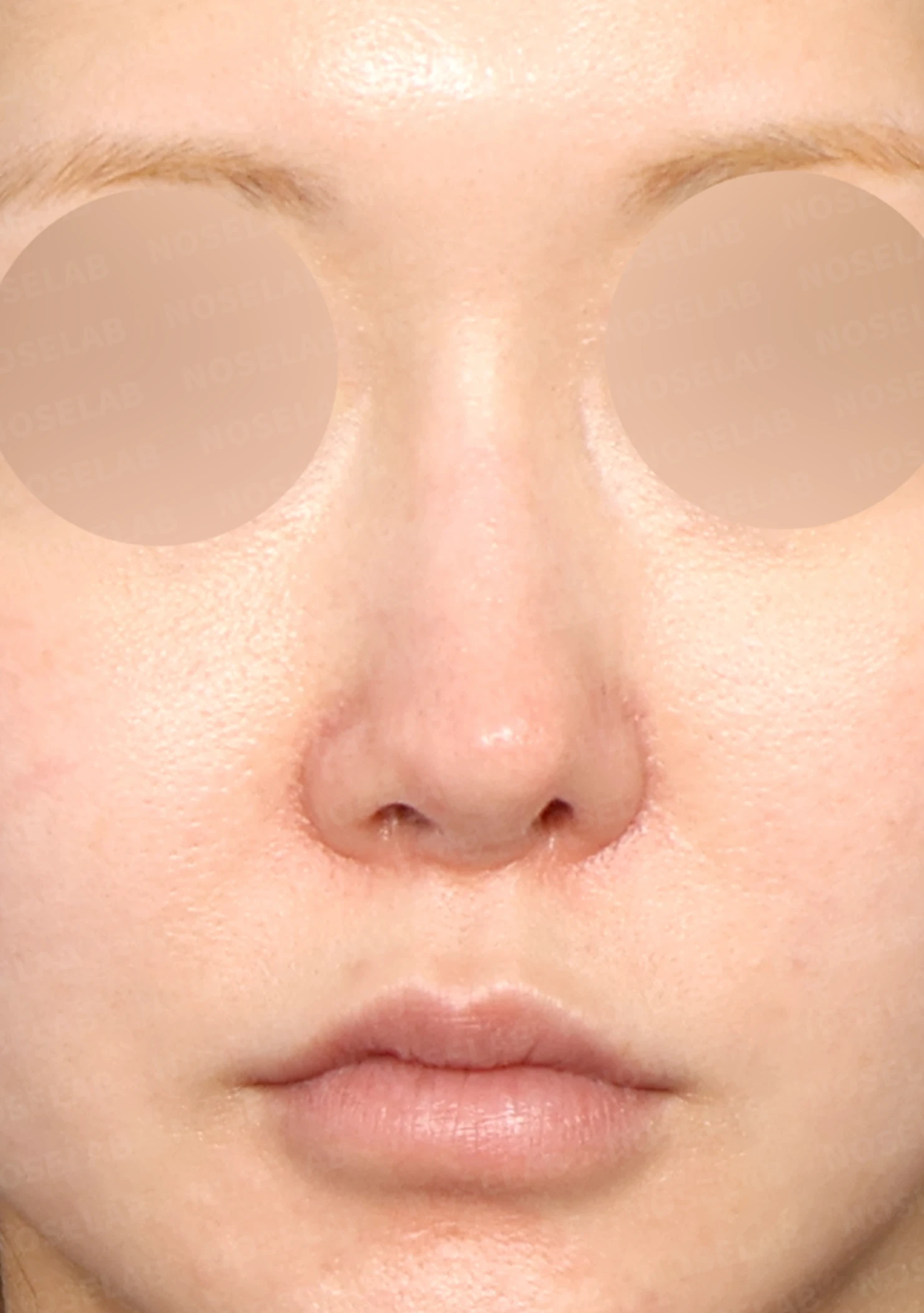
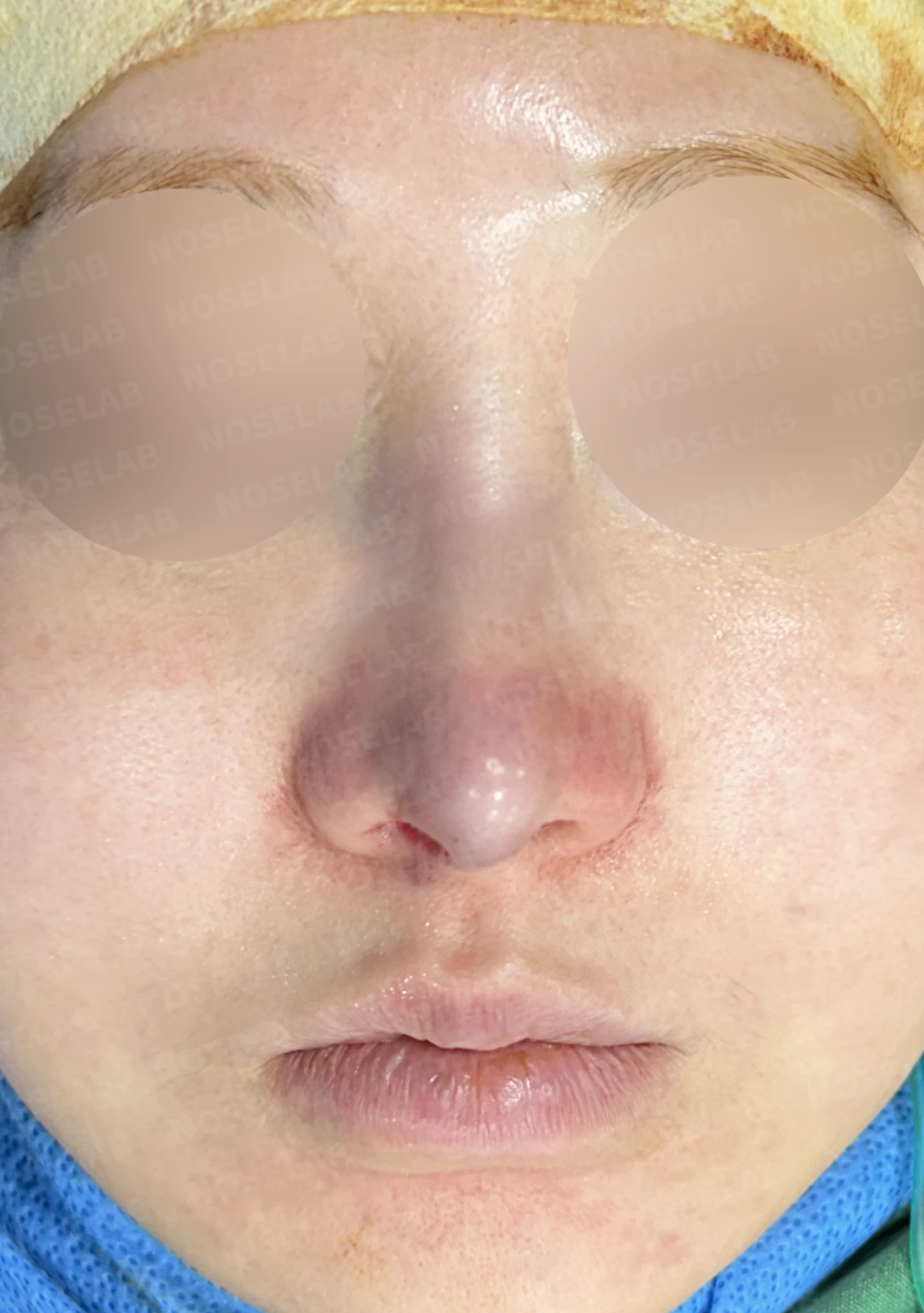
Before surgery / Day 0 immediately after surgery Photos taken immediately after surgery show swelling and may differ from the final result.
Frontal changes: The nose, which had deviated to the left, was aligned to the center, and nostril asymmetry was improved to achieve a balanced nasal contour. The previously bulbous nasal tip was also refined.
Before surgery / Day 0 immediately after surgery Photos taken immediately after surgery show swelling and may differ from the final result.
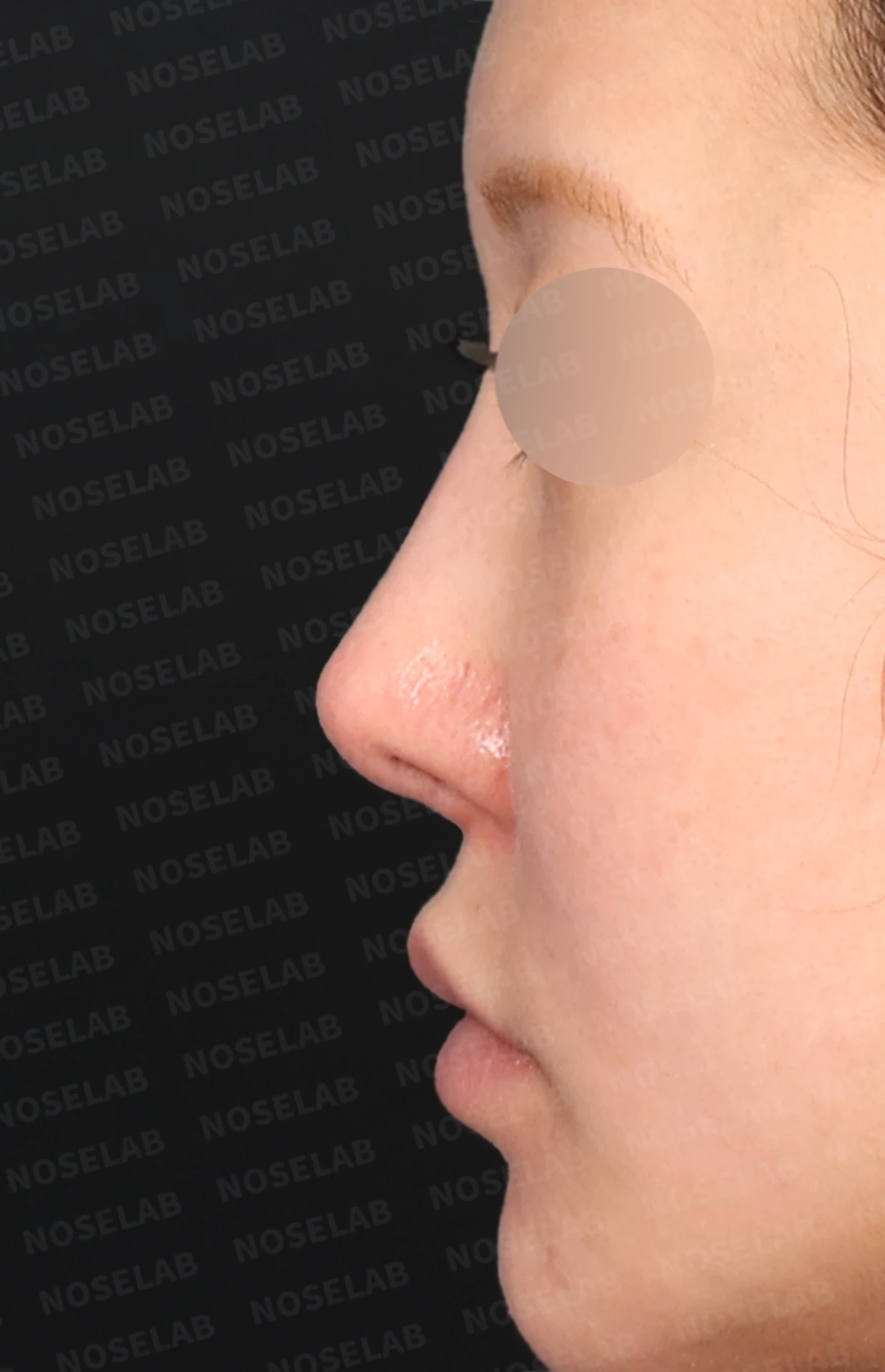
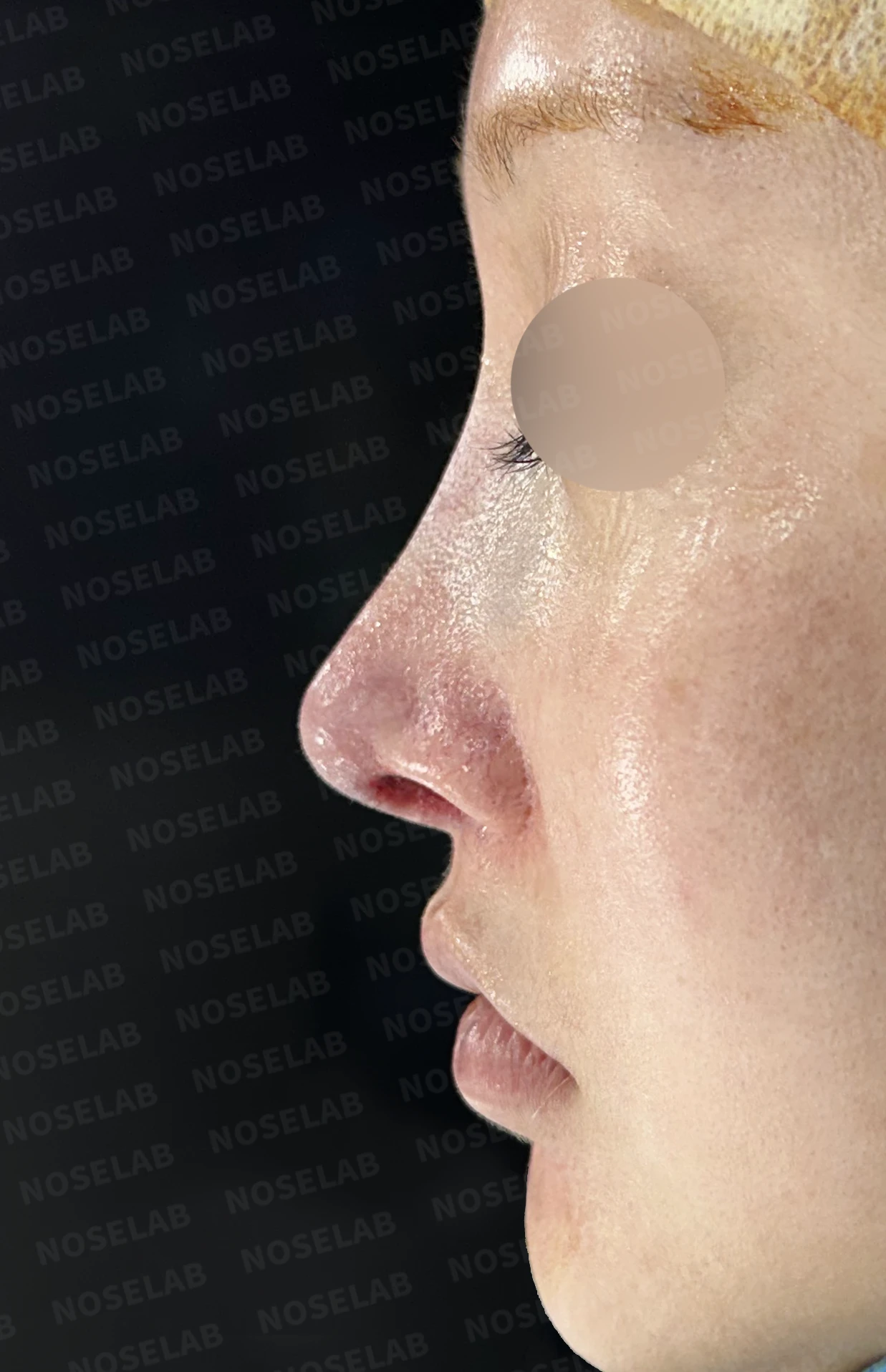
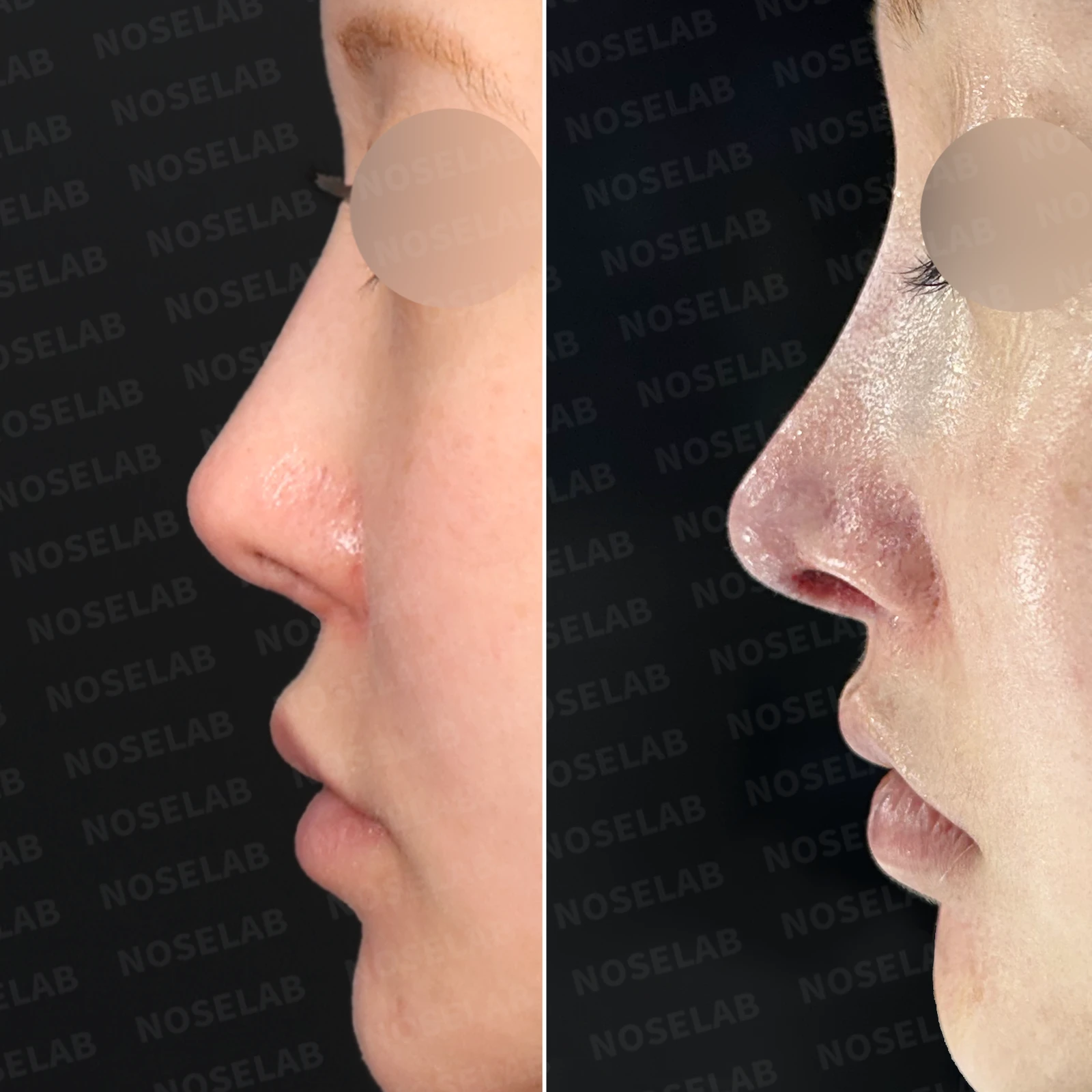
Profile changes: The tip, which had appeared upturned, was adjusted to a natural angle, creating an overall smooth and natural nasal line.
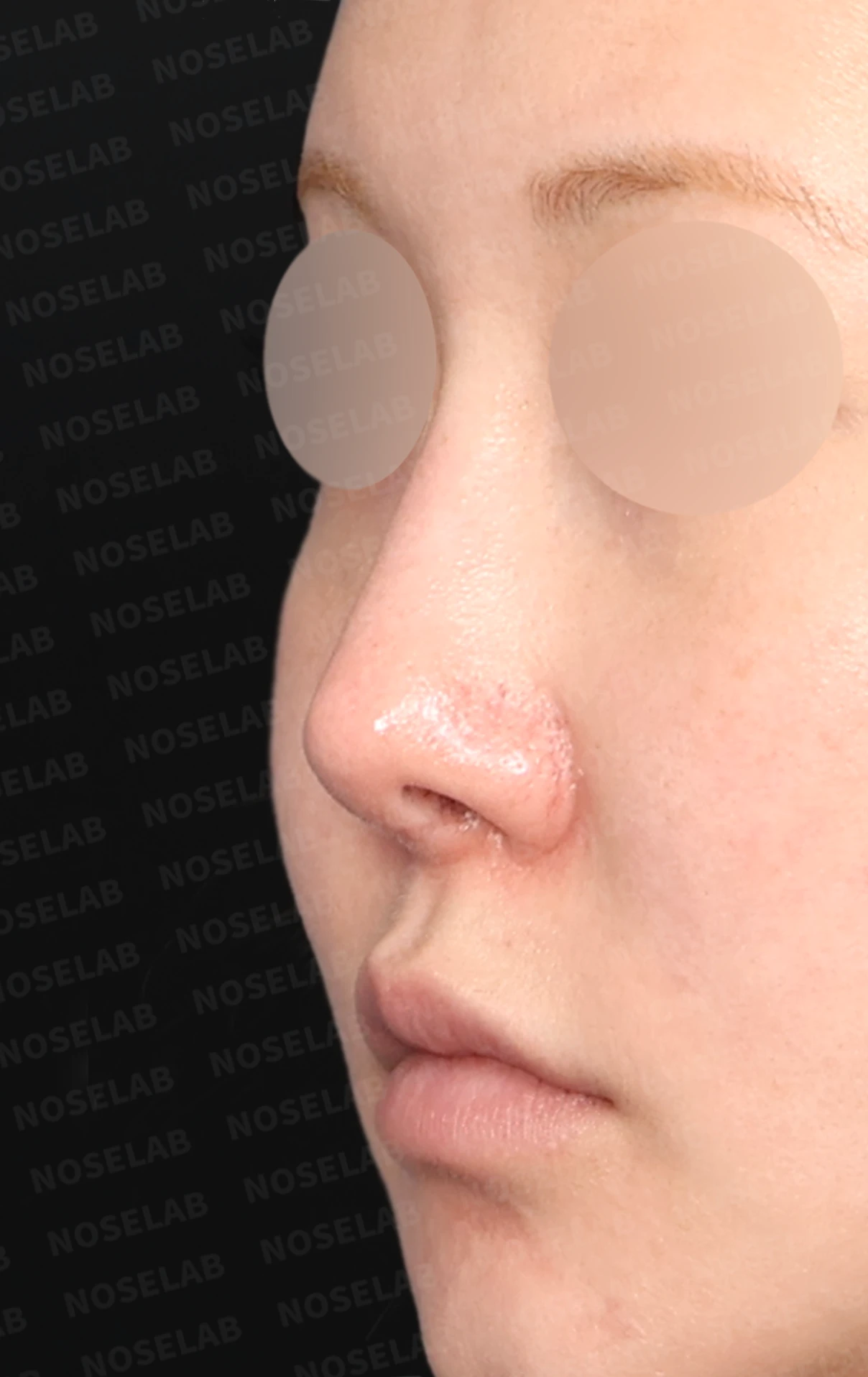
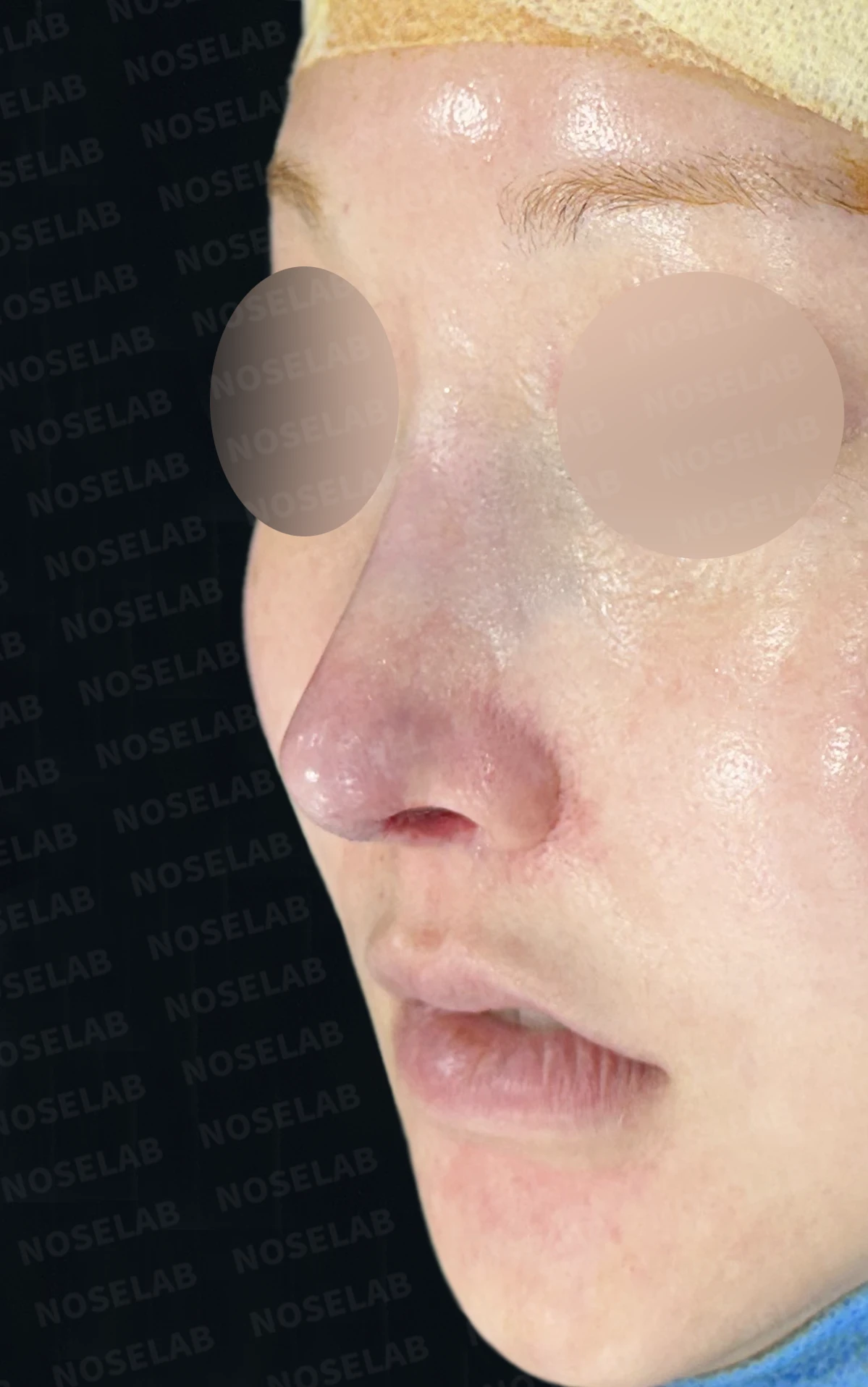
Before surgery / Day 0 immediately after surgery Photos taken immediately after surgery show swelling and may differ from the final result.
Nostril changes: Better symmetry between both nostrils was achieved, and correcting the orientation of the nasal tip helped improve the overall nostril shape.
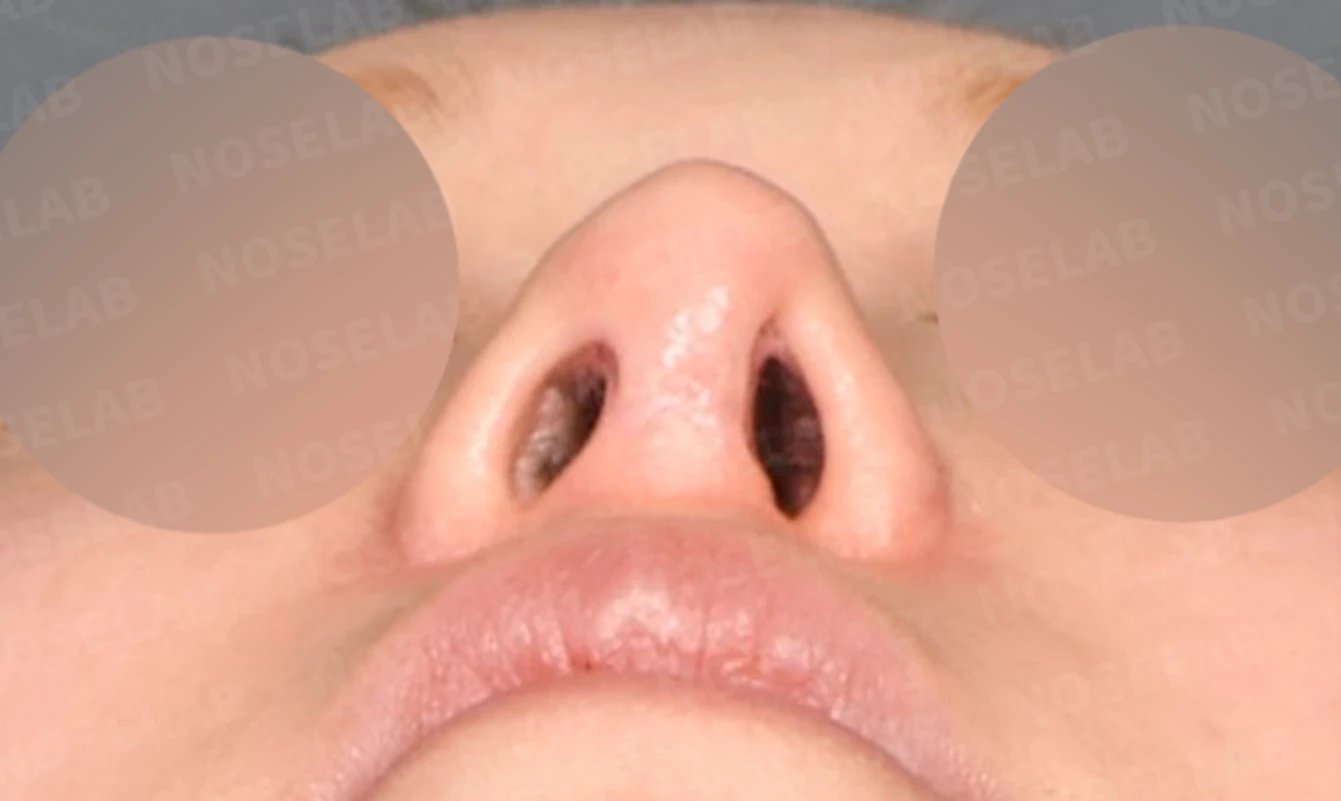
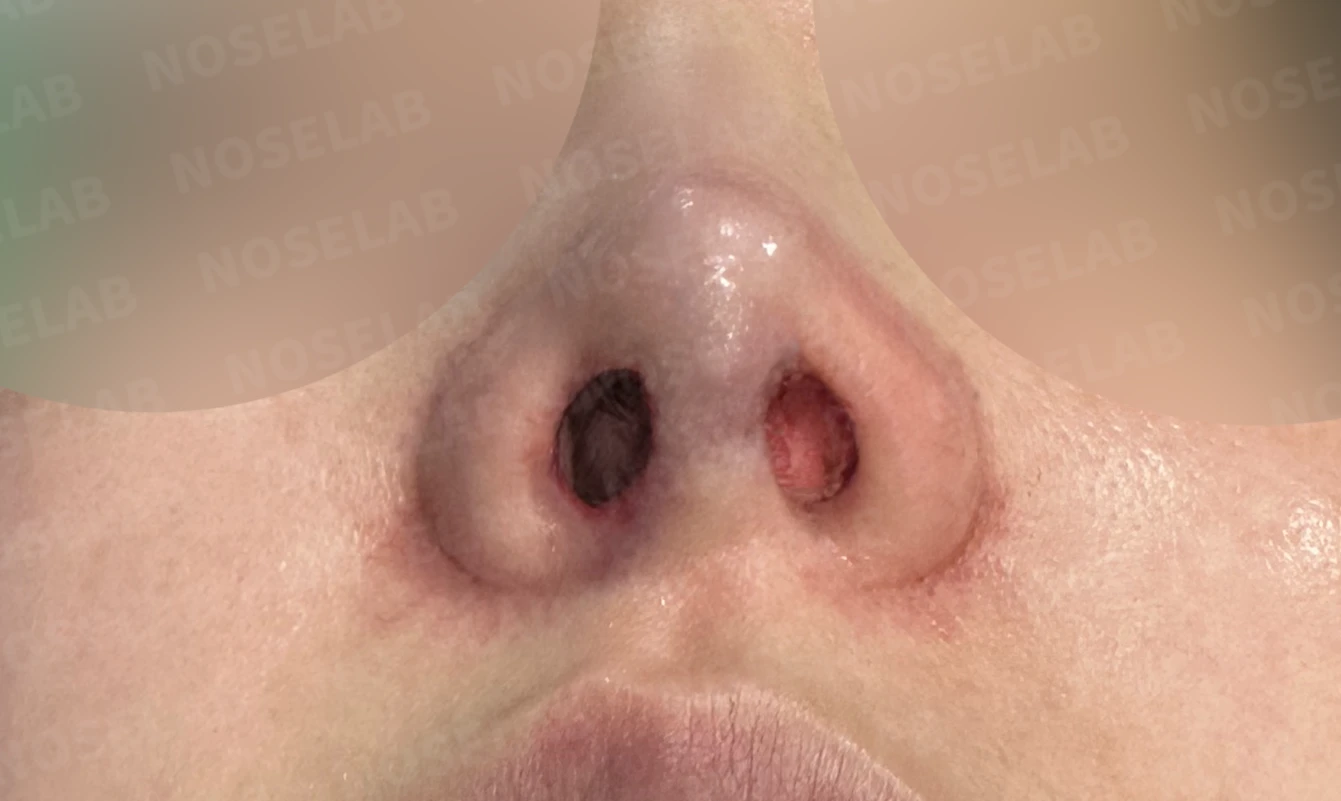
Before surgery / Day 0 immediately after surgery Photos taken immediately after surgery show swelling and may differ from the final result.
💡 Specialist opinion
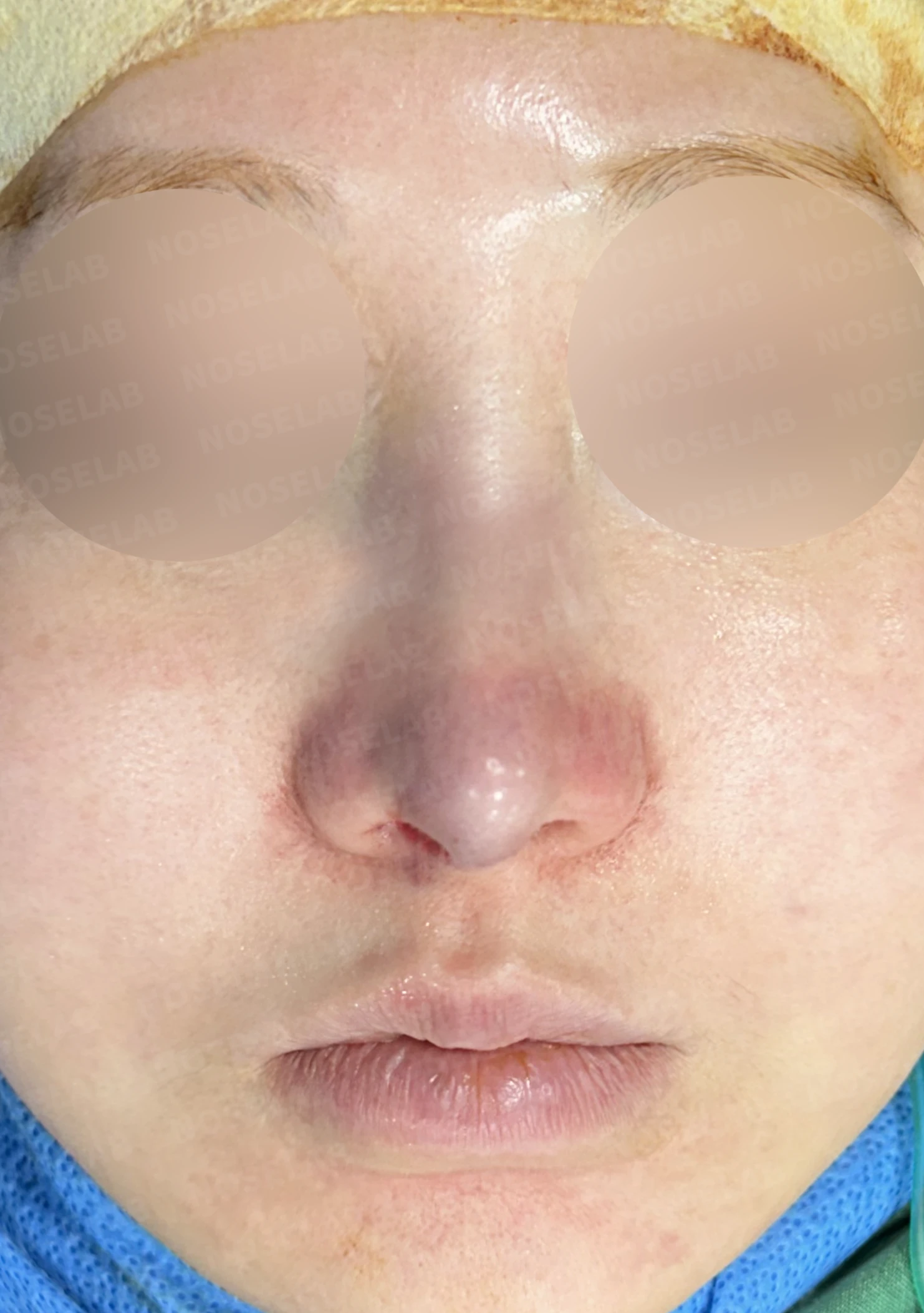
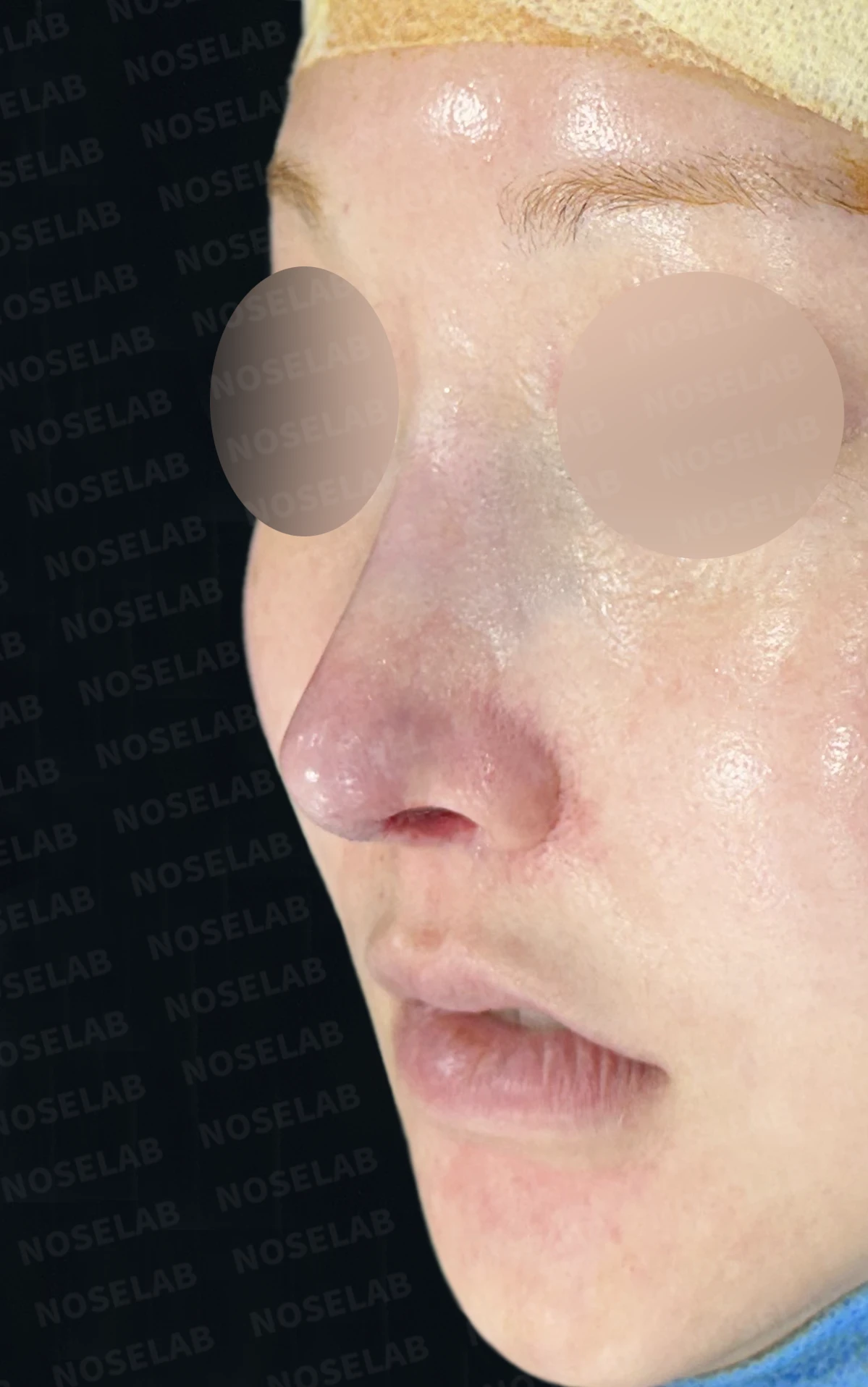
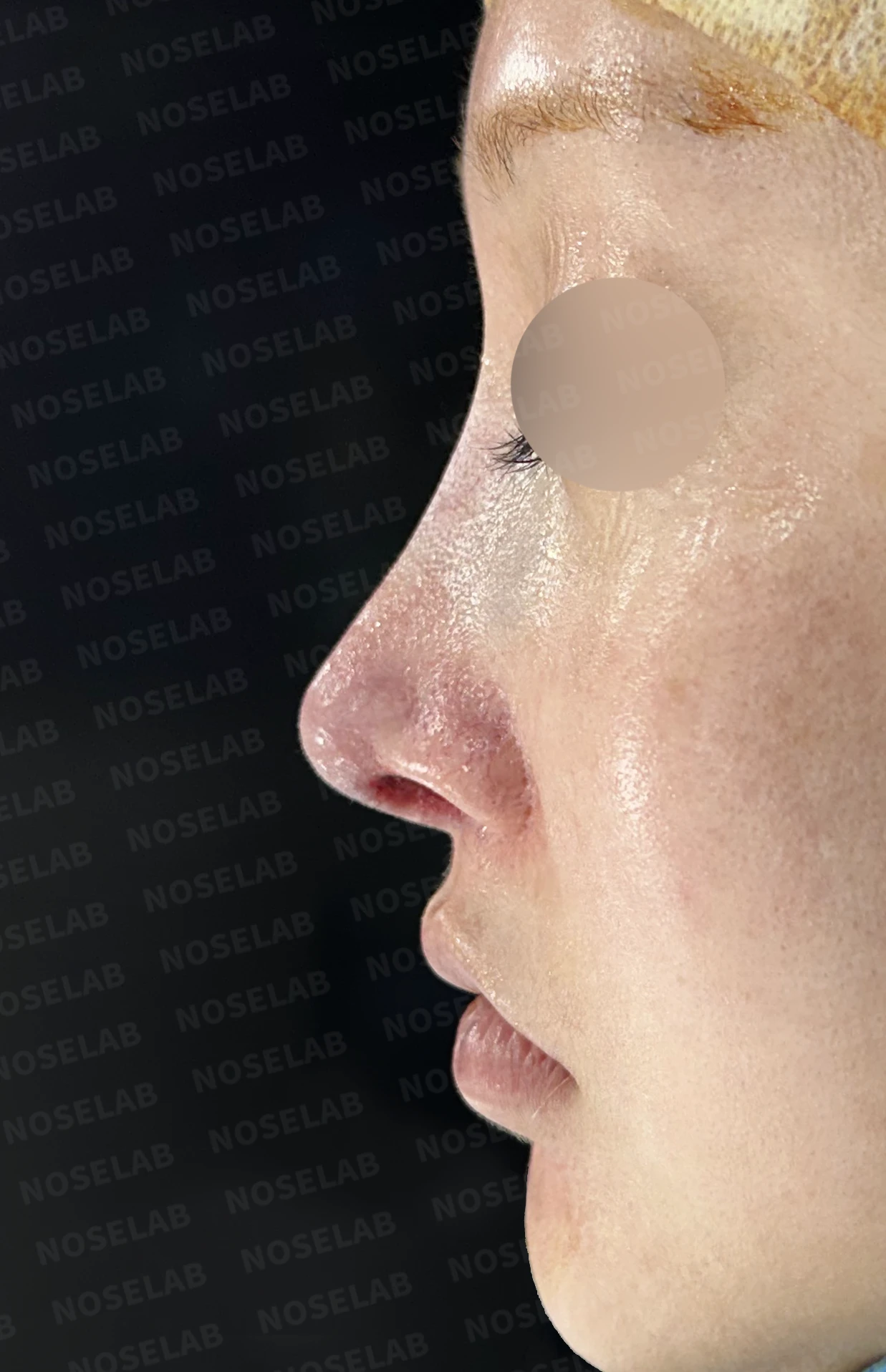
Front, oblique, and profile views on day 0 immediately after surgery Photos taken immediately after surgery show swelling and may differ from the final result.
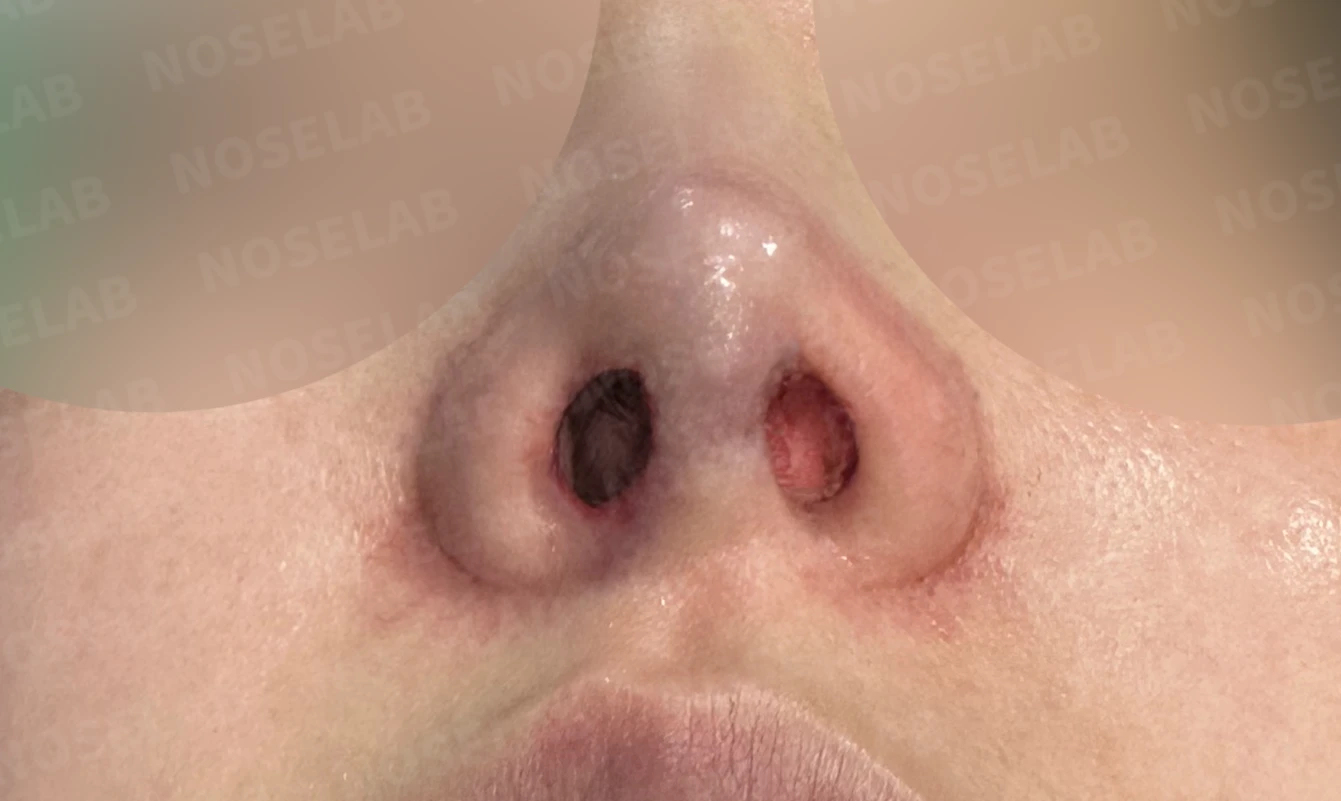
Nostril view on day 0 immediately after surgery Photos taken immediately after surgery show swelling and may differ from the final result.
In revision rhinoplasty following multiple procedures, accurately evaluating the degree of cartilage damage and the condition of the surrounding tissues is of paramount importance. In this type of case, where both the septal cartilage and the lower lateral cartilages are severely compromised, structural reconstruction using autologous rib cartilage is essential.
Rather than merely adjusting the external appearance, fundamentally rebuilding the nasal support framework supports a stable long-term result. By simultaneously addressing the functional issues of a deviated septum and rhinitis, both aesthetic improvement and the recovery of nasal breathing function were accomplished.
This was Dr. Peter C. Kang. Thank you.
#closedrhinoplasty #closedrevisionrhinoplasty #crookednosecorrection #nostrilasymmetry #autologousribcartilage #revisionrhinoplasty #septalreconstruction #nasalobstructionrelief #osteotomy #cartilagereconstruction

Limitations and risks
When autologous rib cartilage is used, scarring and pain may remain at the donor site on the chest, and pneumothorax (pleural injury) can occur rarely. Over time, the grafted cartilage may warp or undergo partial resorption.
When the septum is corrected at the same time, nasal obstruction may persist or recur, and in rare cases, septal perforation or changes in smell may occur.
Common potential risks include infection, bleeding, asymmetry, scarring, skin necrosis, and insufficient improvement; results vary depending on individual skin condition and previous surgical history.