Hello, I am Dr. Peter C. Kang.
Today, I would like to share a revision rhinoplasty case of a patient who visited our clinic concerned about an upturned nose and nostril asymmetry that persisted even after multiple rhinoplasty procedures.
🔍 Surgical history
About 10 years ago: Rhinoplasty was performed at another clinic using a silicone implant, ear cartilage, and septal cartilage, but the patient was dissatisfied with the shape.
2022: Rhinoplasty was performed at another clinic using a silicone implant and autologous rib cartilage.
2024: Revision surgery was performed at another clinic to cover an area where the silicone implant showed through.
As multiple surgeries accumulated, the internal nasal structures had weakened, and cosmetic satisfaction had also declined.
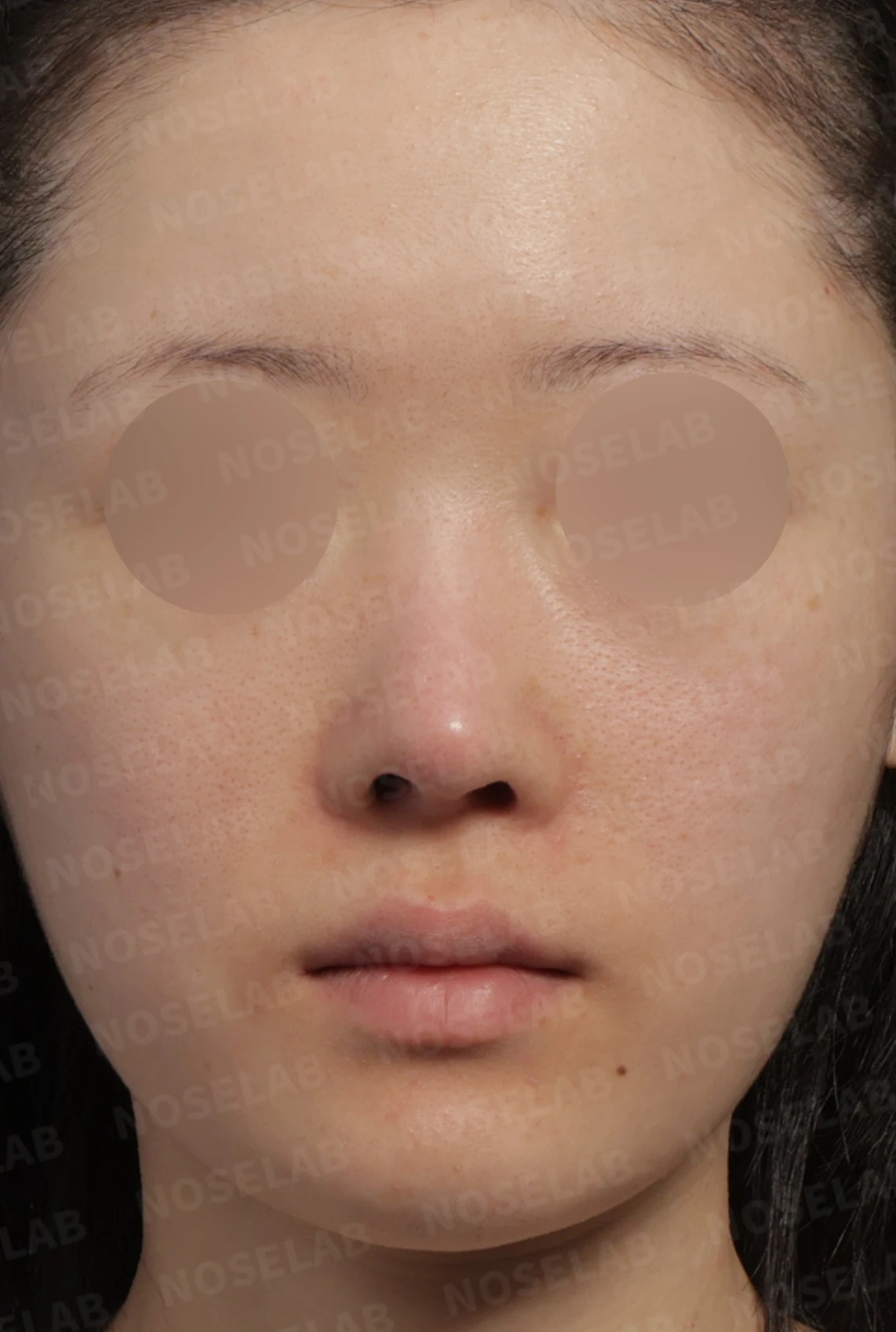
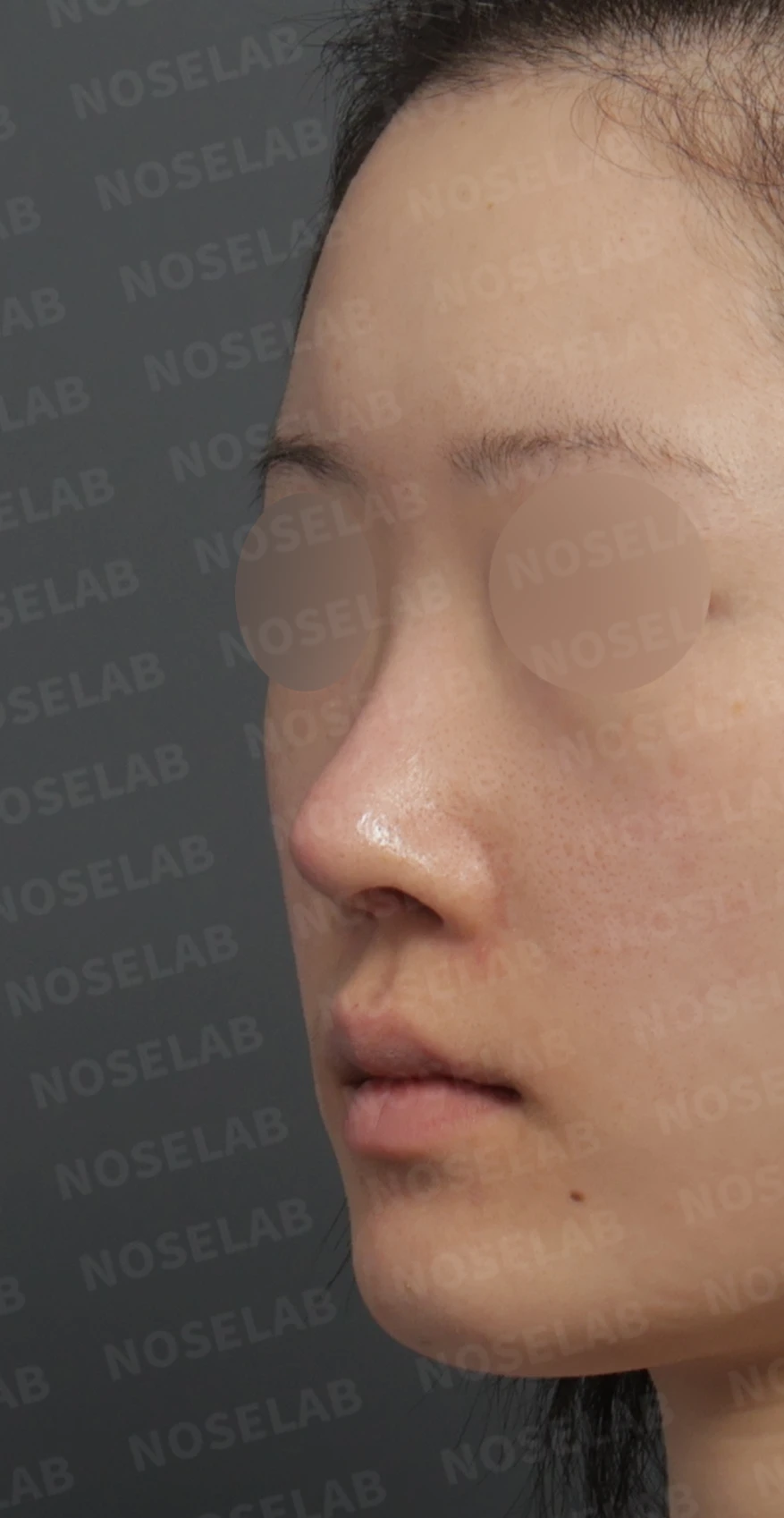
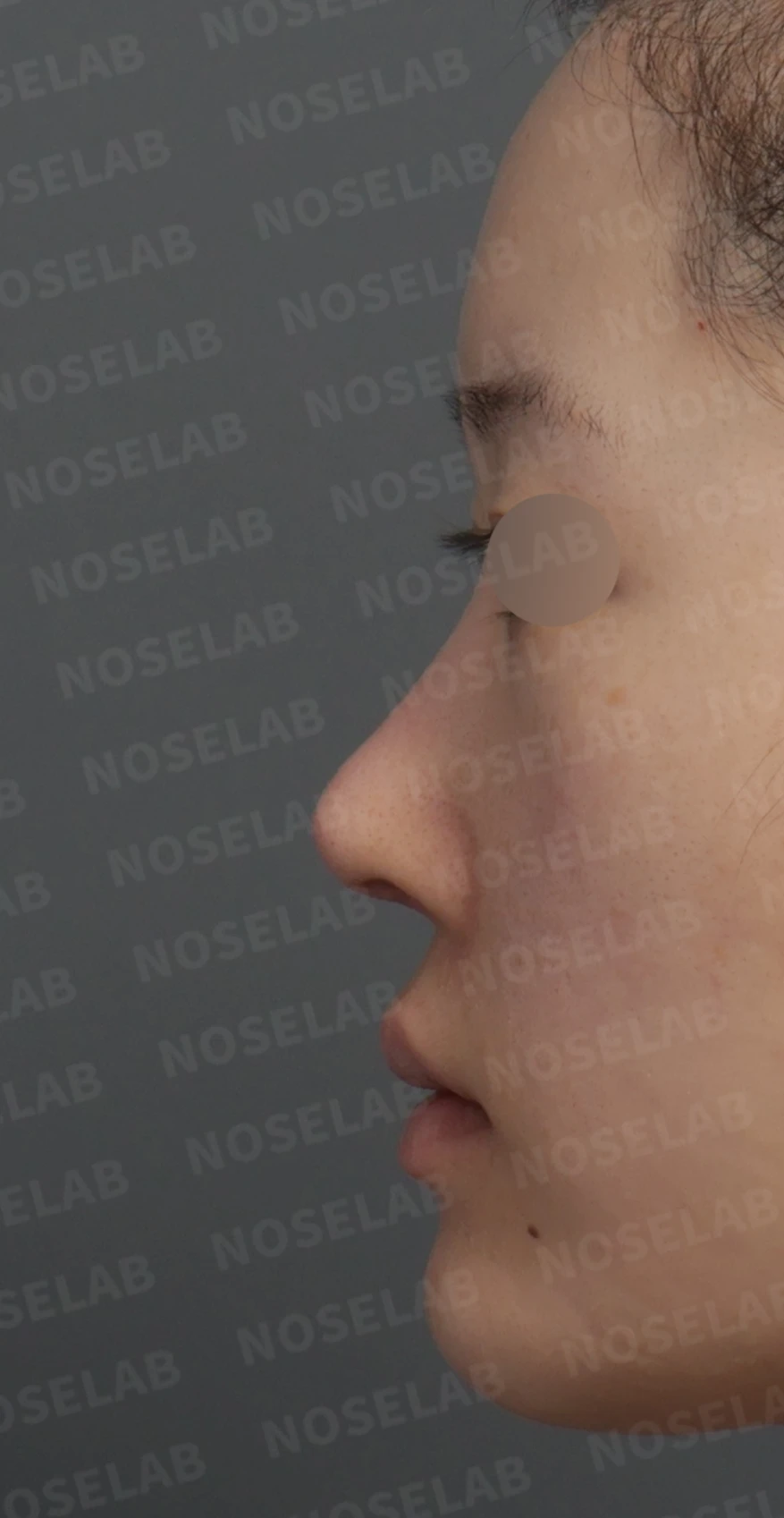
Design consultation: front, left oblique, and profile views.
💉 Patient requests
The patient wanted to naturally lower the retracted columella. The patient also wished to correct the unnaturally upturned nasolabial angle and improve the asymmetry between both nostrils. There was no major breathing difficulty.
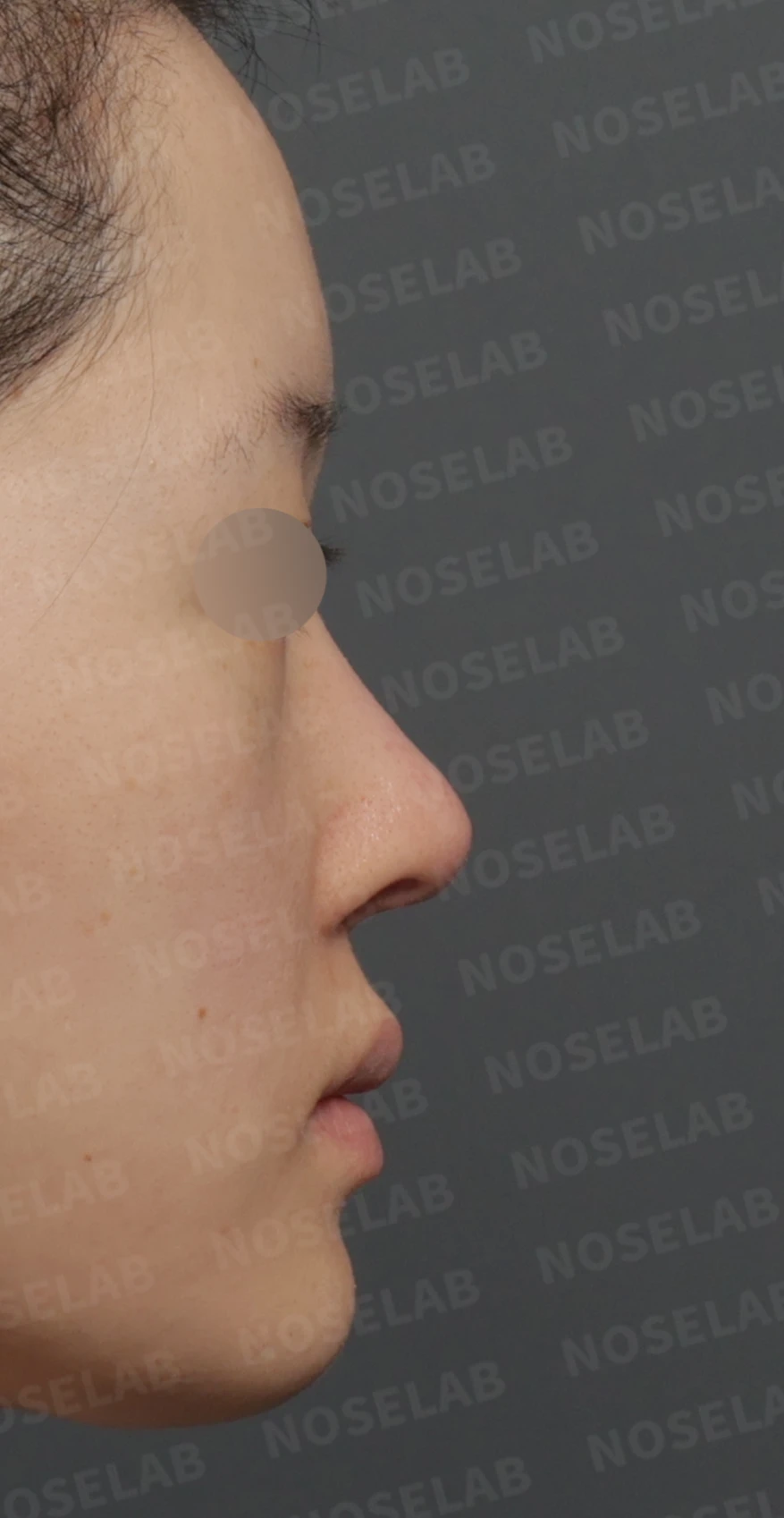
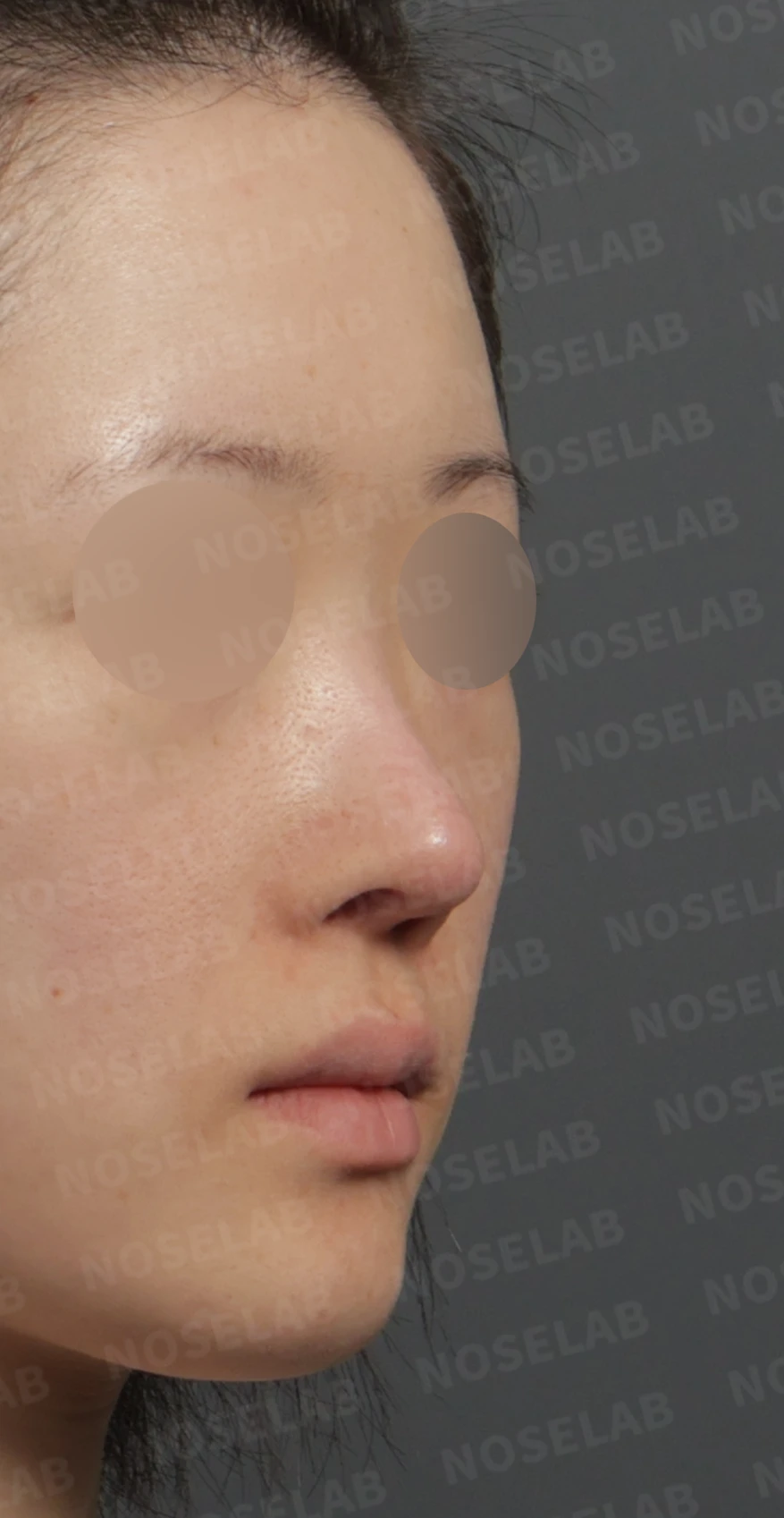
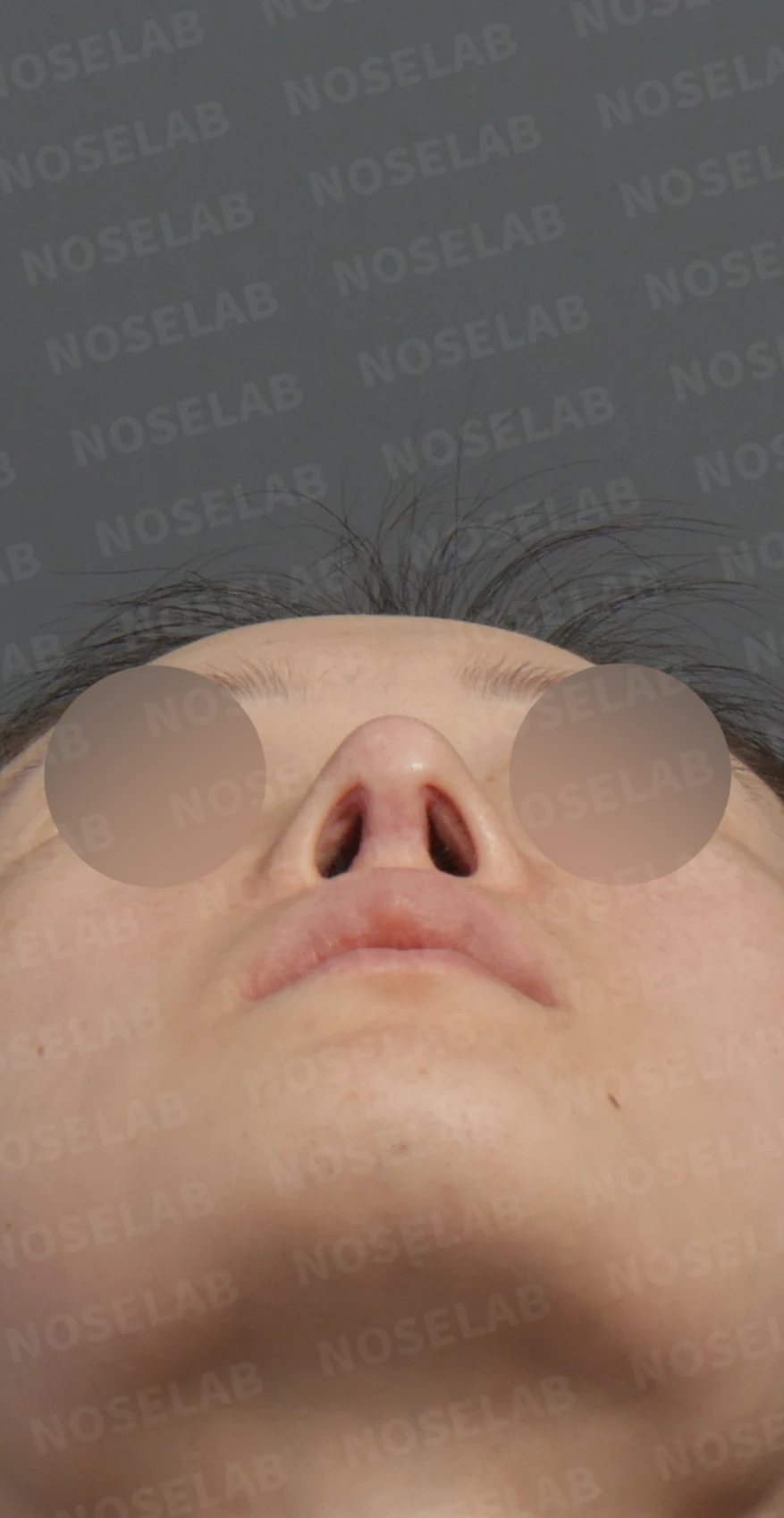
Design consultation: right profile, oblique, and nostril views.
🔧 Surgical plan and procedure
1. Reconstruction of the anterior septum — In previous surgery, the anterior portion of the central partition cartilage (septal cartilage) had been excessively excised, and the autologous rib cartilage grafted in that space had collapsed inward. Using the existing autologous rib cartilage, the anterior septal structure was reconstructed solidly once again.
2. Reconstruction of tip shape — Using donor rib cartilage, the collapsed nasal tip was rebuilt naturally and stably.
3. Correction of the upturned nose — The excessively upturned nasal tip position was lowered downward, and the retracted columella was naturally brought down to harmonize the nasolabial angle.
4. Correction of nostril asymmetry — The asymmetry of the nostrils visible from the front was caused by the lower lateral cartilage being tied asymmetrically to one side. This area was released and corrected symmetrically.
5. Replacement of the nasal bridge implant — After removing the existing implant, a new silicone implant was custom-designed and inserted to create the patient's desired line, featuring a high dorsum with a nasal tip that slopes slightly downward.
🌟 Surgical results
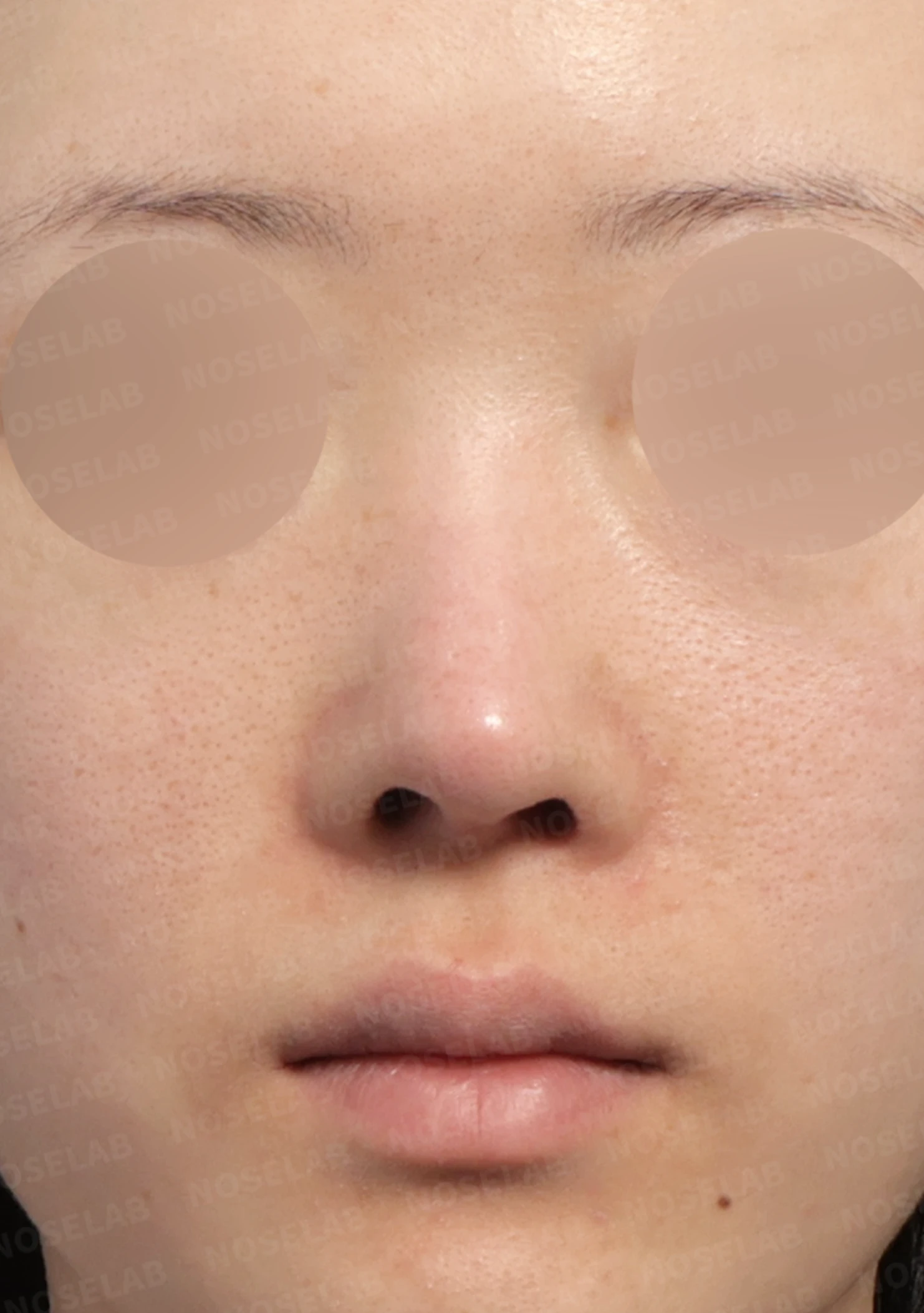
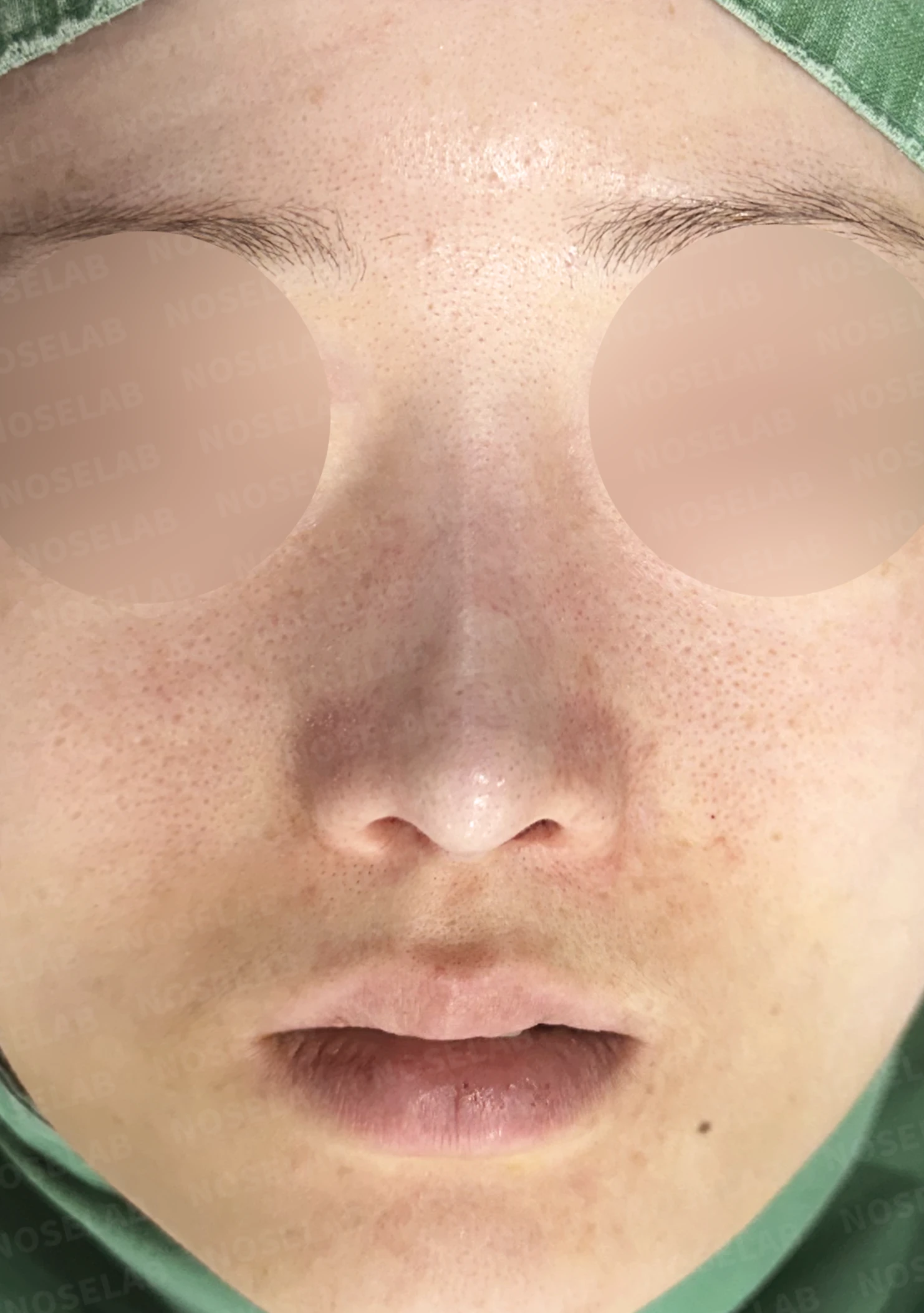
Before surgery / Day 0 immediately after surgery Photos taken immediately after surgery show swelling and may differ from the final result.
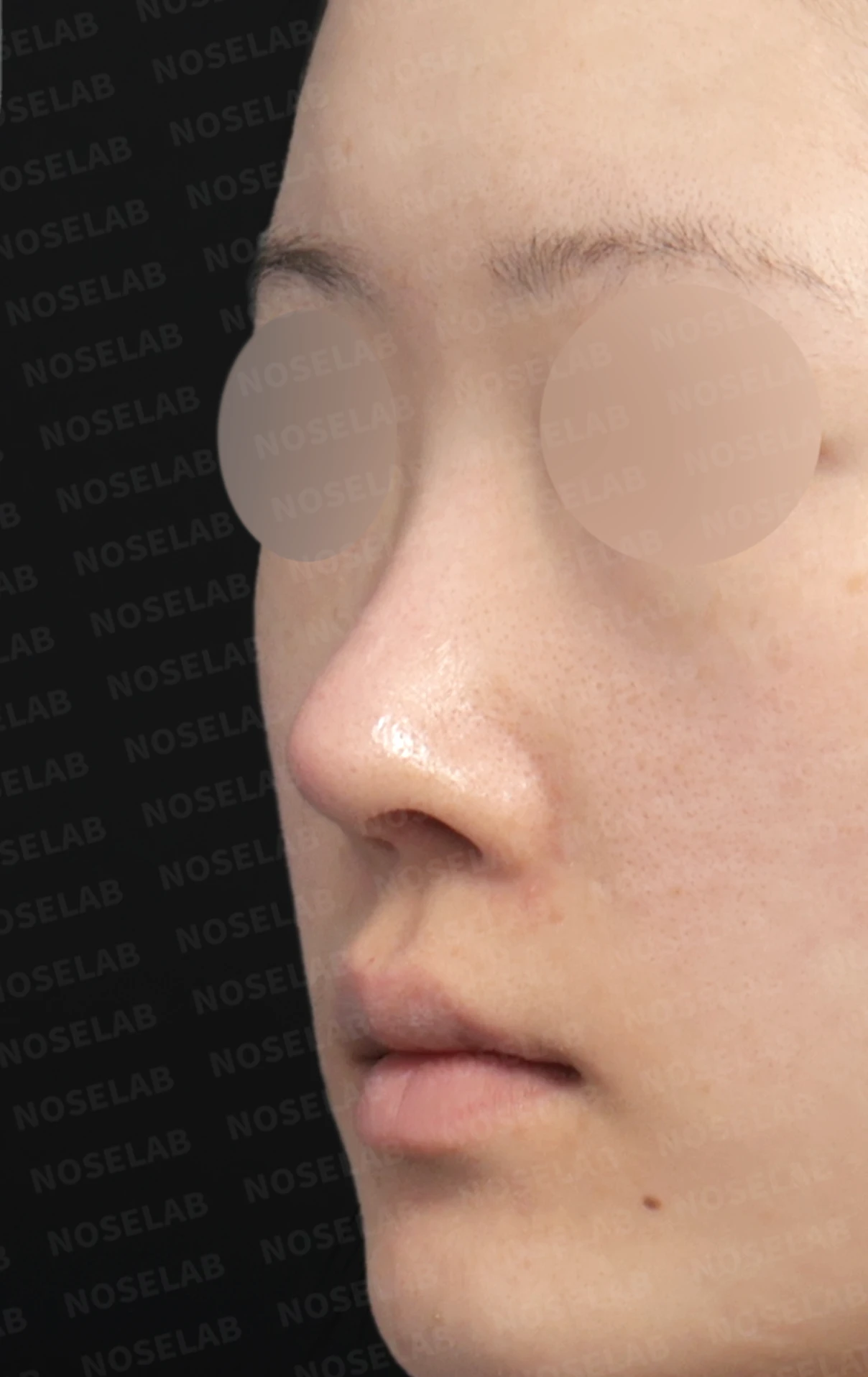
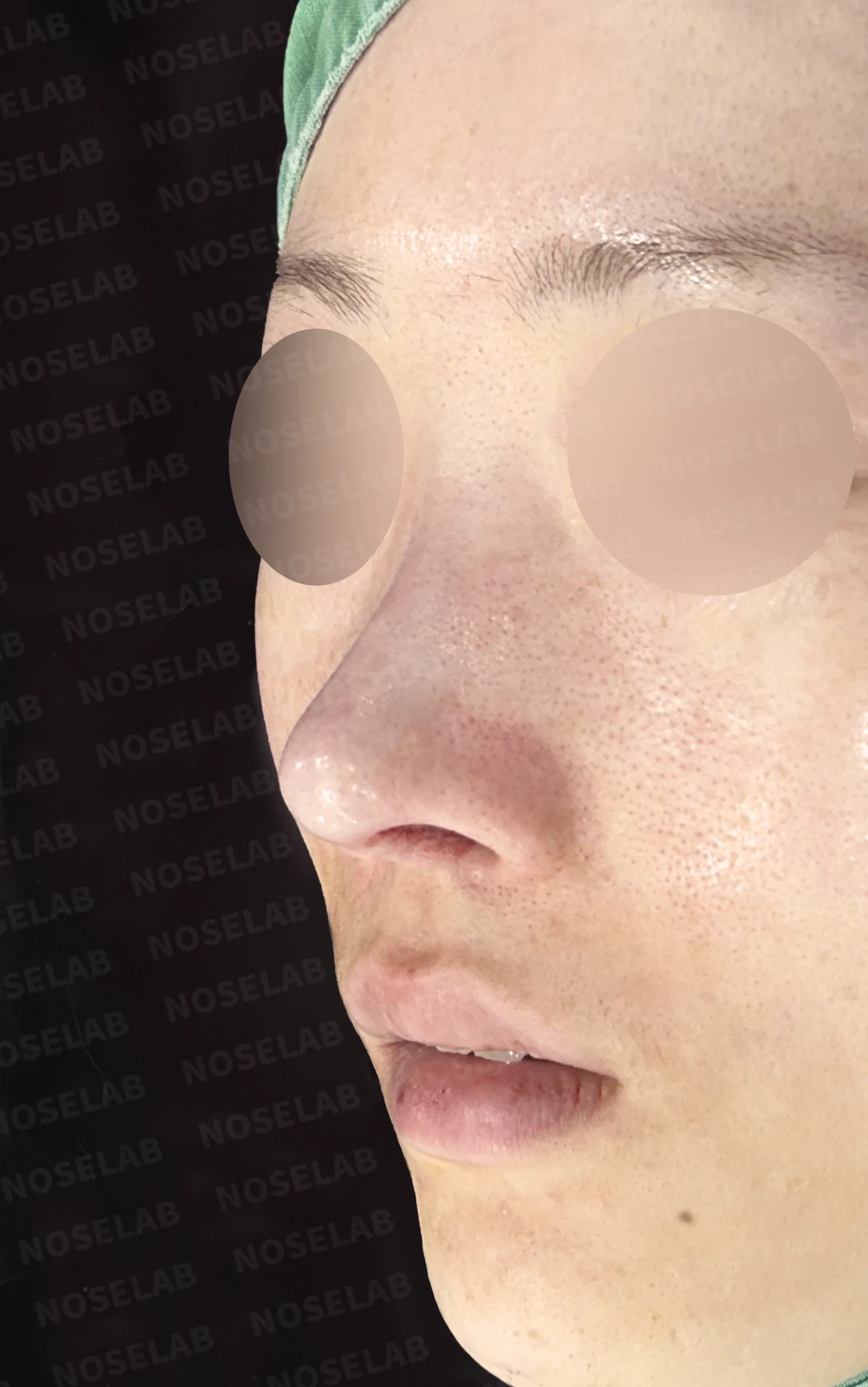
Front view changes:
The asymmetry of both nostrils was improved, giving a more balanced impression, and the line of the nasal bridge became well-defined.
Before surgery / Day 0 immediately after surgery Photos taken immediately after surgery show swelling and may differ from the final result.
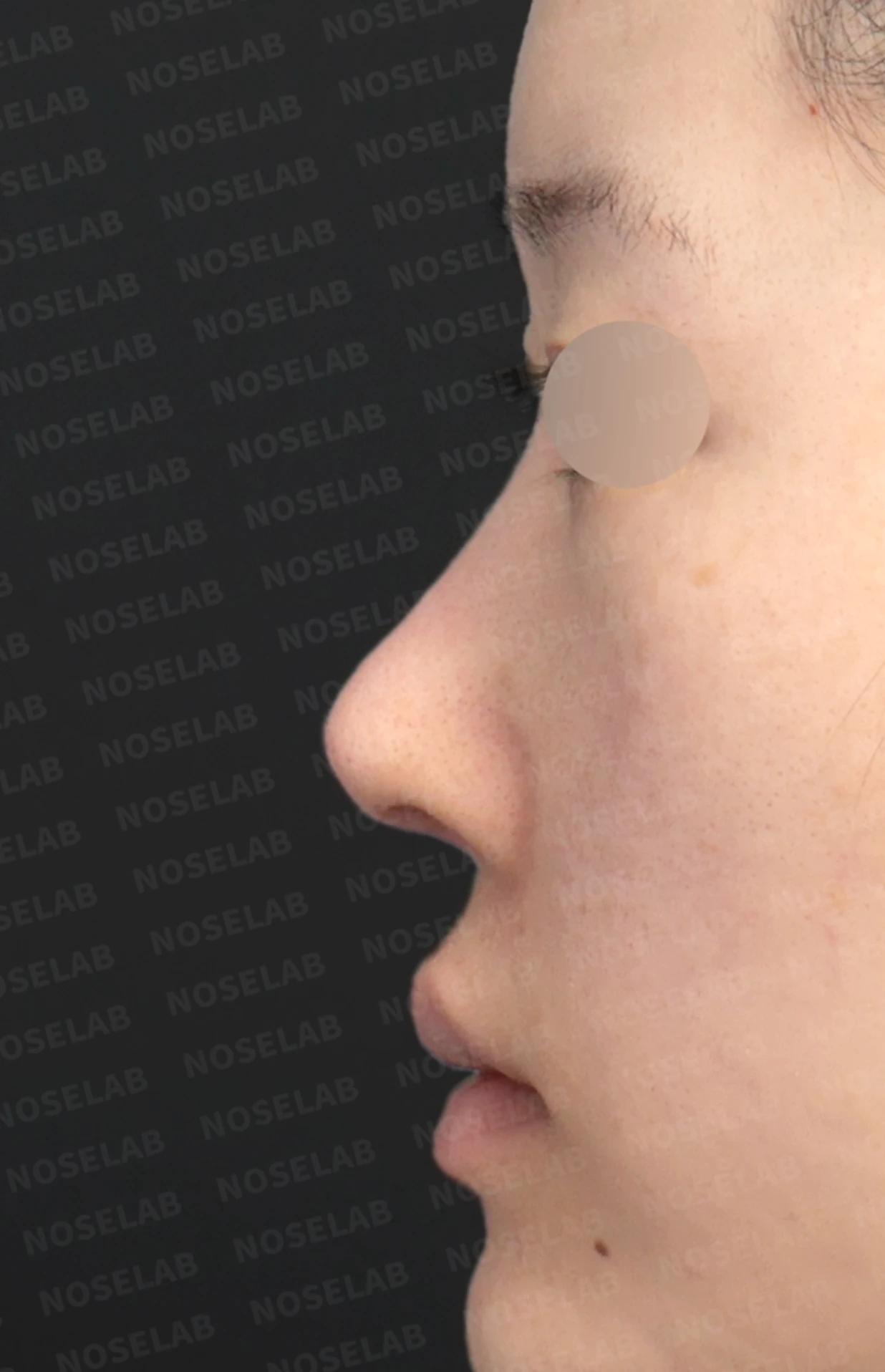
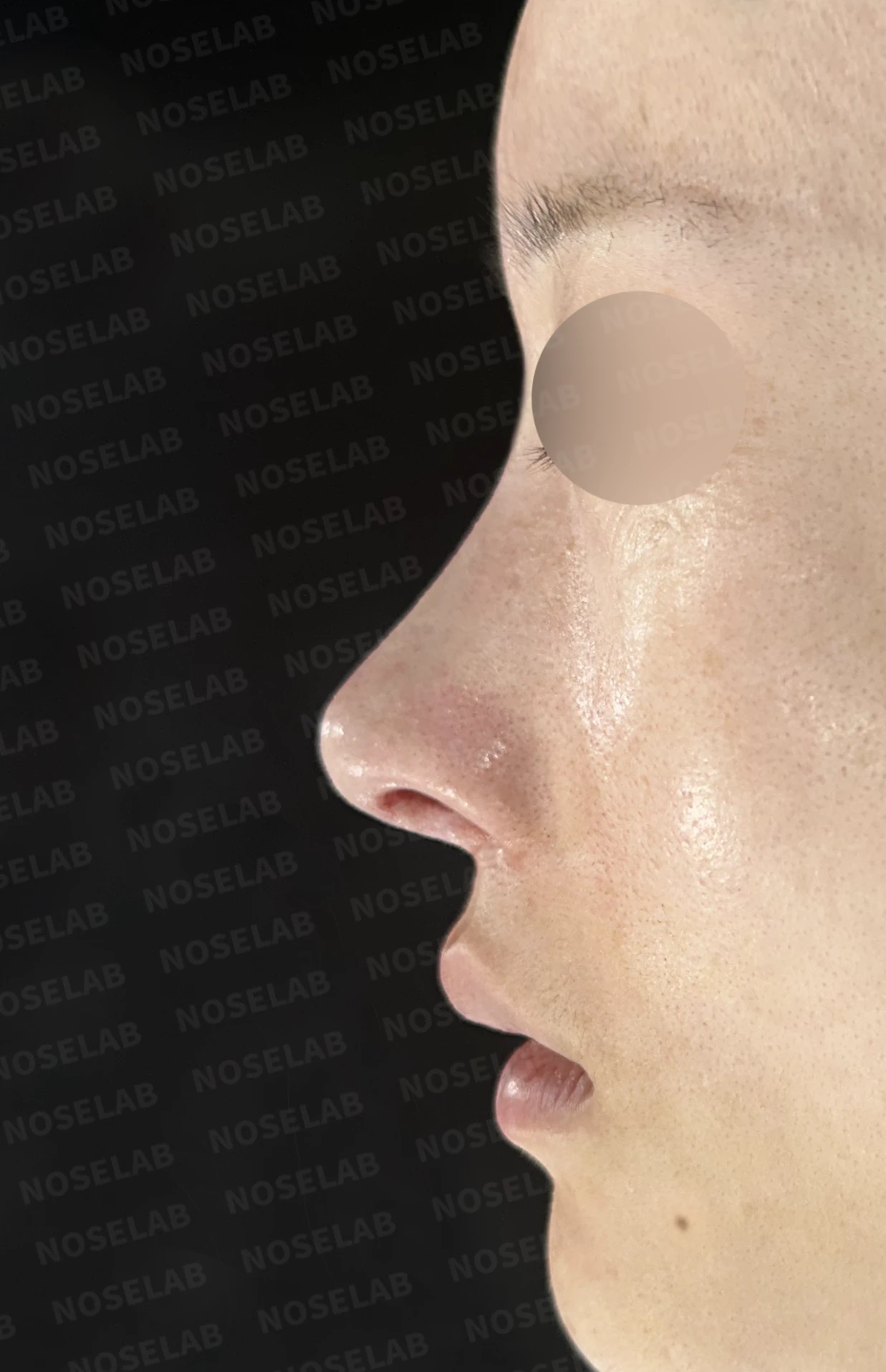
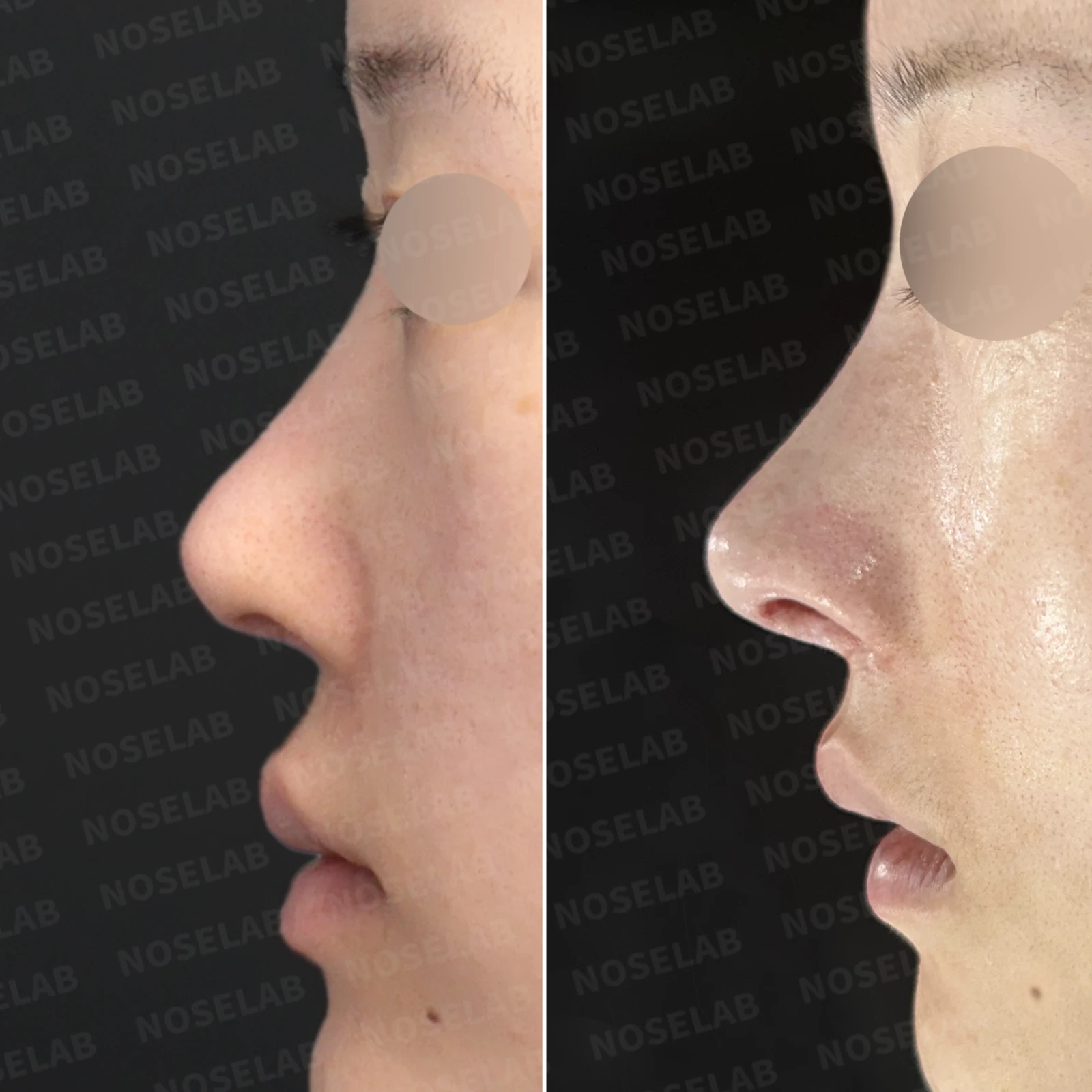
Profile view changes:
As the excessively upturned nasal tip was lowered, the nasolabial angle became natural, creating a profile where the dorsum is high and the nasal tip transitions smoothly downward.
Before surgery / Day 0 immediately after surgery Photos taken immediately after surgery show swelling and may differ from the final result.
Nostril view changes:
With the collapsed columella naturally lowered, the nostril shapes viewed from the front and base settled into a much more balanced contour.
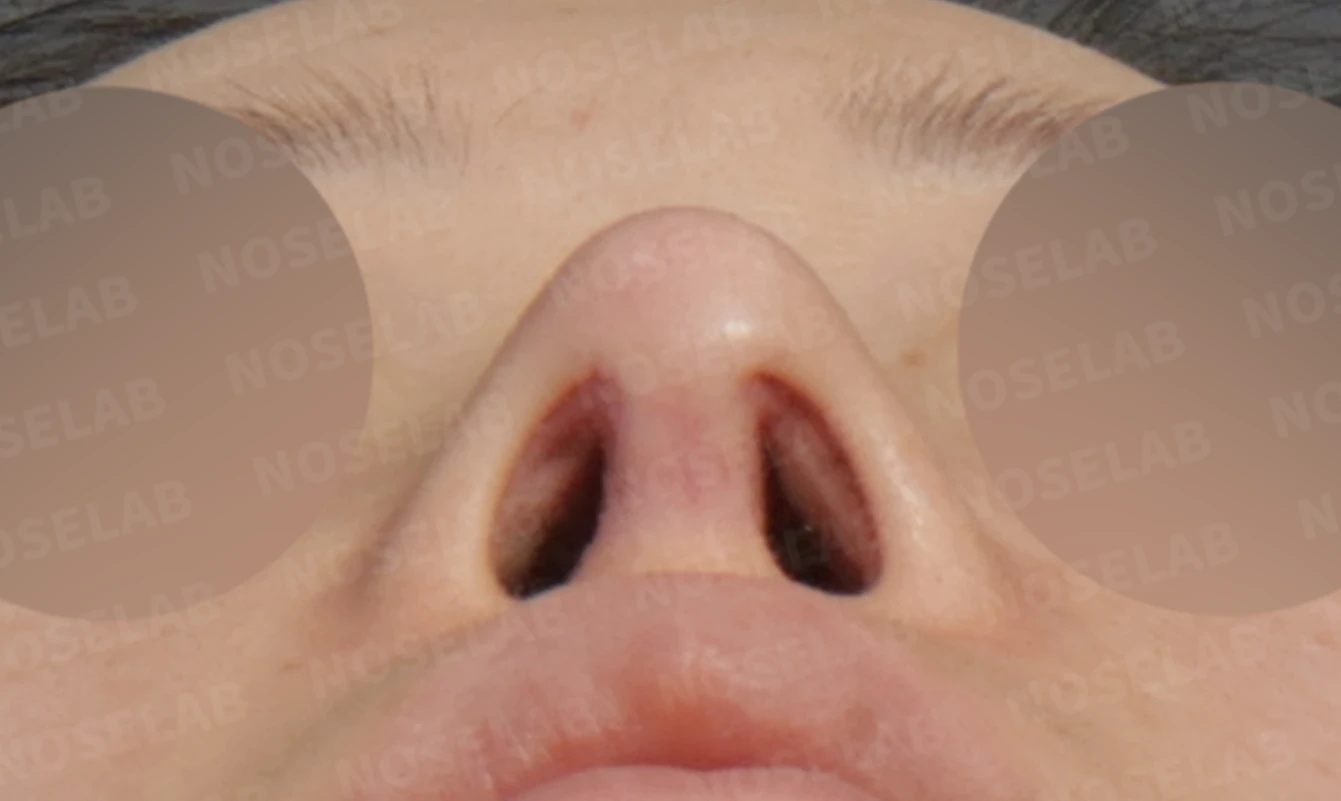
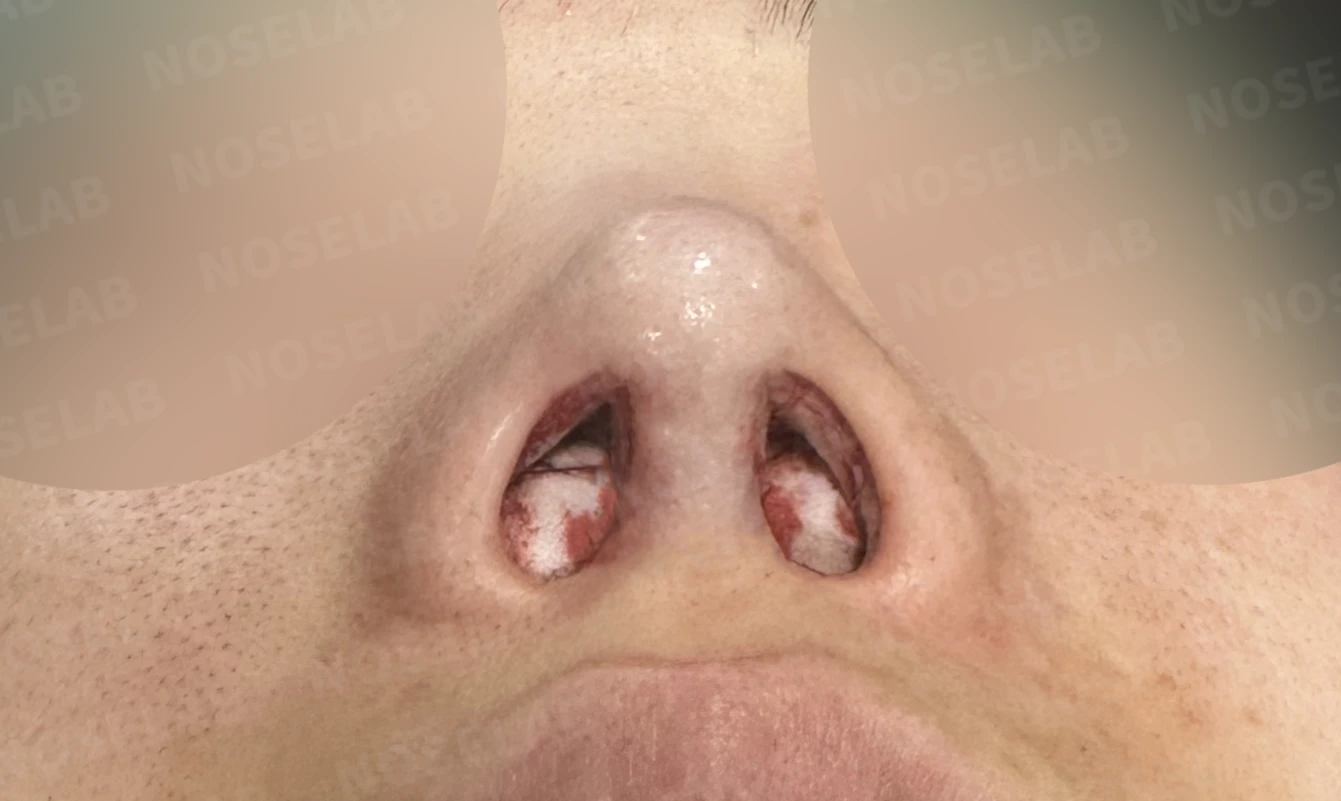
Before surgery / Day 0 immediately after surgery Photos taken immediately after surgery show swelling and may differ from the final result.
💡 Specialist opinion
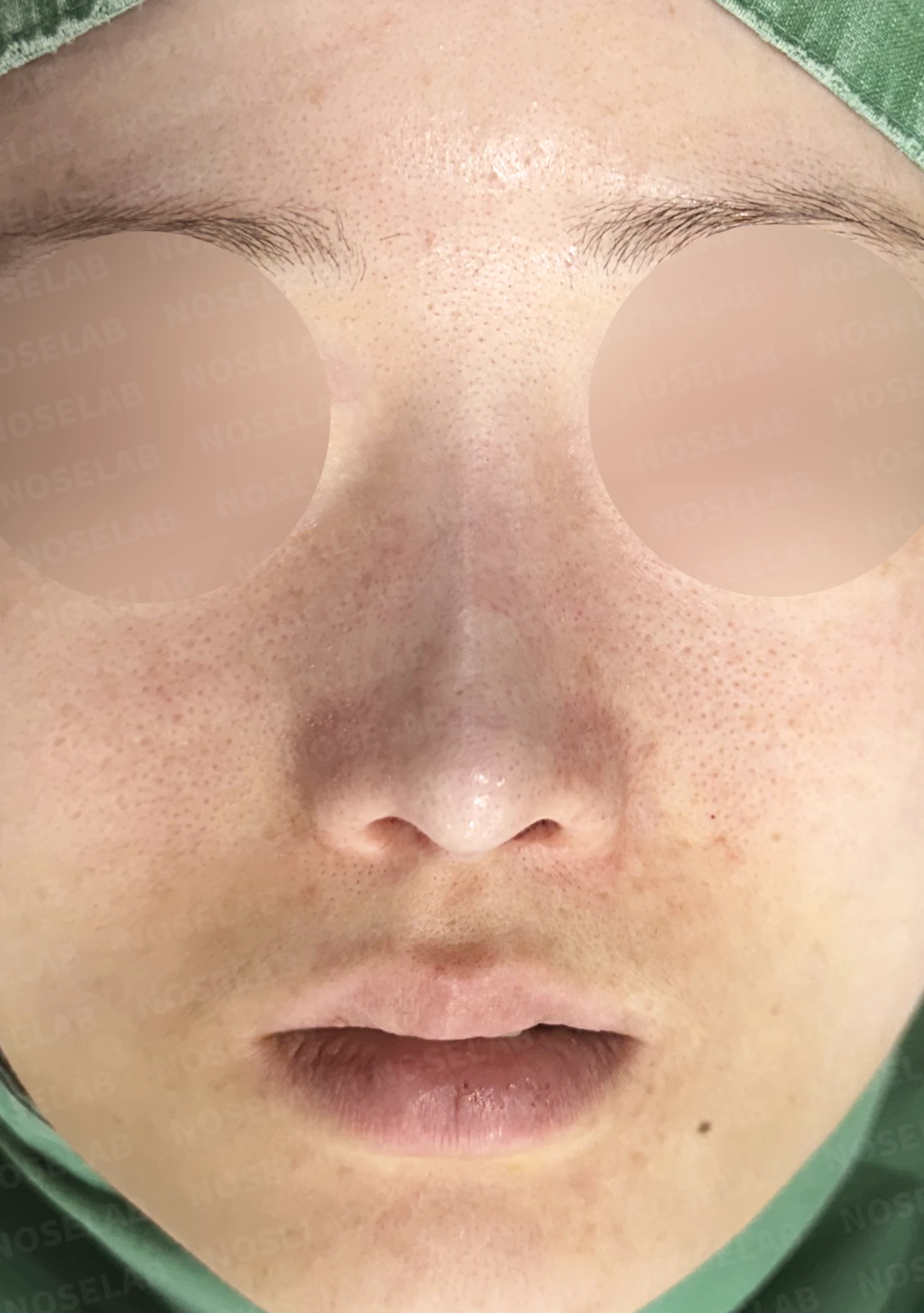
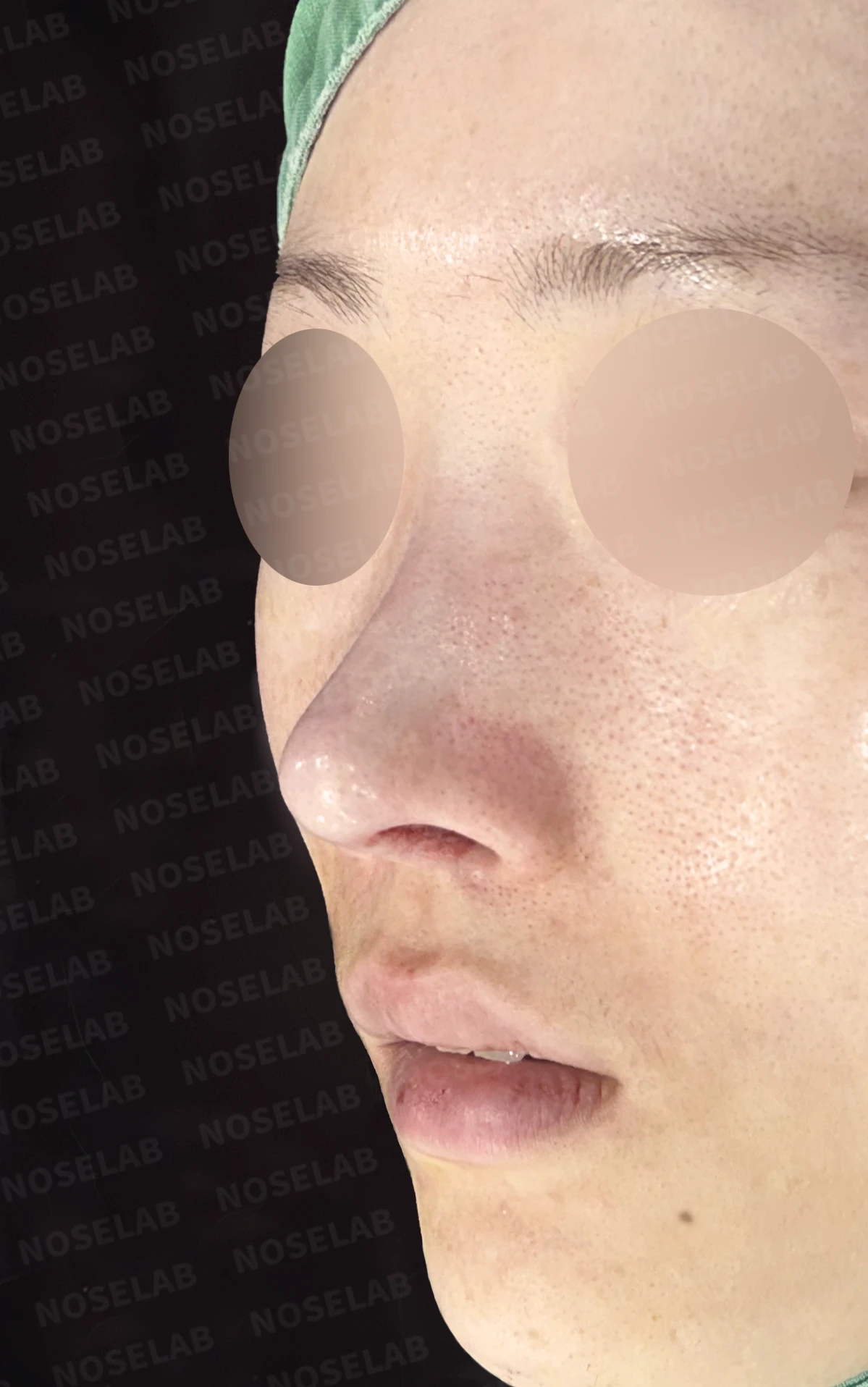
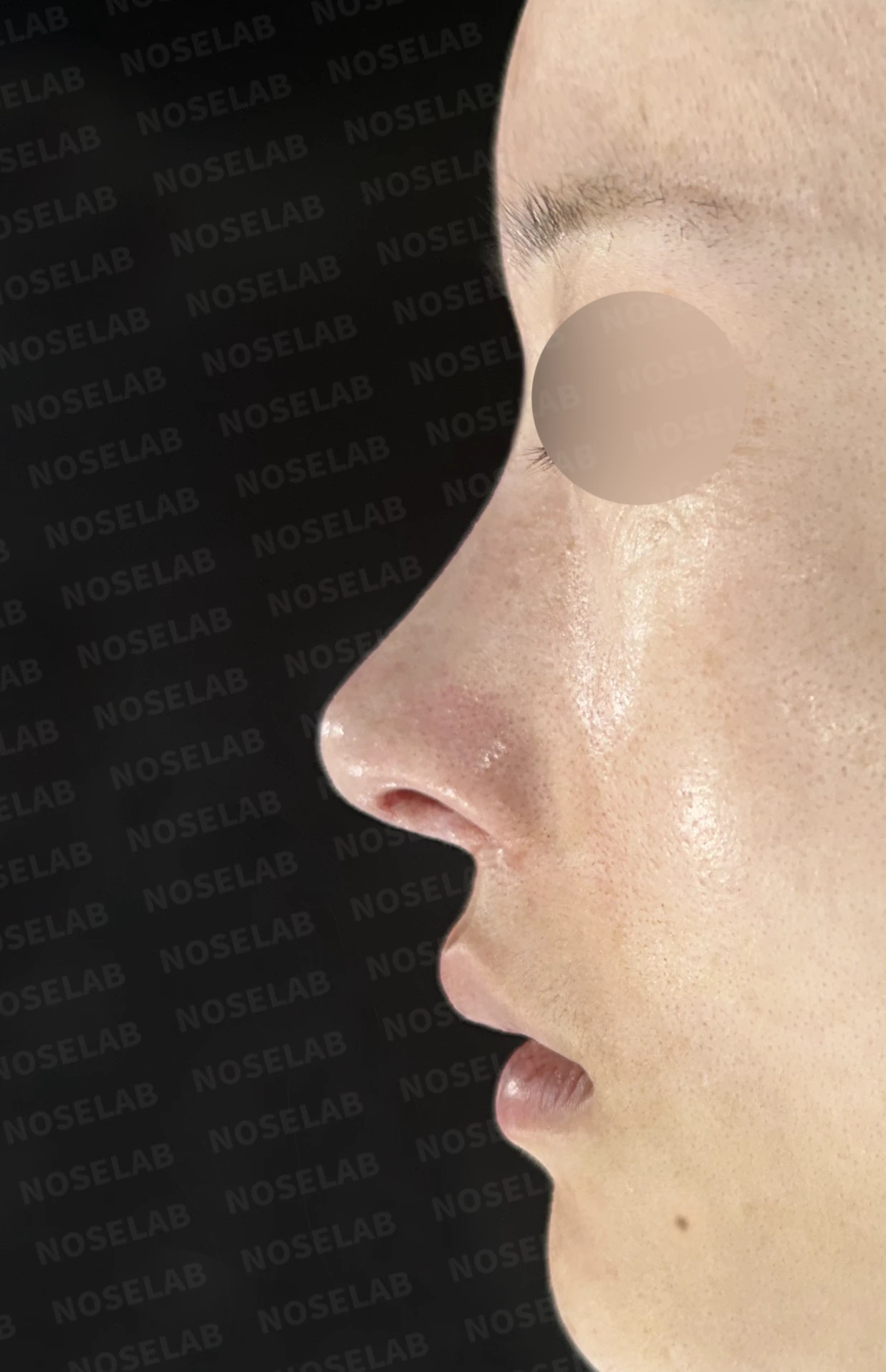
Immediately after surgery (day 0): front, oblique, and profile views. Immediate postoperative photos show swelling and may differ from the final result.
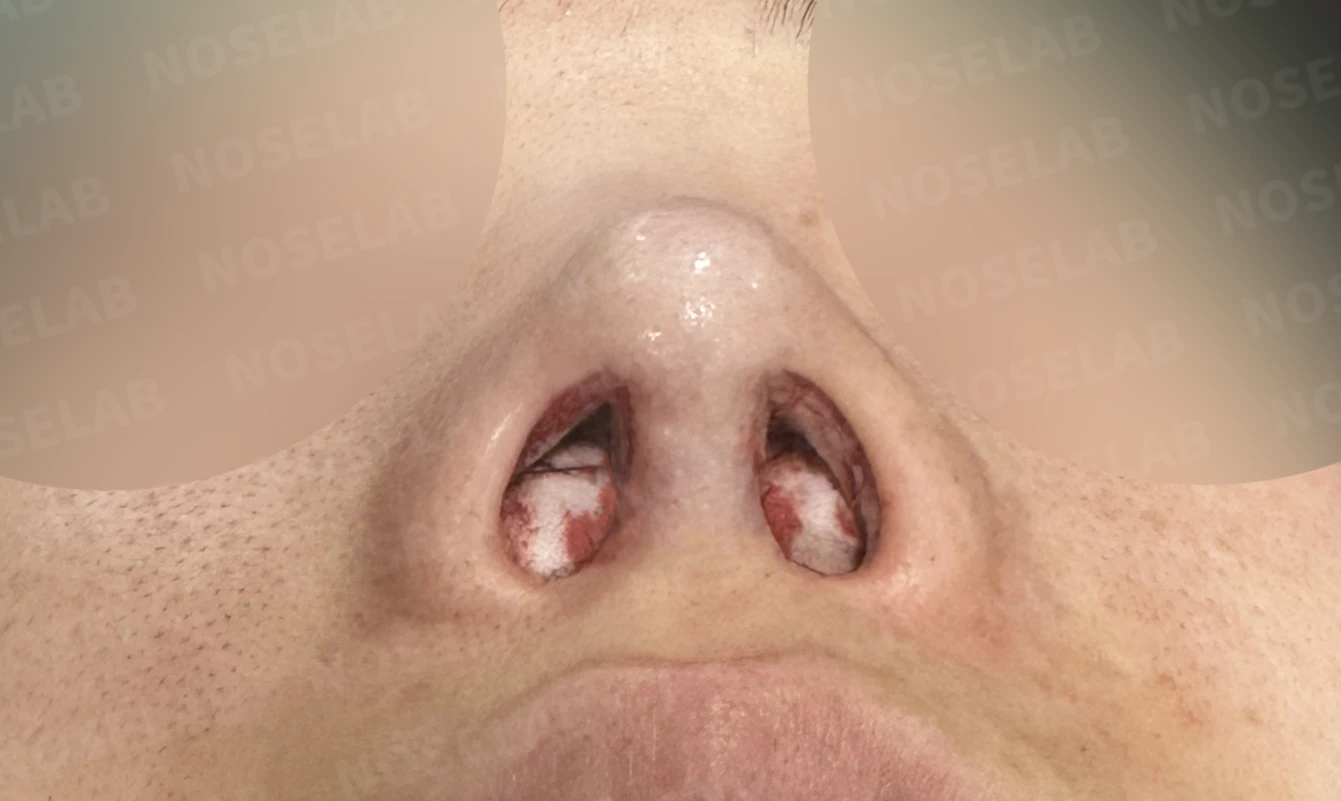
Nostril view on day 0 immediately after surgery. Photos taken immediately after surgery show swelling and may differ from the final result.
In revision rhinoplasty performed after multiple surgeries, stably restoring collapsed structures is far more critical than simply refining the shape. In particular, when the anterior septum is weakened, it easily leads to deformities such as a collapsed tip or an upturned nose.
In cases like this, preserving the existing autologous rib cartilage as much as possible to reconstruct the septum, while reinforcing insufficient areas with donor rib cartilage, secures structural stability while achieving a natural contour. In revision surgery, accurately assessing the condition of remaining tissue and previous surgical interventions, and carefully tailoring materials and techniques to the patient's nasal anatomy, determines the outcome.
I will continue to provide customized surgeries with this cautious approach, fully reflecting each patient's concerns and goals. I hope this case helps those with similar concerns.
This was Dr. Peter C. Kang. Thank you.
#closedrhinoplasty #closedrevisionrhinoplasty #revisionrhinoplasty #upturnednosecorrection #nostrilasymmetry #autologousribcartilage #donorribcartilage #nasolabialanglecorrection #implantremoval #septalreconstruction

Limitations and risks
When autologous rib cartilage is used, scarring and pain may remain at the donor site on the chest, and pneumothorax (pleural injury) can occur rarely. Over time, the grafted cartilage may warp or undergo partial resorption.
When using donor rib cartilage, long-term follow-up is necessary because the grafted cartilage may resorb or warp.
When revising after implant removal, contracture may progress again after removal, the nasal height and length may decrease, and staged surgery may be necessary depending on the skin condition.
When the septum is corrected at the same time, nasal obstruction may persist or recur, and in rare cases, septal perforation or changes in smell may occur.
Common potential risks include infection, bleeding, asymmetry, scarring, skin necrosis, and insufficient improvement; results vary depending on individual skin condition and previous surgical history.