Hello, I am Dr. Peter C. Kang.
Today, I would like to introduce the case of a patient in whom cartilage protruding through the right nasal mucosa from a previous surgery was restored and the damaged lower lateral cartilage was reconstructed.
🔍 Surgical history
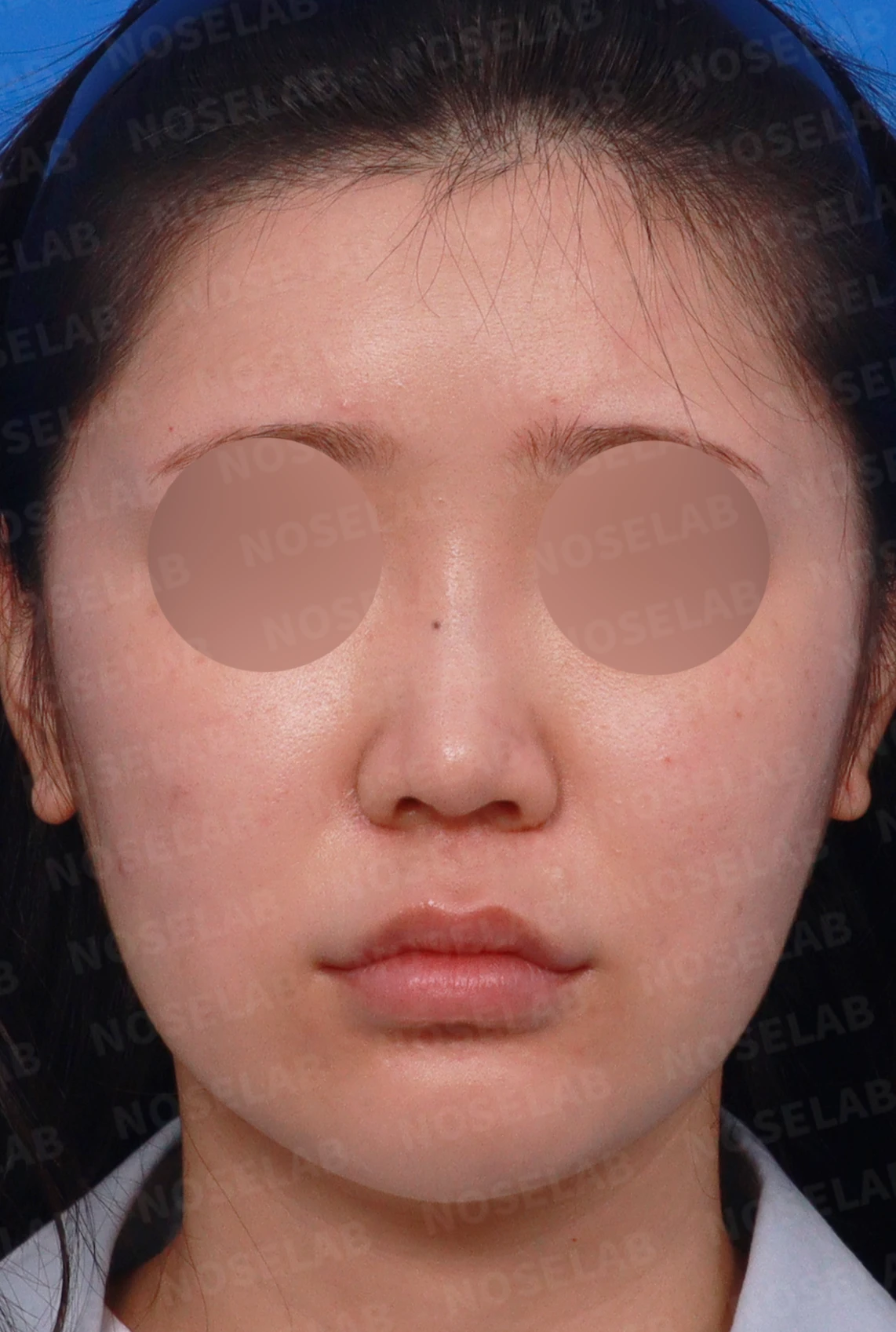
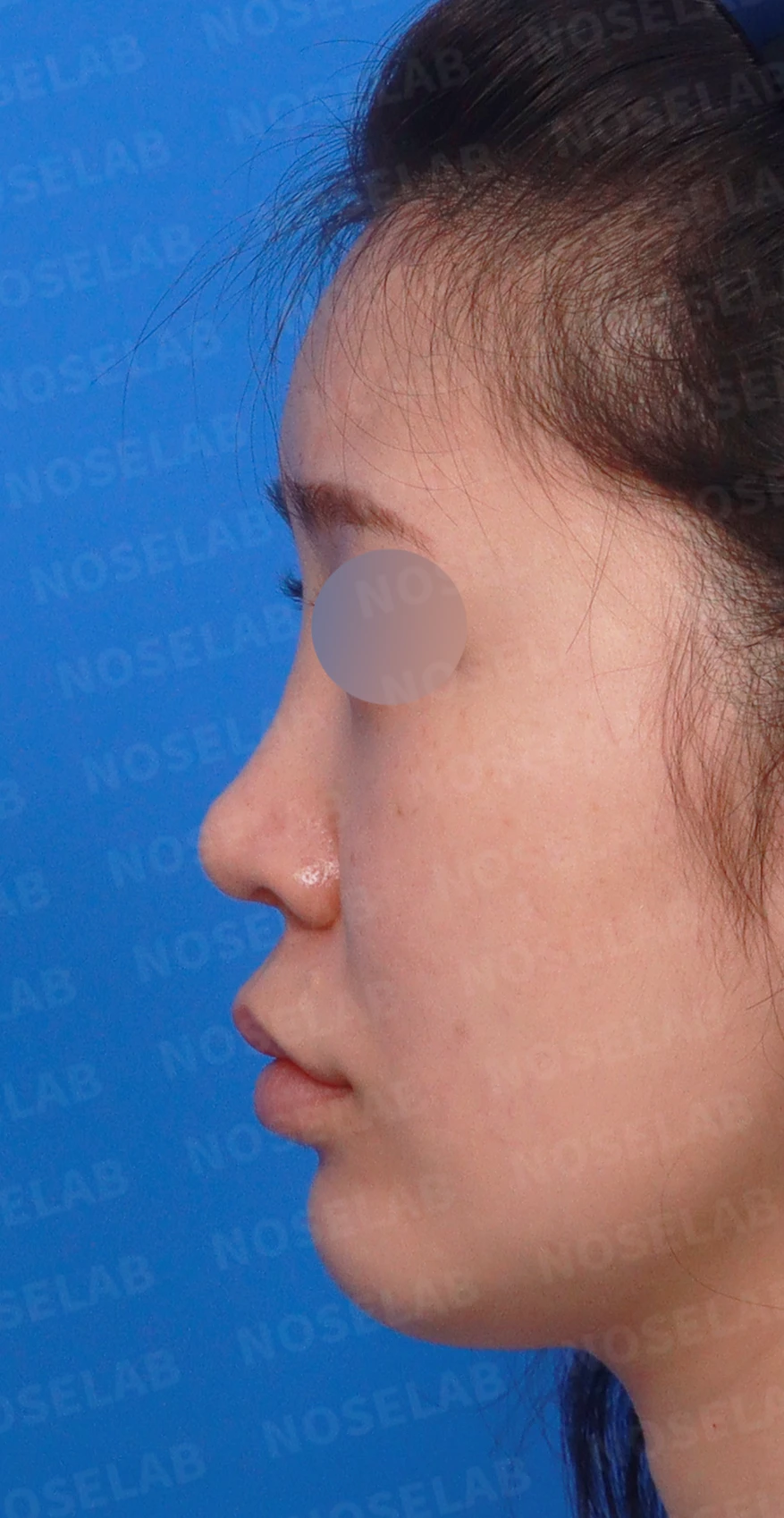
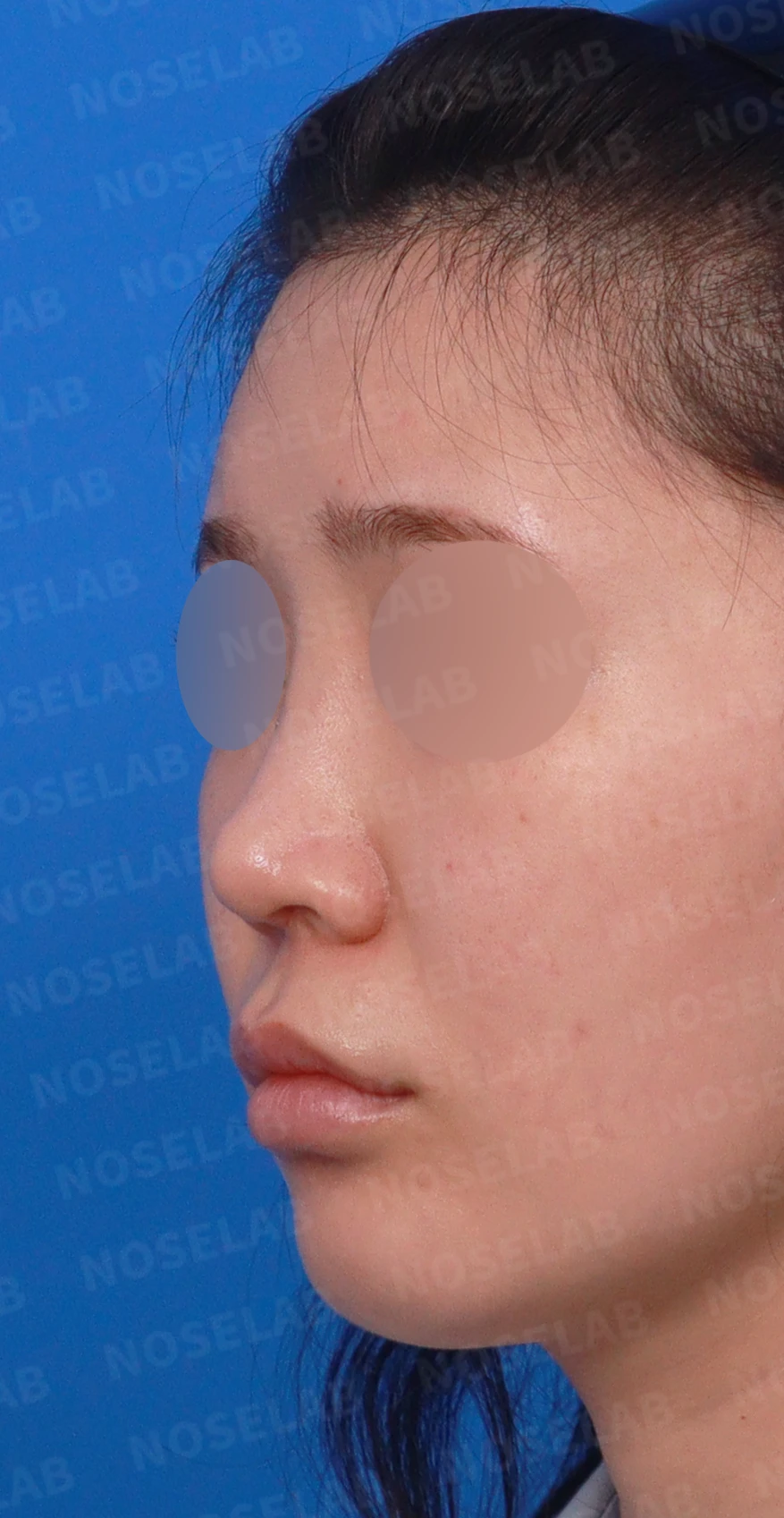
Front, left profile, and oblique views during design consultation.
Past history:
17 years ago: Silicone implant placed along the nasal bridge only
4 years ago: Donor rib cartilage + silicone implant + ear cartilage
Main concerns:
A critical situation with cartilage protruding through the right nasal mucosa
Severely damaged lower lateral (alar) cartilage
A heavy, tired impression due to a drooping nasal tip
Lack of three-dimensional definition due to a protruding mouth
Nostril asymmetry
Retracted columella
Special notes: Infection risk due to exposed cartilage; urgent surgery required
💉 Patient requests
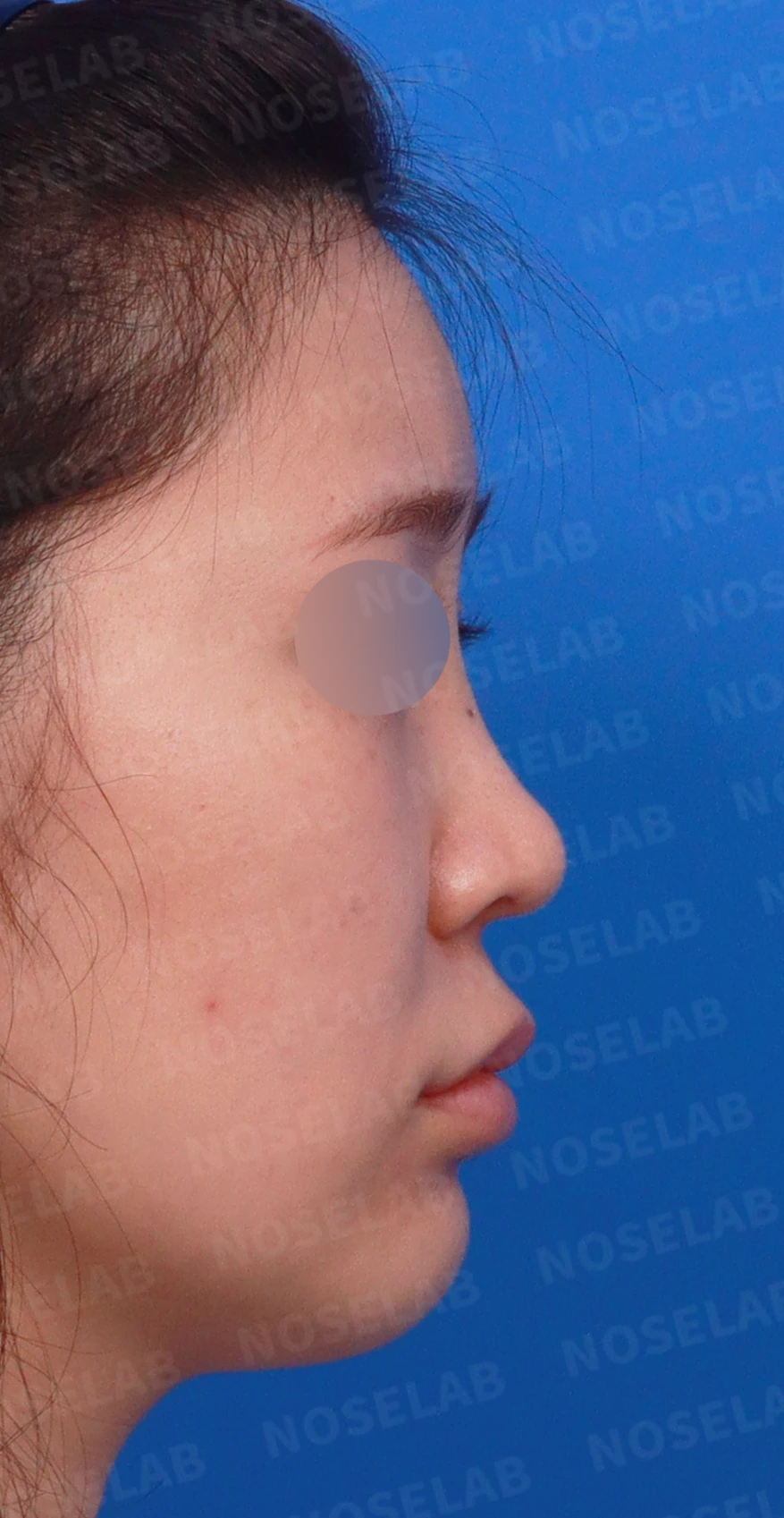
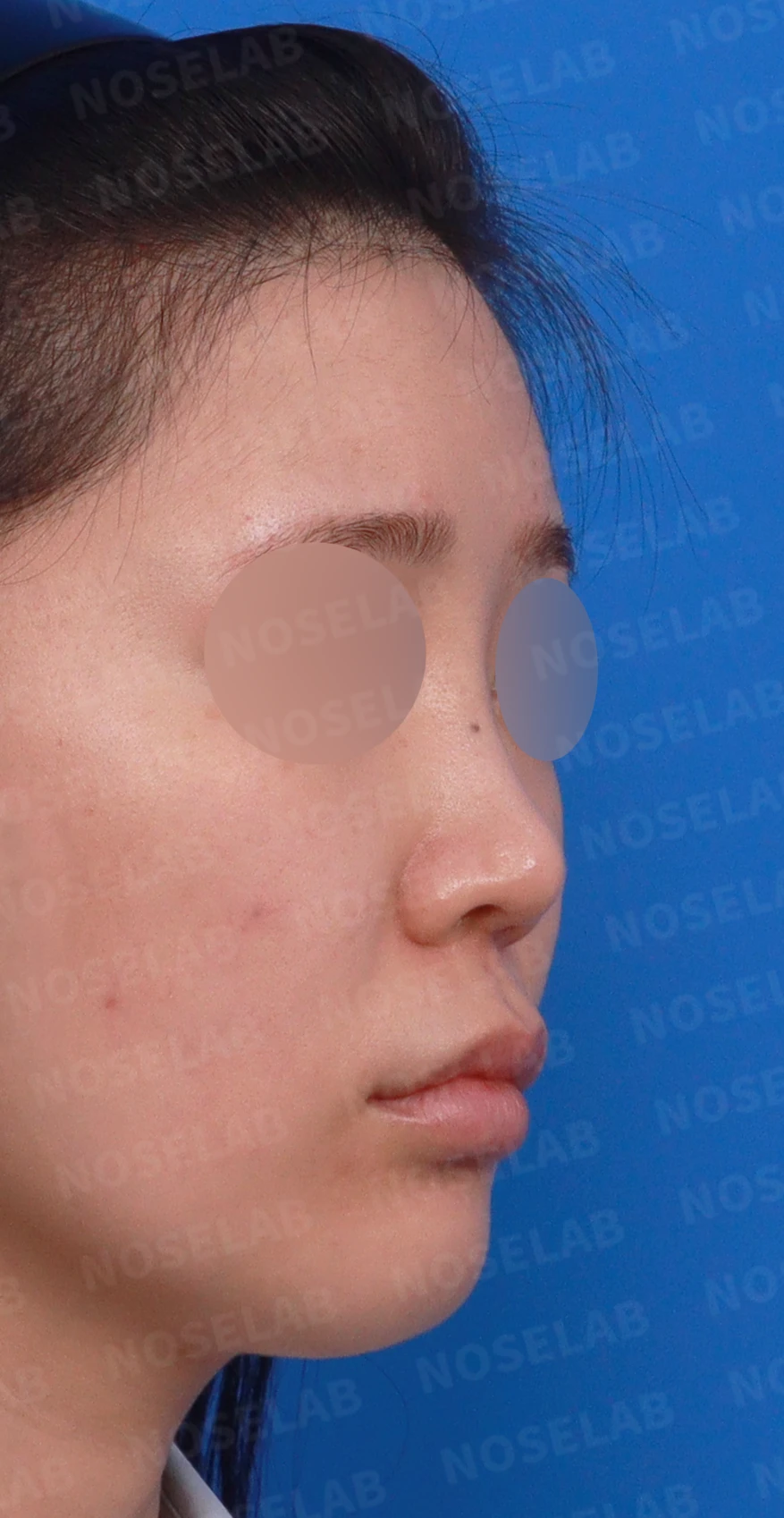
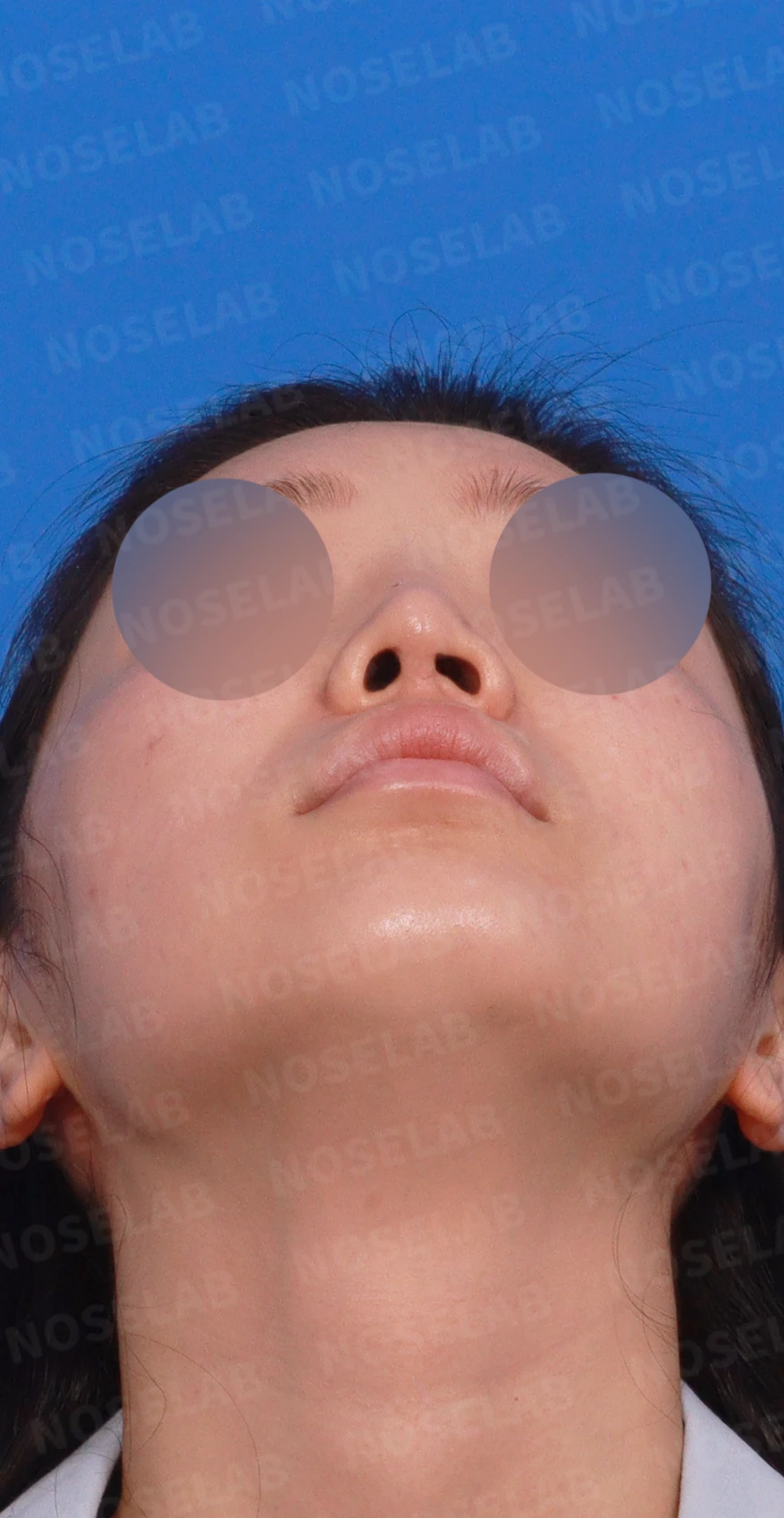
Right profile, oblique, and nostril views during design consultation.
Careful removal and restoration of the exposed cartilage
Elevating the drooping nasal tip
Improving the appearance of the protruding mouth to create a well-defined profile
Improvement of nostril asymmetry
Correction of a retracted columella
🔧 Surgical plan and procedure
1. Removal of extruded cartilage and perichondrial grafting
The cartilage had penetrated through the right nasal mucosa, creating a dangerous situation. Because this could lead to infection or tissue necrosis, it was removed immediately, and the mucosal defect was restored with a perichondrial graft.
2. Reconstruction of the alar cartilage
The lower lateral cartilage had been severely damaged during previous surgery. By reconstructing it meticulously, a stable foundation was established to ensure the nasal tip shape remains well supported.
3. Correcting the drooping tip using autologous rib cartilage
A drooping nasal tip can make one look tired and older. Using autologous rib cartilage, the tip was elevated and defined to create a more youthful, refreshed impression.
4. Improving a protruding mouth through nasolabial angle correction
The patient lacked lateral facial projection due to a protruding mouth. By precisely adjusting the nasolabial angle, harmony between the nose and lips was achieved, resulting in a refined profile line. The retracted columella was also corrected, producing a distinct and defined contour.
5. Creating a natural nasal bridge line with a customized silicone implant
The existing silicone implant was removed, and a new implant was carved to fit the patient's underlying bone structure. This created a natural yet refined bridge line.
Surgical outcome
Removal of extruded cartilage and mucosal repair using a perichondrial graft
Reconstruction of the lower lateral cartilage to secure structural foundation
Correction of the drooping tip with autologous rib cartilage, restoring a refreshed appearance
Refinement of the nasolabial angle to improve the protruding mouth and enhance facial definition
A natural nasal bridge created with a customized implant
Improvement of nostril asymmetry
An overall stable and natural outcome
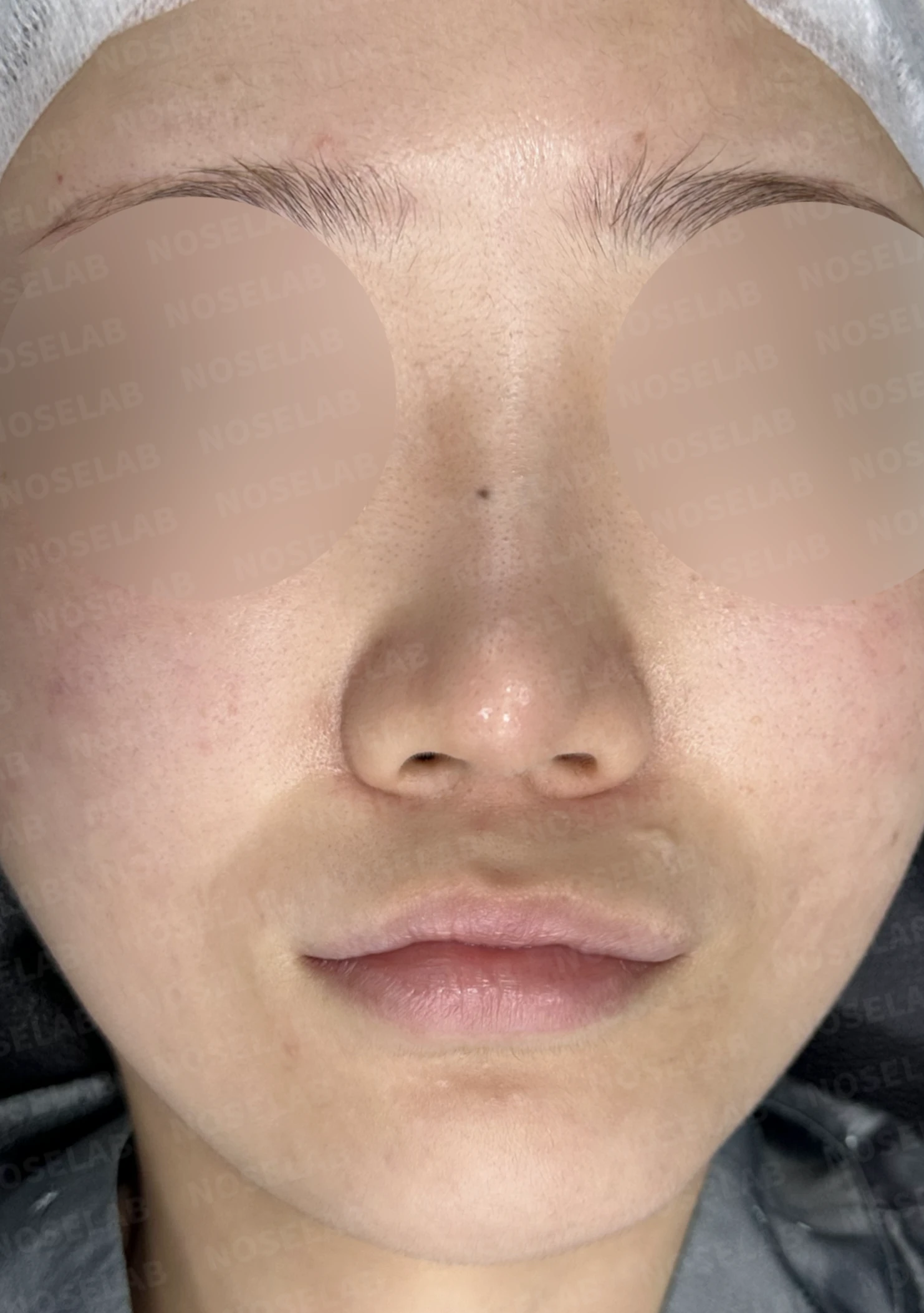
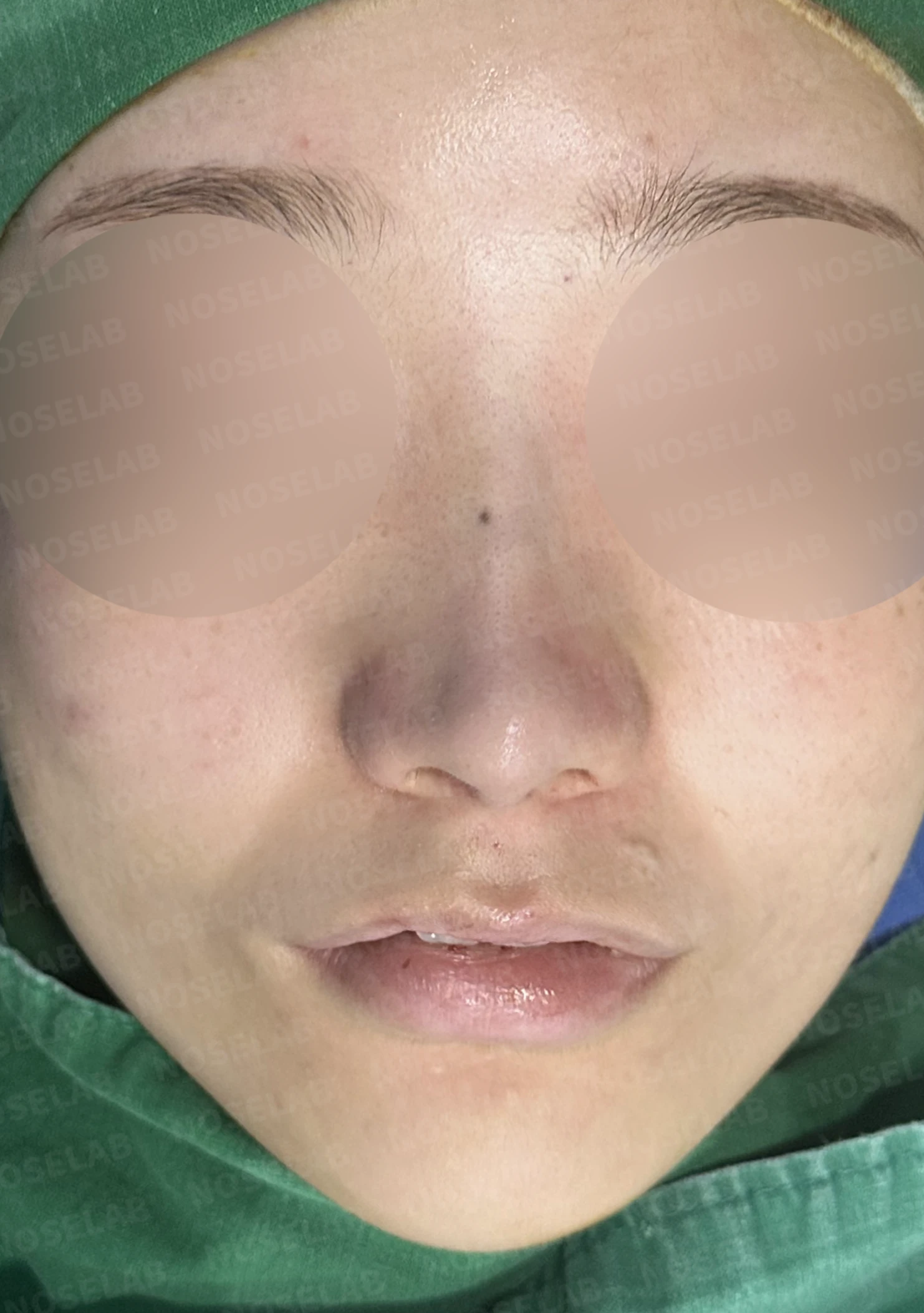
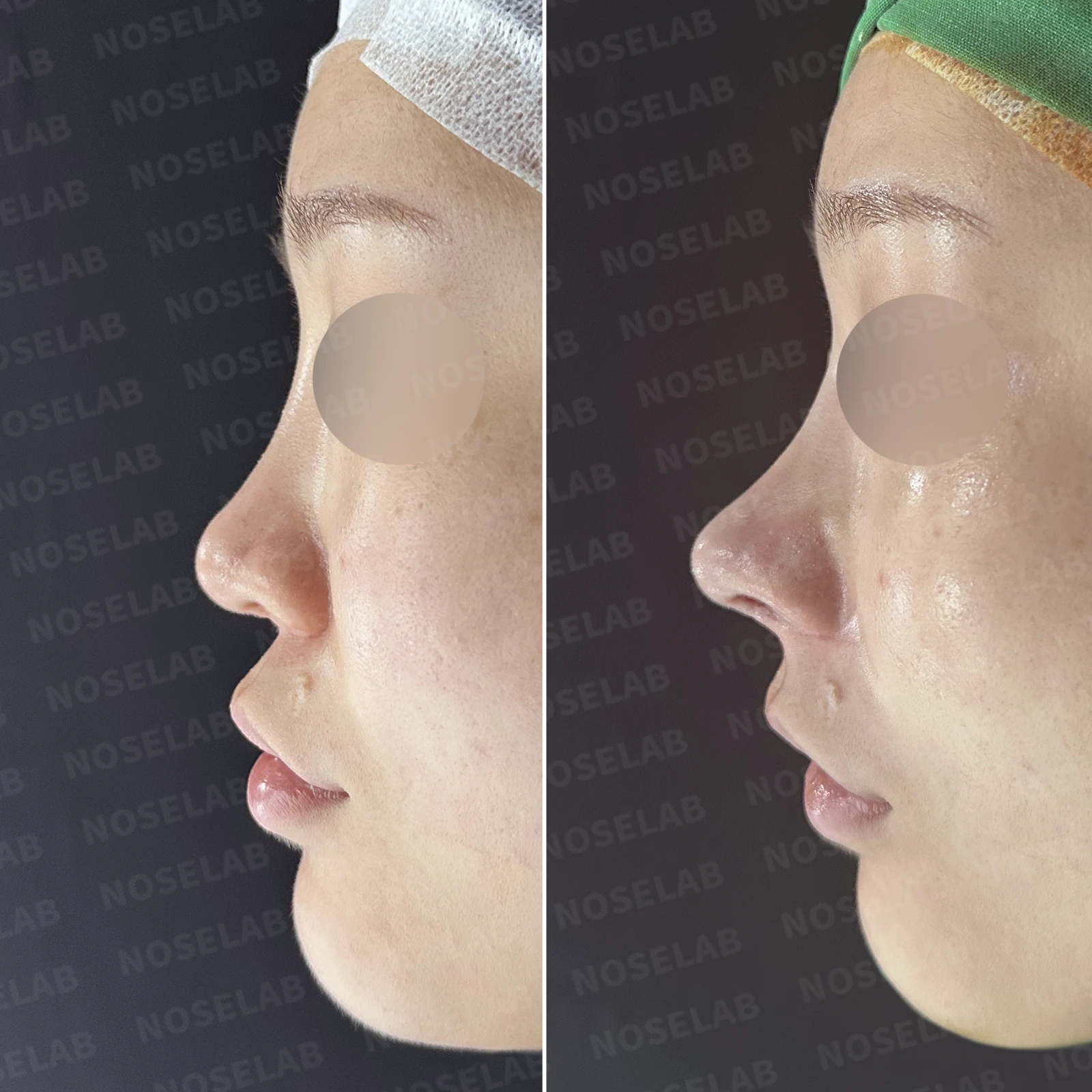
Before surgery / Day 0 immediately after surgery Photos taken immediately after surgery show swelling and may differ from the final result.
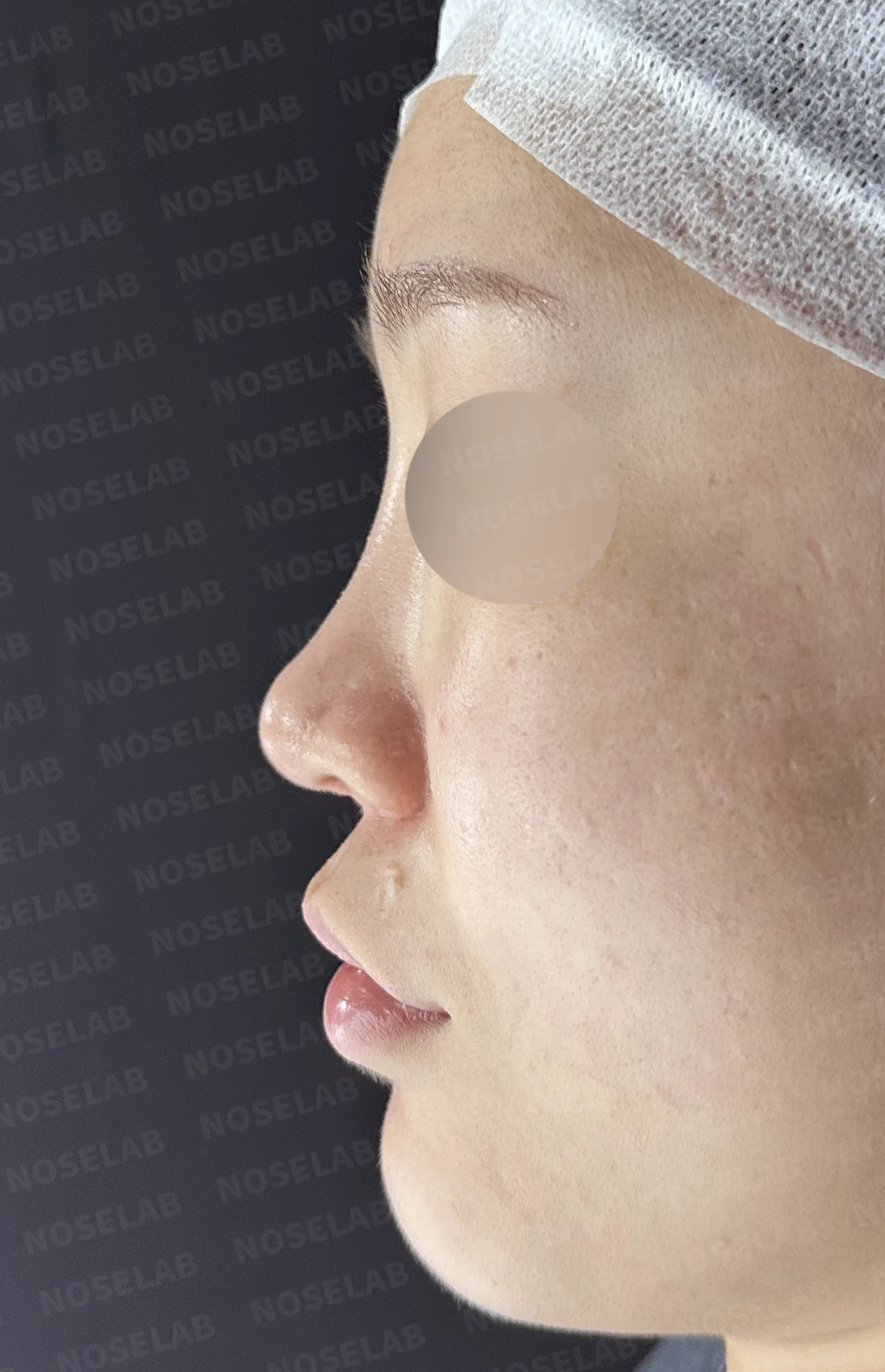
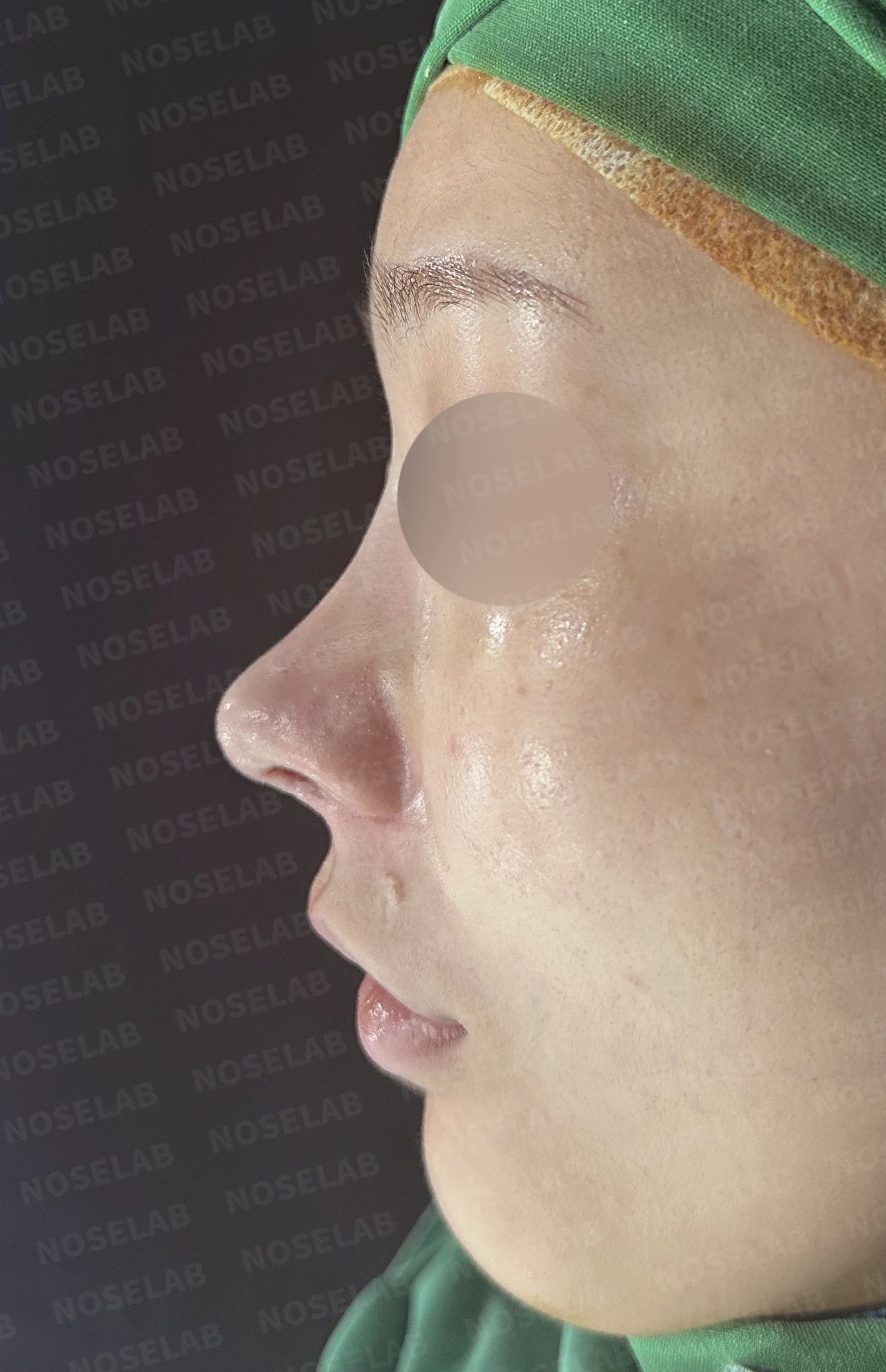
Before surgery / Day 0 immediately after surgery Photos taken immediately after surgery show swelling and may differ from the final result.
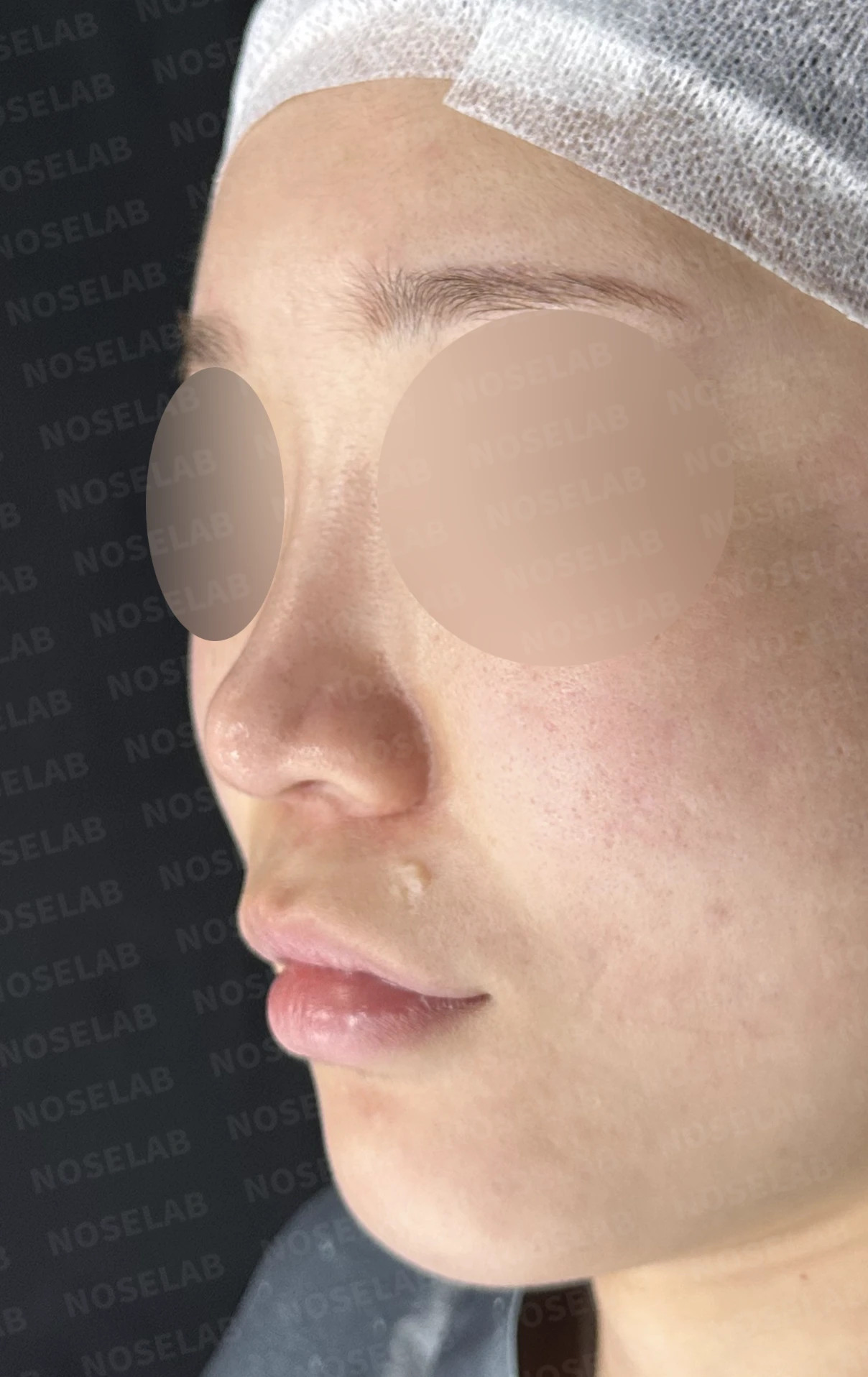
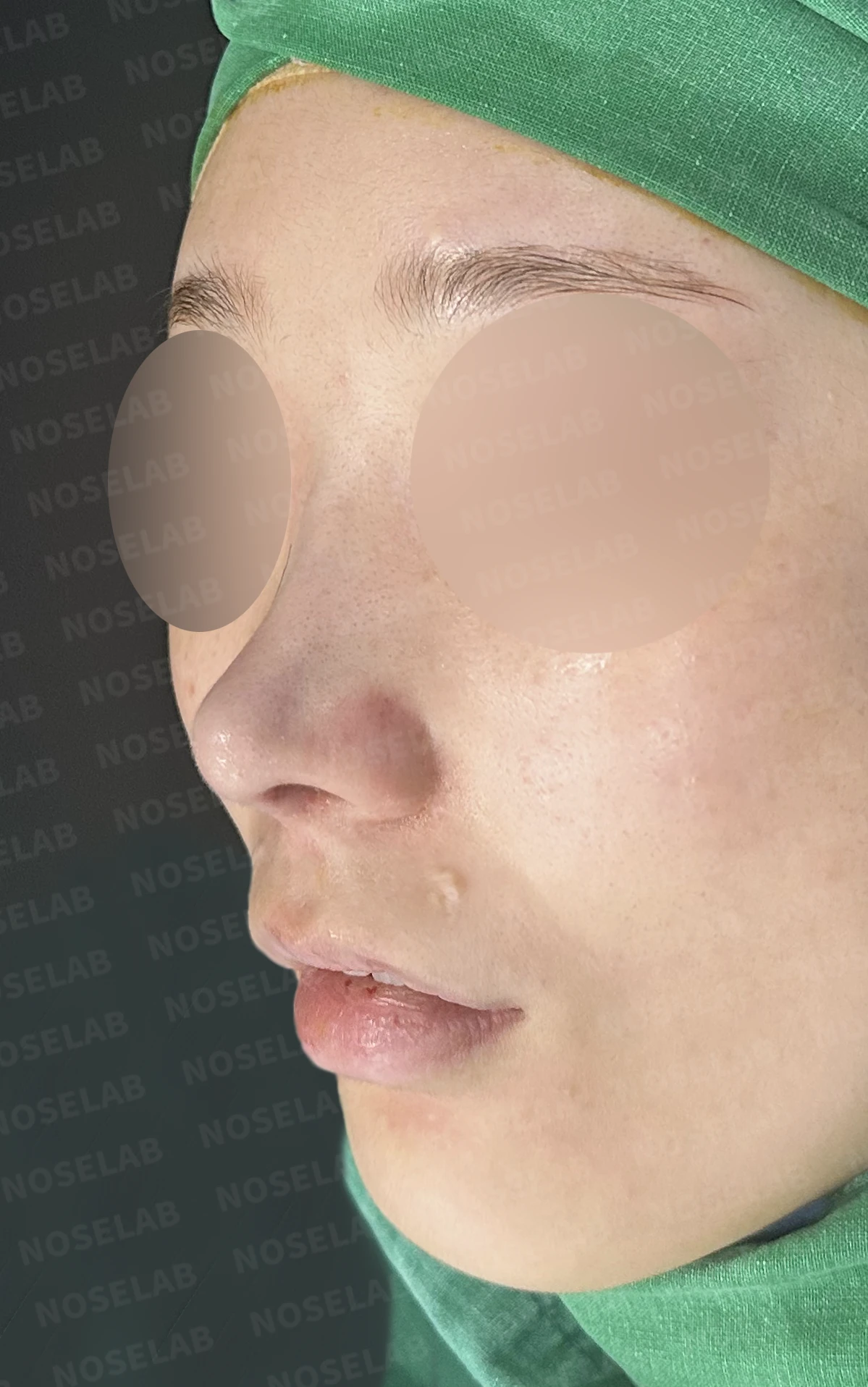
Before surgery / Day 0 immediately after surgery Photos taken immediately after surgery show swelling and may differ from the final result.
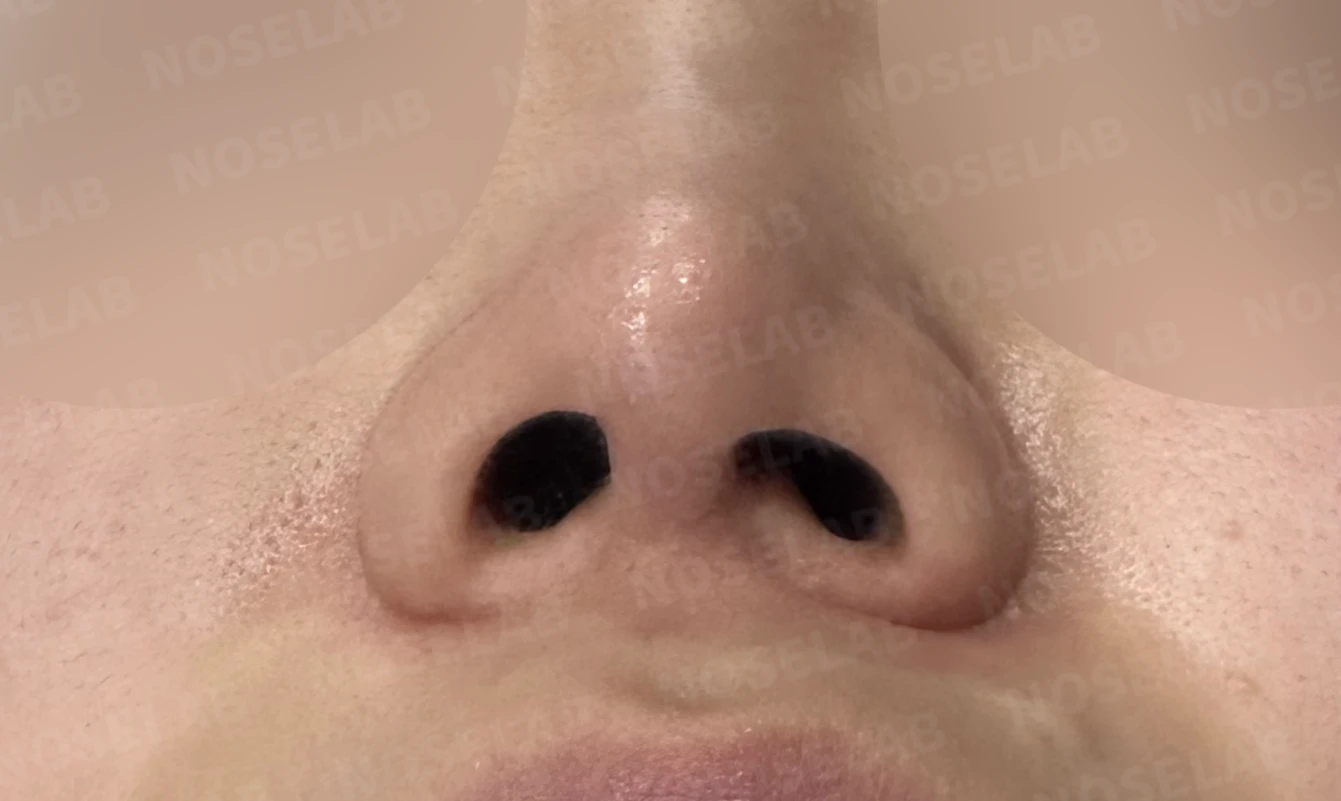
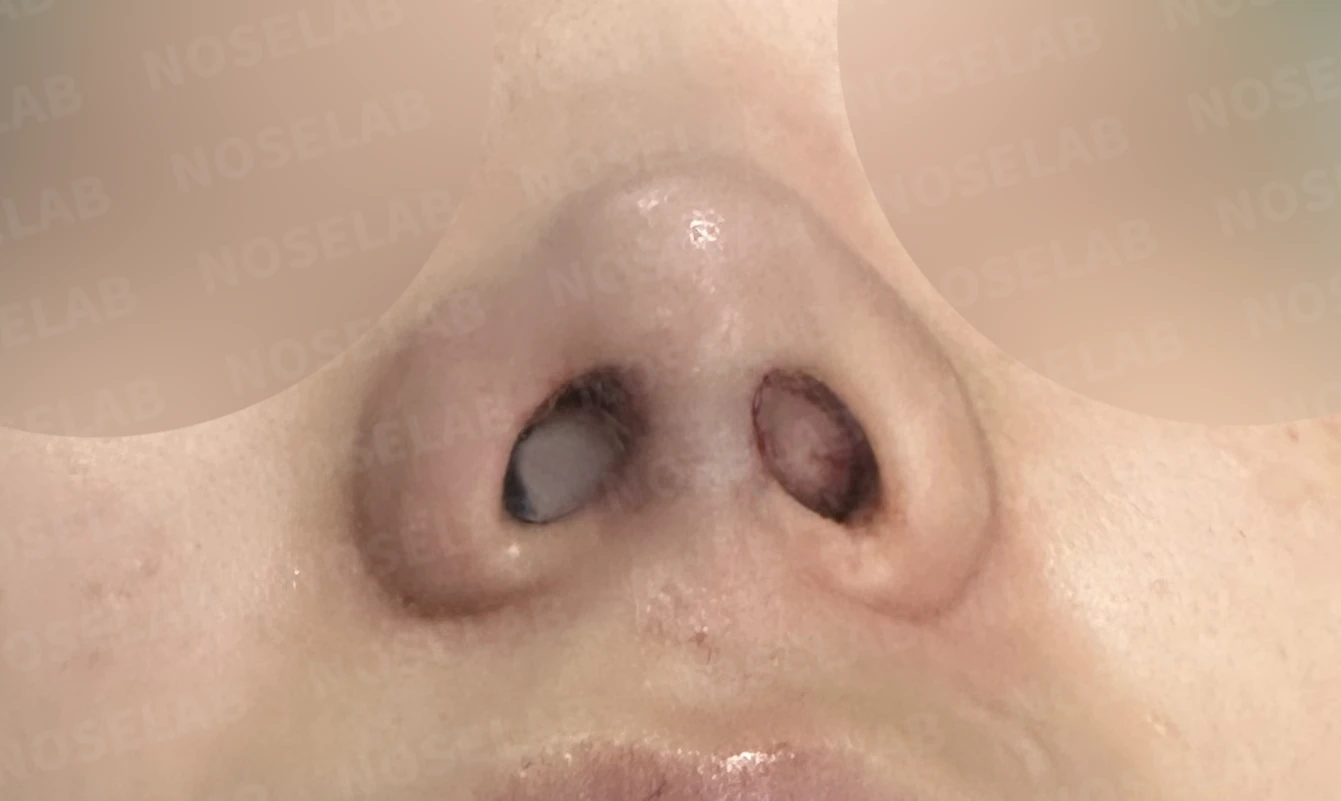
Before surgery / Day 0 immediately after surgery Photos taken immediately after surgery show swelling and may differ from the final result.
💡 Specialist opinion
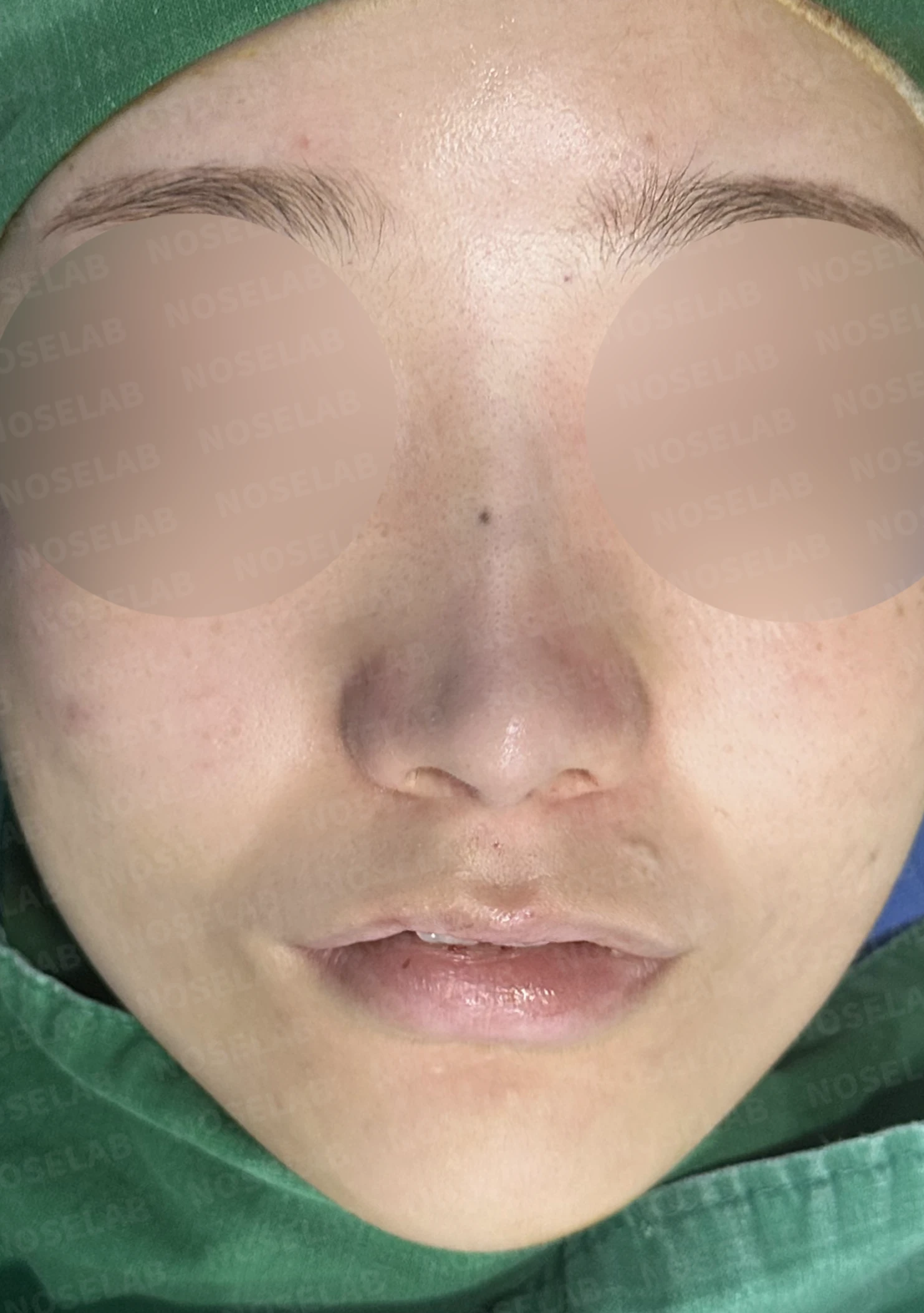
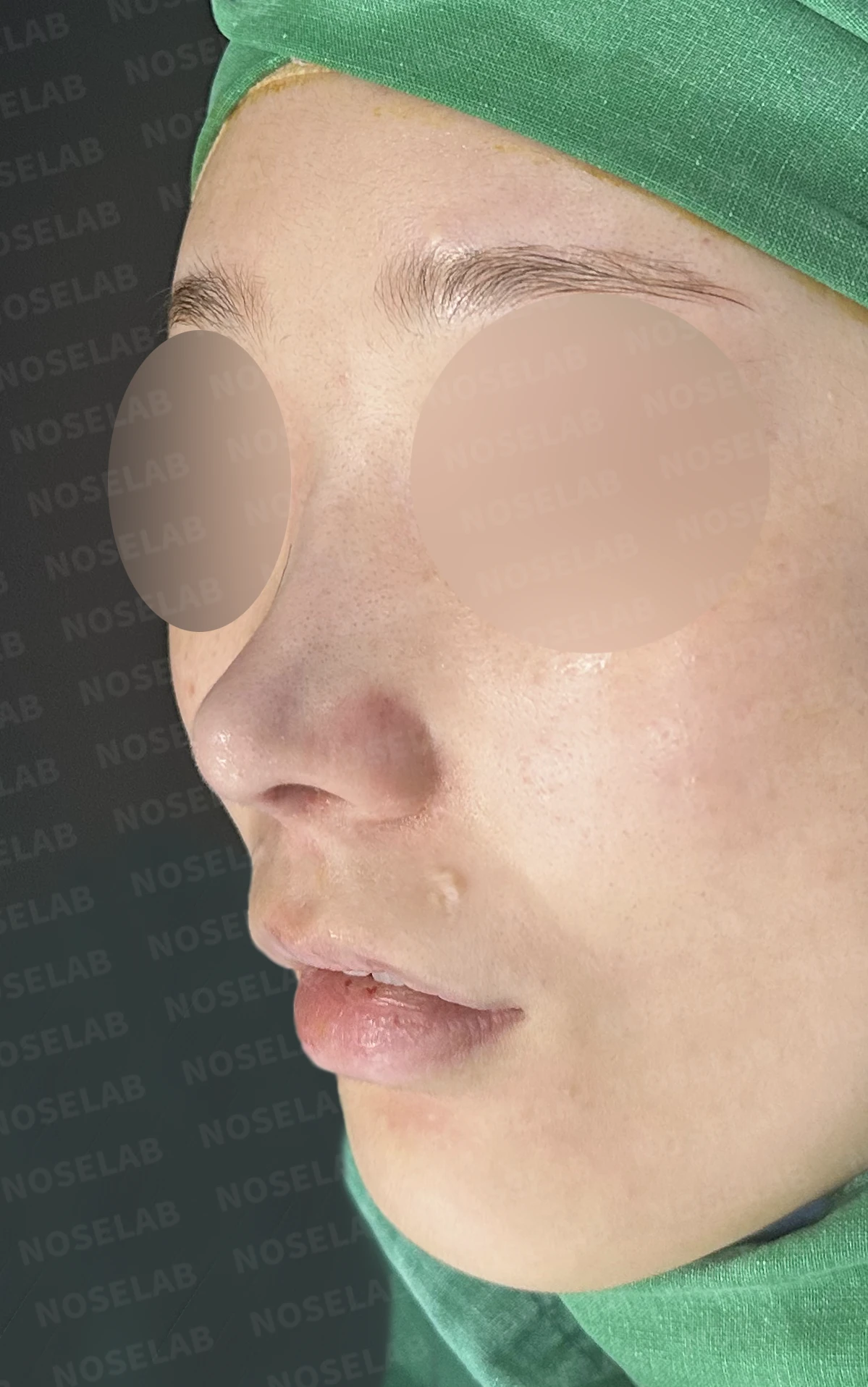
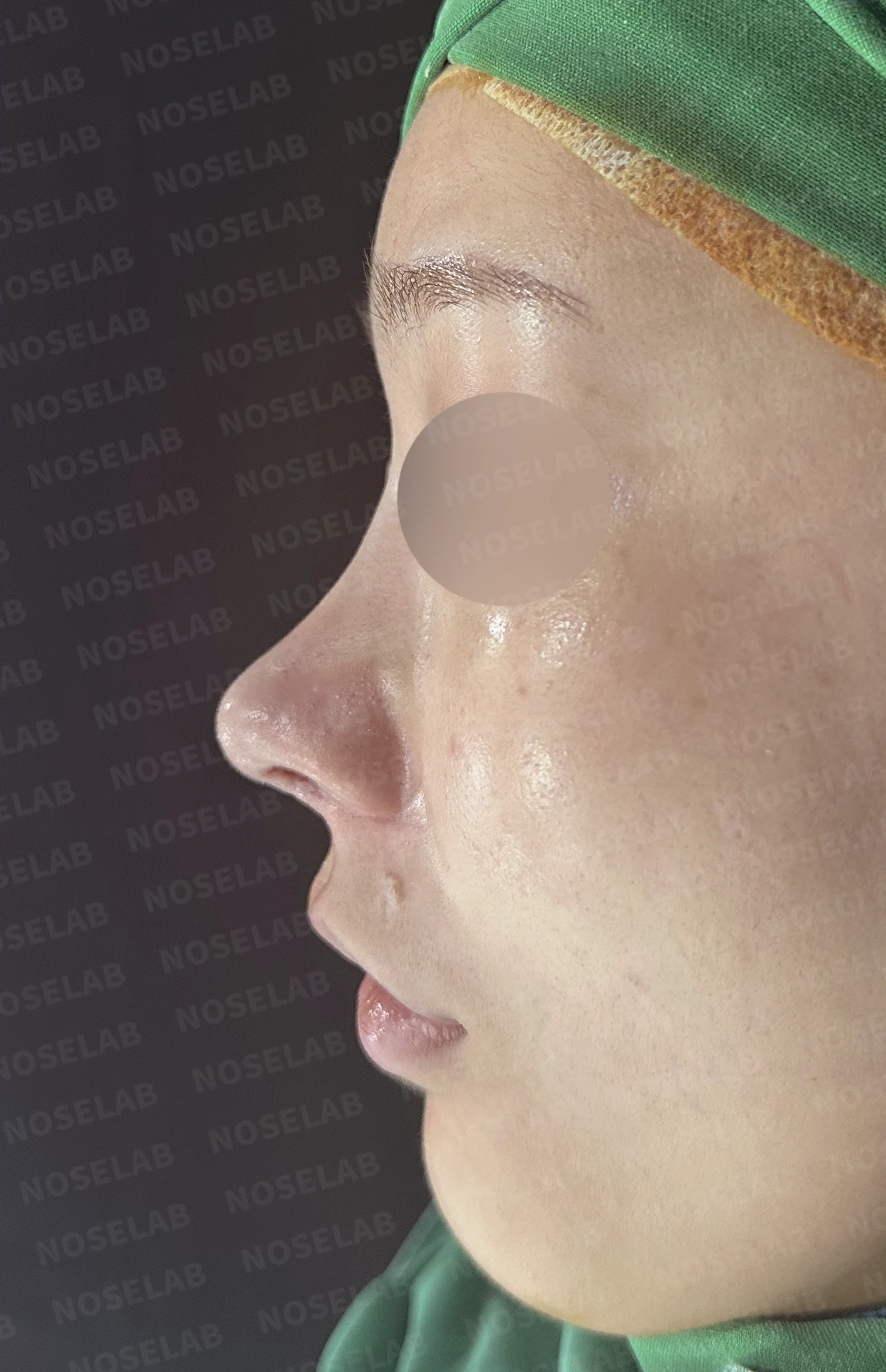
Front, oblique, and profile views on day 0 immediately after surgery. Photos taken immediately after surgery show swelling and may differ from the final result.
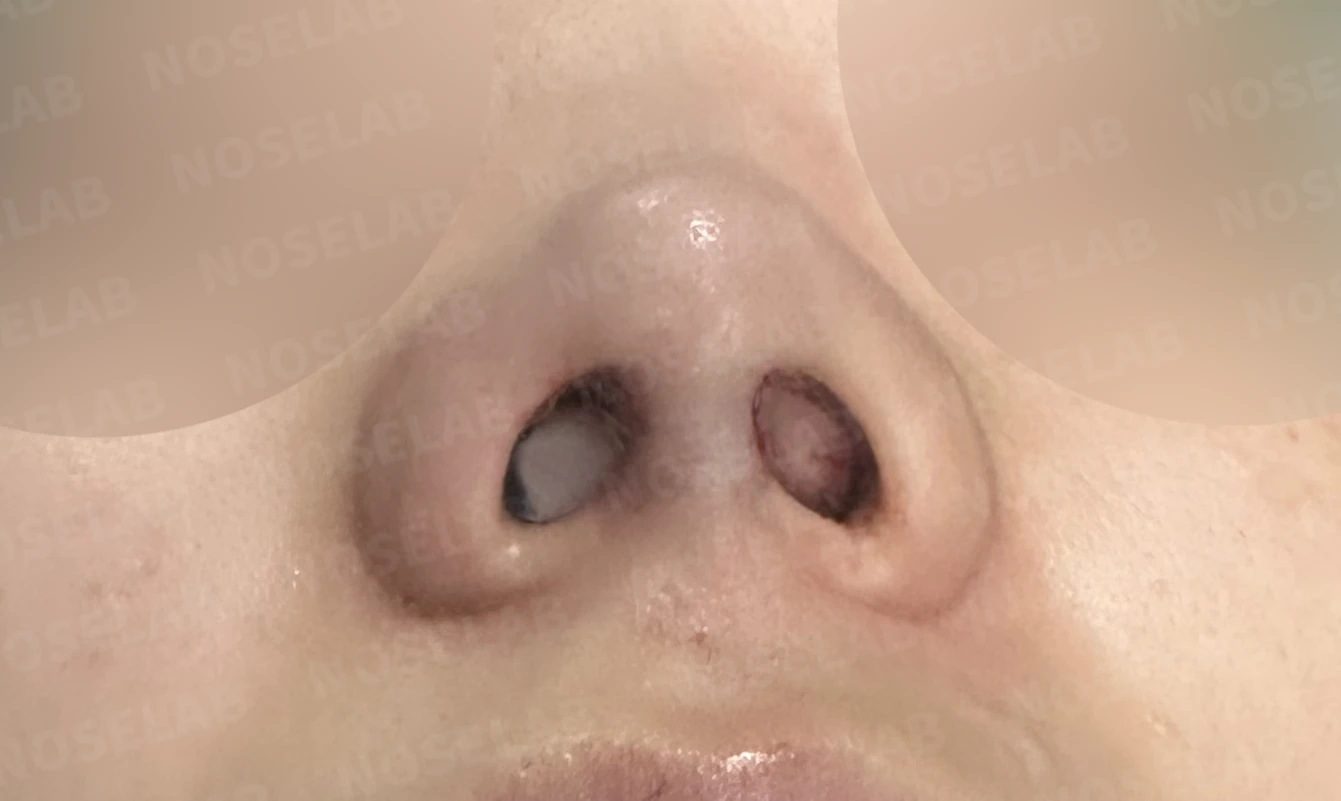
Nostril view on day 0 immediately after surgery. Photos taken immediately after surgery show swelling and may differ from the final result.
This was a case requiring restoration from a hazardous state where cartilage had penetrated the mucosa, along with reconstruction of damaged lower lateral cartilage.
The severity of cartilage exposure:
Extrusion through the mucosa can lead to infection and tissue necrosis. The exposed cartilage must be removed immediately and repaired with a perichondrial graft.
The importance of alar cartilage reconstruction:
When the lower lateral cartilage is damaged, nasal tip support becomes unstable and asymmetry develops. Precise reconstruction creates a stable foundation.
The relationship between the nasolabial angle and a protruding mouth:
A protruding mouth often presents with an obtuse or poorly balanced angle, creating a heavy facial impression. Adjusting the nasolabial angle enhances three-dimensional facial balance and creates a refined appearance.
NOSELAB will continue to do its best as a revision rhinoplasty clinic dedicated to resolving complex structural complications and delivering natural results.
This was Dr. Peter C. Kang. Thank you.
#closedrhinoplasty #closedrevisionrhinoplasty #cartilageexposurerepair #alarcartilagereconstruction #autologousribcartilage #nasolabialanglecorrection #protrudingmouthcorrection #nostrilasymmetrycorrection #revisionspecialist

Limitations and risks
When autologous rib cartilage is used, scarring and pain may remain at the donor site on the chest, and pneumothorax (pleural injury) can occur rarely. Over time, the grafted cartilage may warp or undergo partial resorption.
When using donor rib cartilage, long-term follow-up is necessary because the grafted cartilage may resorb or warp.
When revising after implant removal, contracture may progress again after removal, the nasal height and length may decrease, and staged surgery may be necessary depending on the skin condition.
Common potential risks include infection, bleeding, asymmetry, scarring, skin necrosis, and insufficient improvement; results vary depending on individual skin condition and previous surgical history.