Hello, I am Dr. Peter C. Kang.
Today, I would like to introduce a revision rhinoplasty case of a patient who had undergone multiple nasal surgeries but was dissatisfied with the height of the nasal bridge and nasal tip.
🔍 Surgical history
About 14 years ago, the patient received nasal filler injections and later had them dissolved. About 7 years ago, rhinoplasty was performed using autologous rib cartilage and a silicone implant. Then, about 1 year ago, only the nasal tip was revised using ear cartilage and Alloderm, along with alar rim graft surgery (nostril lowering). However, the patient remained dissatisfied with the result of the nasal tip and visited NOSELAB.
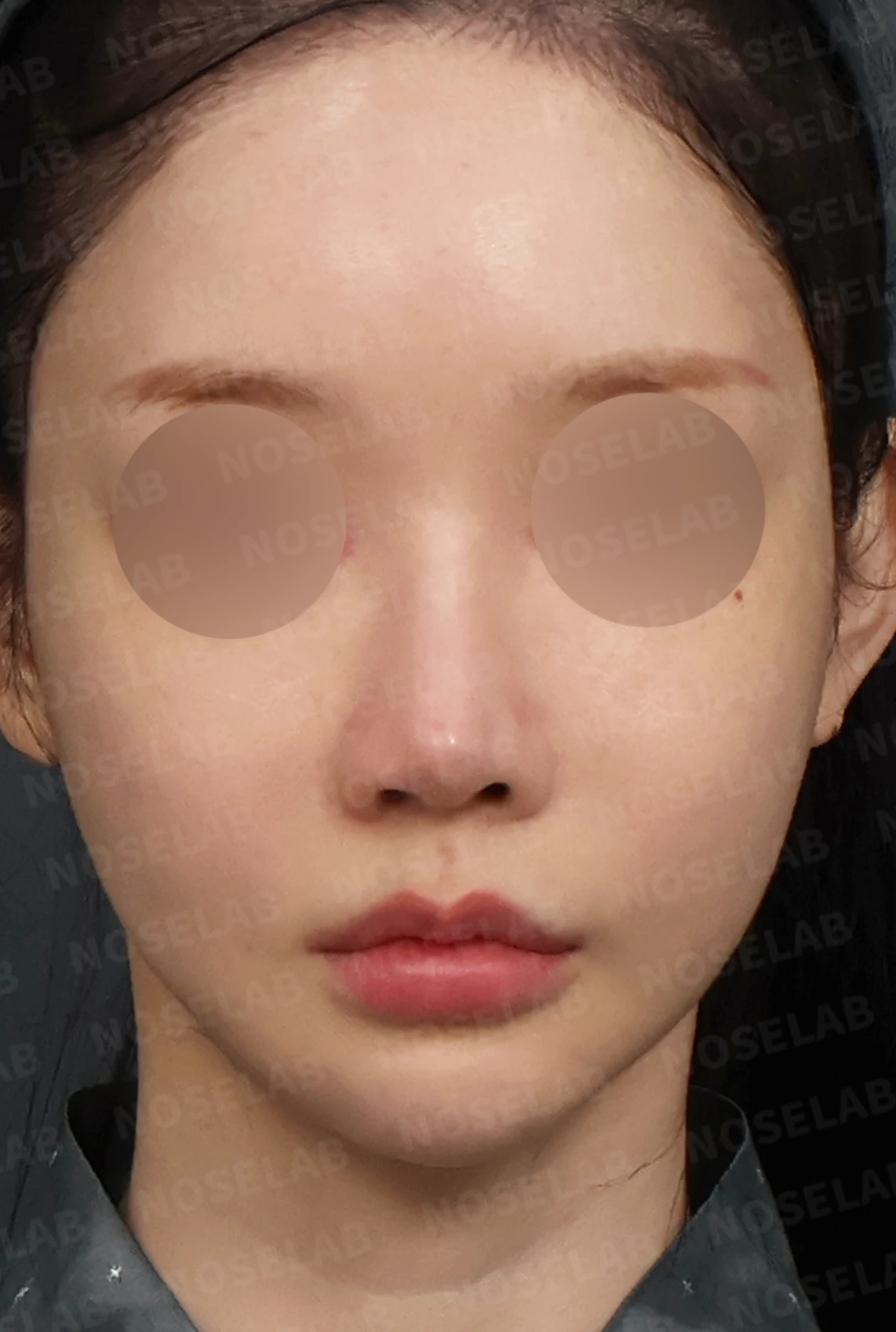
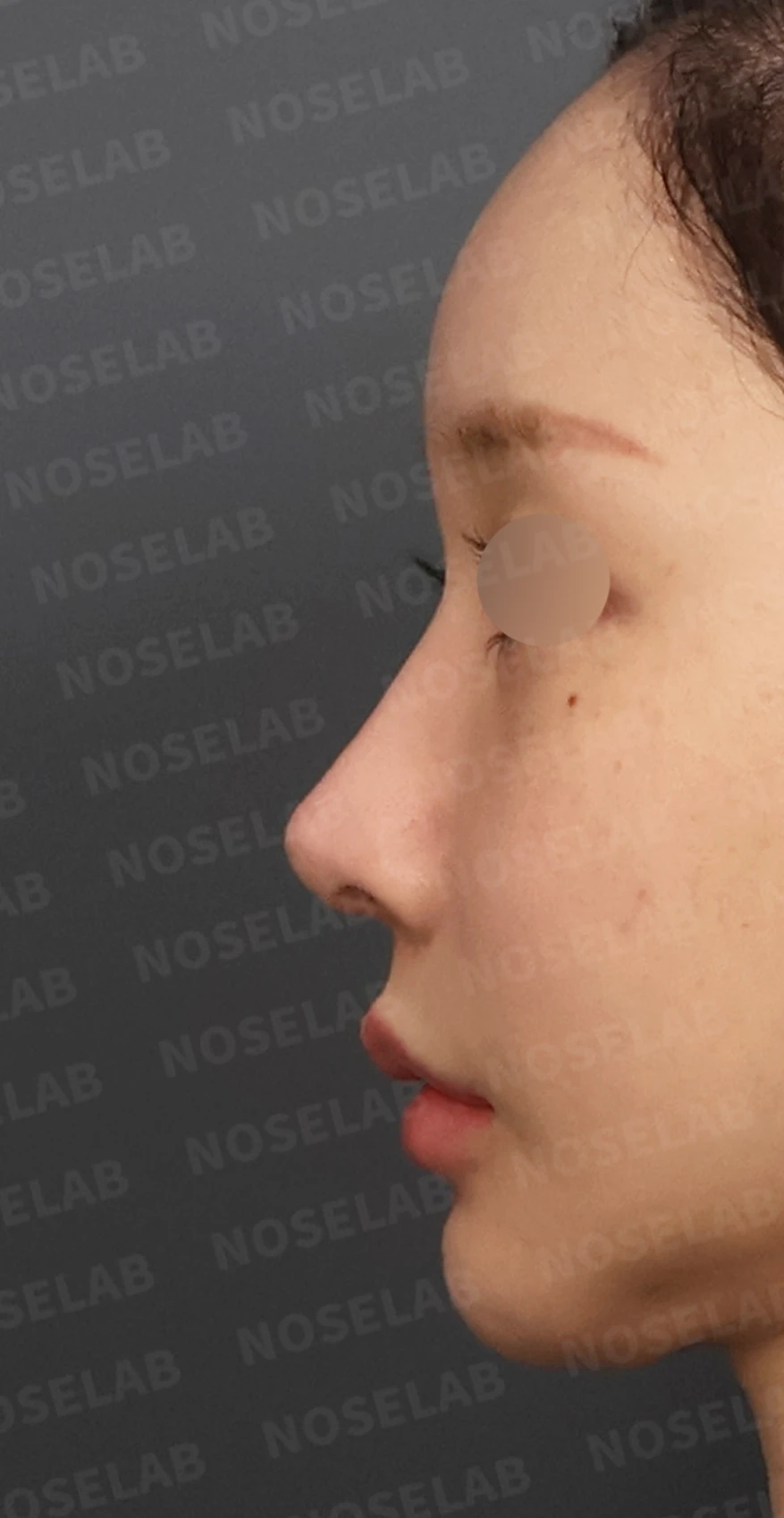
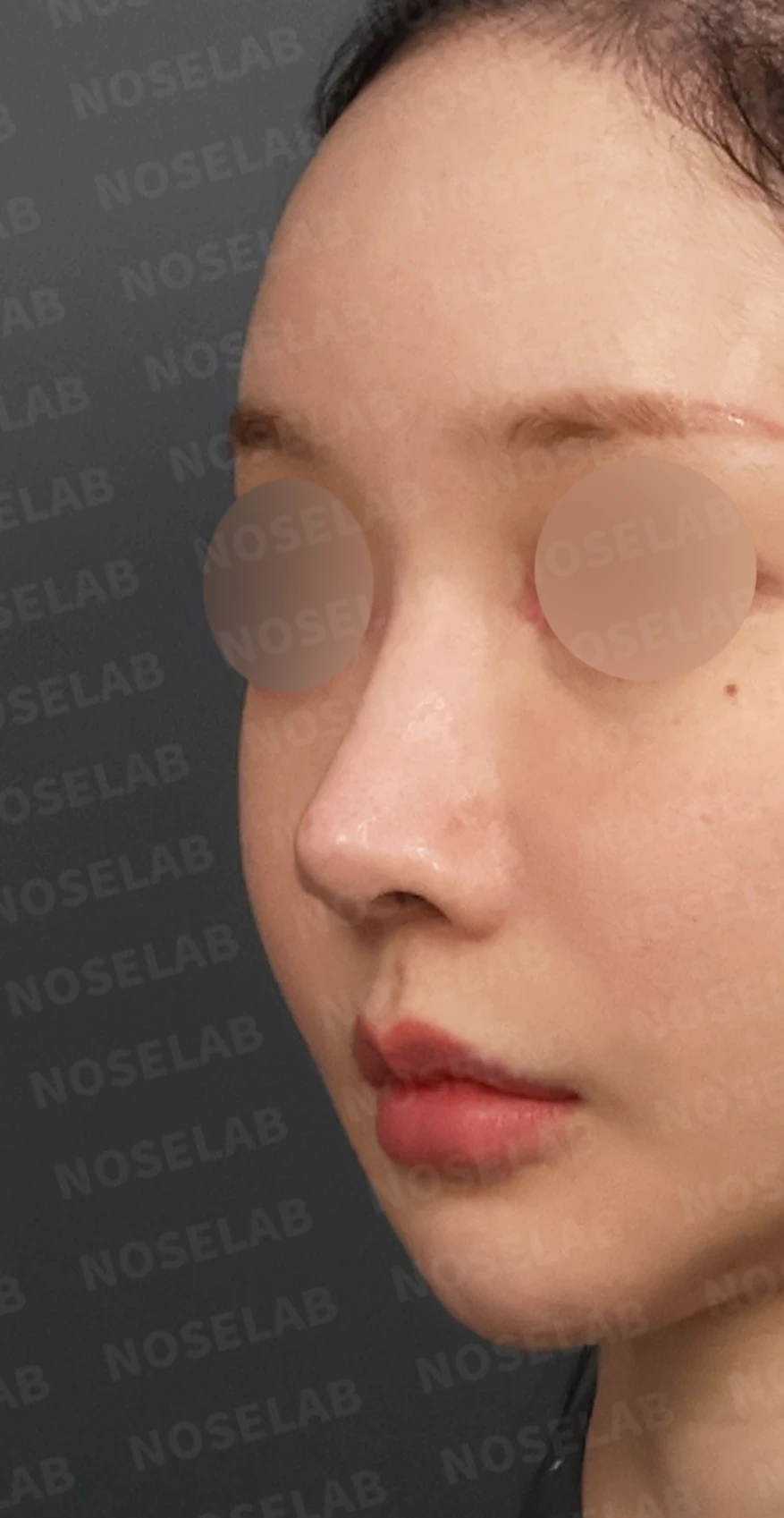
Front, left profile, and oblique views during design consultation.
Patient requests
Desire for overall greater height along the nasal bridge
Desire to elevate the nasal tip height as well
Improvement of nostril asymmetry
Refining the nasal profile by correcting the nasolabial angle
A refined yet natural-looking nose
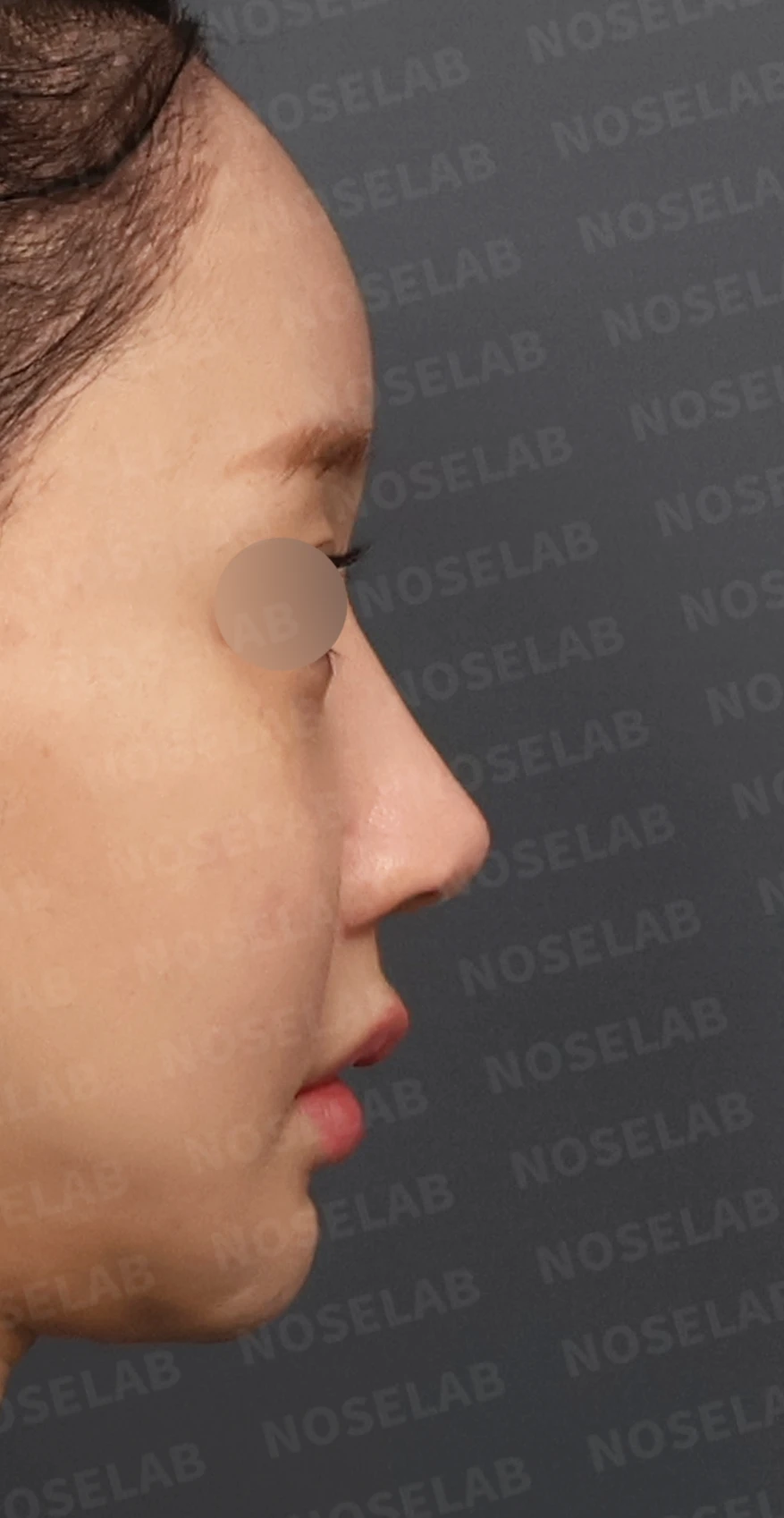
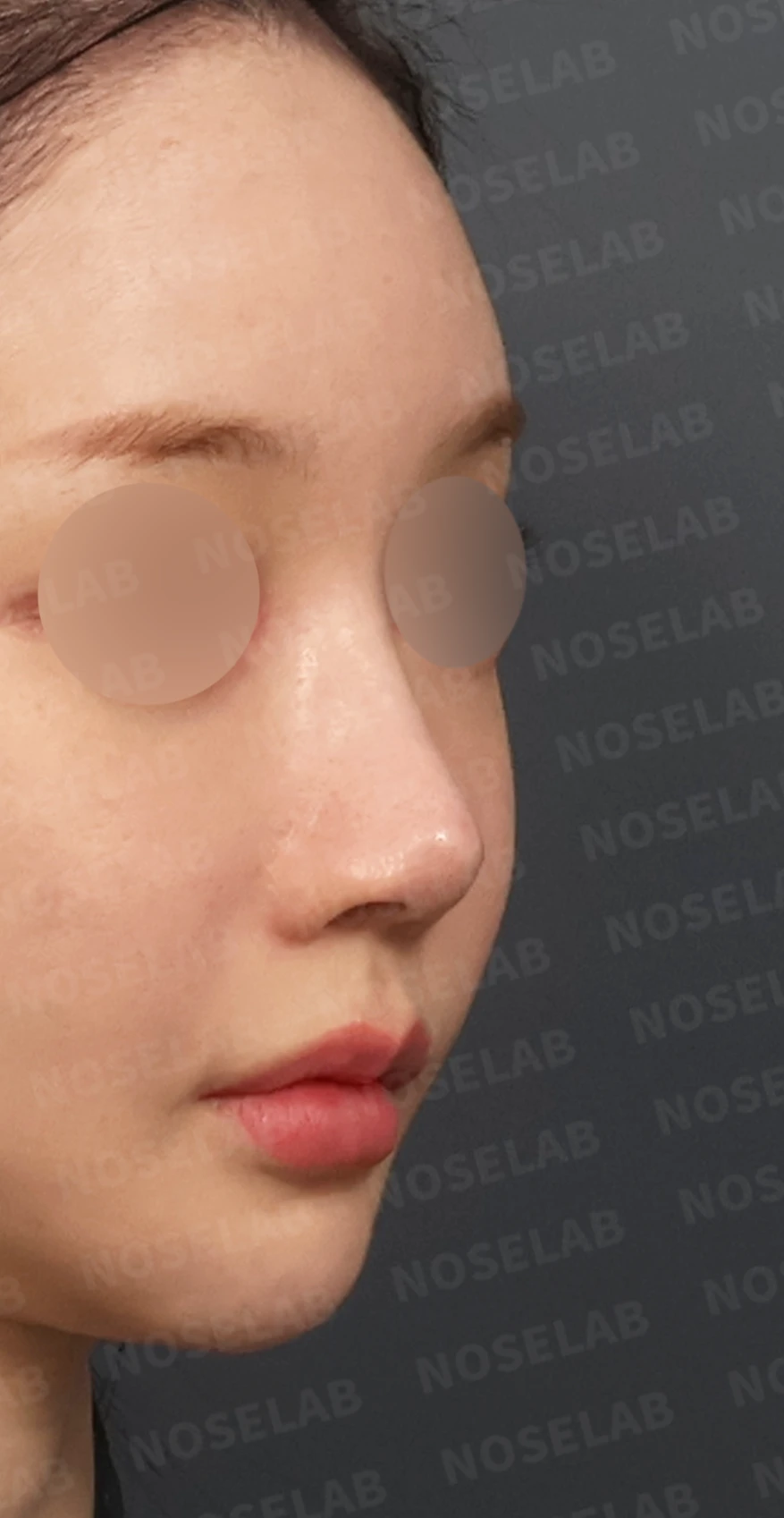
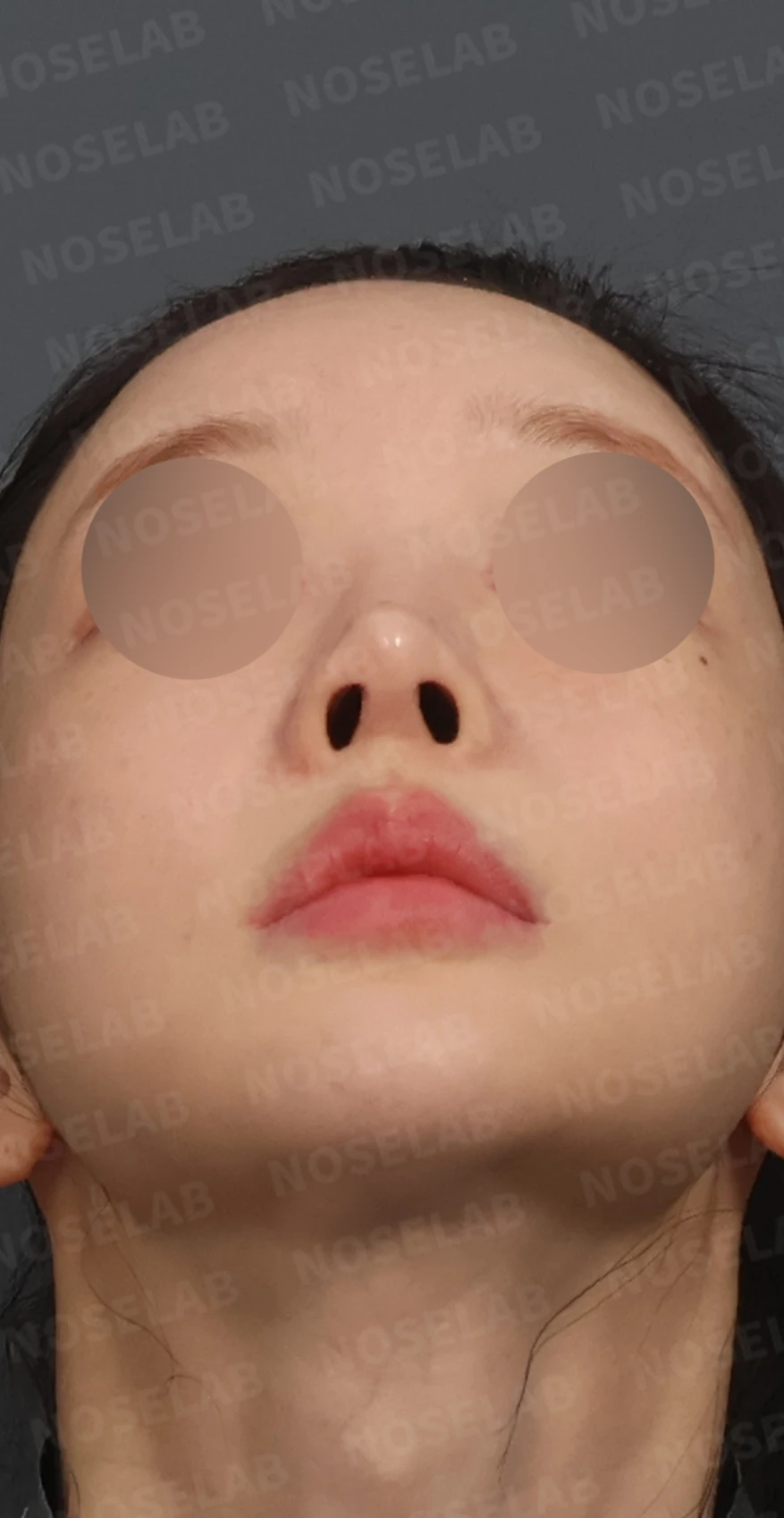
Right profile, oblique, and nostril views during design consultation.
🔧 Surgical plan and procedure
1. Correcting nasal tip height using autologous rib cartilage
The ear cartilage and Alloderm from the previous surgery were removed, and the support structure of the nasal tip was newly reconstructed using autologous rib cartilage to achieve the desired height.
2. Reinforcing the nasal tip skin using autologous dermis
Because the nasal tip skin had become thin after multiple surgeries, autologous dermis was used to reinforce the skin and protect against implant show-through.
3. Correcting nasal bridge height through recarving the silicone implant
After removing the existing silicone implant, a new implant was carved to match the patient's nasal bone shape, naturally elevating the nasal dorsum.
4. Correcting the step-off at the glabella using autologous fat grafting
Because of prominent brow bones, there was a visible step-off transition from the glabella to the nasal bridge. Autologous fat grafting was performed to create a smooth, continuous line from the forehead down to the nasal bridge.
5. Nasolabial angle correction
By adjusting the angle between the nasal tip and the upper lip on profile view, a refined lateral profile was achieved.
🌟 Surgical results
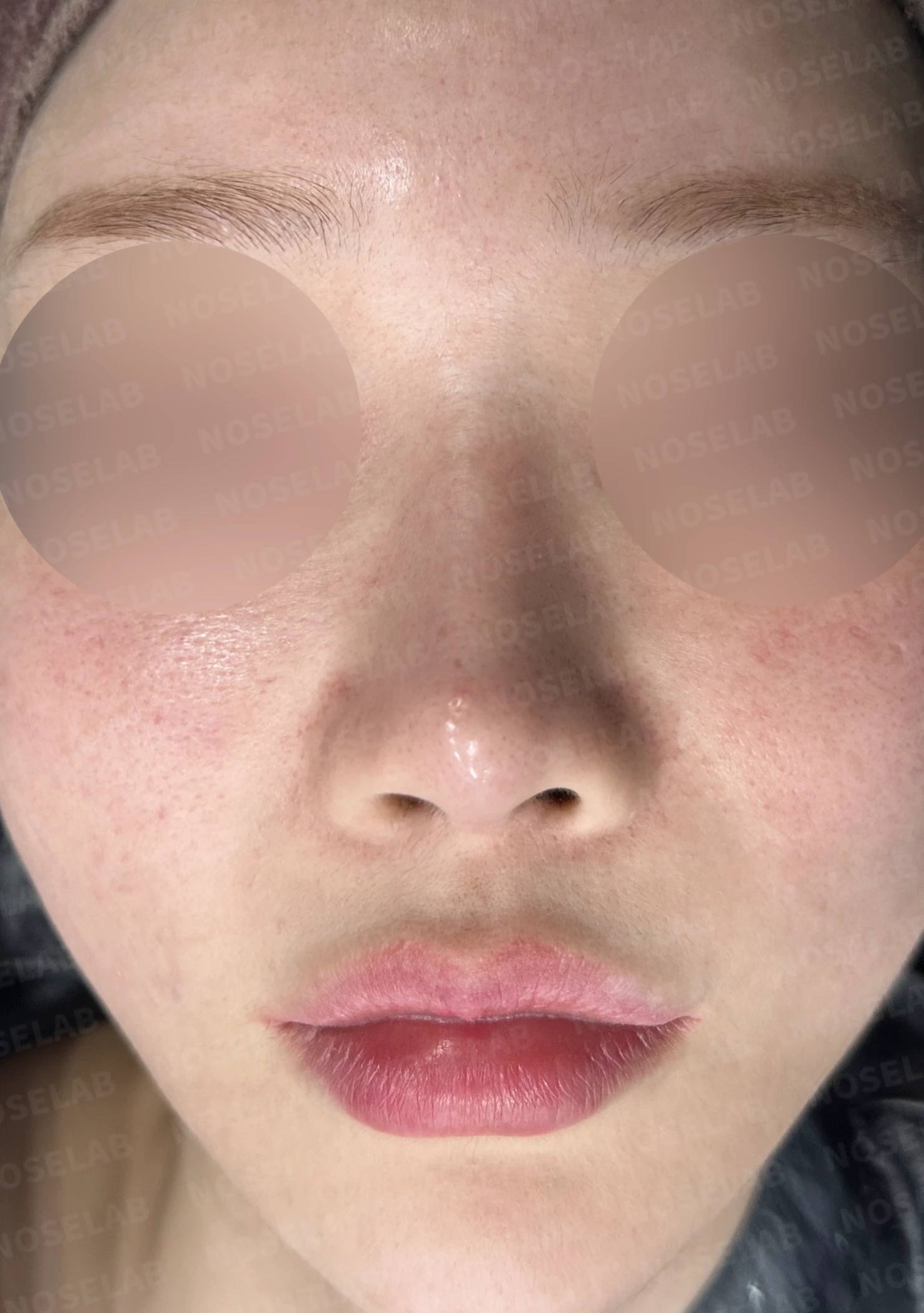
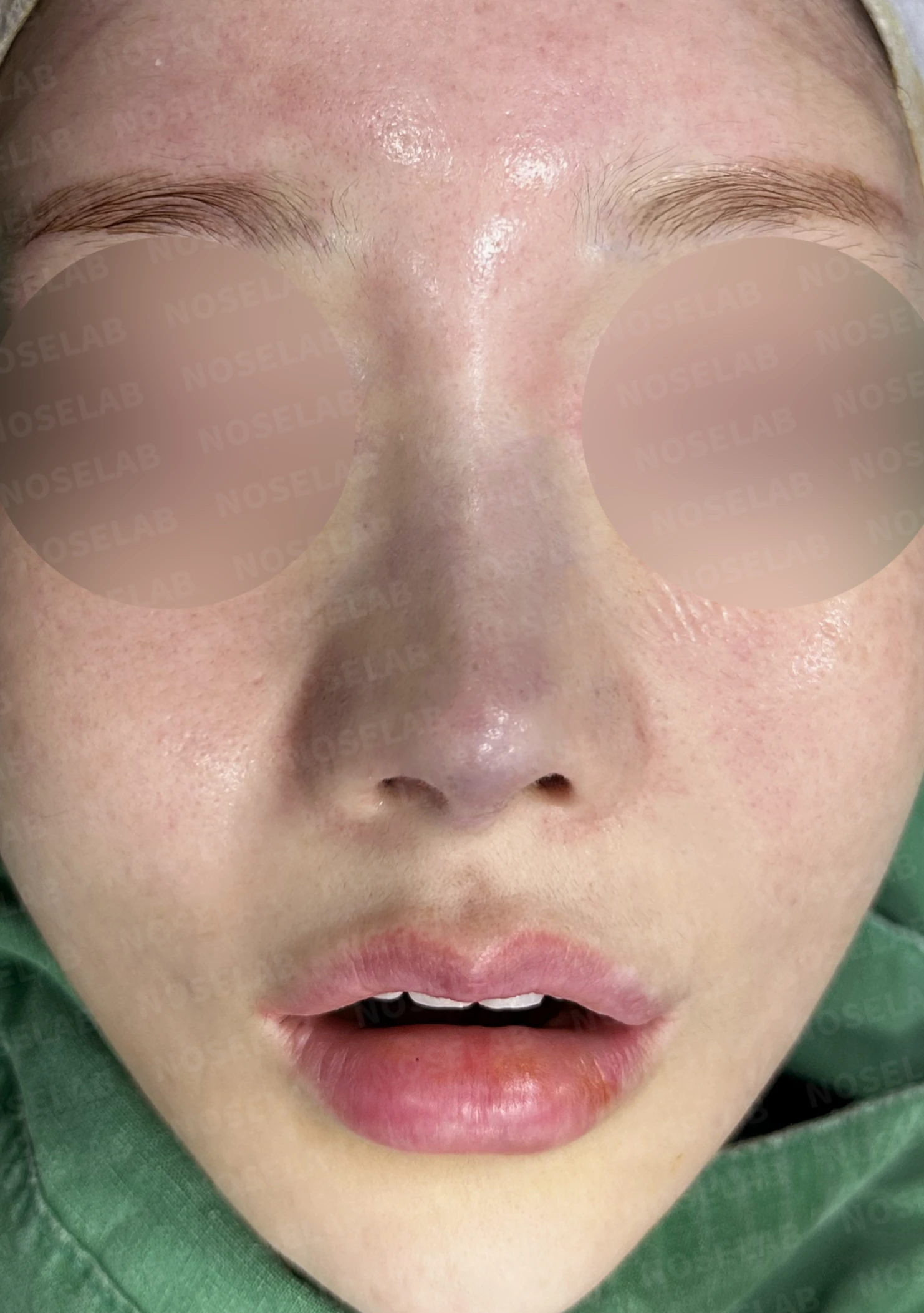
Before surgery / Day 0 immediately after surgery Photos taken immediately after surgery show swelling and may differ from the final result.
Front view changes
The nasal bridge is raised overall, creating a clear and defined nasal contour
Nostril asymmetry is improved, producing a balanced appearance
The nasal tip is elevated and well-defined, providing a sophisticated look
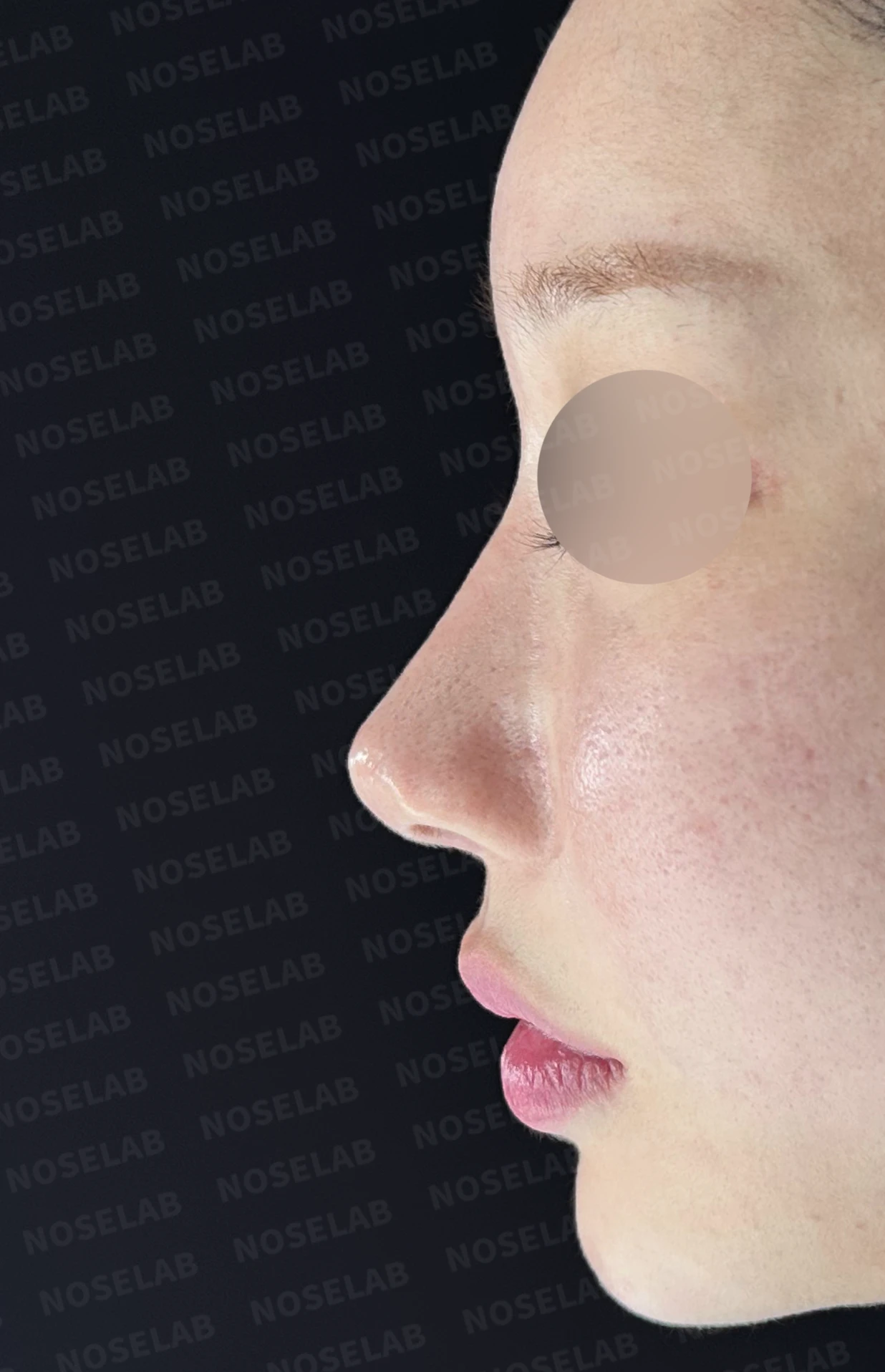
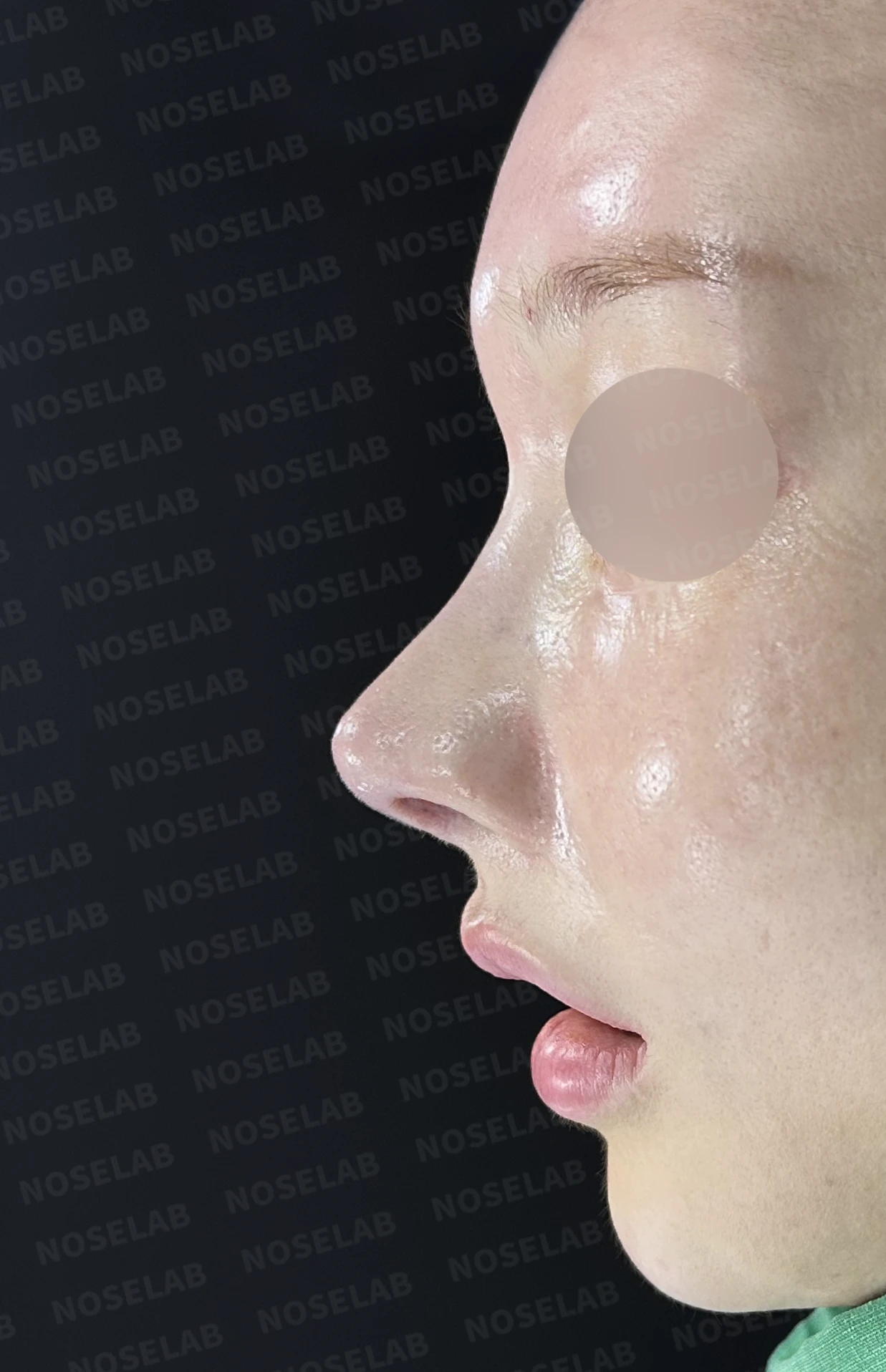
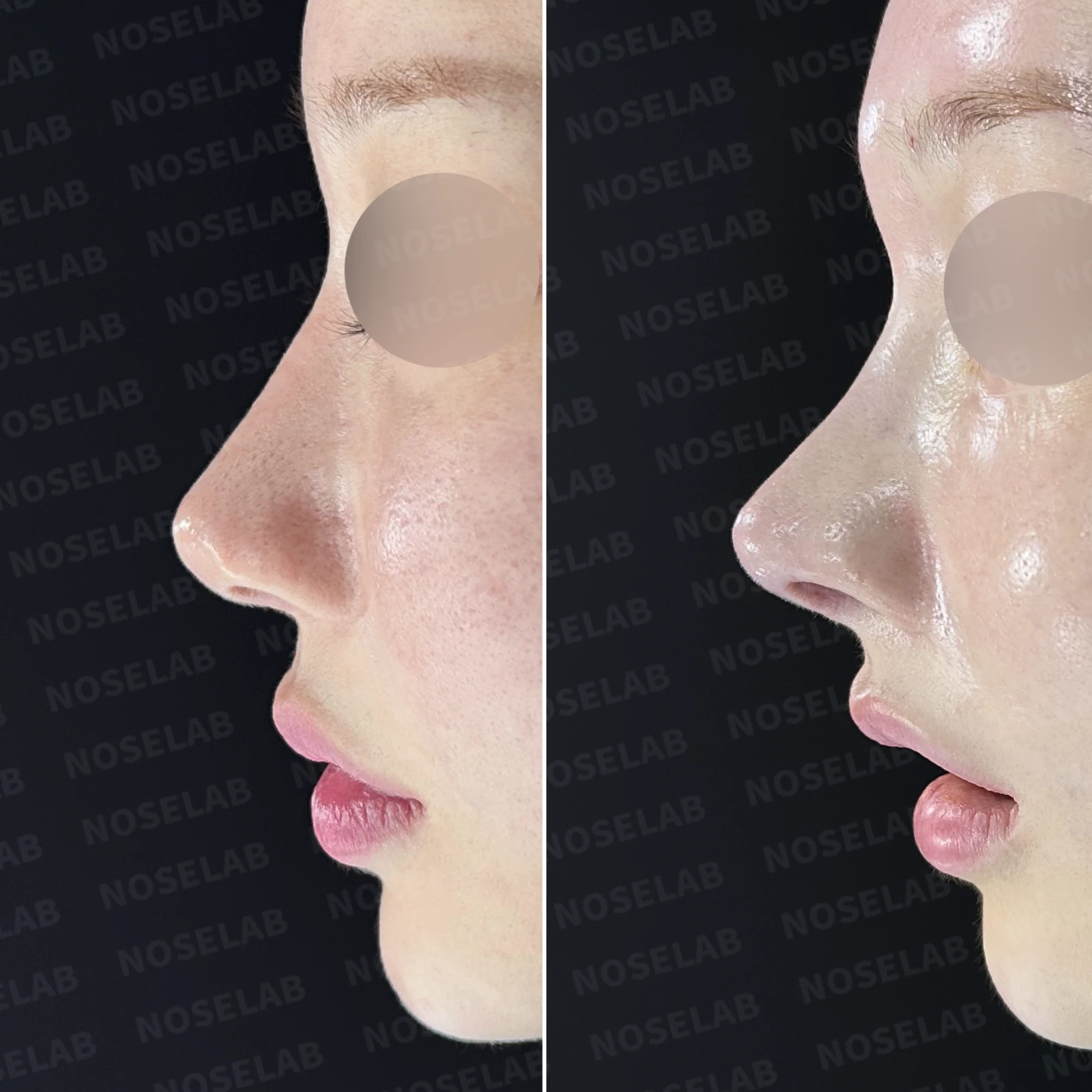
Before surgery / Day 0 immediately after surgery Photos taken immediately after surgery show swelling and may differ from the final result.
Profile view changes
A natural, continuous line from the forehead to the nasal bridge is achieved
The step-off between the eyebrows is resolved, creating a smooth profile silhouette
The nasolabial angle is appropriately corrected, resulting in a refined yet natural nasal line
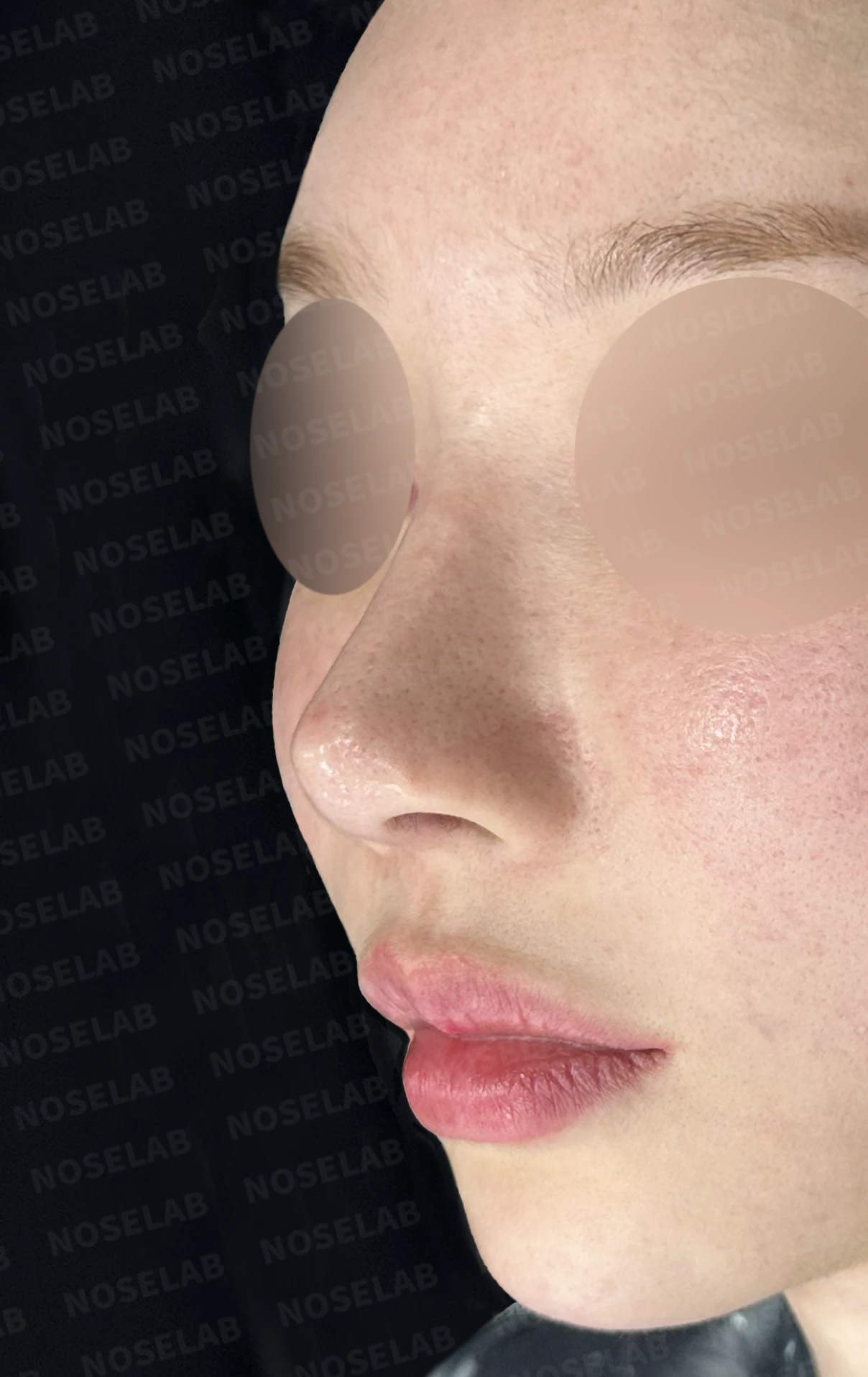
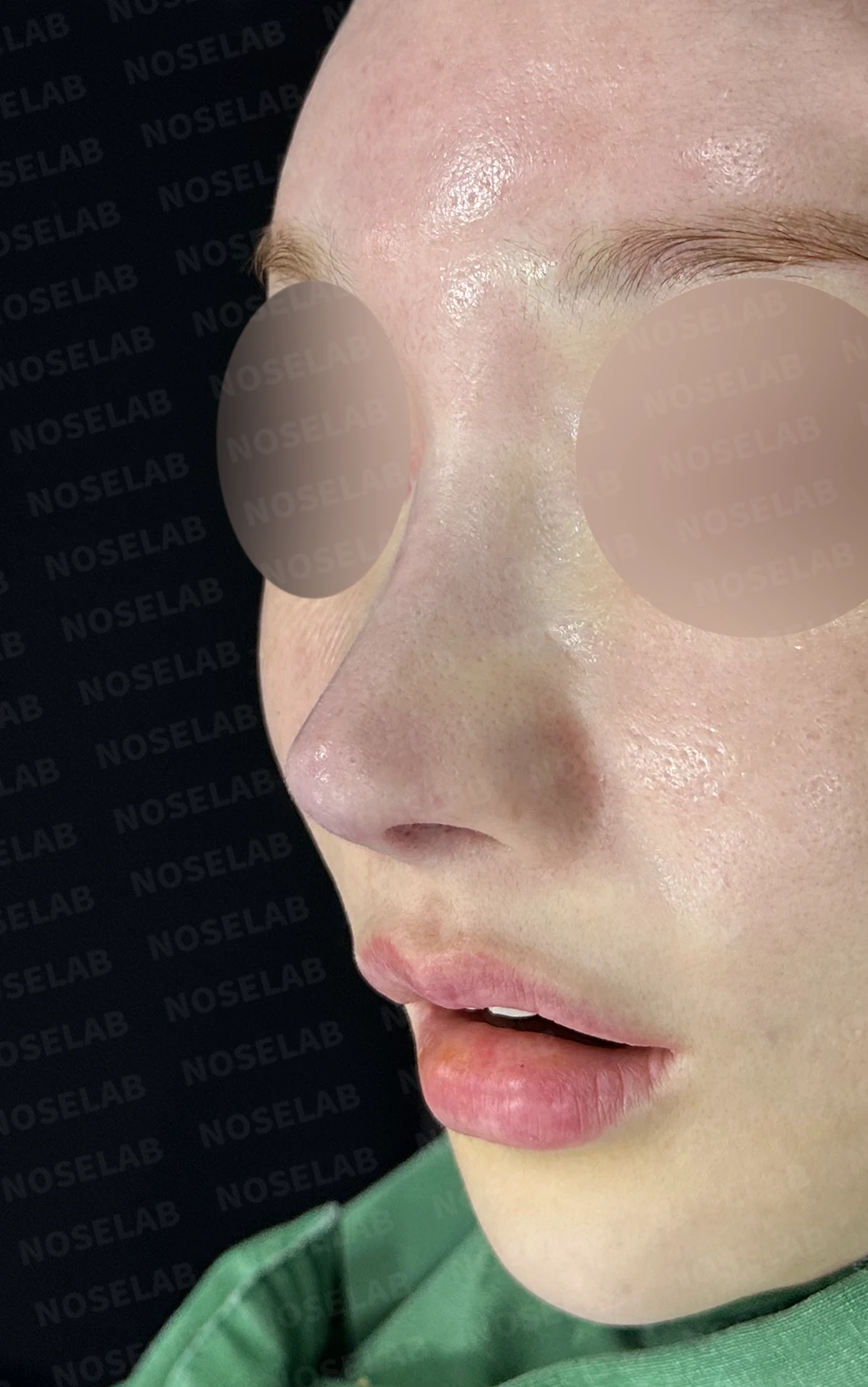
Before surgery / Day 0 immediately after surgery Photos taken immediately after surgery show swelling and may differ from the final result.
Overall change in impression
The nasal bridge and nasal tip are raised in harmony, enhancing overall facial three-dimensionality
A distinct yet natural-looking result without looking overdone
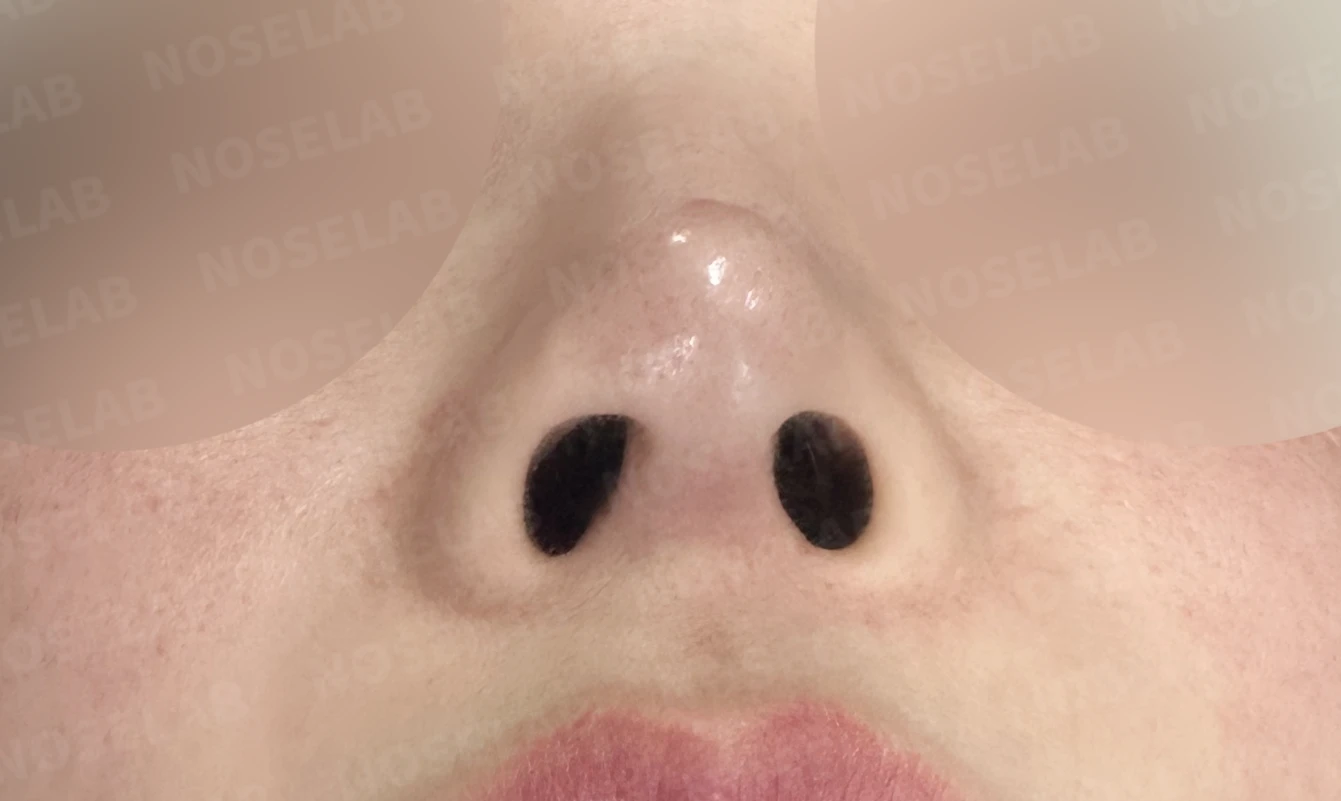
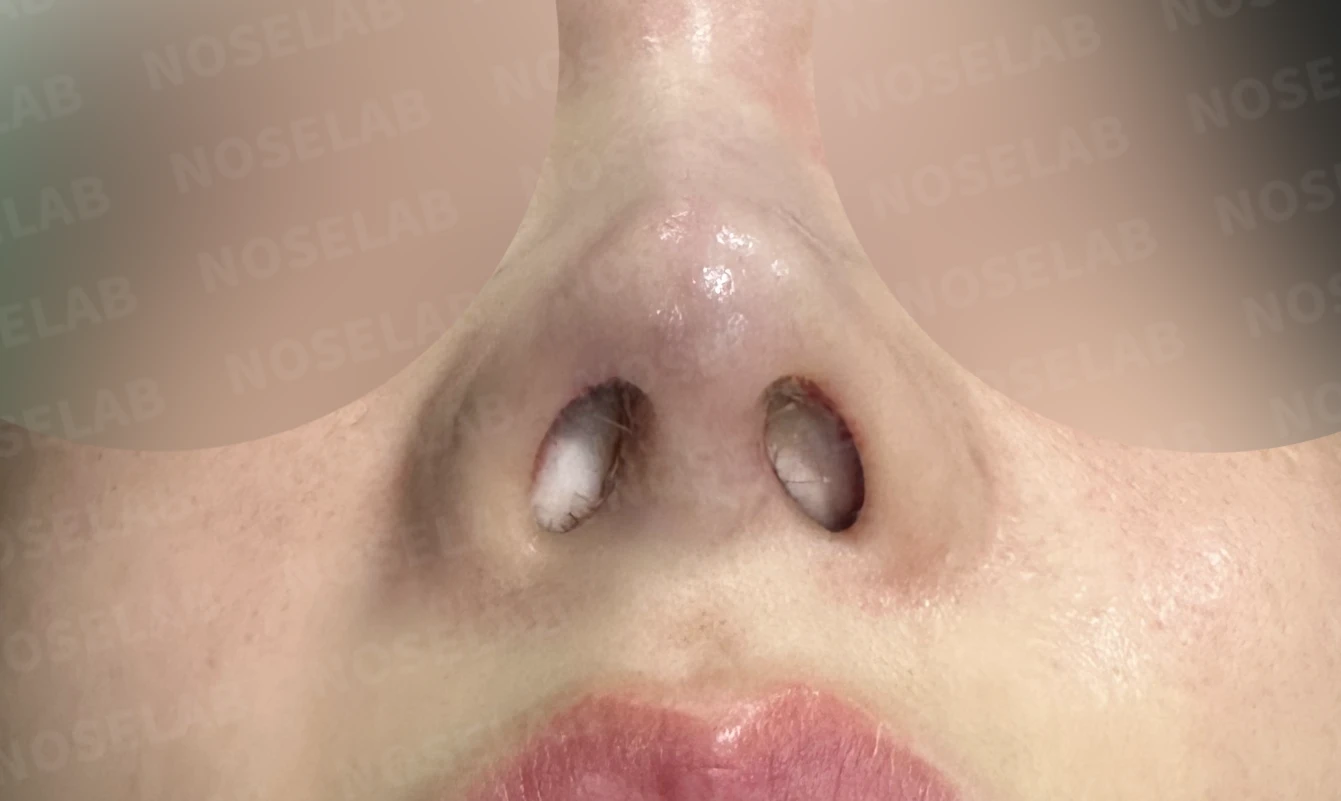
Before surgery / Day 0 immediately after surgery Photos taken immediately after surgery show swelling and may differ from the final result.
💡 Specialist opinion
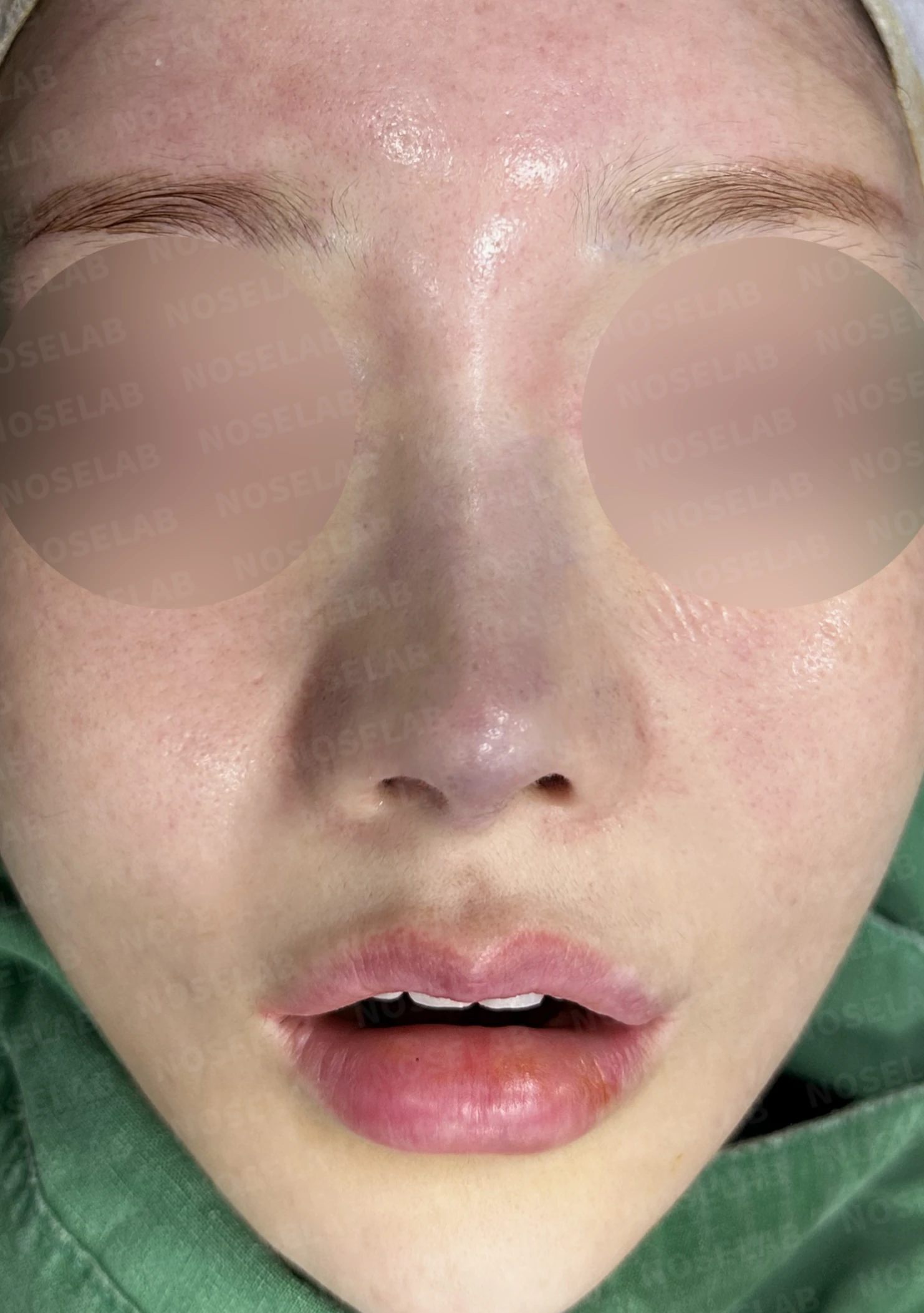
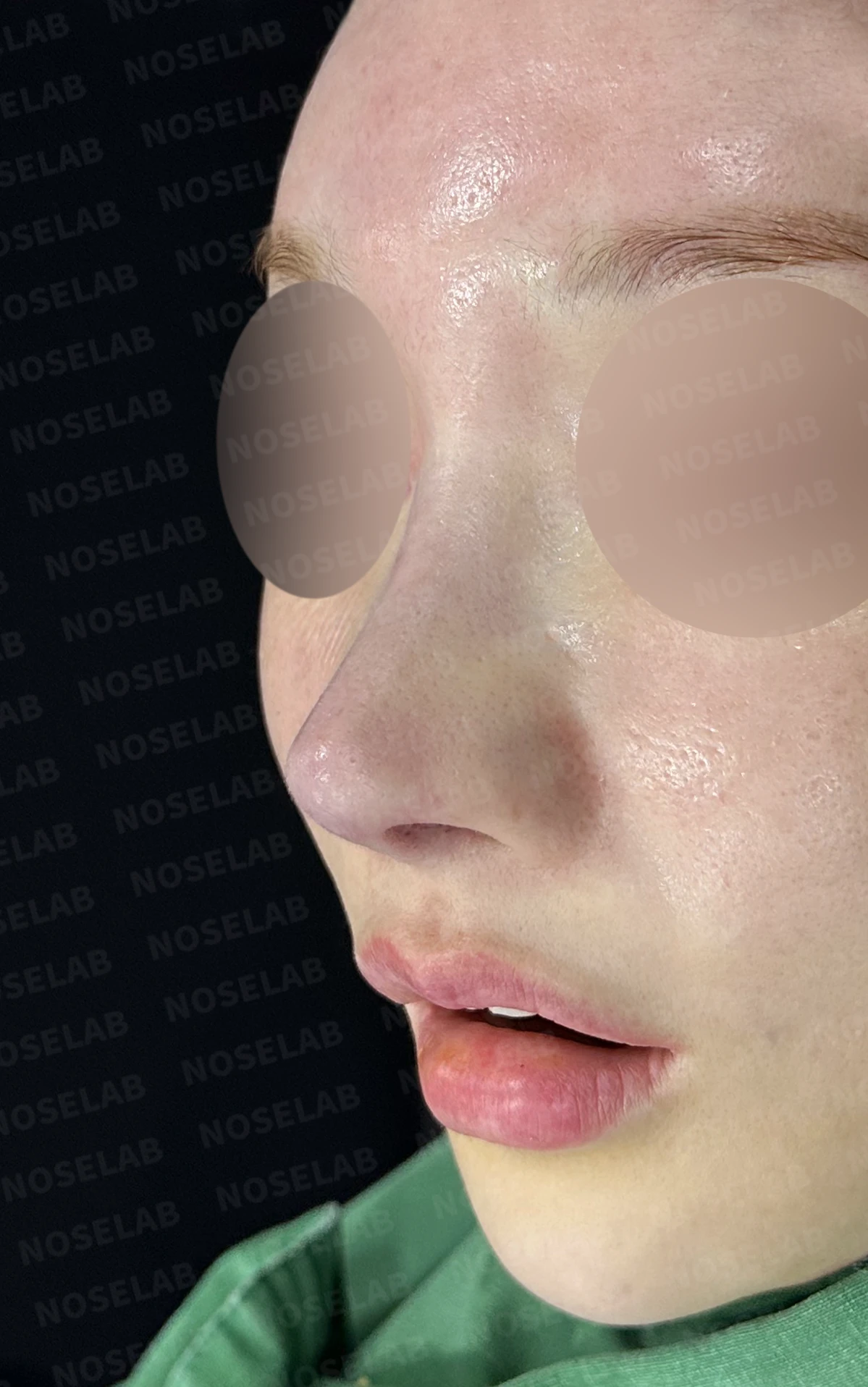
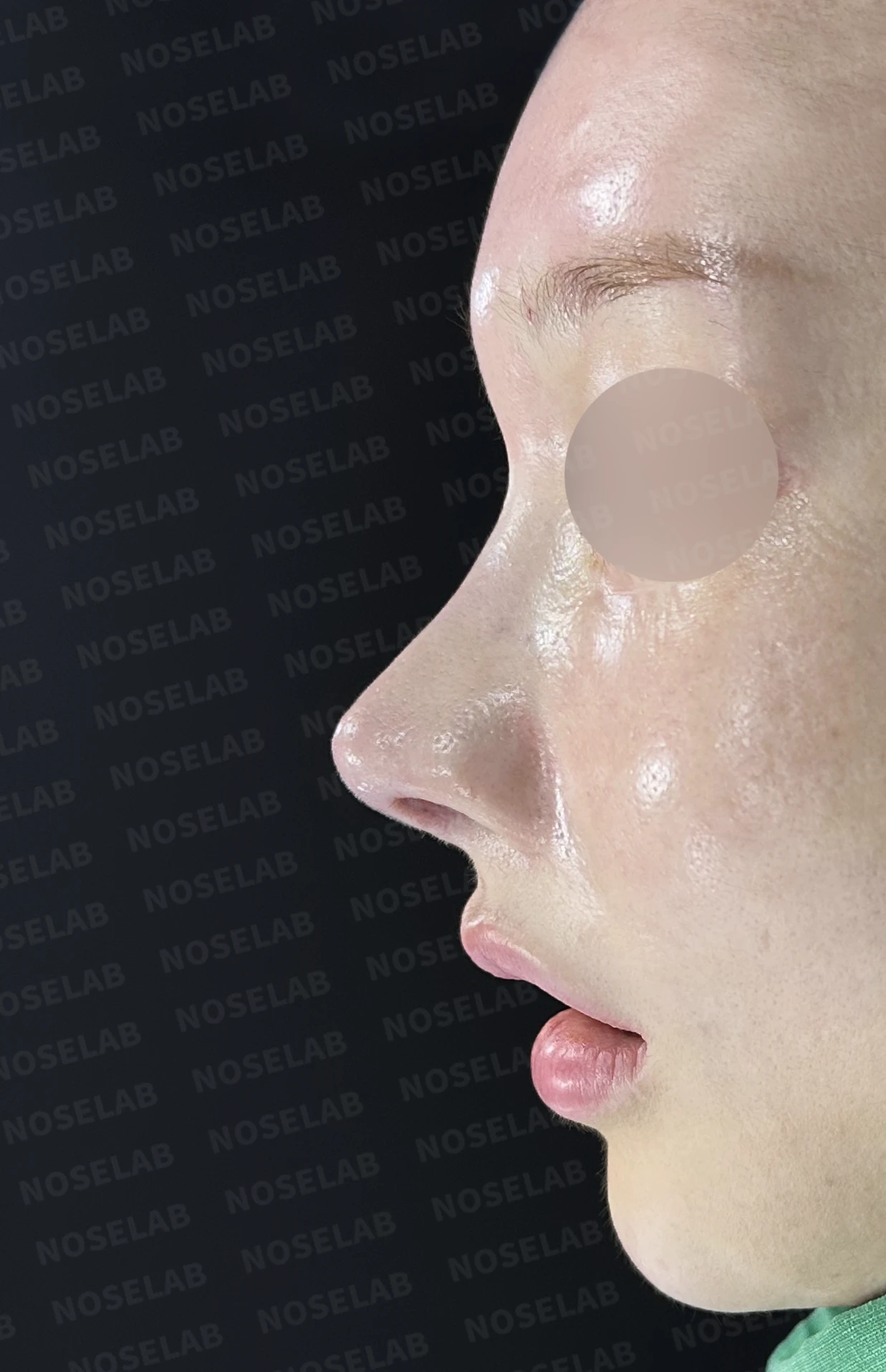
Front, oblique, and profile views on day 0 immediately after surgery. Photos taken immediately after surgery show swelling and may differ from the final result.
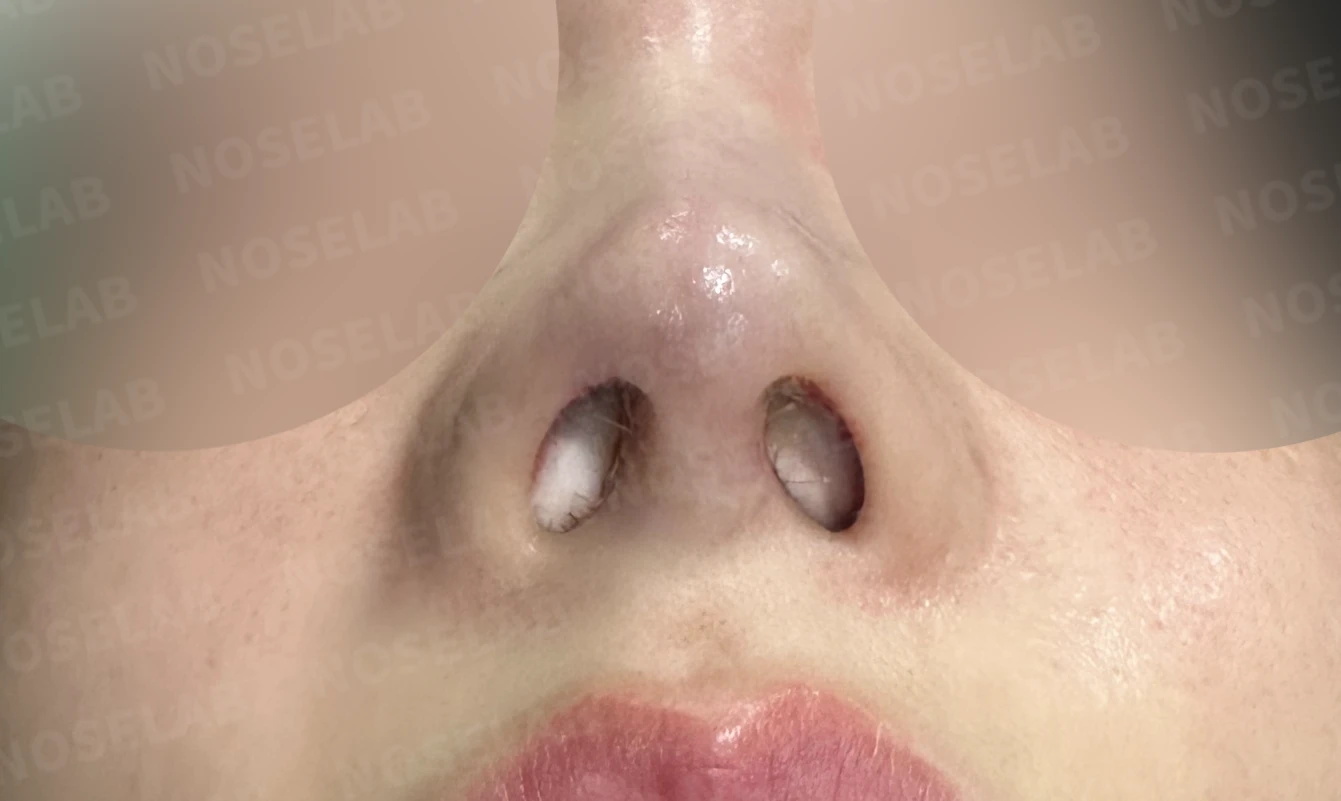
Nostril view on day 0 immediately after surgery. Photos taken immediately after surgery show swelling and may differ from the final result.
When a patient has undergone multiple nasal surgeries, accurately assessing the previously used materials and the condition of the tissues is paramount. In particular, when the nasal tip skin has thinned, implants can become visible; reinforcing the skin with autologous dermis is therefore essential for a stable outcome.
In this type of case, structural support for the nasal tip was secured using autologous rib cartilage, and the silicone implant was recarved to conform to the nasal bone, creating a natural height along the bridge. In addition, the step-off caused by the brow bones was smoothly bridged using autologous fat grafting, completing a single, continuous line from the forehead to the nasal tip.
Revision rhinoplasty is more complex than primary rhinoplasty, but when approached with a thorough analysis of tissue conditions and the patient's aesthetic goals, satisfying results can certainly be achieved.
This was Dr. Peter C. Kang. Thank you.
#revisionrhinoplasty #autologousribcartilagerhinoplasty #autologousdermisreinforcement #bridgeelevation #nasolabialanglecorrection #glabellafatgrafting #closedrhinoplasty #closedrevisionrhinoplasty

Limitations and risks
When autologous rib cartilage is used, scarring and pain may remain at the donor site on the chest, and pneumothorax (pleural injury) can occur rarely. Over time, the grafted cartilage may warp or undergo partial resorption.
When revising after implant removal, contracture may progress again after removal, the nasal height and length may decrease, and staged surgery may be necessary depending on the skin condition.
Common potential risks include infection, bleeding, asymmetry, scarring, skin necrosis, and insufficient improvement; results vary depending on individual skin condition and previous surgical history.