Hello, I am Dr. Peter C. Kang.
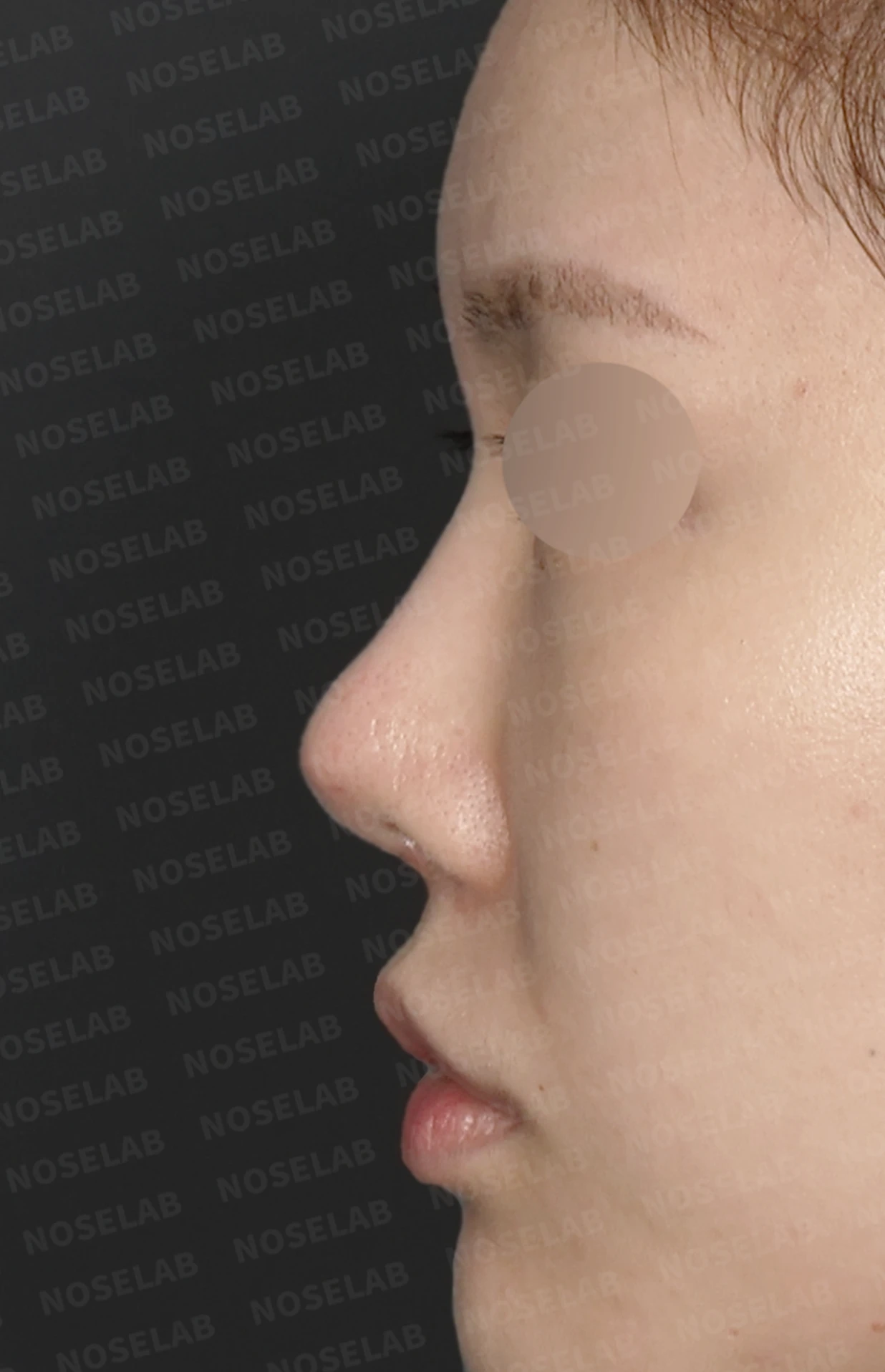
Today, I would like to share the case of a patient who underwent revision rhinoplasty due to implant show-through and asymmetry following a previous rhinoplasty.
🔍 Surgical history
The patient had received nasal filler 5 years ago, which was removed during a subsequent rhinoplasty.
3 years ago, the patient underwent rhinoplasty at another clinic using a silicone implant and ear cartilage, and starting 1 year ago, the silicone implant began to be felt at the nasal tip.
Subsequently, as the nasal tip skin progressively thinned, the cartilage showed through, the tip appeared excessively sharp, and asymmetry developed as the surrounding tissue appeared pulled.
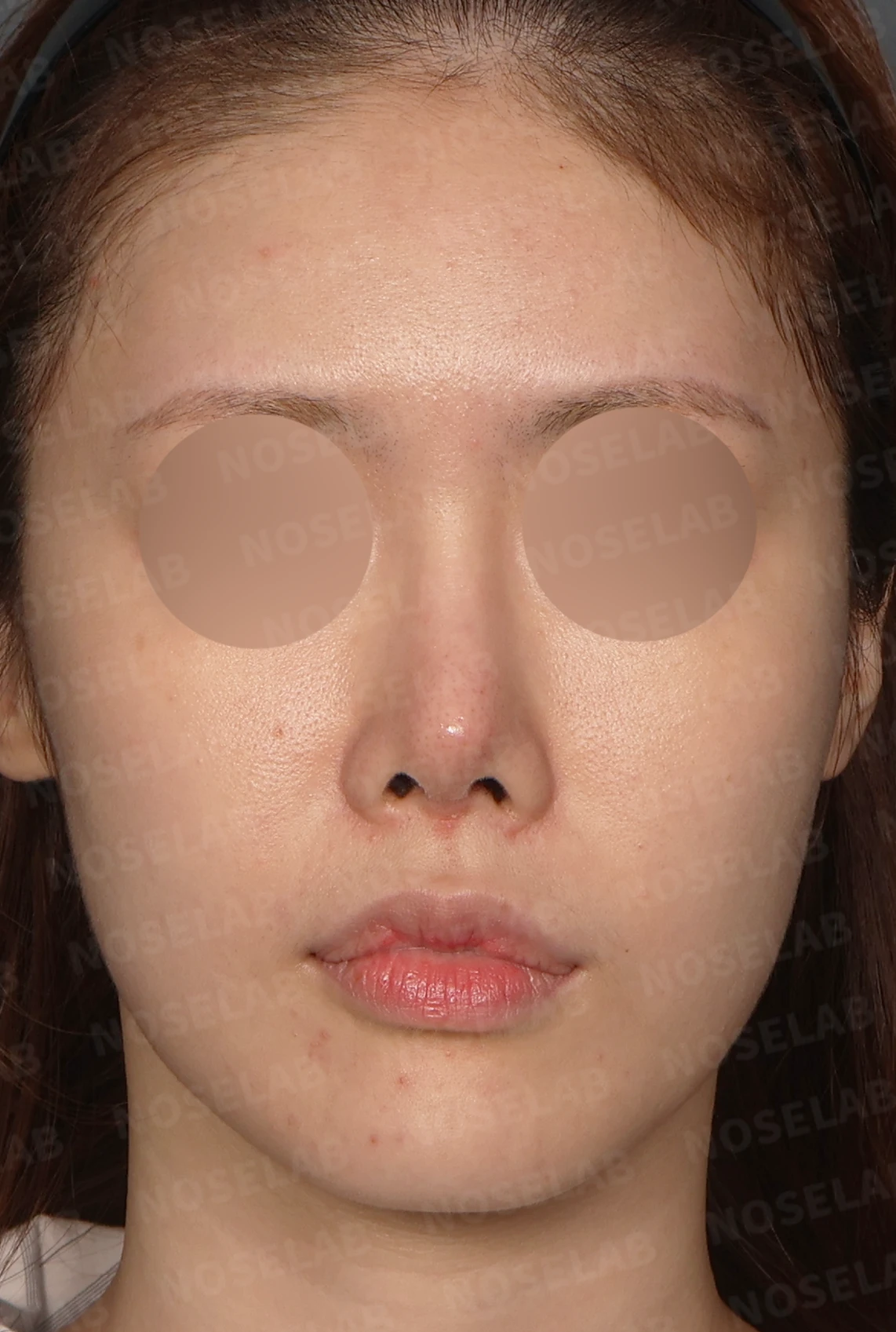
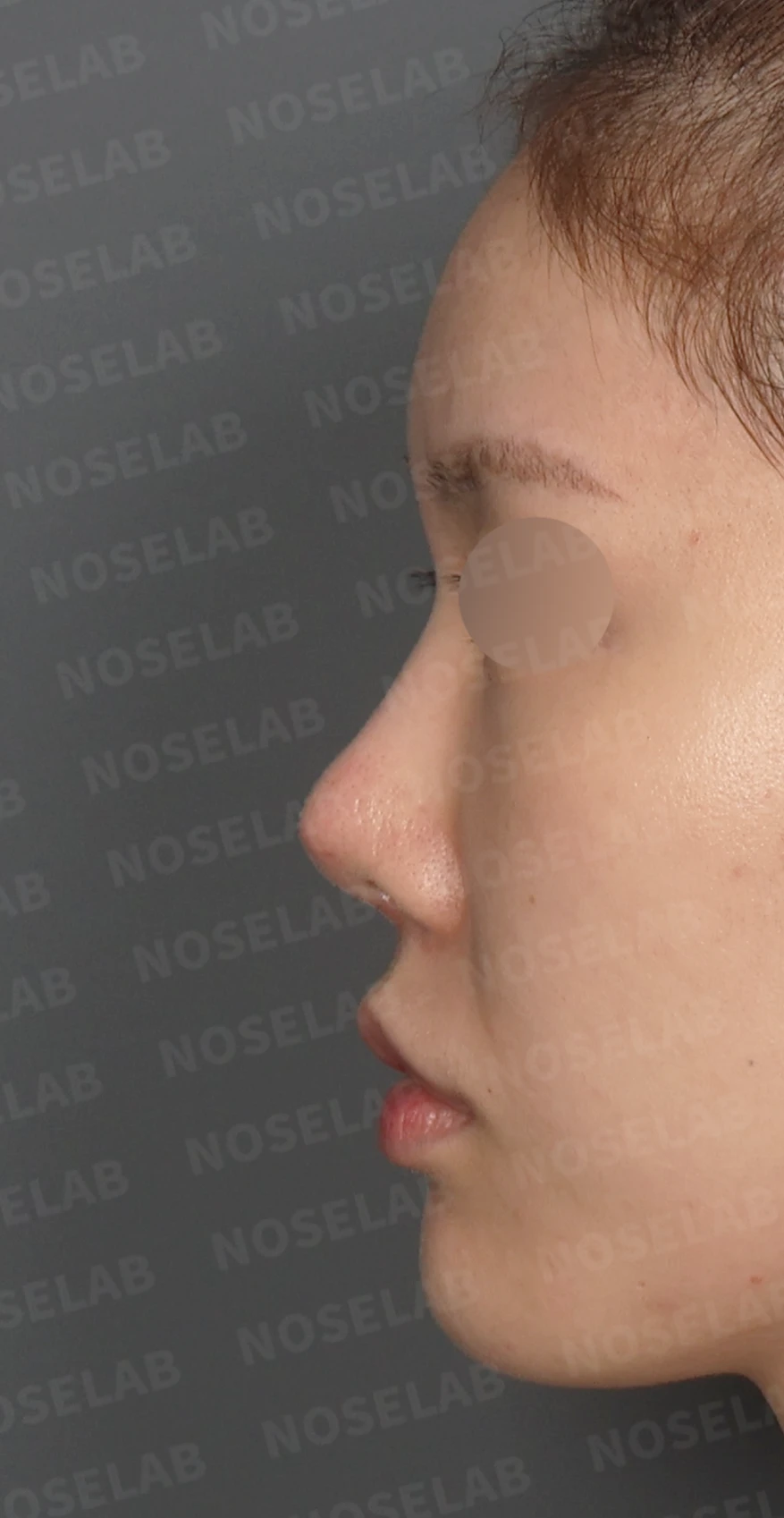
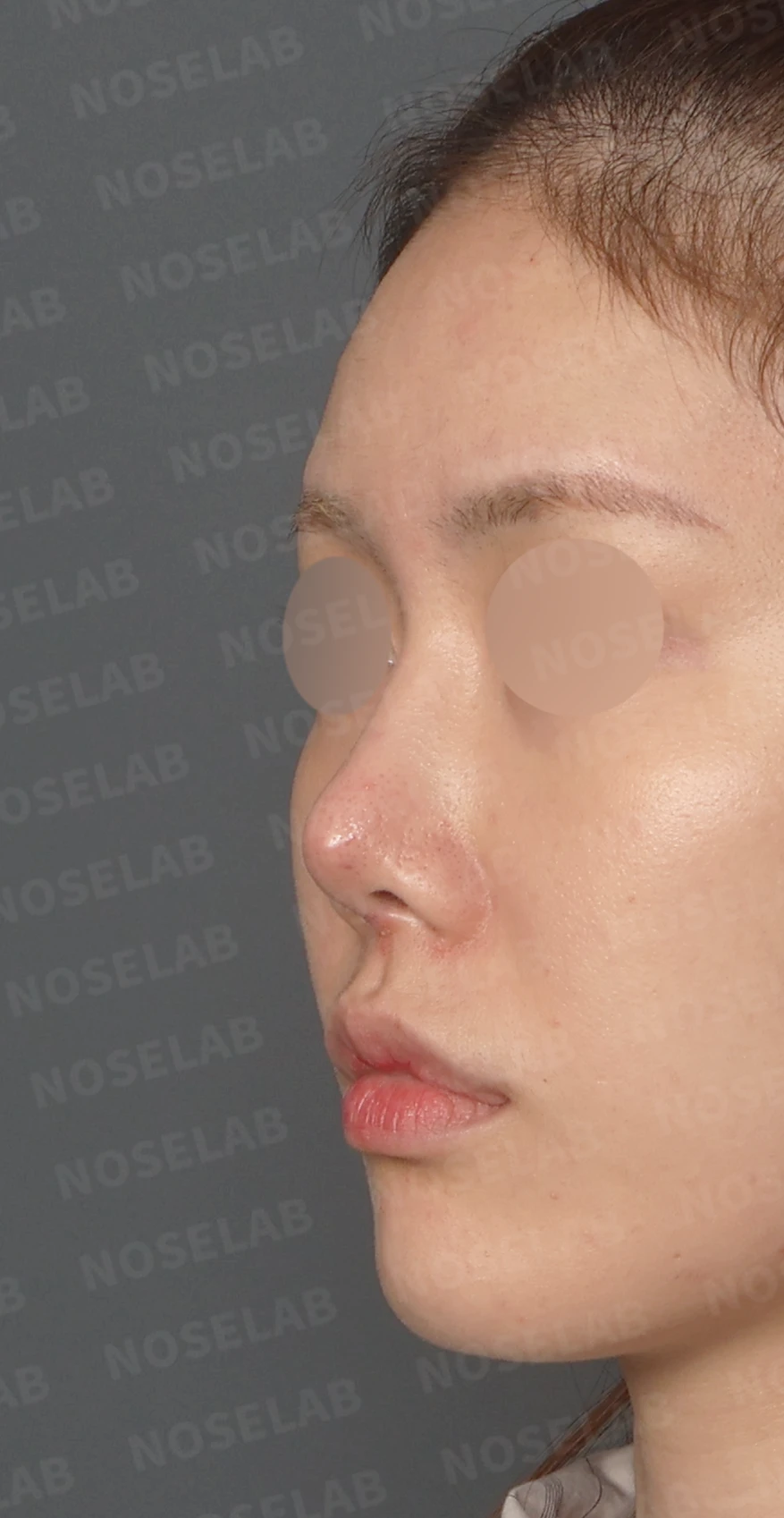
Front, left profile, and oblique views during design consultation
💉 Patient requests
The patient wanted to make the nasal tip slightly rounder and more natural than it was.
Rather than a dramatic or sharp feel, the patient desired a soft, natural nasal line.
The patient wanted to improve the asymmetry to create a well-balanced nasal shape.
Overall, the patient wanted a natural nasal line and a relaxed, comfortable impression.
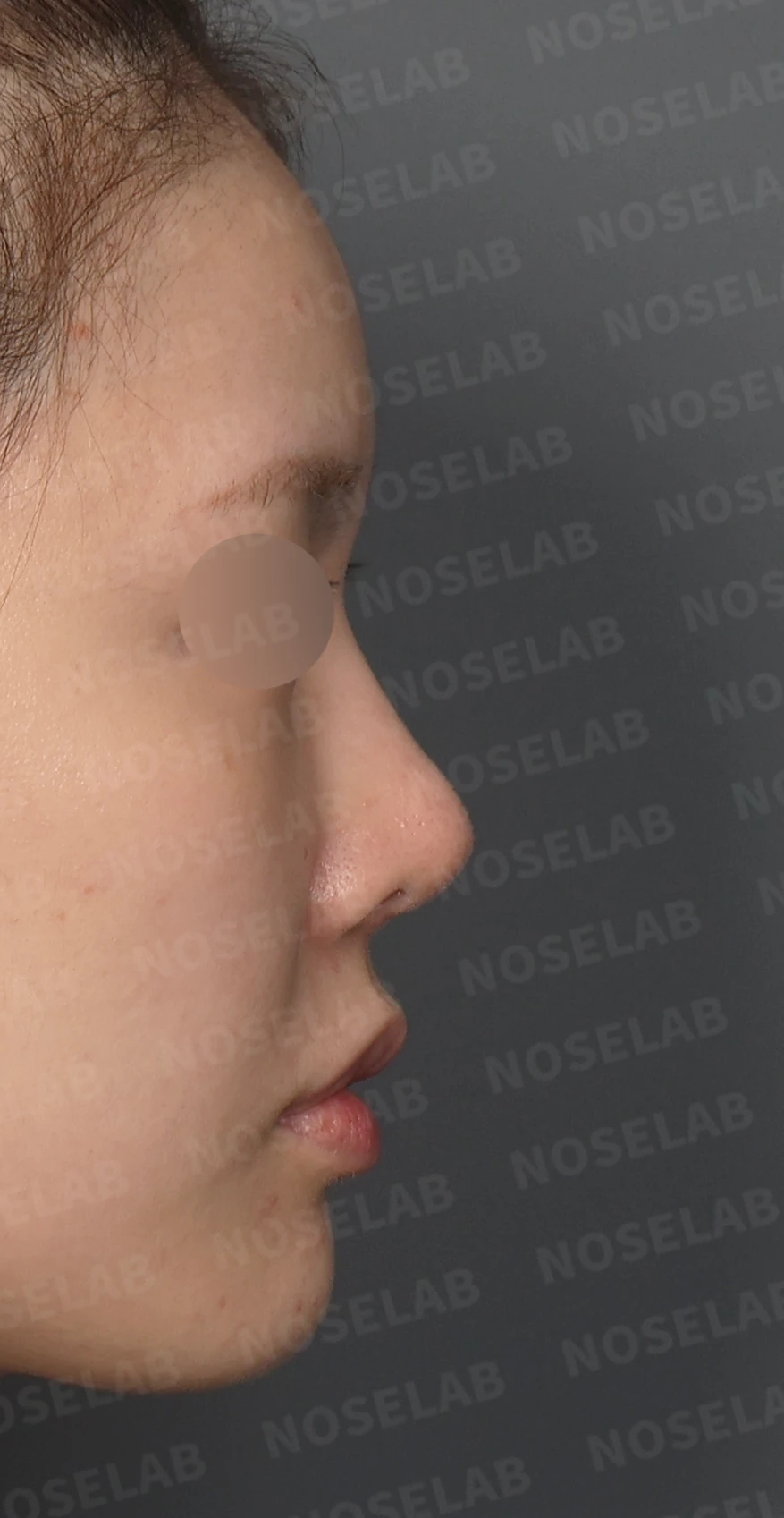
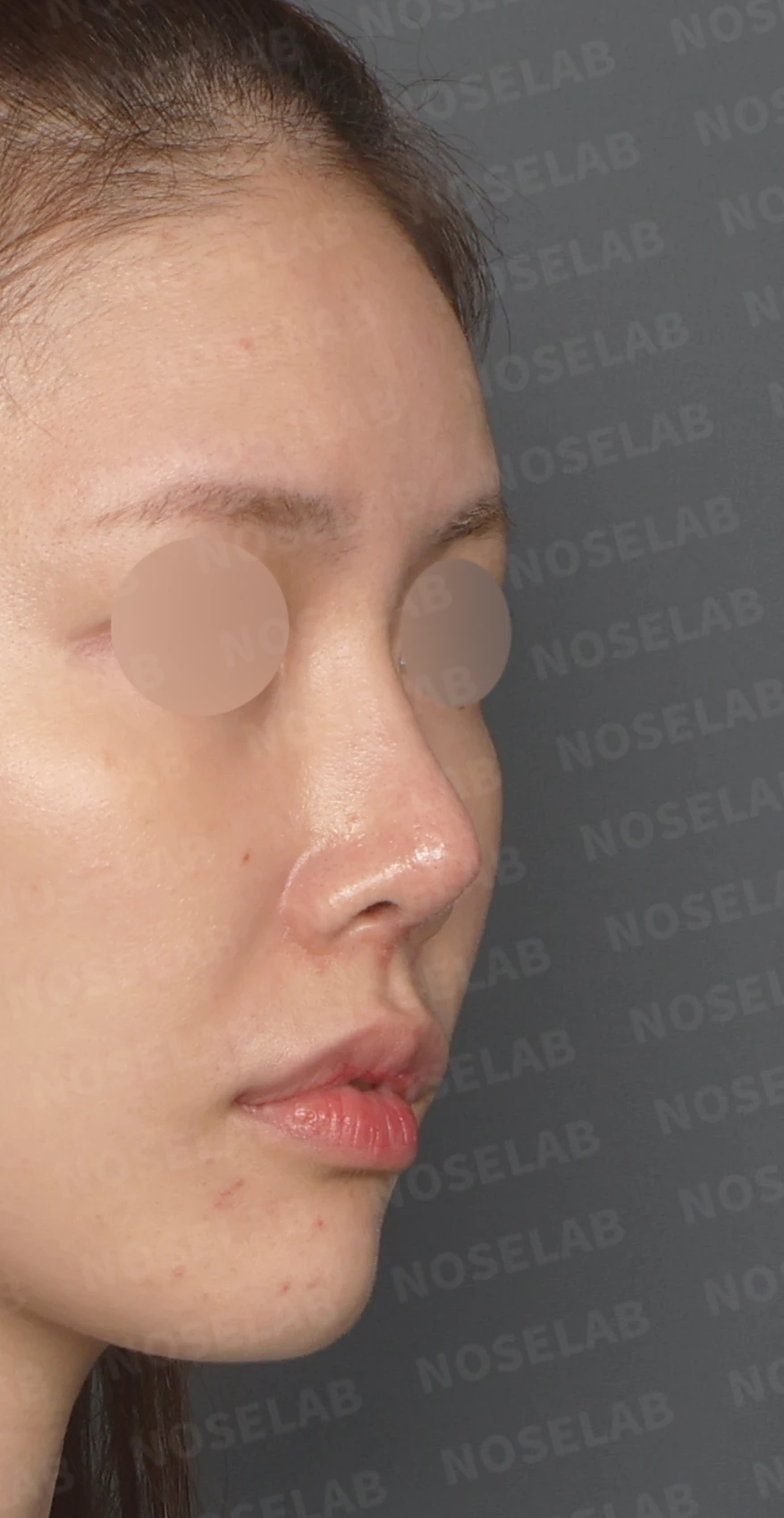
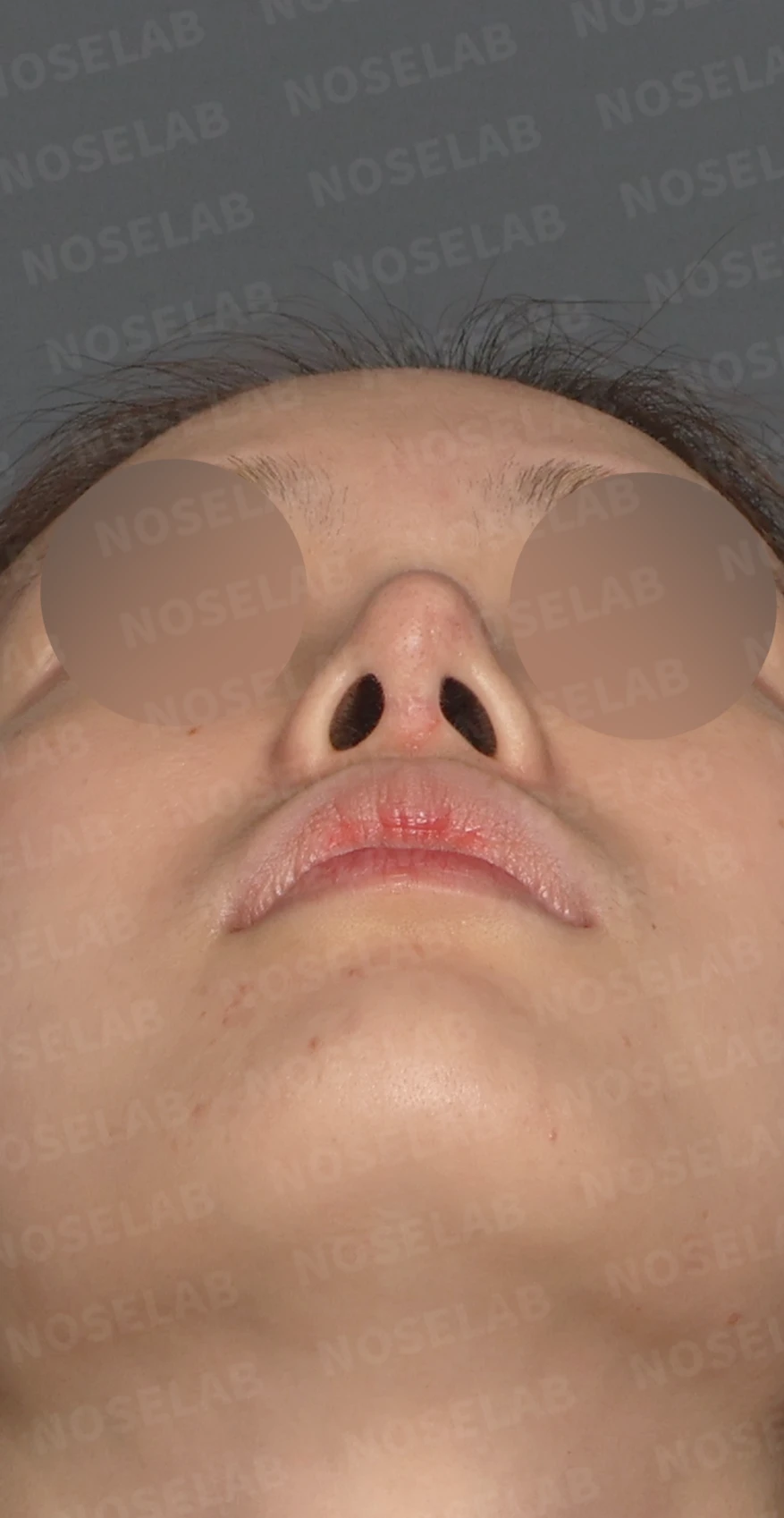
Right profile, oblique, and nostril views during design consultation
🔧 Surgical plan and procedure
The silicone implant placed during the previous surgery was removed, and the nasal tip structure was newly reconstructed using selectively sliced autologous rib cartilage from the patient. Utilizing autologous tissue supported long-term stability and achieved a natural result.
1. The silicone implant was removed, and the nasal tip structure was reconstructed using autologous rib cartilage.
2. Through septal reconstruction, structural stability of the nose was secured, and the lower nasal angle (nasolabial angle) was naturally corrected.
3. The nasal tip skin thinned by the previous surgery was reinforced using artificial dermis.
🌟 Surgical results
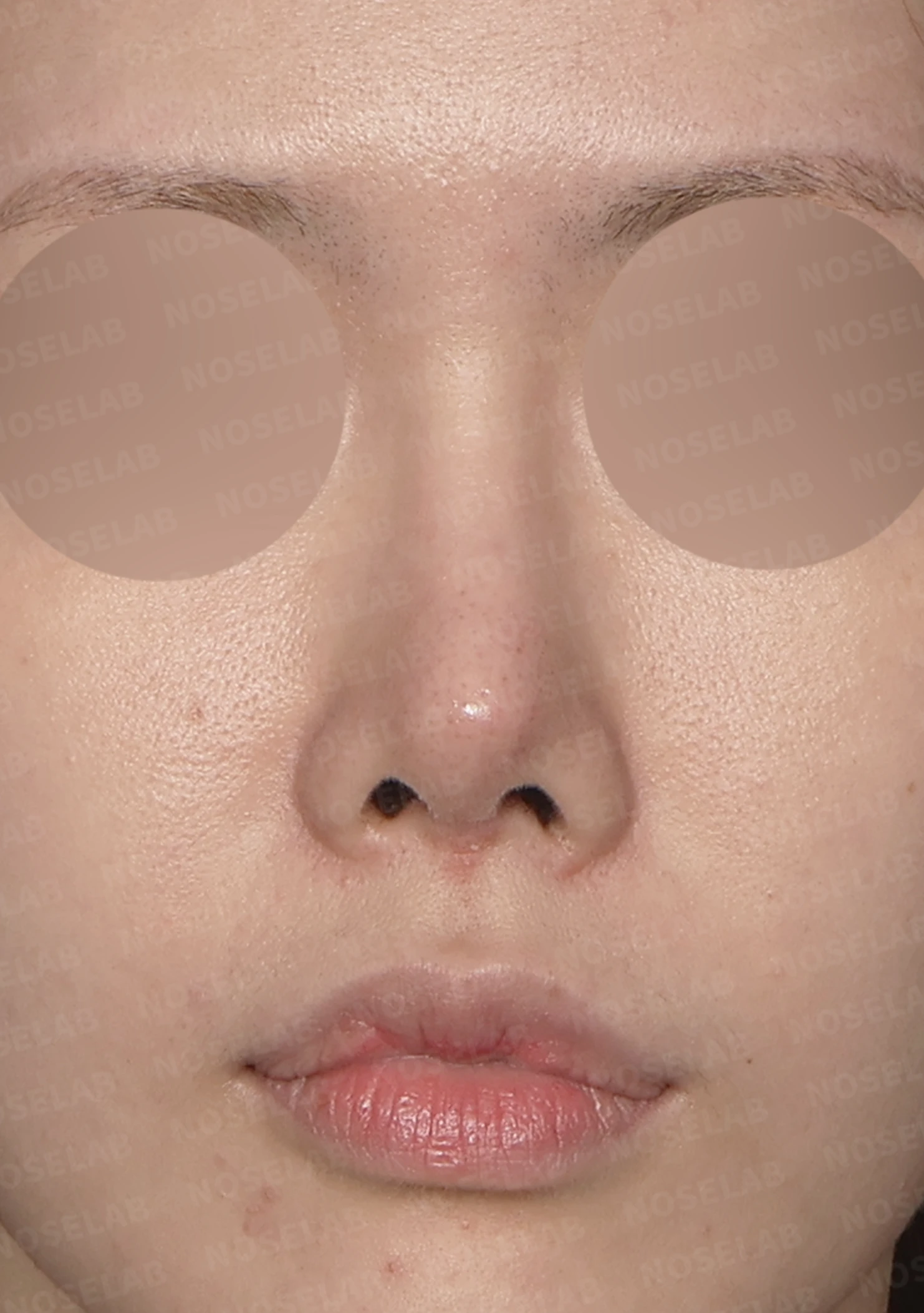
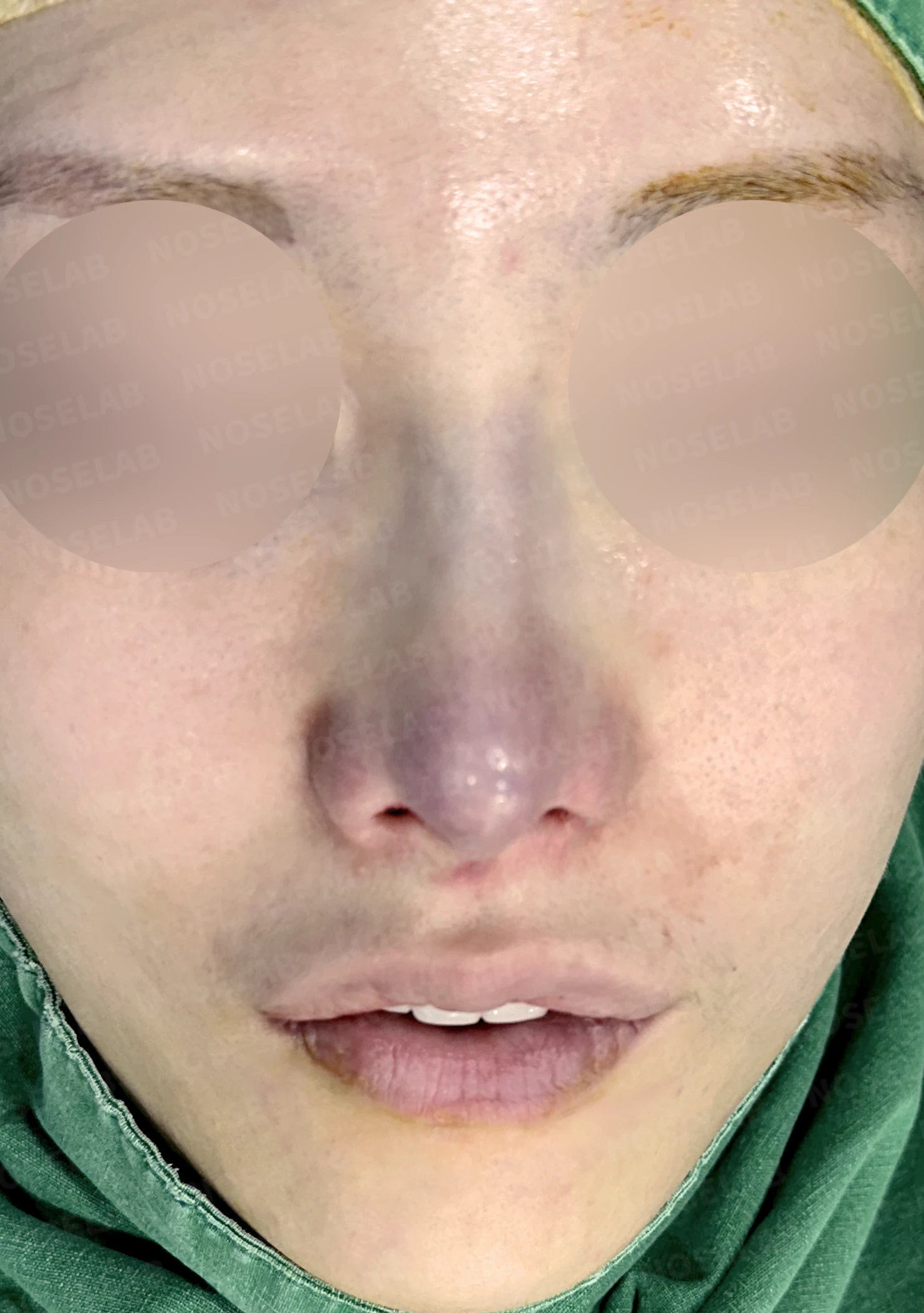
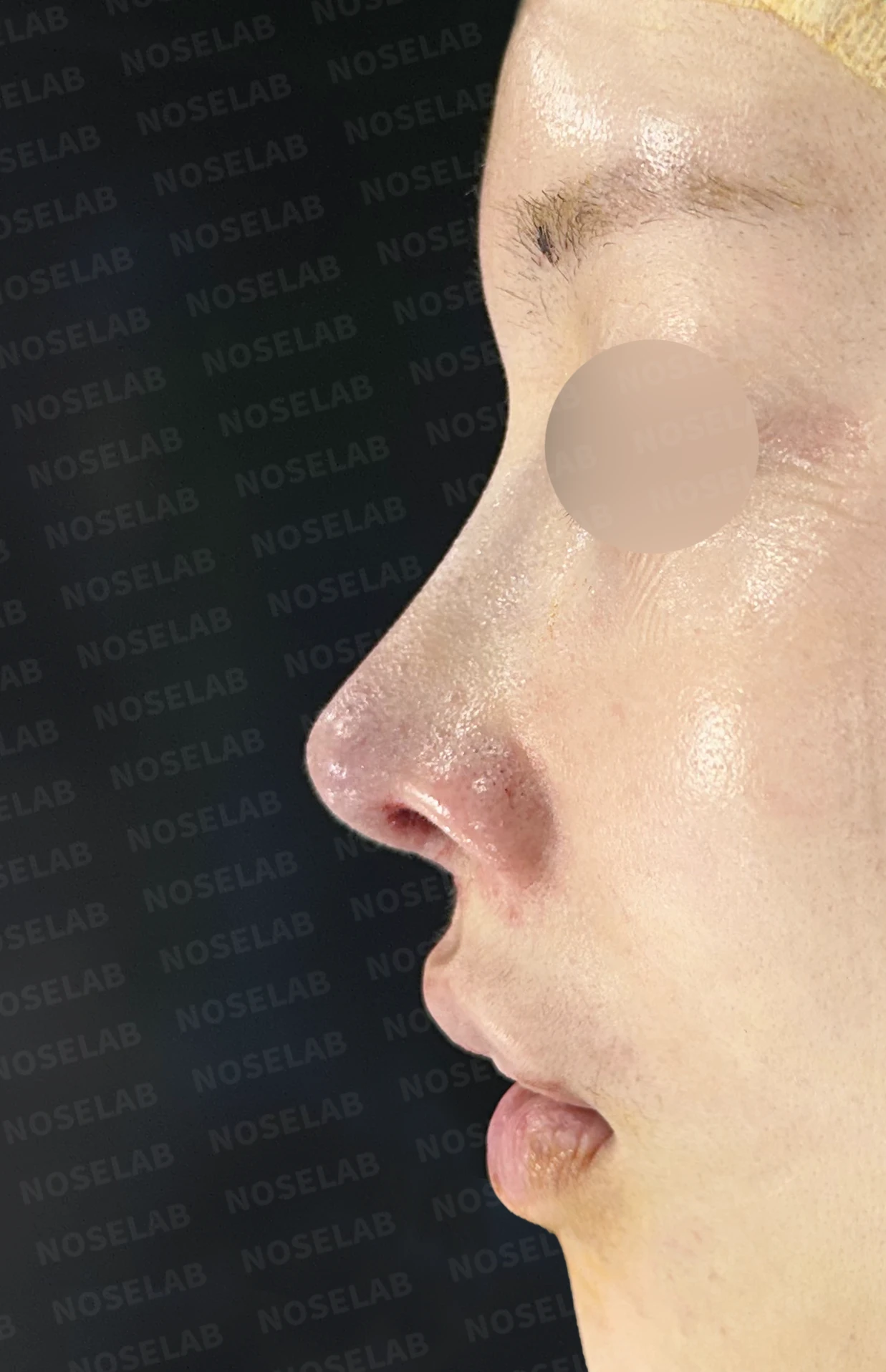
Before surgery / Day 0 immediately after surgery Photos taken immediately after surgery show swelling and may differ from the final result.
Front view changes
The nasal tip was improved to a rounder and more natural shape.
The left-right asymmetry was alleviated, changing into a well-balanced nasal shape.
Before surgery / Day 0 immediately after surgery Photos taken immediately after surgery show swelling and may differ from the final result.
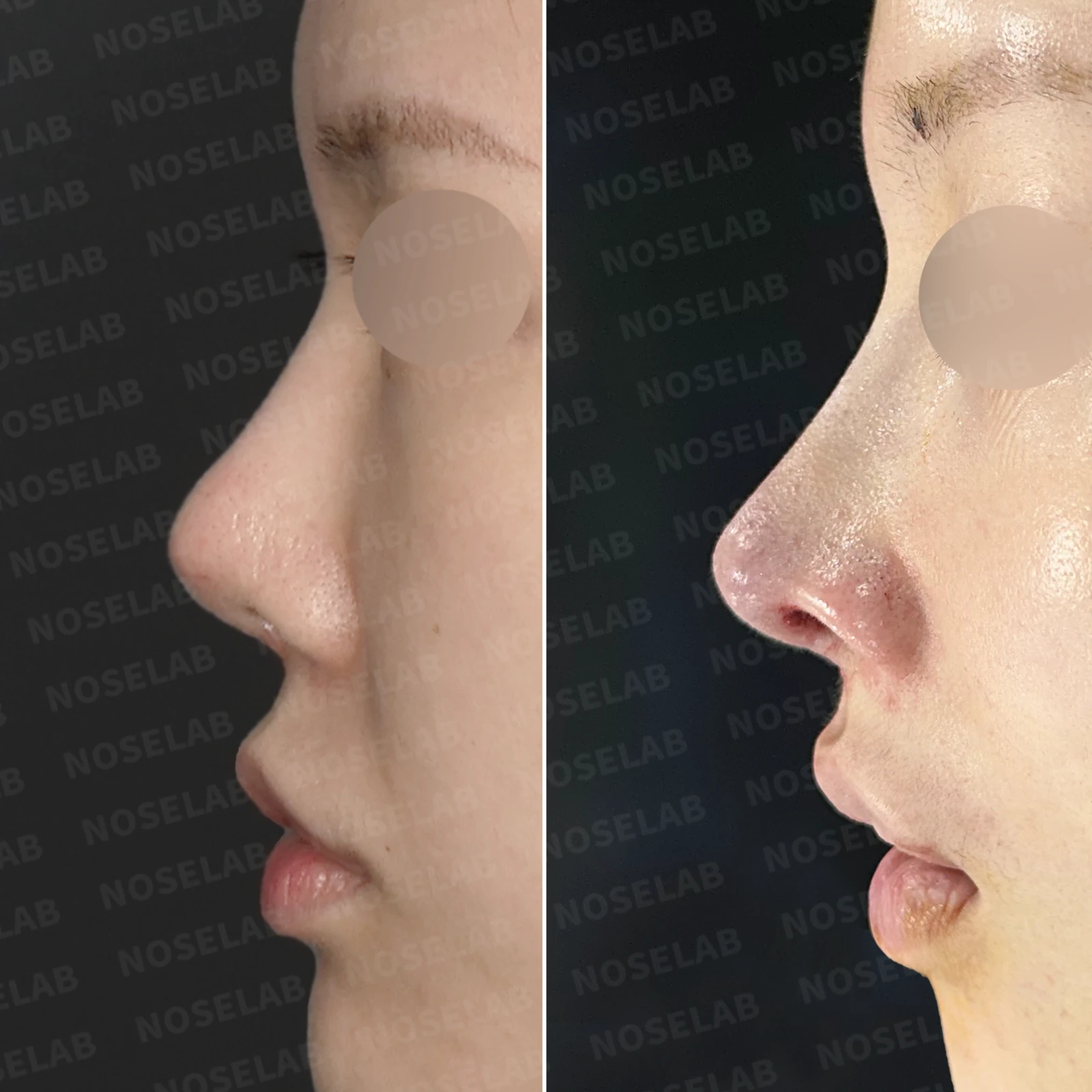
Profile view changes
The lower nasal angle was naturally corrected, softening the overall nasal line.
The shape was improved to give a comfortable impression rather than a sharp one.
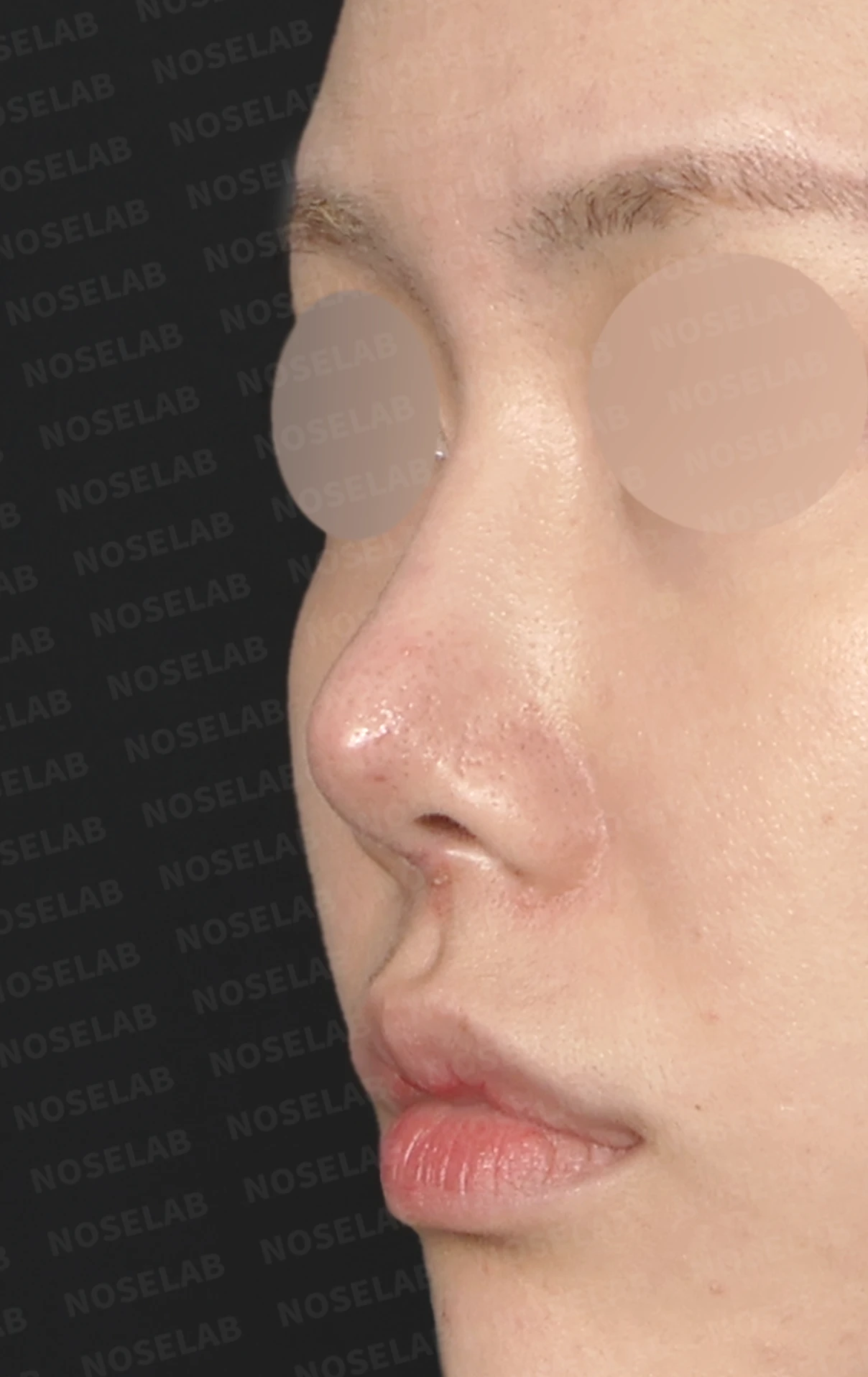
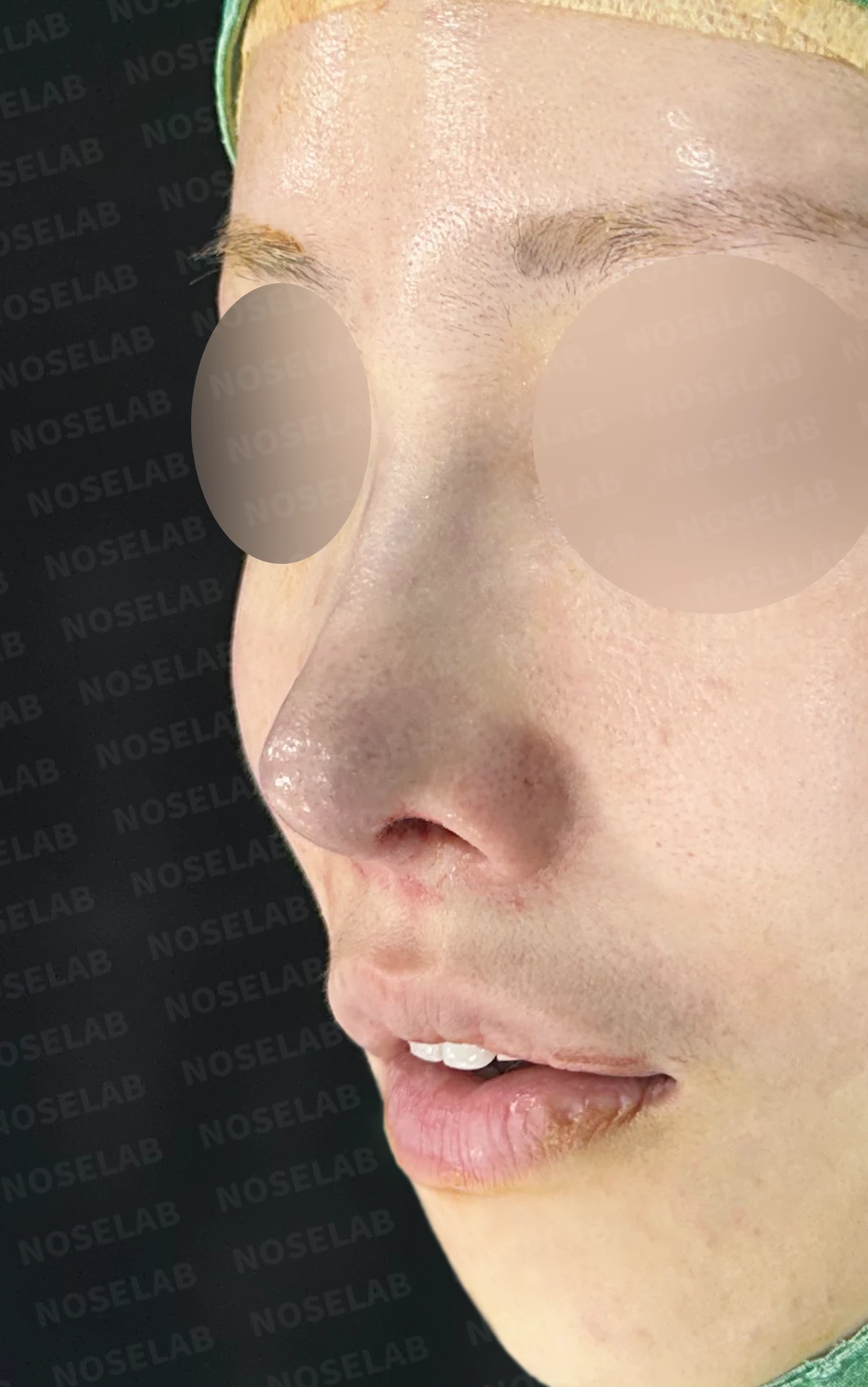
Before surgery / Day 0 immediately after surgery Photos taken immediately after surgery show swelling and may differ from the final result.
Overall change in impression
With an unexaggerated, natural nasal shape, the overall impression became noticeably softer.
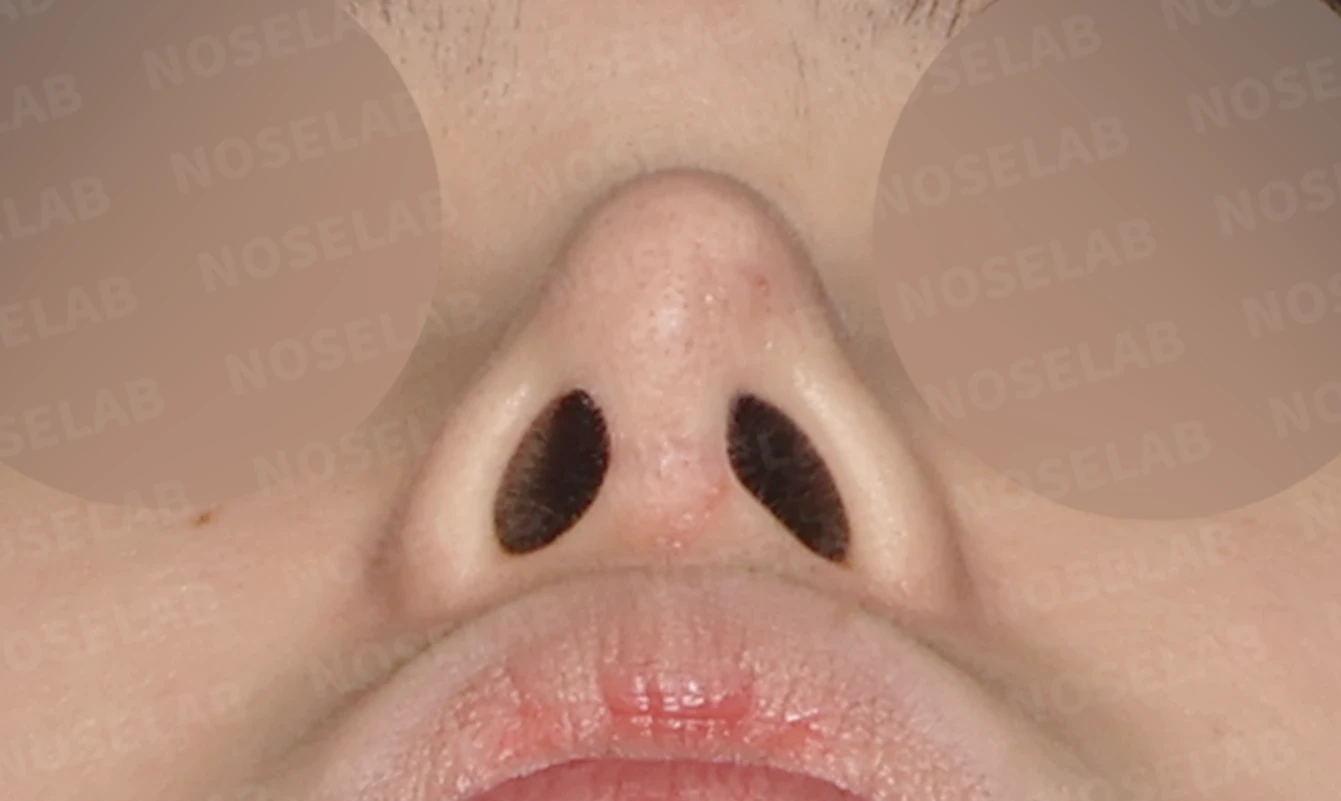
Before surgery / Day 0 immediately after surgery Photos taken immediately after surgery show swelling and may differ from the final result.
💡 Specialist assessment
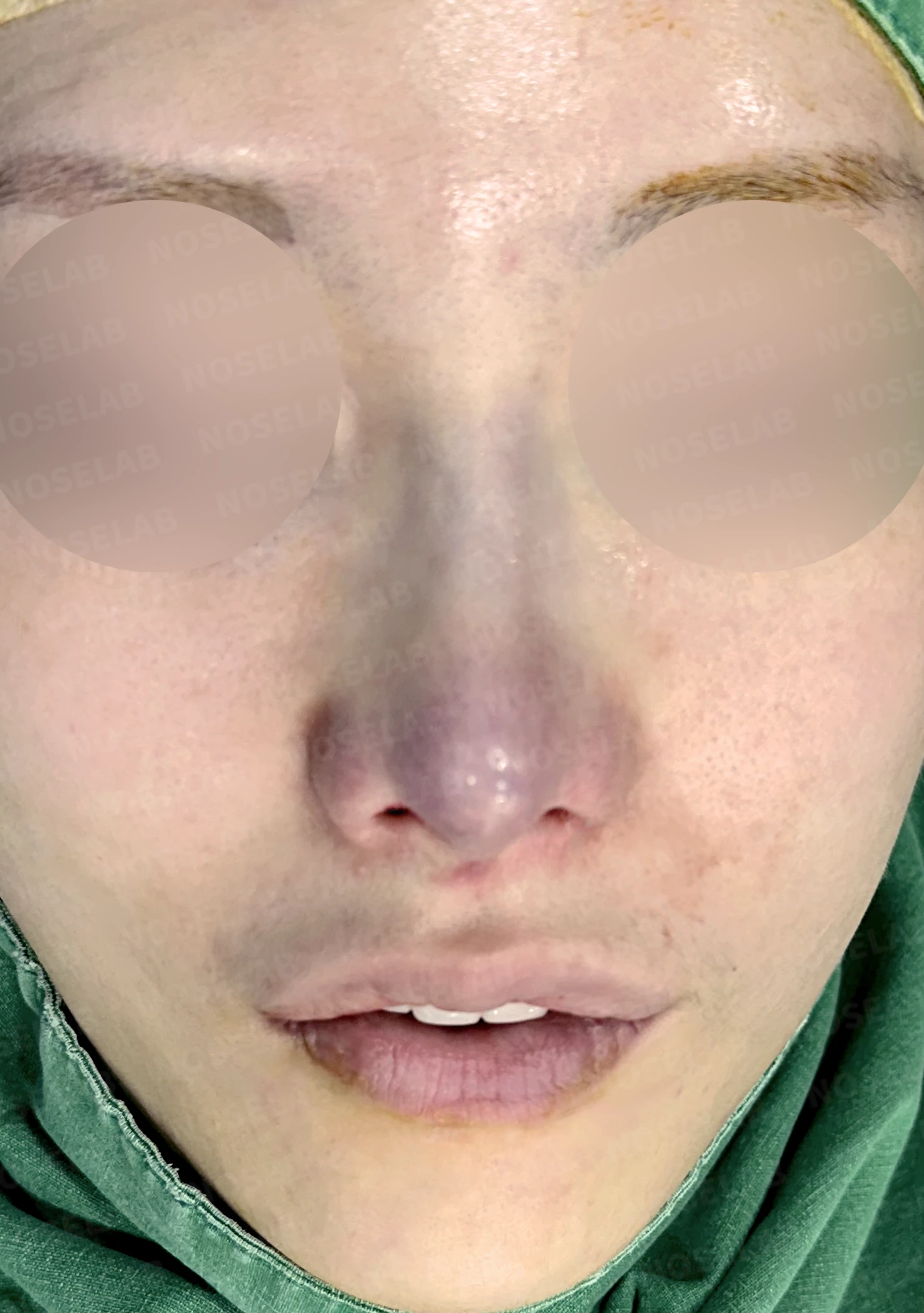
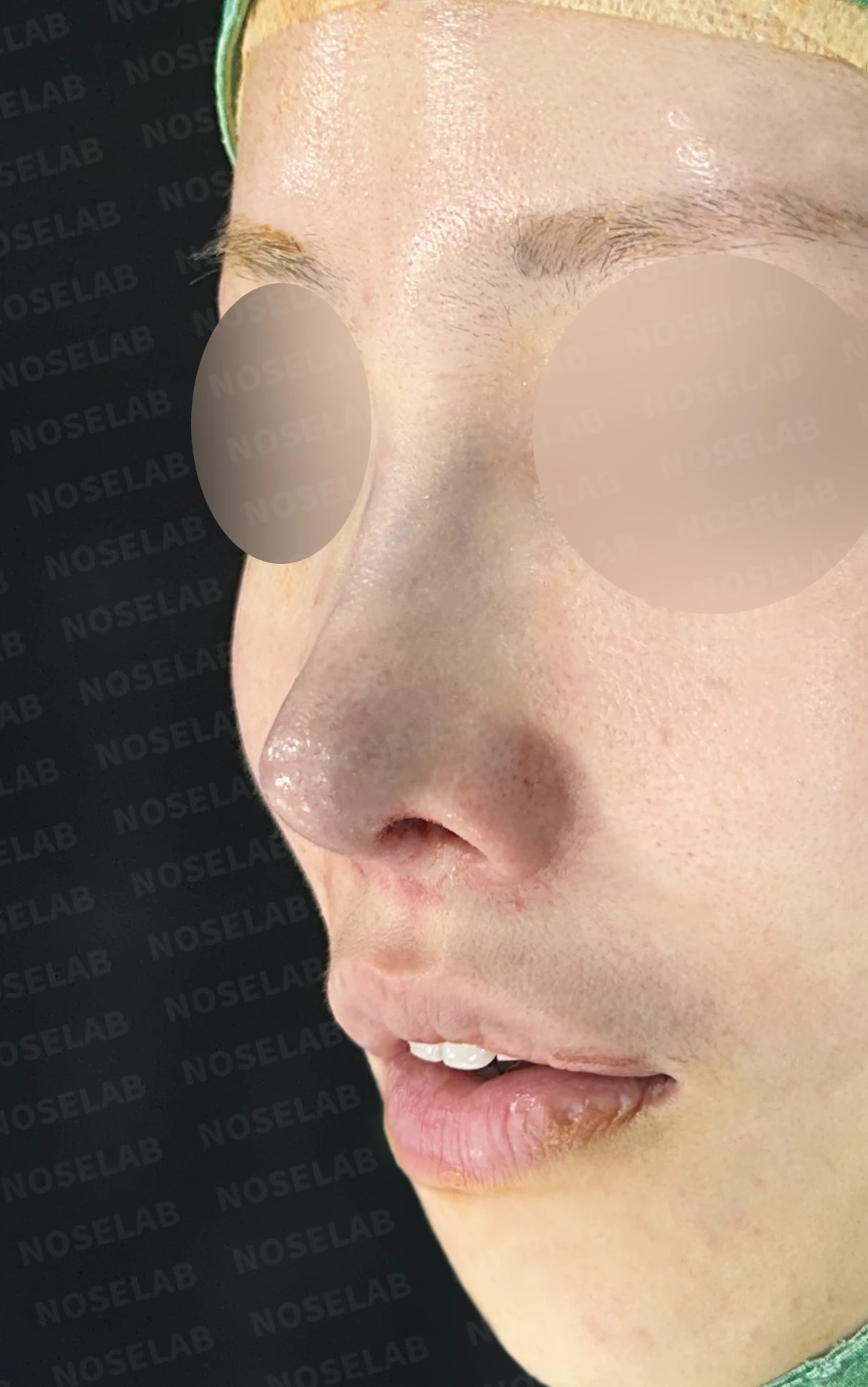
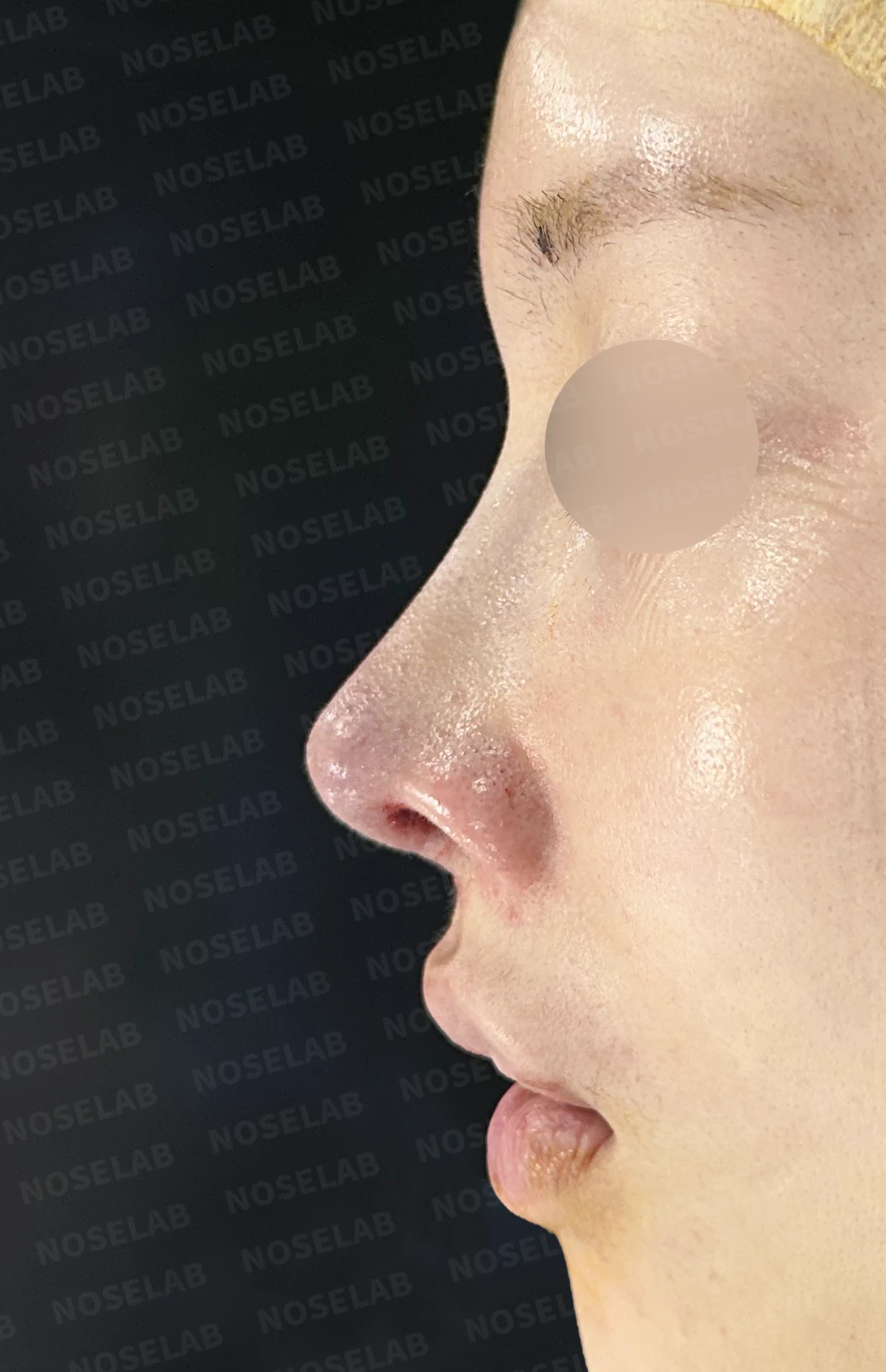
Front, oblique, and profile views on day 0 immediately after surgery Photos taken immediately after surgery show swelling and may differ from the final result.
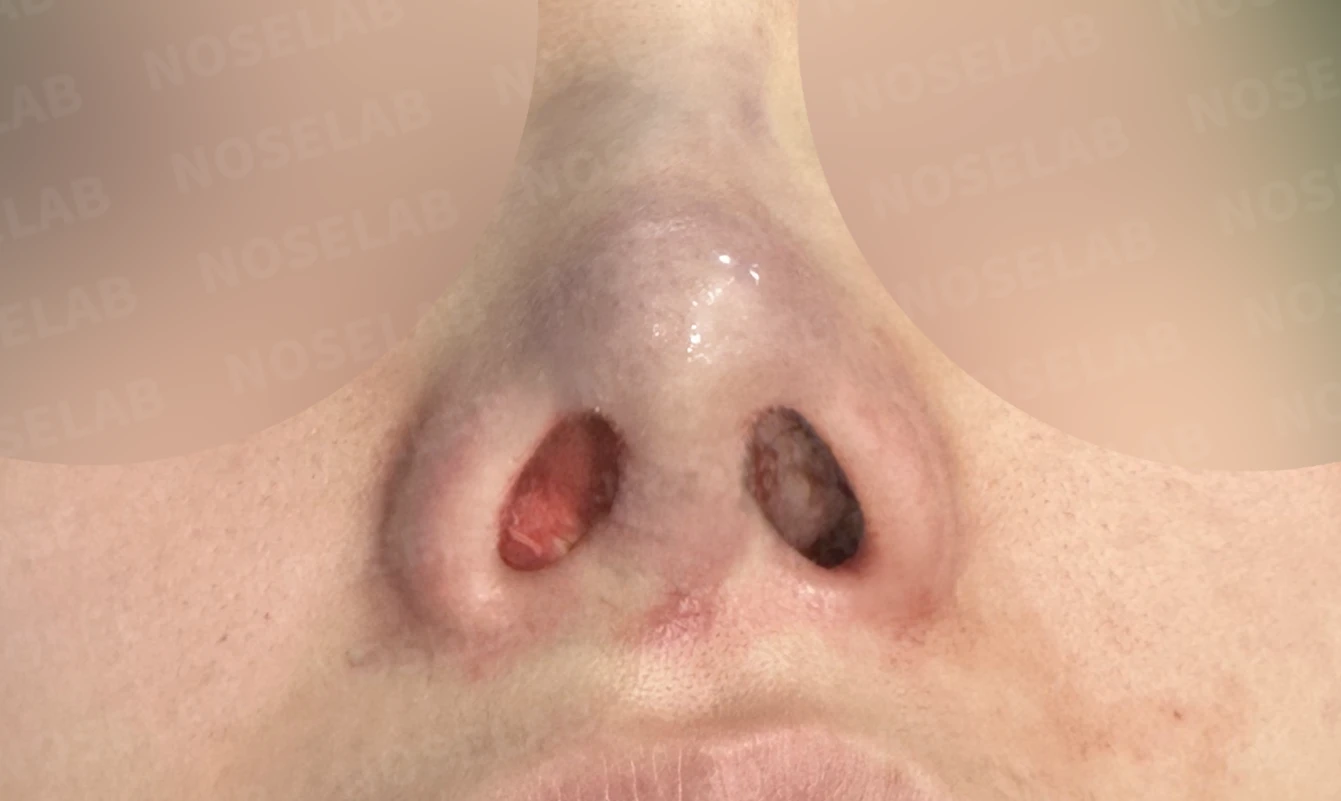
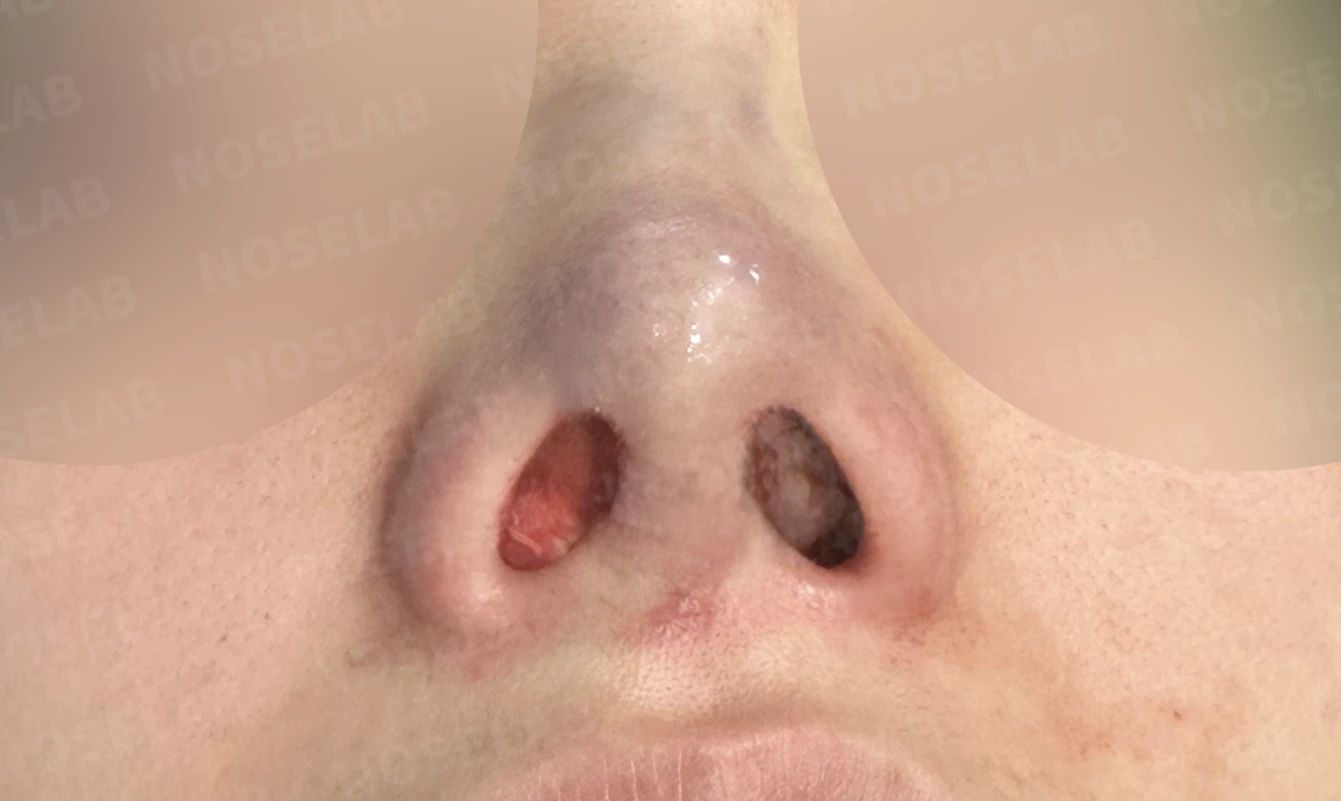
Nostril view on day 0 immediately after surgery Photos taken immediately after surgery show swelling and may differ from the final result.
Revision rhinoplasty requires a more delicate approach than primary surgery due to tissue changes from previous procedures, scarring, and adhesions between implants and surrounding tissues. In particular, when an implant is retained for a long period, issues such as thinning skin and implant show-through can occur.
In such cases, removing the implant and replacing it with autologous tissue is important for long-term safety. In cases like this, reconstructing the nasal tip using the patient's own rib cartilage along with reinforcing the skin with artificial dermis achieved a natural result.
If you are considering revision rhinoplasty, please establish a surgical plan suited to your condition through a thorough consultation with your surgeon.
This was Dr. Peter C. Kang. Thank you.
#closedrhinoplasty #closedrevisionrhinoplasty #revisionrhinoplasty #autologousribrhinoplasty #implantremoval #nasaltipreconstruction #asymmetrycorrection #septalreconstruction #artificialdermis

Limitations and risks
When autologous rib cartilage is used, scarring and pain may remain at the donor site on the chest, and pneumothorax (pleural injury) can occur rarely. Over time, the grafted cartilage may warp or undergo partial resorption.
When revising after implant removal, contracture may progress again after removal, the nasal height and length may decrease, and staged surgery may be necessary depending on the skin condition.
When foreign materials such as injected fillers are removed and reconstructed, contracture may recur, nasal height and length may decrease, and staged surgery may be necessary depending on the skin condition.
When the septum is corrected at the same time, nasal obstruction may persist or recur, and in rare cases, septal perforation or changes in smell may occur.
Common potential risks include infection, bleeding, asymmetry, scarring, skin necrosis, and insufficient improvement; results vary depending on individual skin condition and previous surgical history.