Hello, I am Dr. Peter C. Kang.
Today, I would like to introduce a special case.
This is a contracted nose correction case of a patient who visited NOSELAB after having undergone 7 rhinoplasty procedures.
This type of case well demonstrates how complex rhinoplasty can be and how crucial specialized expertise is.
1. Design consultation
The patient visited the clinic wishing to lower the upturned nasal tip and create a defined yet natural bridge line.
Reviewing the patient's surgical history:
- 2014: Ear cartilage + septal surgery
- 2016: Silicone implant + porcine cartilage (inflammation developed)
- 2016 (3 months later): Ear cartilage surgery
- 2019: Ear cartilage + silicone implant surgery
- Later: Silicone implant removal surgery
Having undergone a total of 5 documented surgical procedures in this sequence, the surgery at NOSELAB became the patient's 6th operation.
Let us analyze the patient's condition in detail:
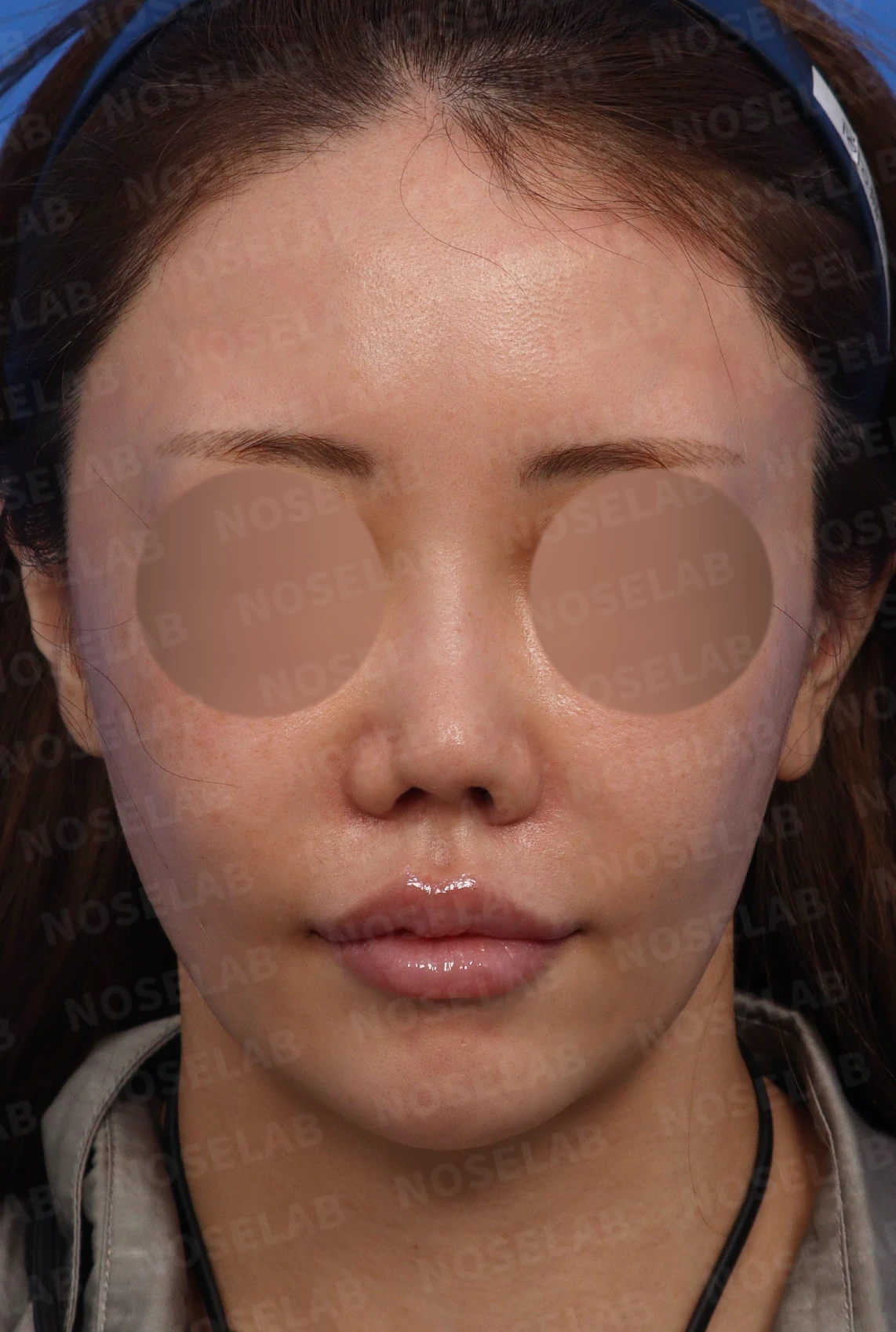
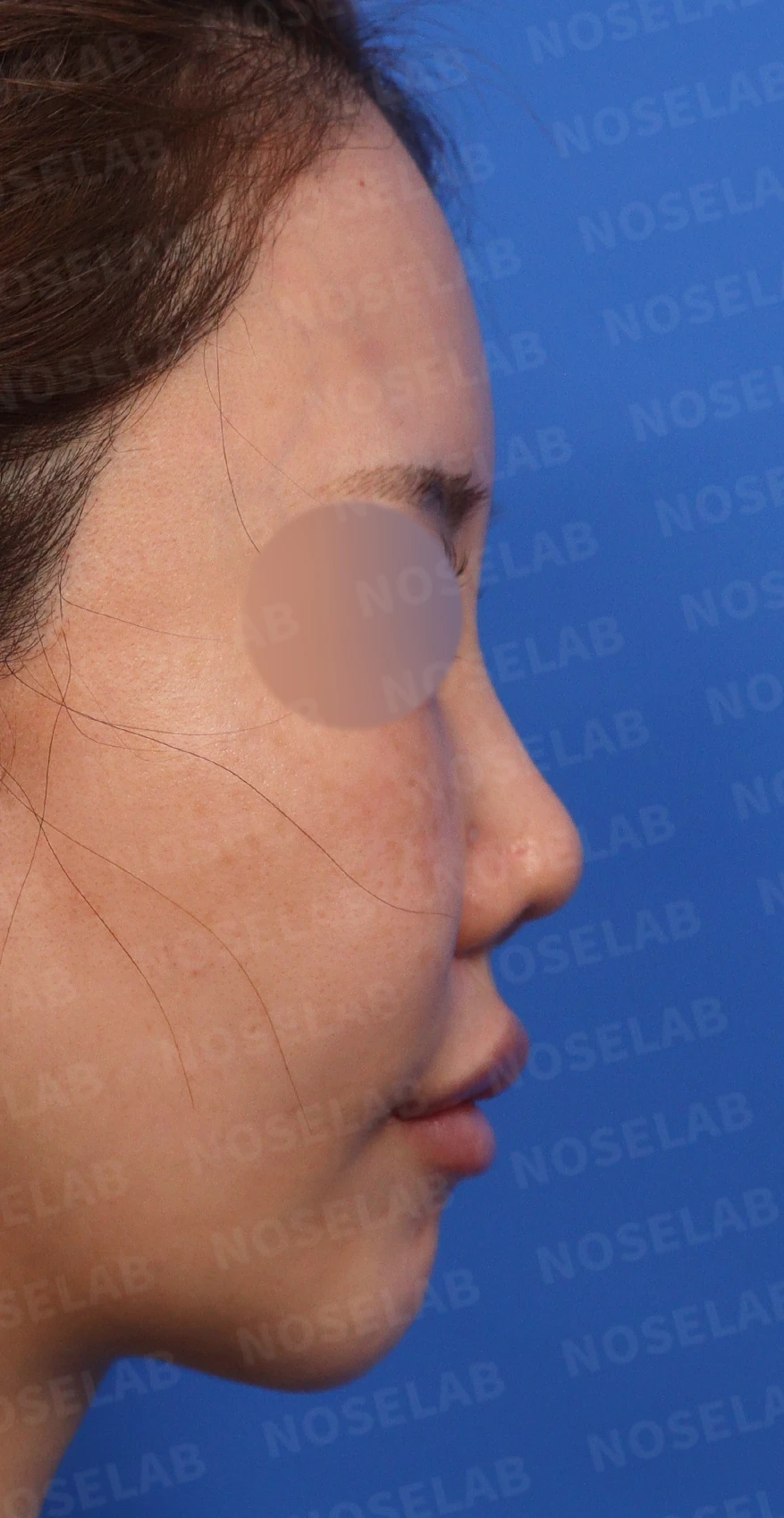
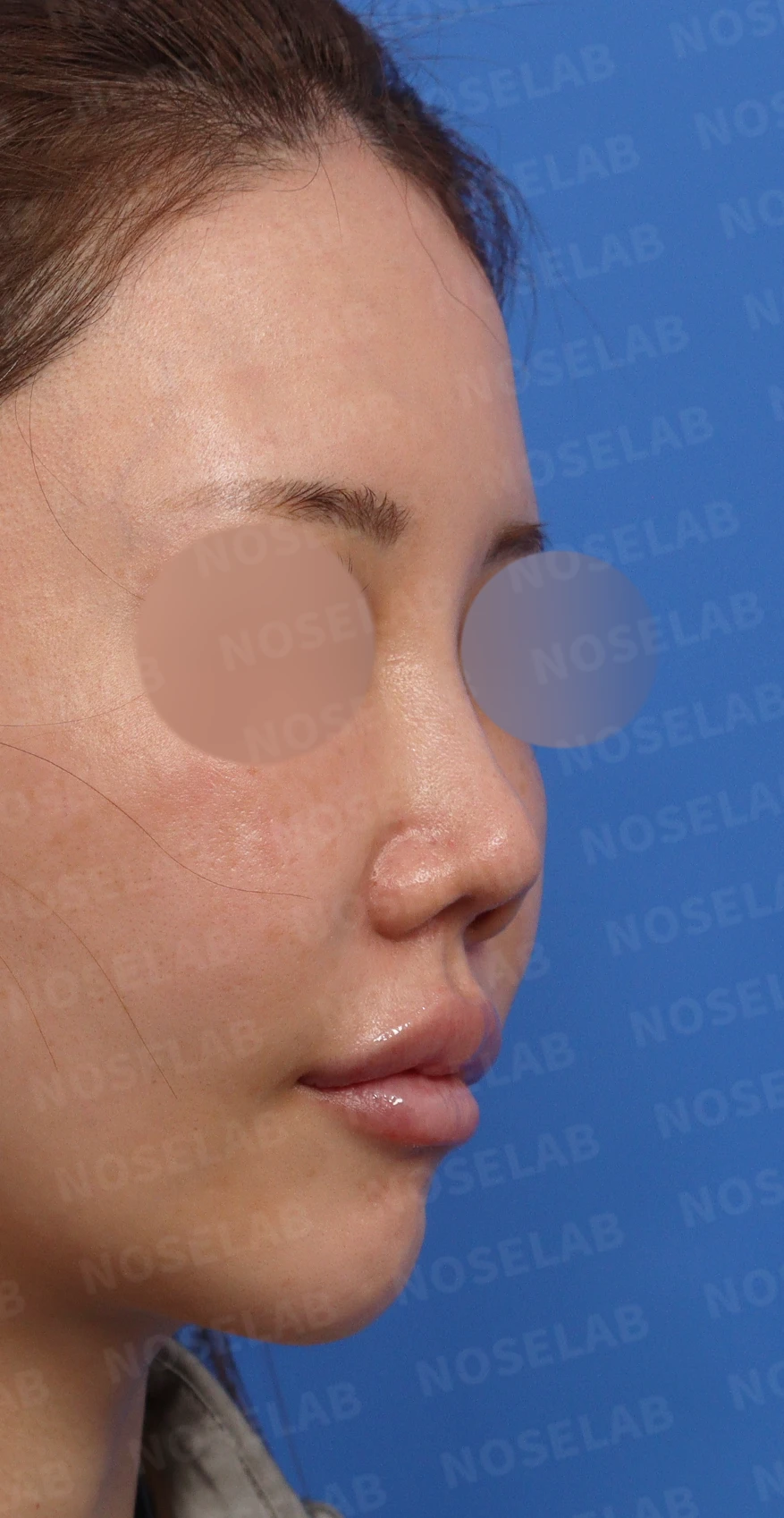
Front, profile, and oblique views from the preoperative design consultation.
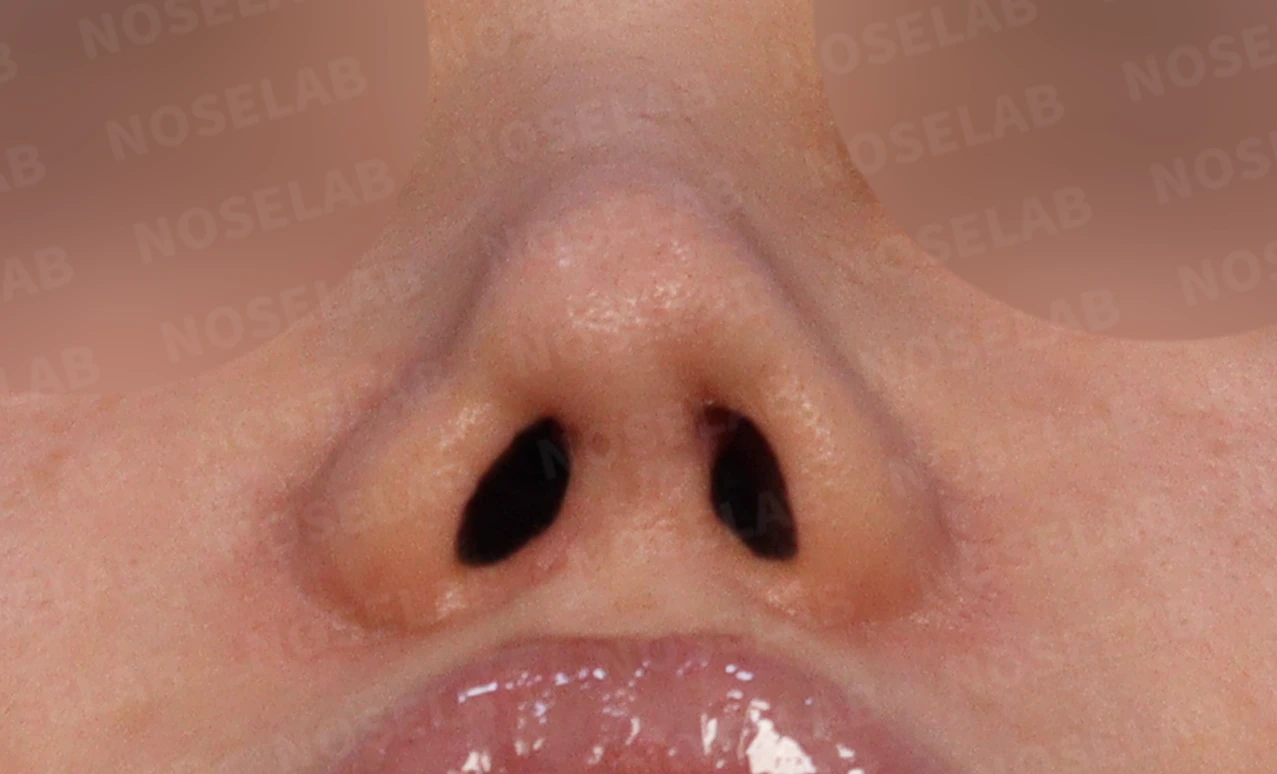
Base view (nostril) photo
Front view:
- The nasal tip is upturned and deviated to the left
- Noticeable nostril asymmetry
- There is a pinched, depressed appearance on the right nostril wing
- Nasal bridge asymmetry is observed
Profile view:
- The nose appears overall short due to the upturned nasal tip
- A retracted columella is observed
- The line between the glabella and the nasal bridge is relatively natural
Oblique view:
- The shortened appearance of the nasal tip is prominent
- Rigidity of the skin due to contracture is observed
Nostrils:
- Left-right asymmetry is pronounced
- The columella is tilted toward the left
CT and nasal endoscopy findings:
- Leftward deviation of the septal cartilage is observed
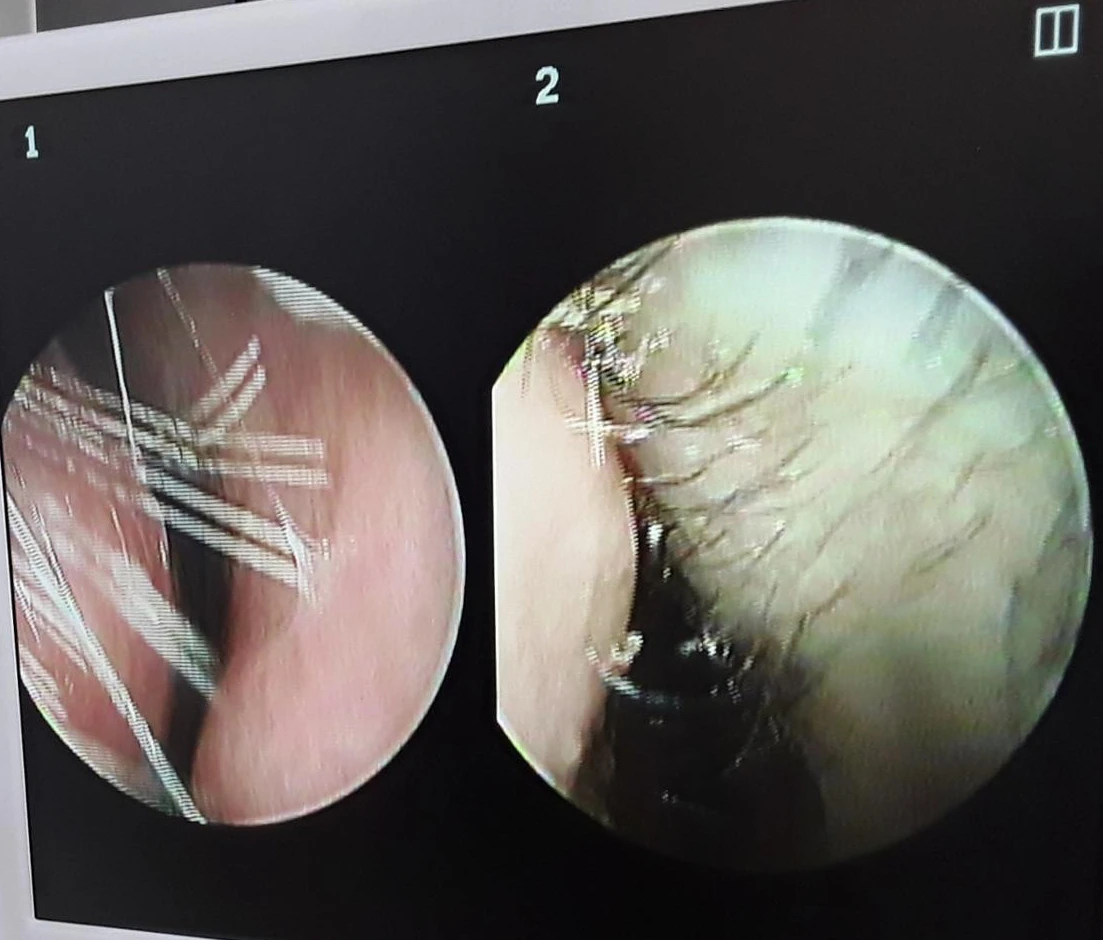
Nasal endoscopy photos 1. Right side 2. Left side
2. Surgical plan and procedure details
We performed the following procedures using a closed approach. In this particular case, we decided to maintain the line of the glabella and nasal bridge, correcting only from the lower part of the nasal bridge down to the nasal tip. This reflected the patient's requests, aiming for a defined yet natural aesthetic outcome.
a) Stem cell therapy:
- Performed 3 times before surgery to improve the skin condition and support postoperative recovery.
b) Autologous rib cartilage harvest and grafting:
- A sufficient quantity of cartilage was harvested and used for overall nasal reconstruction.
c) Septoplasty, septal reconstruction, and septal extension:
- Reconstructed the septum, which was severely damaged from previous surgeries.
- Straightened the nasal tip that was deviated to the left.
- This also improved the nasal obstruction on the left side.
d) Lateral osteotomy:
- Performed to improve asymmetry of the nasal bridge.
e) Nasal tip reconstruction:
- Reconstructed the nasal tip using autologous rib cartilage and corrected the upturned nose.
- Achieved maximum correction within the physical limits of the contracted skin.
f) Correction of the nasolabial angle:
- Lowered the columella slightly to naturally adjust the nasolabial angle. Retracted columella improvement.
g) Removal of contracted tissue over the nasal bridge:
- Helped increase skin flexibility and adjust the height of the nose.
3. Comparison of before-and-after photos
Comparing photos taken immediately after surgery on day 0 shows the following improvements: Photos taken immediately after surgery show swelling and may differ from the final result.
Front view:
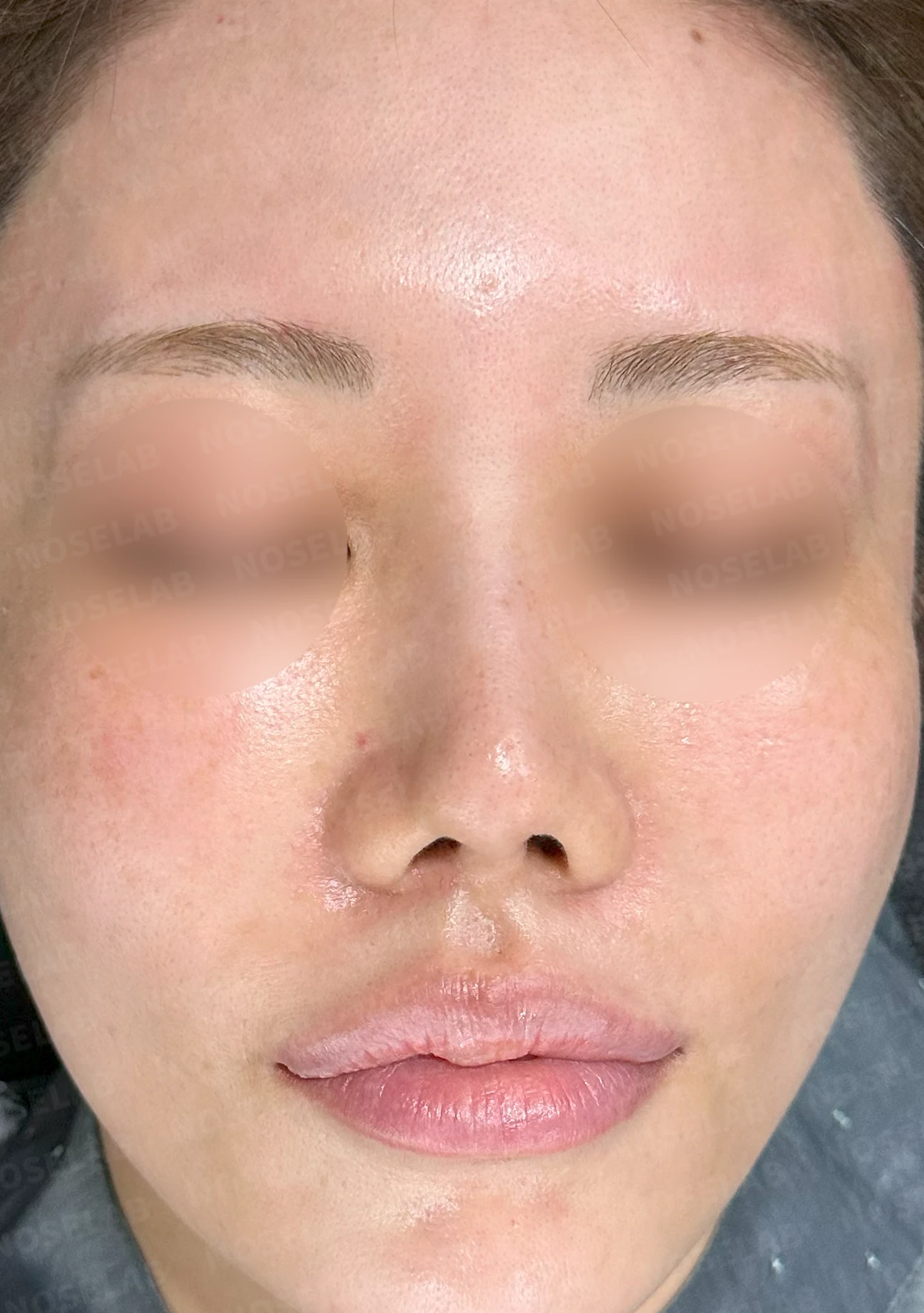
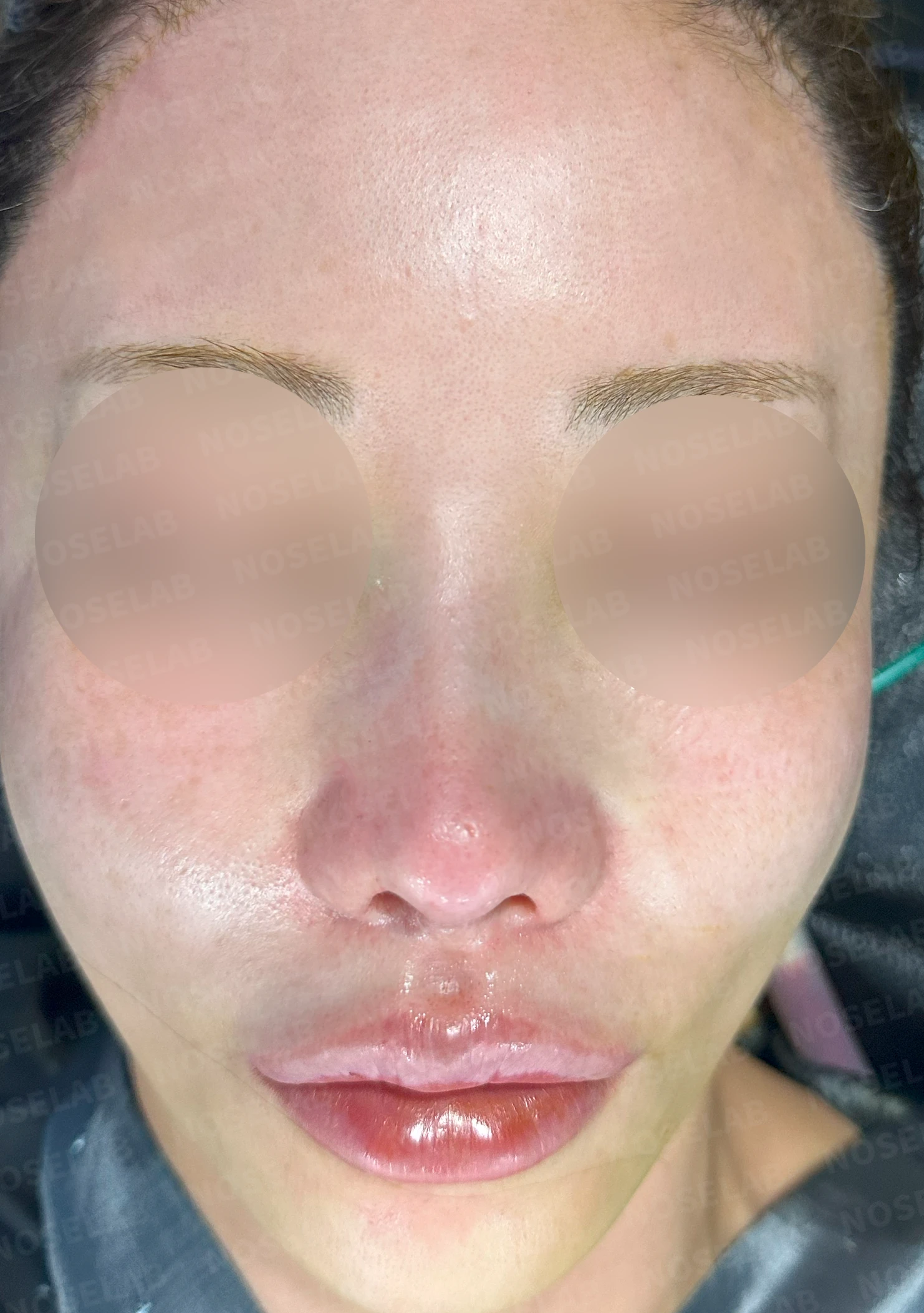
Before surgery / Day 0 immediately after surgery Photos taken immediately after surgery show swelling and may differ from the final result.
- The nasal tip, which was upturned and deviated to the left, has been straightened.
- Nostril asymmetry improved significantly.
- The depressed appearance of the right nostril wing has been naturally corrected.
- Nasal bridge asymmetry improved, presenting an overall well-balanced appearance.
- The extent of nostril show has significantly improved.
Profile view:
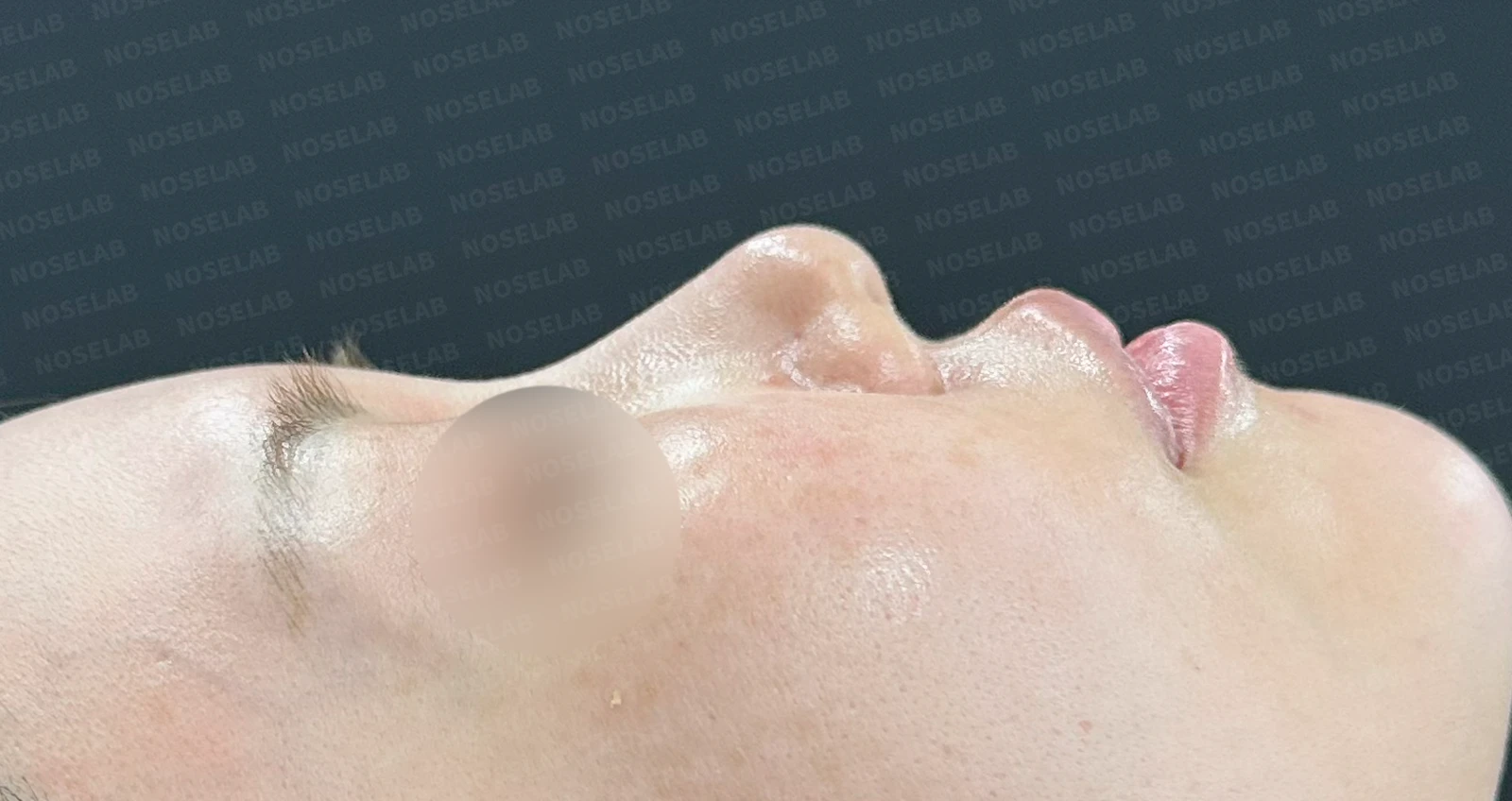
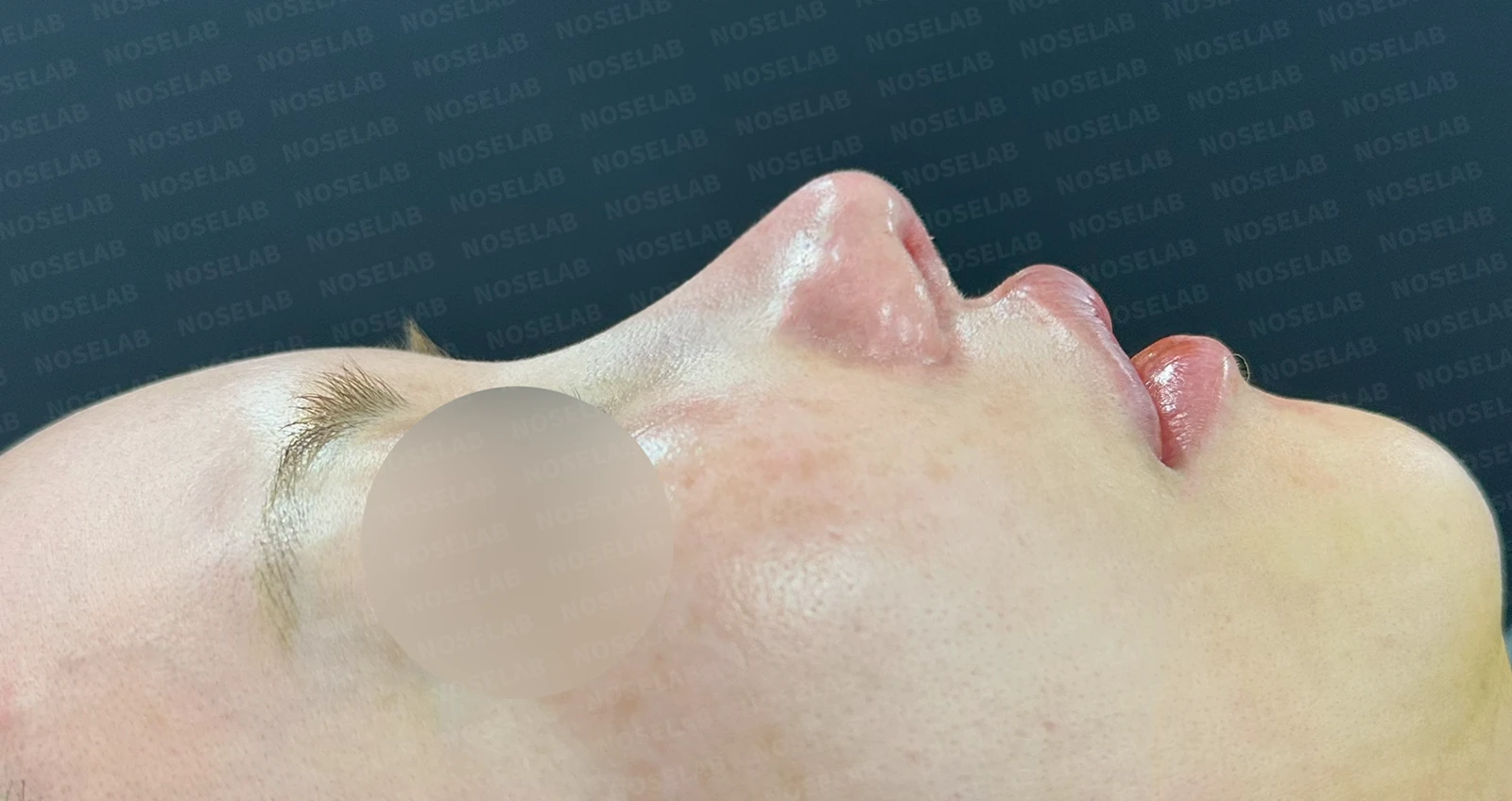
Before surgery / Day 0 immediately after surgery Photos taken immediately after surgery show swelling and may differ from the final result.
- The upturned nasal tip was lowered appropriately, improving the overall length of the nose.
- The nasolabial angle was naturally adjusted, enhancing the harmony between the nose and lips.
- While preserving the natural line of the glabella and upper bridge, the line from the mid-dorsum down to the nasal tip improved attractively.
Oblique view:
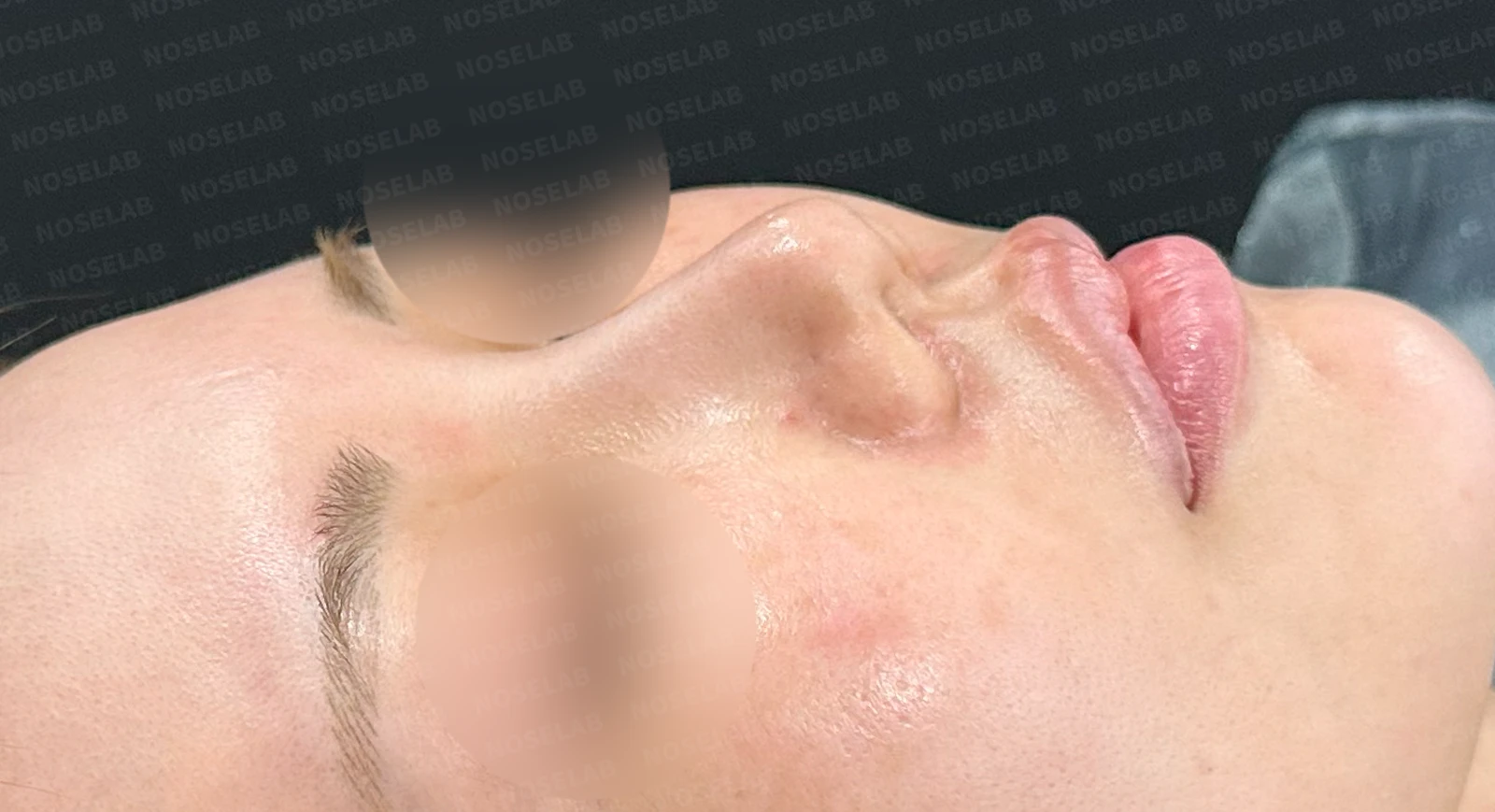
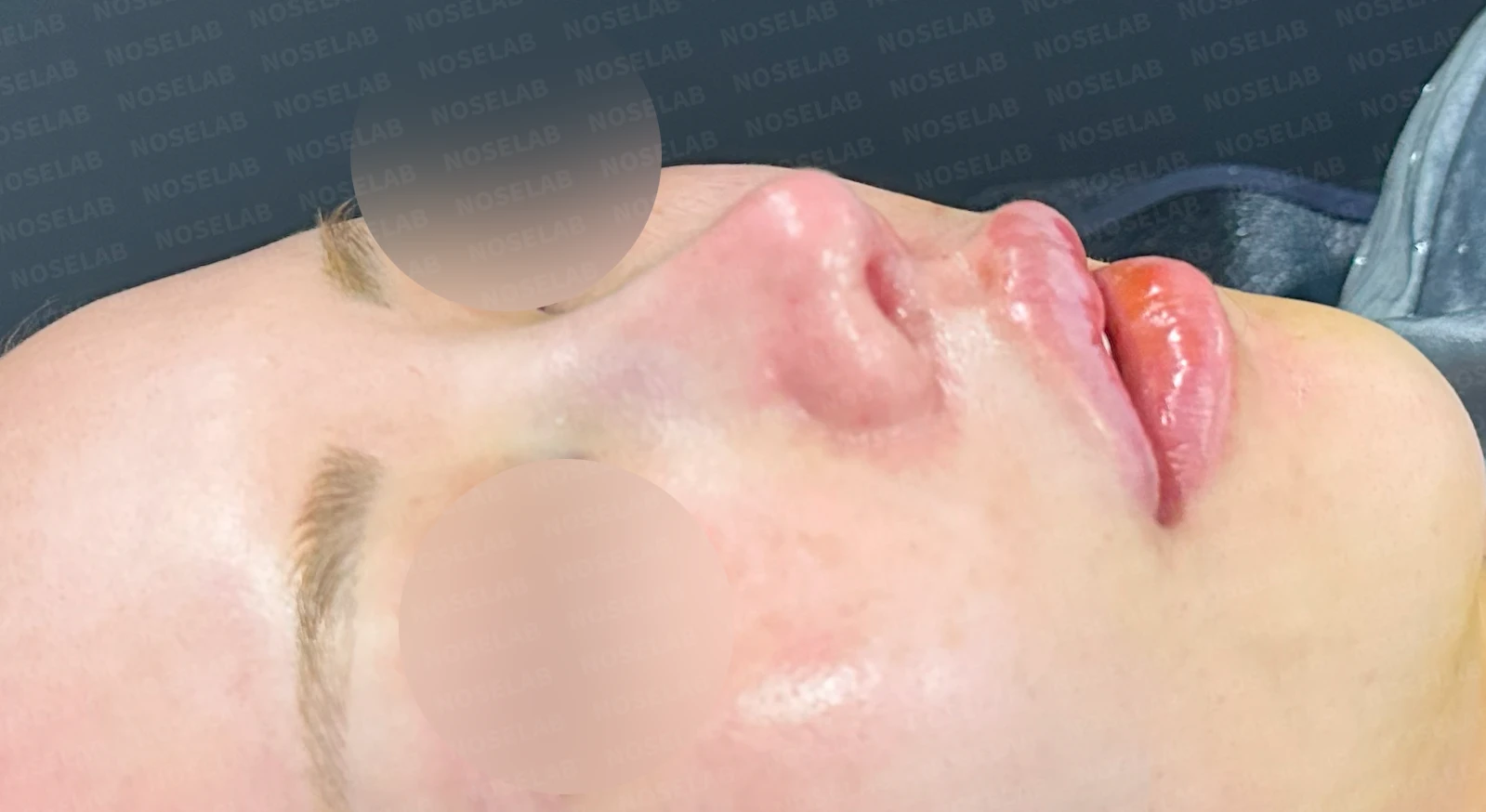
Before surgery / Day 0 immediately after surgery Photos taken immediately after surgery show swelling and may differ from the final result.
- The appearance where the nose looked short has become much more natural.
- The contracted skin has loosened to an extent, giving a softer overall impression.
Nostrils:
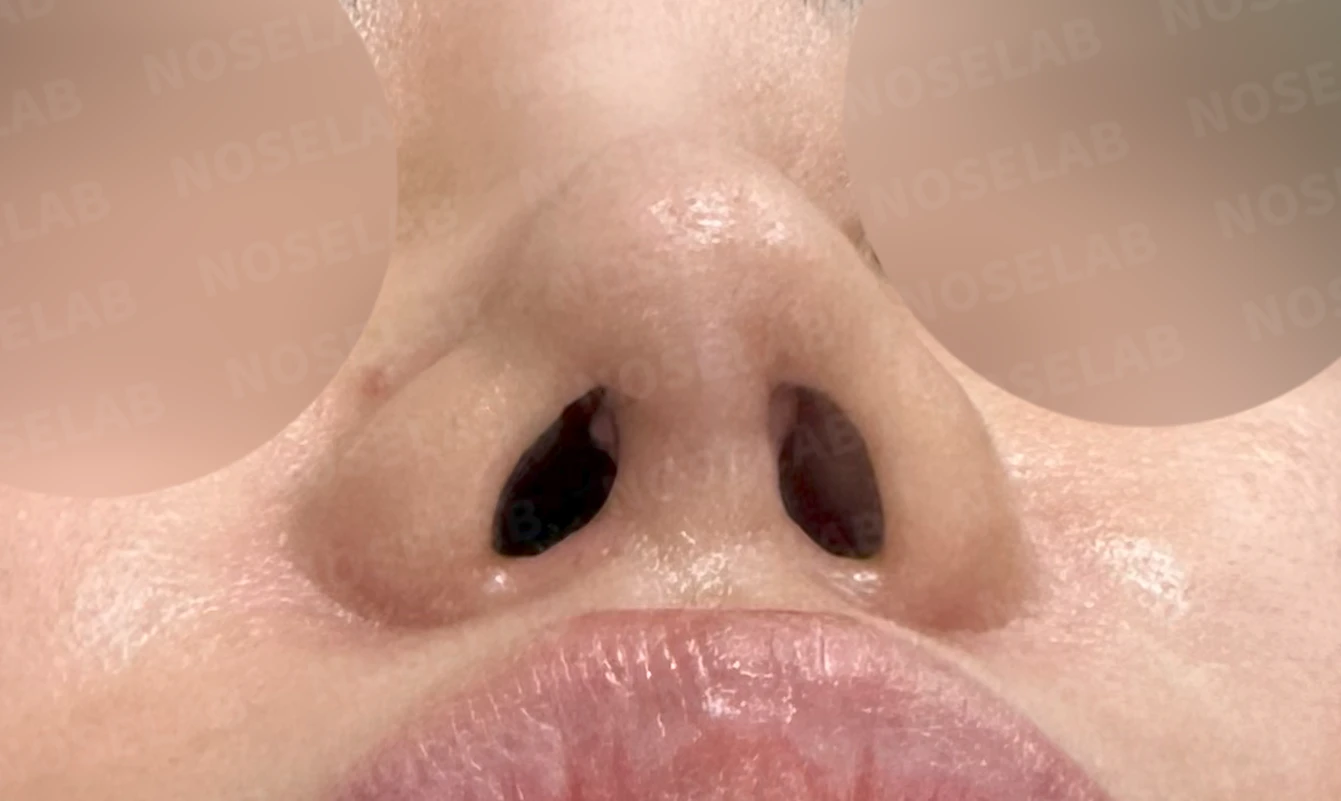
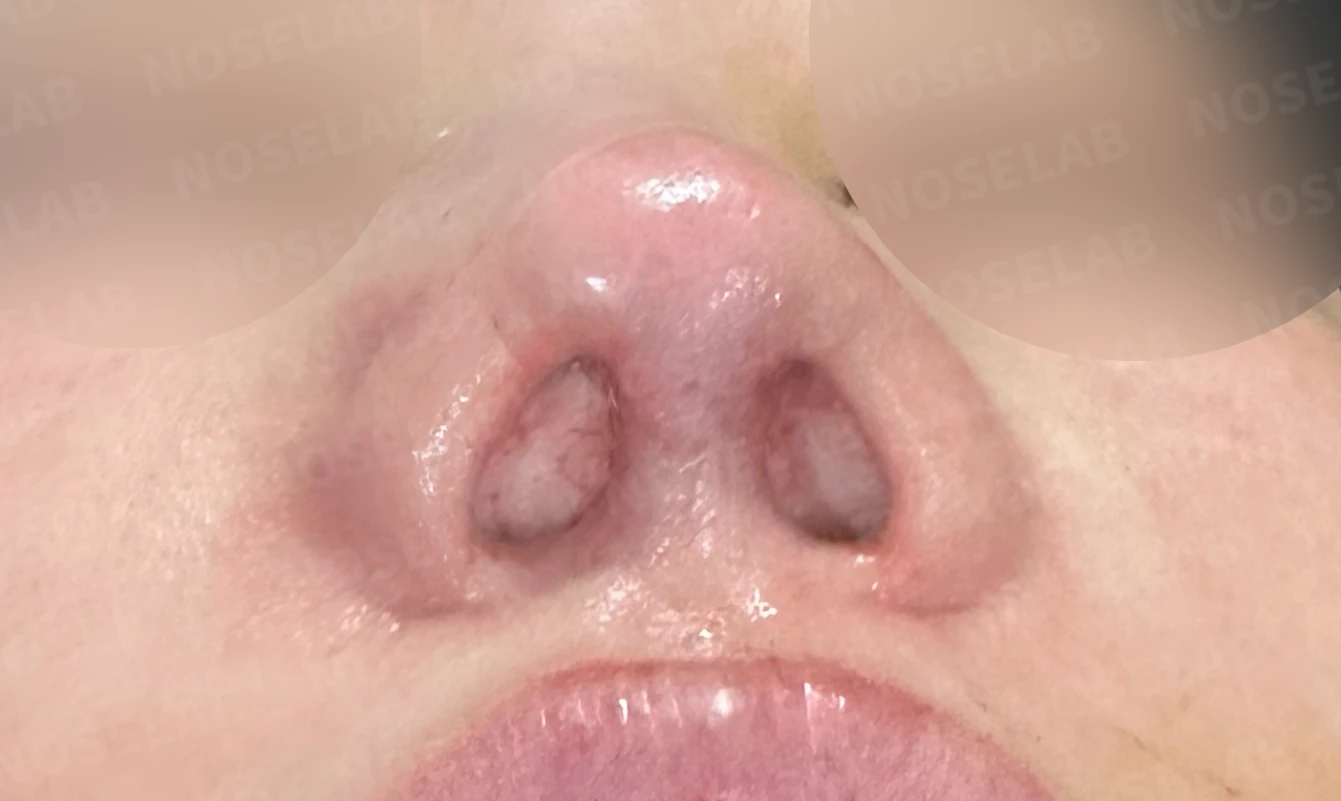
Before surgery / Day 0 immediately after surgery Photos taken immediately after surgery show swelling and may differ from the final result.
- Left-right asymmetry has markedly improved.
- The columella, which had been tilted to the left, was corrected.
4. Photos taken immediately after surgery
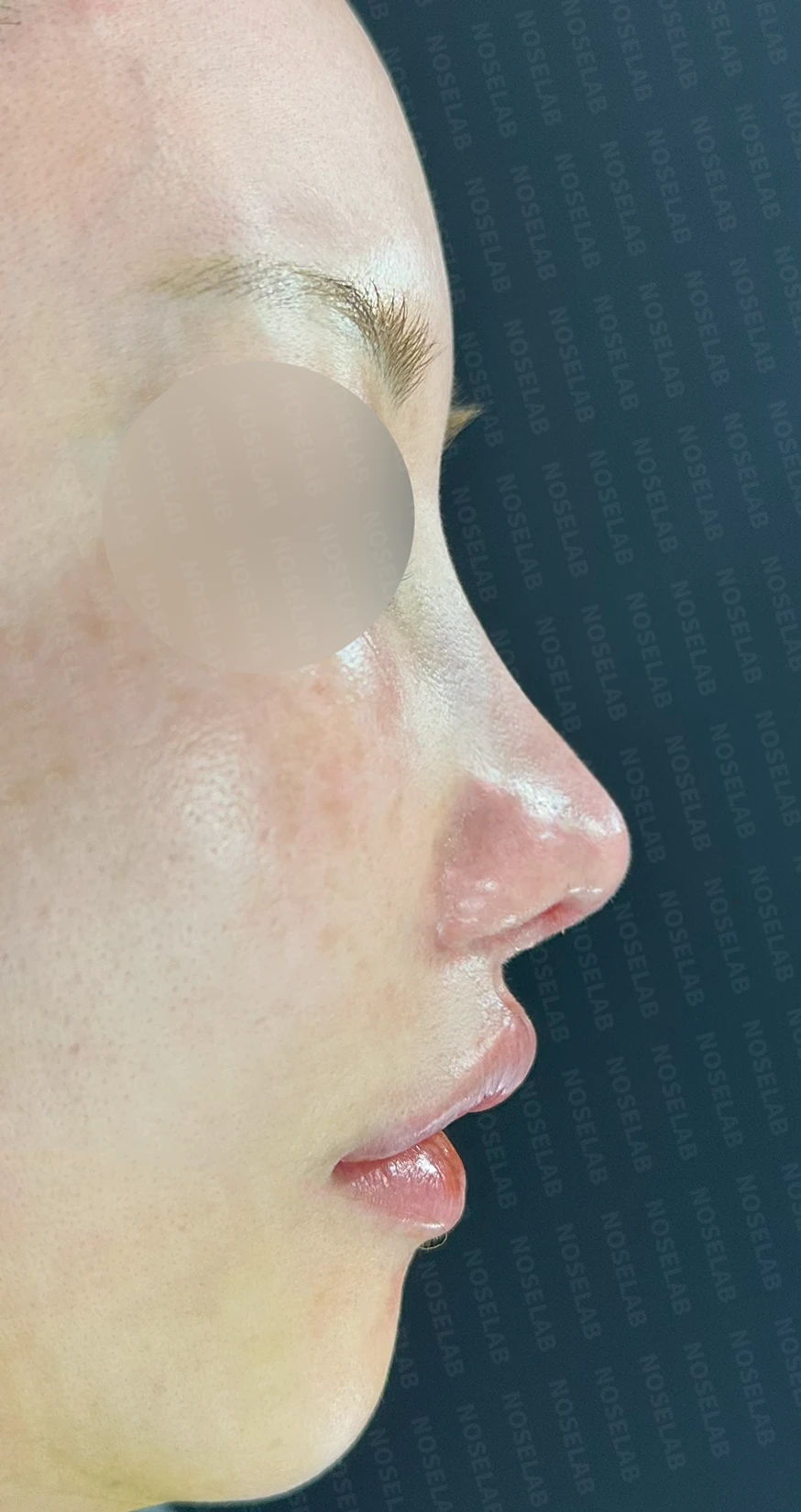
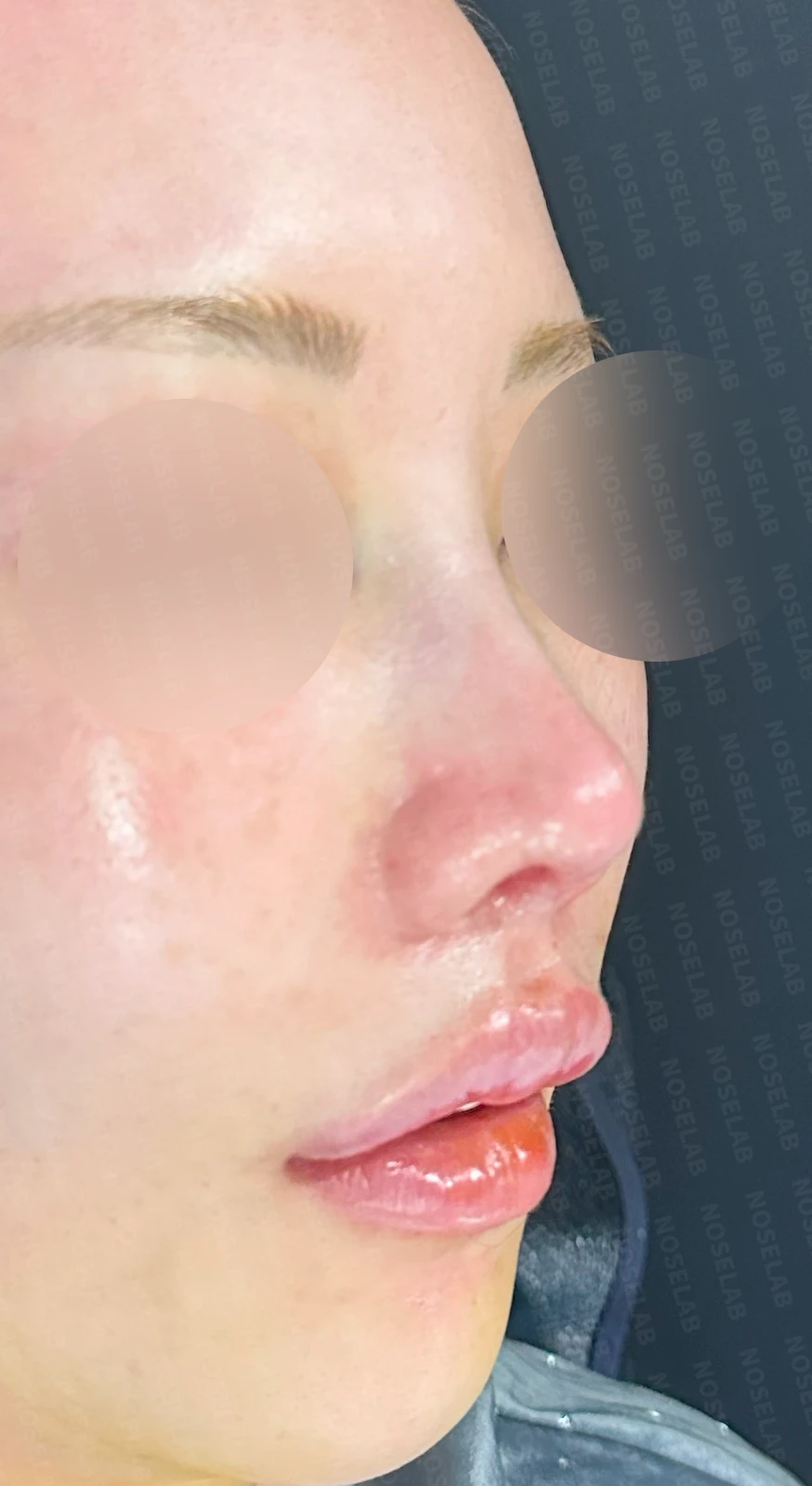
Immediately after surgery on day 0: front, profile, and oblique views. Photos taken immediately after surgery show swelling and may differ from the final result.
Base view (nostril) photo
5. Conclusion
This case resolved complex problems such as a contracted nose and retracted columella that can occur after multiple rhinoplasty surgeries. Even under challenging conditions involving contracted skin and a damaged septum, we achieved a satisfying outcome.
Reconstruction using autologous rib cartilage was the most suitable choice to obtain a long-term stable result. Using autologous tissue minimized the risk of rejection, and harvesting an ample amount of cartilage made complex reconstruction feasible.
Combining stem cell therapy also played a significant role in the success of this surgery. It was instrumental in improving the condition of the contracted skin and assisting postoperative recovery.
However, limitations always exist in such complex revision cases. In particular, achieving complete correction of both nasal height and tip upturning simultaneously can be very challenging due to skin contracture. In this surgery, we sought to derive an optimal outcome by considering both present aesthetics and potential future tissue changes.
Prioritizing the long-term result over the immediate postoperative appearance comes from surgical experience. Because the nasal tip tends to settle and lengthen naturally over time, correcting the upturned nose while maintaining adequate tip height immediately after surgery can produce a better outcome in the long run.
6. Conclusion
I hope this case offers reassurance to those who are concerned about unsatisfactory results after multiple rhinoplasty procedures. In complex revision cases, selecting a surgeon with extensive experience and deep expertise is critical.
Correcting a contracted nose holds significant meaning not only cosmetically but also functionally. Improving nasal obstruction and correcting asymmetry directly affect quality of life.
Drawing on anatomical knowledge and extensive surgical experience as a board-certified otolaryngologist, I provide surgical plans tailored to each individual patient. Through a comprehensive approach that considers both functional and cosmetic improvement, I strive to create a beautiful and healthy nose.
Lastly, I would like to offer advice to those considering rhinoplasty. Please choose carefully starting from your first surgery to reduce the risk of unnecessary revision procedures. If revision rhinoplasty is needed, make thoughtful choices through thorough consultations and professional guidance from a specialist.
NOSELAB is here to help you achieve a healthy, aesthetically pleasing nose. Thank you.
#contractednosecorrection #retractedcolumella #upturnednosecorrection #deviatednosecorrection #nostrilasymmetry #autologousribcartilagegraft #stemcelltherapy #closedrhinoplasty #revisionrhinoplasty #entrhinoplastyspecialist #functionalrhinoplasty #definednose #naturalnose
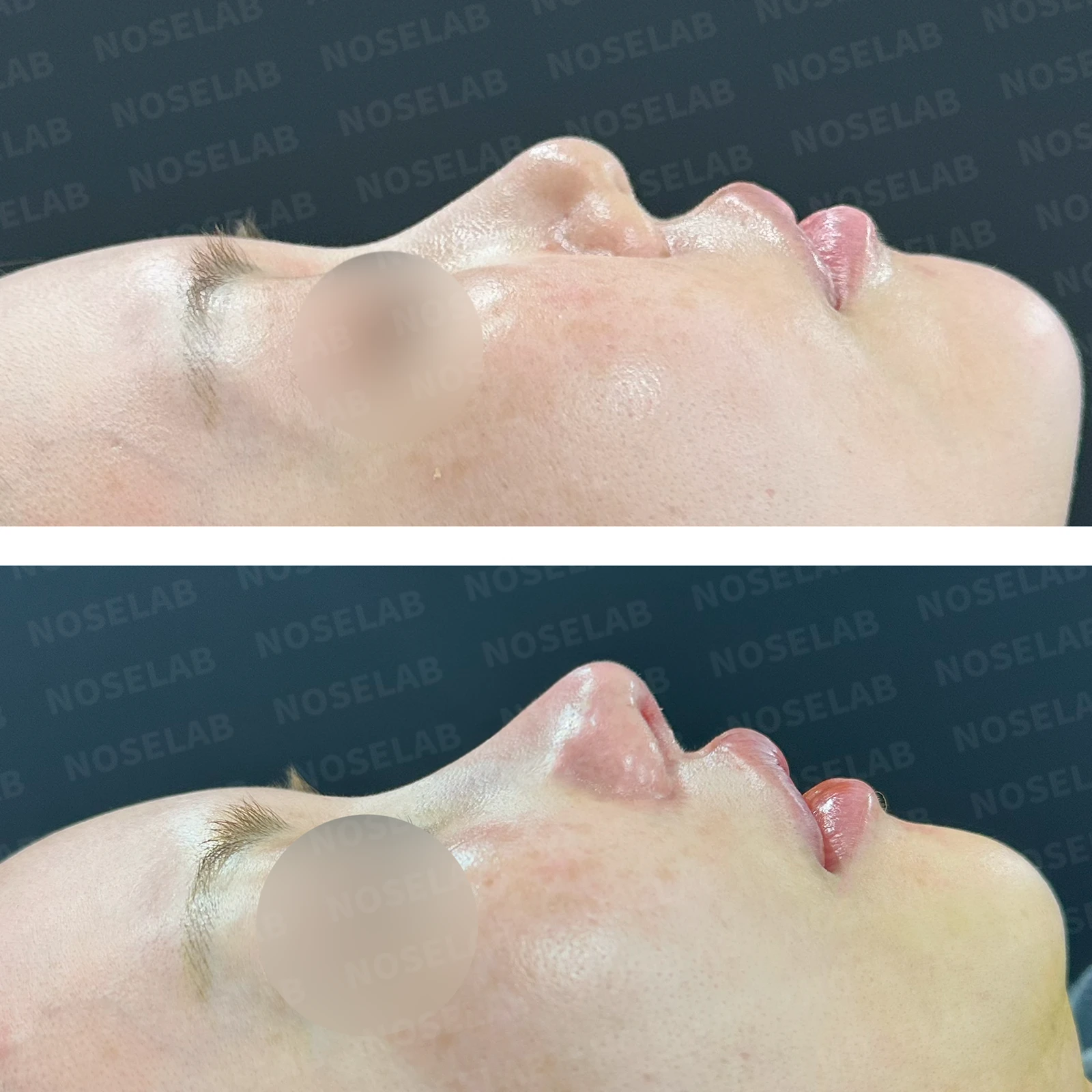
Limitations and risks
When autologous rib cartilage is used, scarring and pain may remain at the donor site on the chest, and pneumothorax (pleural injury) can occur rarely. Over time, the grafted cartilage may warp or undergo partial resorption.
When revising after implant removal, contracture may progress again after removal, the nasal height and length may decrease, and staged surgery may be necessary depending on the skin condition.
When the septum is corrected at the same time, nasal obstruction may persist or recur, and in rare cases, septal perforation or changes in smell may occur.
Common potential risks include infection, bleeding, asymmetry, scarring, skin necrosis, and insufficient improvement; results vary depending on individual skin condition and previous surgical history.