Hello, I am Dr. Peter C. Kang.
Today, I would like to share a complex revision rhinoplasty case of an upturned, contracted nose caused by contracture following inflammation after multiple prior surgeries.
The patient visited our clinic with several concerns, including a contracted nose, upturned nose, short nose, and nostril asymmetry.
1. Design consultation
Let us analyze the patient's condition in detail:
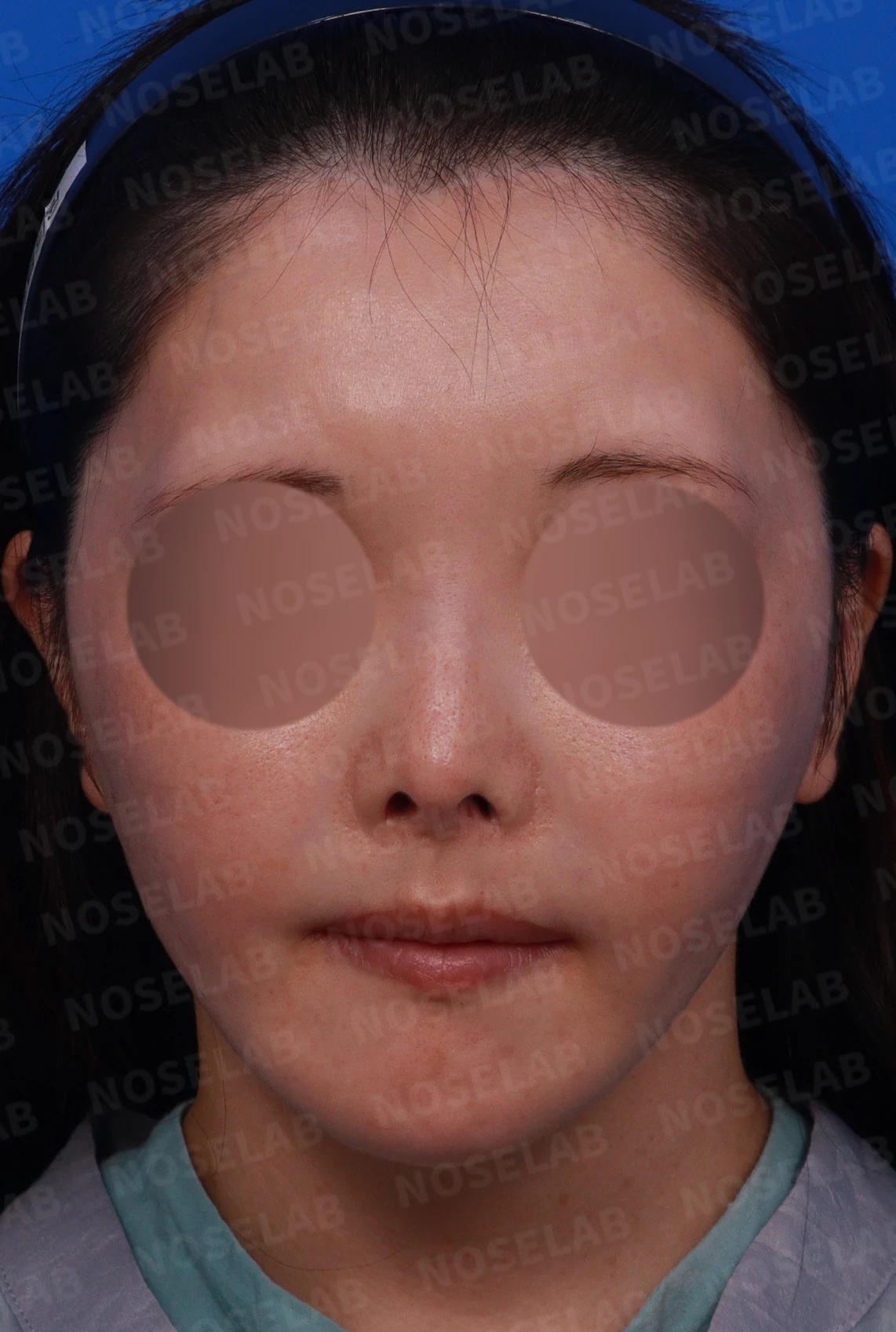
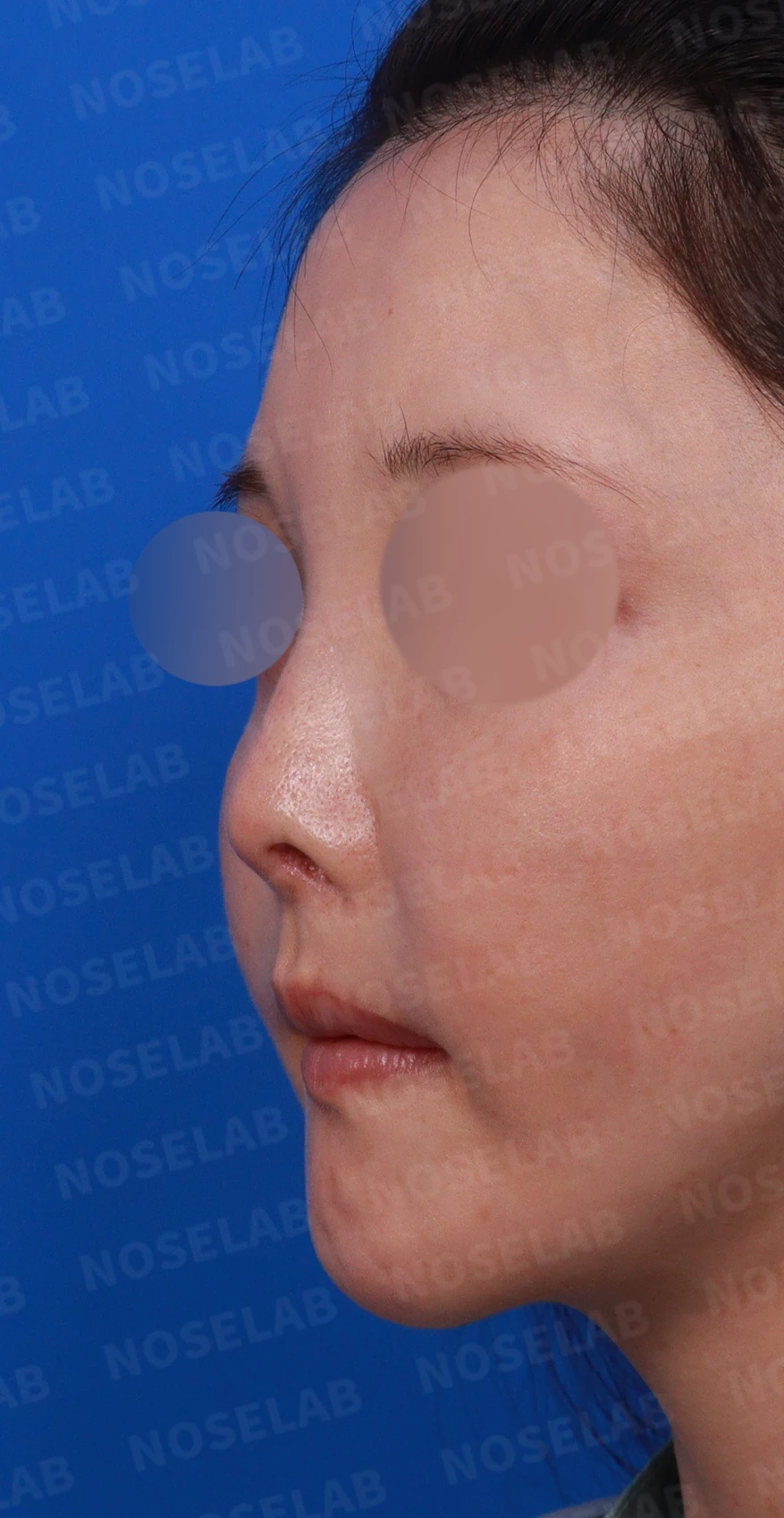
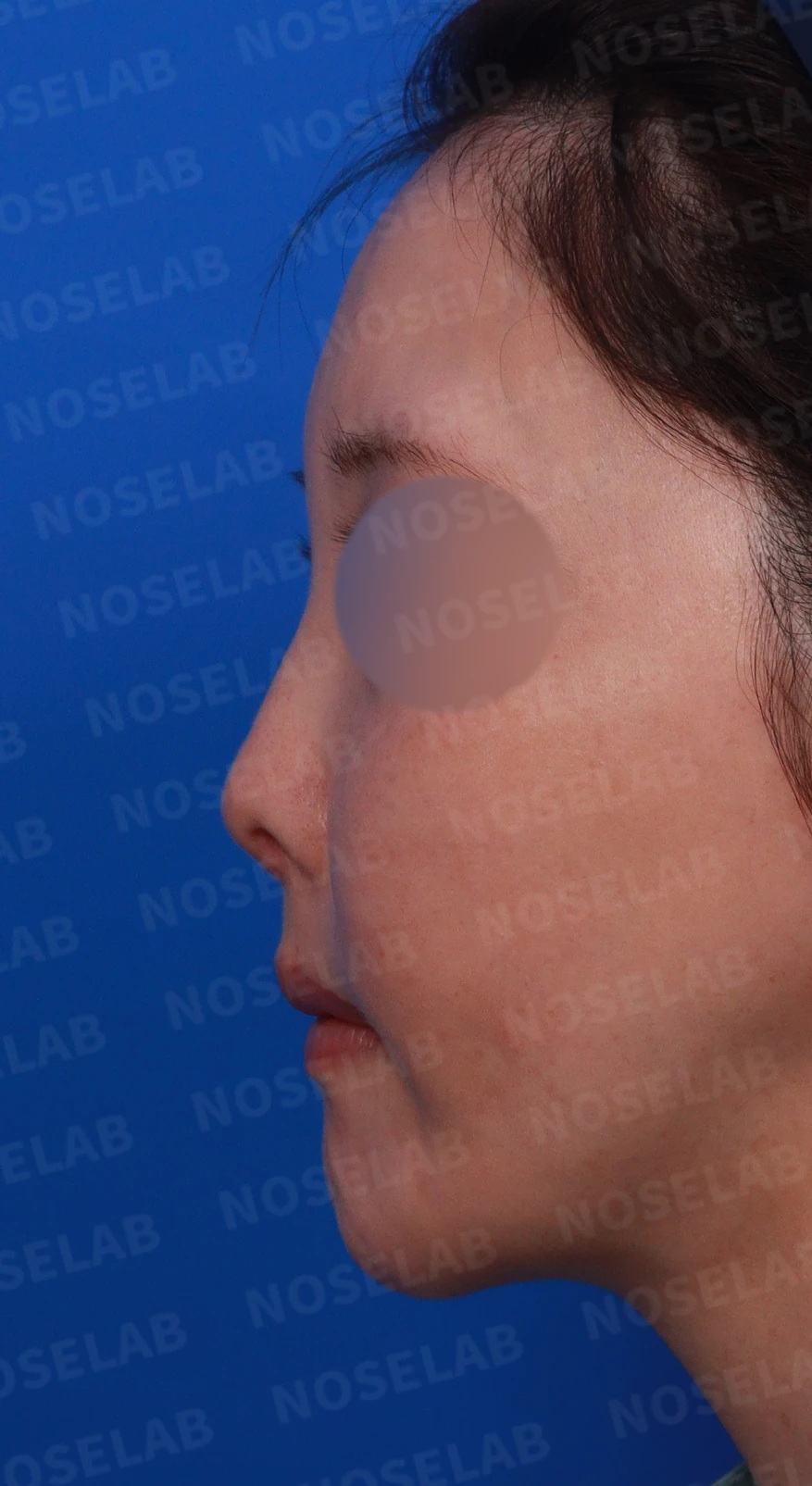
Design consultation: front, left oblique, and profile views.
Front view:
- The nose was overall short and upturned
- Significant nostril show
- Noticeable nostril asymmetry
- The nasal bridge was flat, with an excessively high radix
Oblique view:
- A contradictory shape where the nasal tip appeared both drooping and upturned
- The entire nose appeared shortened
- Large nasolabial angle (angle between the nose and upper lip)
Profile view:
- The radix is high
- Wide nasolabial angle
- The nasal tip is upturned
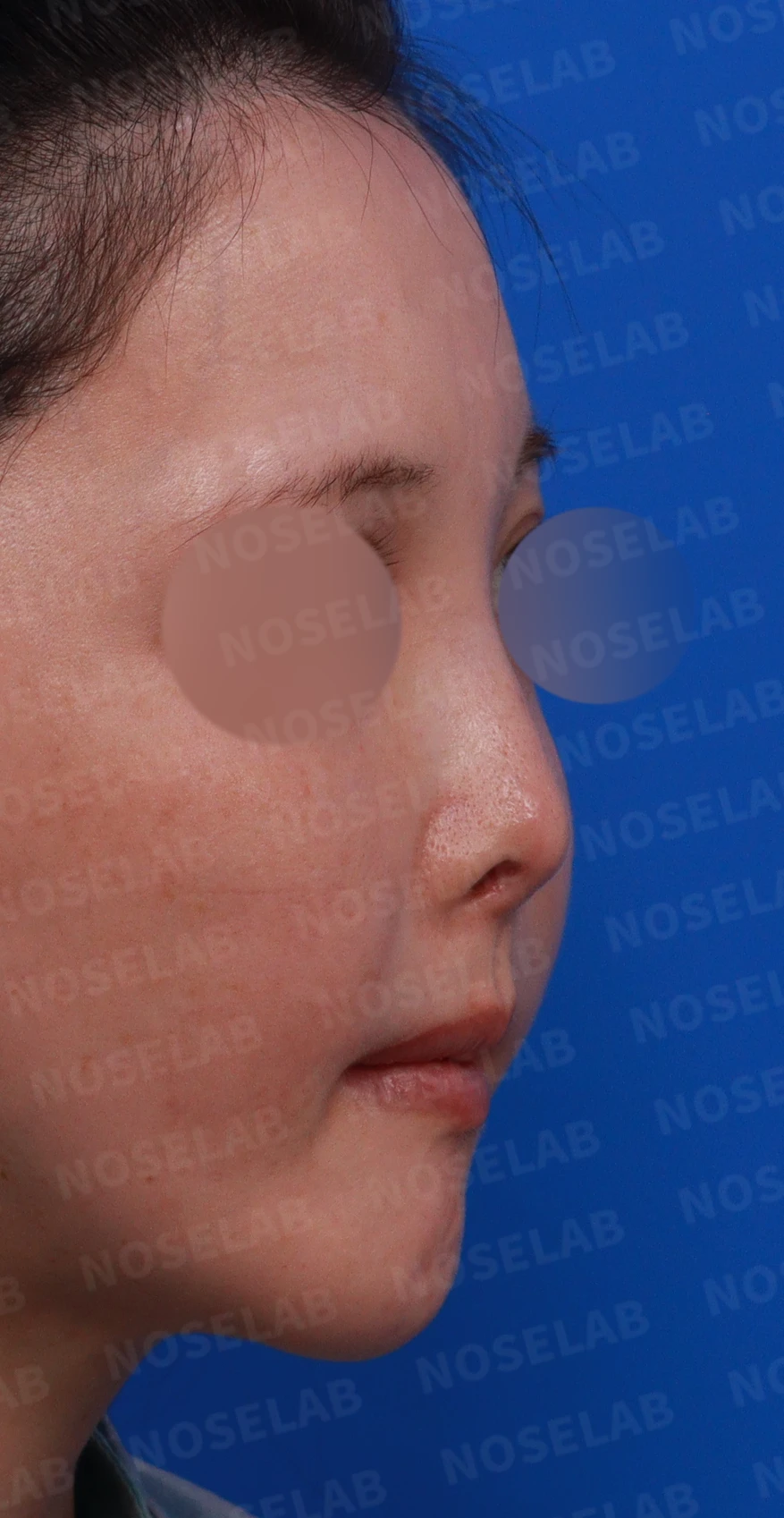
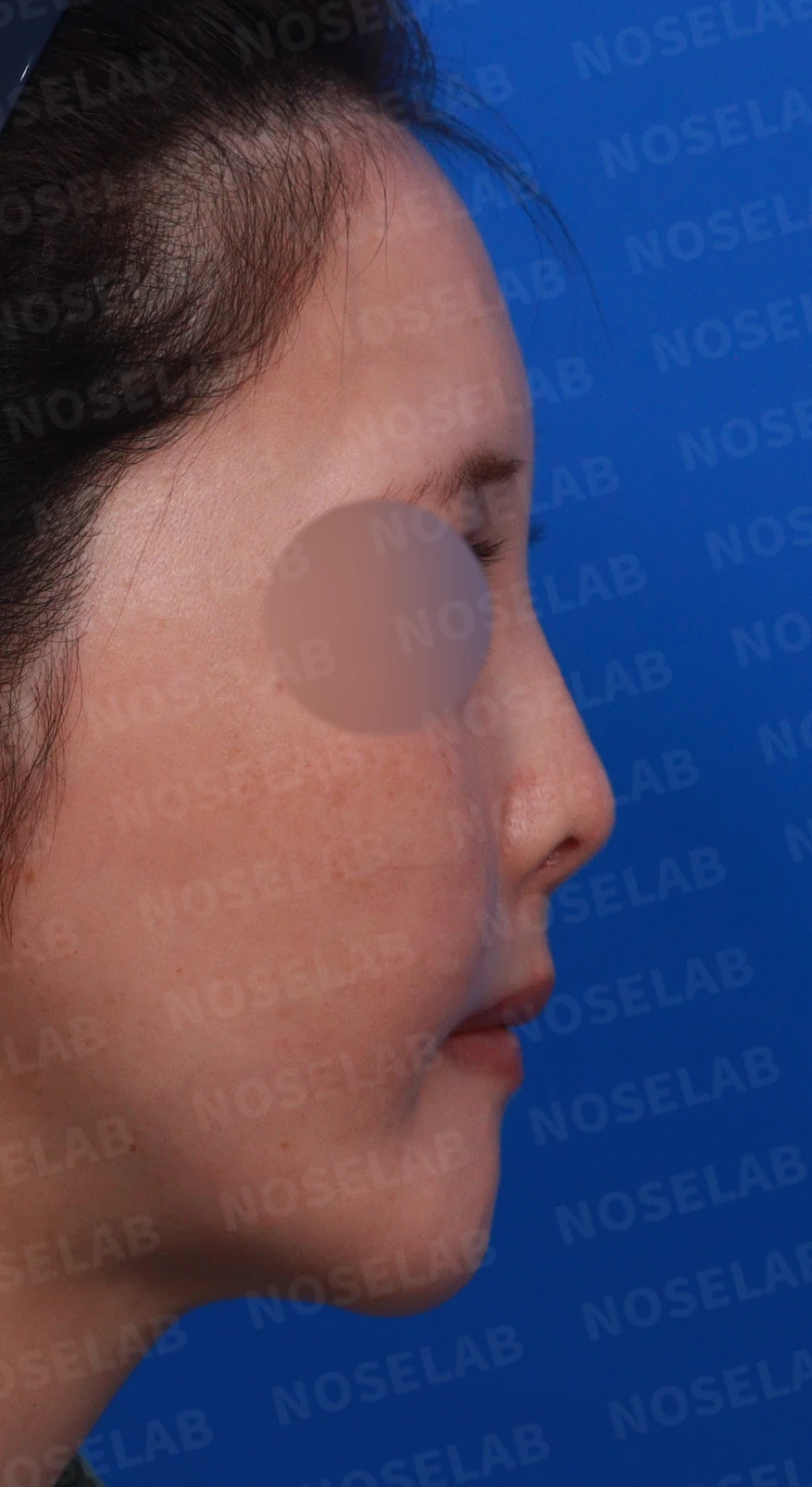
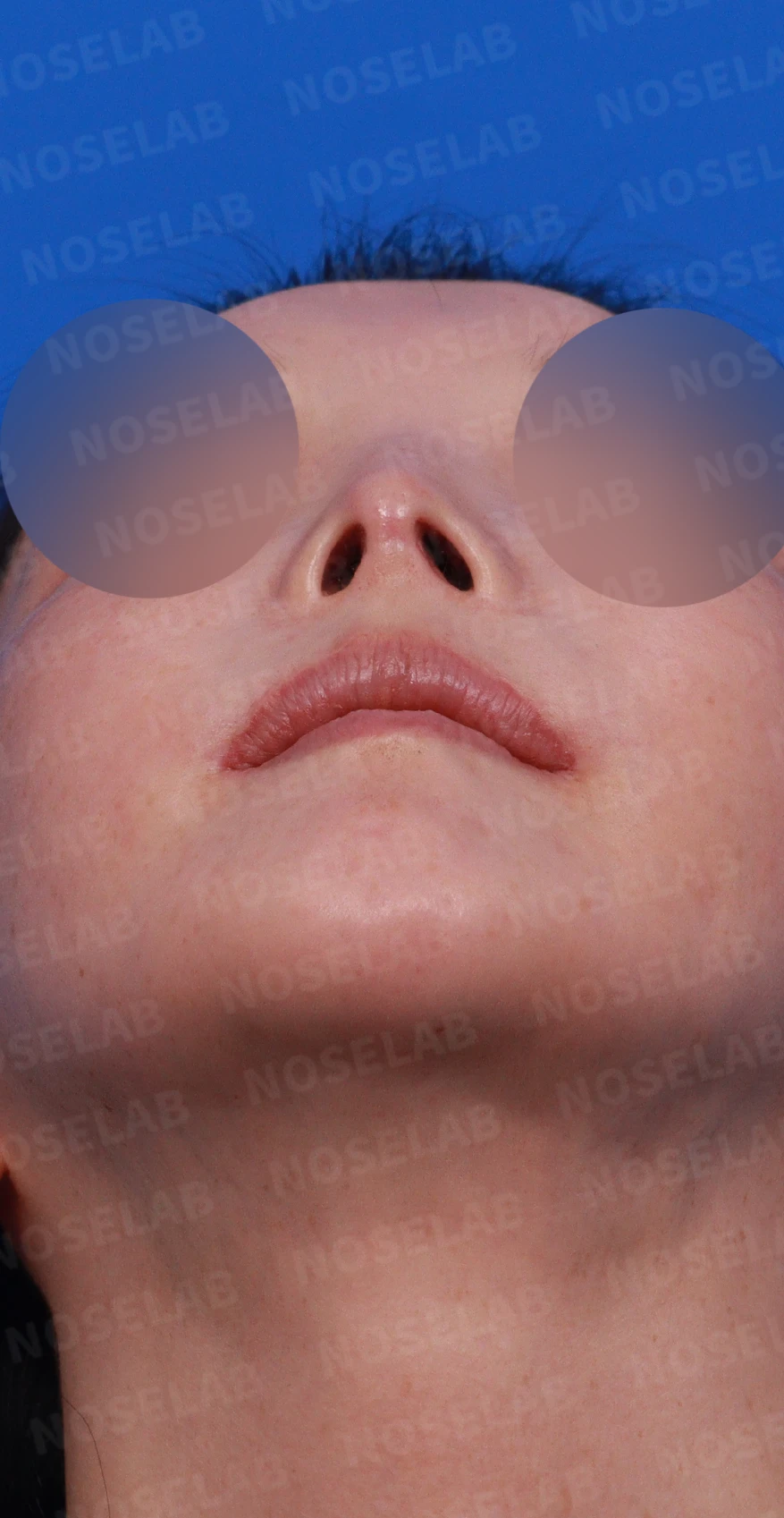
Right profile, oblique, and nostril views during design consultation.
Nostrils:
- Noticeable nostril asymmetry
- The columella tilts to the right
- The nasal tip appeared small and under-projected
Patient's main requests:
1. Correction of the upturned nose
2. Lowering the radix
3. Improvement of nostril asymmetry
4. Improvement of overall nasal length
Surgical history
2017: Silicone implant
2019: Silicone implant removal
2019: 3 sessions of PRP + ear cartilage + artificial dermis
2023: Donor rib cartilage + philtrum reduction + alar reduction
2024: 3 sessions of stem cell injection therapy
2. Surgical details
a) Removal of unexpected foreign material: mesh removal
- During surgery, unexpected mesh material was discovered in the nasal tip and removed.
- Most of the previously placed donor rib cartilage had resorbed, leaving only a small amount, which was completely removed.
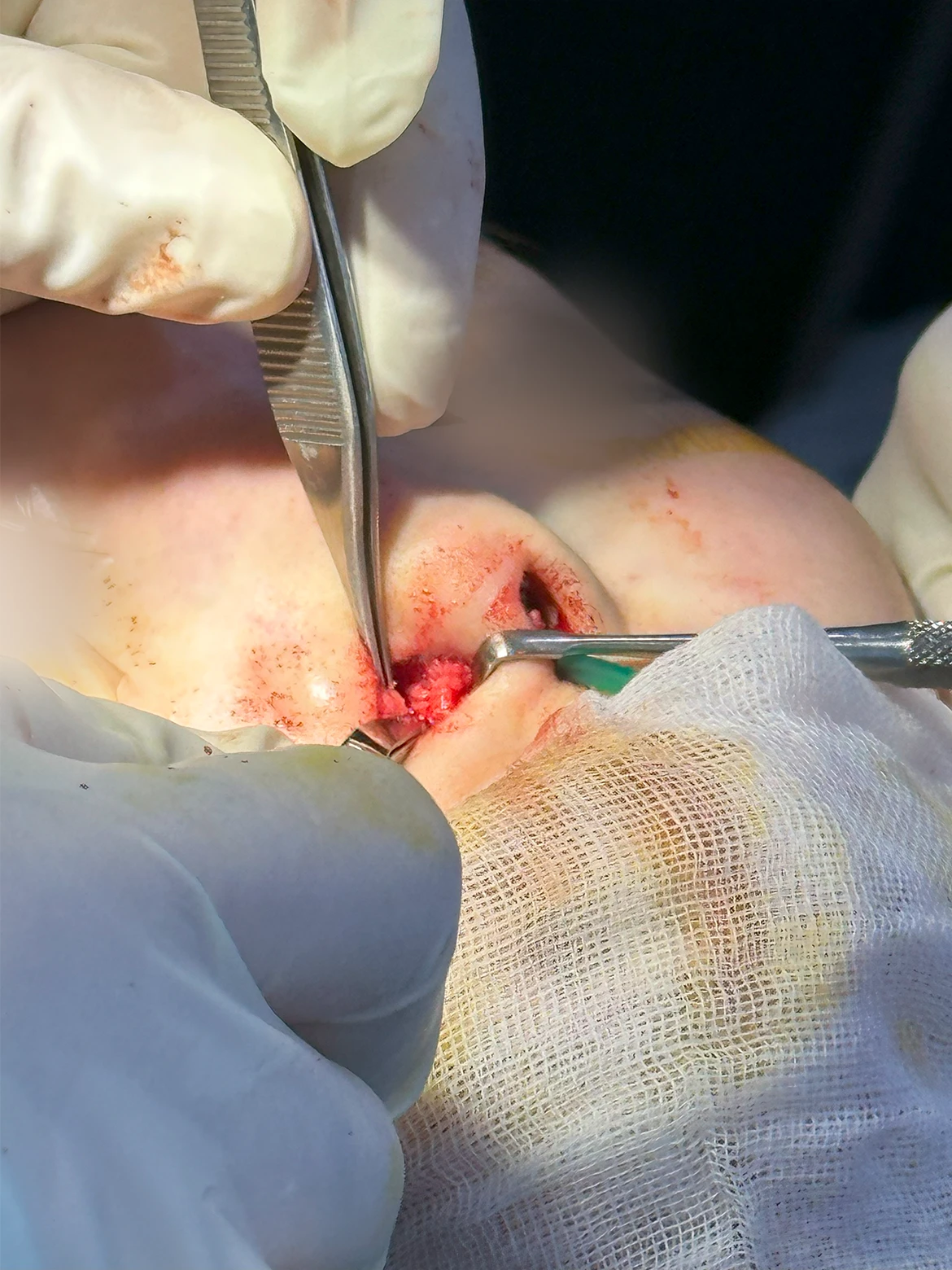
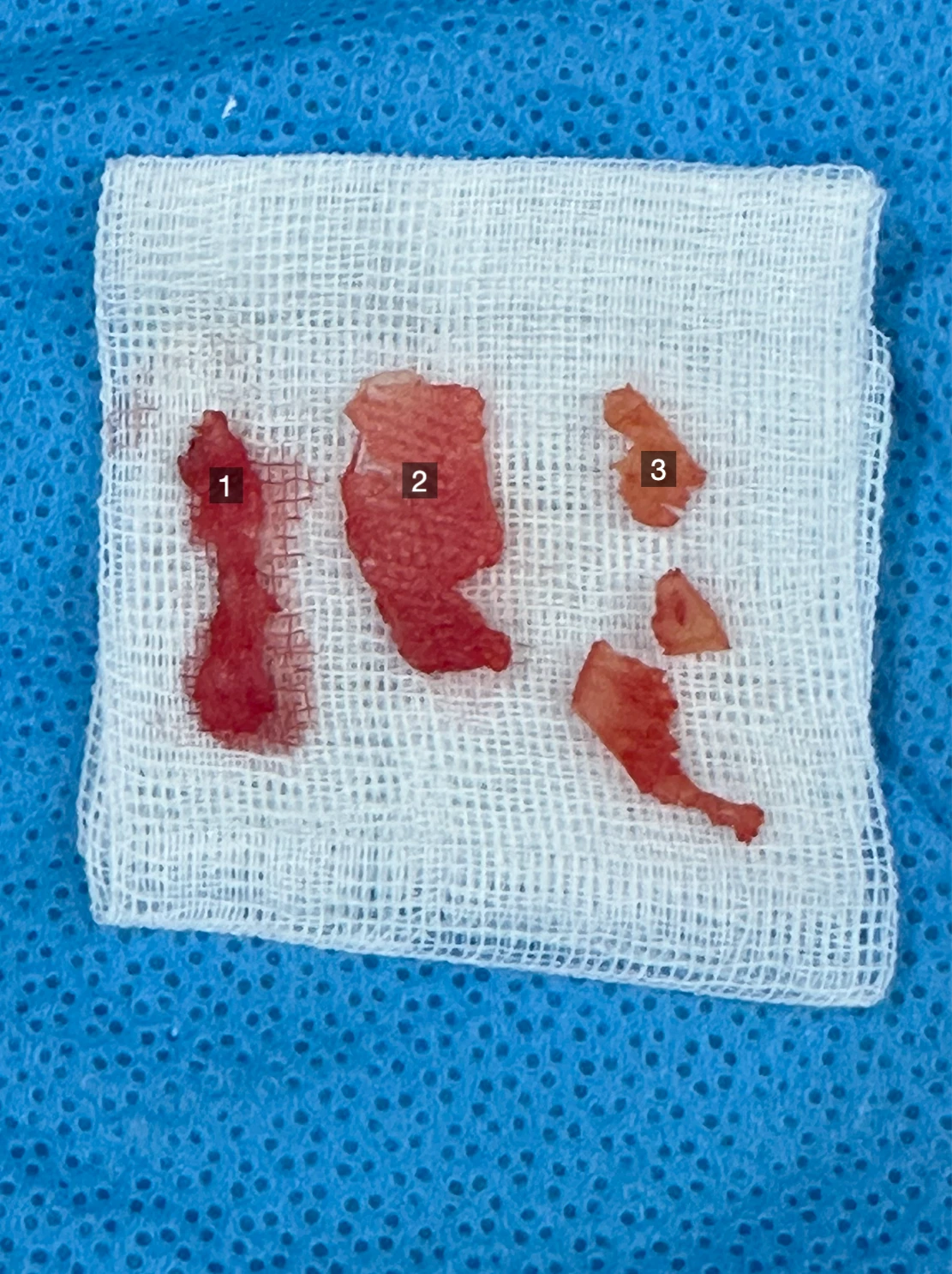
Photo during mesh removal: 1. Artificial dermis 2. Removed mesh fragments 3. Removed donor rib cartilage fragments
b) Total septal reconstruction:
- Because most of the septal cartilage had been lost, the entire septum was reconstructed using autologous rib cartilage.
- This played a crucial role in securing structural stability and correcting the upturned nose.
c) Septal extension:
- Septal extension using autologous rib cartilage was performed to lengthen and lower the upturned tip.
- Through this, overall nasal length was improved and the upturned deformity was resolved.
d) Lower lateral cartilage reconstruction:
- The right lower lateral cartilage was completely gone, and only about 1/3 of the left remained, so both lower lateral cartilages were reconstructed using autologous rib cartilage.
- This played a significant role in improving the shape and symmetry of the nostrils.
e) Septal deviation correction:
- The internal nasal airway, which had narrowed due to the mesh placed in place of the septum and deformed donor rib cartilage, was corrected via septal reconstruction using autologous rib cartilage.
- This resolved the nasal obstruction.
f) Paranasal augmentation:
- Paranasal augmentation using autologous rib cartilage was performed to soften the nasolabial folds.
g) Nasal dorsum contouring:
- A natural dorsal bridge line was created using autologous rib cartilage.
- This shows the process of placing autologous rib cartilage along the bridge and verifying the dorsal line prior to closure.
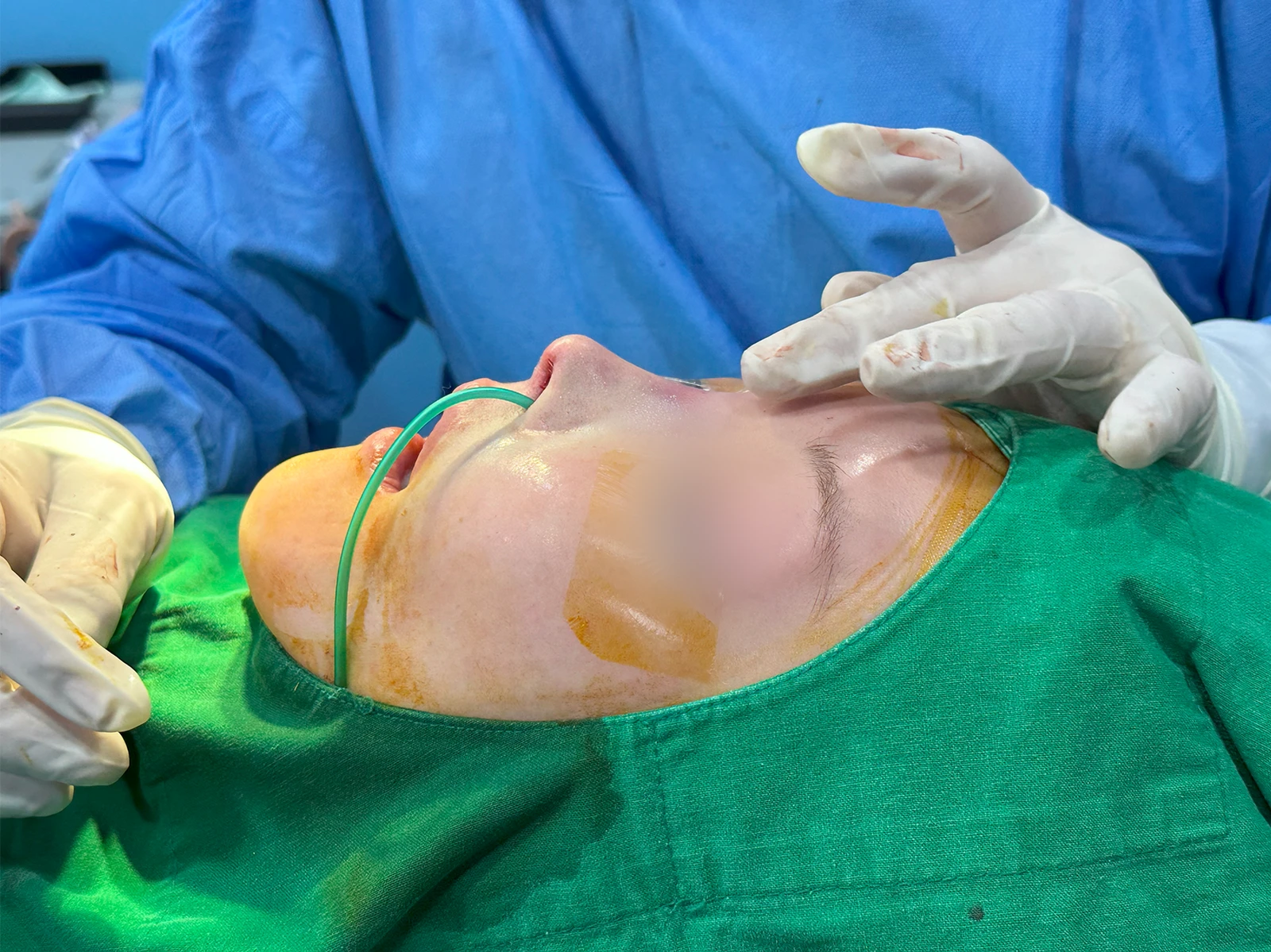
Evaluating the dorsal contour with the autologous rib cartilage placed along the nasal bridge before closure.
All procedures were performed using a closed approach, completing the surgery without external scars.
3. Comparison of before-and-after photos
Comparing photos taken immediately after surgery on day 0 shows the following improvements: Photos taken immediately after surgery show swelling and may differ from the final result.
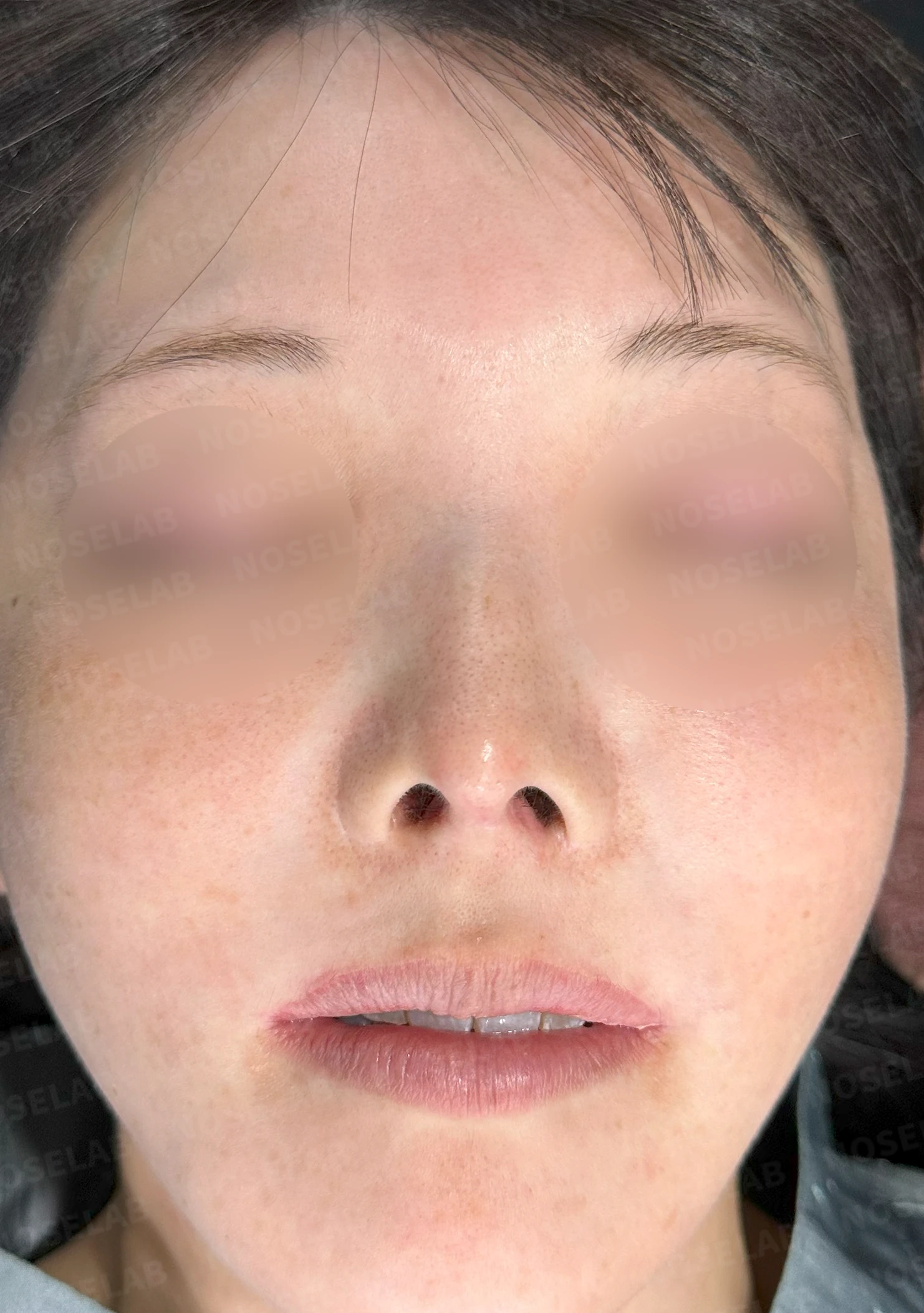
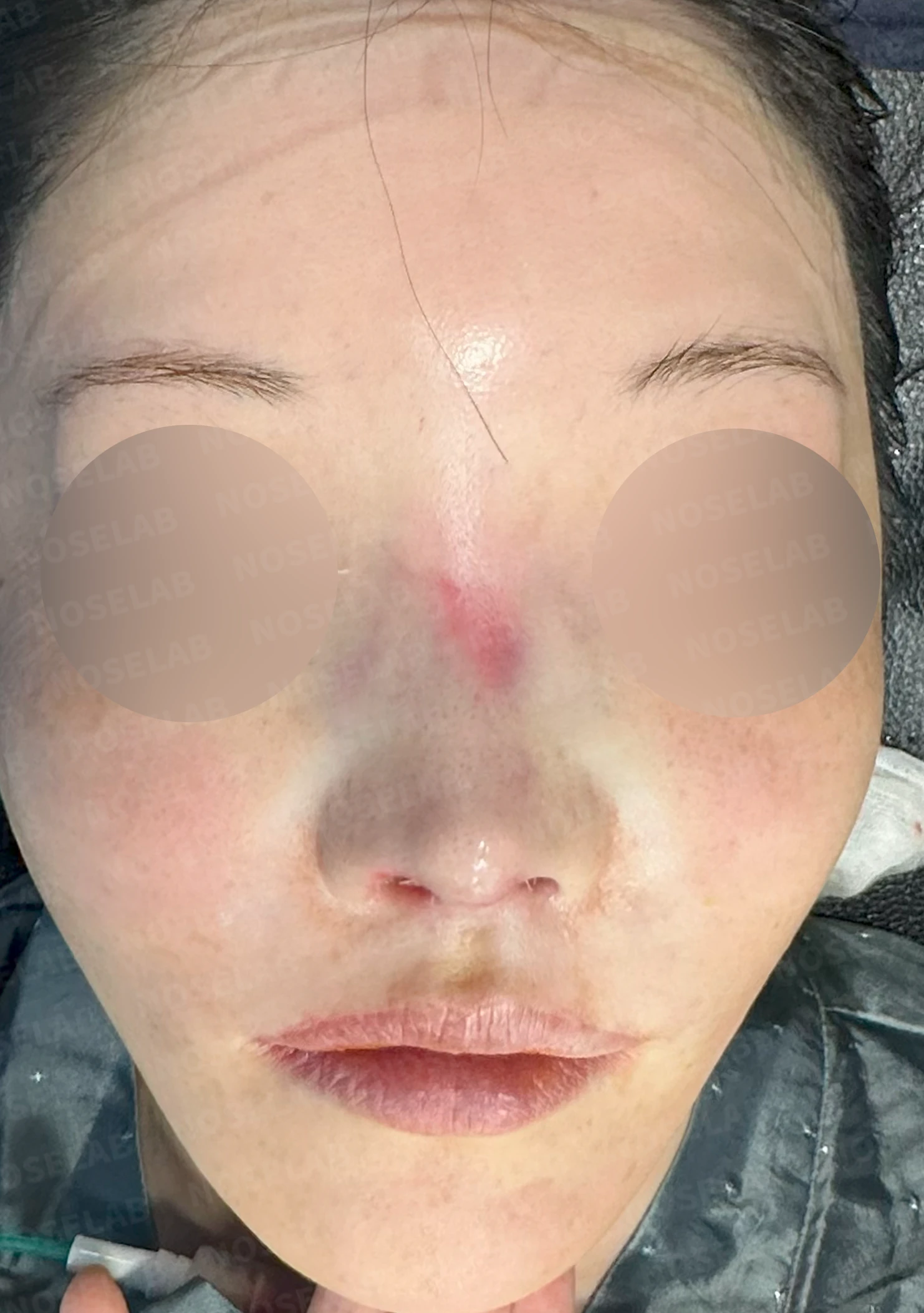
Before surgery / Day 0 immediately after surgery Photos taken immediately after surgery show swelling and may differ from the final result.
Front view:
- The previously upturned nose has been lowered into a natural, stable position.
- The shortened nose has been lengthened to a balanced proportion.
- Nostril asymmetry improved significantly.
- The philtrum visually appears shorter, improving overall facial balance.
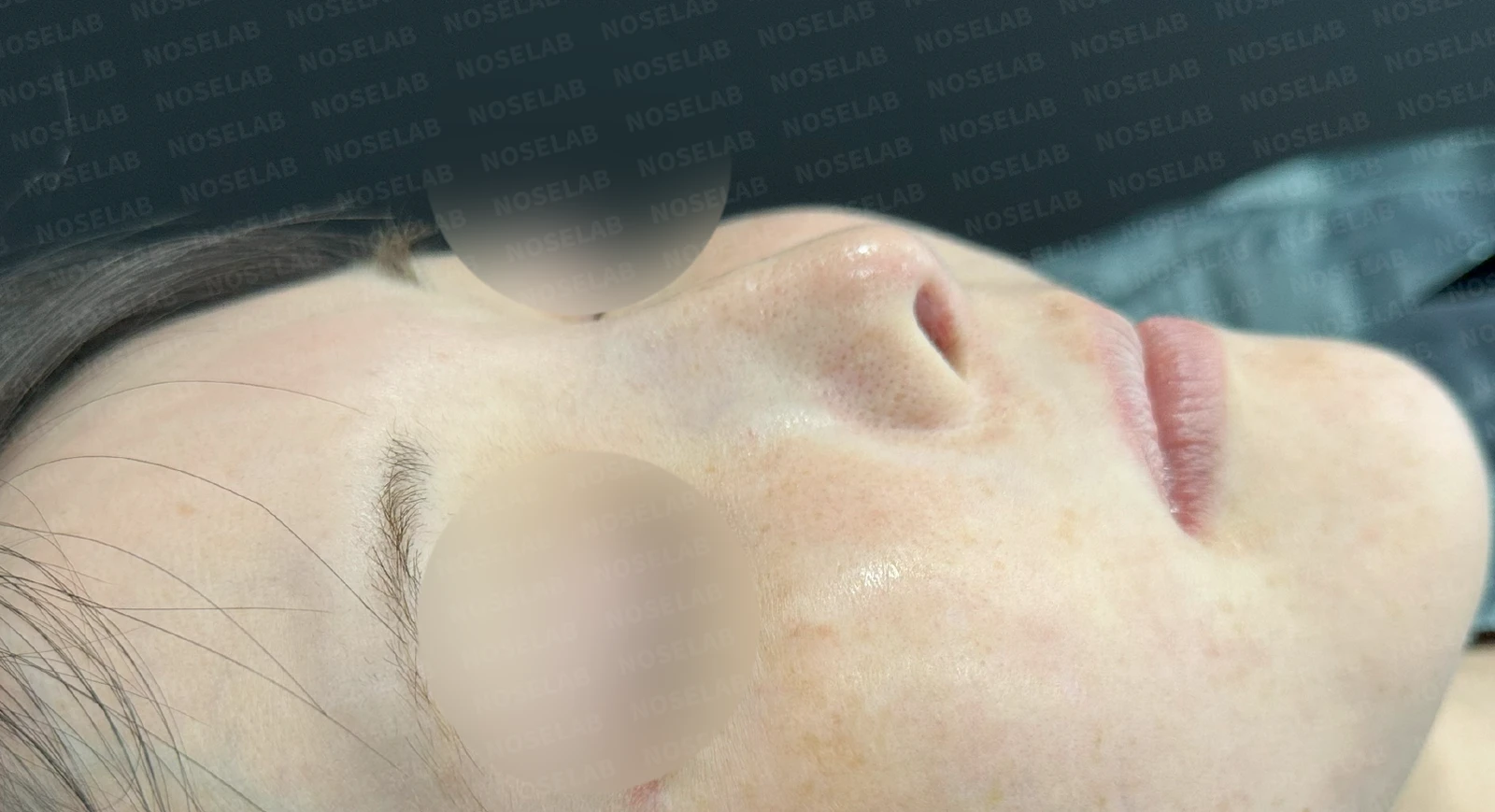
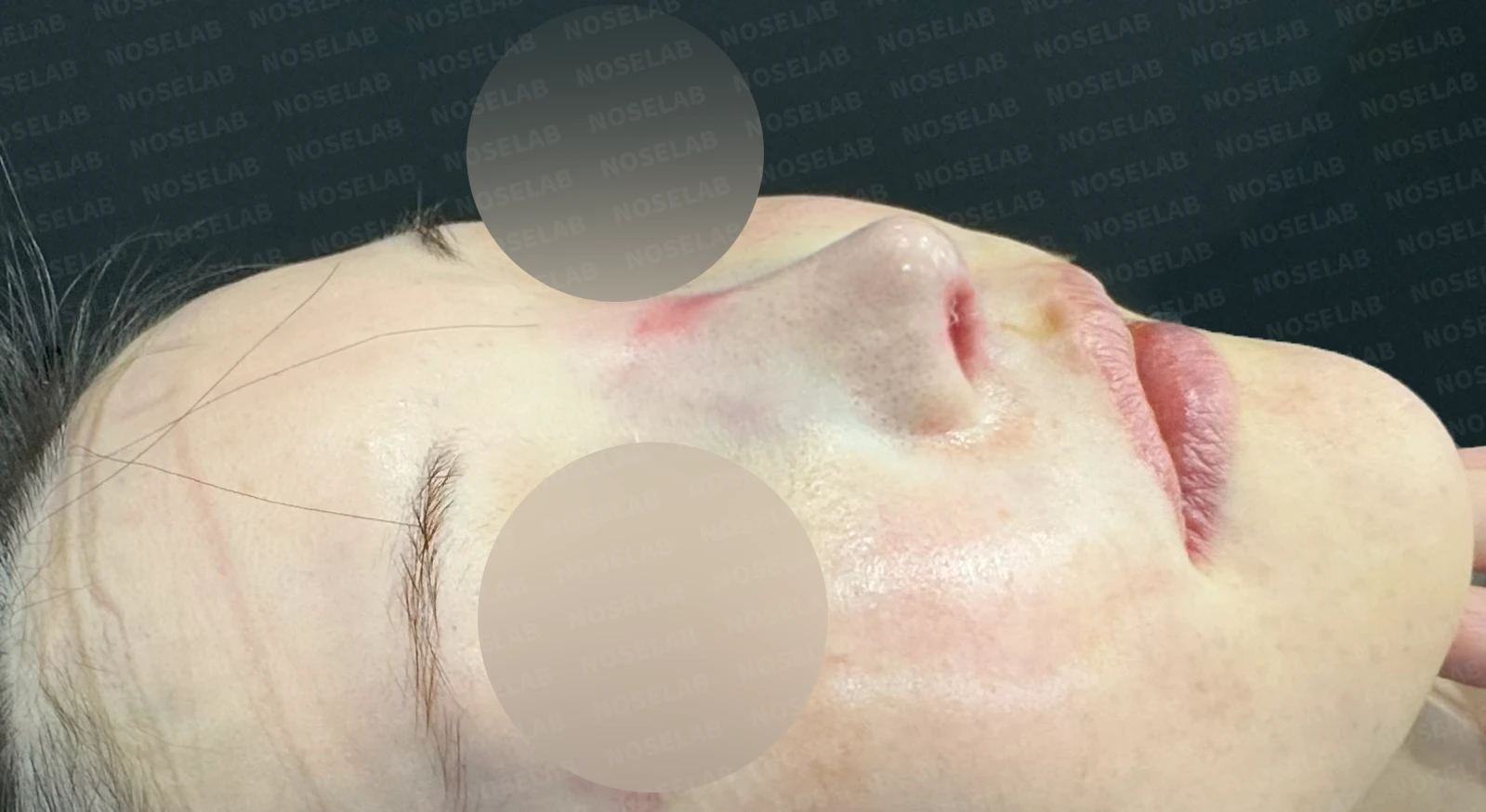
Before surgery / Day 0 immediately after surgery Photos taken immediately after surgery show swelling and may differ from the final result.
Oblique view:
- The radix has been lowered, creating a much more natural appearance.
- The tip, which had appeared short and drooping, was corrected into a well-balanced shape.
- The nasolabial angle was naturally adjusted to approximately 95 degrees, enhancing harmony between the nose and mouth.
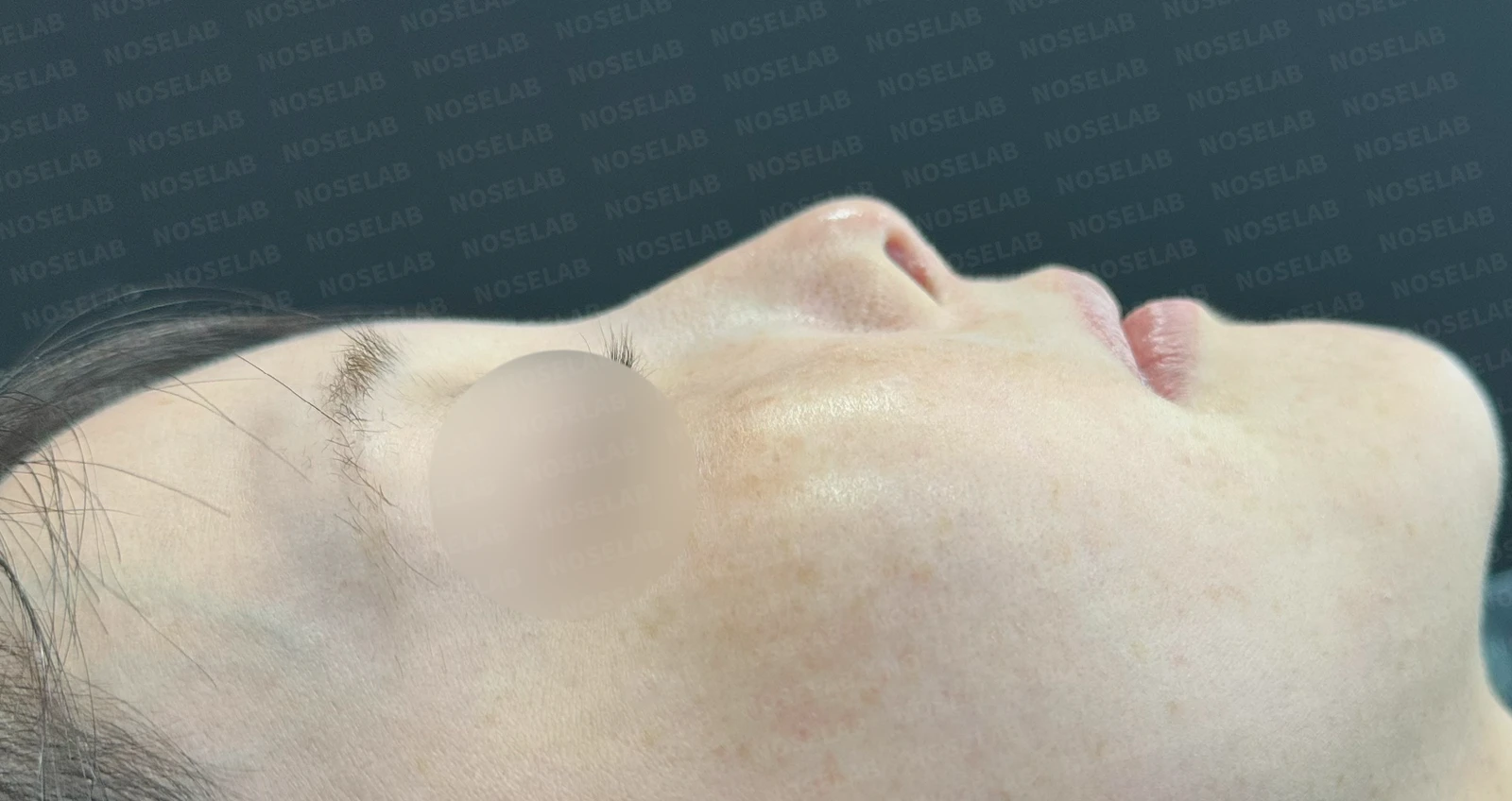
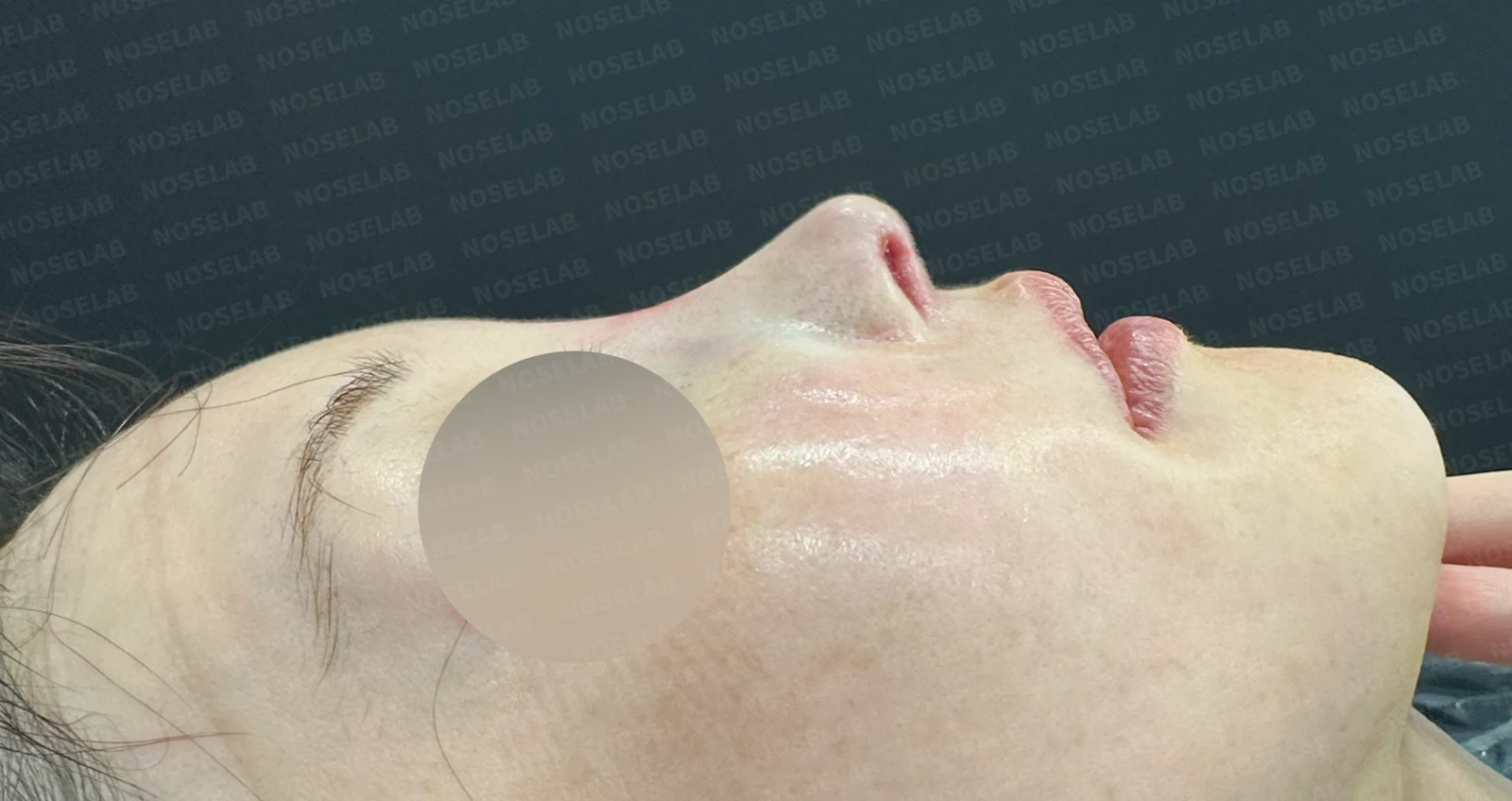
Before surgery / Day 0 immediately after surgery Photos taken immediately after surgery show swelling and may differ from the final result.
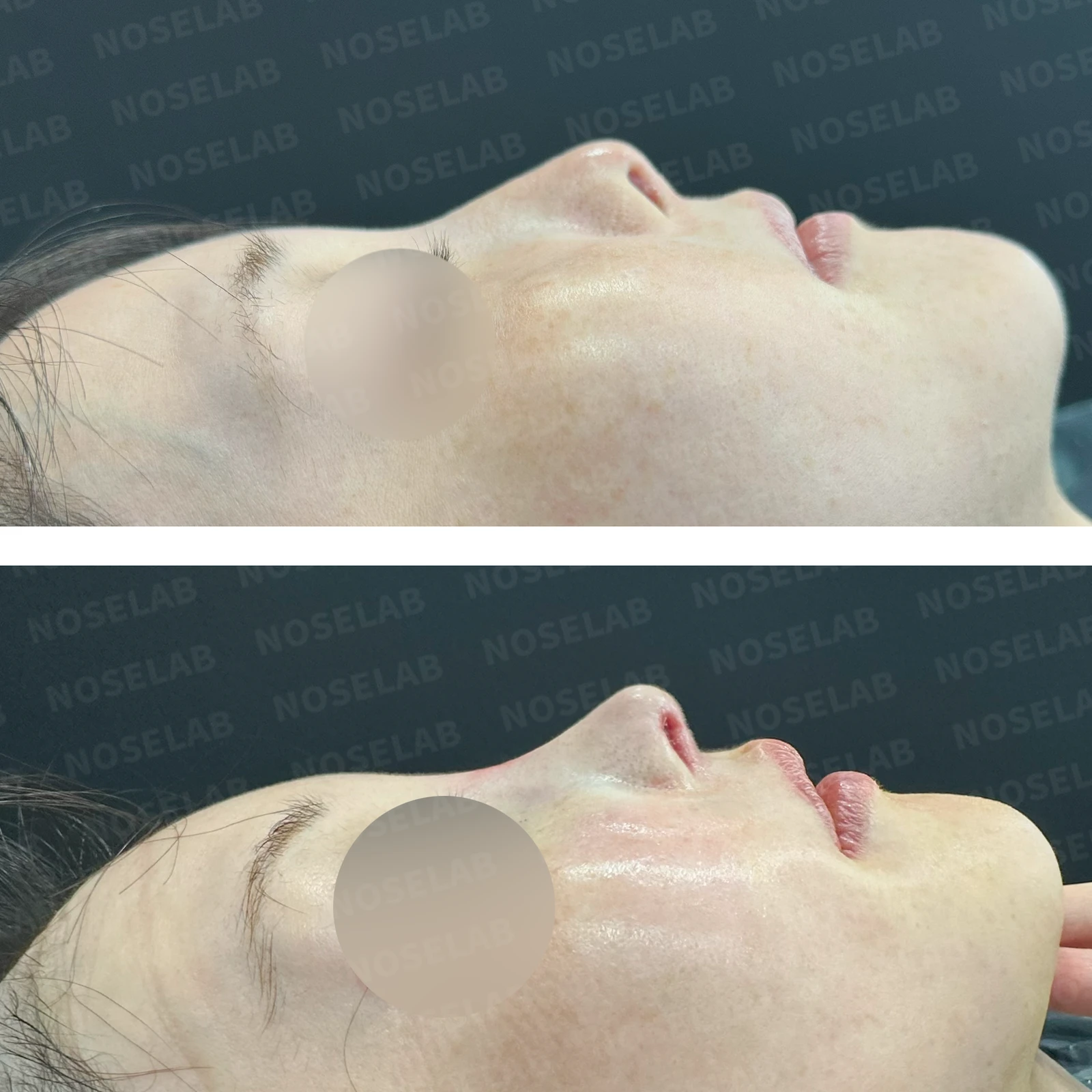
Profile view:
- The excessively high radix was appropriately lowered.
- The upturned nasal tip was naturally corrected.
- The nasolabial angle was adjusted to approximately 95 degrees, refining the balance between the nose and upper lip.
- The dorsal bridge line has achieved an overall natural contour.
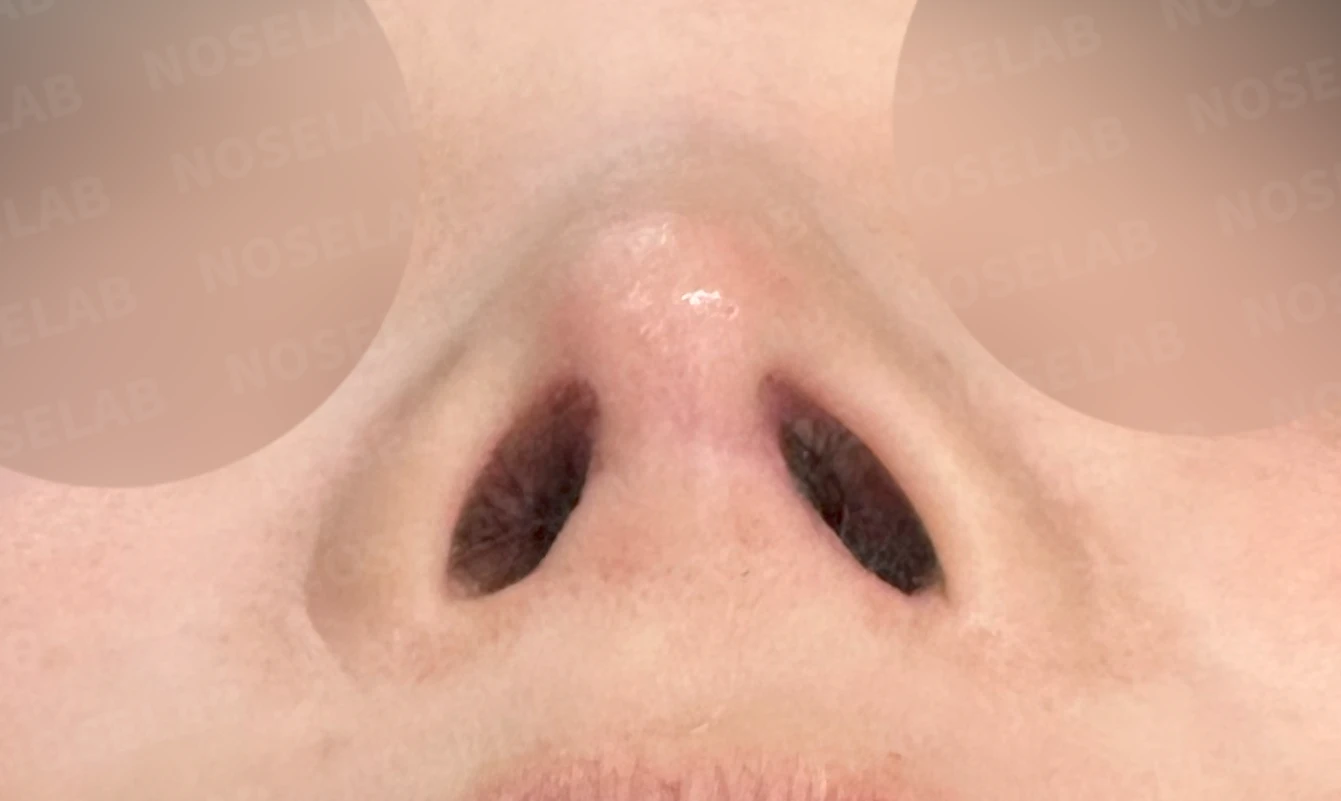
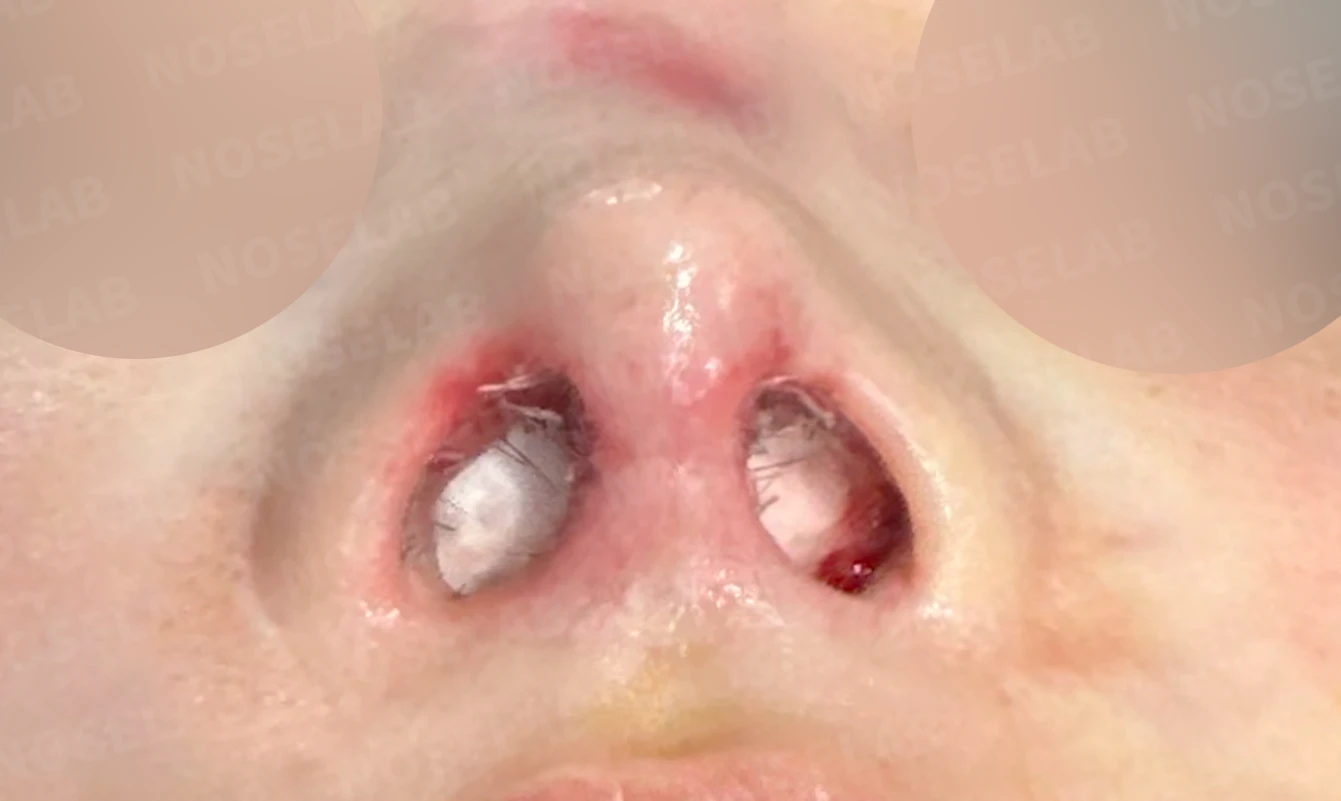
Before surgery / Day 0 immediately after surgery Photos taken immediately after surgery show swelling and may differ from the final result.
Nostrils:
- Severe nostril asymmetry improved significantly.
- The columella, which was tilted to the right, has been straightened.
- The excessively widened columellar width was refined into a natural contour.
4. Conclusion
This case represents the successful correction of a complex presentation of an upturned, contracted nose resulting from multiple surgeries and chronic inflammation.
Total septal reconstruction and extension using autologous rib cartilage were the central pillars of this procedure. Reconstructing the lower lateral cartilages also enabled the correction of severe nostril asymmetry. Removing the unexpected mesh and deformed donor rib cartilage was essential in relieving nasal obstruction. It was particularly meaningful that both aesthetic refinement and functional restoration were accomplished together.
5. Closing remarks
I hope this case offers reassurance to patients struggling with complex issues such as a contracted nose, upturned nose, short nose, and nostril asymmetry. Even when the anatomy has become severely compromised after multiple previous operations or bouts of inflammation, satisfactory outcomes can be achieved through precise surgical planning and meticulous technique.
Particularly in such complex cases, selecting a surgeon with extensive experience and deep expertise is vital. Drawing on anatomical knowledge as a board-certified otolaryngologist and comprehensive surgical experience, Dr. Kang provides customized surgical plans tailored to each individual patient.
Rhinoplasty is critically important not only for aesthetics, but also for nasal function. A comprehensive approach that balances both cosmetic and functional elements is therefore essential. At NOSELAB, patient safety and satisfaction are always the top priorities, and we remain dedicated to restoring natural, healthy noses.
I will be with you every step of the way to achieve a beautiful and healthy nose.
This was Dr. Peter C. Kang. Thank you.
Thank you.
#contractednose #upturnednose #meshremoval #shortnosecorrection #nostrilasymmetrycorrection #septalreconstruction #autologousribcartilagegraft #closedrhinoplasty #revisionrhinoplasty #entrhinoplasty #dorsalcorrection #tipplasty #nasolabialanglecorrection

Limitations and risks
When autologous rib cartilage is used, scarring and pain may remain at the donor site on the chest, and pneumothorax (pleural injury) can occur rarely. Over time, the grafted cartilage may warp or undergo partial resorption.
When using donor rib cartilage, long-term follow-up is necessary because the grafted cartilage may resorb or warp.
When revising after implant removal, contracture may progress again after removal, the nasal height and length may decrease, and staged surgery may be necessary depending on the skin condition.
When foreign materials such as injected fillers are removed and reconstructed, contracture may recur, nasal height and length may decrease, and staged surgery may be necessary depending on the skin condition.
When the septum is corrected at the same time, nasal obstruction may persist or recur, and in rare cases, septal perforation or changes in smell may occur.
Common potential risks include infection, bleeding, asymmetry, scarring, skin necrosis, and insufficient improvement; results vary depending on individual skin condition and previous surgical history.