Hello, I am Dr. Peter C. Kang.
Today, I would like to introduce a revision rhinoplasty case where both functional discomfort and aesthetic concerns were improved after the patient had undergone two previous rhinoplasties.
🔍 Surgical history
About 10 years ago, during the first surgery, the patient underwent septoplasty for a deviated septum, inferior turbinate resection, dorsal hump correction, osteotomy, and septal surgery.
In 2016, the patient underwent a second surgery involving silicone implant placement and septal surgery, and recently visited our clinic for further correction.
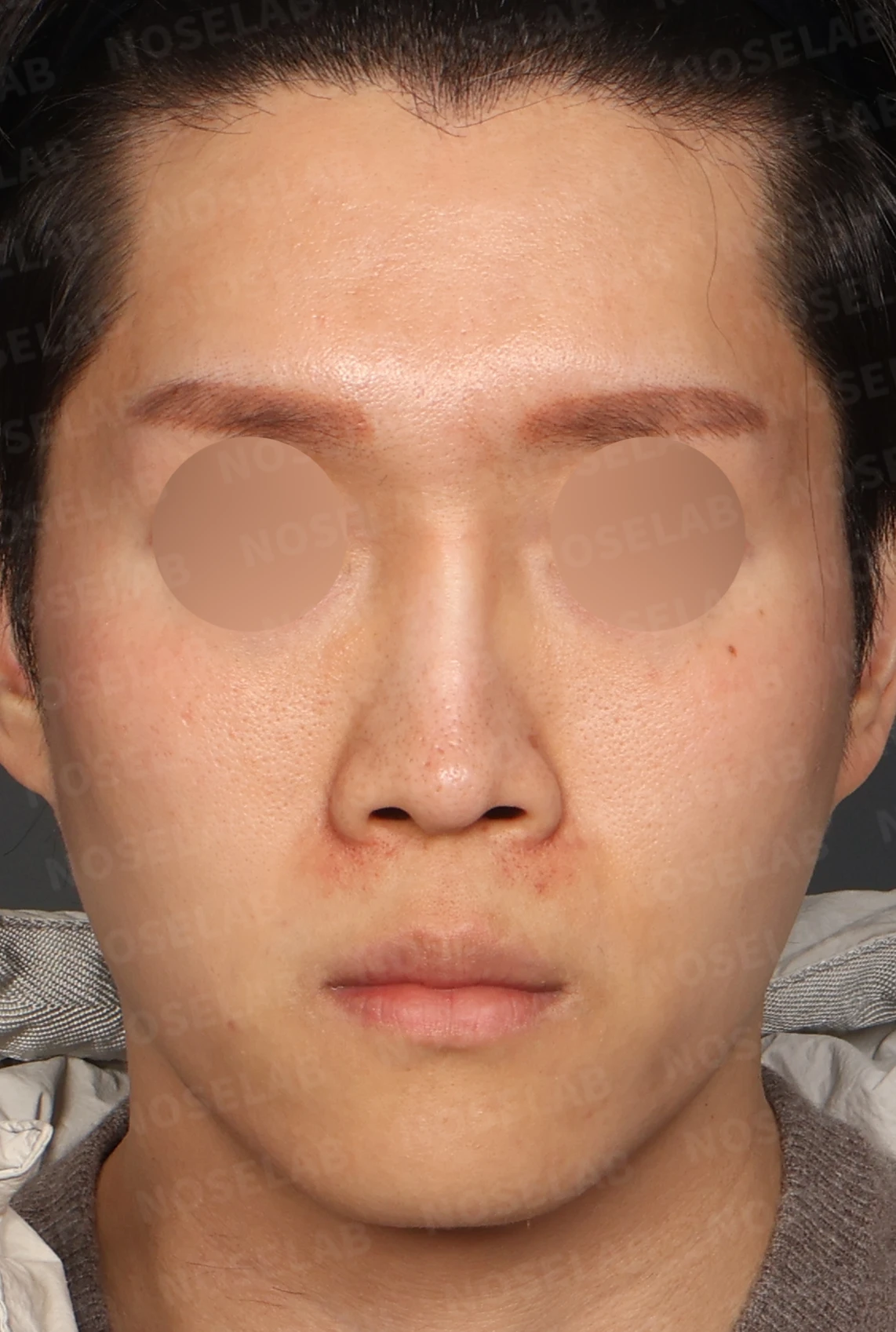
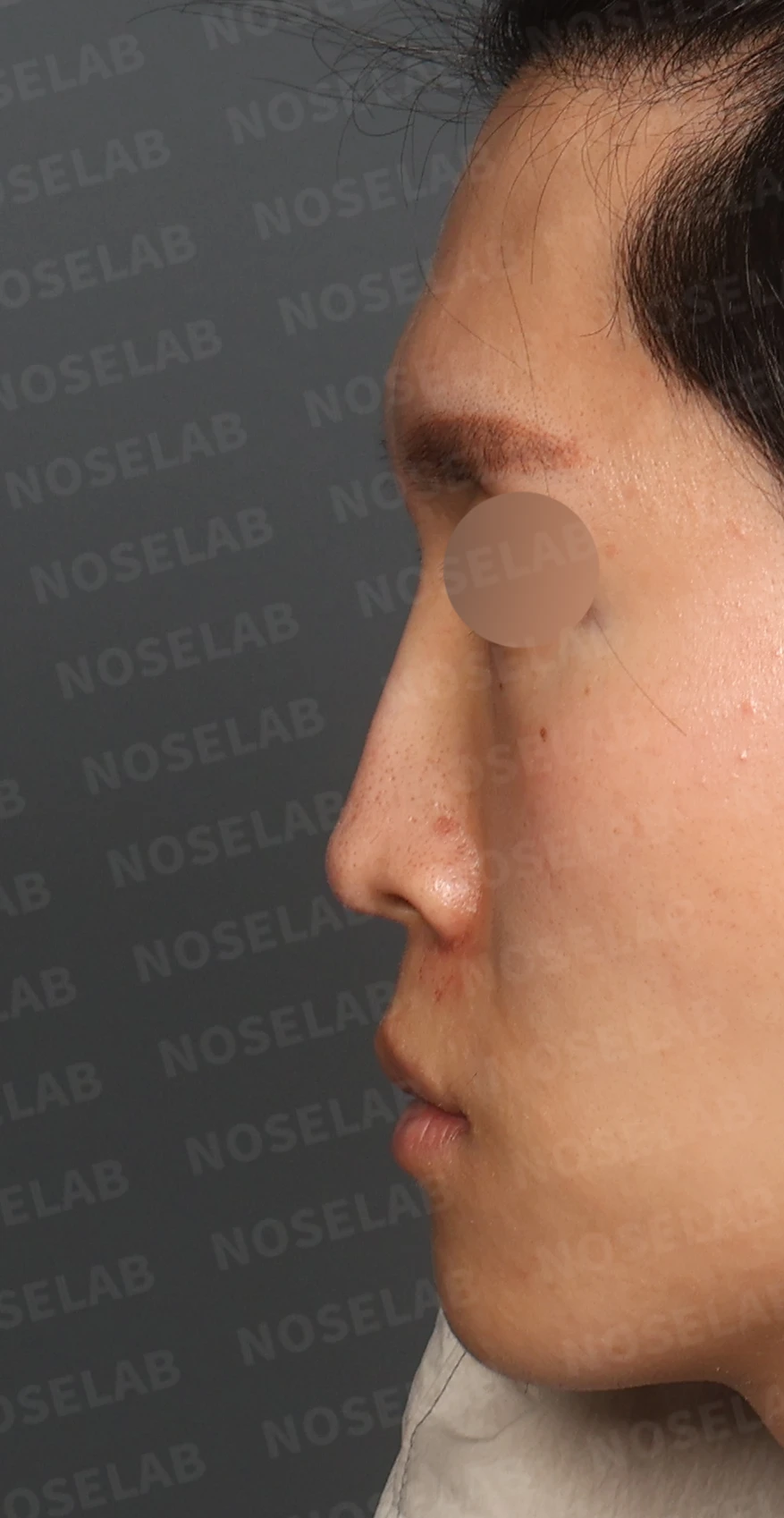
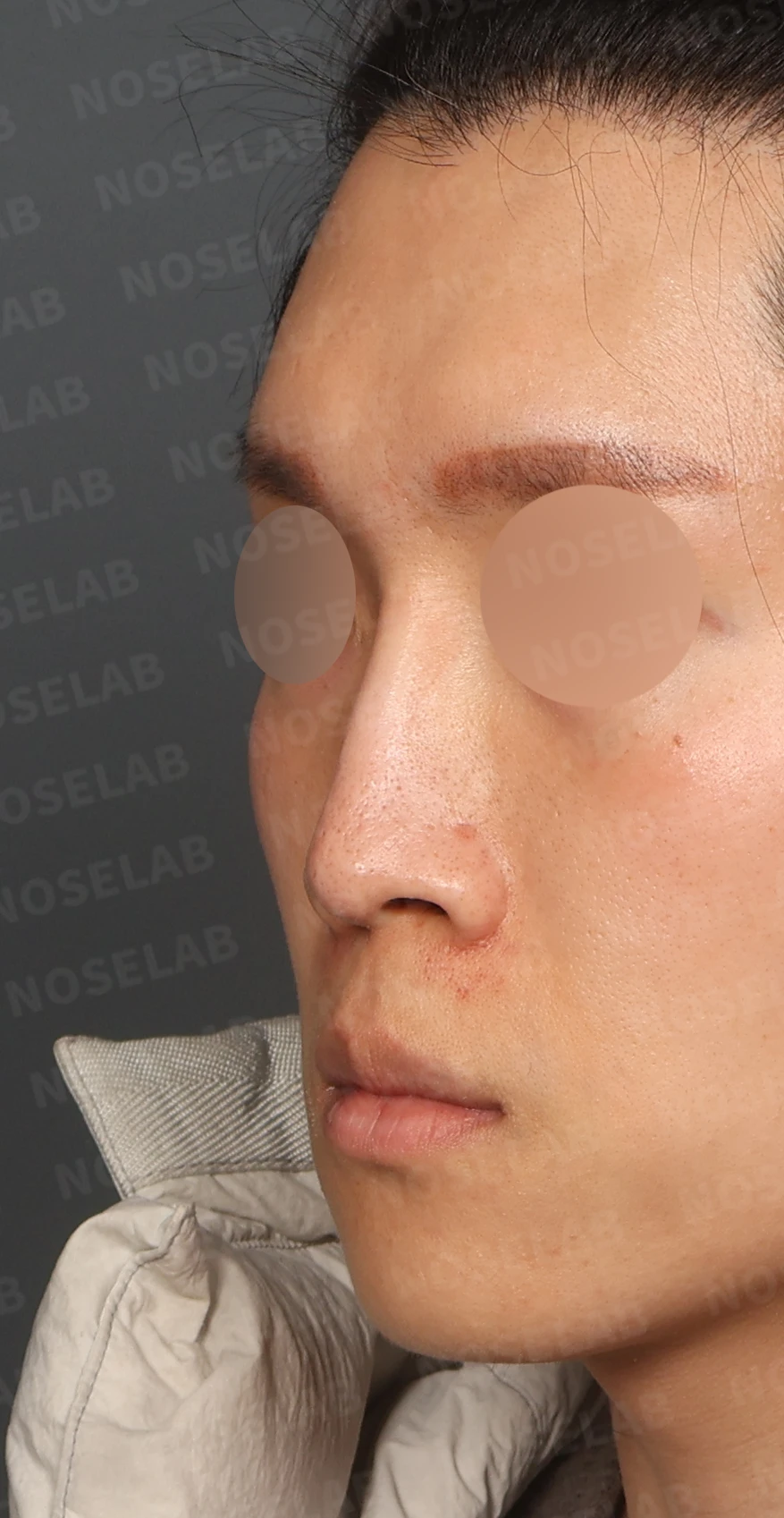
Front, left profile, and oblique views during design consultation
💉 Patient requests
The patient preferred a straight bridge line and wanted to address the elongated look of the midface caused by a long nose.
Cartilage was protruding inside both nostrils, causing discomfort that the patient wished to correct.
The patient also desired to lower the radix while correcting the asymmetry between both nasal bones.
The patient requested a straight nasal profile extending smoothly to the nasal tip without any step-offs or irregularities.
The patient also wanted to resolve the stuffy sensation in the right nasal cavity and the difference in breathing between the two sides after the previous surgeries.
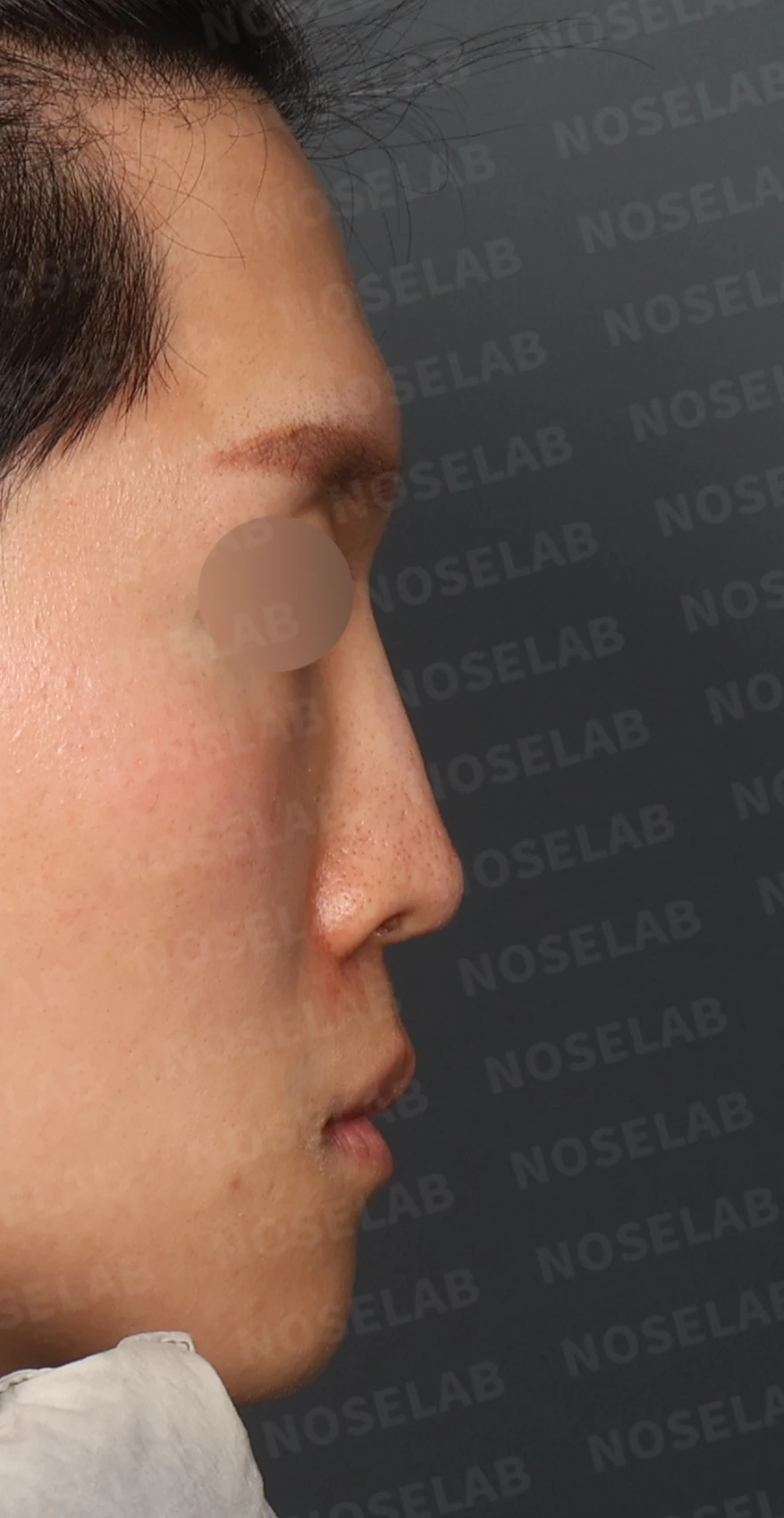
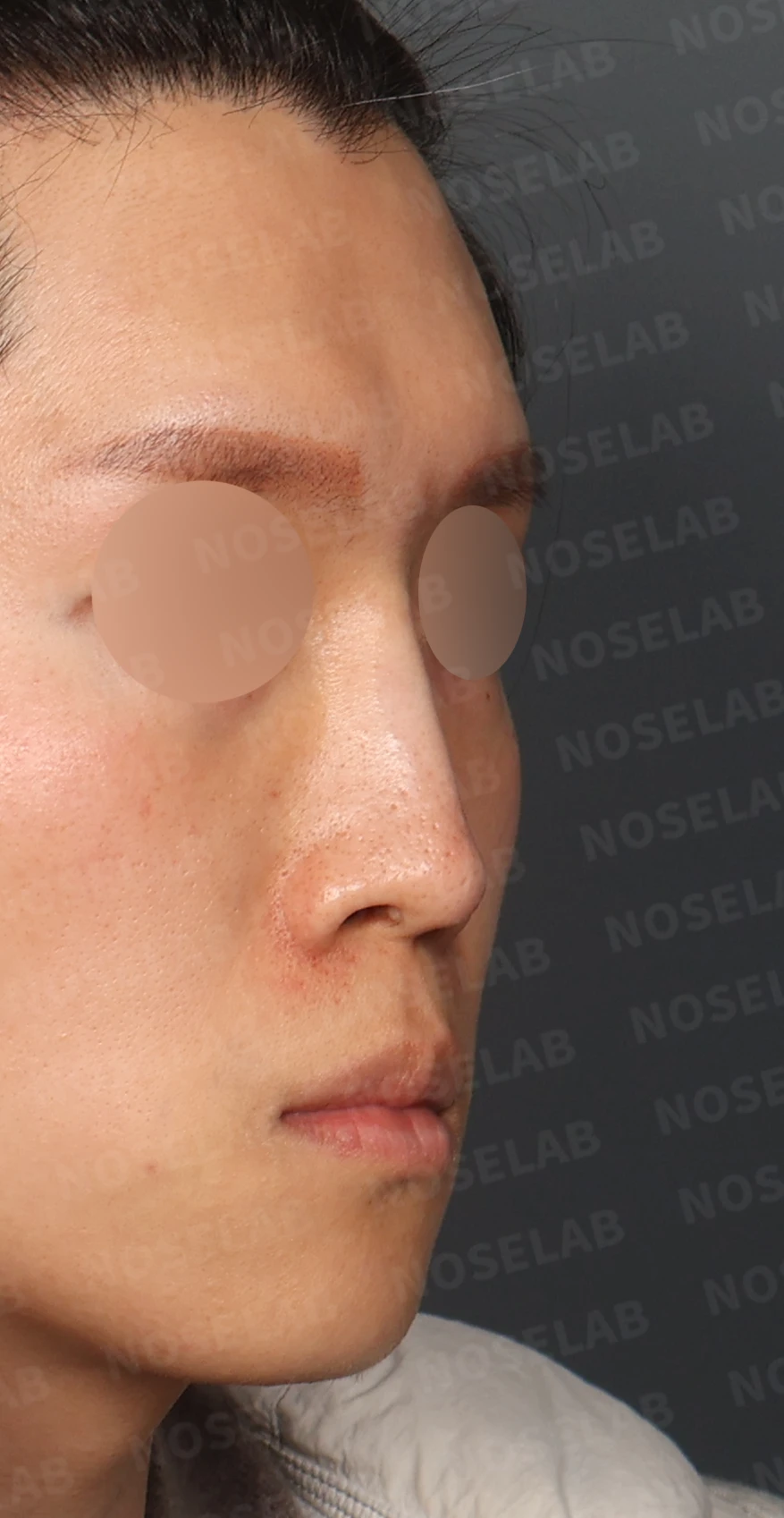
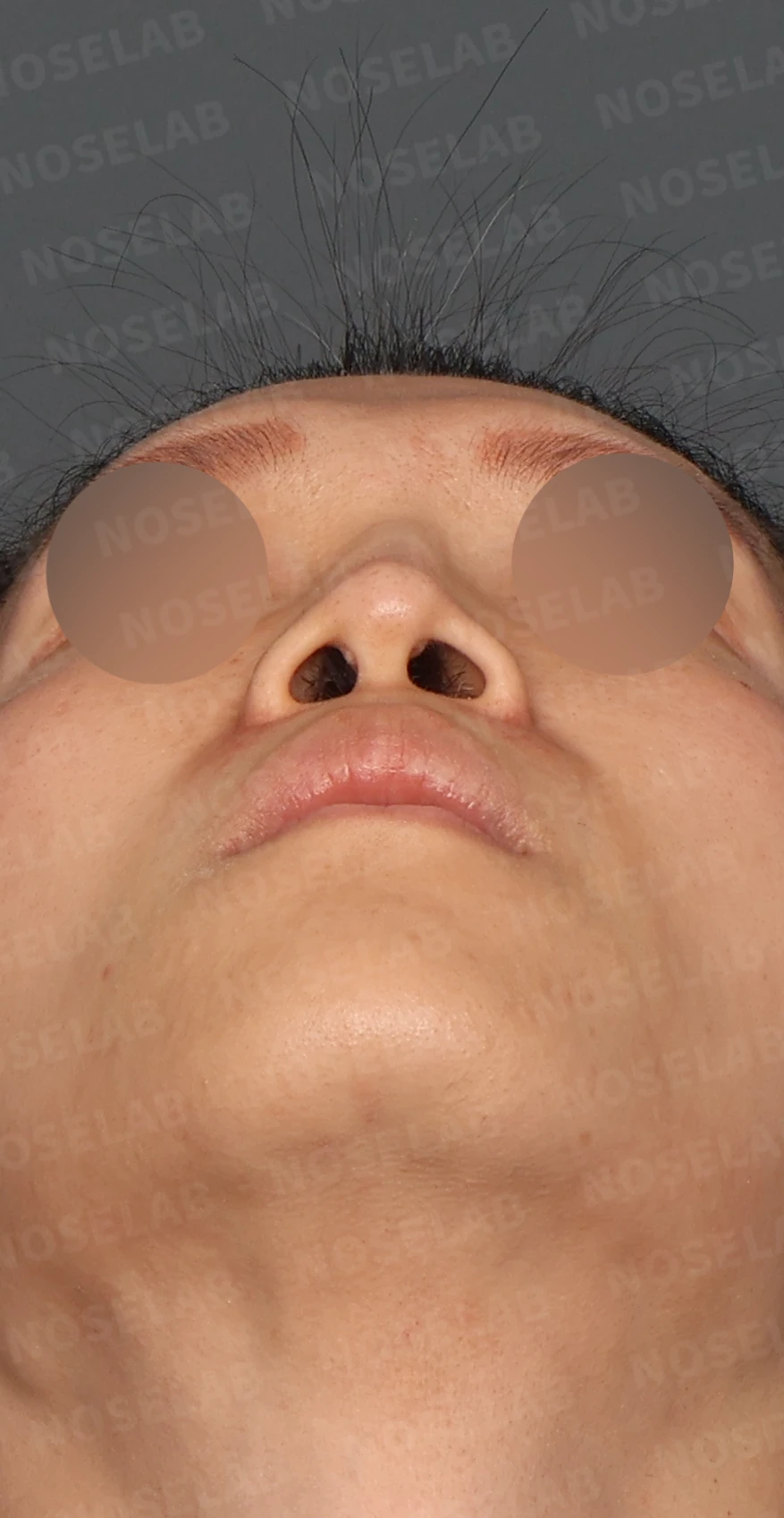
Right profile, oblique, and nostril views during design consultation
🔧 Surgical plan and procedure
Through pre-operative consultation, I thoroughly evaluated the condition of the patient's nose and proceeded with the surgery as follows:
1. Closed revision rhinoplasty (using septal cartilage and rib cartilage): Restored the nasal structural support weakened by previous surgeries and reconstructed the overall nasal line.
2. Septal reconstruction: During surgery, it was confirmed that almost no septal cartilage remained. Autologous rib cartilage was used to reconstruct the septum and build a solid structural foundation for the nasal tip.
3. Nasolabial angle correction: Adjusted the angle and position of the nasal tip to improve the proportion of overall nose length.
4. Nasal bone asymmetry correction and radix adjustment: Corrected the asymmetry of both nasal bones and naturally lowered the radix to balance the overall nasal profile.
In this surgery in particular, the key was to firmly reconstruct the overall nasal structure using autologous rib cartilage.
🌟 Surgical results
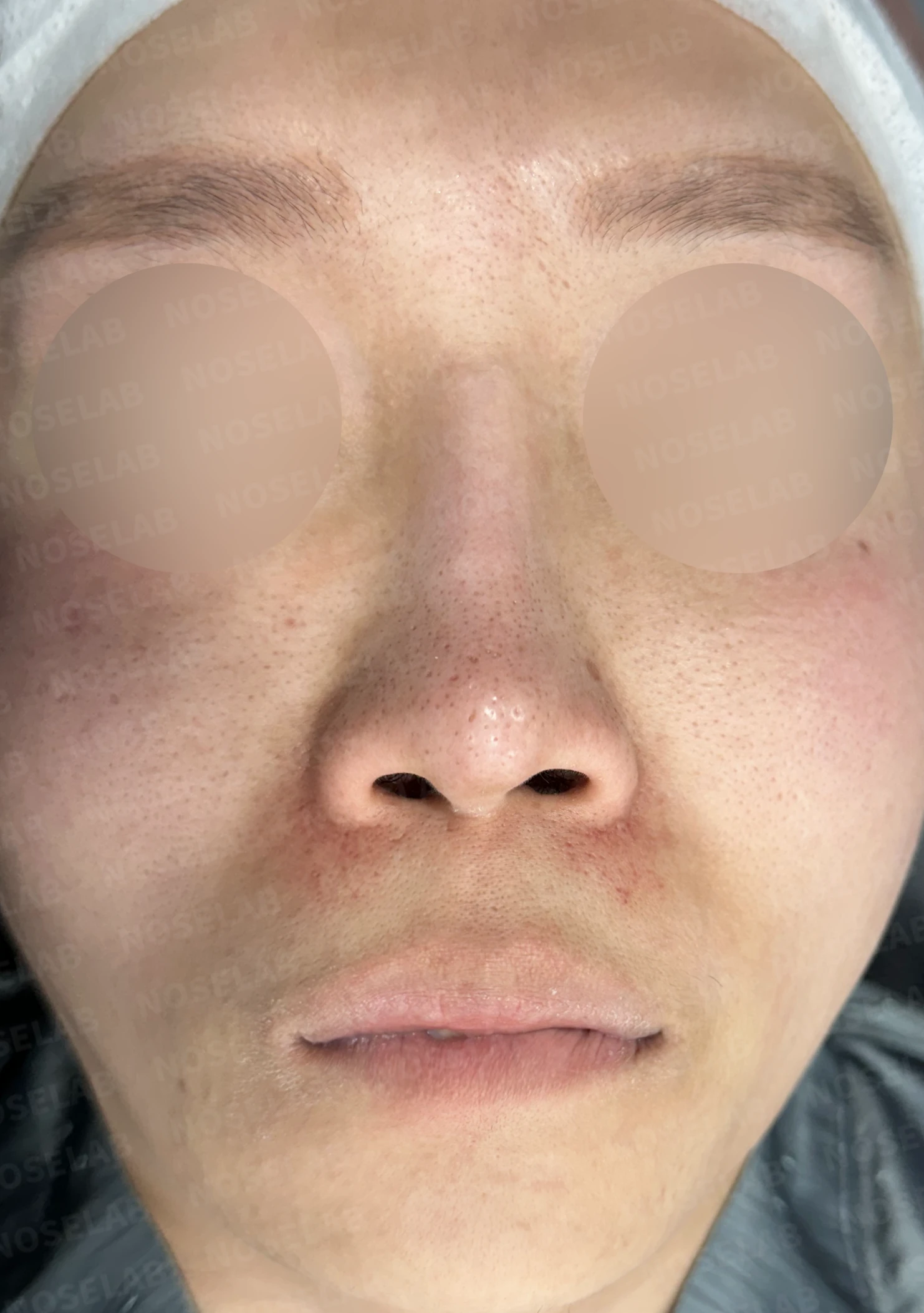
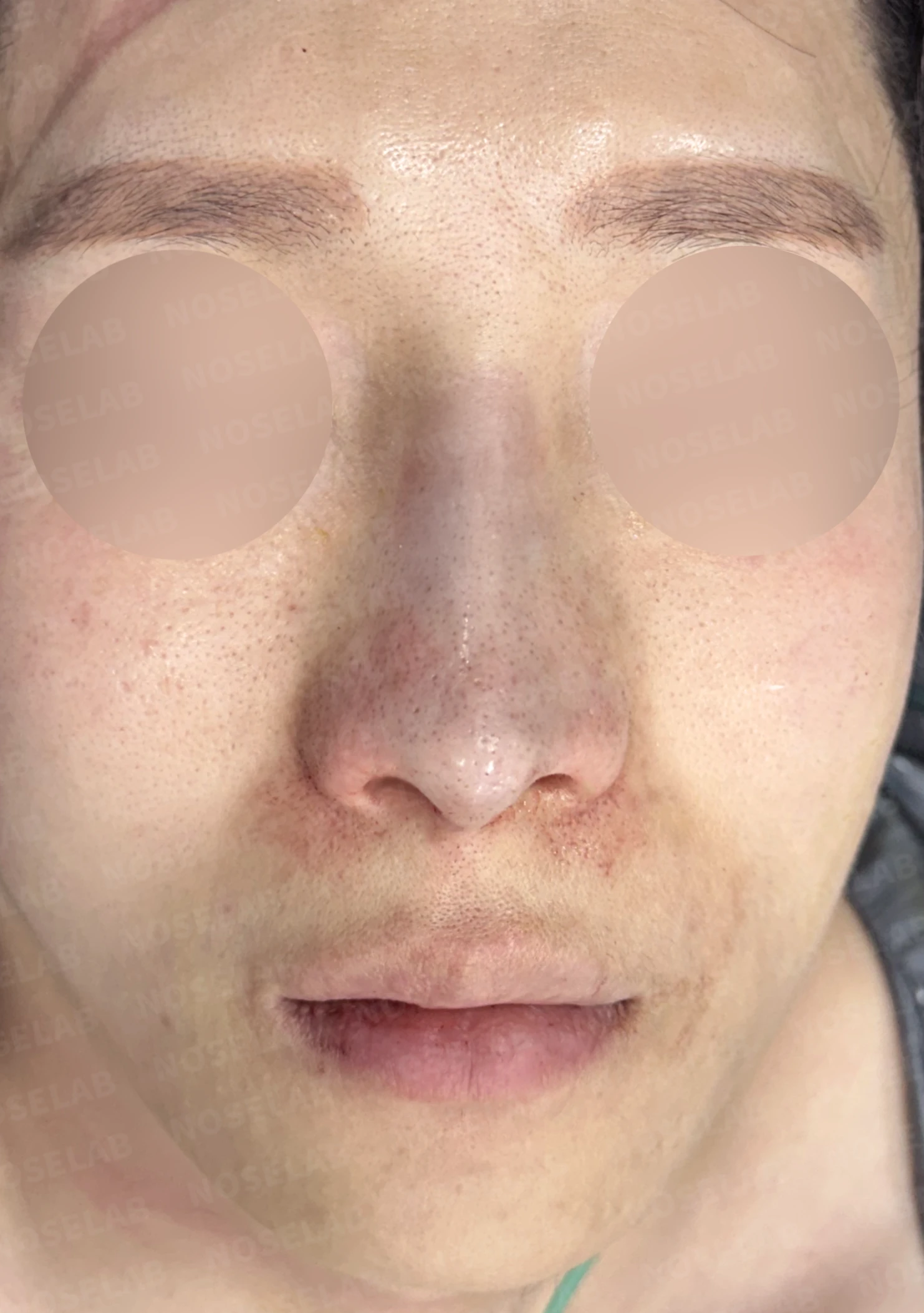
Before surgery / Day 0 immediately after surgery Photos taken immediately after surgery show swelling and may differ from the final result.
Front view changes
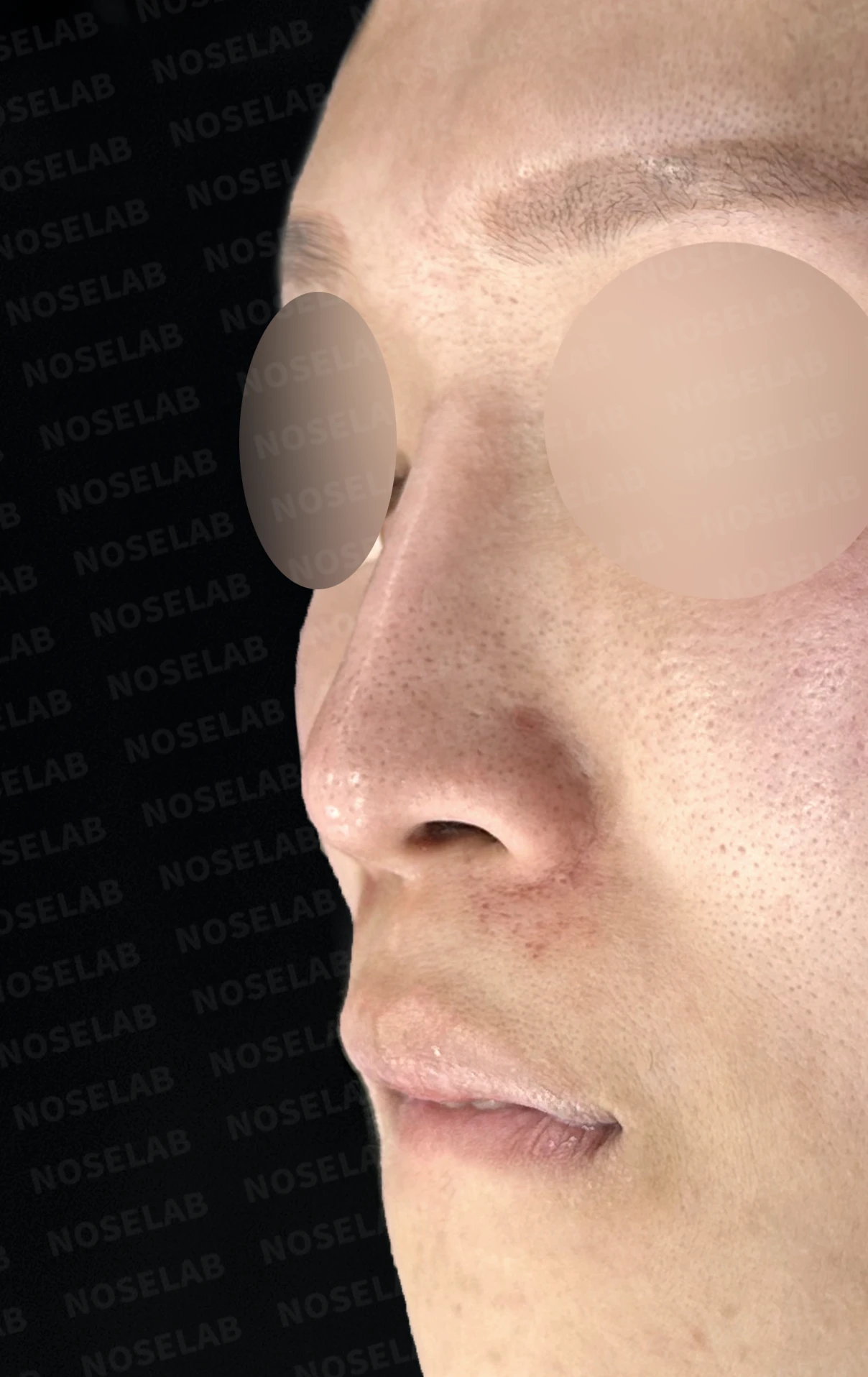
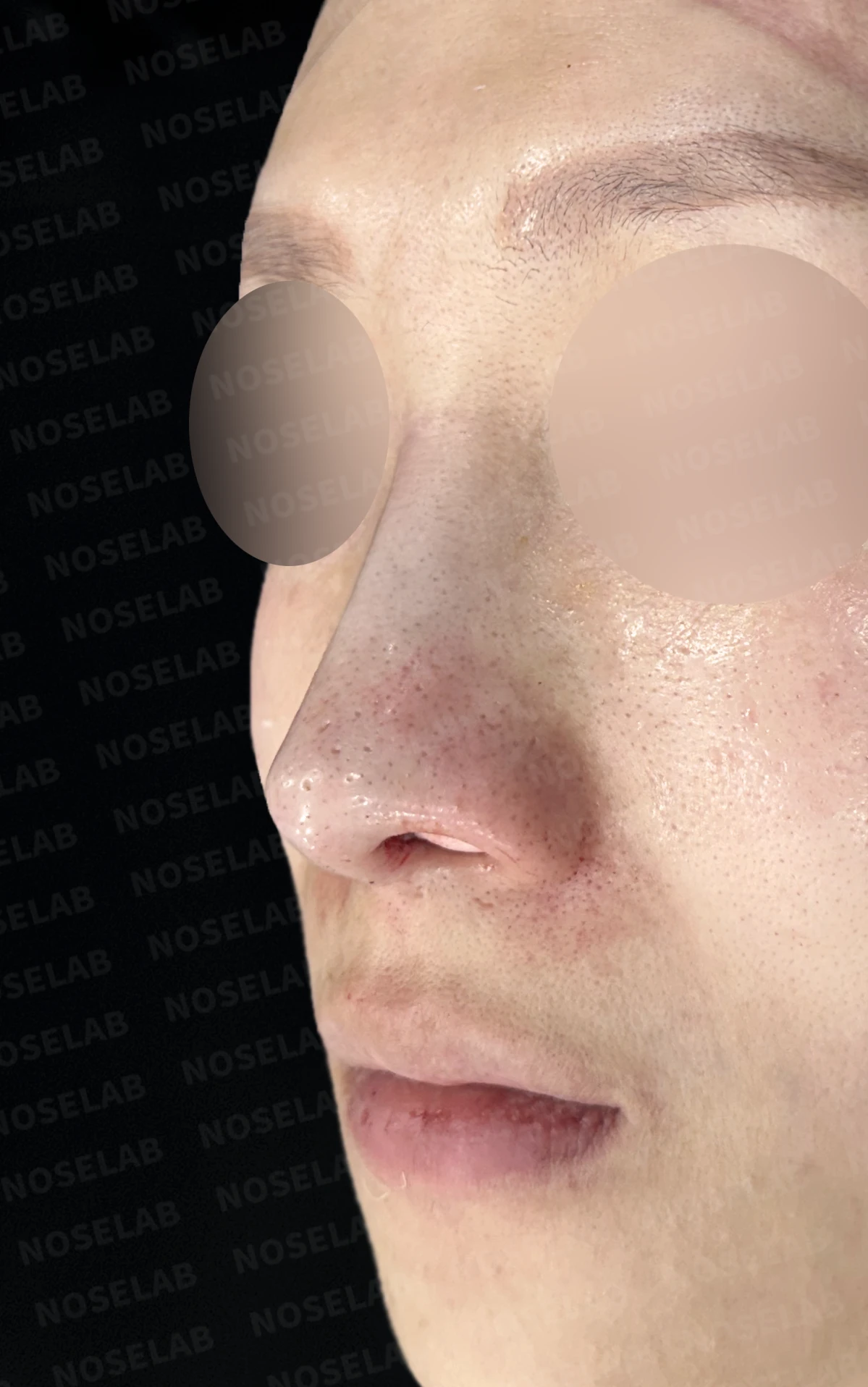
The asymmetry between the left and right nasal bones was improved, achieving a more balanced nasal appearance.
The midface proportions became more harmonious, reducing the overall visual length of the face.
Before surgery / Day 0 immediately after surgery Photos taken immediately after surgery show swelling and may differ from the final result.
Profile view changes
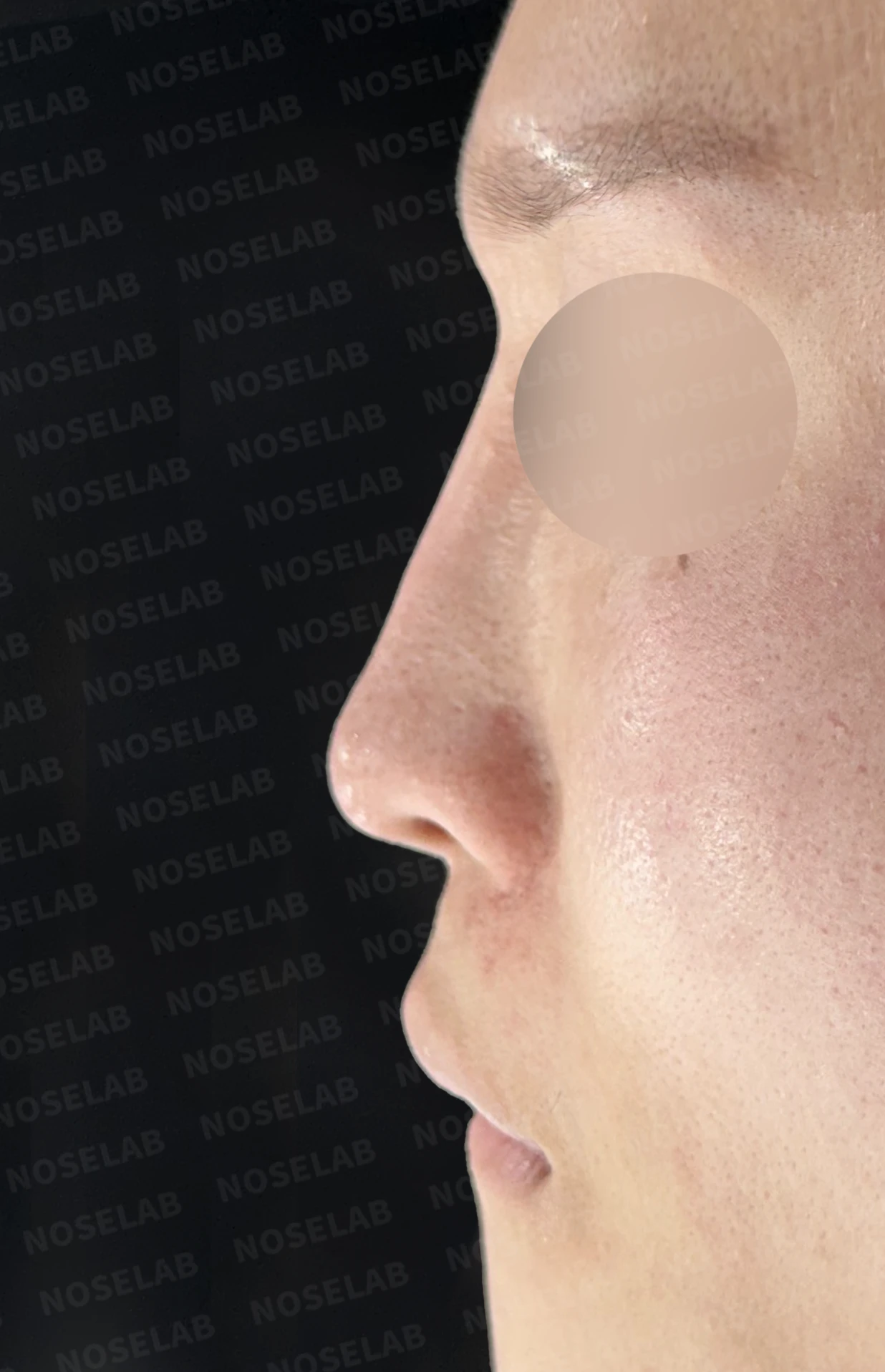
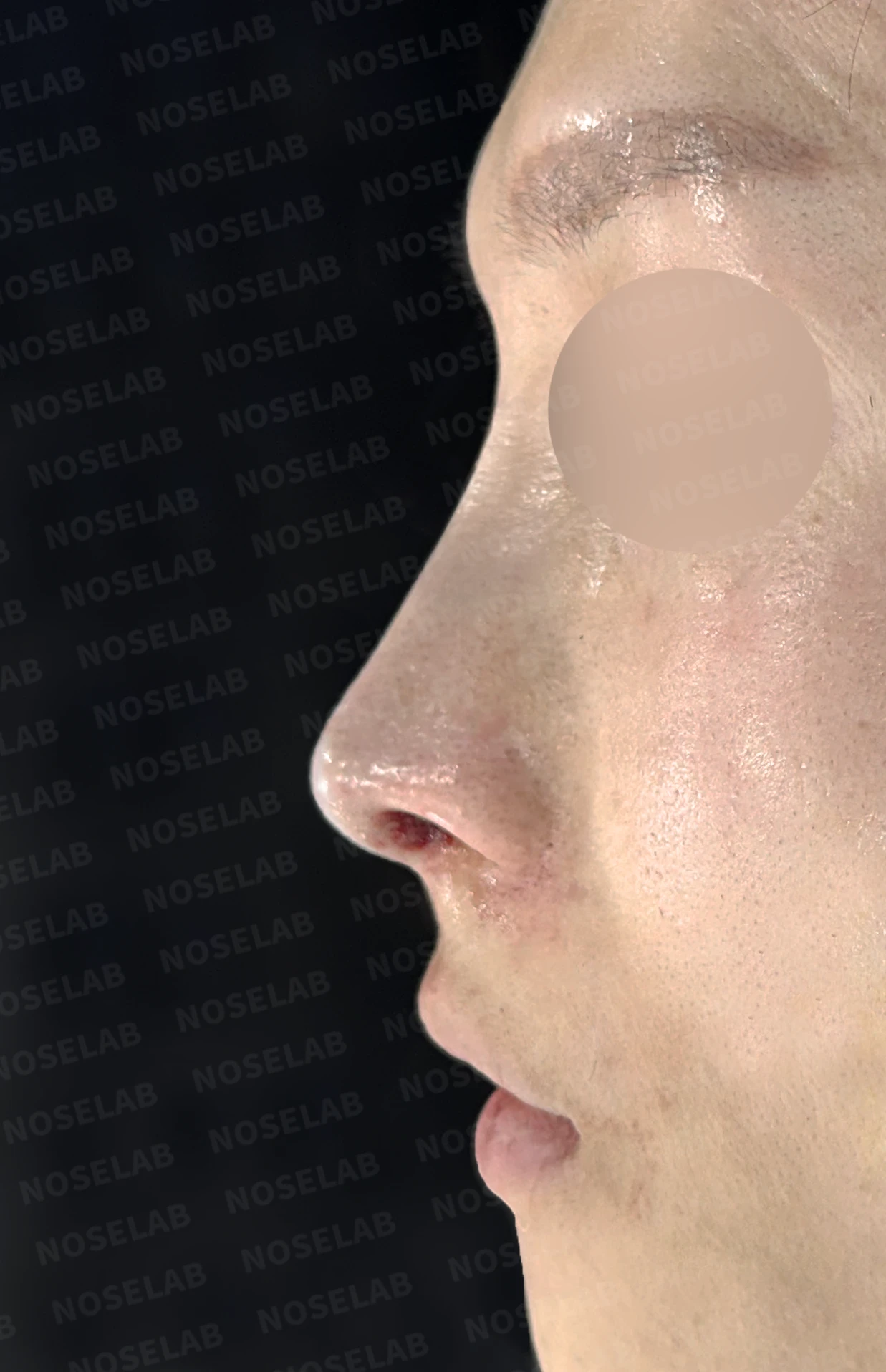
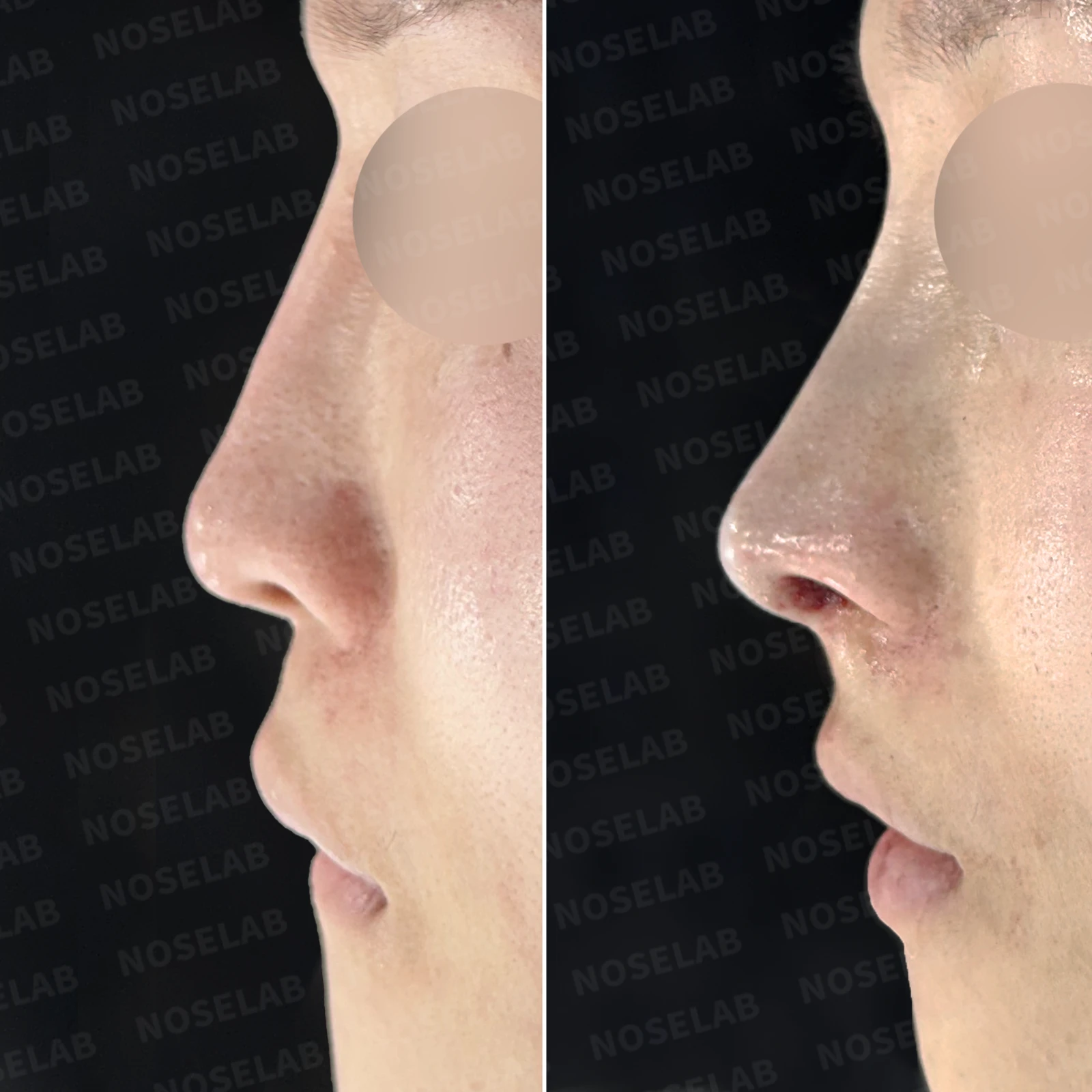
The radix was naturally lowered, allowing the nasal bridge line to flow smoothly.
A straight profile extending cleanly to the nasal tip without step-offs was achieved.
Before surgery / Day 0 immediately after surgery Photos taken immediately after surgery show swelling and may differ from the final result.
Nostril and functional changes
The cartilage protruding inside both nostrils was trimmed, relieving the discomfort.
Through septal reconstruction, the balance of airflow between the left and right sides was improved.
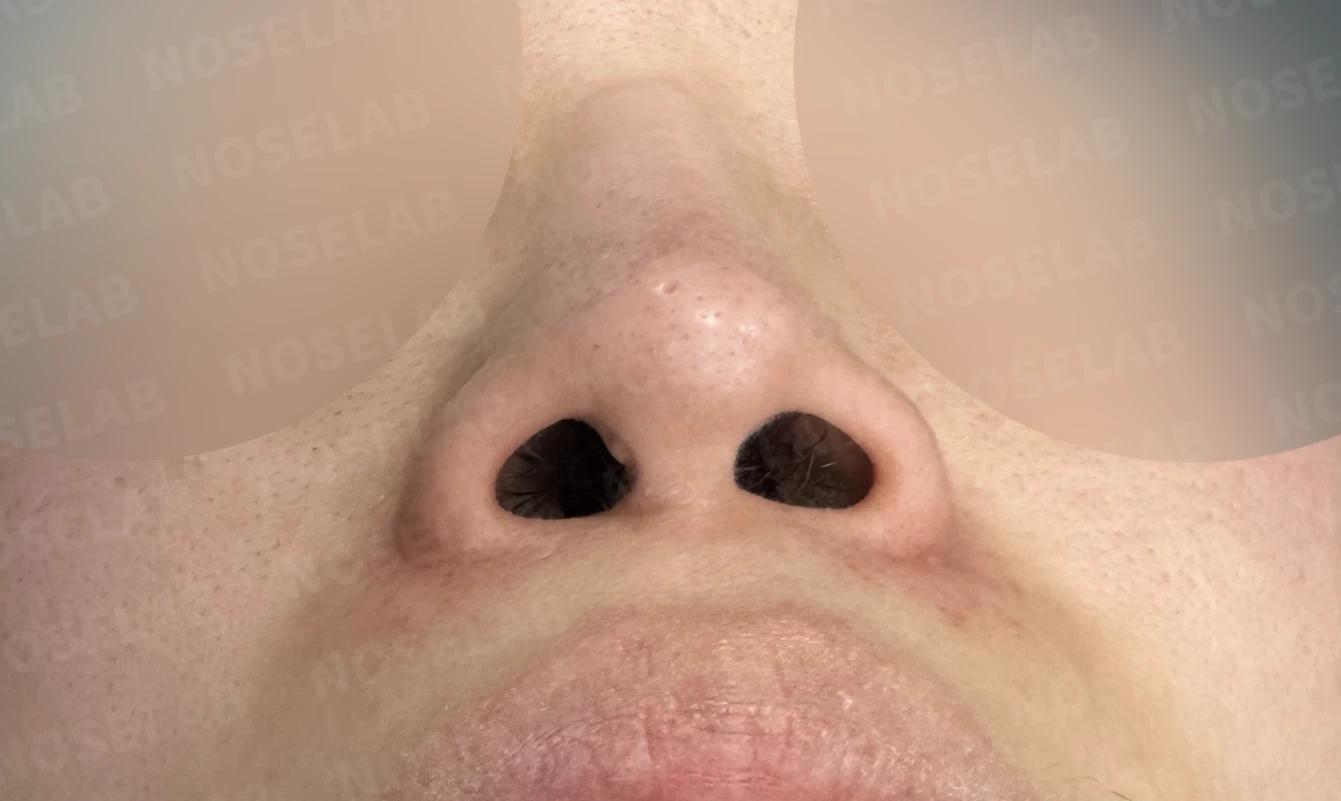
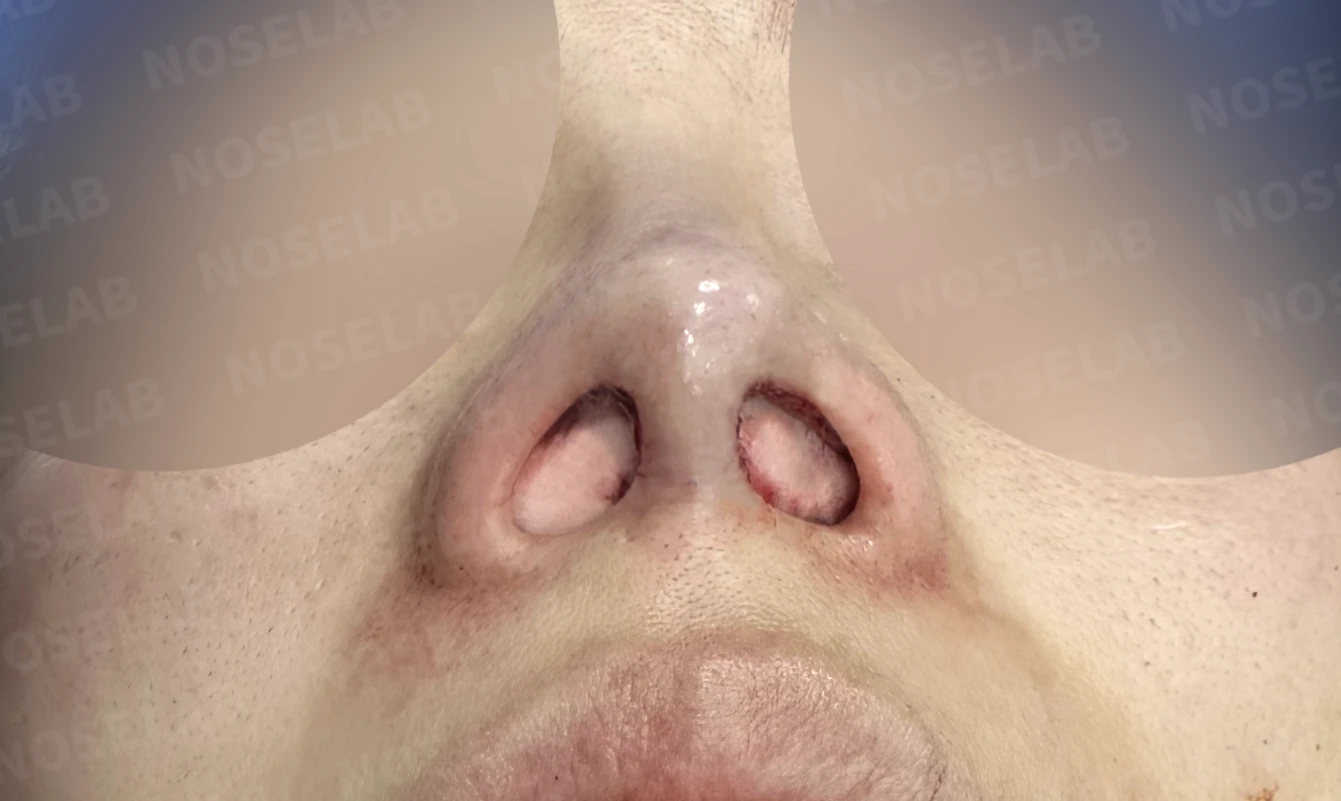
Before surgery / Day 0 immediately after surgery Photos taken immediately after surgery show swelling and may differ from the final result.
💡 Specialist opinion
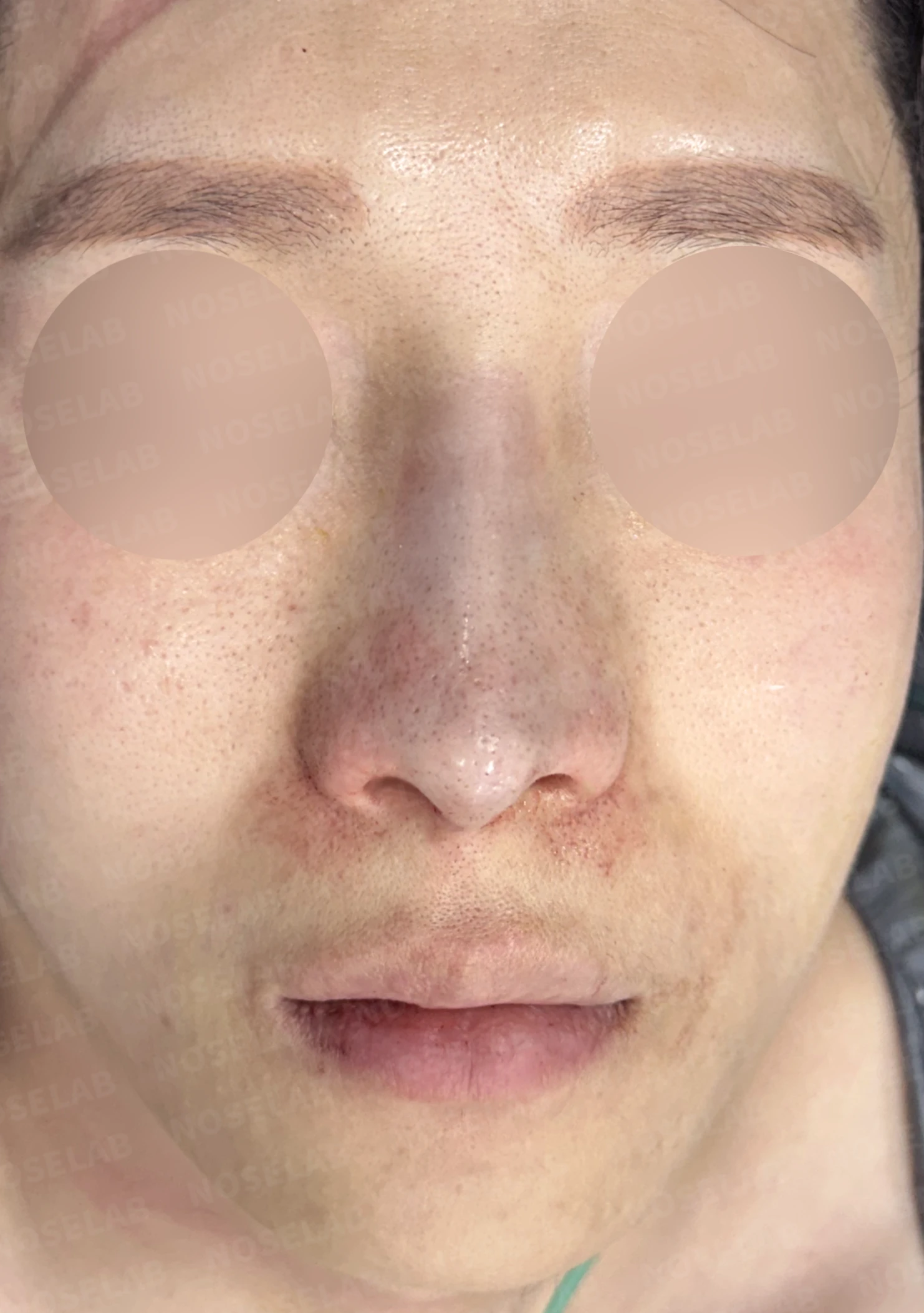
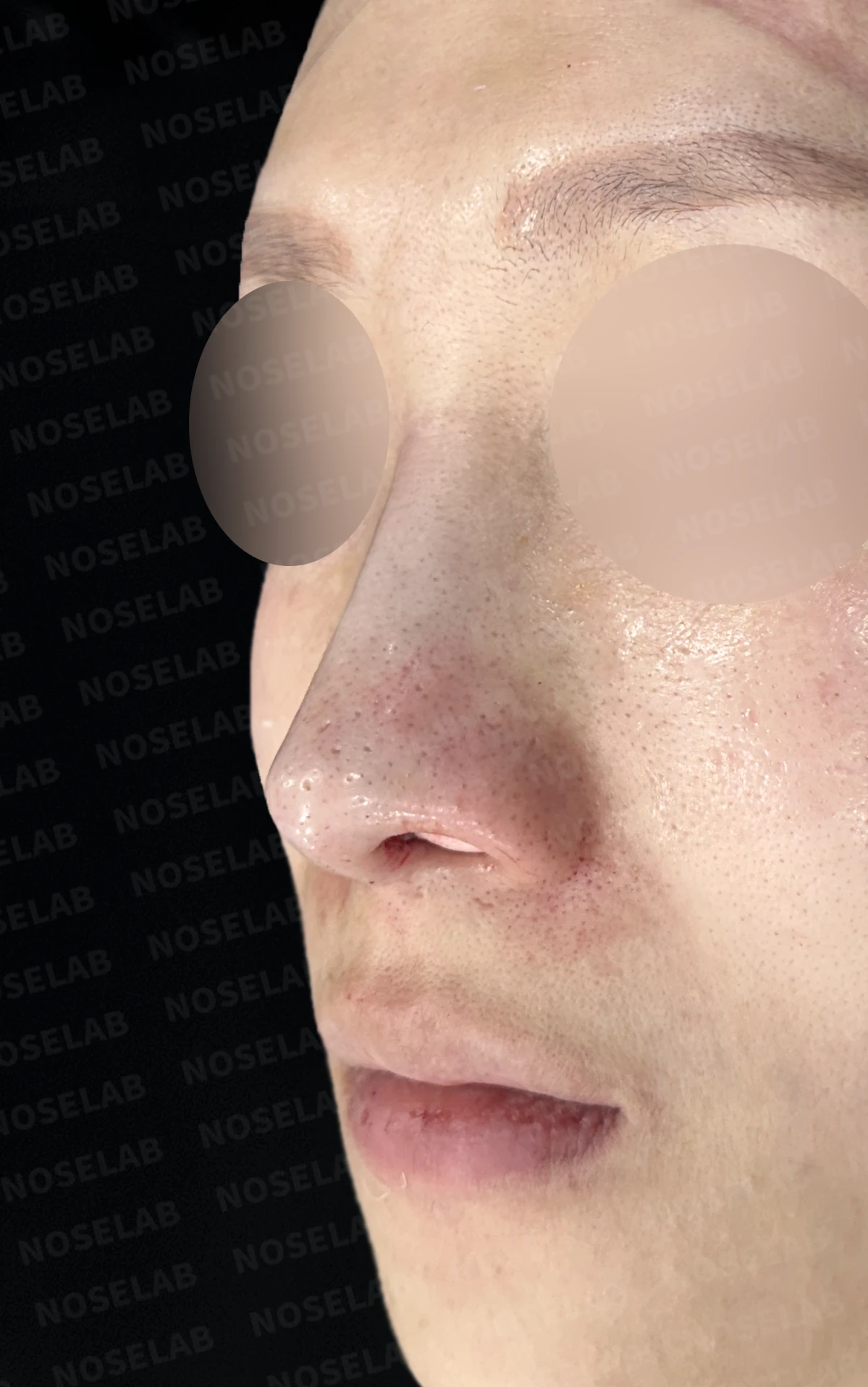
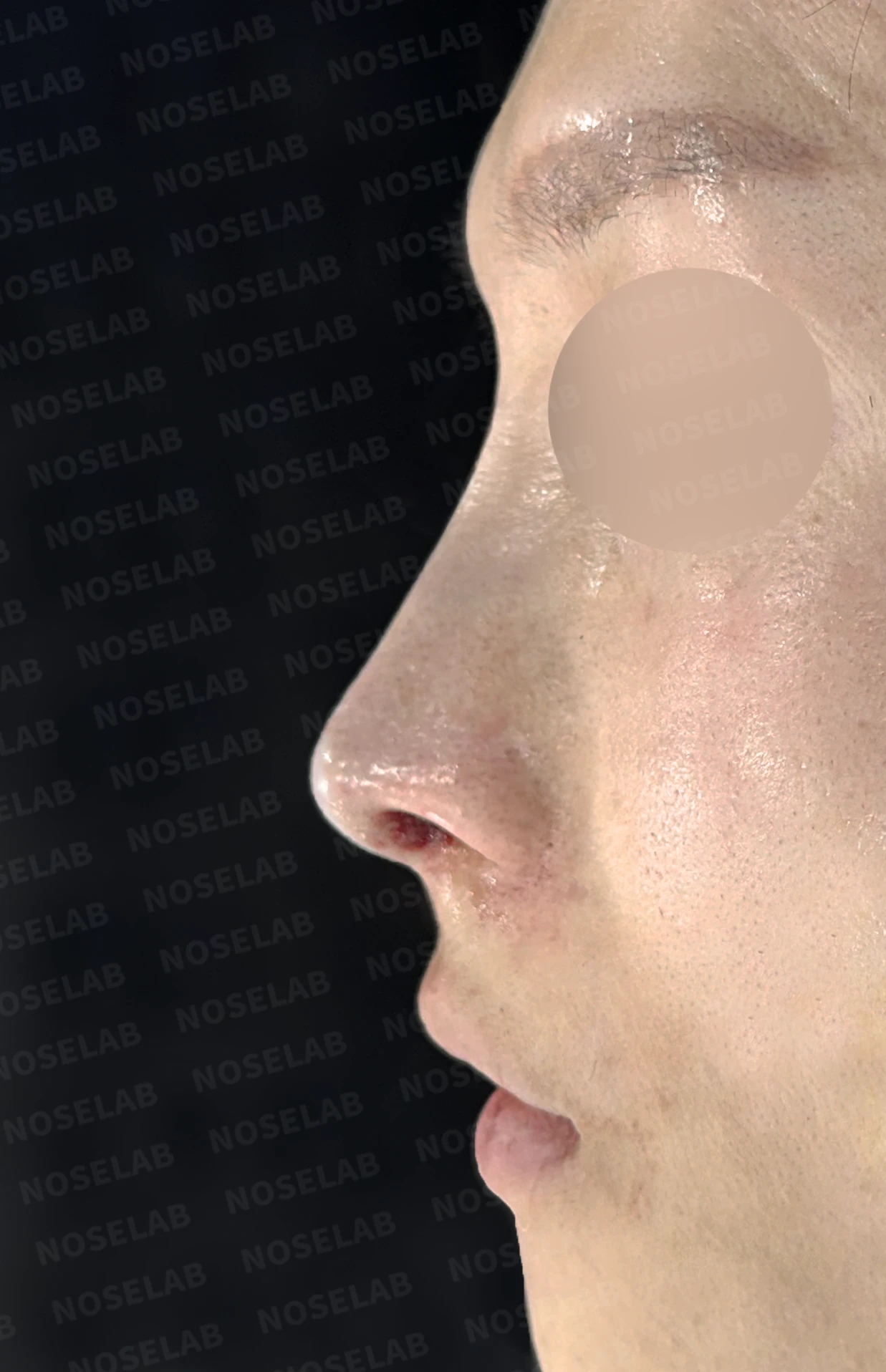
Front, oblique, and profile views on day 0 immediately after surgery Photos taken immediately after surgery show swelling and may differ from the final result.
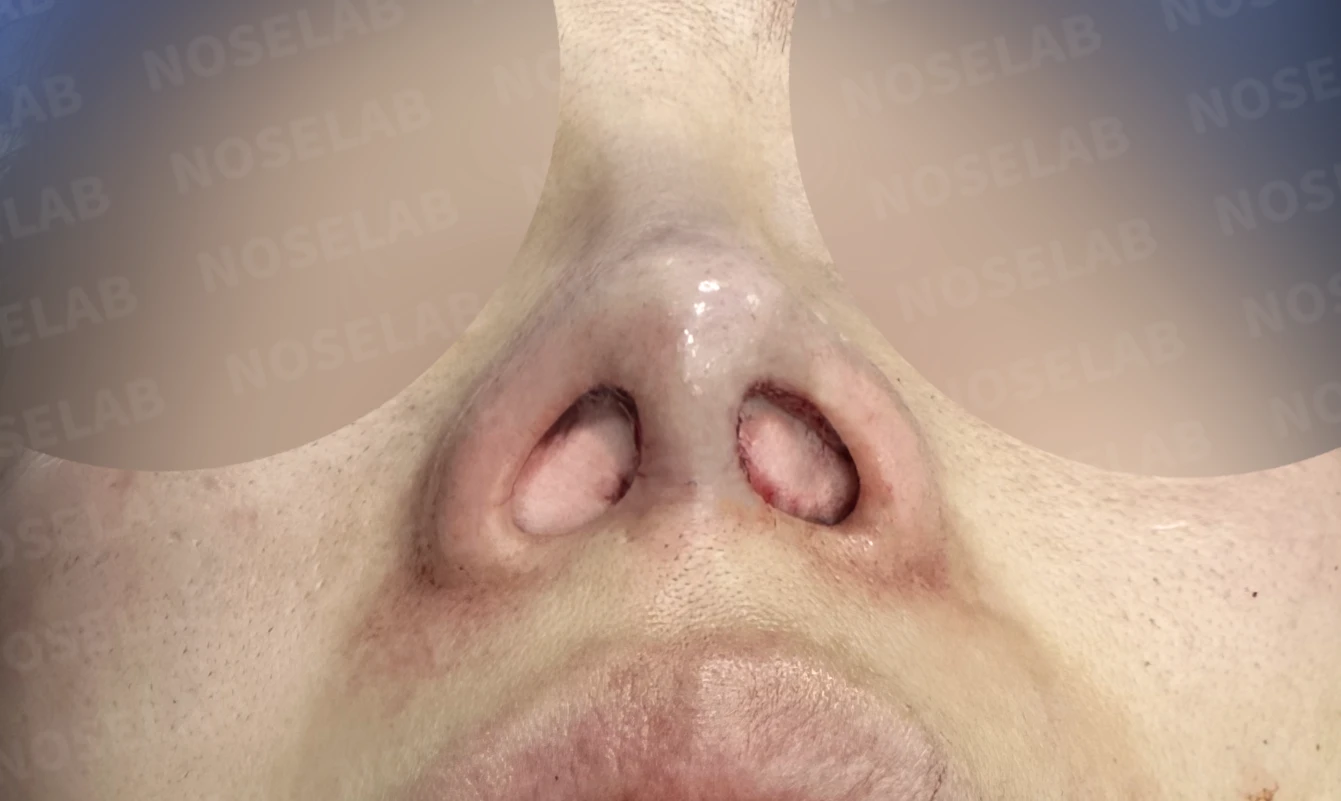
Nostril view on day 0 immediately after surgery Photos taken immediately after surgery show swelling and may differ from the final result.
This procedure was a revision rhinoplasty for a patient with a history of two previous nose surgeries, and the septum was severely compromised. When almost no septum remains, the structural support for the nasal tip is lacking, making septal reconstruction using autologous rib cartilage necessary.
Autologous rib cartilage is biocompatible and has high structural strength, making it an appropriate material for nasal reconstruction. After stably reconstructing the septum, the nasolabial angle was corrected, the nasal tip line was refined, and nasal bone asymmetry correction was performed concurrently, improving both function and appearance.
In revision rhinoplasty, meticulous planning and surgical execution that account for the effects of previous procedures are essential. Adhering to the principle of a closed approach, NOSELAB strives to preserve nasal tissues as much as possible while achieving the changes desired by the patient.
This was Dr. Peter C. Kang. Thank you.
#closedrhinoplasty #closedrevisionrhinoplasty #revisionrhinoplasty #septalreconstruction #autologousribrhinoplasty #nasolabialanglecorrection #deviatednosecorrection #straightrhinoplasty #nasalobstructioncorrection

Limitations and risks
When autologous rib cartilage is used, scarring and pain may remain at the donor site on the chest, and pneumothorax (pleural injury) can occur rarely. Over time, the grafted cartilage may warp or undergo partial resorption.
When the septum is corrected at the same time, nasal obstruction may persist or recur, and in rare cases, septal perforation or changes in smell may occur.
Common potential risks include infection, bleeding, asymmetry, scarring, skin necrosis, and insufficient improvement; results vary depending on individual skin condition and previous surgical history.