Hello, I am Dr. Peter C. Kang.
Today, I would like to share a revision rhinoplasty case of a patient who visited our clinic concerned about a bulbous tip, a crooked nose, and nostril asymmetry.
🔍 Surgical history
About 4 years ago, the patient had rhinoplasty at another medical clinic using autologous rib cartilage and a silicone implant; over time, the nasal tip drooped and a dorsal hump developed, which was the initial concern. About 2 years ago, the patient underwent revision surgery at a different clinic using donor rib cartilage and a silicone implant. One month after that surgery, external trauma caused nasal deformity, and the patient only received immediate repositioning at the time. At the initial visit, the nasal tip appeared round and spread out on front view, and the columella was tilted to the left, accompanied by nostril asymmetry.
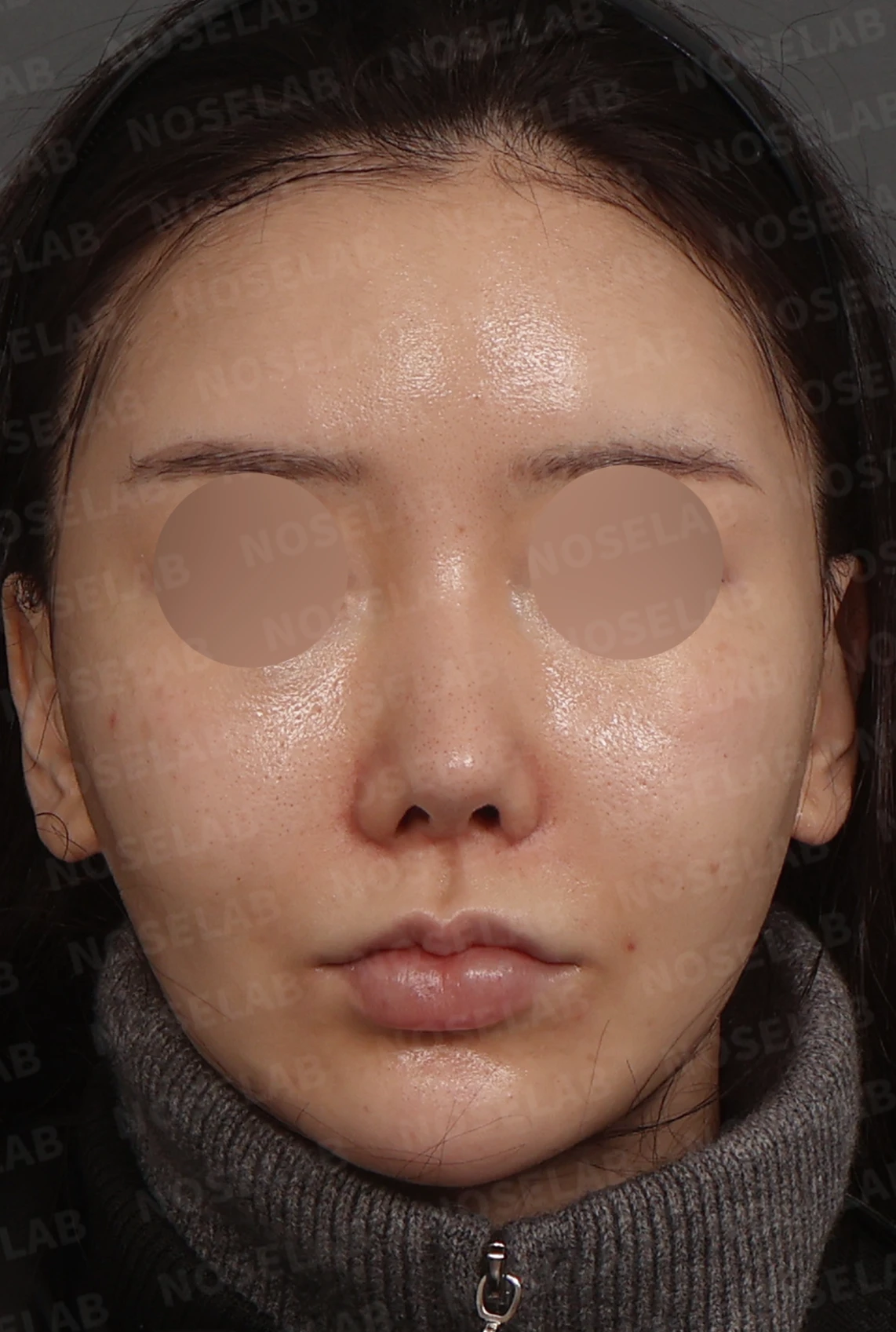
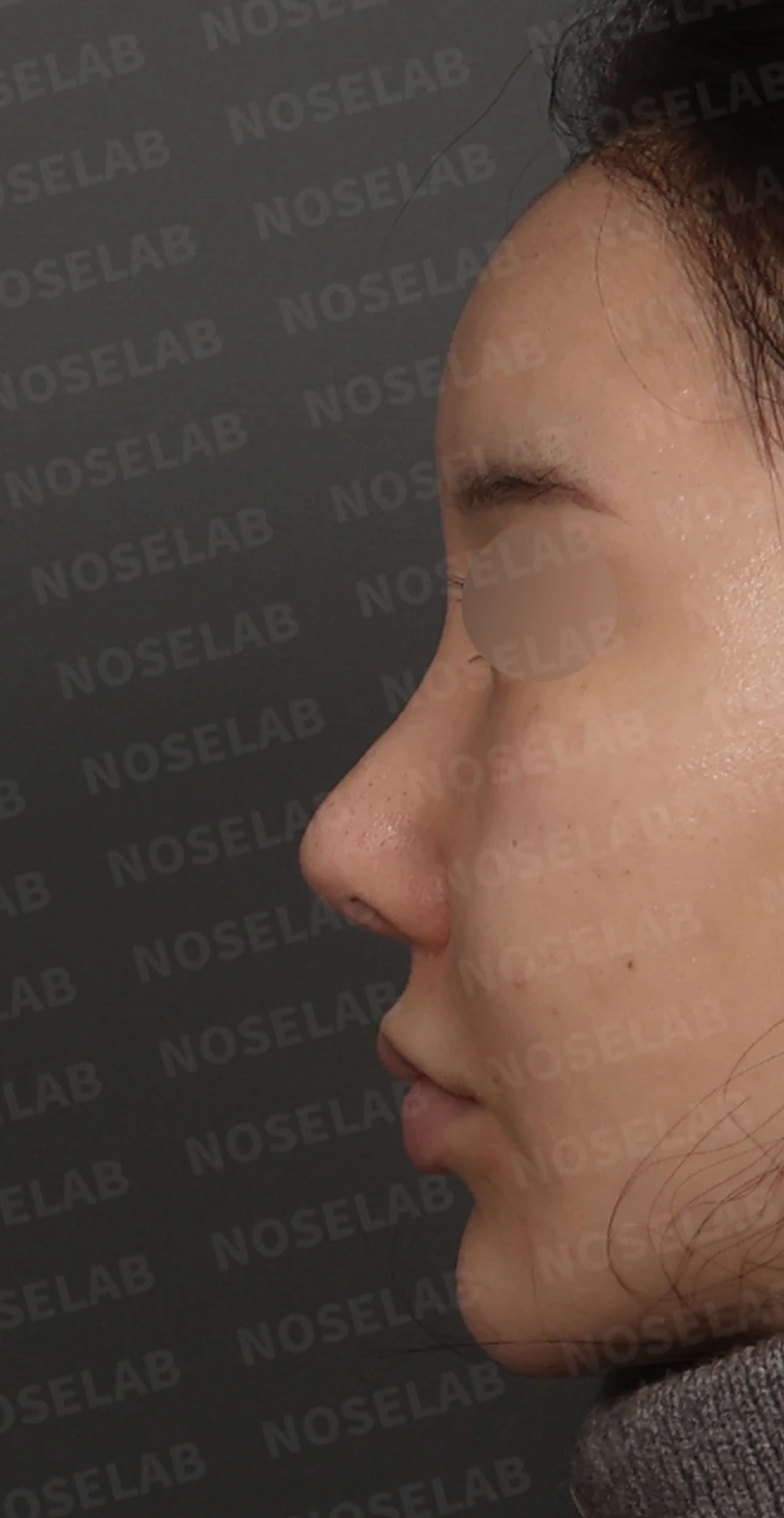
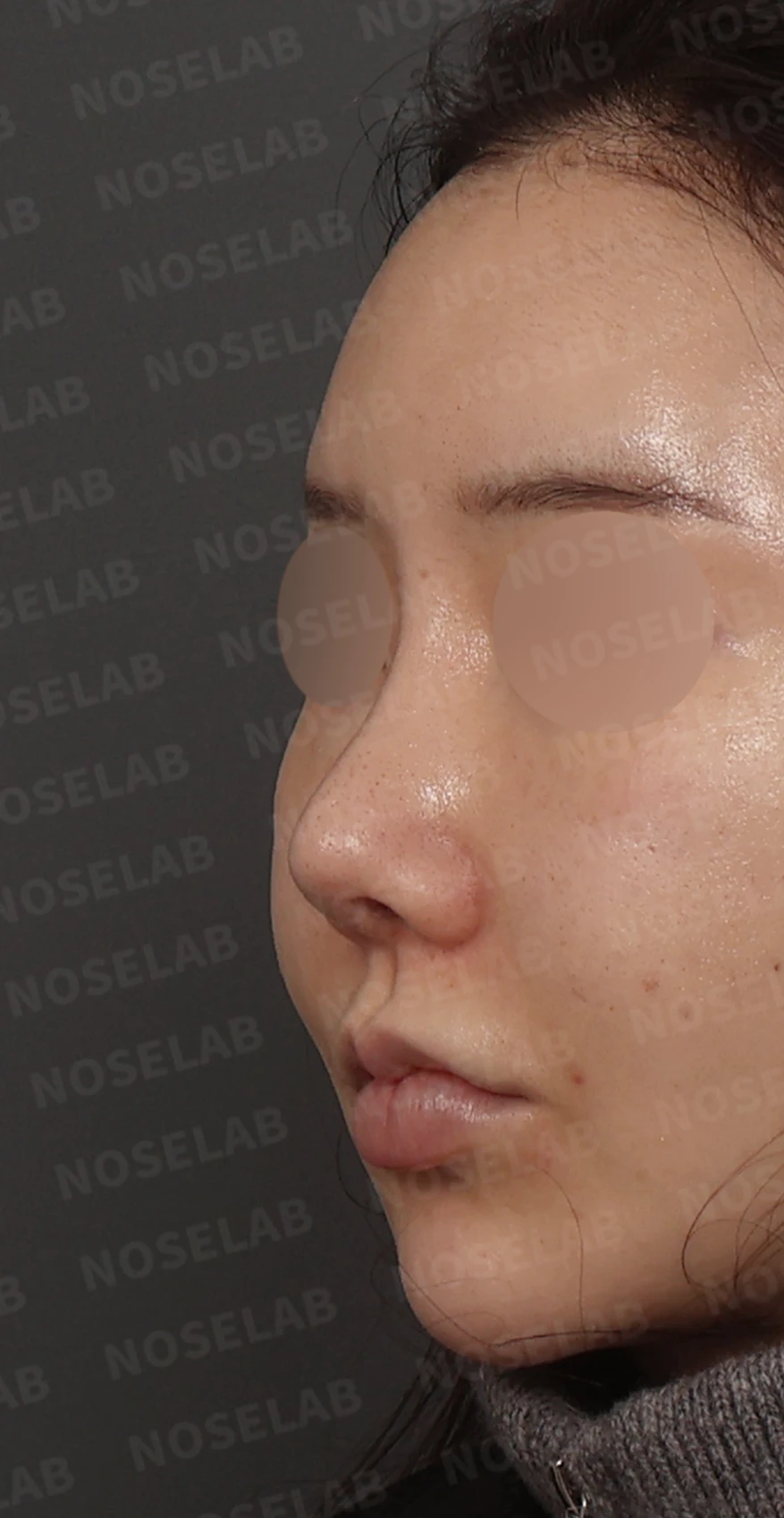
Front, left profile, and oblique views during design consultation
Patient's requests
Improvement of the round, spread-out appearance of the nasal tip on front view
Correction of the deviated nasal bridge
Preference for a natural line with gentle curves
An overall slimmer nasal profile
A softer curved impression rather than a strictly straight look
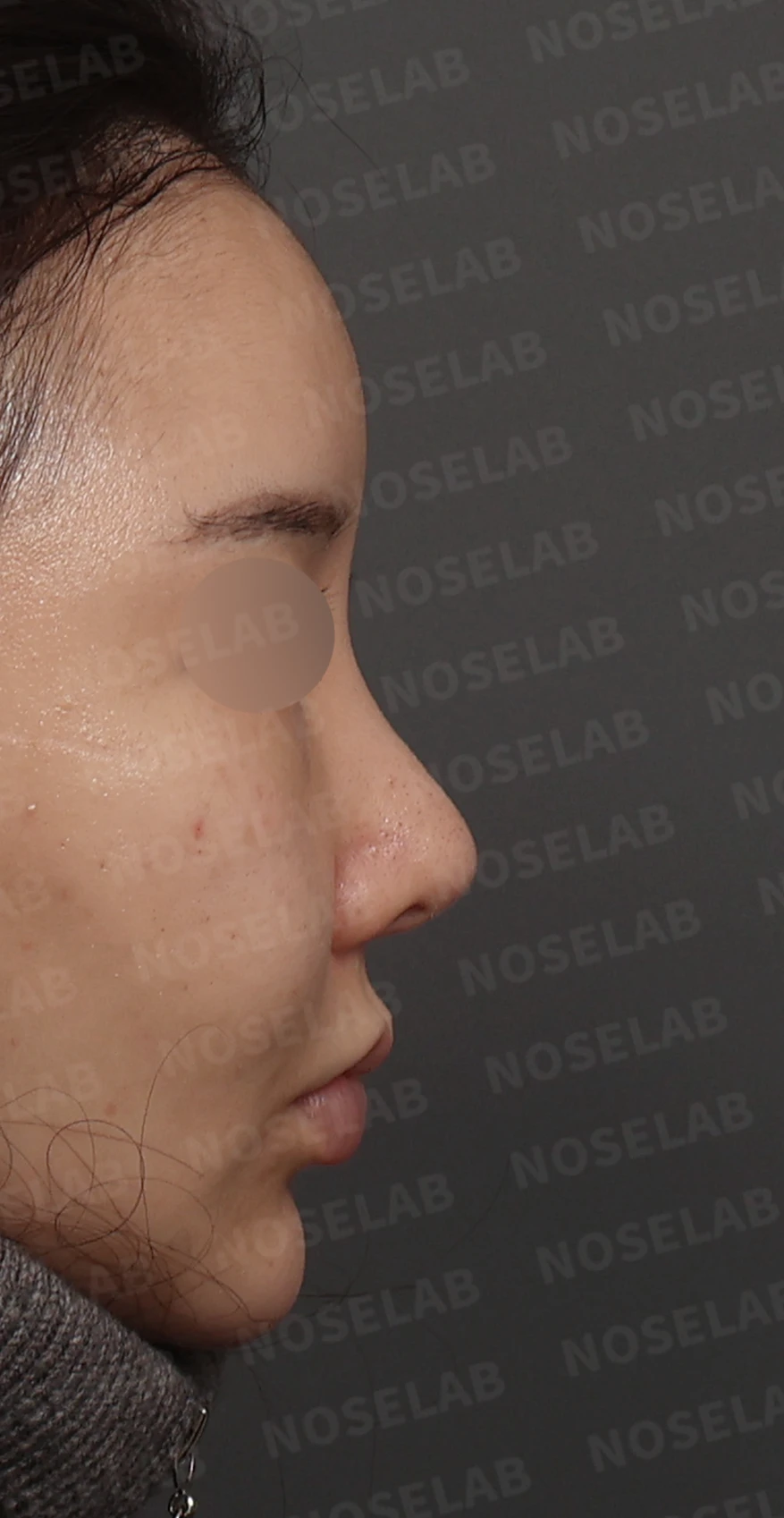
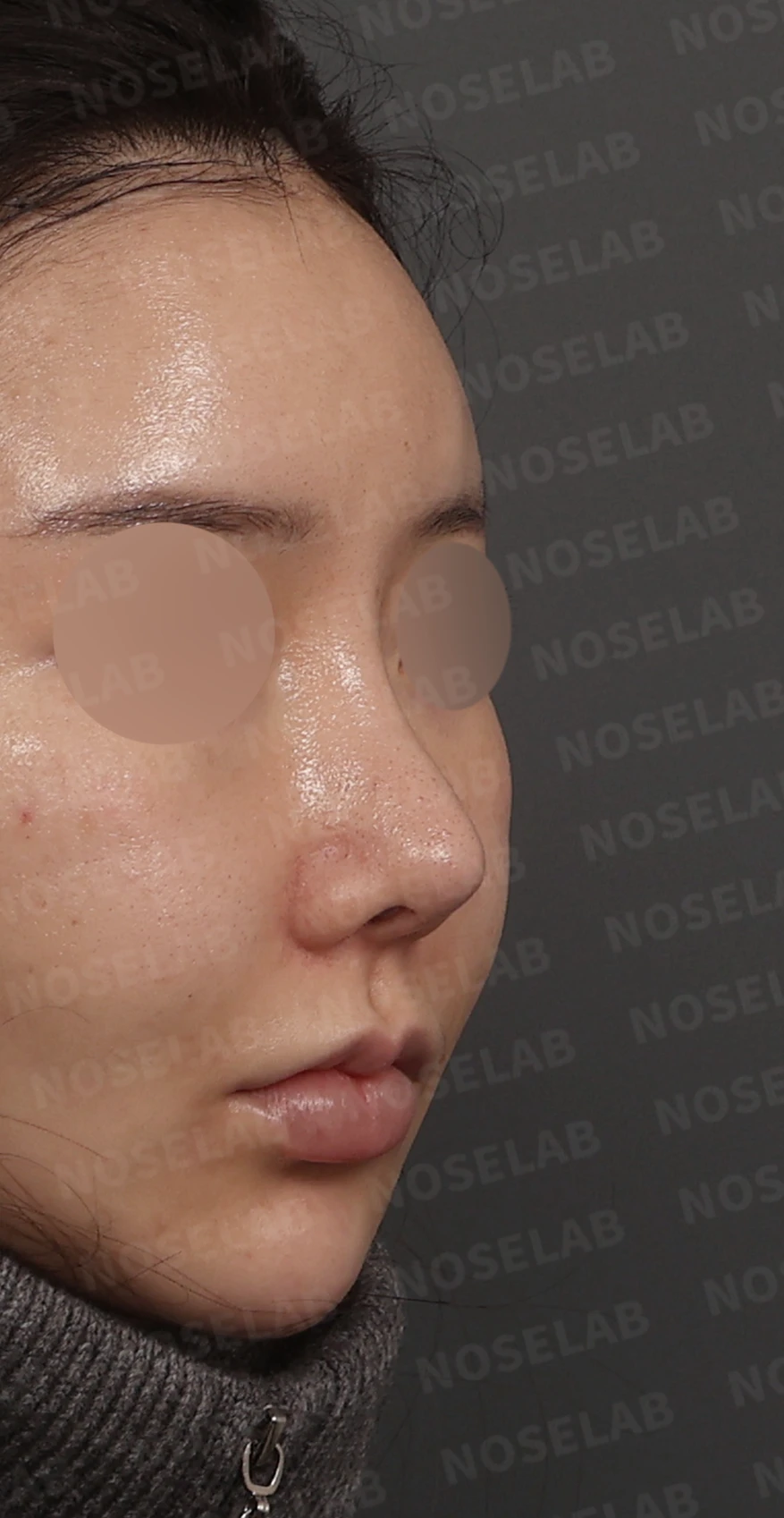
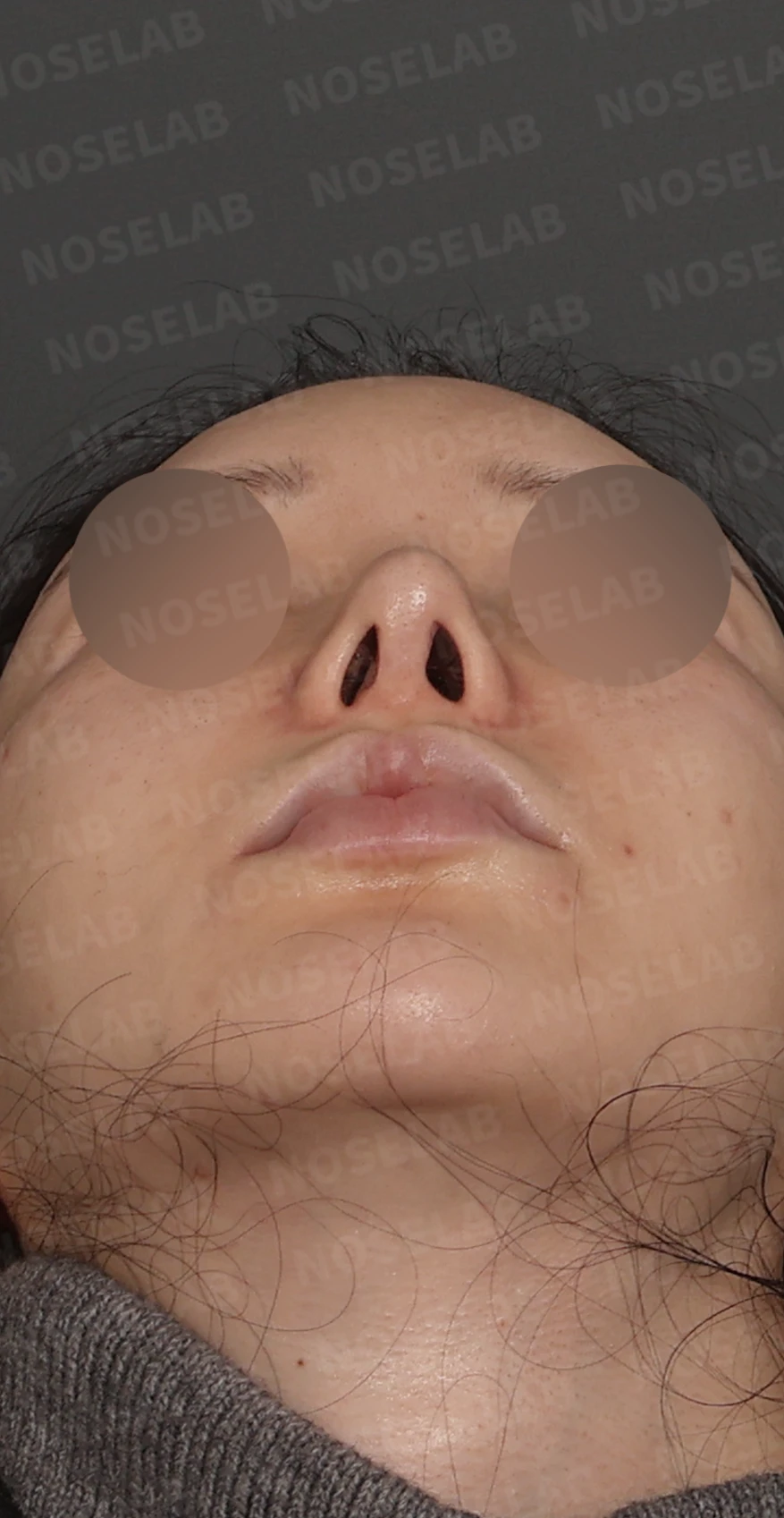
Right profile, oblique, and nostril views during design consultation
🔧 Surgical plan and procedure
1. Septal reconstruction (using autologous rib cartilage)
During surgery, the anterior portion of the septal cartilage was confirmed to be torn and deformed
Presumed to be damage sustained from the external trauma about 2 years ago
Firm septal reconstruction performed using autologous rib cartilage
2. Columellar repositioning and improvement of nostril asymmetry
The left-tilted columella was realigned along the central axis
Restoration of balance between both nostril shapes
3. Septoplasty and rhinitis surgery
Examination for nasal obstruction revealed both a deviated septum and rhinitis
Septoplasty and turbinate surgery (rhinitis surgery) were performed simultaneously to relieve functional discomfort
4. Reshaping the nasal bridge line
Removal of existing silicone implant
The implant was recarved to fit the contours of the patient's nasal bone before insertion
Establishment of a natural, well-defined bridge line
5. Nasolabial angle correction
Natural adjustment of the angle between the nose and upper lip
Improvement in the balance of the profile line
🌟 Surgical results
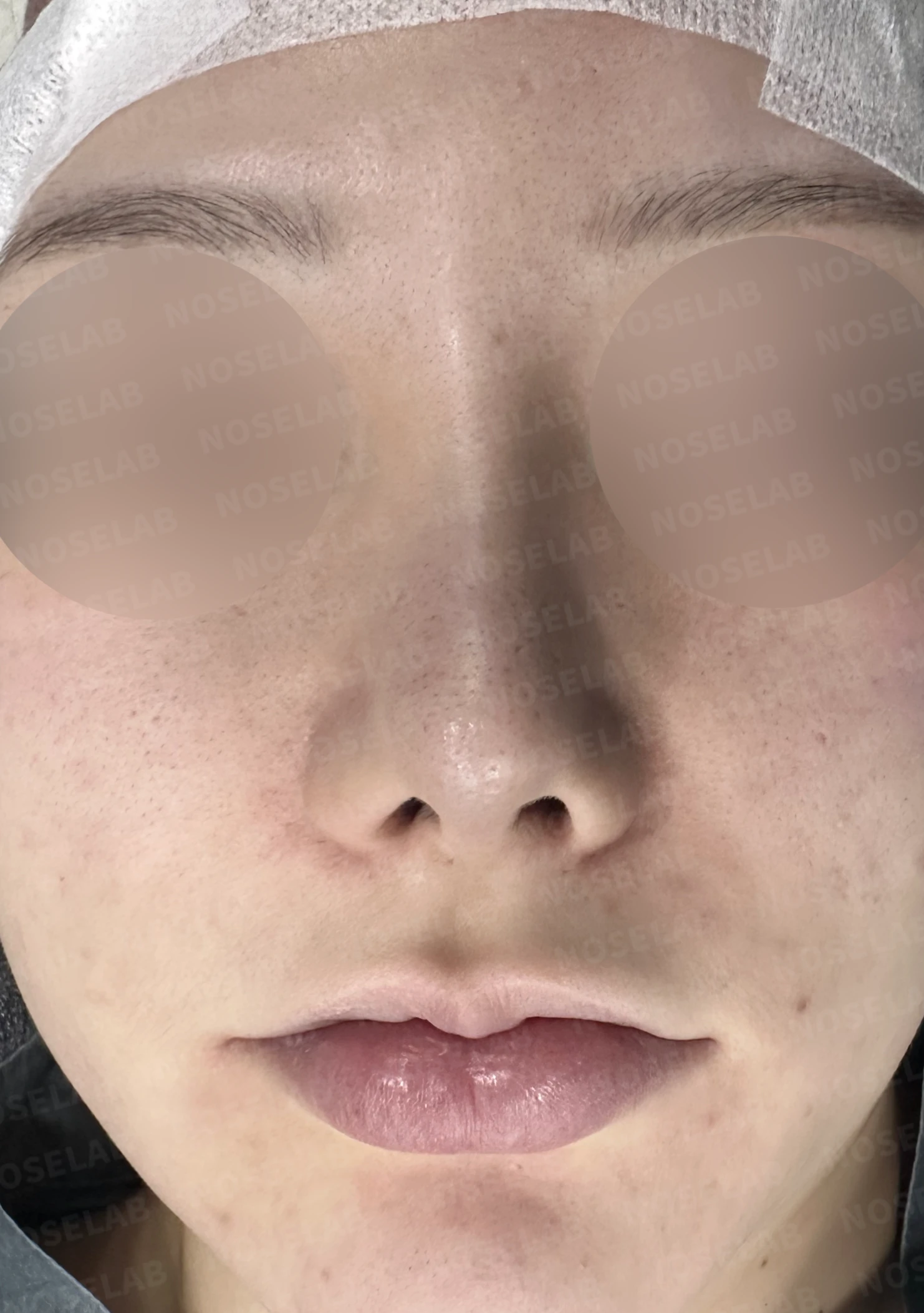
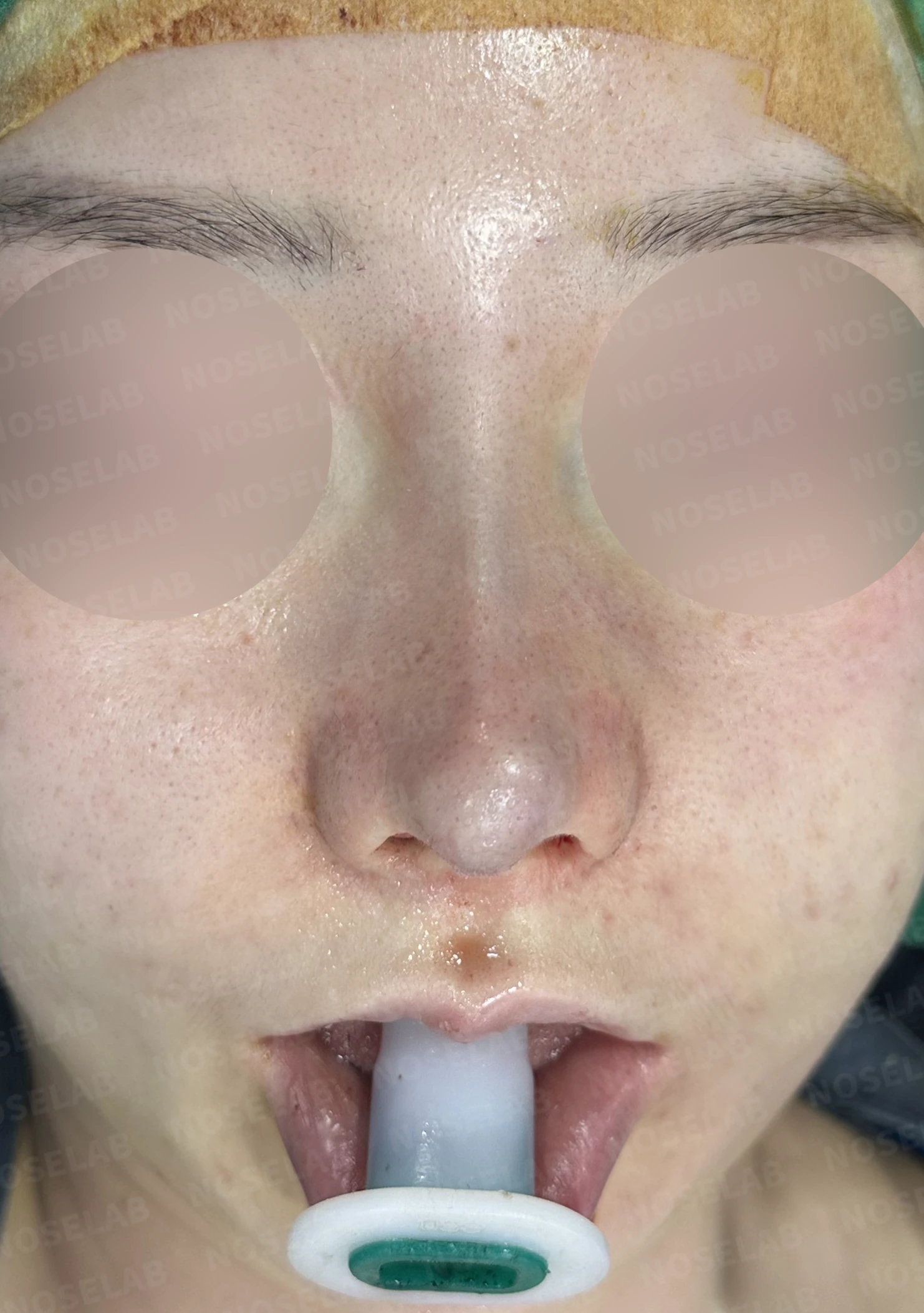
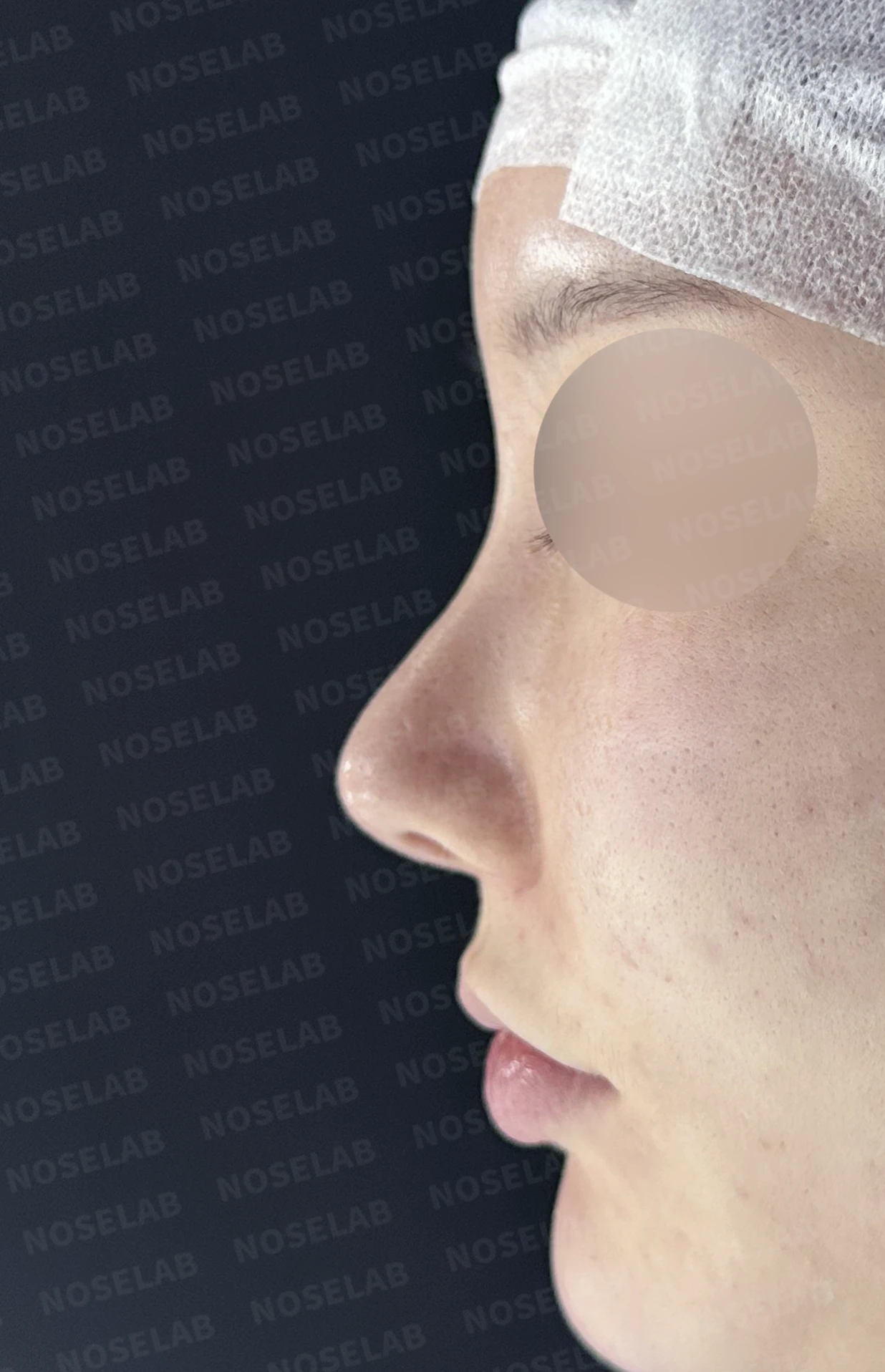
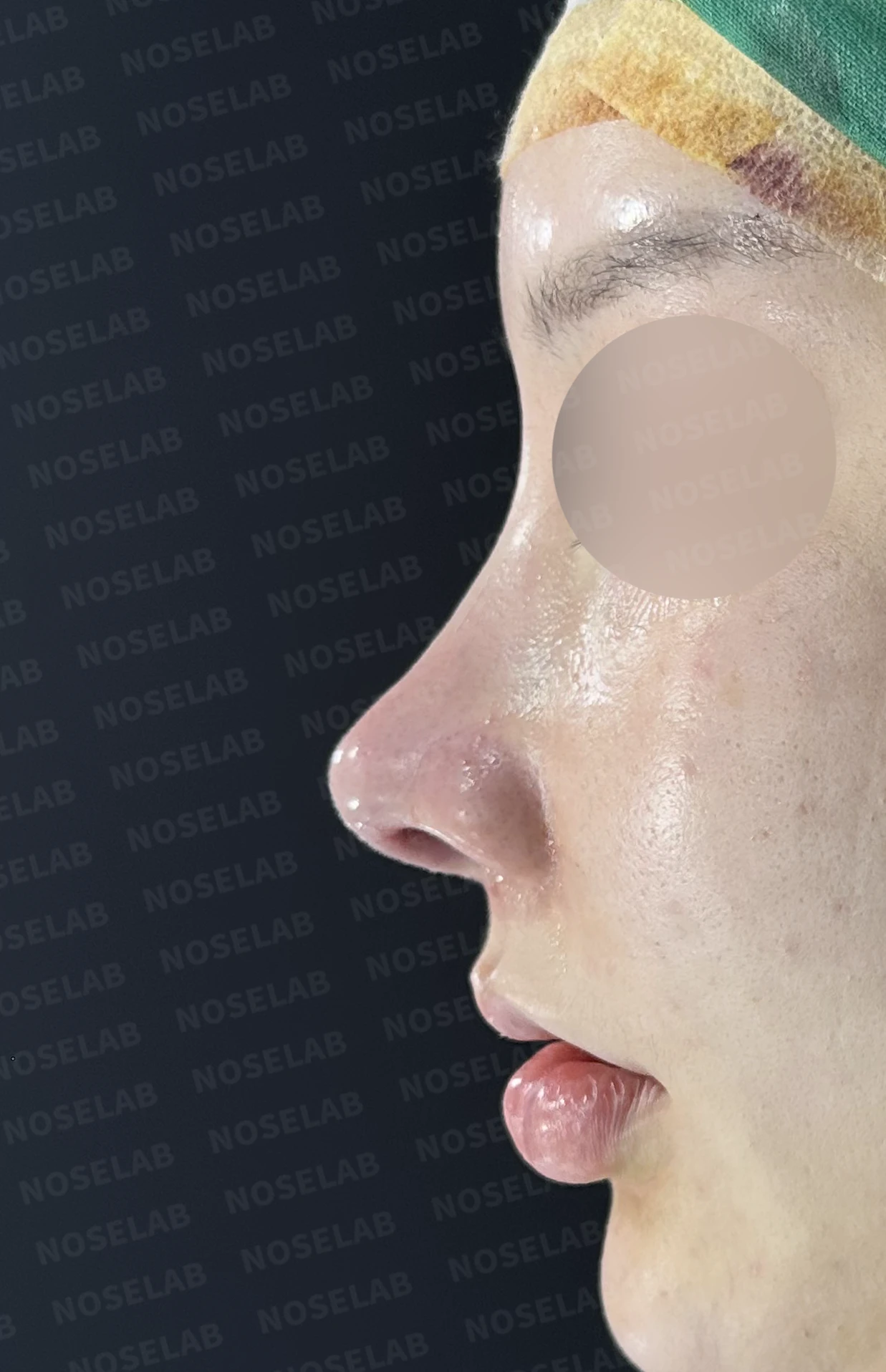
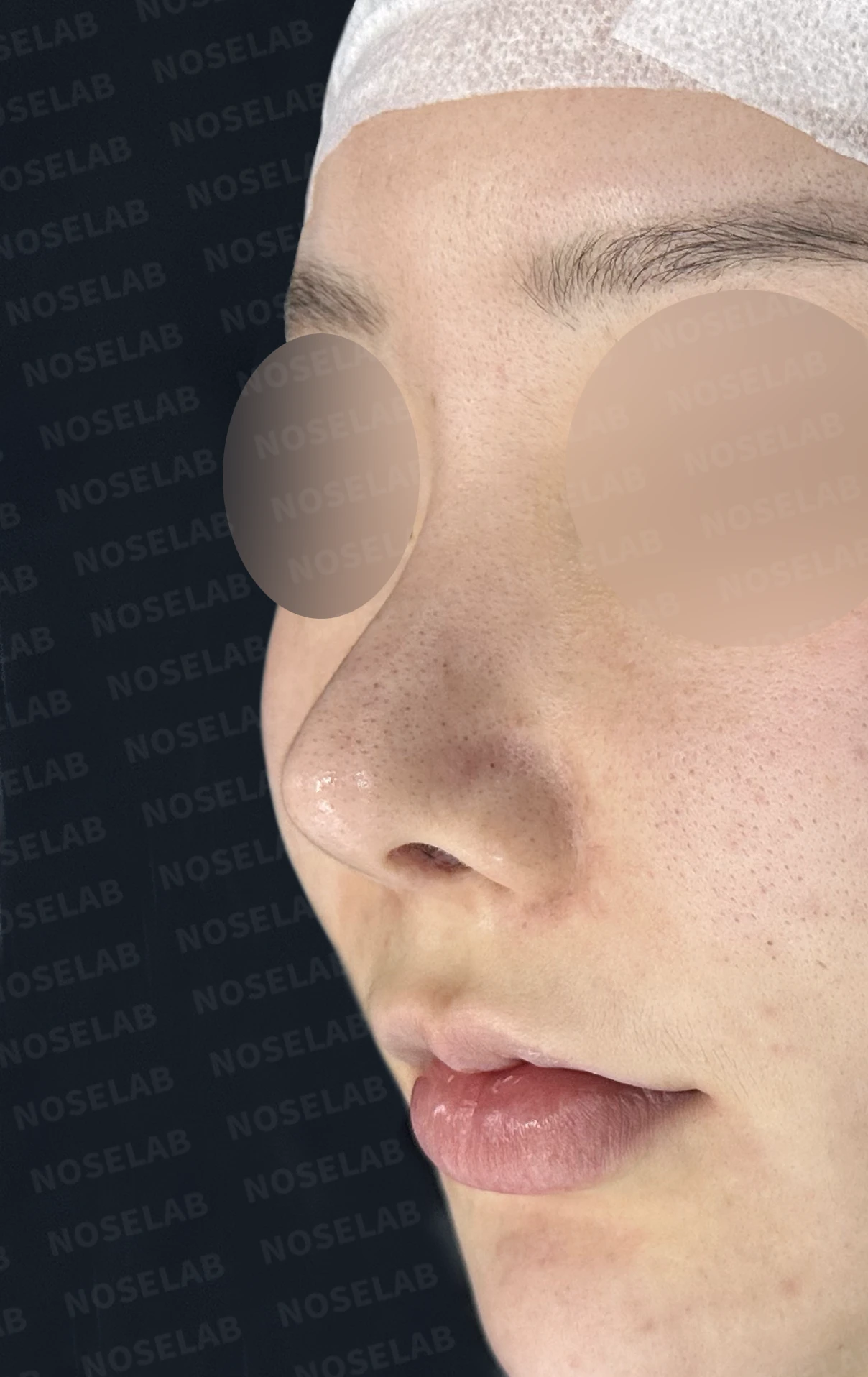
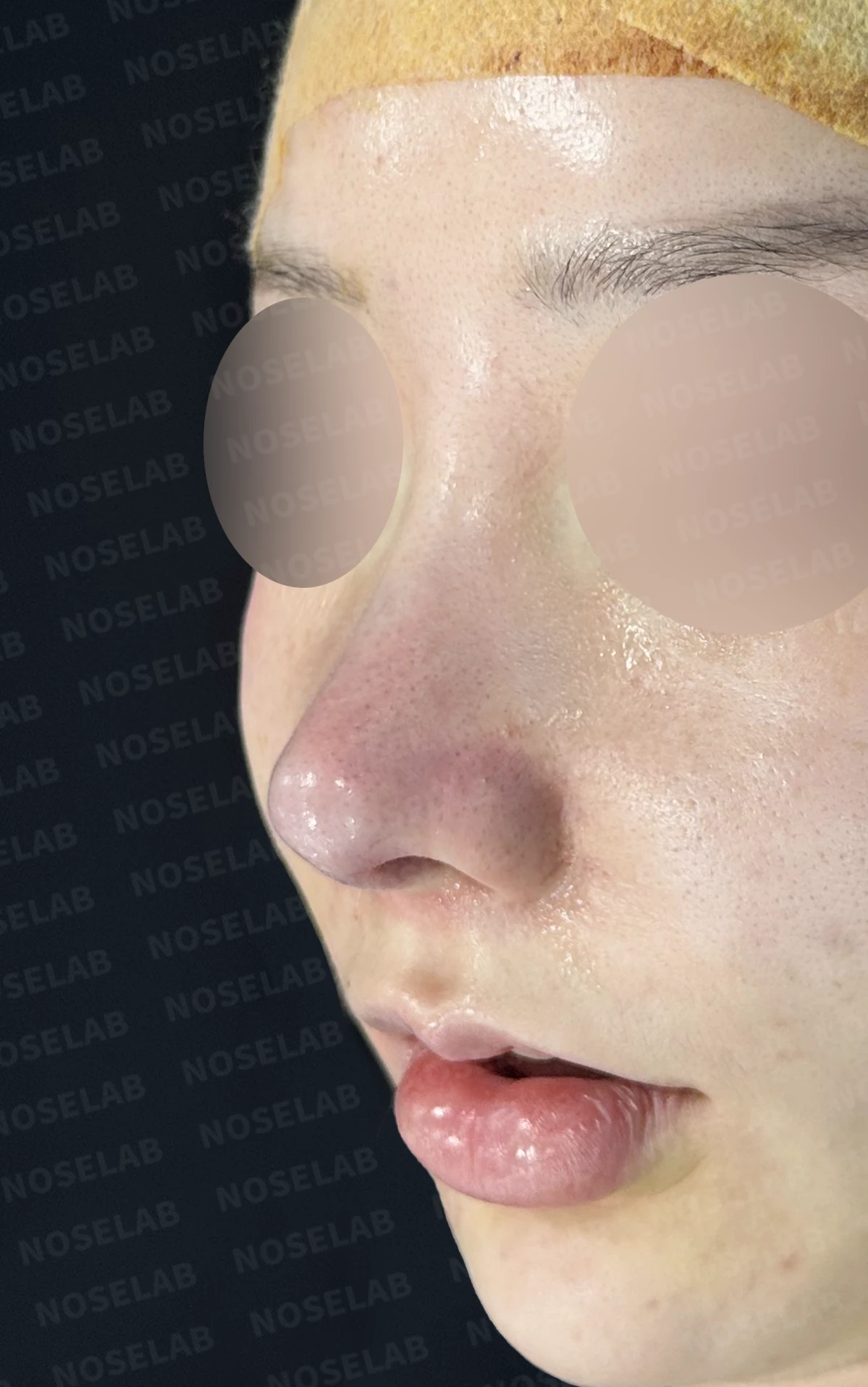
Before surgery / Day 0 immediately after surgery Photos taken immediately after surgery show swelling and may differ from the final result.
Front view changes
The round, spread-out nasal tip was naturally refined
Narrowing of the bridge width, creating an overall slimmer line
Correction of the crooked appearance, restoring left-right symmetry
Before surgery / Day 0 immediately after surgery Photos taken immediately after surgery show swelling and may differ from the final result.
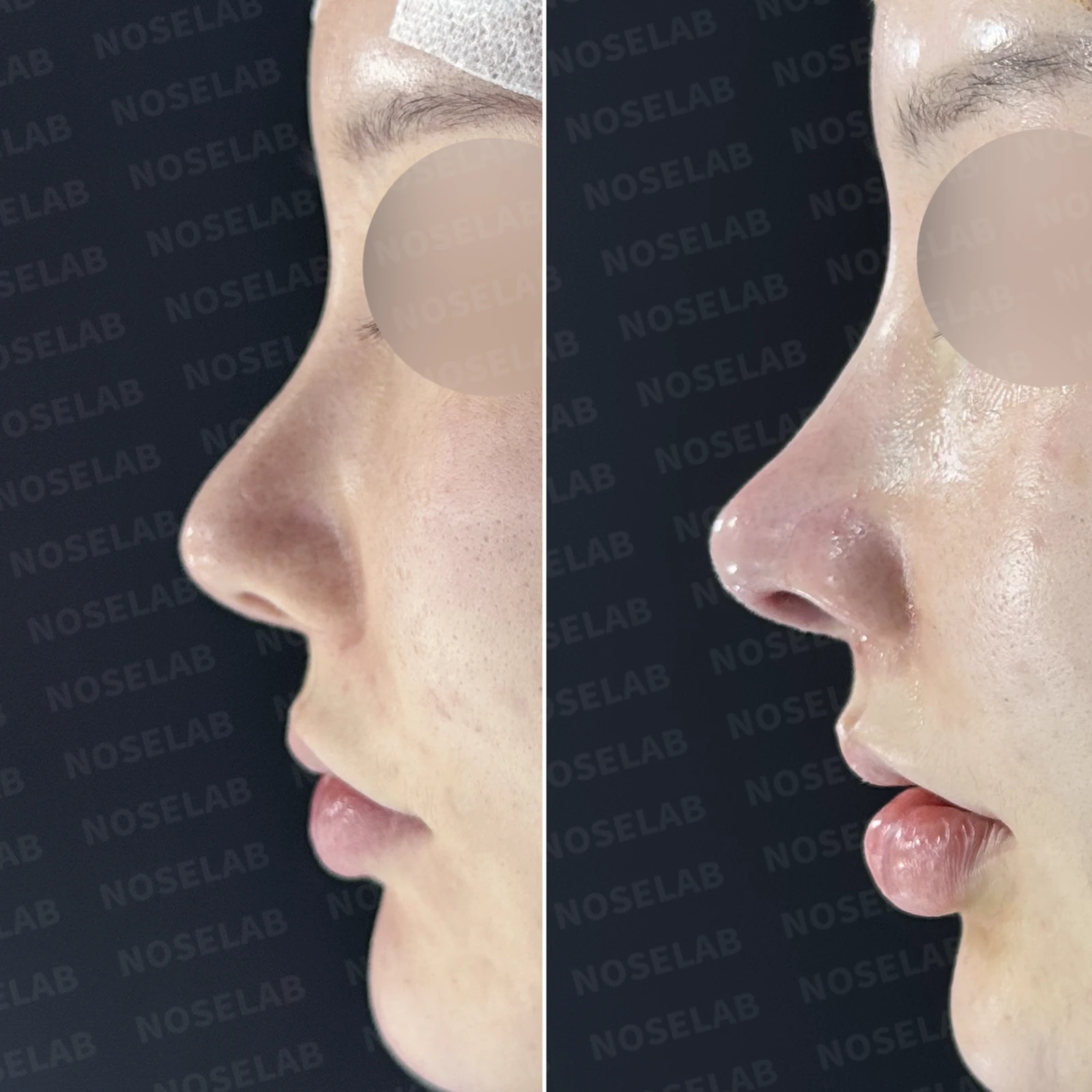
Profile view changes
A stable nasal tip supported without drooping
A soft bridge line with a gentle curve
A more refined profile line through nasolabial angle correction
Before surgery / Day 0 immediately after surgery Photos taken immediately after surgery show swelling and may differ from the final result.
Changes in nostril shape
Restoration of the left-tilted columella to the central axis
Natural improvement of nostril asymmetry

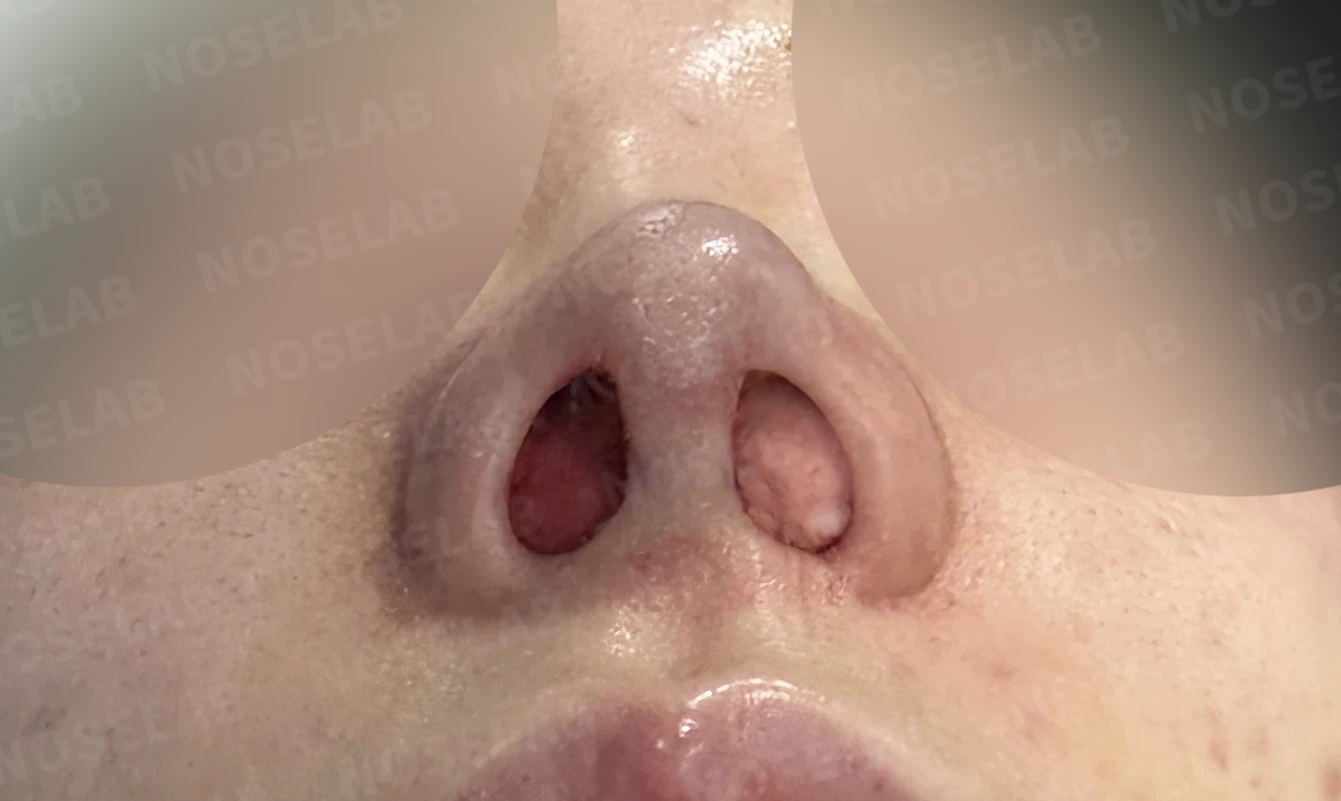
Before surgery / Day 0 immediately after surgery Photos taken immediately after surgery show swelling and may differ from the final result.
💡 Specialist opinion
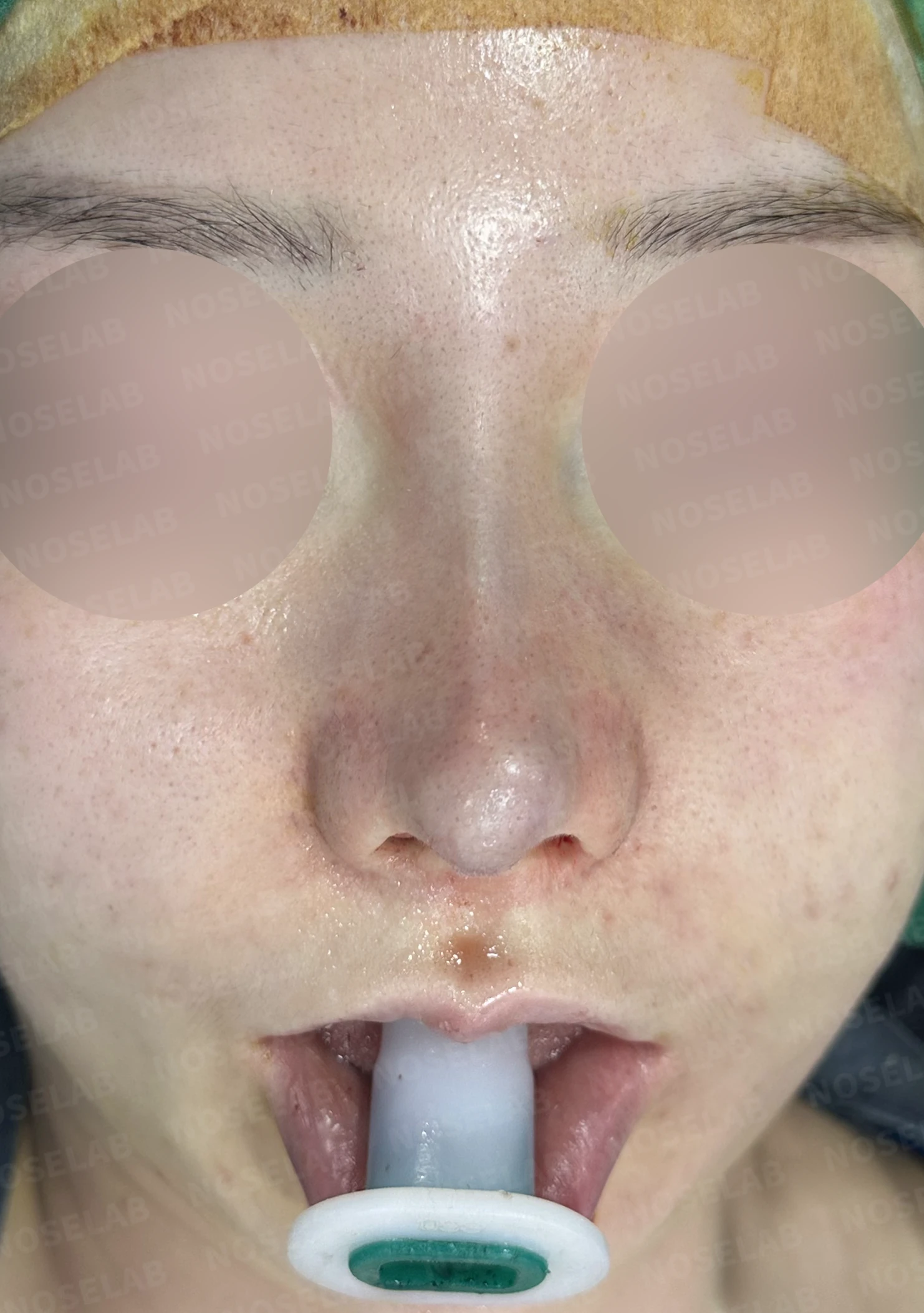
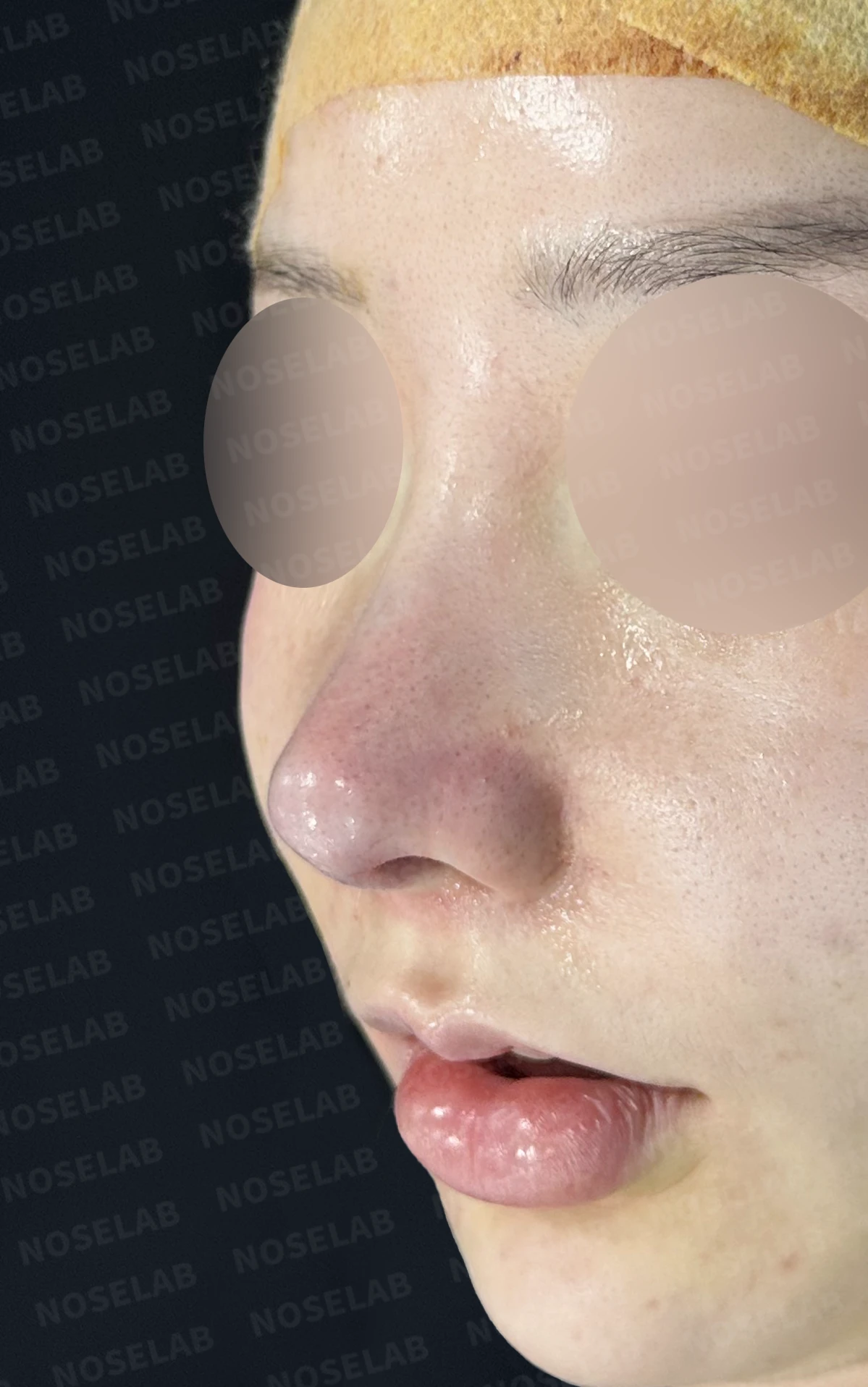
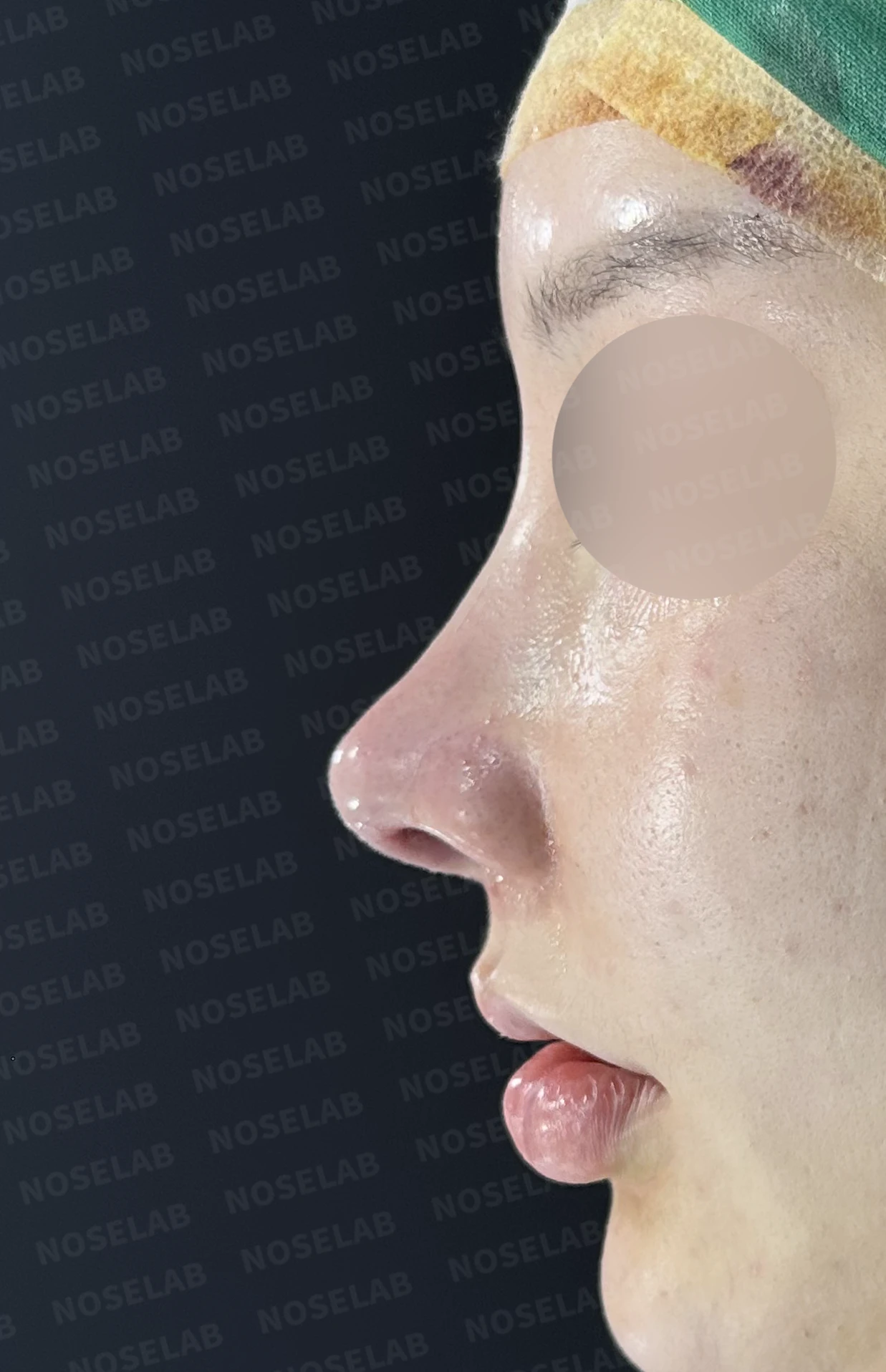
Front, oblique, and profile views on day 0 immediately after surgery Photos taken immediately after surgery show swelling and may differ from the final result.
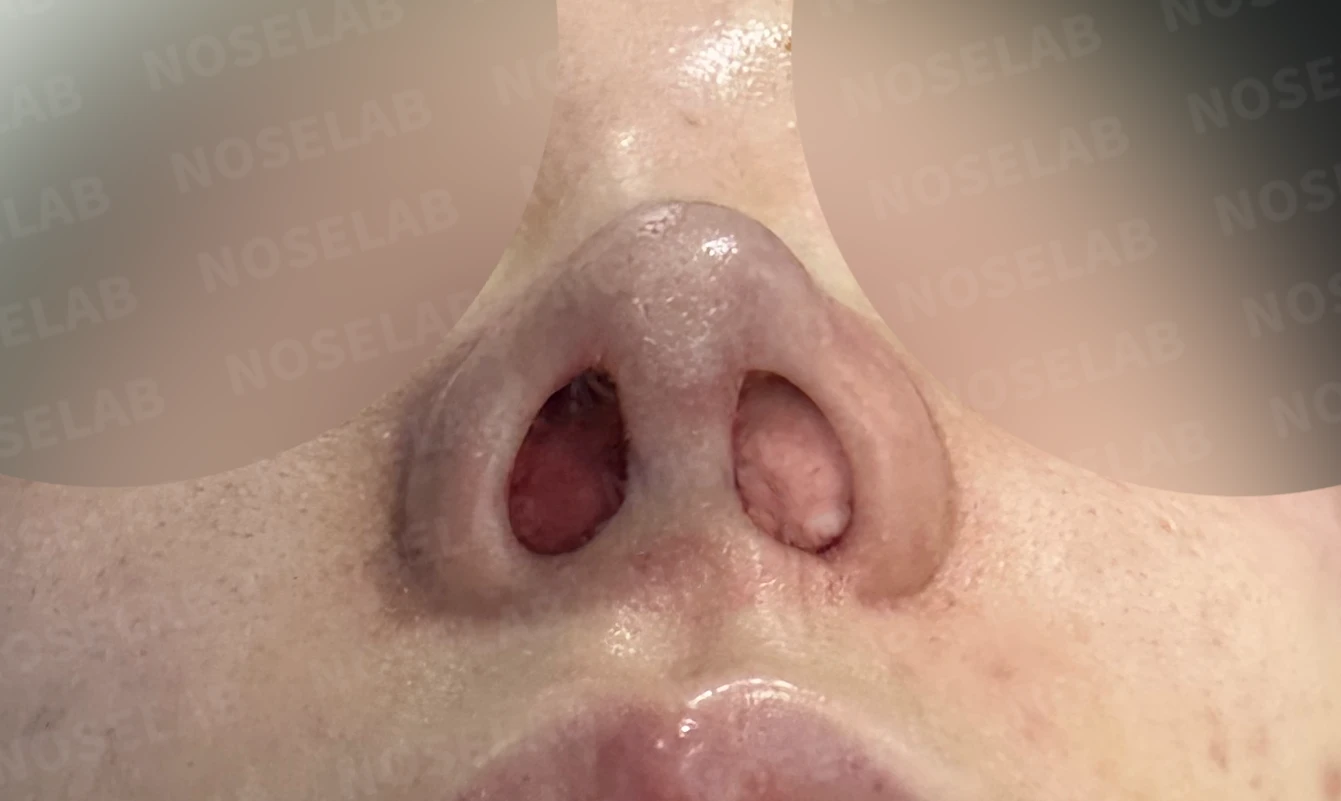
Nostril view on day 0 immediately after surgery Photos taken immediately after surgery show swelling and may differ from the final result.
In complex revision rhinoplasty, one must account not only for traces of past surgeries but also for deformities caused by external trauma. When the anterior portion of the septal cartilage is damaged and the central axis of the nose is compromised, as in this patient's case, stable outcomes cannot be achieved through simple cosmetic adjustments alone.
For this presentation, the key was rebuilding a firm central axis of the nose through septal reconstruction using autologous rib cartilage. The tilted columella and nostril asymmetry were corrected simultaneously, and functional surgery for the accompanied deviated septum and rhinitis was also performed, resolving both aesthetic and functional issues at once.
Rather than reusing the existing silicone implant as it was, it was sculpted by hand to fit the contour of the patient's nasal bone to ensure a natural fit. Securing a stable structural foundation alongside septal reconstruction leads to lasting satisfaction.
Moving forward, I will continue to carefully reflect each patient's structural characteristics and aesthetic needs to create natural results planned with safety in mind.
This was Dr. Peter C. Kang. Thank you.
#closedrhinoplasty #closedrevisionrhinoplasty #autologousribcartilage #septalreconstruction #crookednosecorrection #revisionrhinoplasty #nasolabialanglecorrection #rhinitissurgery #deviatedseptum #nostrilasymmetrycorrection

Limitations and risks
When autologous rib cartilage is used, scarring and pain may remain at the donor site on the chest, and pneumothorax (pleural injury) can occur rarely. Over time, the grafted cartilage may warp or undergo partial resorption.
When using donor rib cartilage, long-term follow-up is necessary because the grafted cartilage may resorb or warp.
When revising after implant removal, contracture may progress again after removal, the nasal height and length may decrease, and staged surgery may be necessary depending on the skin condition.
When the septum is corrected at the same time, nasal obstruction may persist or recur, and in rare cases, septal perforation or changes in smell may occur.
Common potential risks include infection, bleeding, asymmetry, scarring, skin necrosis, and insufficient improvement; results vary depending on individual skin condition and previous surgical history.