Hello, I am Dr. Peter C. Kang.
Today, I would like to share the case of a patient who visited our clinic seeking functional improvement after suffering from long-standing nasal obstruction.
🔍 Surgical history
This is a primary rhinoplasty case with no prior history of nasal surgery.
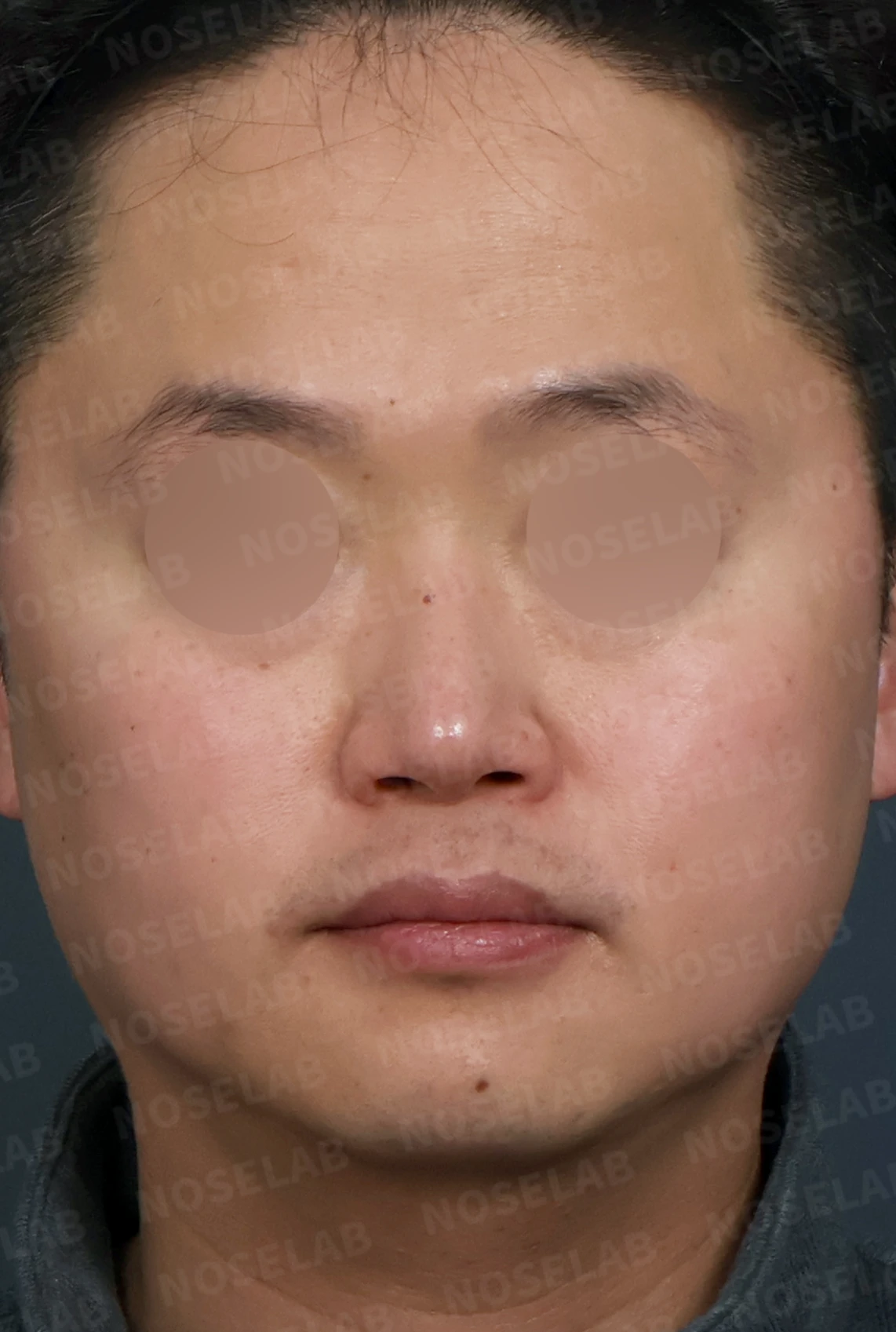
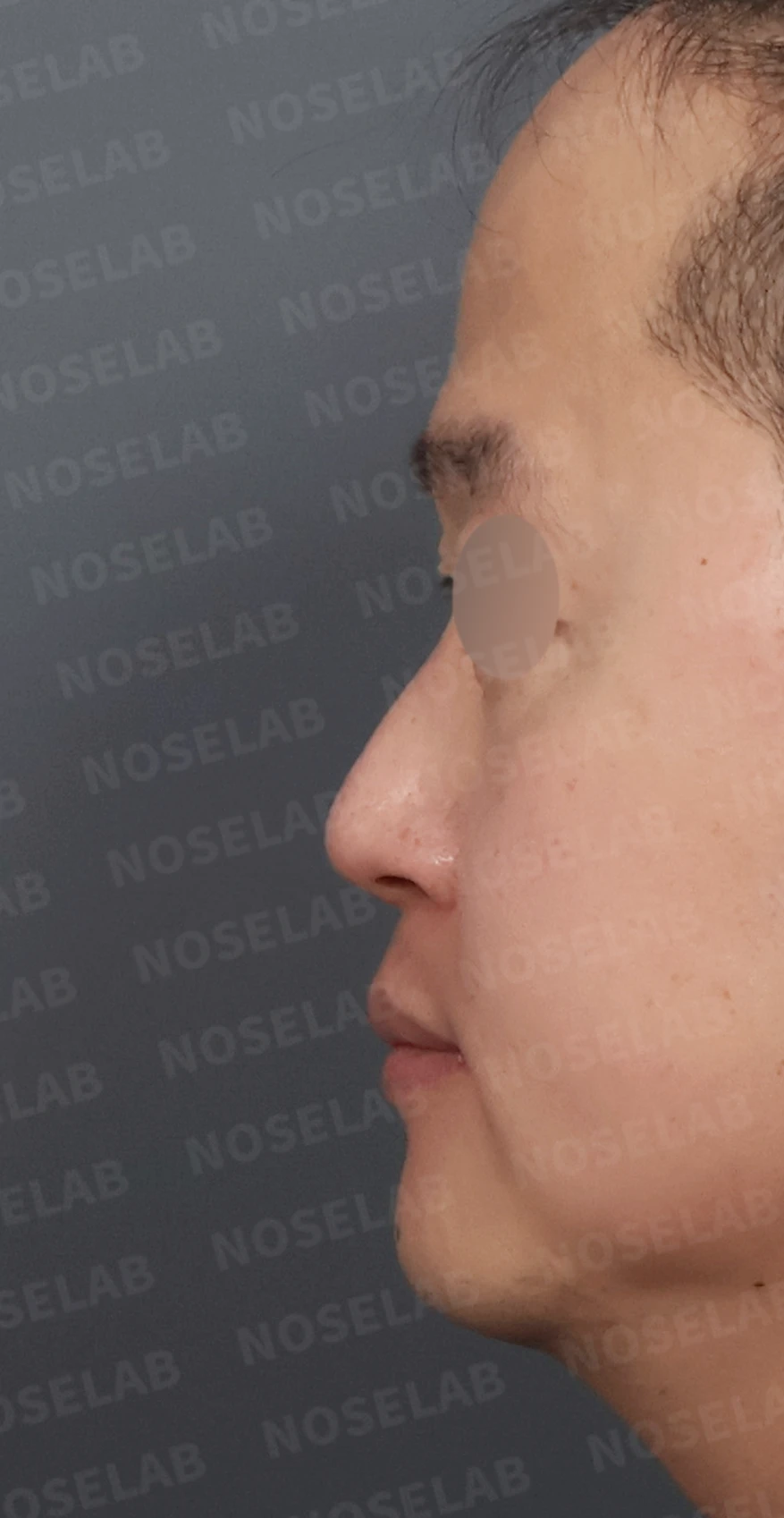
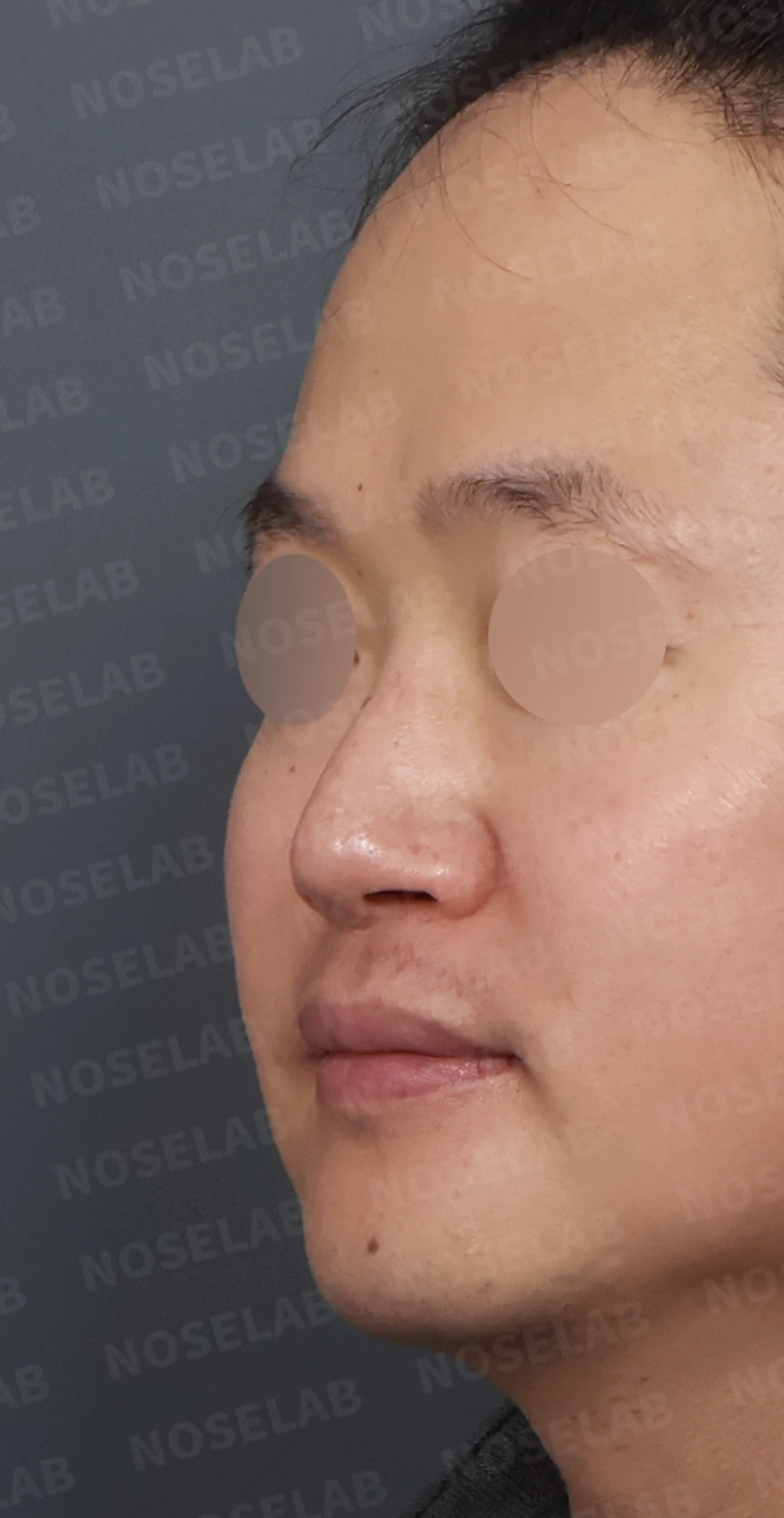
Front, left profile, and oblique views during design consultation.
💉 Patient requests
Relief from daily recurring nasal obstruction
A natural nasal shape that harmonizes with the face
Subtle, unexaggerated change
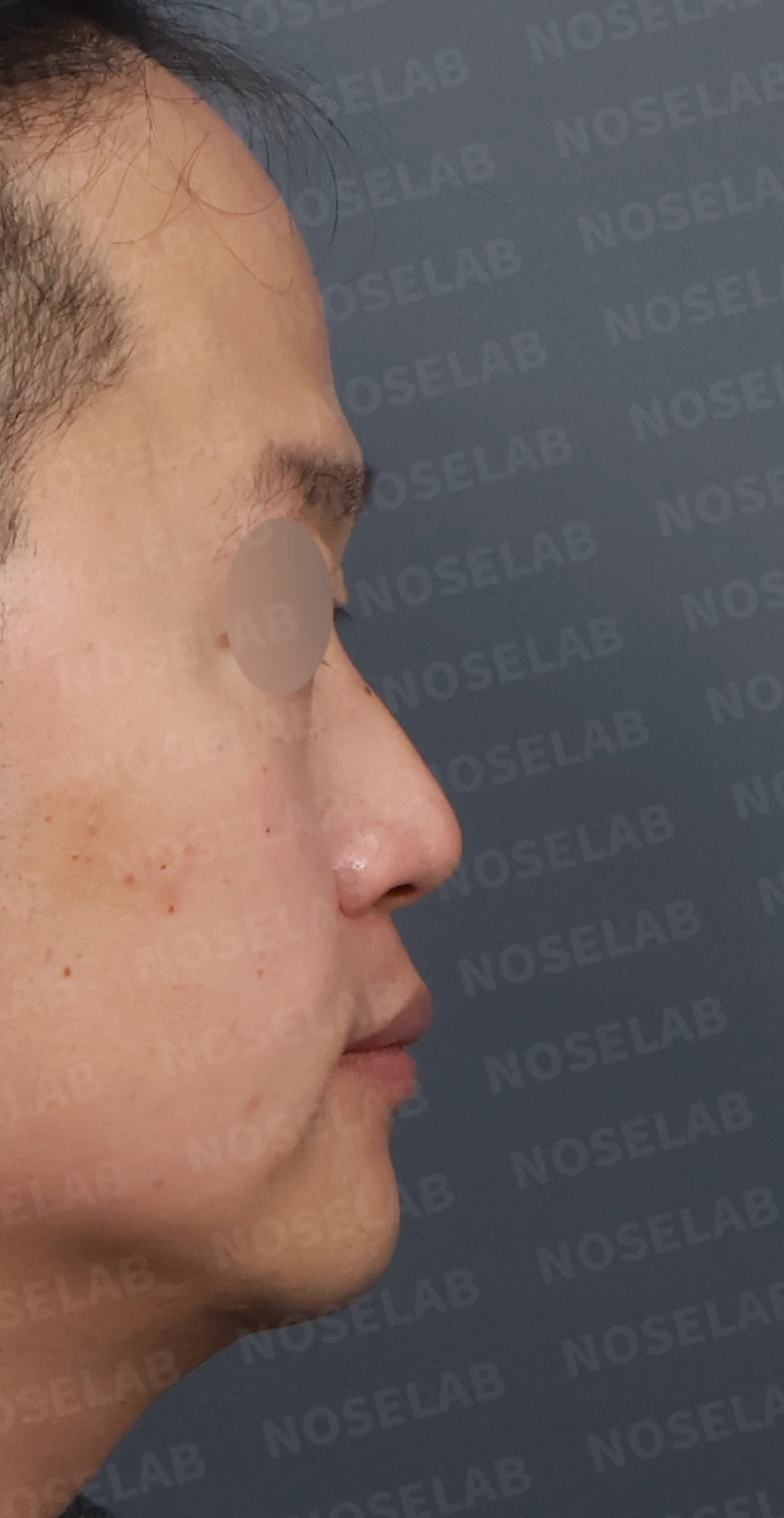
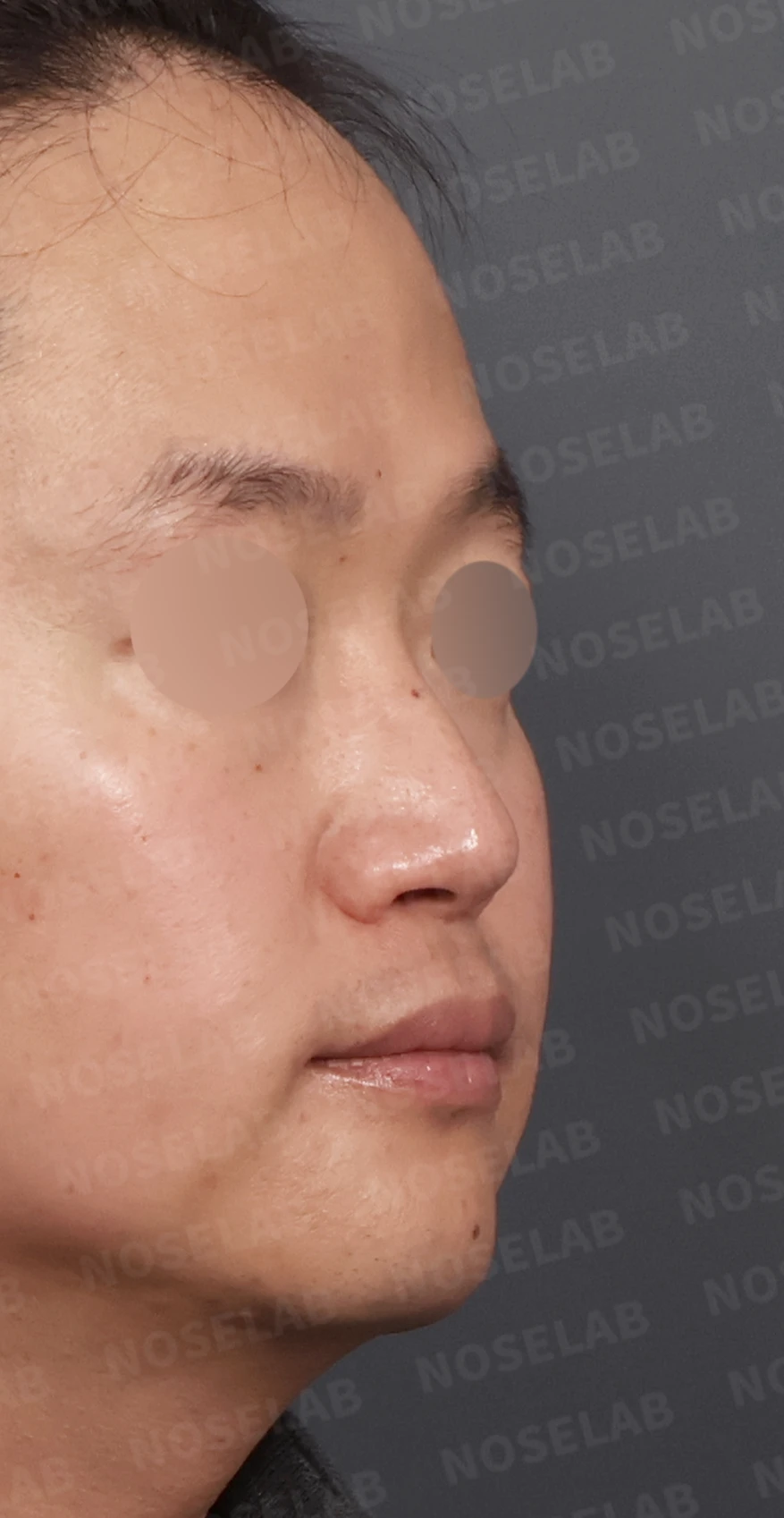
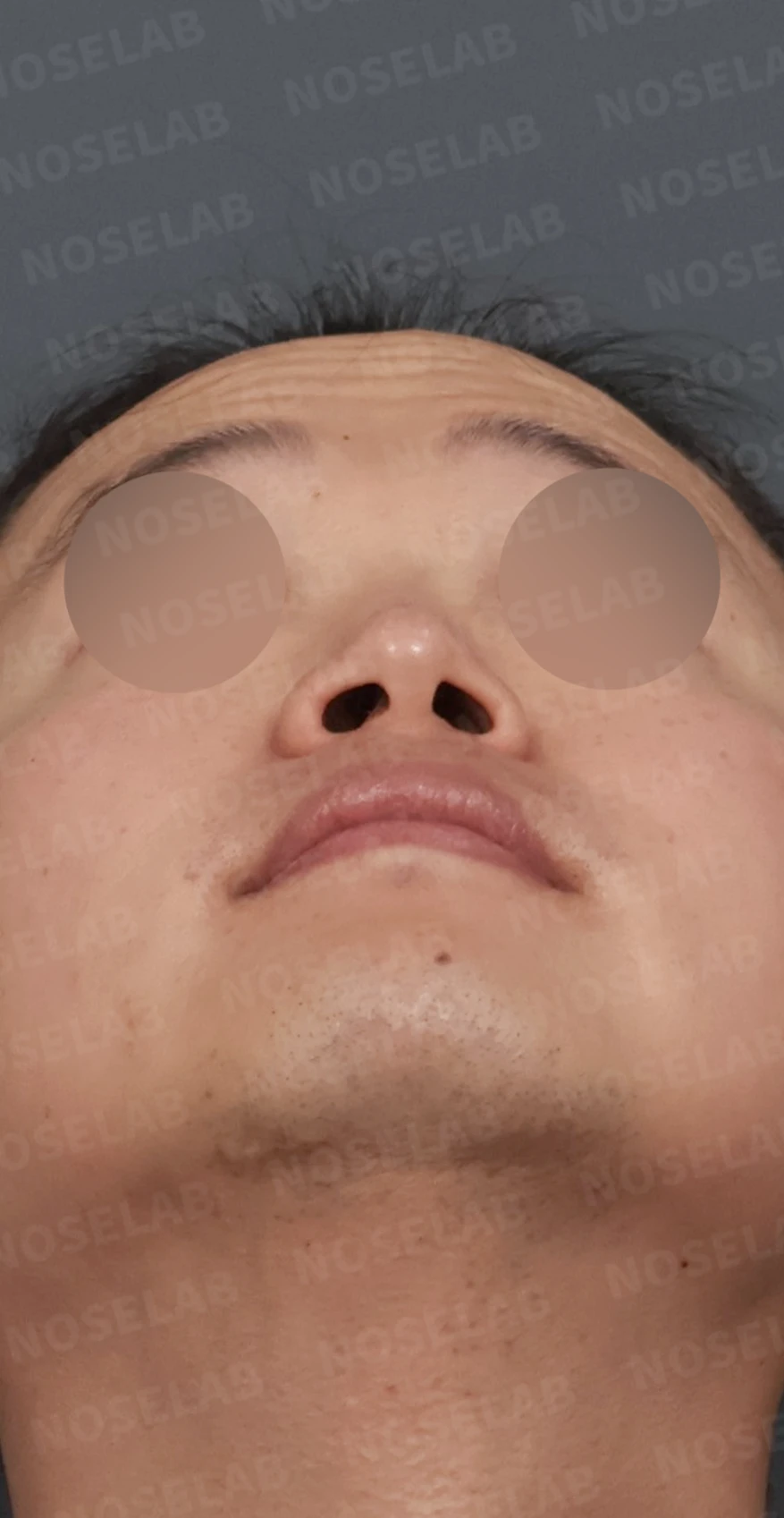
Right profile, oblique, and nostril views during design consultation.
🔧 Surgical plan and procedure
1. Septal reconstruction using autologous rib cartilage
Because the septum was deviated very severely to the left, autologous rib cartilage was harvested to reconstruct the septum straight. This was a structural approach designed to address the root cause of the nasal obstruction.
2. Septoplasty and inferior turbinate reduction
Straightening the deviated septum opened the nasal passages, and reducing the hypertrophied inferior turbinates improved airflow.
3. Correction of right alar depression
A dermal graft was placed to naturally fill the depressed area, improving external asymmetry.
4. Correction of nasolabial angle
The profile silhouette was naturally refined to improve facial harmony while keeping structural shape changes minimal, creating a refined line.
🌟 Surgical results
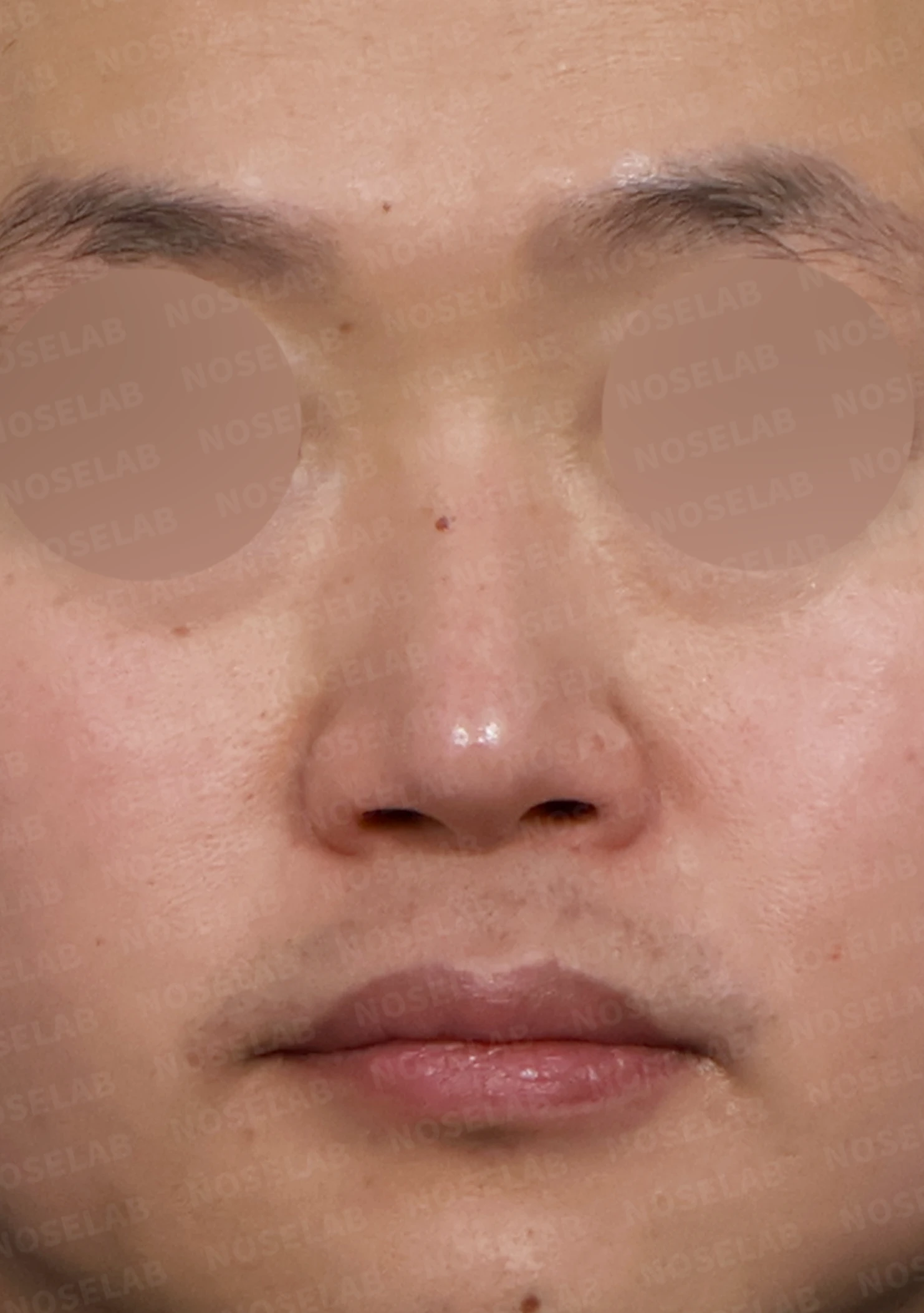
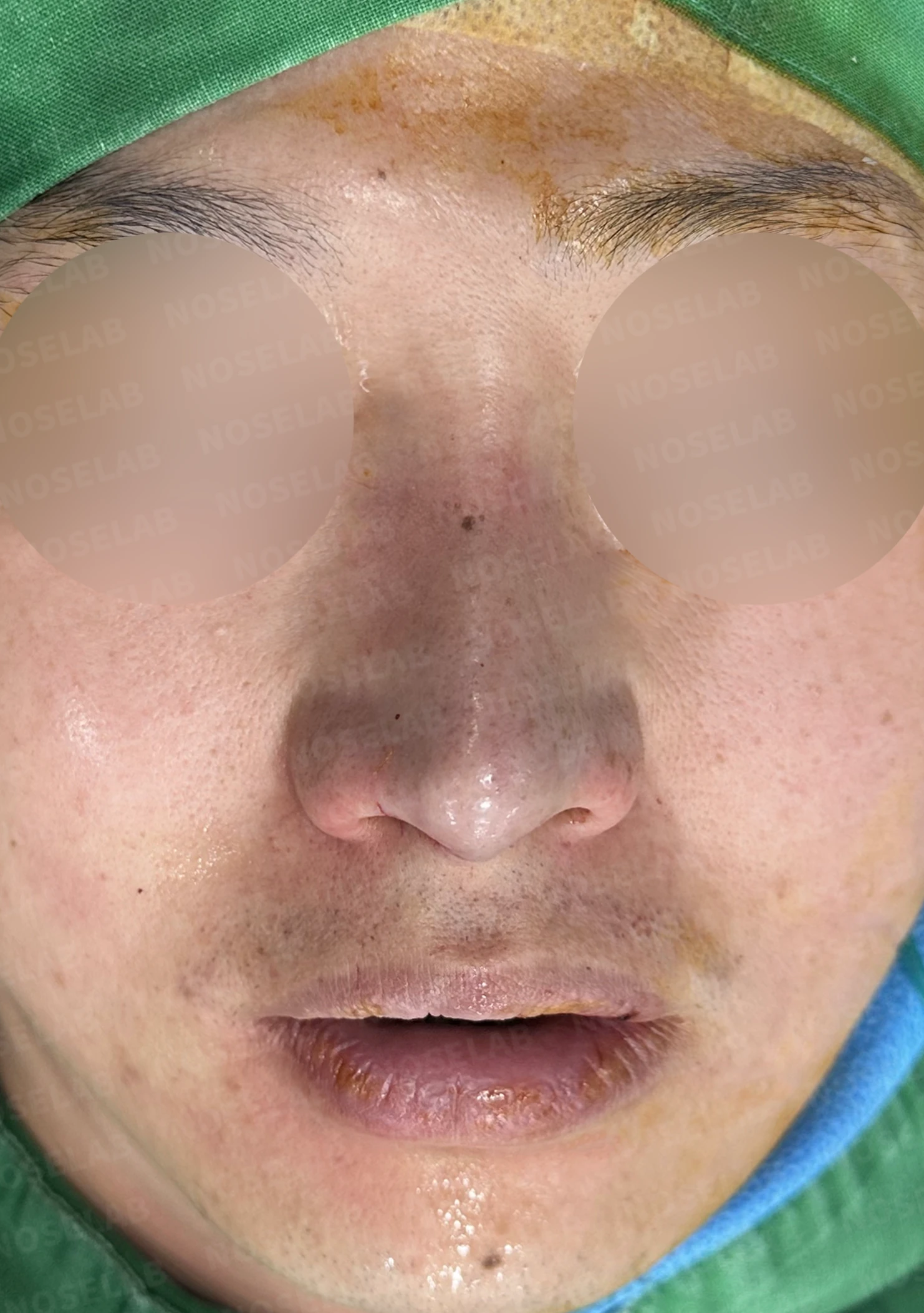
Before surgery / Day 0 immediately after surgery Photos taken immediately after surgery show swelling and may differ from the final result.
Front view changes:
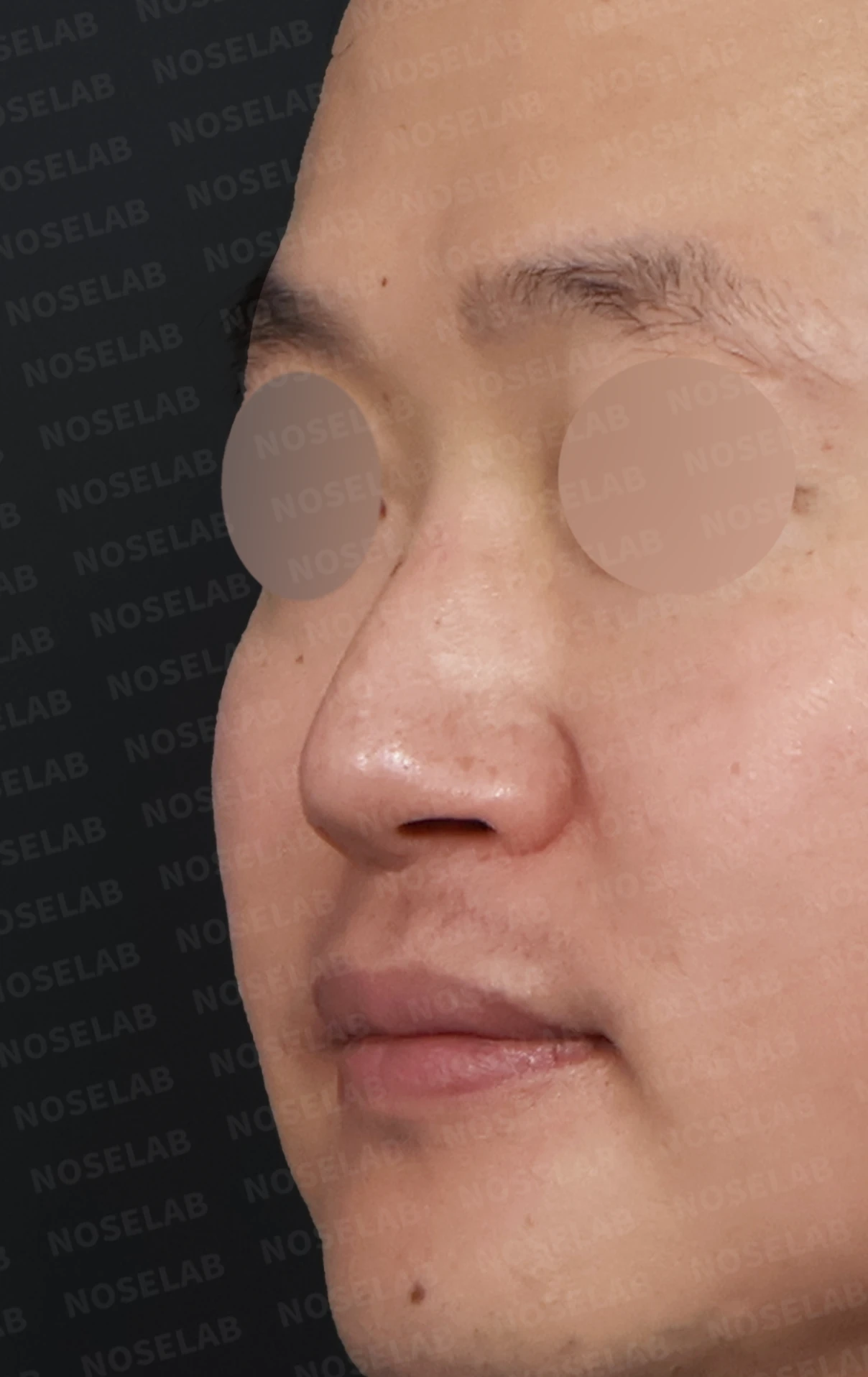
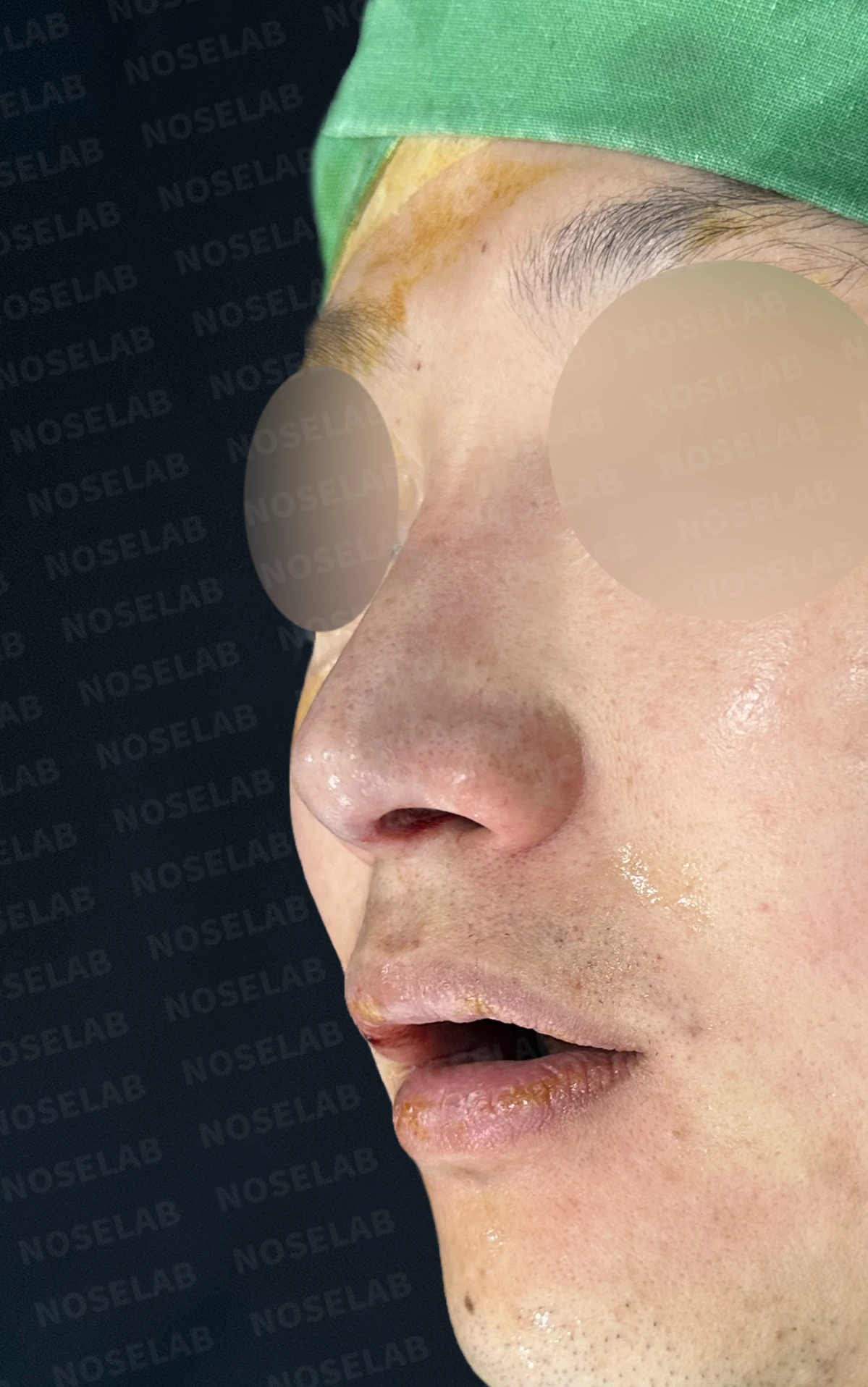
Correcting the alar asymmetry established a well-balanced nasal contour while preserving a natural nasal line.
Before surgery / Day 0 immediately after surgery Photos taken immediately after surgery show swelling and may differ from the final result.
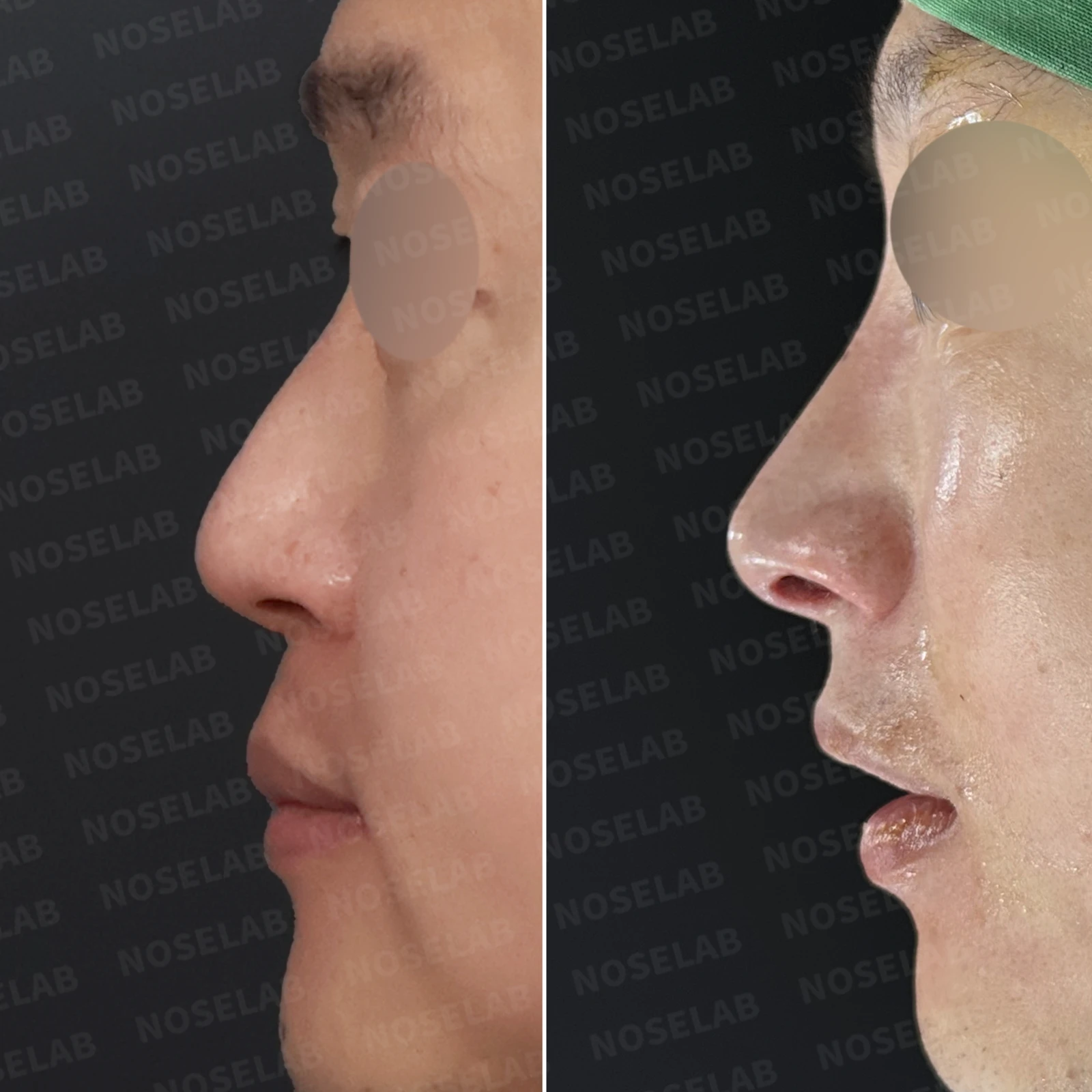
Profile view changes:
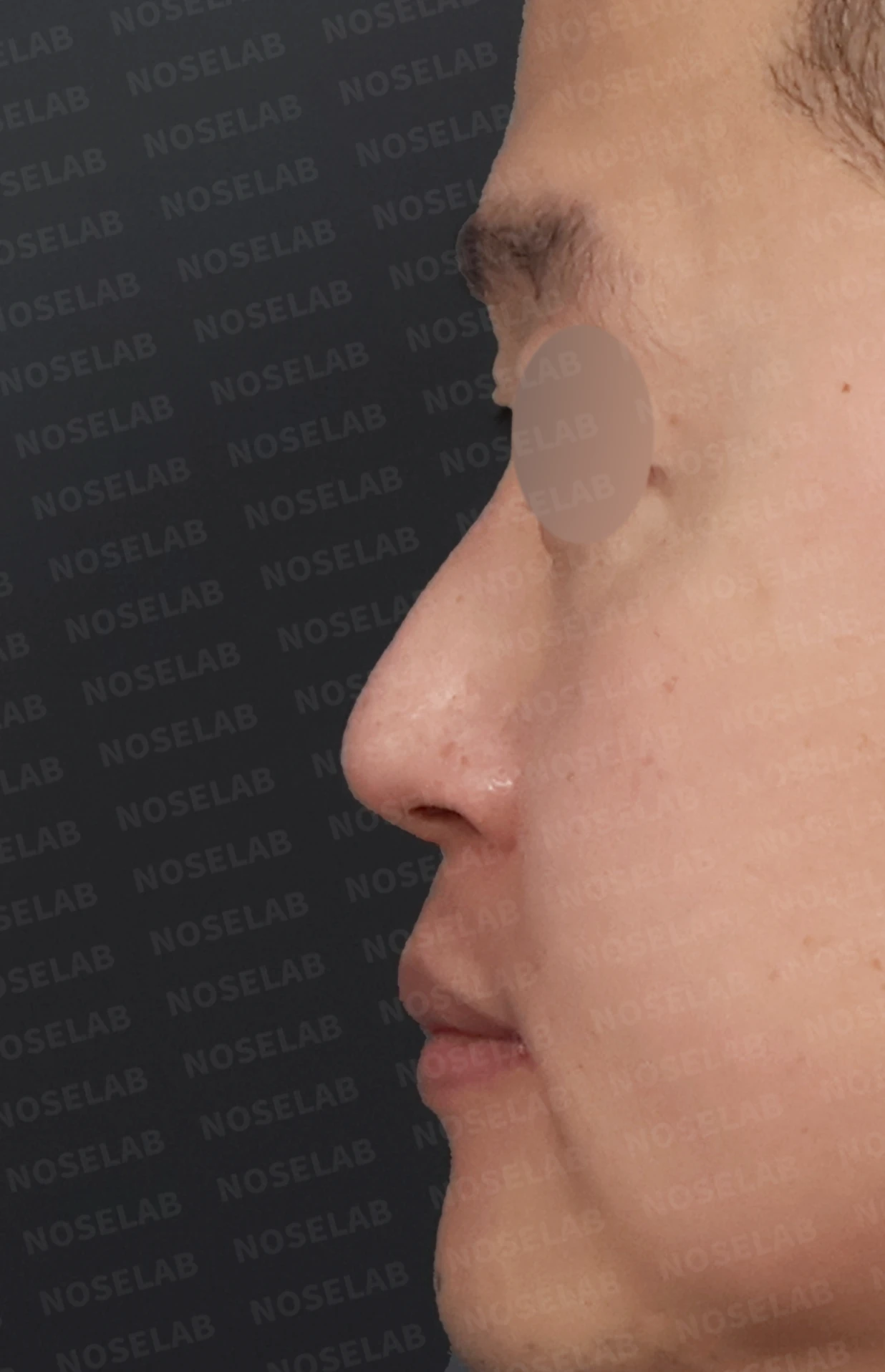
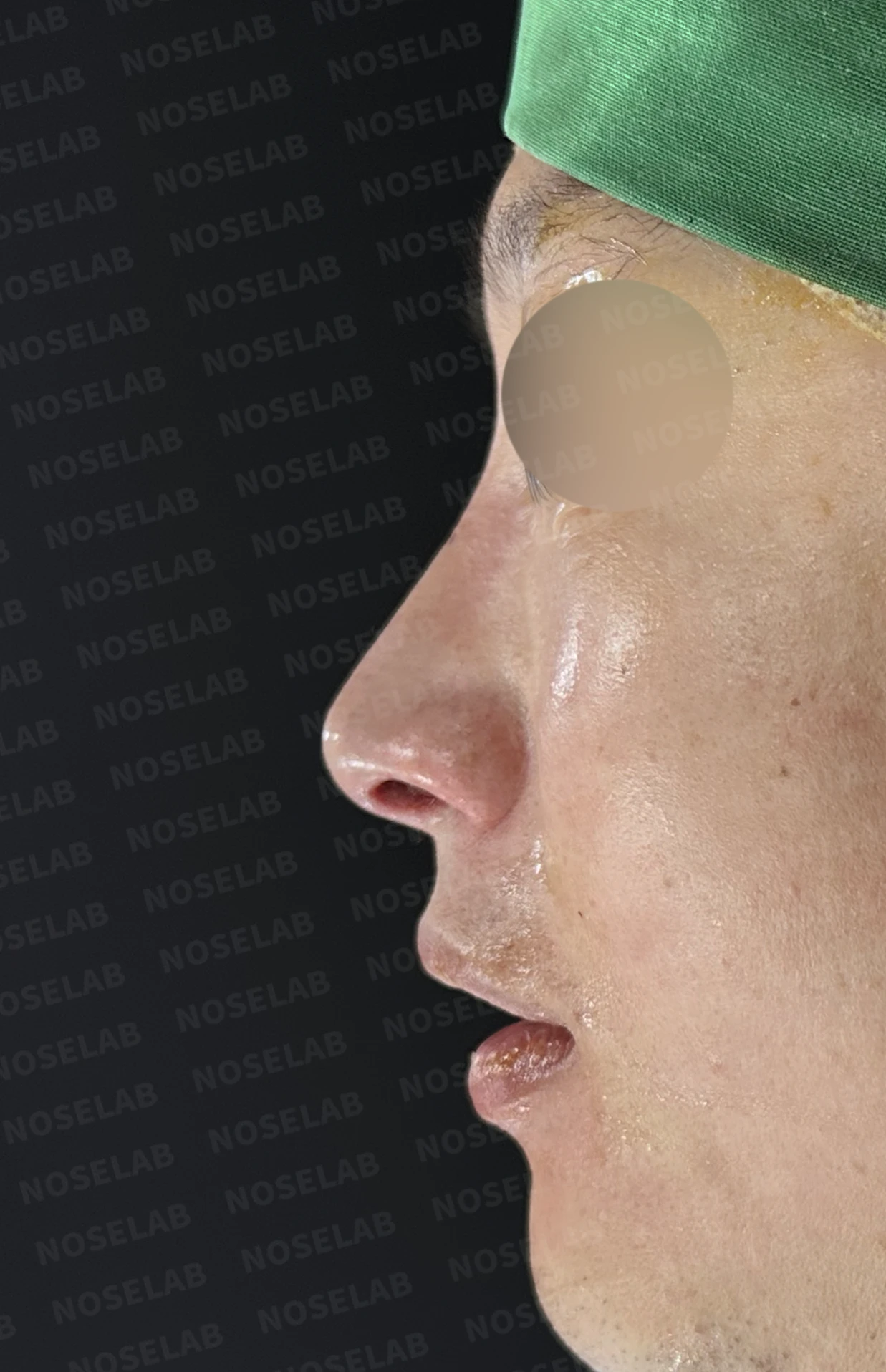
Adjusting the nasolabial angle completed a refined profile line, achieving a natural change that was not overdone.
Before surgery / Day 0 immediately after surgery Photos taken immediately after surgery show swelling and may differ from the final result.
Functional improvement:
Straightening the septum that had been severely deviated to the left resolved the nasal obstruction, and opening both nasal passages allowed smooth, comfortable breathing.
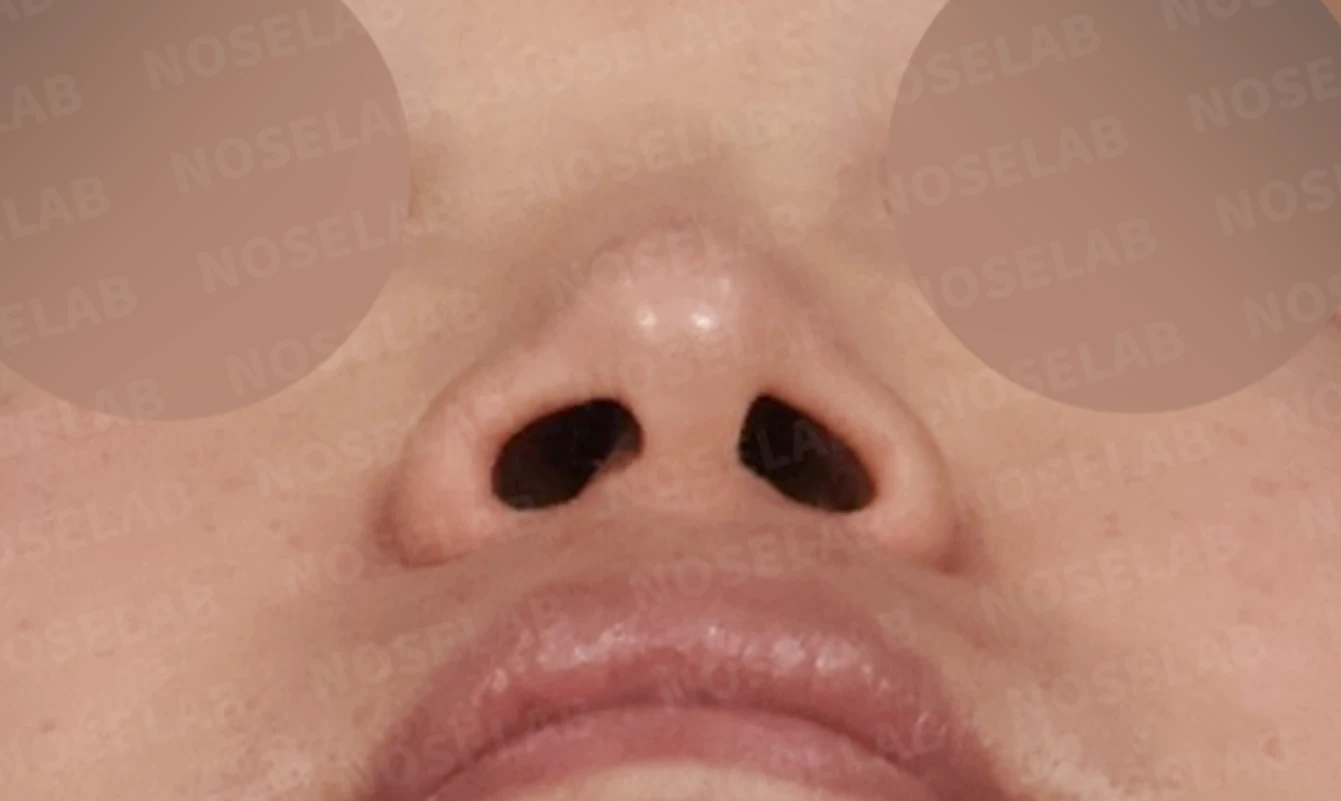
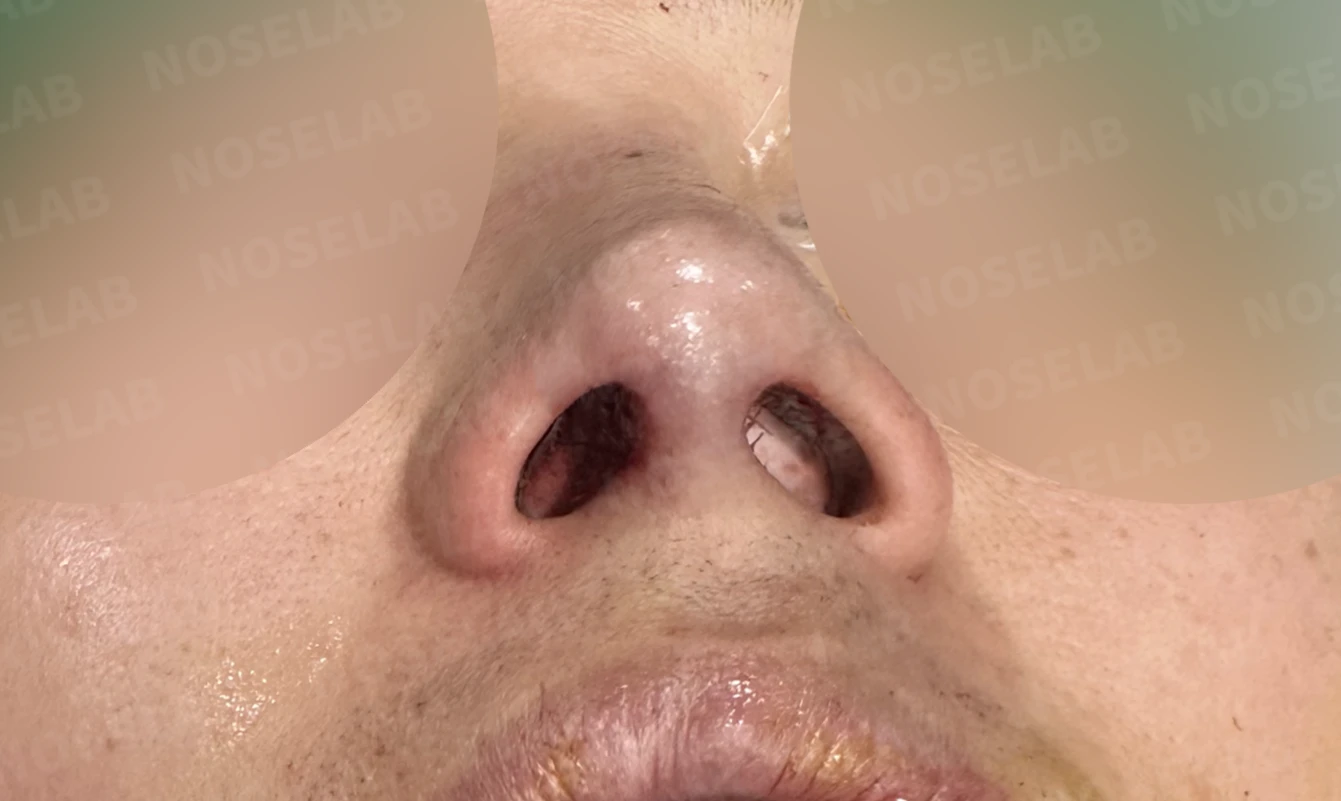
Before surgery / Day 0 immediately after surgery Photos taken immediately after surgery show swelling and may differ from the final result.
💡 Specialist opinion
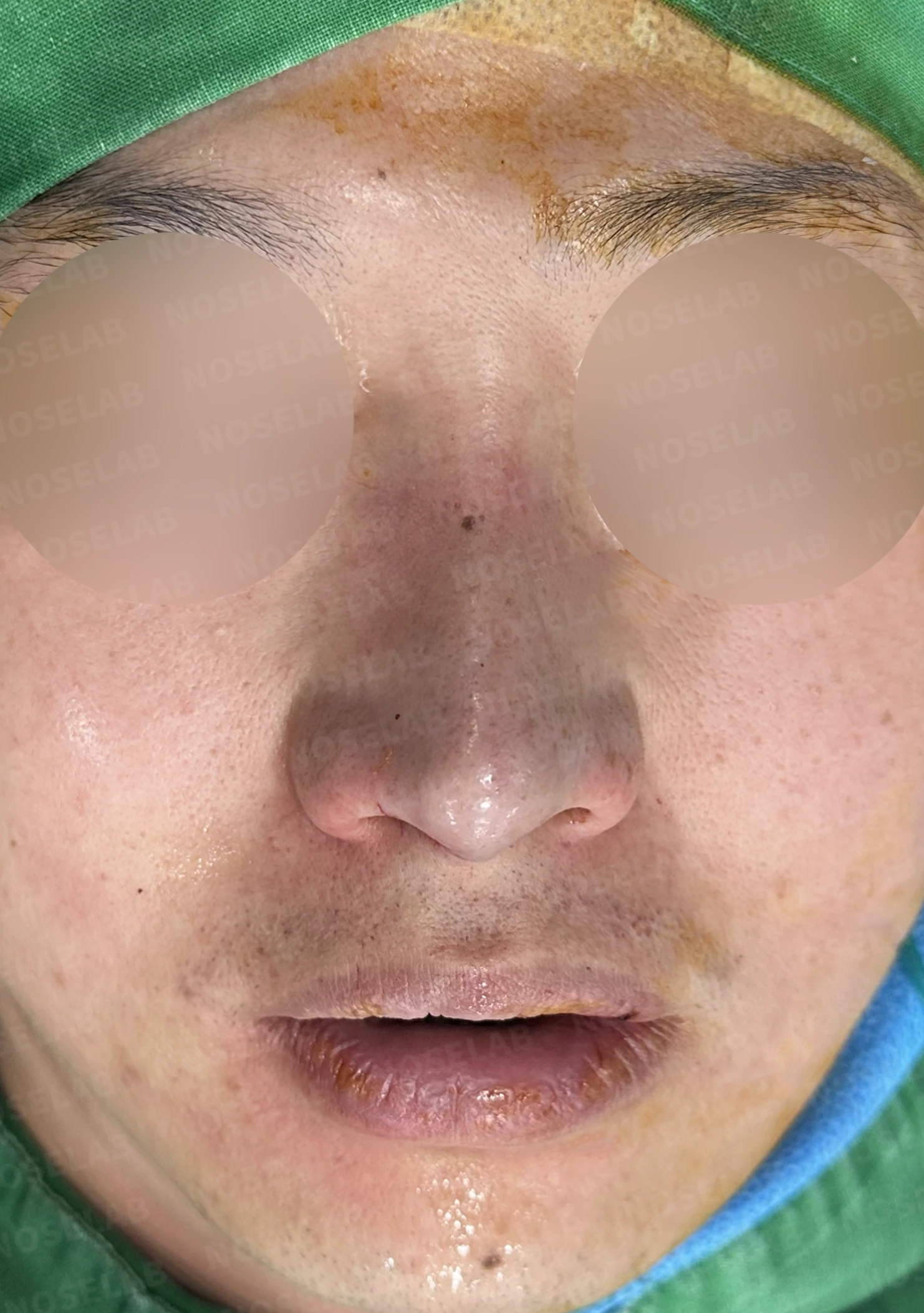
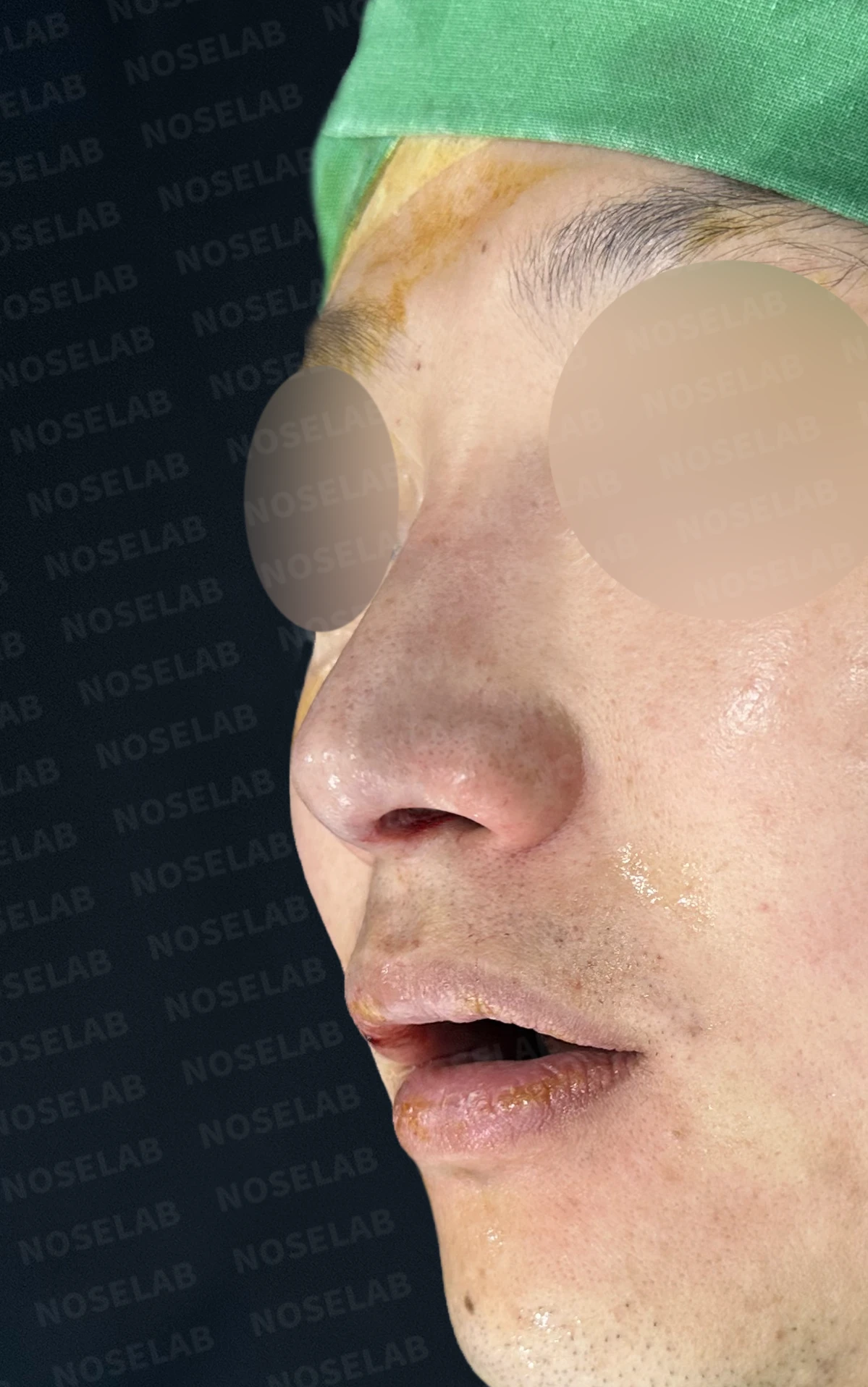
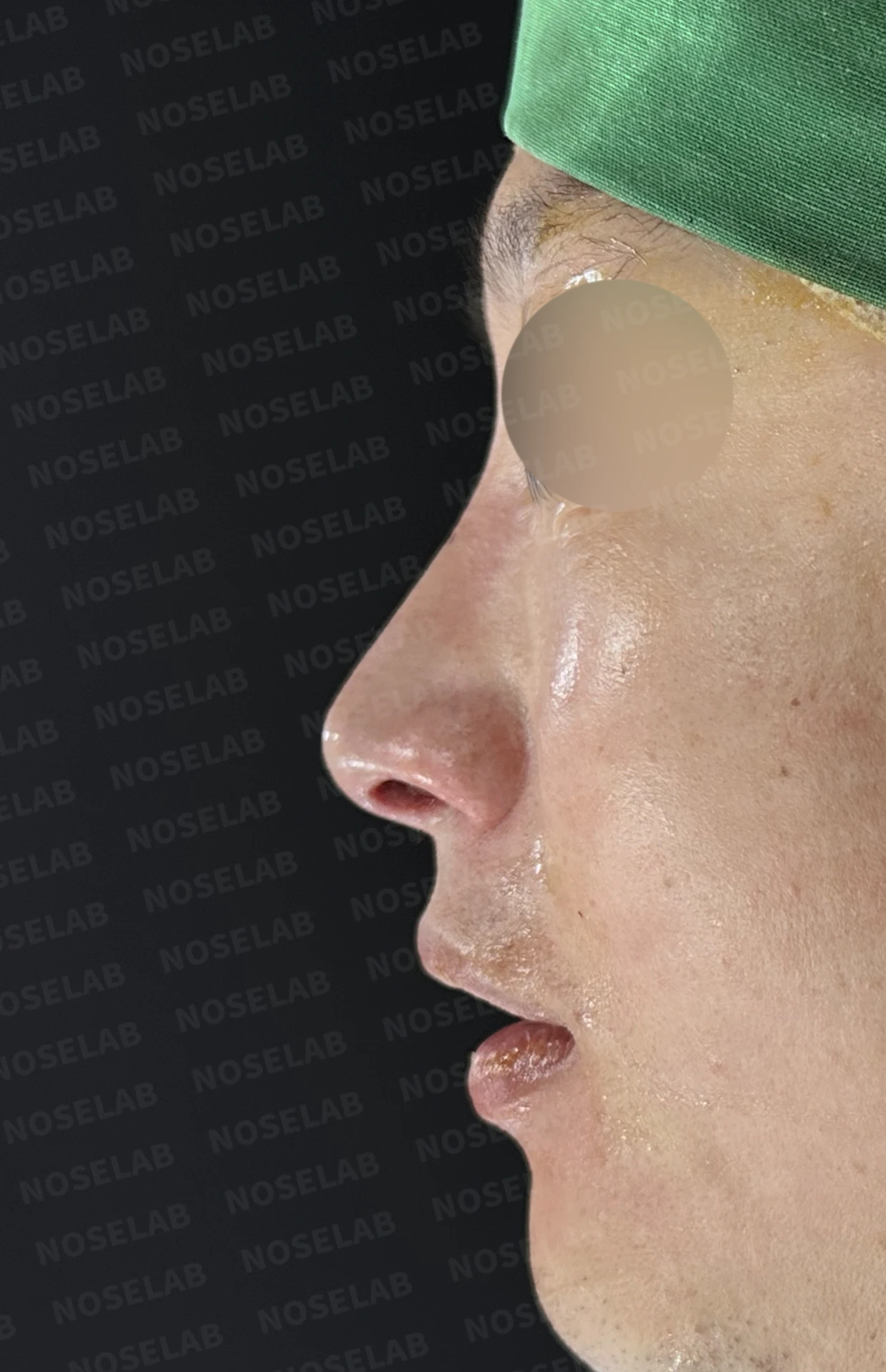
Front, oblique, and profile views on day 0 immediately after surgery. Photos taken immediately after surgery show swelling and may differ from the final result.
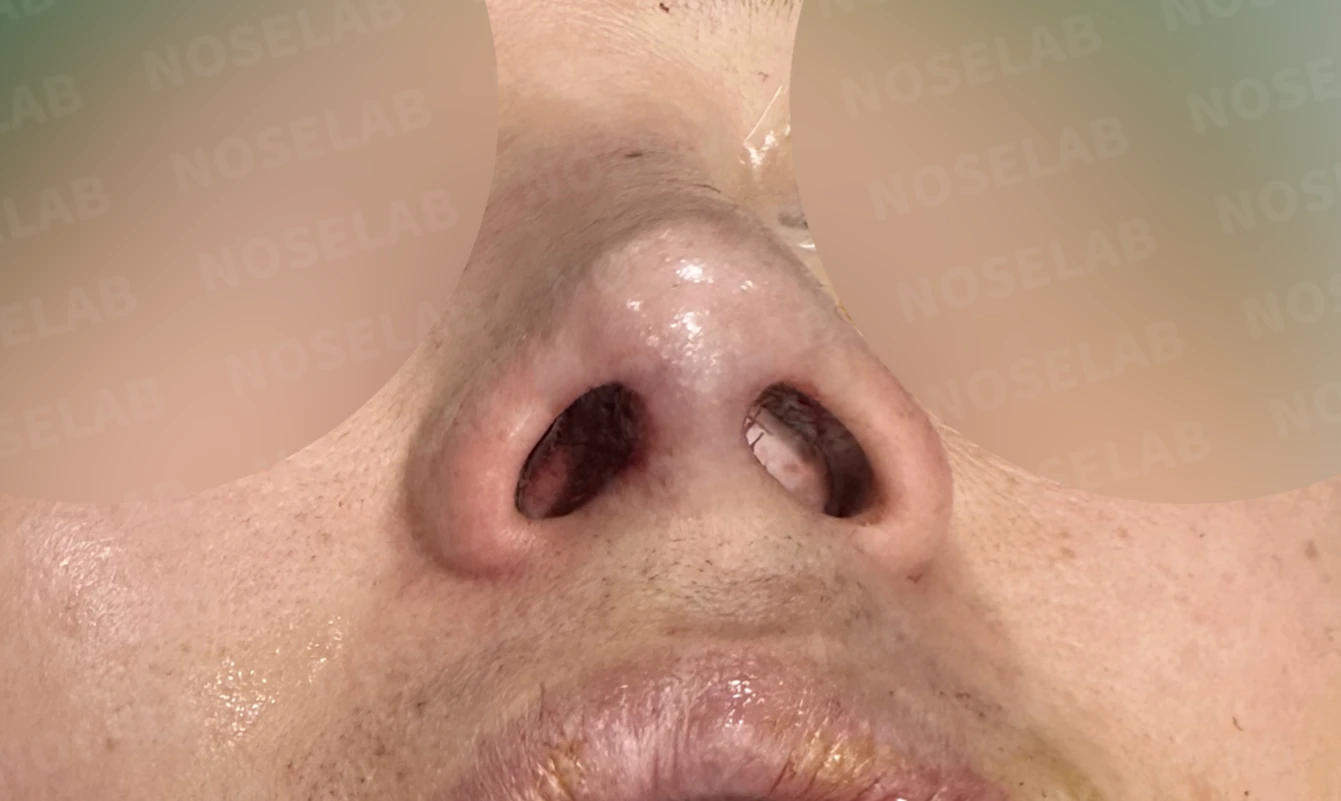
Nostril view on day 0 immediately after surgery. Photos taken immediately after surgery show swelling and may differ from the final result.
Nasal obstruction goes beyond simple discomfort, significantly affecting sleep quality and daily life. In cases like this where the septum is severely deviated, correction using only the remaining septal cartilage is difficult, making reconstruction with autologous rib cartilage necessary.
Autologous rib cartilage provides sufficient volume and structural strength, offering the advantage of reliably correcting even severe deviations. In addition, dermis was grafted into the depressed alar area to restore natural volume.
The key focus of this surgery was to prioritize functional improvement while keeping cosmetic changes subtle. In accordance with the patient's requests, we concentrated on creating a nose that was not overdone and remained harmonious with the face.
This was Dr. Peter C. Kang. Thank you.
#nasalobstructionsurgery #deviatedseptum #septalreconstruction #autologousribrhinoplasty #turbinatereduction #nasolabialanglecorrection #functionalrhinoplasty #menrhinoplasty #closedrhinoplasty #closedrevisionrhinoplasty

Limitations and risks
When autologous rib cartilage is used, scarring and pain may remain at the donor site on the chest, and pneumothorax (pleural injury) can occur rarely. Over time, the grafted cartilage may warp or undergo partial resorption.
When the septum is corrected at the same time, nasal obstruction may persist or recur, and in rare cases, septal perforation or changes in smell may occur.
Common potential risks include infection, bleeding, asymmetry, scarring, skin necrosis, and insufficient improvement; results vary depending on individual skin condition and previous surgical history.