Hello, I am Dr. Peter C. Kang.
Today, I would like to share a case of a patient whose septal cartilage had been mostly removed during previous surgeries, making it difficult to elevate the nasal tip.
🔍 Surgical history
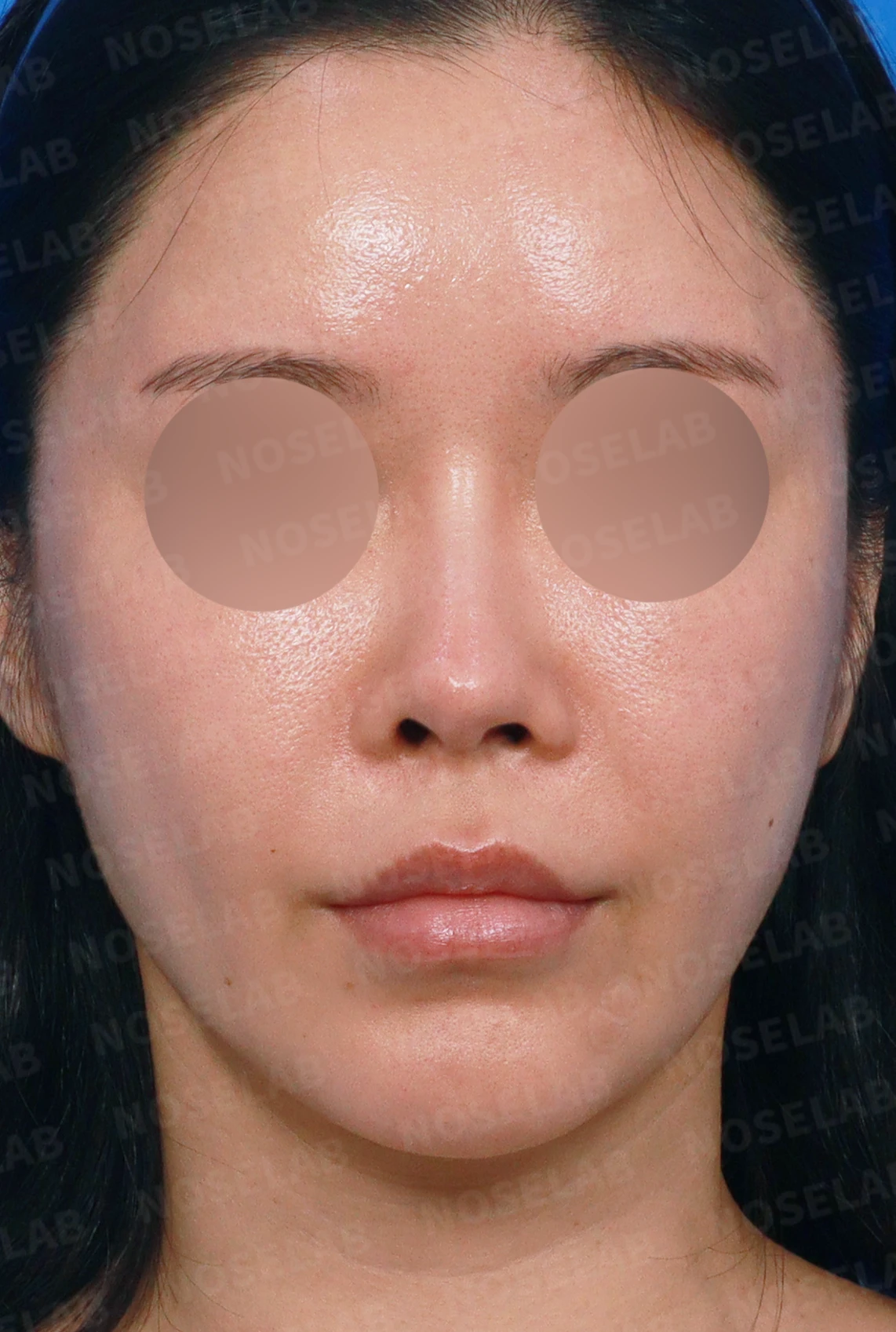
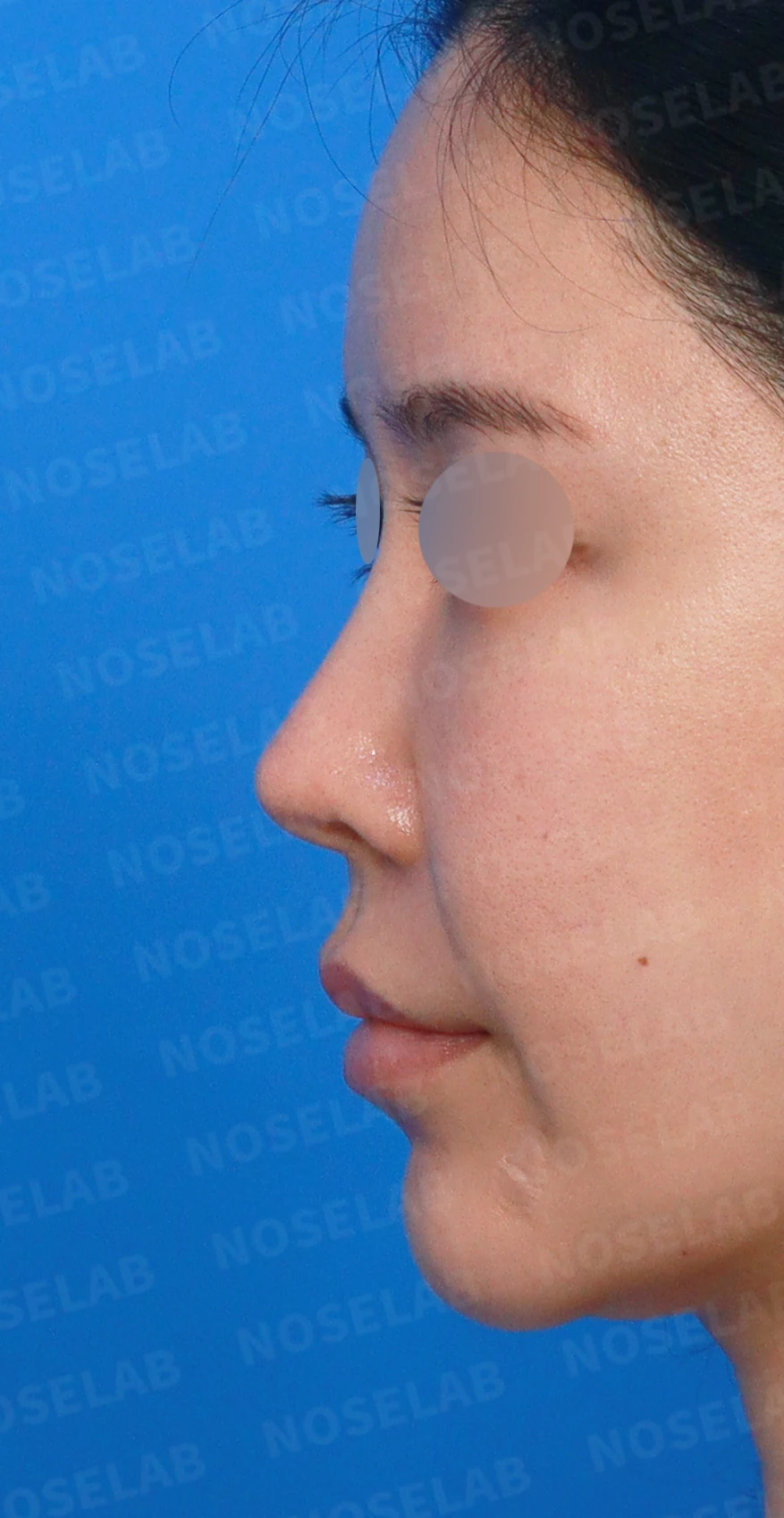
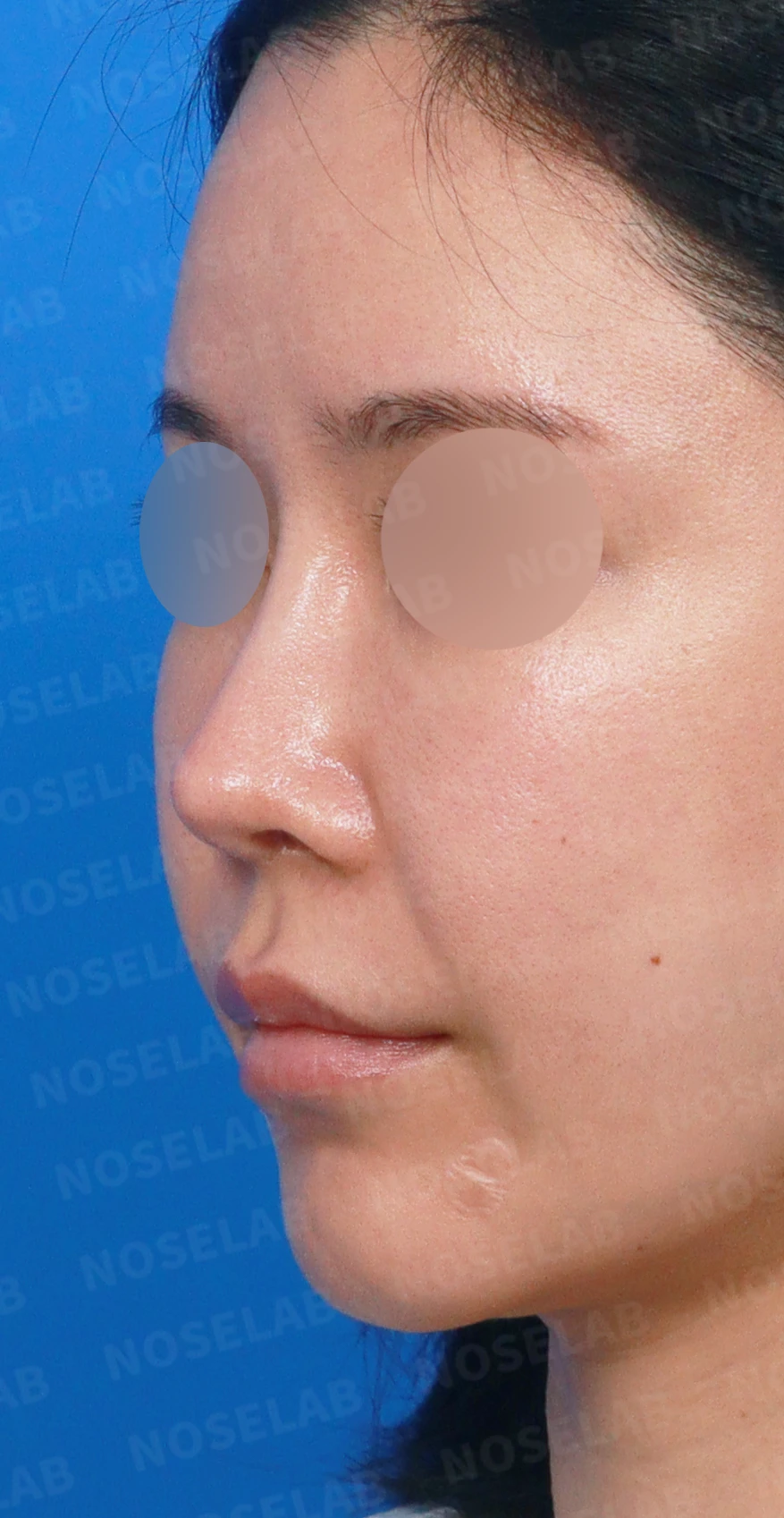
Front, left profile, and oblique views during design consultation.
Past history:
10 years ago: Autologous rib cartilage + silicone implant + ear cartilage
3 years ago: Revision rhinoplasty (autologous rib cartilage + silicone implant)
Main concerns:
Central support framework largely depleted from previous procedures
Difficulty elevating the nasal tip due to a weakened central structure
Nostril asymmetry and a crooked external appearance
Nasal obstruction caused by a deviated septum and rhinitis
Special notes:
Scarcity of usable native material for revision, necessitating structural reconstruction
💉 Patient requests
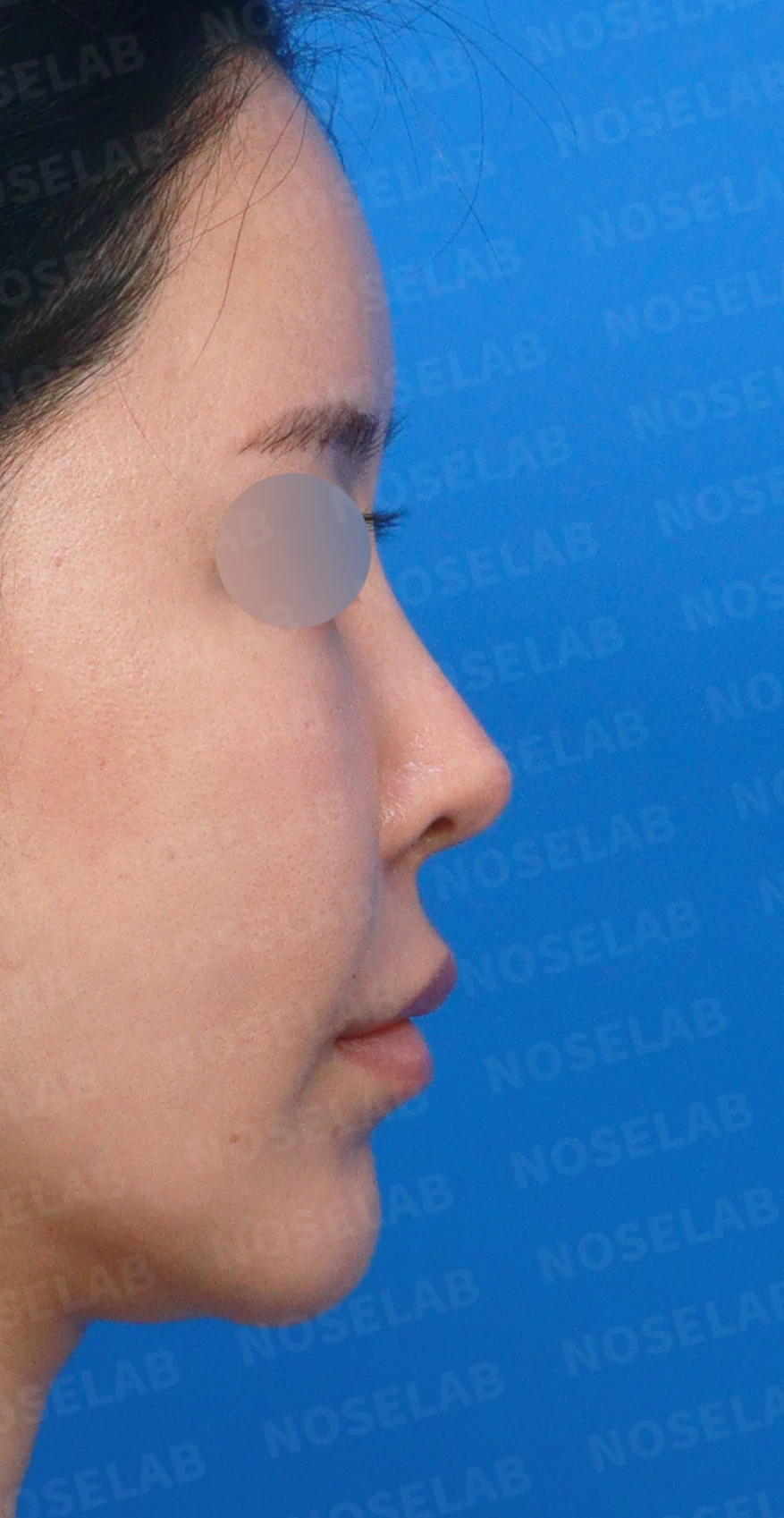
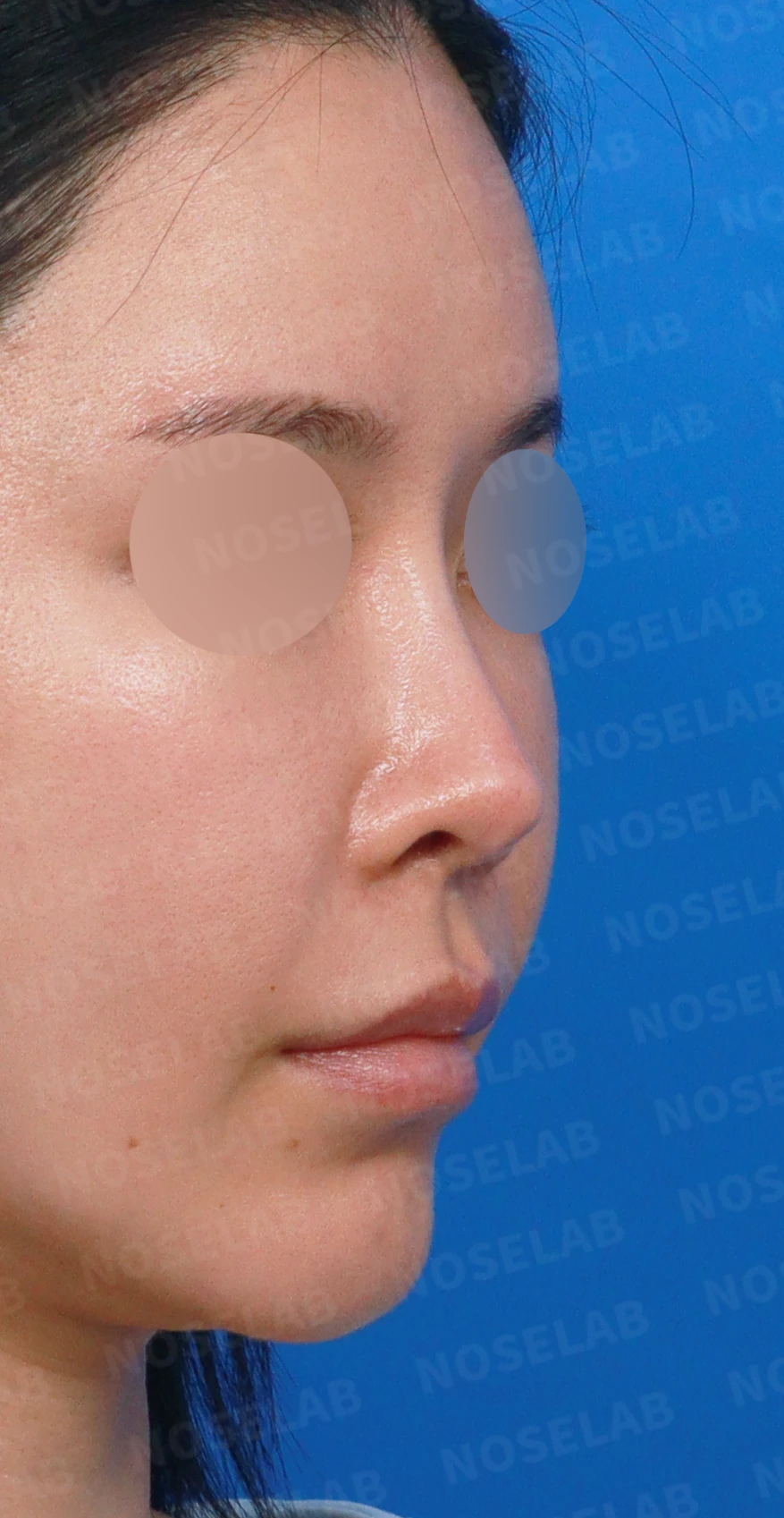
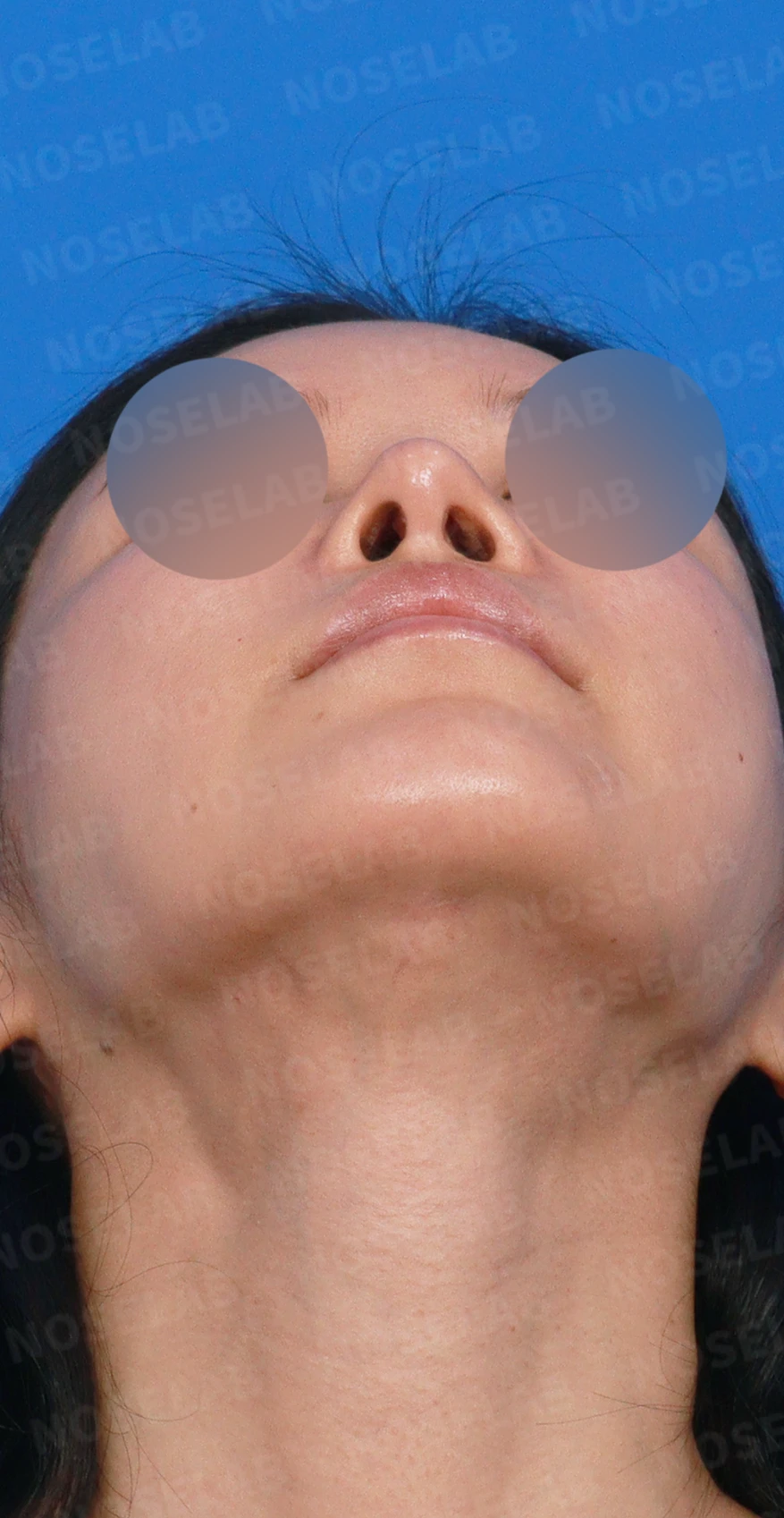
Right profile, oblique, and nostril views during design consultation.
Firmly reconstruct the central support
Elevate the nasal tip securely
Naturally improve nostril asymmetry
Create a smooth, non-pinched nasal tip
Functional improvement: resolve rhinitis and nasal obstruction
🔧 Surgical plan and procedure
1. Complete reconstruction of the central support using autologous rib cartilage
Because previous operations had removed most of the central framework, the support was severely compromised. In such circumstances, merely trying to raise the nose without sufficient structural strength fails to yield the desired height and risks recurrence of drooping over time. Complete reconstruction using the patient's own rib cartilage provided ample structural strength. Because it does not resorb, it remains stable over the long term, serving as a dependable foundation to elevate the tip.
2. Nasal tip elevation
Using the newly reconstructed foundation, the nasal tip was elevated. Once the weakened support was made sturdy, the tip could be safely raised to the desired height. Because this relies on structural reconstruction, the result is both natural and stable.
3. Correction of nostril asymmetry and creation of a soft nasal tip
When the central septum is deviated or the alar cartilage positions are unbalanced, the nostrils appear asymmetrical. By straightening the central framework and repositioning the alar cartilages, bilateral symmetry was restored. Cartilage and dermis were grafted around the nasal tip to create a gentle, rounded shape without a sharp, pinched look. In addition, the dermal graft prevented show-through under thin skin.
4. Relief of rhinitis and nasal obstruction
Correction of the septal deviation was performed concurrently with inferior turbinate reduction. As the obstructed airways opened, nasal breathing was promptly restored, improving sleep quality and day-to-day comfort.
🌟 Surgical results
Fully reconstructed the central support using rib cartilage to secure firm structural strength
Elevated the nasal tip securely on the reconstructed foundation
Naturally resolved nostril asymmetry
Completed a smooth contour using cartilage and dermal grafts
Restored nasal breathing through treatment of septal deviation and rhinitis
Achieved a well-balanced and natural overall impression
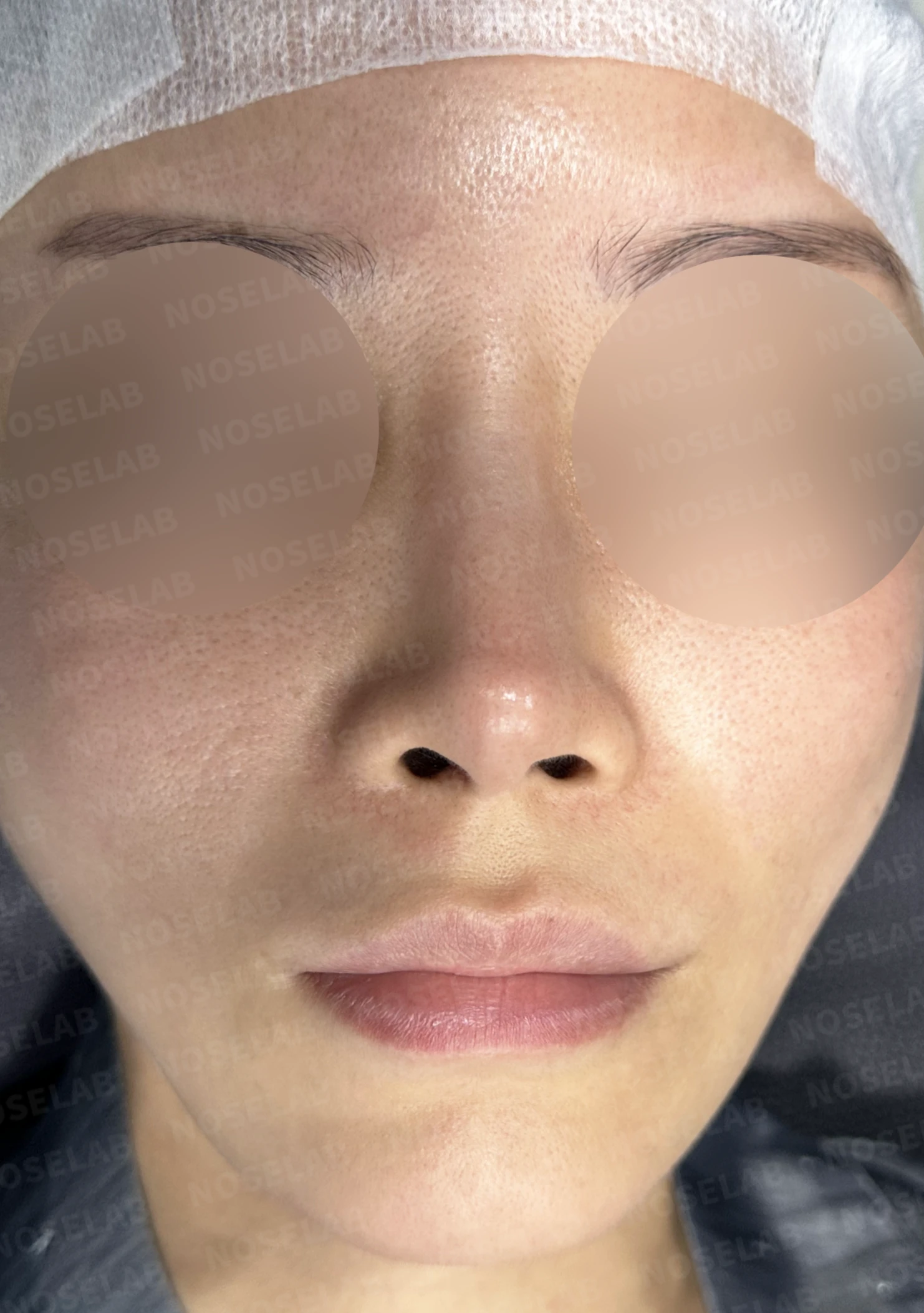
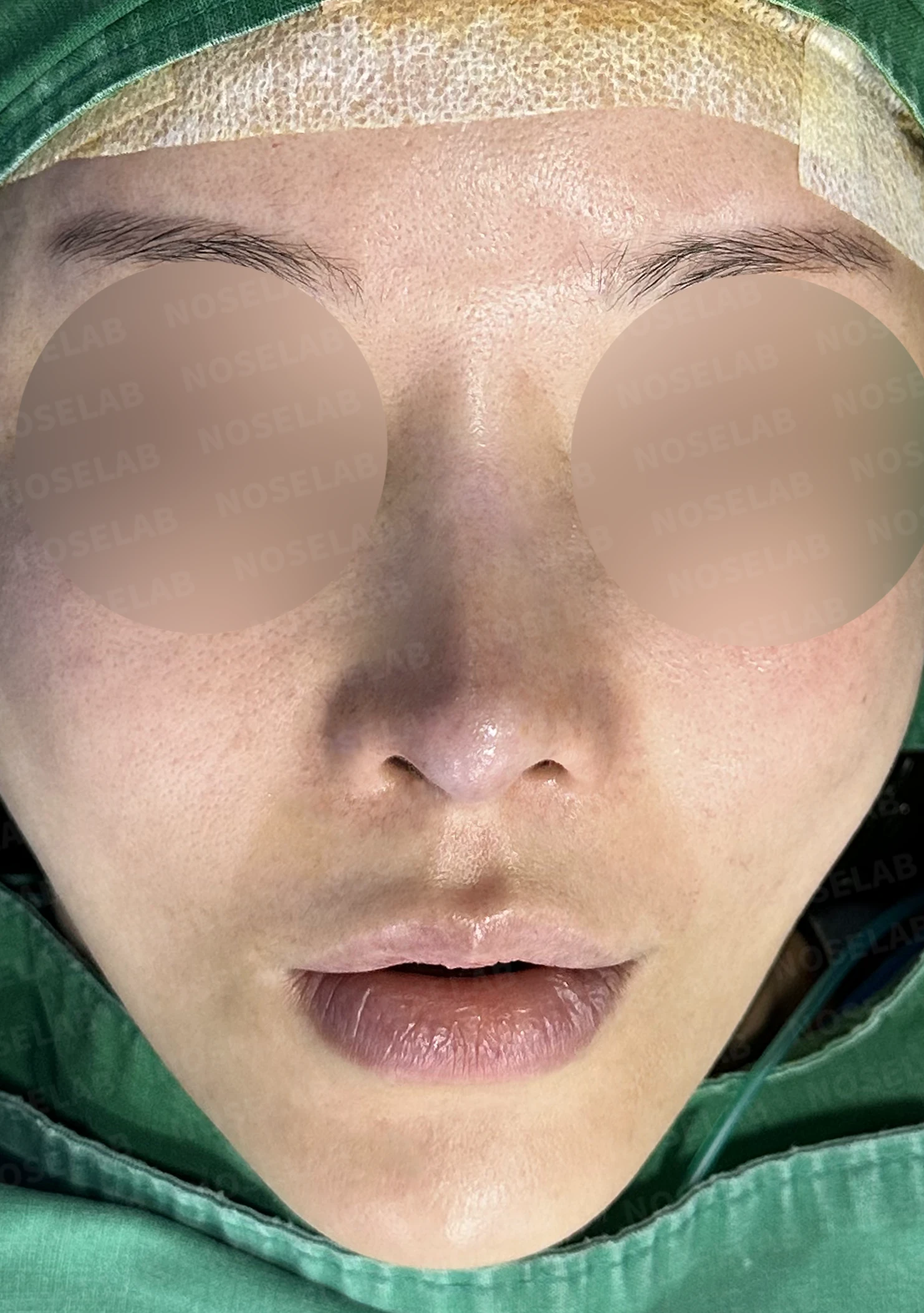
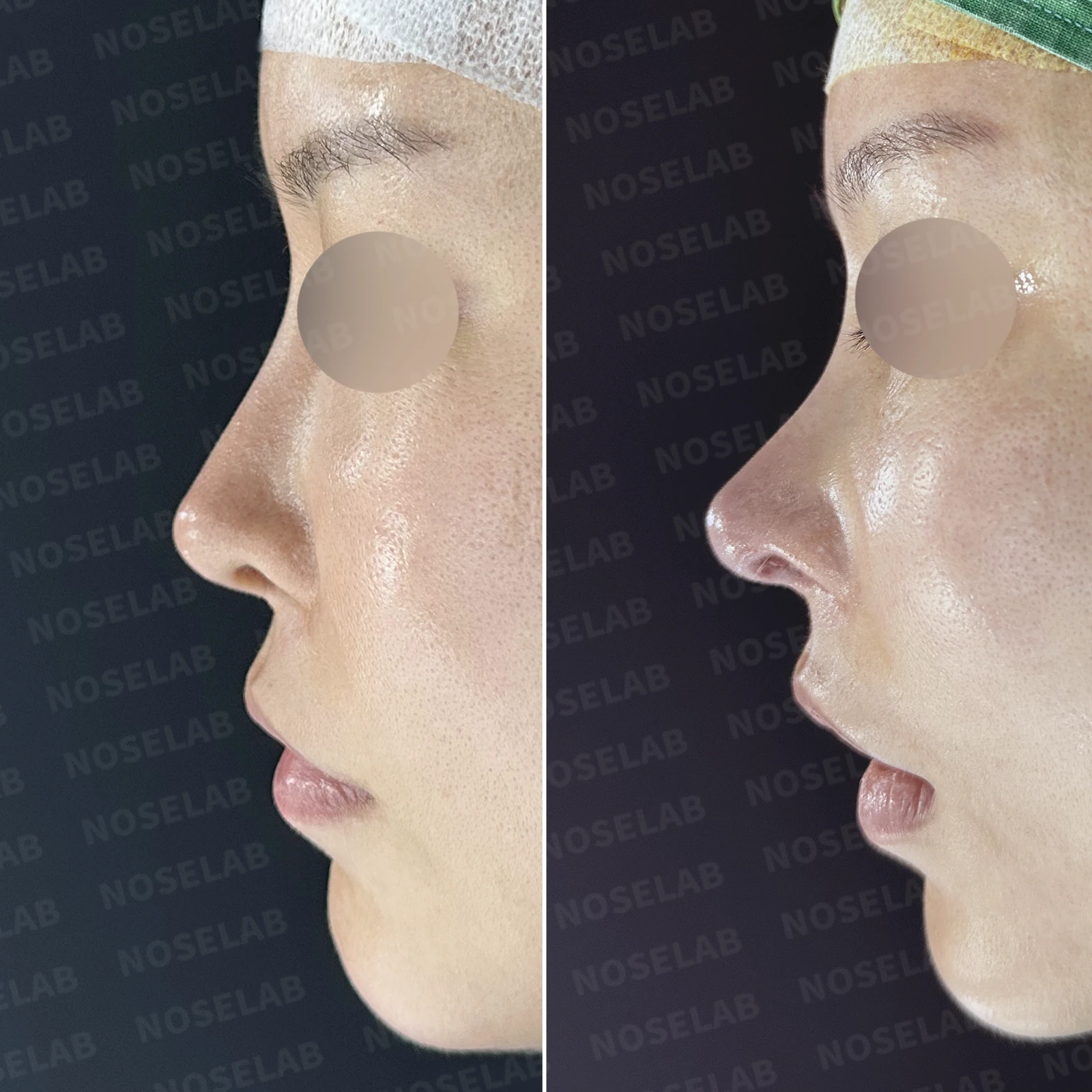
Before surgery / Day 0 immediately after surgery Photos taken immediately after surgery show swelling and may differ from the final result.
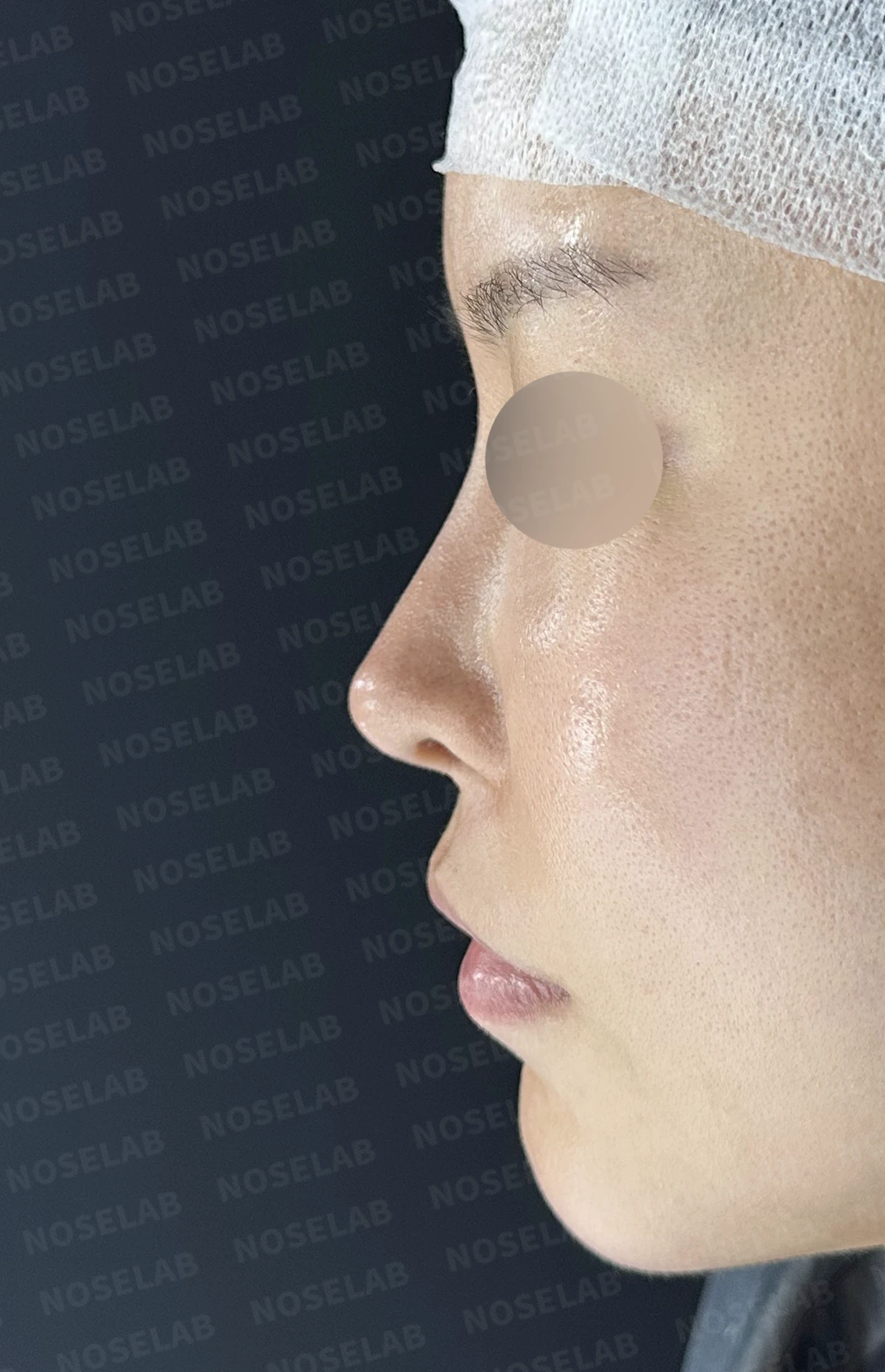
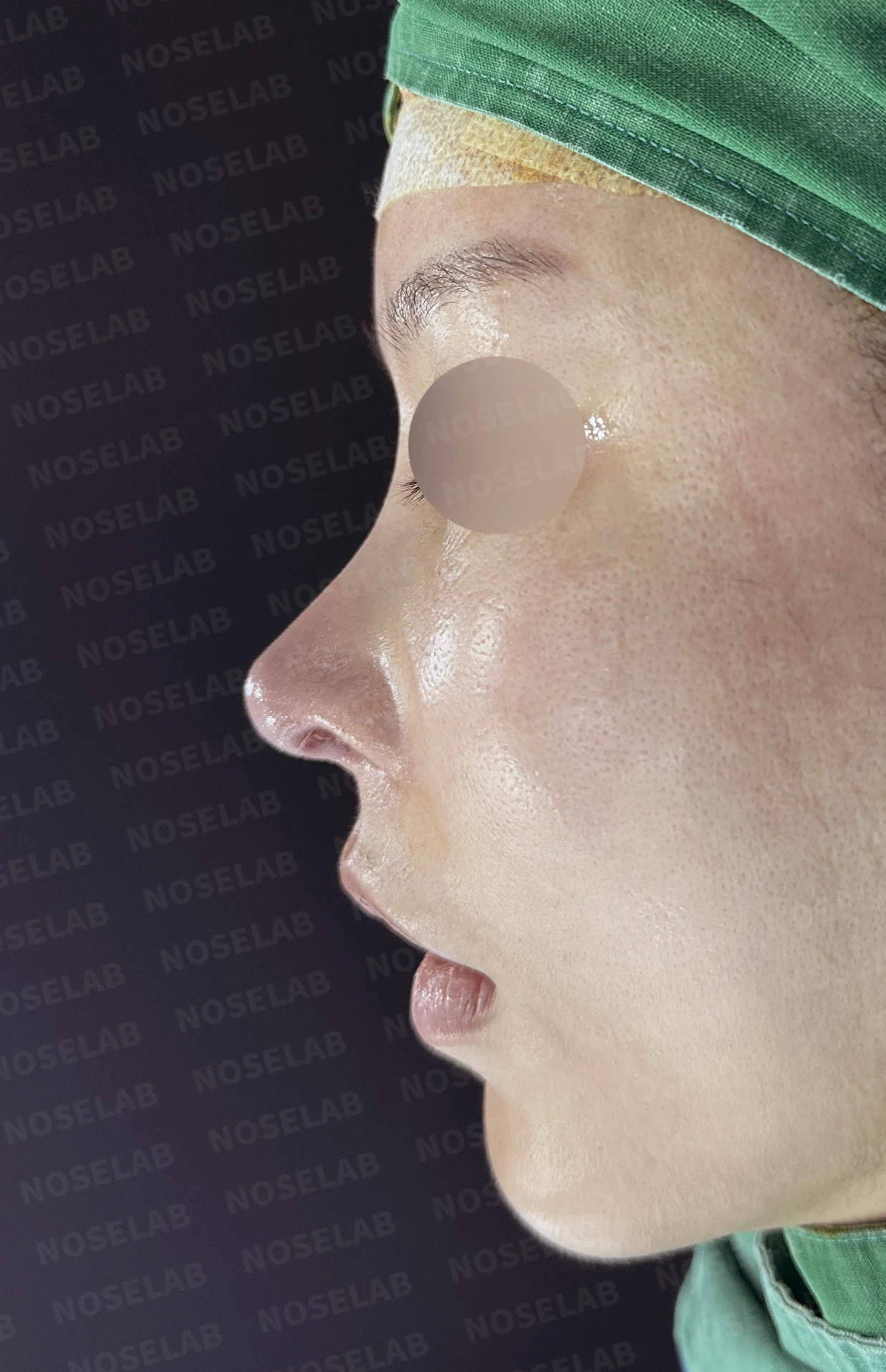
Before surgery / Day 0 immediately after surgery Photos taken immediately after surgery show swelling and may differ from the final result.
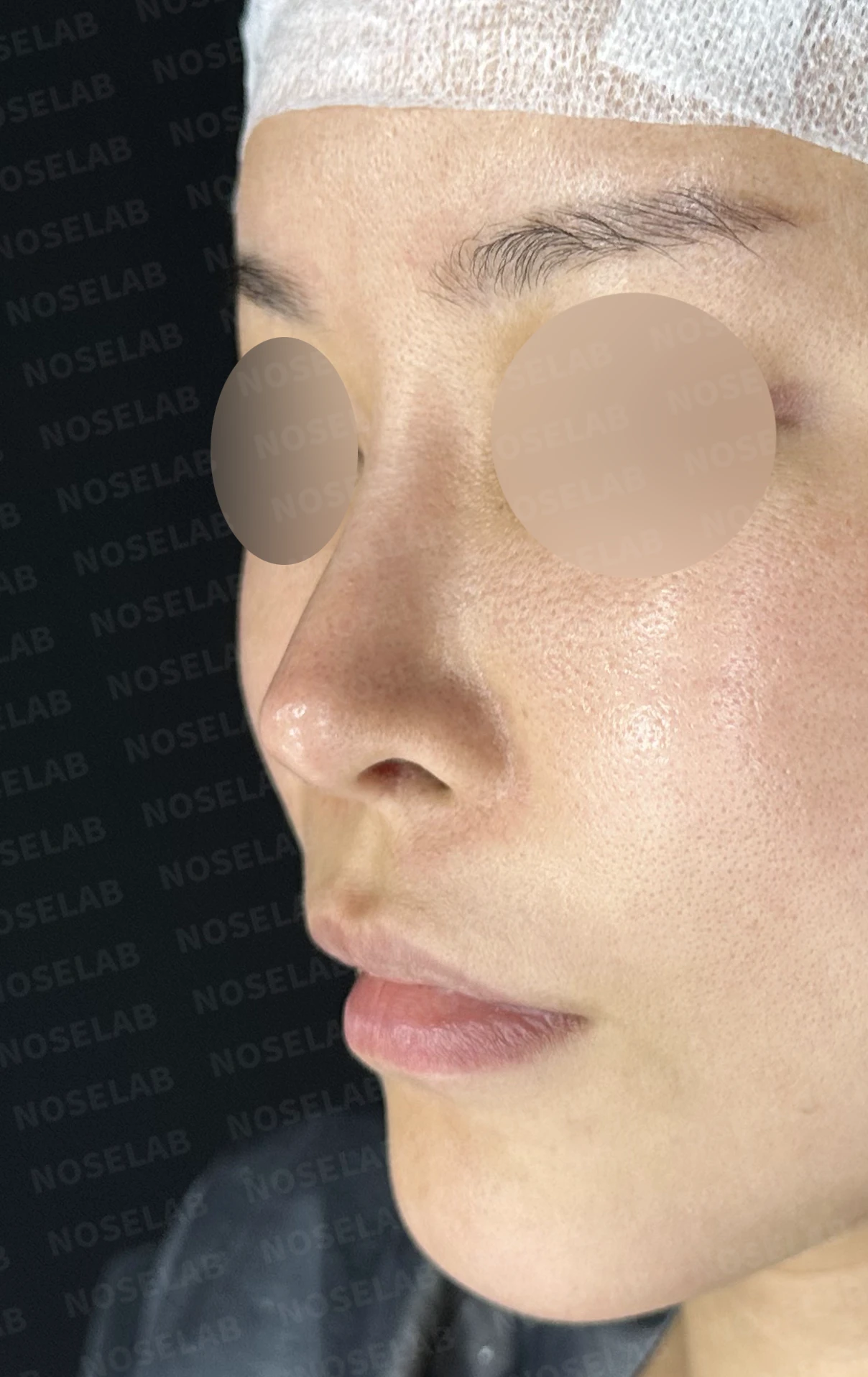
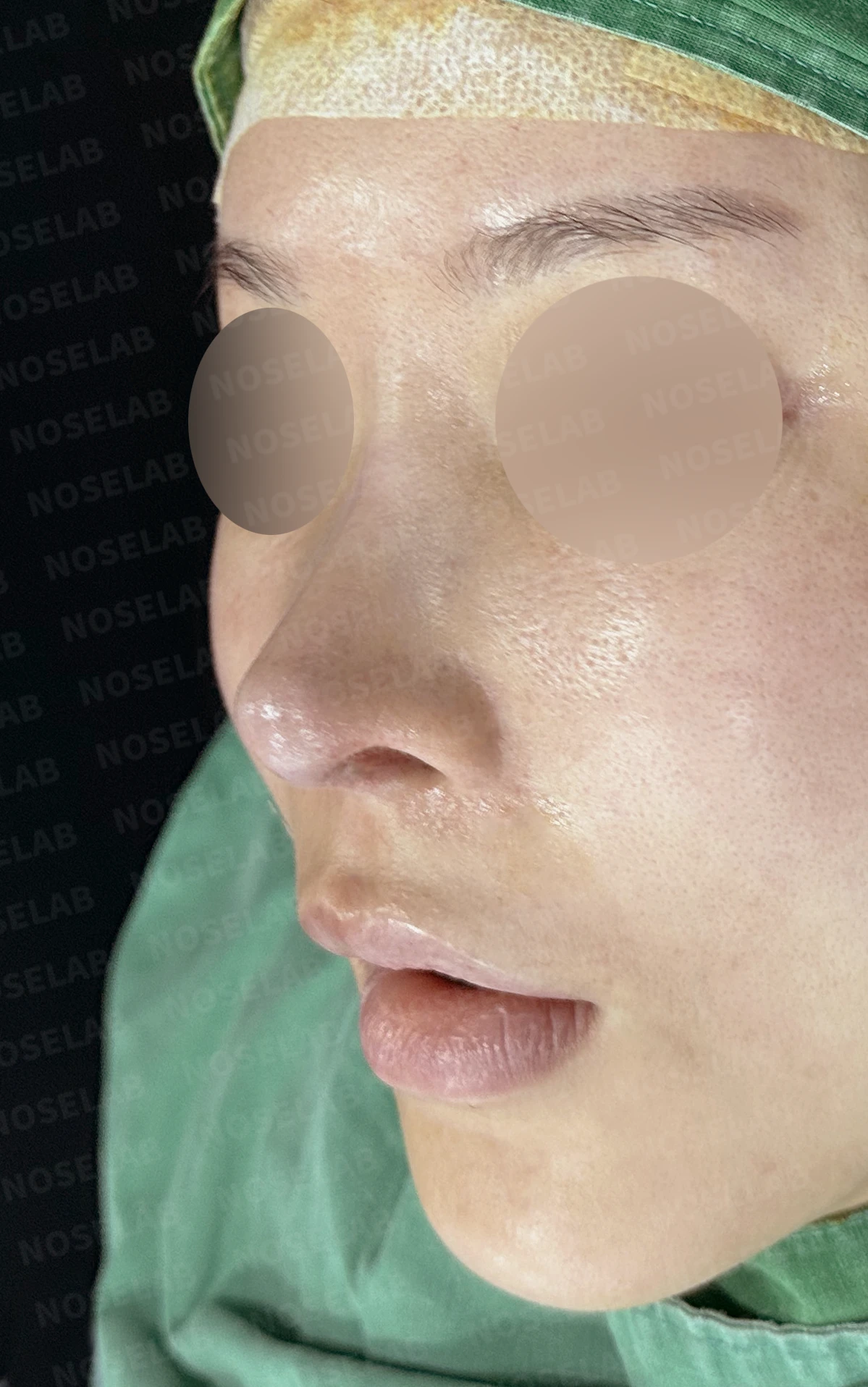
Before surgery / Day 0 immediately after surgery Photos taken immediately after surgery show swelling and may differ from the final result.
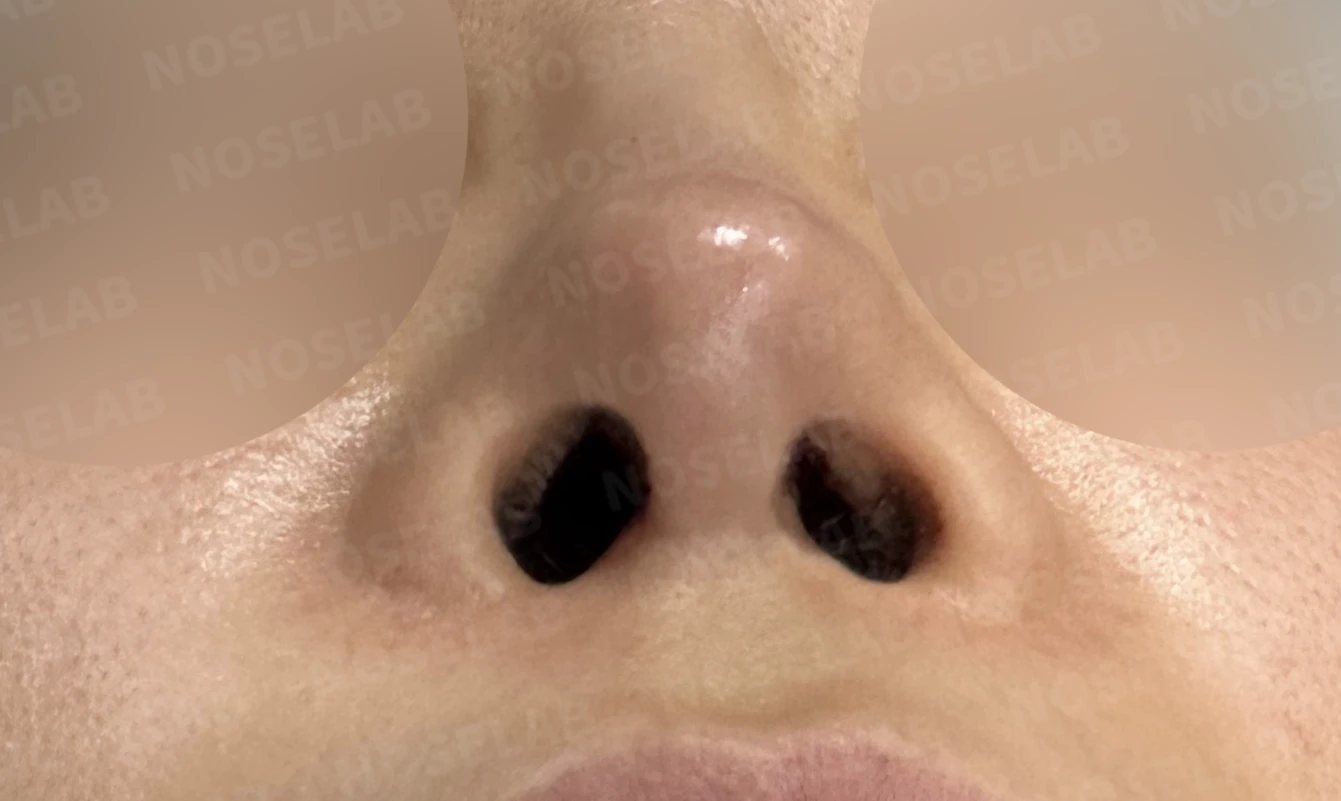
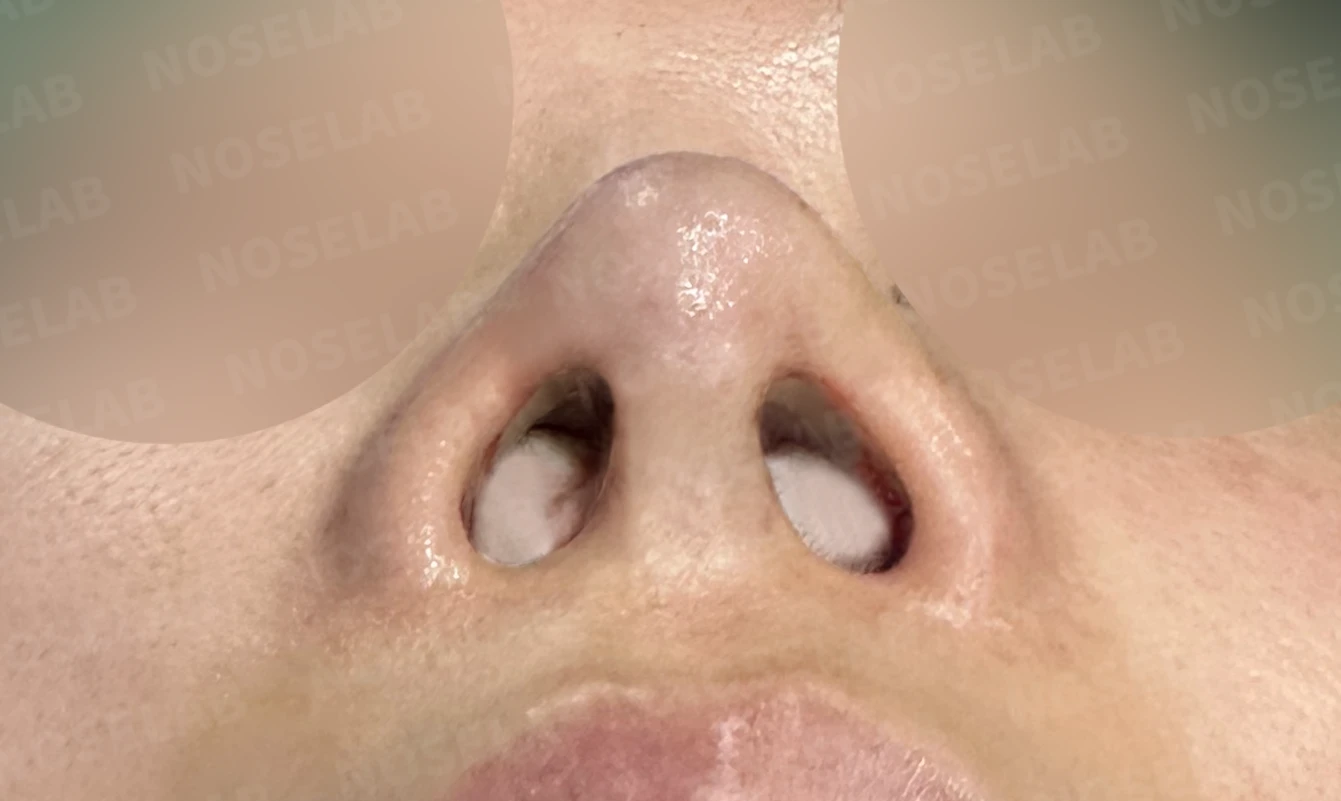
Before surgery / Day 0 immediately after surgery Photos taken immediately after surgery show swelling and may differ from the final result.
💡 Specialist opinion
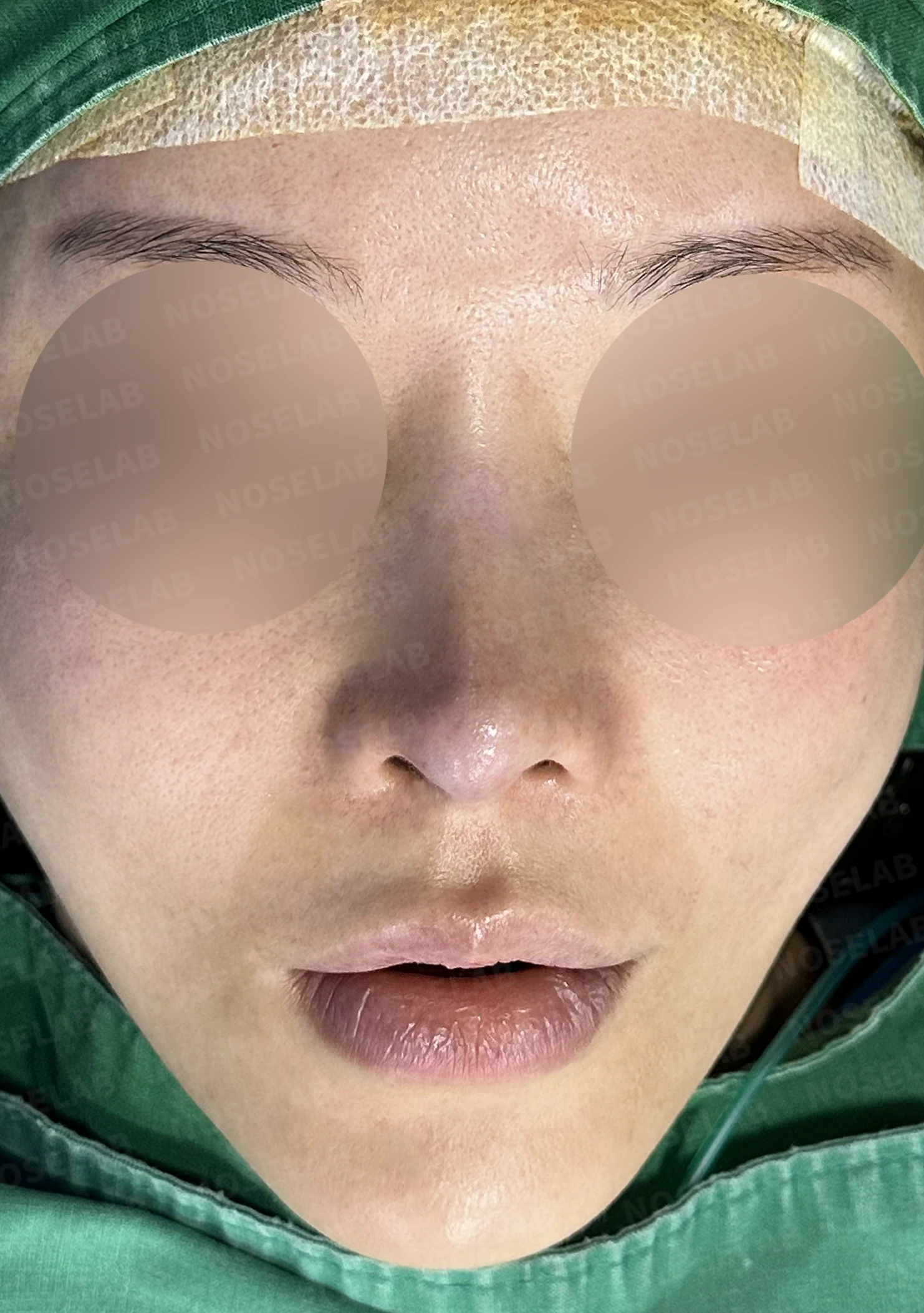
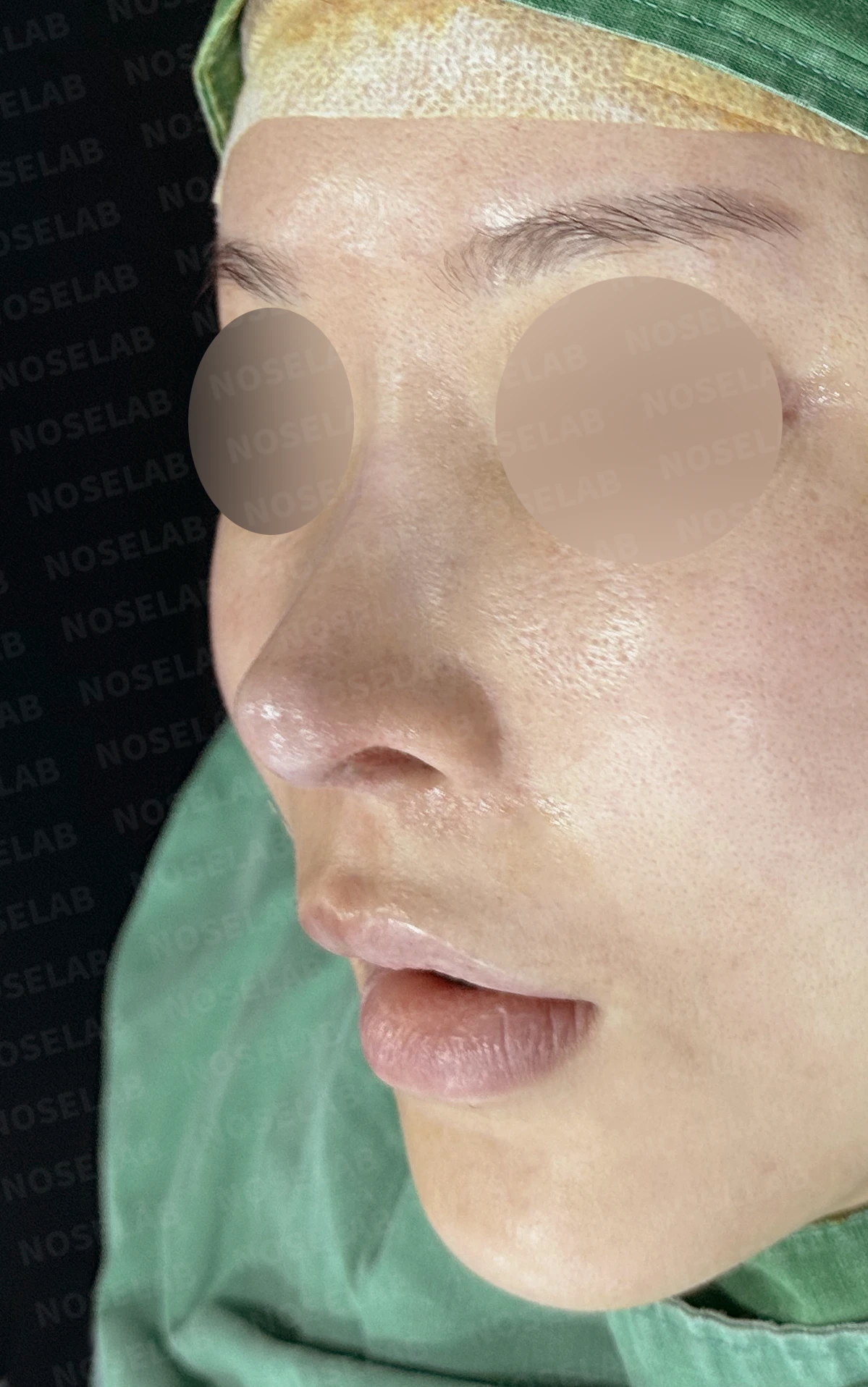
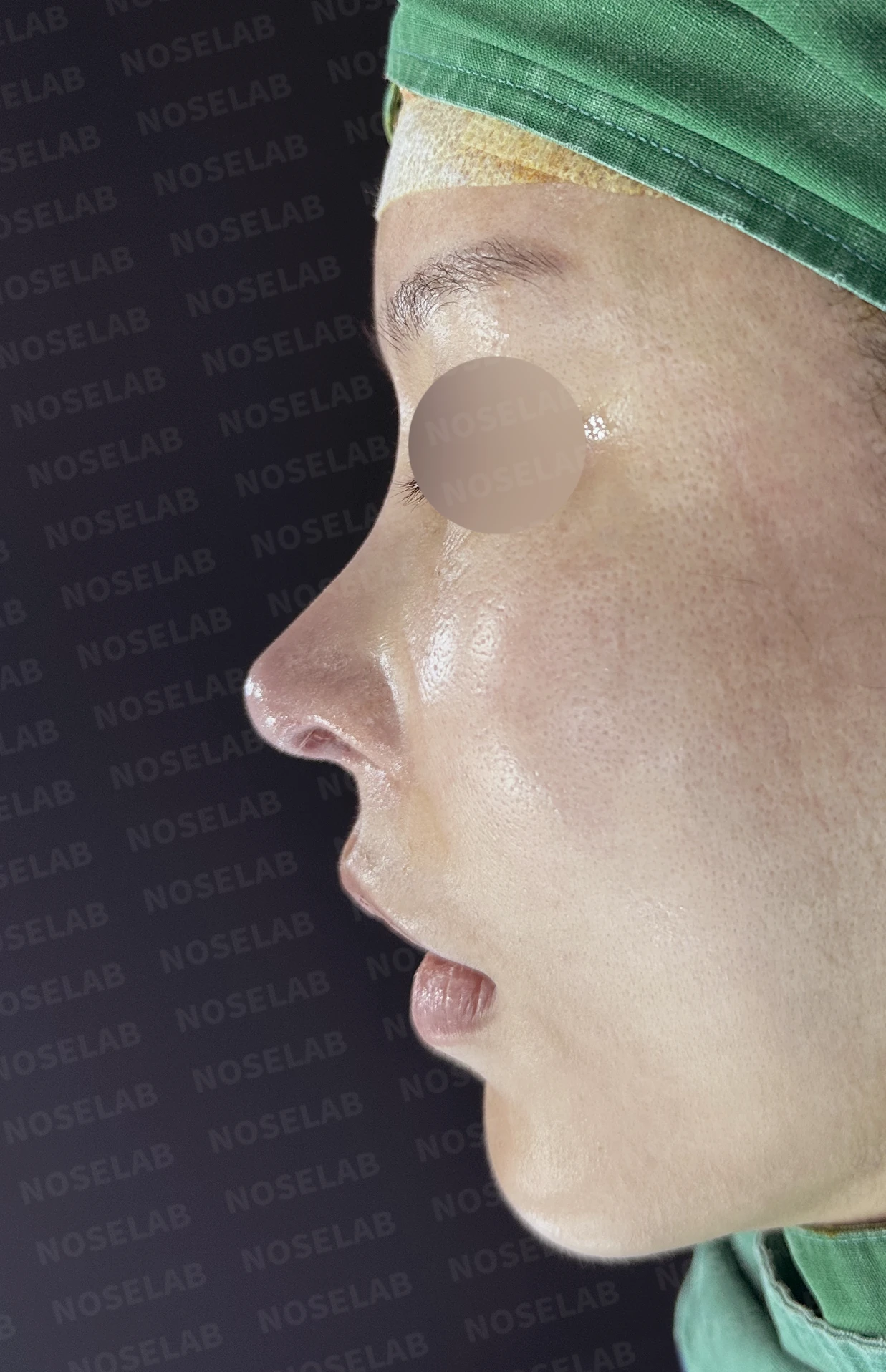
Front, oblique, and profile views on day 0 immediately after surgery. Photos taken immediately after surgery show swelling and may differ from the final result.
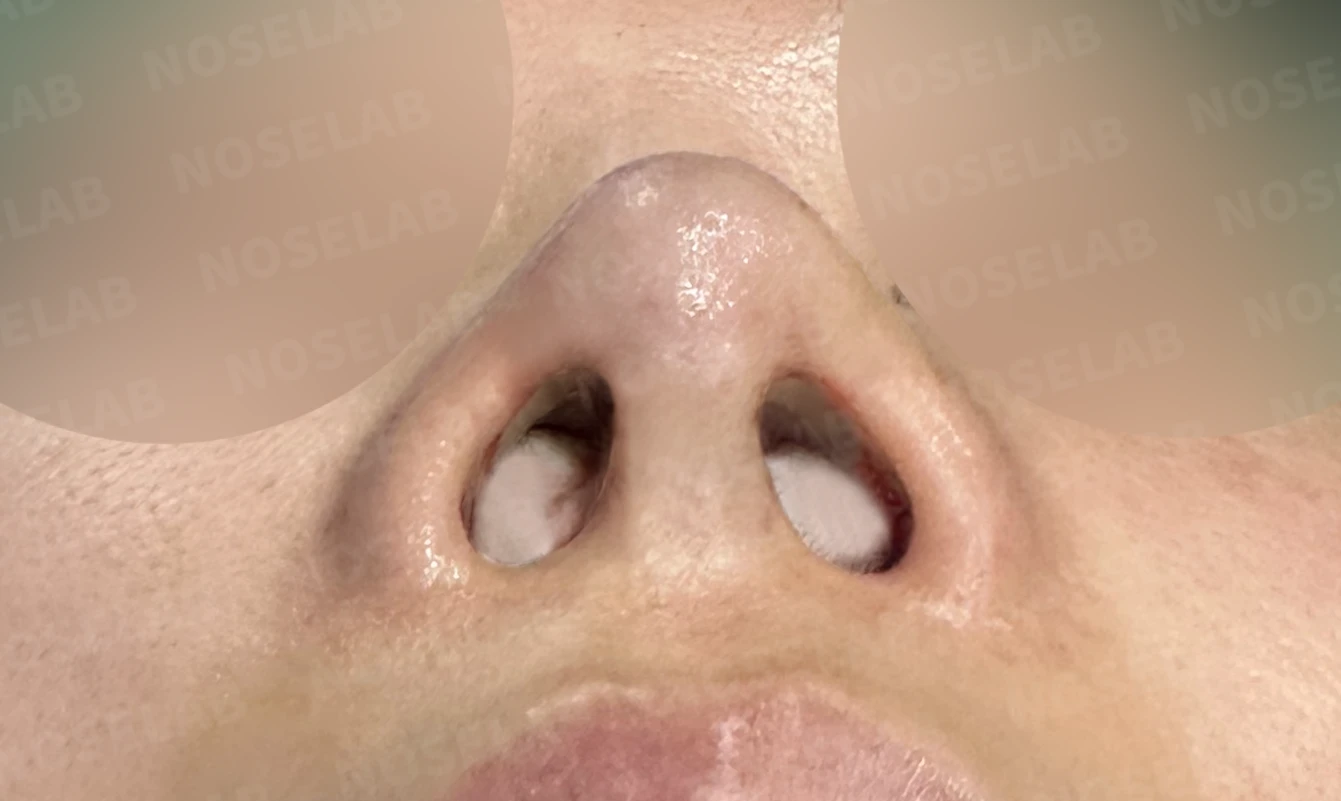
Nostril view on day 0 immediately after surgery. Photos taken immediately after surgery show swelling and may differ from the final result.
This was a case where prior revision surgeries had left virtually no central septum, requiring complete structural reconstruction.
The importance of central reconstruction:
If the central structural pillar of the nose is weak, it is difficult to elevate the tip or maintain its shape. When extensive septal cartilage has already been harvested in previous surgeries, complete reconstruction is essential to achieve the desired result. Rebuilding with rib cartilage creates a solid foundation, which in turn allows the tip to be safely elevated.
Harmonizing height and softness:
Many patients desire an elevated tip without a sharp, pinched appearance. To achieve this, one must establish the underlying base while simultaneously adding volume to the surrounding soft tissue. Cartilage provides height, while dermis smooths the contour into a natural, rounded shape. Dermal grafting also prevents implant or cartilage show-through in thin skin.
Resolving the root cause of nostril asymmetry:
Nostril asymmetry stems from an imbalance within internal structures. If the central framework is deviated or the alar cartilage positions are misaligned, the nostrils appear uneven. Rebuilding the central pillar straight and adjusting the position of the alar cartilages naturally restores symmetry.
Simultaneous cosmetic and functional improvement:
Central reconstruction is vital both aesthetically and functionally. A stable structural foundation preserves the external contour while securing the airway passages to restore proper breathing.
I will continue to do my best as a revision rhinoplasty specialist clinic, relying on a structural approach to achieve safe, natural results.
This was Dr. Peter C. Kang. Thank you.
#closedrhinoplasty #closedrevisionrhinoplasty #septalreconstruction #autologousribcartilage #tipelevation #nostrilasymmetrycorrection #dermalgraft #rhinitissurgery #nasalobstructionimprovement #revisionspecialist

Limitations and risks
When autologous rib cartilage is used, scarring and pain may remain at the donor site on the chest, and pneumothorax (pleural injury) can occur rarely. Over time, the grafted cartilage may warp or undergo partial resorption.
When the septum is corrected at the same time, nasal obstruction may persist or recur, and in rare cases, septal perforation or changes in smell may occur.
Common potential risks include infection, bleeding, asymmetry, scarring, skin necrosis, and insufficient improvement; results vary depending on individual skin condition and previous surgical history.