Hello, I am Dr. Peter C. Kang.
Today, I would like to share the story of a patient who underwent three rhinoplasty procedures over the course of 23 years.
This case shows the correction process for a patient with multiple complex concerns, including a bulbous nose, retracted columella, protruding mouth, and nostril asymmetry.
1. Patient history and requests
The patient had the following surgical history:
- 23 years ago: Ear cartilage + silicone implant
- 20 years ago: Revision rhinoplasty using ear cartilage + silicone implant (contracture subsequently developed following a traumatic impact)
- 2011: Revision rhinoplasty using autologous rib cartilage + silicone implant + septum
The patient's main requests were as follows:
- Wanted more columellar show
- Did not want the nose to look long
- Wanted an overall appearance in harmony with the face
2. Design consultation
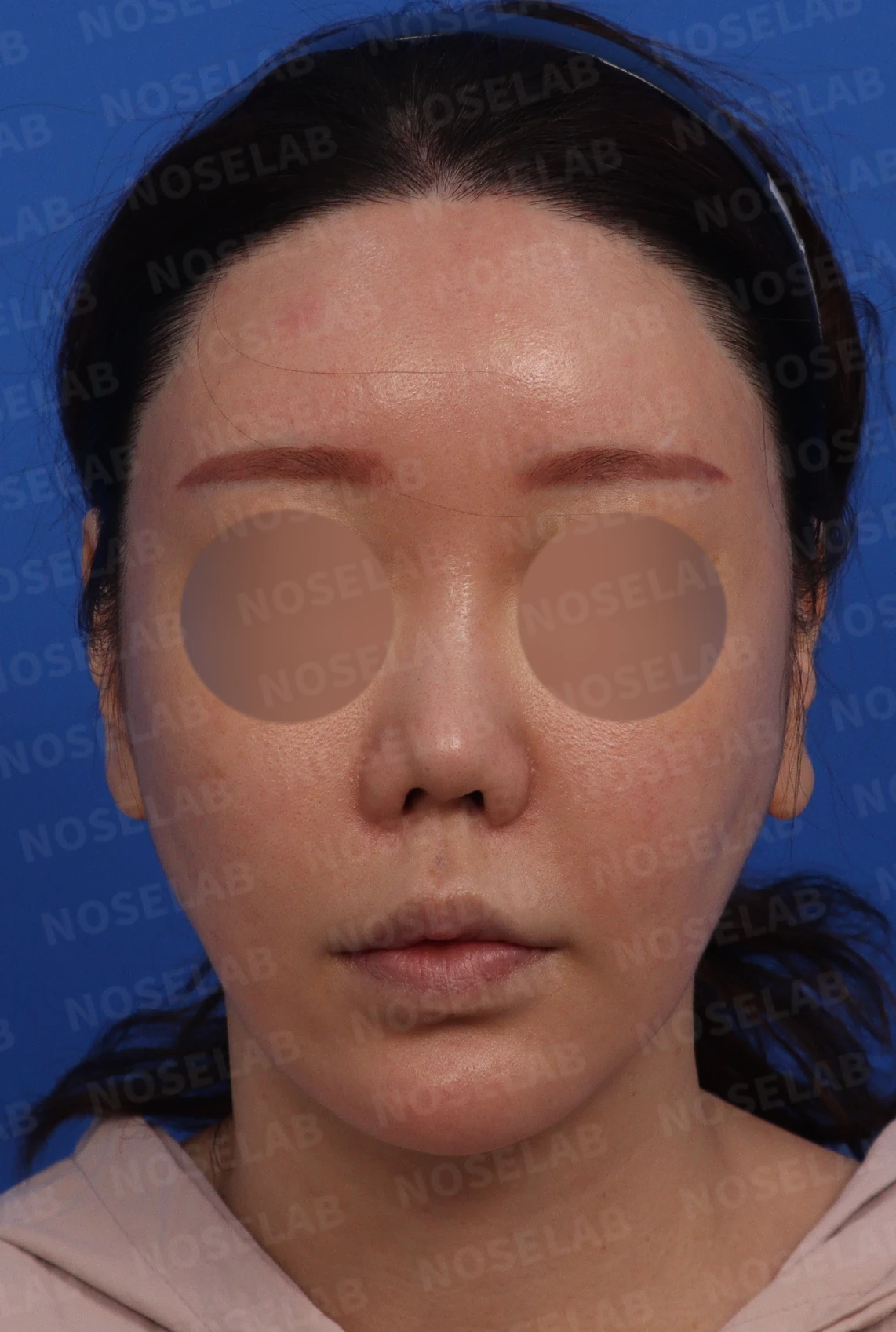
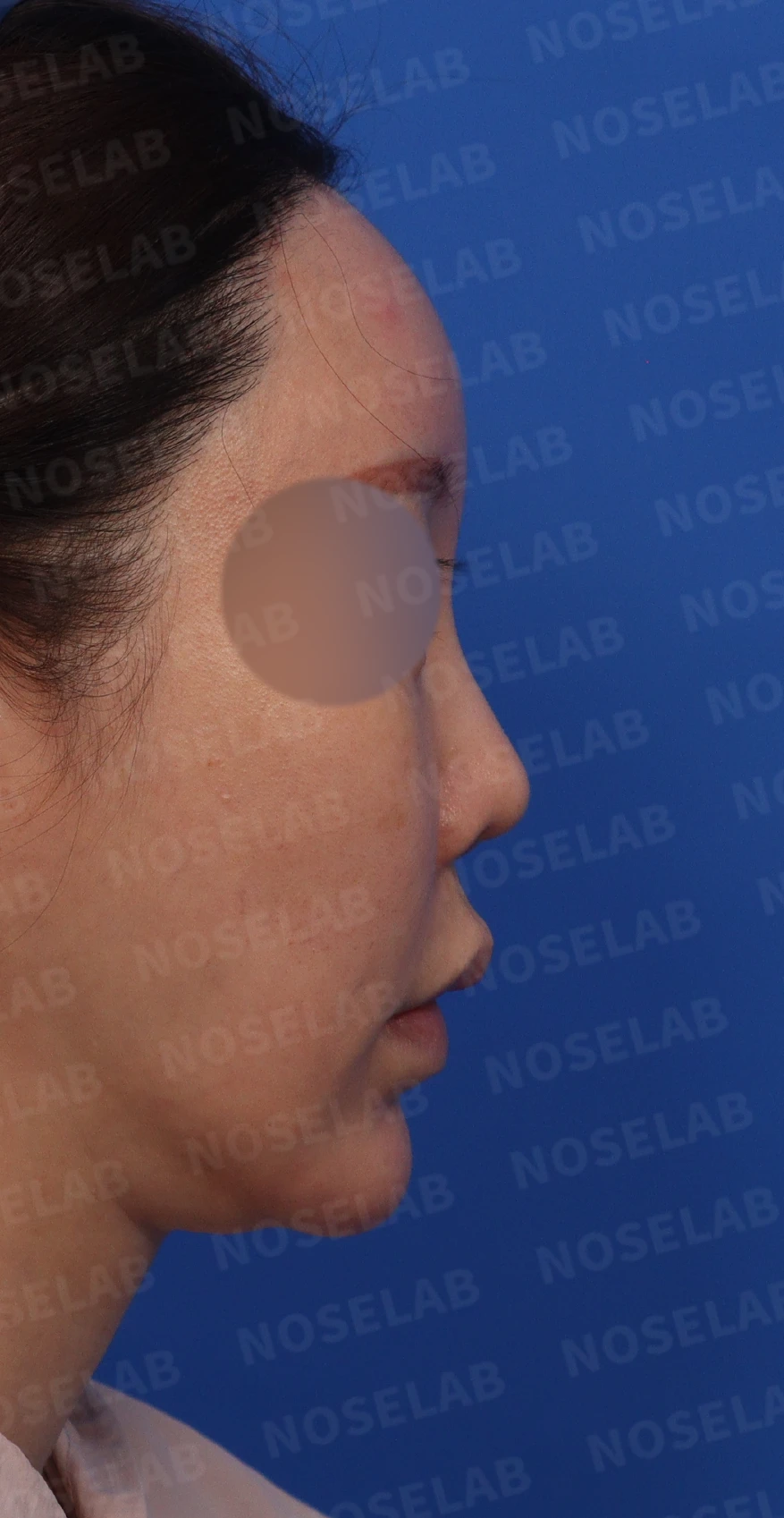
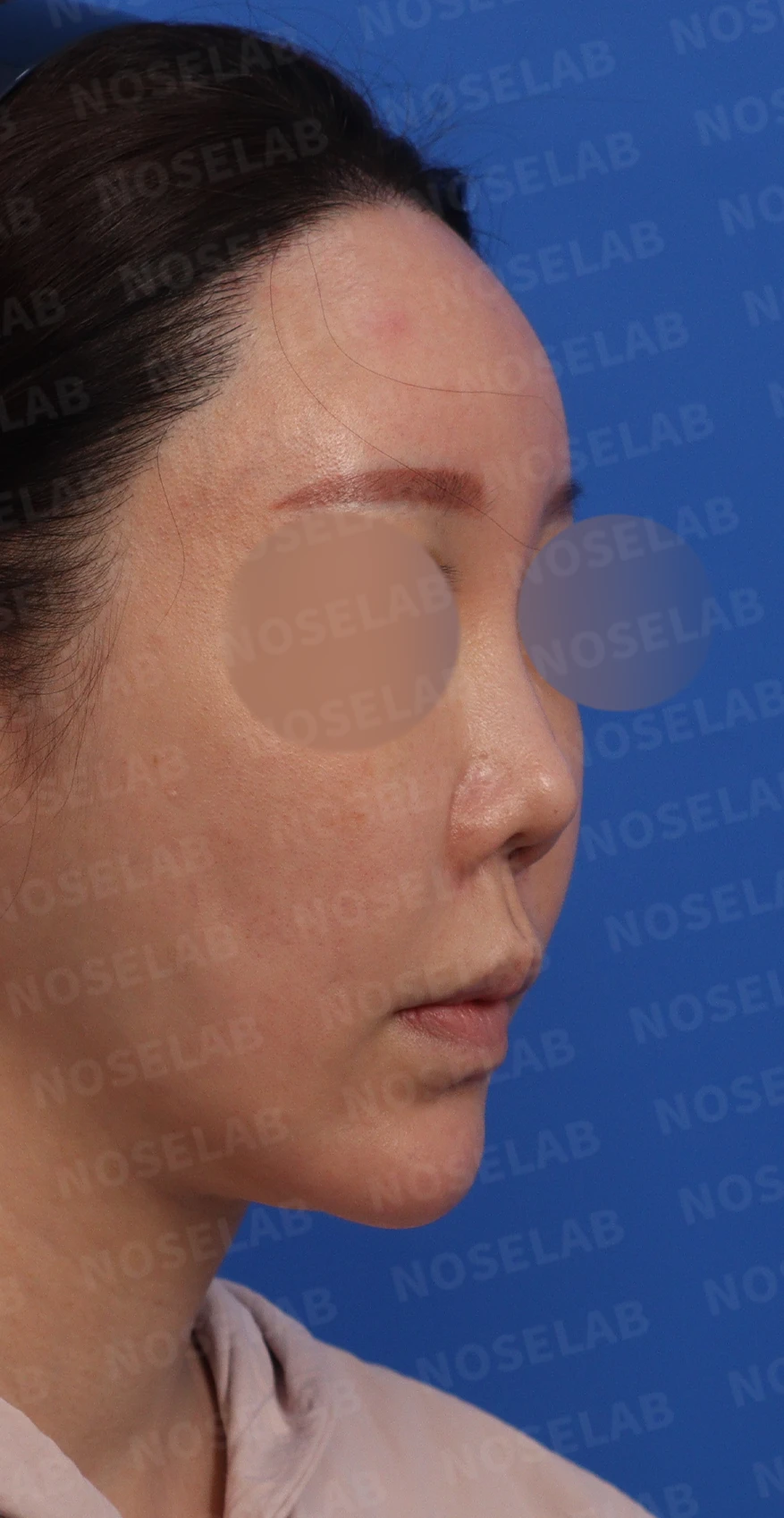
Front, profile, and oblique views
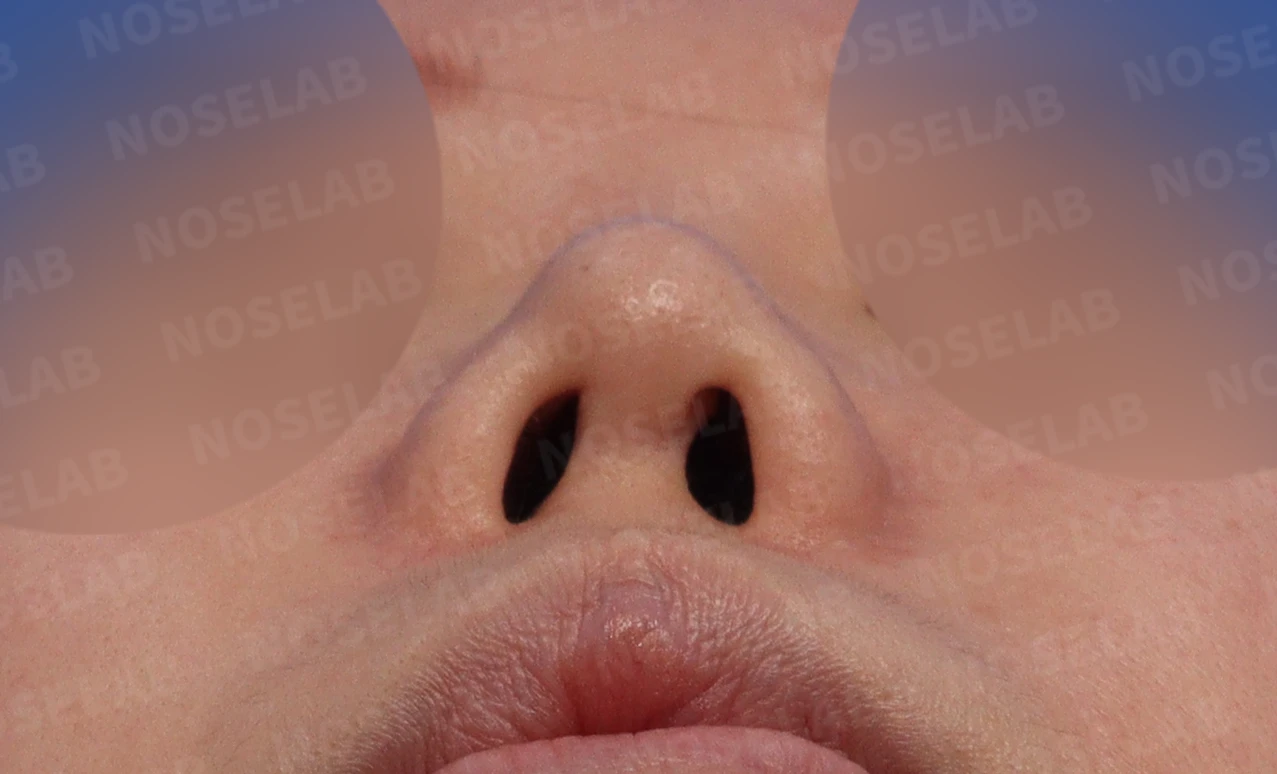
Nostrils
Here is a detailed preoperative analysis:
Front view:
- Looks bulbous and wide
- Nostril asymmetry is observed
- The columella is retracted and barely visible
- Appears deviated to the left
- Pinched right alar wing
- The philtrum appears long
Profile view:
- Signs of a protruding mouth are observed
- The columella is retracted and not visible at all
- Bulbous appearance
Oblique view:
- The nasal tip is compressed and columellar retraction is prominent
- Protruding mouth appearance and the philtrum appears long
Nostrils:
- Severe asymmetry observed (the right nostril is smaller)
- The columella is retracted and tilted to the left
3. Surgical plan and procedure details
Taking into account the patient's condition and requests, the following surgical plan was established:
a) Autologous cartilage harvesting and grafting:
- Harvested rib cartilage or ear cartilage from the patient to secure a sufficient volume of cartilage for reconstruction.
b) Septal reconstruction and extension:
- Reconstructed and extended the septum using autologous cartilage.
- Enhanced structural stability and reinforced support.
c) Nasal tip correction:
- Delicately refined the bulbous tip to create a natural contour.
- Improved the bulbous features to establish a slim and refined shape.
d) Lowering and augmenting the columella:
- Built up the retracted columella with autologous cartilage to increase its visibility.
- Simultaneously lowered the columella appropriately to naturally adjust the nasolabial angle.
e) Correcting the deviated area:
- Straightened the asymmetrically deviated tip to improve overall balance.
f) Correction of the nasolabial angle:
- The nasolabial angle was adjusted appropriately to improve the appearance of a protruding mouth.
g) Correcting nostril asymmetry:
- Improved nostril symmetry through cartilage repositioning and alar reconstruction.
All procedures were performed using a closed approach, completing the surgery without external scars.
4. Comparison of before-and-after photos
Comparing photos taken immediately after surgery on day 0 shows the following improvements: Photos taken immediately after surgery show swelling and may differ from the final result.
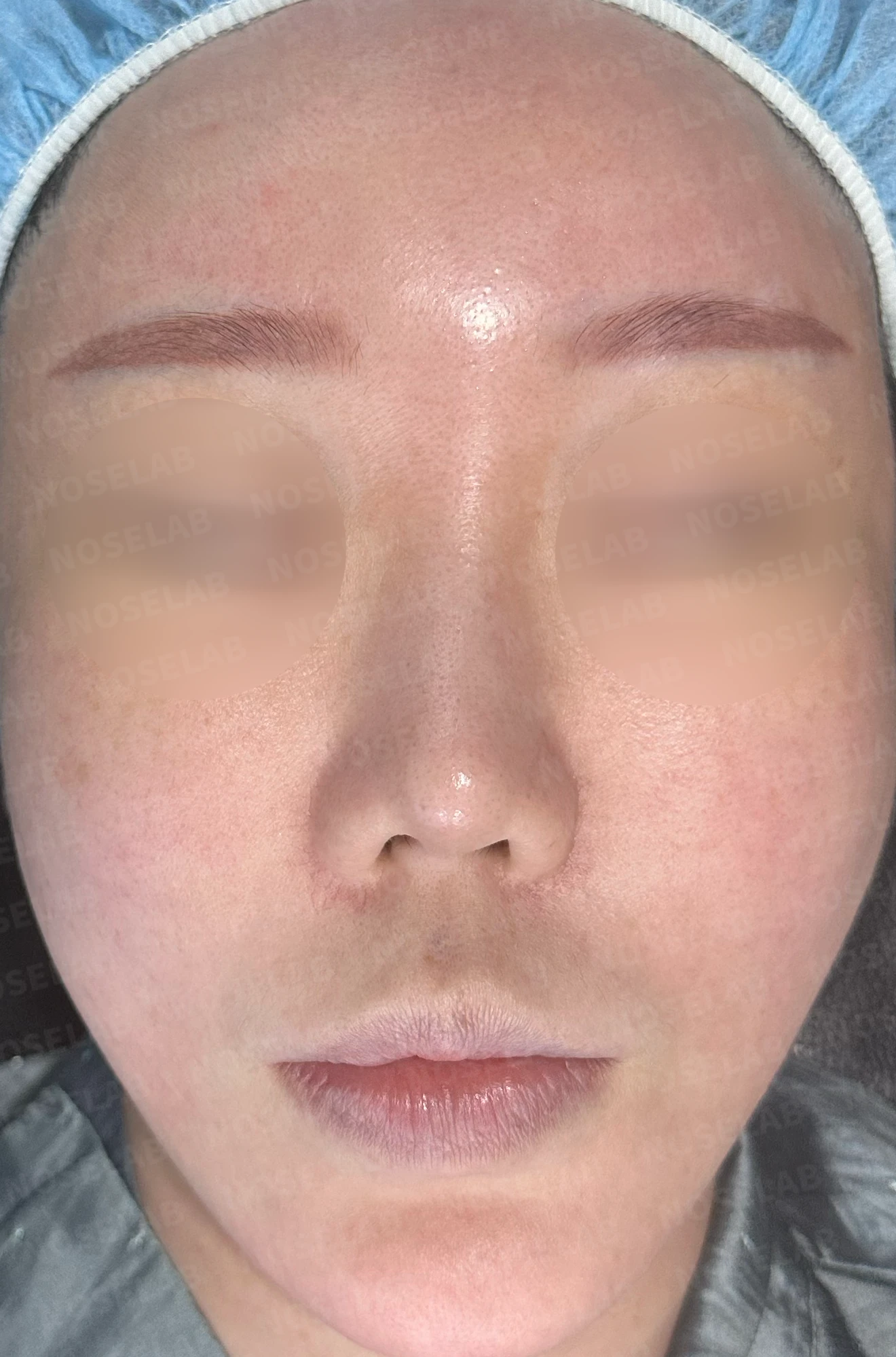
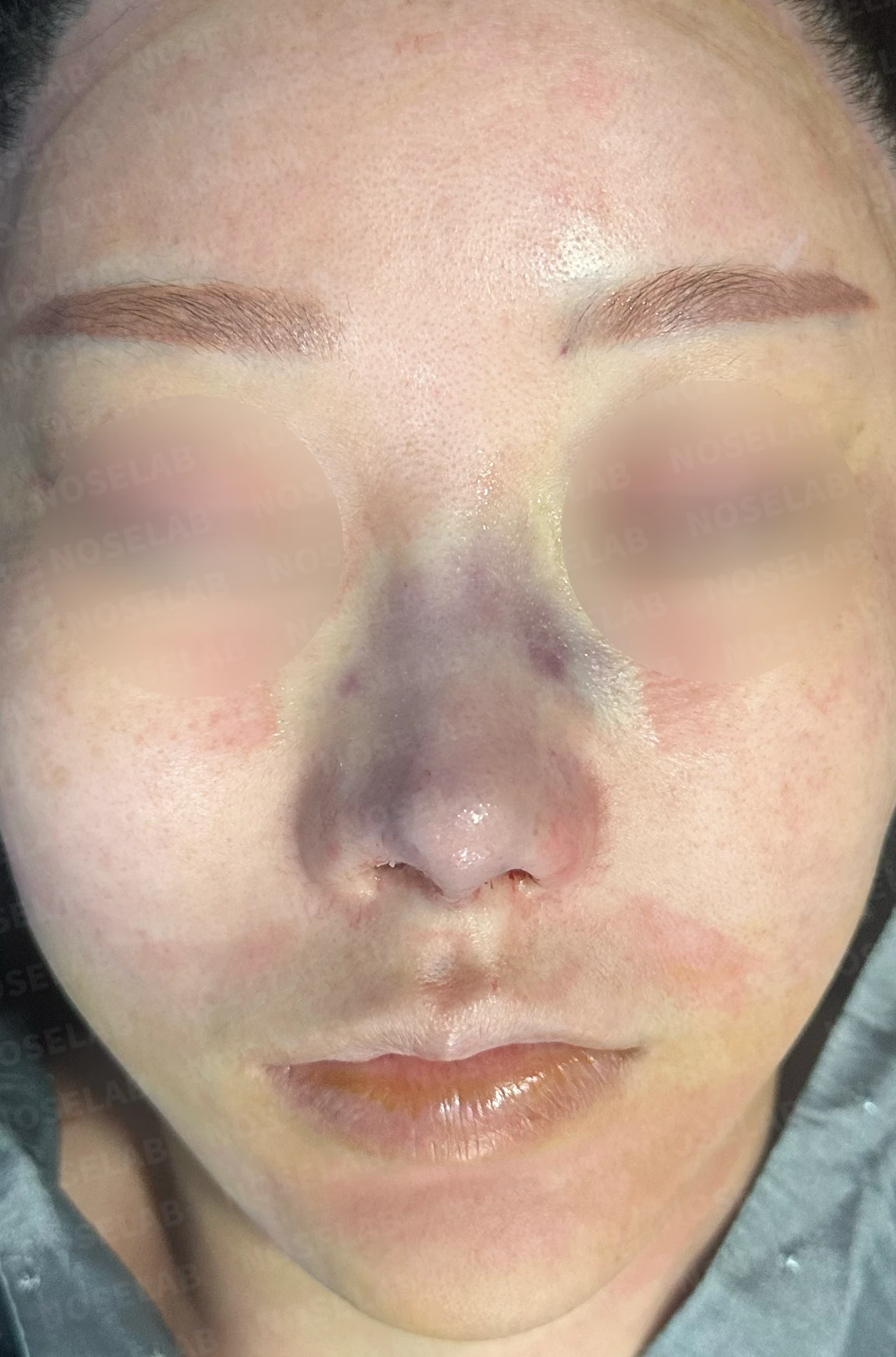
Before surgery / Day 0 immediately after surgery Photos taken immediately after surgery show swelling and may differ from the final result.
Front view:
- The previously bulbous and wide area has been refined into a slim, sophisticated contour.
- Nostril asymmetry has been substantially improved.
- The previously retracted columella is clearly defined while maintaining a natural appearance.
- The philtrum, which previously appeared long, now looks natural.
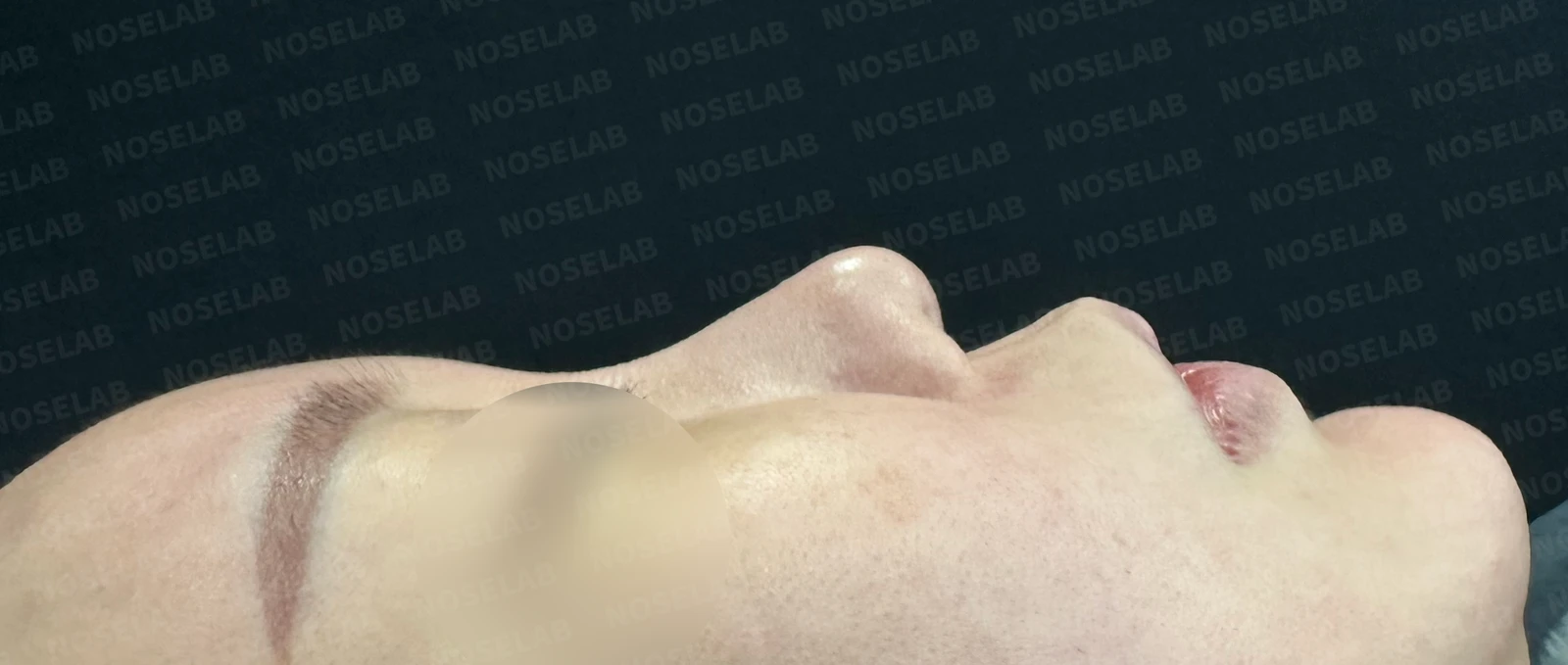
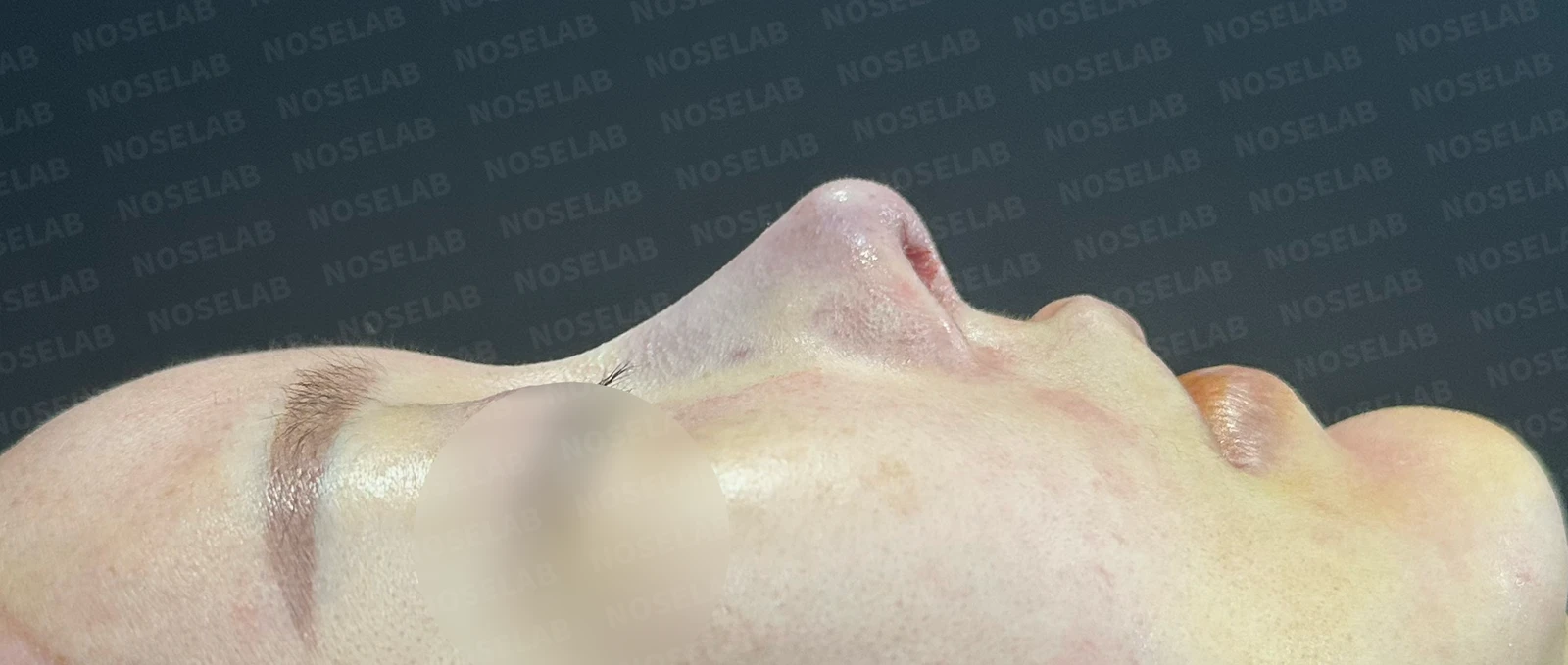
Before surgery / Day 0 immediately after surgery Photos taken immediately after surgery show swelling and may differ from the final result.
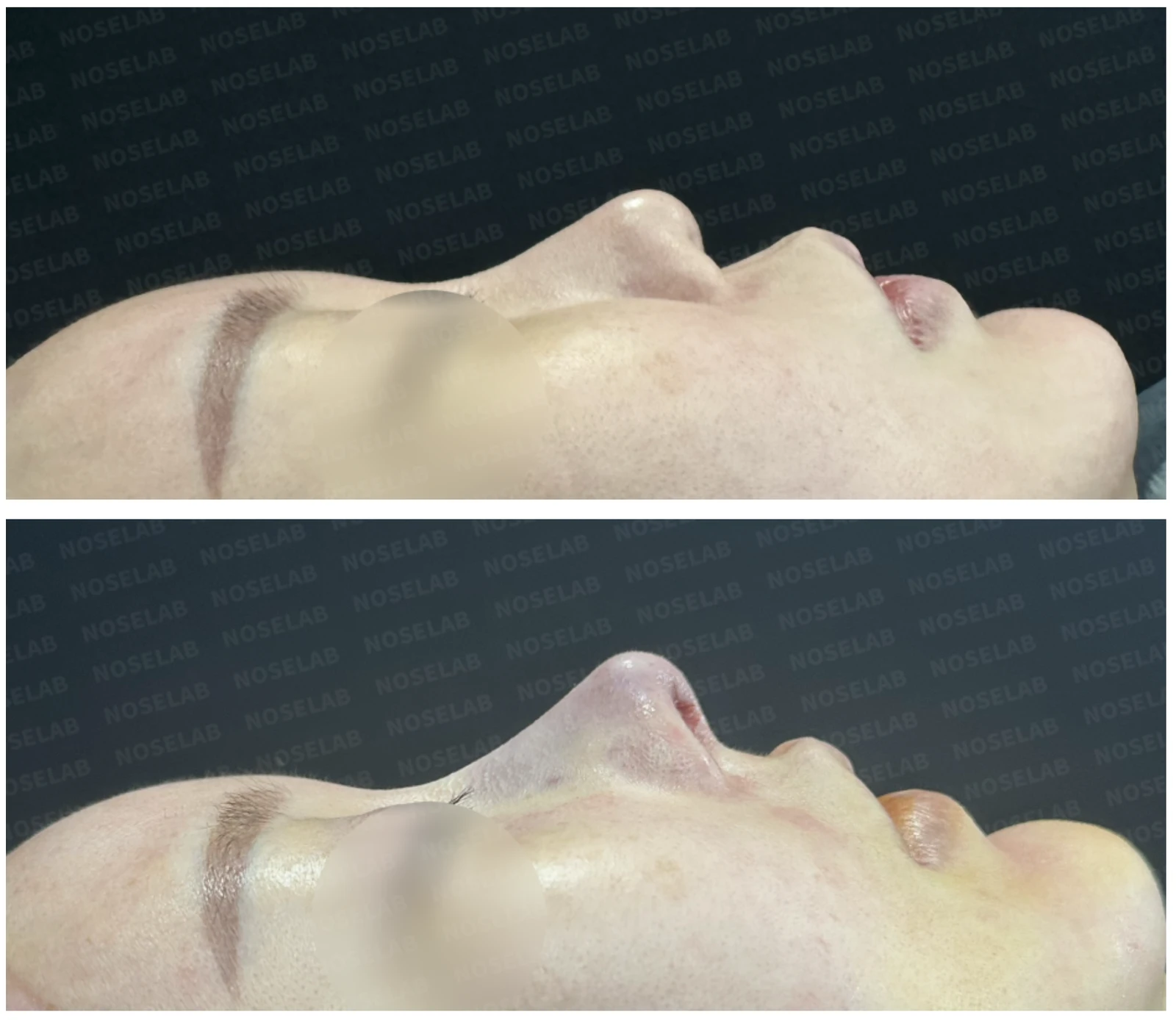
Profile view:
- The protruding mouth appearance improved, enhancing overall facial balance.
- The nasolabial angle was adjusted appropriately, improving harmony between the nose and lips.
- The hidden, retracted columella was naturally brought down, creating a refined nasal tip.
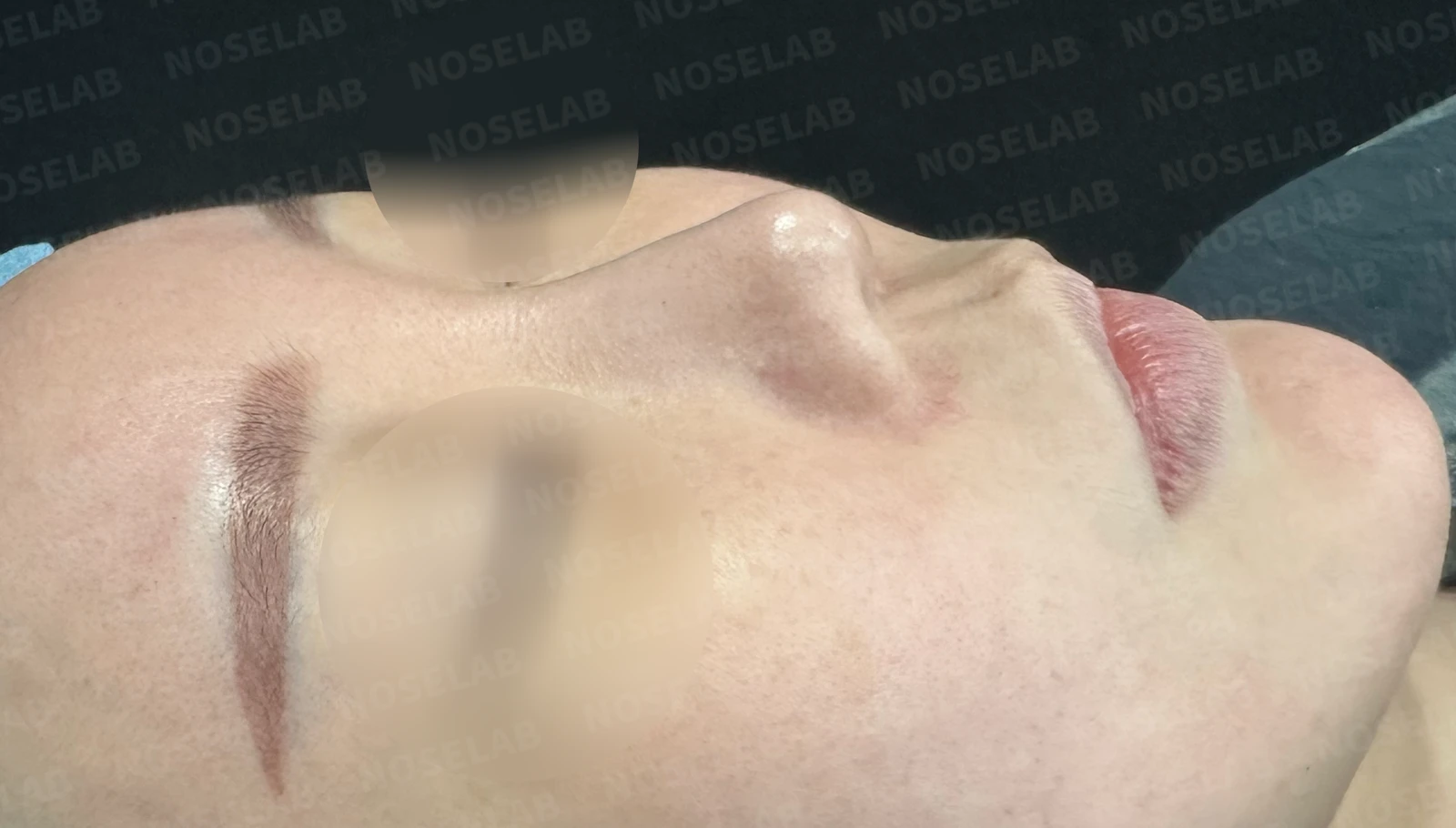
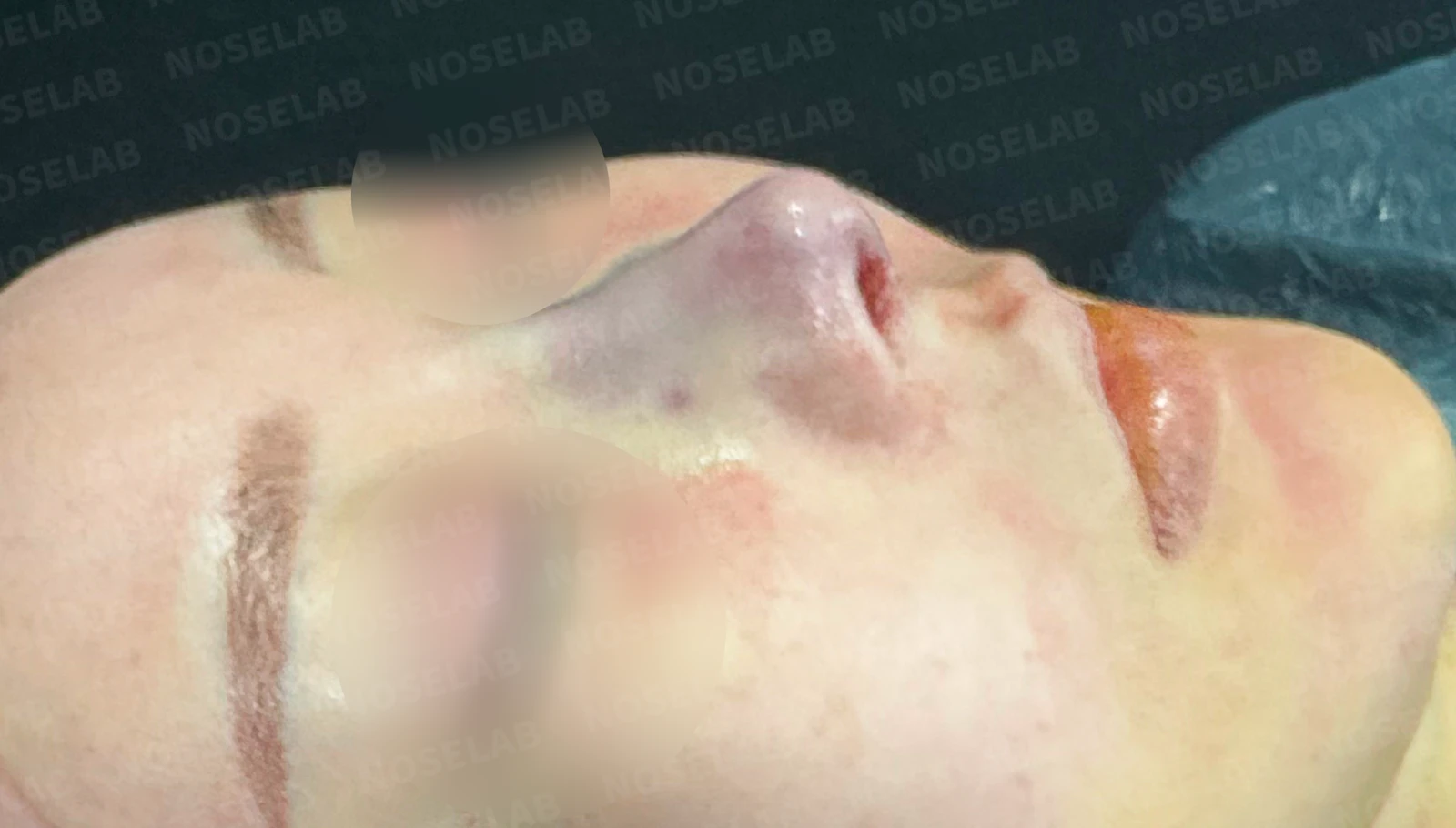
Before surgery / Day 0 immediately after surgery Photos taken immediately after surgery show swelling and may differ from the final result.
Oblique view:
- Bulbous characteristics were improved, showing a slim and refined profile.
- Restored projection creates a natural nasal bridge line.
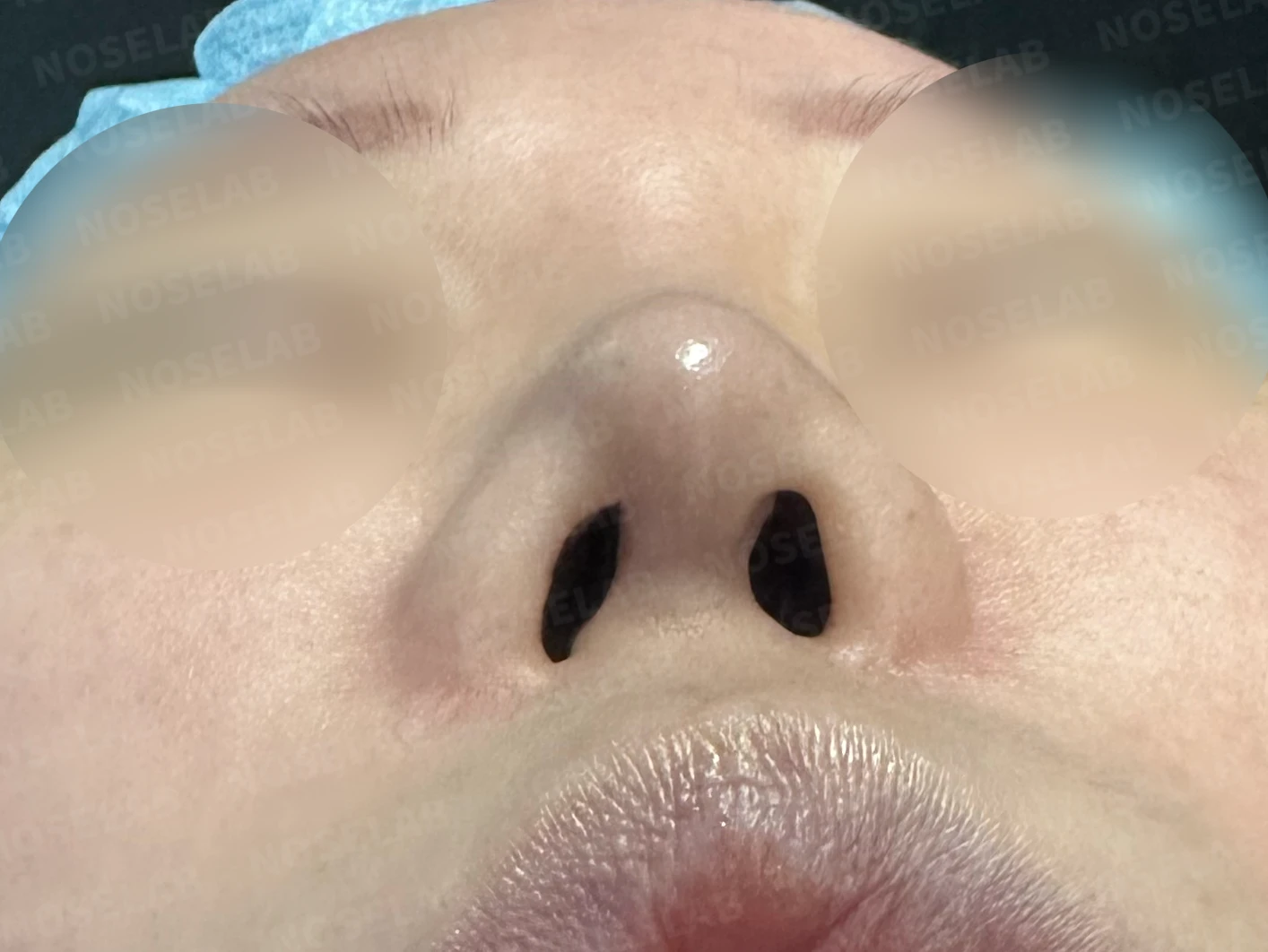
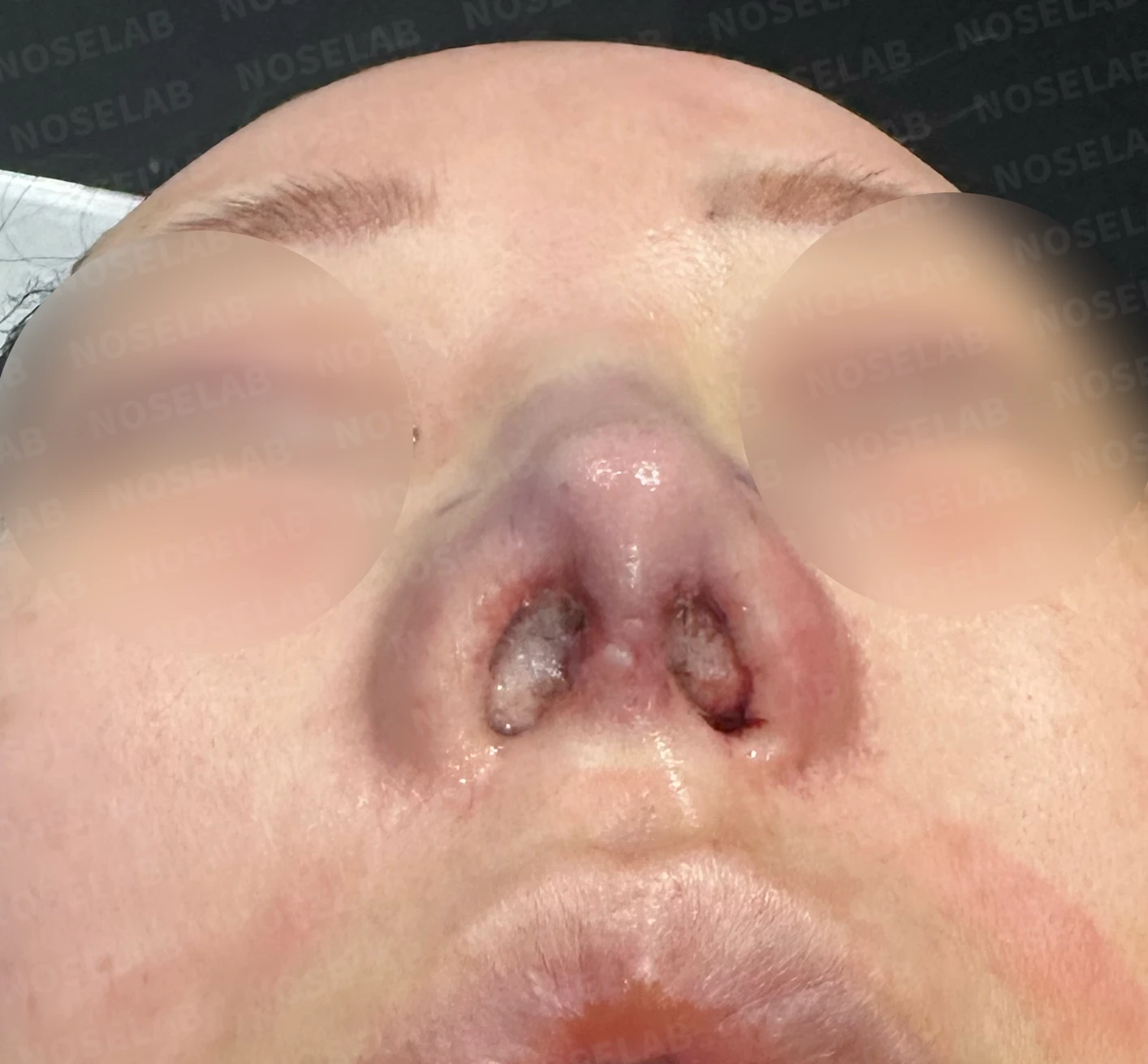
Before surgery / Day 0 immediately after surgery Photos taken immediately after surgery show swelling and may differ from the final result.
Nostrils:
- Asymmetry improved significantly, achieving a balanced appearance.
- The columella, which had been tilted to the left, is now upright and centered.
5. Photos taken immediately after surgery
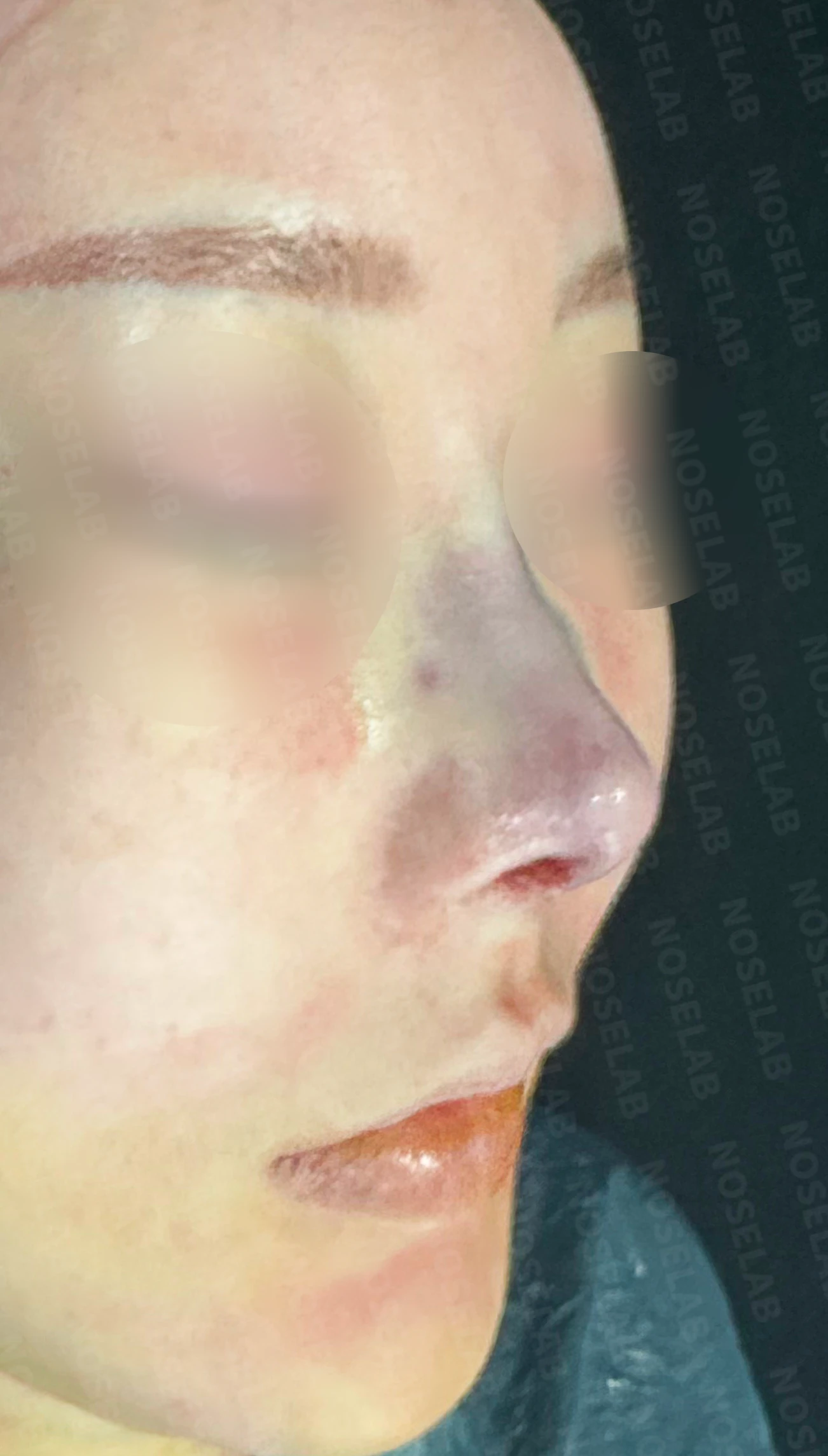
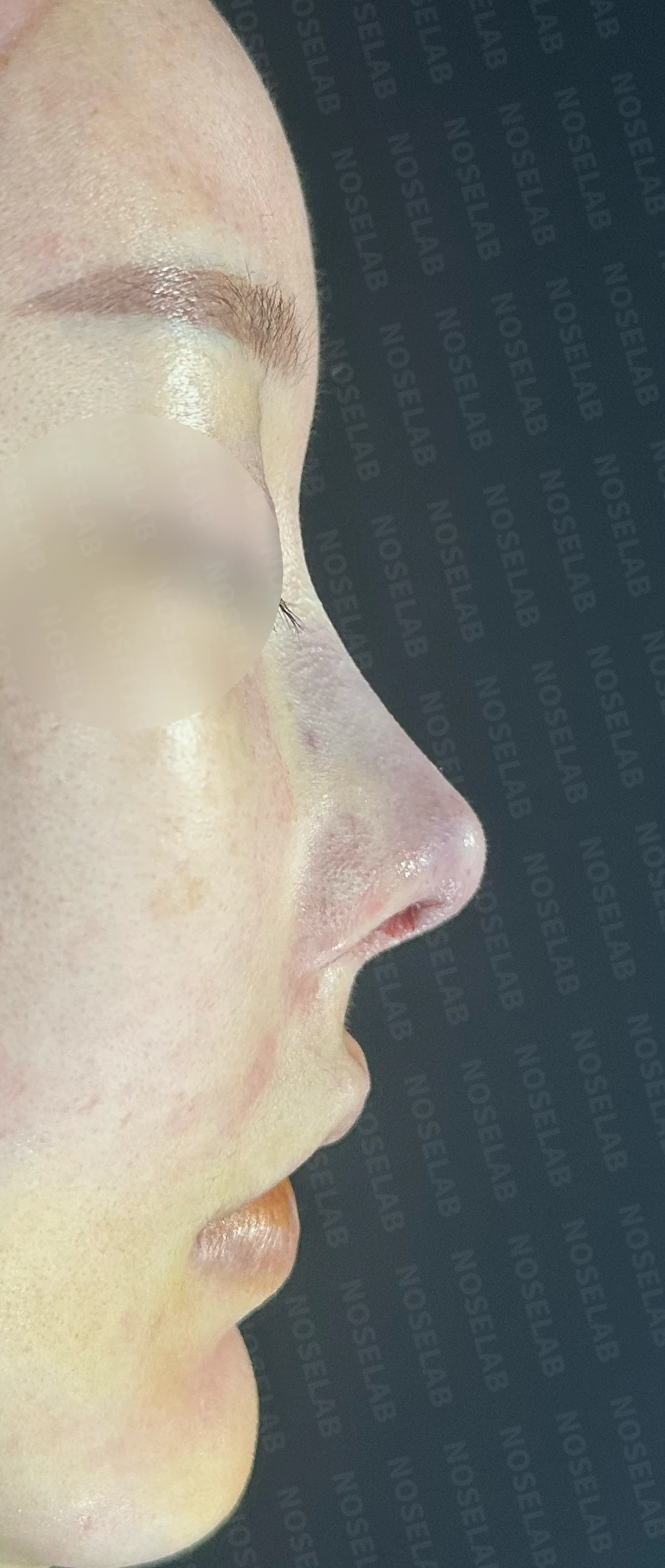
Front, oblique, and profile views immediately after surgery on day 0. Photos taken immediately after surgery show swelling and may differ from the final result.
Immediately after surgery (Day 0) nostrilsImmediate postoperative photos show swelling and may differ from the final result.
6. Overall evaluation
This case addressed complex problems that can arise after multiple rhinoplasty surgeries. Notably, it achieved the patient's requests while simultaneously improving diverse concerns including a bulbous nose, retracted columella, protruding mouth, and nostril asymmetry.
Septal reconstruction and extension using autologous cartilage played a major role in increasing structural stability and reinforcing support. This allowed us to correct the bulbous characteristics and achieve a natural nasal tip contour.
By simultaneously performing columellar lowering and nasolabial angle adjustment, we achieved the patient's goal of 'more columellar show without making the nose appear long.' This requires extremely delicate adjustment, demanding extensive surgical experience and refined technique.
Adjusting the nasolabial angle to improve the protruding mouth played a key role not only in shaping the nose but also in balancing the entire face. Through this, we achieved the 'facial harmony' the patient desired.
Using a closed approach shortened the postoperative recovery period and completed the surgery without external scars. This is a particularly meaningful advantage for patients who have undergone multiple procedures.
7. Conclusion
I hope this case offers hope to those struggling with unsatisfactory results after multiple rhinoplasty procedures. In revision cases involving complex issues, choosing a surgeon with extensive experience and deep expertise is essential.
Naturally lowering a retracted columella is more challenging than it might seem. In most cases, columellar retraction is linked to damage to the septal cartilage located deep within the columellar base. Furthermore, because the columella is closely tied to an individual's native skin envelope, lowering a retracted columella requires resolving issues both internally and externally. Damaged septal cartilage can be restored through reconstruction, and skin deficiency can be addressed using adjacent skin grafts, but achieving a favorable outcome is difficult without advanced skill and extensive surgical experience.
Drawing on anatomical knowledge and extensive surgical experience as a board-certified otolaryngologist, I provide surgical plans tailored to each individual patient. Through a comprehensive approach that considers both functional and cosmetic improvement, I strive to create a beautiful and healthy nose.
The nose is not merely a cosmetic feature; it is a vital organ responsible for essential functions like breathing and olfaction. Therefore, when considering surgery, please consult with a specialist to determine the approach best suited for you. NOSELAB will always do its utmost for your healthy, balanced nose.
We hope to serve as your dependable partner throughout the journey of listening to and resolving your concerns.
This was Dr. Peter C. Kang. Thank you.
Thank you.
#rhinoplasty #bulbousnosecorrection #retractedcolumellacorrection #protrudingmouthcorrection #deviatednosecorrection #nasolabialanglecorrection #loweringthecolumella #nostrilasymmetrycorrection #autologouscartilagegraft #closedrhinoplasty #revisionrhinoplasty #entspecialistrhinoplasty #surgeryplannedwithsafetyinmind #customizedrhinoplasty #naturalnose

Limitations and risks
When autologous rib cartilage is used, scarring and pain may remain at the donor site on the chest, and pneumothorax (pleural injury) can occur rarely. Over time, the grafted cartilage may warp or undergo partial resorption.
When the septum is corrected at the same time, nasal obstruction may persist or recur, and in rare cases, septal perforation or changes in smell may occur.
Common potential risks include infection, bleeding, asymmetry, scarring, skin necrosis, and insufficient improvement; results vary depending on individual skin condition and previous surgical history.