Hello, I am Dr. Peter C. Kang.
Today, I would like to share a rhinoplasty case of a patient with cleft lip and palate.
Because patients with cleft lip and palate present with congenital asymmetry, correction can be challenging, and achieving better symmetry requires a meticulous approach.
Let us take a closer look.
1. Patient medical history
The patient had a history of multiple surgeries:
- At 5 months of age: Cleft lip repair at a university hospital
- At 4 to 5 years of age: Cleft lip revision repair at a university hospital
- 5th grade of elementary school: Pelvic bone graft (palate)
- In middle school: Lip asymmetry correction
- 14 years ago: Alar surgery using silicone and ear cartilage (left alar reduction, ear cartilage graft)
2. Patient goals
- Improve worsening indentation and pinched appearance lateral to the right nasal tip
- Improve the nasolabial angle
- Add structural dimension to the midface
- Achieve a nose shape harmonious with the face
- Improve asymmetry (while understanding limitations caused by differences in alar length)
3. Design consultation
Analysis of the design consultation photographs revealed that the right nostril was pinched and deviated, with a retracted columella. In addition, the nasolabial angle was less than 95 degrees, necessitating nasolabial angle correction.
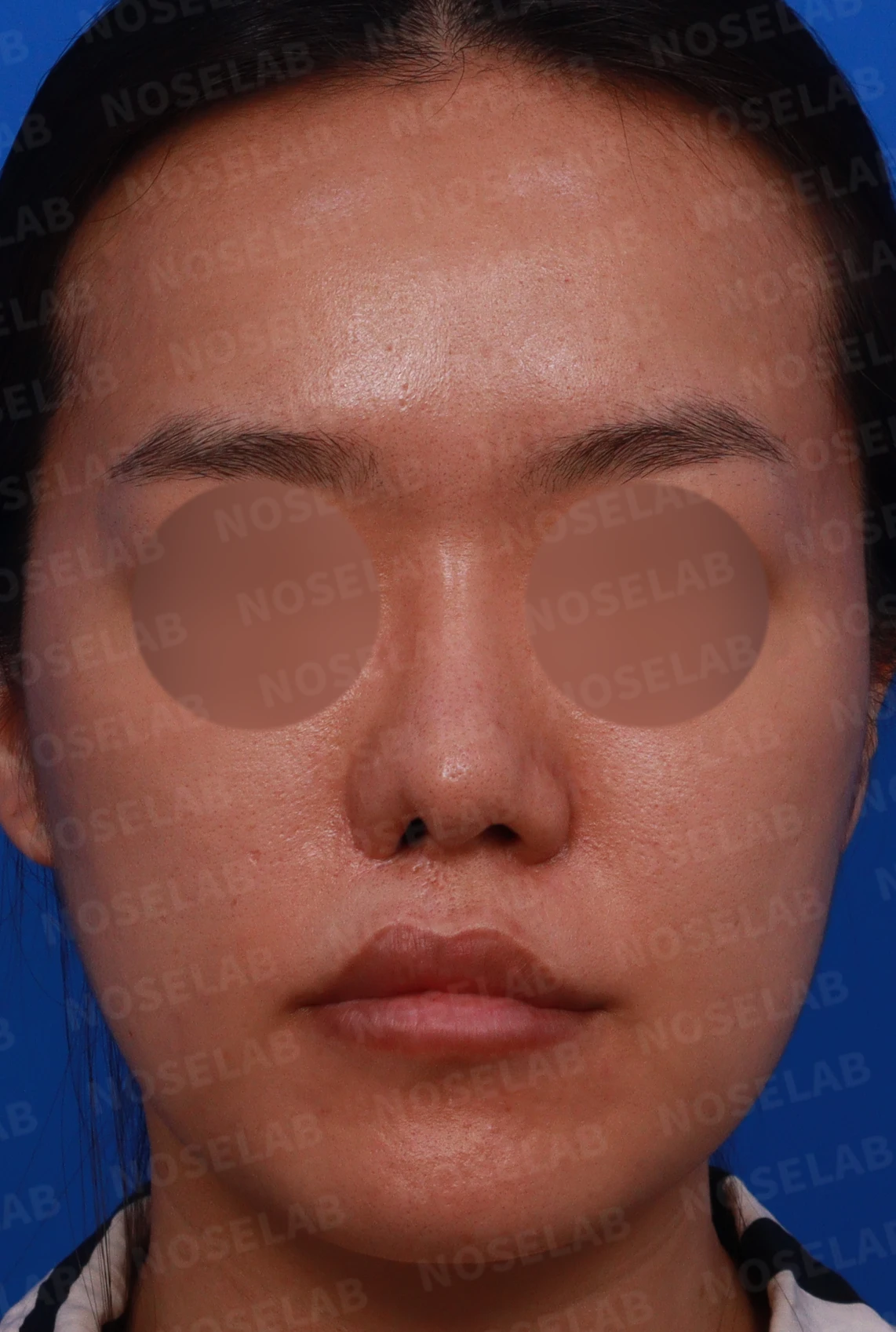
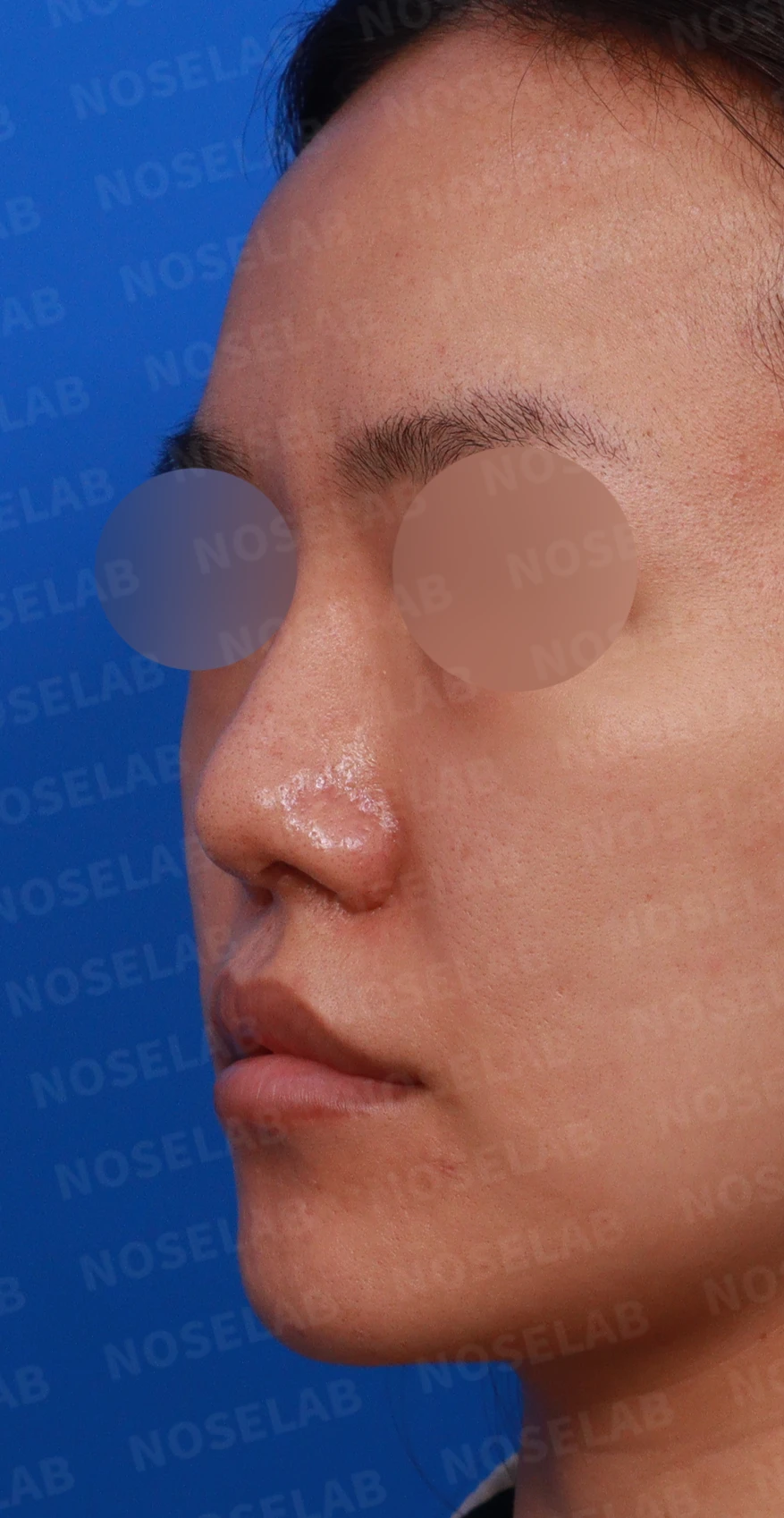
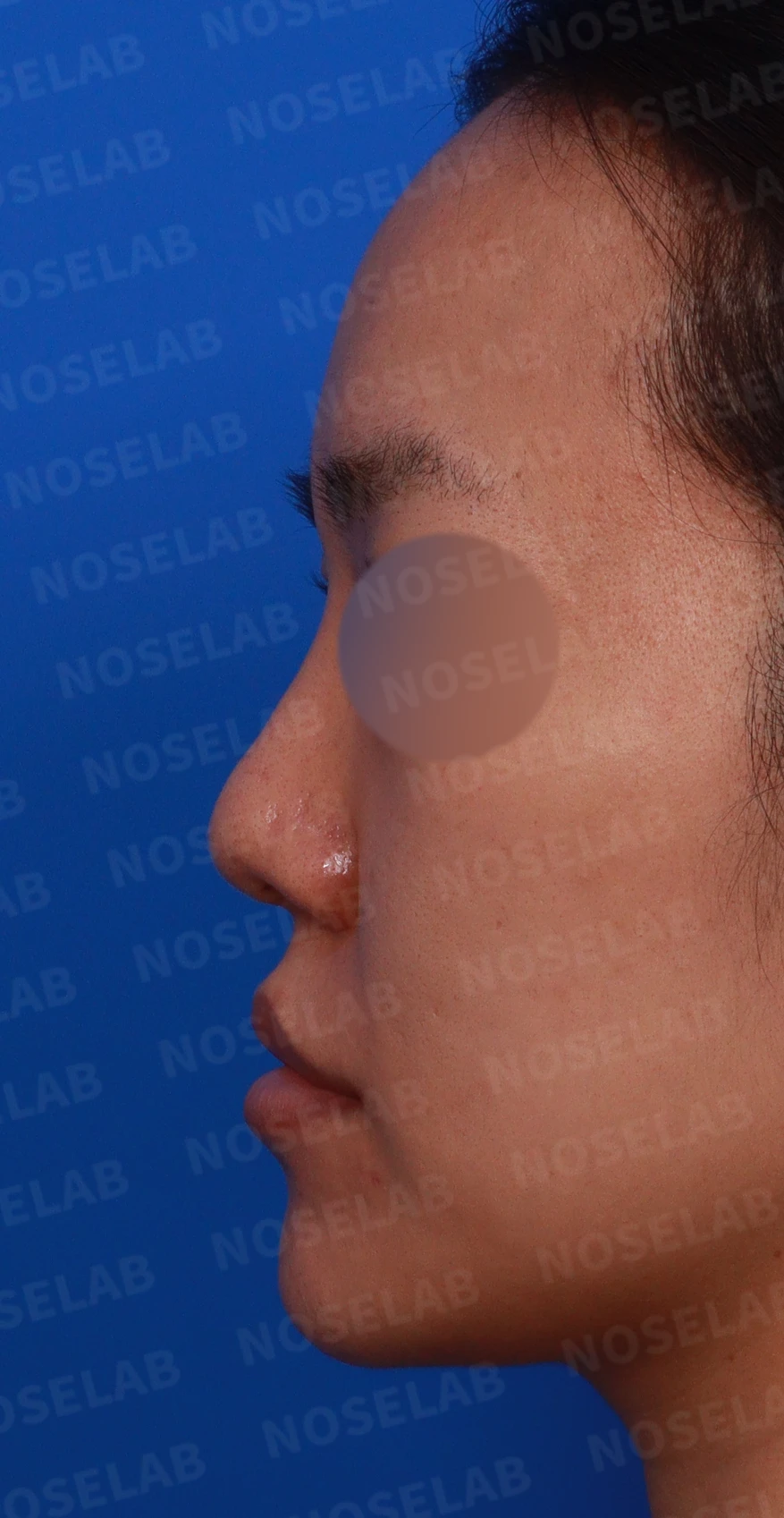
Design consultation photos: front, left oblique view, profile
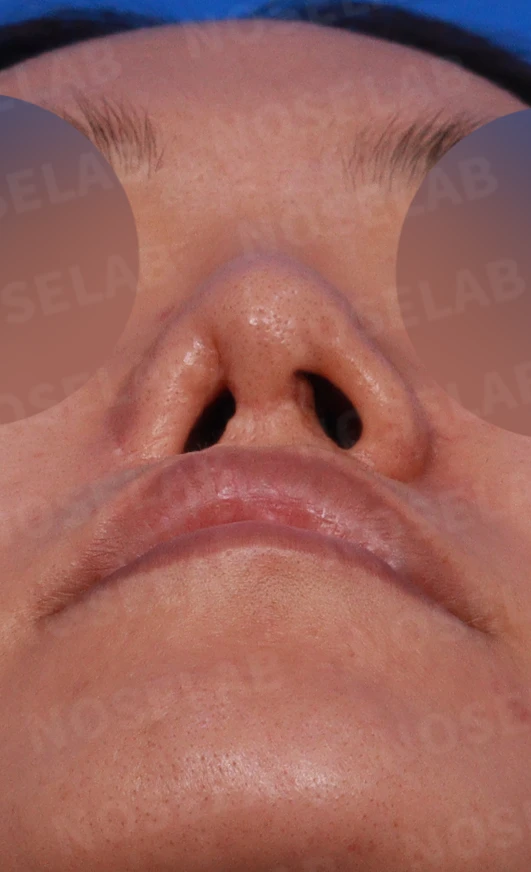
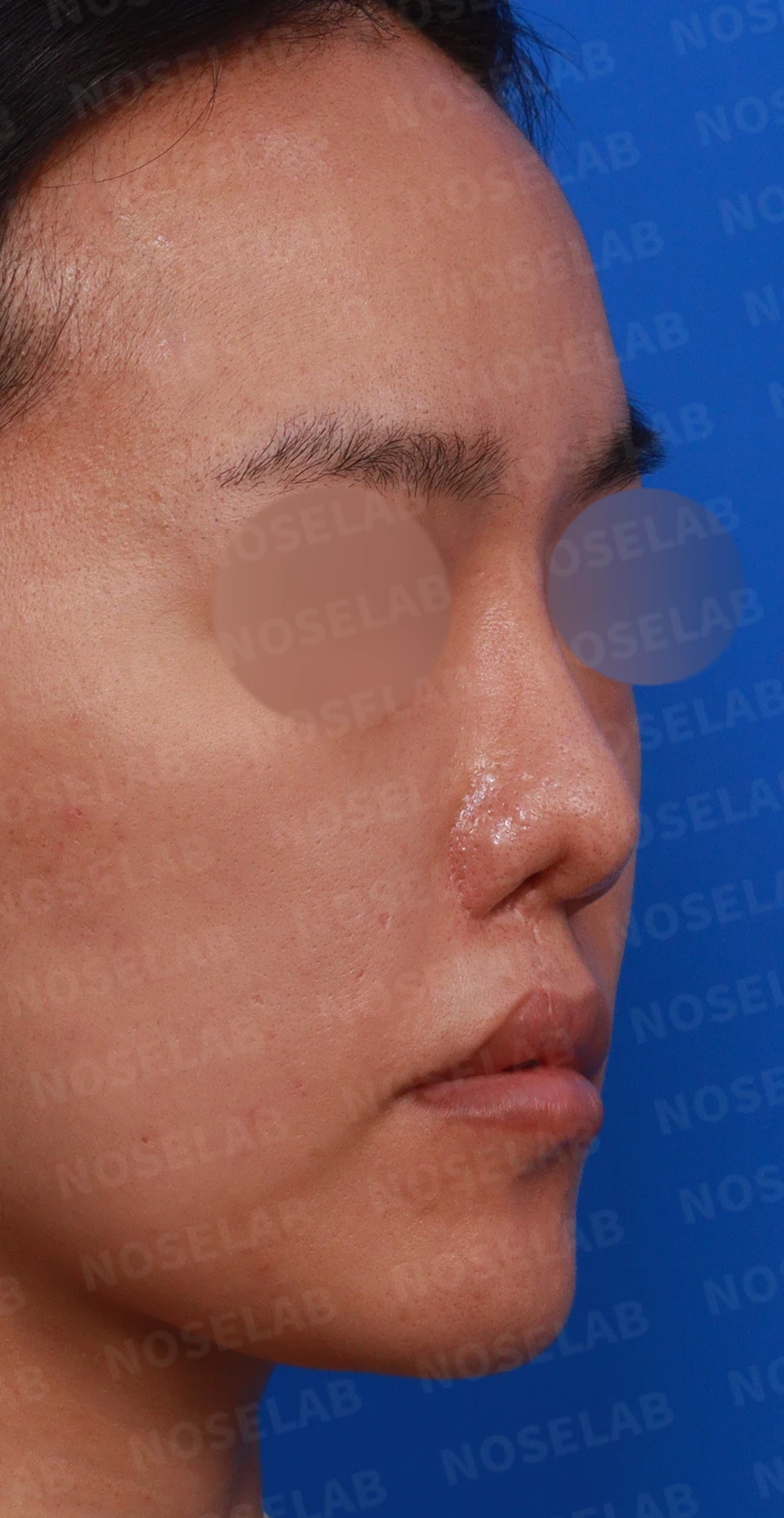
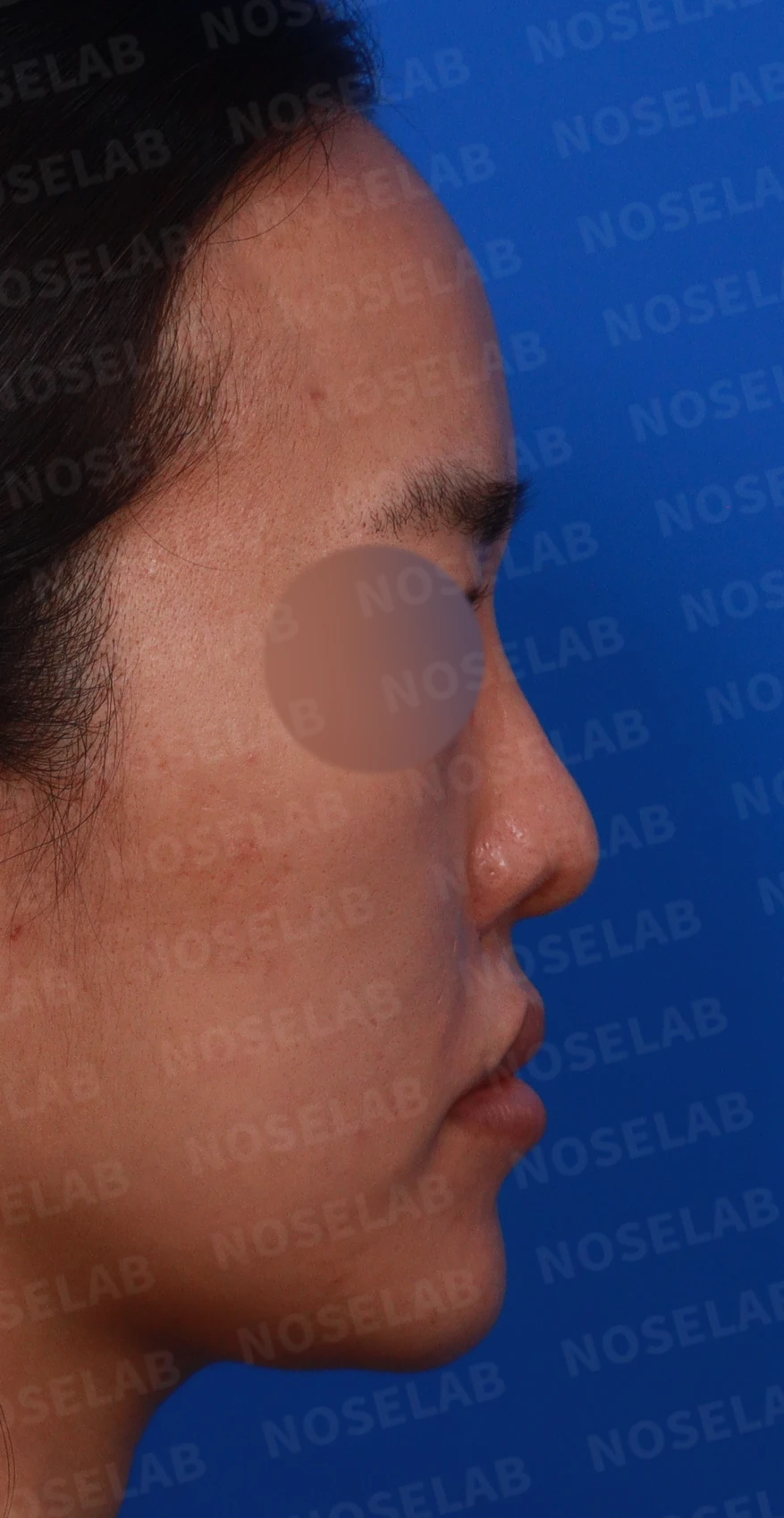
Design consultation photos: basal view, right oblique view, profile
4. Surgical plan
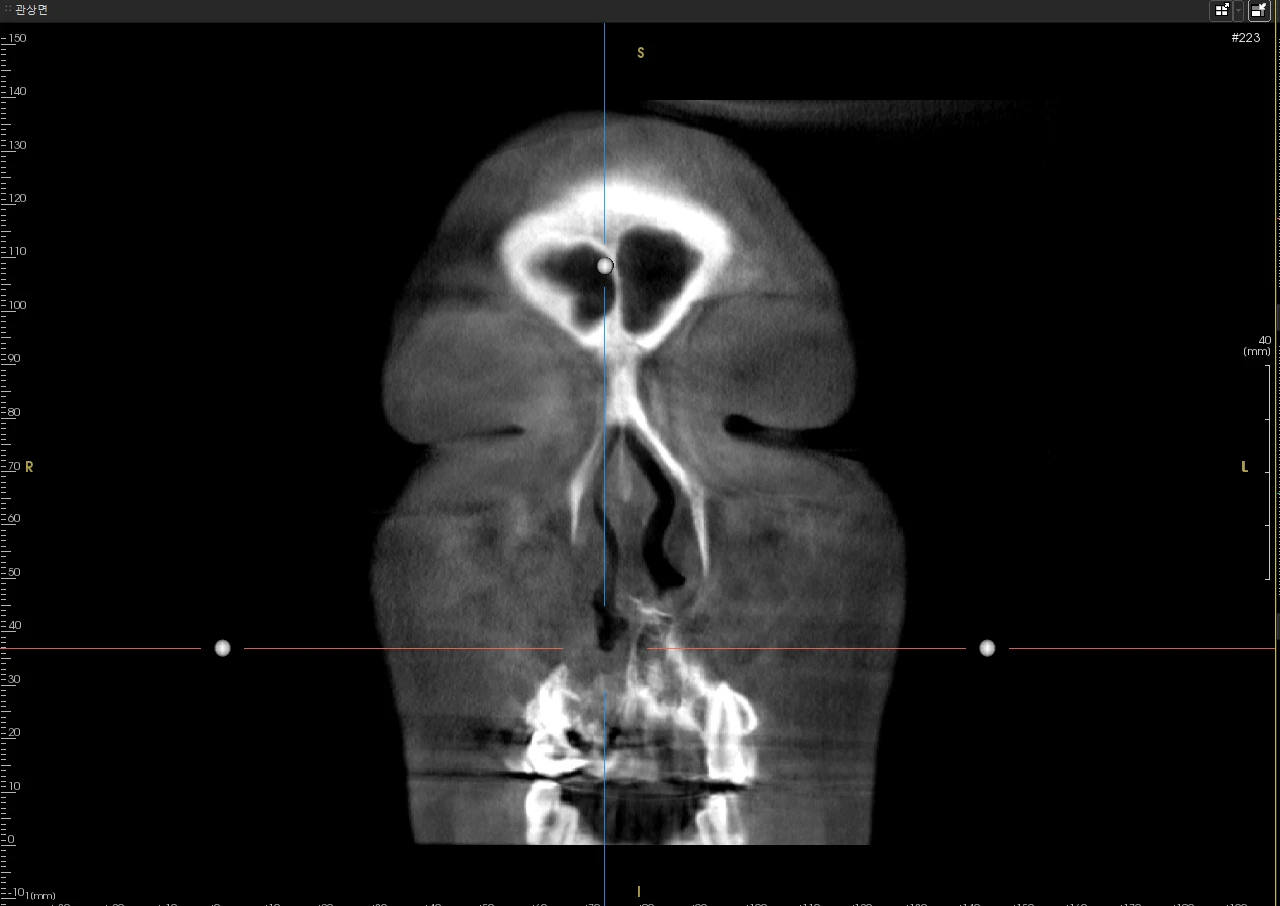
1. Facial CT scan (original image)
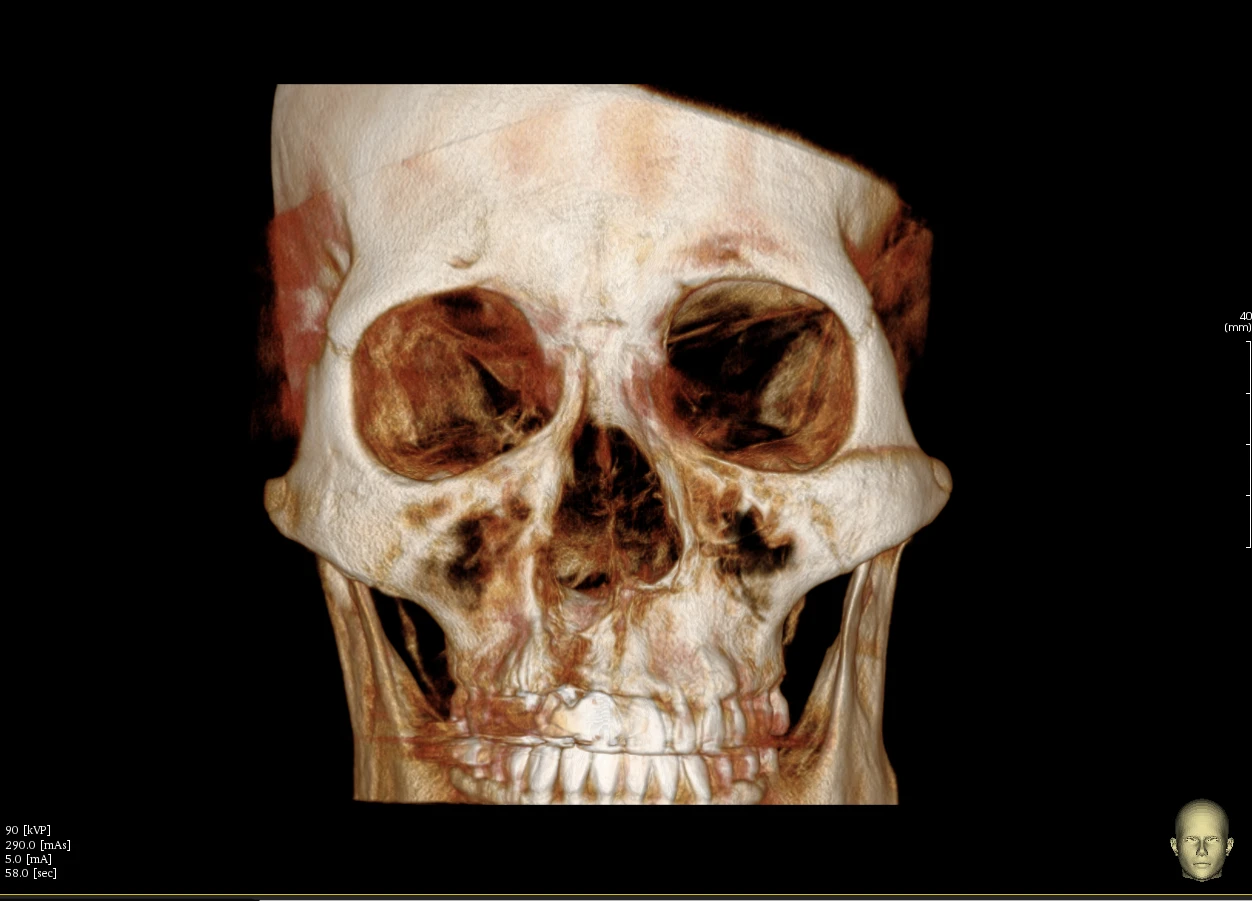
2. 3D facial CT scan (original image)
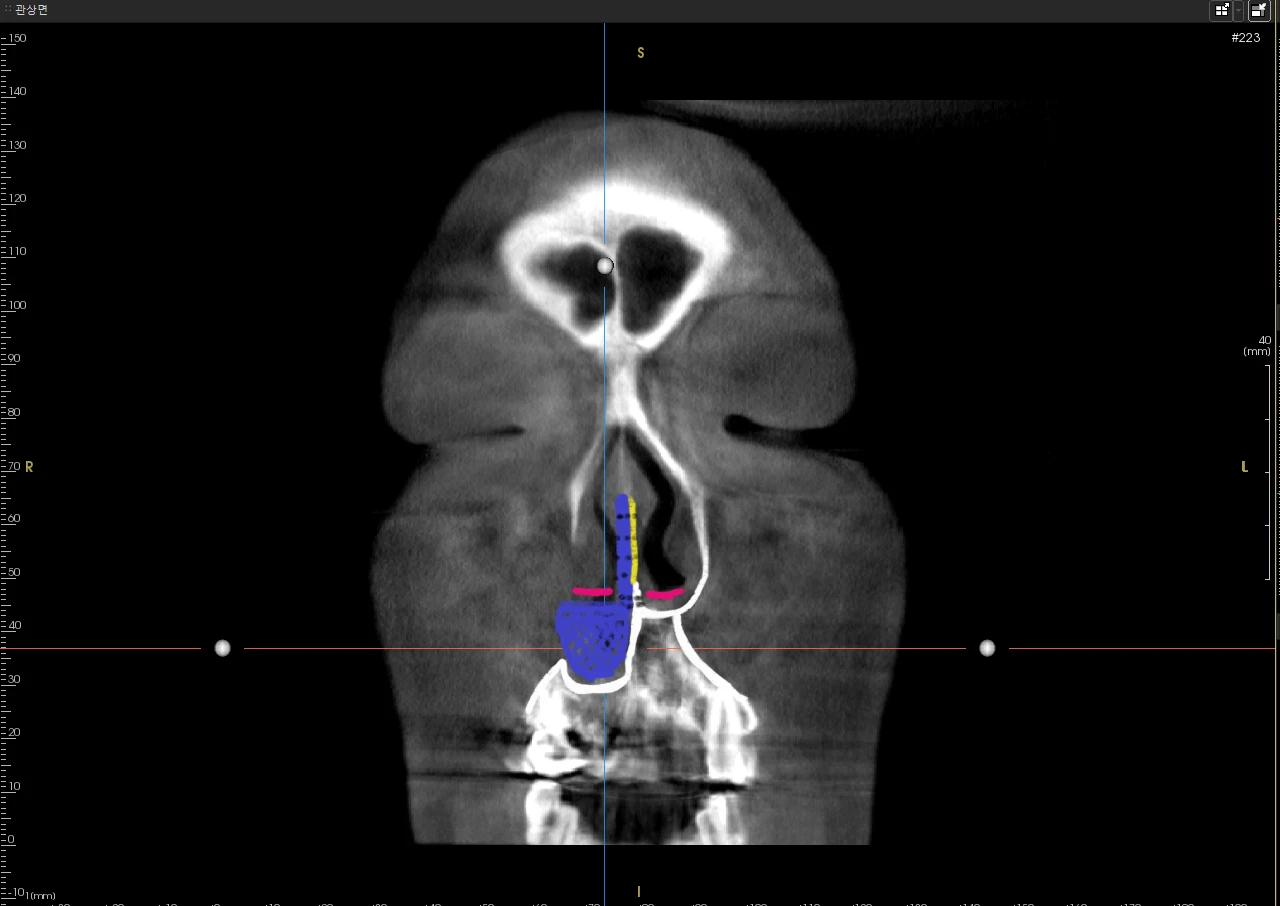
On the facial CT, a defect was observed in the right maxilla (upper jawbone), alongside intranasal asymmetry.
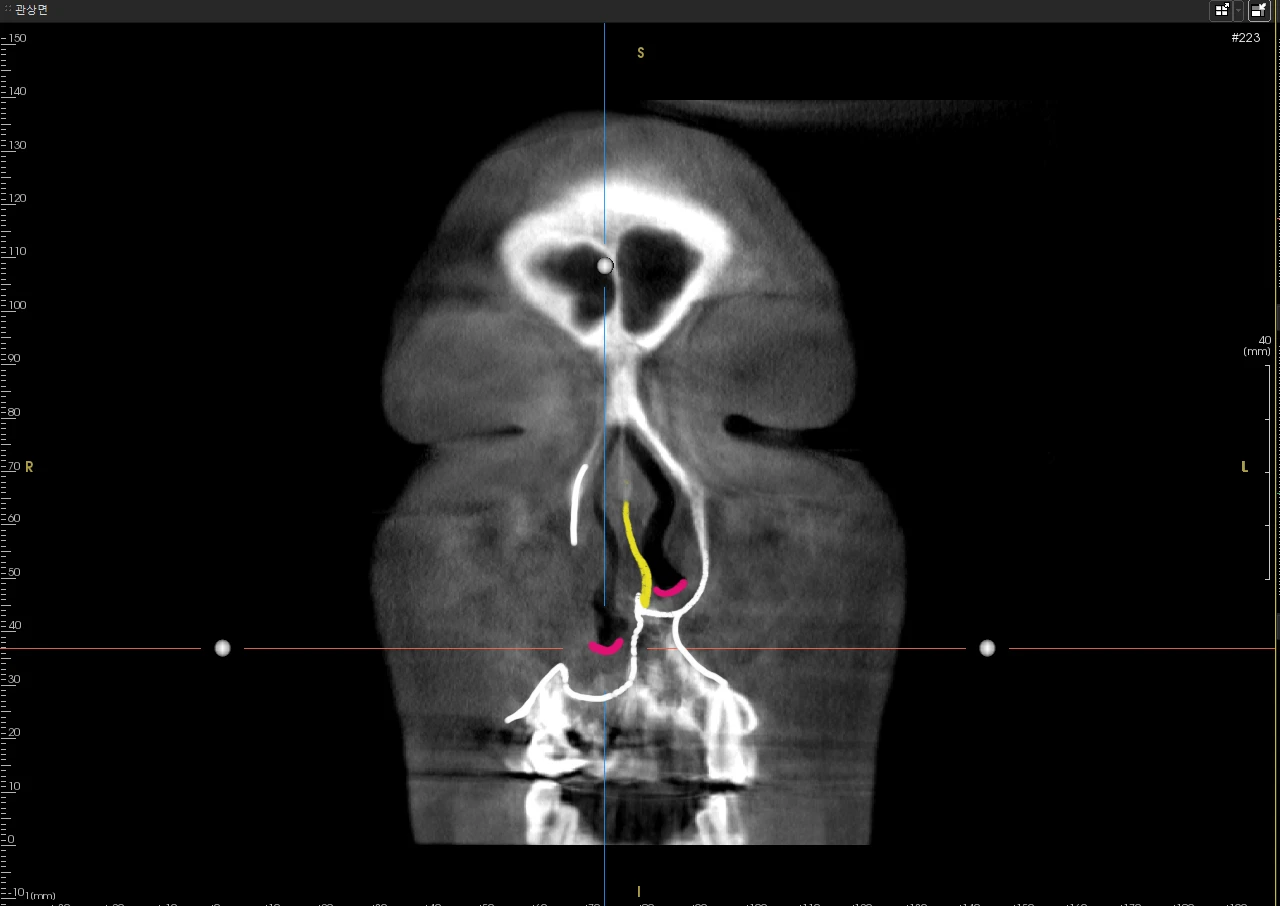
1. Yellow indicates septal cartilage, and red indicates the nasal floor level. White indicates bone. The left side of the image corresponds to the patient's right side.
2. Blue is a schematic showing septal reconstruction and filling of the depressed right floor bone using autologous rib cartilage. The floor height becomes more leveled, and the septum is shifted to the right and straightened.
The yellow line outlines the septal cartilage, and the red line indicates the nasal floor level. The left side of the image corresponds to the patient's right side. As shown, the right nostril floor is substantially lower than the left. The blue in the image illustrates how the asymmetry is addressed using autologous rib cartilage. The septal cartilage was reconstructed to correct the deviation, and the lower portion of the right nostril floor was augmented with autologous rib cartilage.
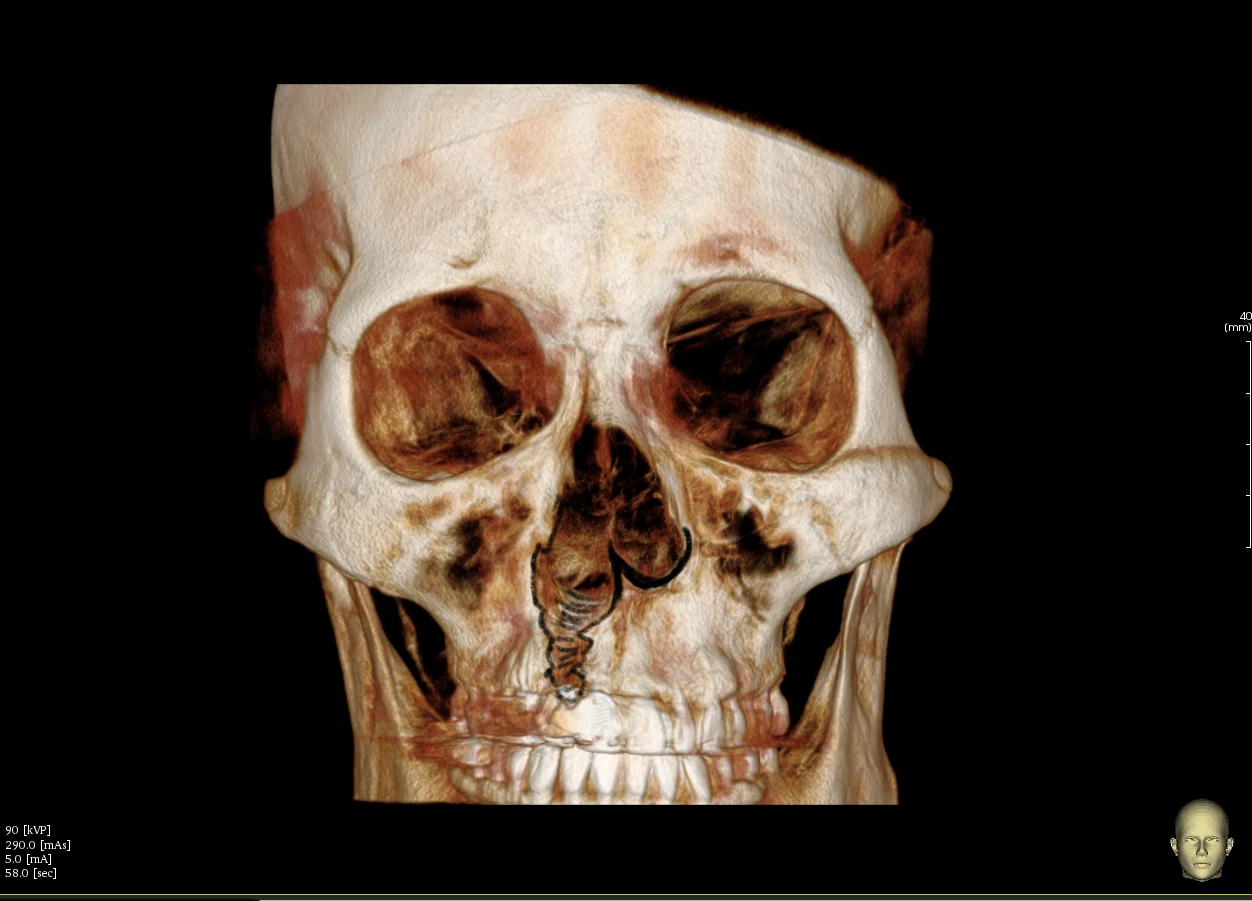
1. Photograph showing depression of the right floor bone
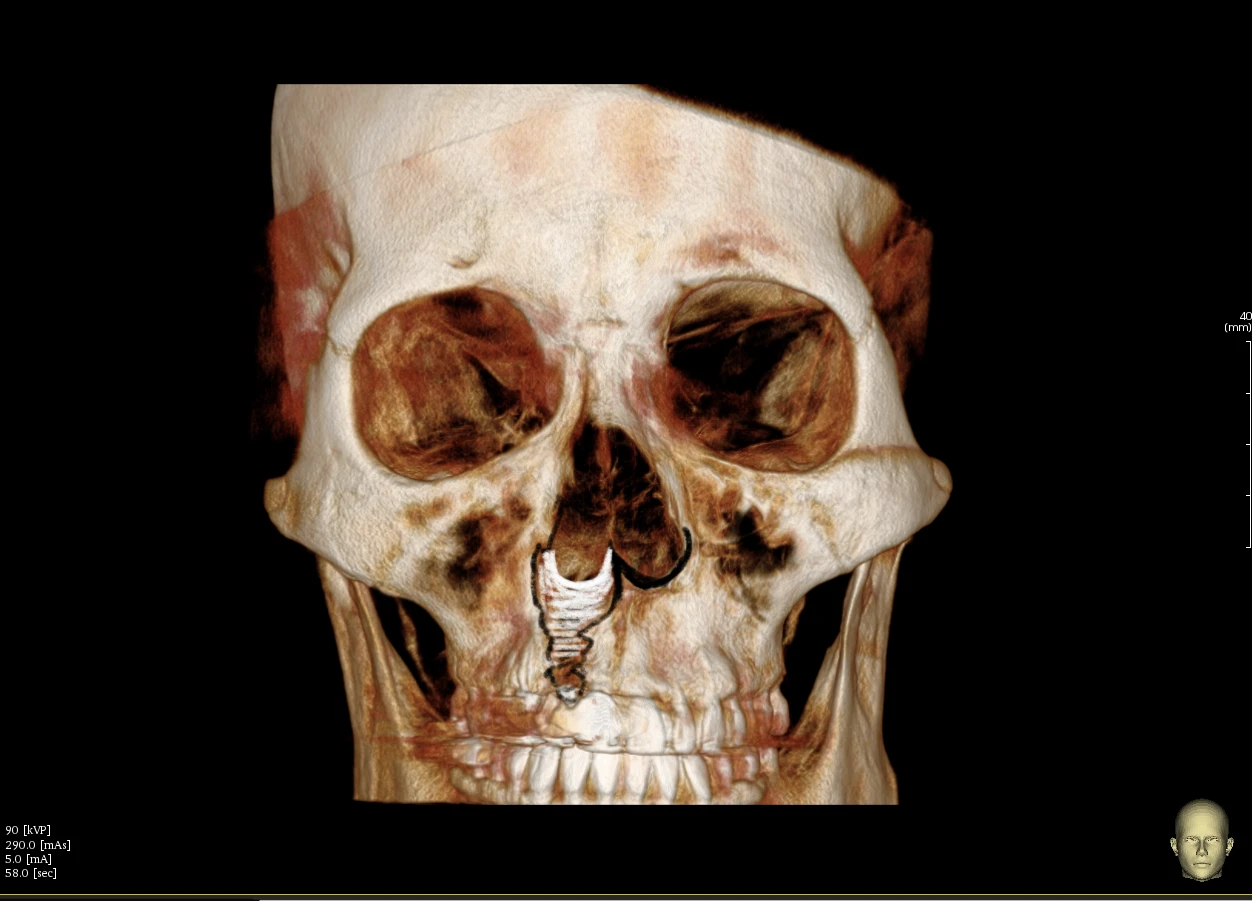
2. Projected plan for filling the area using autologous rib cartilage
The image on the left displays the right maxillary defect visible on 3D CT, and the image on the right illustrates the projected outcome after reconstruction of this area.
5. Procedure details
a) Septal cartilage reconstruction:
- Significant damage was present on the anterior portion of the septal cartilage due to previous forceful fixation without considering the deviated septum
- Partial septal reconstruction was performed by shifting and securing the septum toward the right side using autologous rib cartilage
b) Right lower lateral cartilage reconstruction:
- Almost no lower lateral cartilage remained on the right side
- The right lower lateral cartilage was reconstructed using autologous rib cartilage
- Nostril asymmetry was addressed by symmetrically securing it to cartilage established via septal extension
c) Nostril correction:
- The right alar length was substantially shortened from previous alar procedures
- Because cartilage reconstruction alone had limitations in refining the nostril contour, a cartilage-skin composite graft (skin graft) was placed inside the nostril
- Nostril asymmetry was corrected as much as possible
d) Right nostril floor reinforcement:
- The depressed right nostril floor significantly contributed to nostril asymmetry and the crooked appearance
- The maxillary defect was reinforced using autologous rib cartilage
- Overall nostril balance was improved
6. Before-and-after photo comparison
Front view:
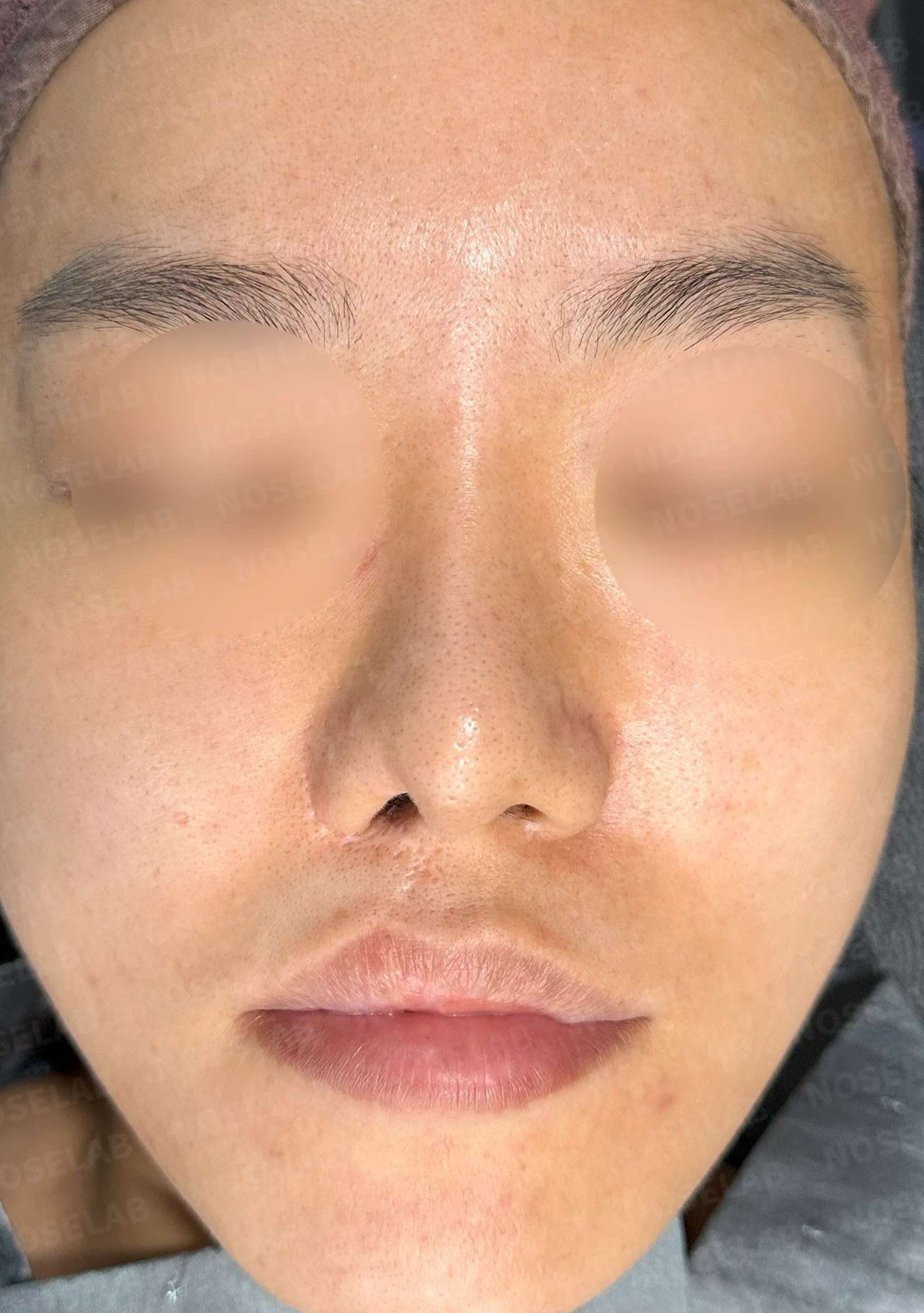
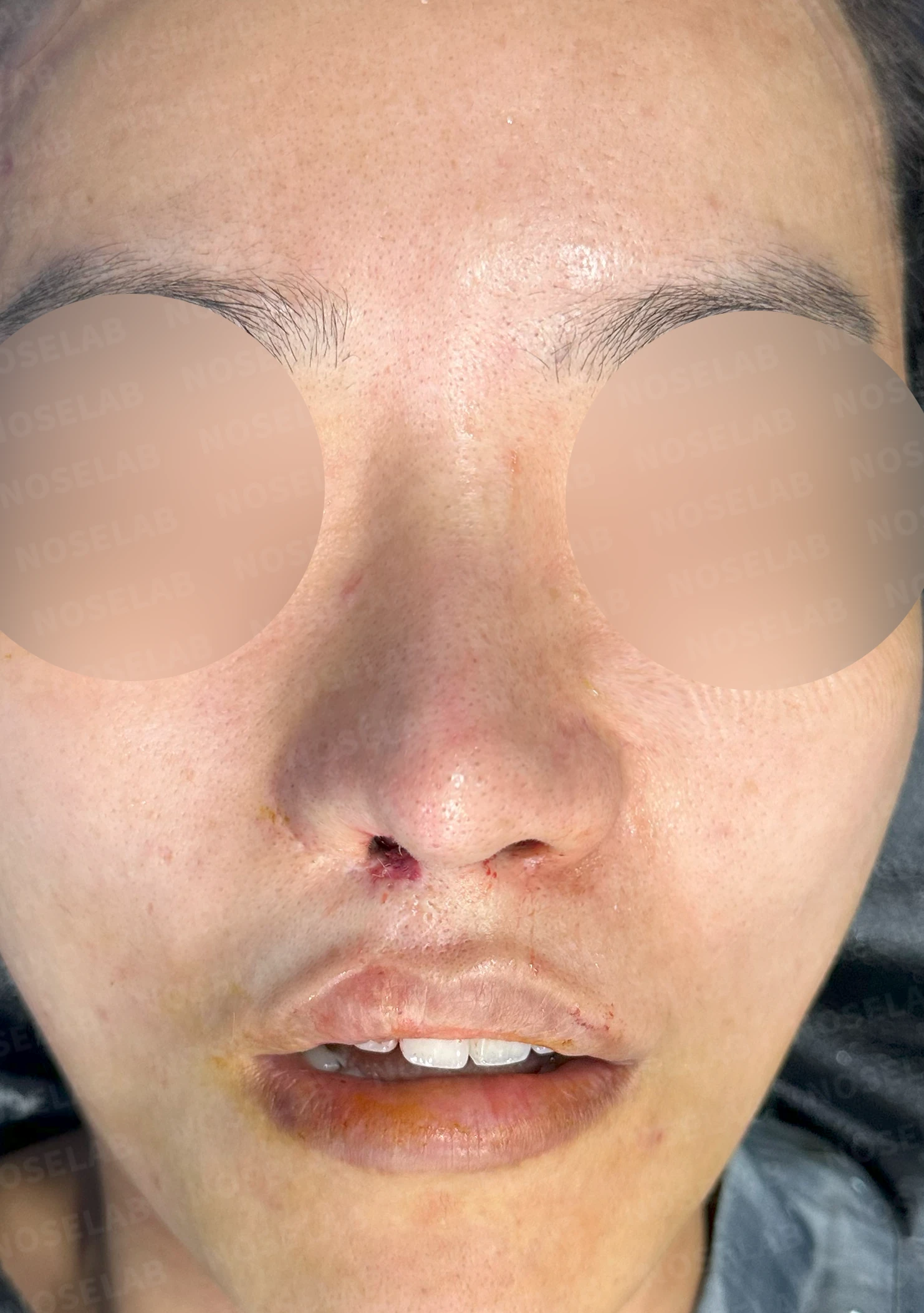
Before surgery / Day 0 immediately after surgery Photos taken immediately after surgery show swelling and may differ from the final result.
- Nostril asymmetry, alar asymmetry, deviation, and bulbous appearance were all noticeably improved
Profile view:
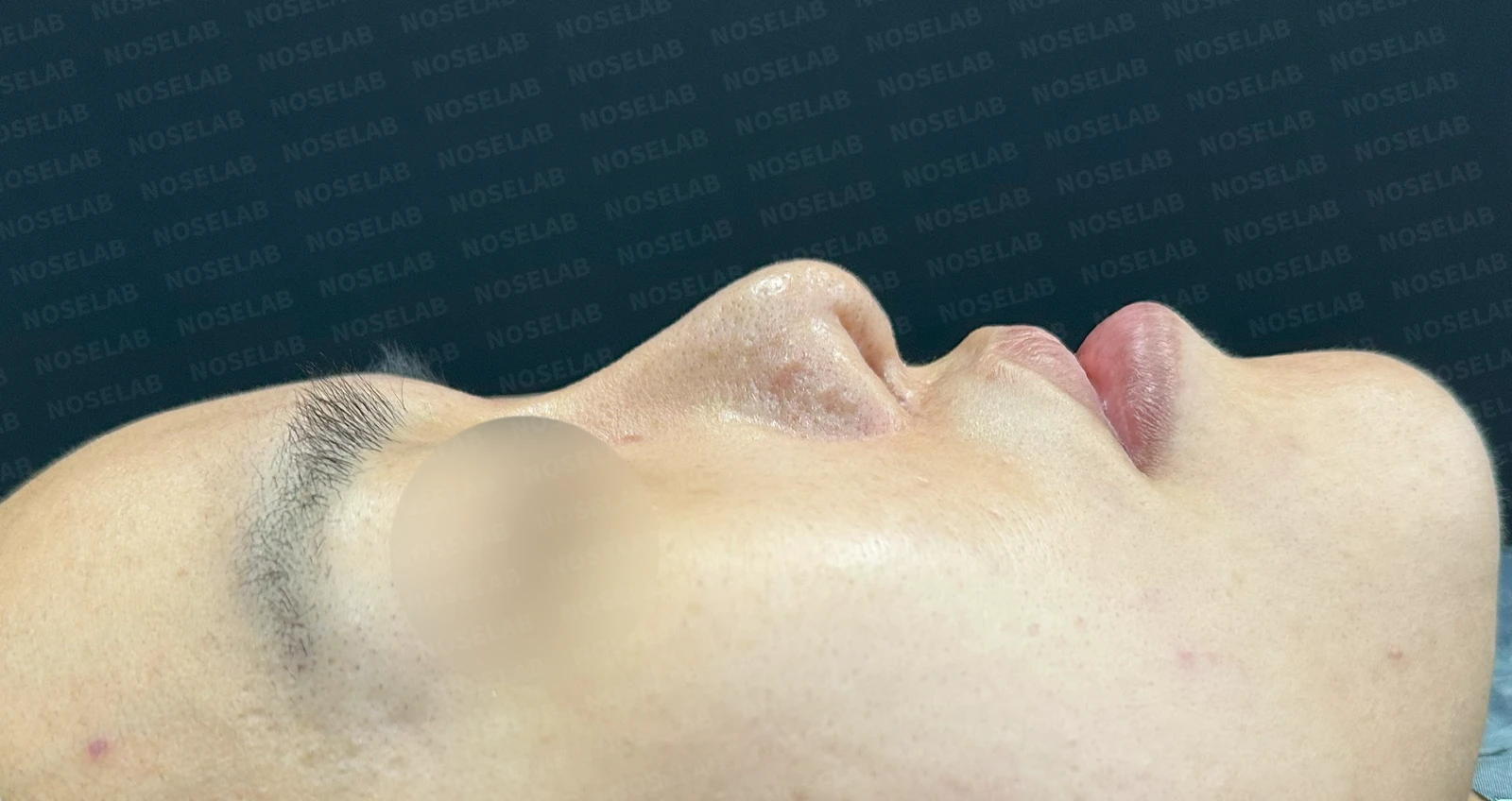
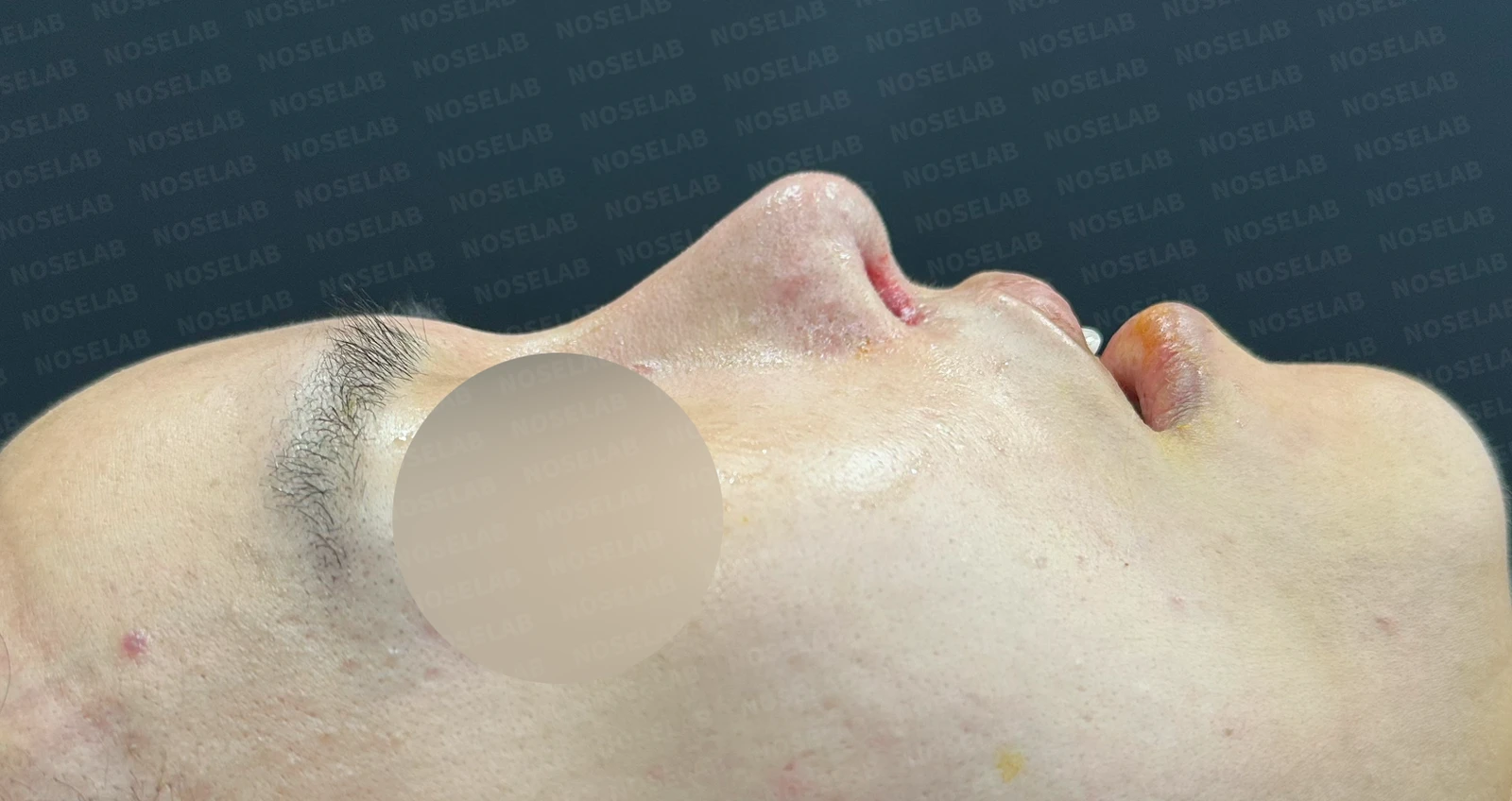
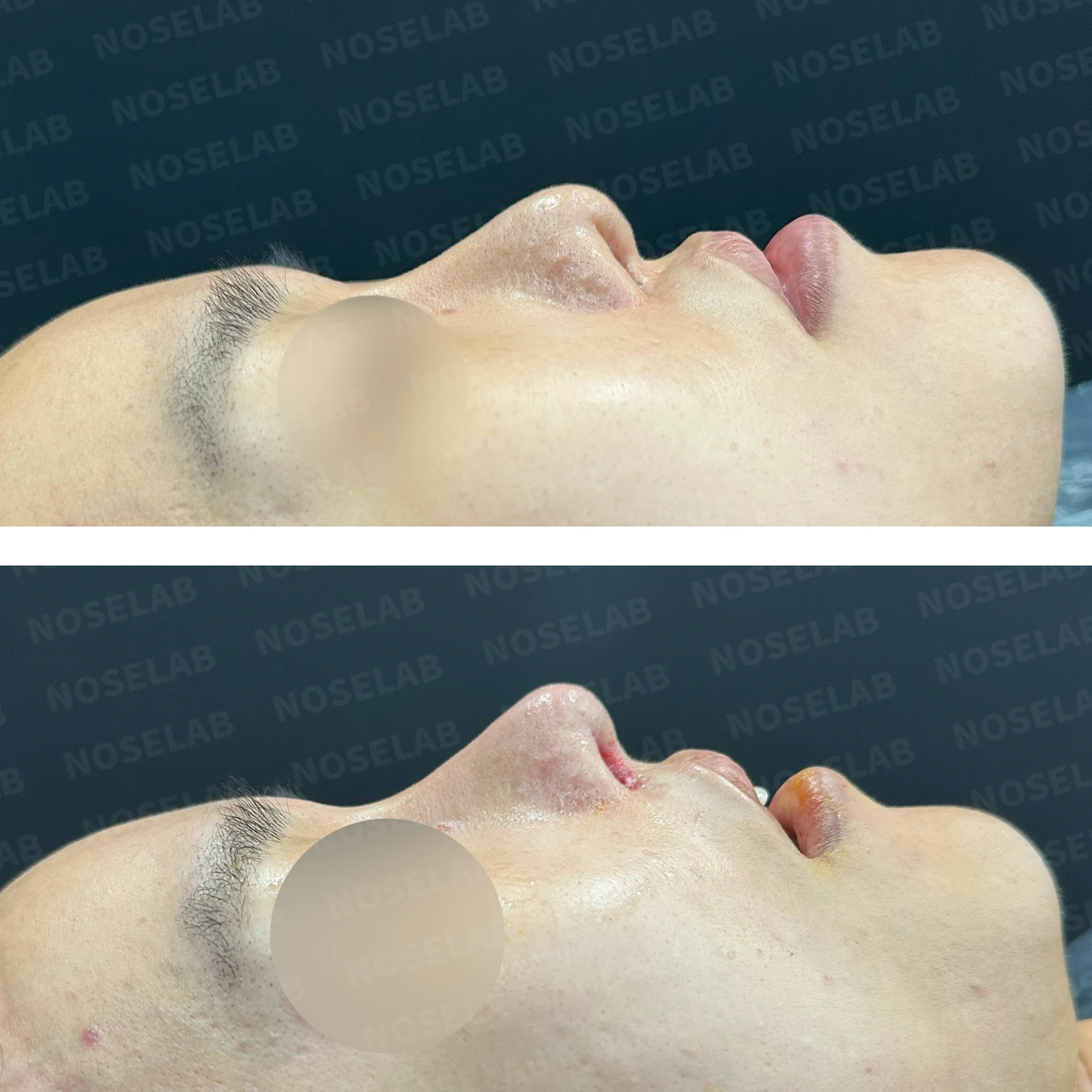
Before surgery / Day 0 immediately after surgery Photos taken immediately after surgery show swelling and may differ from the final result.
- The nasal tip was elevated into a well-defined projection
- The radix was lowered naturally, improving three-dimensional midface contour
- A natural straight bridge line was formed
- The columella was lowered appropriately, achieving natural correction of the nasolabial angle
Oblique view:
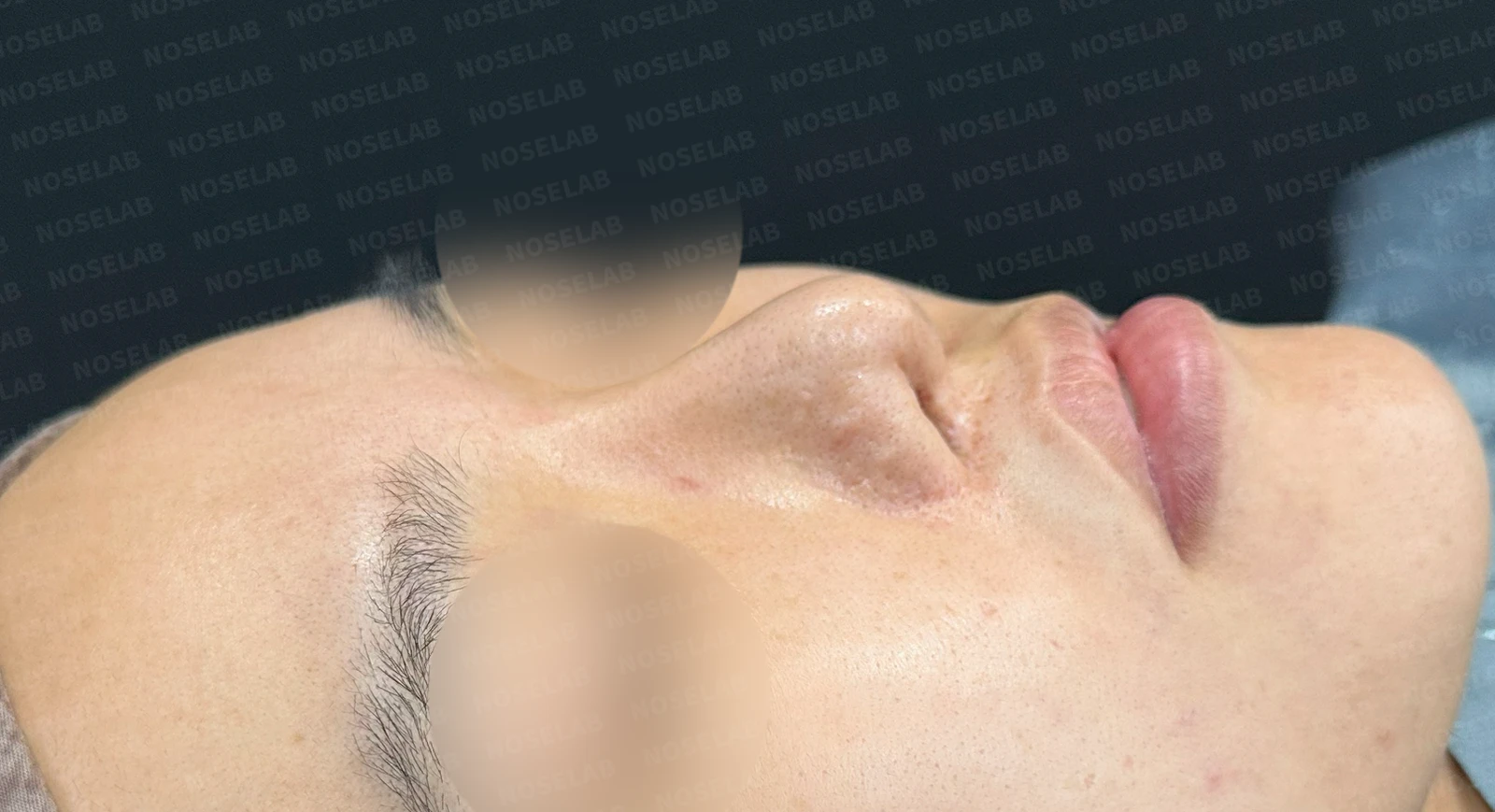
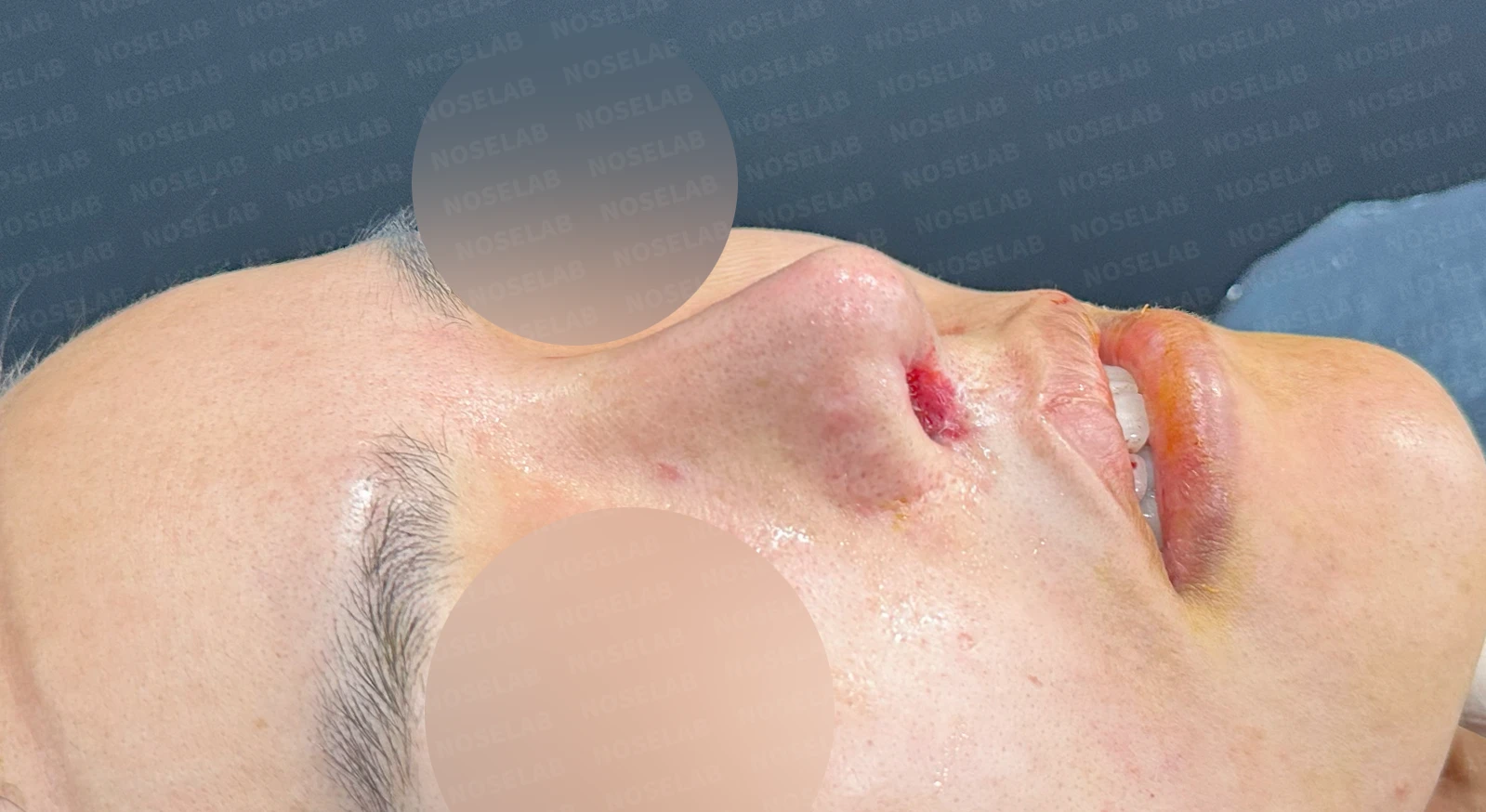
Before surgery / Day 0 immediately after surgery Photos taken immediately after surgery show swelling and may differ from the final result.
Nostrils:
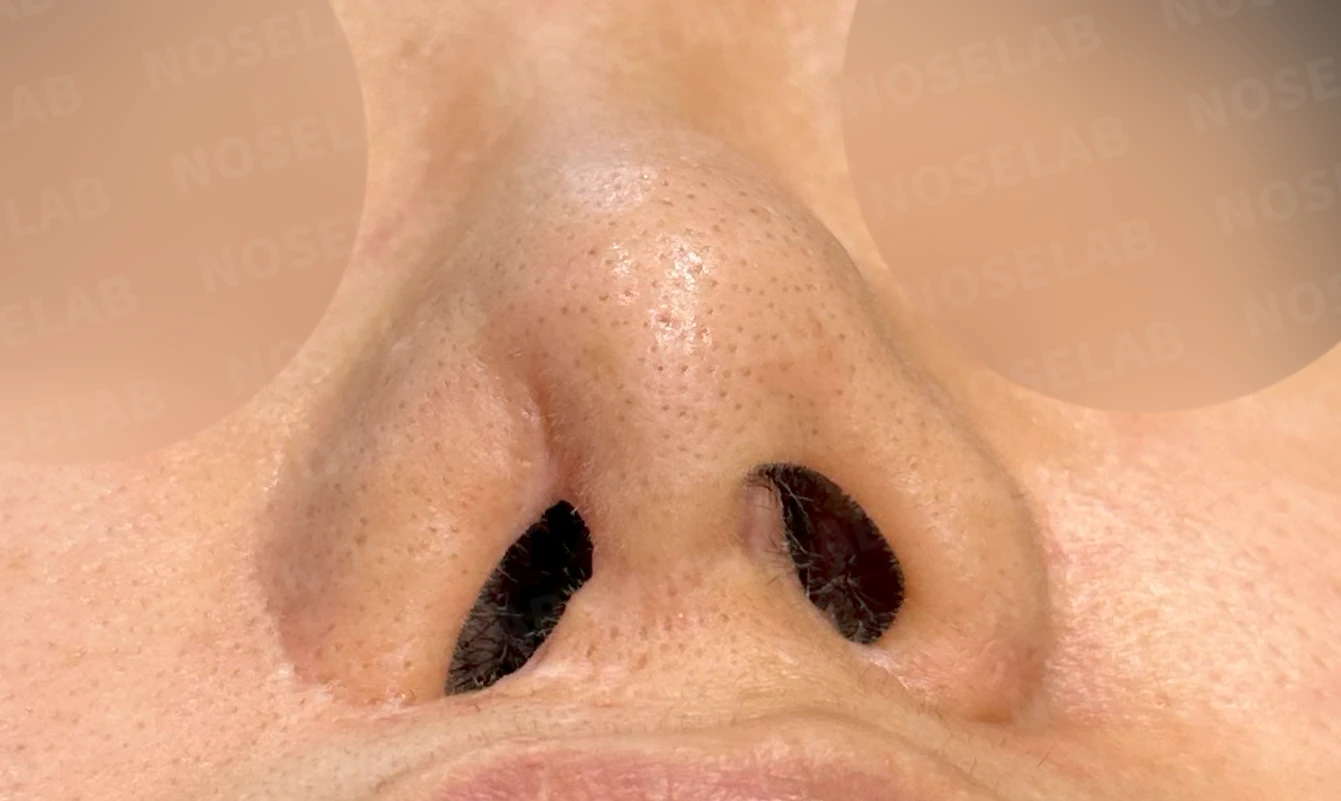
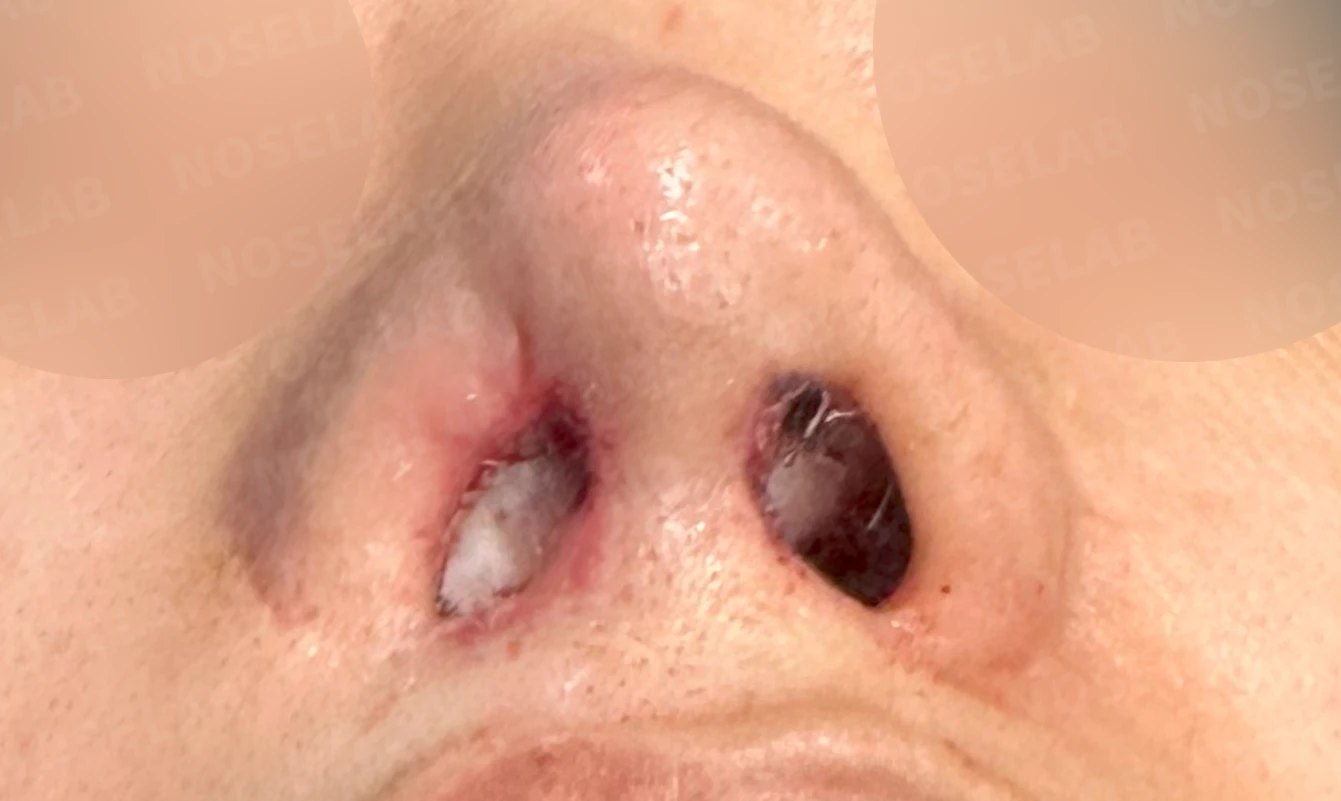
Before surgery / Day 0 immediately after surgery Photos taken immediately after surgery show swelling and may differ from the final result.
- The collapsed right nostril was substantially restored
- The nostril shape became more natural
- The tilted columella was straightened
- Asymmetry stemming from depression of the nostril floor was significantly improved
7. Overall assessment
Rhinoplasty in patients with cleft lip and palate can be described as a constant struggle against asymmetry. Although it is a demanding and complex procedure, understanding the sincere hopes of these patients makes it work that cannot be given up on.
In these patients, congenital discrepancies exist in cartilage development between both sides, and the underlying skeletal framework that should be strong and symmetric is inherently asymmetric. Therefore, attempting to correct only the soft tissue and skin without reconstructive correction of the framework cannot provide a fundamental solution.
For this reason, our cleft rhinoplasty approach involves reinforcing the bone, repositioning and securing the septum through septal reconstruction, and achieving maximum possible alar symmetry through lower lateral cartilage reconstruction.
However, limitations exist regarding tip elevation due to previous surgeries and prior alar reductions. The soft tissue envelope is deficient, and tissue compromise from repeated procedures requires moderate expectations. It may be difficult to anticipate significant changes from the current bridge height, and limitations exist because the silicone implant is carved to match tip height.
In this case, the patient acknowledged certain limitations regarding the correction of asymmetry. Instead, the primary goal of the surgery was to achieve an aesthetically pleasing nose. I explained beforehand that while the indentation at the nasal tip would improve, achieving the same smooth appearance as the unaffected side could be difficult, and a second correction might be necessary.
8. Concluding remarks
Rhinoplasty in patients with cleft lip and palate is truly a challenging endeavor. Nevertheless, being able to restore hope and confidence through these complex procedures makes this work deeply rewarding.
While creating complete symmetry and an ideal shape may be difficult in real practice, our goal is to deliver the most natural and balanced outcome possible. To that end, NOSELAB continually studies and refines surgical techniques.
I hope this case offers encouragement to those facing concerns regarding asymmetry related to cleft lip and palate. Please consult with a specialist to identify the surgical approach best suited for your condition. NOSELAB will continue to do its best to support healthy and balanced nasal outcomes for our patients.
This was Dr. Peter C. Kang. Thank you.
Thank you.
#cleftrhinoplasty #asymmetricnosecorrection #crookednosecorrection #nostrilasymmetry #widecollapsenose #bulboustiprhinoplasty #autologousribcartilage #closedrhinoplasty #nasalreconstruction #ENTspecialistrhinoplasty #customrhinoplasty

Limitations and risks
When autologous rib cartilage is used, scarring and pain may remain at the donor site on the chest, and pneumothorax (pleural injury) can occur rarely. Over time, the grafted cartilage may warp or undergo partial resorption.
When the septum is corrected at the same time, nasal obstruction may persist or recur, and in rare cases, septal perforation or changes in smell may occur.
Common potential risks include infection, bleeding, asymmetry, scarring, skin necrosis, and insufficient improvement; results vary depending on individual skin condition and previous surgical history.