Hello, I am Dr. Peter C. Kang.
Today, I would like to introduce a reconstruction case of a patient who was experiencing difficulties with both the shape and function of the nose due to contracture deformity following multiple nasal surgeries.
🔍 Surgical history
This patient was an individual who had undergone a total of 6 nasal surgeries.
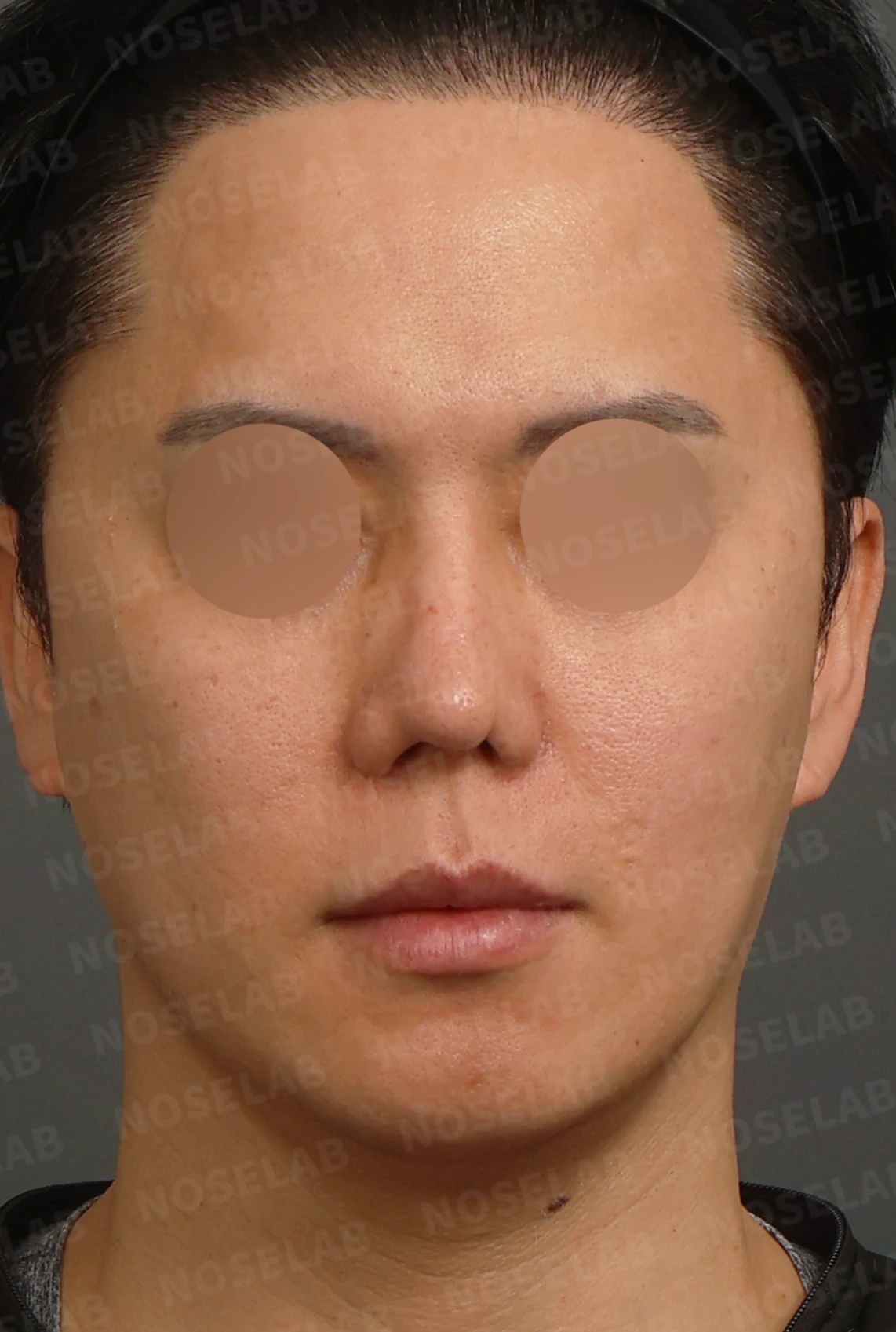
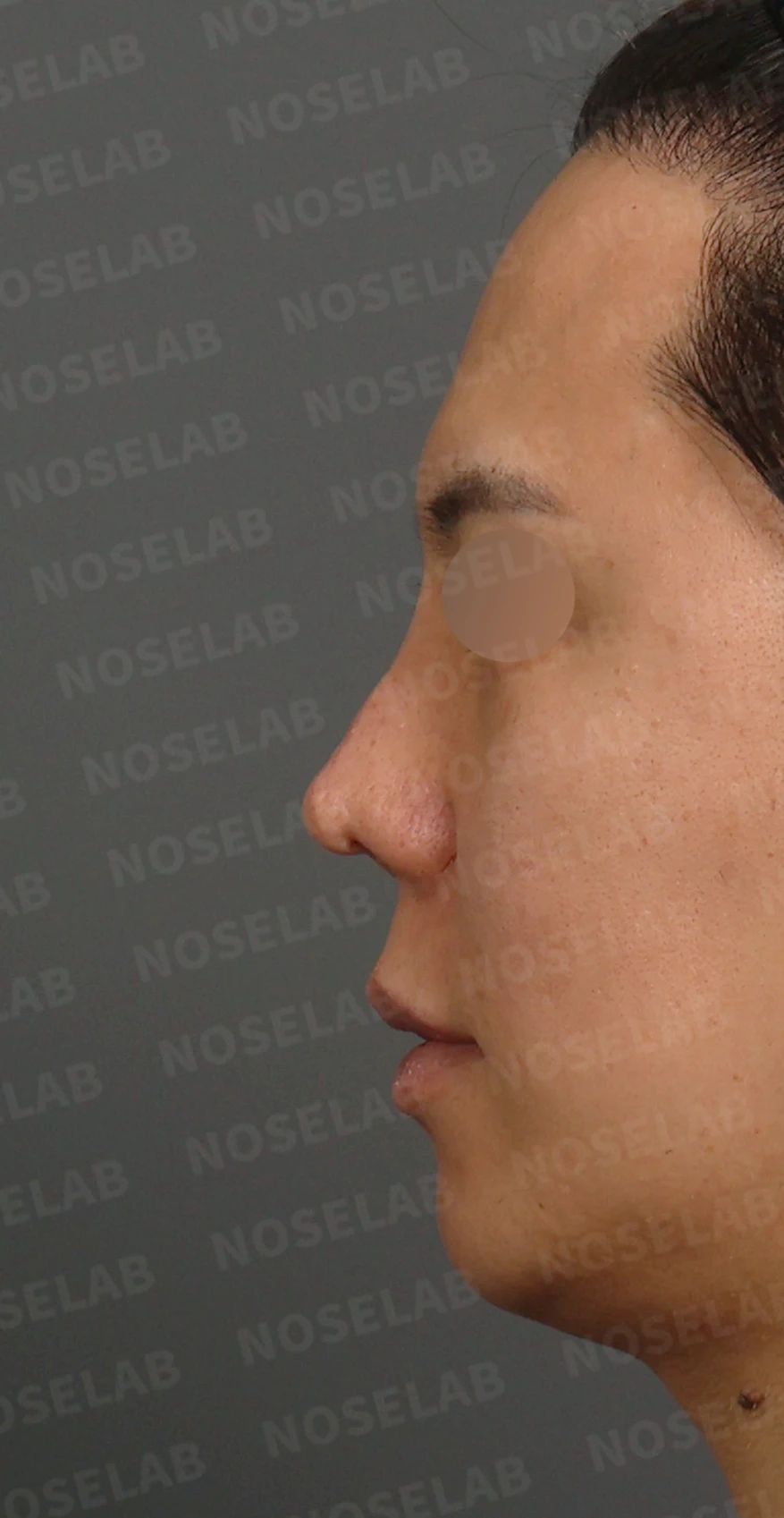
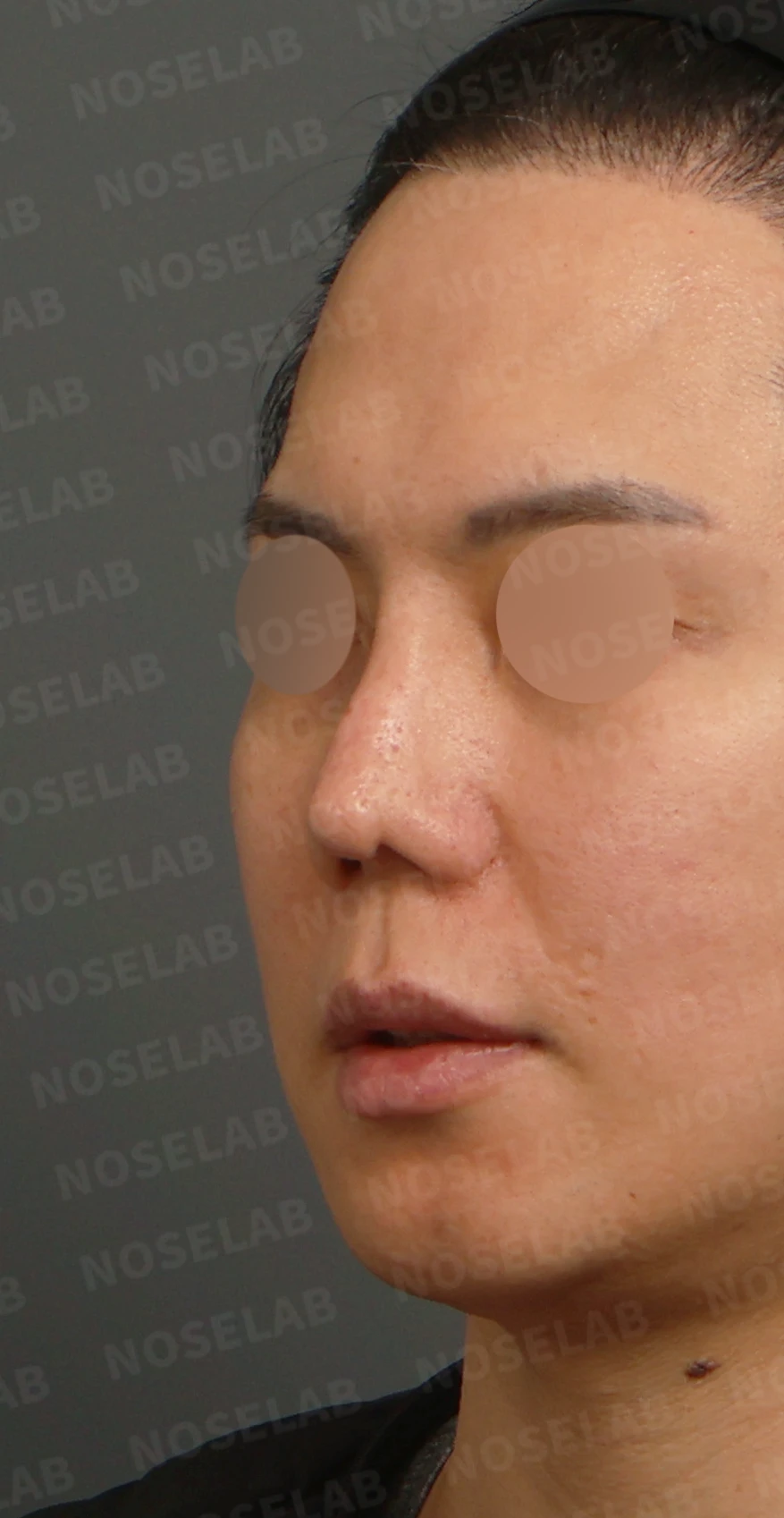
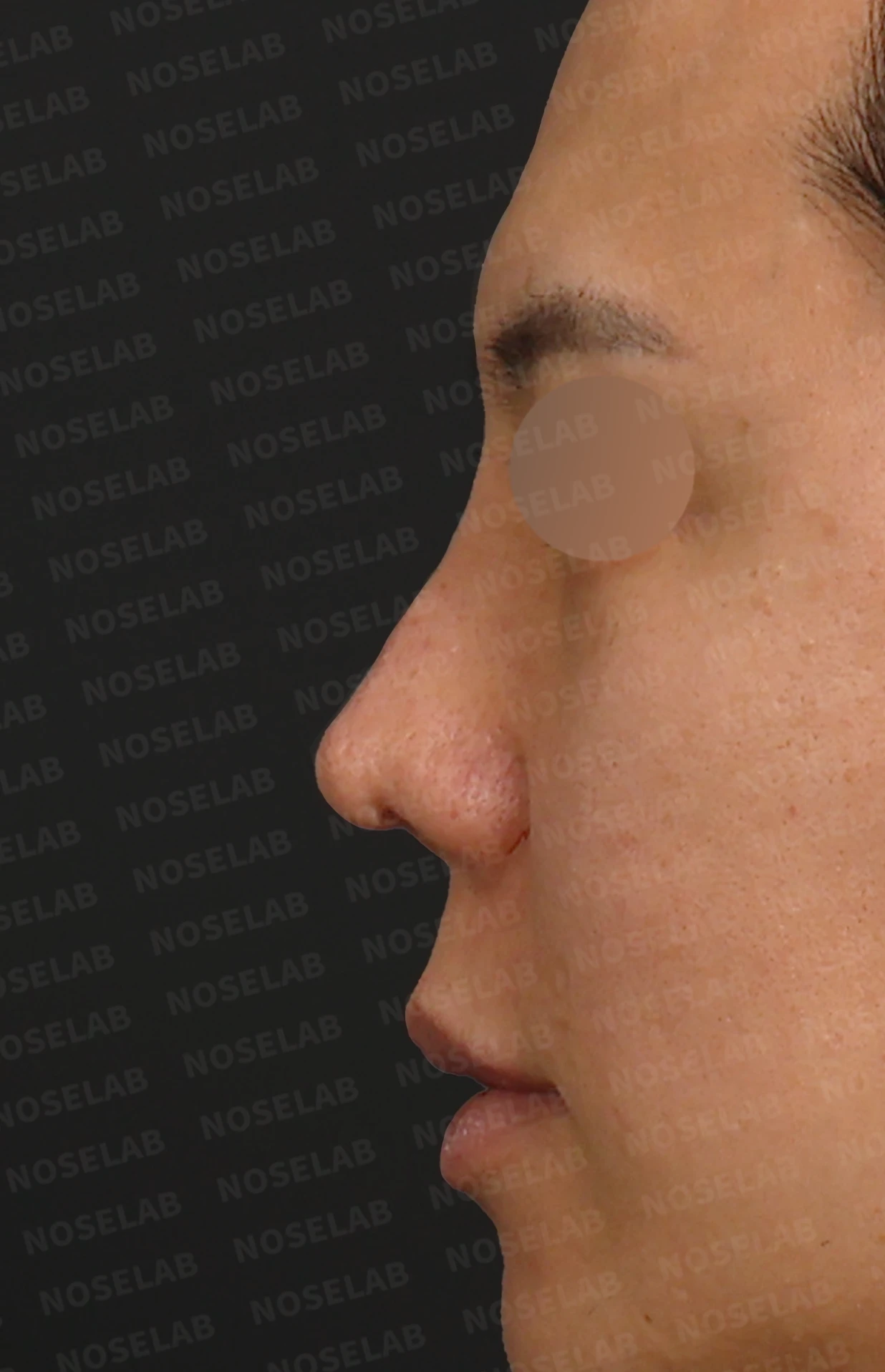
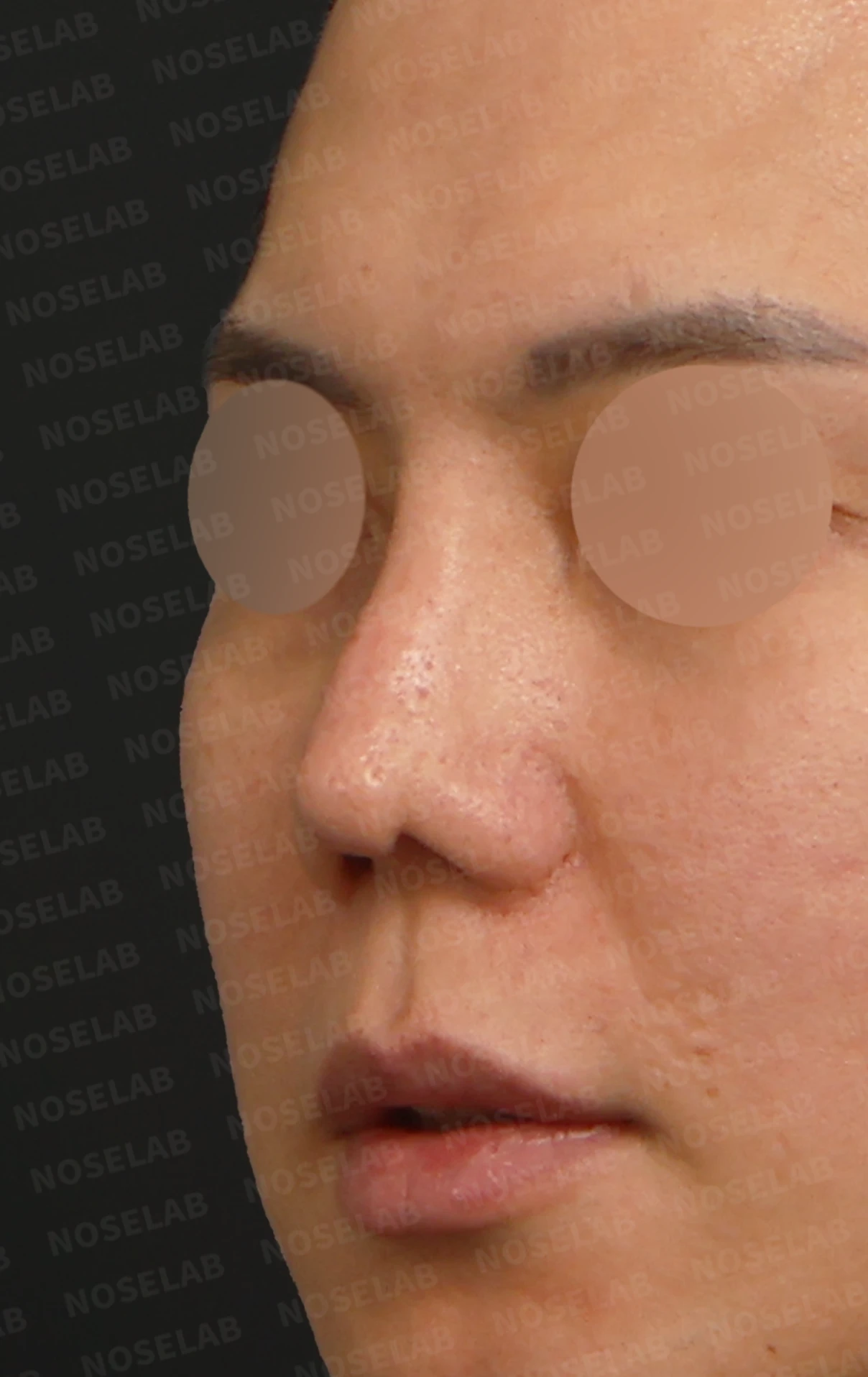
Front, left profile, and oblique views during design consultation.
About 17 years ago: Alar reduction
About 6 years ago: Rhinoplasty using an implant and autologous rib cartilage -> Implant removed due to inflammation
6 months later: Revision rhinoplasty with an implant and autologous rib cartilage -> Implant removed again after splint removal due to redness
6 months later: Reconstruction of the nasal bridge and nasal tip using only autologous rib cartilage -> Deformity occurred where the nasal tip became short and pointed
About 3 years ago: Additional revision after newly harvesting autologous rib cartilage
Through repeated surgeries, wound healing in the columellar area was compromised, and generalized contracture deformity had progressed.
💉 Patient requests
Desire to lower the radix (starting point of the nasal bridge)
Improve the retracted columella so that it becomes visible
Correct the pinched-looking areas
Correction of crooked nose
Improve nasal obstruction alternating between both sides
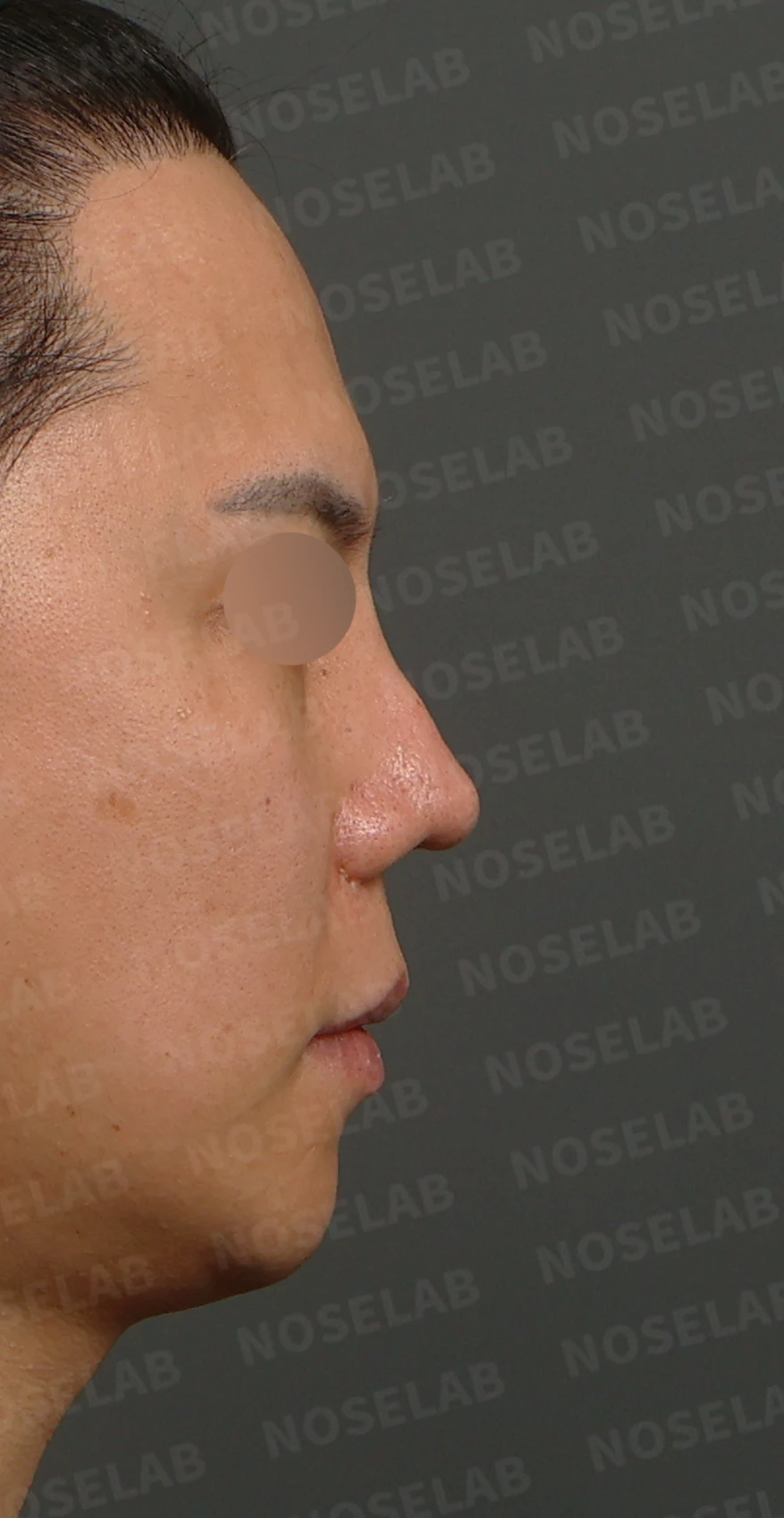
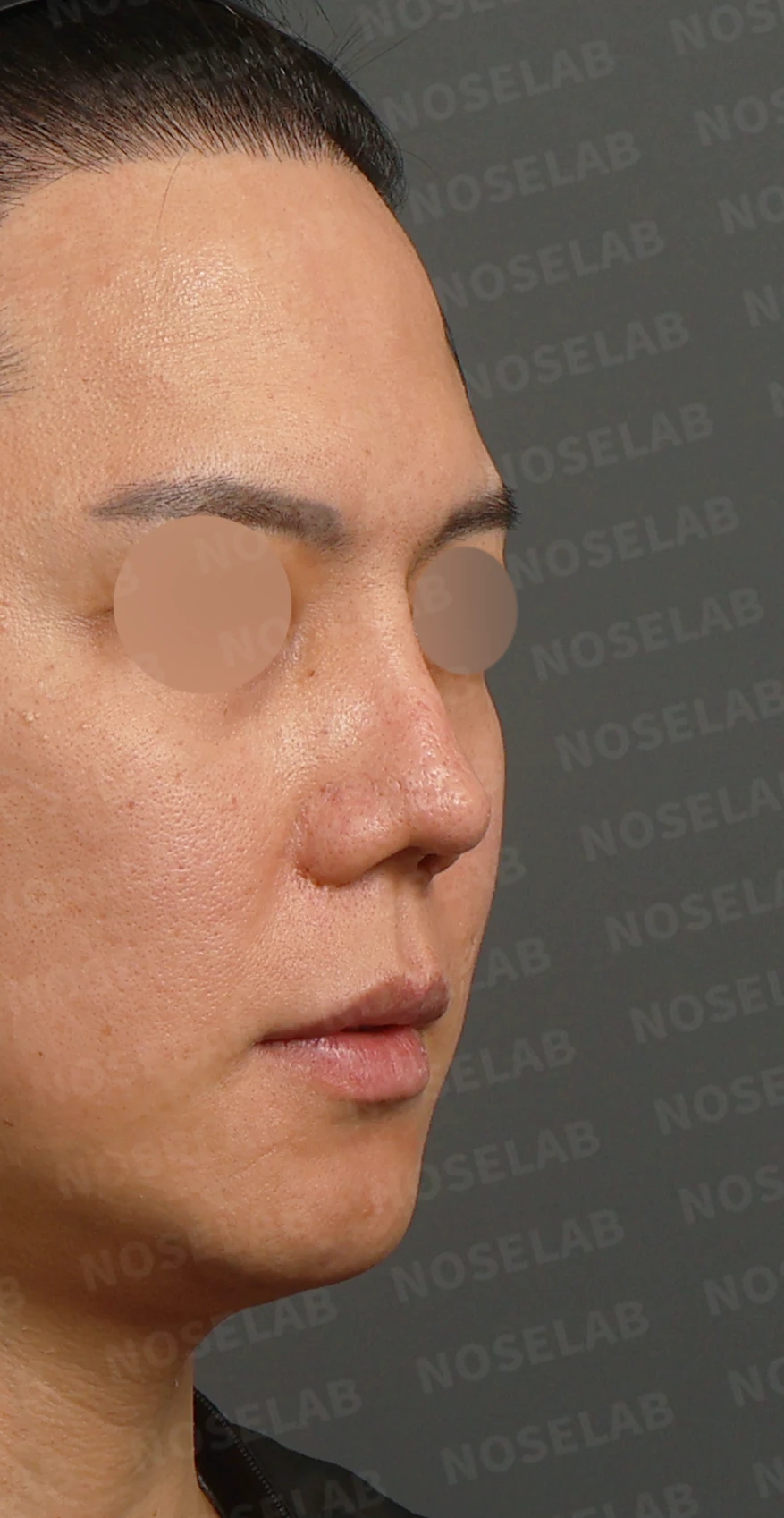
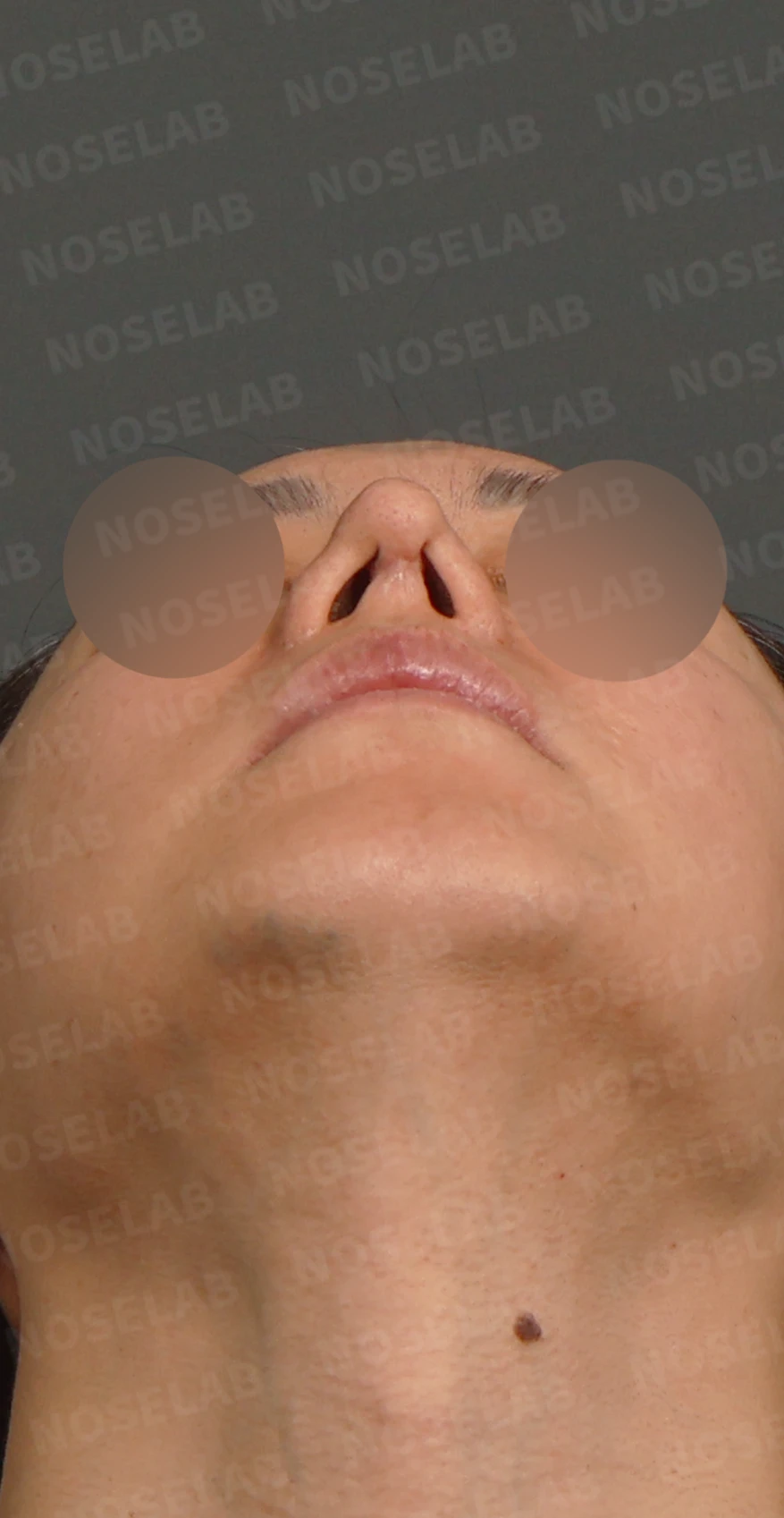
Right profile, oblique, and nostril views during design consultation.
🔧 Surgical plan and procedure
This surgery focused on fundamentally reconstructing the internal nasal structures damaged by contracture.
1. Septal reconstruction using autologous rib cartilage
The septal cartilage, of which almost none remained from previous surgeries, was newly reconstructed with autologous rib cartilage to secure the core support framework of the nose.
2. Reconstruction of the left lower lateral cartilage
The almost completely lost left lower lateral cartilage was restored with autologous rib cartilage, regaining the shape and support of the nasal tip.
3. Correction of pinched nostrils and columellar reconstruction
To lower the retracted columella, free flap grafting (skin grafting) using retroauricular skin was performed on both sides of the columella. Perichondrium grafting was also performed concurrently to increase the graft survival rate of the transplanted skin.
4. Functional surgery for nasal obstruction relief
Correction of the deviated septum and rhinitis surgery were performed simultaneously to improve breathing function, and a bacterial culture test was also performed to check for any residual inflammation that might remain inside the nose.
🌟 Surgical results
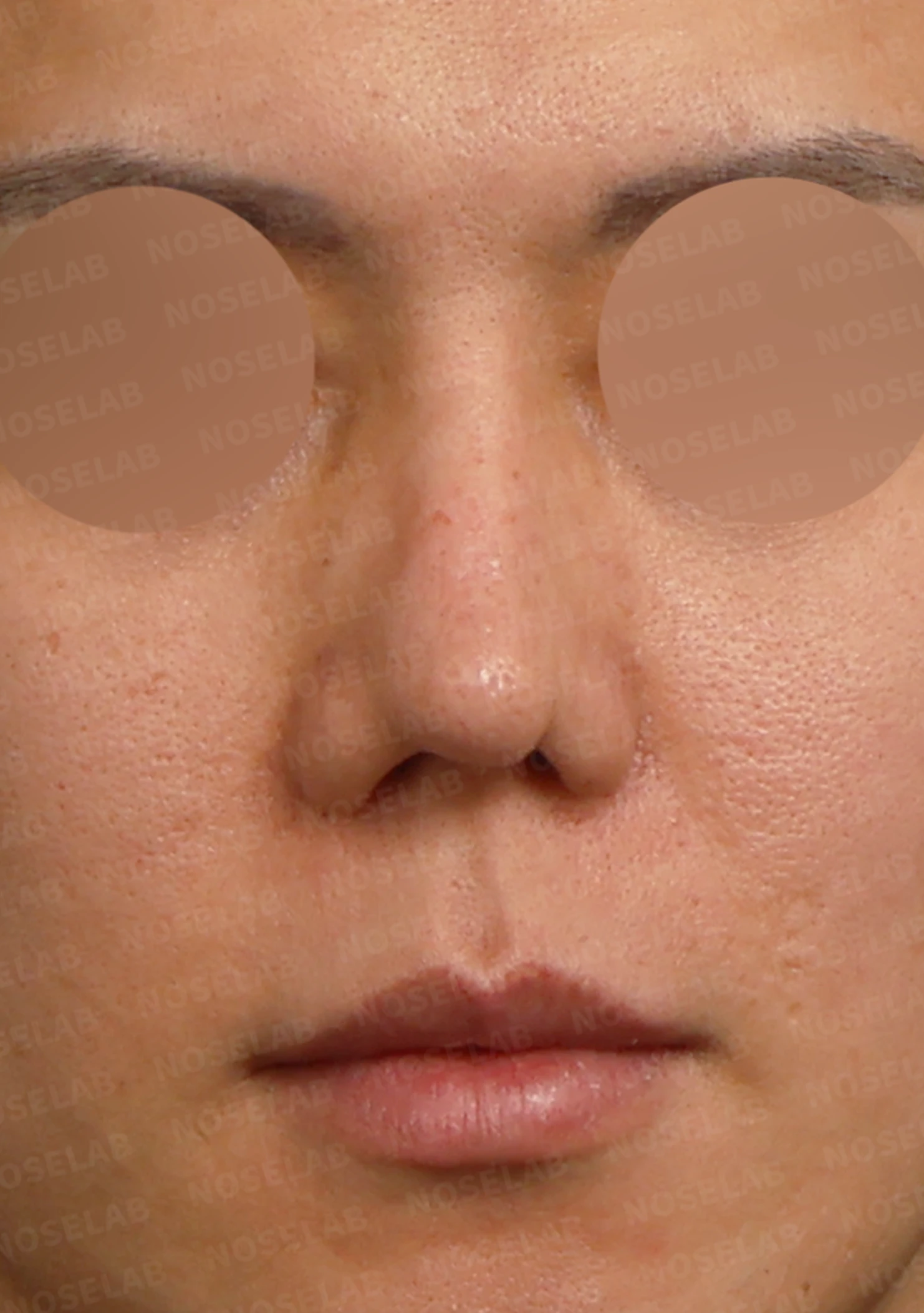
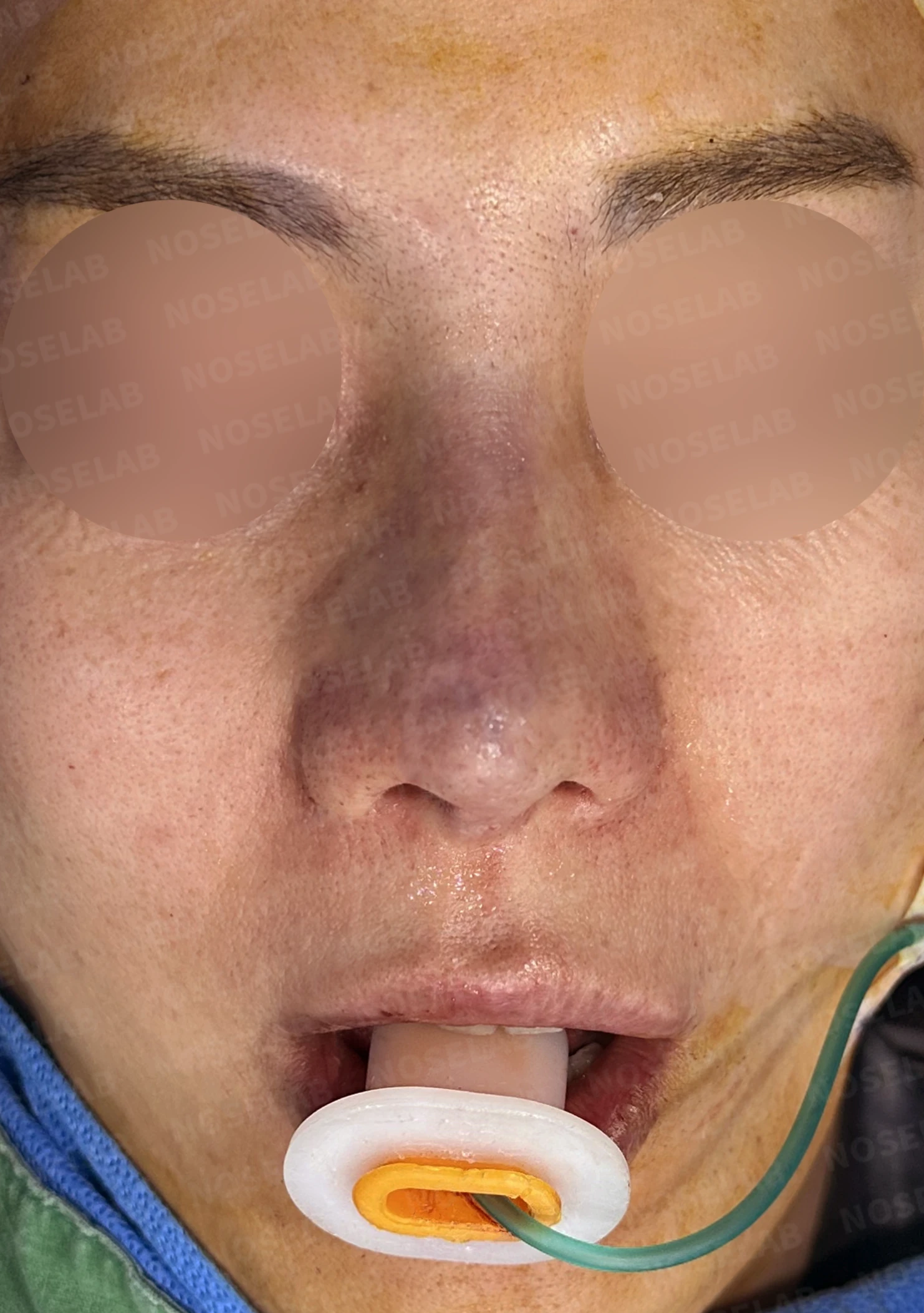
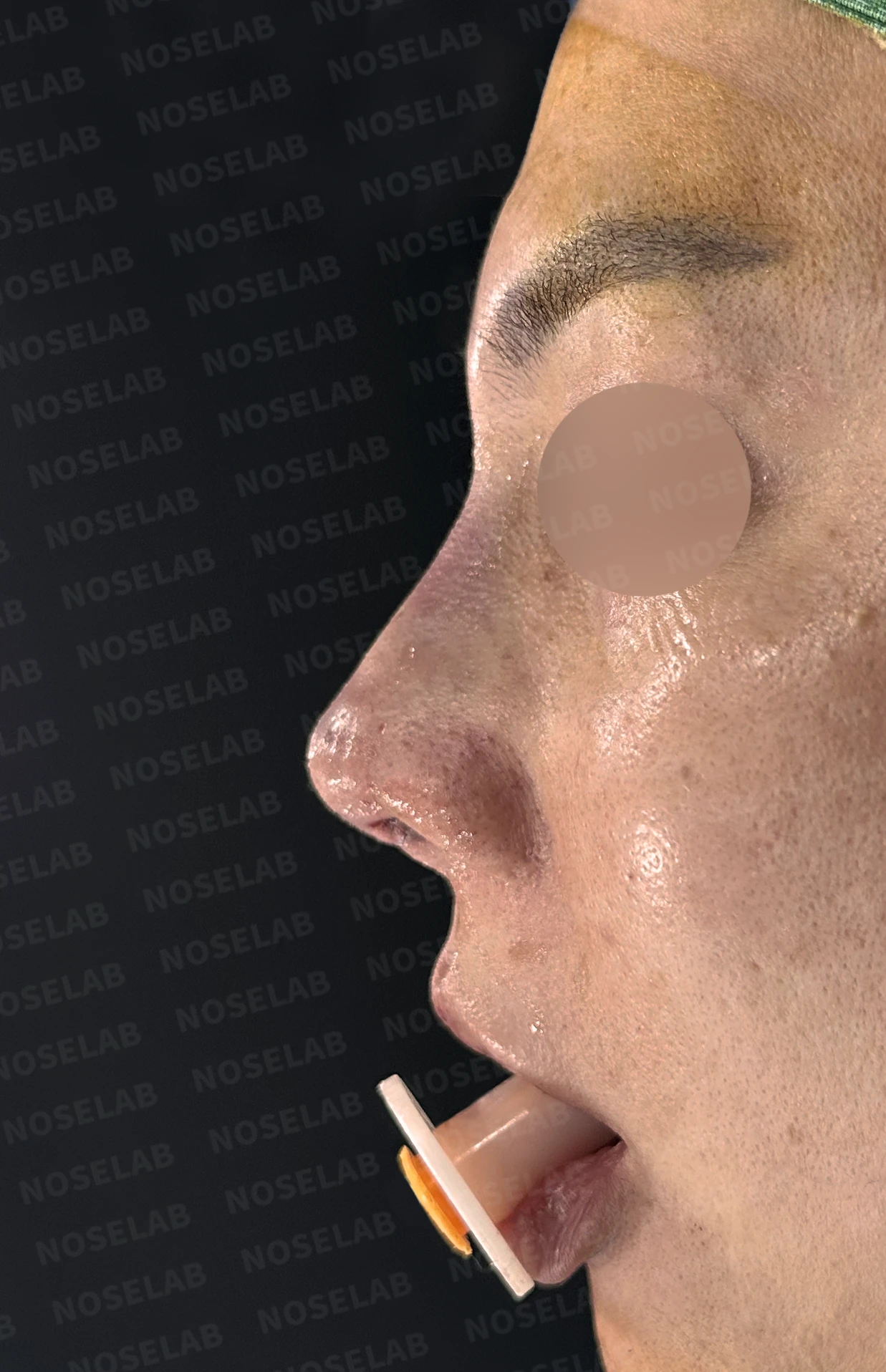
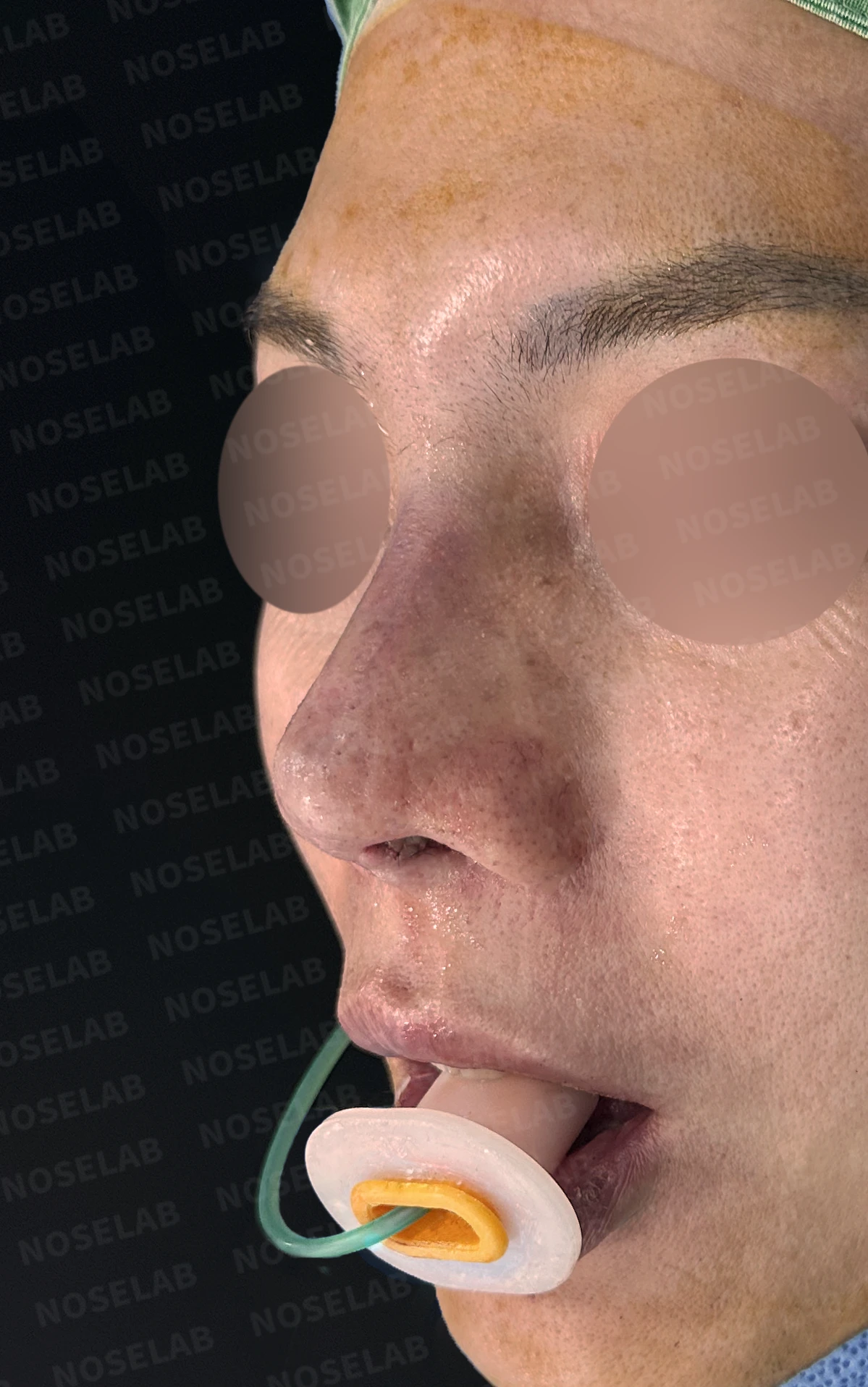
Before surgery / Day 0 immediately after surgery Photos taken immediately after surgery show swelling and may differ from the final result.
Front view changes:
Symmetry secured for the previously deviated nasal bridge
Previously irregular nasal bridge line smoothly refined
Before surgery / Day 0 immediately after surgery Photos taken immediately after surgery show swelling and may differ from the final result.
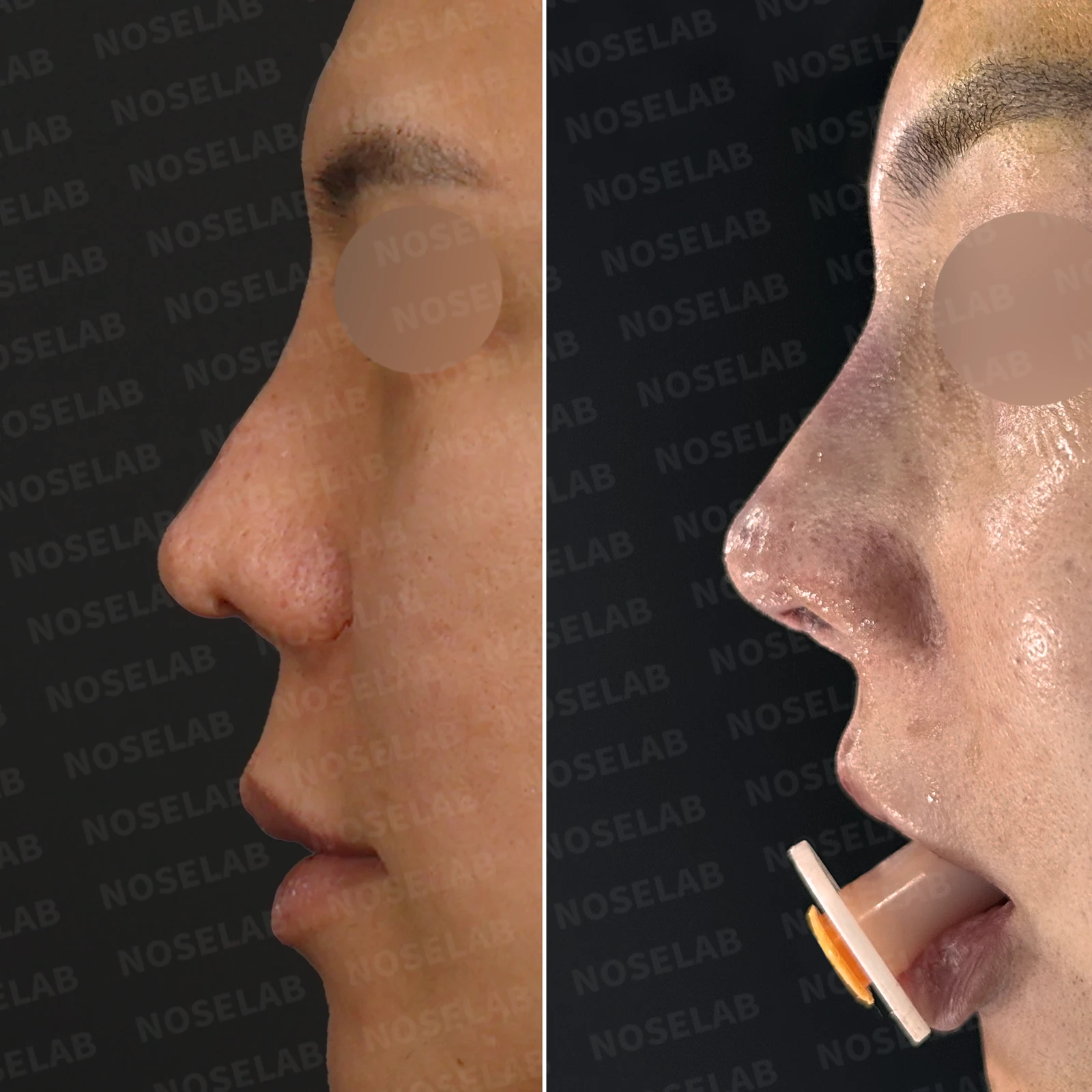
Profile view changes:
Naturally lowered the high radix
Retracted columella brought down to an appropriate position
Overall natural nasal line achieved
Before surgery / Day 0 immediately after surgery Photos taken immediately after surgery show swelling and may differ from the final result.
Nostril view changes:
Improvement in the pinched nostril appearance
Restoration of columellar volume through skin grafting
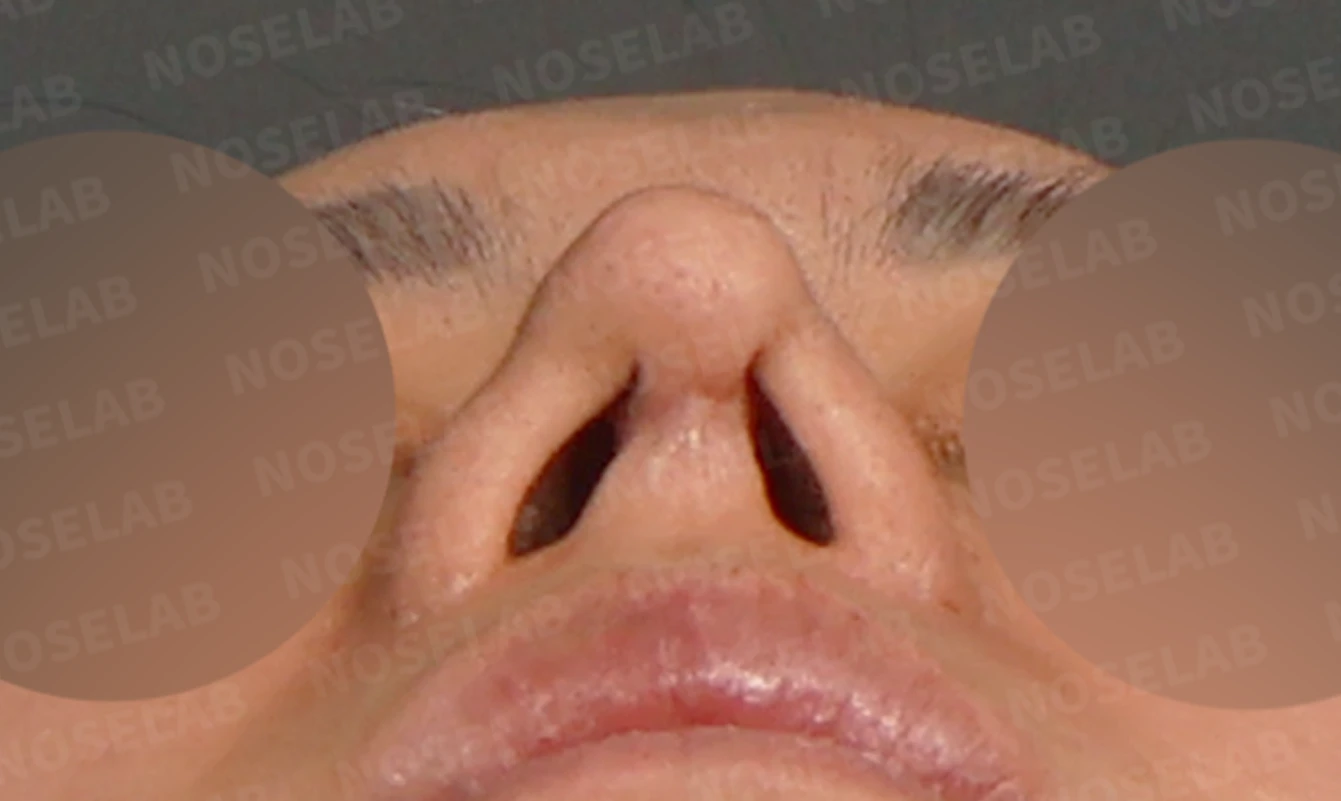
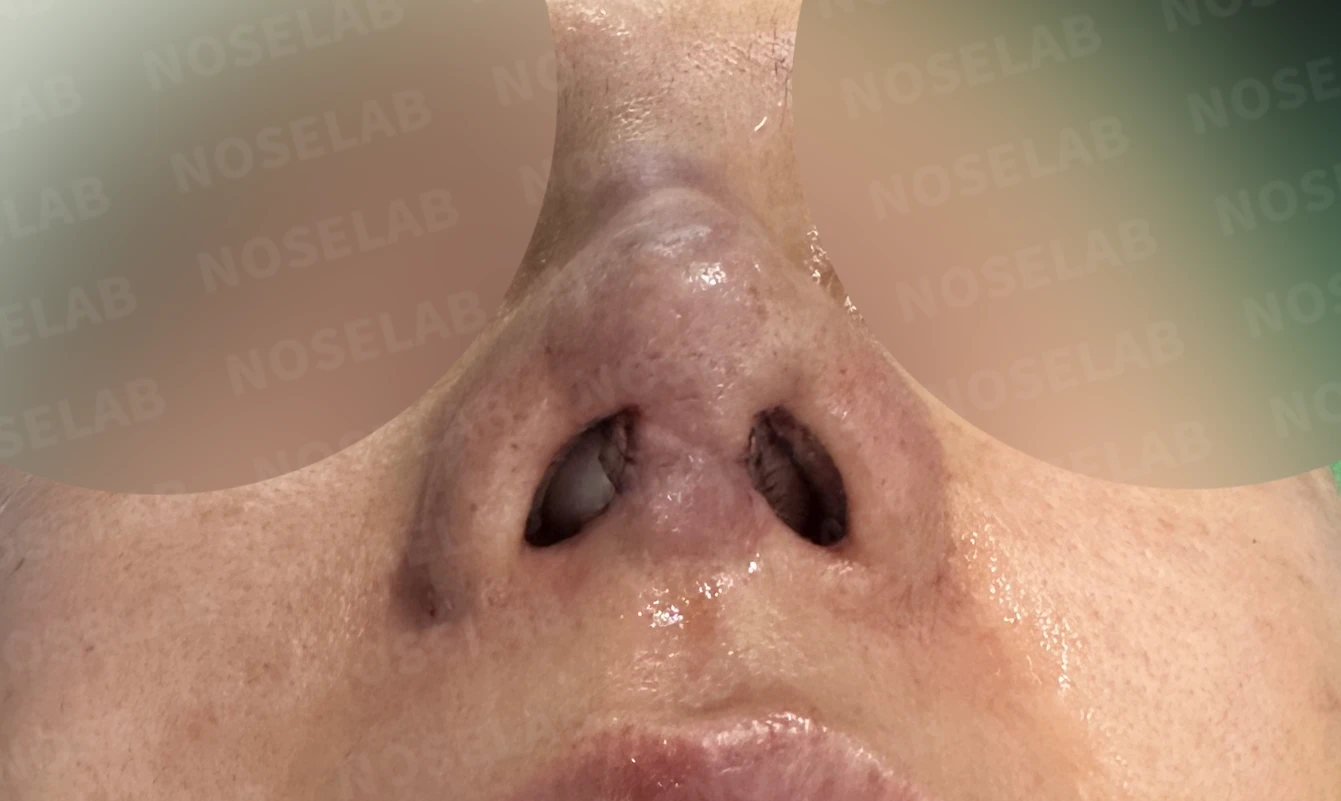
Before surgery / Day 0 immediately after surgery Photos taken immediately after surgery show swelling and may differ from the final result.
💡 Specialist opinion
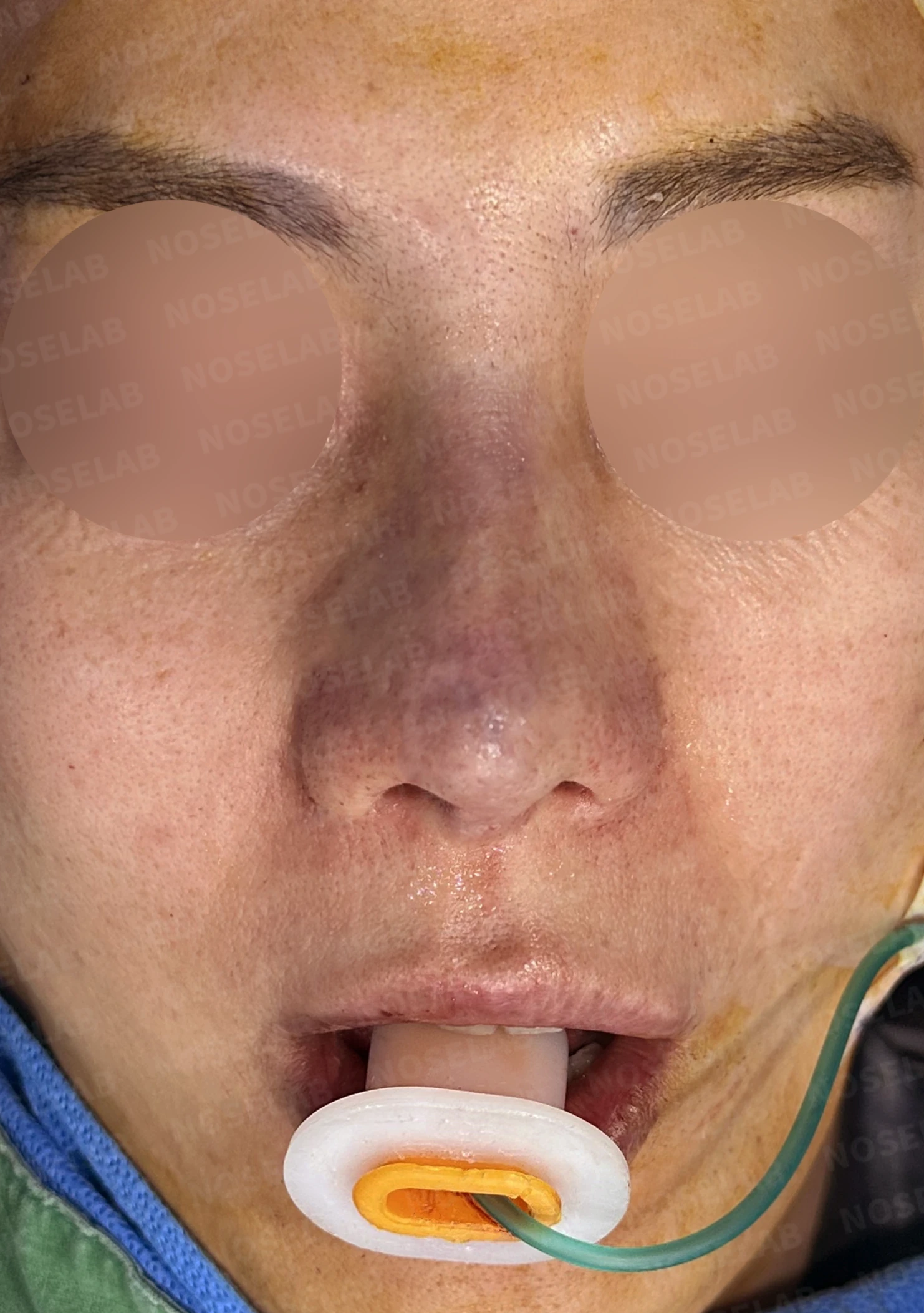
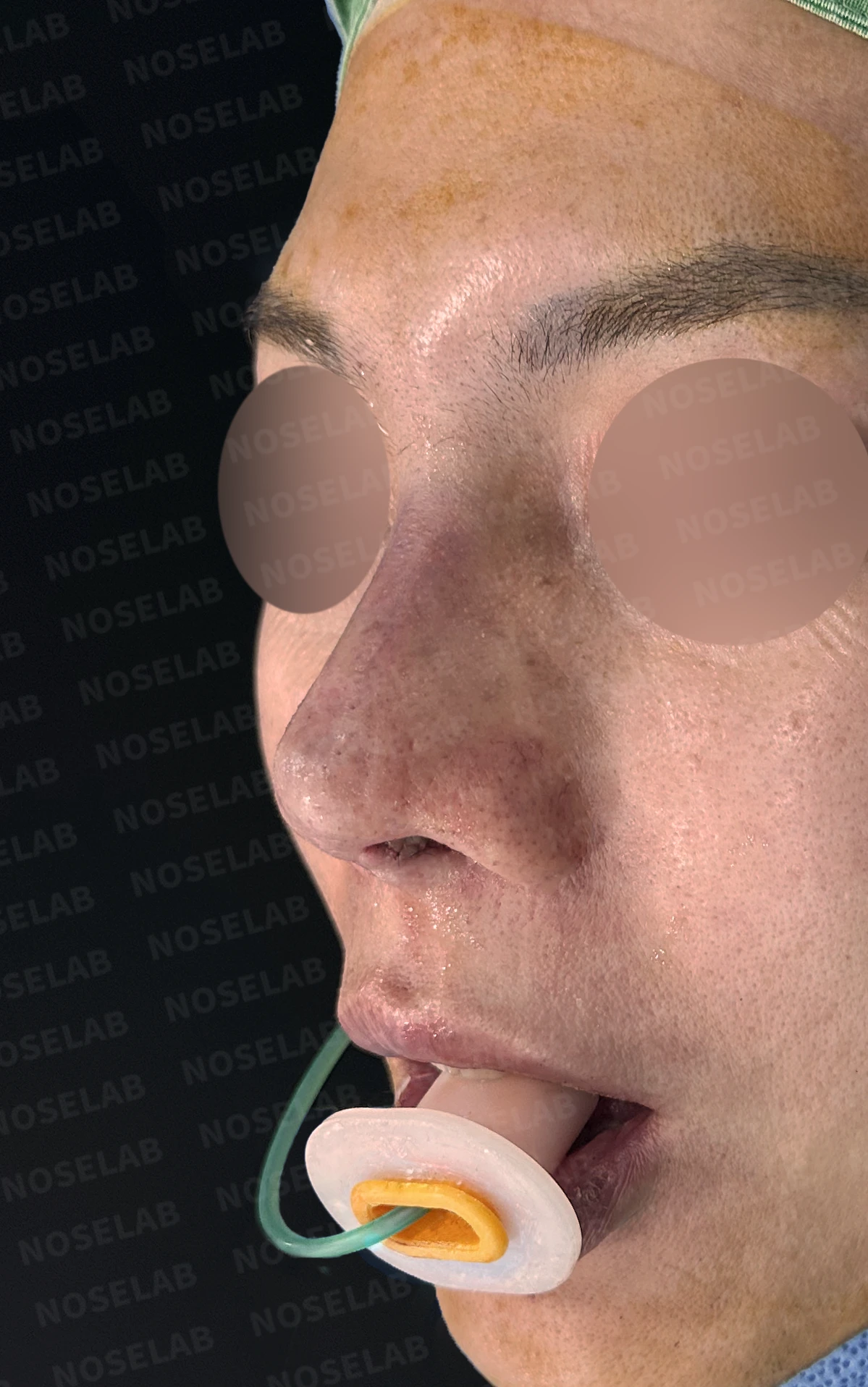
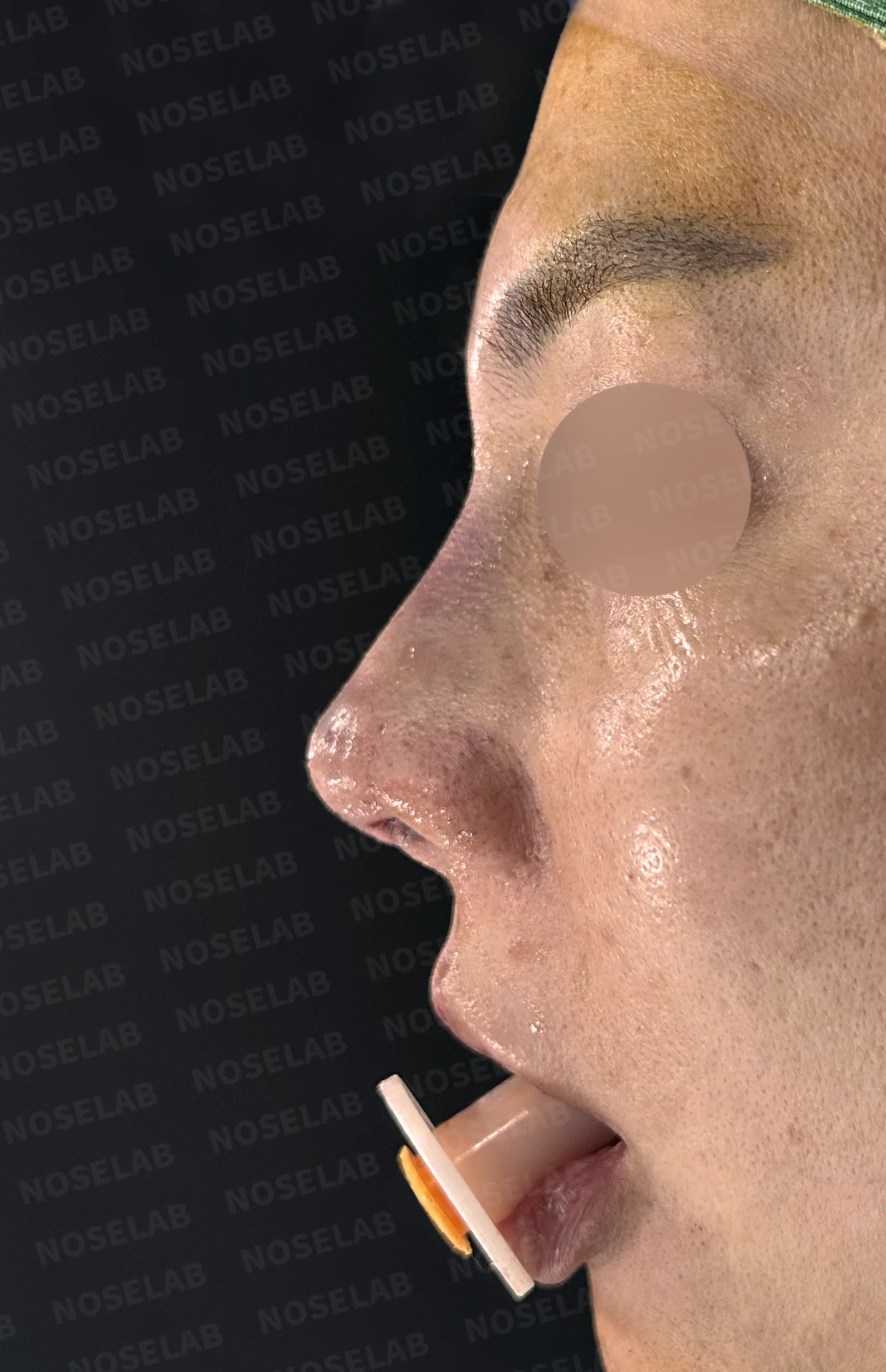
Front, oblique, and profile views on day 0 immediately after surgery. Photos taken immediately after surgery show swelling and may differ from the final result.
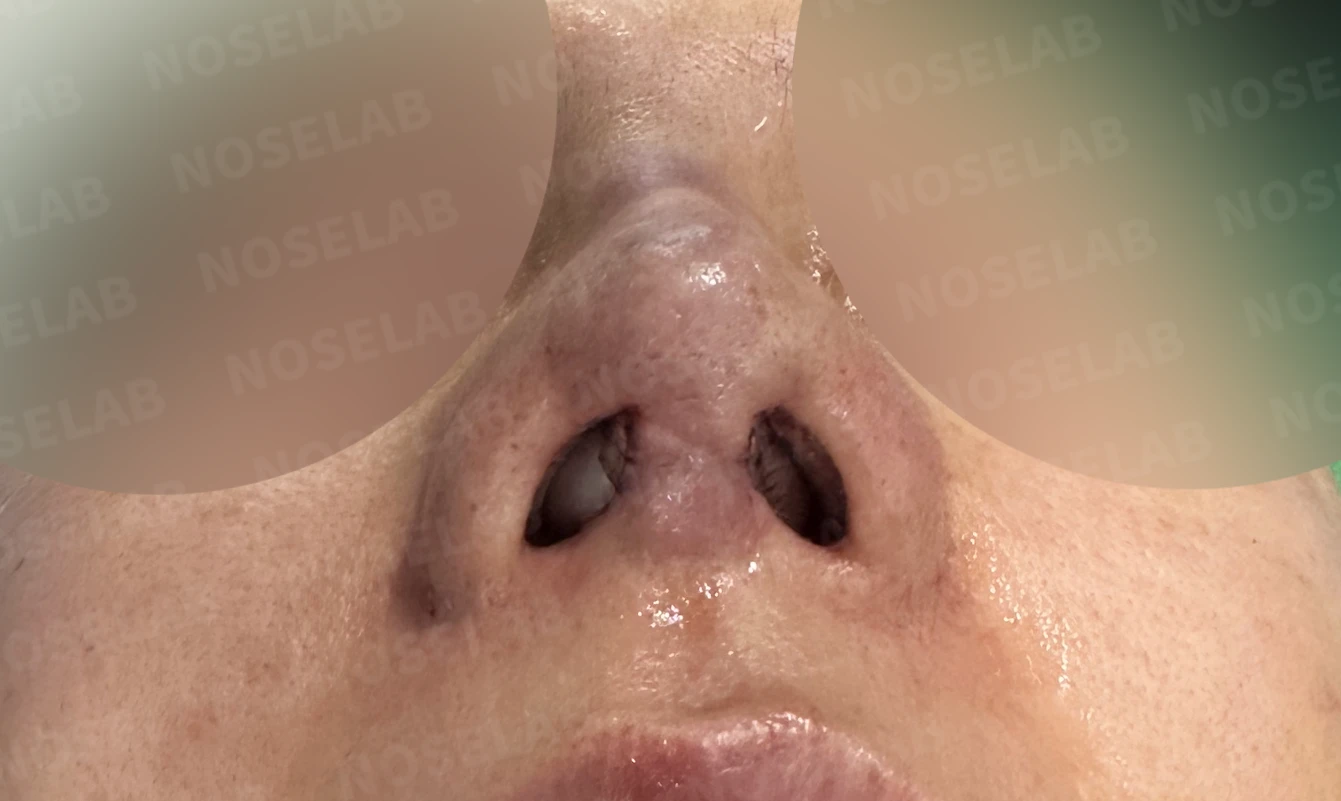
Nostril view on day 0 immediately after surgery. Photos taken immediately after surgery show swelling and may differ from the final result.
When contracture has progressed through multiple surgeries, most of the internal nasal support structures are lost, necessitating fundamental reconstruction rather than simple correction. In cases like this, where almost no septal cartilage and lower lateral cartilage remained, creating new structural frameworks using autologous rib cartilage was the key.
Particularly when columellar skin is deficient due to repeated surgeries, free flap grafting using retroauricular skin can be an effective solution. Increasing the skin graft survival rate through perichondrium grafting is also an important point.
Without overlooking the functional aspects of the nose, correction of the deviated septum and rhinitis surgery were performed together, aiming for both aesthetic refinement and improved respiratory function at the same time.
This was Dr. Peter C. Kang. Thank you.
#revisionrhinoplasty #contractednosecorrection #autologousribcartilage #columellareconstruction #skingraft #septalreconstruction #lowerlateralcartilagereconstruction #nasalobstructionimprovement #deviatedseptum #menrhinoplasty #crookednosecorrection #closedrhinoplasty #closedrevisionrhinoplasty

Limitations and risks
When autologous rib cartilage is used, scarring and pain may remain at the donor site on the chest, and pneumothorax (pleural injury) can occur rarely. Over time, the grafted cartilage may warp or undergo partial resorption.
When revising after implant removal, contracture may progress again after removal, the nasal height and length may decrease, and staged surgery may be necessary depending on the skin condition.
When the septum is corrected at the same time, nasal obstruction may persist or recur, and in rare cases, septal perforation or changes in smell may occur.
Common potential risks include infection, bleeding, asymmetry, scarring, skin necrosis, and insufficient improvement; results vary depending on individual skin condition and previous surgical history.