Hello, I am Dr. Peter C. Kang.
Today, I would like to introduce the case of a patient who visited our clinic concerned about a short, upturned nose after undergoing multiple prior nasal surgeries.
🔍 Surgical history
The patient had previously undergone multiple procedures on the face and nose.
Approximately 17 years ago: Rhinoplasty using a silicone implant and ear cartilage (the implant later shifted and deviated)
Approximately 15 years ago: Rhinoplasty using a silicone implant and ear cartilage (the nasal tip gradually lost height)
Approximately 12 years ago: Rhinoplasty using a silicone implant and ear cartilage (insufficient nasal tip height)
Approximately 12 years ago: Two-jaw surgery
Approximately 10 years ago: Surgery with a silicone implant alone (implant mobility)
Approximately 3 years ago: Rhinoplasty using autologous rib cartilage and a silicone implant
Recently: Philtrum reduction at another medical institution
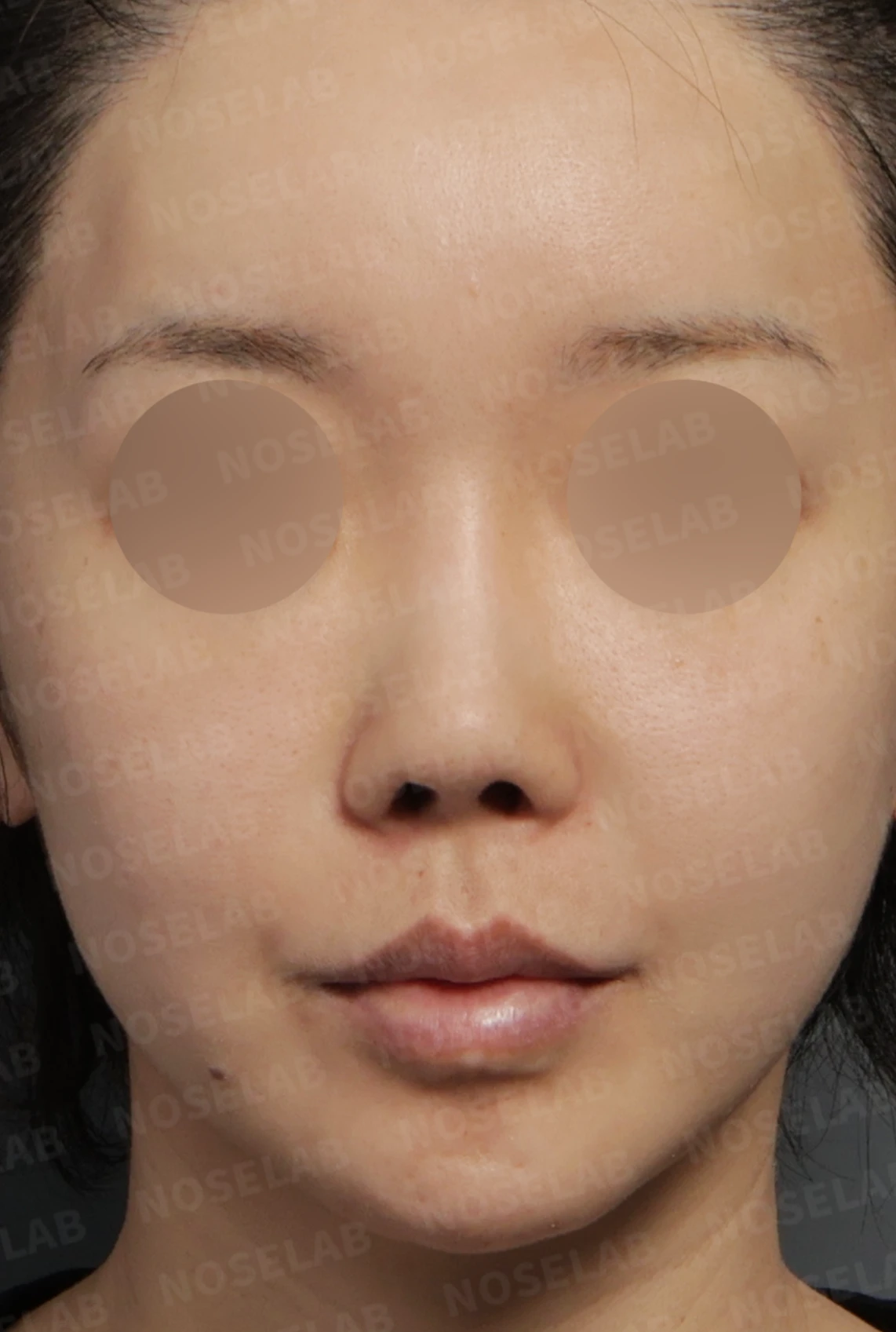
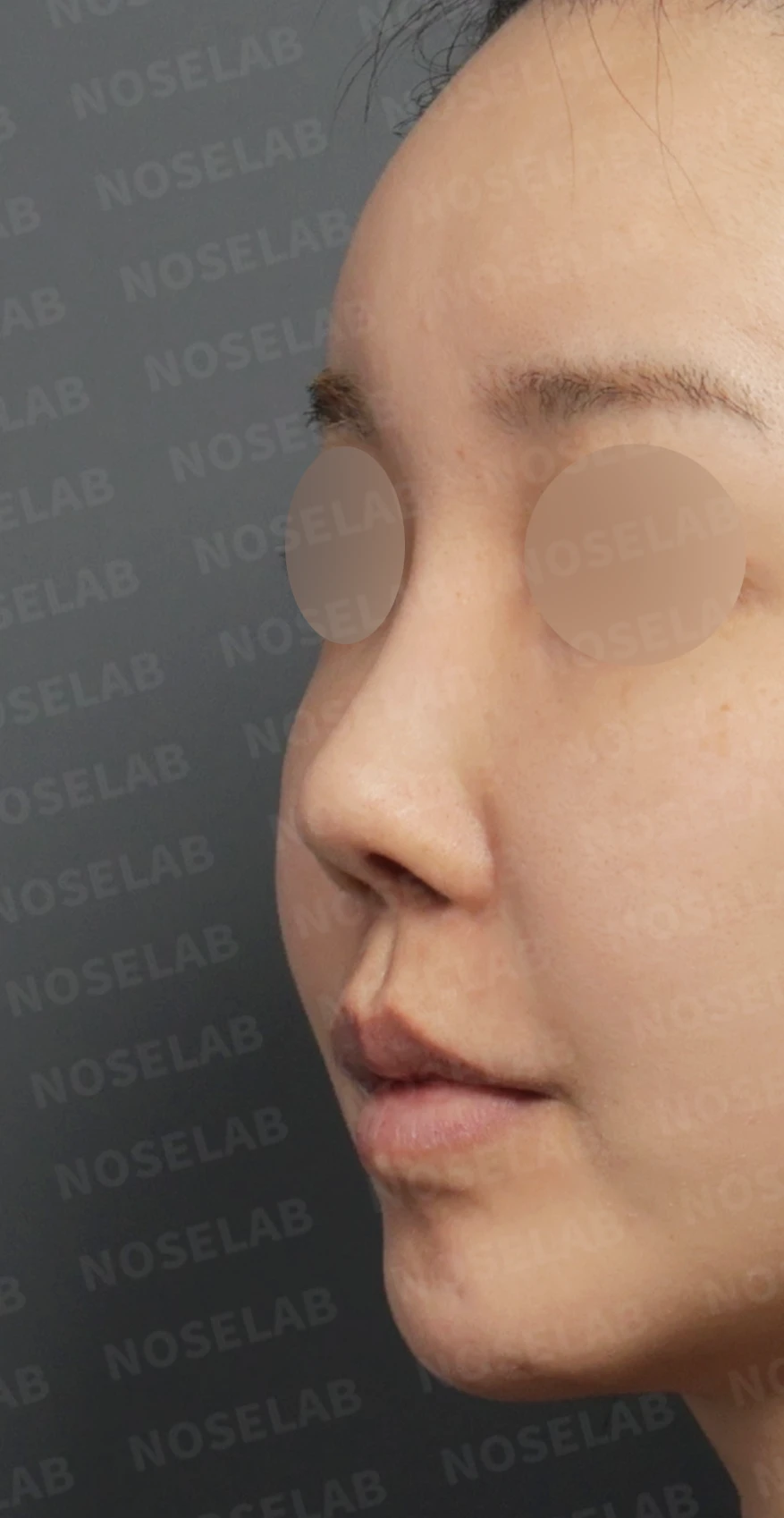
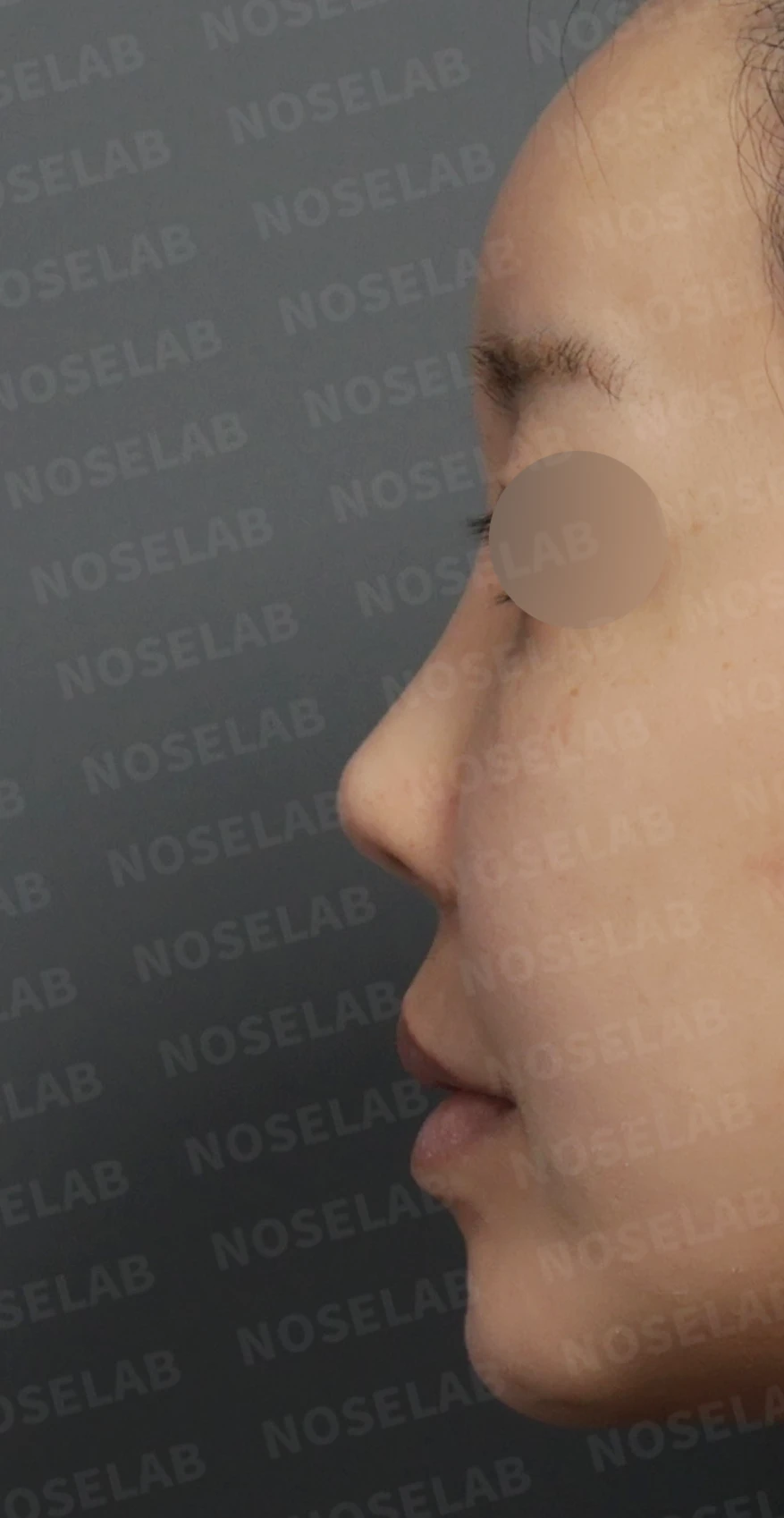
Design consultation: front, left oblique, and profile views.
💉 Patient requests
Desire to naturally lower the upturned nasal tip
Desire to reduce nostril show from the front view
Desire for a balanced nasal profile by lowering the columella
With the tissues weakened from multiple revision surgeries, the patient hoped for a change planned with safety in mind while remaining natural.
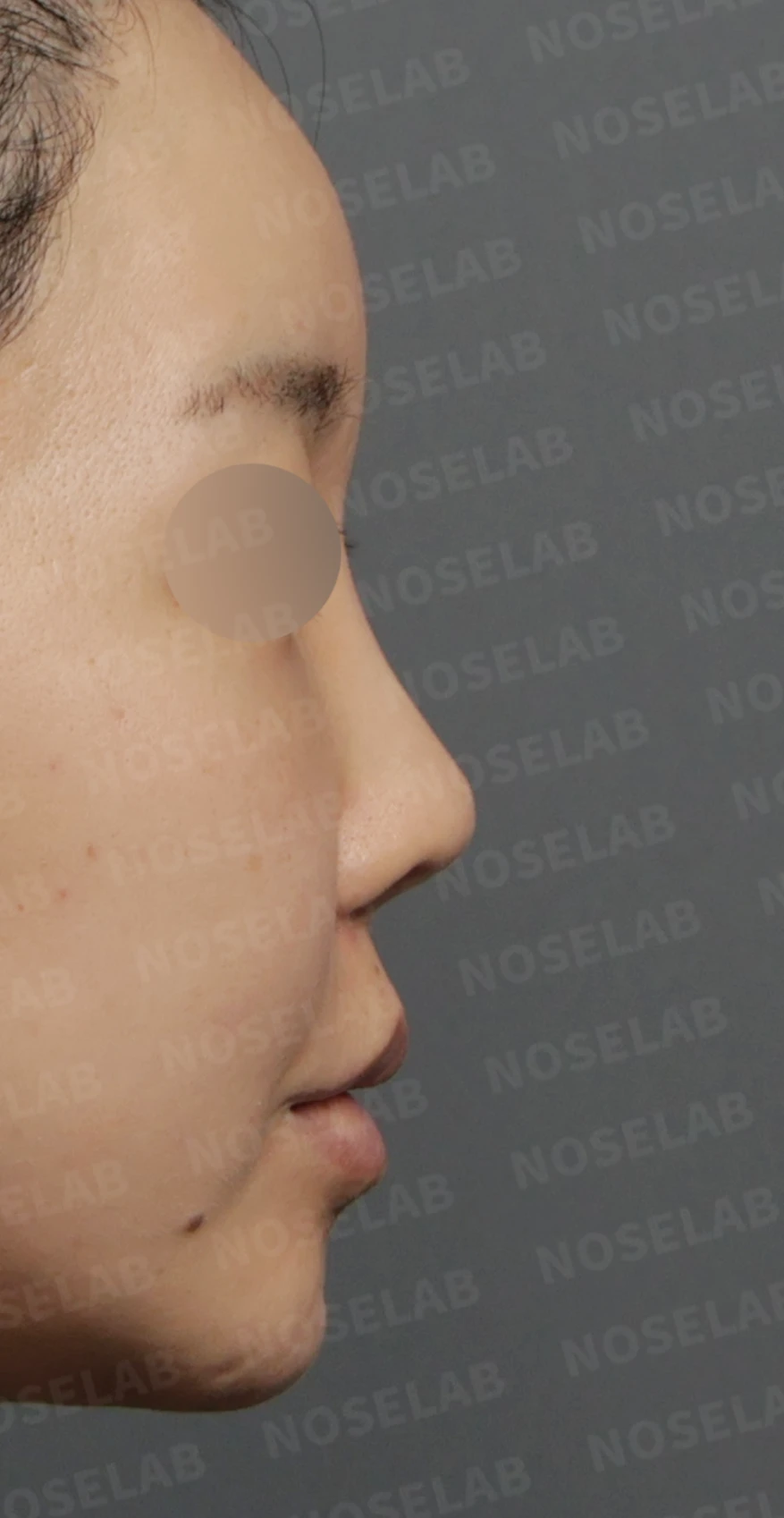
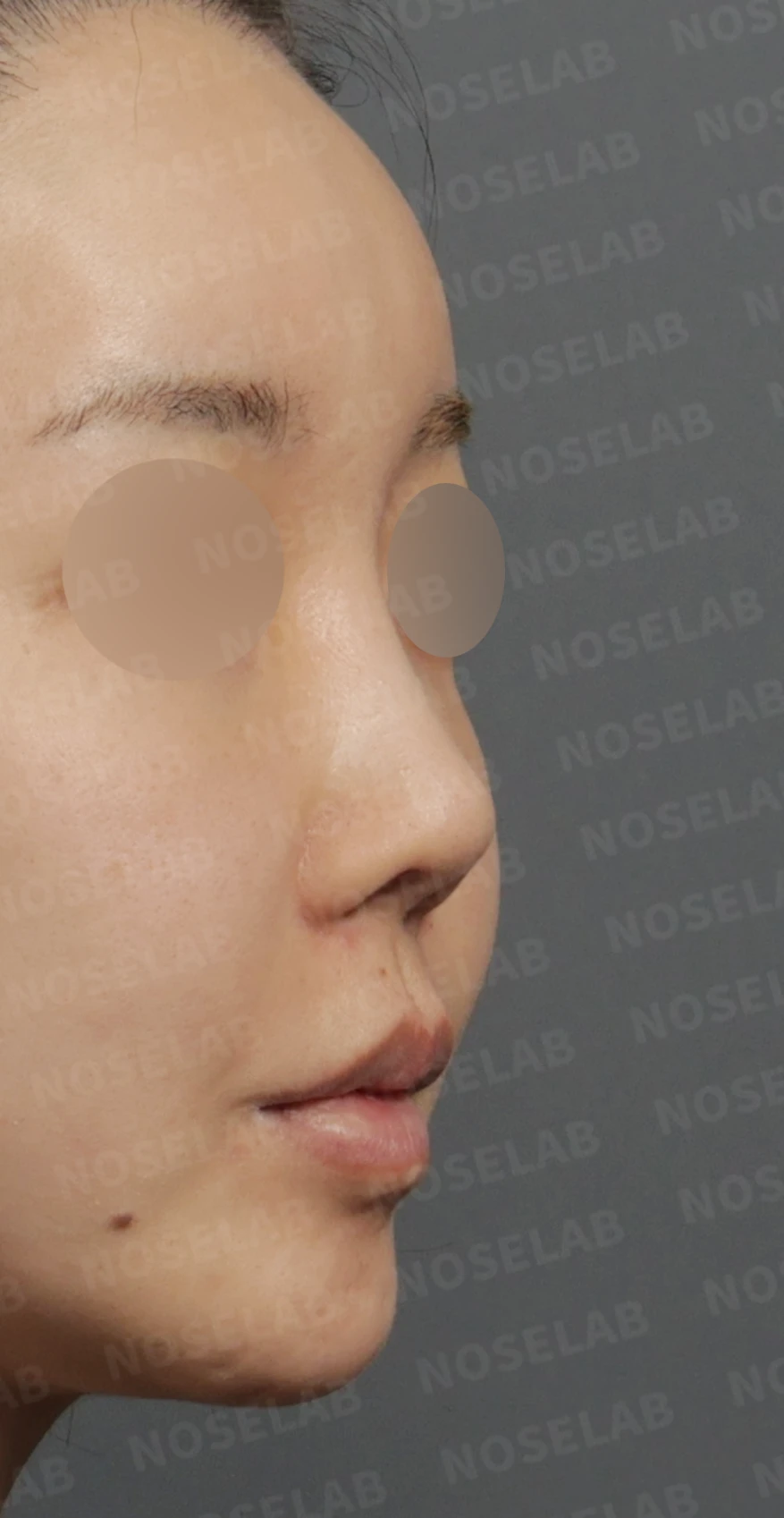
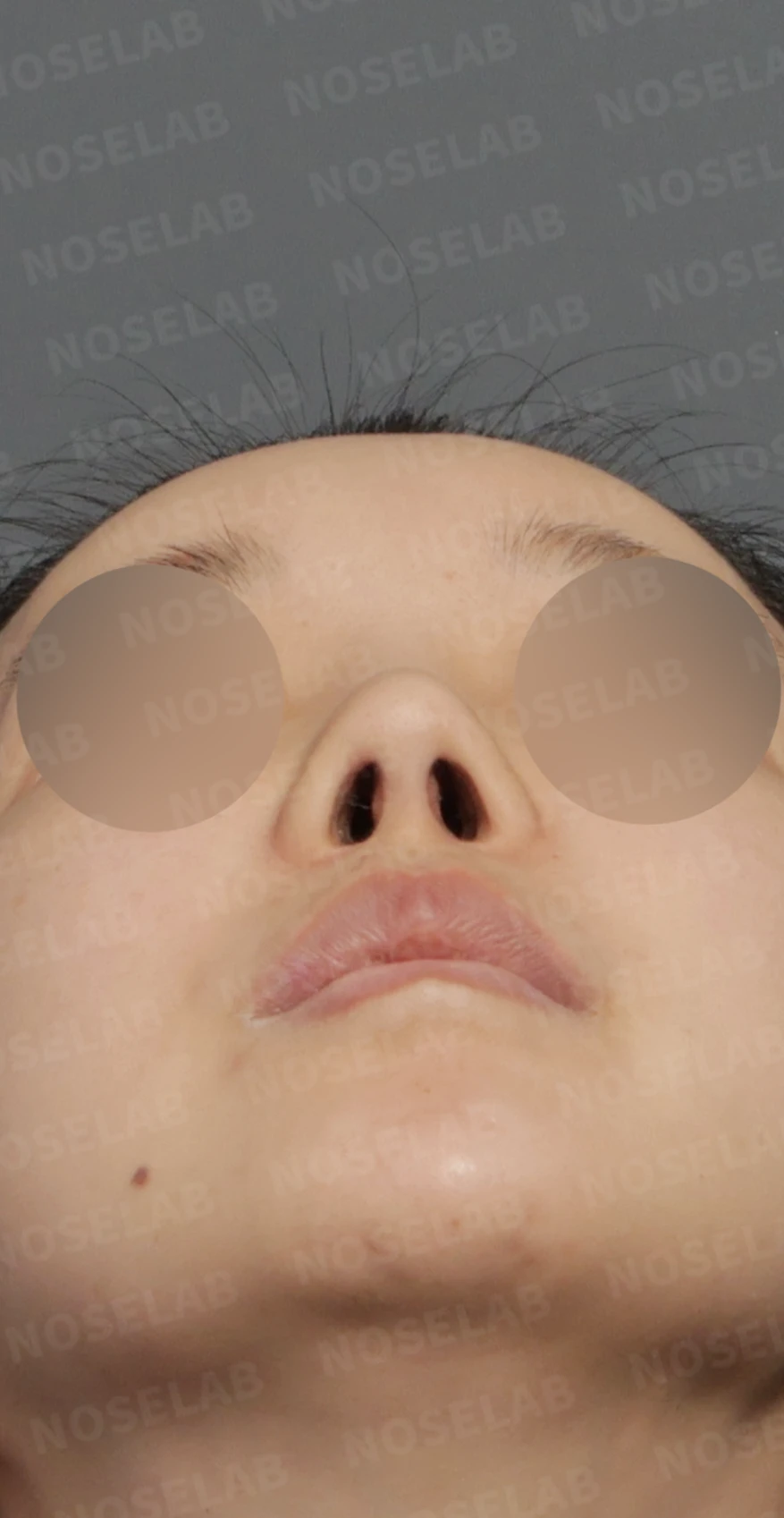
Design consultation right profile, oblique view, and nostril photos
🔧 Surgical plan and procedure
1. Septal cartilage reconstruction using autologous rib cartilage
Due to prior surgeries, virtually no septal cartilage remained, leaving the nasal tip short and upturned.
Autologous rib cartilage was harvested from the patient to rebuild the septal cartilage and restore support to the nasal tip.
2. Left internal nasal mucosal advancement flap
To compensate for the shortage of internal nasal skin, an advancement flap was performed using the mucosa from inside the left nostril to cover the defect.
3. Precise adjustment of the nasal bridge implant
The silicone implant was sculpted precisely to match the contour of the patient's nasal bone, creating a natural dorsal line.
4. Functional surgery for nasal obstruction relief
Septoplasty and turbinate (rhinitis) surgery were performed concurrently to improve respiratory function.
🌟 Surgical results
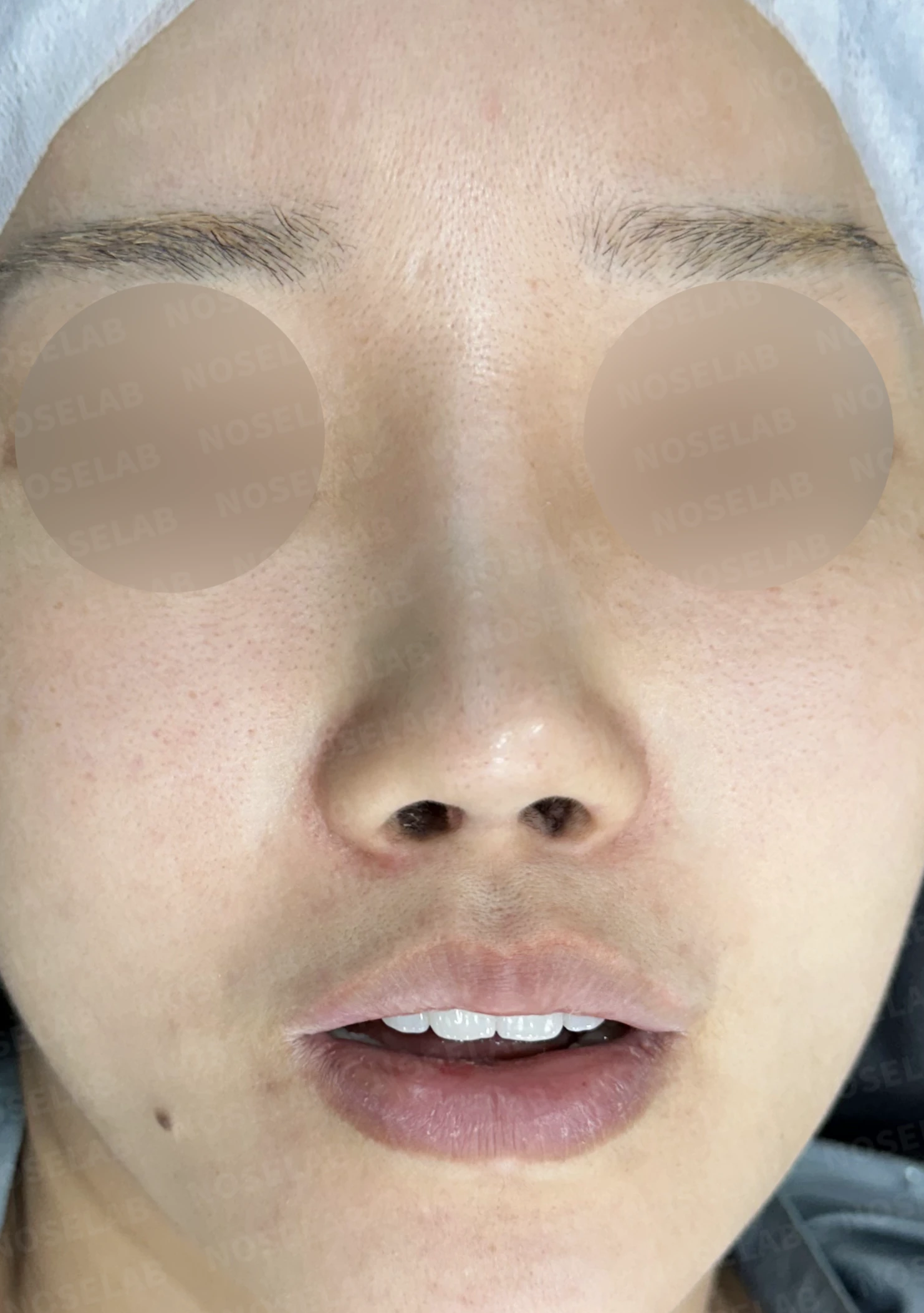
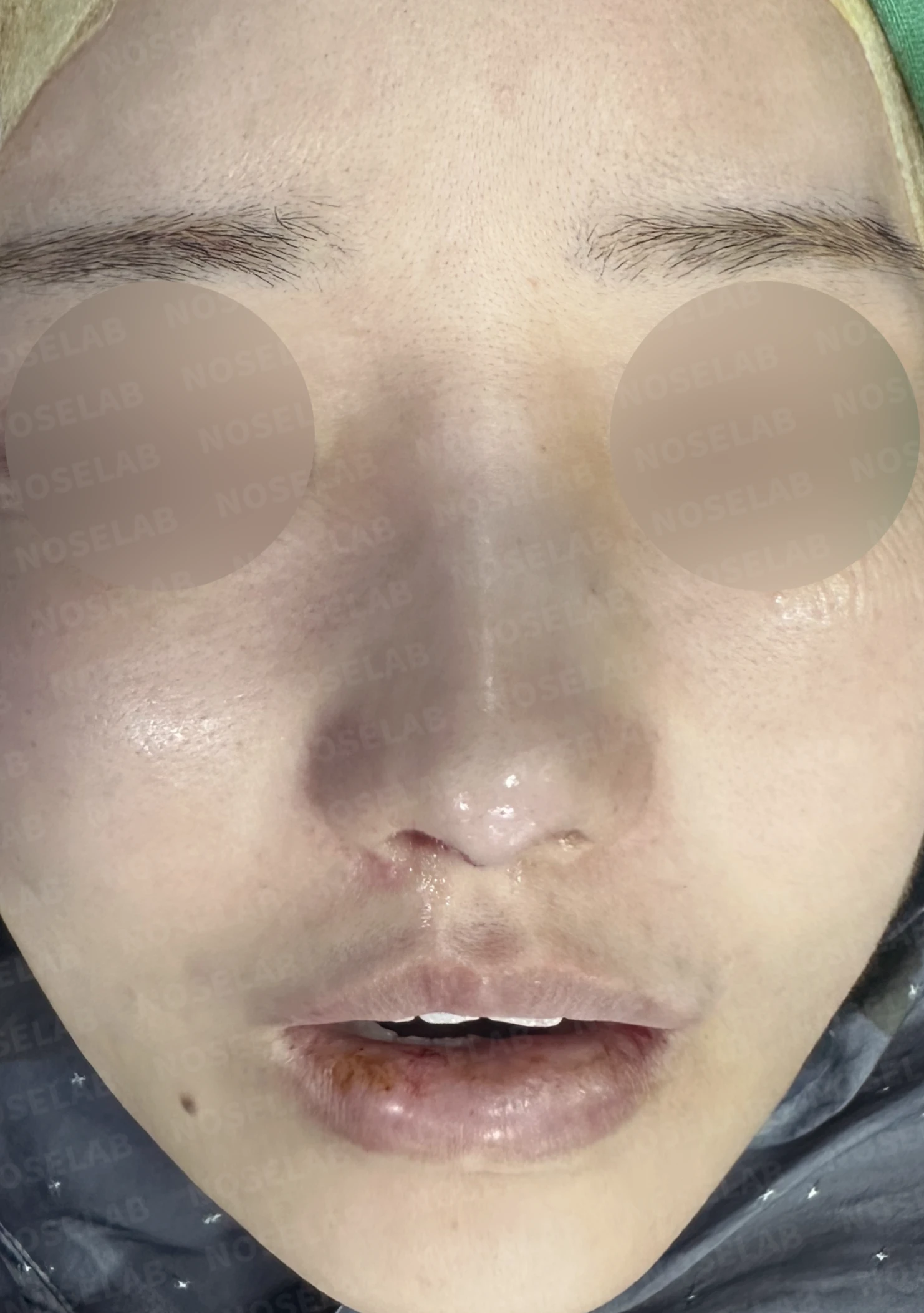
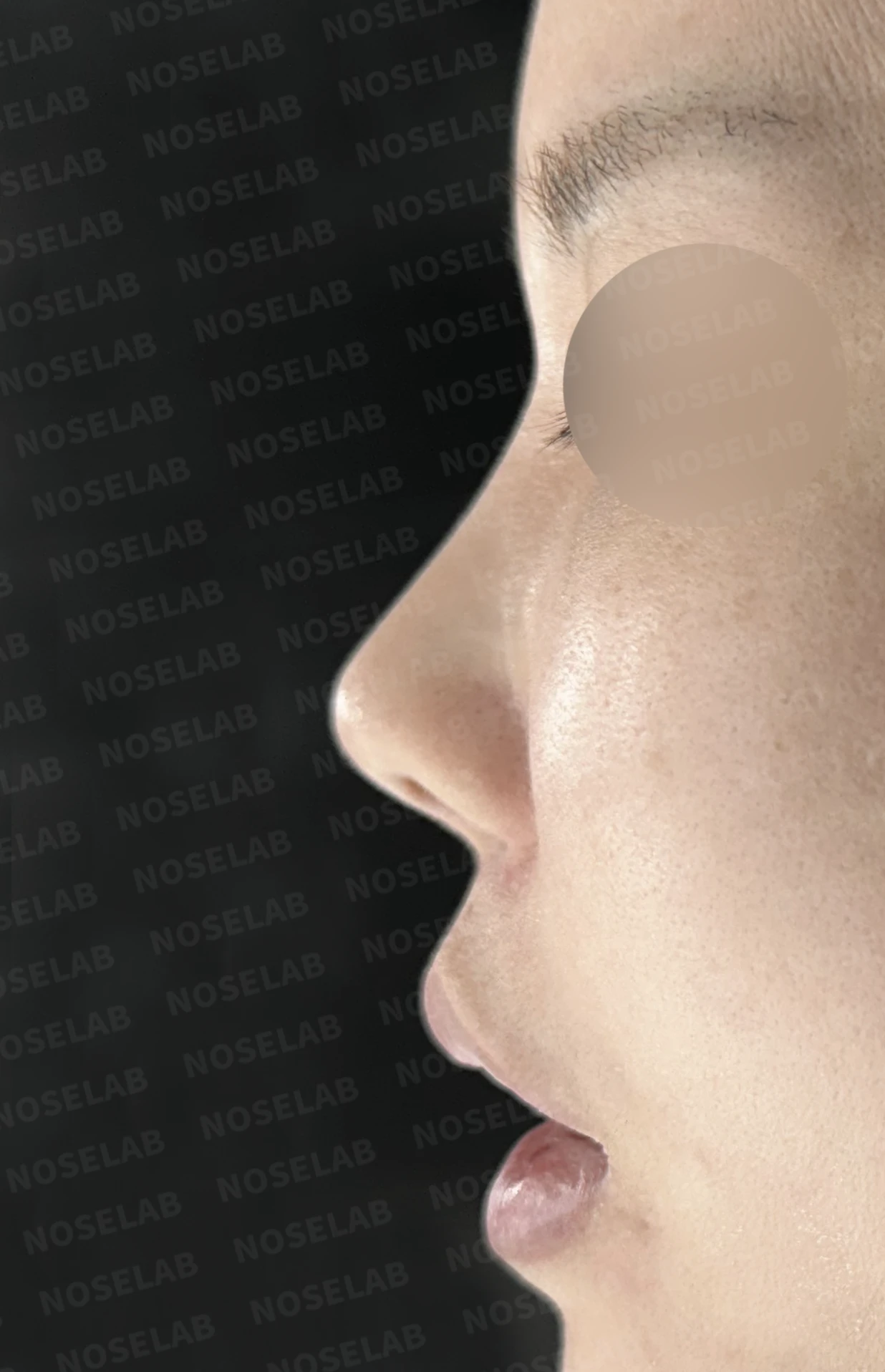
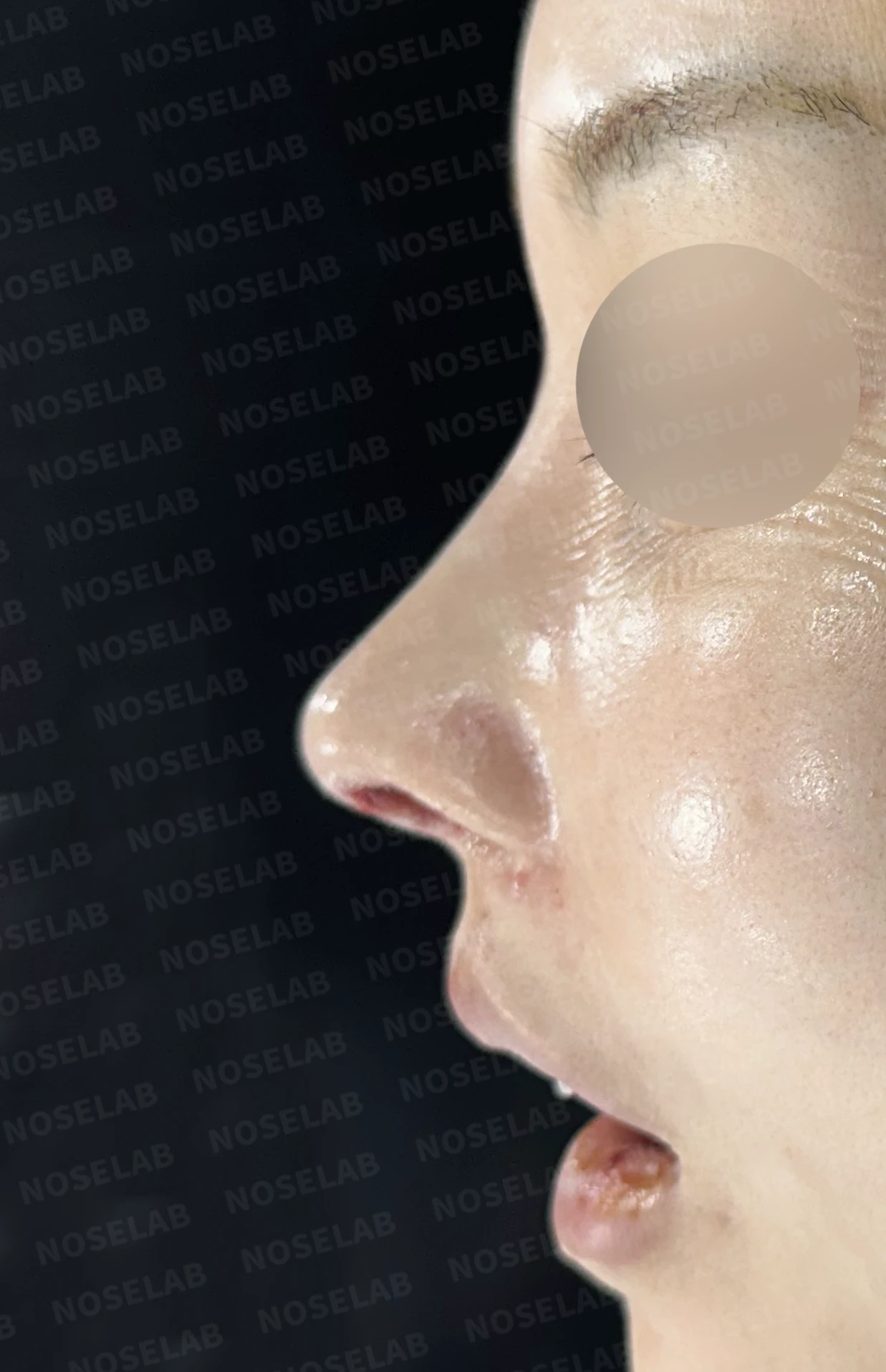
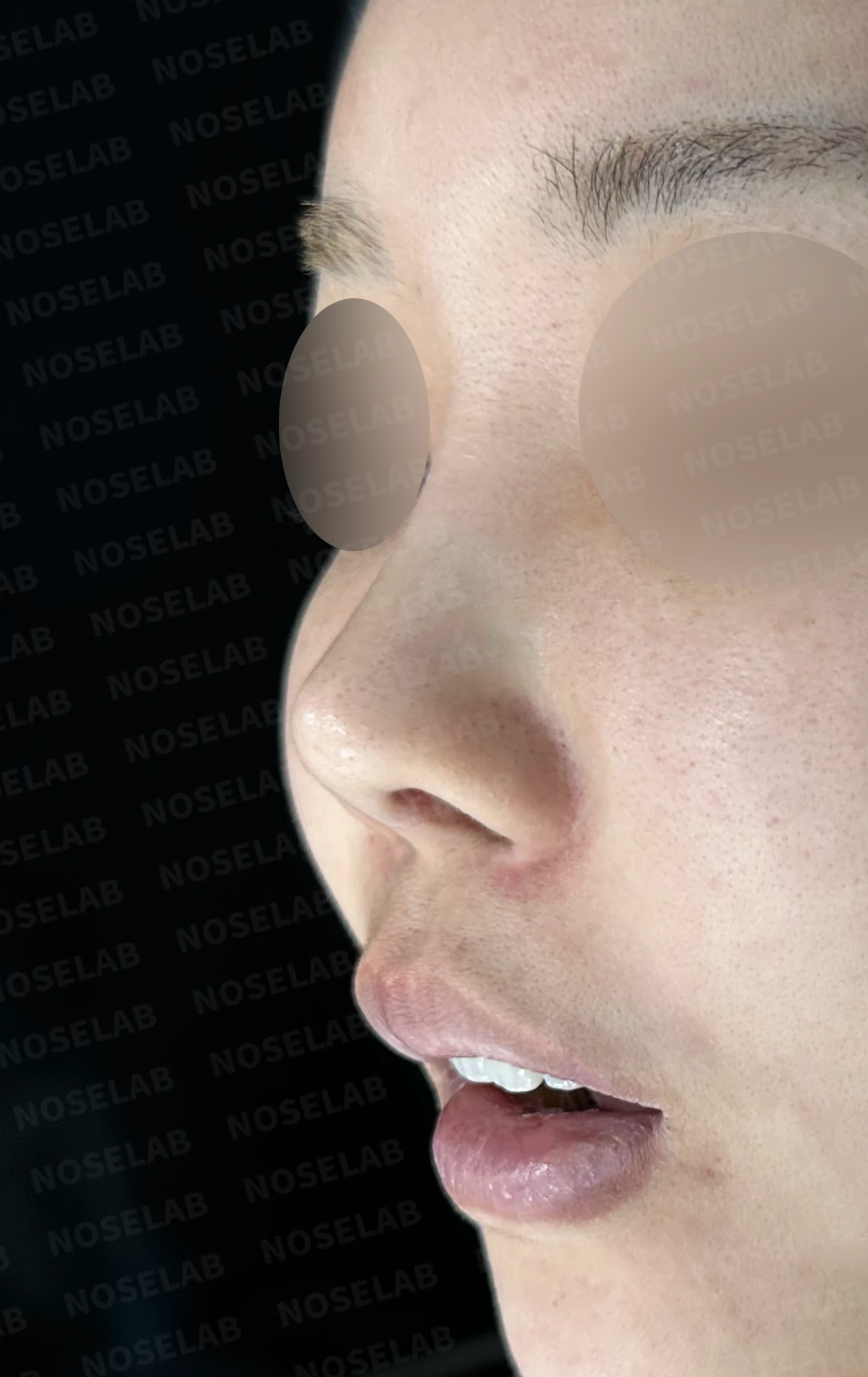
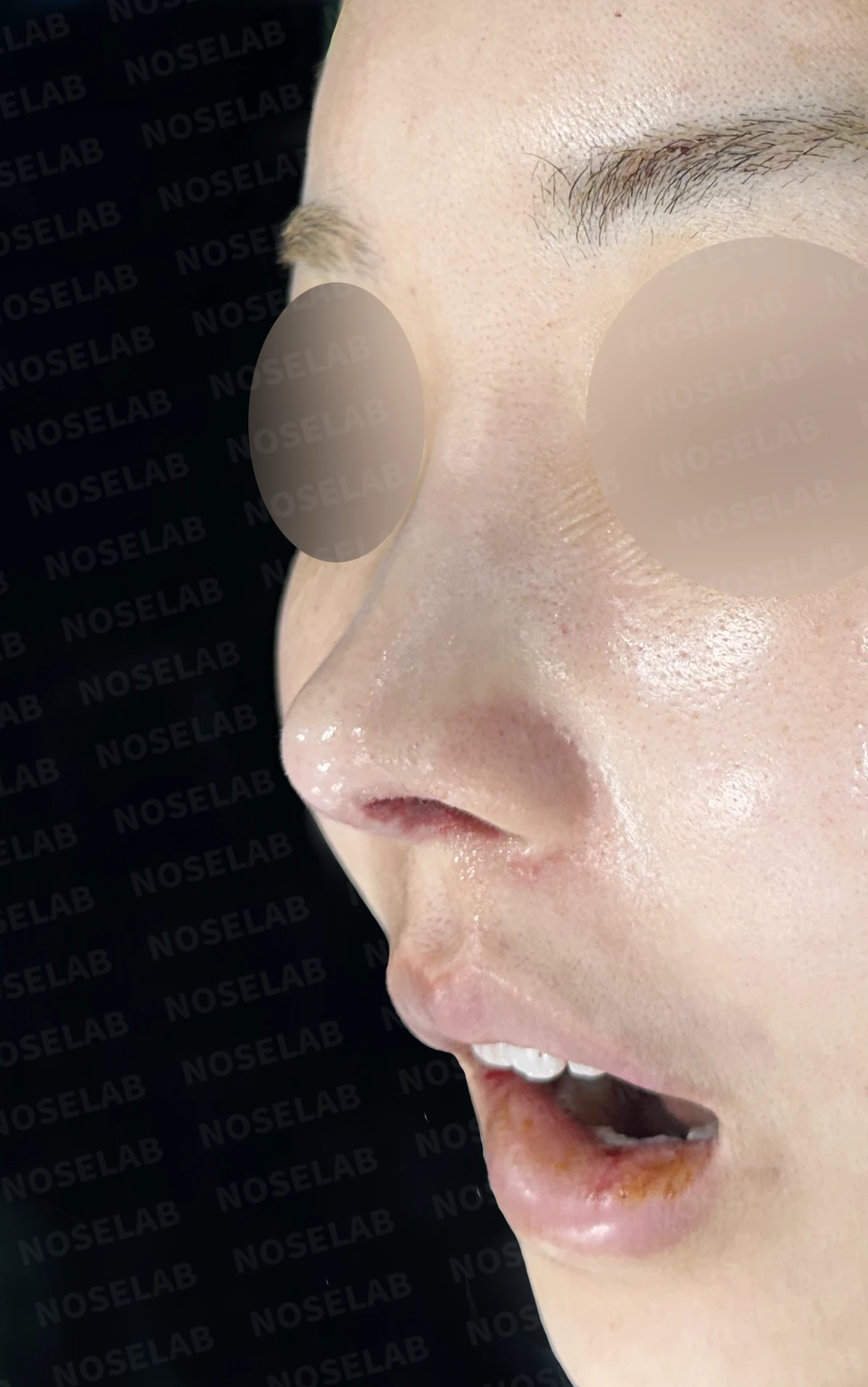
Before surgery / Day 0 immediately after surgery Photos taken immediately after surgery show swelling and may differ from the final result.
Front view changes
The upturned nasal tip was naturally lowered
Excessive nostril show was reduced
Before surgery / Day 0 immediately after surgery Photos taken immediately after surgery show swelling and may differ from the final result.
Profile view changes
The short nasal length was elongated in balanced proportion
The underprojected nasal tip was corrected to an appropriate height
The columella was lowered, creating a smooth profile line
Before surgery / Day 0 immediately after surgery Photos taken immediately after surgery show swelling and may differ from the final result.
Overall change in impression
A stable impression achieved through a dorsal line fitted to the nasal bone structure
Nasal obstruction improved, making breathing significantly more comfortable
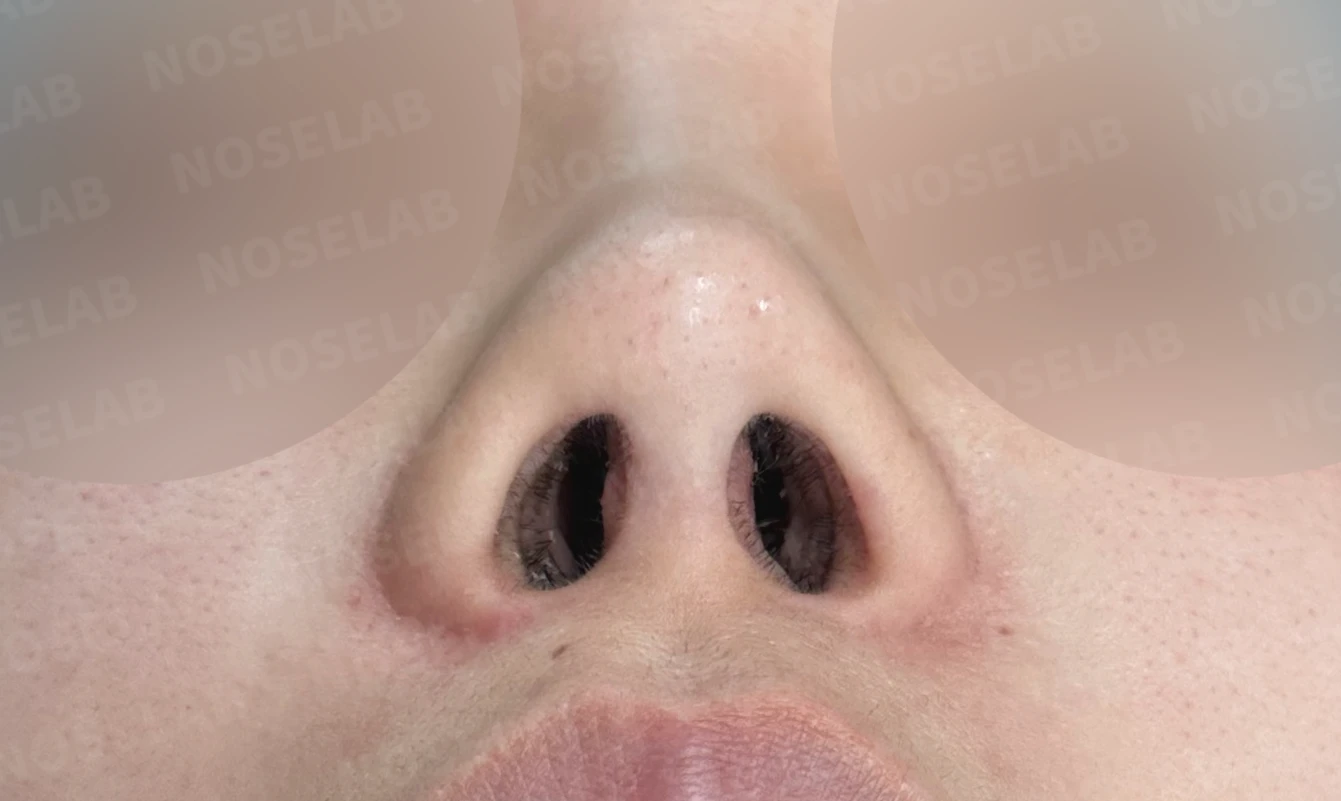
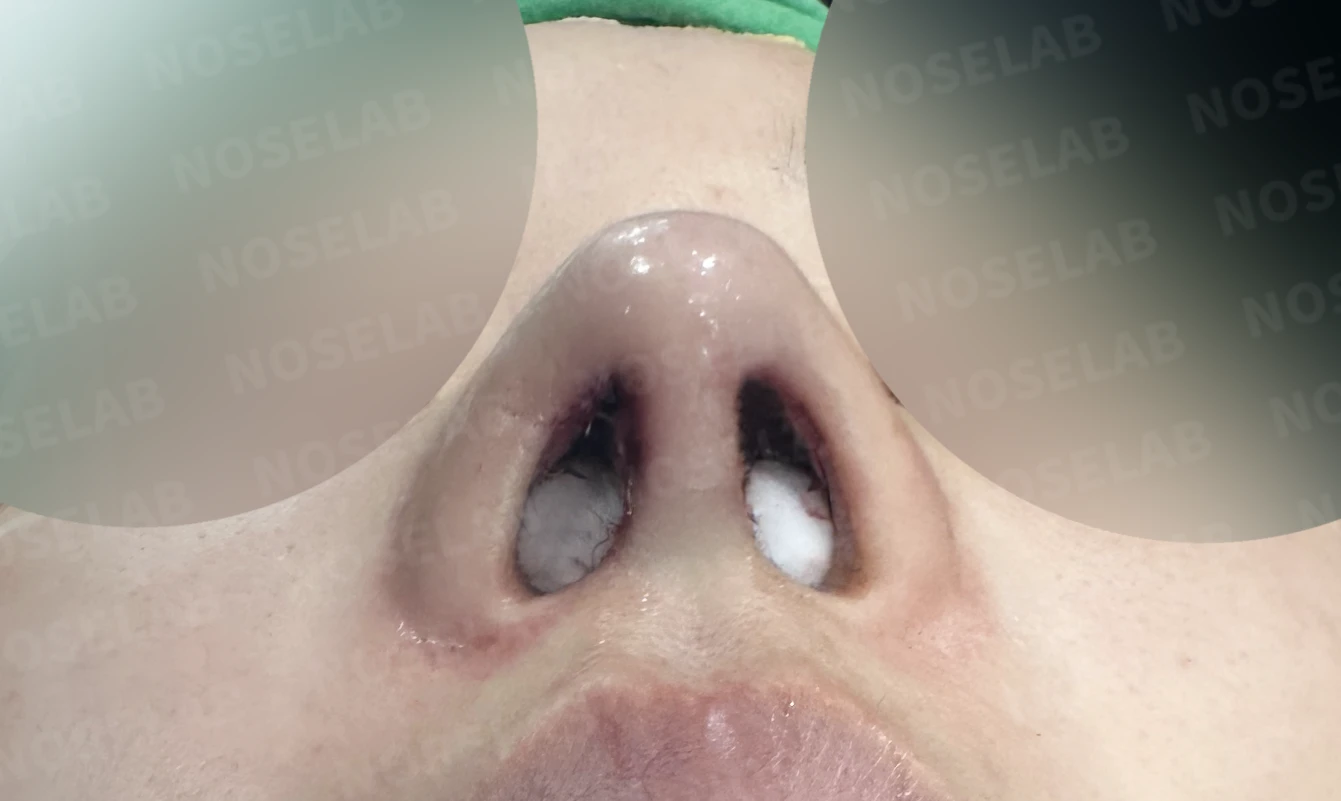
Before surgery / Day 0 immediately after surgery Photos taken immediately after surgery show swelling and may differ from the final result.
💡 Specialist opinion
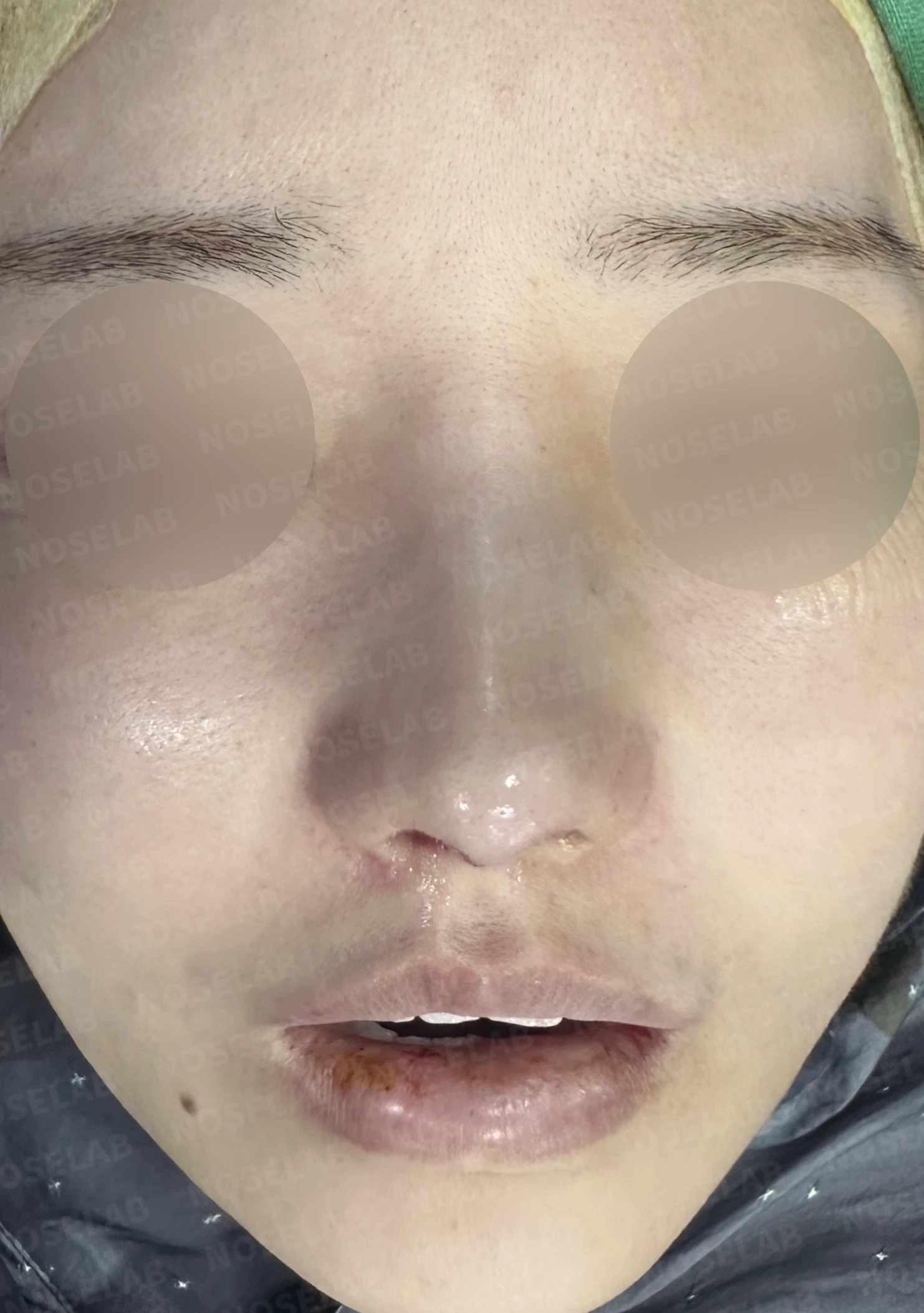
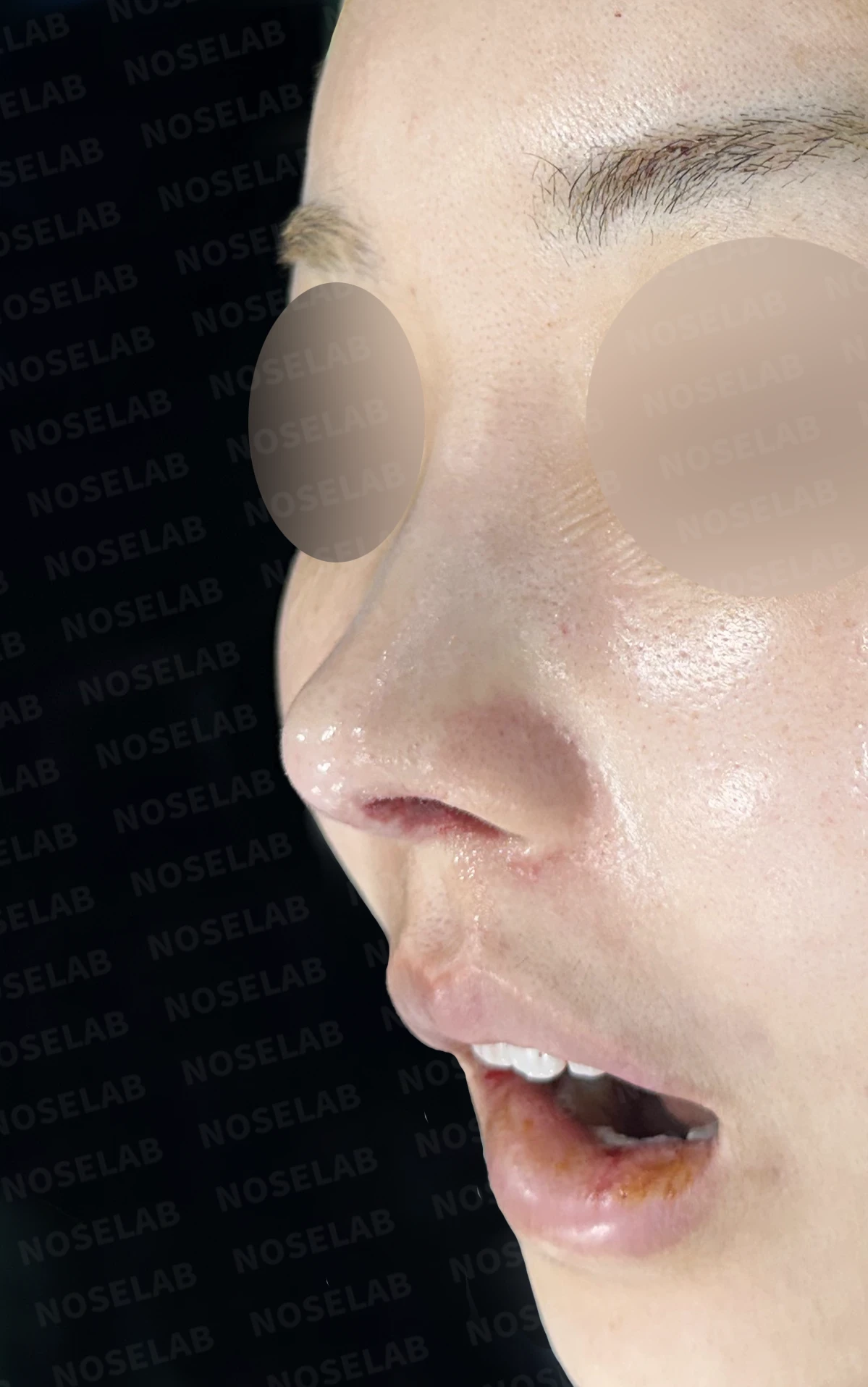
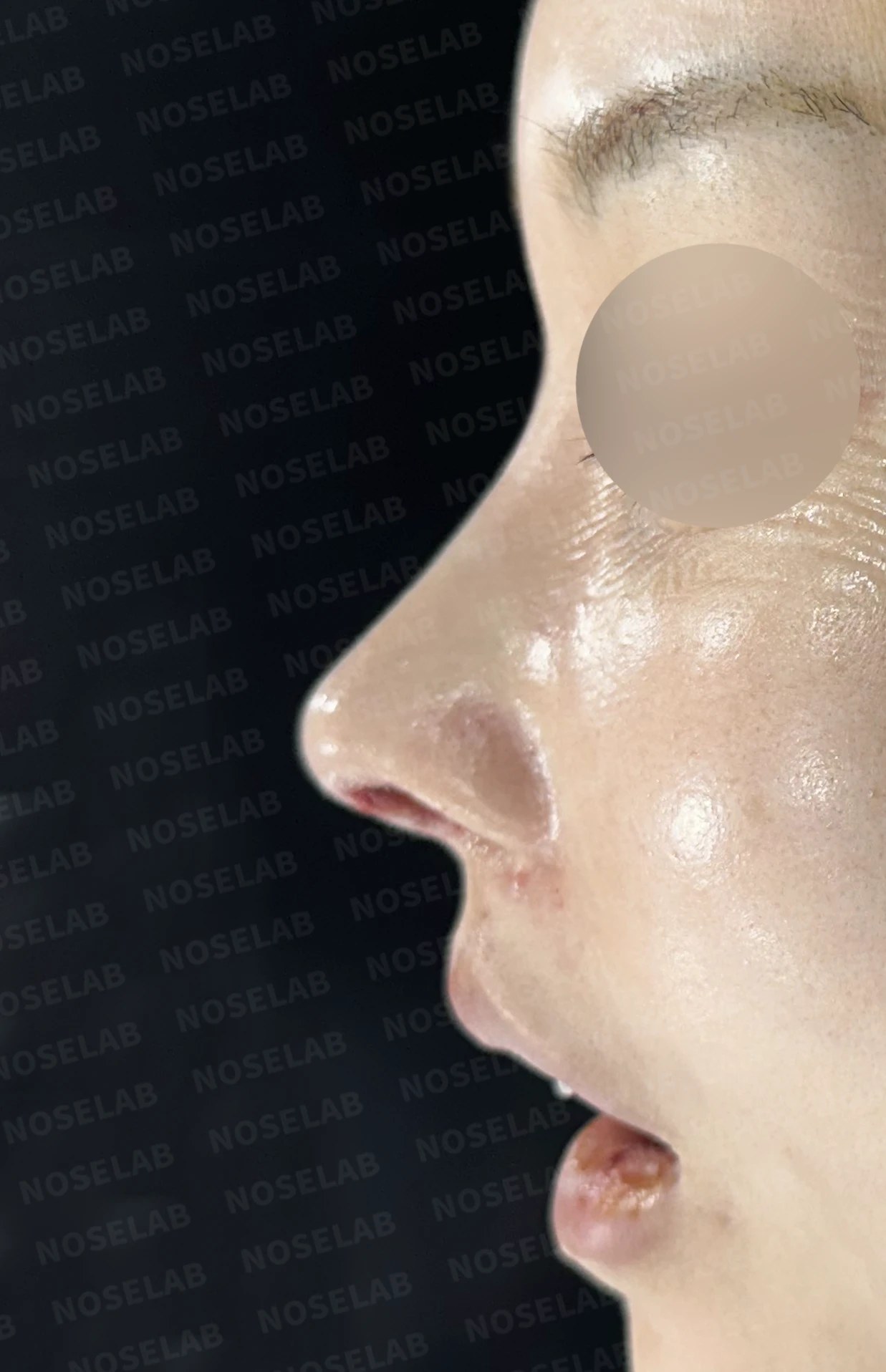
Immediately after surgery (day 0): front, oblique, and profile views. Immediate postoperative photos show swelling and may differ from the final result.
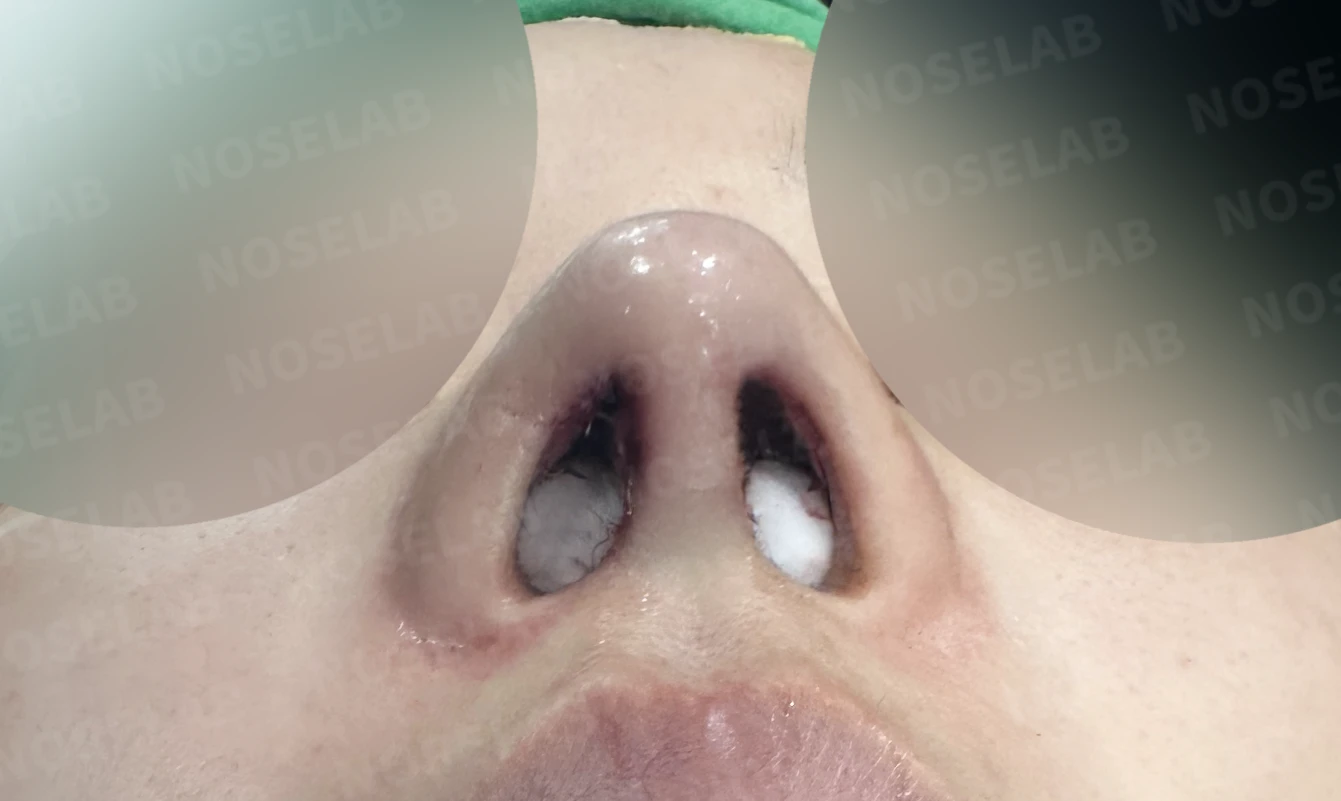
Immediately after surgery (day 0): nostril view. Immediate postoperative photos show swelling and may differ from the final result.
In noses that have undergone multiple revision surgeries, available cartilage and soft tissue are often severely depleted. In particular, when the septal cartilage is damaged with little remaining, the nasal tip becomes short and upturned; attempting excessive correction in this state can lead to subsequent deformities or functional complications.
In this clinical presentation, the septum was reliably reconstructed using the patient's own autologous rib cartilage, and the mucosal deficiency was replenished with an advancement flap, allowing the upturned nasal tip to be lowered safely. In addition, by meticulously carving the nasal bridge implant to fit the nasal bone contour and performing septoplasty and rhinitis surgery together, aesthetic improvement and restoration of respiratory function were achieved simultaneously.
In revision rhinoplasty, a tailored approach that comprehensively evaluates the amount of residual cartilage, tissue condition, and skin thickness is paramount. NOSELAB will continue to resolve patients' concerns safely through this careful approach.
This was Dr. Peter C. Kang. Thank you.
#closedrhinoplasty #closedrevisionrhinoplasty #autologousribcartilage #septalreconstruction #shortnosecorrection #upturnednosecorrection #revisionrhinoplasty #nasalobstructionsurgery #columellacorrection

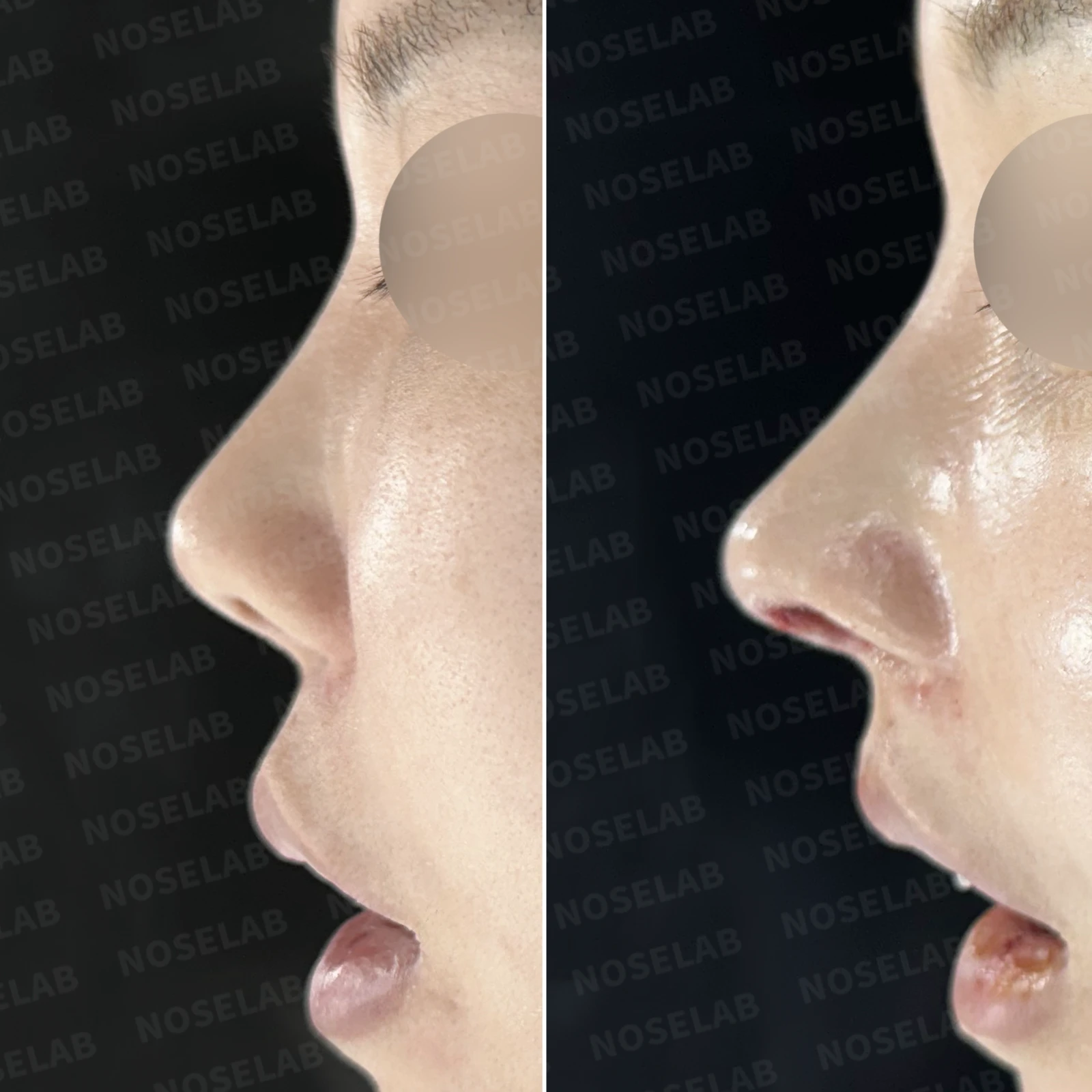
Limitations and risks
When autologous rib cartilage is used, scarring and pain may remain at the donor site on the chest, and pneumothorax (pleural injury) can occur rarely. Over time, the grafted cartilage may warp or undergo partial resorption.
When the septum is corrected at the same time, nasal obstruction may persist or recur, and in rare cases, septal perforation or changes in smell may occur.
Common potential risks include infection, bleeding, asymmetry, scarring, skin necrosis, and insufficient improvement; results vary depending on individual skin condition and previous surgical history.