Hello, I am Dr. Peter C. Kang.
Today, I would like to introduce a closed rhinoplasty case where we corrected an overall small, low nose while addressing excessive nostril show from the front.
🔍 Preoperative condition
The patient was undergoing rhinoplasty for the first time with no prior surgical history, and was concerned about a lack of facial dimension due to an overall small and low nose. Nostril show was excessive when viewed from the front, making it even more noticeable, and the nasal tip was excessively upturned, creating an unnatural impression.
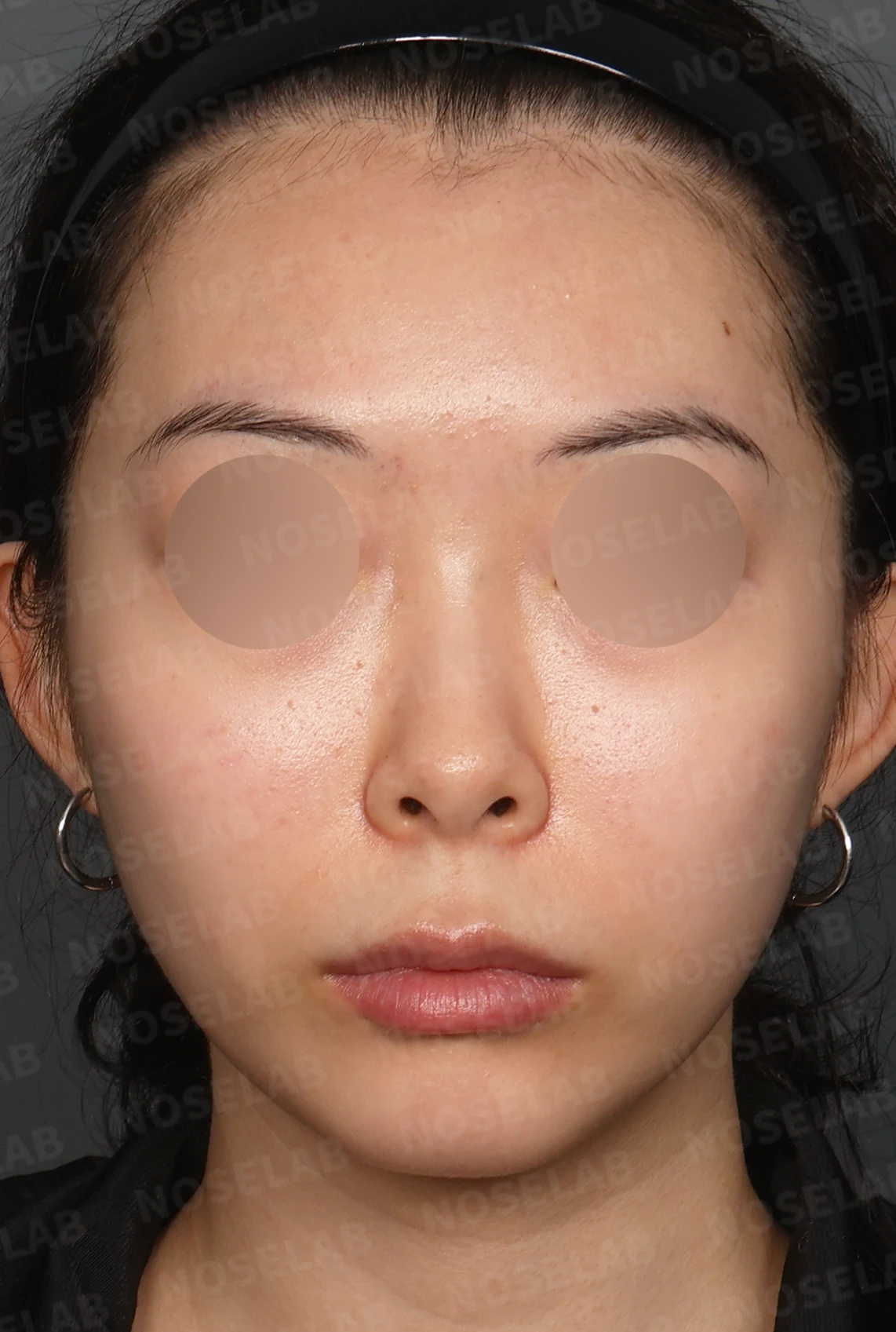
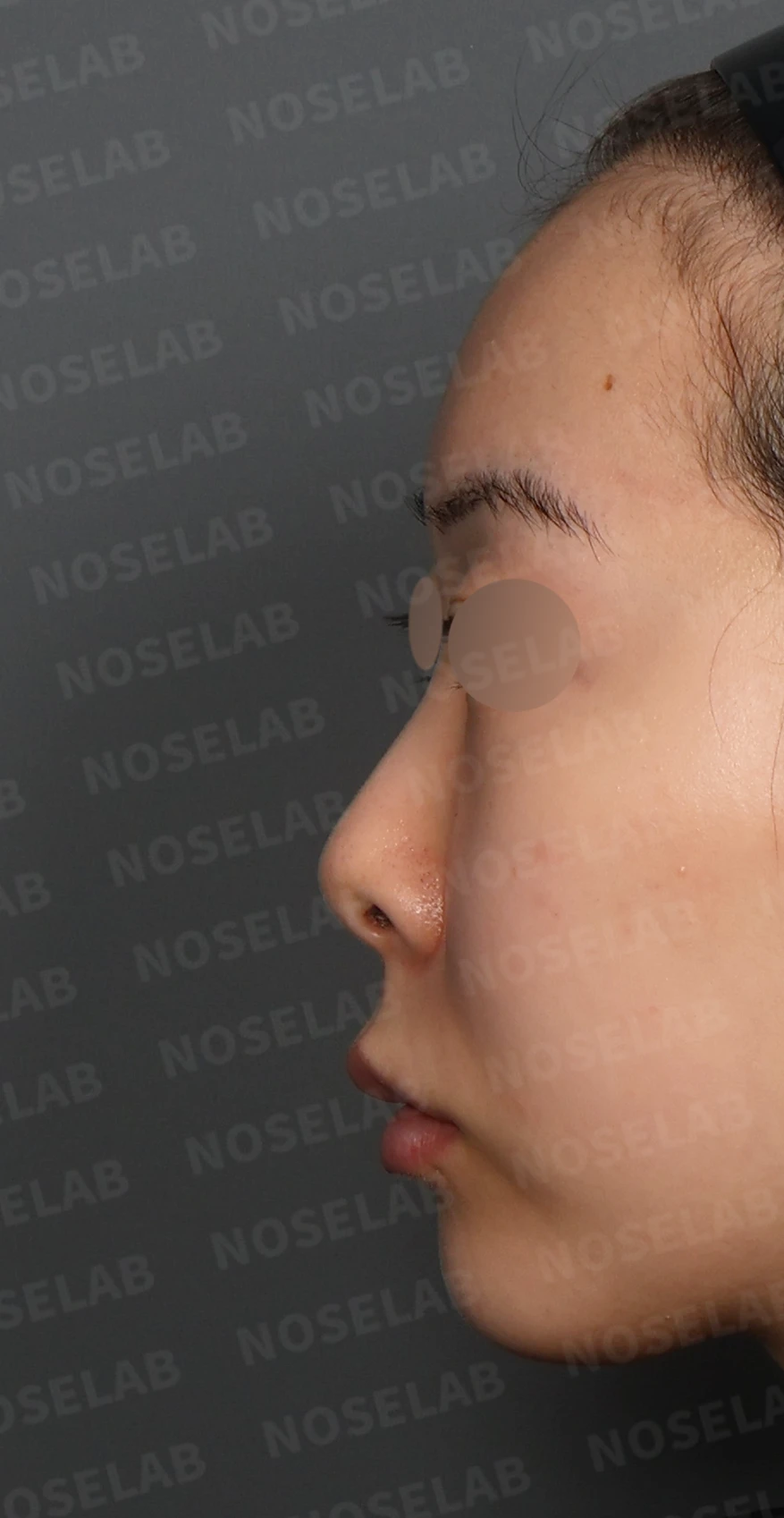
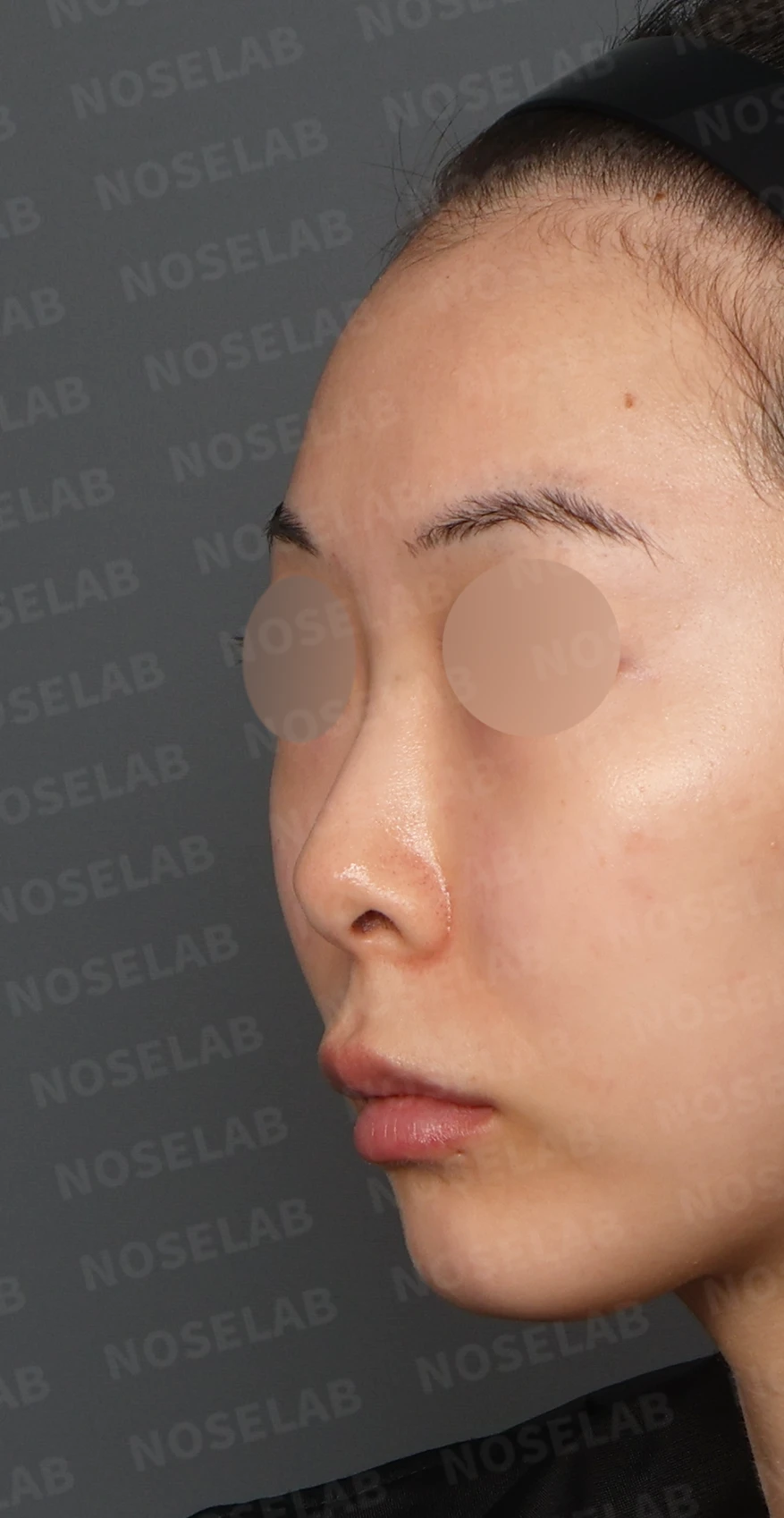
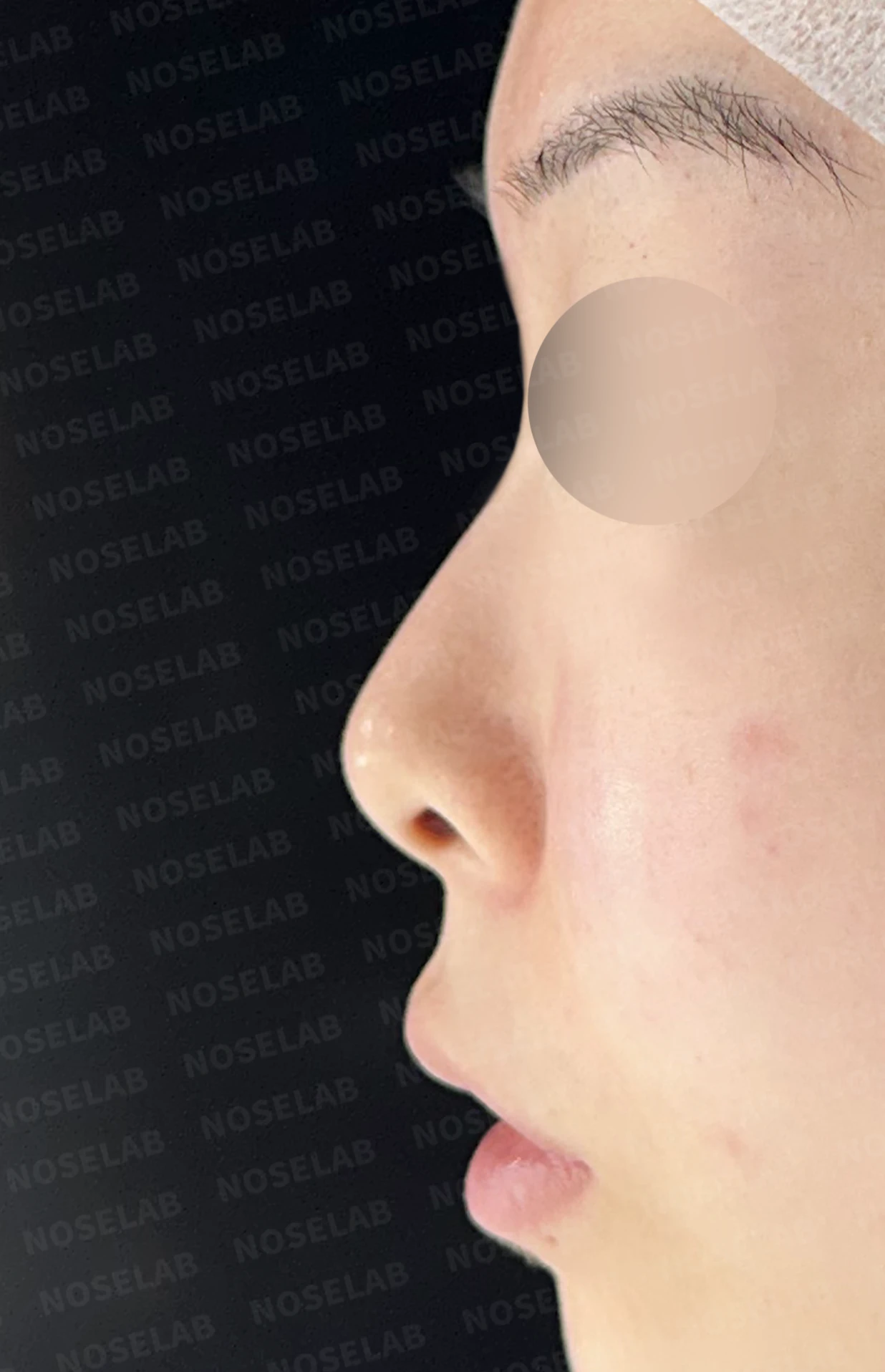
Front, left profile, and oblique views during design consultation.
Patient requests
Improvement of excessive nostril show from the front
Correction of the overall small and low nasal height
Refinement of the nasal tip direction so it no longer looks upturned
Creation of a natural bridge line close to straight (preference for a straight bridge line)
Maintenance of overall facial balance without making the eyes appear too close together
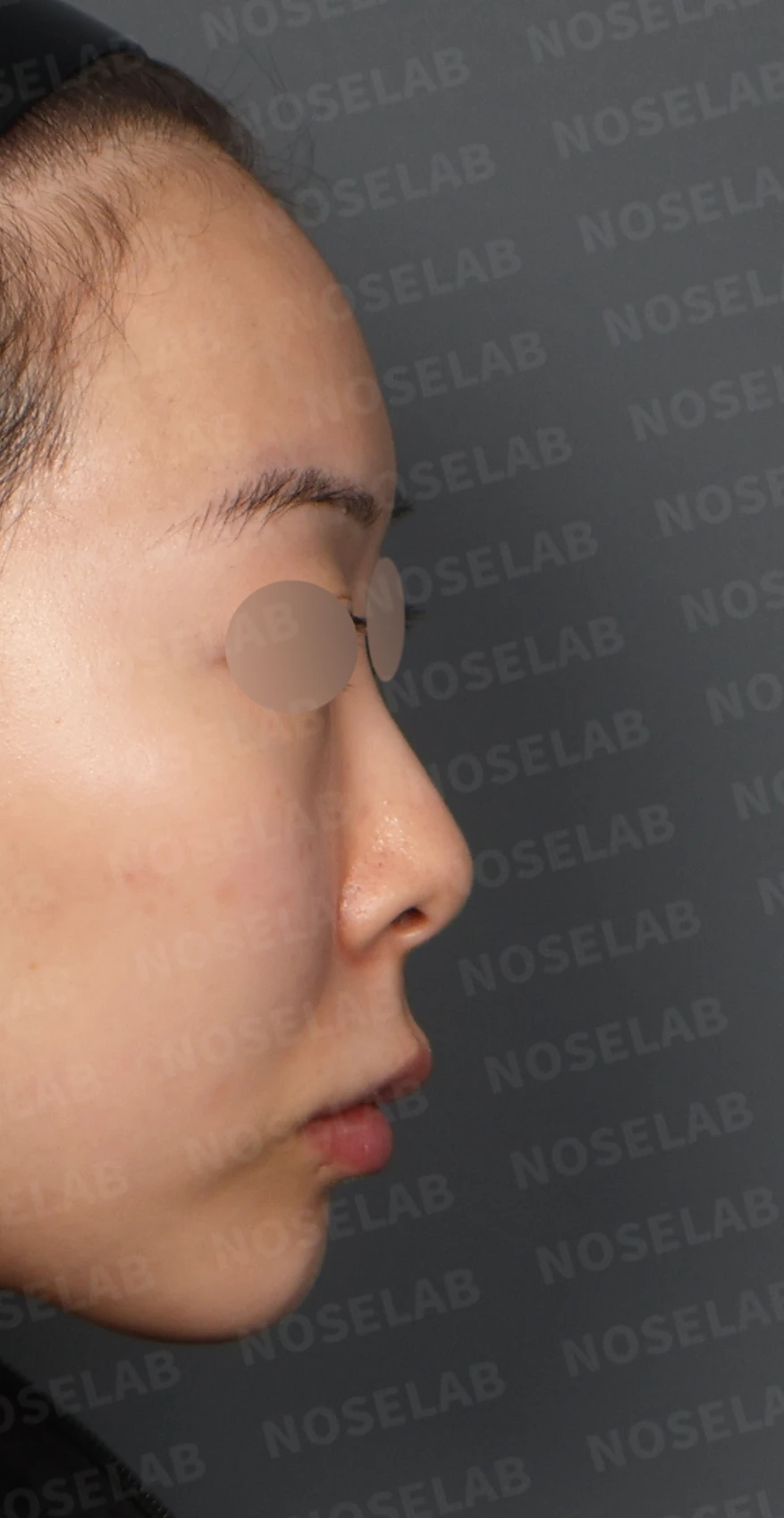
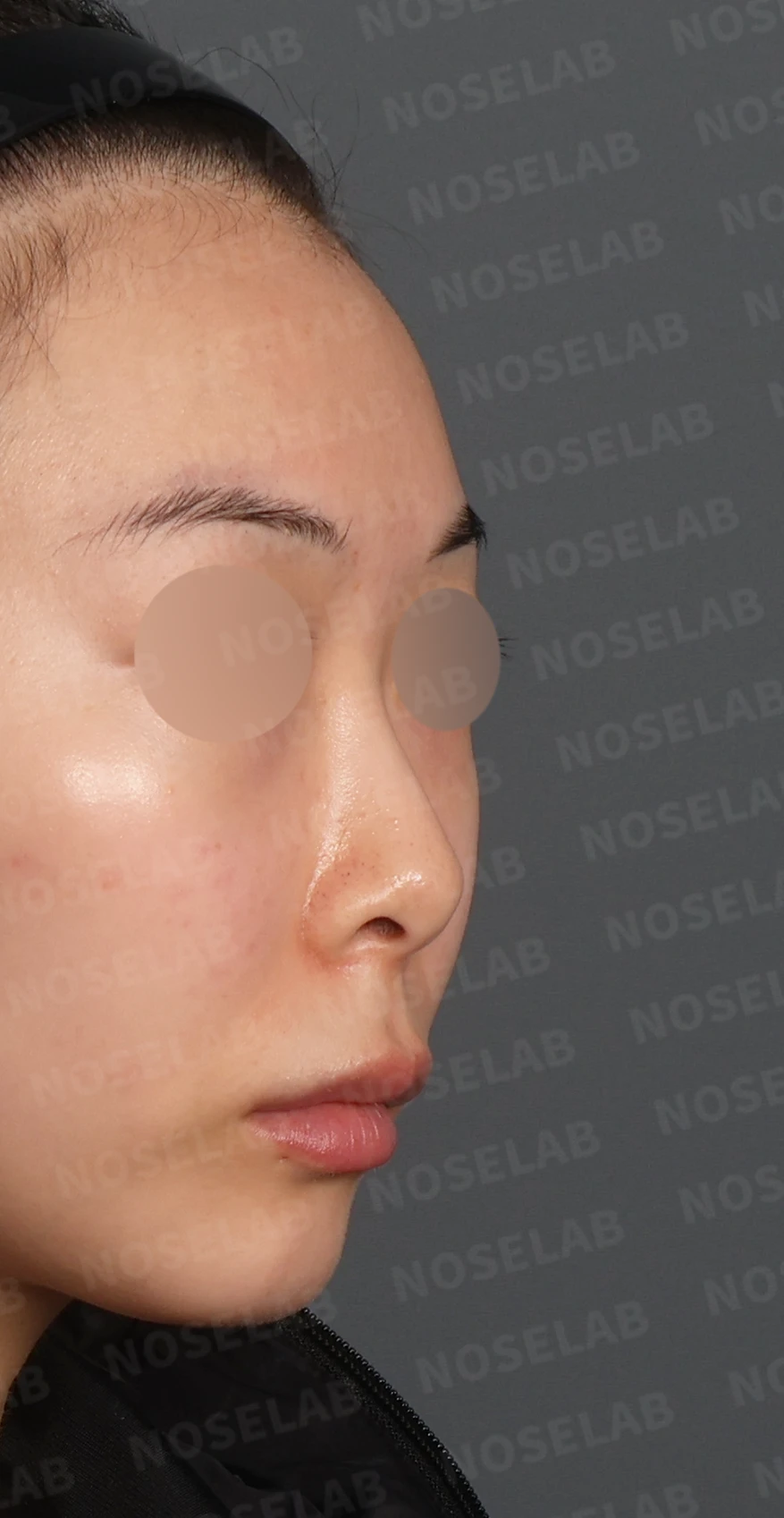
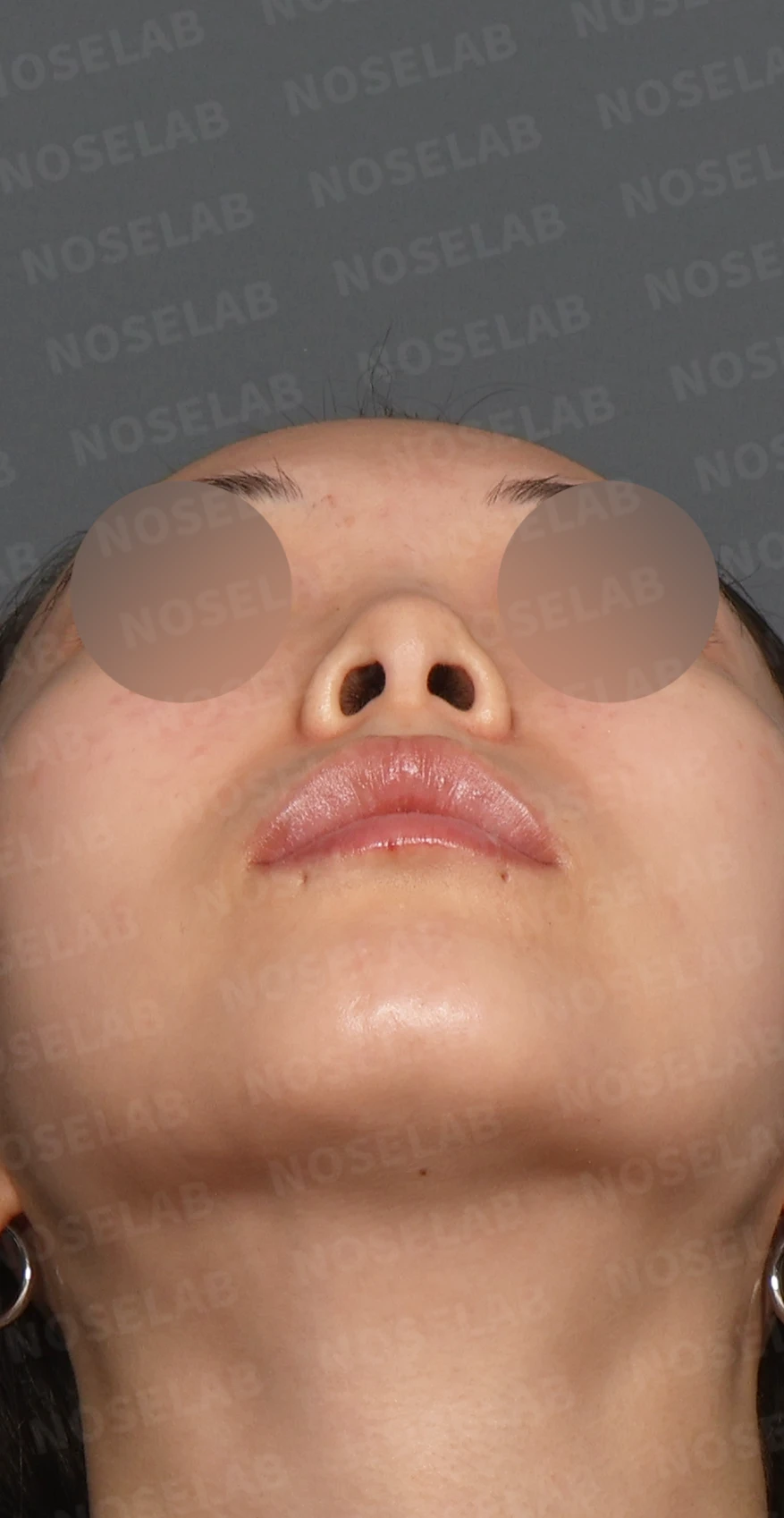
Right profile, oblique, and nostril views during design consultation.
🔧 Surgical plan and procedure
When the nose is overall small and low, simply raising the height with an implant alone places excessive strain on the nasal tip, which can lead to long-term problems. This surgery was performed in the following steps.
1. Autologous rib cartilage harvest: The patient's own rib cartilage was harvested and used as the key material for tip correction. Using autologous tissue allows for a natural nasal tip without foreign body reactions.
2. Septal reconstruction: The septum, which serves as the central support strut of the nose, was reconstructed to enhance the structural stability of the entire nose. This serves as an essential foundation for maintaining a stable shape over the long term.
3. Nasolabial angle correction: The tip was corrected to a natural angle so it no longer appears upturned, and the angle where the nose meets the philtrum was adjusted to reduce nostril show from the front.
4. Artificial dermis reinforcement: Because thin skin at the nasal tip carried a risk of cartilage show-through, the skin layer was reinforced with artificial dermis. This helps maintain a natural nasal tip shape over time.
5. Silicone implant insertion: To achieve a natural bridge line connecting smoothly with the nasal tip, an appropriate silicone implant was used to correct the height of the nasal bridge.
🌟 Surgical results
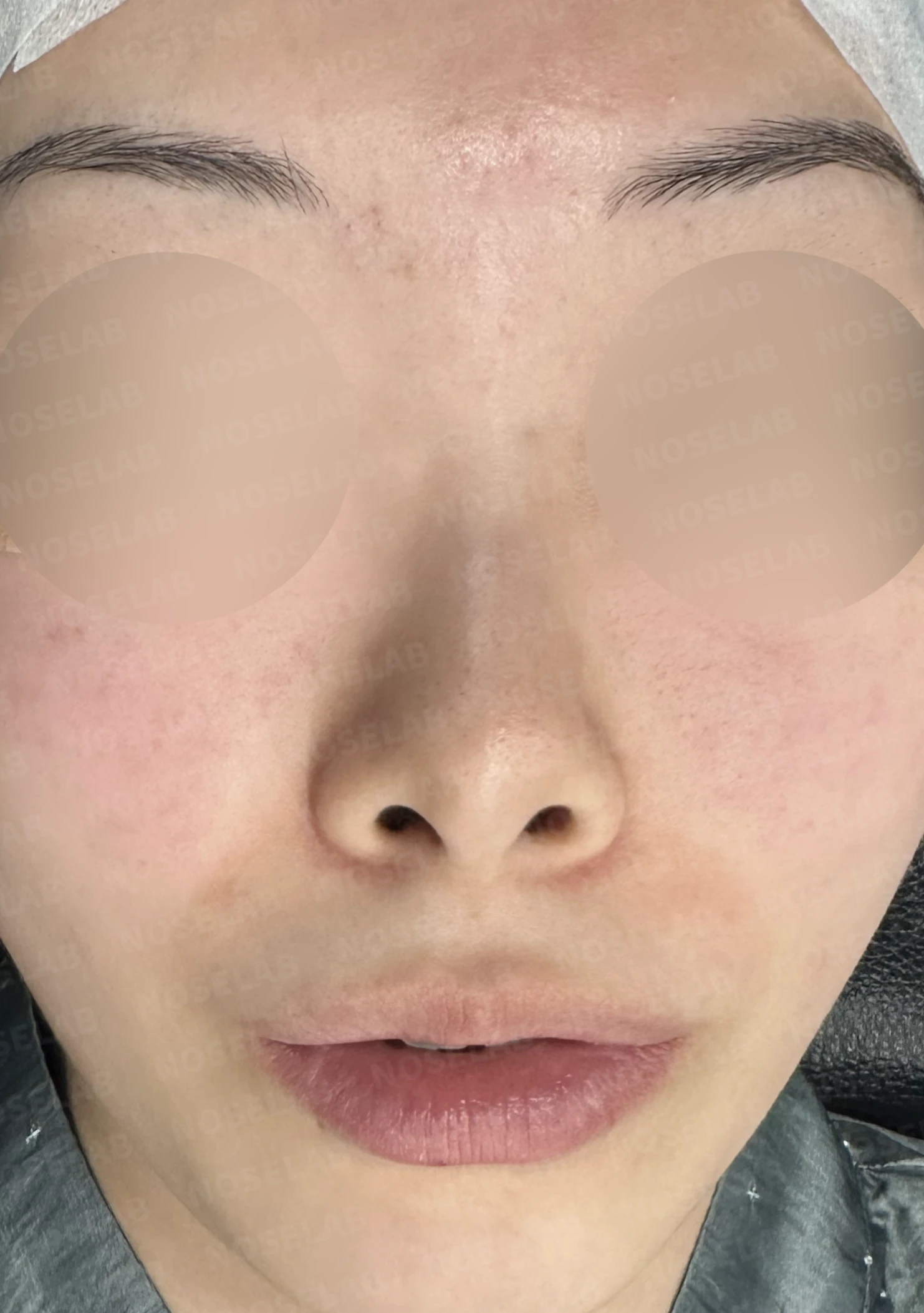
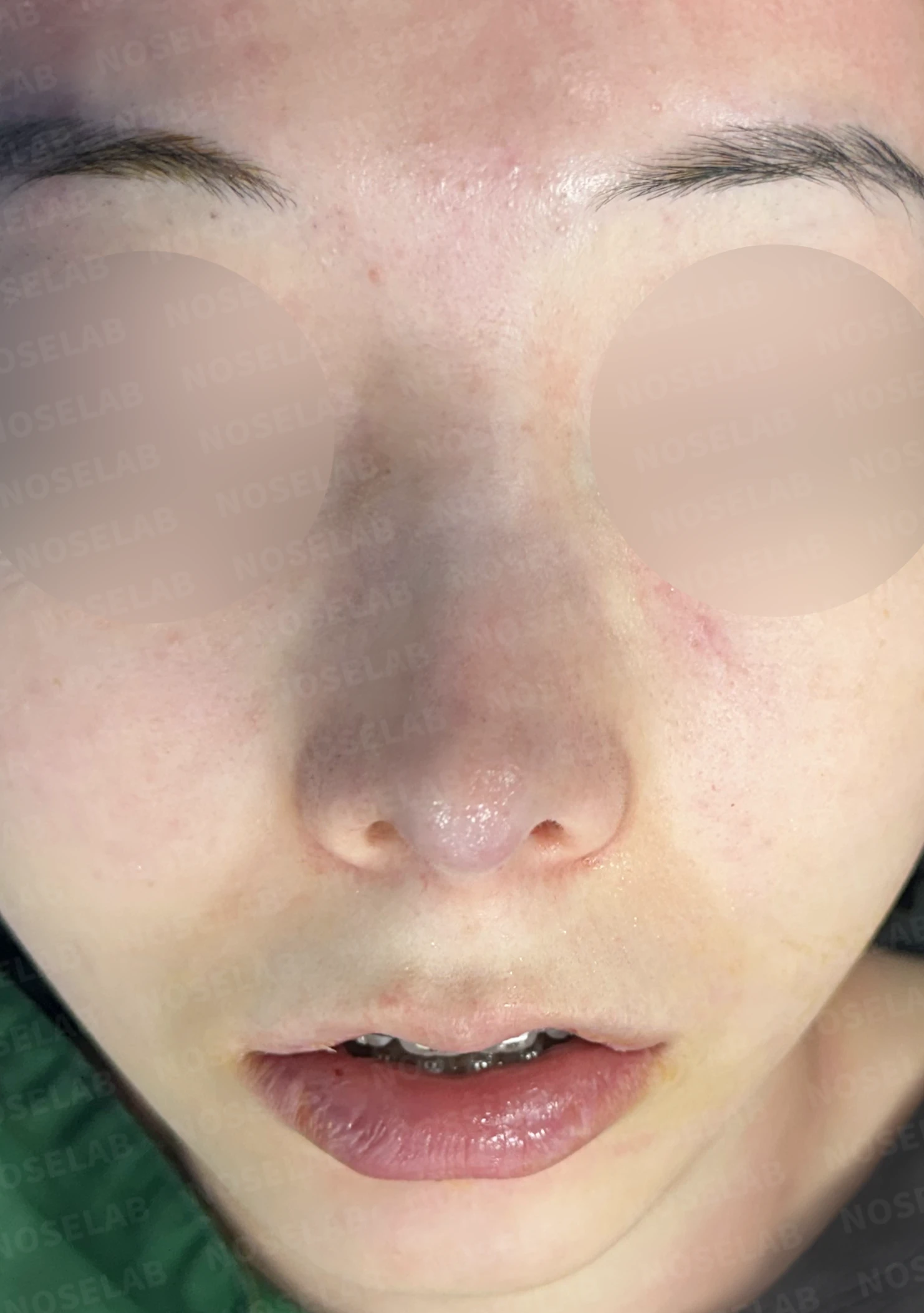
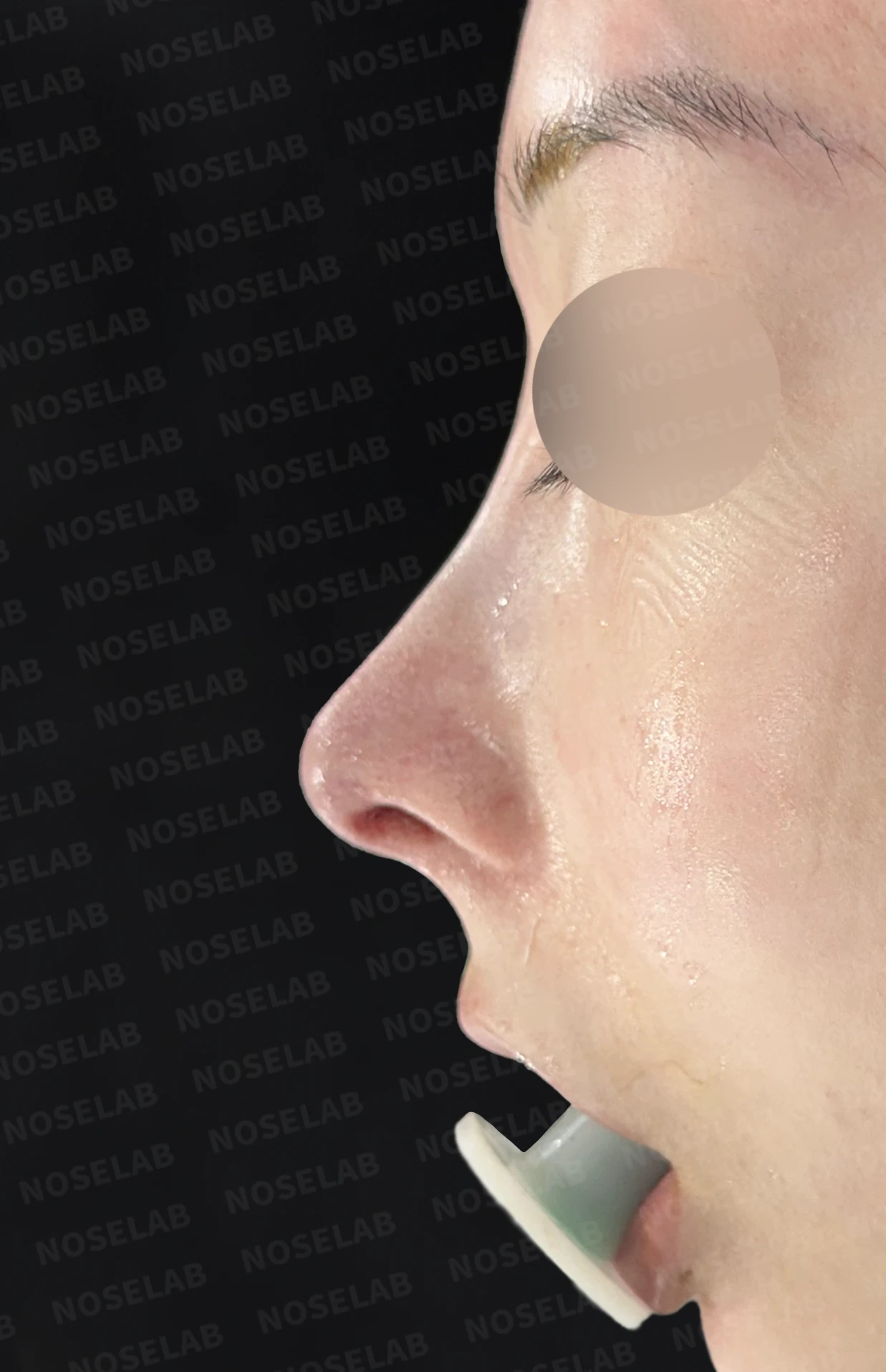
Before surgery / Day 0 immediately after surgery Photos taken immediately after surgery show swelling and may differ from the final result.
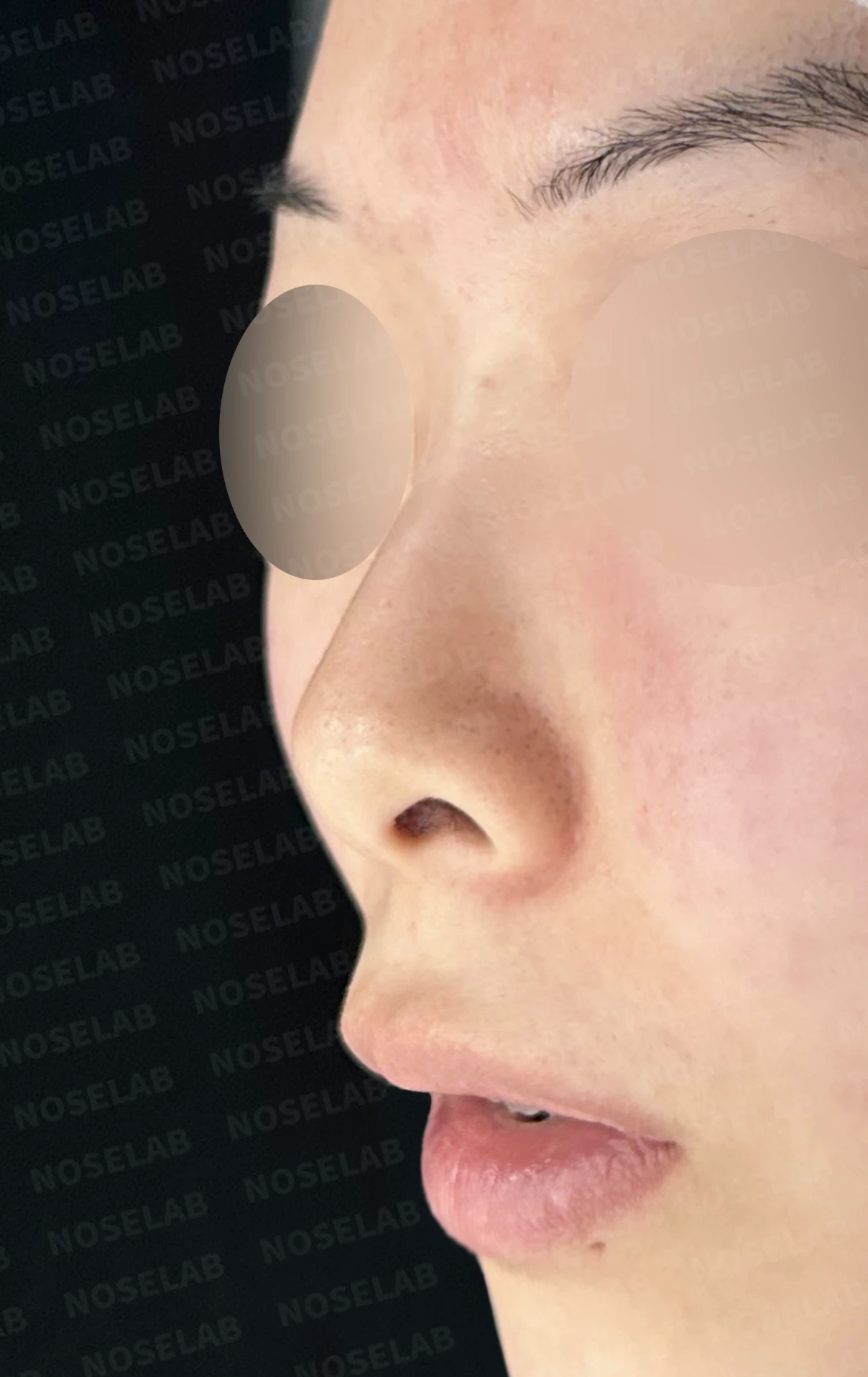
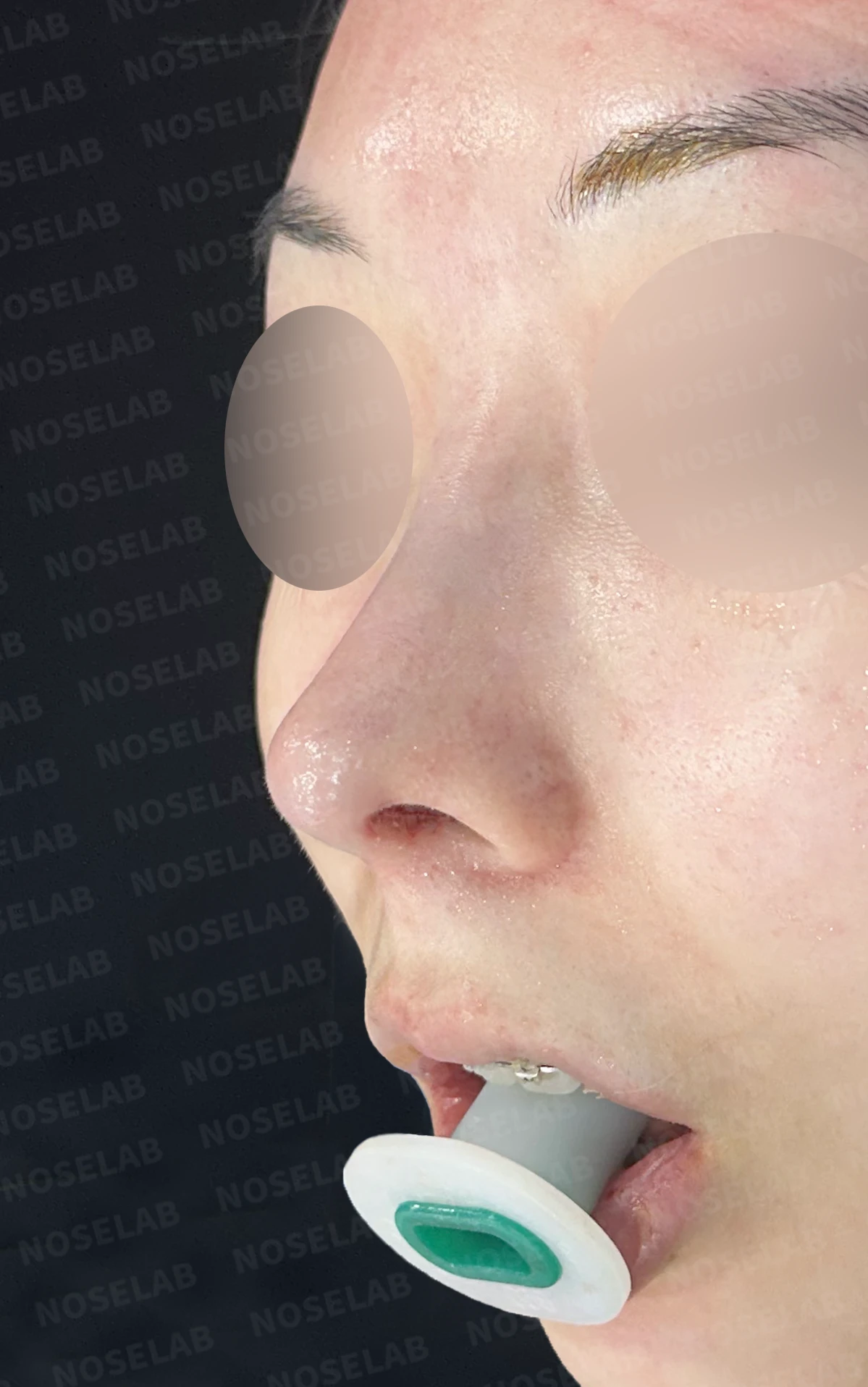
Front view changes
Excessive nostril show from the front was improved to a natural appearance.
The overall size and proportions of the nose became more harmonious with the face.
Before surgery / Day 0 immediately after surgery Photos taken immediately after surgery show swelling and may differ from the final result.
Profile view changes
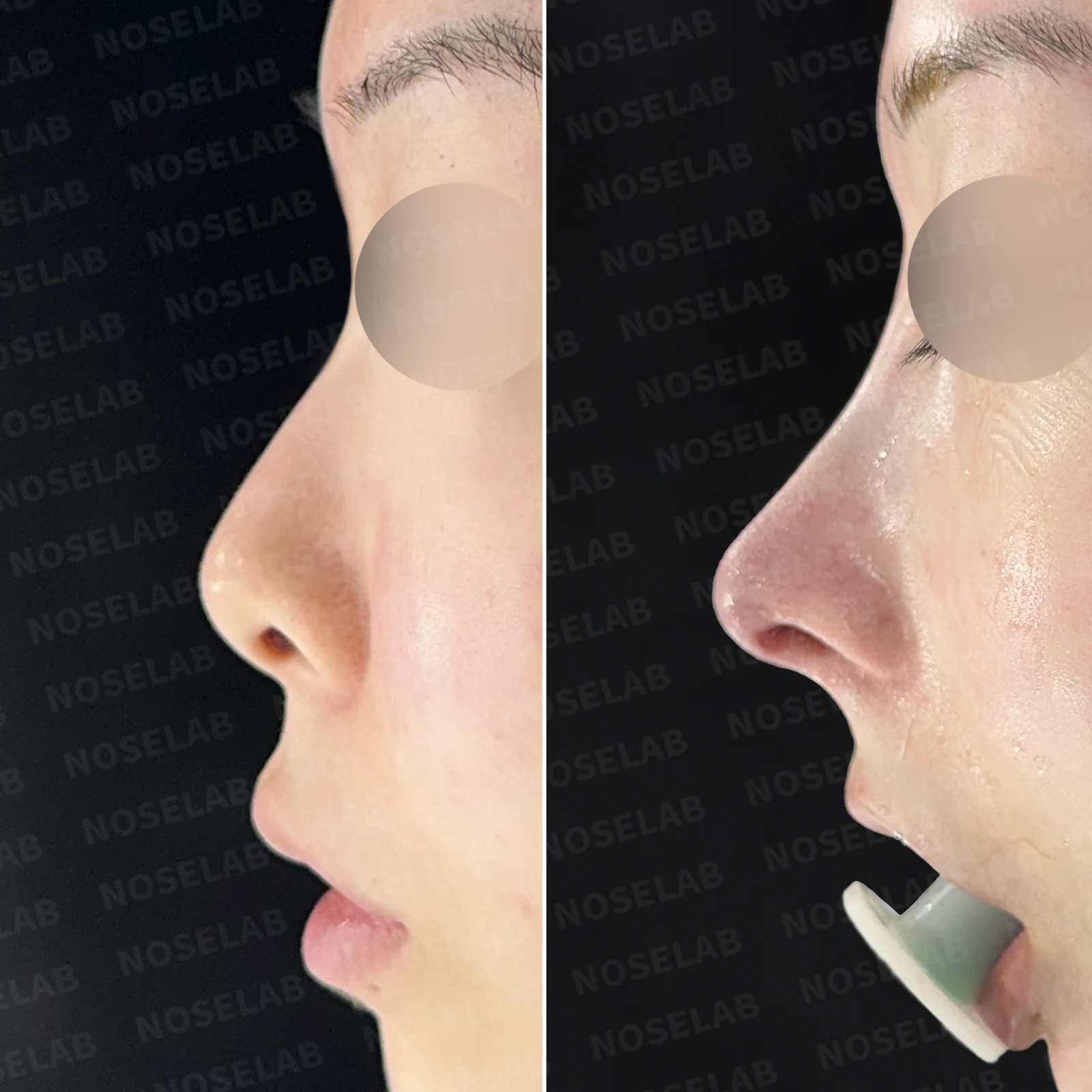
The low nasal bridge was corrected into a natural straight line.
The nasal tip was improved toward a natural direction without appearing upturned.
Before surgery / Day 0 immediately after surgery Photos taken immediately after surgery show swelling and may differ from the final result.
Overall change in impression
The angle between the nose and the philtrum became more natural through nasolabial angle correction.
Overall facial balance was enhanced.
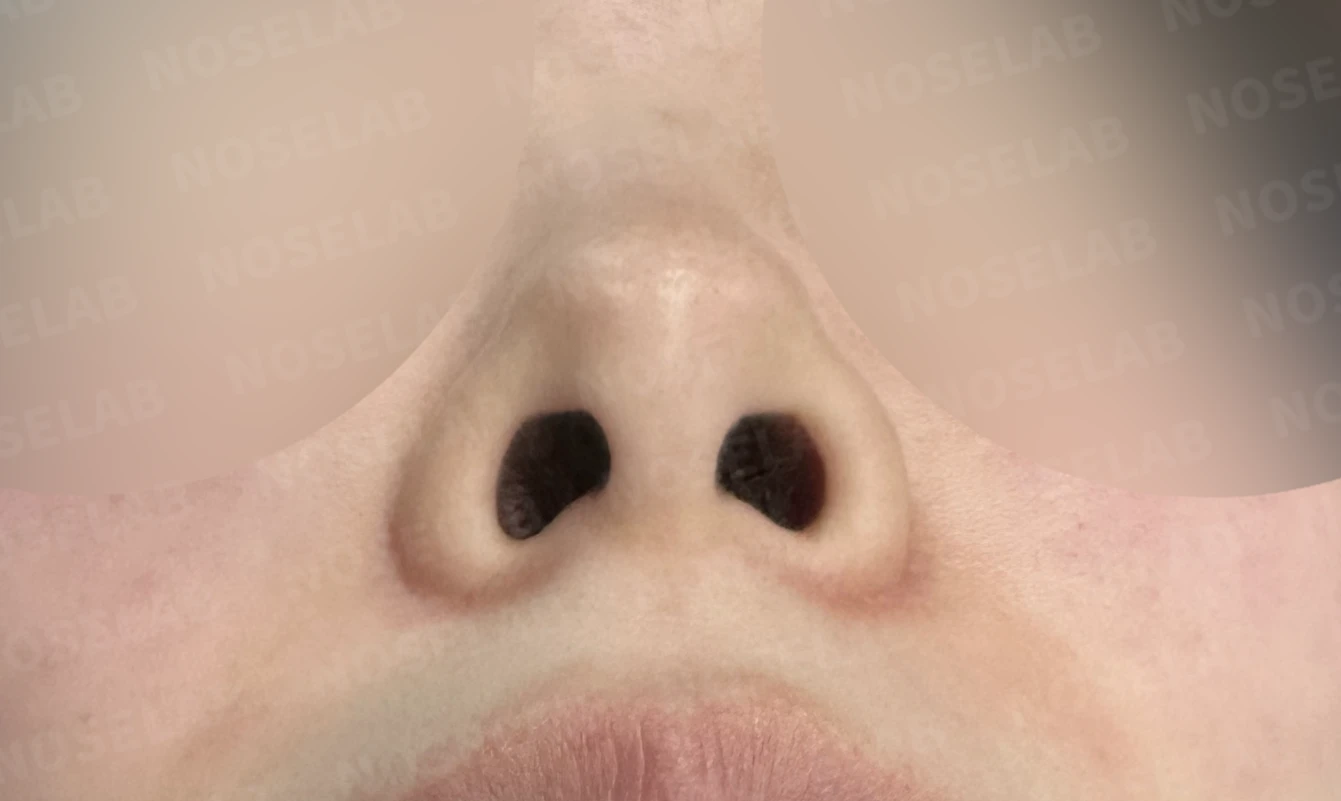
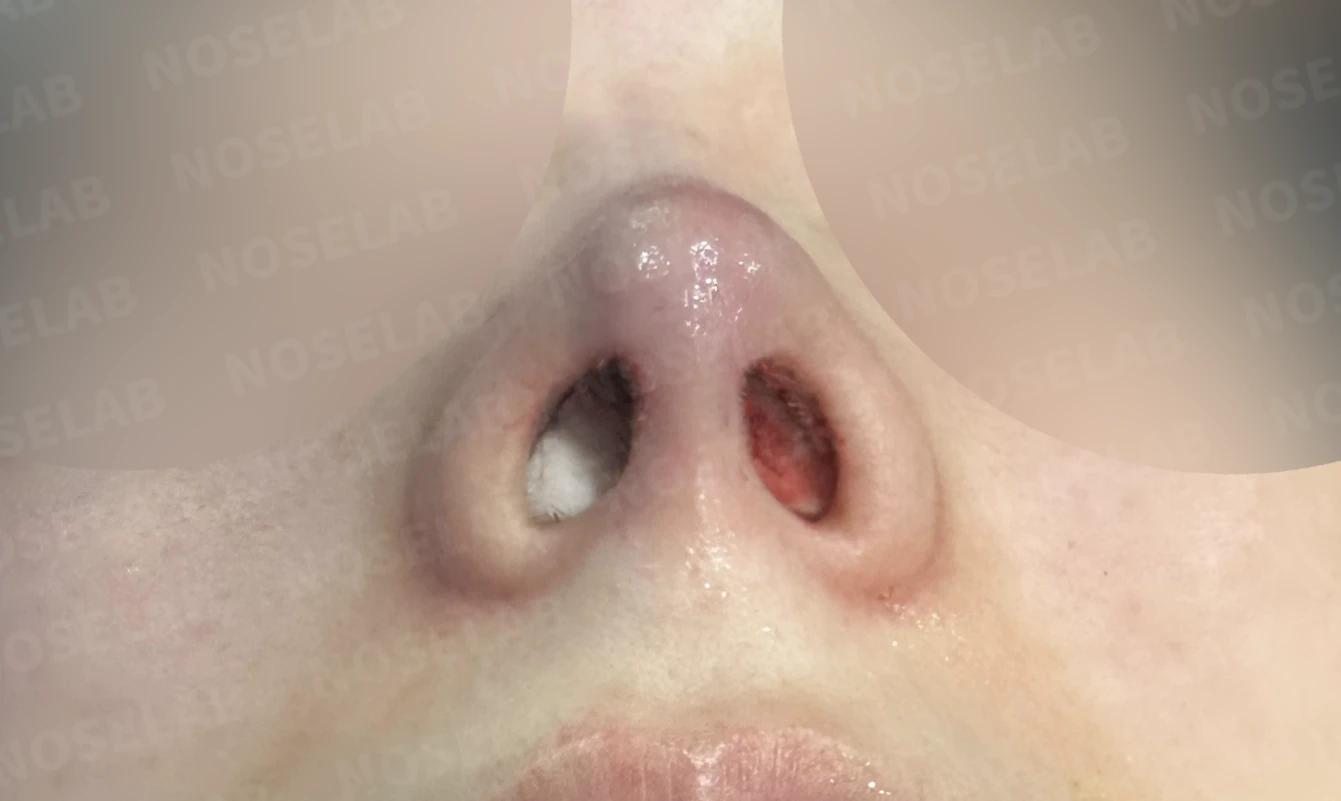
Before surgery / Day 0 immediately after surgery Photos taken immediately after surgery show swelling and may differ from the final result.
💡 Specialist opinion
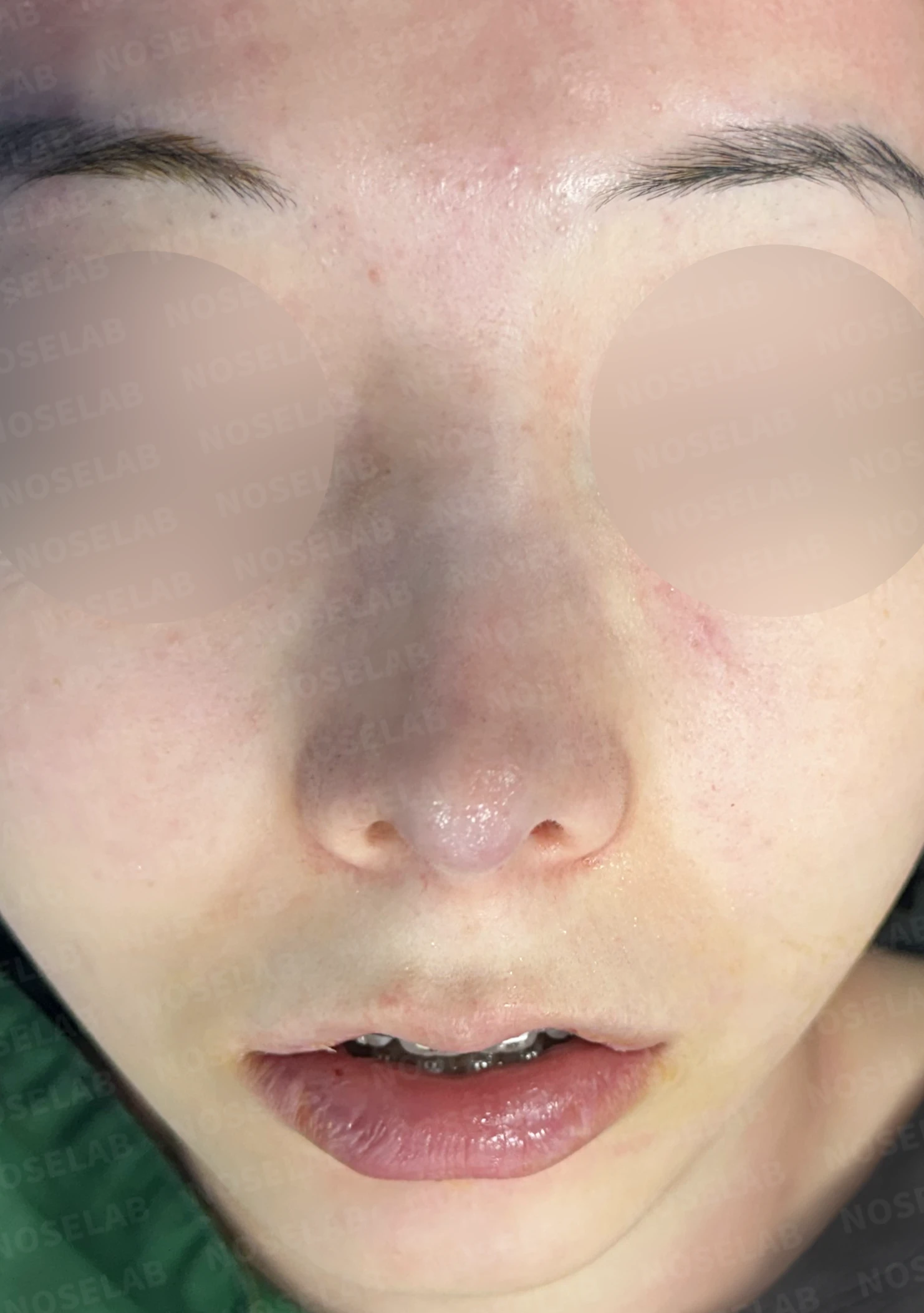
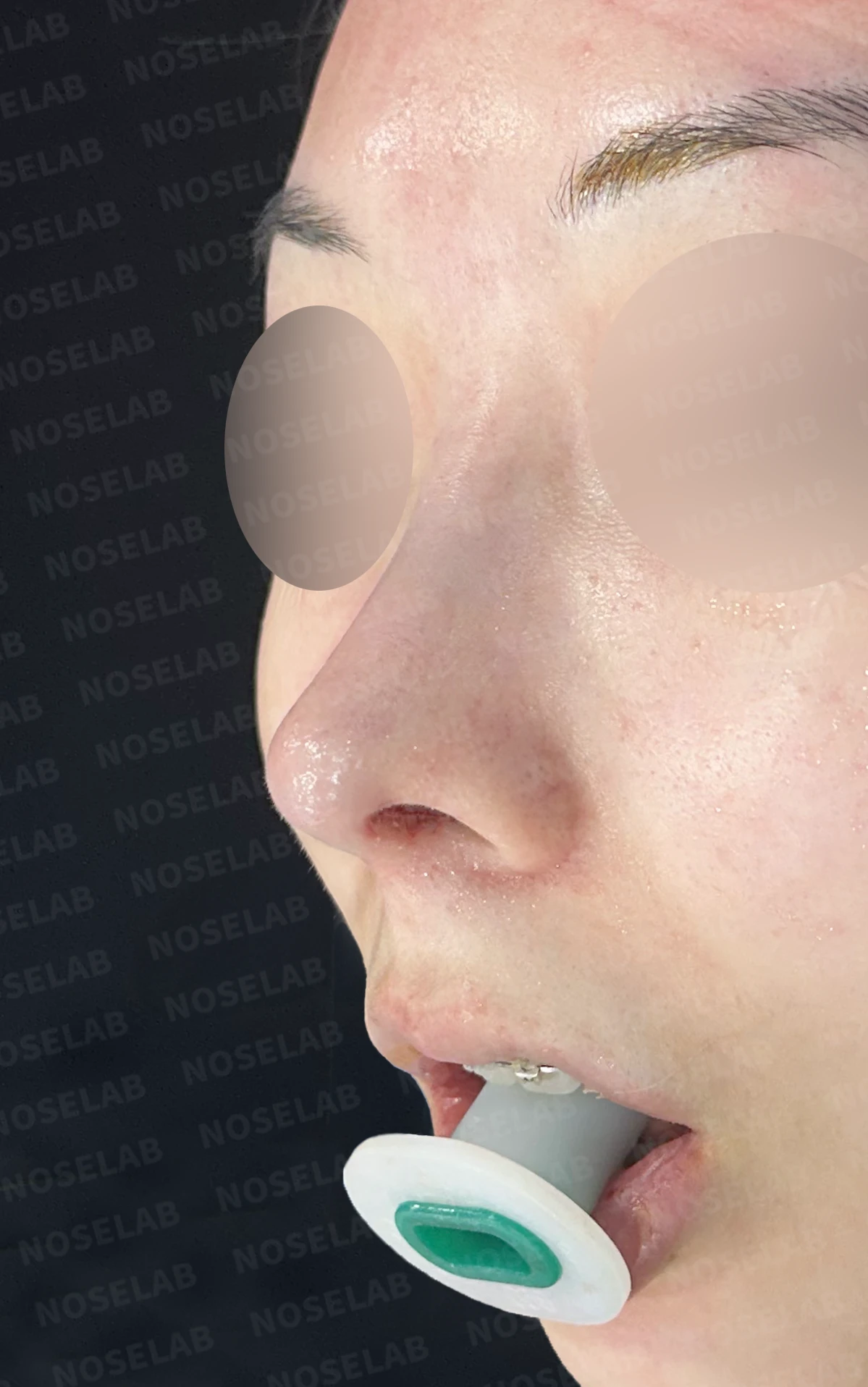
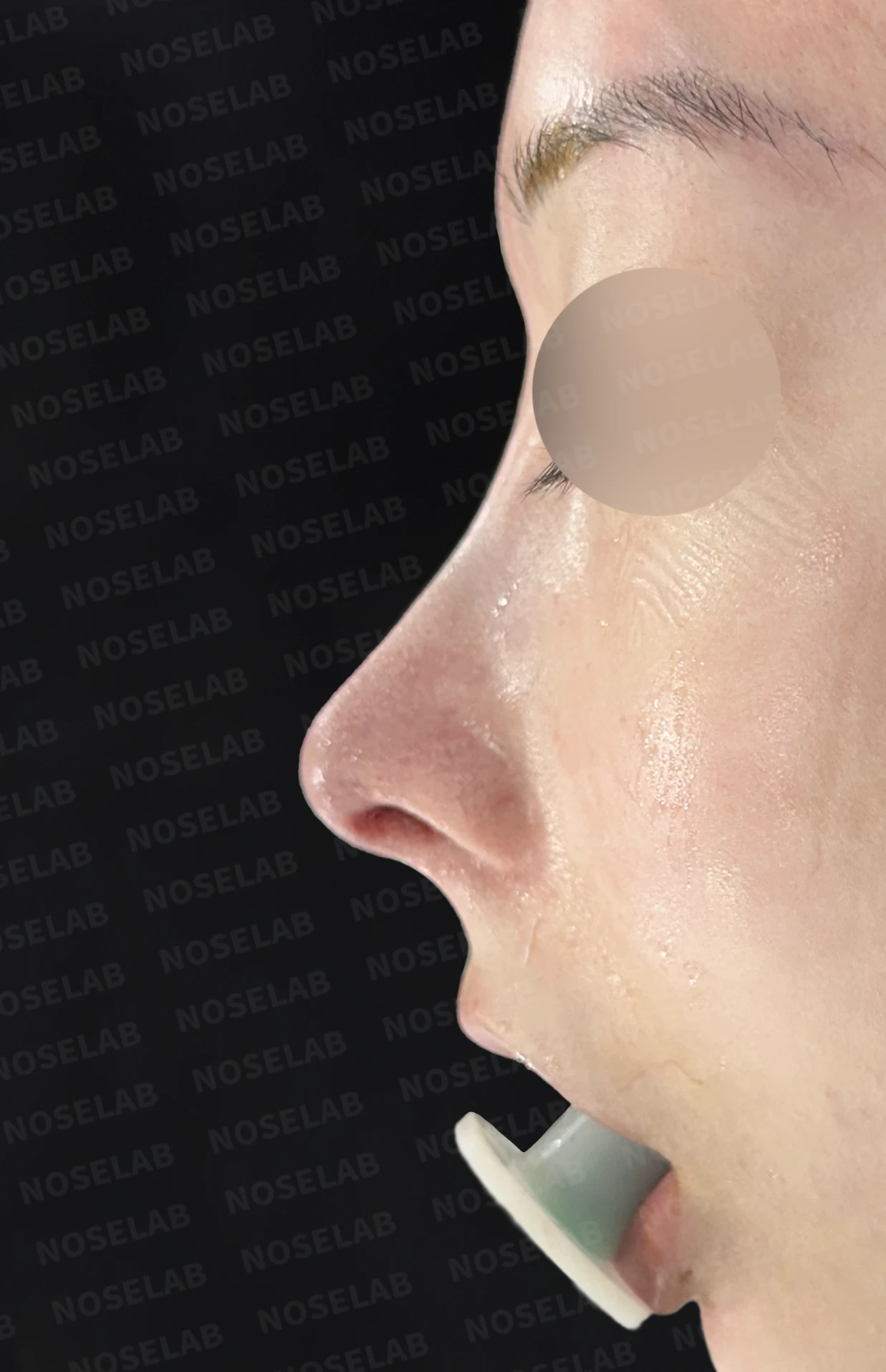
Front, oblique, and profile views on day 0 immediately after surgery. Photos taken immediately after surgery show swelling and may differ from the final result.
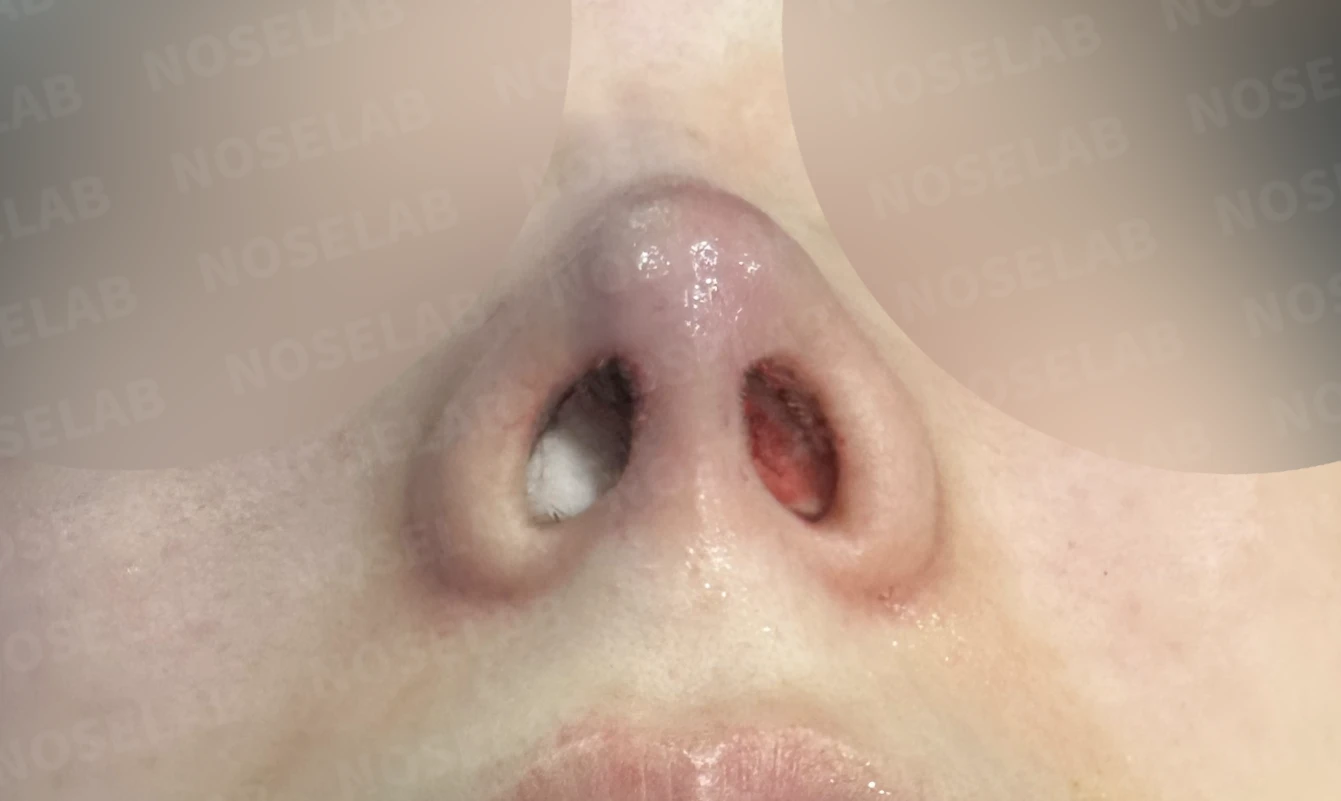
Nostril view on day 0 immediately after surgery. Photos taken immediately after surgery show swelling and may differ from the final result.
In cases of a small, low nose, inserting an implant alone places excessive pressure on the nasal tip, which can lead to thinning of the skin or implant show-through over the long term.
By sufficiently supporting the nasal tip with autologous rib cartilage and reinforcing the skin layer with artificial dermis, a more stable and natural result can be expected. Combining this with nasolabial angle correction reduces nostril show from the front while creating a natural tip orientation, making a comprehensive approach that considers the overall balance and structure of the nose essential.
This was Dr. Peter C. Kang. Thank you.
#closedrhinoplasty #autologousribrhinoplasty #lownosecorrection #nostrilshowimprovement #nasolabialanglecorrection #tiprhinoplasty #artificialdermisreinforcement #straightbridgeline #septalreconstruction #smallnosecorrection

Limitations and risks
When autologous rib cartilage is used, scarring and pain may remain at the donor site on the chest, and pneumothorax (pleural injury) can occur rarely. Over time, the grafted cartilage may warp or undergo partial resorption.
When the septum is corrected at the same time, nasal obstruction may persist or recur, and in rare cases, septal perforation or changes in smell may occur.
Common potential risks include infection, bleeding, asymmetry, scarring, skin necrosis, and insufficient improvement; results vary depending on individual skin condition and previous surgical history.