Hello, I am Dr. Peter C. Kang.
Today, I would like to share the case of a patient who visited our clinic concerned about depressed nasal tip skin and nasal bridge implant show-through after undergoing multiple revision rhinoplasties.
🔍 Surgical history
Approximately 10 years ago: Rhinoplasty using silicone and artificial dermis, along with septal surgery, at another clinic
Postoperative inflammation occurred, causing nasal tip swelling and drainage of pus (no separate anti-inflammatory treatment was performed)
Interim period: Revision surgery to remove the previous implant and overlay dermal tissue only
Approximately 5 years ago: Revision rhinoplasty using ear cartilage and a silicone implant
Recently: Additional revision surgery using dermal tissue alone
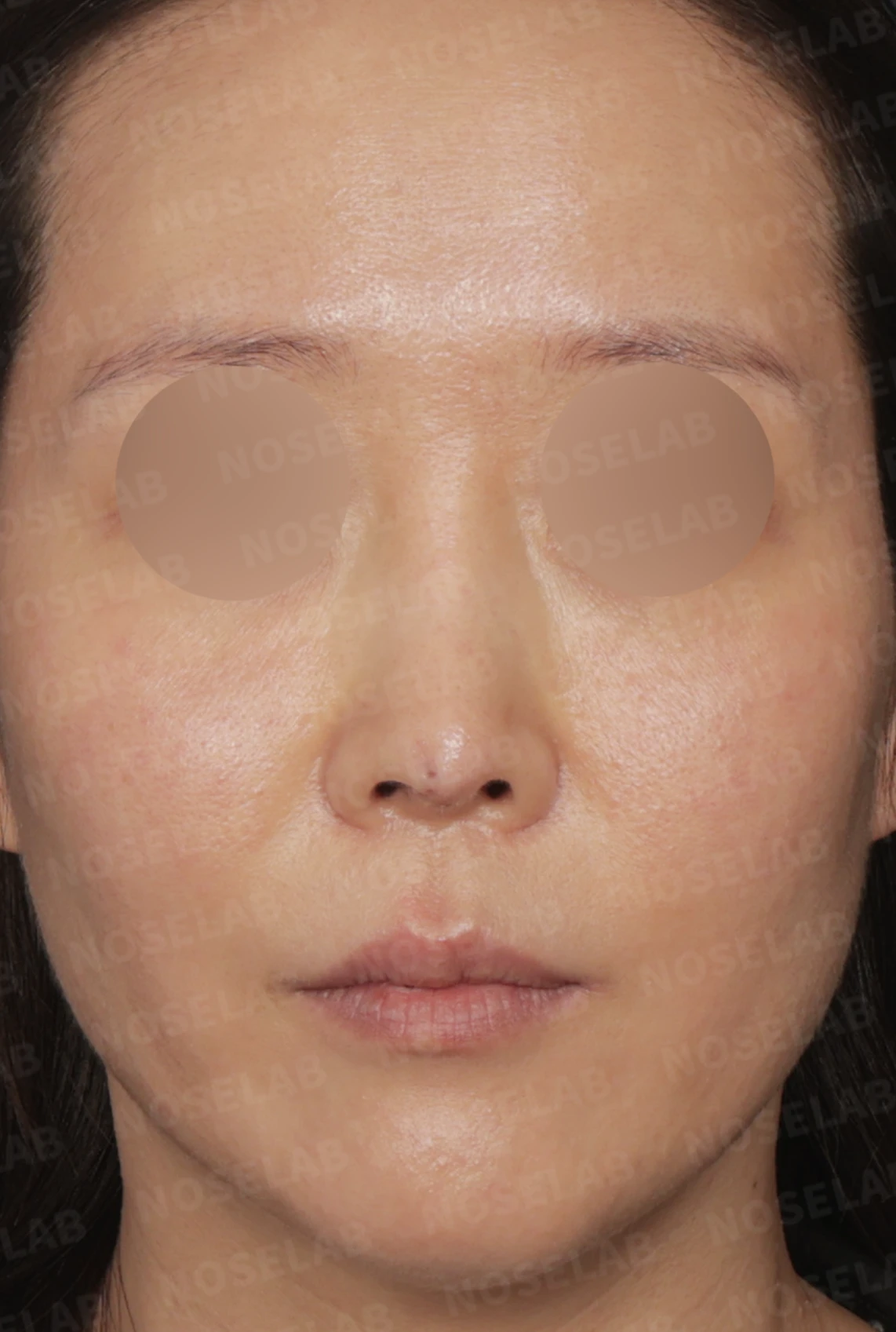
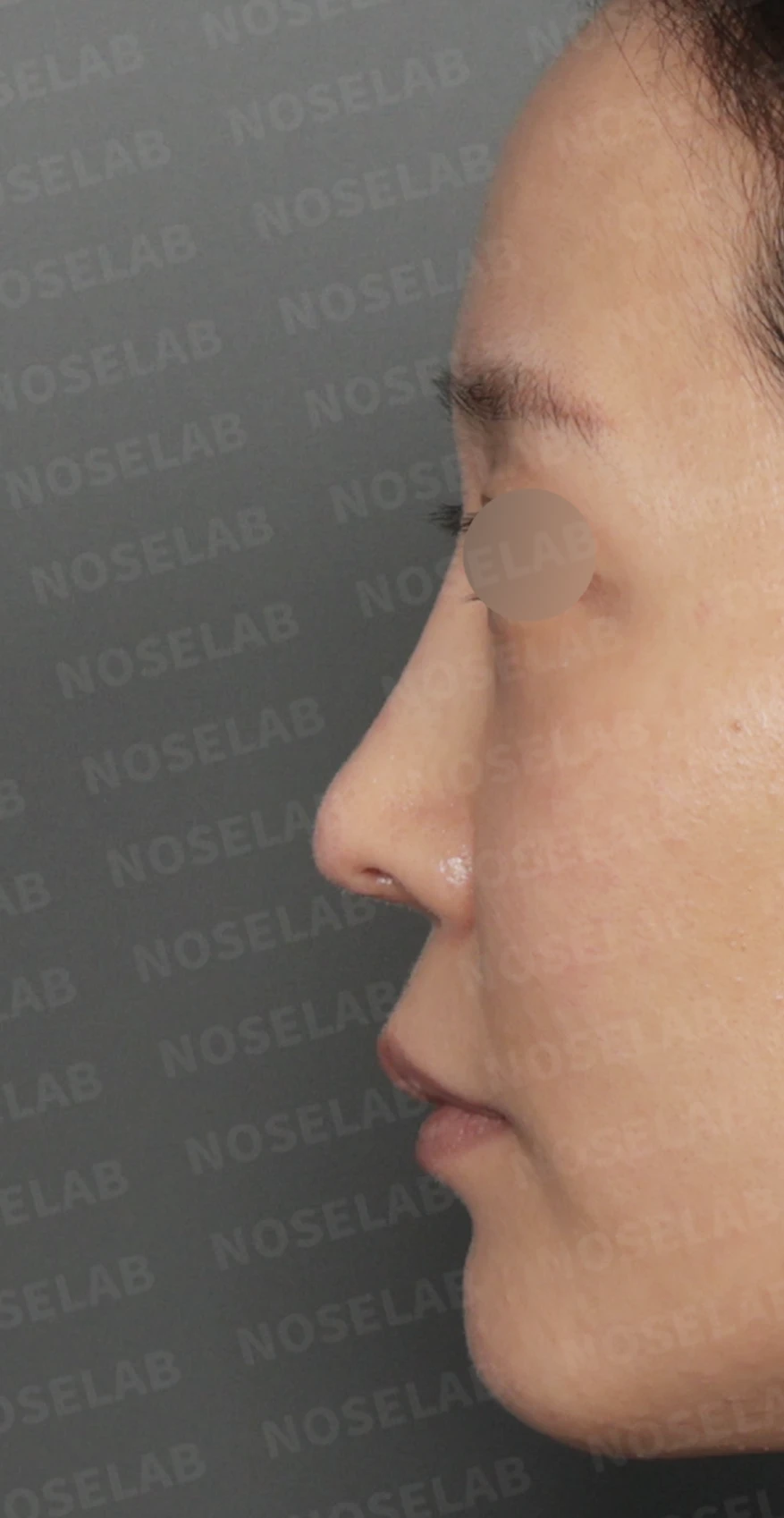
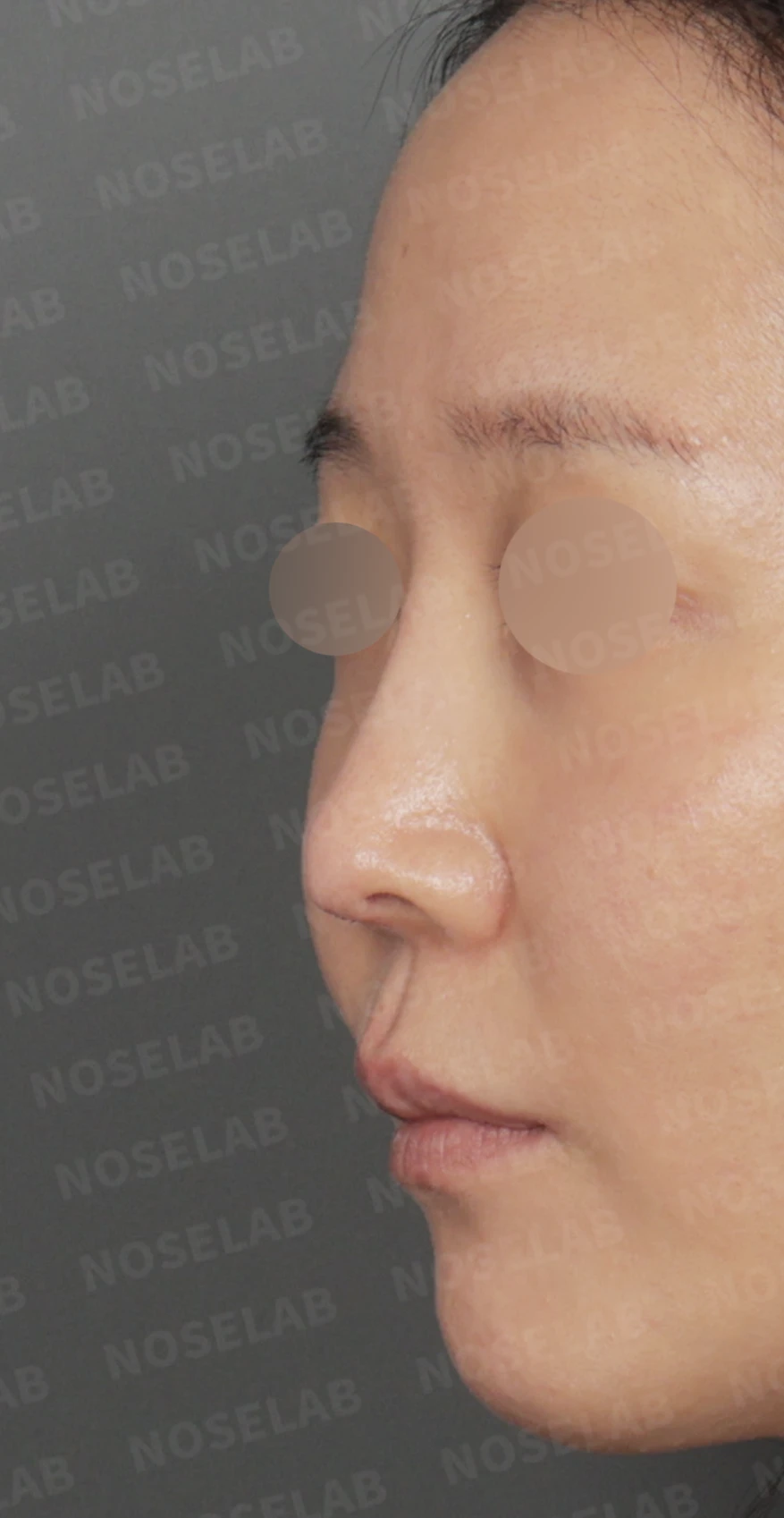
Design consultation — front, left profile, and oblique views
💉 Patient requests
Improve the nasal tip skin depression resulting from previous surgical complications
Resolve the nasal bridge implant show-through
Stabilize the nasal structure weakened by repeated revisions
Restore a natural yet well-defined nasal line
Simultaneously improve functional issues such as nasal obstruction
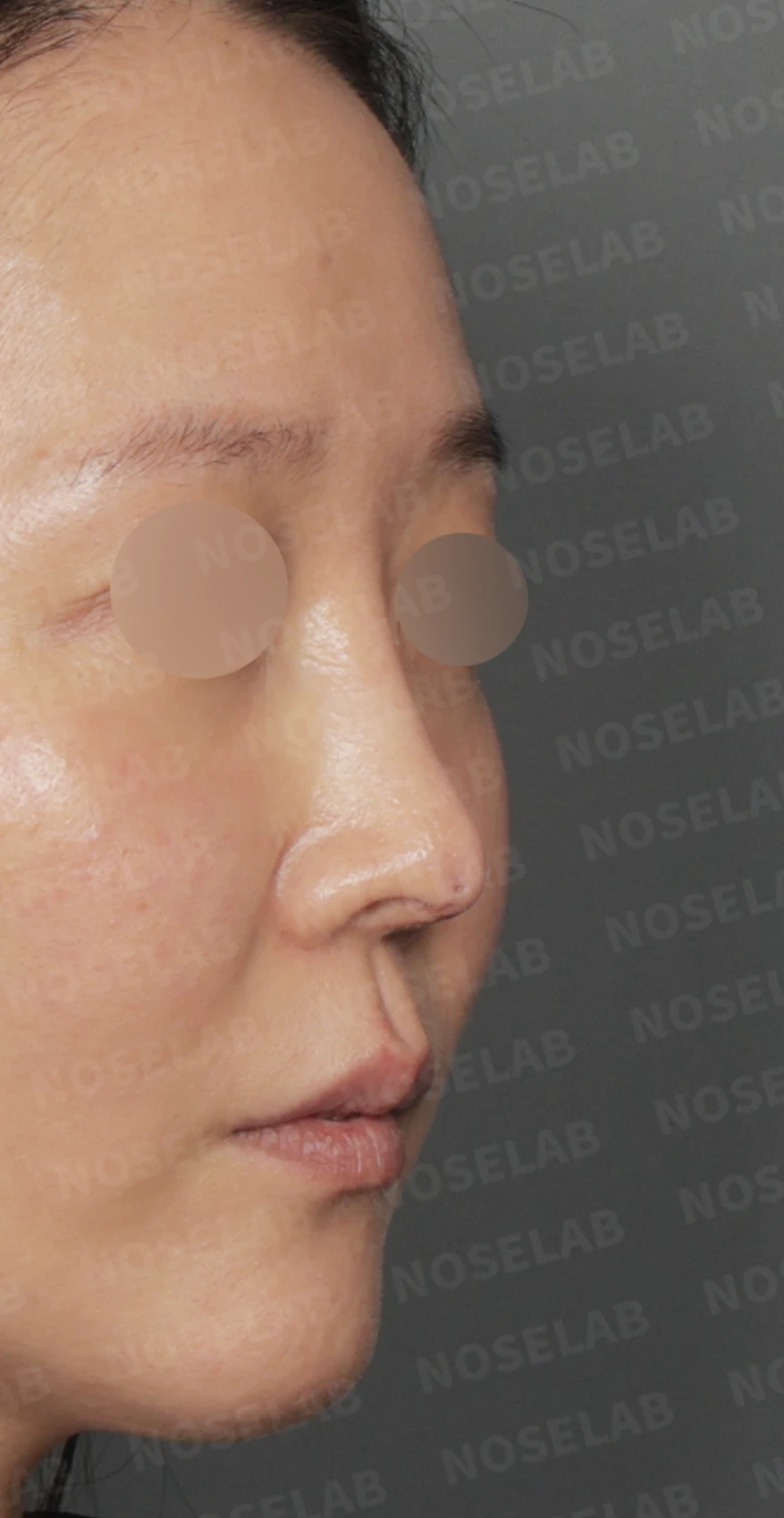
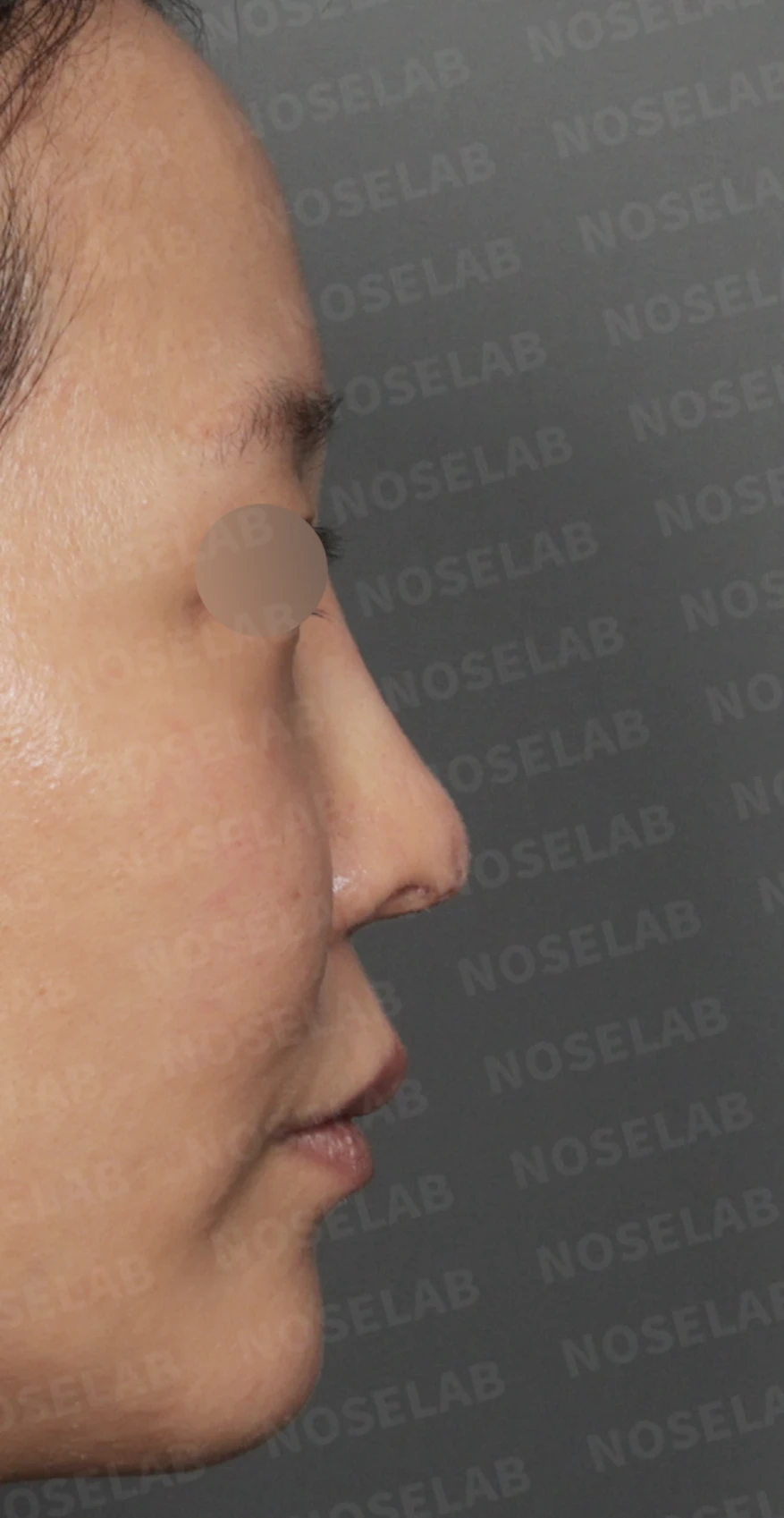
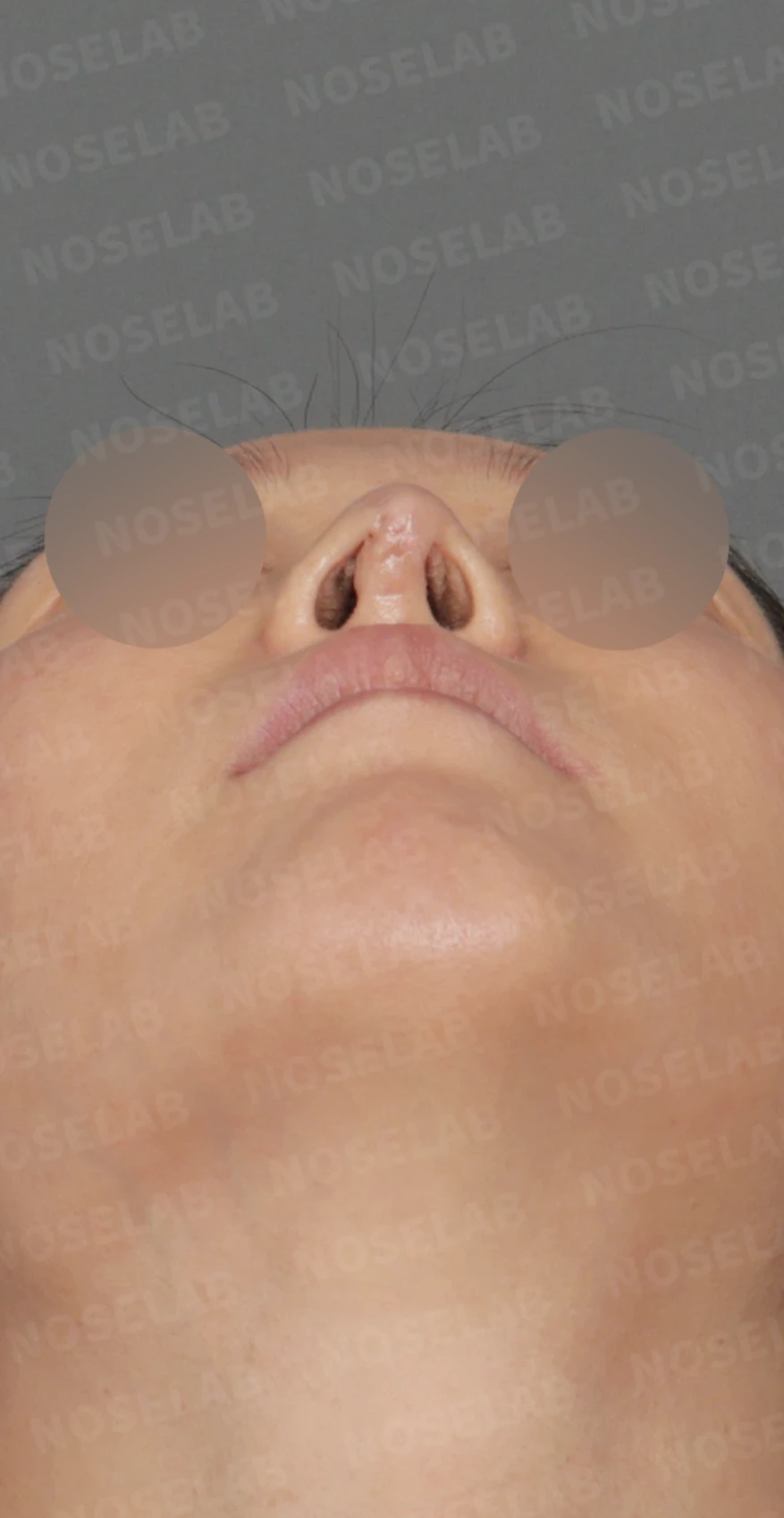
Design consultation — right oblique, profile, and nostril views
🔧 Surgical plan and procedure
1. Management of damaged nasal tip skin
The depressed portion of the nasal tip skin, which had undergone partial necrosis from previous surgery, was meticulously excised and sutured to blend naturally with the surrounding healthy tissue.
2. Restoration of the depressed area
Skin thickness was secured through a dermal graft, and an additional cartilage graft restored three-dimensional volume to the depressed area simultaneously.
3. Nasal tip plasty using autologous rib cartilage
Using cartilage harvested from the patient's rib, I created a natural tip shape that is elevated yet softly rounded.
4. Septal cartilage reconstruction
The septal structure, weakened by repeated surgeries, was reinforced with autologous rib cartilage to secure long-term stability for the nasal tip.
5. Nasal bridge shaping with a new implant
The existing implant causing show-through was removed, and a new silicone implant was hand-carved to match the contour of the patient's nasal bone, achieving a natural and stable nasal bridge line.
🌟 Surgical results
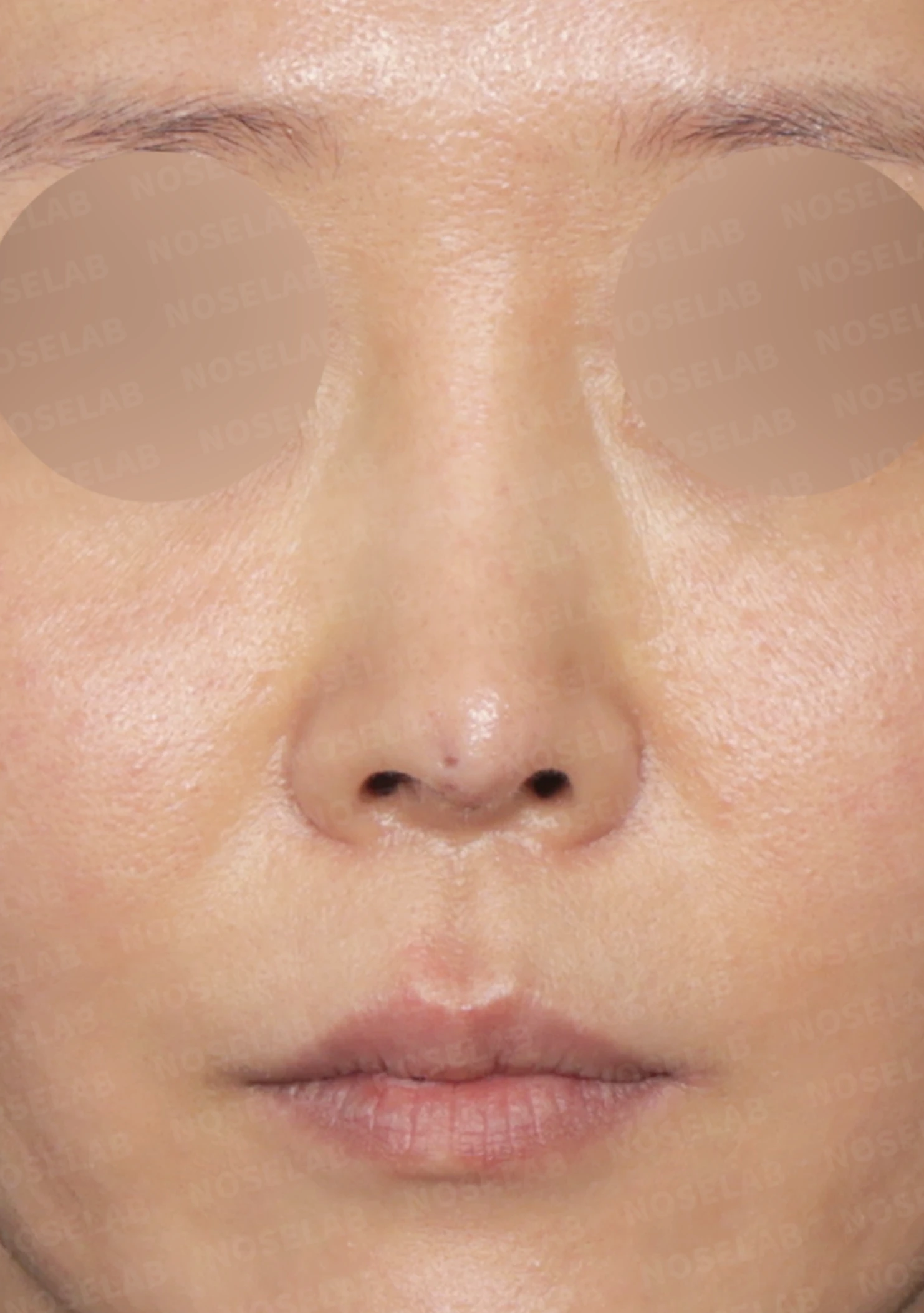
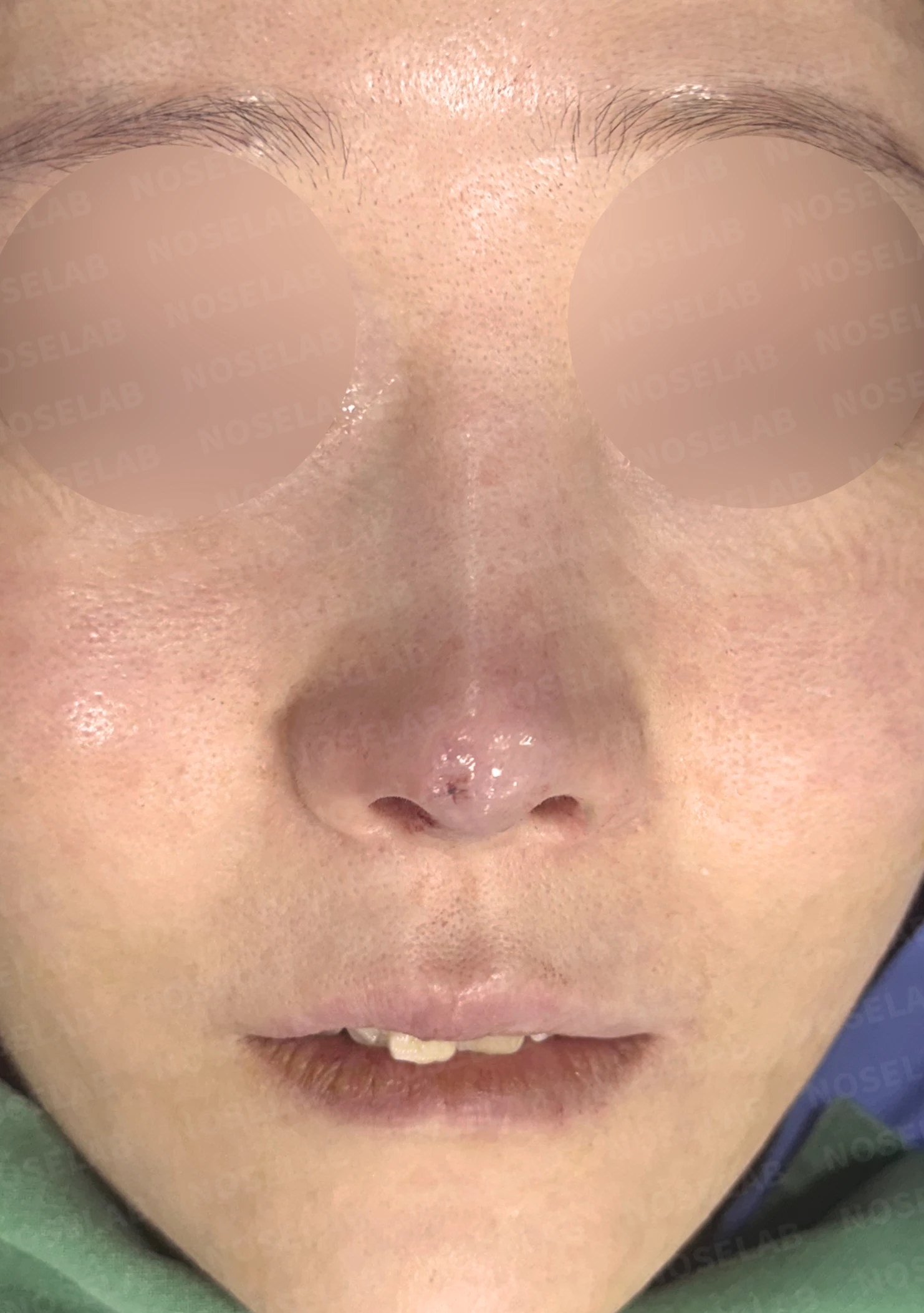
Before surgery / Day 0 immediately after surgery Photos taken immediately after surgery show swelling and may differ from the final result.
Front view changes
Depressed nasal tip skin is restored
Area with implant show-through is naturally improved
A well-defined, balanced nasal line is achieved
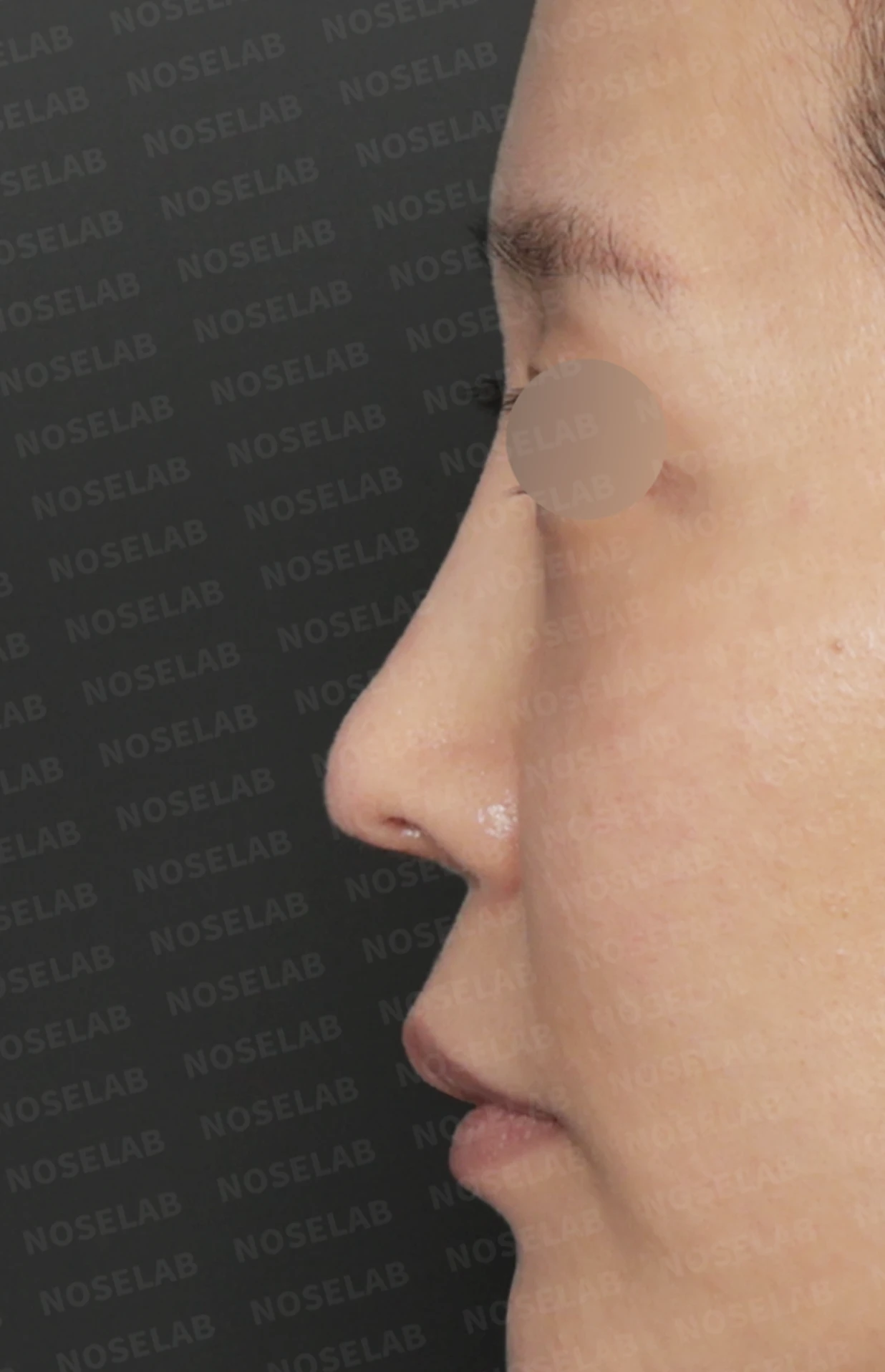
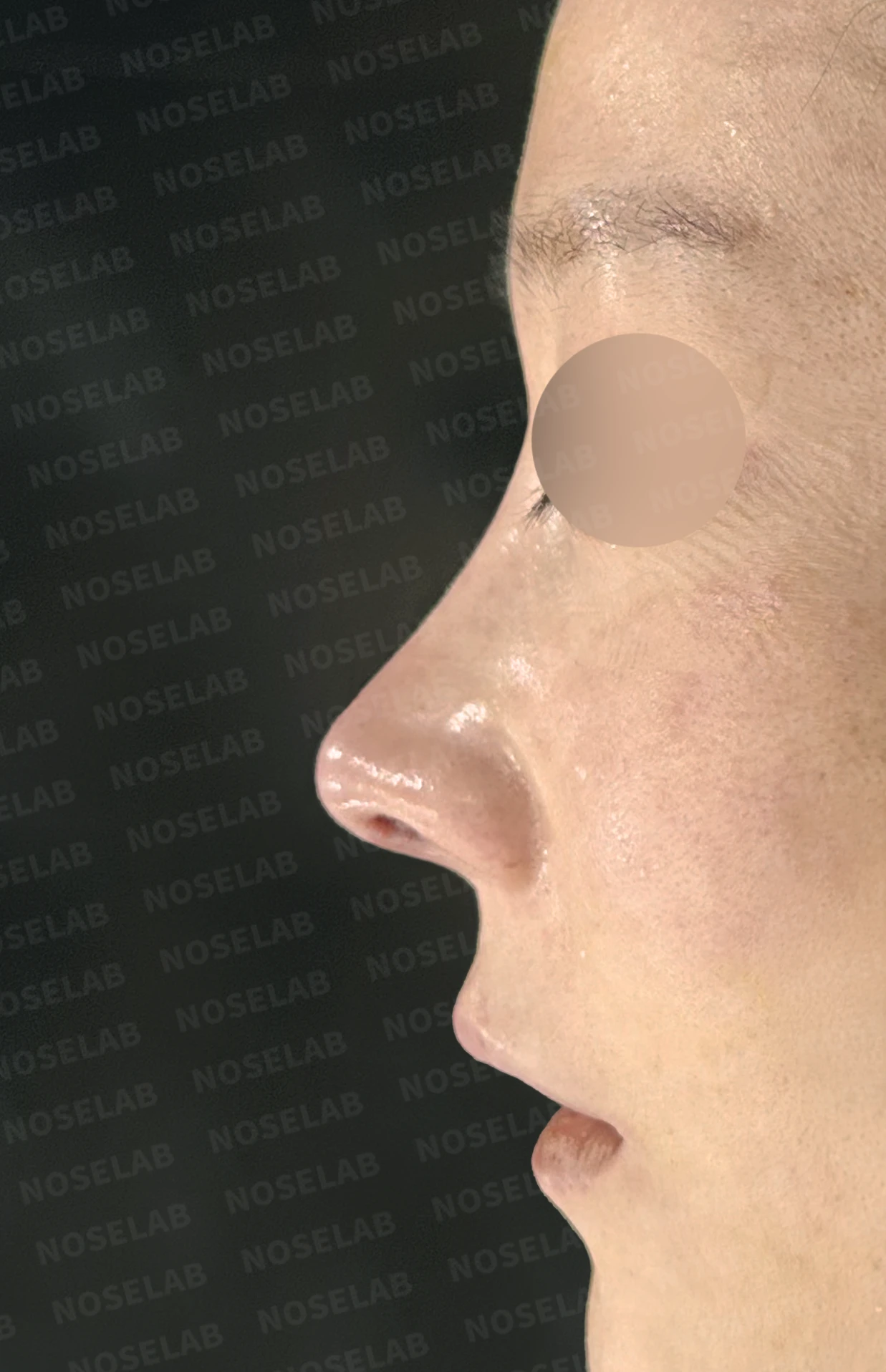
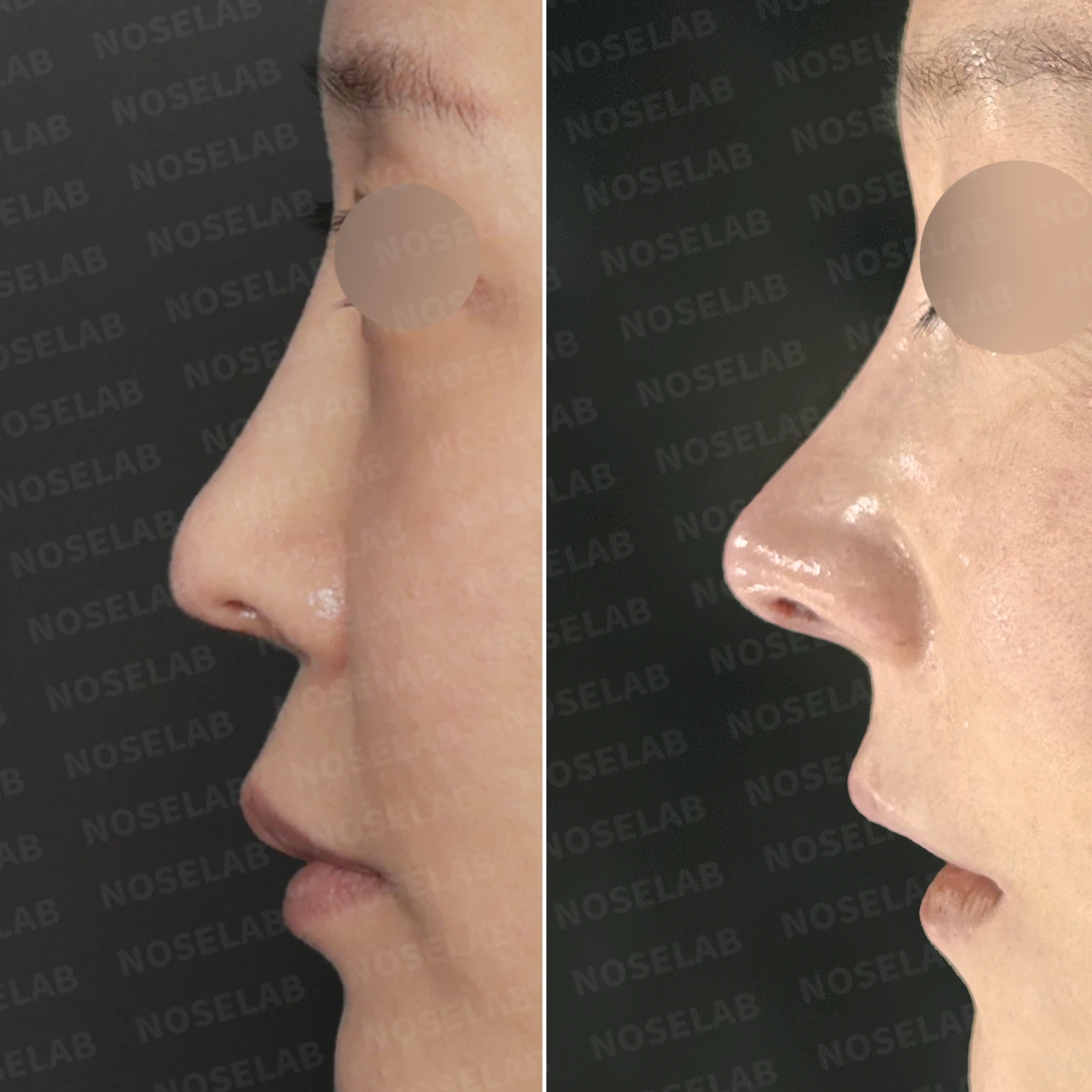
Before surgery / Day 0 immediately after surgery Photos taken immediately after surgery show swelling and may differ from the final result.
Profile view changes
Low, unstable nasal bridge is elevated into a refined line
Drooping nasal tip is naturally lifted
Nasolabial angle is refined, creating a more sophisticated profile
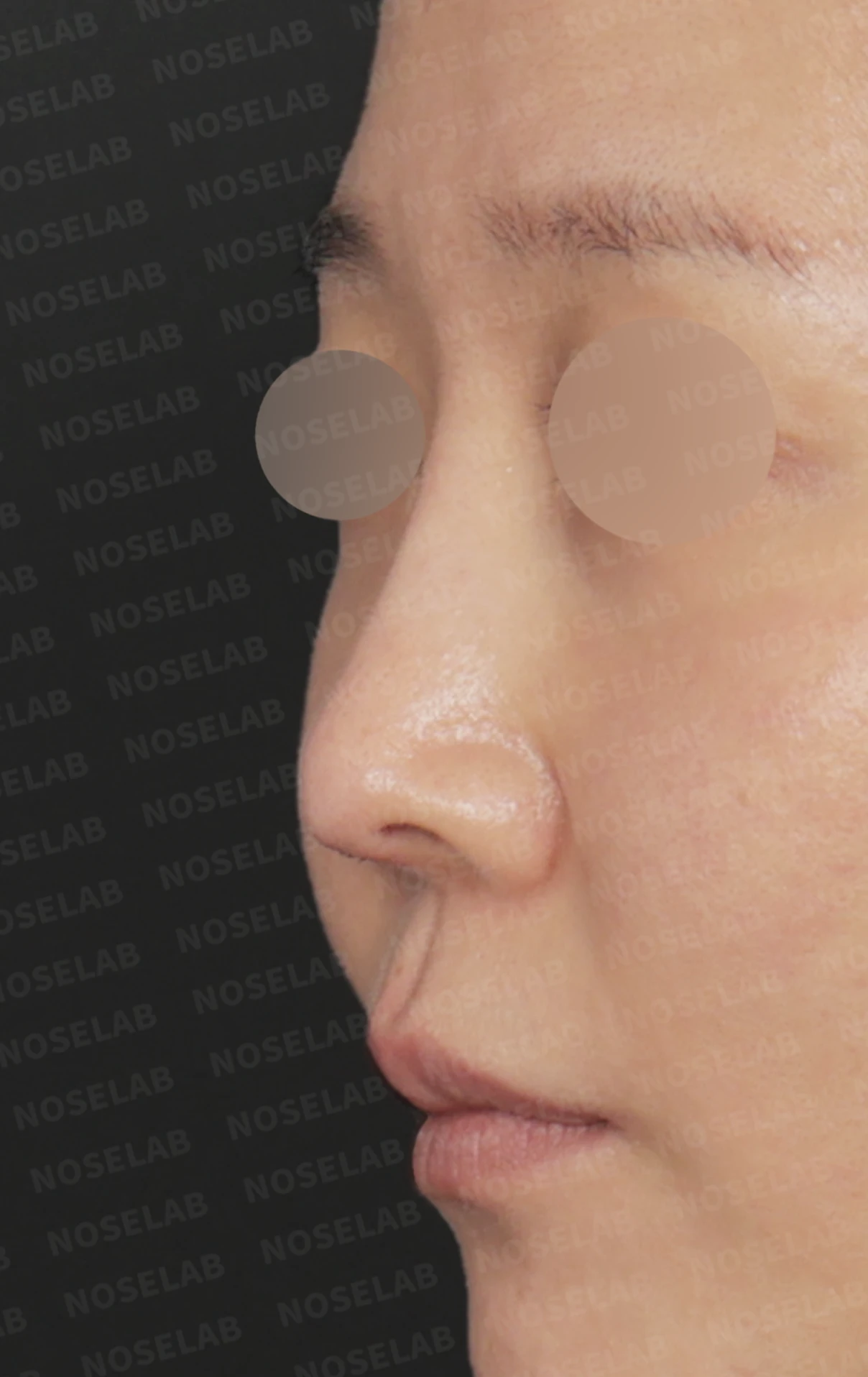
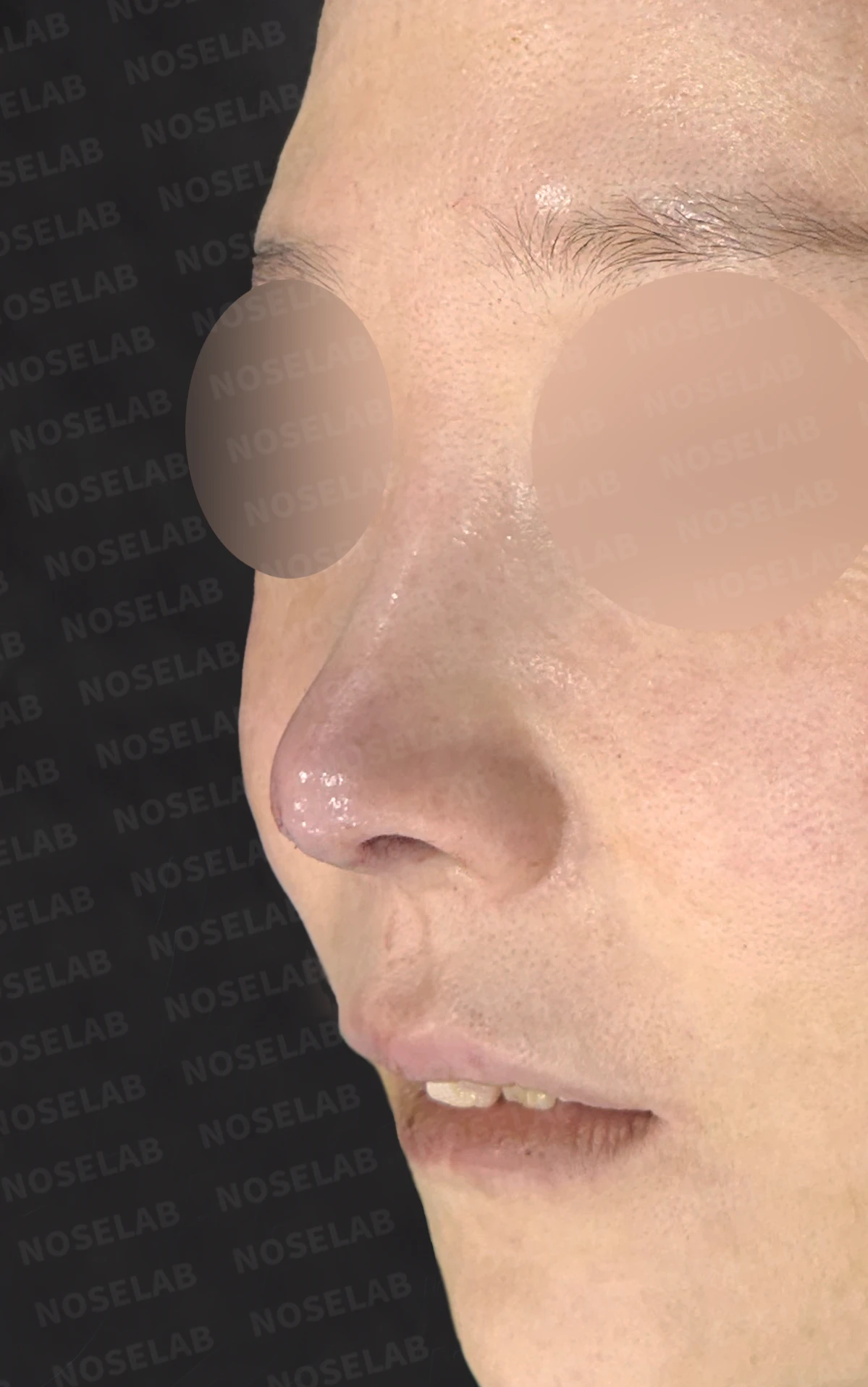
Before surgery / Day 0 immediately after surgery Photos taken immediately after surgery show swelling and may differ from the final result.
Changes in nostril shape
Asymmetrical nostril shape is balanced
Nostrils settle stably with a cohesive tip shape
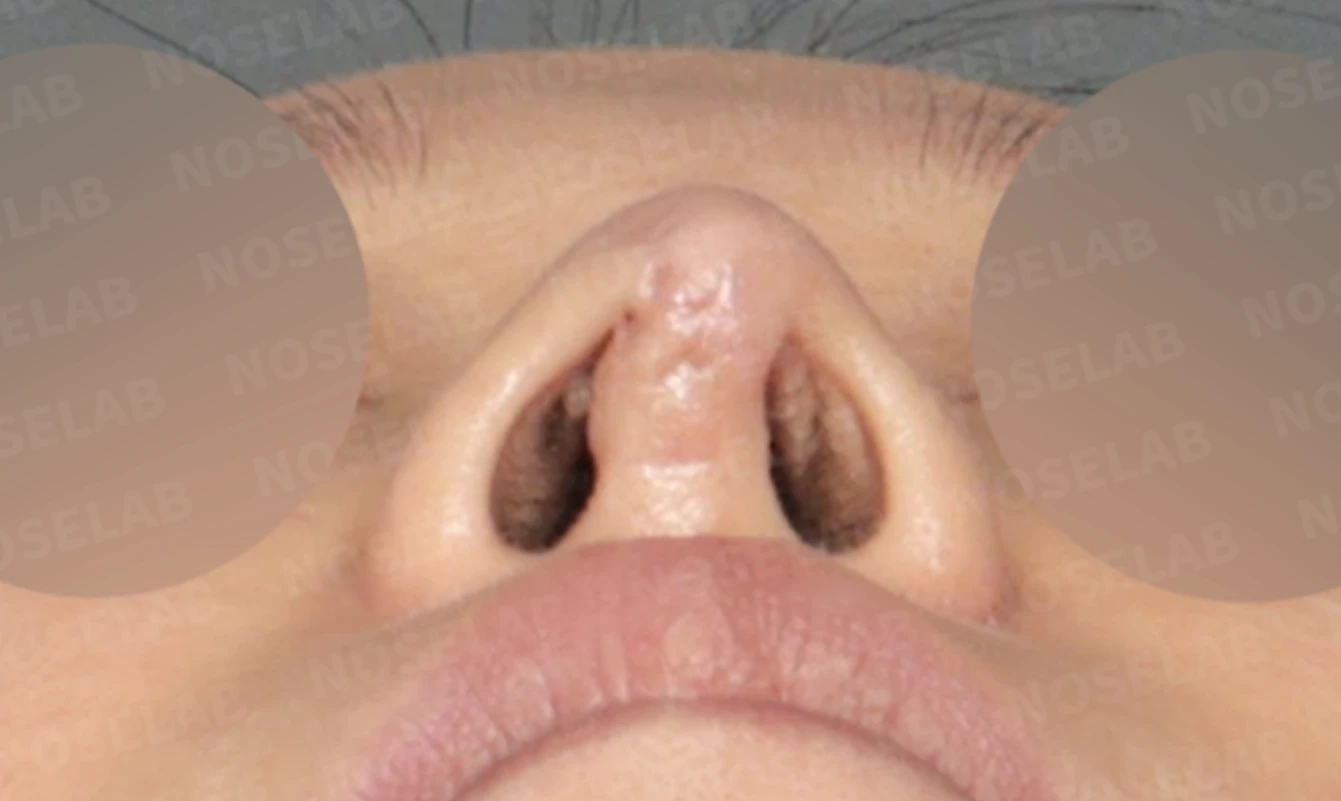
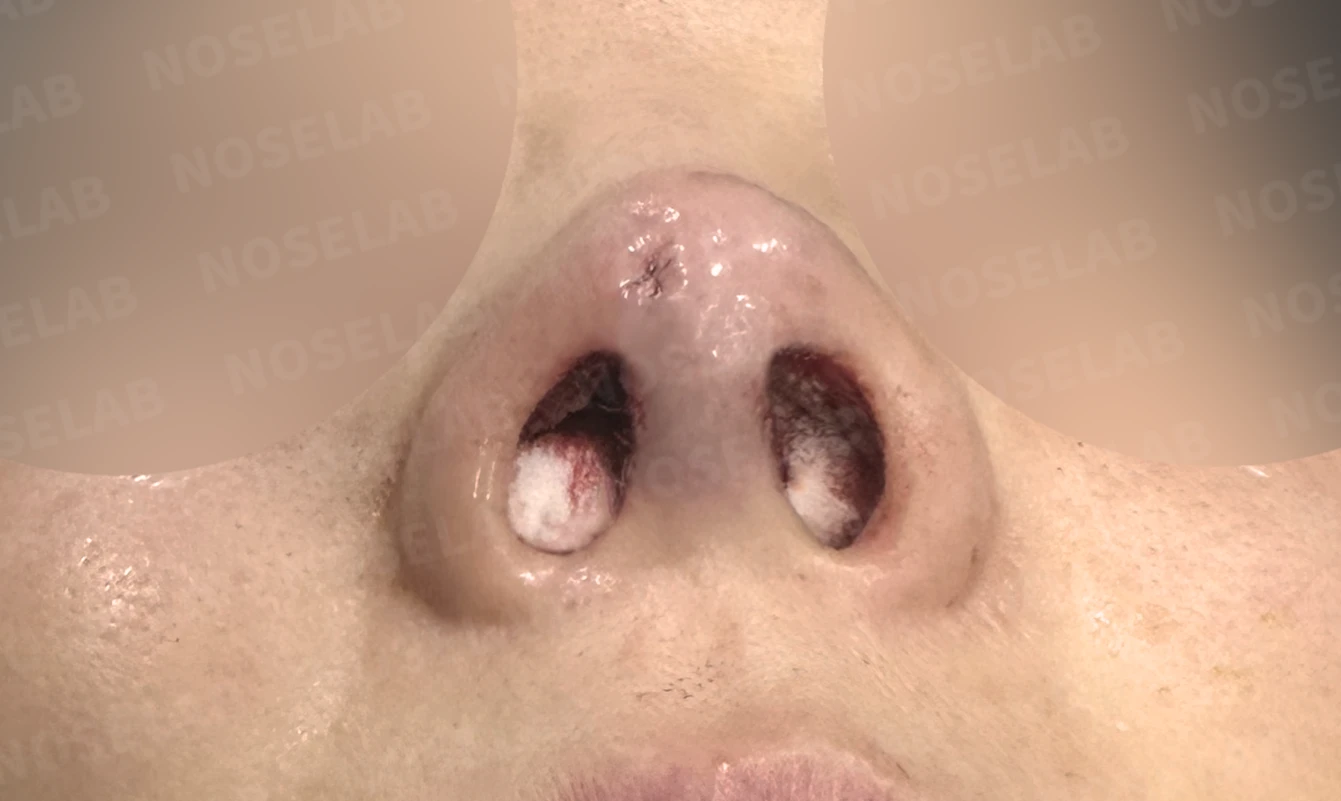
Before surgery / Day 0 immediately after surgery Photos taken immediately after surgery show swelling and may differ from the final result.
💡 Specialist opinion
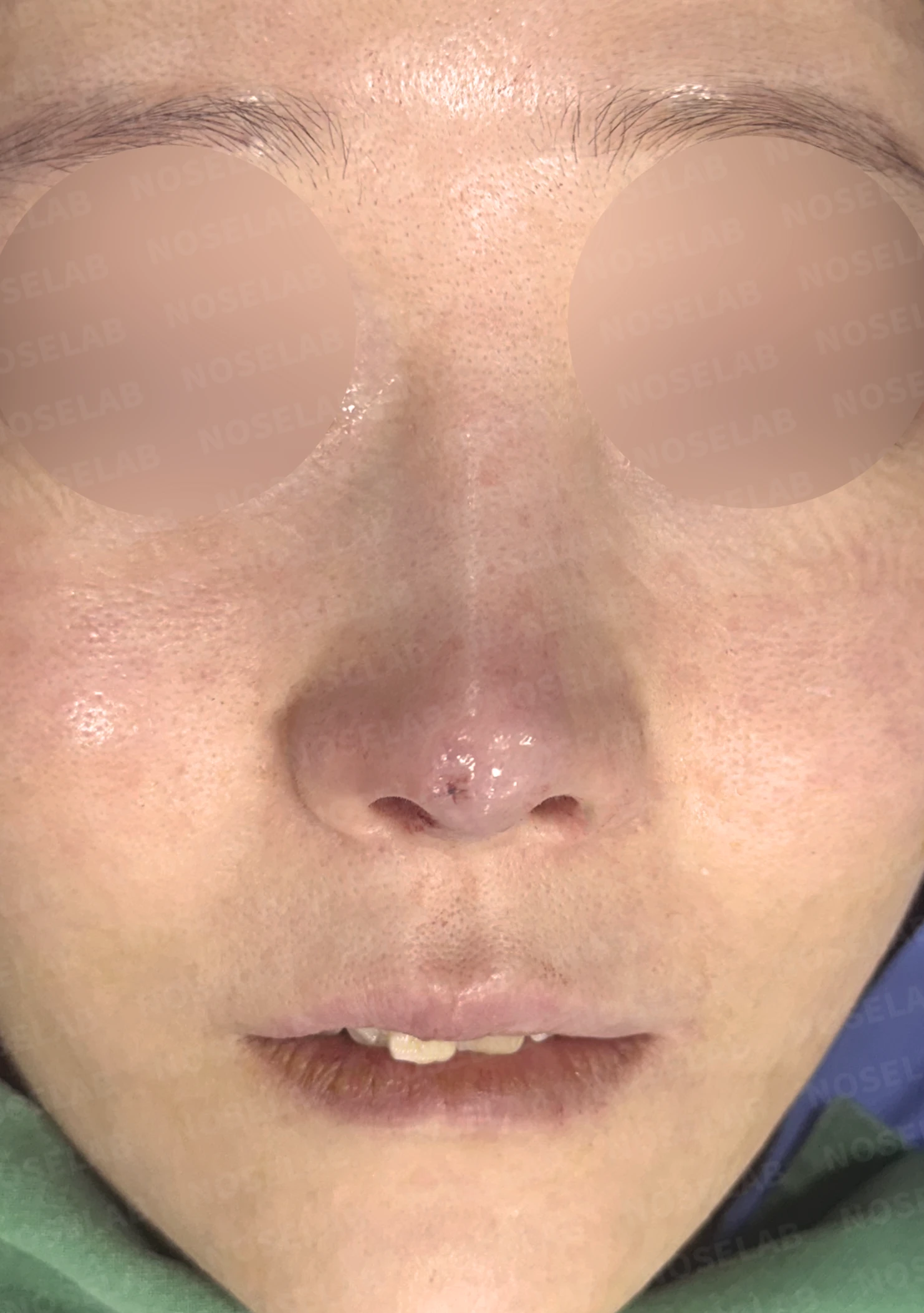
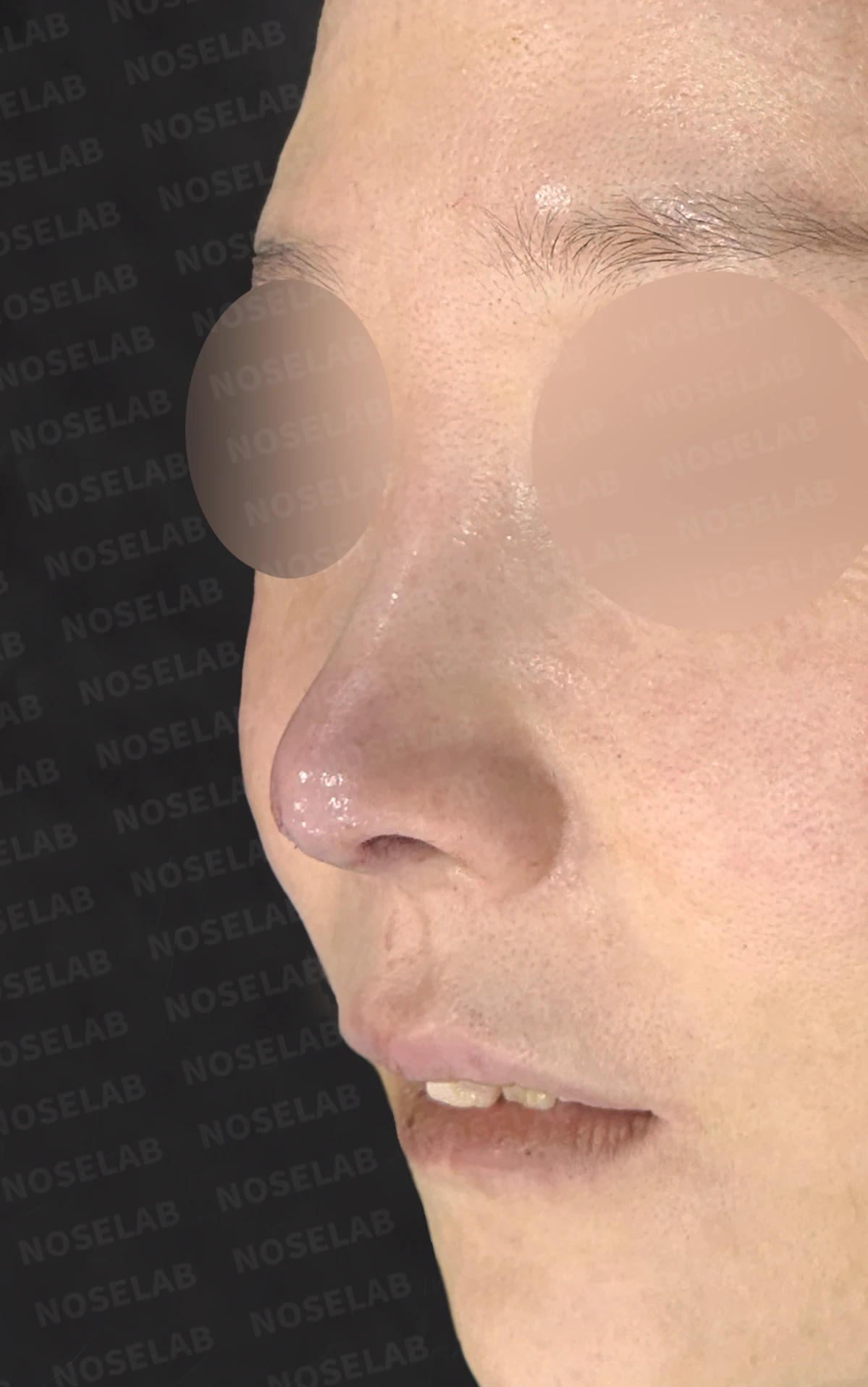
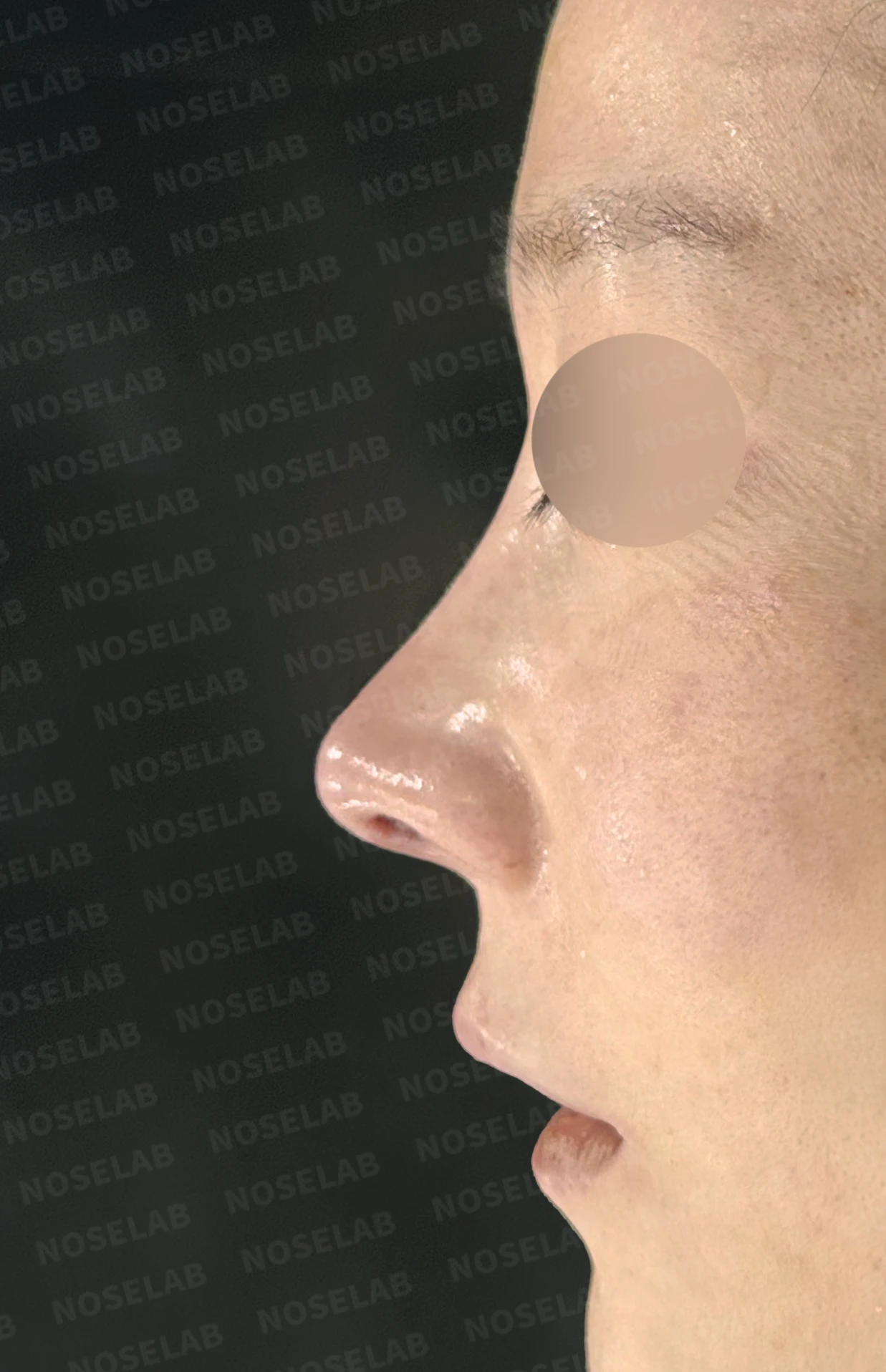
Day 0 immediately after surgery: front, oblique, and profile viewsPhotos taken immediately after surgery show swelling and may differ from the final result.
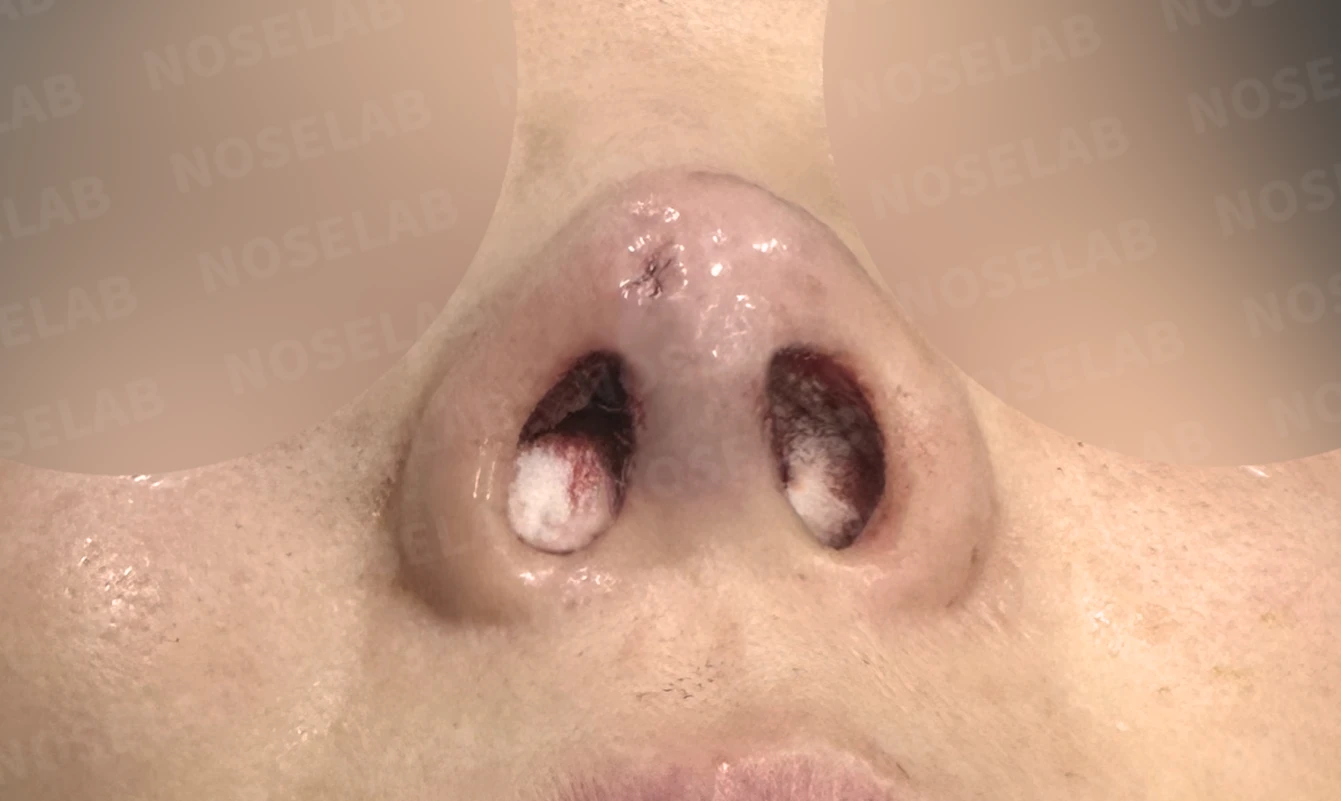
Day 0 immediately after surgery: nostril viewPhotos taken immediately after surgery show swelling and may differ from the final result.
In patients who have undergone multiple revisions and bouts of inflammation, nasal tissue is often weaker and more damaged than in a primary case. In particular, when skin depression occurs due to nasal tip necrosis, a reconstructive approach that restores the damaged tissue itself is essential, going beyond merely reshaping the nose.
In this surgery, the primary focus was to restore both thickness and three-dimensional contour to the depressed area by combining dermal and cartilage grafts. Furthermore, septal reconstruction using autologous rib cartilage is not just about shaping the nasal tip; it is a critical step that prevents the tip from drooping and maintains long-term structural stability.
It is also crucial to hand-carve the bridge implant to match the curvature of the patient's nasal bone. Using an off-the-shelf implant as-is can cause show-through or an unnatural appearance, so fine adjustments tailored to each patient's individual anatomy determine how natural the outcome looks.
Each revision rhinoplasty is like a fresh start. Accurately assessing the remnants of previous procedures and the tissue condition, and then designing an individualized approach accordingly, is of utmost importance. I hope this case helps those facing similar concerns.
This was Dr. Peter C. Kang. Thank you.
#closedrhinoplasty #closedrevisionrhinoplasty #revisionrhinoplasty #autologousribcartilage #tipplasty #nasaltipskindepression #dermalgraft #septalreconstruction #implantshowthrough

Limitations and risks
When autologous rib cartilage is used, scarring and pain may remain at the donor site on the chest, and pneumothorax (pleural injury) can occur rarely. Over time, the grafted cartilage may warp or undergo partial resorption.
When revising after implant removal, contracture may progress again after removal, the nasal height and length may decrease, and staged surgery may be necessary depending on the skin condition.
When the septum is corrected at the same time, nasal obstruction may persist or recur, and in rare cases, septal perforation or changes in smell may occur.
Common potential risks include infection, bleeding, asymmetry, scarring, skin necrosis, and insufficient improvement; results vary depending on individual skin condition and previous surgical history.