Hello, I am Dr. Peter C. Kang.
Today, I would like to share the case of a patient who visited our clinic after struggling for a long time with an upturned, short nasal tip causing excessive nostril show from the front, along with a pinched appearance on one of the alae.
🔍 Preoperative condition
Although this was the patient's first rhinoplasty, the shape and structural strength of the septal cartilage were congenitally insufficient.
A short, upturned nasal tip causing the nostrils to be directly visible from the front
A pinched right nostril shape due to the right ala curling inward
Asymmetry in the size and position of the left and right nostrils
An impression of an overall wide and slightly deviated nasal bridge
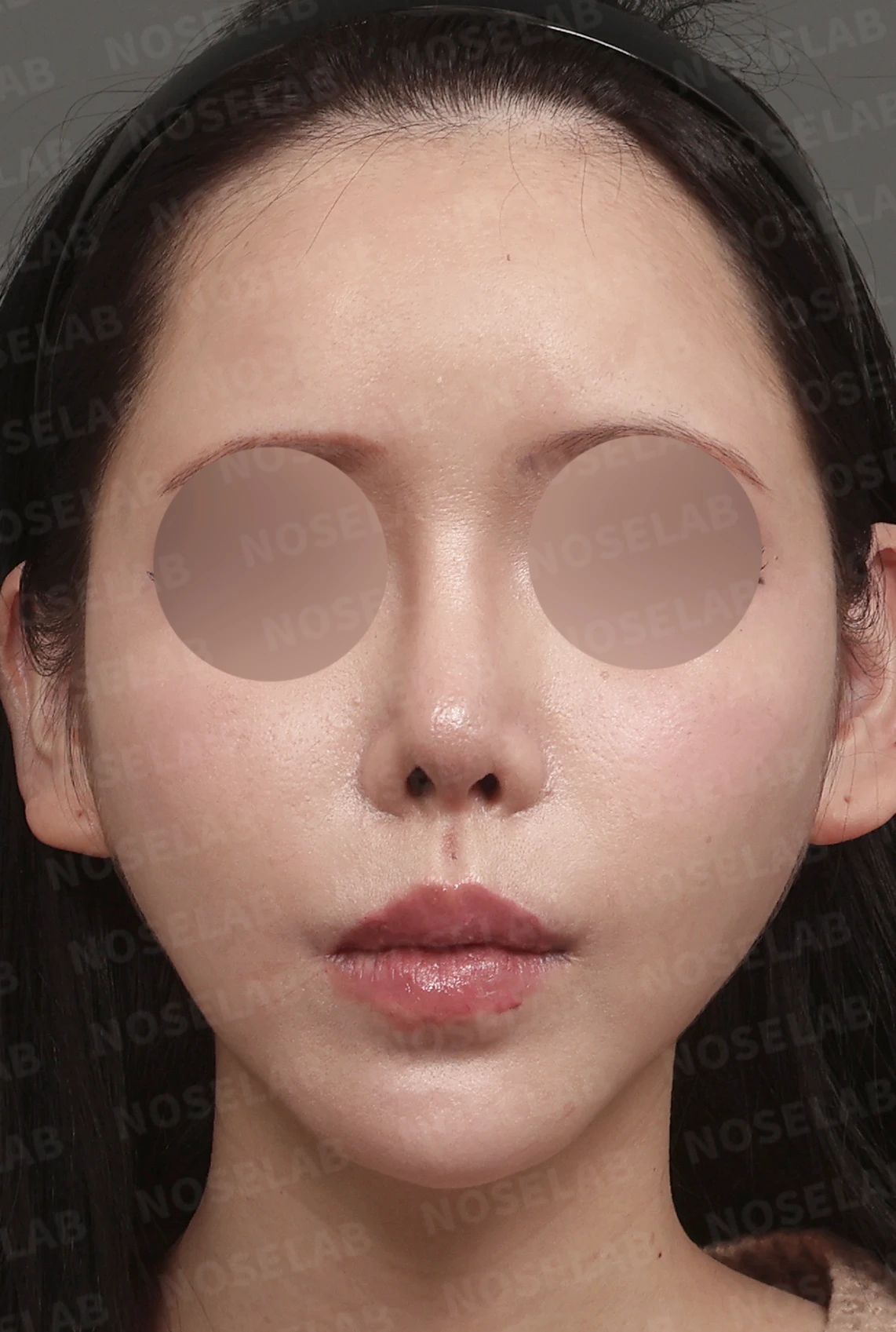
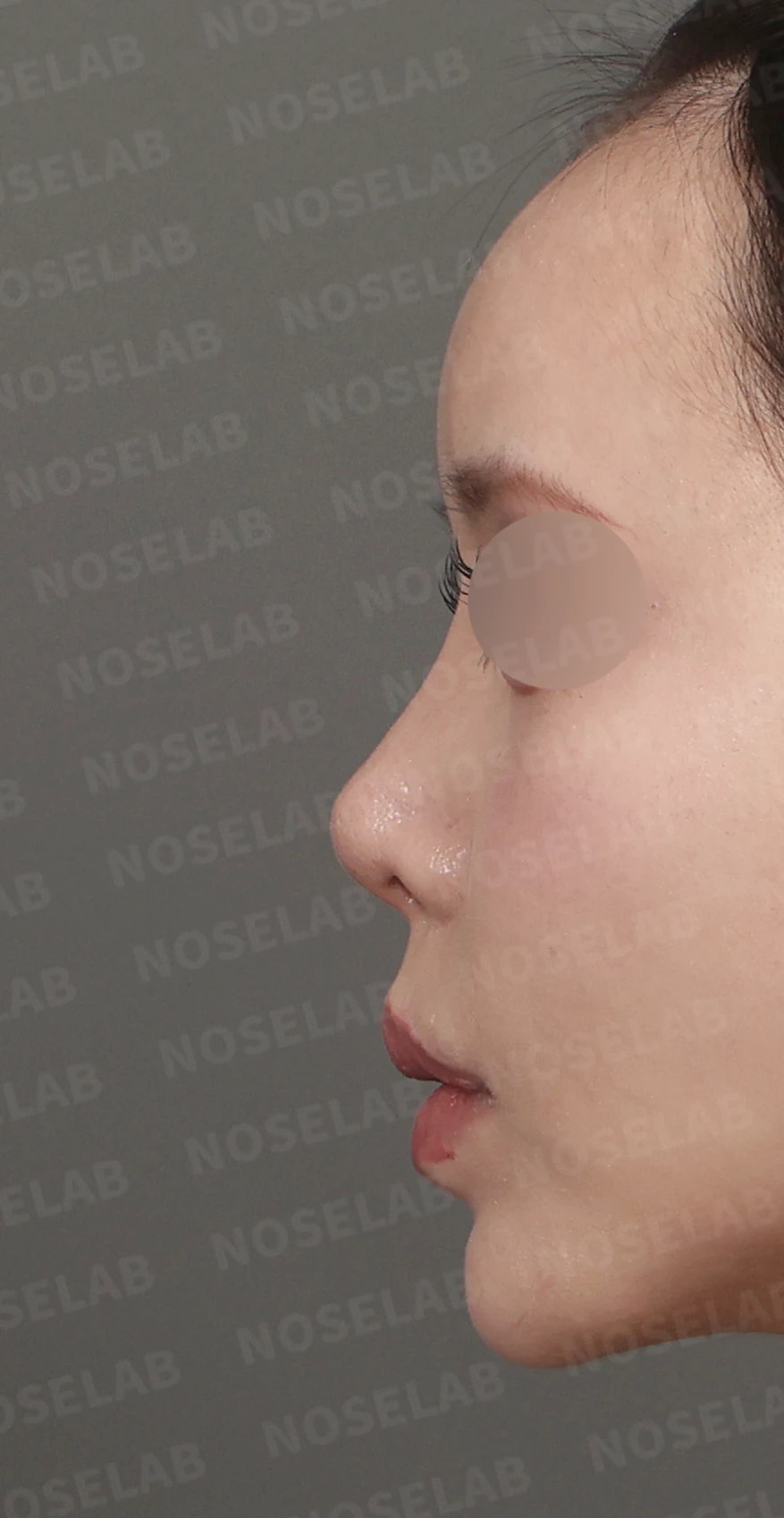
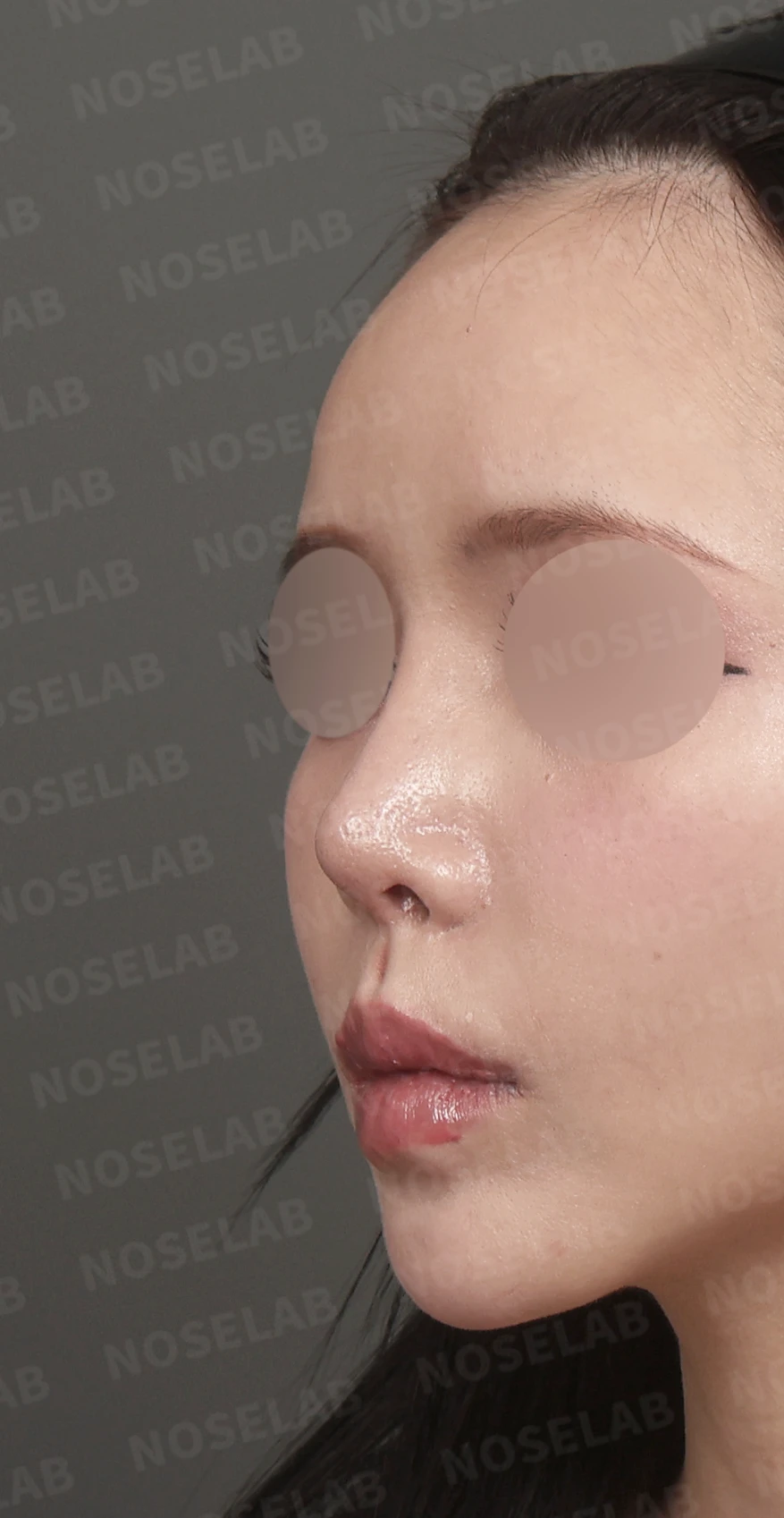
Front, left profile, and oblique views during design consultation
💉 Patient requests
The patient wanted to bring down the upturned nasal tip to create a neater impression, and naturally improve the pinched right nostril and asymmetrical nostril shape. At the same time, the patient hoped to refine the wide nasal bridge to achieve an overall balanced nasal contour.
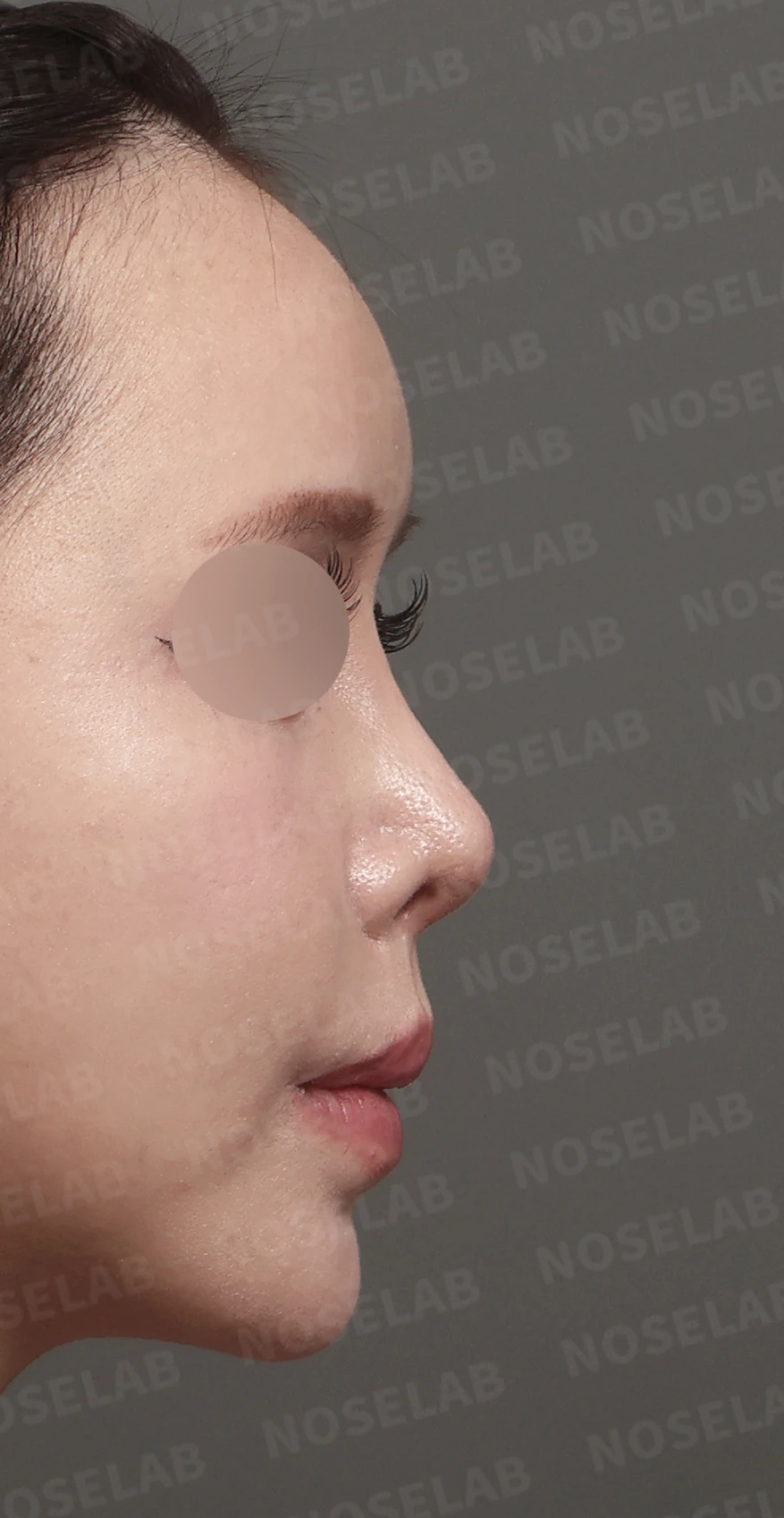
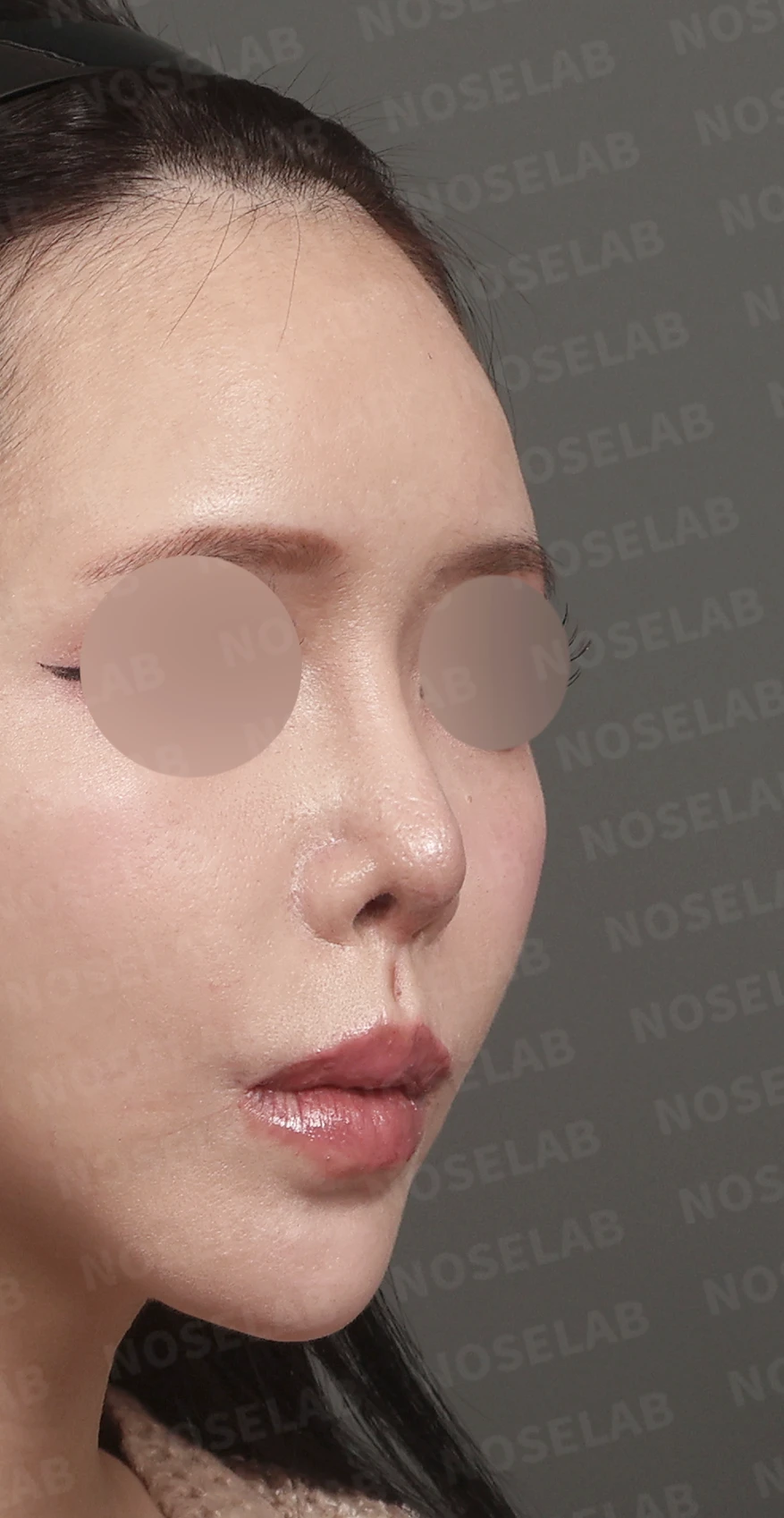
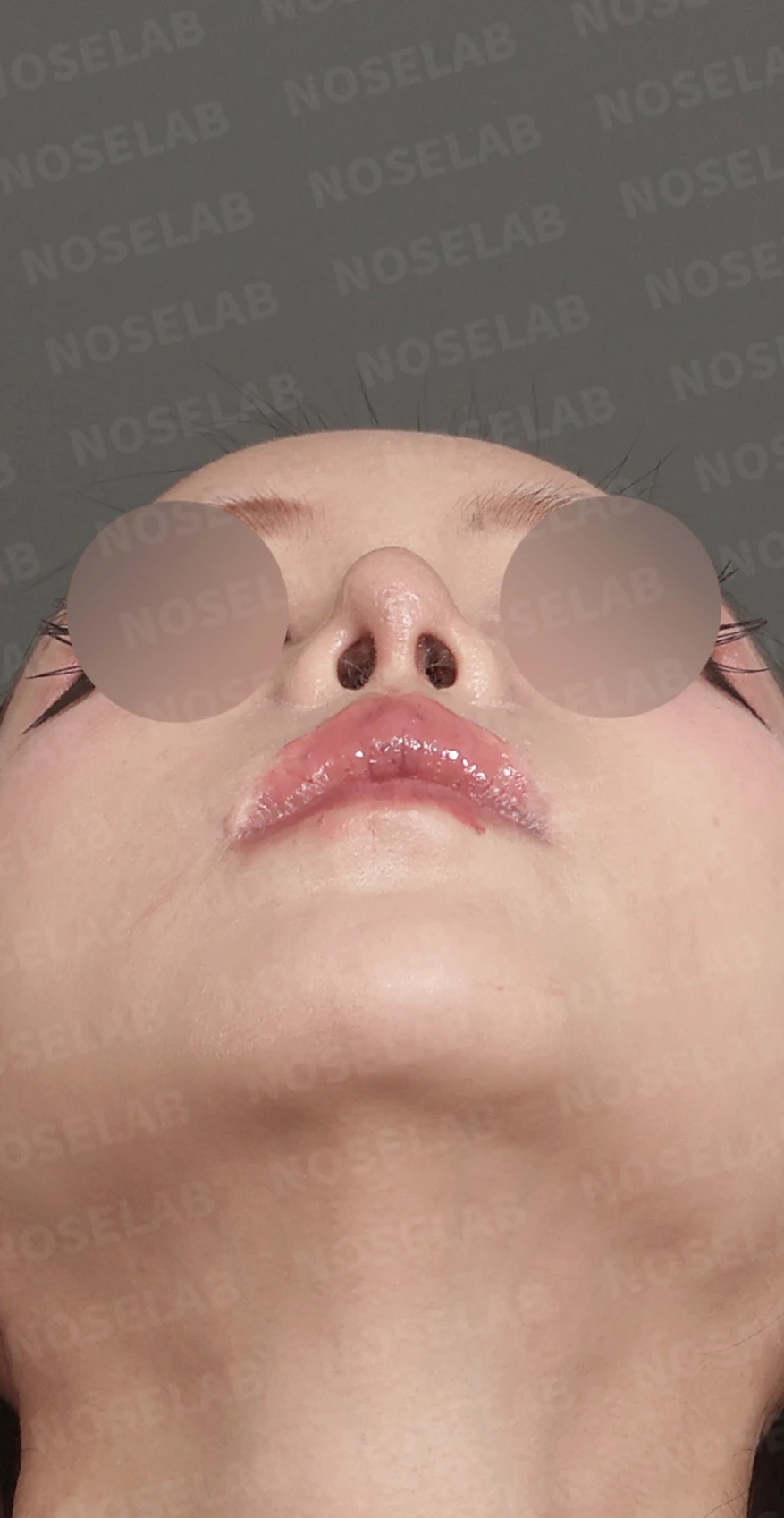
Right profile, oblique, and nostril views during design consultation
🔧 Surgical plan and procedure
1. Autologous rib cartilage harvest — During surgery, the septal cartilage was found to be far weaker and more deformed than expected, so we decided to use the patient's own rib cartilage to stably rebuild the central pillar of the nose.
2. Septal reconstruction — The weakened septum was reinforced with autologous rib cartilage to re-erect the central pillar of the nose straight and sturdy. This is the crucial step for lengthening the nasal tip and maintaining its shape.
3. Nasal tip lengthening and shape correction — Using autologous rib cartilage over the reconstructed septum, the tip framework was meticulously sculpted to naturally bring down the upturned tip and secure adequate length.
4. Right lower lateral cartilage reconstruction and lowering the nostril rim — The right lower lateral cartilage, which had collapsed and was pinched inward, was reconstructed with autologous rib cartilage to lower the retracted nostril margin and restore symmetry between both sides.
5. Nasal bridge lateral osteotomy — The wide and subtly deviated nasal bridge was precisely sculpted from both sides to create a narrower, straight dorsal line.
🌟 Surgical results
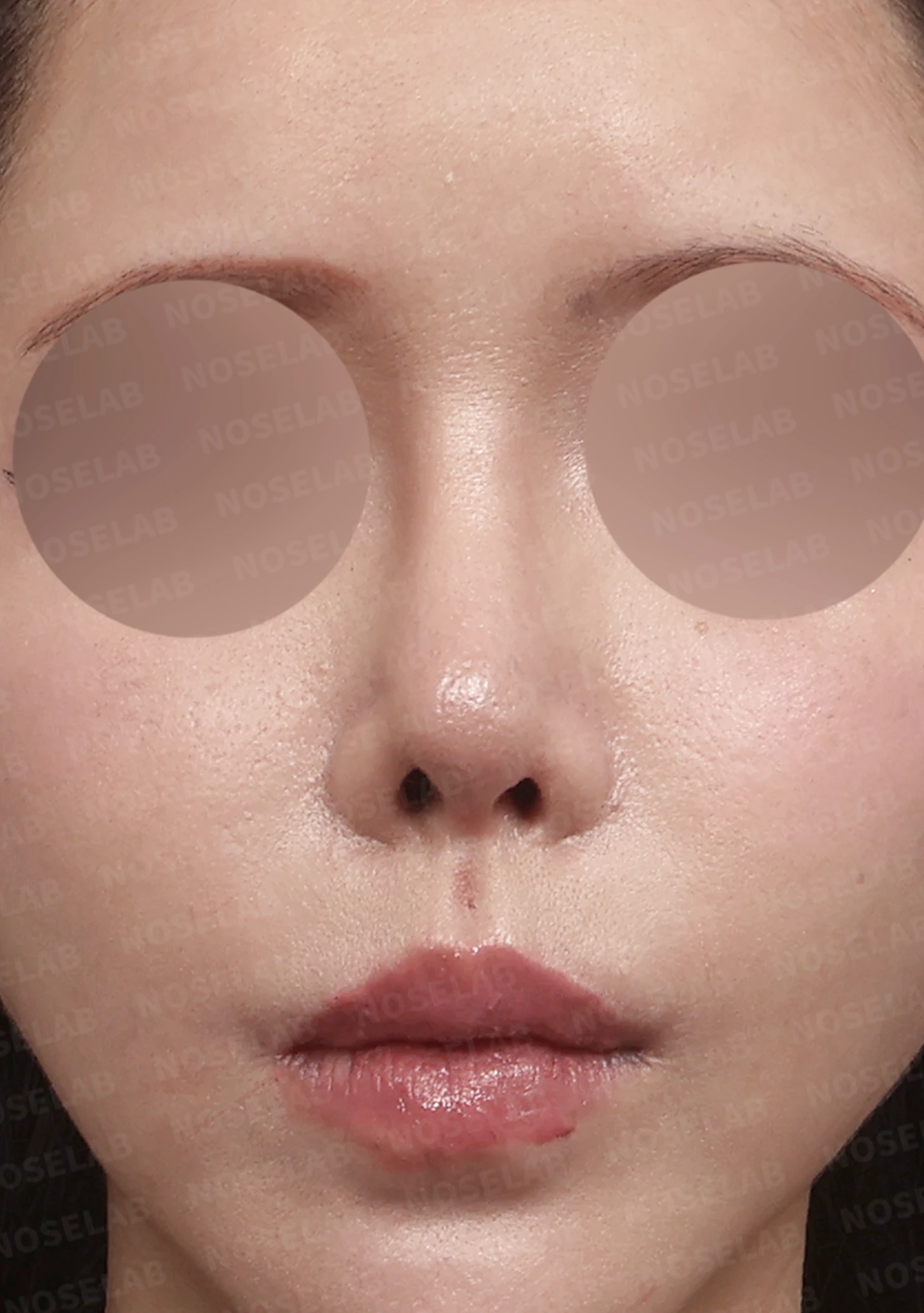
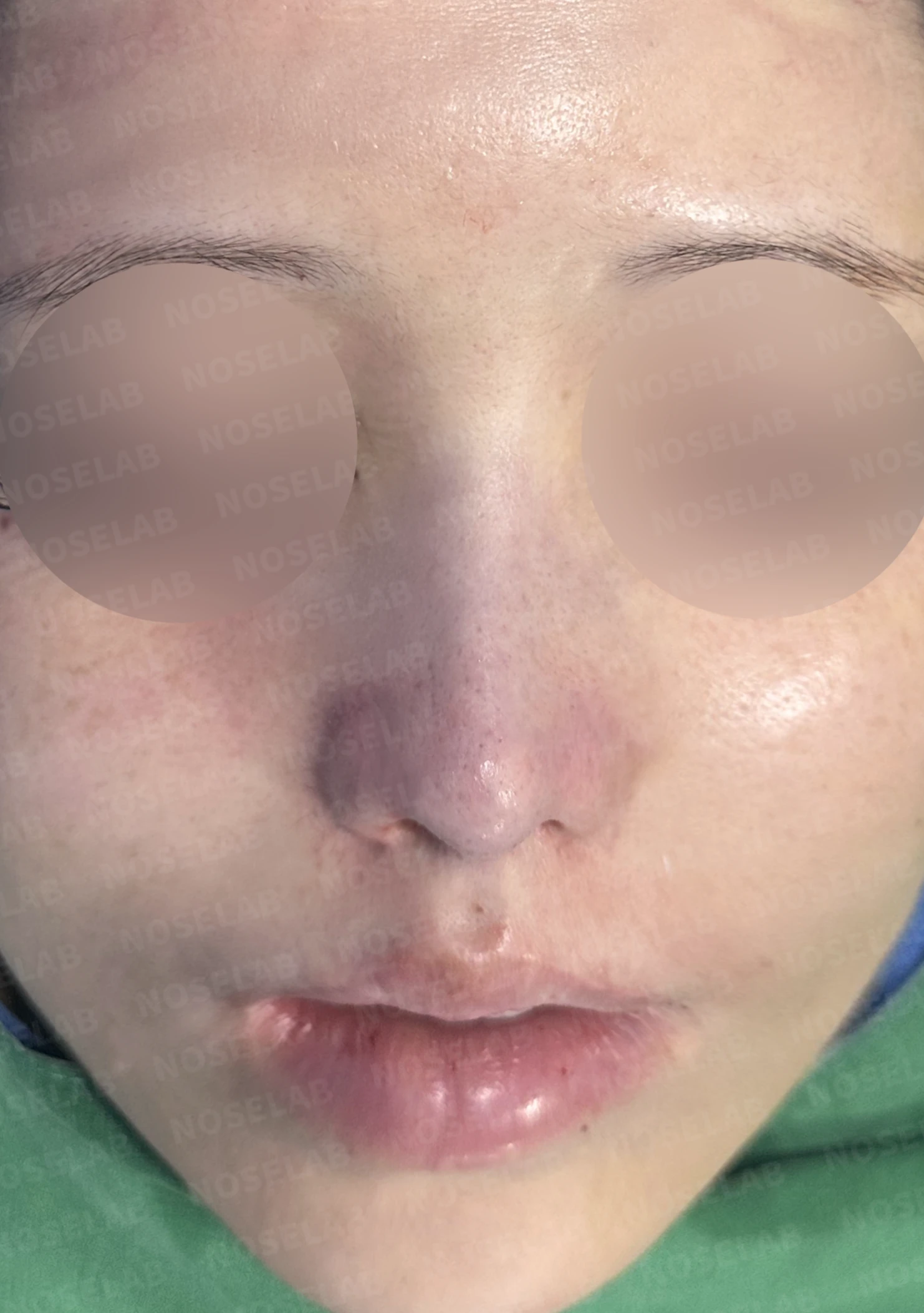
Before surgery / Day 0 immediately after surgery Photos taken immediately after surgery show swelling and may differ from the final result.
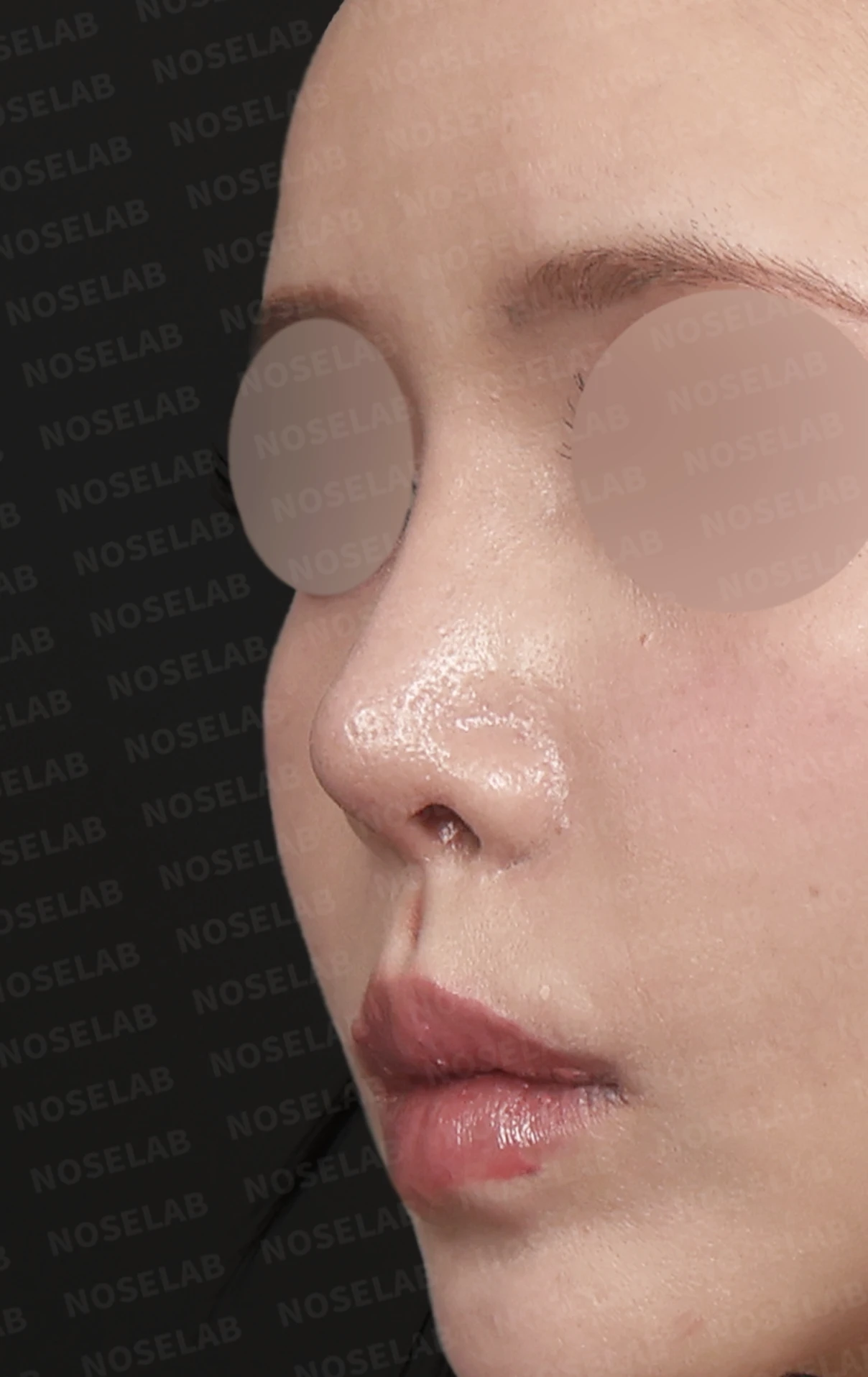
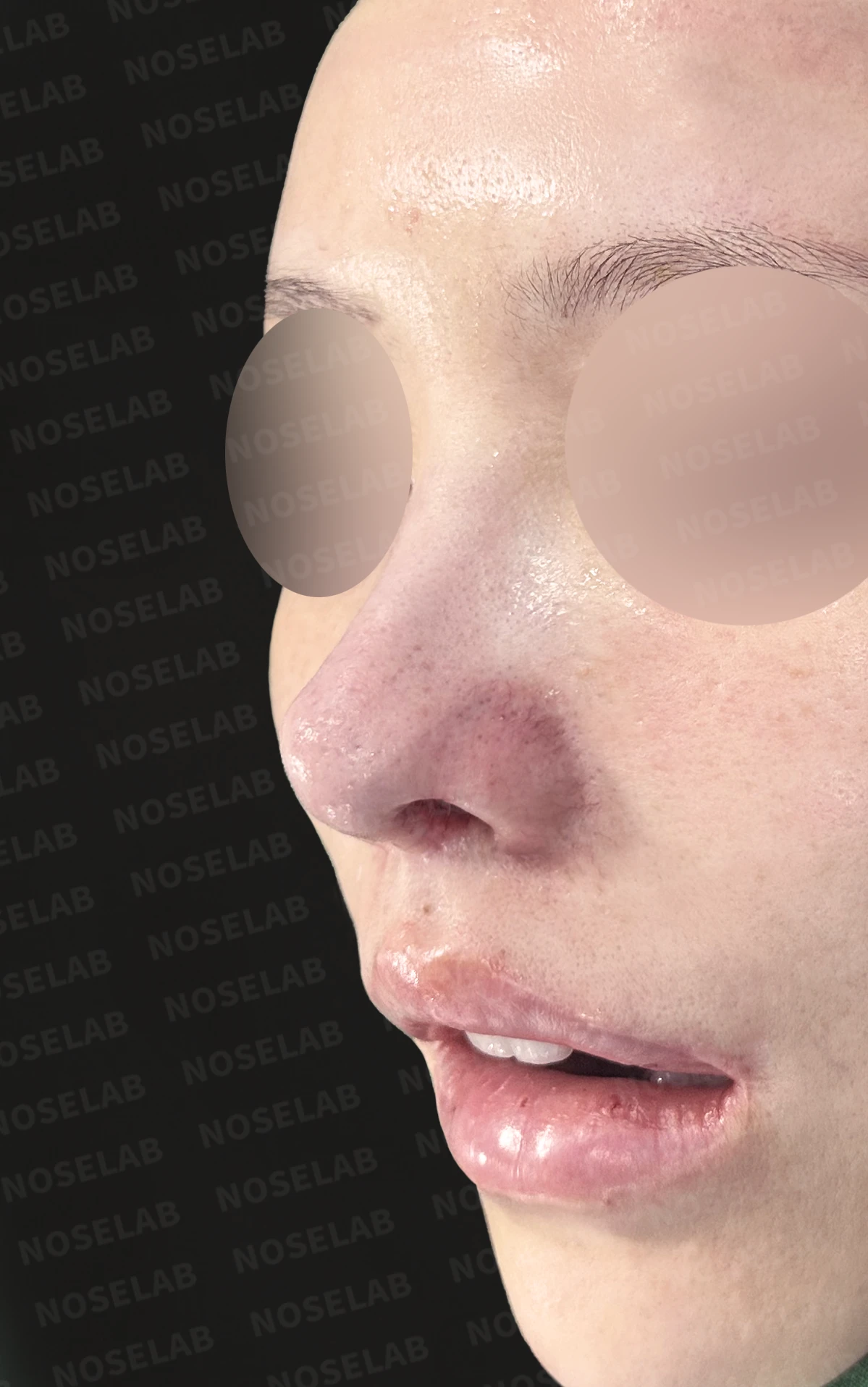
Front view changes
Excessive nostril show was naturally reduced, and narrowing the bridge width created a more refined appearance.
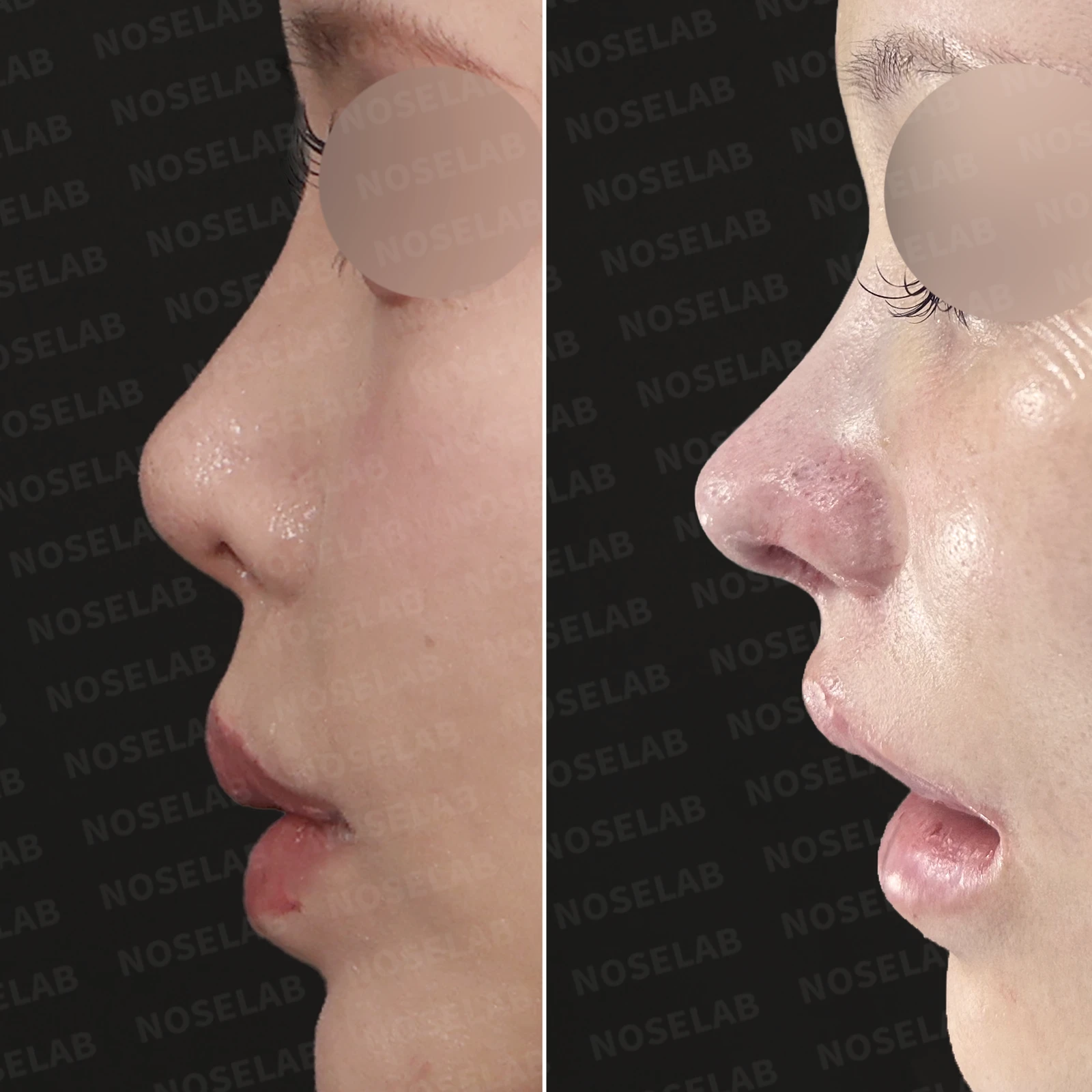
Before surgery / Day 0 immediately after surgery Photos taken immediately after surgery show swelling and may differ from the final result.
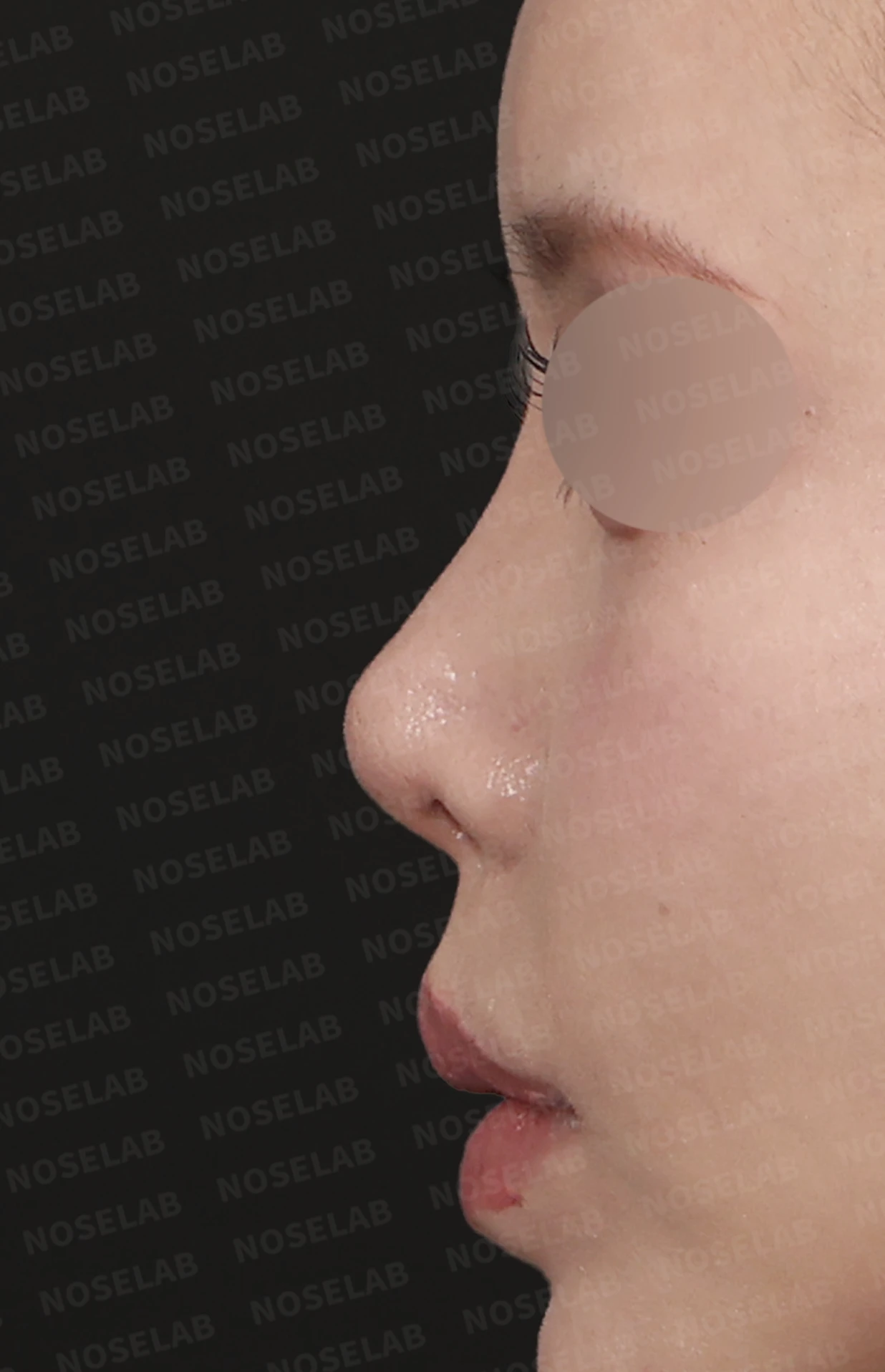
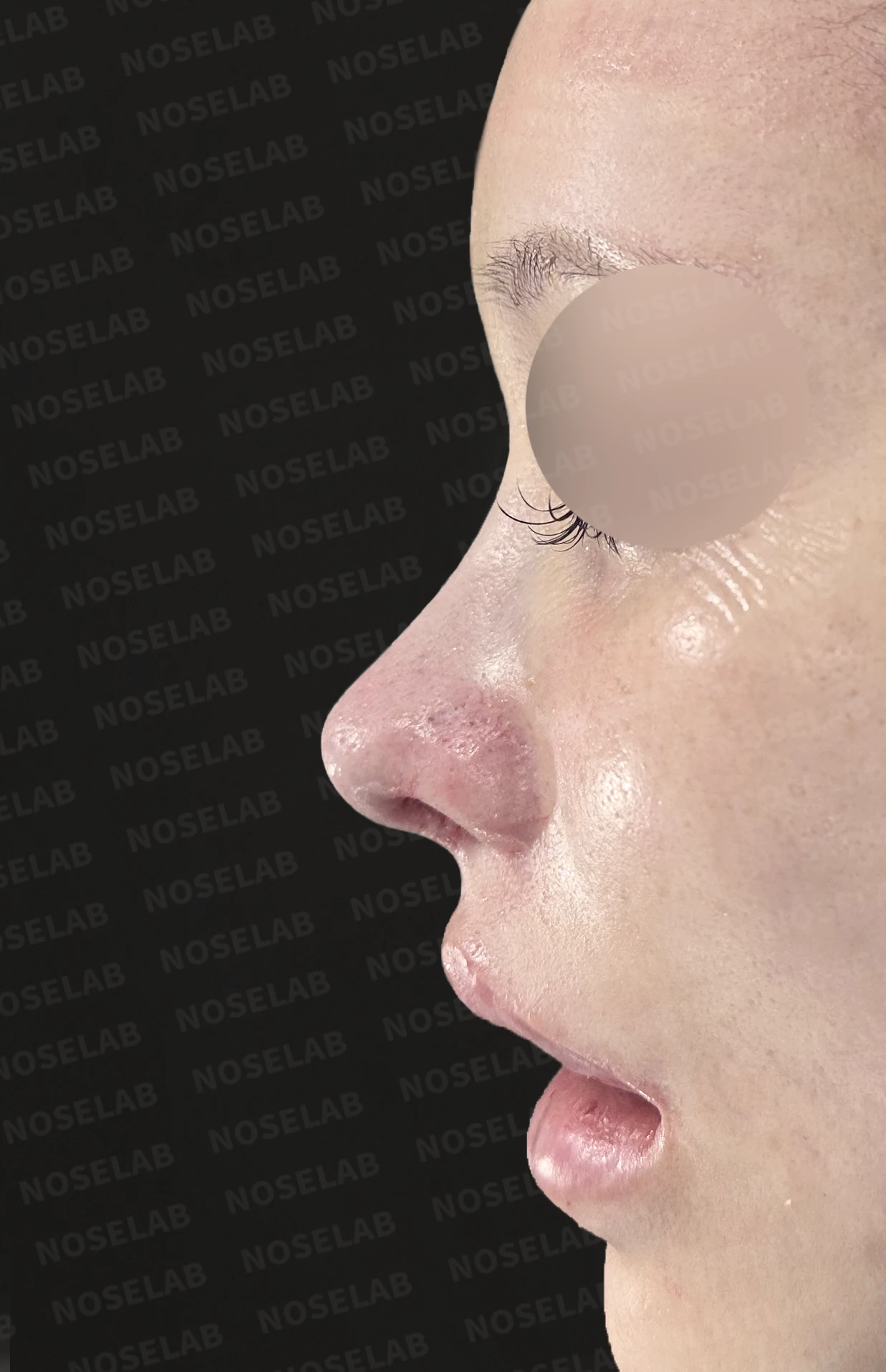
Profile view changes
The short, upturned nasal tip was brought downward to create a well-proportioned profile, and reinforced tip support established a stable nasal line.
Before surgery / Day 0 immediately after surgery Photos taken immediately after surgery show swelling and may differ from the final result.
Changes in nostril shape
As the pinched right nostril was naturally brought down, the shape and size of both nostrils became balanced.
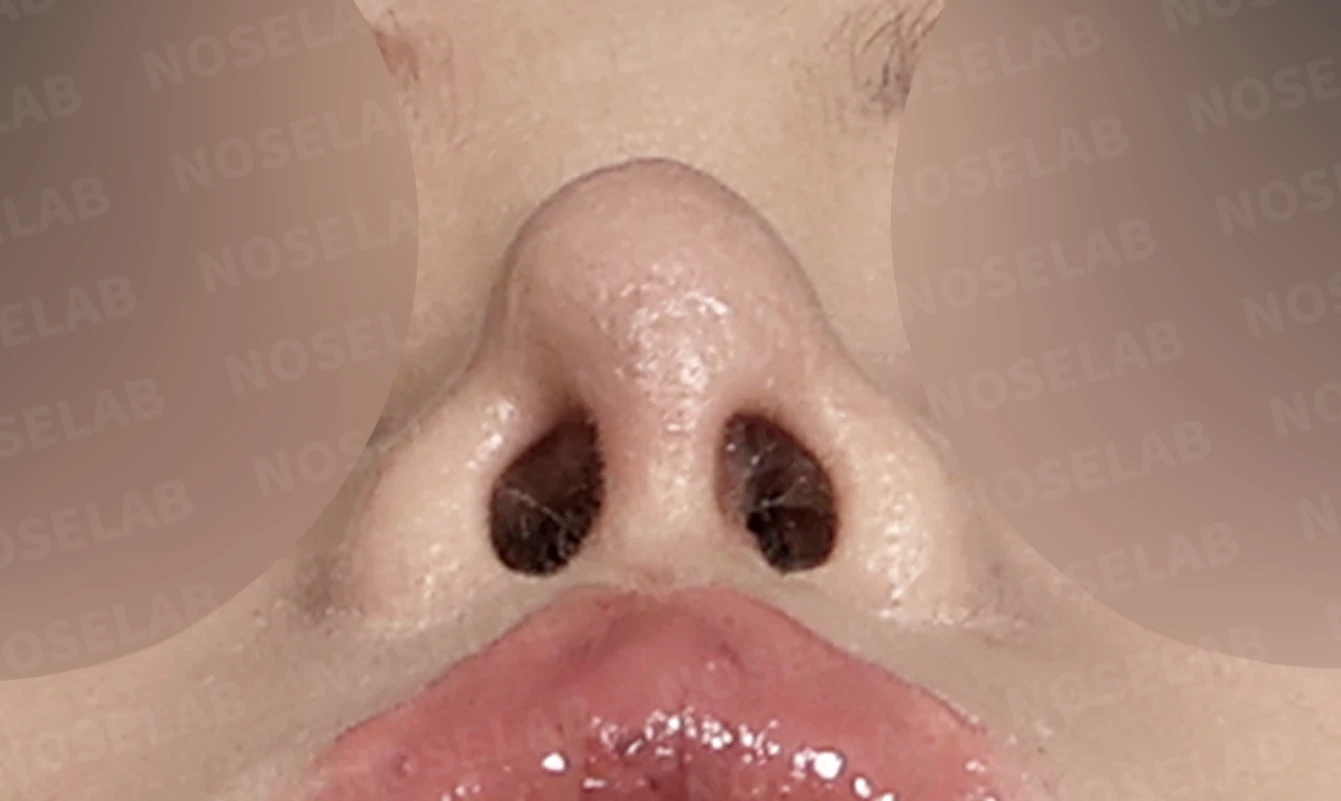
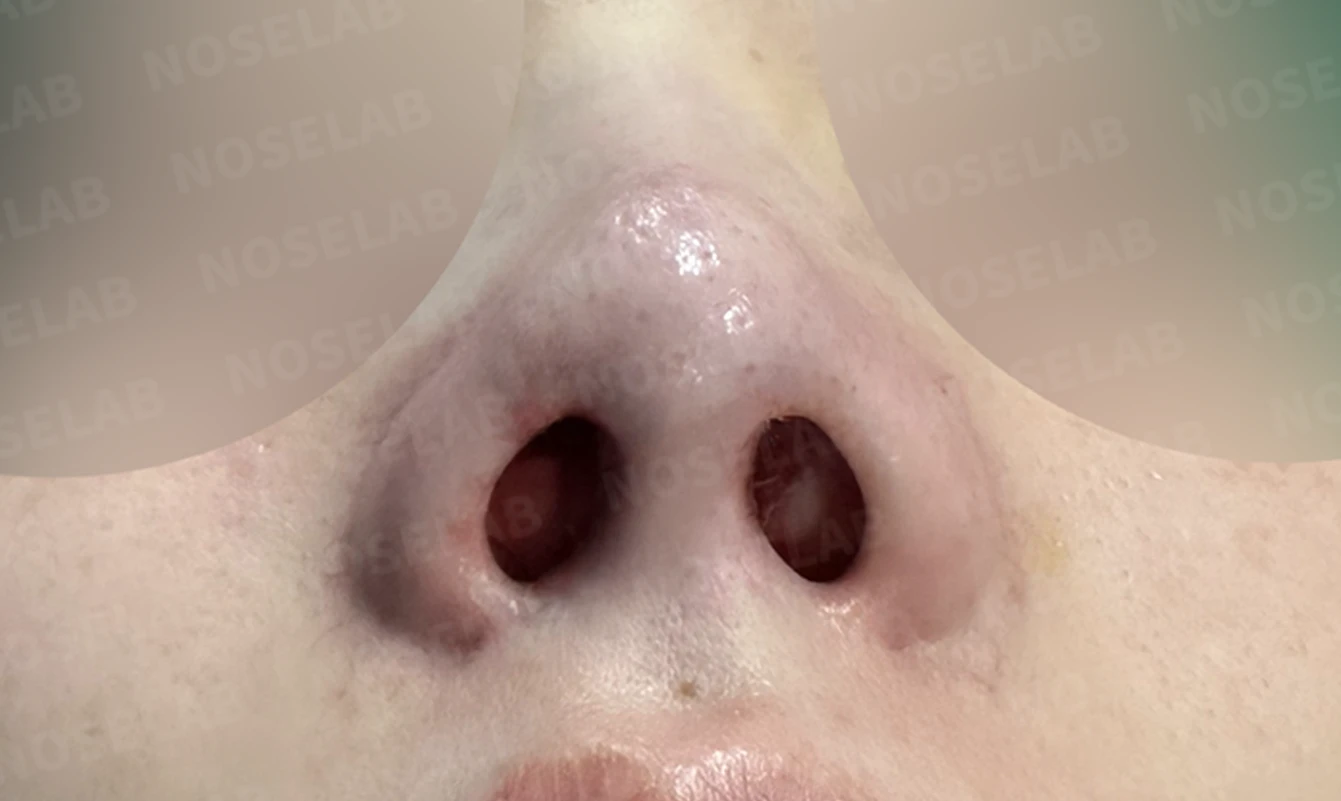
Before surgery / Day 0 immediately after surgery Photos taken immediately after surgery show swelling and may differ from the final result.
💡 Specialist opinion
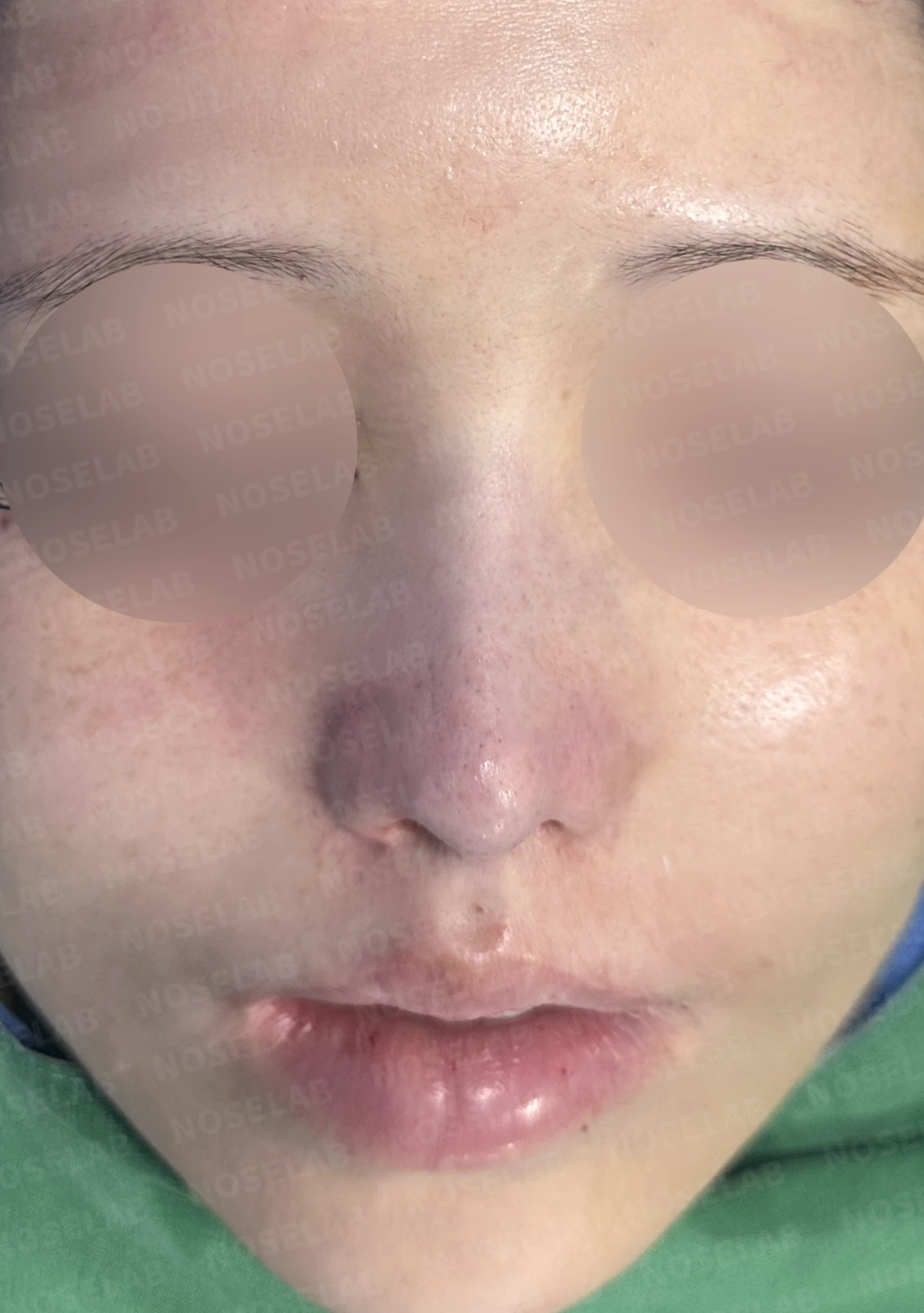
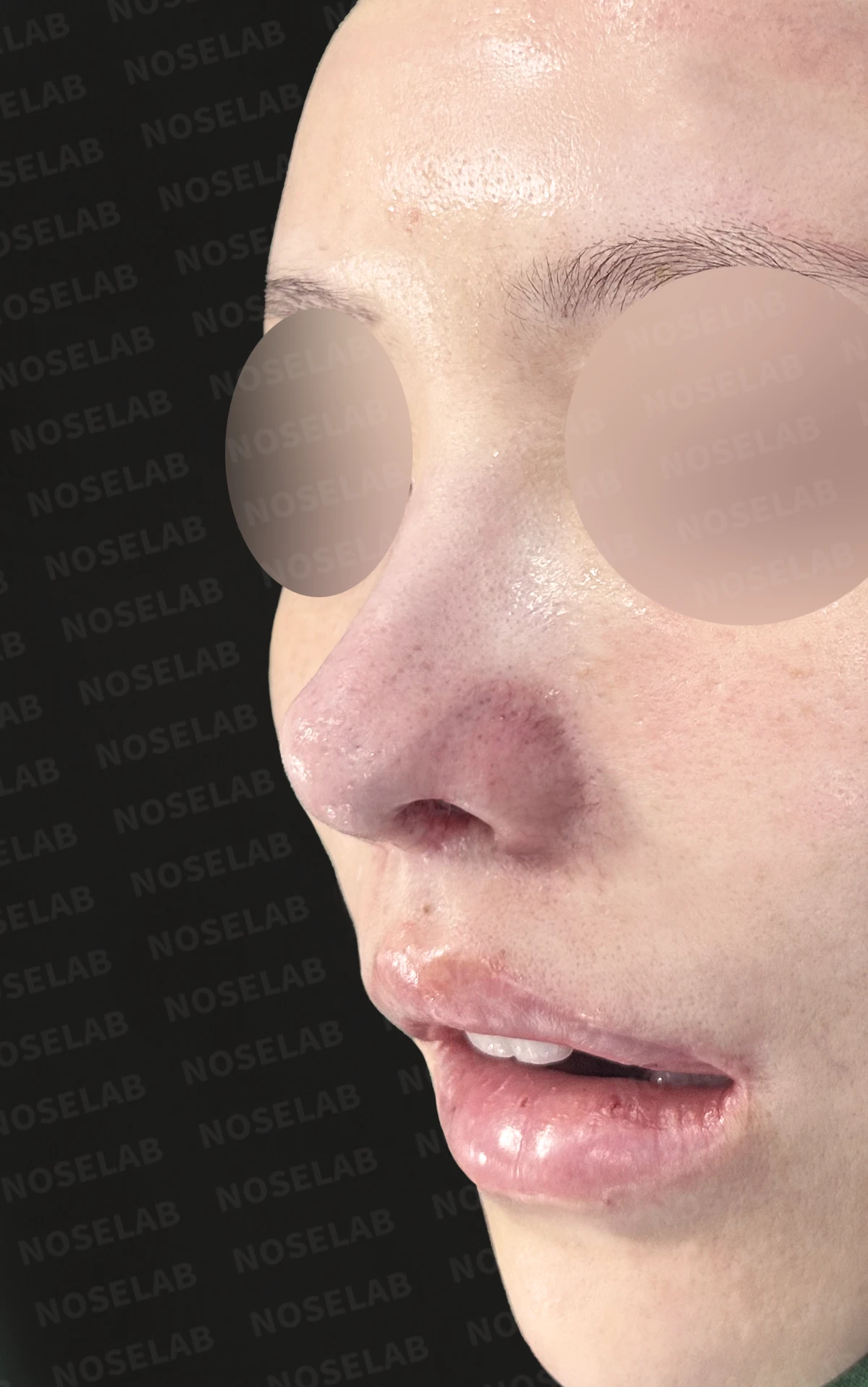
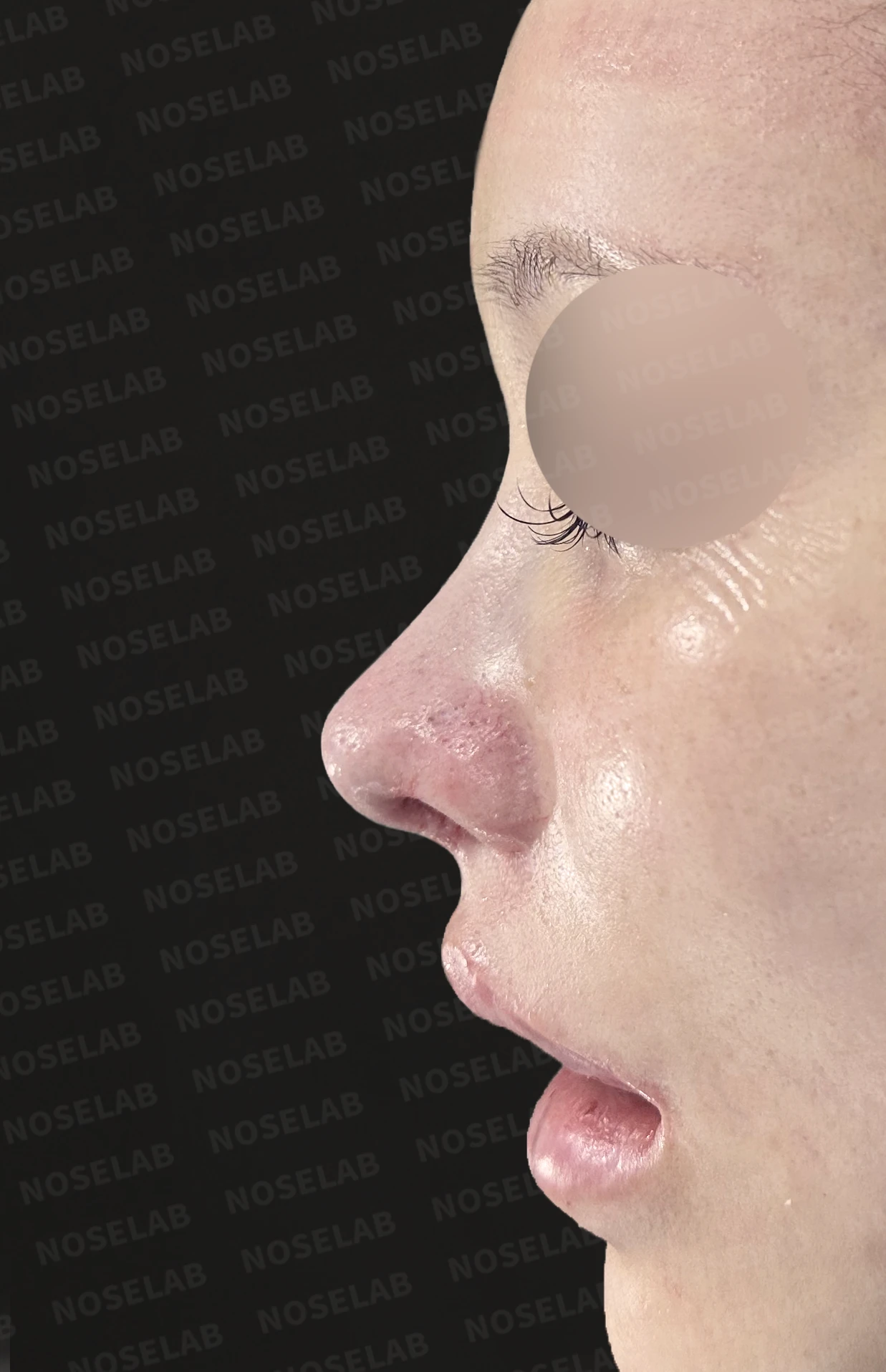
Front, oblique, and profile views on day 0 immediately after surgery Photos taken immediately after surgery show swelling and may differ from the final result.
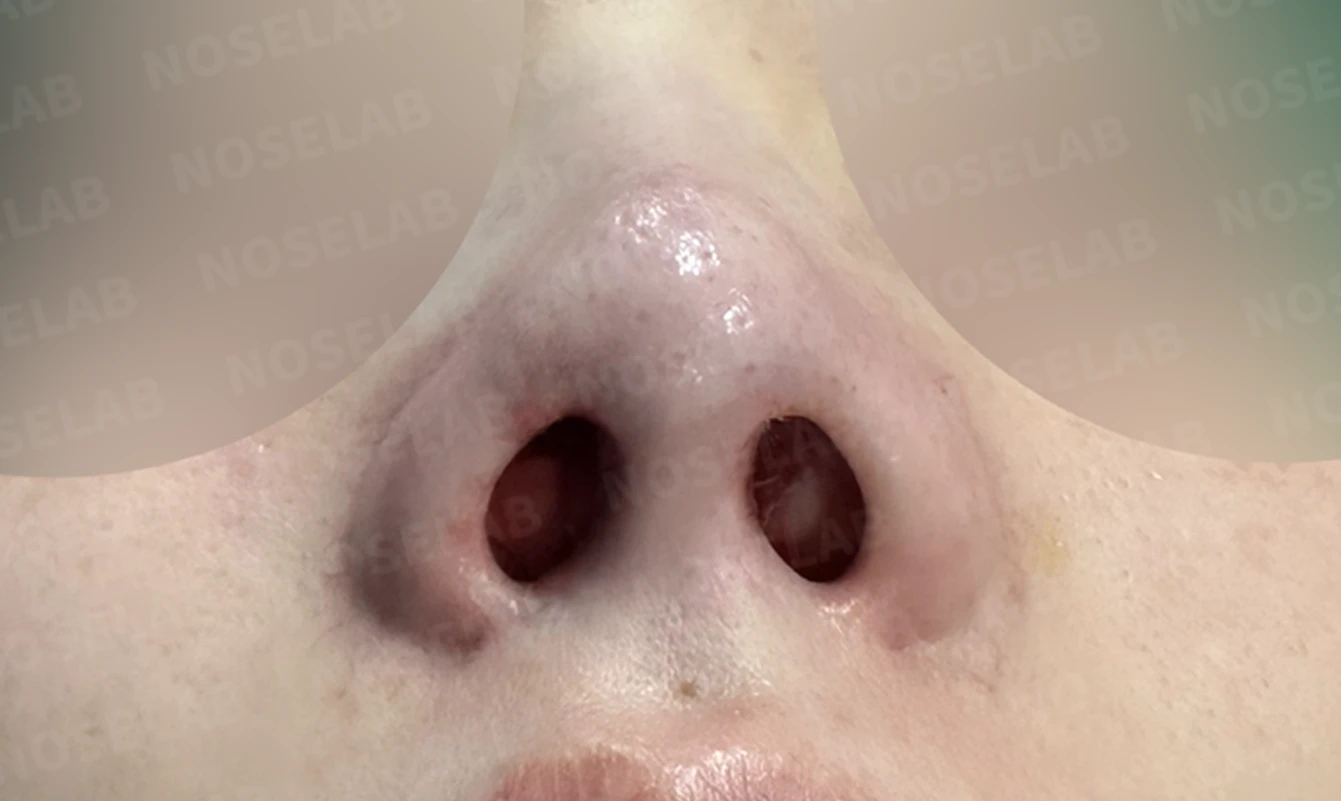
Nostril view on day 0 immediately after surgery Photos taken immediately after surgery show swelling and may differ from the final result.
When an upturned tip and a pinched nostril must be corrected together, simply grafting cartilage onto the tip has its limitations. If the septum, which serves as the central supporting pillar of the nose, is weak, the tip may become upturned or deviate again over time.
When the septal cartilage is confirmed during surgery to be weaker than expected, as in this case, sturdy cartilage in sufficient quantity is required to support the nose. In such situations, autologous rib cartilage offers ample strength and volume, making it a suitable choice for simultaneously reconstructing both the septum and the lower lateral cartilage.
Furthermore, when the nasal bridge appears wide and deviated, correcting only the tip often leads to an unnatural overall balance. Performing lateral osteotomy together to narrow the dorsal width and align the midline allows the tip changes to harmonize naturally in both front and profile views.
Because the nose is positioned at the center of the face and defines one's impression, I believe that surgery considering not only the external appearance but also internal structural stability leads to satisfying long-term results.
This was Dr. Peter C. Kang. Thank you.
#closedrhinoplasty #upturnedtipcorrection #shortnosecorrection #nostrilasymmetry #autologousribcartilage #septalreconstruction #lateralosteotomy #crookednosecorrection #tipreconstruction

Limitations and risks
When autologous rib cartilage is used, scarring and pain may remain at the donor site on the chest, and pneumothorax (pleural injury) can occur rarely. Over time, the grafted cartilage may warp or undergo partial resorption.
When the septum is corrected at the same time, nasal obstruction may persist or recur, and in rare cases, septal perforation or changes in smell may occur.
Common potential risks include infection, bleeding, asymmetry, scarring, skin necrosis, and insufficient improvement; results vary depending on individual skin condition and previous surgical history.