Hello, I am Dr. Peter C. Kang.
Today, I would like to introduce a case where we corrected an upturned nose and a pinched nose that occurred after multiple surgeries.
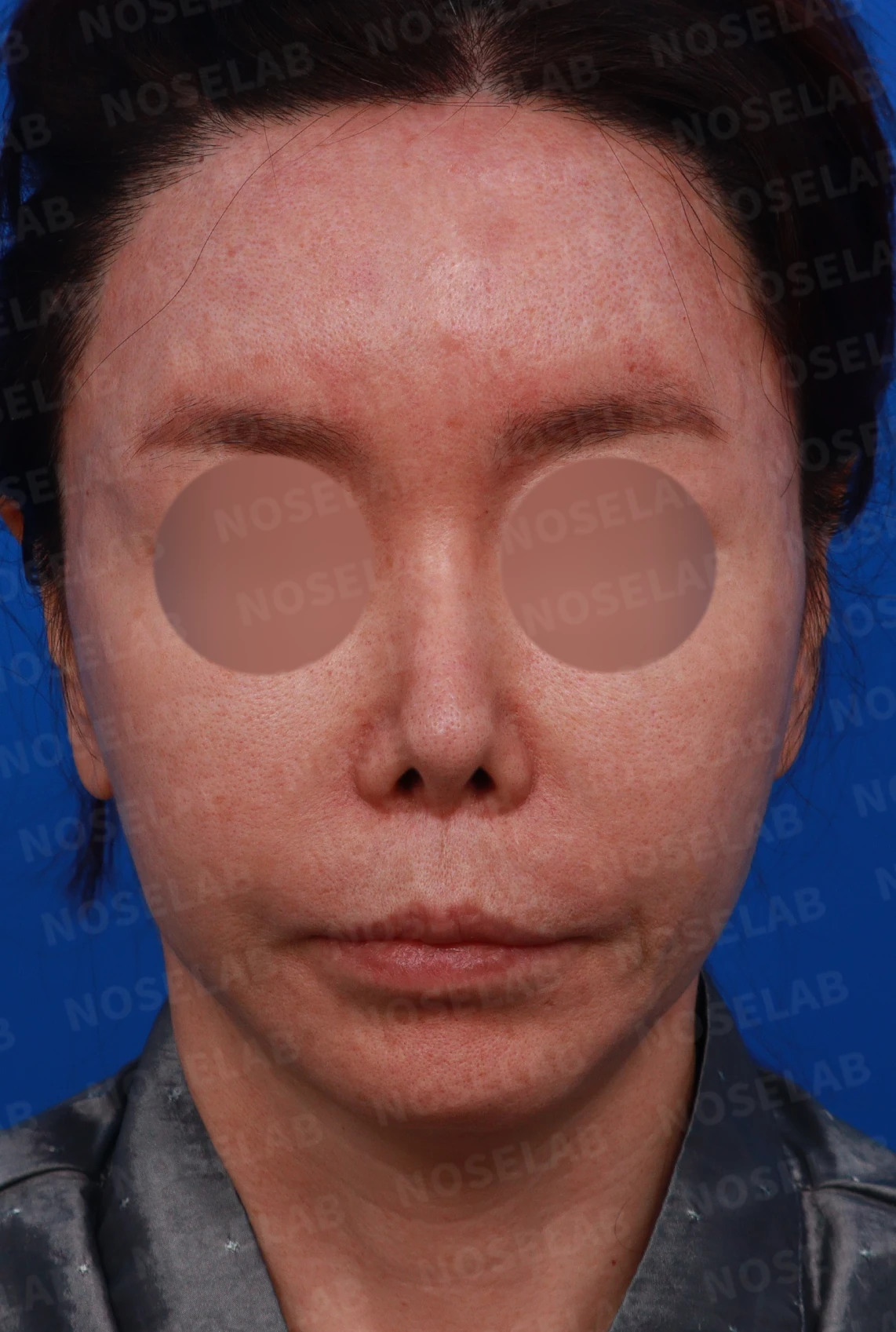
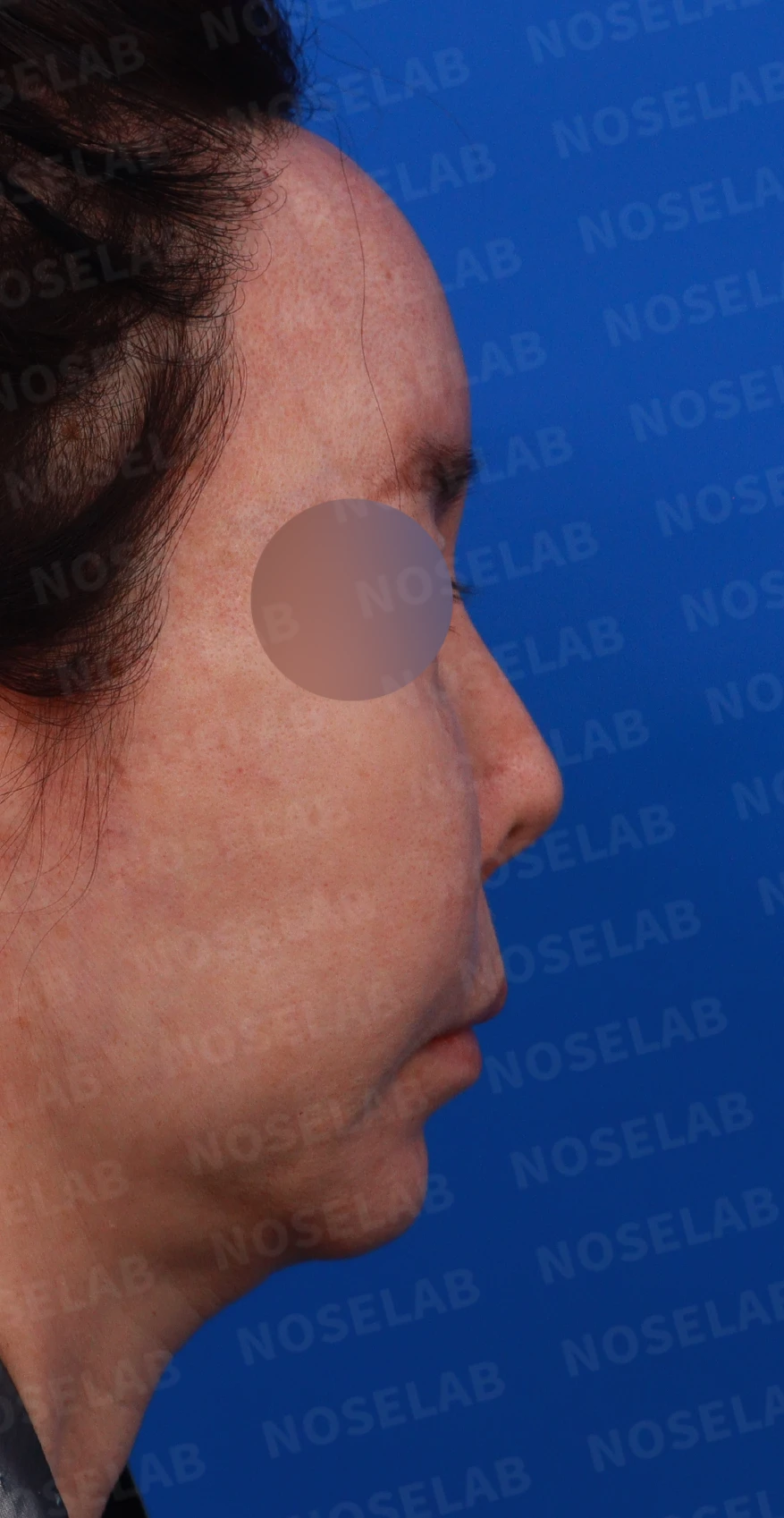
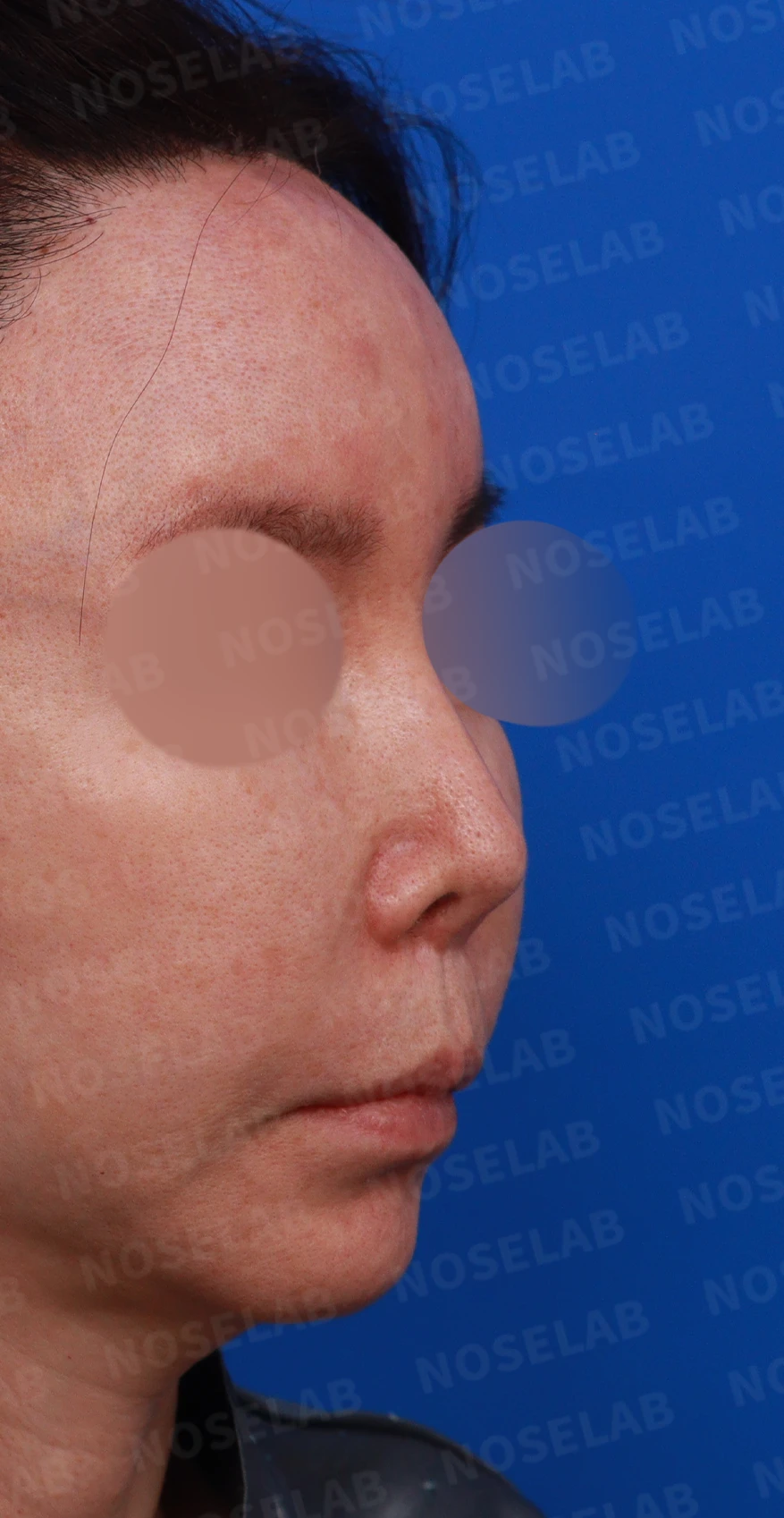
Design consultation photos: front, right profile, and oblique views
🔍 Surgical history
1991: Silicone implant surgery
August 2020: Silicone implant + donor rib cartilage
January 2021: Revision rhinoplasty for height adjustment
2022: Philtrum reduction surgery
📊 Patient's requests
Correction of an upturned and pinched nose
A natural yet defined straight-subtle curve line
💉 Preoperative analysis
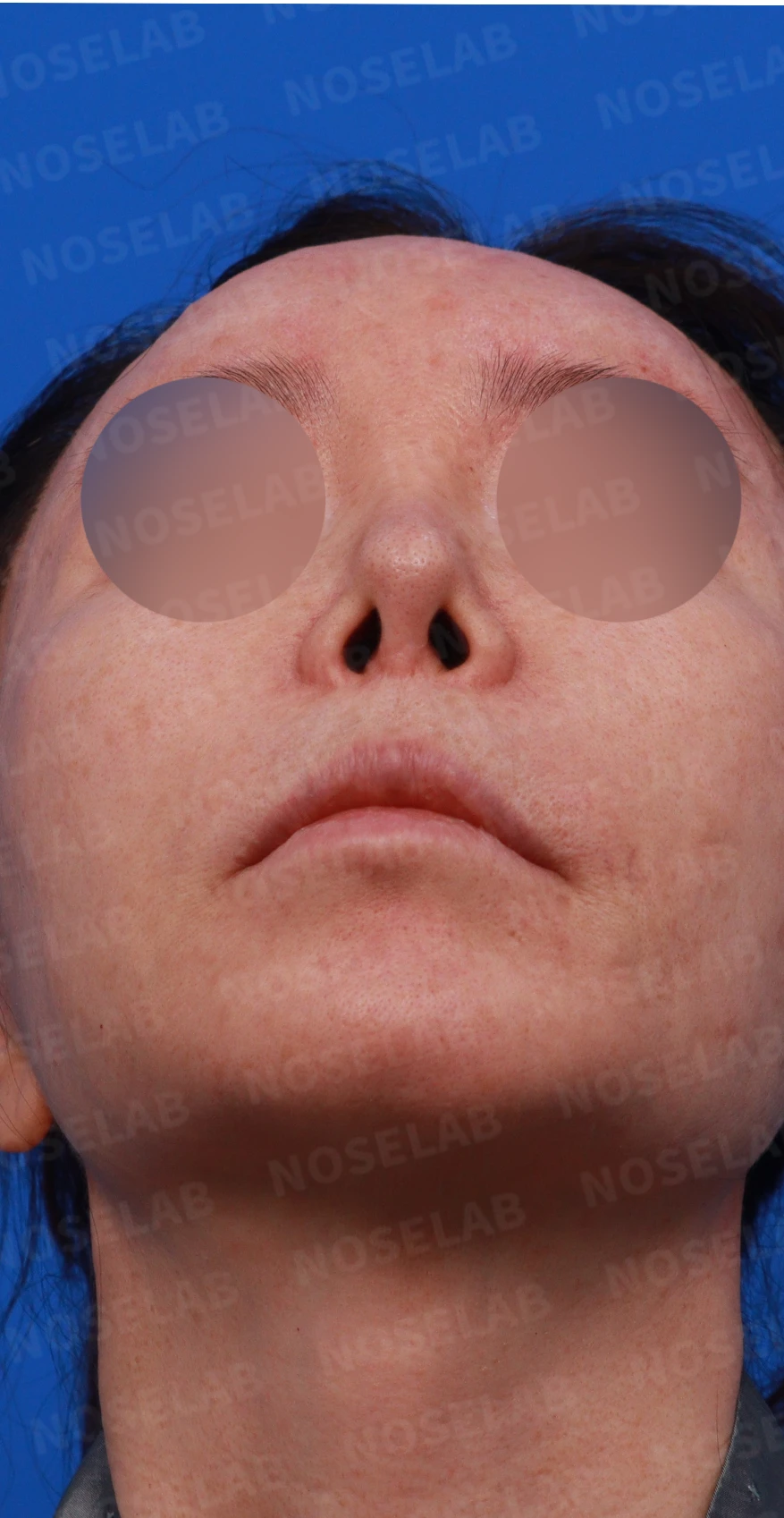
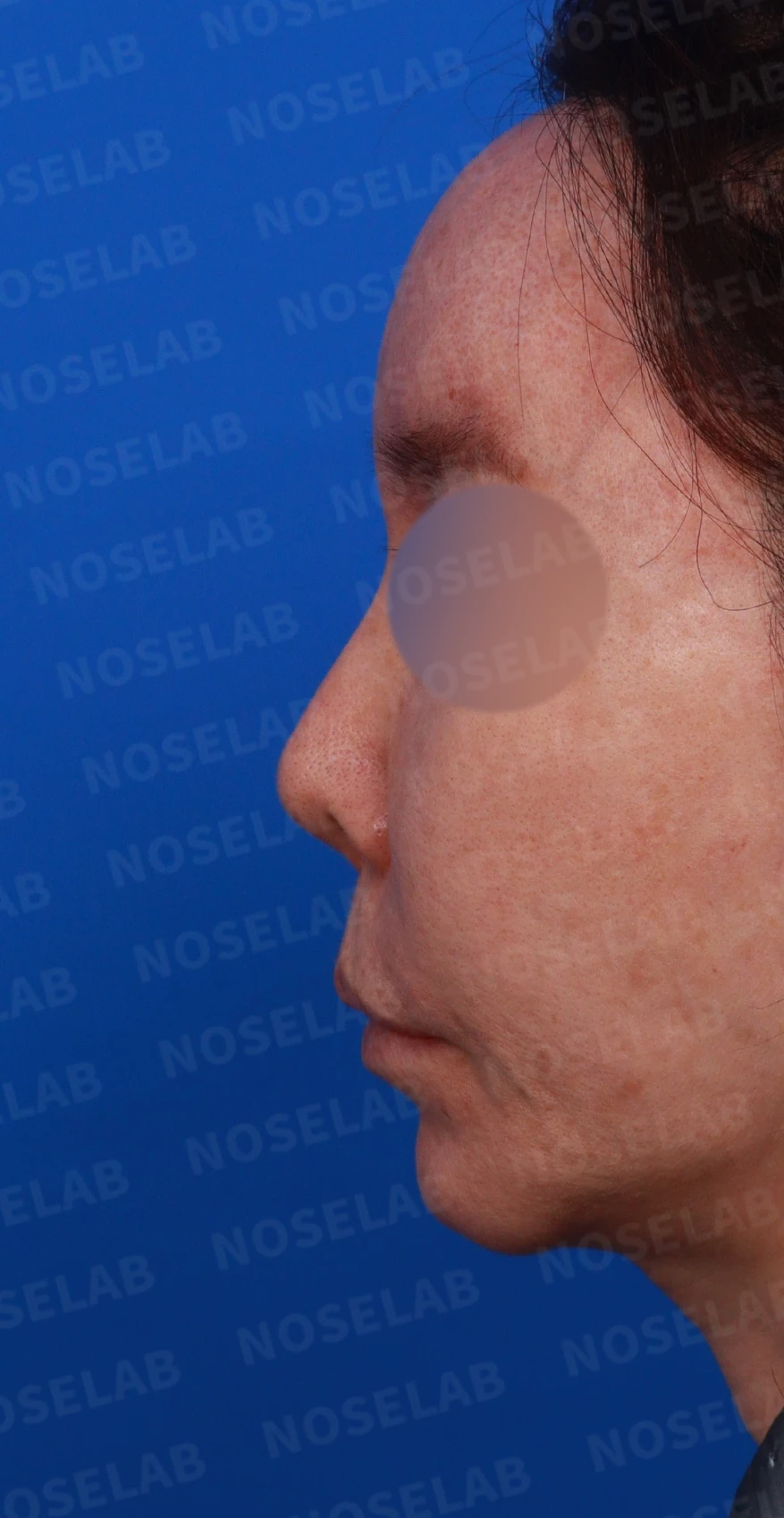
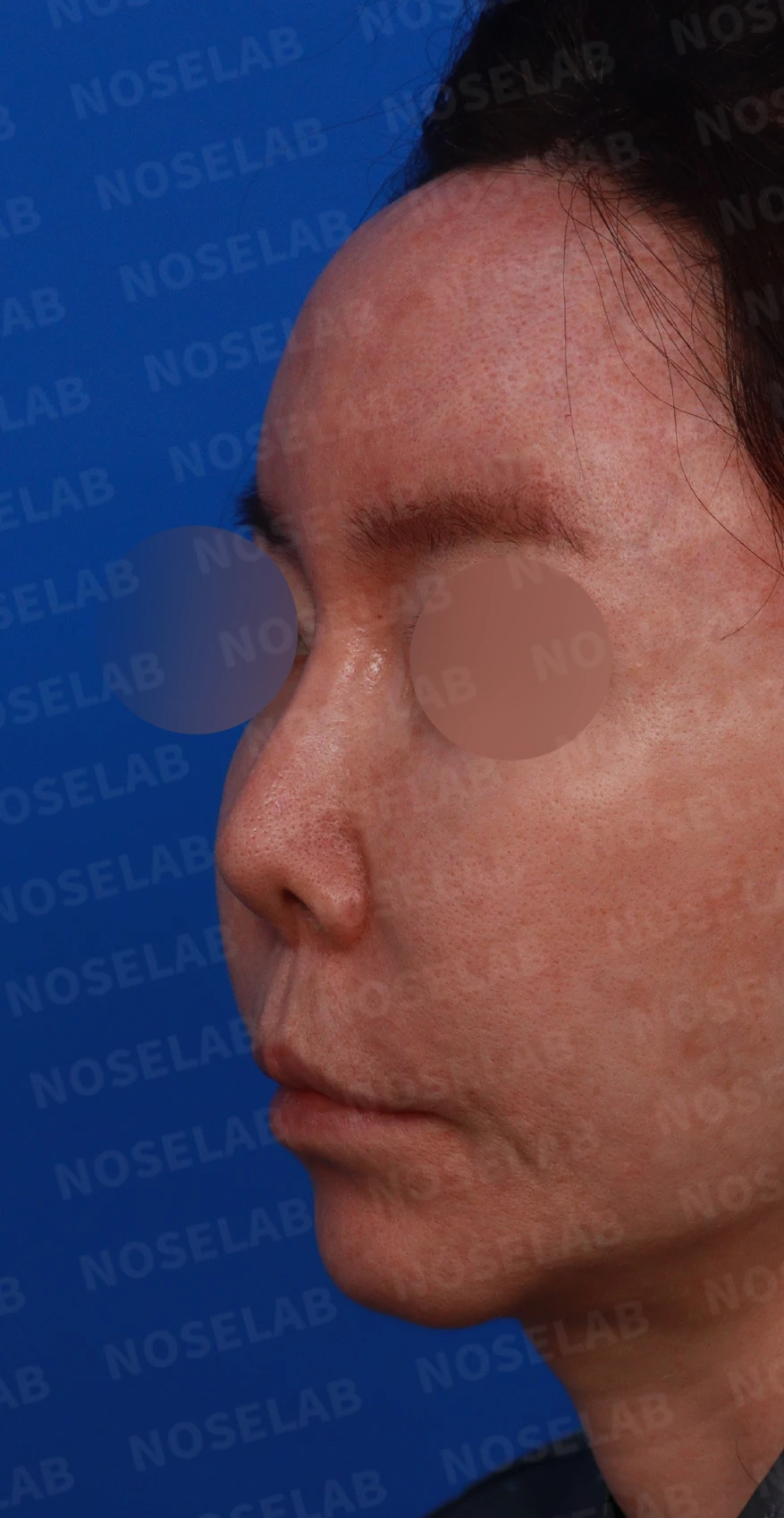
Design consultation: Nostril view, left profile view, and oblique view photos
Front view
Appears upturned
Pinched appearance of the alae
Nasal bridge is crooked
Nostril asymmetry
Profile view
Drooping tip
Dorsal hump
Appears short
Nostrils
Nostril asymmetry
Columella tilted to the left
Pinched alae
🔧 Surgical plan
Lateral osteotomy (correction of crooked nose)
Septal reconstruction using autologous rib cartilage
Lower lateral cartilage reconstruction (correction of pinched nose)
Septal extension (correction of short and upturned nose)
Nostril rim elongation (correction of upturned nose and nostril asymmetry)
Replacement of bridge silicone implant (overall height increase and straight-subtle curve line)
Nasolabial angle correction (improvement of protruding mouth)
Paranasal augmentation (improvement of nasolabial folds and protruding mouth)
Stem cell injection therapy (skin expansion, improvement of pinched and short nose)
Forehead foreign material removal and autologous fat grafting (for a natural forehead line)
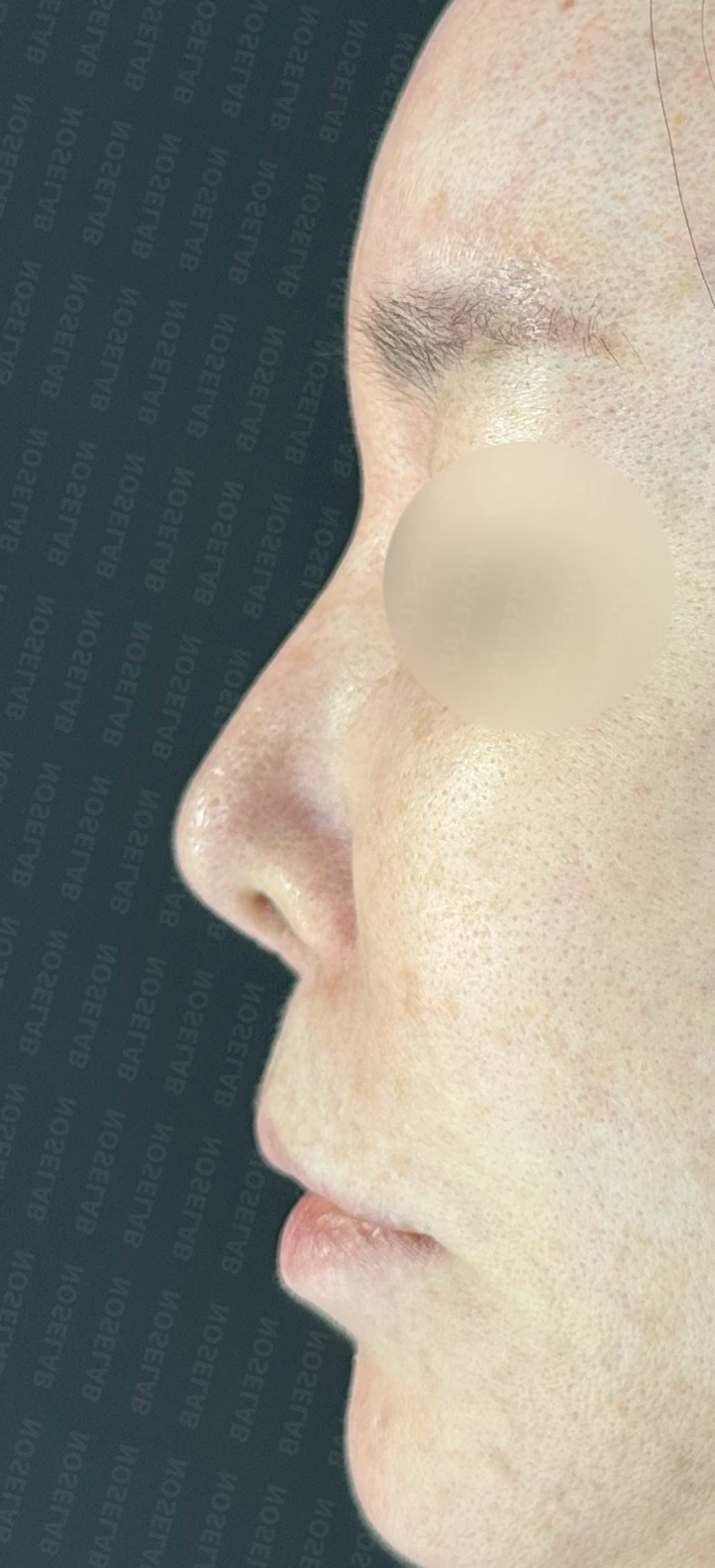
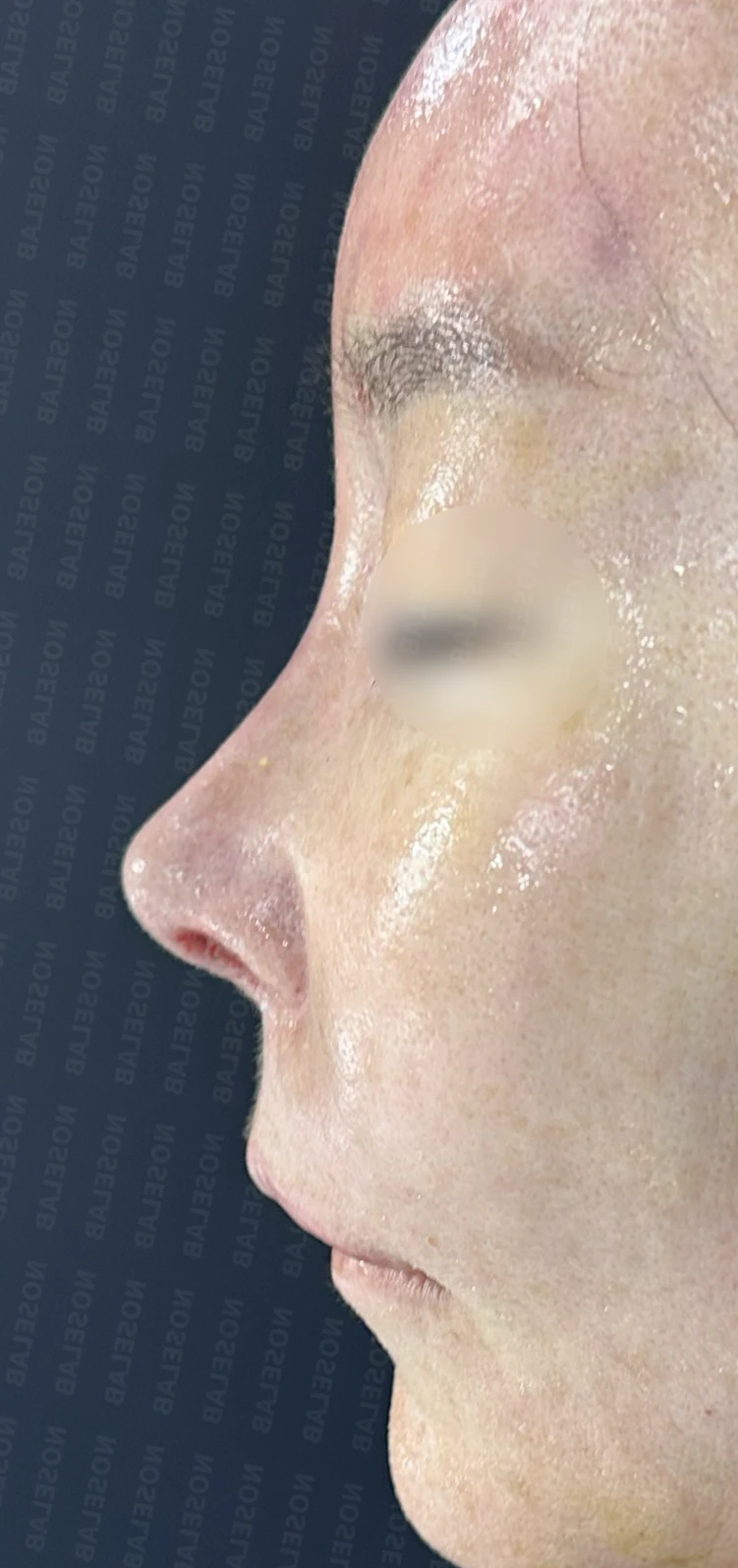
Before surgery / Day 0 immediately after surgery Photos taken immediately after surgery show swelling and may differ from the final result.
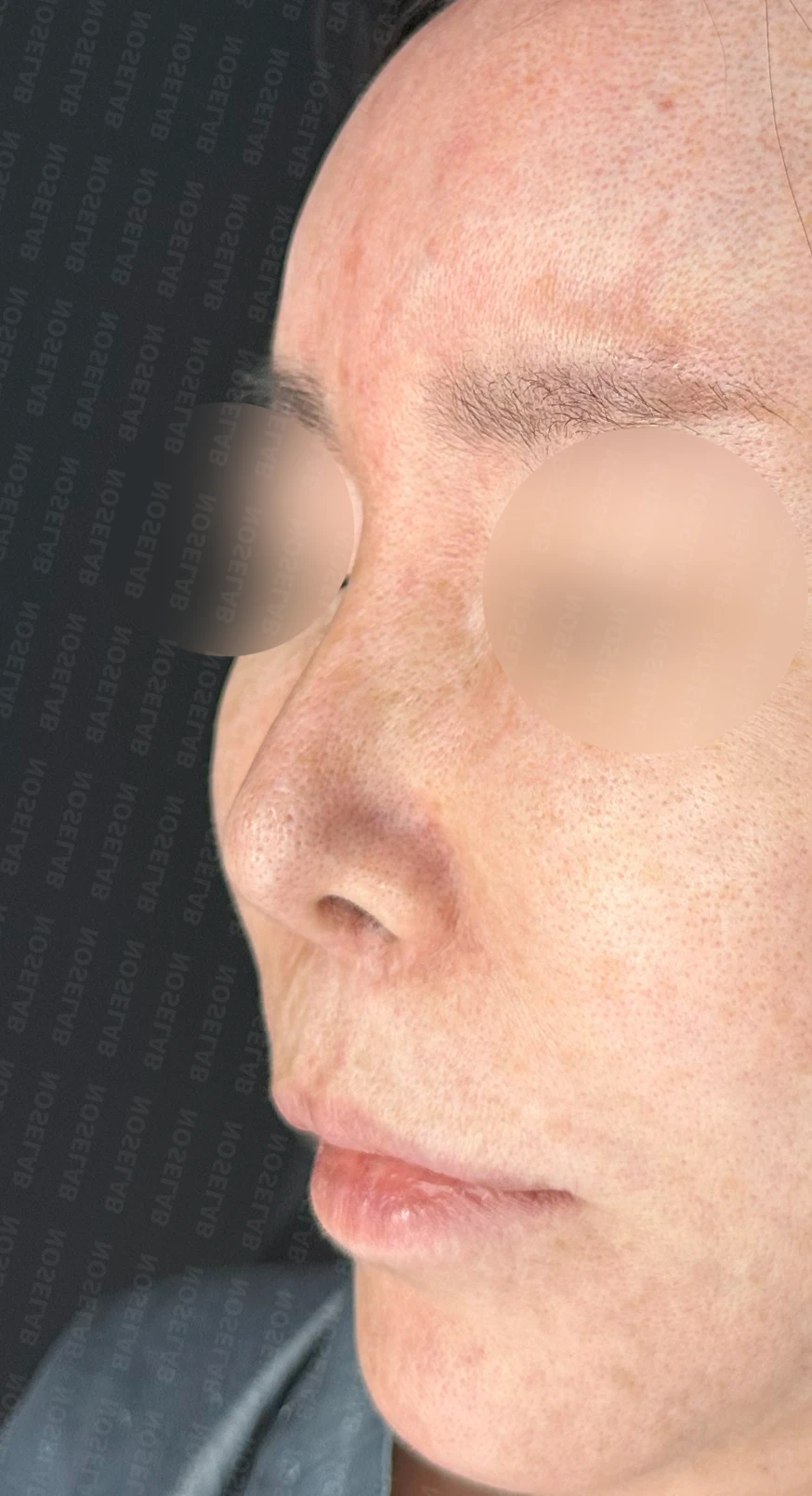
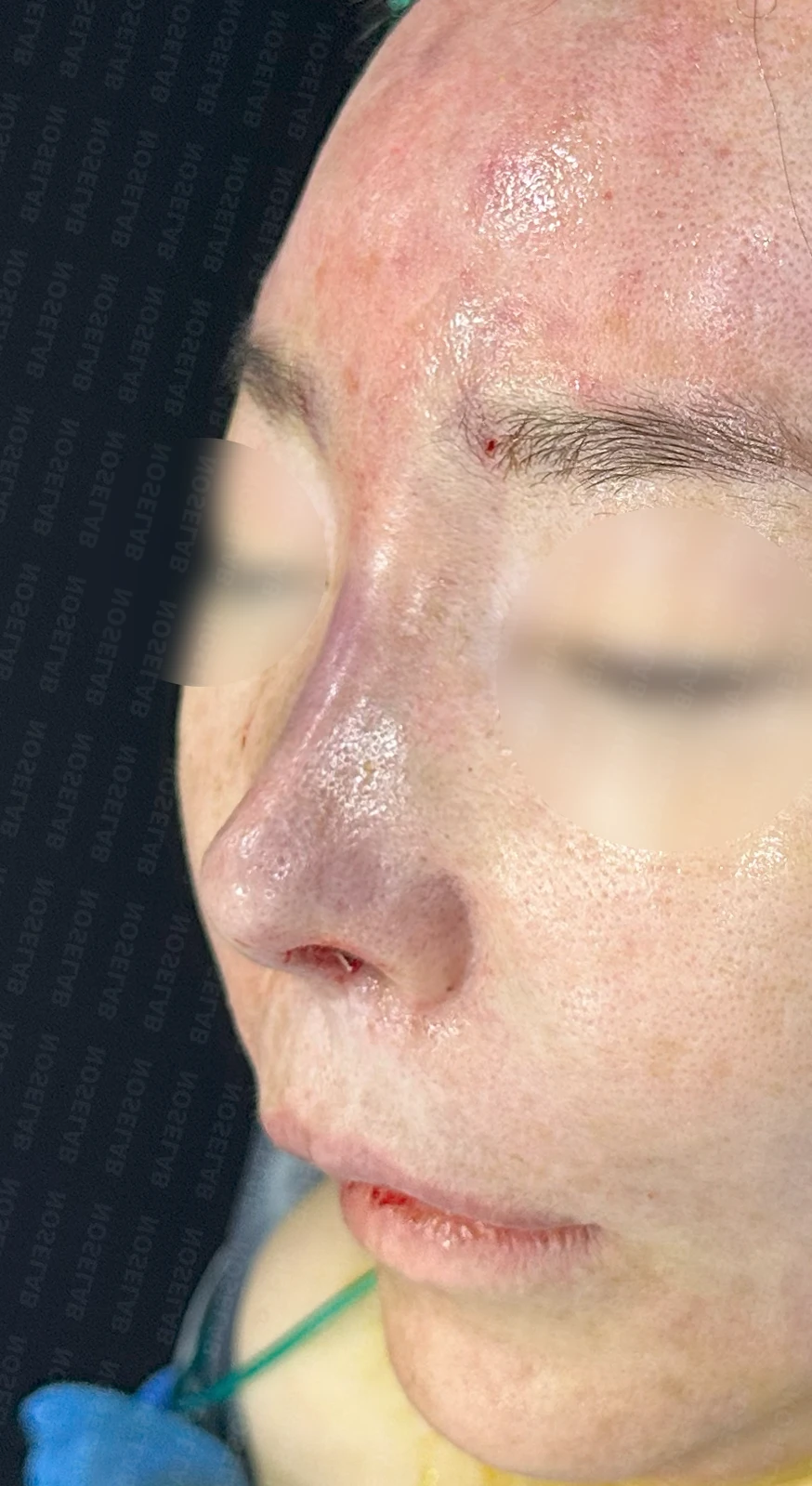
Before surgery / Day 0 immediately after surgery Photos taken immediately after surgery show swelling and may differ from the final result.
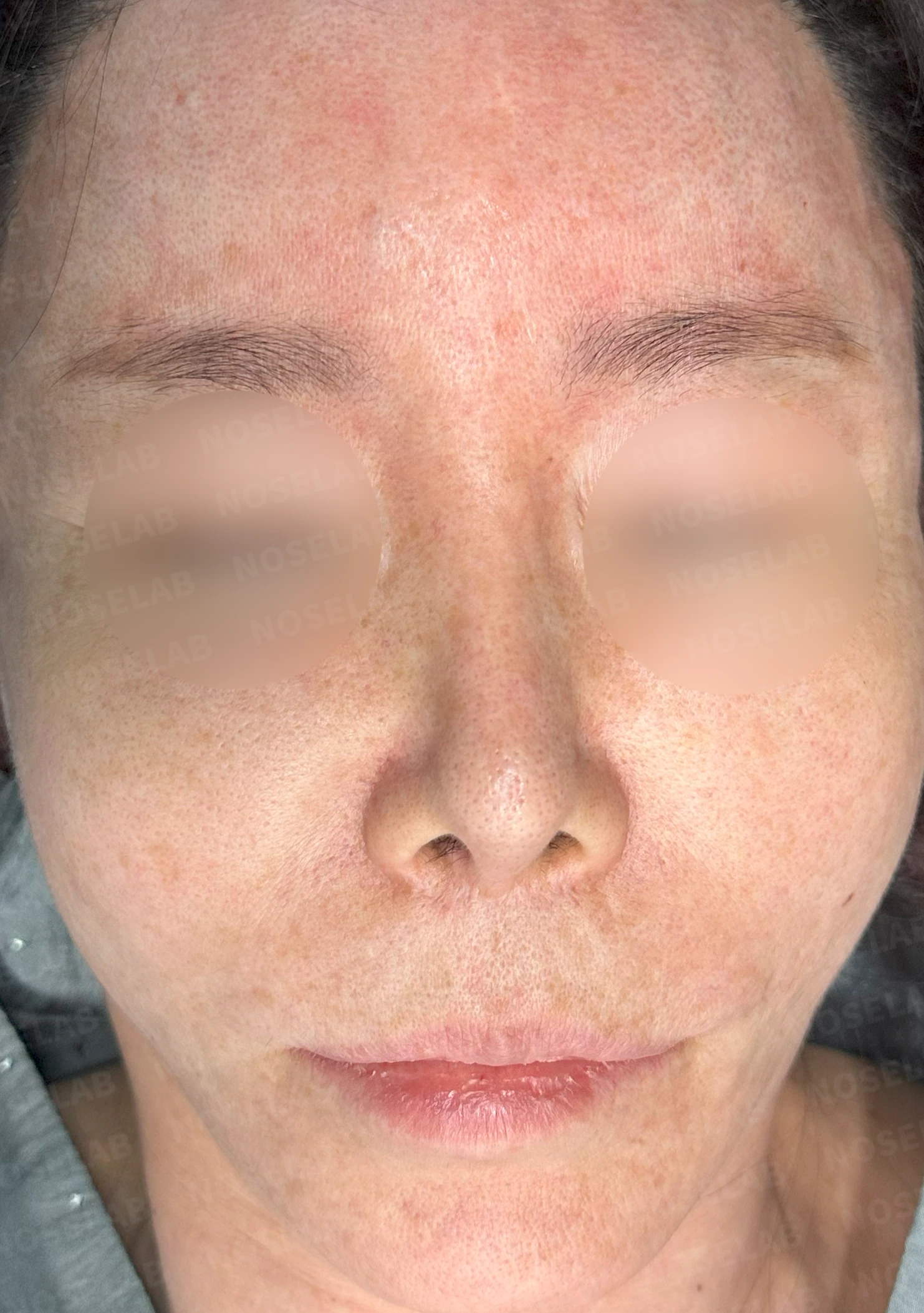
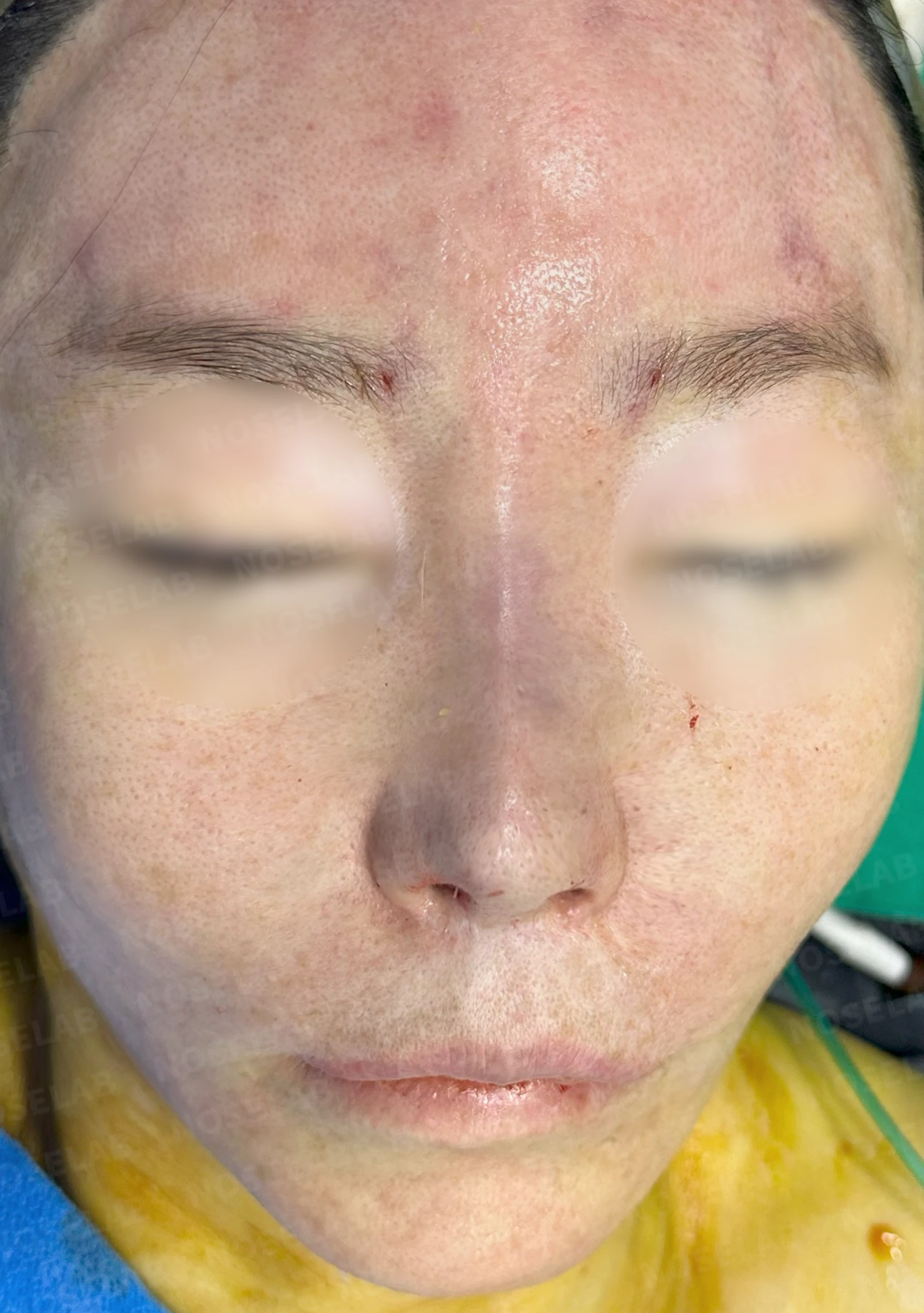
Before surgery / Day 0 immediately after surgery Photos taken immediately after surgery show swelling and may differ from the final result.
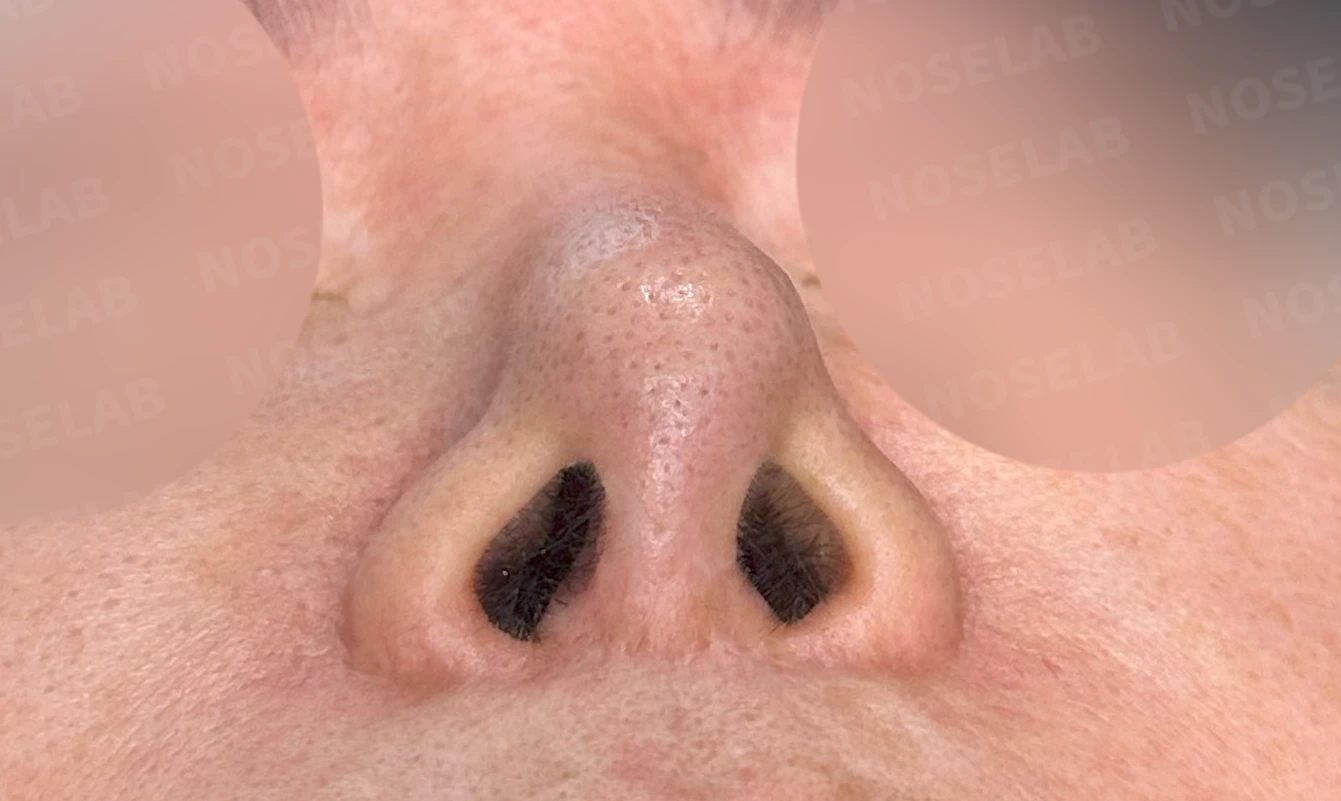
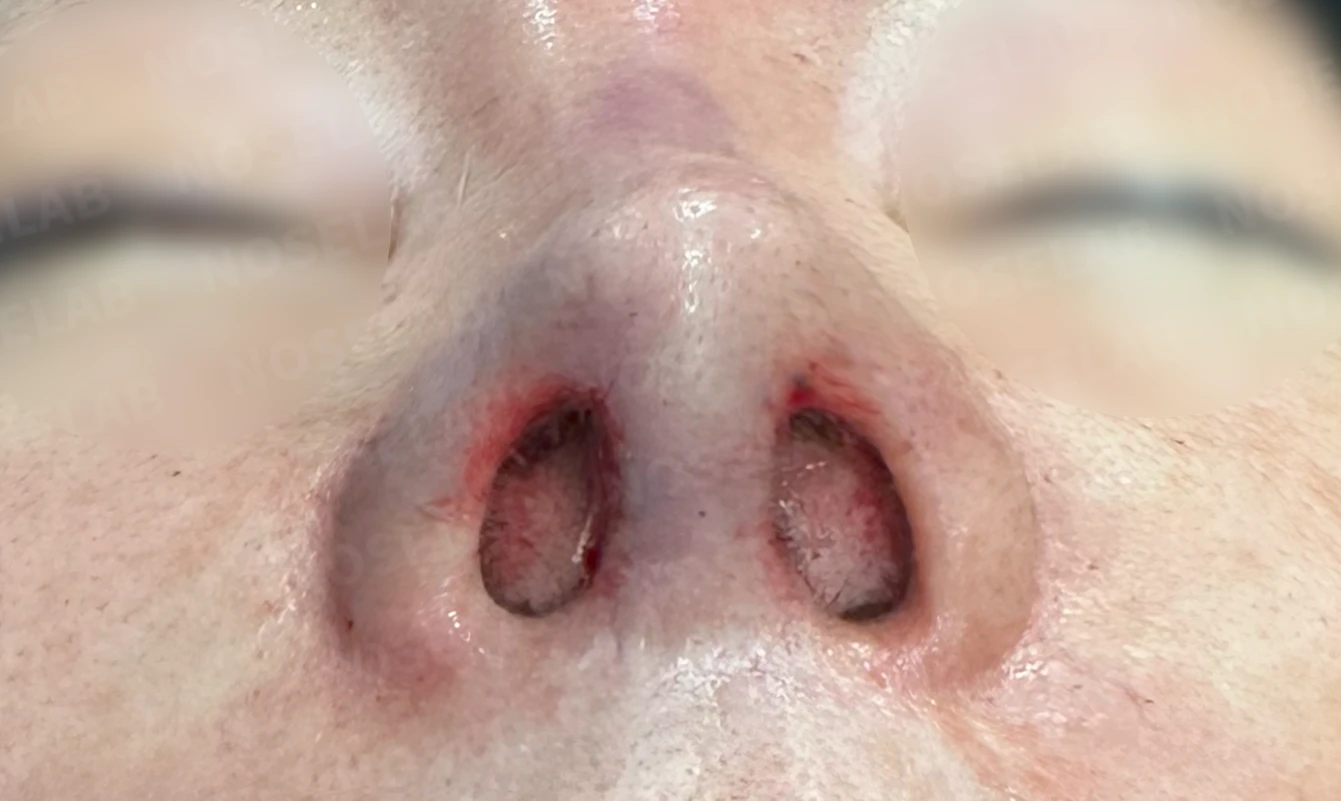
Before surgery / Day 0 immediately after surgery Photos taken immediately after surgery show swelling and may differ from the final result.
💉 Surgical procedure details
Septal reconstruction
Reconstruction of the damaged septal cartilage using autologous rib cartilage
Alar reconstruction
Reconstruction of severely damaged bilateral lower lateral cartilages
Improvement of pinched alae through dermal grafting
Additional procedures
Improvement of nasolabial folds and protruding mouth through paranasal augmentation
Natural forehead contouring through autologous fat grafting following foreign material removal
[Set of 4 photos immediately after surgery on Day 0] Immediate postoperative photos show swelling and may differ from the final result.
* Improvements observed immediately after surgery
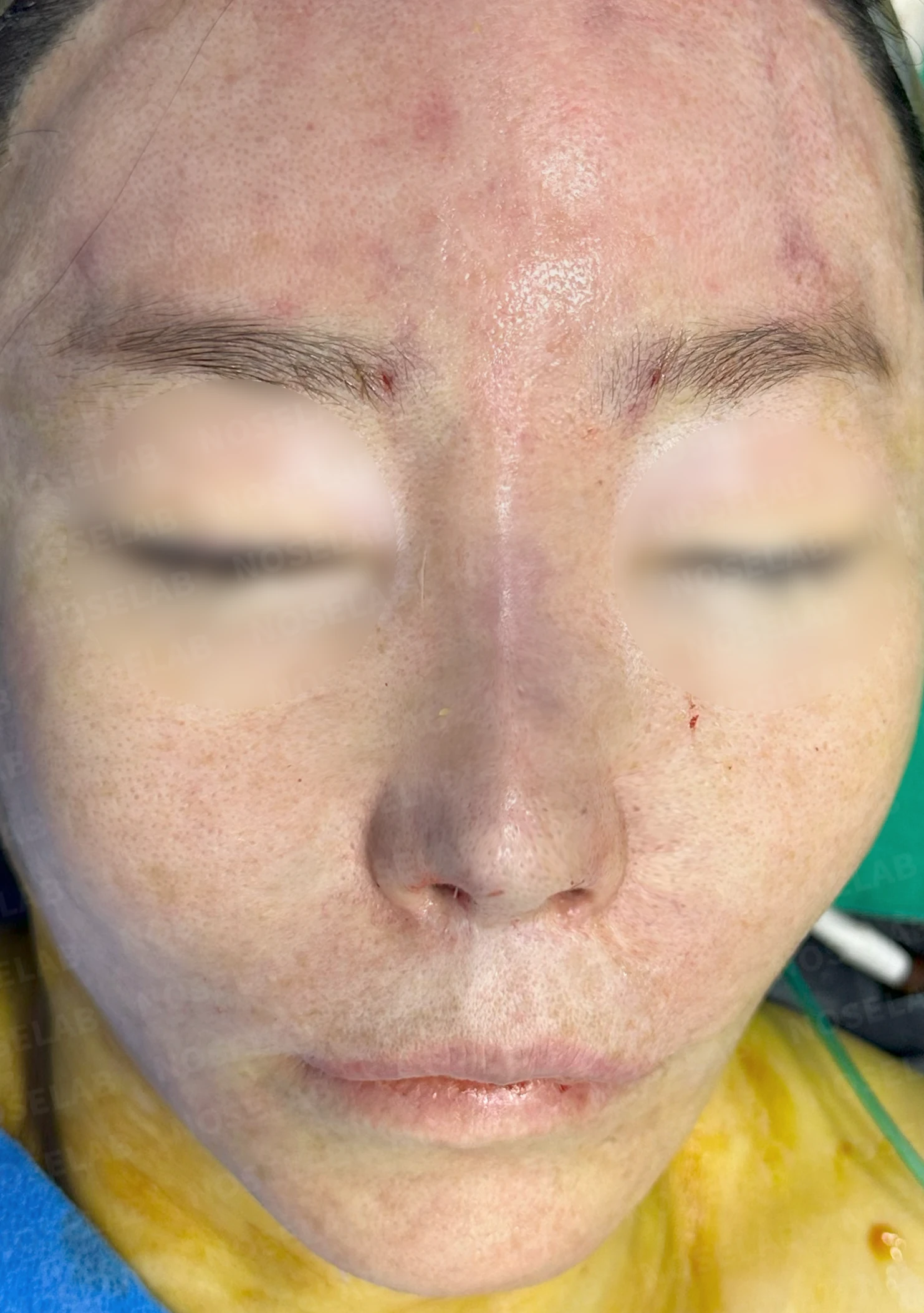
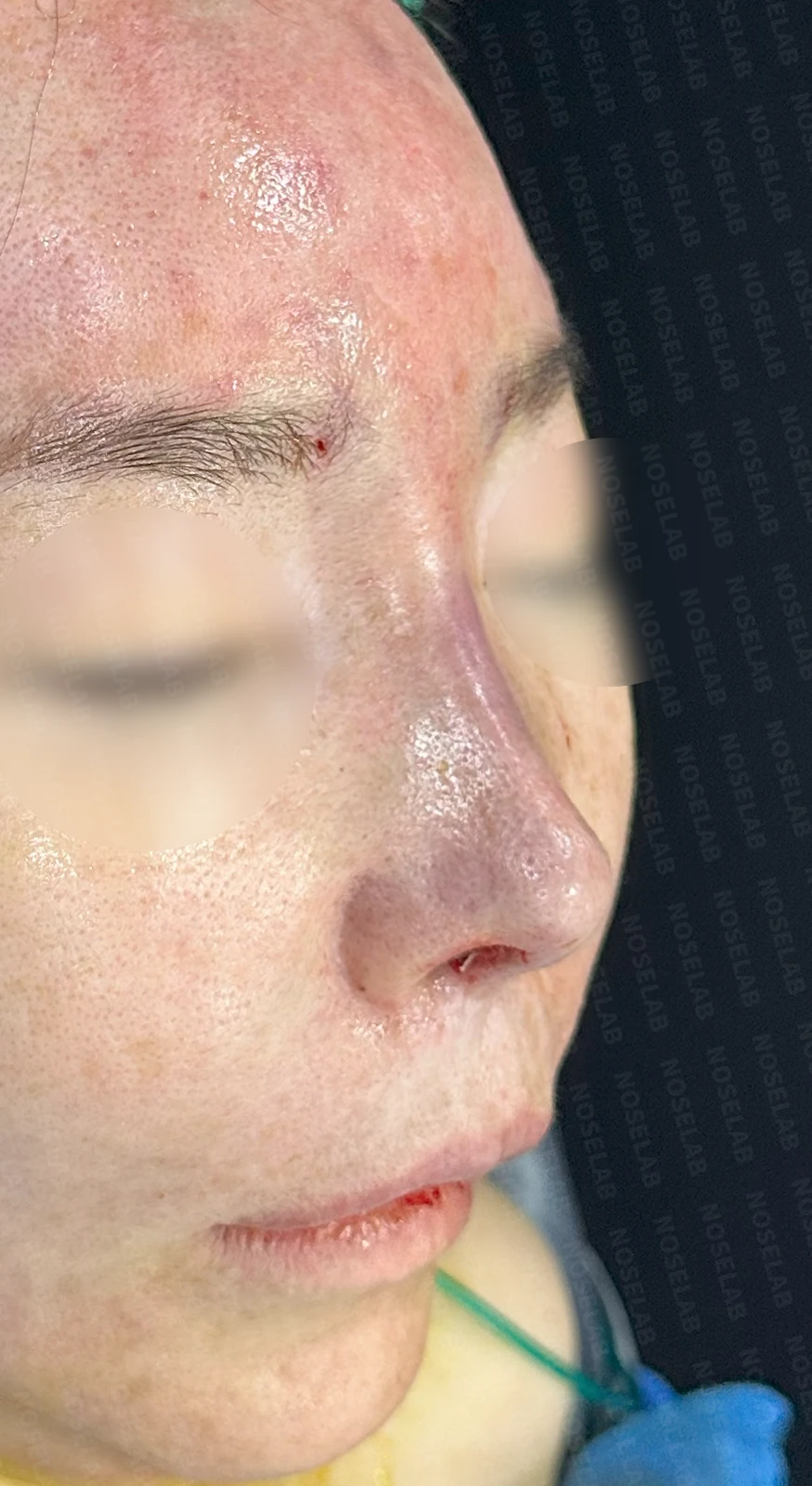
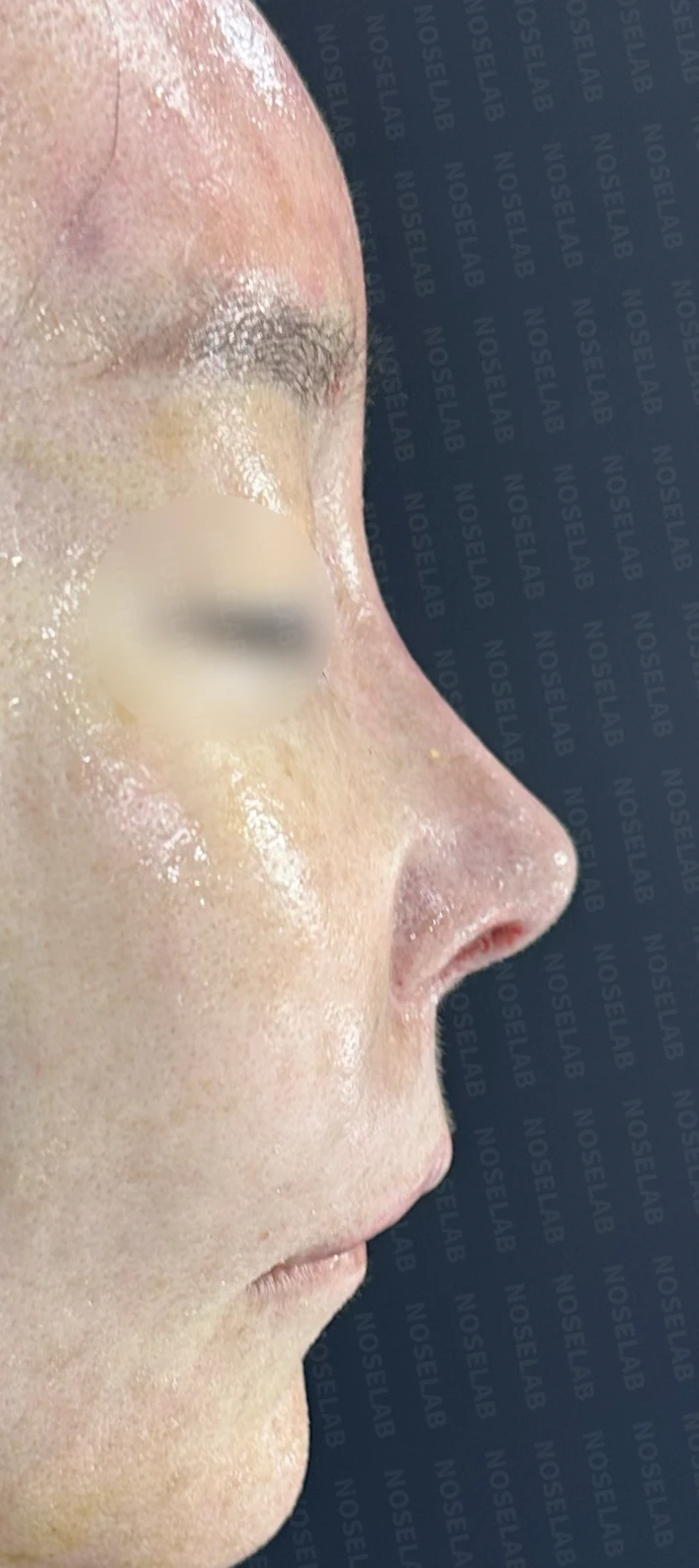
Front, oblique, and profile views on day 0 immediately after surgery Photos taken immediately after surgery show swelling and may differ from the final result.
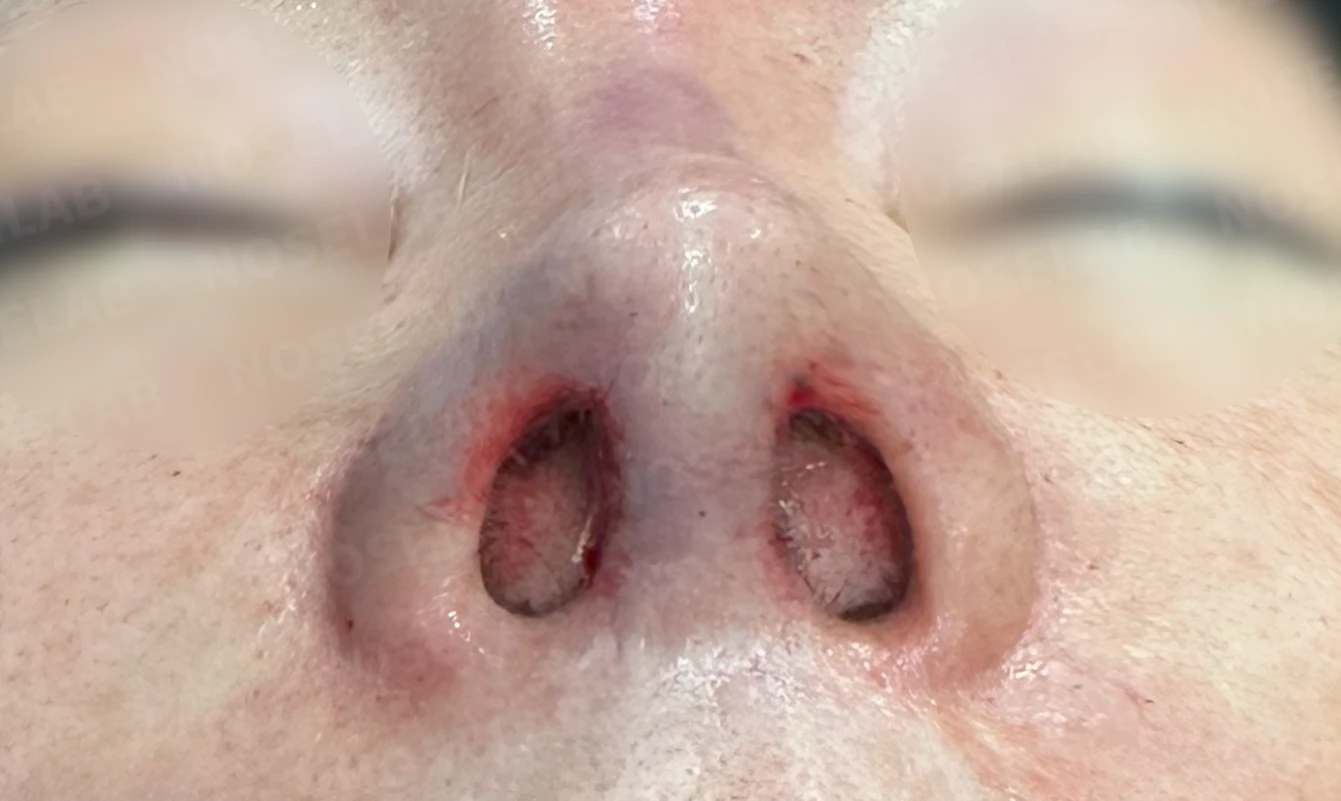
Nostril view on day 0 immediately after surgery Photos taken immediately after surgery show swelling and may differ from the final result.
Front view changes
Natural correction of areas that appeared upturned and pinched
Improvement of visible deviation
Enhanced nostril symmetry
Formation of an overall straight and aligned line
Profile view changes
Dorsal hump reduction
Correction of a drooping tip
Establishment of a natural straight-subtle curve line
Balanced lateral silhouette achieved through nasolabial angle correction
Nostril improvement
Resolution of the pinched alar appearance
Improving bilateral nostril symmetry
Correction of columellar deviation
Creation of natural alar curvature
Overall restorative results
Achieved a natural yet defined aesthetic look
Harmonious balance with overall facial features
Established a stable structural framework to help prevent long-term shape deformation
💡 Closing remarks
A nose that had become unnatural from multiple previous surgeries was revised into a natural yet refined straight-subtle curve line. Notably, the crucial aspect of this surgery lay not merely in surface cosmetic correction, but in fundamental structural reconstruction.
Using autologous rib cartilage, we solidly reconstructed the septum and lower lateral cartilages that had been damaged over multiple operations. This went beyond changing the visible contour; it was a foundational reinforcement of the structural framework. Building such a solid foundation minimizes future risk of deformation and provides the support needed to maintain a stable result over time.
Rhinoplasty is more than simple aesthetic enhancement; it is a procedure requiring thorough understanding of anatomical structures and meticulous reconstruction built upon that knowledge. NOSELAB will continue to do our utmost for the health and aesthetic satisfaction of our patients.
This was Dr. Peter C. Kang. Thank you.
Thank you.
#revisionrhinoplasty #pinchednosecorrection #upturnednosecorrection #autologousribcartilage #nasalreconstruction #straightsubtlecurveline #paranasalaugmentation #alarreconstruction #closedrhinoplasty #stemcelltherapy

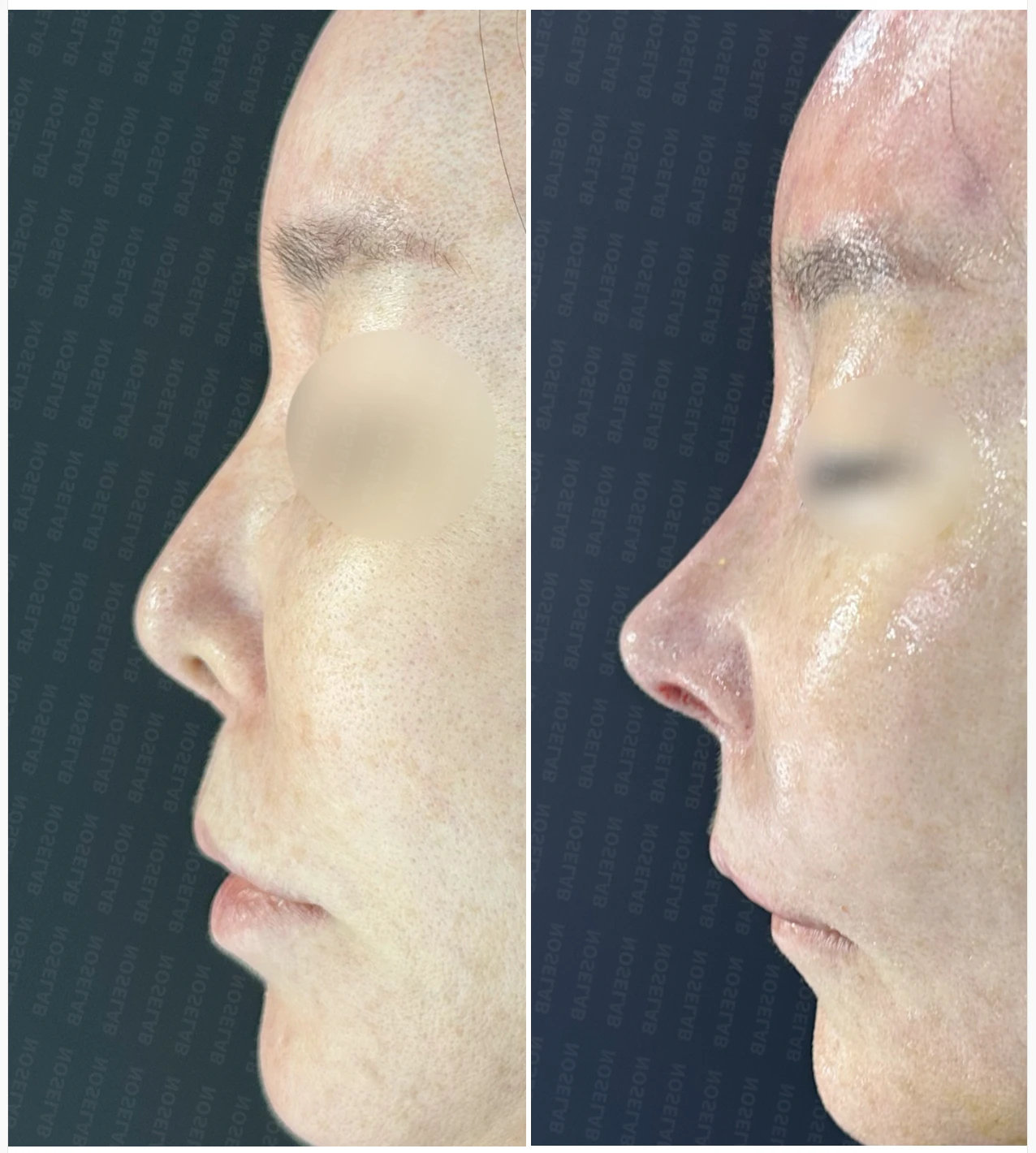
Limitations and risks
When autologous rib cartilage is used, scarring and pain may remain at the donor site on the chest, and pneumothorax (pleural injury) can occur rarely. Over time, the grafted cartilage may warp or undergo partial resorption.
When using donor rib cartilage, long-term follow-up is necessary because the grafted cartilage may resorb or warp.
When revising after implant removal, contracture may progress again after removal, the nasal height and length may decrease, and staged surgery may be necessary depending on the skin condition.
When foreign materials such as injected fillers are removed and reconstructed, contracture may recur, nasal height and length may decrease, and staged surgery may be necessary depending on the skin condition.
When the septum is corrected at the same time, nasal obstruction may persist or recur, and in rare cases, septal perforation or changes in smell may occur.
Common potential risks include infection, bleeding, asymmetry, scarring, skin necrosis, and insufficient improvement; results vary depending on individual skin condition and previous surgical history.