Hello, this is Dr. Peter C. Kang, medical director.
Today, I would like to share a reconstruction case of a patient with a history of 6 surgeries over 14 years, who suffered from complex issues caused by donor dermis absorption and septal cartilage damage.
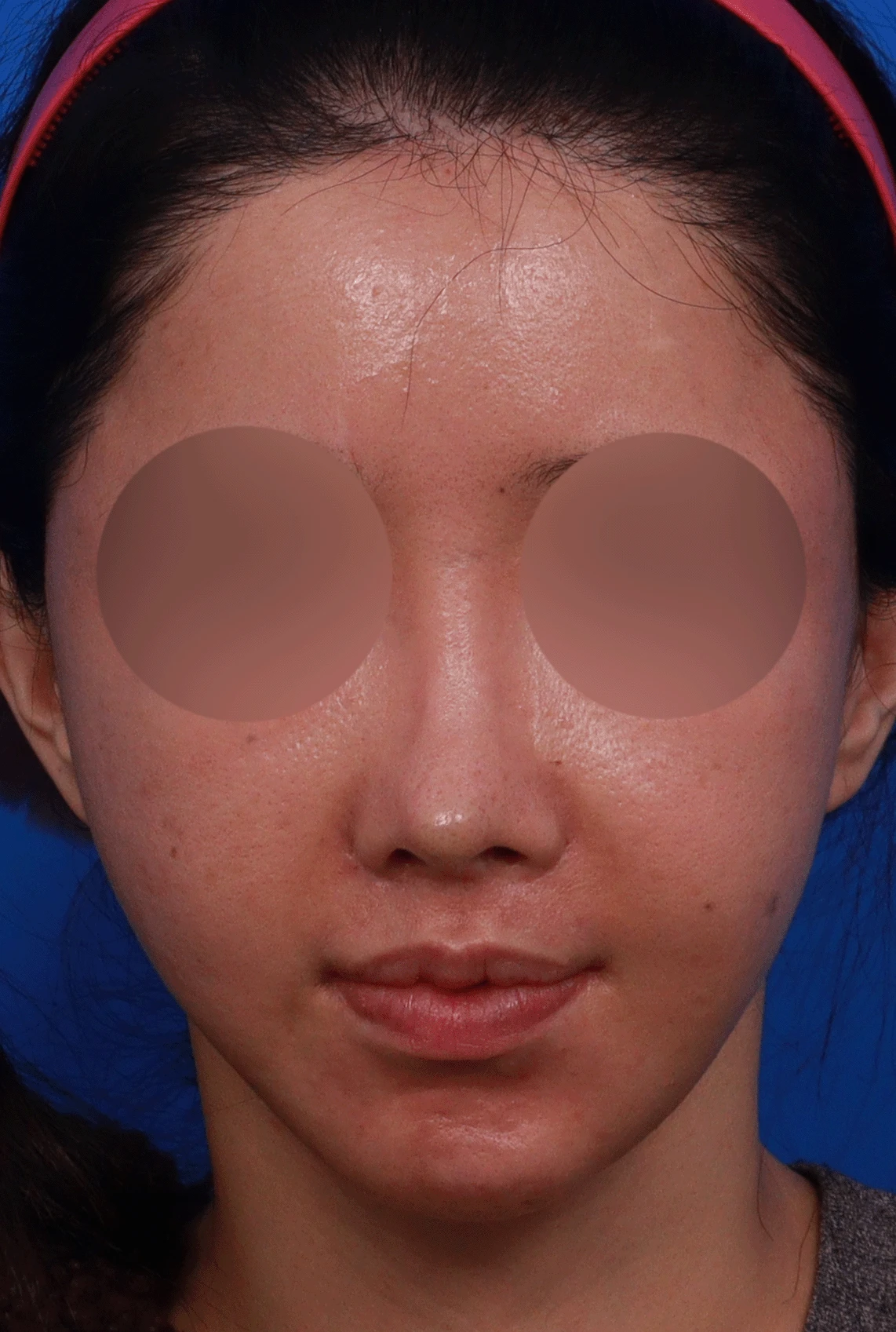
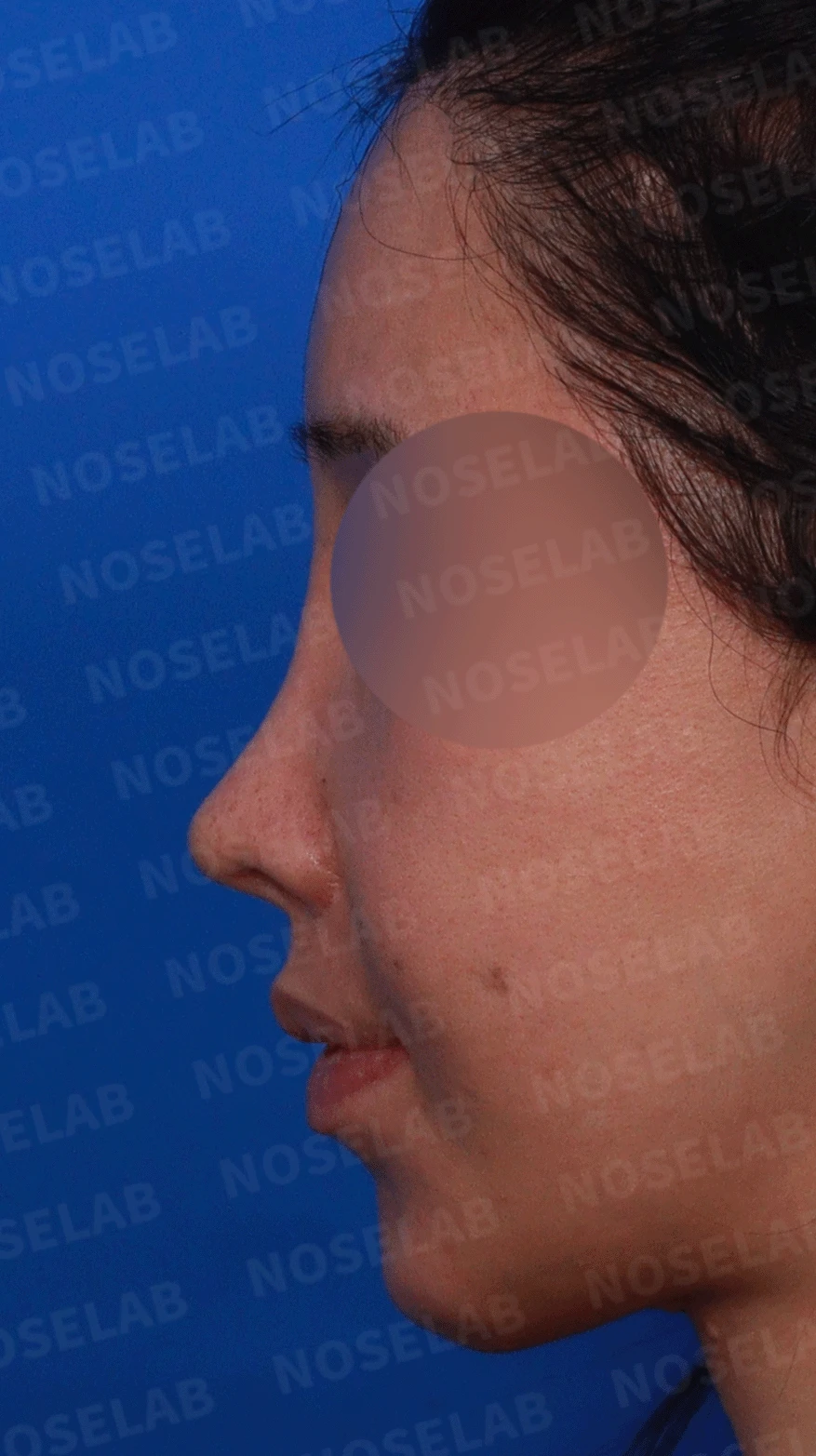
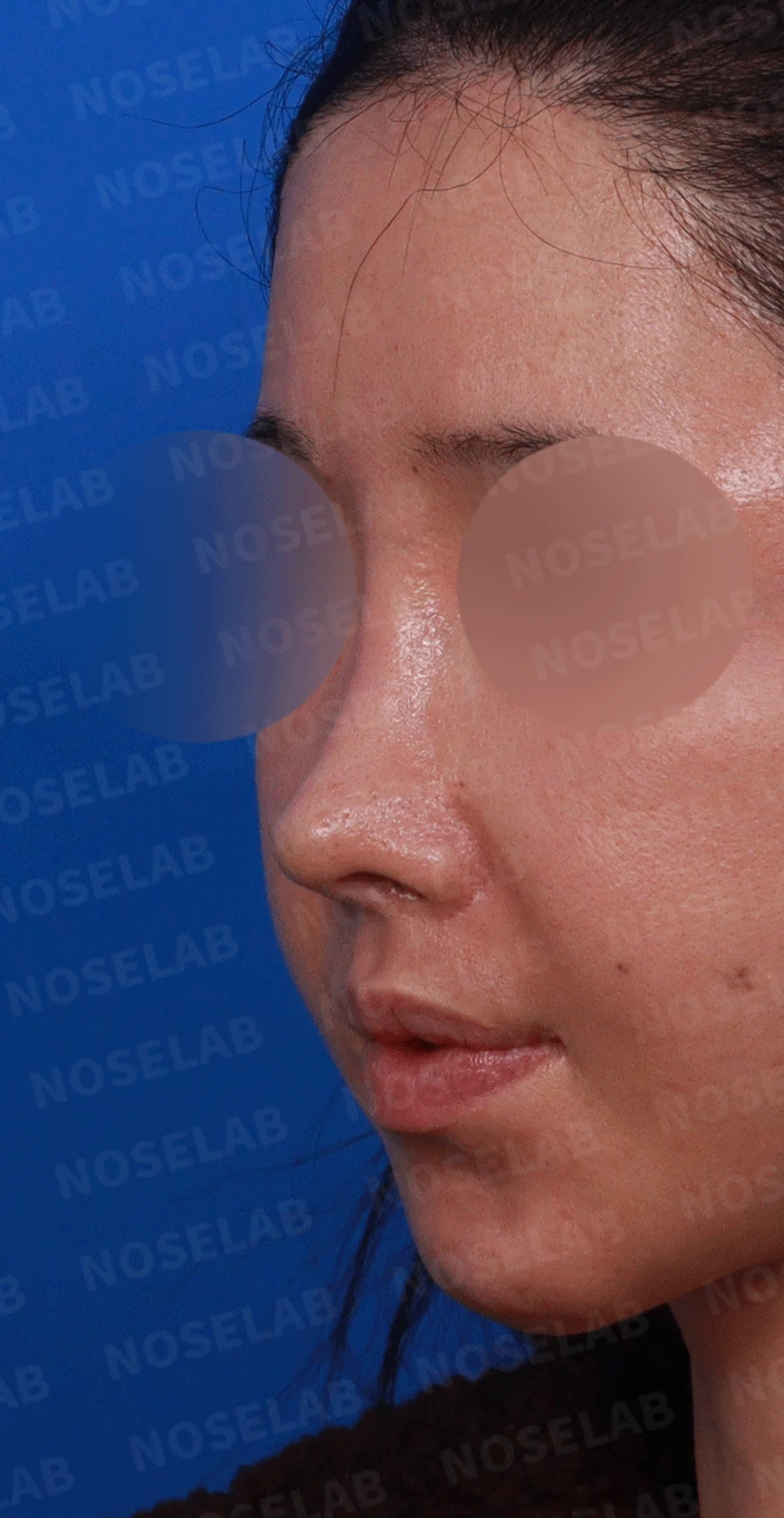
Design consultation photos: front, left profile, and oblique views
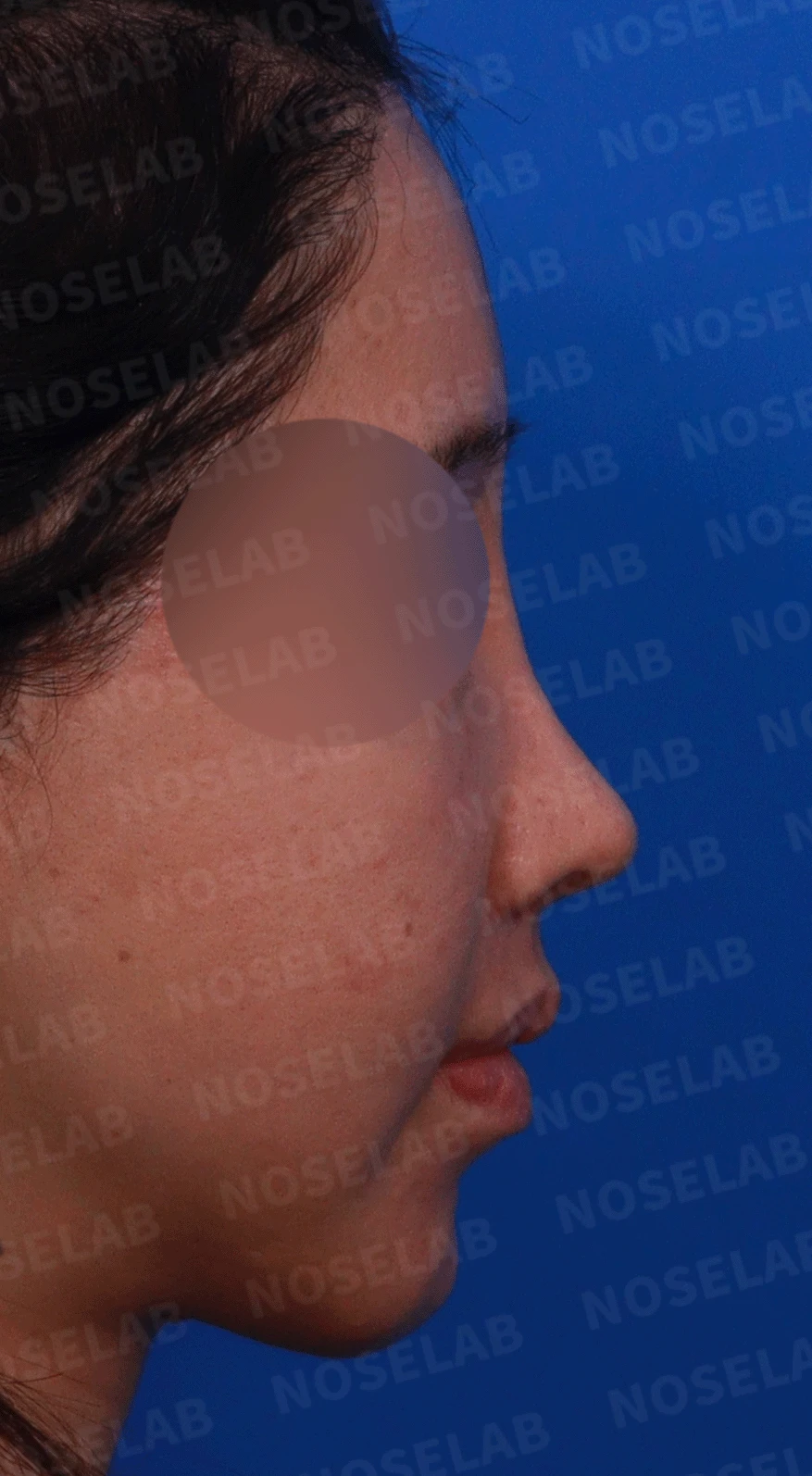
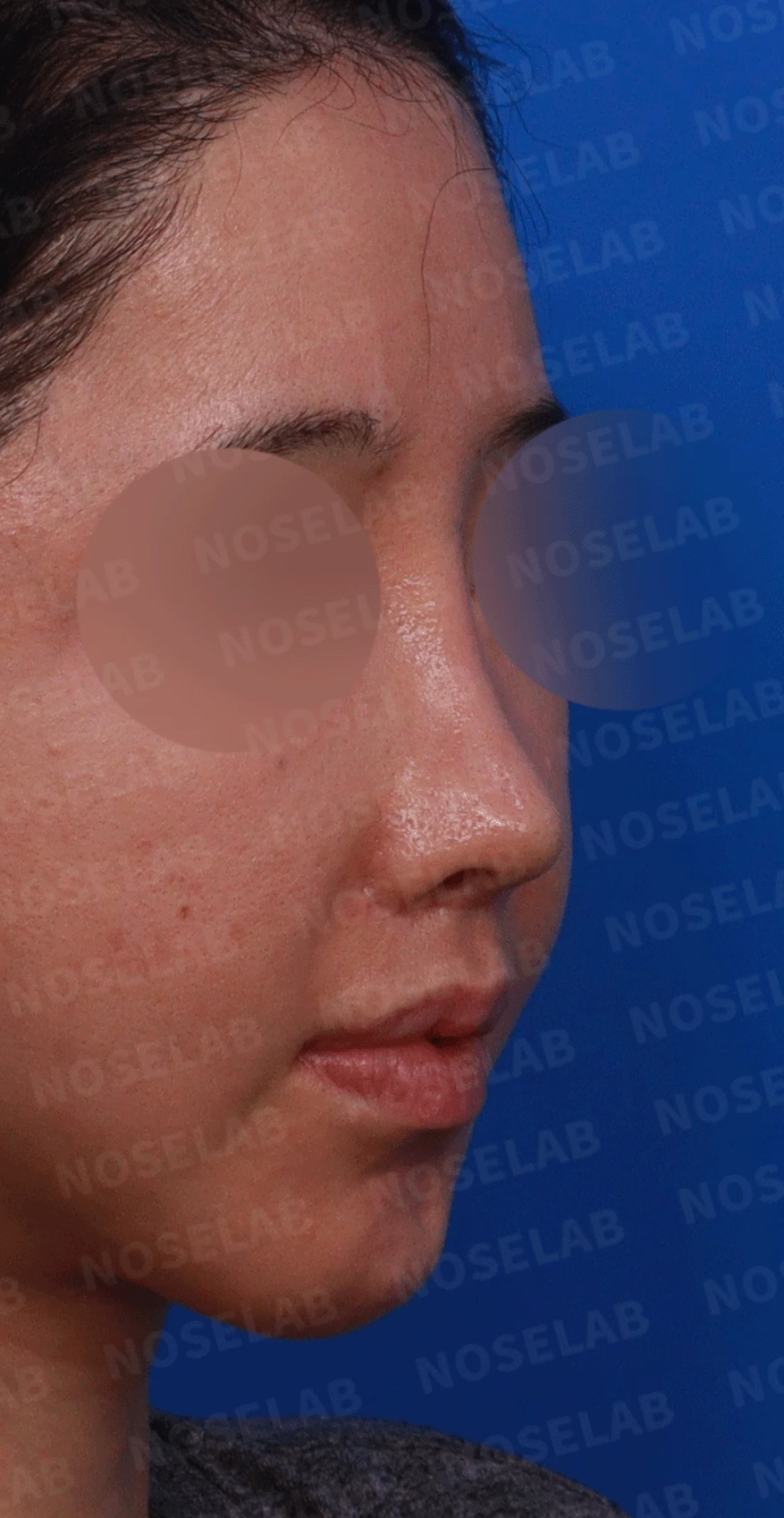
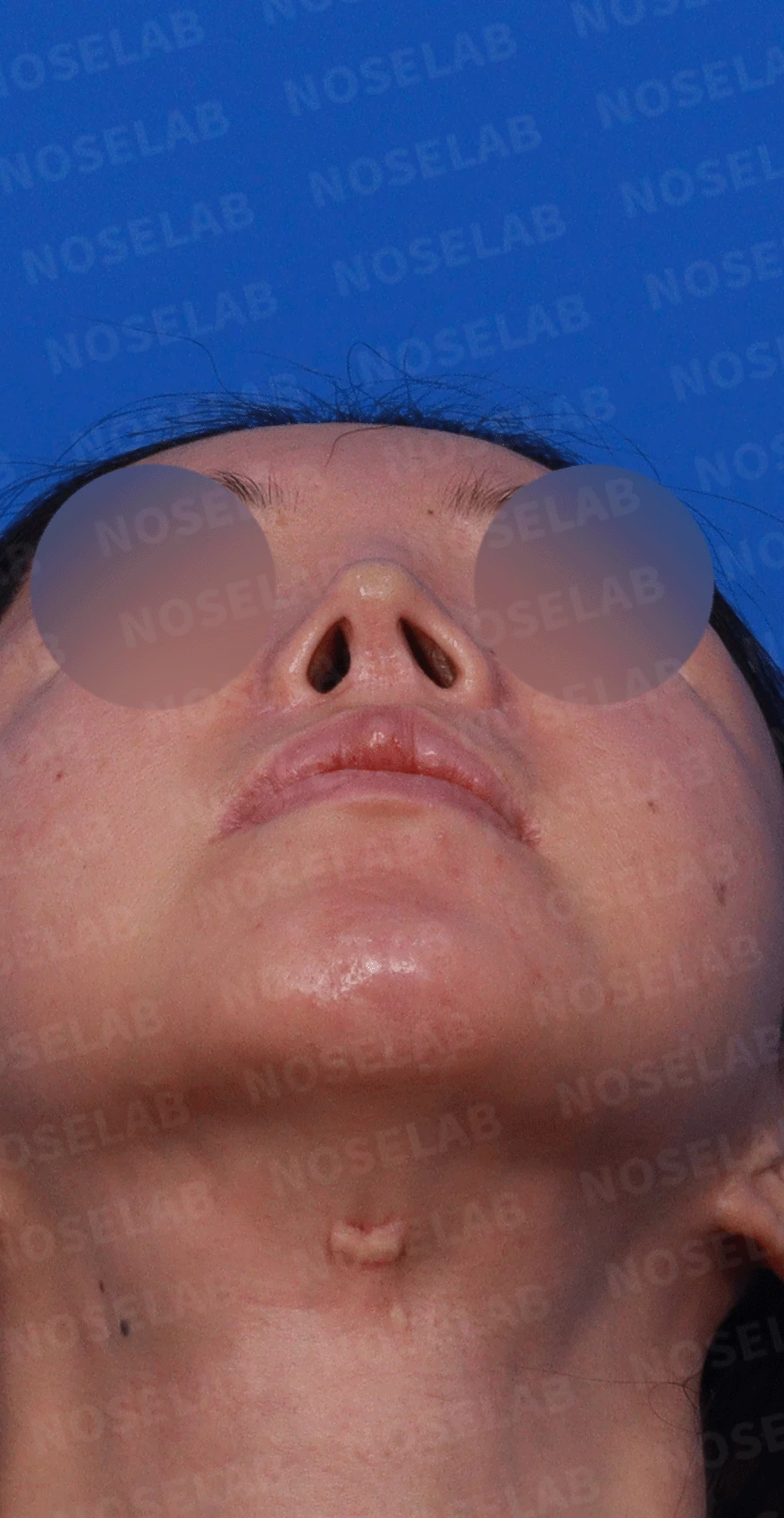
Design consultation right profile, oblique, and nostril views
📍 Surgical history
14 years ago: Silicone implant + ear cartilage surgery → Silicone implant show-through at the tip, nasal bridge deviation
12 years ago: Additional ear cartilage harvest with silicone implant → Dissatisfaction with design
10 years ago: Silicone implant + donor rib cartilage + ear cartilage surgery → Dissatisfaction with overly sharp shape
9 years ago: Silicone implant + donor rib cartilage + buttock dermis → Satisfied with the shape, but inflammation occurred
9 years ago (2 weeks later): Total removal surgery due to inflammation
3 years ago: Donor dermis (nasal bridge) + autologous rib cartilage surgery
🔎 Initial consultation findings
Functional issues
Difficulty breathing when lying on the right side
Aesthetic concerns
Lowered nasal dorsum due to partial absorption of donor dermis on the bridge
Unnatural profile line due to an elevated radix starting point
Deviation to the right on front view
Pointed nasal tip
Severe damage to the septal cartilage
Columella tilted to the right
Nostril asymmetry
Special notes
Thin nasal bridge skin due to 6 surgeries
Tissue damage from past history of inflammation
✨ Patient's requests
Refining the sharp nasal tip (making it rounded and voluminous)
Lowering the glabella height
Making the nose appear shorter (without looking upturned)
Natural result
Lowering the columella
Improvement of protruding mouth
💉 Surgical procedure details
Skin and tissue reconstruction
Removal of partially absorbed donor dermis on the nasal bridge
Reinforcing thinned nasal bridge skin with retroauricular dermis
3 sessions of stem cell therapy
Structural reconstruction
Reconstruction of the damaged septal cartilage using autologous rib cartilage
Correction of the rightward deviation seen on front view
Softening the overly sharp nasal tip
Correction of columellar tilting and nostril asymmetry
Adjustment of glabella radix
Correction of the nasolabial angle
Functional improvement
Septoplasty and inferior turbinate surgery (rhinitis surgery) to improve breathing function
✅ Surgical results
Functional improvement
Resolution of breathing difficulty when lying on the right side
Overall improvement in breathing function
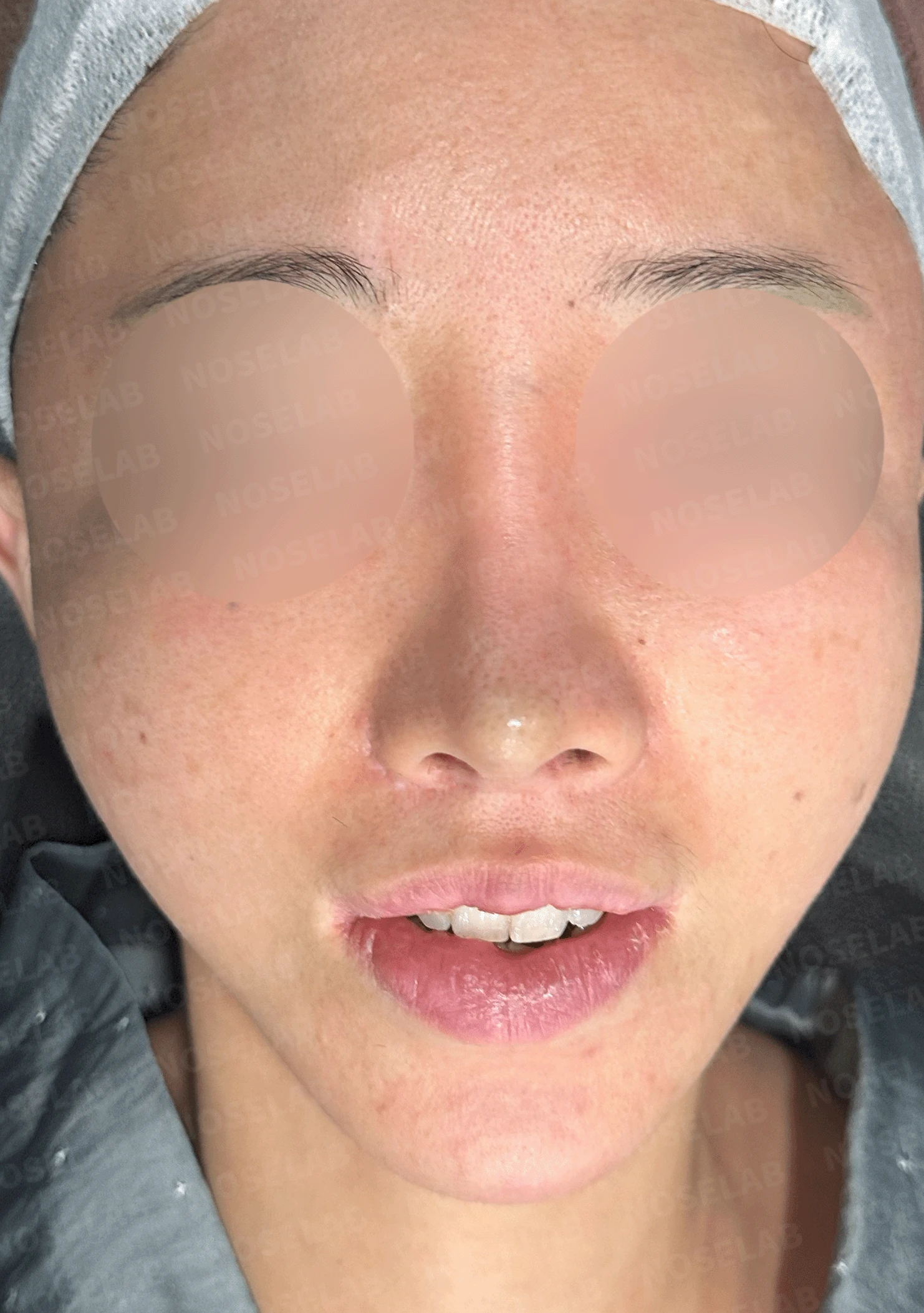
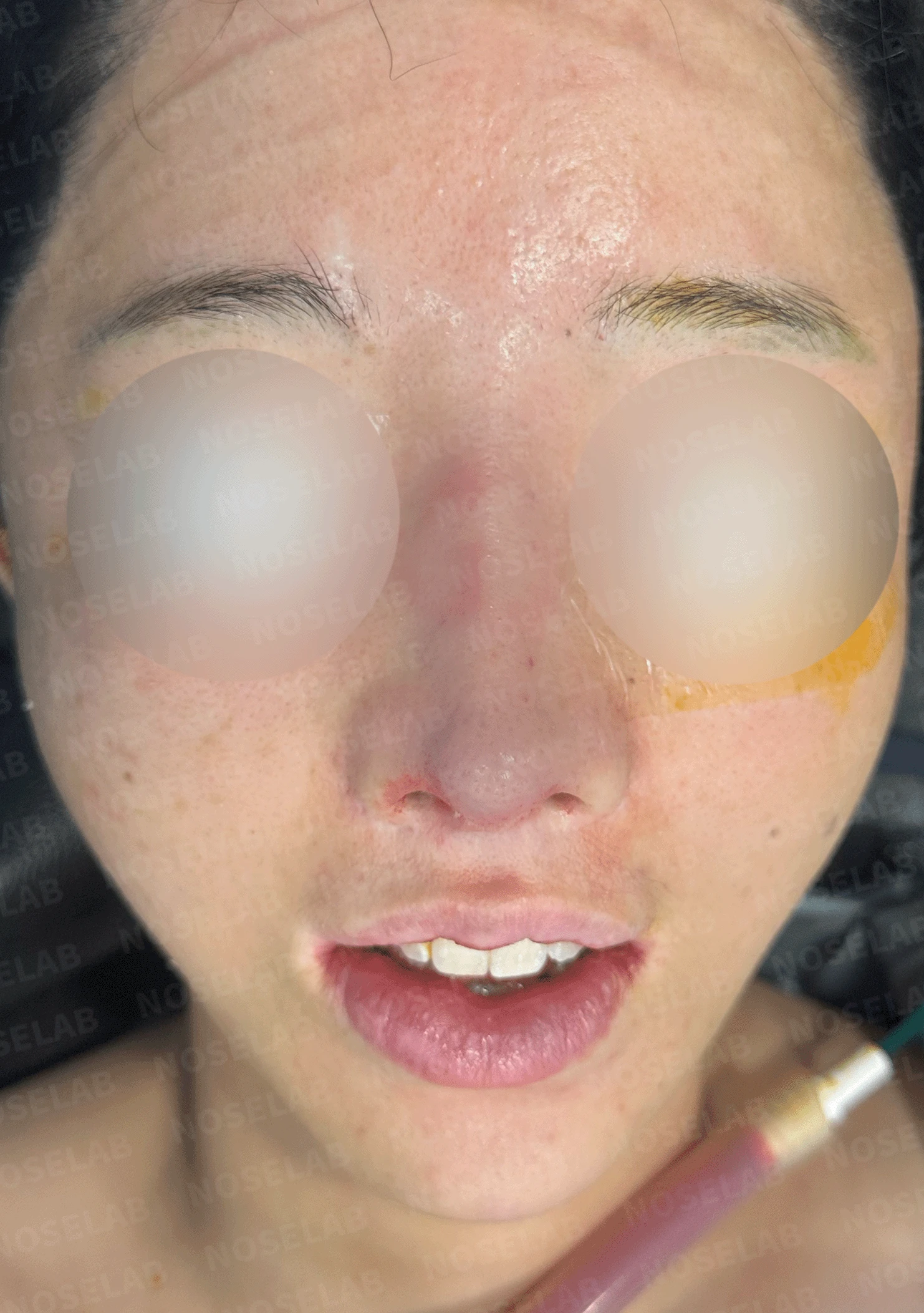
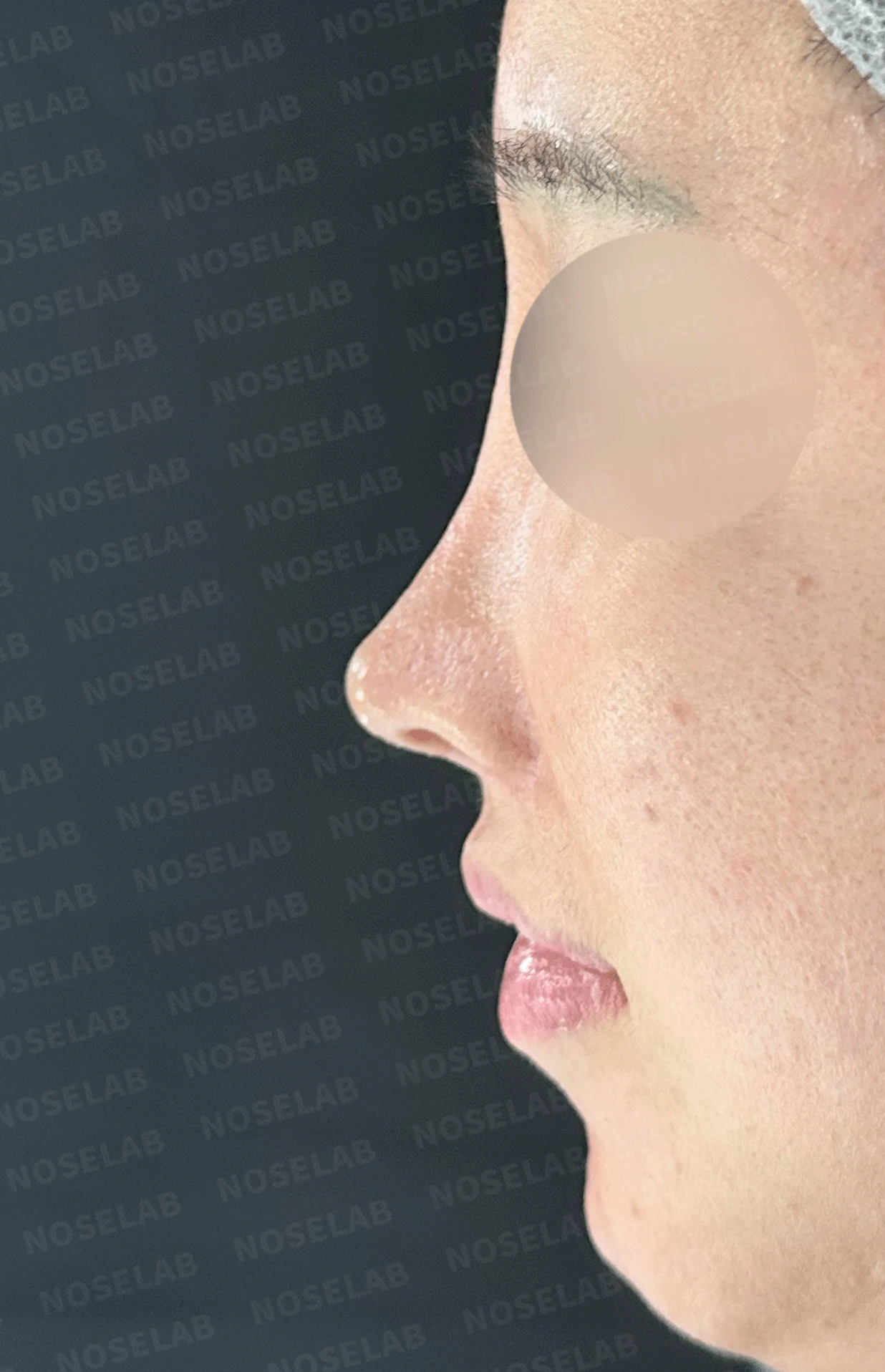
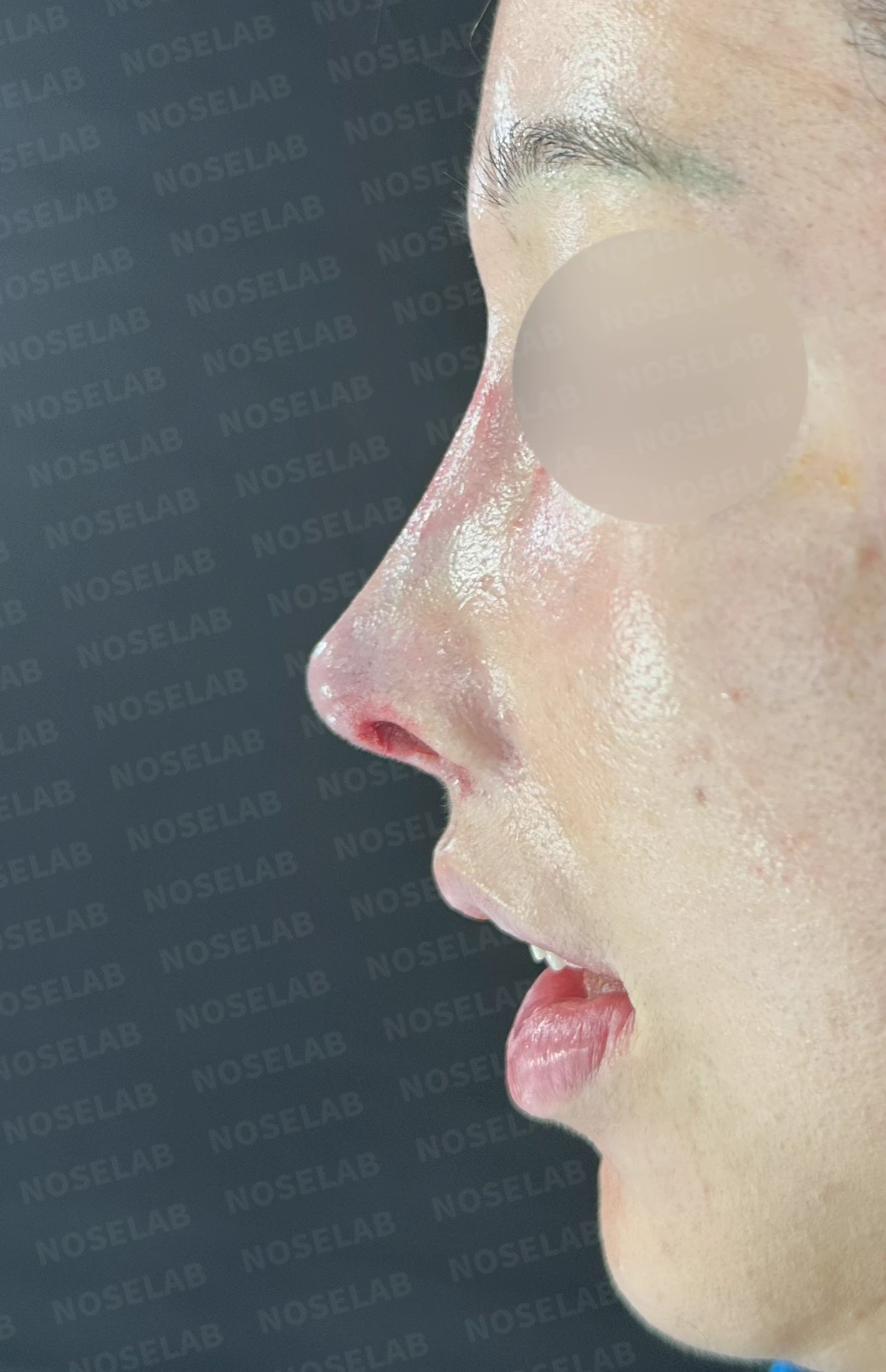
Before surgery / Day 0 immediately after surgery Photos taken immediately after surgery show swelling and may differ from the final result.
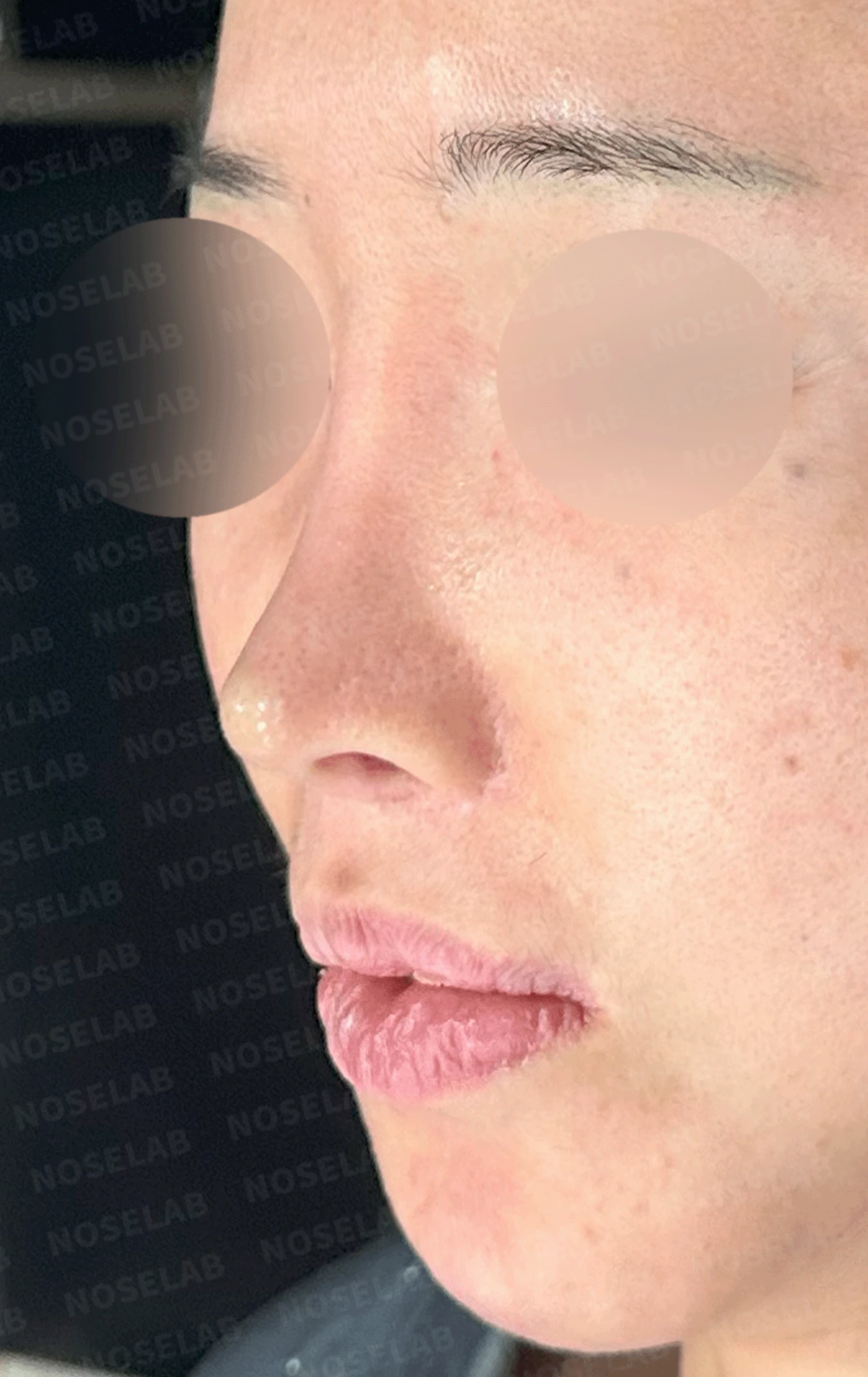
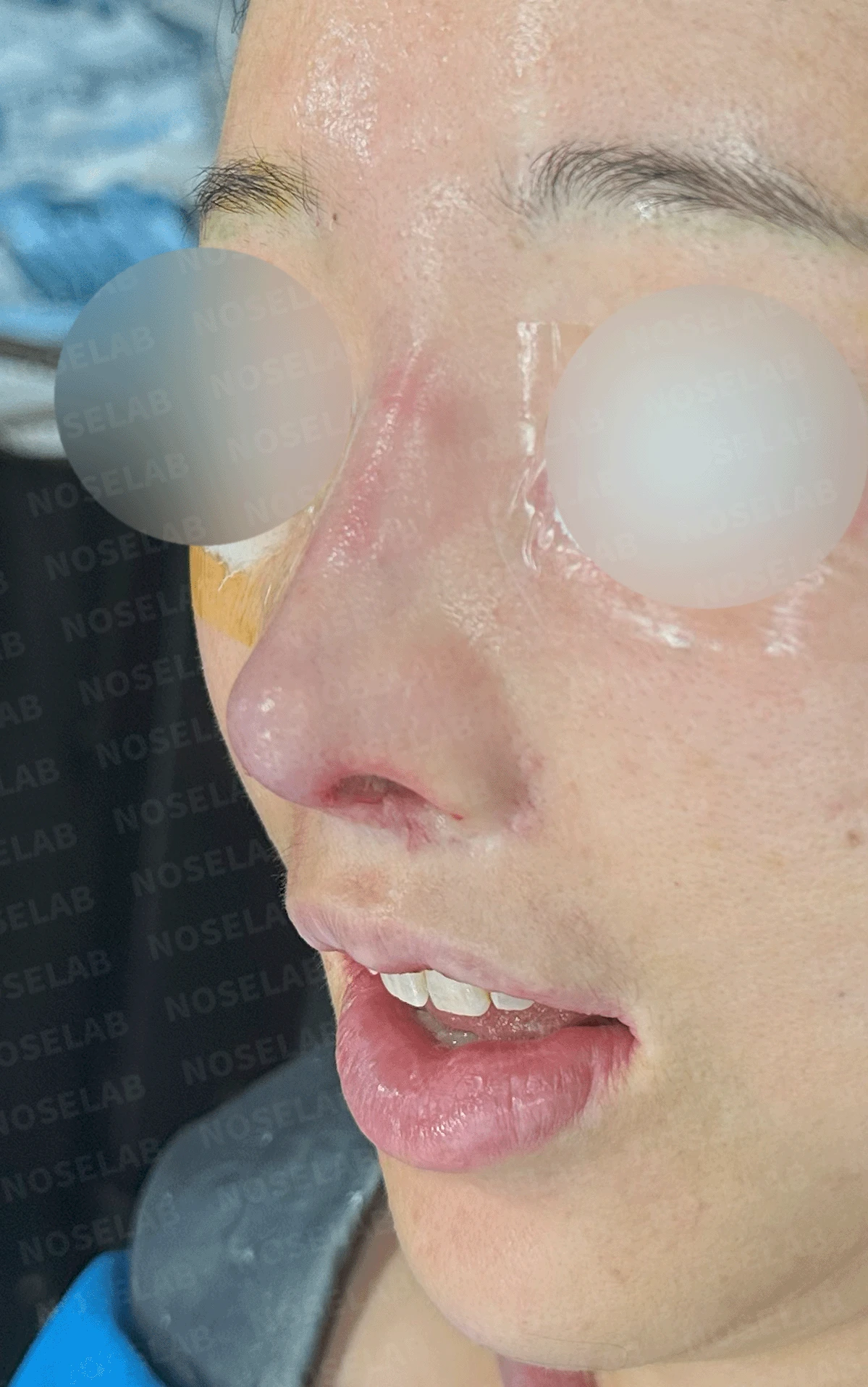
Front view
Natural nasal bridge height
Correction of the rightward deviation
Rounded, voluminous nasal tip
Straightened columellar position
Improved nostril symmetry
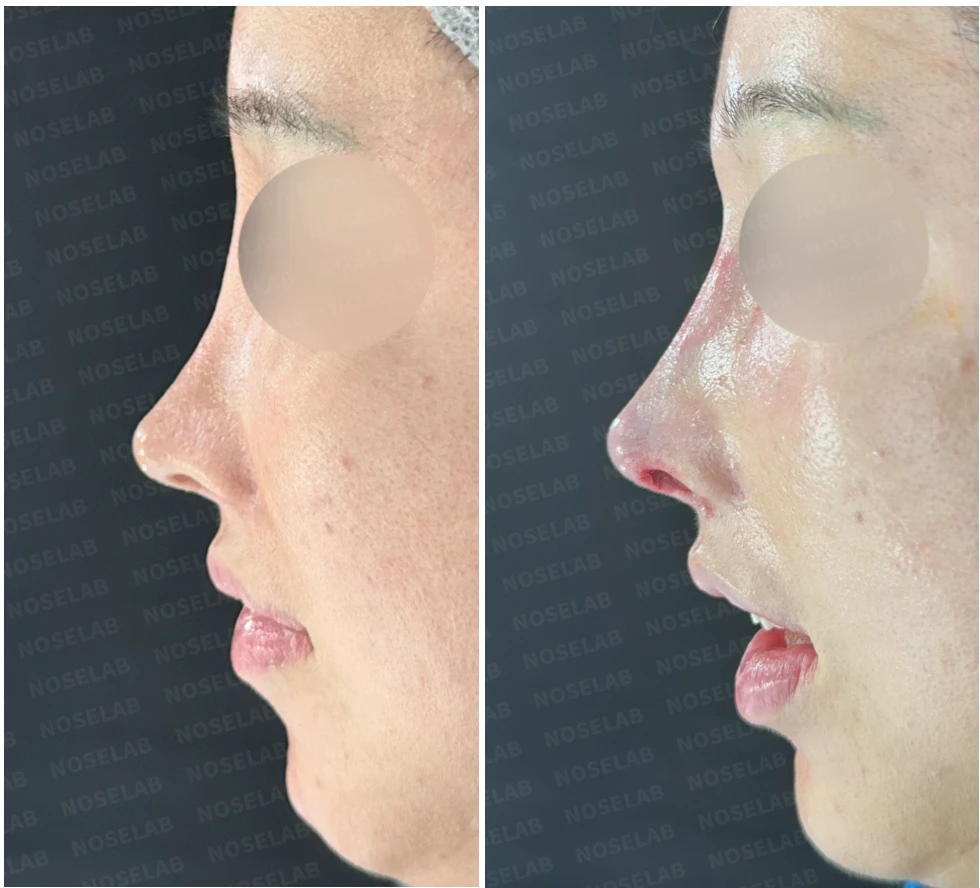
Before surgery / Day 0 immediately after surgery Photos taken immediately after surgery show swelling and may differ from the final result.
Profile view
Lowered glabella radix
Natural profile line
Adequate nasal length
Improvement of protruding mouth
Before surgery / Day 0 immediately after surgery Photos taken immediately after surgery show swelling and may differ from the final result.
Nostrils
Correction of the tilted columella
Correction of nostril asymmetry
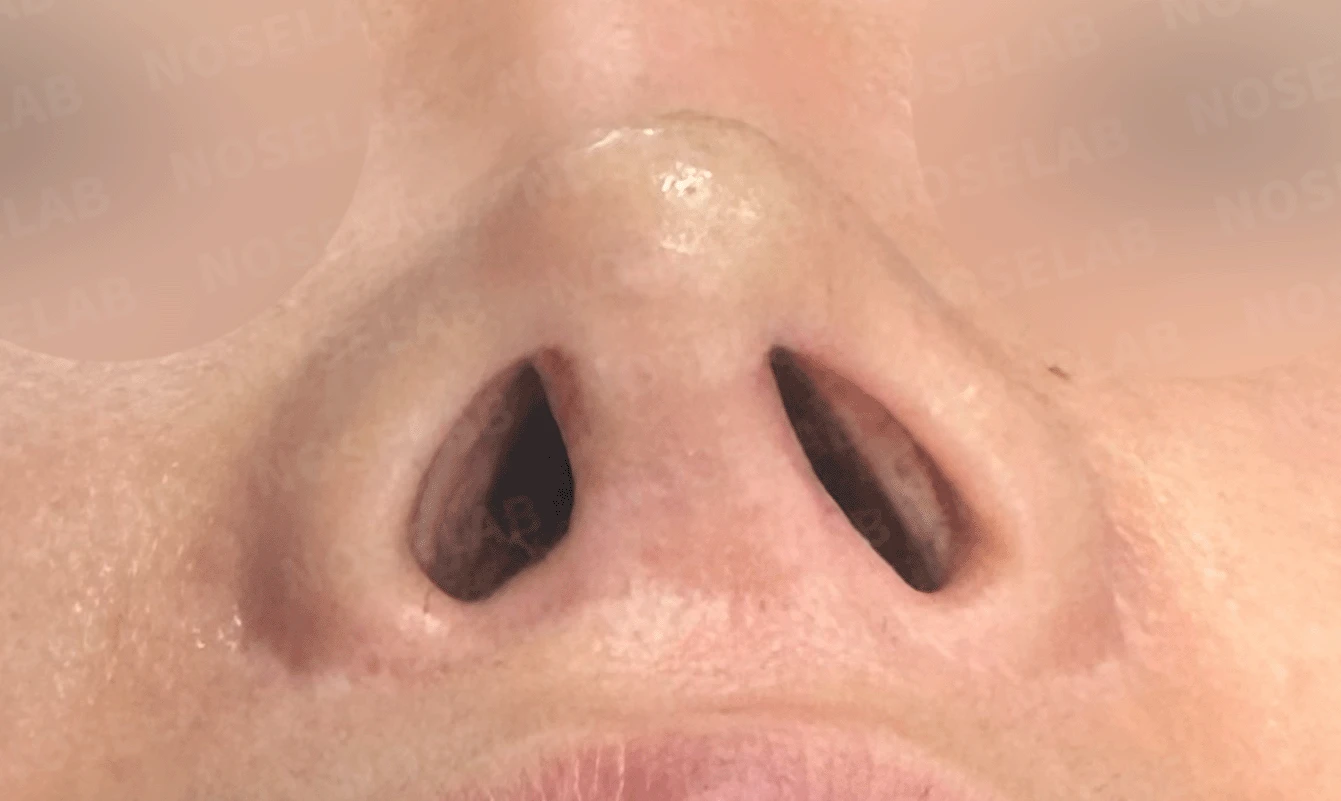
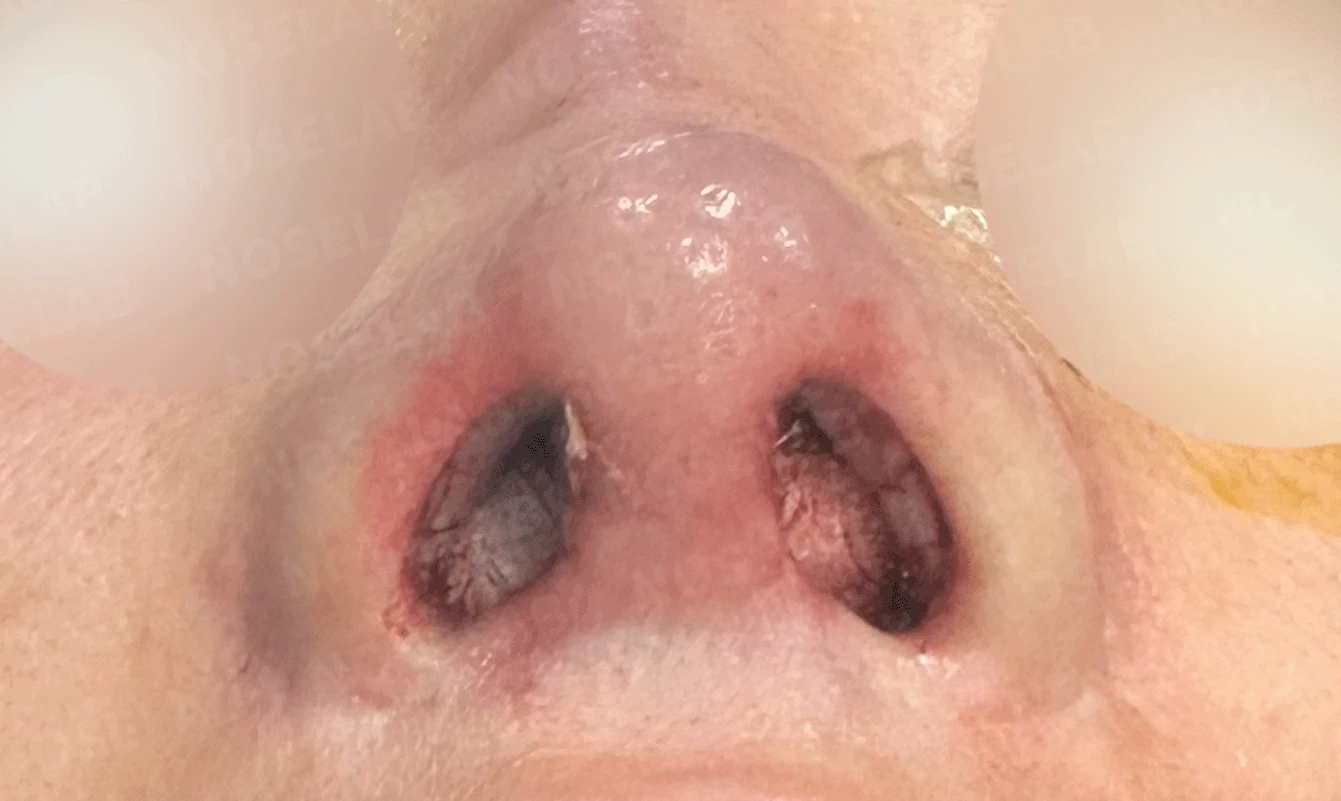
Before surgery / Day 0 immediately after surgery Photos taken immediately after surgery show swelling and may differ from the final result.
👨⚕️ Specialist's assessment
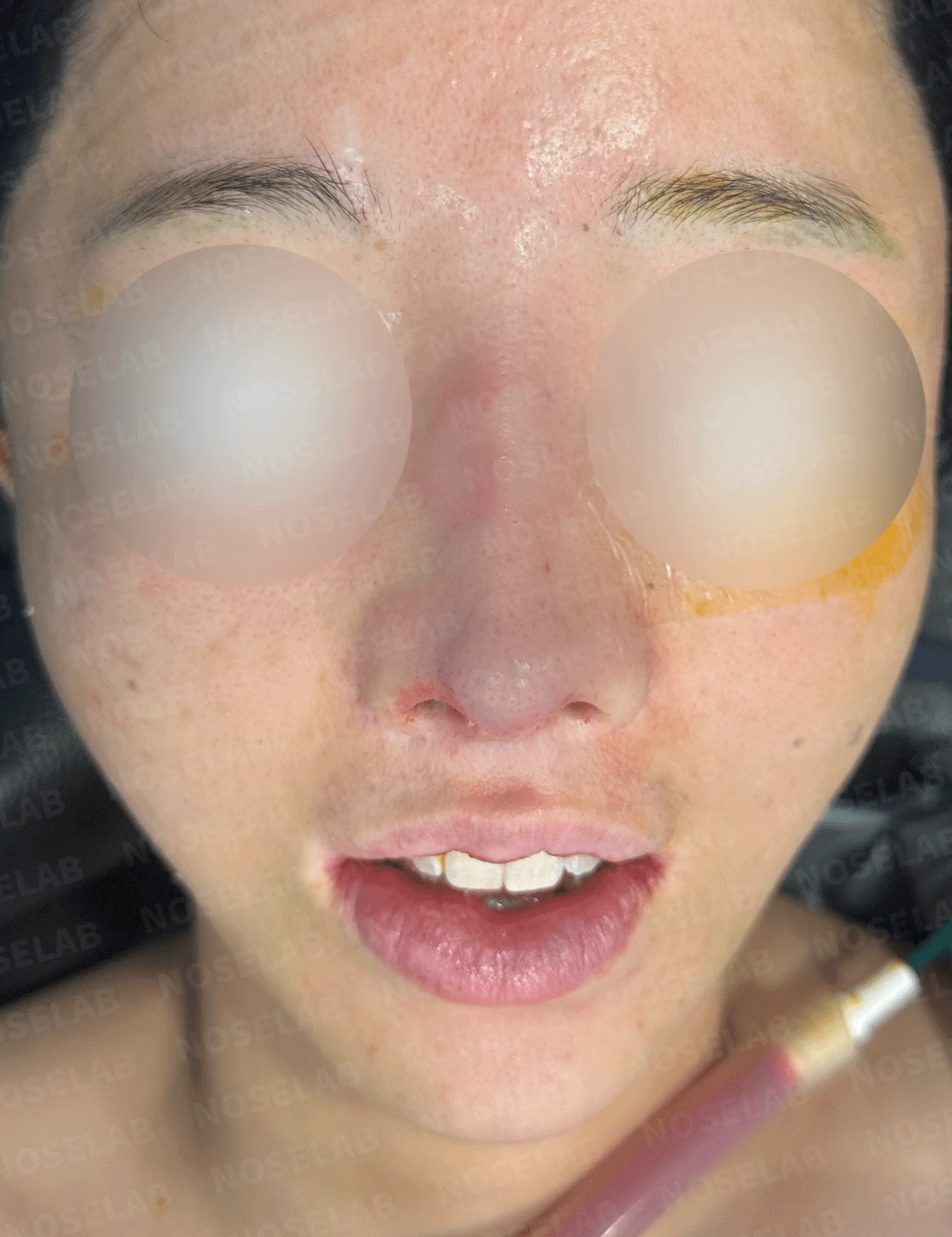
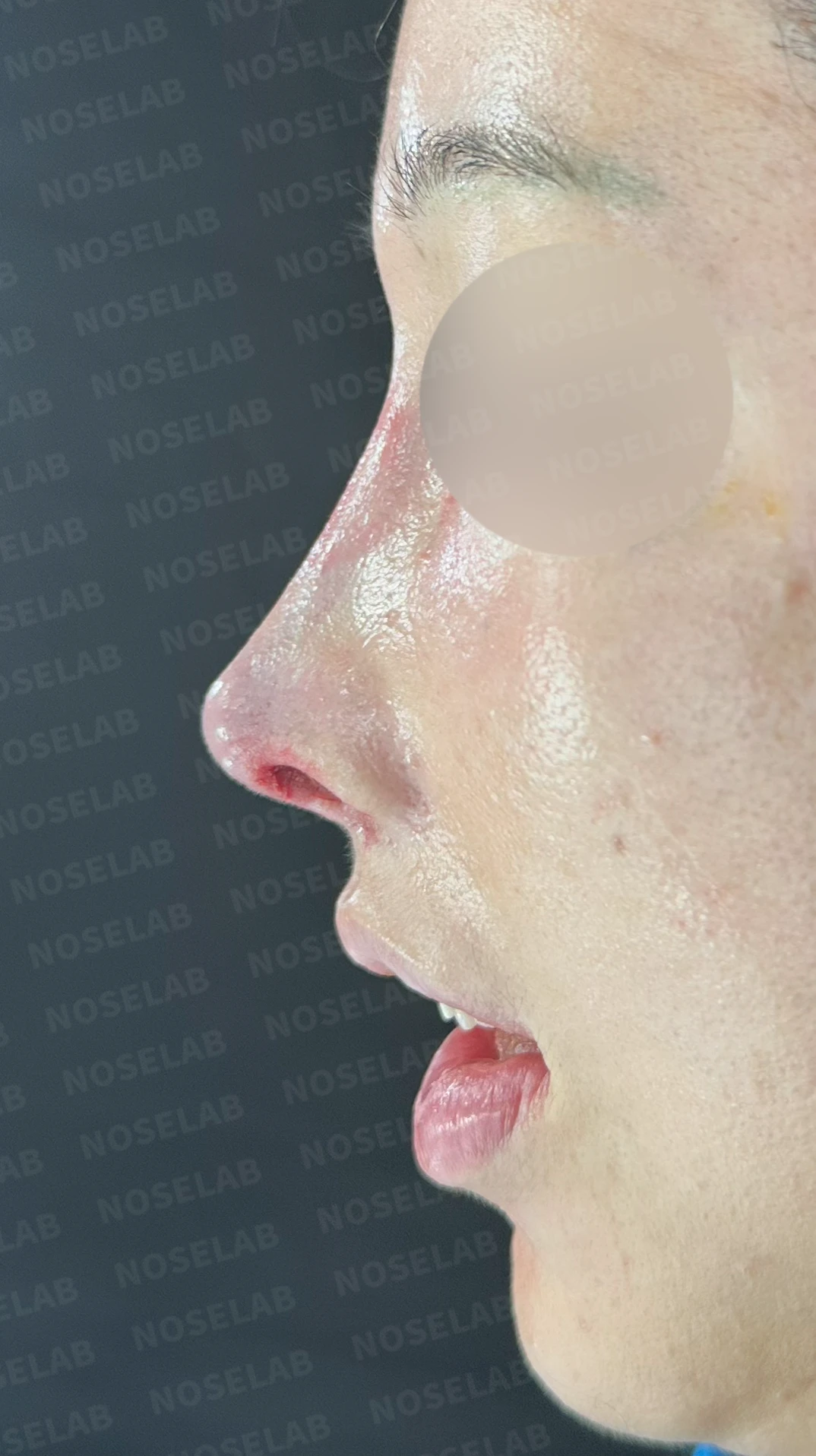
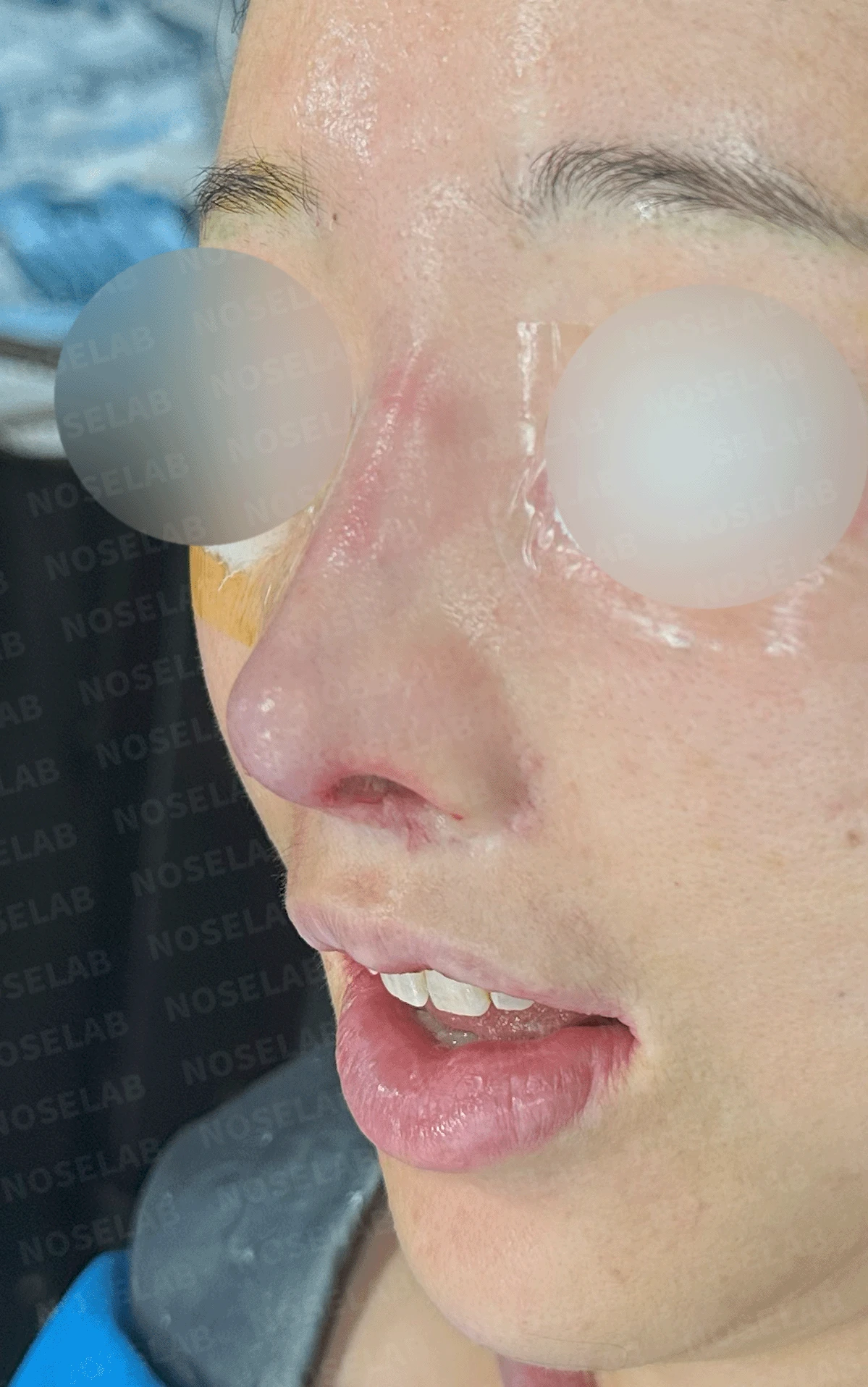
Day 0 immediately after surgery: front, profile, and oblique viewsImmediate postoperative photos show swelling and may differ from the final outcome.
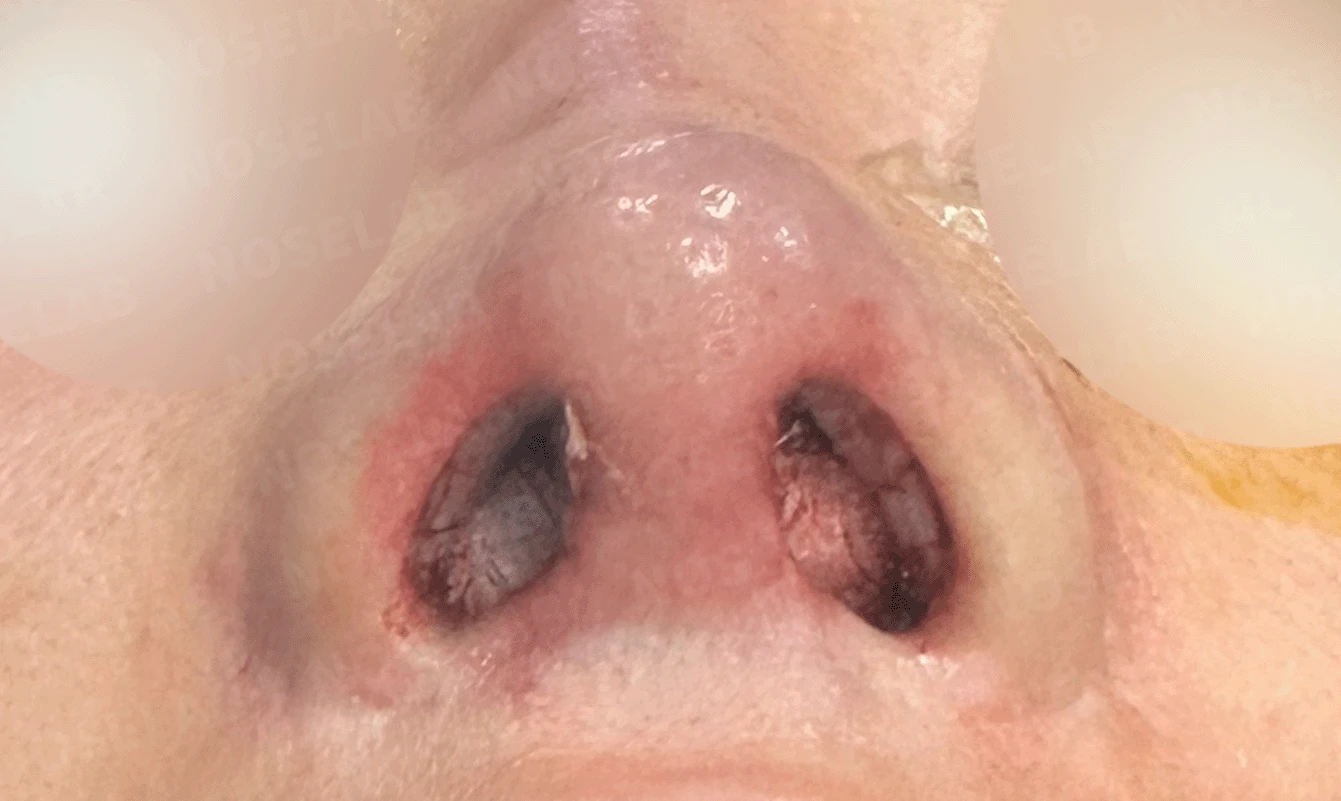
Nostril view on day 0 immediately after surgery Photos taken immediately after surgery show swelling and may differ from the final result.
This was a complex case involving a patient with a history of 6 nasal surgeries over 14 years. In particular, after undergoing total removal surgery due to inflammation 9 years ago and subsequent reconstruction with donor dermis and autologous rib cartilage 3 years ago, partial absorption of the donor dermis and severe damage to the septal cartilage were the primary issues.
The donor dermis used on the nasal bridge had partially absorbed, lowering the dorsum and making the radix starting point appear too high, resulting in an unnatural profile line. Additionally, the nose deviated to the right on front view, and the nasal tip appeared sharp. To address these problems, the absorbed donor dermis was removed, the radix starting point was lowered appropriately to create a natural profile line, the frontward deviation was corrected, and the sharp tip was softly refined.
Furthermore, because repeated surgeries had left the skin of the nasal bridge quite thin, skin reinforcement using retroauricular dermis was performed concurrently. This was an essential step for supporting stable, long-term results.
Most importantly, the severely damaged septal cartilage was reconstructed using autologous rib cartilage. Through this reconstruction, the rightward columellar tilt and nostril asymmetry caused by the compromised septum were fundamentally resolved.
We were able to fulfill the patient's requests: creating a rounded, voluminous nasal tip instead of a sharp one, achieving a natural nasal length, and improving columellar visibility. By adjusting the nasolabial angle, the appearance of a protruding mouth was also improved, resulting in a satisfying outcome that addressed the patient's concerns comprehensively.
Even in complex cases involving multiple revisions and past inflammation, this case stands as a meaningful example of fulfilling diverse patient goals through fundamental structural reconstruction and meticulous skin management.
This has been Dr. Peter C. Kang, medical director.
Thank you.
#closedrhinoplasty #multiplerevisionrhinoplasty #donordermisabsorption #septalreconstruction #stemcelltherapy #customrhinoplasty

Limitations and risks
When autologous rib cartilage is used, scarring and pain may remain at the donor site on the chest, and pneumothorax (pleural injury) can occur rarely. Over time, the grafted cartilage may warp or undergo partial resorption.
When using donor rib cartilage, long-term follow-up is necessary because the grafted cartilage may resorb or warp.
When revising after implant removal, contracture may progress again after removal, the nasal height and length may decrease, and staged surgery may be necessary depending on the skin condition.
When the septum is corrected at the same time, nasal obstruction may persist or recur, and in rare cases, septal perforation or changes in smell may occur.
Common potential risks include infection, bleeding, asymmetry, scarring, skin necrosis, and insufficient improvement; results vary depending on individual skin condition and previous surgical history.