Hello, I am Dr. Peter C. Kang.
Today, I would like to share the case of a patient who was concerned about a dorsal hump caused by previous artificial dermis placement, as well as a long and unfeminine nasal bridge.
🔍 Surgical history
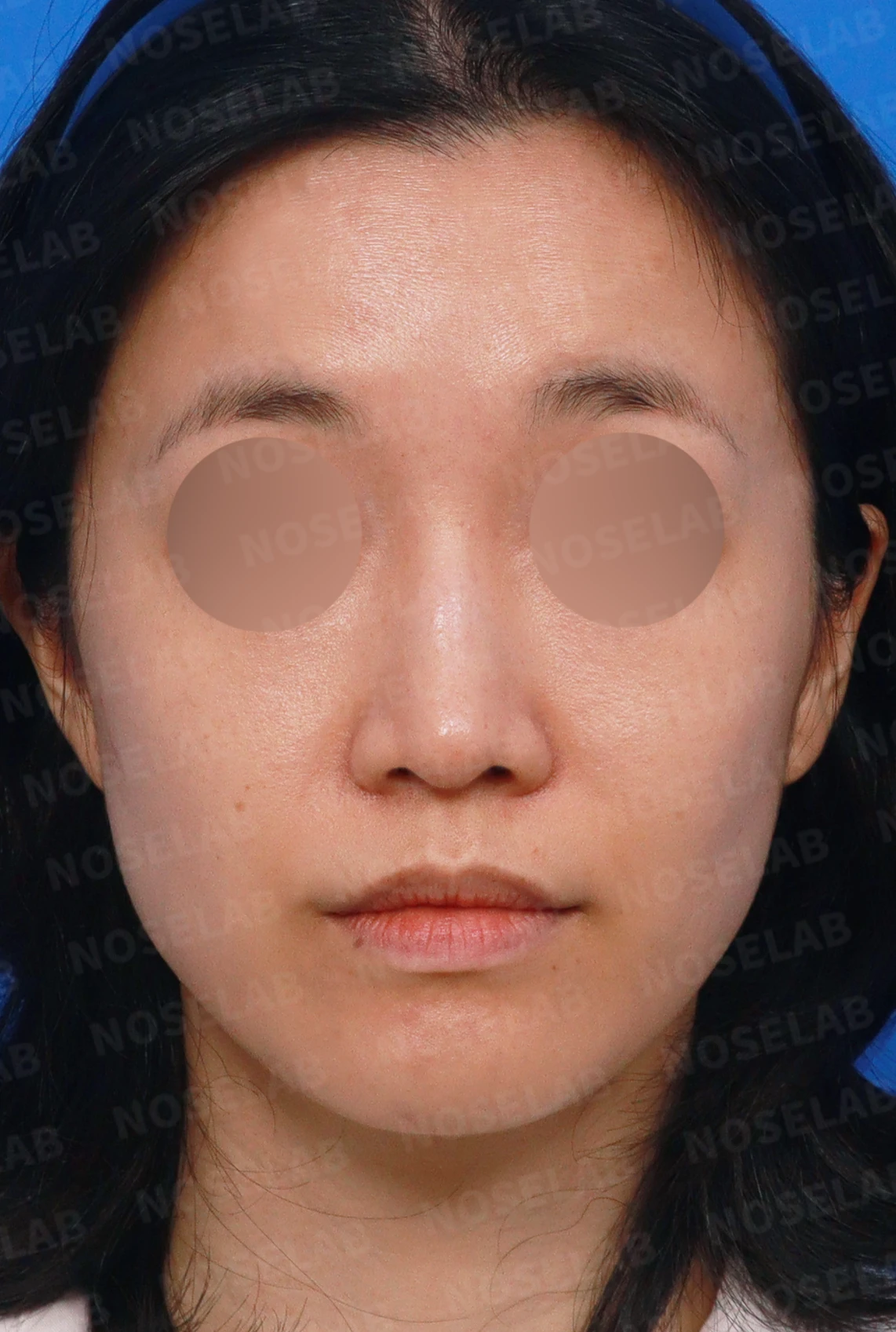
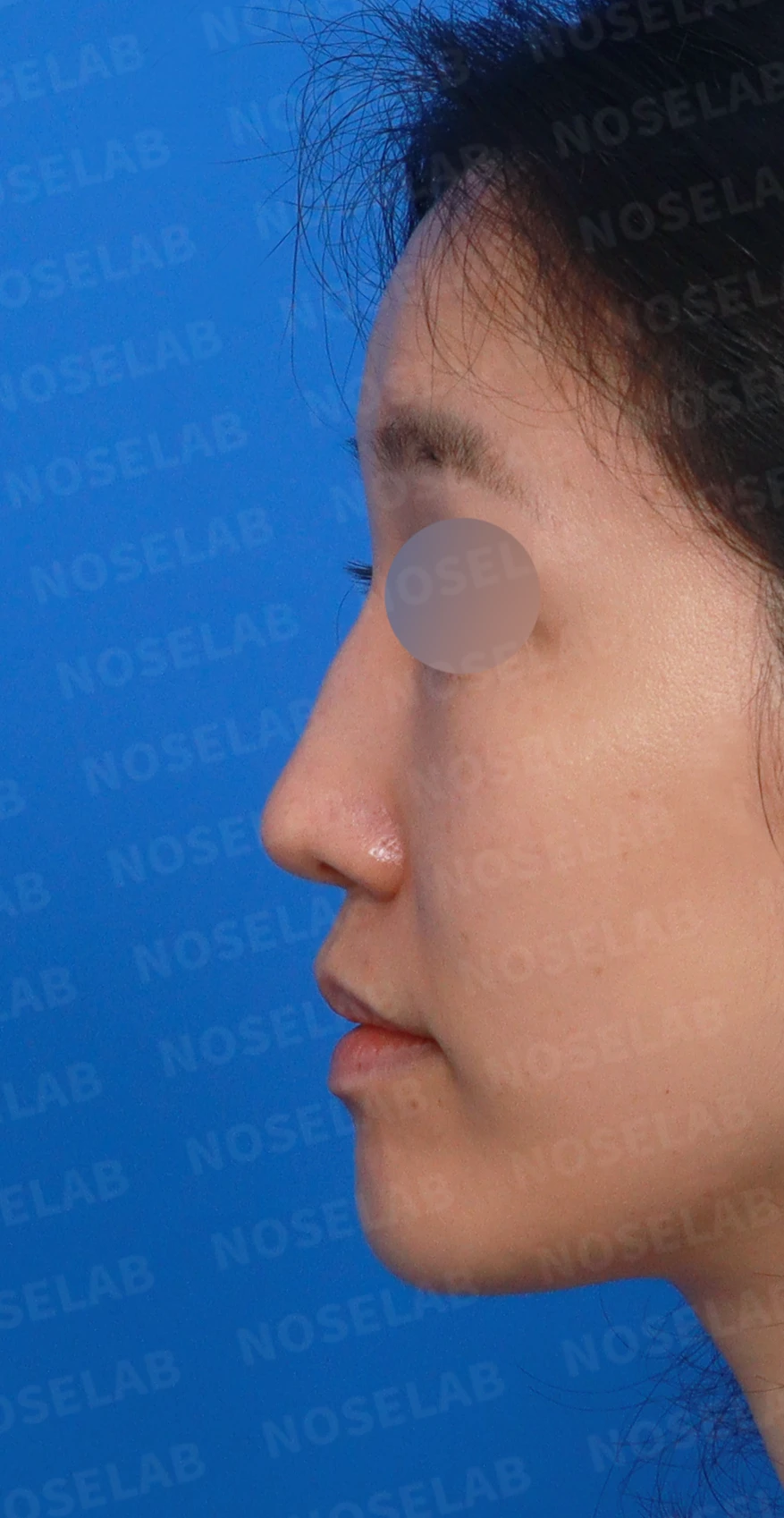
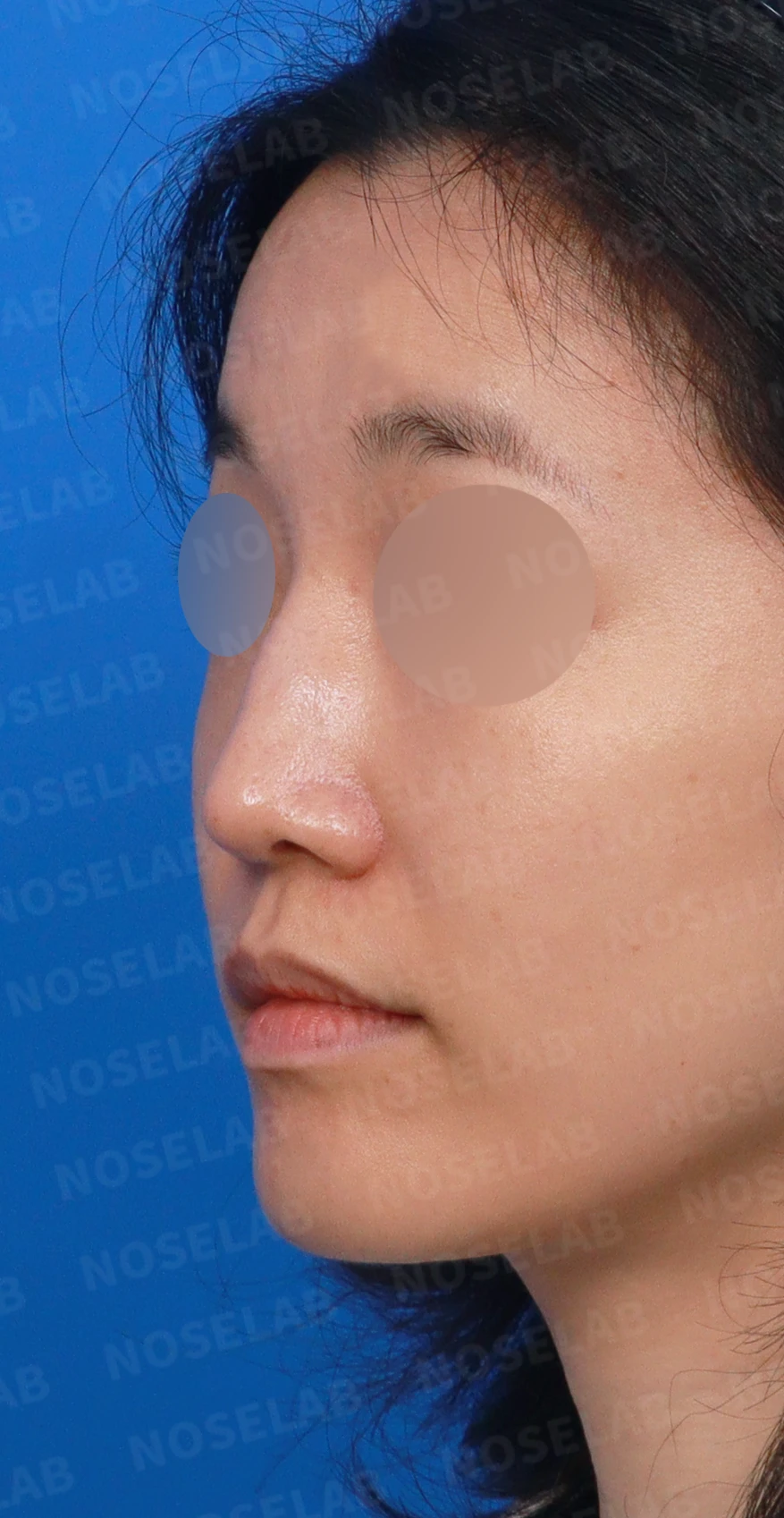
Front, left profile, and oblique views during design consultation.
Past history:
10 years ago: Hiko thread lift procedure
3 years ago: Artificial dermis (nasal bridge) + nasal tip + Hiko thread removal
Main concerns:
Residual artificial dermis on the nasal bridge remained unabsorbed, forming a dorsal hump
A long and masculine-looking nasal appearance
A harsh impression caused by the dorsal hump
Weakened anterior support due to a large amount of septal cartilage harvested during the previous procedure
Special notes: Revision case; autologous rib cartilage required due to insufficient septal cartilage
💉 Patient requests
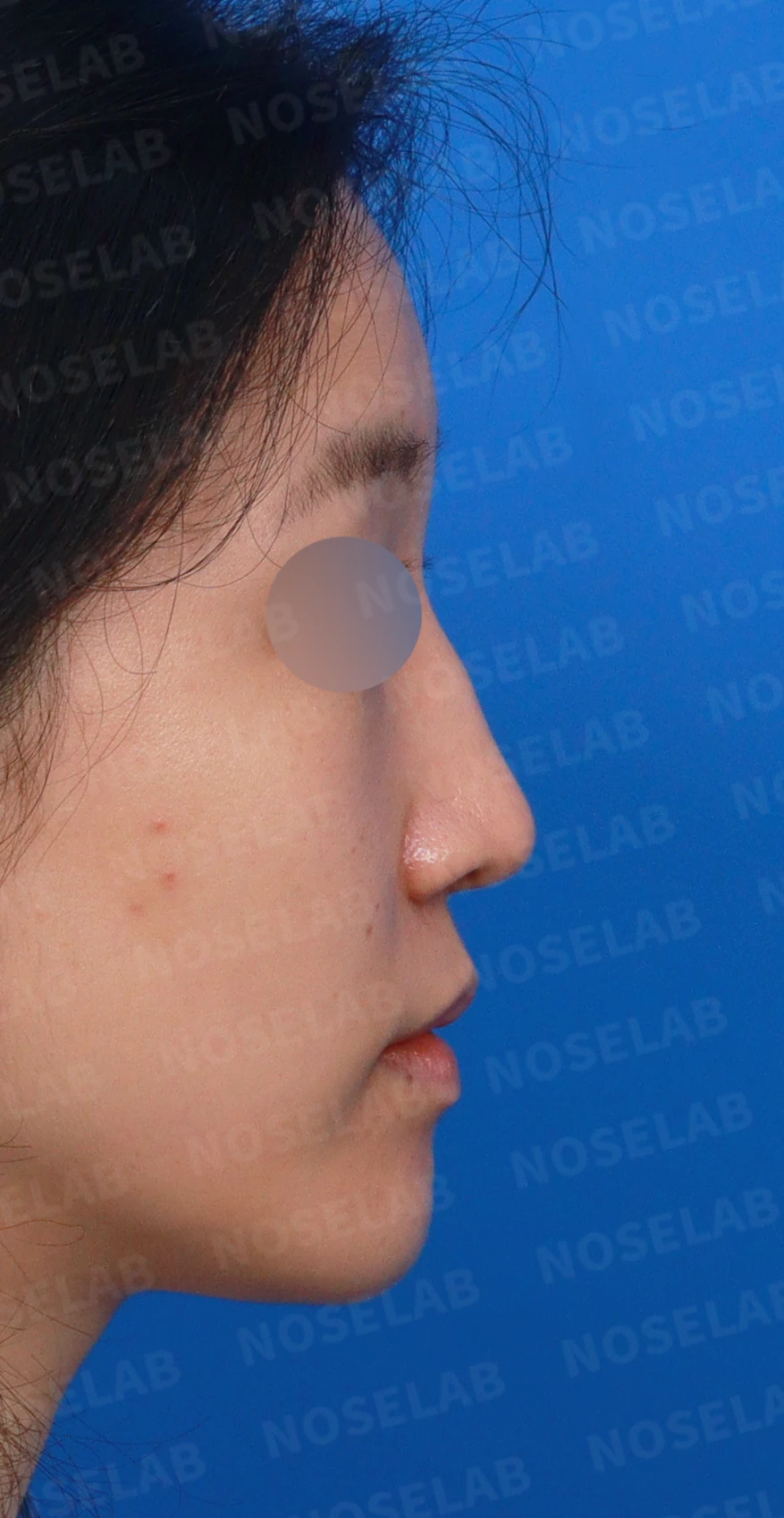
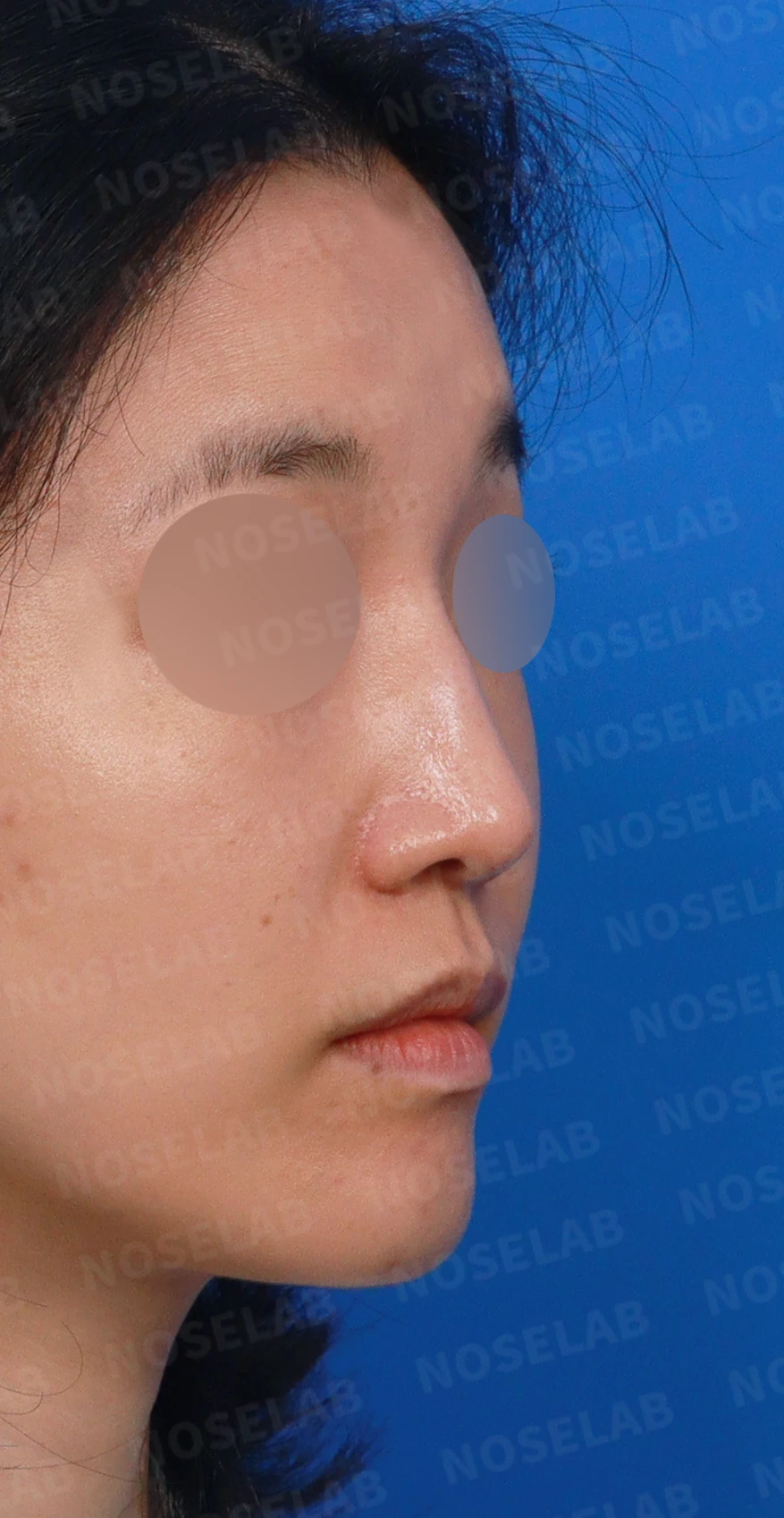
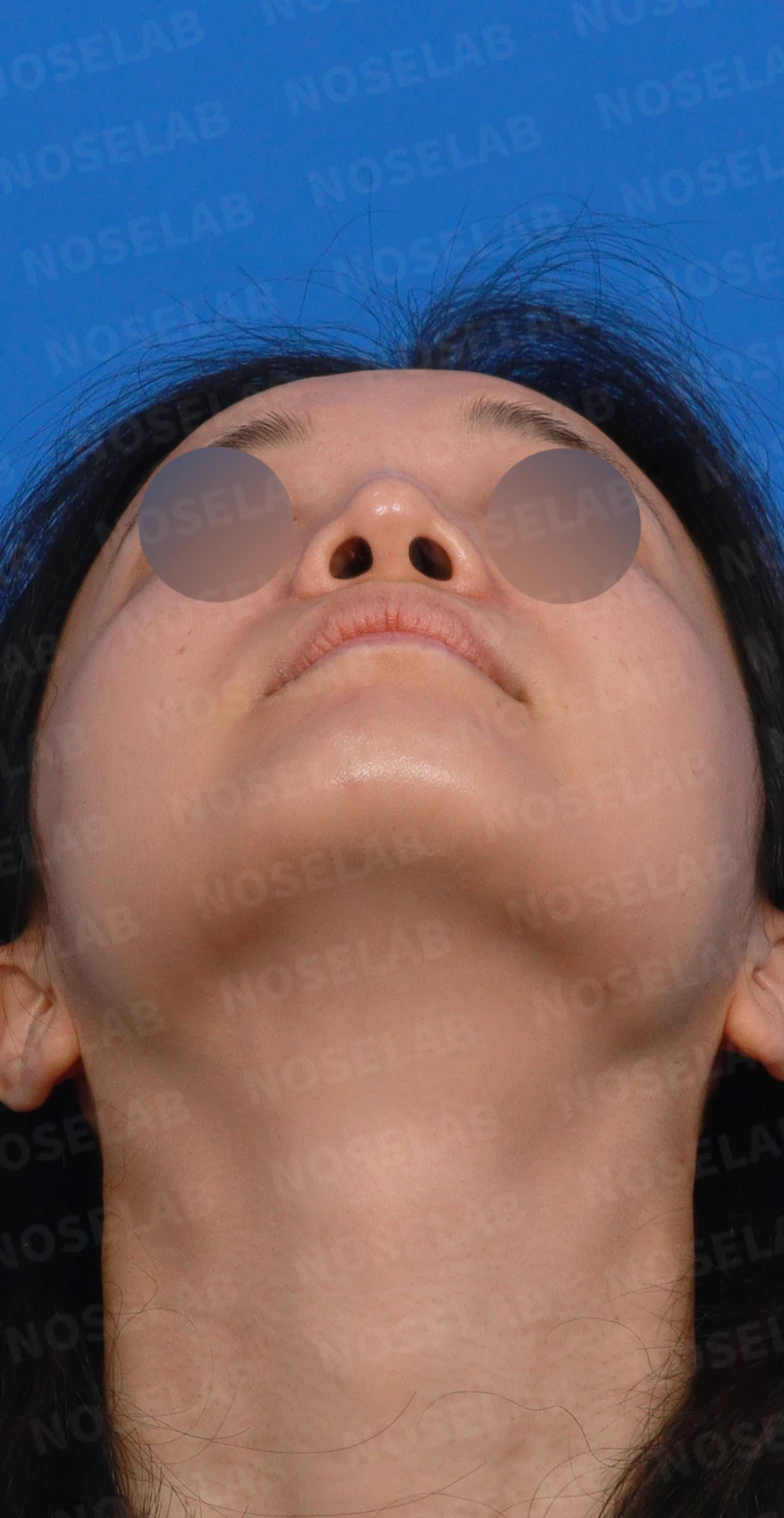
Right profile, oblique, and nostril views during design consultation.
Careful, complete removal of the artificial dermis
Resolution of the long, masculine impression
A smoother line achieved through dorsal hump correction
A more feminine and refined impression
Reconstruction of a sturdy, stable structure
🔧 Surgical plan and procedure
1. Complete removal of artificial dermis
The artificial dermis remaining on the nasal bridge was carefully removed. Over time, it can absorb unevenly or fail to absorb altogether, forming a dorsal hump; therefore, the areas adhered to surrounding tissue were precisely dissected and thoroughly cleared away.
2. Lateral osteotomy and dorsal hump reduction
To narrow and refine the long and wide nasal bones into a more feminine contour, a lateral osteotomy was performed. By repositioning the nasal bones into a precise alignment, a slimmer line was created, and the protruding dorsal hump was smoothed down so that an elegant, gentle contour flows continuously when viewed from the profile.
3. Nasal tip reconstruction using autologous rib cartilage
Because a significant amount of the septum had been harvested in a previous procedure, the anterior structural support had become weak. Ear cartilage alone could not provide sufficient support, so the patient's own rib cartilage was harvested to reconstruct the nasal tip solidly and securely. Autologous rib cartilage provides adequate volume and structural strength, and because it does not absorb, it remains stable over the long term.
4. Nasal dorsum refinement using a silicone implant
A silicone implant was used on the nasal bridge to create a smooth line. By imparting appropriate height and curvature, a feminine, refined contour was achieved.
🌟 Surgical results
Resolution of the dorsal hump through complete removal of the artificial dermis
Long and wide nasal bones transformed into a slimmer contour via lateral osteotomy
A smooth, elegant line achieved through dorsal hump reduction
Sturdy reconstruction of the nasal tip using autologous rib cartilage
Smooth refinement of the nasal dorsum using a silicone implant
An overall feminine and refined impression achieved
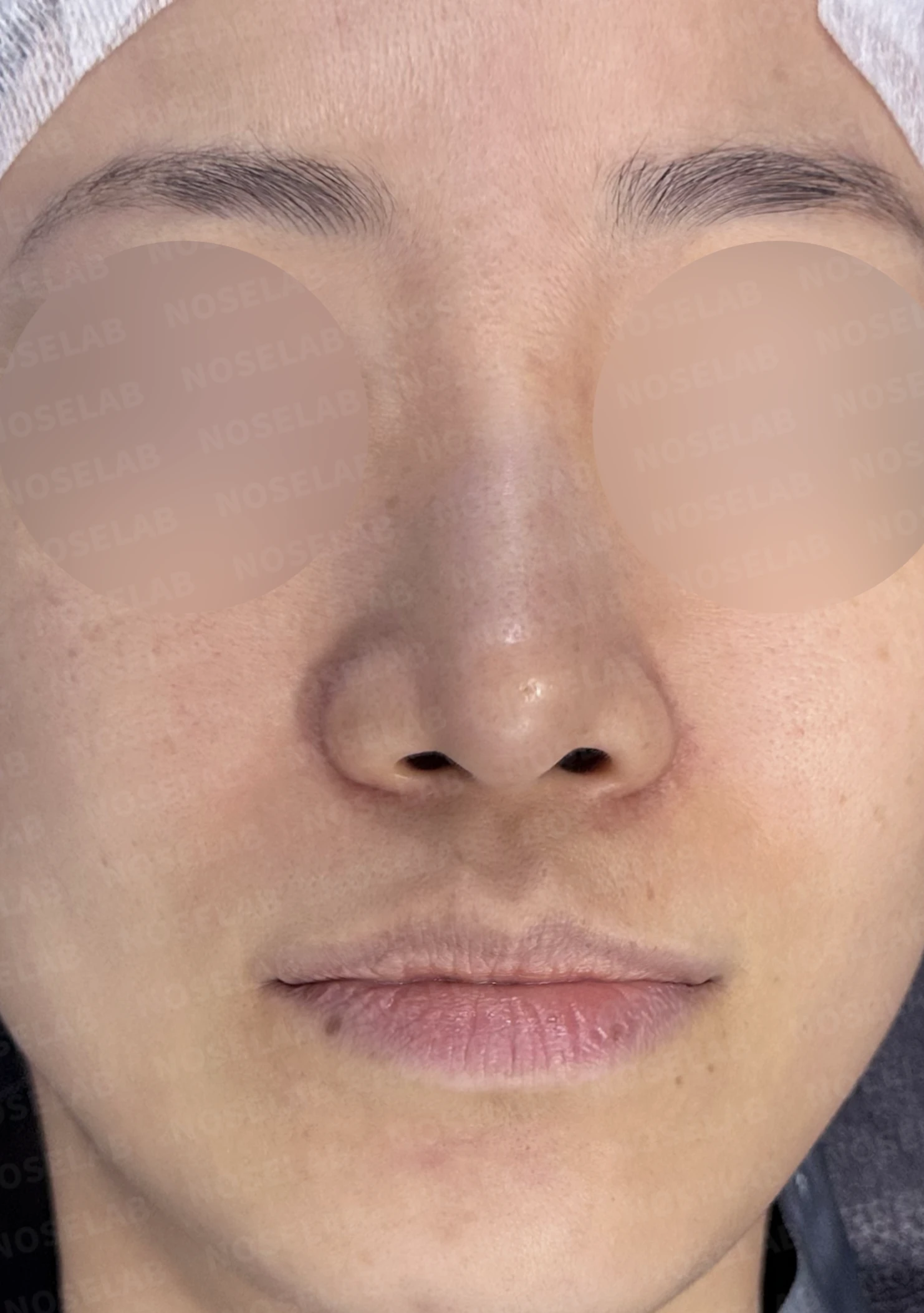
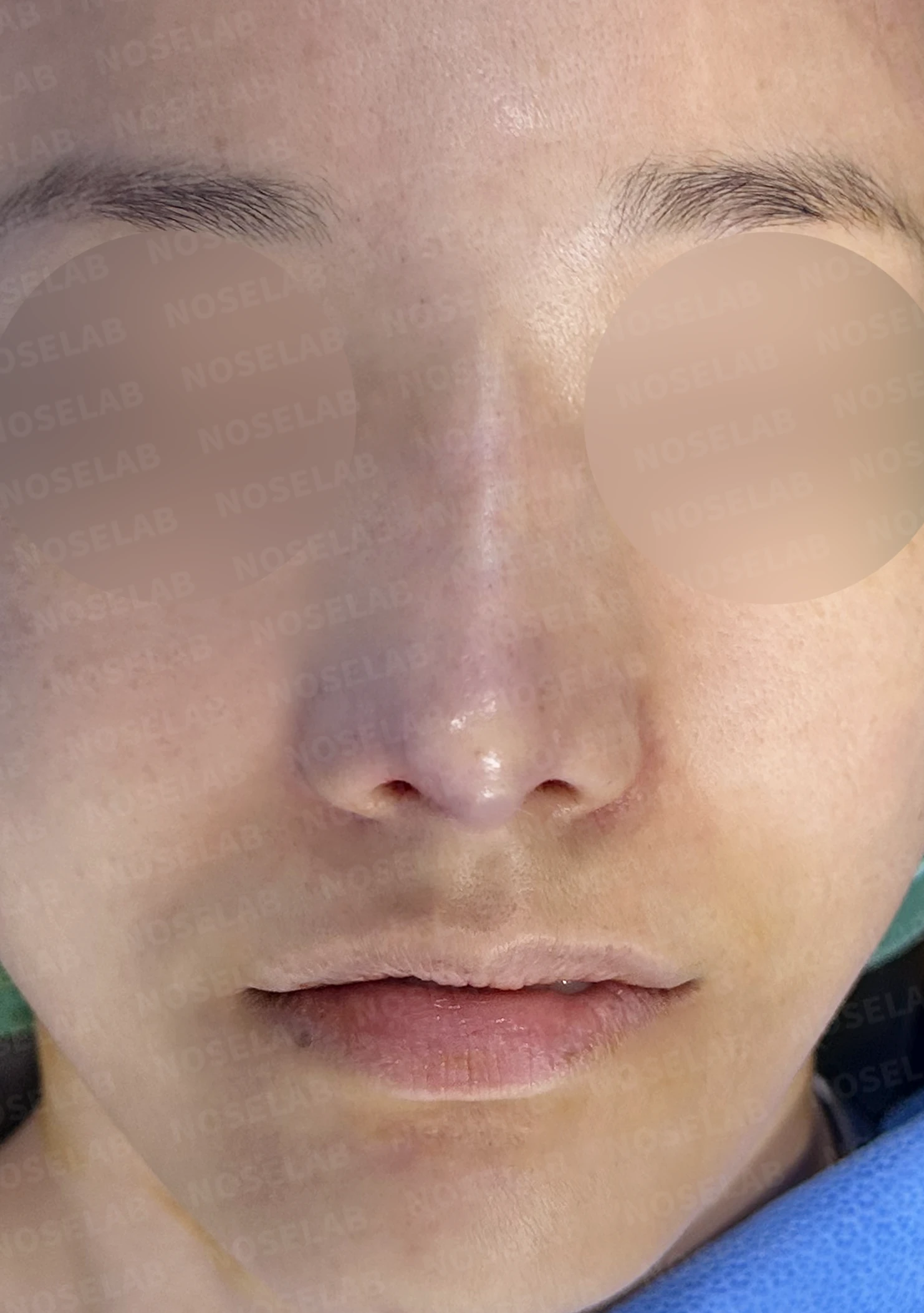
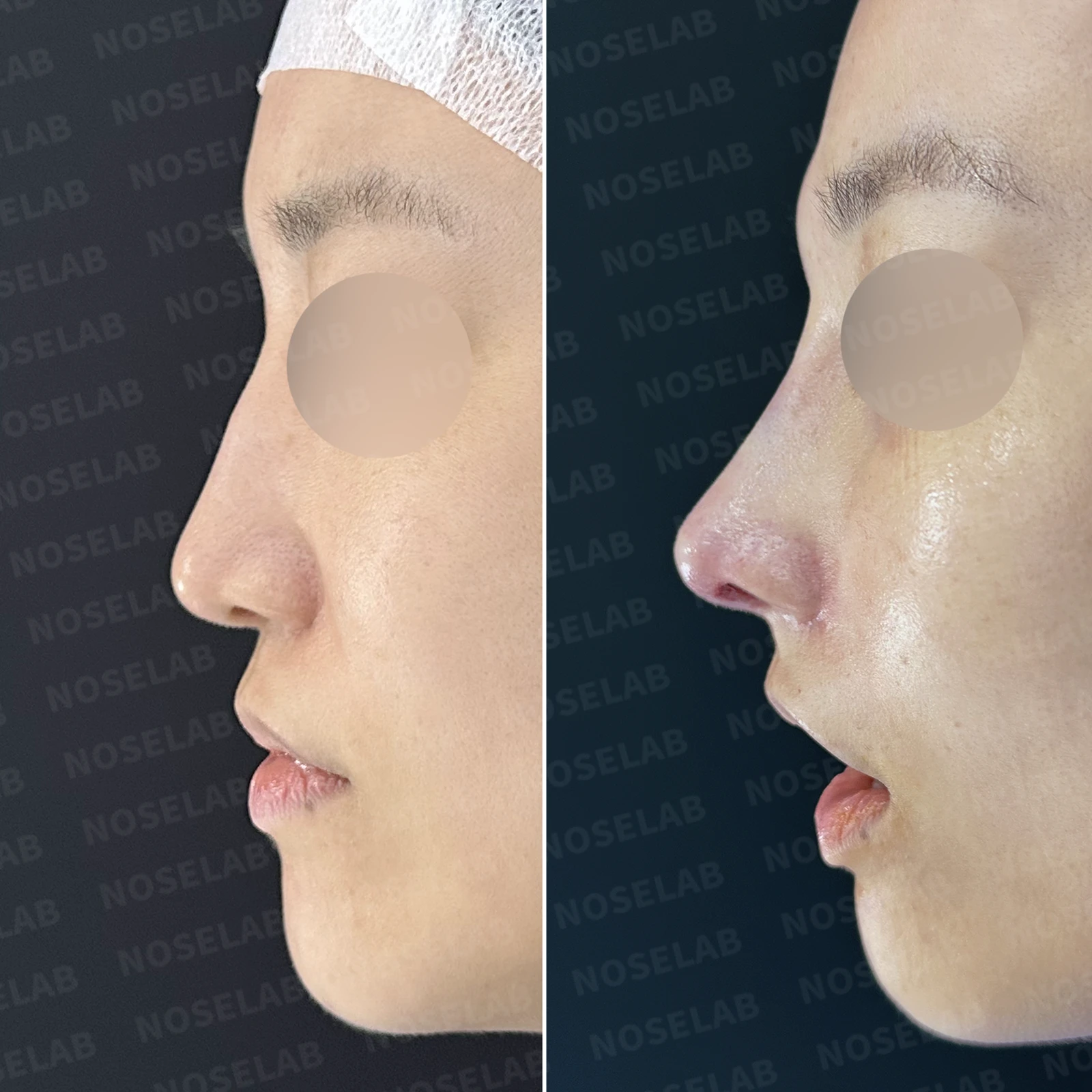
Before surgery / Day 0 immediately after surgery Photos taken immediately after surgery show swelling and may differ from the final result.
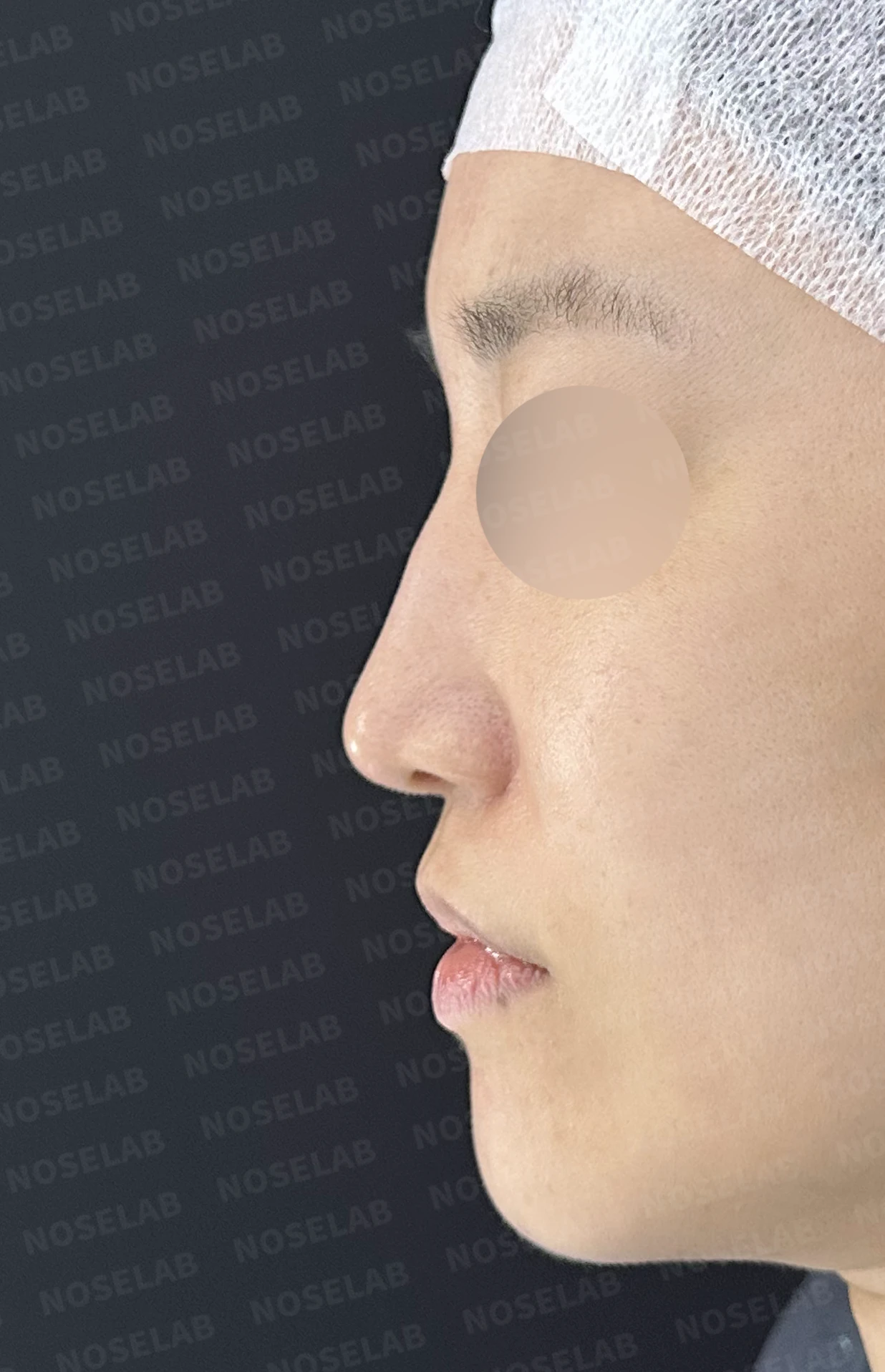
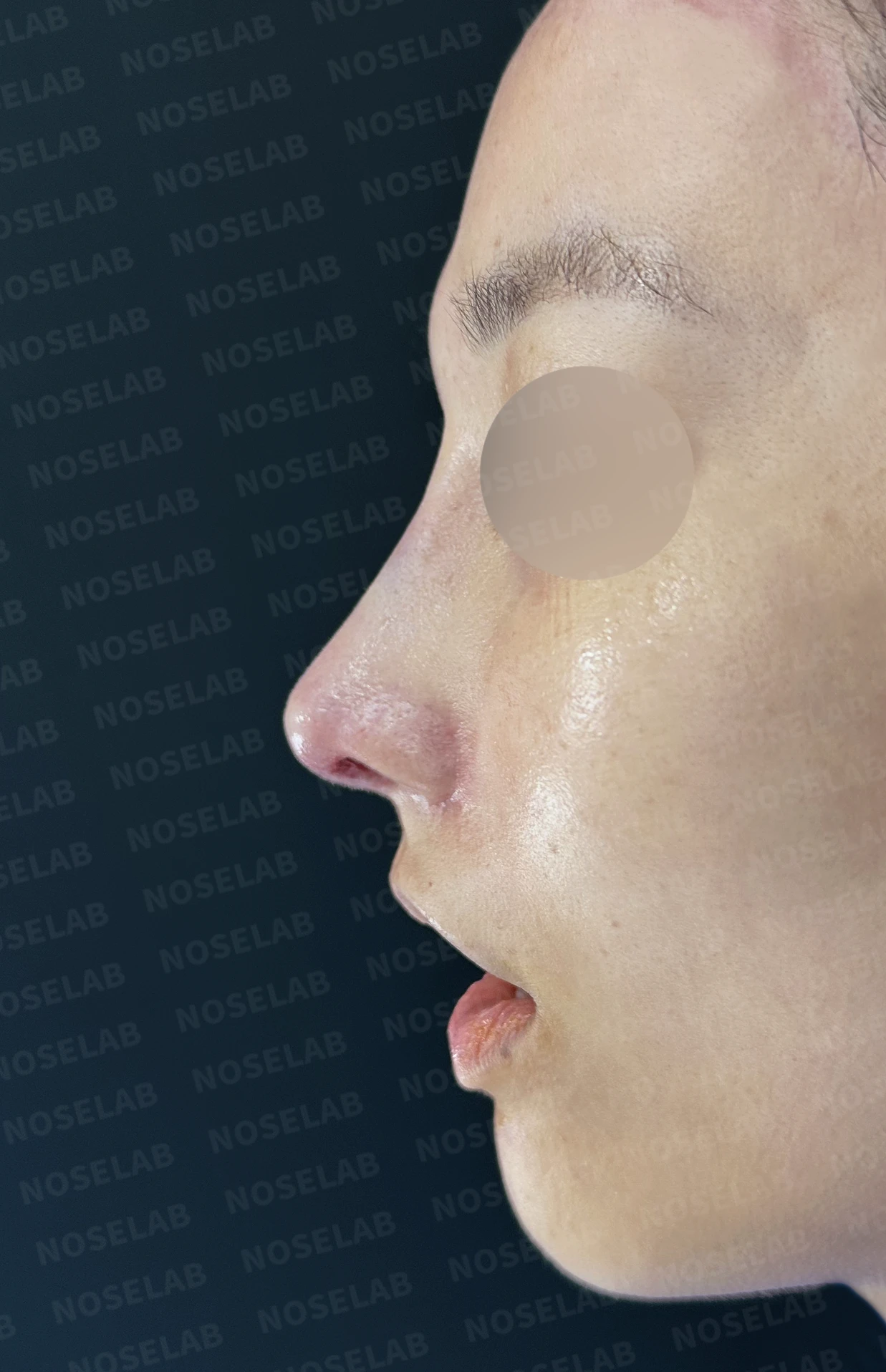
Before surgery / Day 0 immediately after surgery Photos taken immediately after surgery show swelling and may differ from the final result.
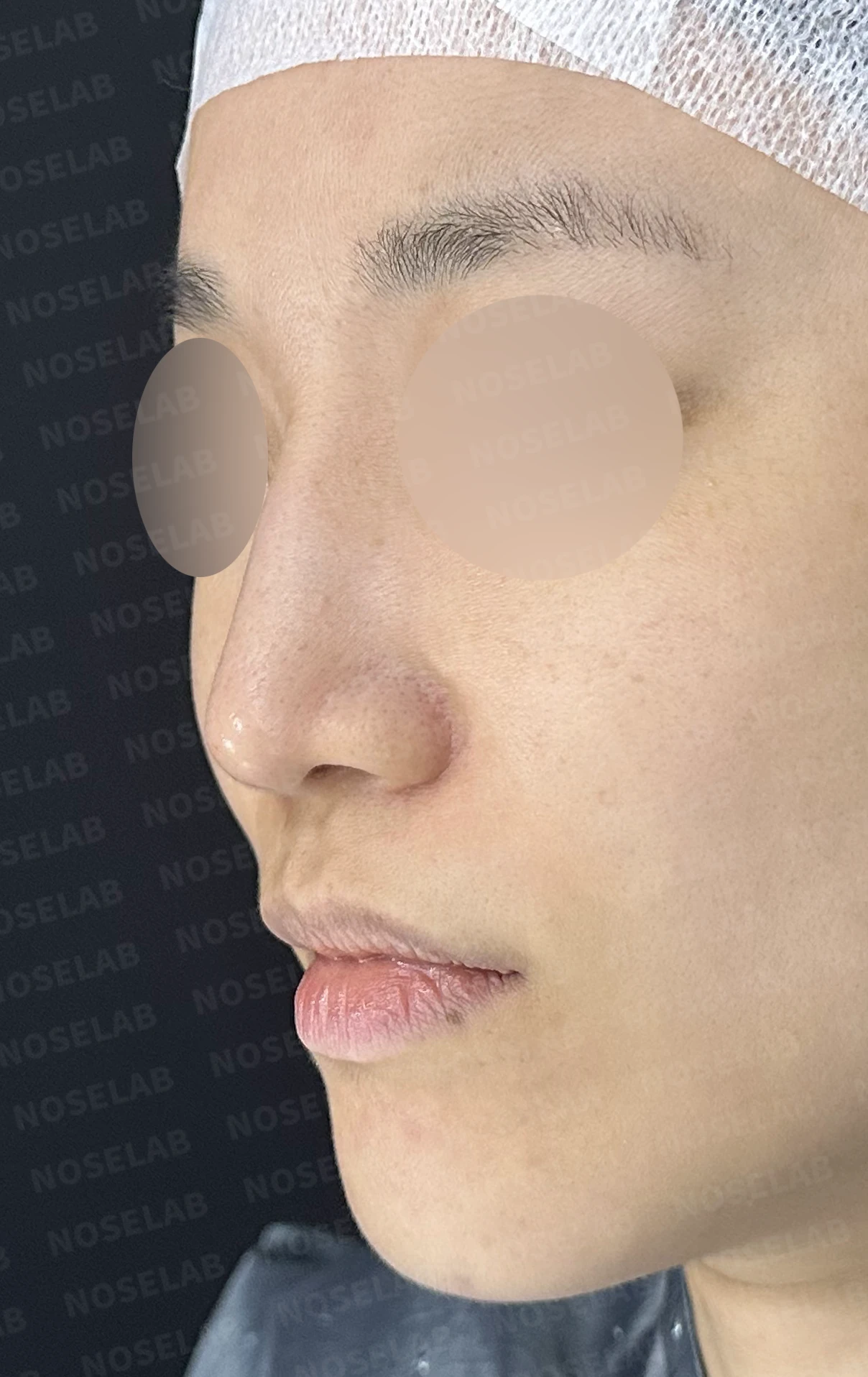
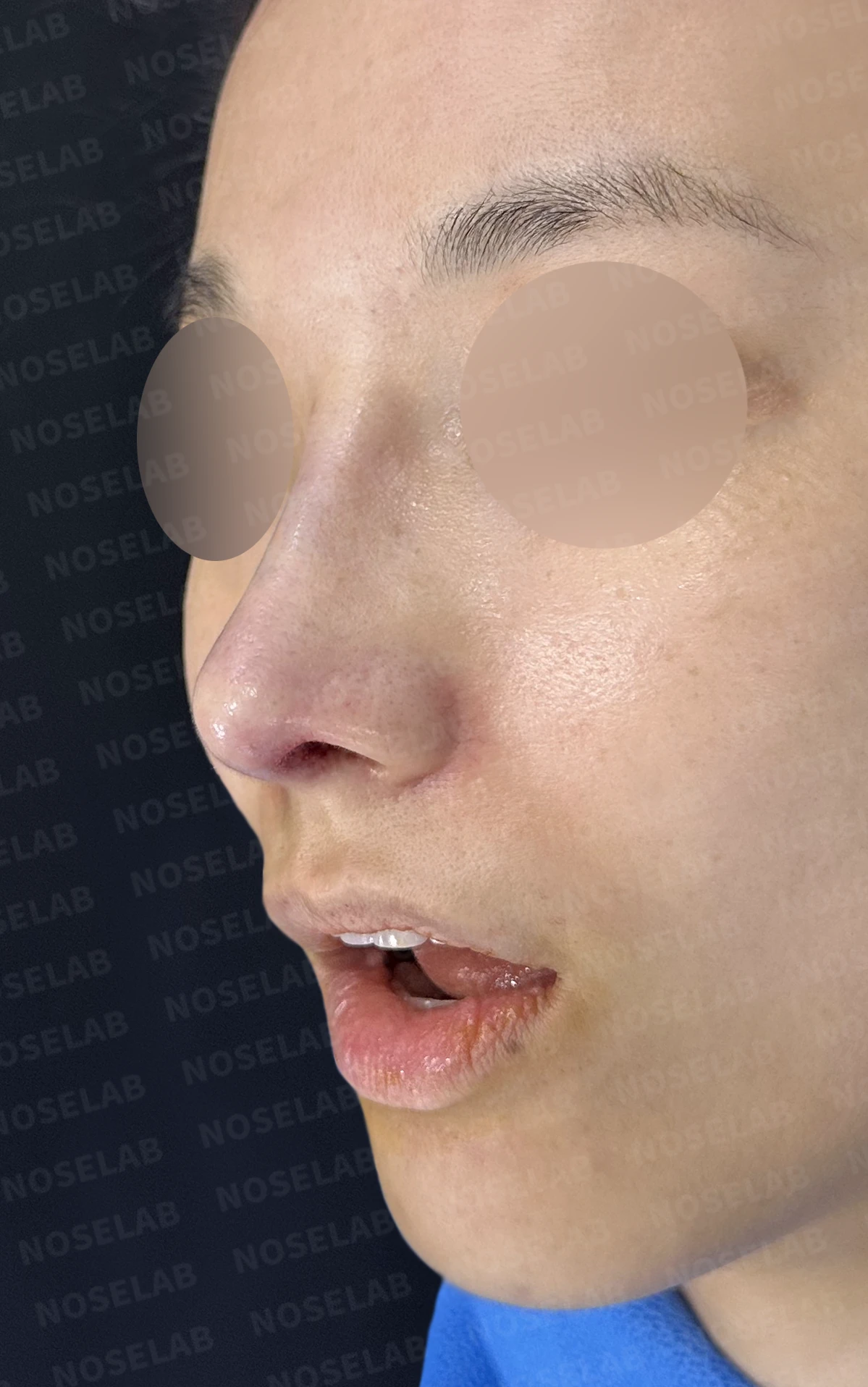
Before surgery / Day 0 immediately after surgery Photos taken immediately after surgery show swelling and may differ from the final result.
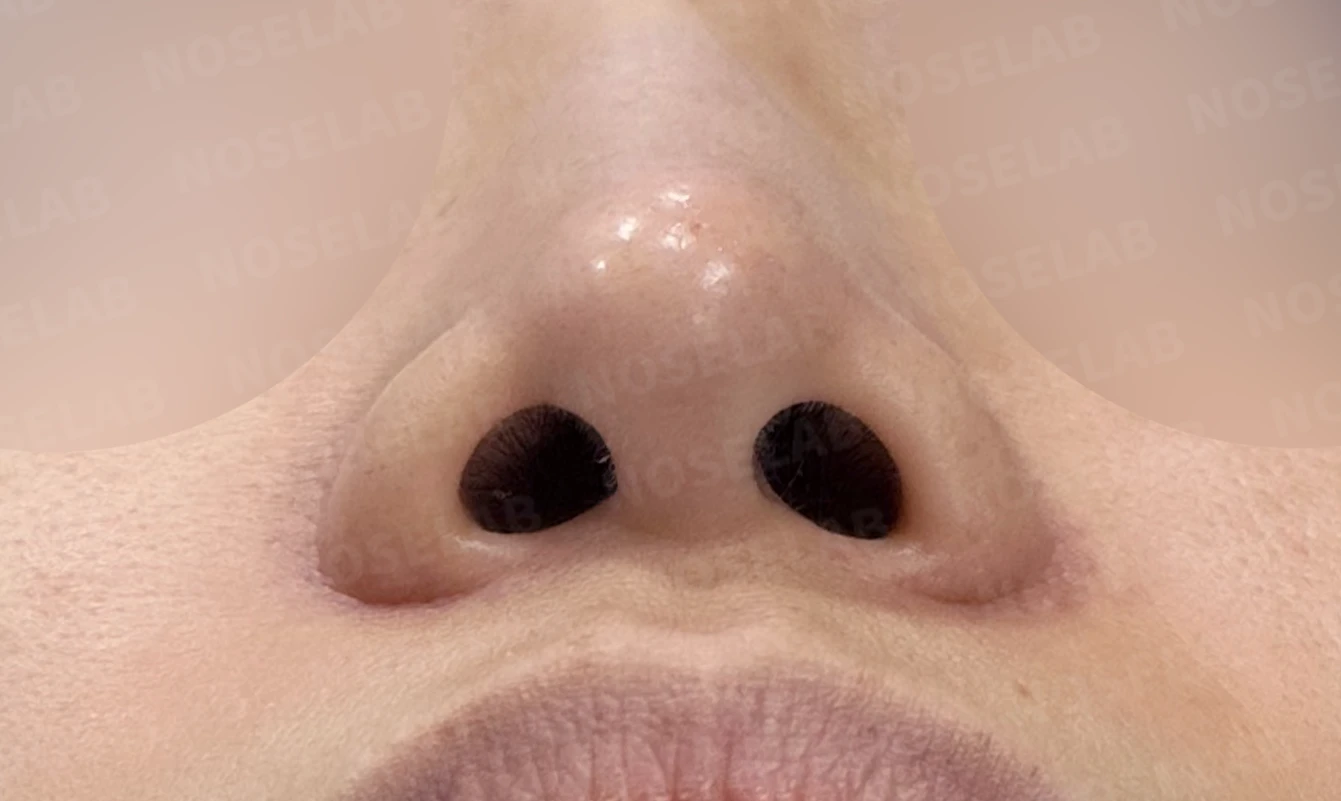
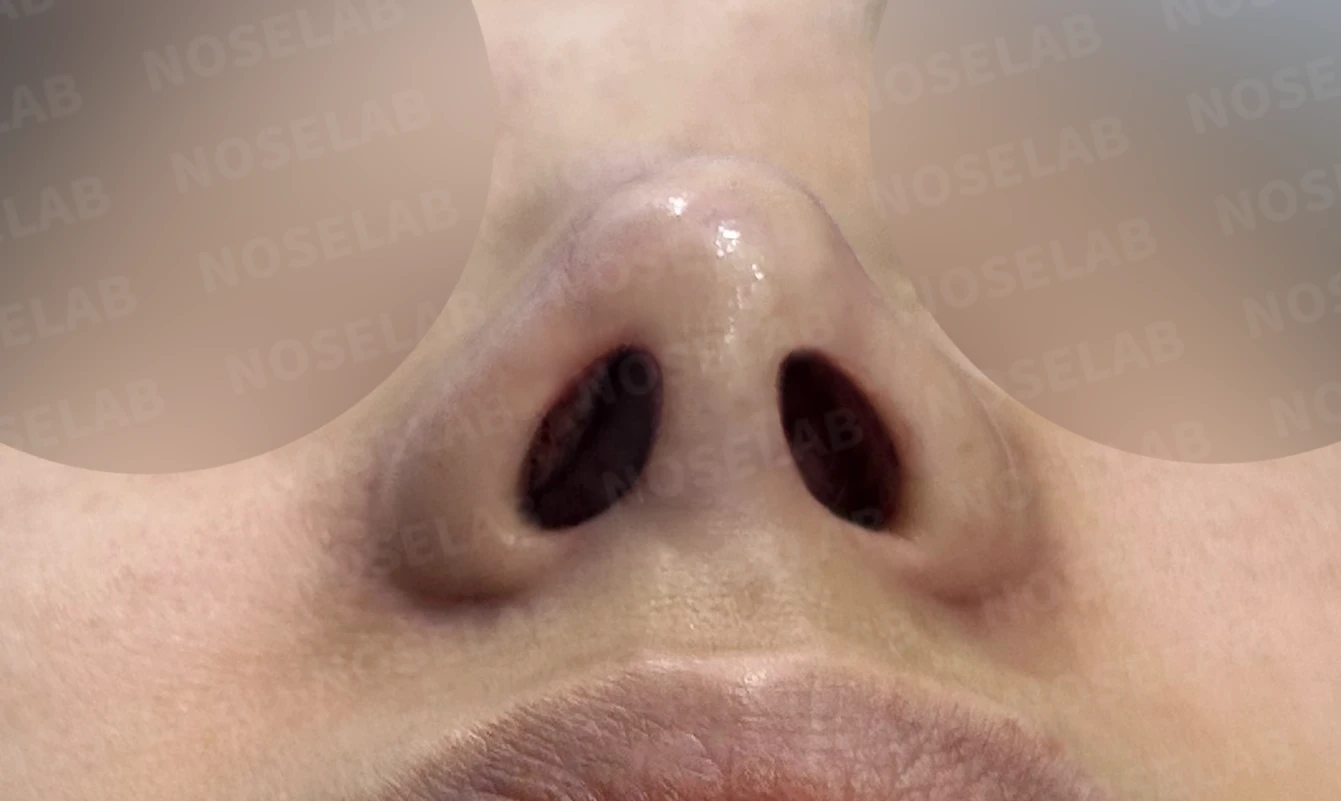
Before surgery / Day 0 immediately after surgery Photos taken immediately after surgery show swelling and may differ from the final result.
💡 Specialist opinion
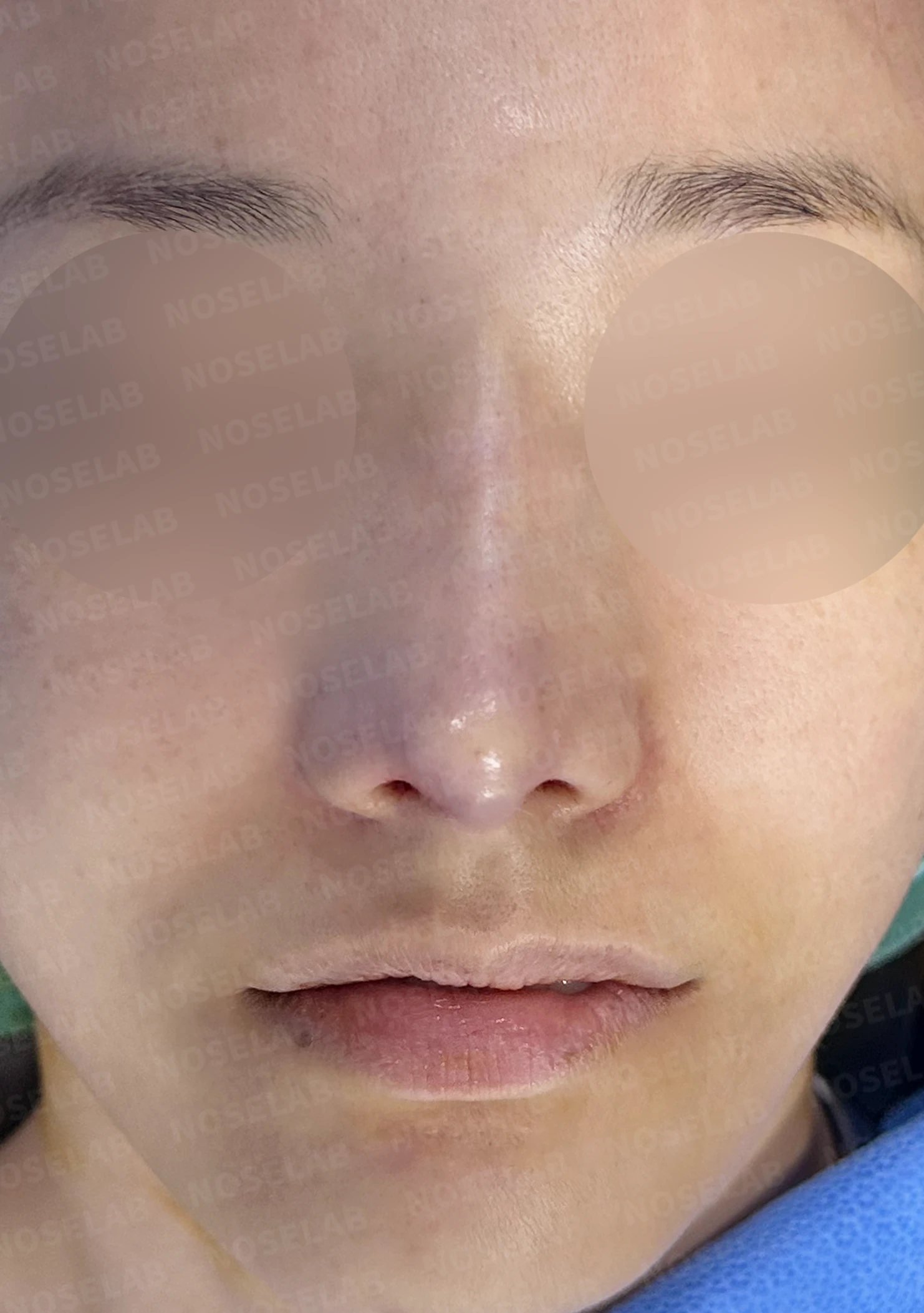
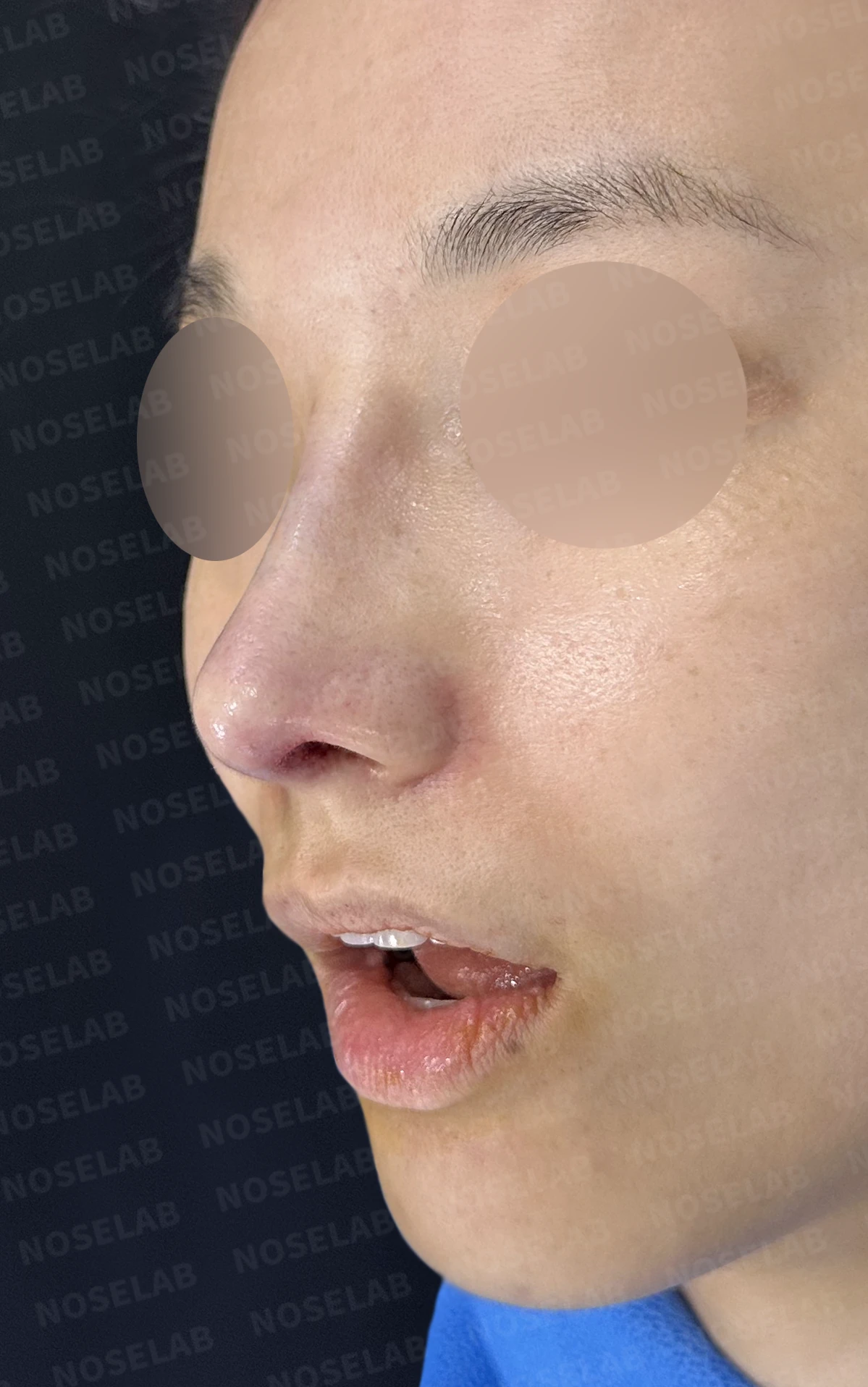
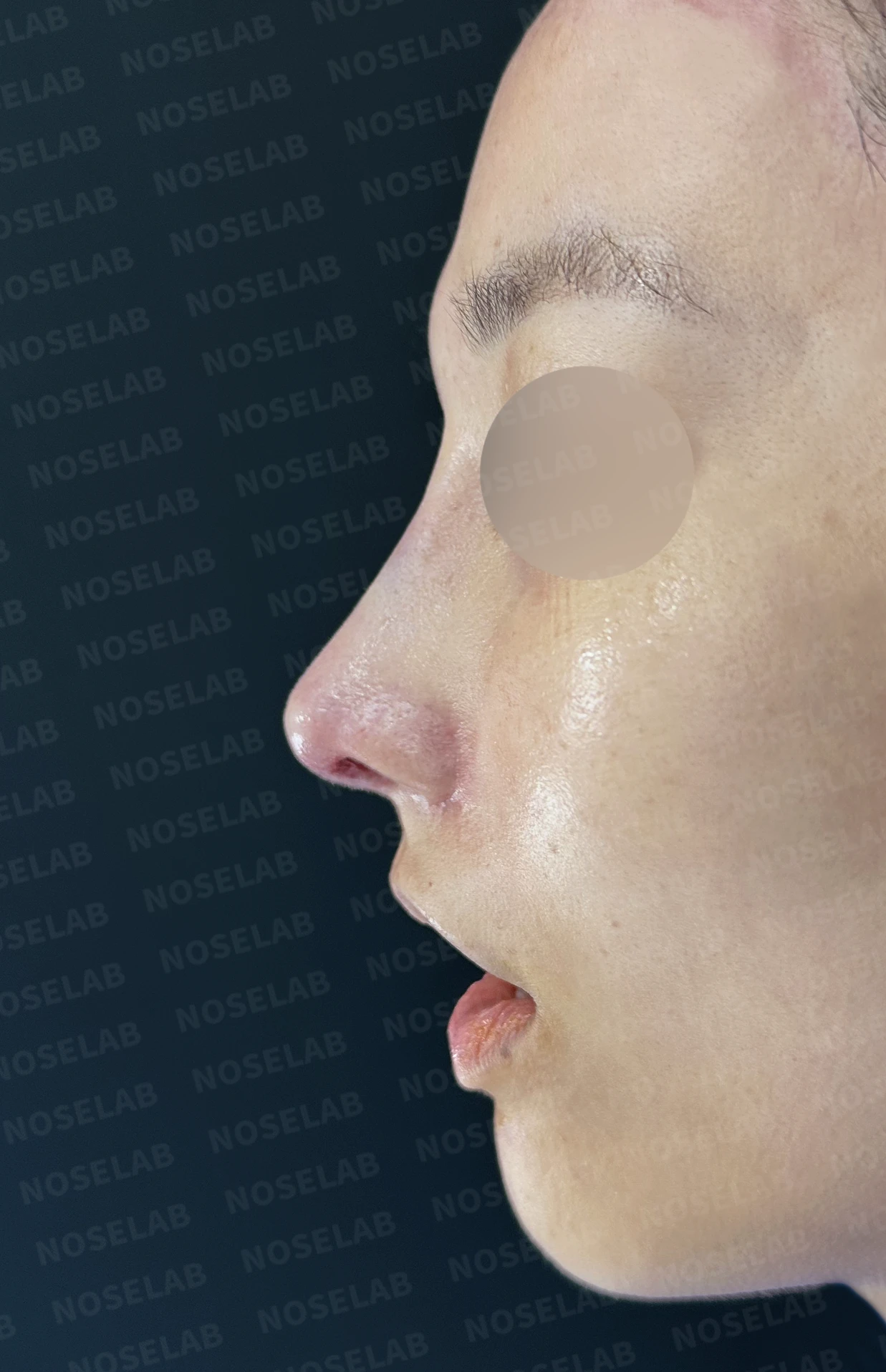
Front, oblique, and profile views on day 0 immediately after surgery. Photos taken immediately after surgery show swelling and may differ from the final result.
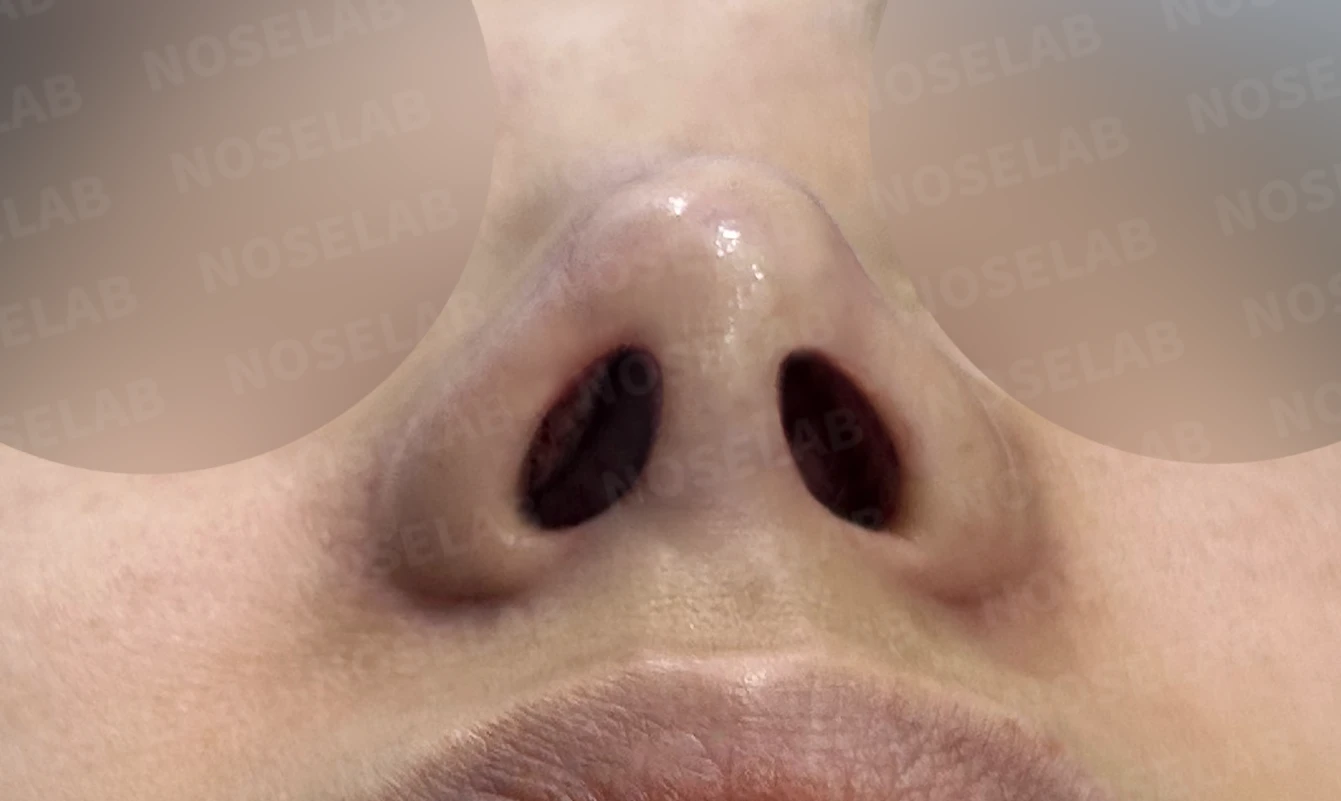
Nostril view on day 0 immediately after surgery. Photos taken immediately after surgery show swelling and may differ from the final result.
In this revision case, the goal was to resolve the issues from the previous surgery while achieving an improved outcome.
Unpredictability of artificial dermis:
While artificial dermis provides a natural feel to the touch, its rate and degree of absorption vary from person to person. In some patients, a large portion is absorbed, lowering the height, whereas in cases like this one, it barely absorbs at all and remains as a dorsal hump. This variability sometimes makes revision surgery necessary.
Using rib cartilage when the septum is insufficient:
When a significant portion of the septum has already been harvested in a previous surgery, there is insufficient usable cartilage left for a revision. Ear cartilage is limited in quantity and lacks the structural stiffness needed to firmly support the nasal tip. In such situations, rib cartilage is an effective choice. It allows for a relatively quick recovery with inconspicuous scarring, while offering sufficient volume and rigidity to build a sturdy, reliable structure.
Rationale for material selection on the nasal dorsum:
Using a silicone implant for the dorsum and autologous tissue for the nasal tip is a sensible approach that leverages the distinct advantages of each material. Silicone offers predictability and allows for precise contouring, while autologous tissue provides a natural feel and biological safety for the tip.
Precision of lateral osteotomy:
Refining long and wide nasal bones into a feminine appearance is not simply a matter of rasping them down; rather, the bones must be repositioned to create overall balance and harmony. Calculating the positions and angles with precision creates a refined line.
I will continue to do my best as a revision rhinoplasty specialist, working with safety in mind to resolve problems from prior procedures and deliver better results for patients.
This was Dr. Peter C. Kang. Thank you.
#closedrhinoplasty #closedrevisionrhinoplasty #artificialdermisremoval #autologousribcartilage #dorsalhumpcorrection #lateralosteotomy #dorsumcorrection #nasaltipreconstruction #femininerhinoplasty #revisionspecialist

Limitations and risks
When autologous rib cartilage is used, scarring and pain may remain at the donor site on the chest, and pneumothorax (pleural injury) can occur rarely. Over time, the grafted cartilage may warp or undergo partial resorption.
When revising after implant removal, contracture may progress again after removal, the nasal height and length may decrease, and staged surgery may be necessary depending on the skin condition.
When the septum is corrected at the same time, nasal obstruction may persist or recur, and in rare cases, septal perforation or changes in smell may occur.
Common potential risks include infection, bleeding, asymmetry, scarring, skin necrosis, and insufficient improvement; results vary depending on individual skin condition and previous surgical history.