1. Preoperative consultation
The patient visited NOSELAB to correct this type of long nose and dorsal hump. Having naturally had a high nasal bridge, the patient still had a residual hump despite having had hump reduction at another clinic, and the drooping tip and elongated appearance had not been corrected at all.
2. Surgical plan
To correct the long nose and dorsal hump, the plan was to rasp down the hump and perform lateral osteotomy to narrow the widened nasal bridge. For the drooping tip, autologous rib cartilage would be used to build strong support for the nasal tip and reduce the hanging columella. Because the tip skin was thin and cartilage was showing through, the plan was to place a broad tip cartilage graft and reinforce the skin using donor dermis.
3. Surgical findings
To correct the long nose, the nasal bone was rasped down and the nasal tip was gently elevated. To correct the dorsal hump, portions of the nasal bone and upper lateral cartilage were removed, and a thin silicone implant was placed to smooth over irregularities. The deviated columella was also corrected.
4. Immediately after surgery (Day 0)Immediate postoperative photos show swelling and may differ from the final result.
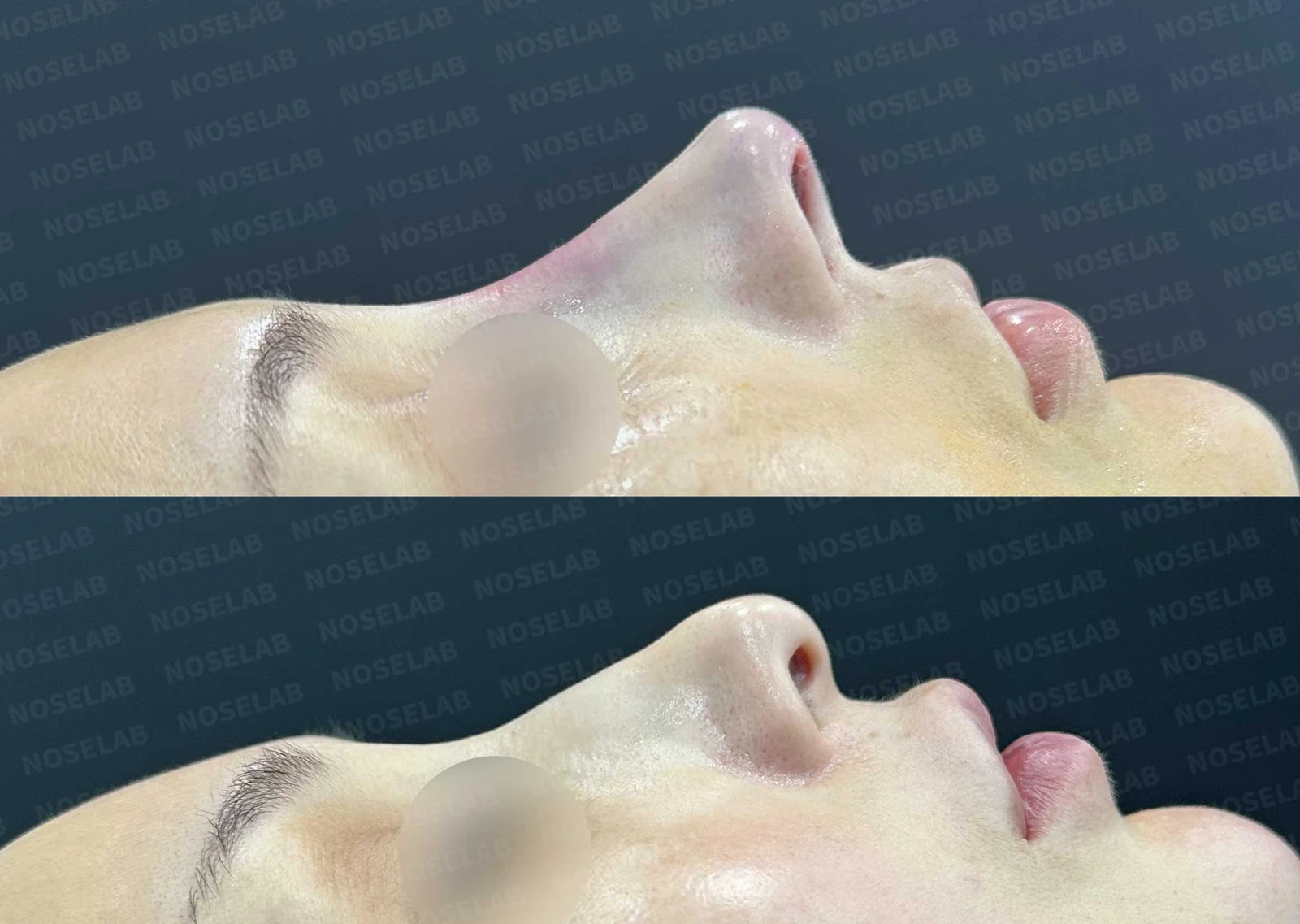
Before surgery / Day 0 immediately after surgery Photos taken immediately after surgery show swelling and may differ from the final result.
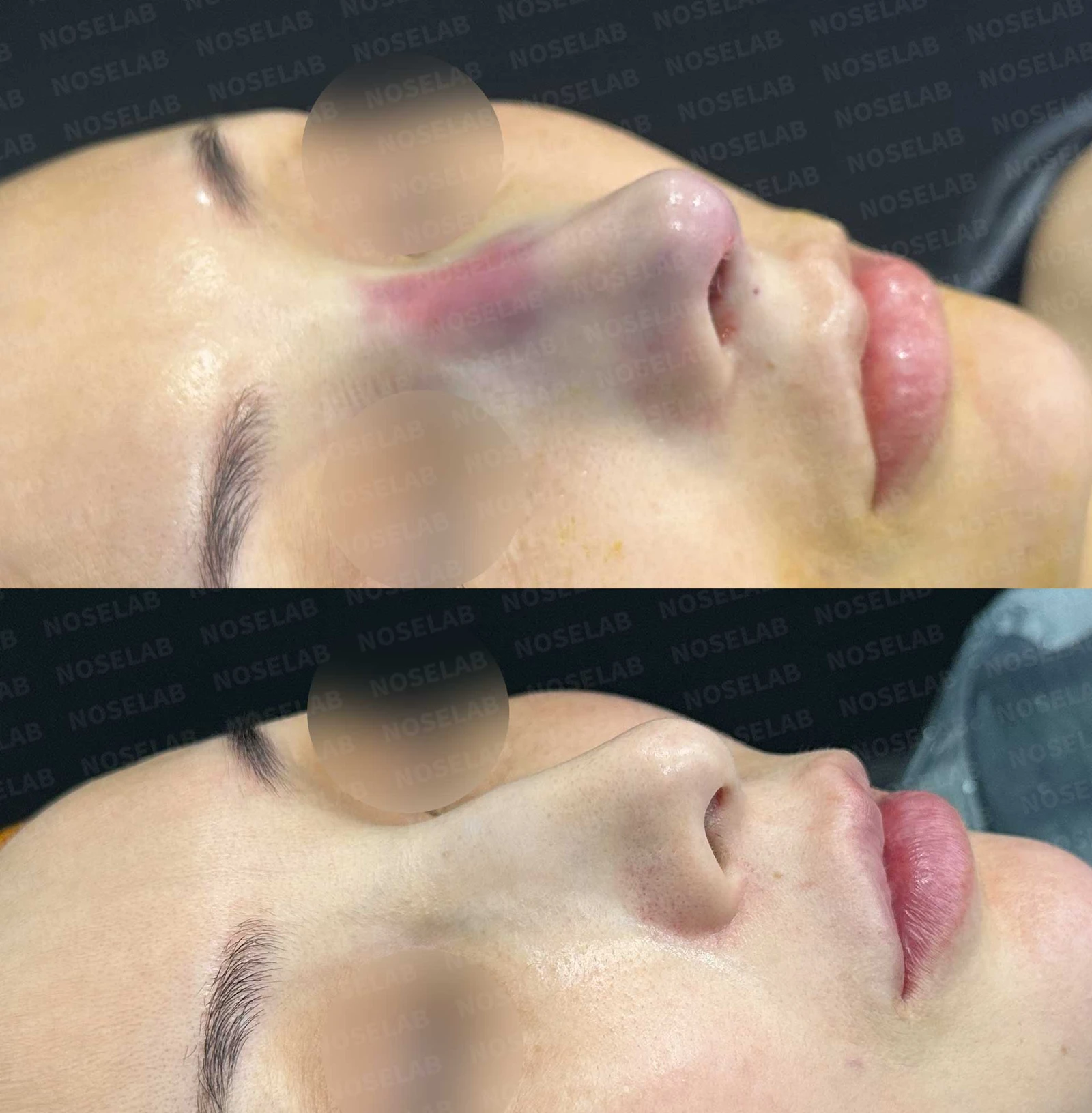
Before surgery / Day 0 immediately after surgery Photos taken immediately after surgery show swelling and may differ from the final result.
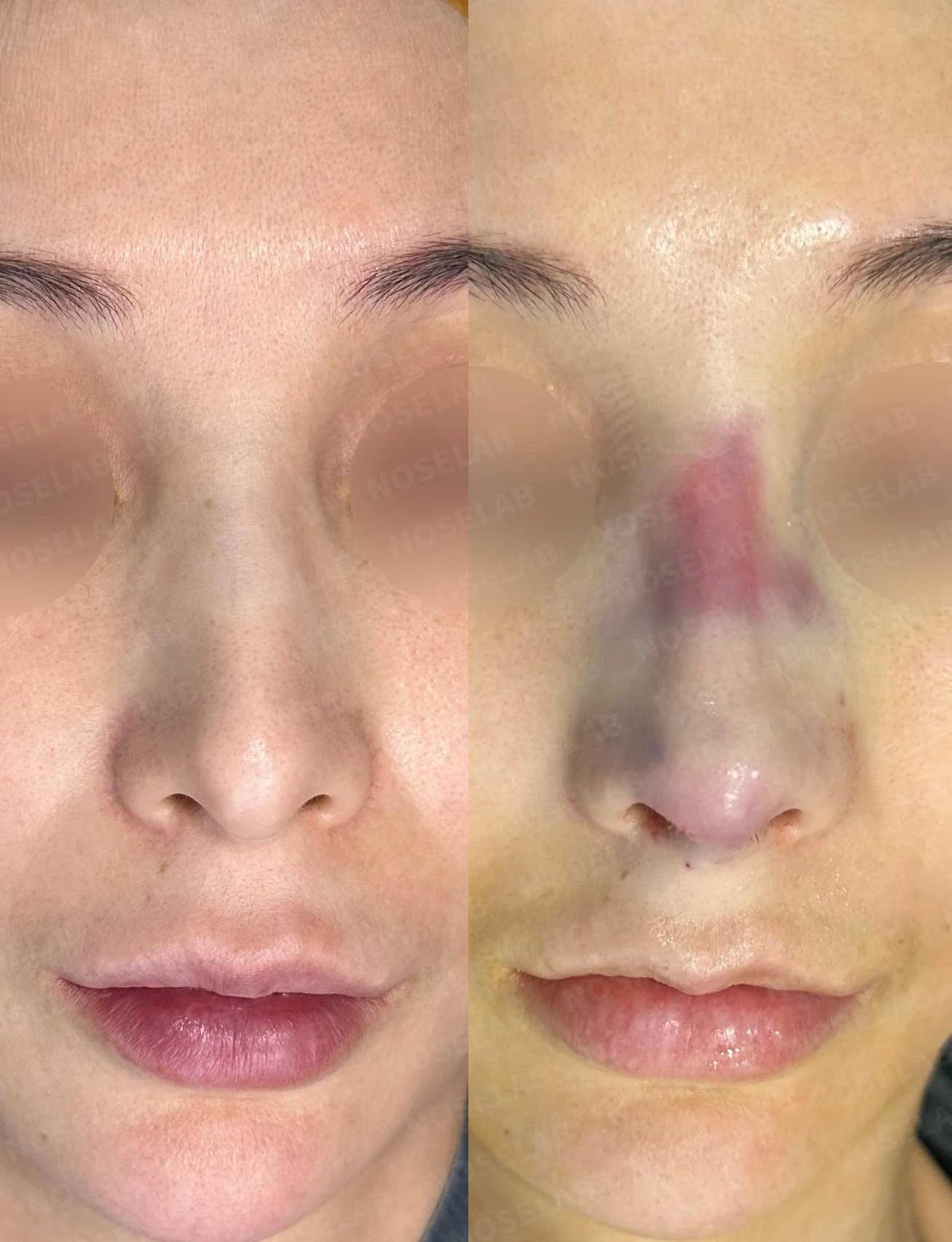
Before surgery / Day 0 immediately after surgery Photos taken immediately after surgery show swelling and may differ from the final result.
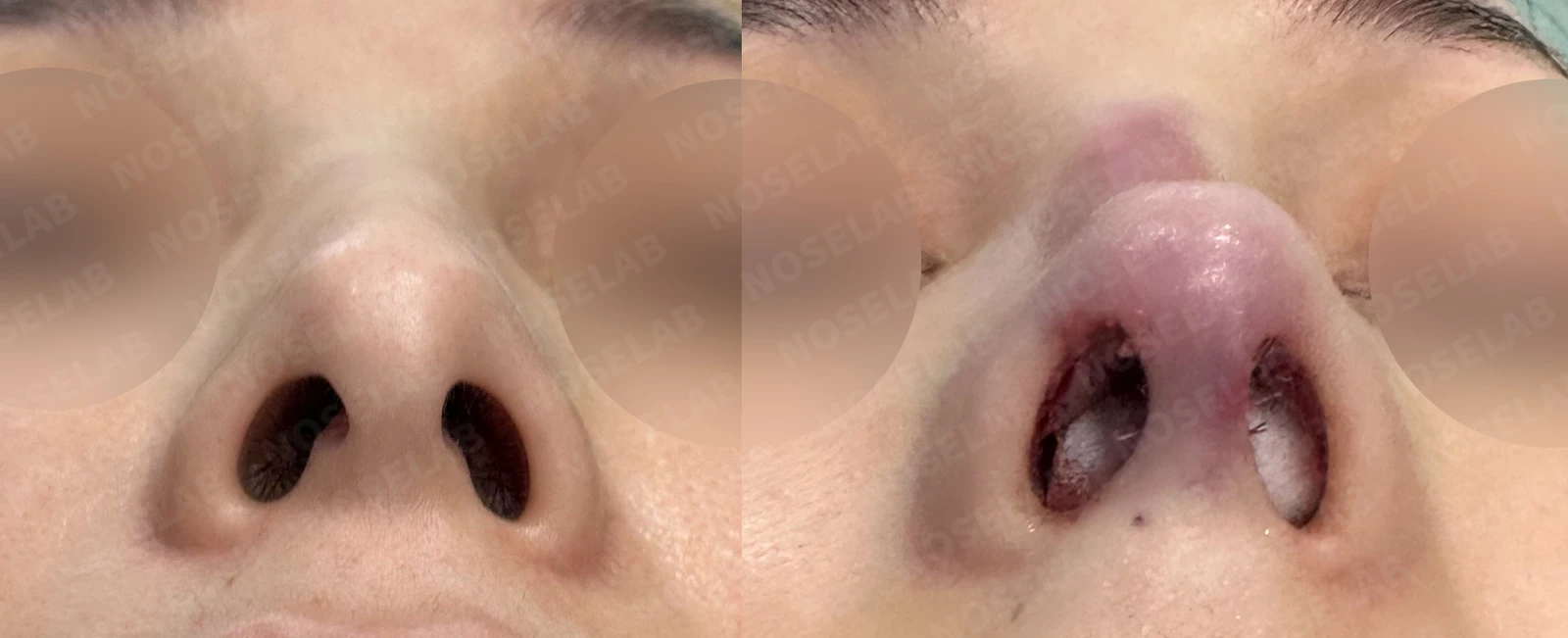
Before surgery / Day 0 immediately after surgery Photos taken immediately after surgery show swelling and may differ from the final result.
5. Conclusion
This is a corrective surgery for a long nose and dorsal hump. In most cases where a dorsal hump is prominent, the nose often appears long. Once the hump is corrected and the drooping sensation of the nasal tip is addressed, the long appearance naturally improves. A dorsal hump consists of both the nasal bone and part of the upper lateral cartilage; the bony portion can be corrected by rasping or osteotomy, whereas the upper lateral cartilage cannot simply be rasped down and must be excised directly. In addition, when the nasal bone is rasped, its thin structure may lead to an open-roof deformity; to resolve this, lateral osteotomy is performed to close the roof. Overcorrecting a dorsal hump slightly helps achieve a clean, smooth result.
Dr. Peter C. Kang
Limitations and risks
When autologous rib cartilage is used, scarring and pain may remain at the donor site on the chest, and pneumothorax (pleural injury) can occur rarely. Over time, the grafted cartilage may warp or undergo partial resorption.
Common potential risks include infection, bleeding, asymmetry, scarring, skin necrosis, and insufficient improvement; results vary depending on individual skin condition and previous surgical history.