Hello, I am Dr. Peter C. Kang.
Today, I would like to share a rhinoplasty case of a patient who was concerned about a long nose and an arrow-shaped nose.
This type of case presented complex issues, including a long, drooping nose, a dorsal hump, and nostril asymmetry.
1. Preoperative design consultation
Let us analyze the patient's preoperative condition in detail:
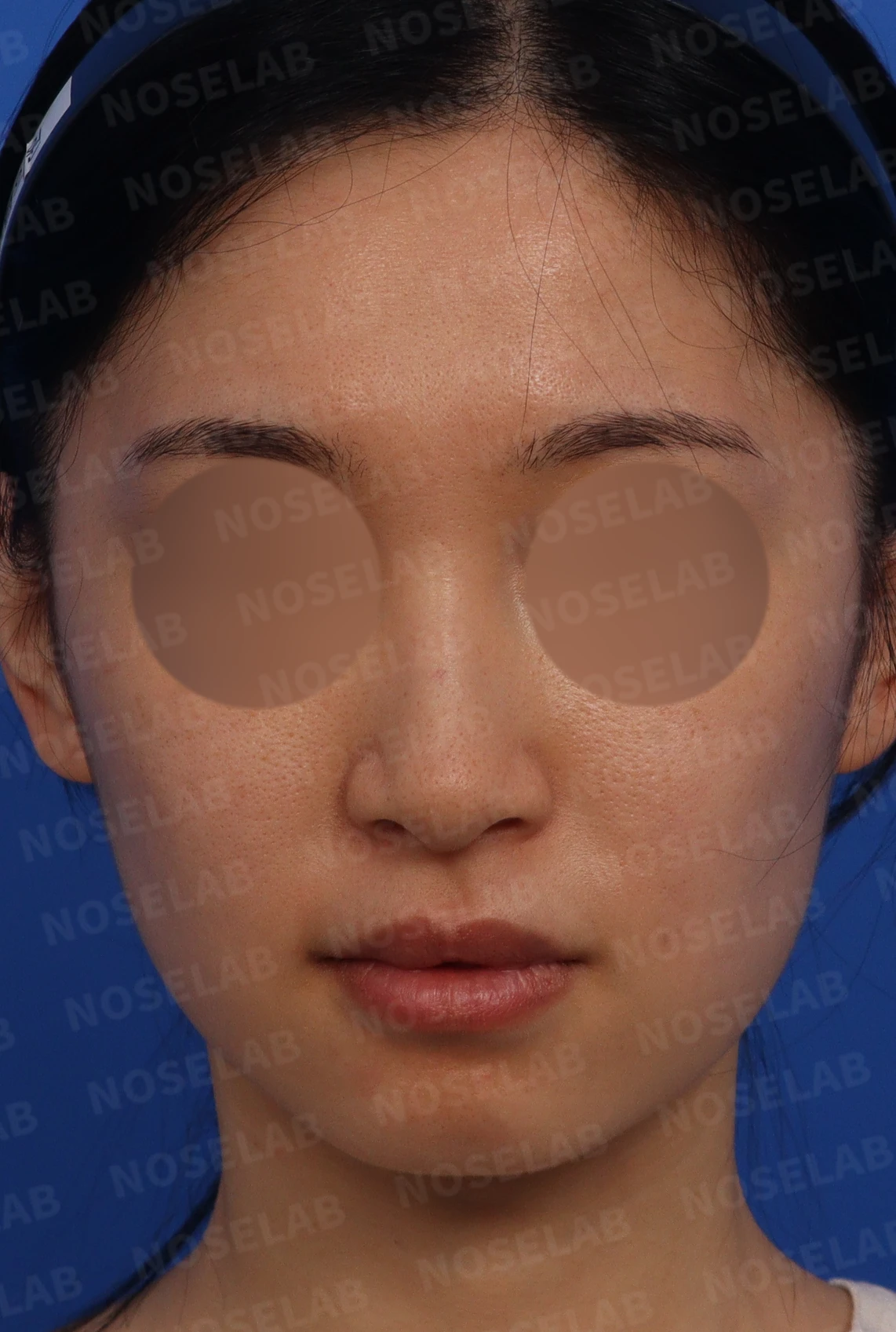
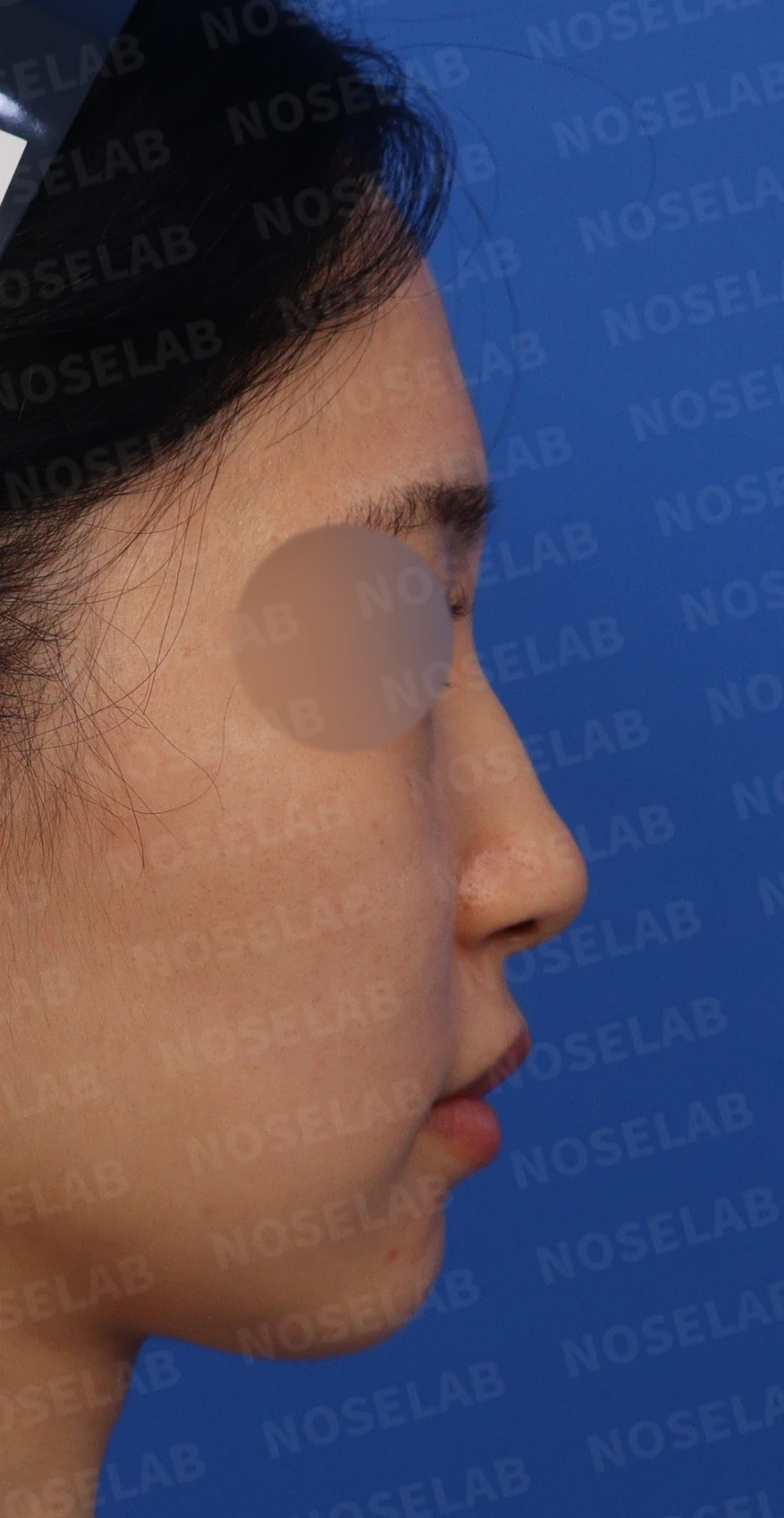
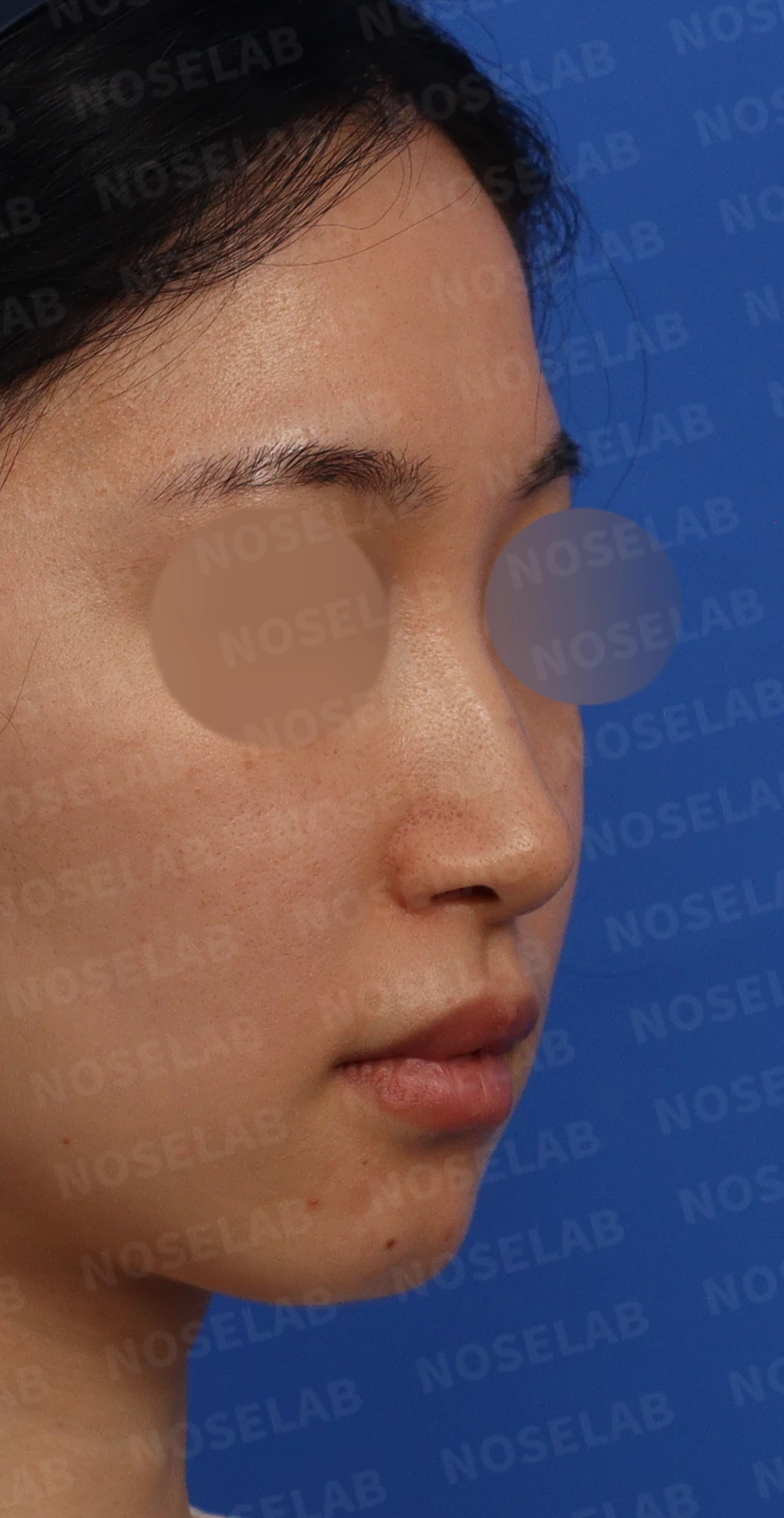
Front, profile, and oblique views from the preoperative design consultation.
Front view:
The columella is drooping, presenting an arrow-shaped nose
Nostril asymmetry observed
The overall nose appears deviated
Profile view:
Irregular nasal bridge
The nasal tip appears blunt and compressed
Signs of a protruding mouth are observed
Oblique view:
A dorsal hump is observed on the bridge
The nose appears long overall
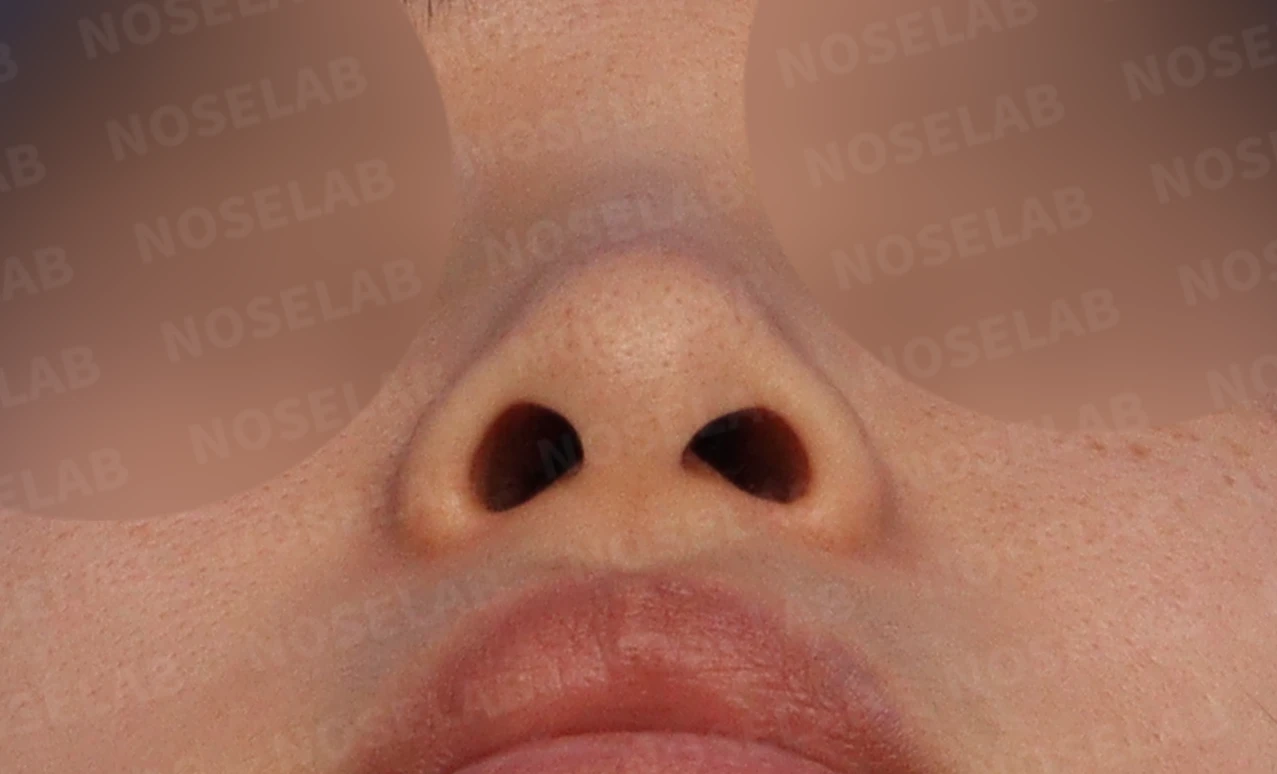
This is the basal (nostril) view.
Nostrils:
Noticeable nostril asymmetry
The nasal tip appears wide
2. Surgical plan
Taking into account the patient's condition and requests, the following surgical plan was established:
a) Septal extension (using septal cartilage and donor rib cartilage)
b) Lateral osteotomy (correcting a wide, deviated nasal bridge)
c) Dorsal hump trimming
d) Nasal bridge augmentation using a thin silicone implant (starting at the pupil line)
3. Surgical procedure
The following procedures were performed using a closed approach:
a) Septal extension:
Using septal cartilage and donor rib cartilage, the drooping nasal tip and nostril asymmetry were corrected.
Through this process, nasal tip support was reinforced, and the overall length of the nose was adjusted.
b) Lateral osteotomy:
Precise osteotomy was performed to correct the wide, deviated nasal bridge.
This improved the overall balance and symmetry of the nose.
c) Dorsal hump trimming:
The uneven dorsal hump area was delicately trimmed.
This created a smooth, natural straight bridge line.
d) Nasal bridge augmentation:
A thin silicone implant was placed on the nasal bridge, starting at the pupil line.
This appropriately adjusted the bridge height and improved the overall nasal balance.
All procedures were performed using a closed approach, completing the surgery without external scars.
4. Before-and-after photo comparison
Comparing photos taken immediately after surgery on day 0 shows the following improvements: Photos taken immediately after surgery show swelling and may differ from the final result.
Front view:
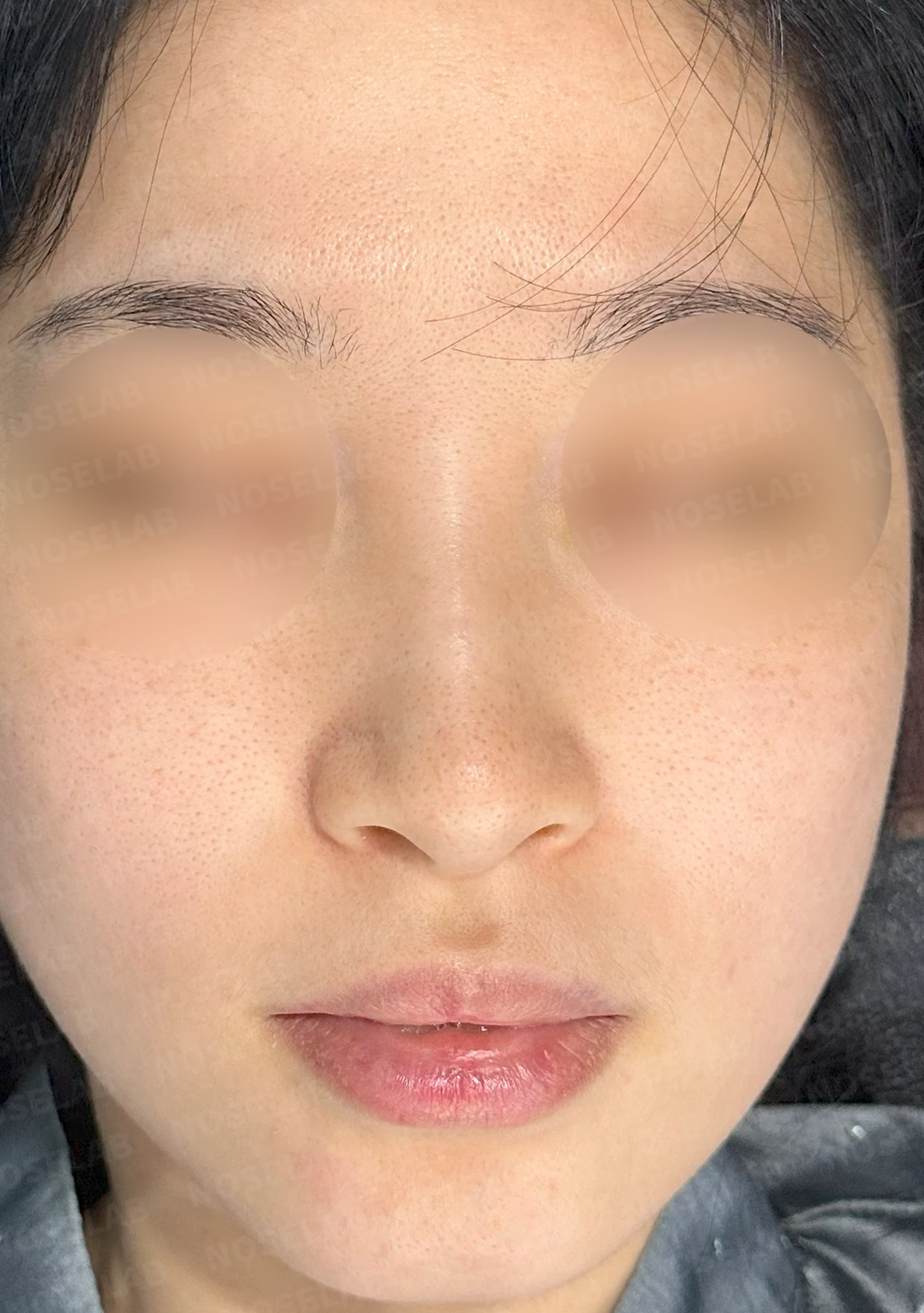
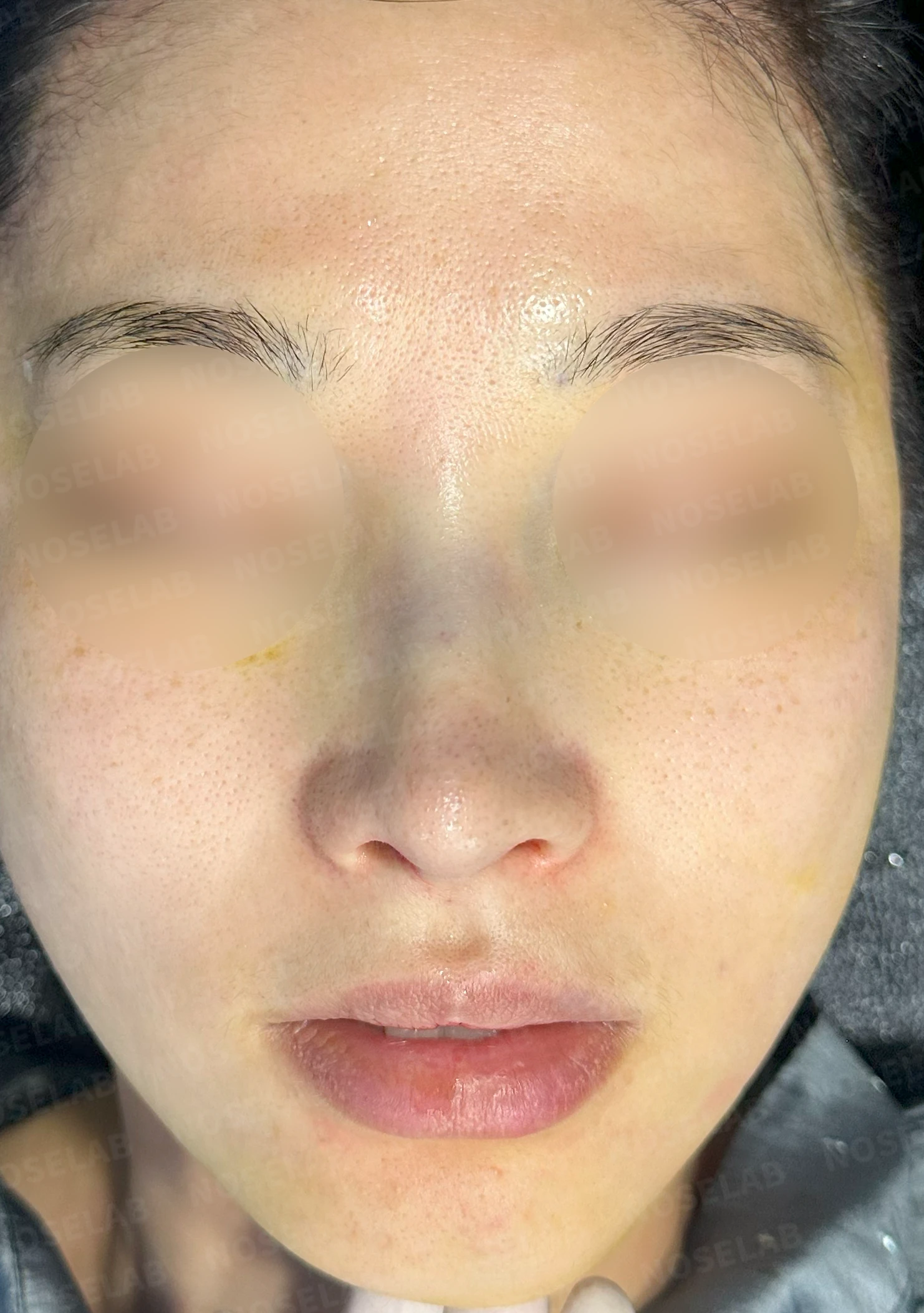
Before surgery / Day 0 immediately after surgery Photos taken immediately after surgery show swelling and may differ from the final result.
The arrow-shaped appearance was significantly improved.
The nostril asymmetry was visibly corrected.
The crooked nose was straightened.
Profile view:
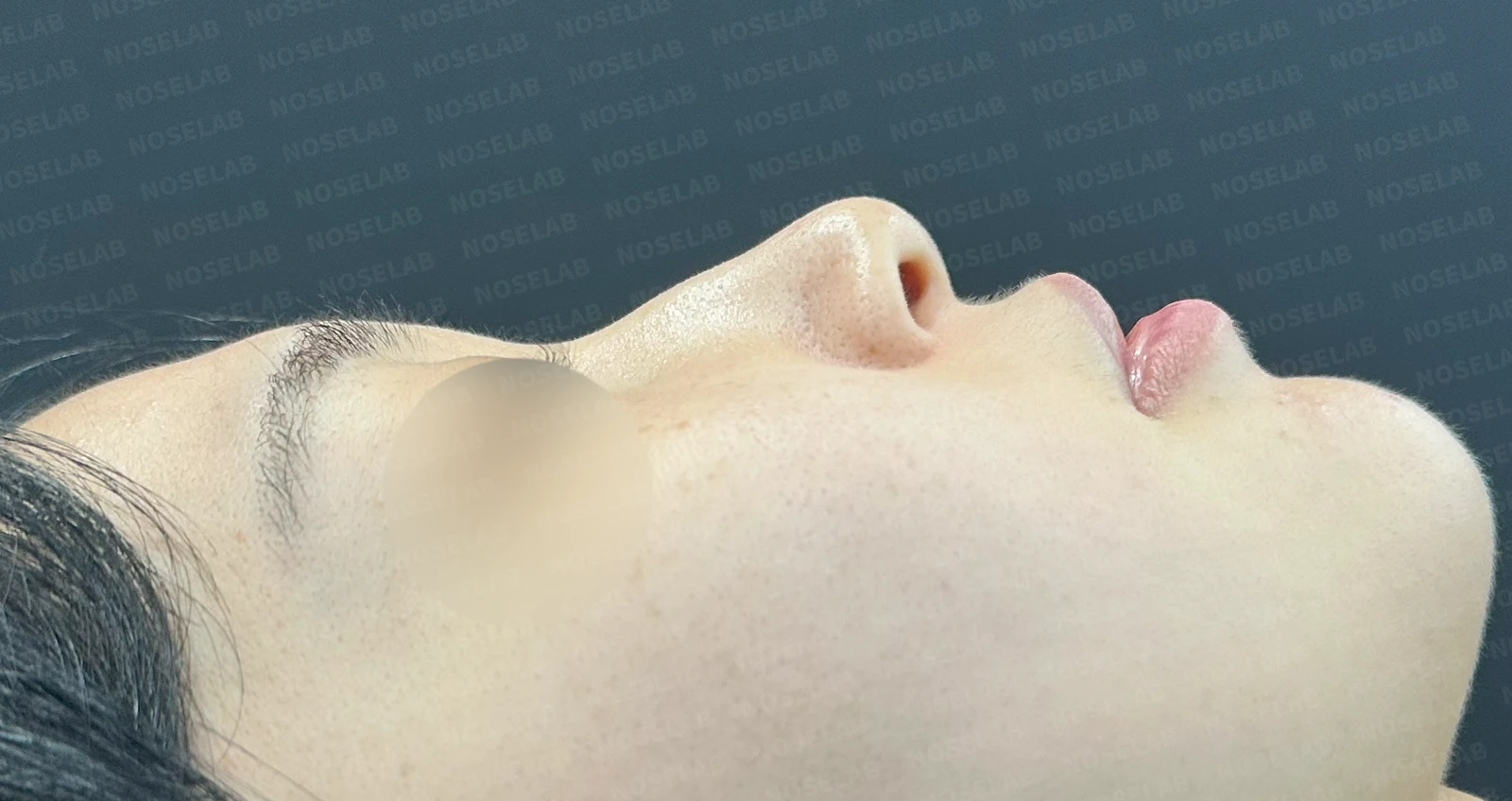
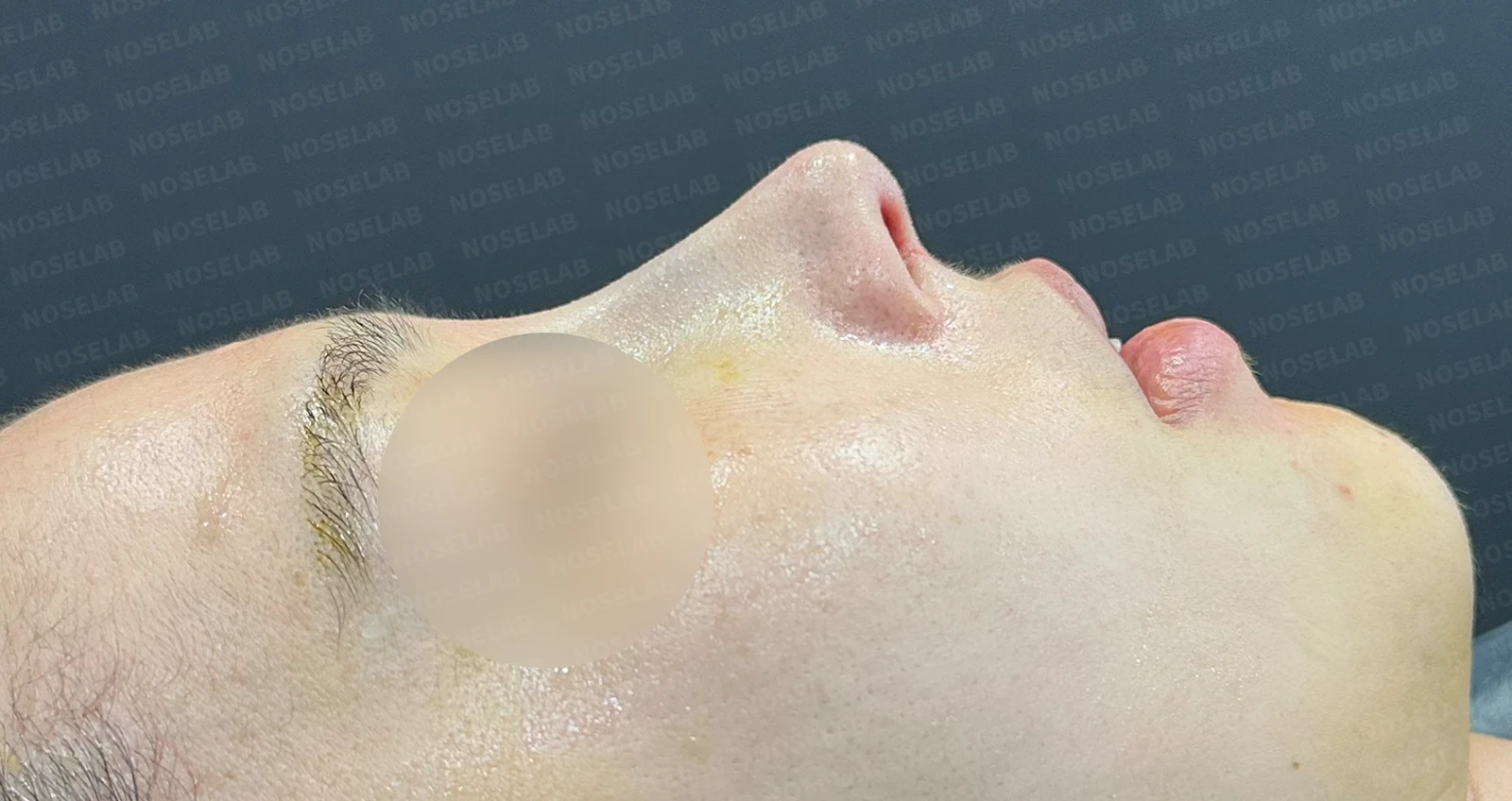
Before surgery / Day 0 immediately after surgery Photos taken immediately after surgery show swelling and may differ from the final result.
The uneven nasal bridge was improved into a smooth, natural straight bridge line.
The blunt, wide nasal tip was transformed into a smooth, defined shape.
The appearance of a protruding mouth has softened, improving overall facial balance.
Oblique view:
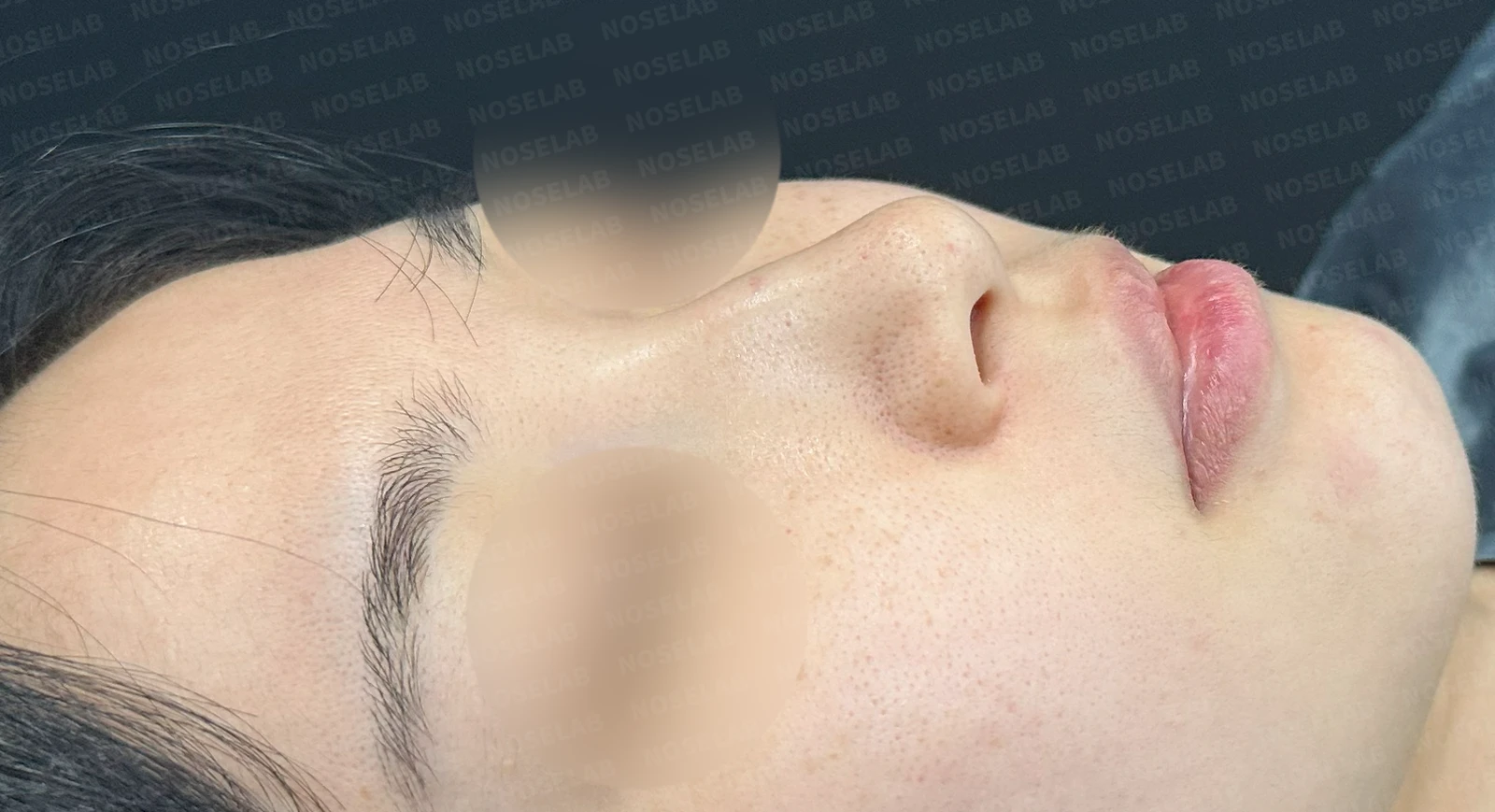
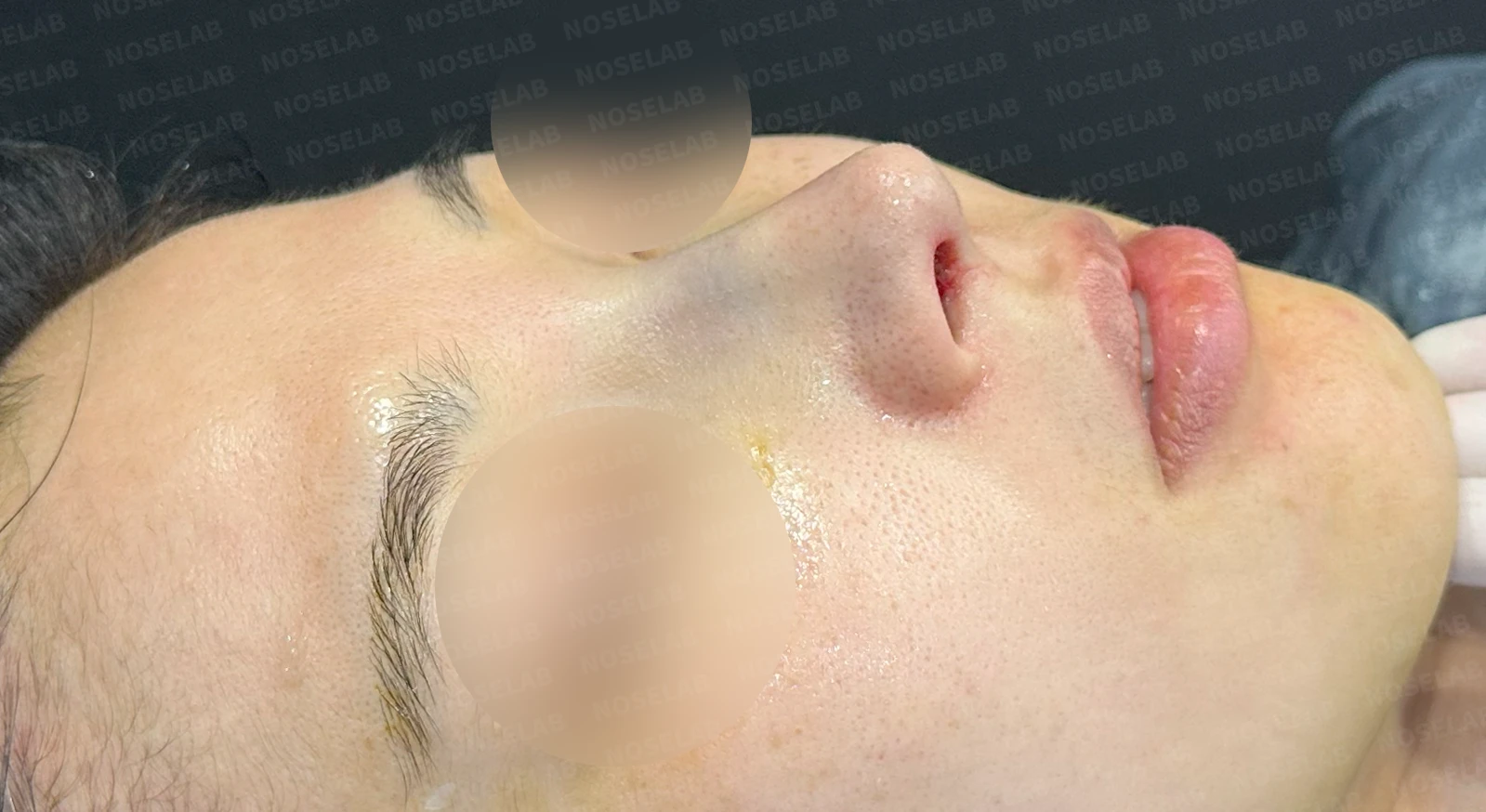
Before surgery / Day 0 immediately after surgery Photos taken immediately after surgery show swelling and may differ from the final result.
The dorsal hump has been improved, showing a smooth bridge line.
The nose, which previously appeared long overall, was shortened to natural proportions.
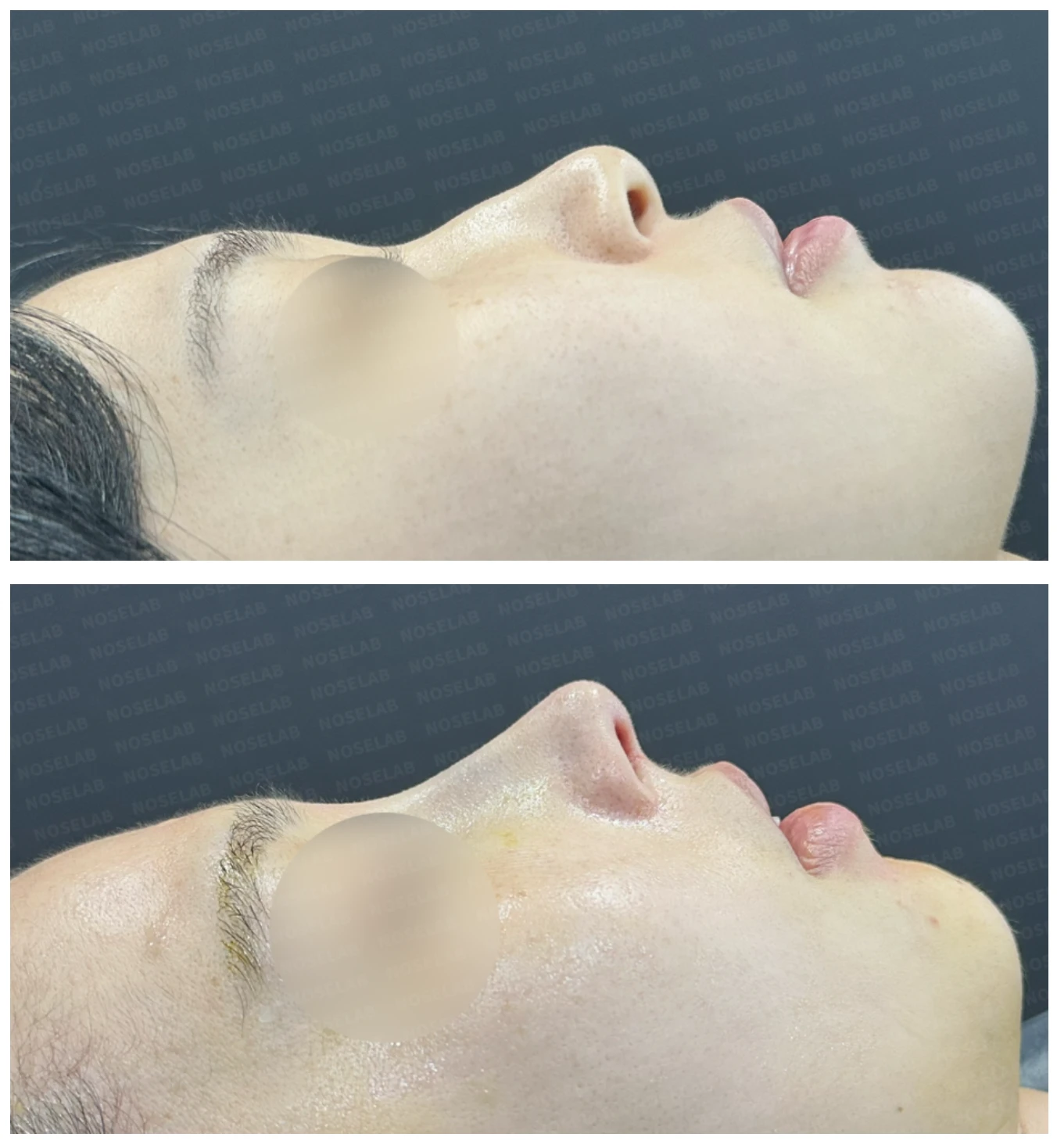
Nostrils:
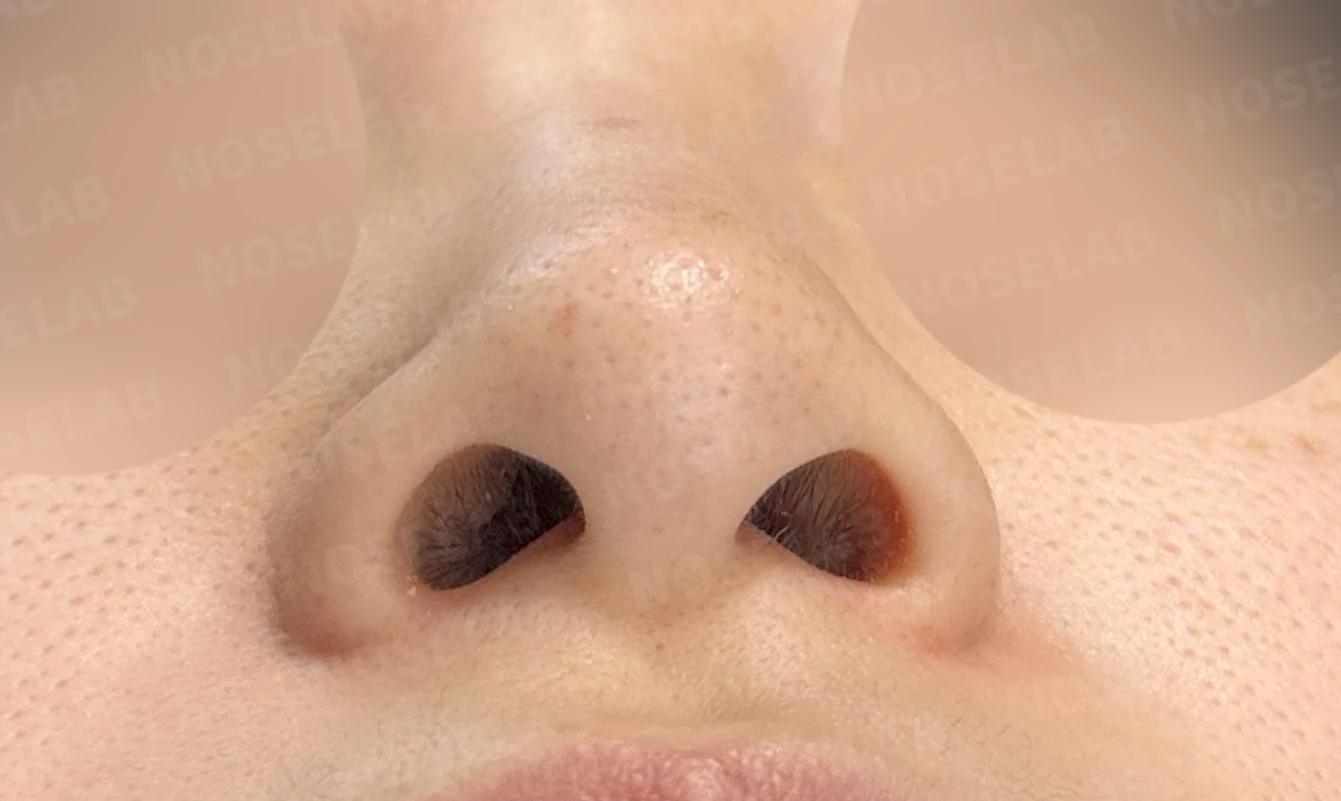
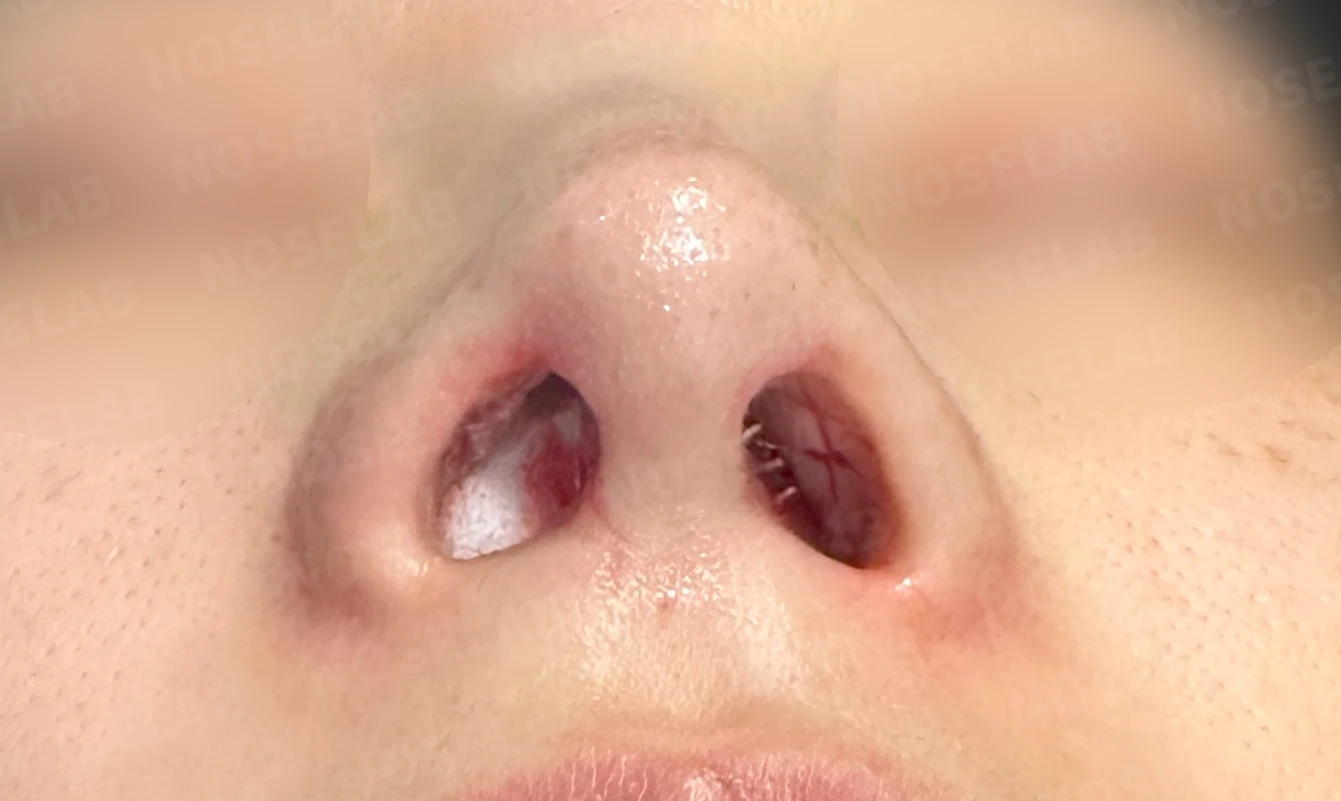
Before surgery / Day 0 immediately after surgery Photos taken immediately after surgery show swelling and may differ from the final result.
Nostril asymmetry improved significantly.
The wide nasal tip was appropriately narrowed, creating a refined look.
5. Photos immediately after surgery on day 0 Photos taken immediately after surgery show swelling and may differ from the final result.
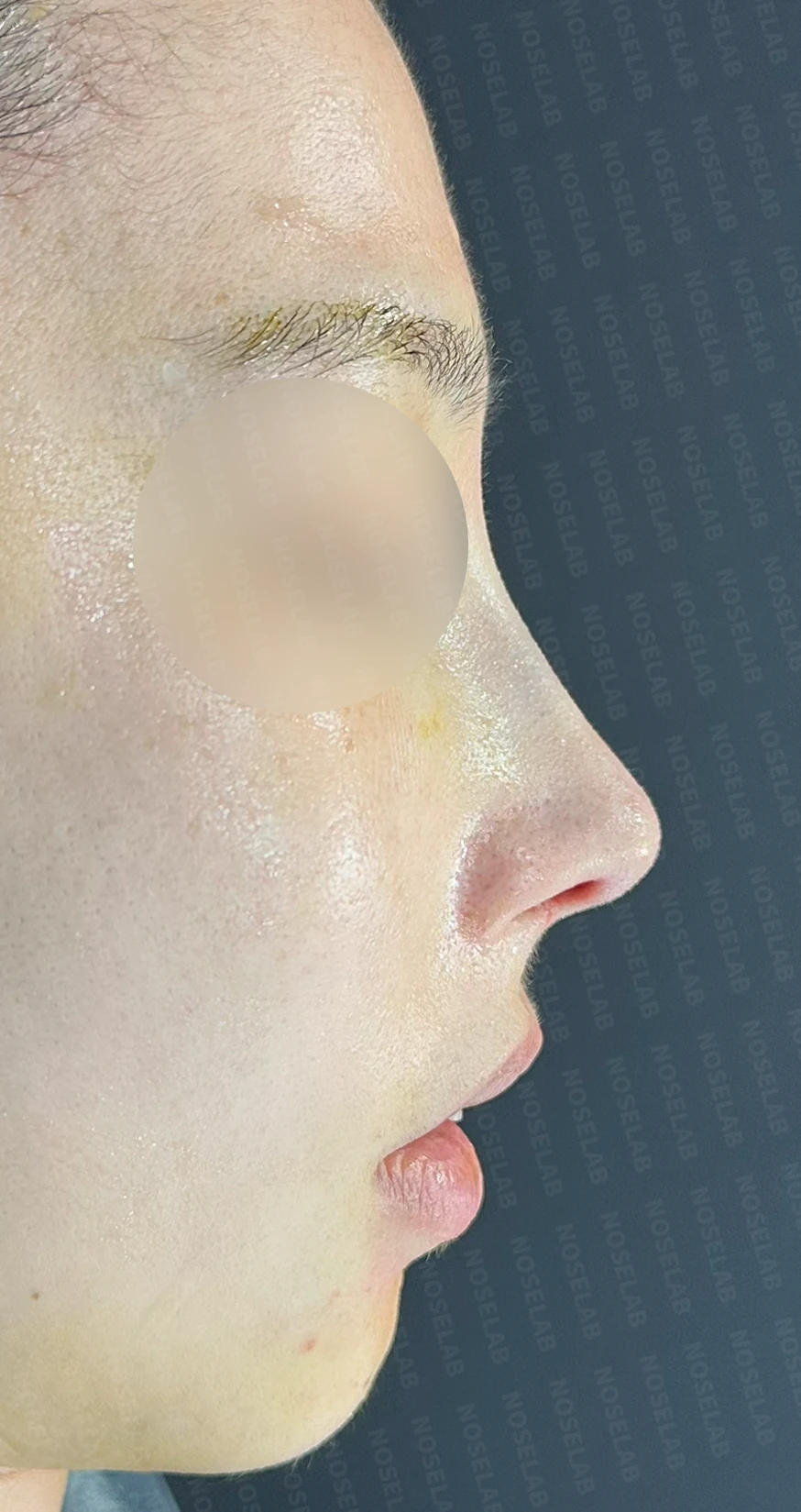
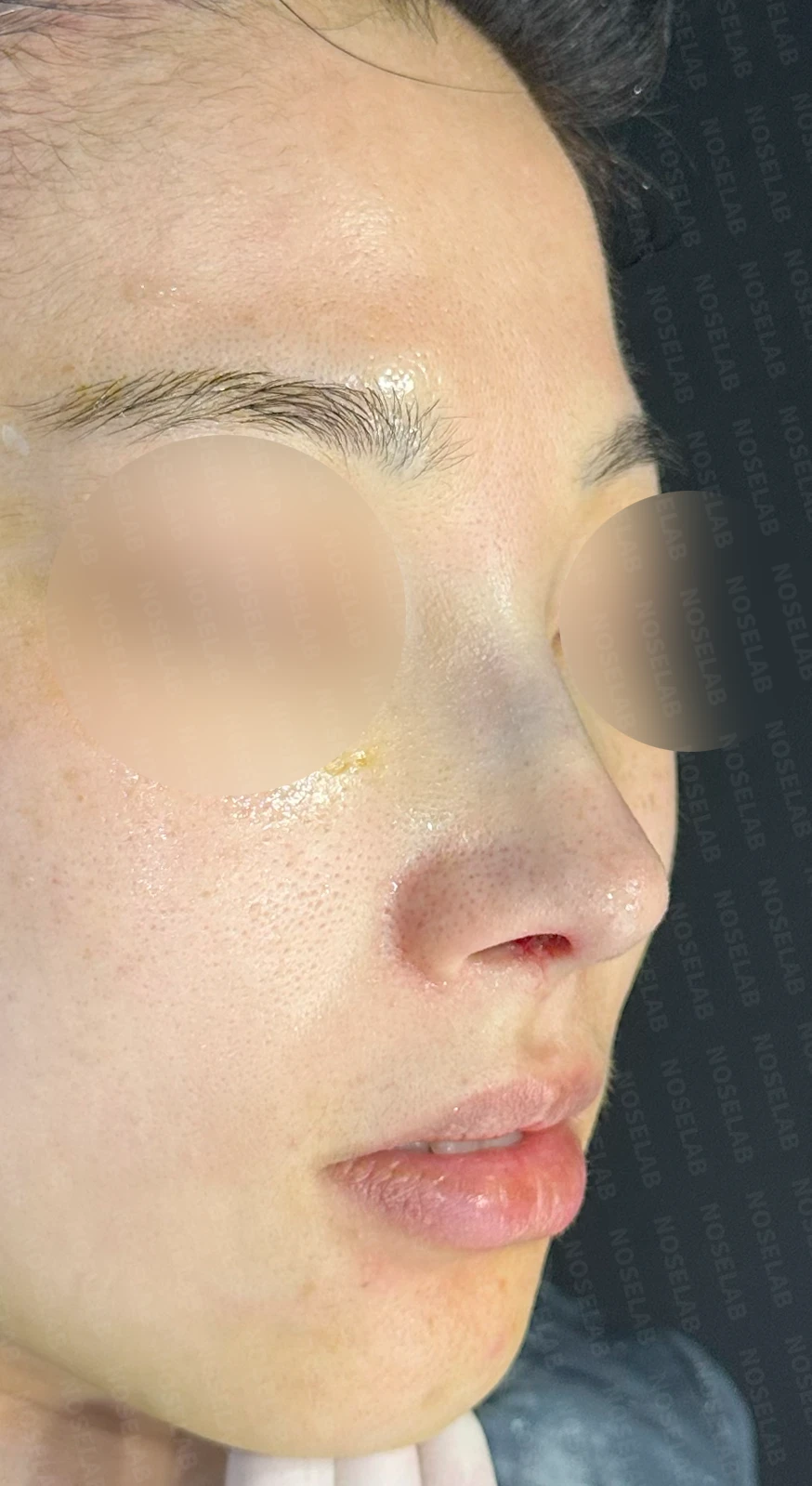
Front, profile, and oblique views taken immediately after surgery (day 0).Immediate postoperative photos show swelling and may differ from the final result.
Basal (nostril) view immediately after surgery (Day 0).Immediate postoperative photos show swelling and may differ from the final result.
6. Overall evaluation
This type of case demonstrates the correction of a patient with complex concerns, including a long nose, an arrow-shaped nose, a dorsal hump, and nostril asymmetry. Notable points include the following:
Adjustment of nasal length: Through septal extension, the long drooping nose was shortened to natural proportions. Rather than simply making the nose shorter, this is an important process that considers overall facial balance.
Correction of arrow-shaped nose: By raising the drooping columella and improving the tip shape, the arrow-shaped appearance was effectively corrected. This is a meaningful change that significantly improves the overall impression of the nose.
Improvement of dorsal hump: The uneven areas of the bridge were trimmed, and a thin silicone implant was used to create a smooth line. Through this, a natural and refined nasal bridge line was achieved.
Correction of nostril asymmetry: Along with septal extension, repositioning the lower lateral cartilages effectively improved nostril asymmetry. This is an important factor that greatly enhances overall balance and harmony when viewed from the front.
Closed approach: By performing all complex steps through a closed approach, surgical marks were minimized and the recovery period was shortened. This played a major role in achieving patient satisfaction.
The most important consideration in this surgery was improving each individual part of the nose while maintaining overall harmony and naturalness. While defining the nasal tip, it was kept balanced without overcorrection; while improving bridge height, the glabella height was maintained to prevent an unnatural appearance.
In addition, the shape of the nose was designed taking into account the patient's original facial features. Rather than simply pursuing an idealized nasal shape, this reflects my philosophy that creating a nose that best harmonizes with the patient's face is what truly matters.
7. Conclusion
I hope this case offers reassurance to those who are concerned about a long nose, an arrow-shaped nose, or a dorsal hump. Even with complex nasal concerns, a natural and pleasing nose can be achieved through proper surgical planning and technique.
Rhinoplasty must address functional aspects alongside aesthetic considerations. For instance, in this type of case, septal extension can improve nasal shape while simultaneously supporting breathing function.
NOSELAB provides customized surgical plans for each patient based on up-to-date medical techniques and extensive clinical experience. If you are considering rhinoplasty, we encourage you to consult with a specialist to find the approach best suited to you.
Lastly, I want to emphasize that rhinoplasty is not merely a cosmetic procedure, but a comprehensive process that considers overall facial balance and harmony. NOSELAB will continue to do its best to deliver healthy and beautiful nasal results for our patients.
This was Dr. Peter C. Kang. Thank you.
Thank you.
#rhinoplasty #longnosecorrection #arrowshapednose #dorsalhumpcorrection #nostrilasymmetry #septalextension #closedrhinoplasty #tipplasty #ENTrhinoplasty #naturalnose #bridgeaugmentation #nasolabialangle

Limitations and risks
When using donor rib cartilage, long-term follow-up is necessary because the grafted cartilage may resorb or warp.
When the septum is corrected at the same time, nasal obstruction may persist or recur, and in rare cases, septal perforation or changes in smell may occur.
Common potential risks include infection, bleeding, asymmetry, scarring, skin necrosis, and insufficient improvement; results vary depending on individual skin condition and previous surgical history.