Hello, I am Dr. Peter C. Kang.
Today, I would like to share a rhinoplasty case of a patient who was concerned about complex nasal issues including an upturned nose, a dorsal hump, and a crooked nose.
Through this case, let us take a detailed look at how various nasal concerns can be addressed simultaneously and examine the resulting changes.
1. Preoperative design consultation
Let us analyze the patient's preoperative condition in detail:
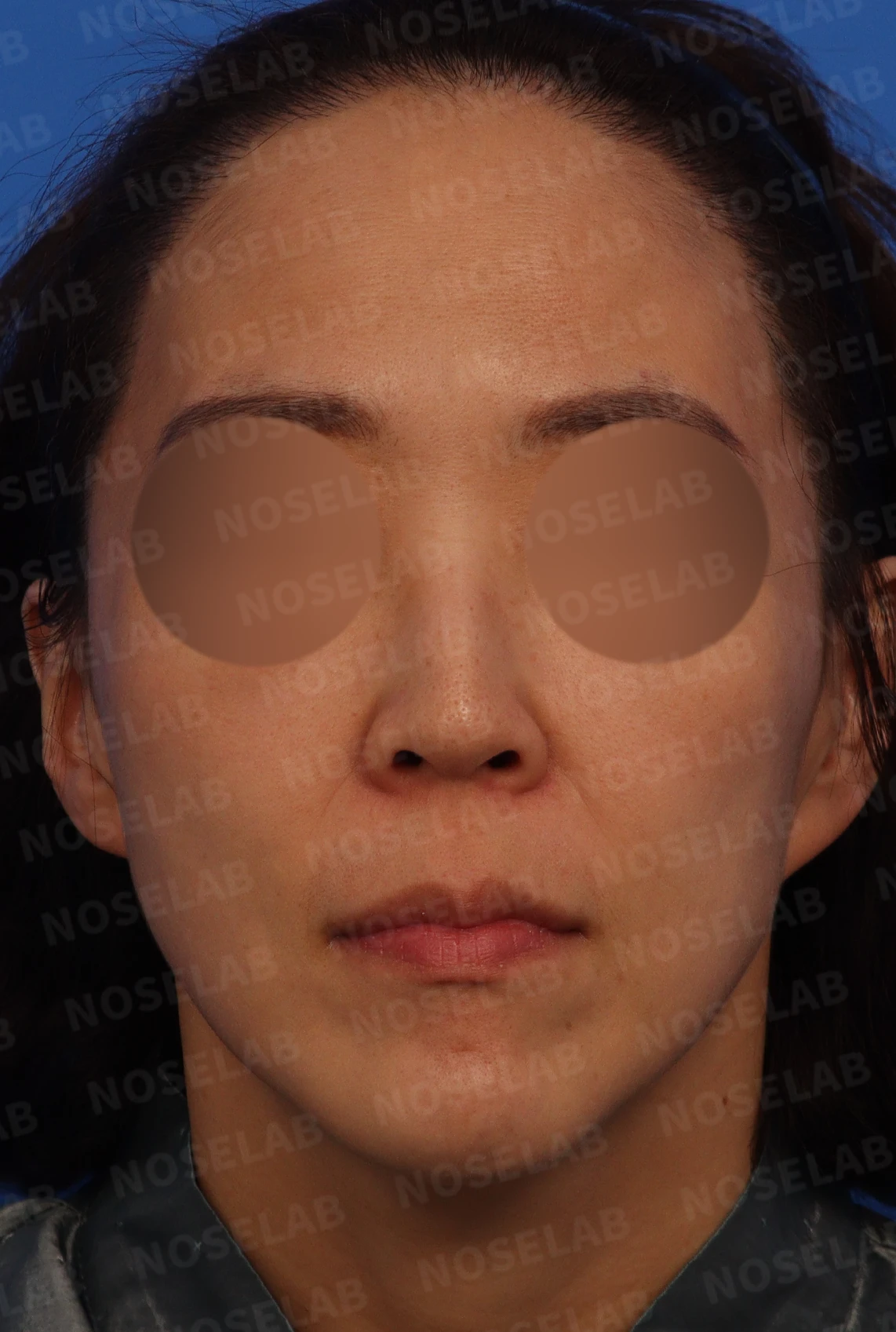
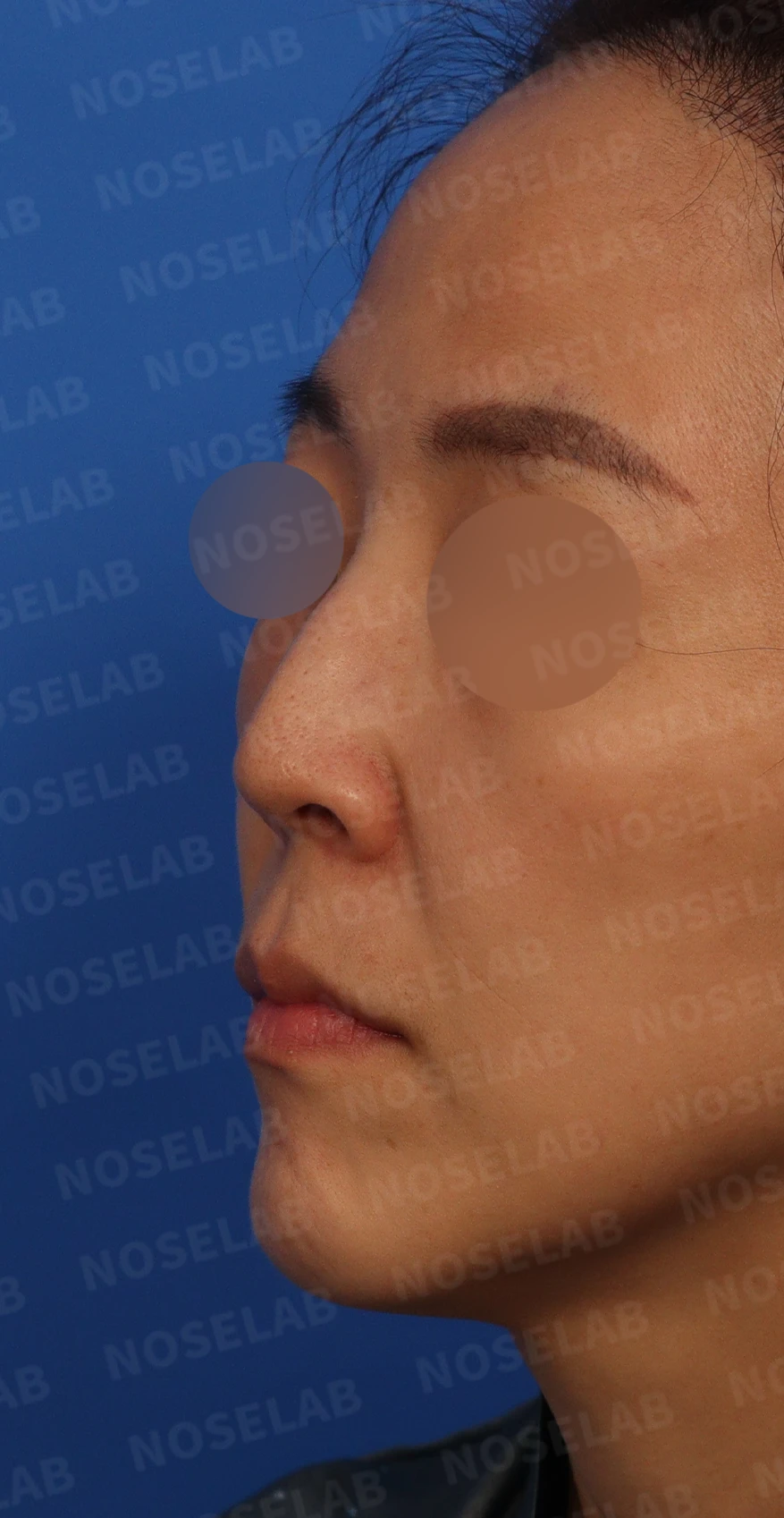
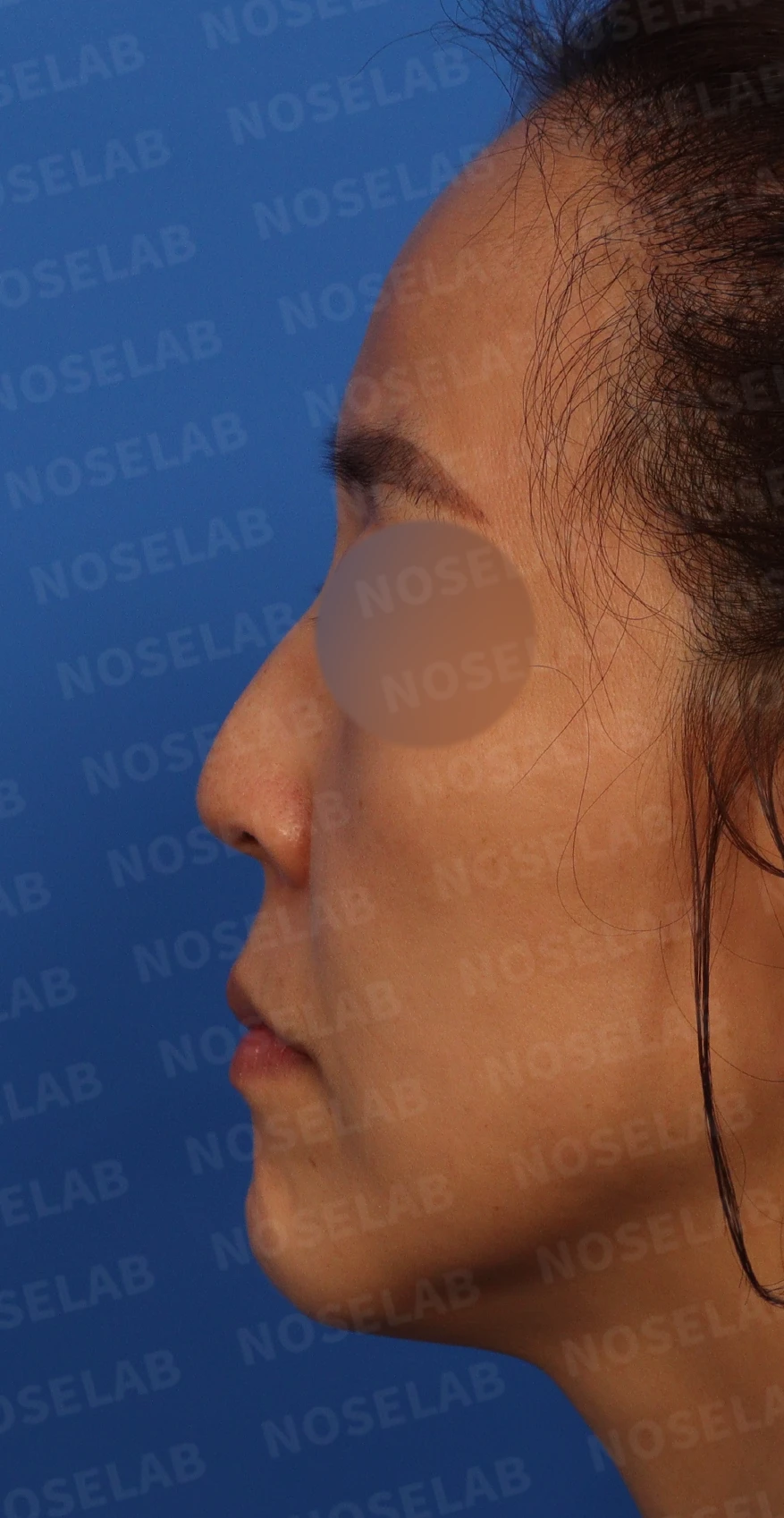
Preoperative design consultation: front, left oblique, and profile views.
Front view:
- Overall deviation of the nose
- The nasal tip is bulbous and flared
- Upturned nasal shape with significant nostril show
- The philtrum appears long
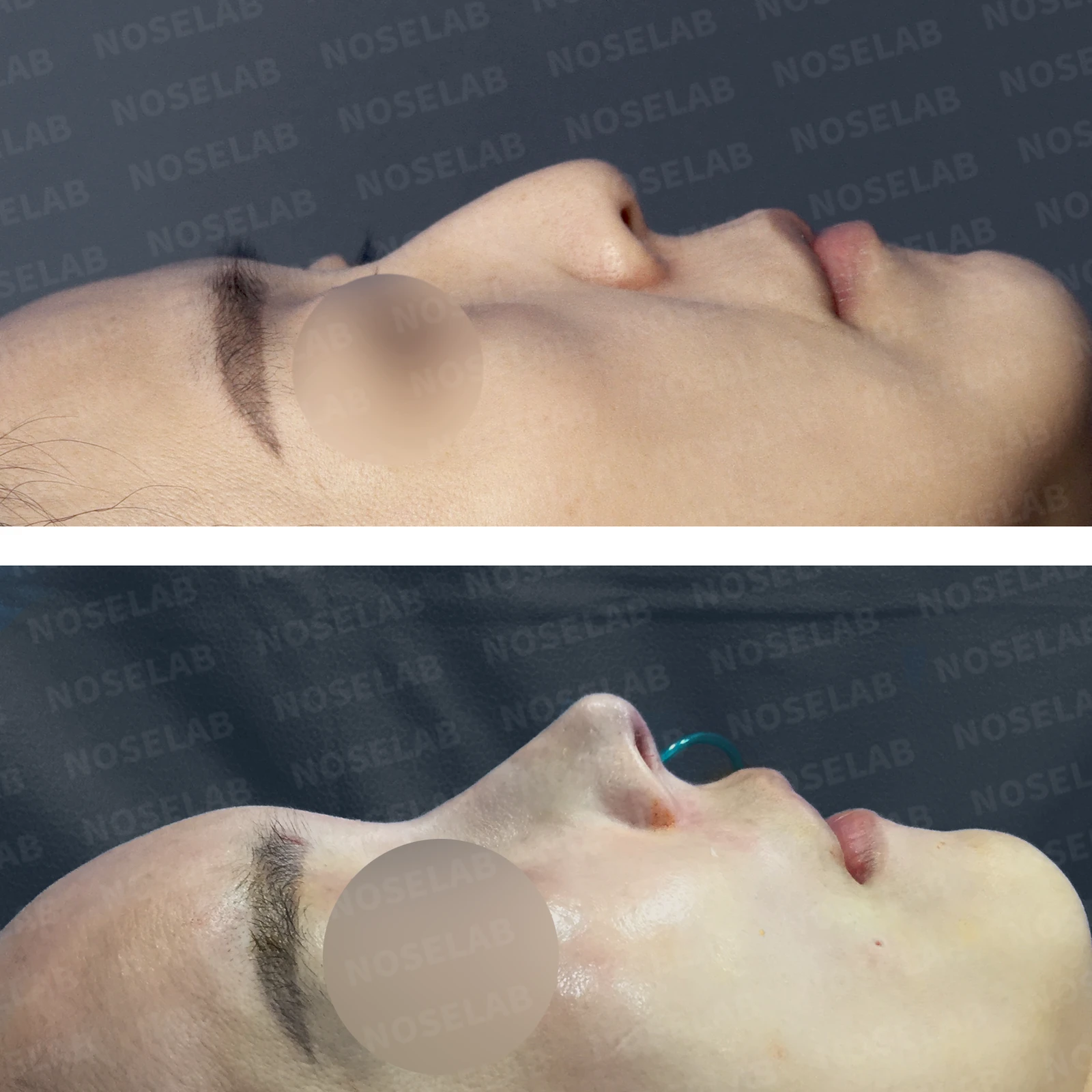
Profile view:
- The nasal tip appears drooping
- Prominent dorsal hump clearly observed
- Nasal tip appears short
Oblique view:
- Drooping of the nasal tip appears more pronounced
- Characteristics of both a dorsal hump and an upturned nose observed concurrently
Nostrils:
- Noticeable nostril asymmetry
- Nasal base appears wide
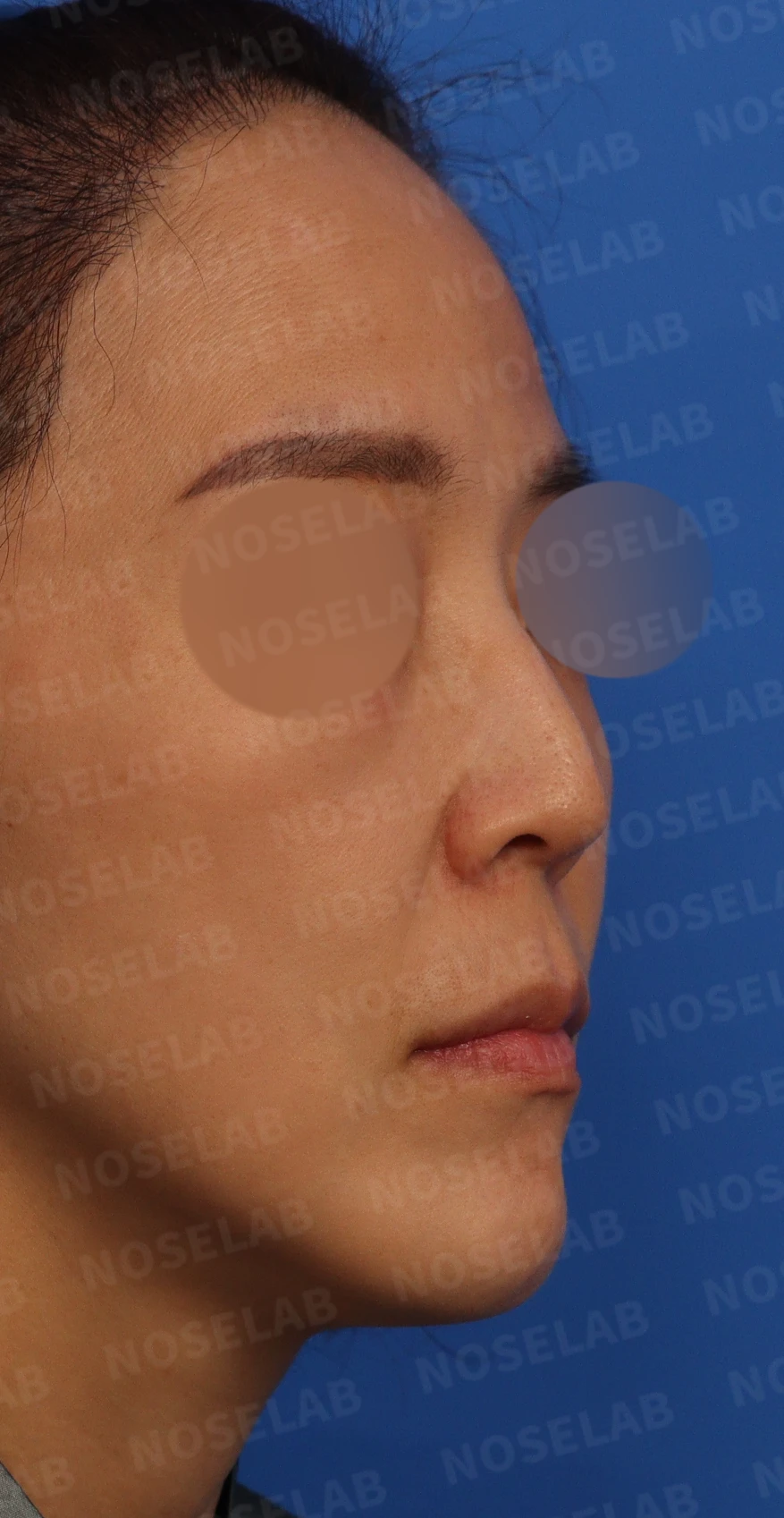
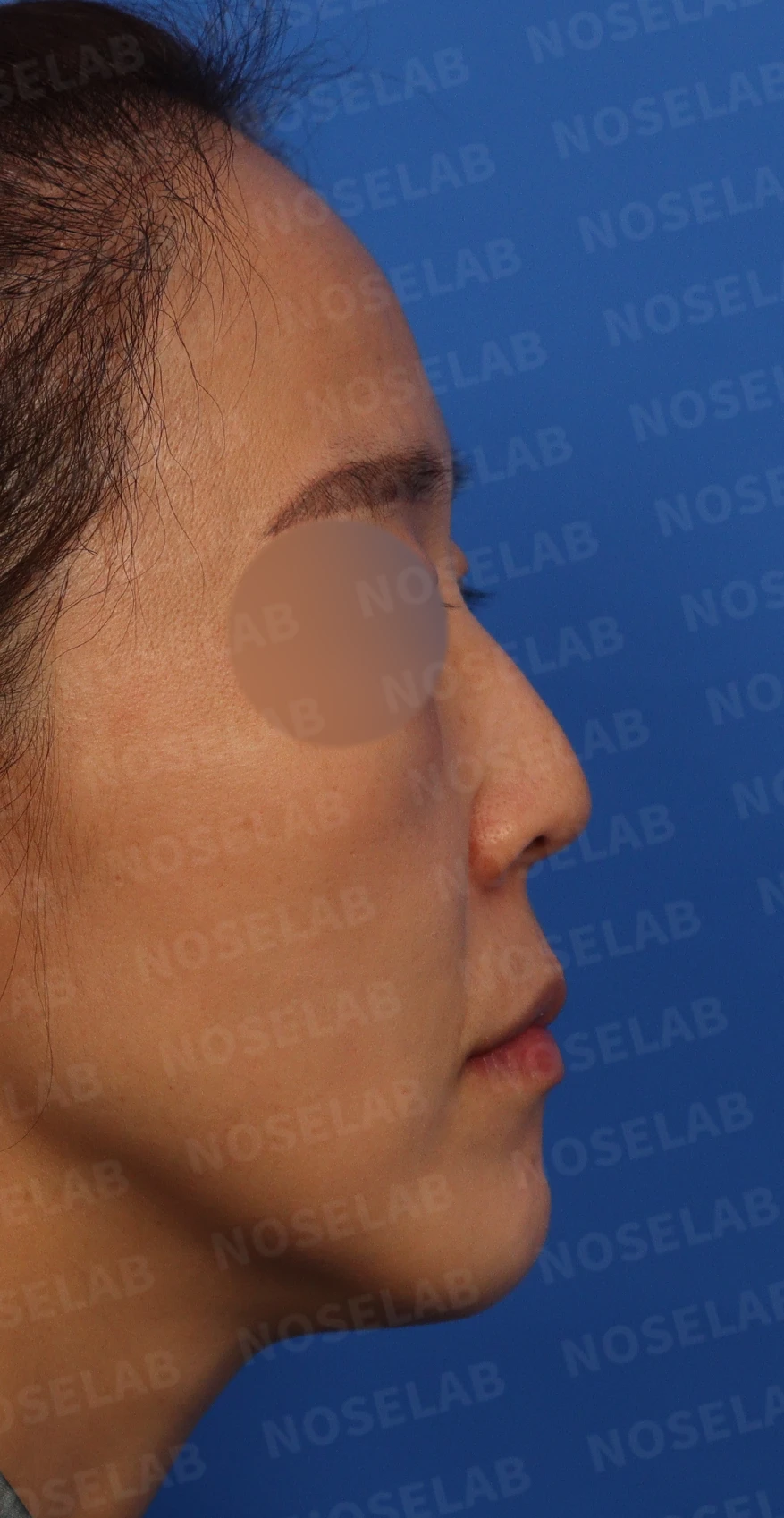
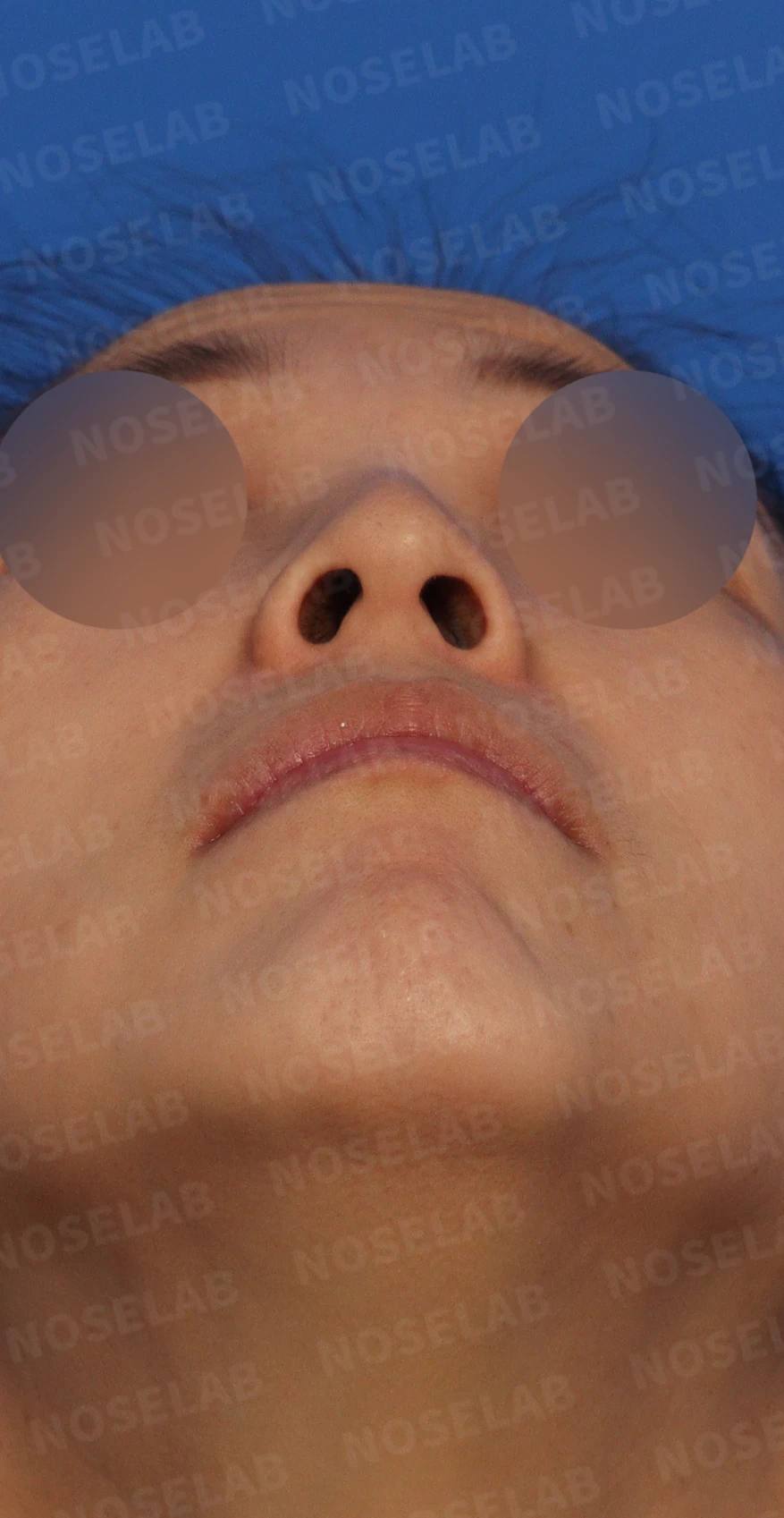
Preoperative design consultation photos: right profile view, oblique view, and nostril (basal) view.
Patient's main requests:
1. Improvement of frontal nostril show (upturned nose)
2. Correction of dorsal hump
3. Improvement of overall nasal balance and harmony
2. Surgical plan and procedure details
The following procedures were performed using a closed approach:
a) Septal extension:
- Using septal cartilage and donor rib cartilage, the nasal tip was elongated and projected with defined support.
- Through this approach, both the drooping tip and the upturned nose were improved simultaneously.
b) Nasal tip correction:
- The blunt, splayed nasal tip was moderately elevated, and the tip cartilages were delicately refined to create a natural contour.
c) Lateral osteotomy:
- The deviated nasal framework was straightened, and the splayed appearance of the bridge was corrected.
d) Correction of the nasolabial angle:
- By adjusting the position between the nasal tip and the upper lip, a philtrum that appeared long was naturally corrected.
- This also produced an improvement in the appearance of a protruding mouth.
e) Augmentation of the nasal bridge:
- Using a silicone implant, the glabella was naturally elevated to make the deviated nasal bridge appear straight and to improve the overall length of the nose.
f) Correction of nostril asymmetry:
- Nostril asymmetry was improved through cartilage repositioning and suturing techniques.
All procedures were performed using a closed approach, completing the surgery without external scars.
3. Comparison of before-and-after photos
Comparing photos taken immediately after surgery on day 0 shows the following improvements: Photos taken immediately after surgery show swelling and may differ from the final result.
Front view:
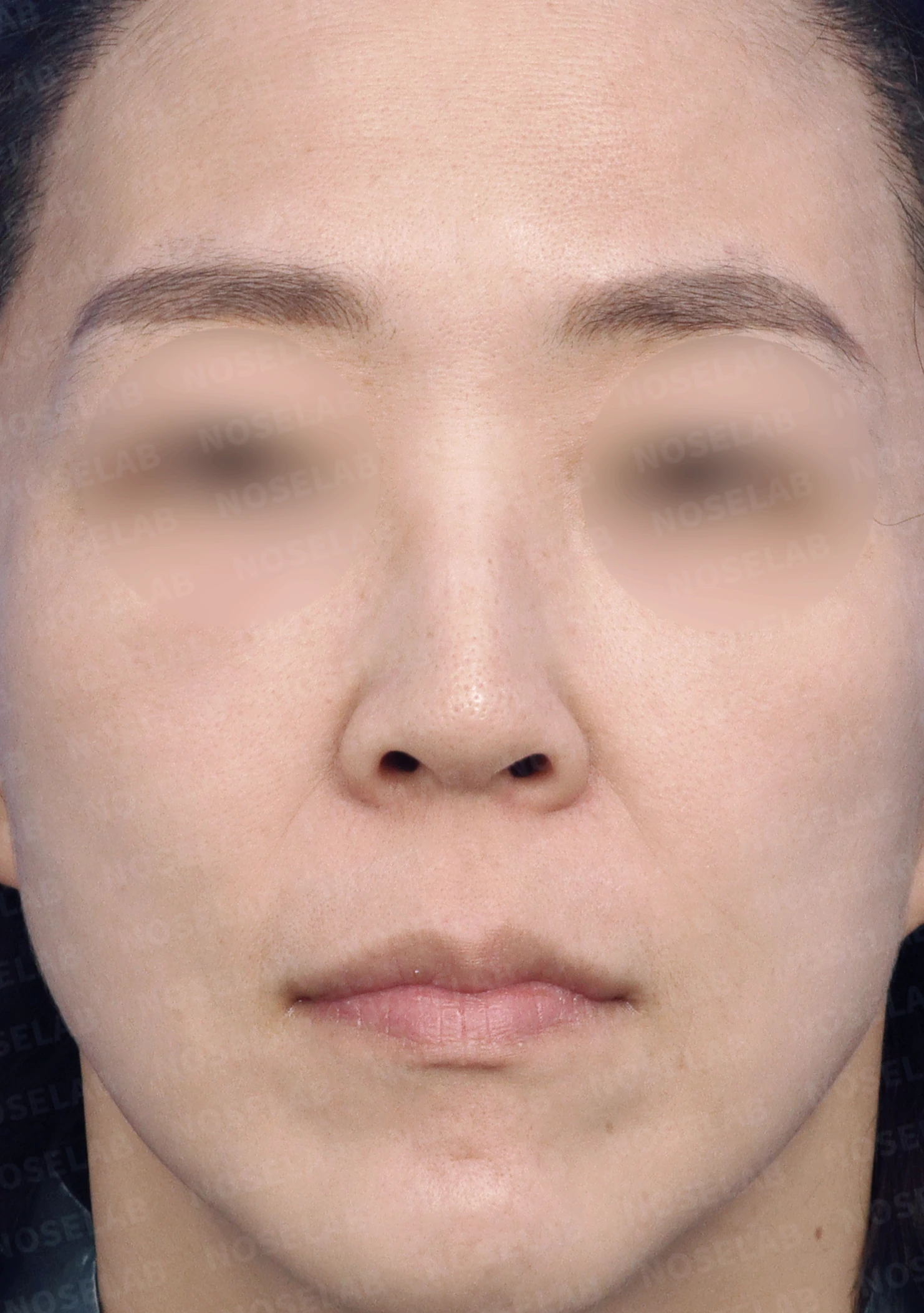
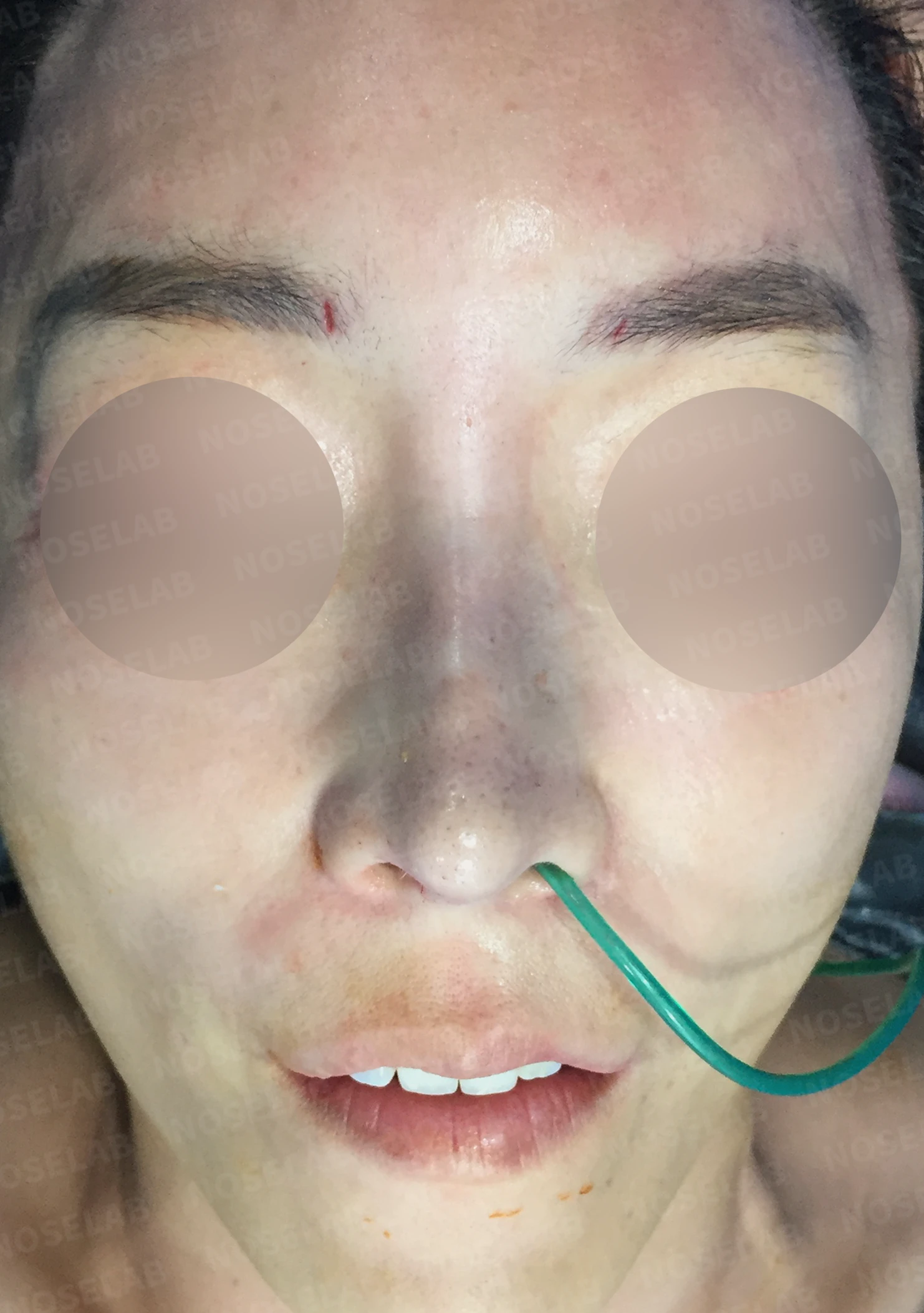
Before surgery / Day 0 immediately after surgery Photos taken immediately after surgery show swelling and may differ from the final result.
- The previously crooked nose was straightened.
- The blunt, wide nasal tip was refined into a delicate and natural shape.
- Excessive nostril show caused by the upturned nose was naturally reduced.
- The perceived length of the philtrum improved, enhancing overall facial balance.
Profile view:
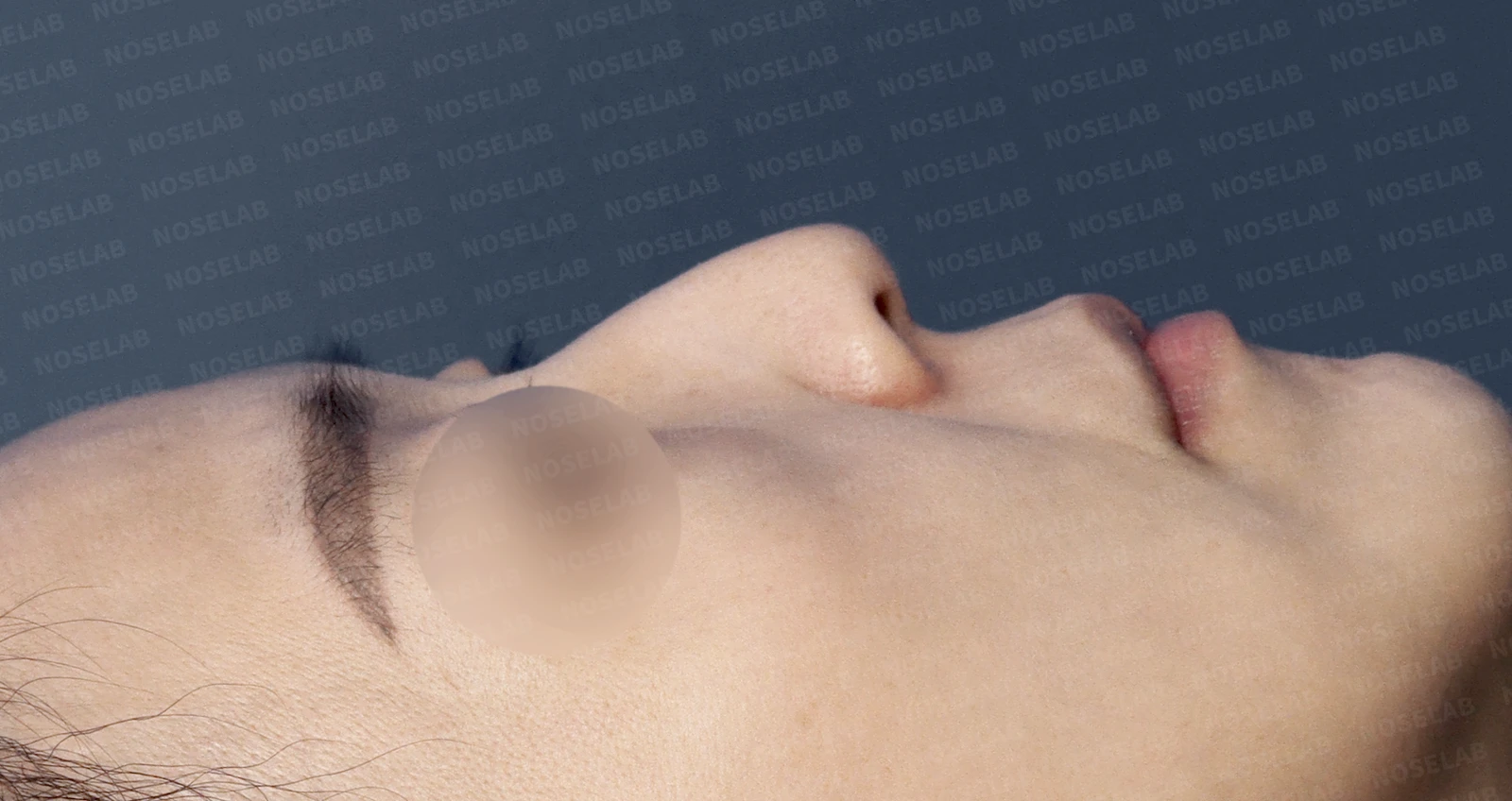
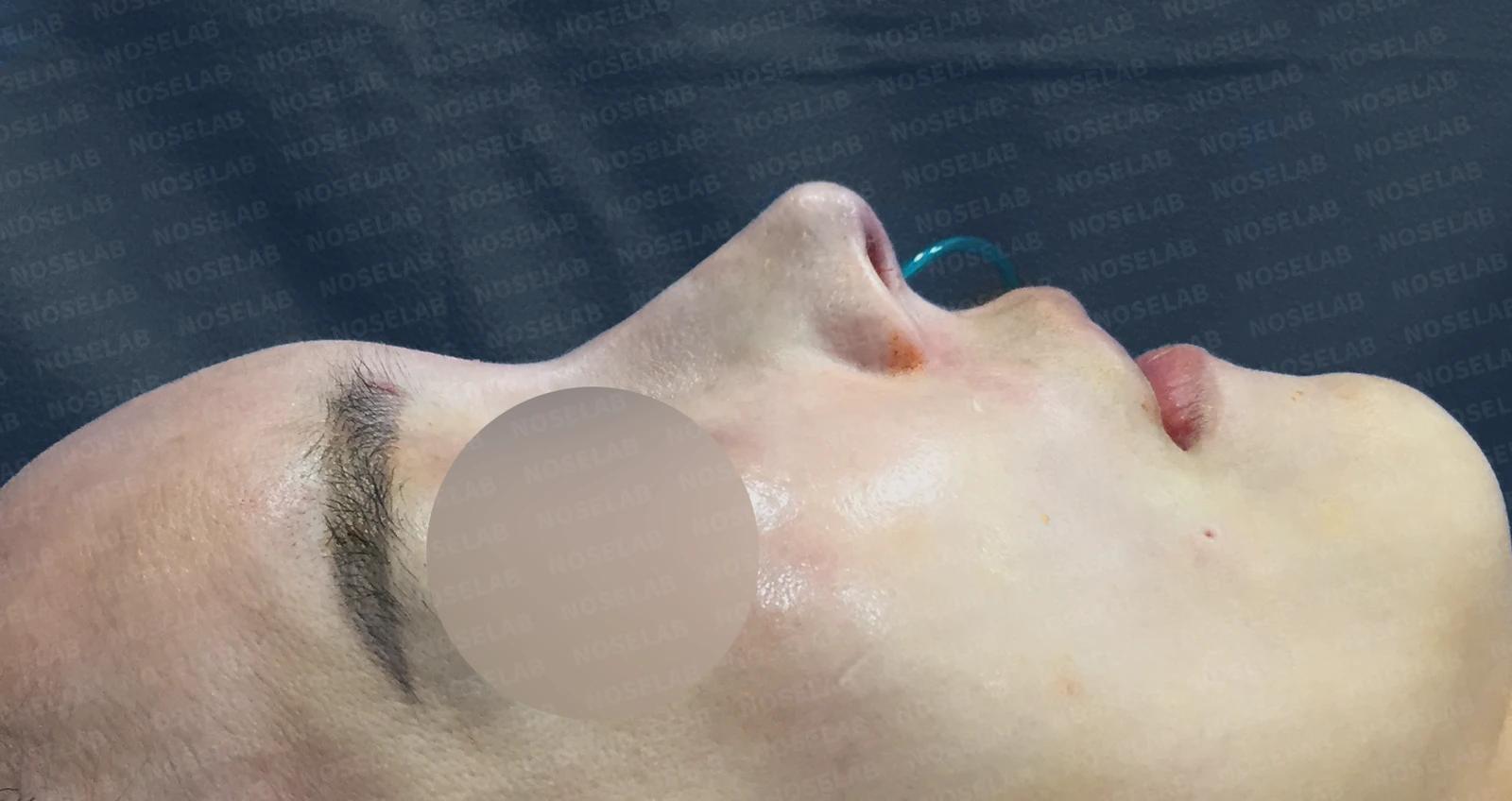
Before surgery / Day 0 immediately after surgery Photos taken immediately after surgery show swelling and may differ from the final result.
- The nasal tip, which previously appeared drooping, is now well projected and elevated.
- The dorsal hump was naturally corrected, creating a smooth straight bridge line.
- The overall length of the nose was refined, achieving better harmony with the rest of the face.
Oblique view:
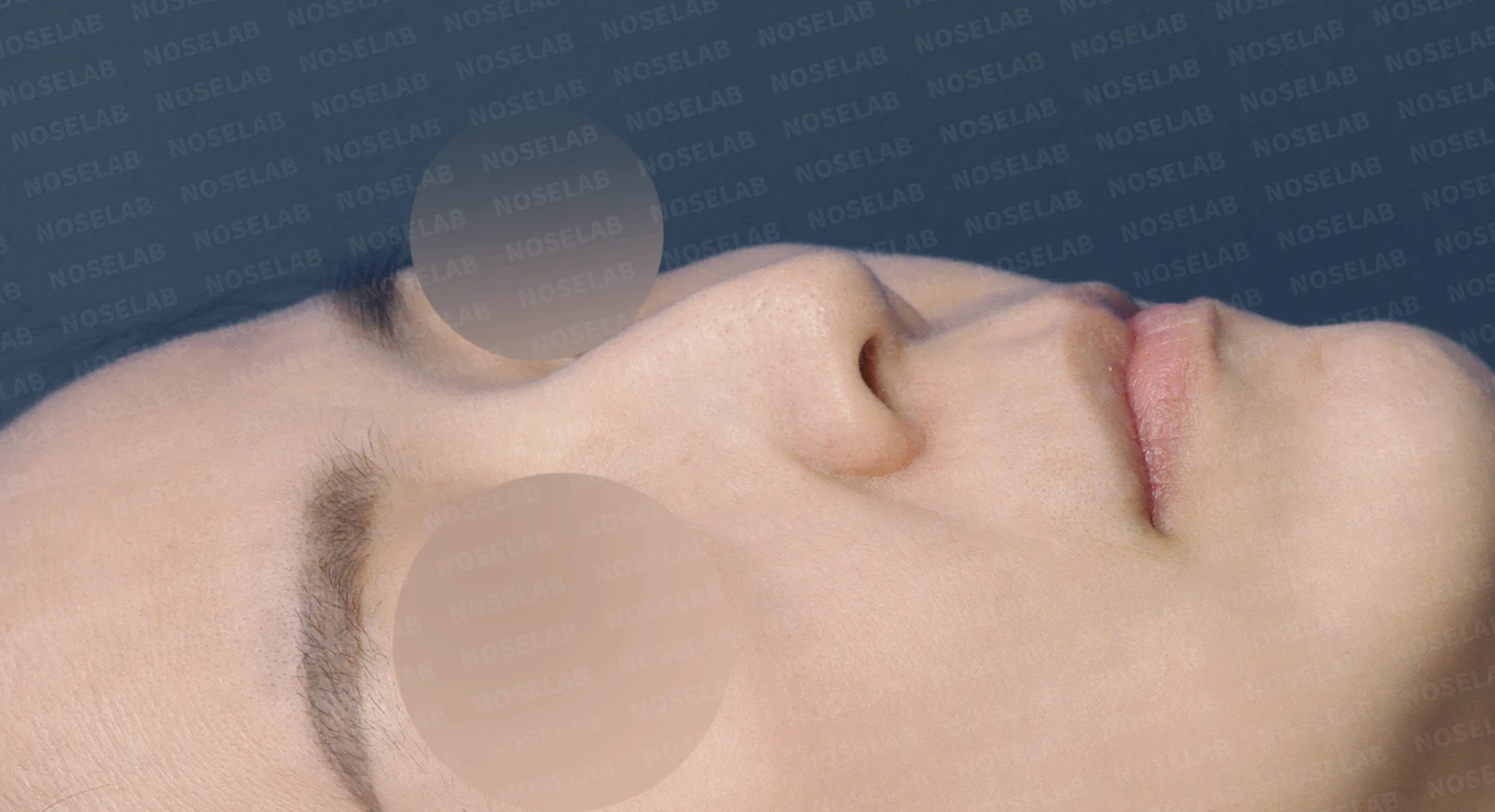
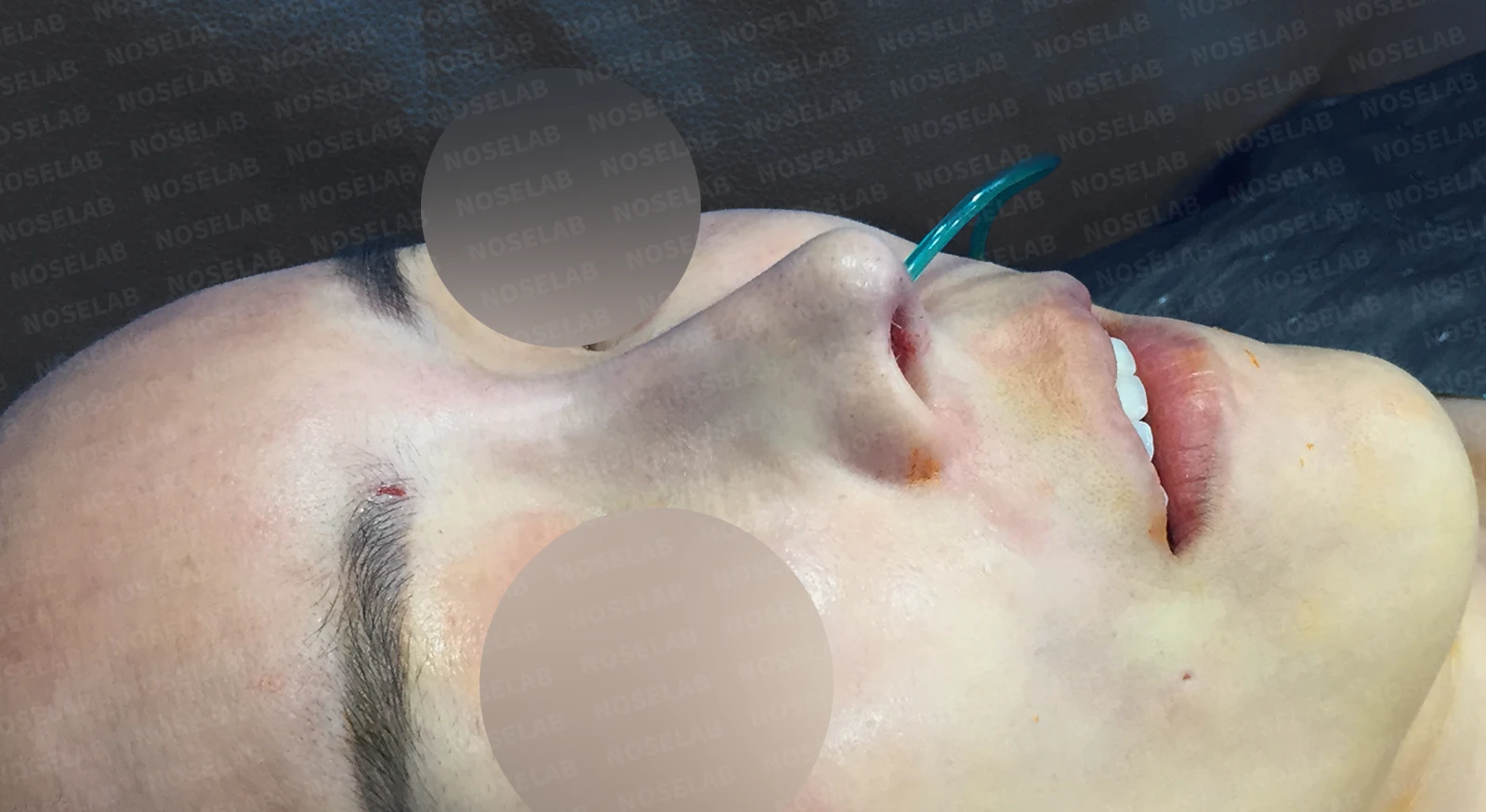
Before surgery / Day 0 immediately after surgery Photos taken immediately after surgery show swelling and may differ from the final result.
- Improvement in tip drooping created a well-defined three-dimensional nasal profile.
- Resolving the features of both the dorsal hump and the upturned nose resulted in a natural nasal contour.
Nostrils:
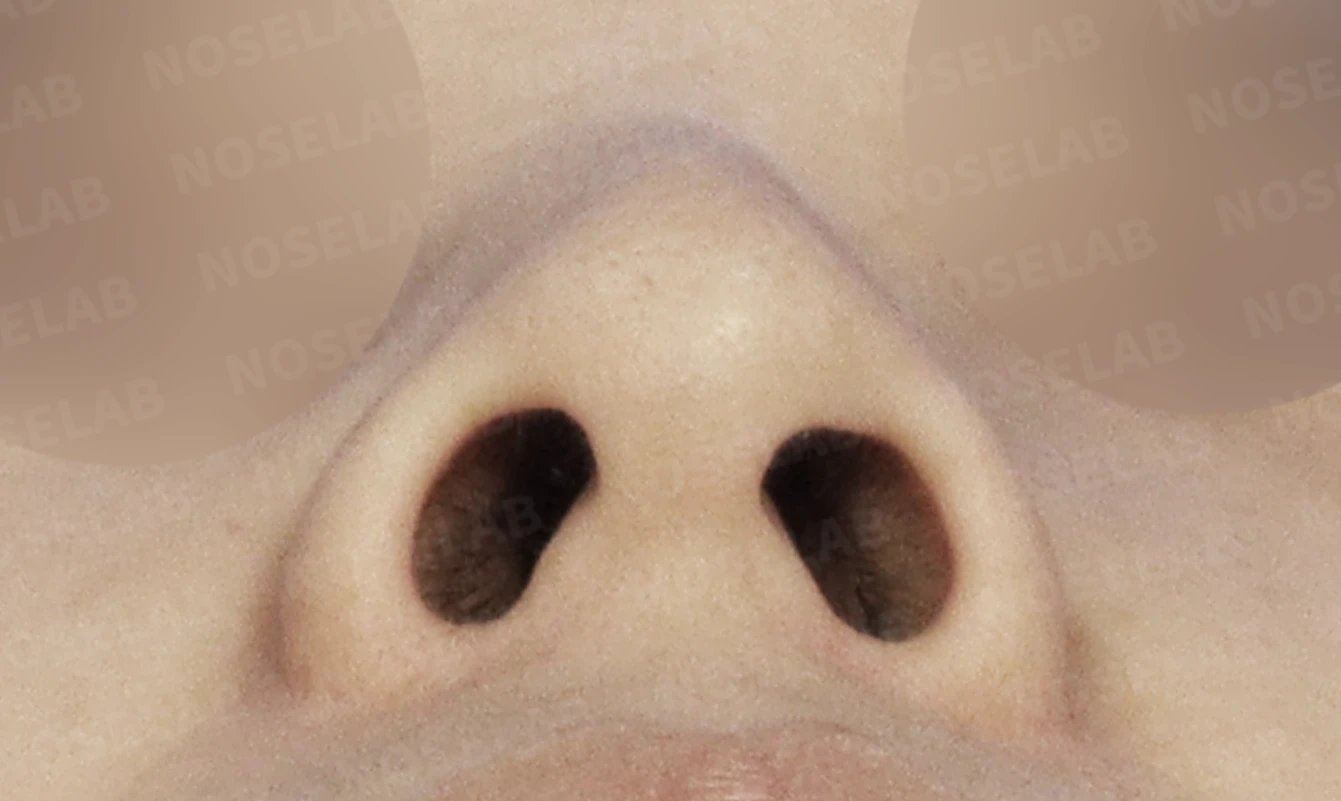
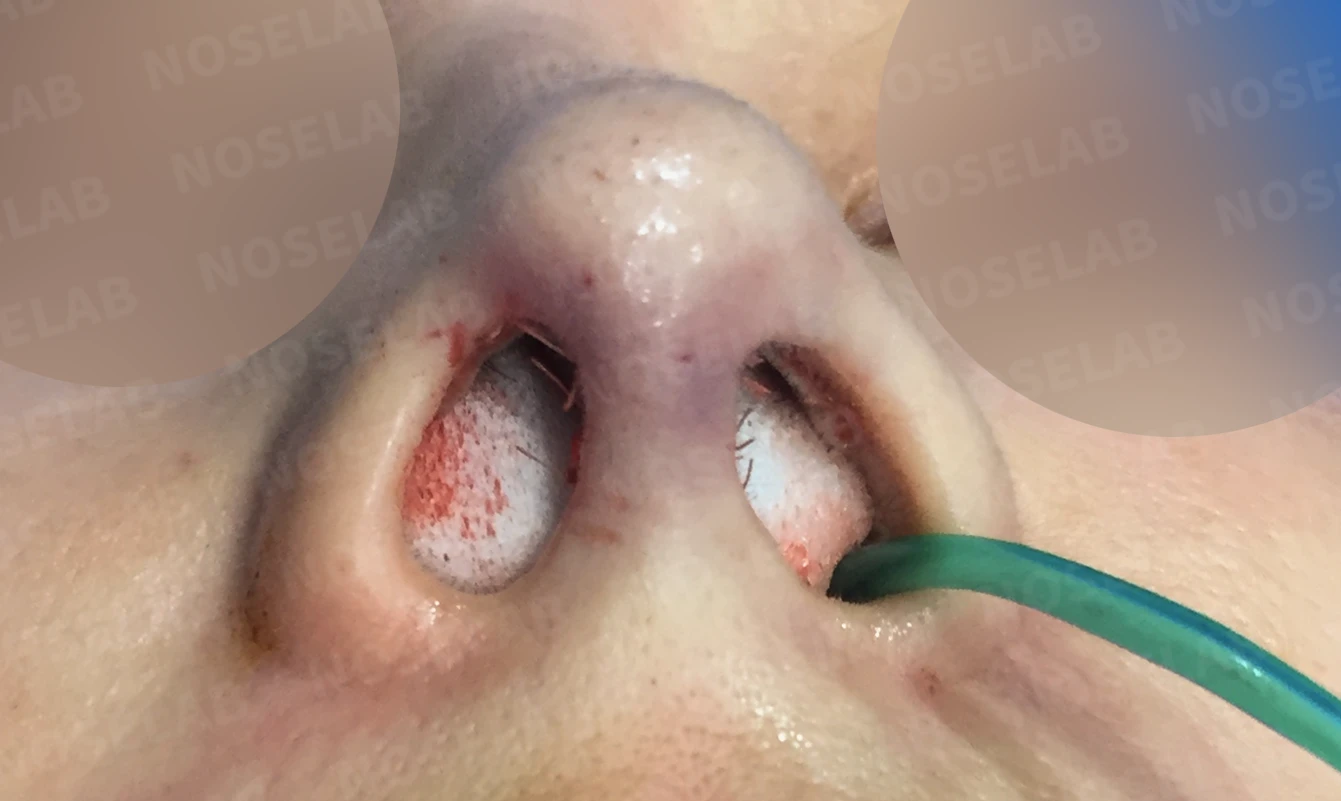
Before surgery / Day 0 immediately after surgery Photos taken immediately after surgery show swelling and may differ from the final result.
- Nostril asymmetry improved significantly.
- The wide appearance of the nasal base was naturally corrected.
4. Conclusion
This case represents a successful correction addressing complex nasal concerns simultaneously, including an upturned nose, a dorsal hump, and deviation. Key points of note include:
1. Tip correction through septal extension grafting:
Septal extension grafting using septal cartilage and donor rib cartilage played a major role in addressing both tip drooping and the upturned nose concurrently. This technique provides structural support to the nasal tip and is effective in shaping a natural contour.
2. Correction of the crooked nose through lateral osteotomy:
Lateral osteotomy was an essential step in straightening the deviated nasal bones. This allowed us to improve symmetry and balance throughout the nose.
3. Adjustment of philtrum length through nasolabial angle correction:
Properly adjusting the nasolabial angle visually reduced the appearance of an elongated philtrum. This also helped improve the look of a protruding mouth, contributing to overall facial harmony.
4. Correction of nostril asymmetry through cartilage repositioning and suturing:
Delicate cartilage techniques improved nostril asymmetry, playing an important role in enhancing overall balance and natural symmetry.
The primary goal of this surgery was to achieve a natural, balanced result for a patient presenting simultaneously with a dorsal hump and an upturned nose—effectively combining characteristics of both a long nose and a short nose. When the nasal bridge is high with a dorsal hump while the tip is short, planning the nasal profile requires a very careful approach.
The nasal bridge gives the visual impression of being long, while the nasal tip appears short, making it essential to strike the right balance between the two. If this harmony is not carefully calibrated, the nose may still look overly long or excessively short.
In this type of case, septal extension grafting adequately elongated the nasal tip while the dorsal hump was naturally smoothed down. In addition, augmenting the bridge with a silicone implant refined the overall length of the nose, achieving balanced proportions with the face.
5. Closing remarks
I hope this case offers insight to those troubled by complex nasal concerns such as an upturned nose, a dorsal hump, or a crooked nose. Even when multiple structural issues coexist, a well-considered surgical plan and meticulous technique can produce a natural, balanced nose.
Rhinoplasty—especially when addressing multiple concurrent concerns—must consider functional aspects alongside aesthetic goals. Because issues such as nasal obstruction and a deviated septum often accompany these structural variations, the experience and anatomical insight of a board-certified otolaryngologist (ENT specialist) are of great value.
NOSELAB provides customized surgical plans for each patient based on up-to-date medical techniques and extensive clinical experience. If you are considering rhinoplasty, we encourage you to consult with a specialist to find the approach best suited to you.
Finally, I want to emphasize that rhinoplasty is not merely about altering the shape of the nose, but is a complex procedure that must account for the harmony and balance of the entire face. Through thorough consultation with a specialist, it is important to identify the nasal profile best suited to your facial anatomy and establish a tailored surgical plan.
I will be with you every step of the way to achieve a beautiful and healthy nose.
This was Dr. Peter C. Kang. Thank you.
Thank you.
#rhinoplasty #upturnednosecorrection #dorsalhumpcorrection #crookednosecorrection #septalextensiongraft #nostrilasymmetrycorrection #closedrhinoplasty #entrhinoplasty #naturalnose #dorsalaugmentation #nasolabialanglecorrection #complexrhinoplasty

Limitations and risks
When using donor rib cartilage, long-term follow-up is necessary because the grafted cartilage may resorb or warp.
When the septum is corrected at the same time, nasal obstruction may persist or recur, and in rare cases, septal perforation or changes in smell may occur.
Common potential risks include infection, bleeding, asymmetry, scarring, skin necrosis, and insufficient improvement; results vary depending on individual skin condition and previous surgical history.