Hello, I am Dr. Peter C. Kang.
Today, I would like to introduce a rhinoplasty case of a male patient who visited our clinic seeking a natural nasal shape after being troubled by a blunt, wide, bulbous nose.
Through this case, let us examine the advantages of closed rhinoplasty, which achieves both correction of a bulbous nose and functional improvement at the same time.
1. Preoperative design consultation
Let us examine the patient's preoperative condition in detail:
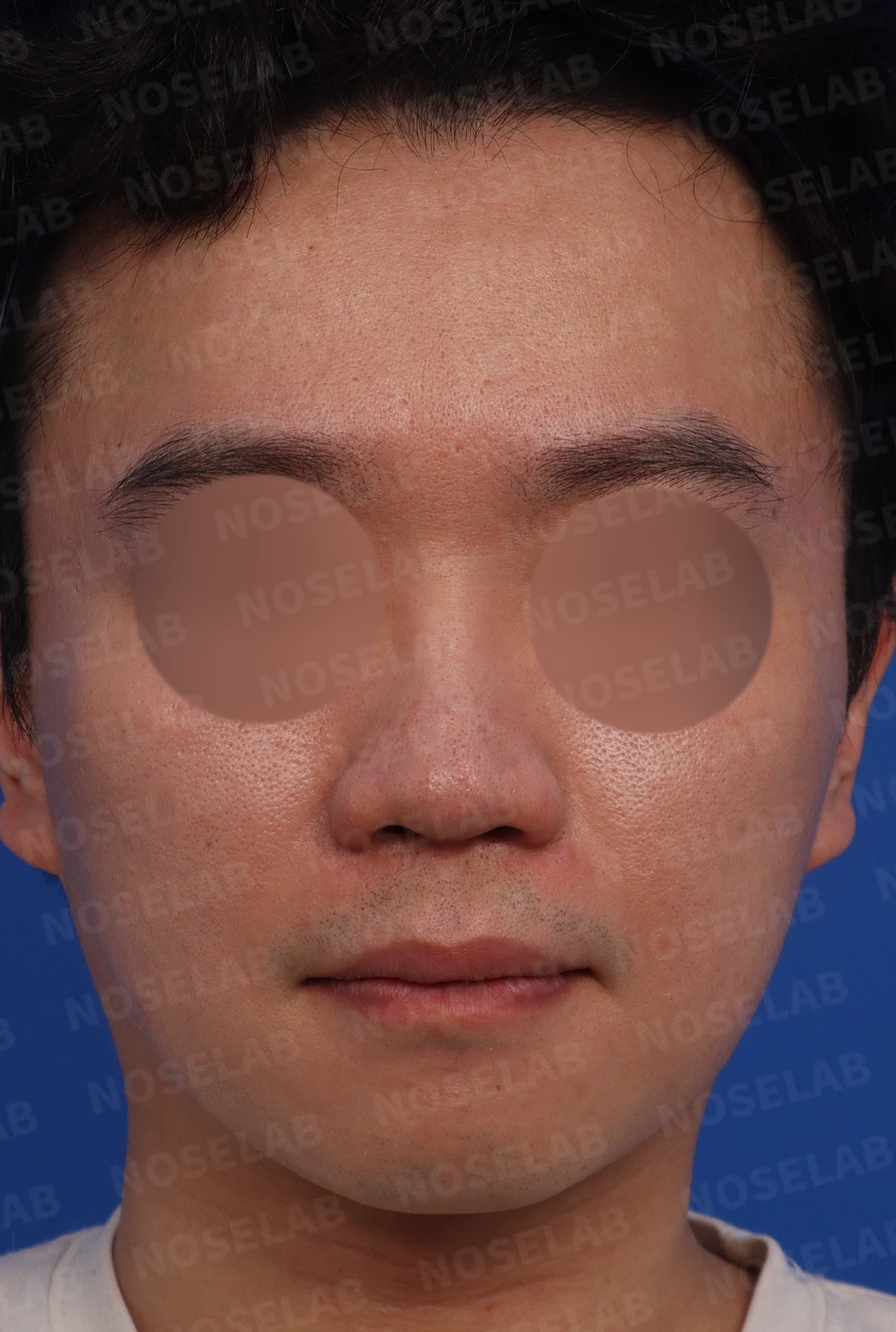
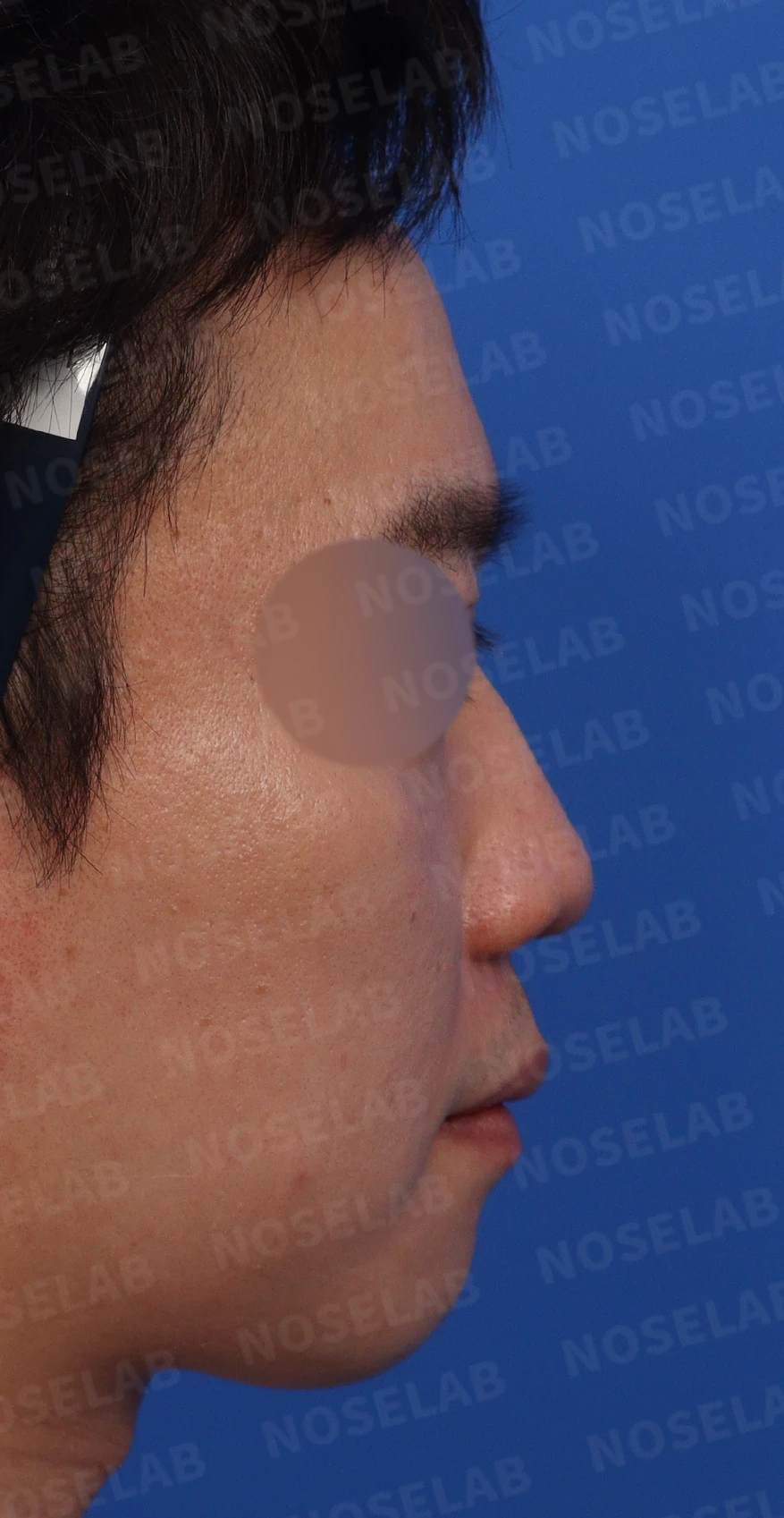
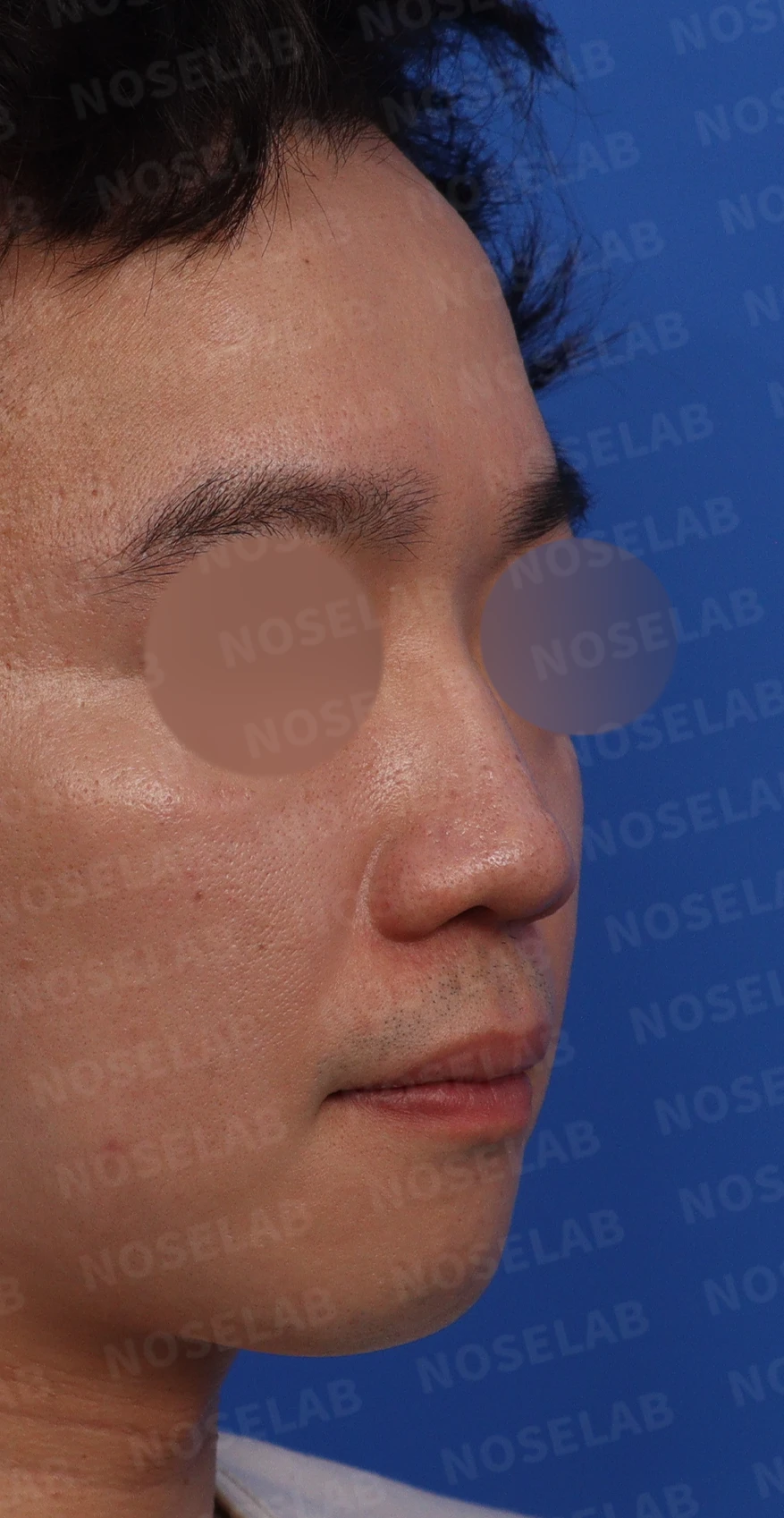
These are the front, profile, and oblique view photos taken during the design consultation.
Front view:
- Low glabella
- The nasal tip is blunt and wide (bulbous nose, wide nasal tip)
- Nostril asymmetry observed
Profile view:
- The nasal tip is short and drooping
- Slight indication of a dorsal hump
- The low nasal bridge lacks three-dimensional definition
Oblique view:
- Signs of a protruding mouth
- The nose appears drooped
Nostrils:
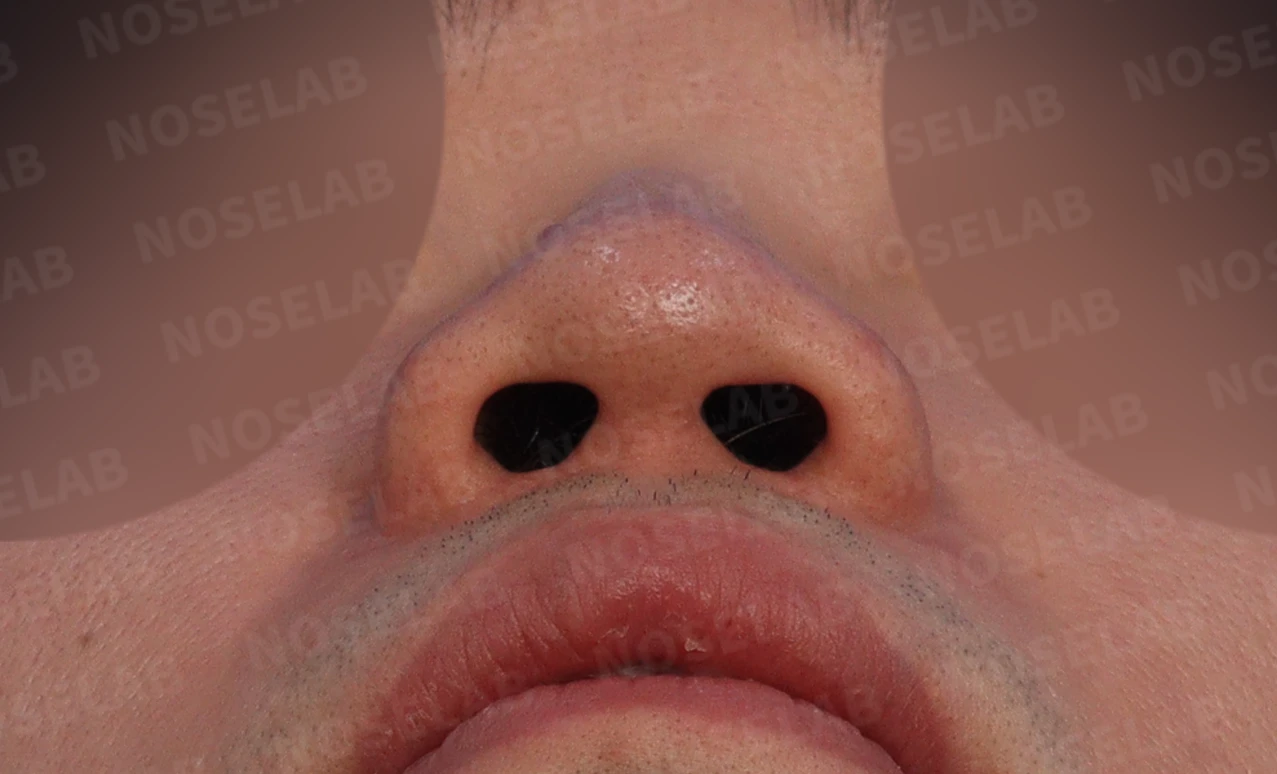
Base view (nostril) photo.
- The nostrils appear wide
- The nasal tip appears flattened and spread out
2. Surgical plan
The patient's requests
Desired an overall natural yet masculine look
Desired relief from rhinorrhea, rhinitis symptoms, and nasal obstruction
Taking into account the patient's condition and requests, the following surgical plan was established:
a) Correction of bulbous nose and wide nasal tip
- Partial resection of subcutaneous tissue at the nasal tip
- Lower lateral cartilage repositioning
- Performed cartilage suturing
b) Correction of the drooping and short nasal tip
- Septal extension using septal cartilage and donor rib cartilage
c) Functional improvement
- Septoplasty
- Submucosal resection of the inferior turbinate using radiofrequency
d) Nasal bridge correction
- Trimming the dorsal hump
- Connecting the nasal tip to the forehead with a silicone implant (creating a natural straight bridge line)
3. Surgical procedure
The following procedures were performed using a closed approach:
a) Correction of bulbous nose and wide nasal tip:
- The bluntness was refined by delicately removing subcutaneous tissue from the nasal tip.
- Lower lateral cartilages were repositioned and cartilage suturing was applied to refine the shape of the nasal tip.
b) Septal extension graft:
- Septal cartilage and donor rib cartilage were used to extend the nasal tip and reinforce structural support.
- Through this, the drooping tip was elevated, and the short nasal length was improved.
c) Functional improvement:
- The septum, which was deviated to the left, was corrected via septoplasty.
- Submucosal resection of the inferior turbinates using radiofrequency was performed to reduce hypertrophied inferior turbinates.
- This relieved nasal obstruction symptoms and improved breathing function.
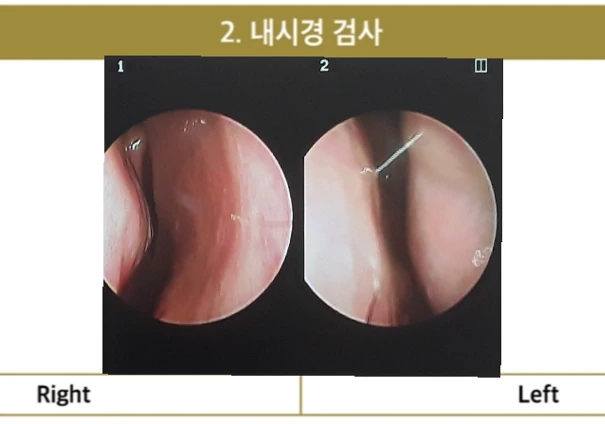
Nasal endoscopy photos 1. Right side 2. Left side
d) Nasal bridge correction:
- The dorsal hump area was delicately rasped to create a smooth, natural line.
- A silicone implant was used to connect the nasal tip to the forehead, forming a masculine straight bridge line.
All procedures were performed using a closed approach, completing the surgery without external scars.
4. Comparison of before-and-after photos
Front view:
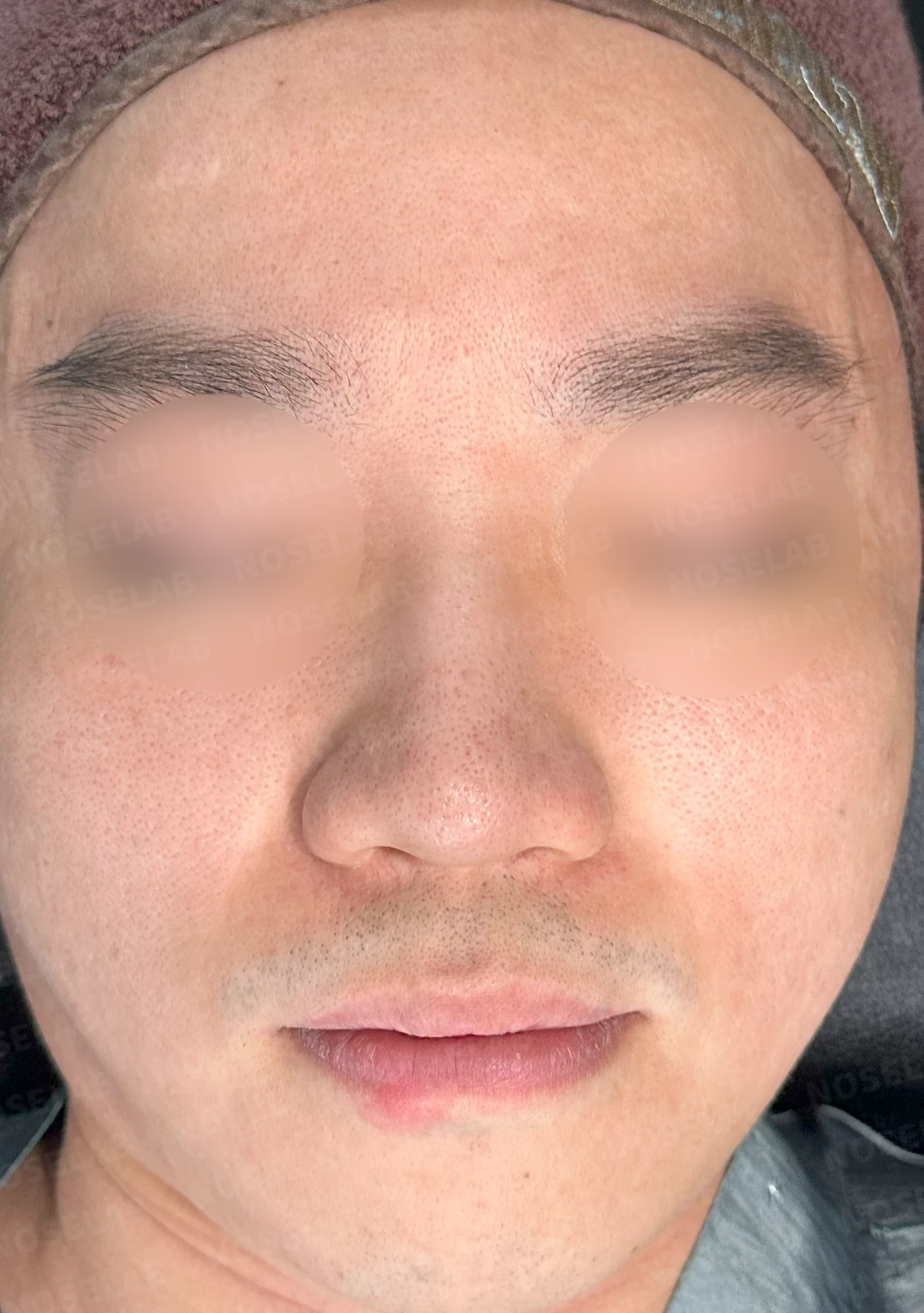
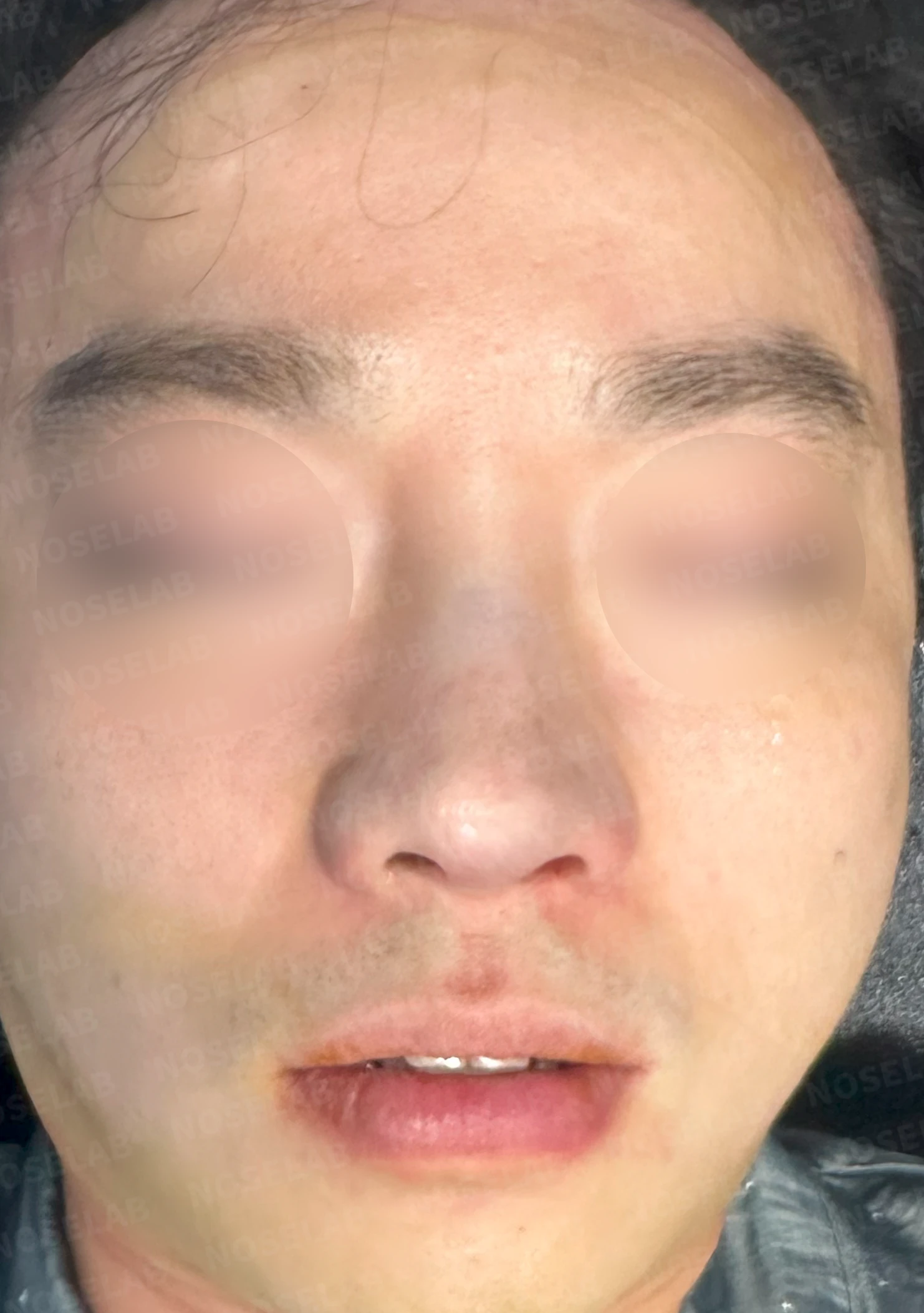
Before surgery / Day 0 immediately after surgery Photos taken immediately after surgery show swelling and may differ from the final result.
- The blunt and wide nasal tip has been refined into a slim and well-defined shape.
- Nostril asymmetry improved.
- The overall contour of the nose has become more distinct.
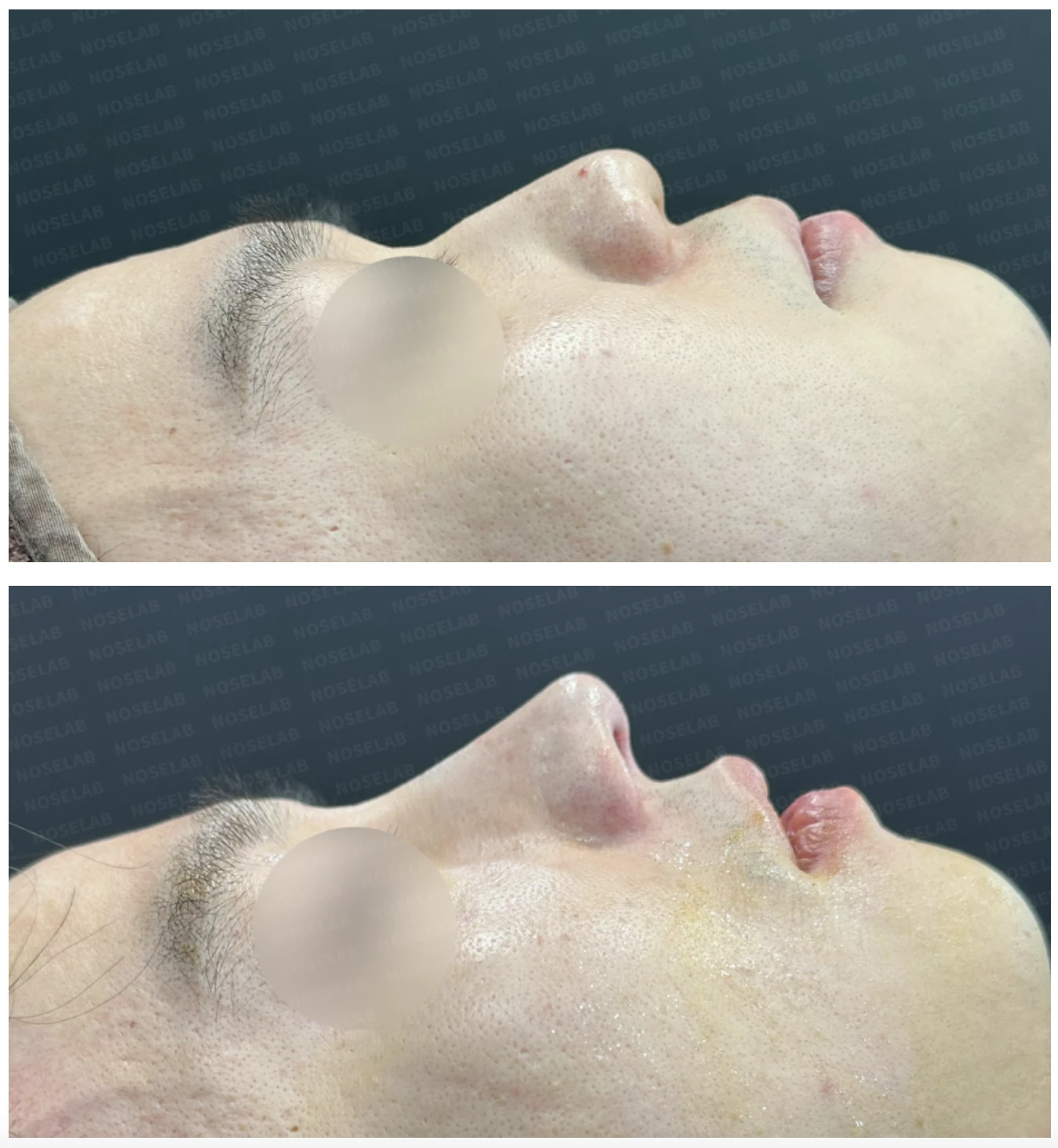
Profile view:
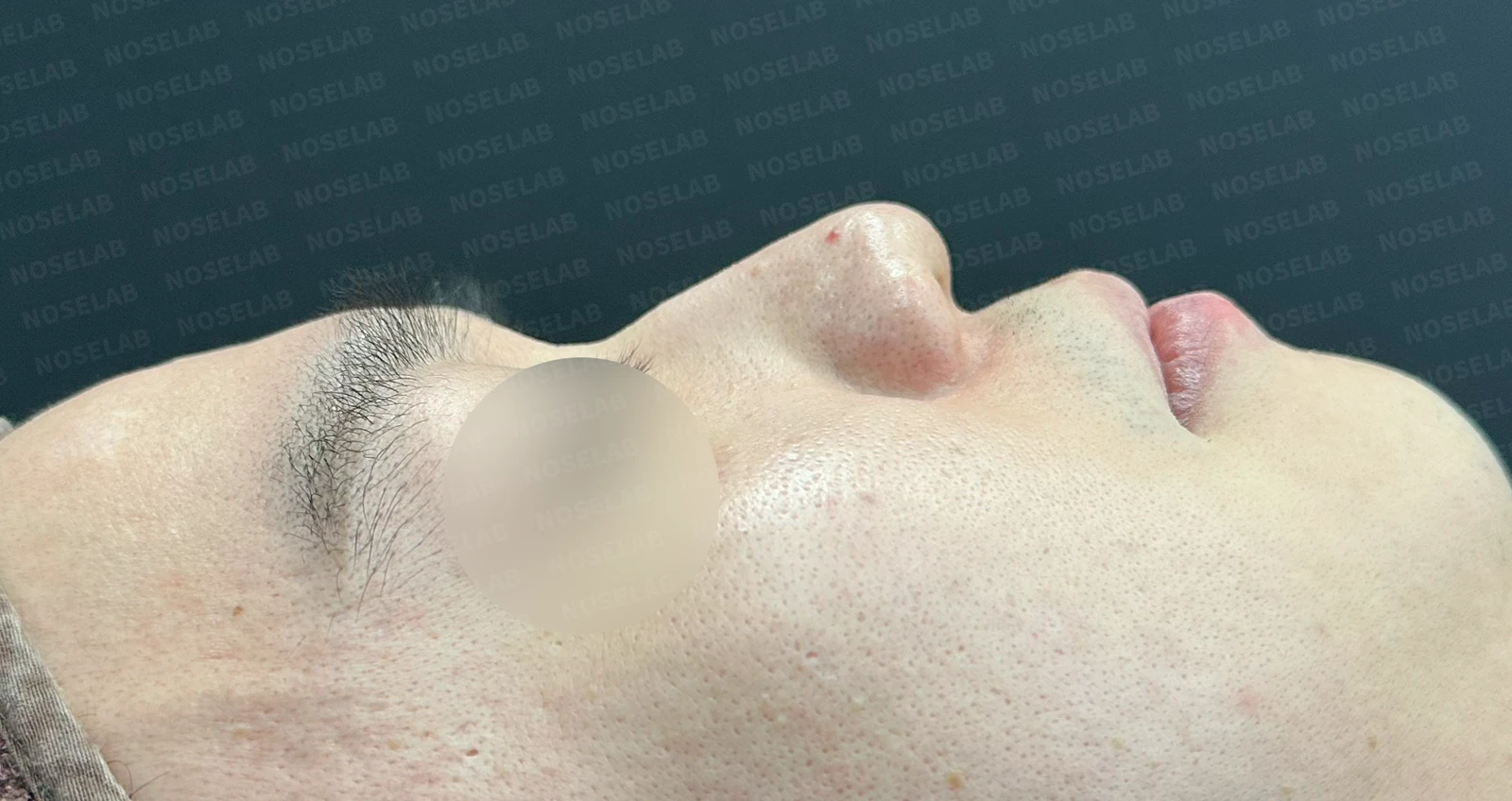
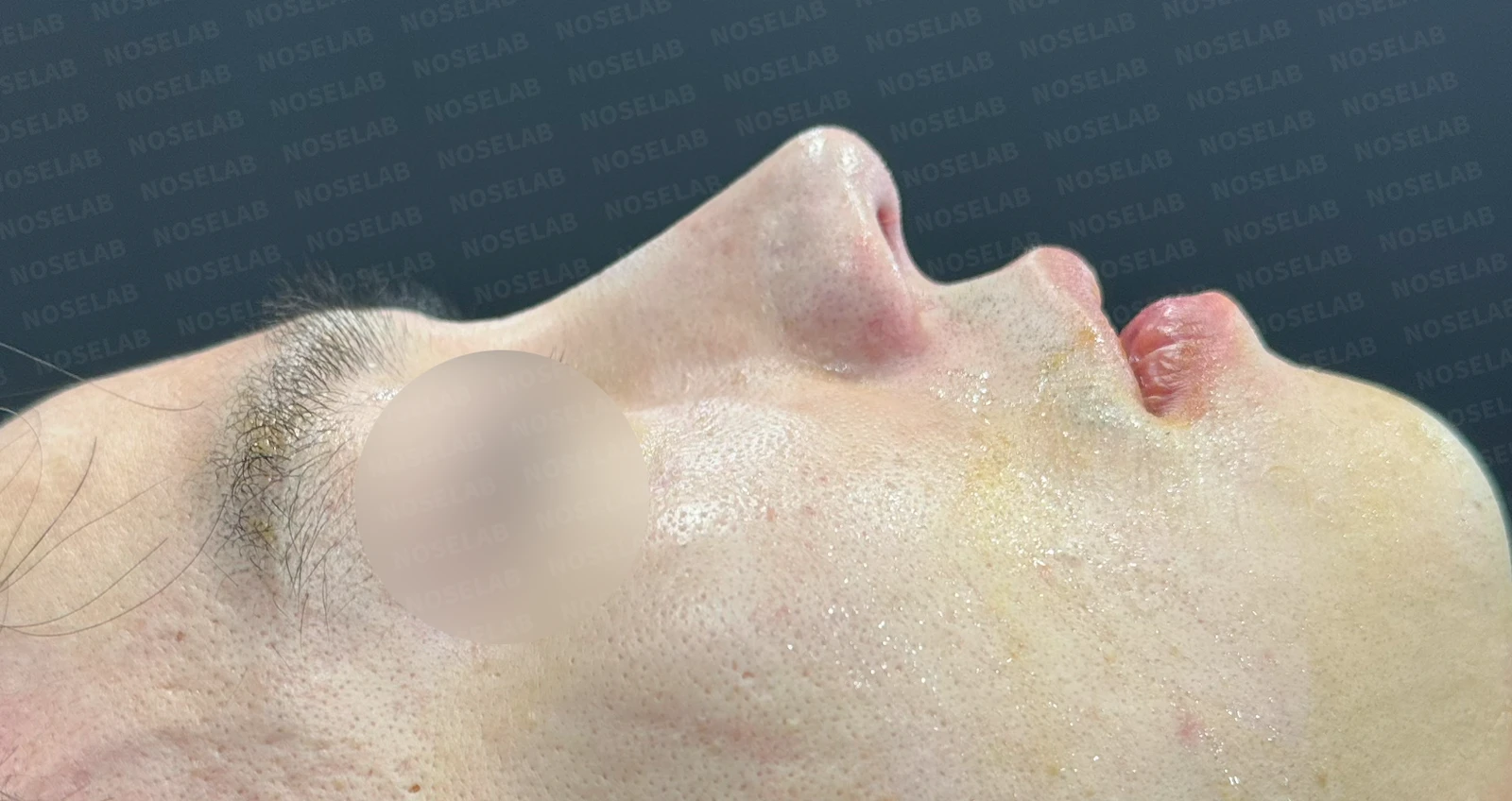
Before surgery / Day 0 immediately after surgery Photos taken immediately after surgery show swelling and may differ from the final result.
- The short, drooping nasal tip has been appropriately elevated and lengthened, presenting a balanced appearance.
- The impression of a dorsal hump has been naturally improved.
- The bridge has been elevated, substantially improving three-dimensional definition.
Oblique view:
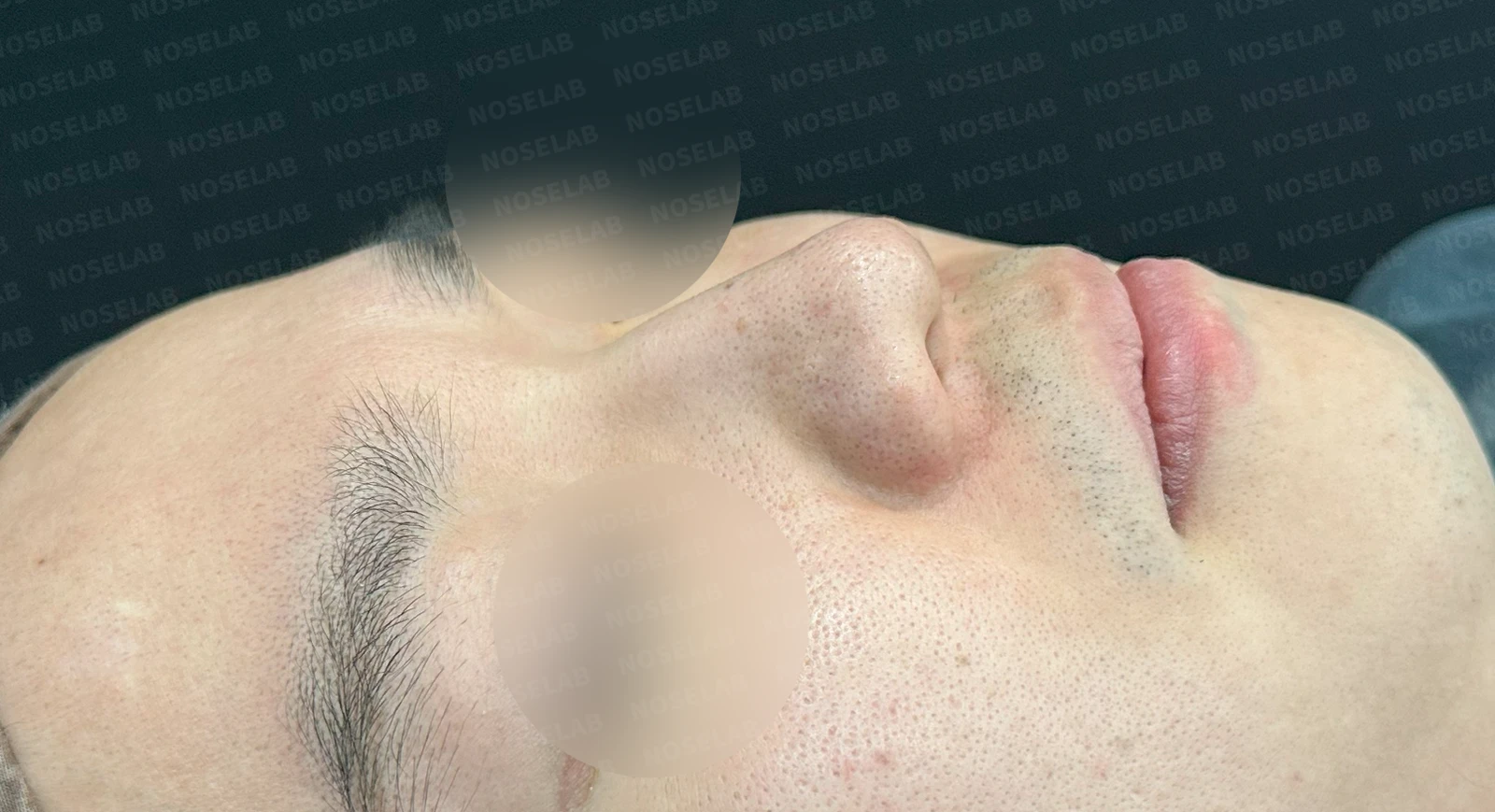
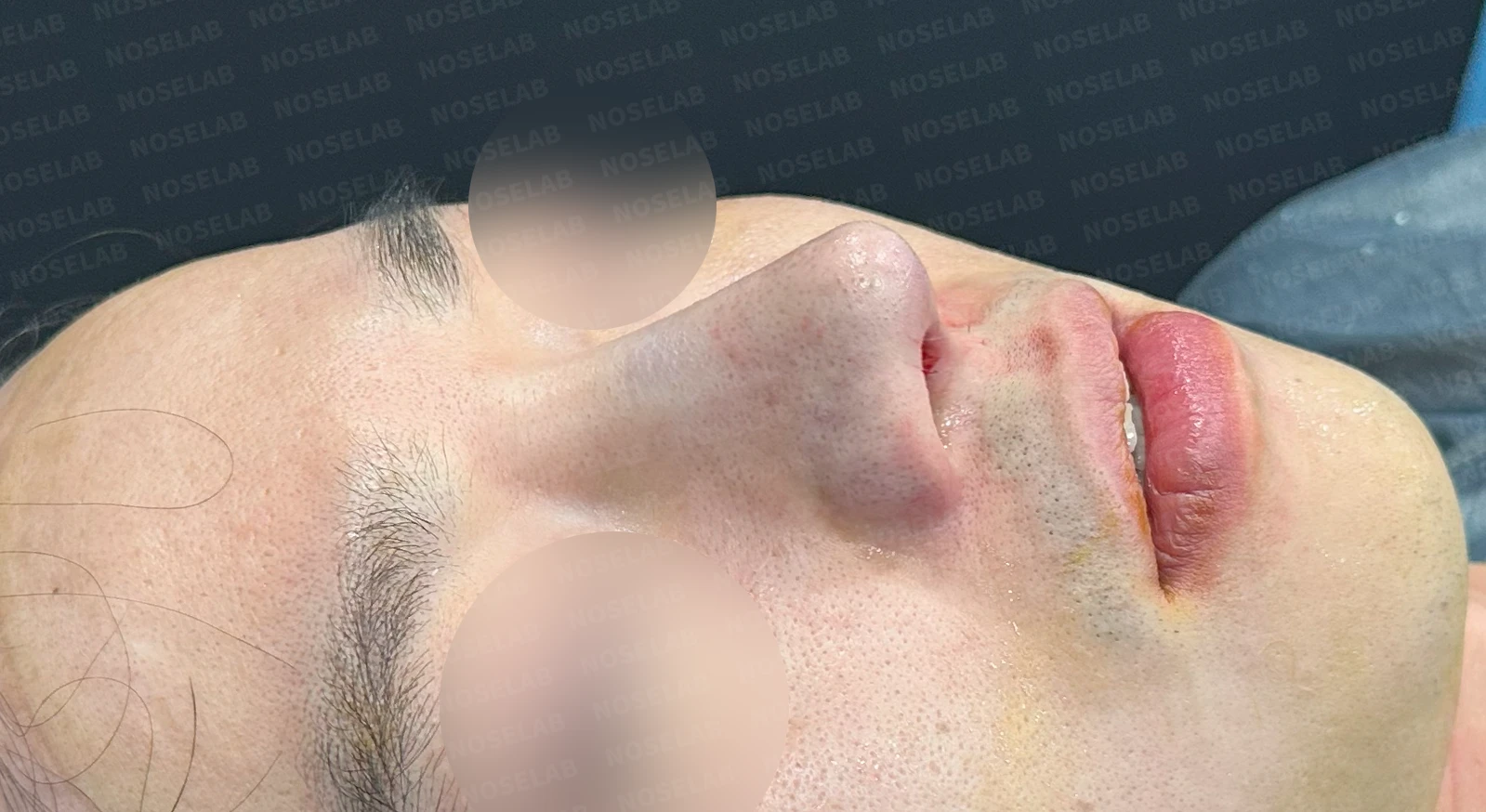
Before surgery / Day 0 immediately after surgery Photos taken immediately after surgery show swelling and may differ from the final result.
- The appearance of a protruding mouth was softened, improving overall facial balance.
- The drooped-looking nose now forms a clean, masculine line.
Nostrils:
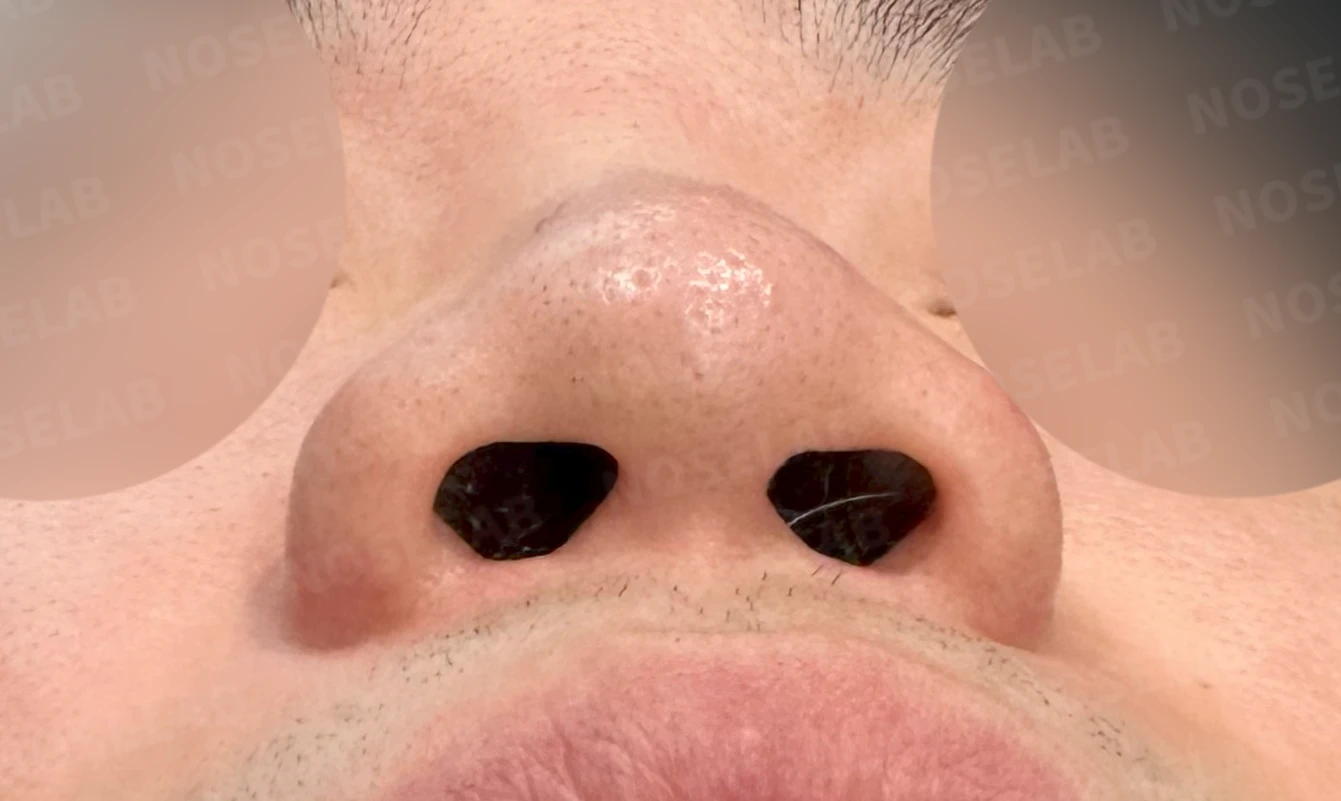
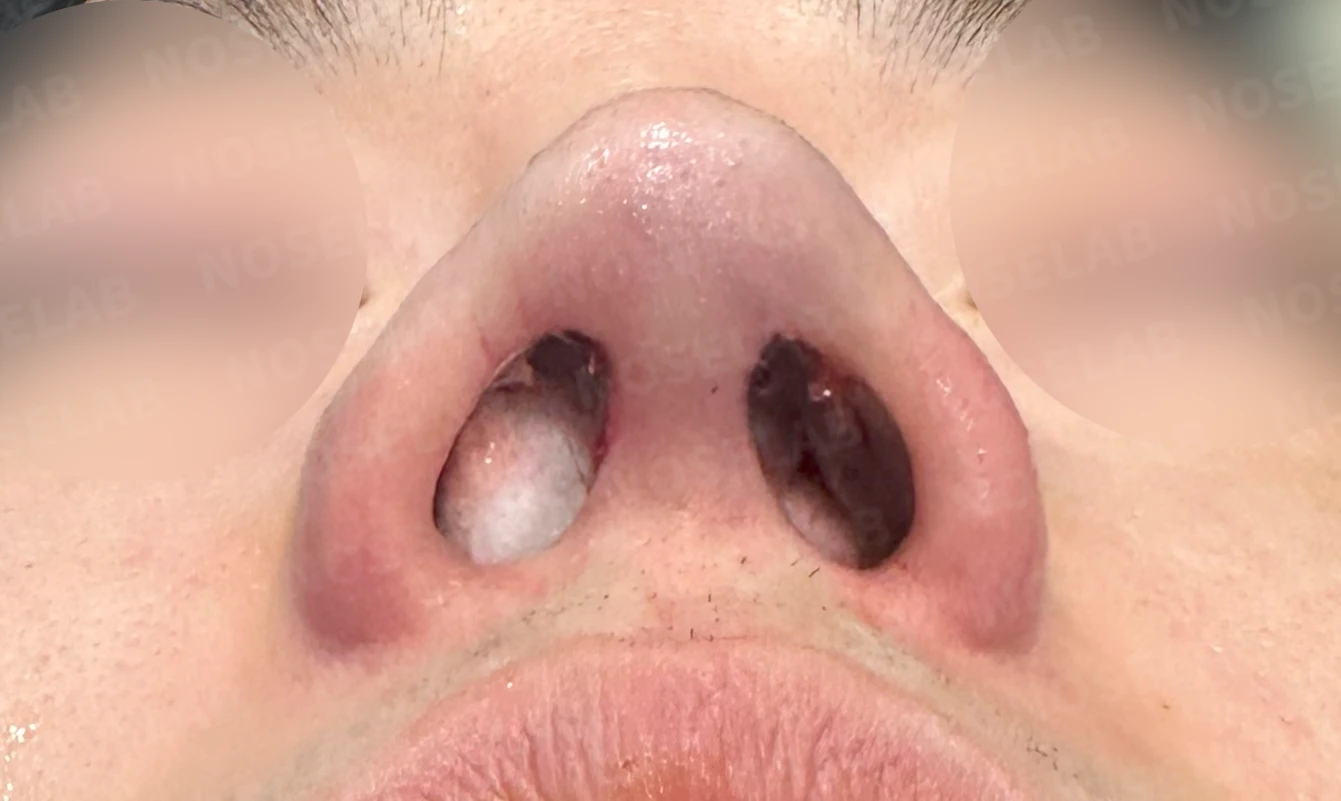
Before surgery / Day 0 immediately after surgery Photos taken immediately after surgery show swelling and may differ from the final result.
- The appearance of the wide nostrils has been naturally improved.
- The flattened, wide-looking nasal tip has been transformed into a delicate, well-proportioned shape.
5. Photos immediately after surgery
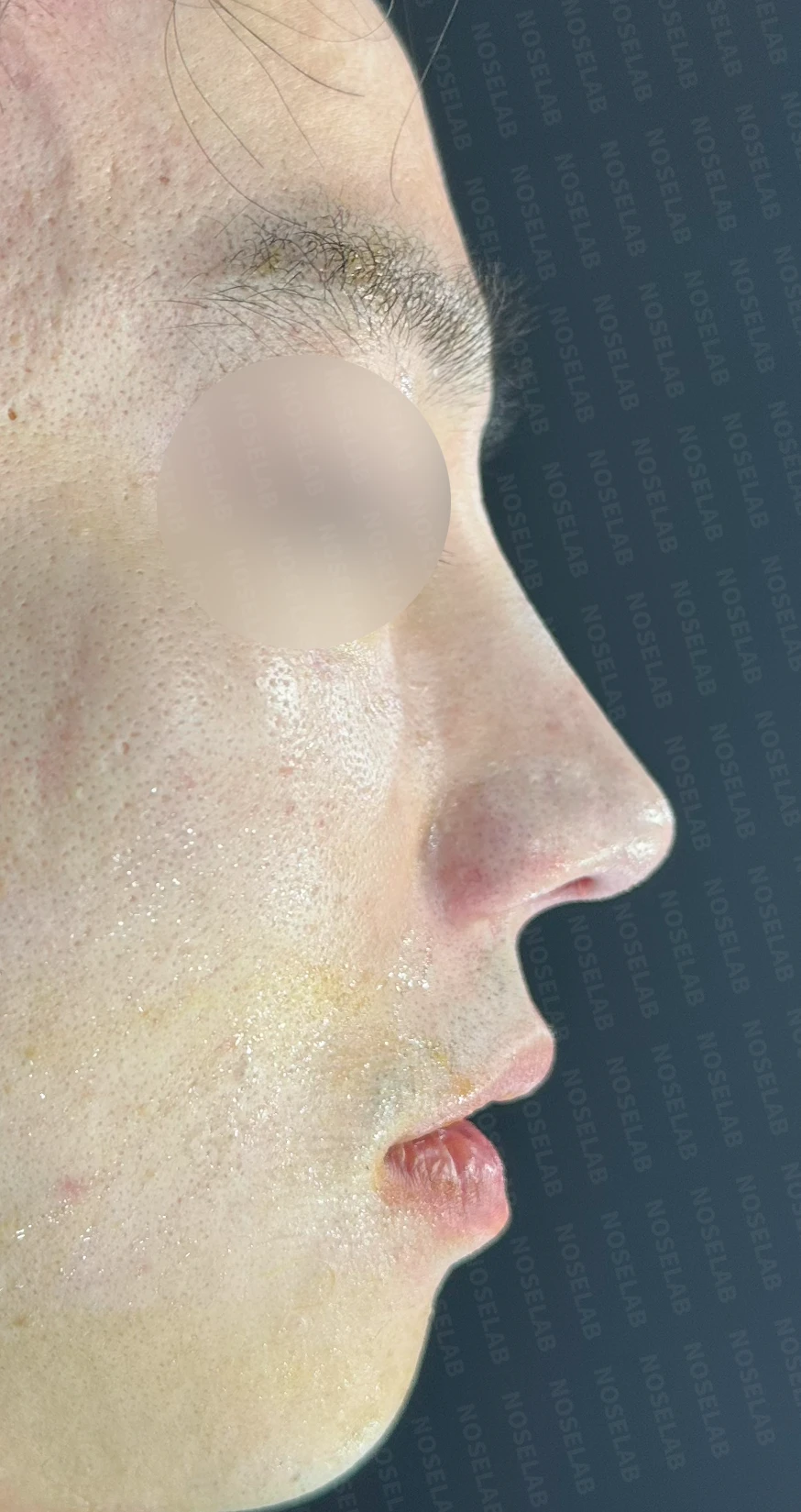
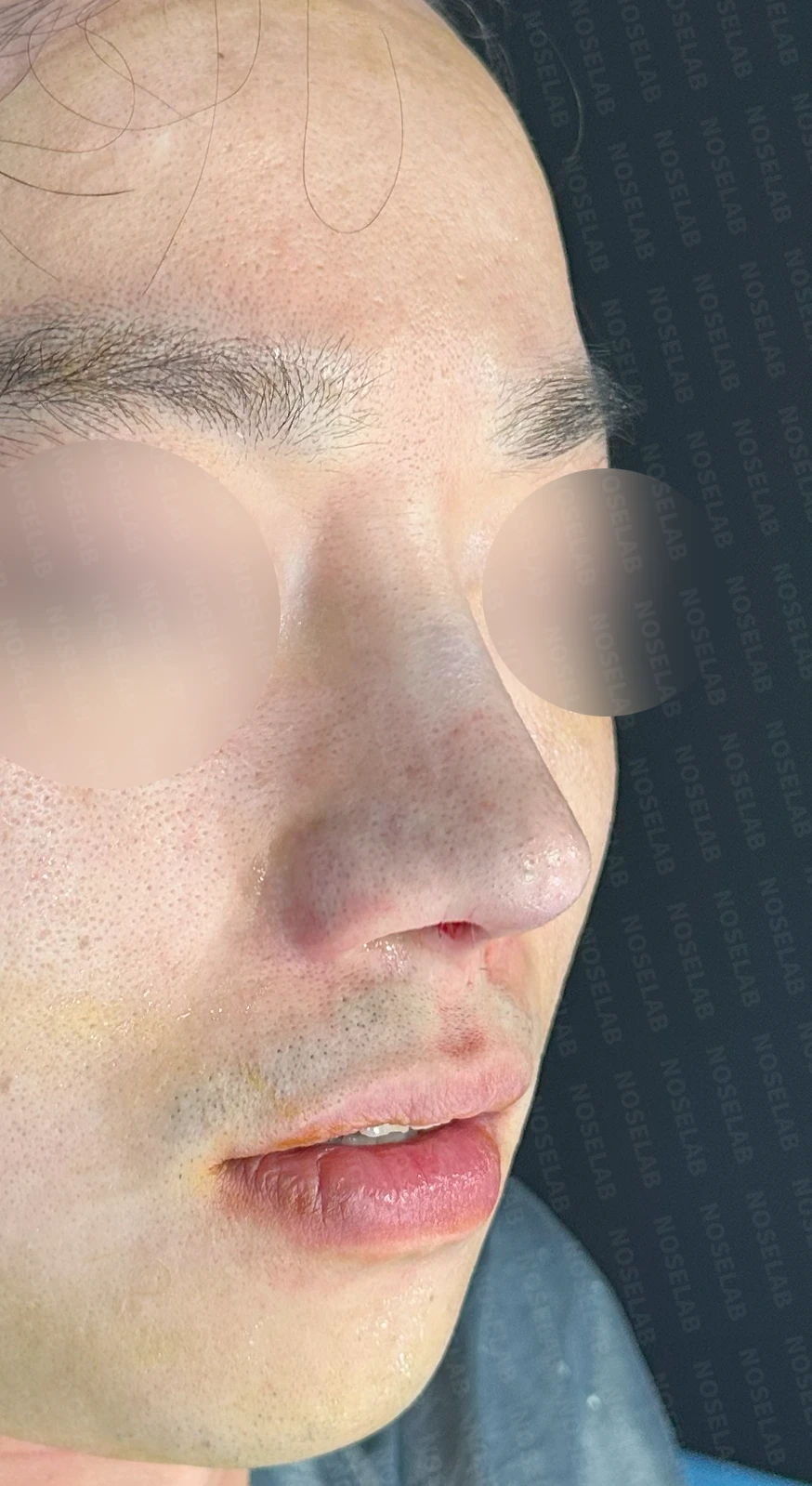
Front, profile, and oblique views taken immediately after surgery (day 0).Immediate postoperative photos show swelling and may differ from the final result.
Basal (nostril) view taken immediately after surgery (day 0).Immediate postoperative photos show swelling and may differ from the final result.
6. Overall evaluation
This is a successful rhinoplasty case where bulbous, wide nasal tip correction and functional improvement were achieved simultaneously. Aesthetic concerns such as a blunt and wide nose, a short and drooping tip, a dorsal hump tendency, and nostril asymmetry were resolved alongside functional problems including septal deviation and inferior turbinate hypertrophy.
It is particularly noteworthy that all of these procedures were performed using a closed approach. This greatly contributed to shortening the recovery period and minimizing visible scarring.
Combining techniques such as subcutaneous tissue excision, cartilage repositioning, and cartilage suturing for bulbous nose correction played a key role in achieving a natural outcome. In addition, septal extension improved tip drooping and added adequate length, enhancing the overall facial balance.
From a functional standpoint, septoplasty and inferior turbinate reduction relieved nasal obstruction symptoms and improved respiratory function. This is an important aspect that goes beyond cosmetic enhancement to contribute to a better quality of life.
For bridge augmentation, forming a masculine straight bridge line while maintaining a natural, moderate height without over-elevating the bridge was notable. This reflects recent trends in male rhinoplasty.
7. Conclusion
Male rhinoplasty requires a nuanced approach that takes into account individual preferences and facial characteristics. Generally, there is a preference for a straight dorsal line, and recently there is a trend toward a natural, moderate height between the eyebrows rather than excessive height. However, these are merely general tendencies, and preferred glabella heights and nasal shapes vary from person to person.
Therefore, for those considering rhinoplasty, it is important to establish a customized surgical plan through thorough consultation with a specialist, taking into account individual facial shape, characteristics, and personal preferences. NOSELAB provides tailored solutions for each patient based on extensive clinical experience and expertise.
I hope this case is helpful to those concerned about a blunt, wide, or bulbous nose. With a well-planned surgical approach and refined techniques, a natural, balanced nose can be achieved. Please remember that respiratory function can also be enhanced through concurrent functional improvements.
I will be with you every step of the way to achieve a beautiful and healthy nose.
This was Dr. Peter C. Kang. Thank you.
Thank you.
#rhinoplasty #bulbousnosecorrection #widenosaltipcorrection #dorsalhumpcorrection #protrudingmouthcorrection #closedrhinoplasty #malerhinoplasty #tipplasty #entrhinoplasty #septoplasty #turbinatereduction #breathingimprovement #naturalnose

Limitations and risks
When using donor rib cartilage, long-term follow-up is necessary because the grafted cartilage may resorb or warp.
When the septum is corrected at the same time, nasal obstruction may persist or recur, and in rare cases, septal perforation or changes in smell may occur.
Common potential risks include infection, bleeding, asymmetry, scarring, skin necrosis, and insufficient improvement; results vary depending on individual skin condition and previous surgical history.