Hello, I am Dr. Peter C. Kang.
Today, I would like to introduce a rhinoplasty case of a male patient who had significantly prominent brow bones, a low glabella, and a wide, spread-out nose.
In particular, to correct the appearance where the nose looked even lower due to a low radix, I will show a case where raising the starting point naturally connected the forehead-to-glabella line.
Treatment history and patient requests:
This patient had received nasal filler 10 years ago and desired a natural straight bridge line that harmonized well with his face.
Preoperative design consultation
Let us analyze the patient's preoperative condition in detail:
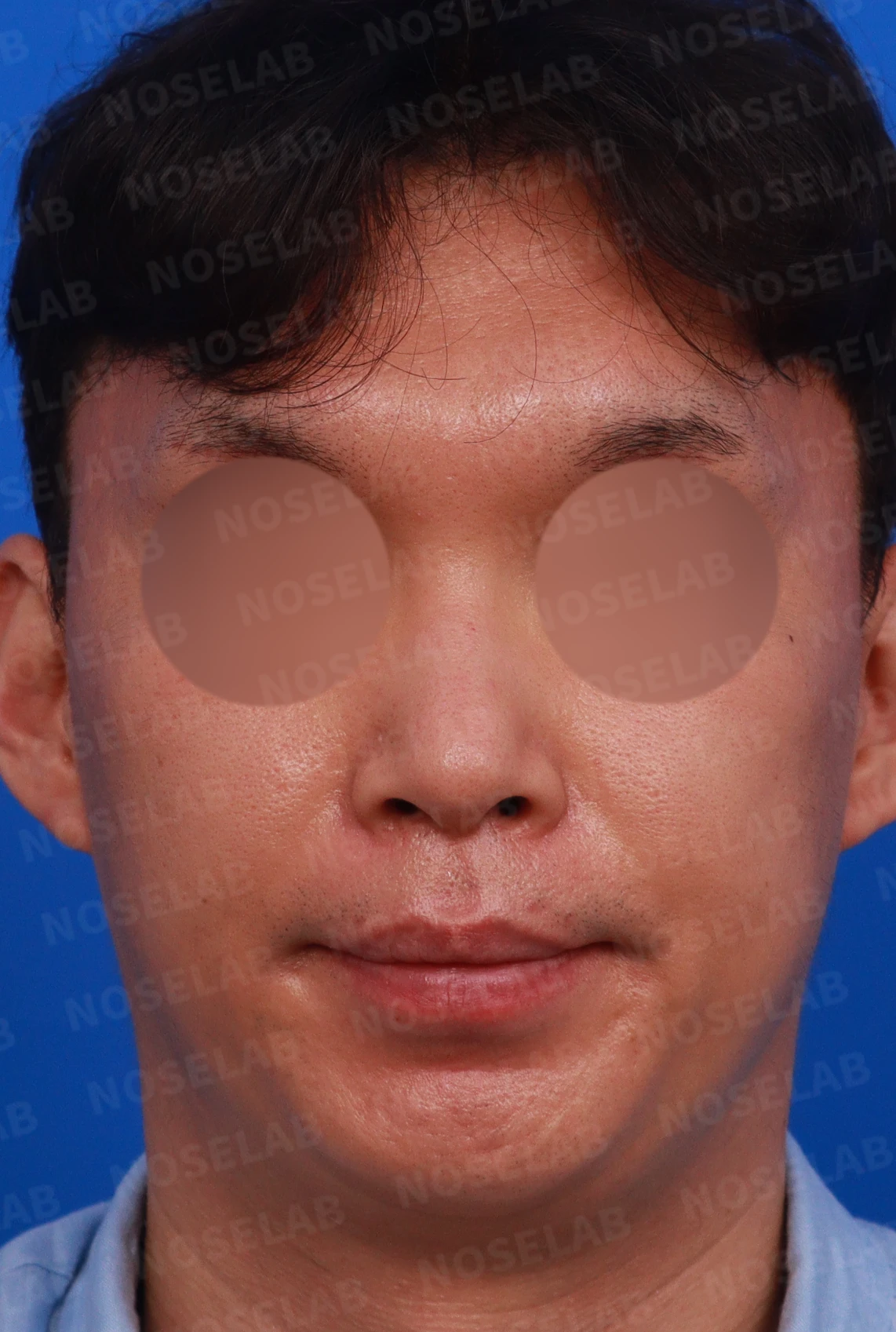
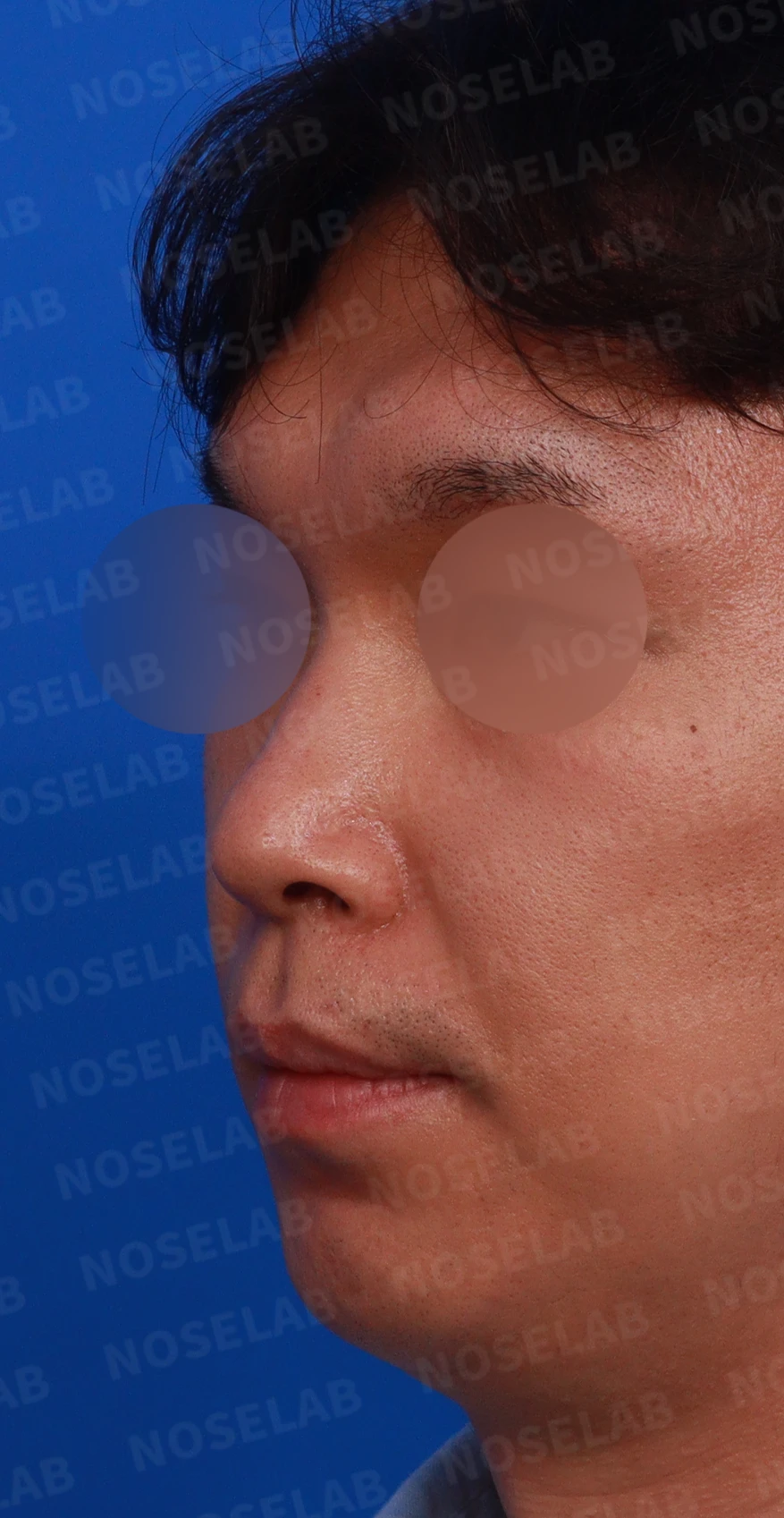
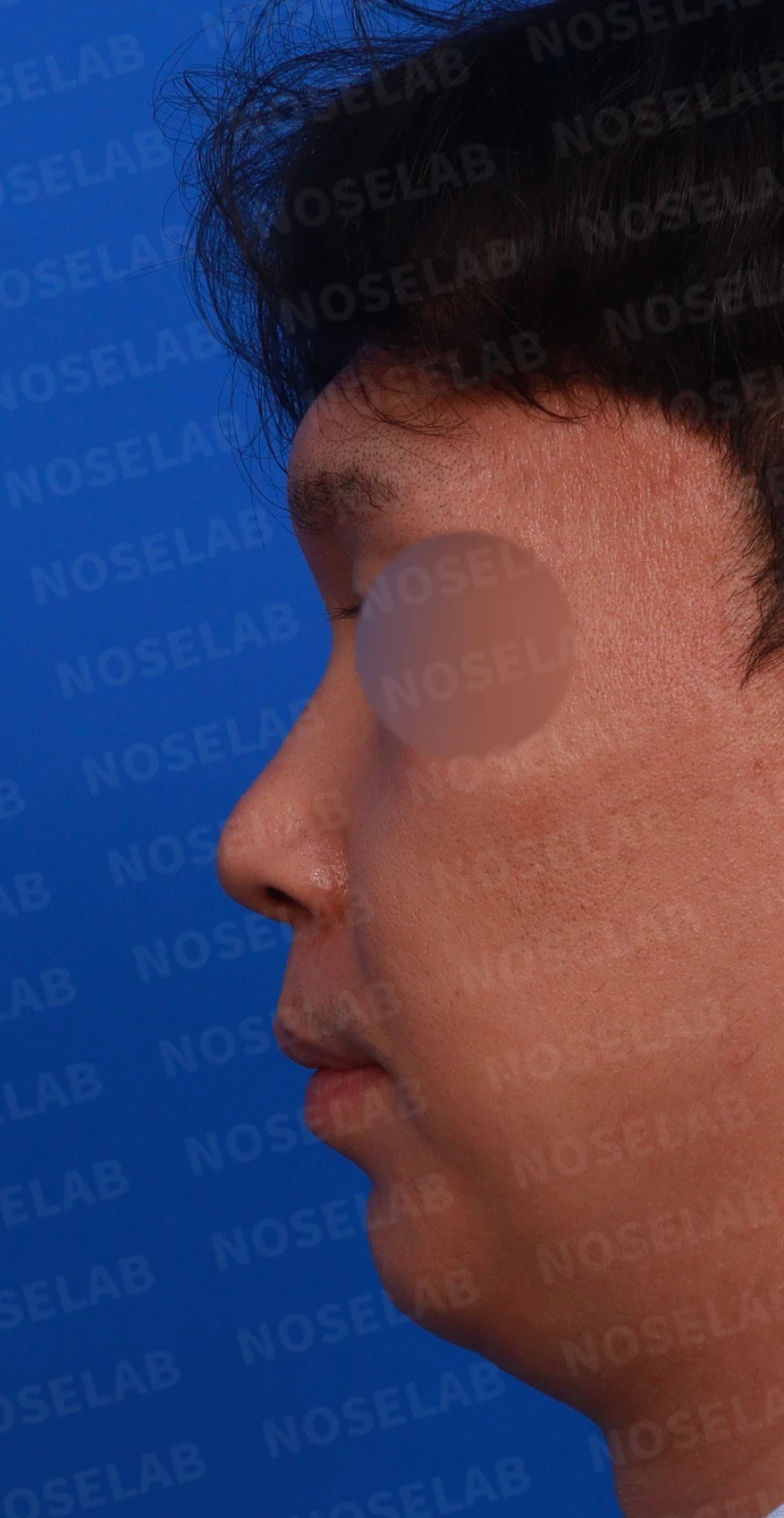
Preoperative front, left profile, and oblique views.
Front view:
- Low glabella (low nose)
- Overall low and wide, spread-out nose
- Nostril and alar asymmetry observed
- The philtrum appears long
Oblique view:
- Excessively prominent brow bones
- Low glabella (low nose)
- Presentation of a protruding mouth
Profile view:
- Low glabella and prominent brow bones
- Nose appears short and small relative to the face
- The nasal tip appears drooping
- Protruding mouth and receding chin observed
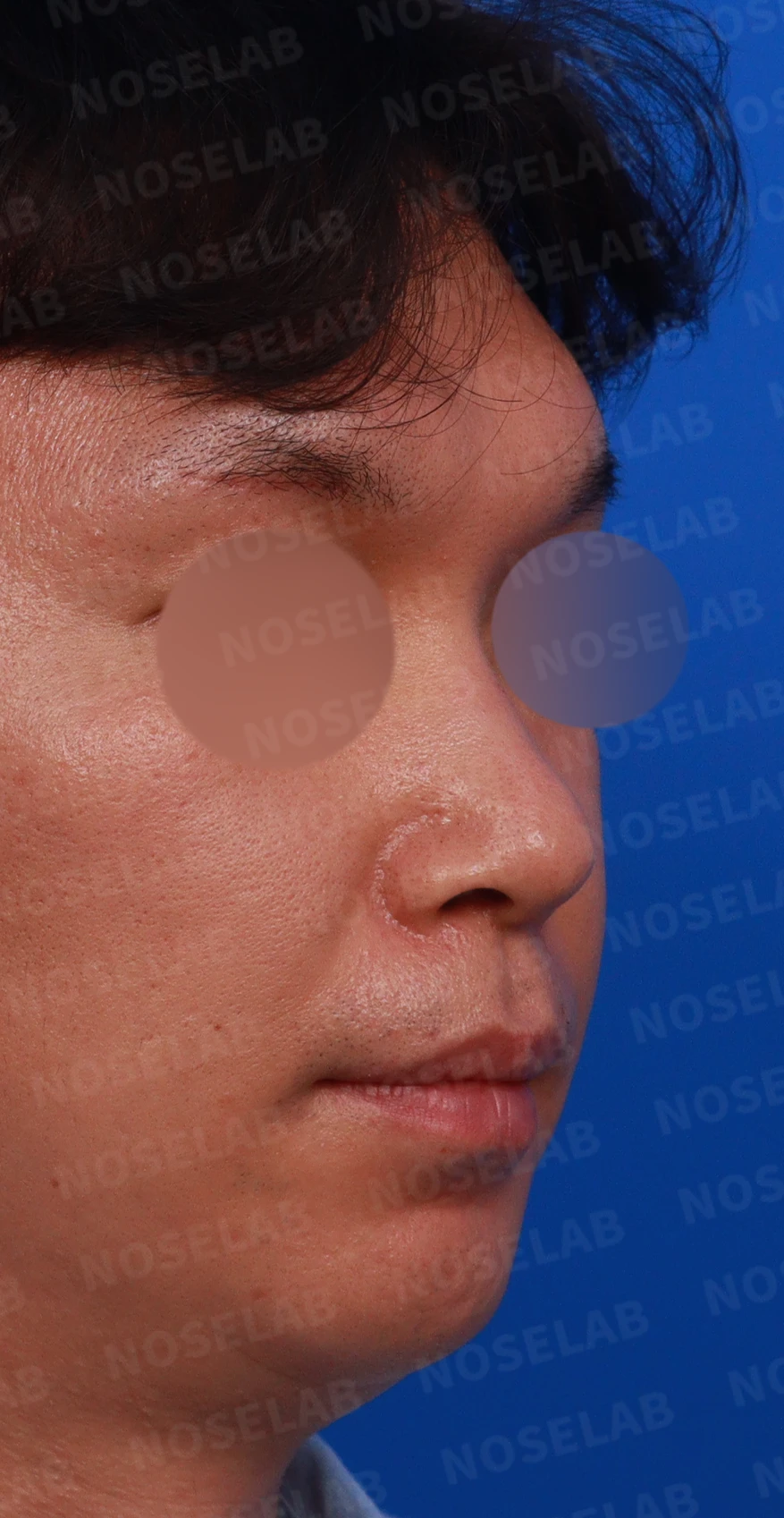
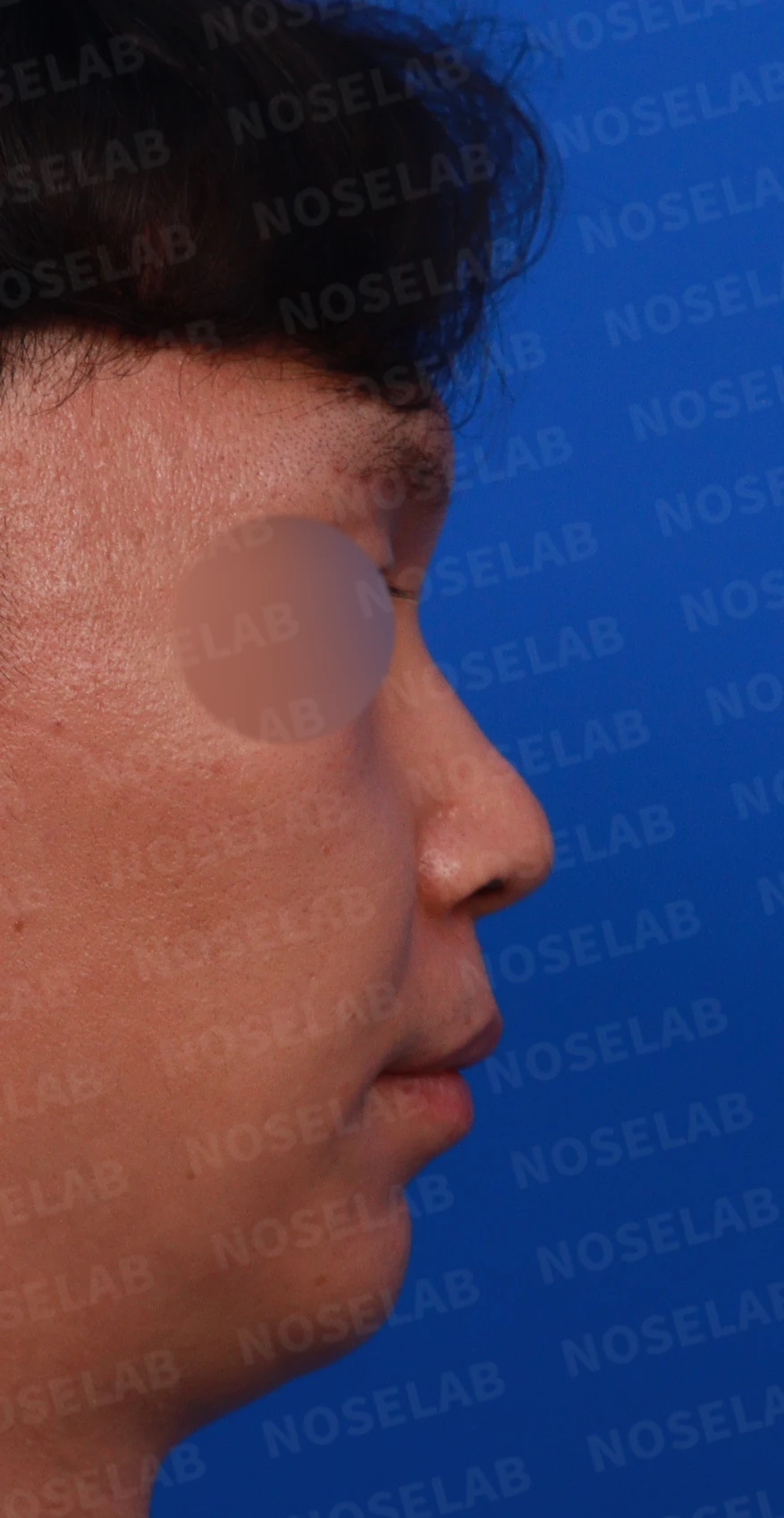
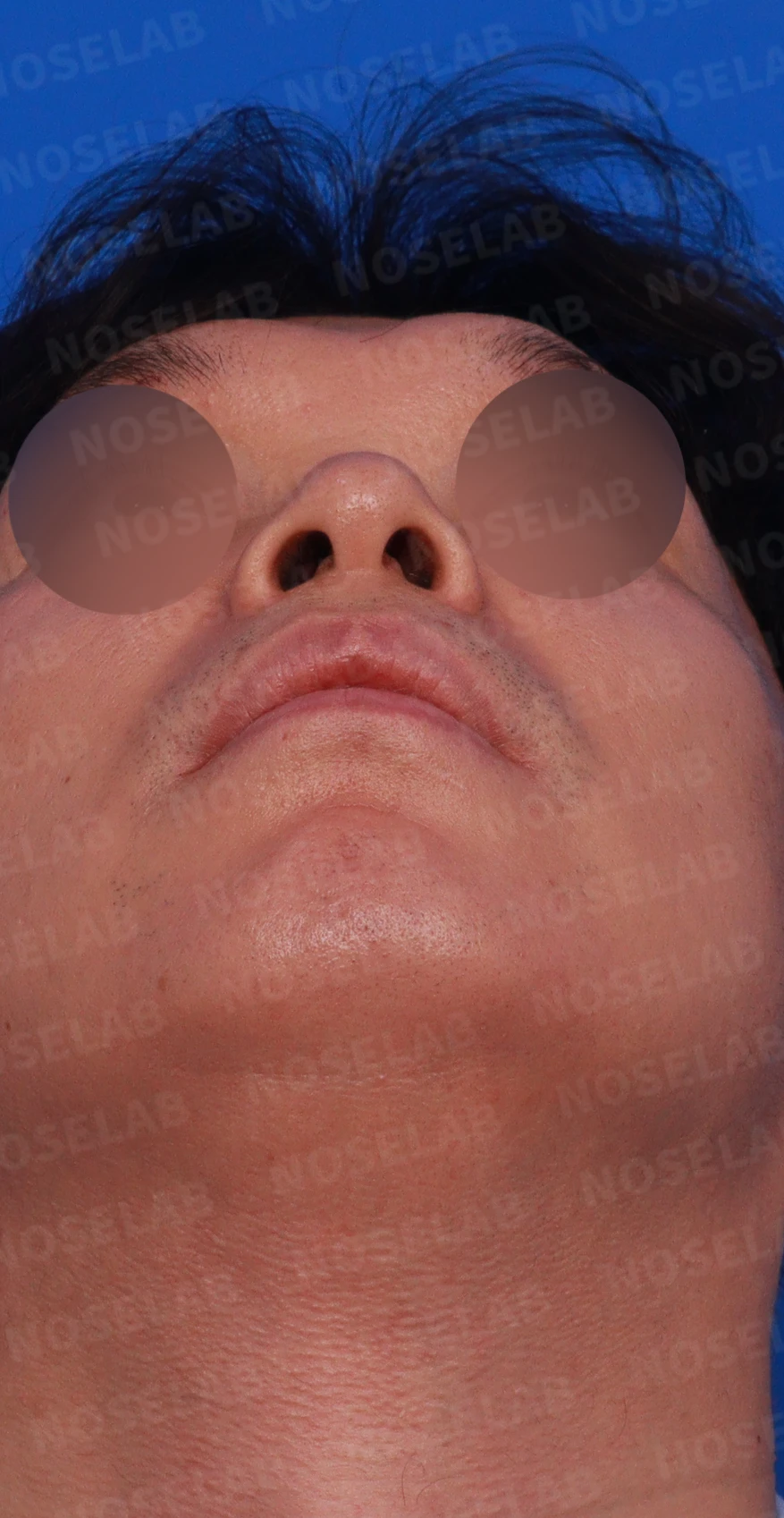
Preoperative right oblique, profile, and nostril views.
Nostrils:
- Nostril asymmetry is present
- Alar asymmetry observed
Surgical plan
Taking into account the patient's condition and requests, the following surgical plan was established:
a) Insertion of a glabellar silicone implant
b) Septal extension using autologous rib cartilage
c) Septoplasty
d) Submucosal resection of the inferior turbinate using radiofrequency
e) Lower lateral cartilage repositioning and suture suspension
f) Existing filler removal and silicone implant insertion
Surgical procedure
The following procedures were performed using a closed approach:
a) Insertion of a glabellar implant:
- To soften the appearance of prominent brow bones, a silicone implant was carved to fit the brow bone contours and inserted into the glabella, naturally connecting the line by raising the starting point.
b) Septal extension graft:
- Correcting nasal tip spreading, asymmetry, and drooping using autologous rib cartilage
c) Septoplasty and submucosal resection of the inferior turbinates:
- Treating deviated septum and hypertrophic rhinitis to improve nasal obstruction
d) Lower lateral cartilage repositioning and suture suspension:
- Correcting the spreading and bulbous appearance of the nasal tip
e) Nasal bridge implant insertion:
- Surgical removal of existing filler
- Inserting a silicone implant to smooth out uneven contours
Comparison of before surgery and immediately after surgery
Comparing photos taken immediately after surgery on day 0 shows the following improvements: Photos taken immediately after surgery show swelling and may differ from the final result.
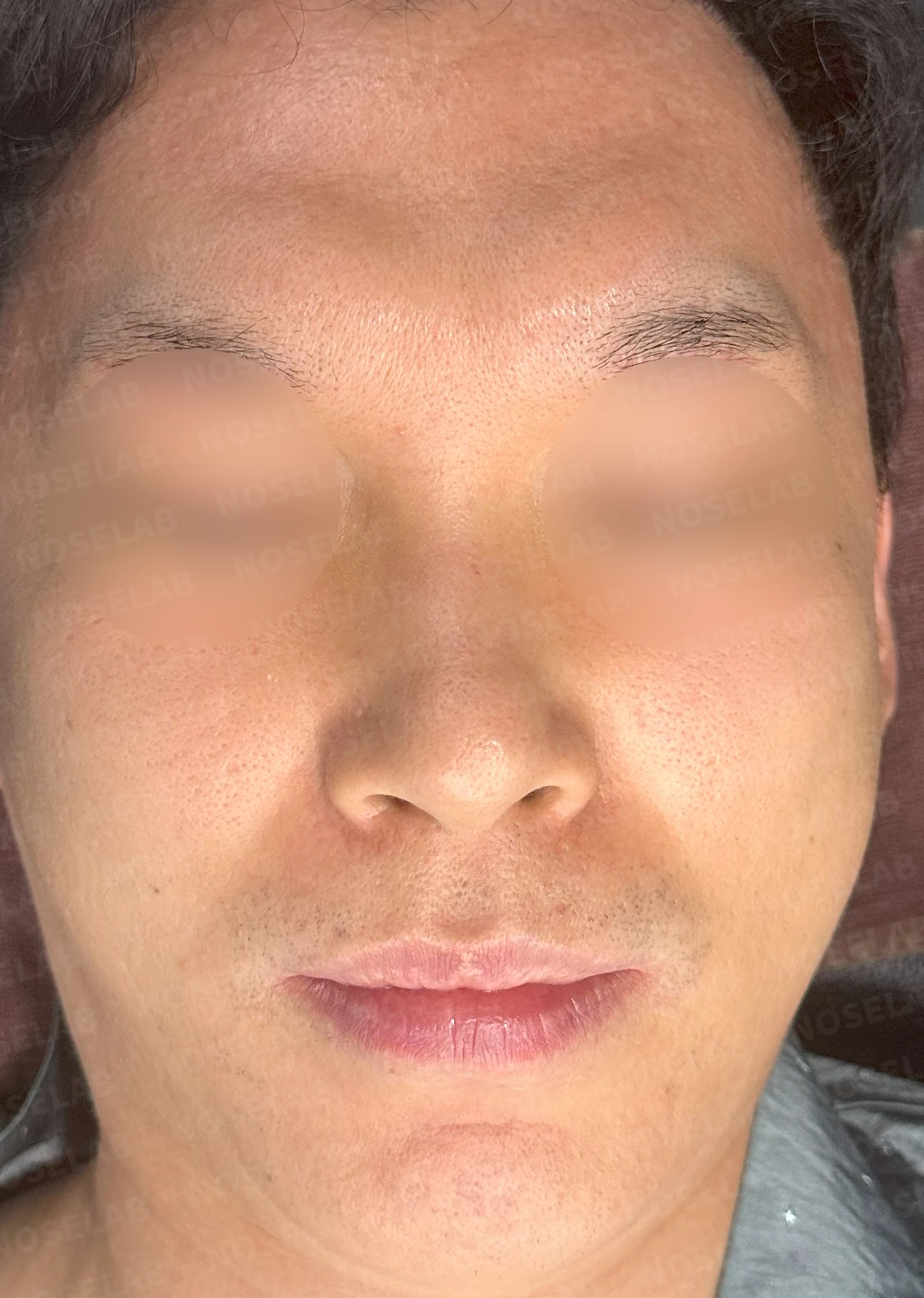
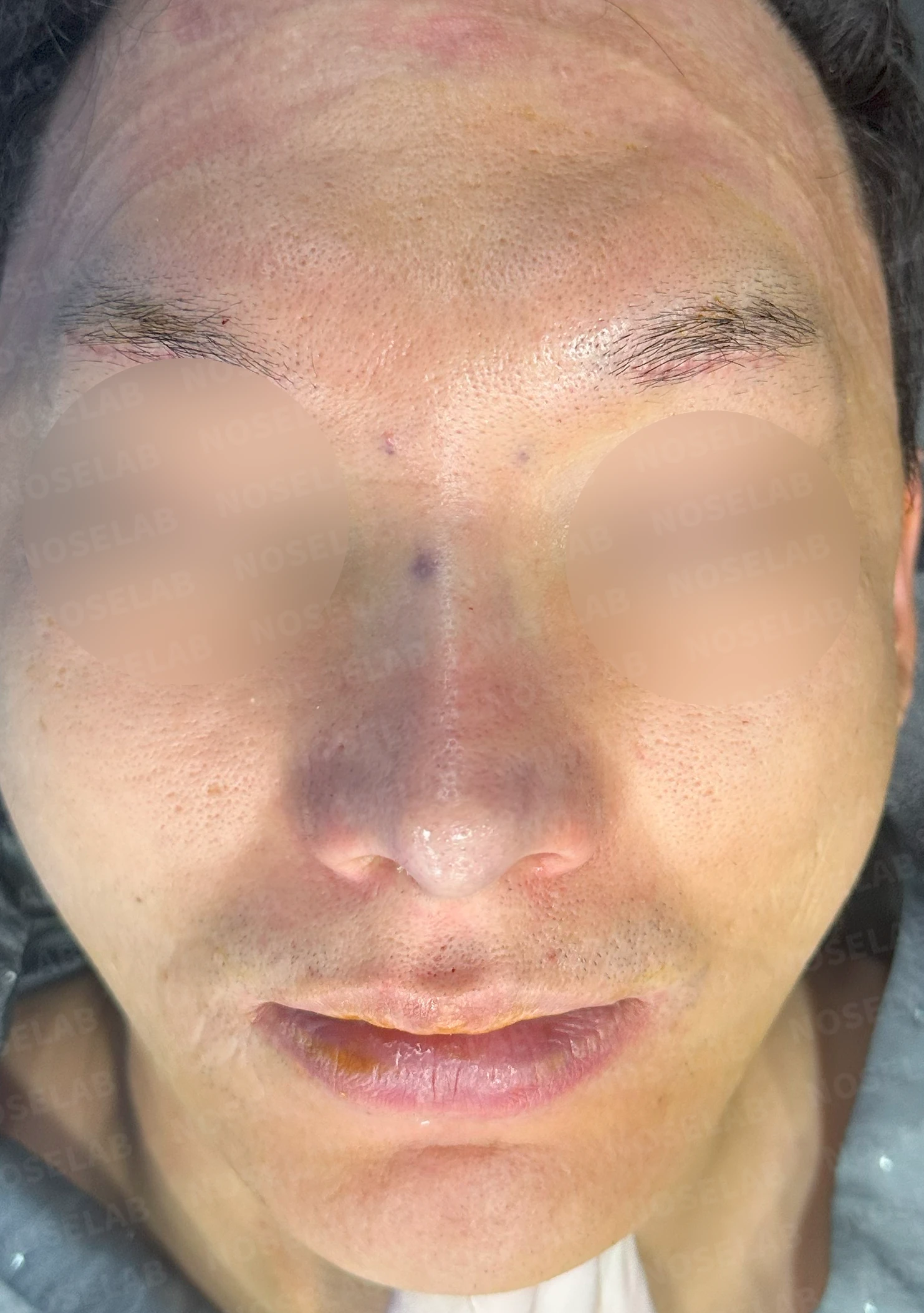
Before surgery / Day 0 immediately after surgery Photos taken immediately after surgery show swelling and may differ from the final result.
Front view:
- The nose, which previously appeared short and wide, achieved natural proportions
- The wide, spread-out appearance was corrected
- Improved nostril asymmetry
- Excessive nostril show was improved
Before surgery / Day 0 immediately after surgery Photos taken immediately after surgery show swelling and may differ from the final result.
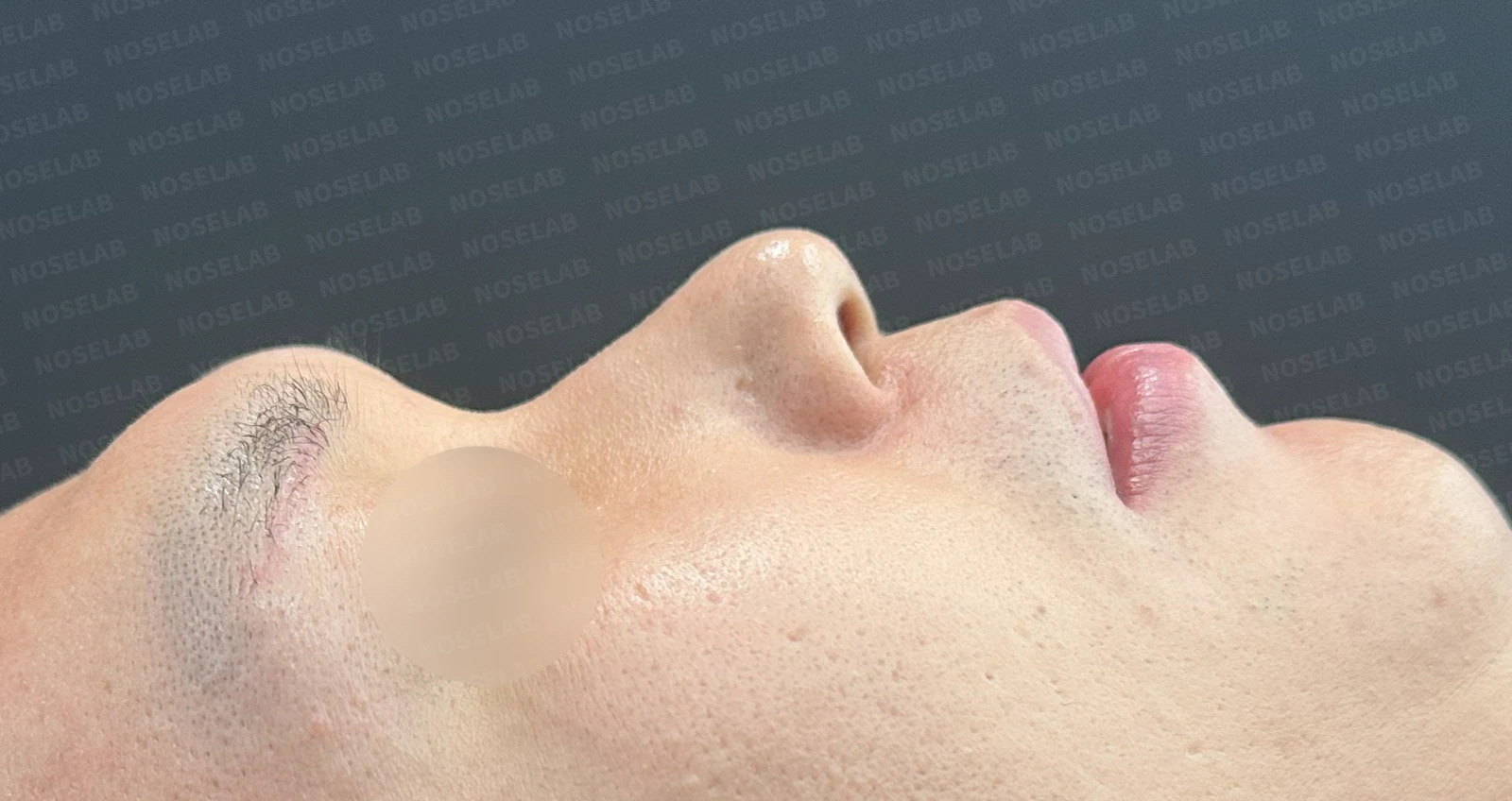
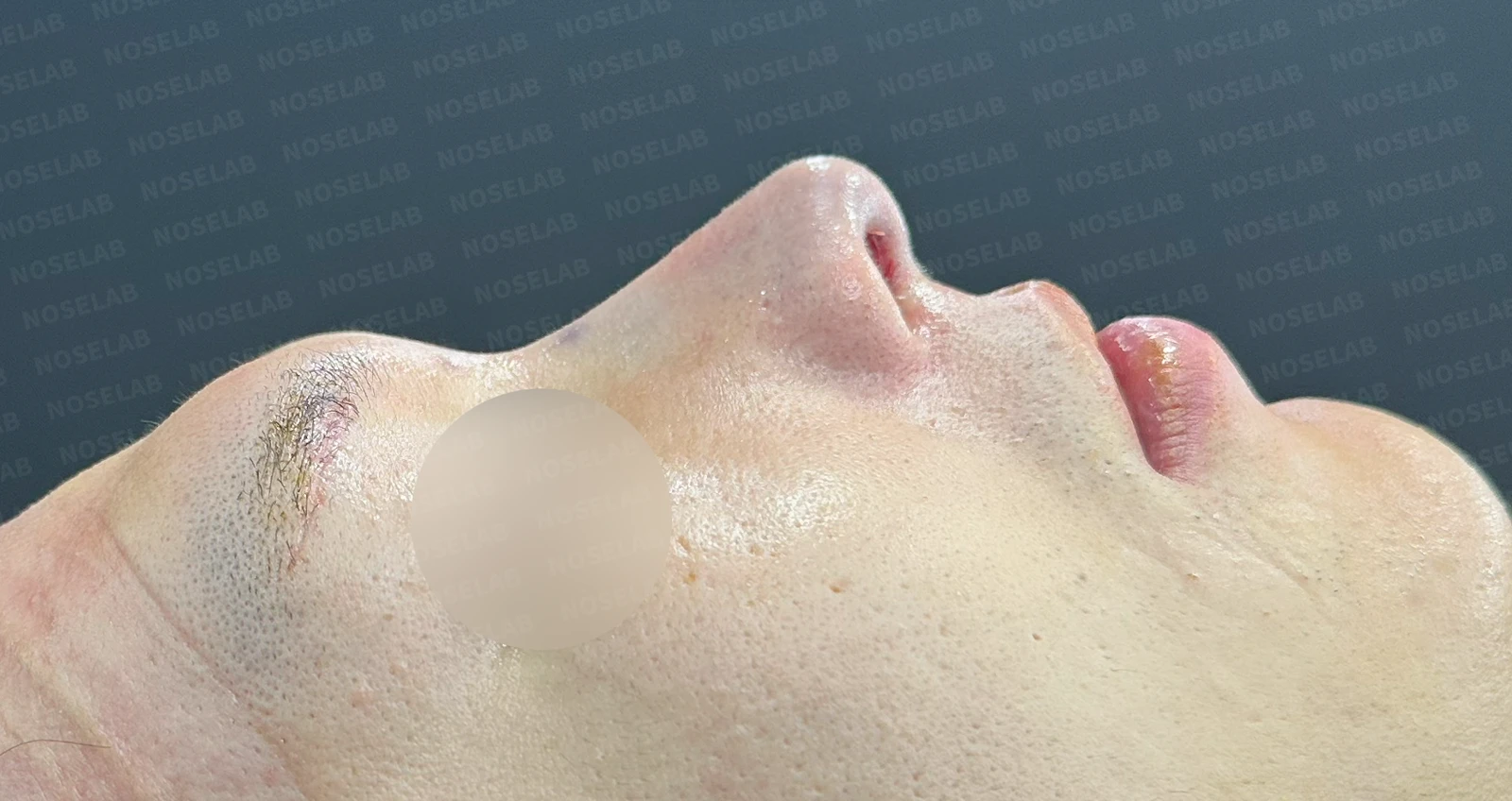
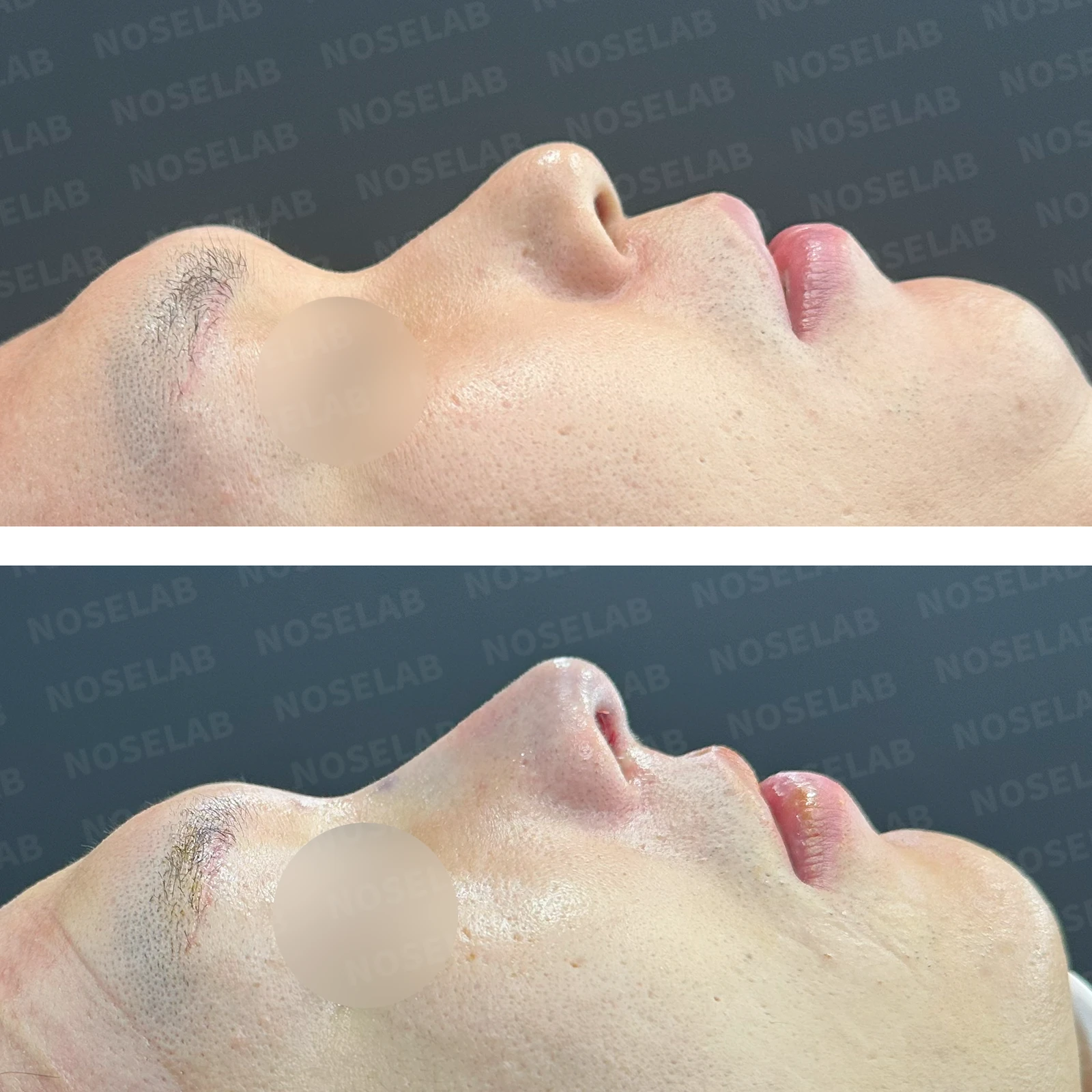
Profile view:
- The prominent brow bones and previously depressed glabella were naturally connected
- The uneven nasal bridge was smoothed into a straight bridge line
Before surgery / Day 0 immediately after surgery Photos taken immediately after surgery show swelling and may differ from the final result.
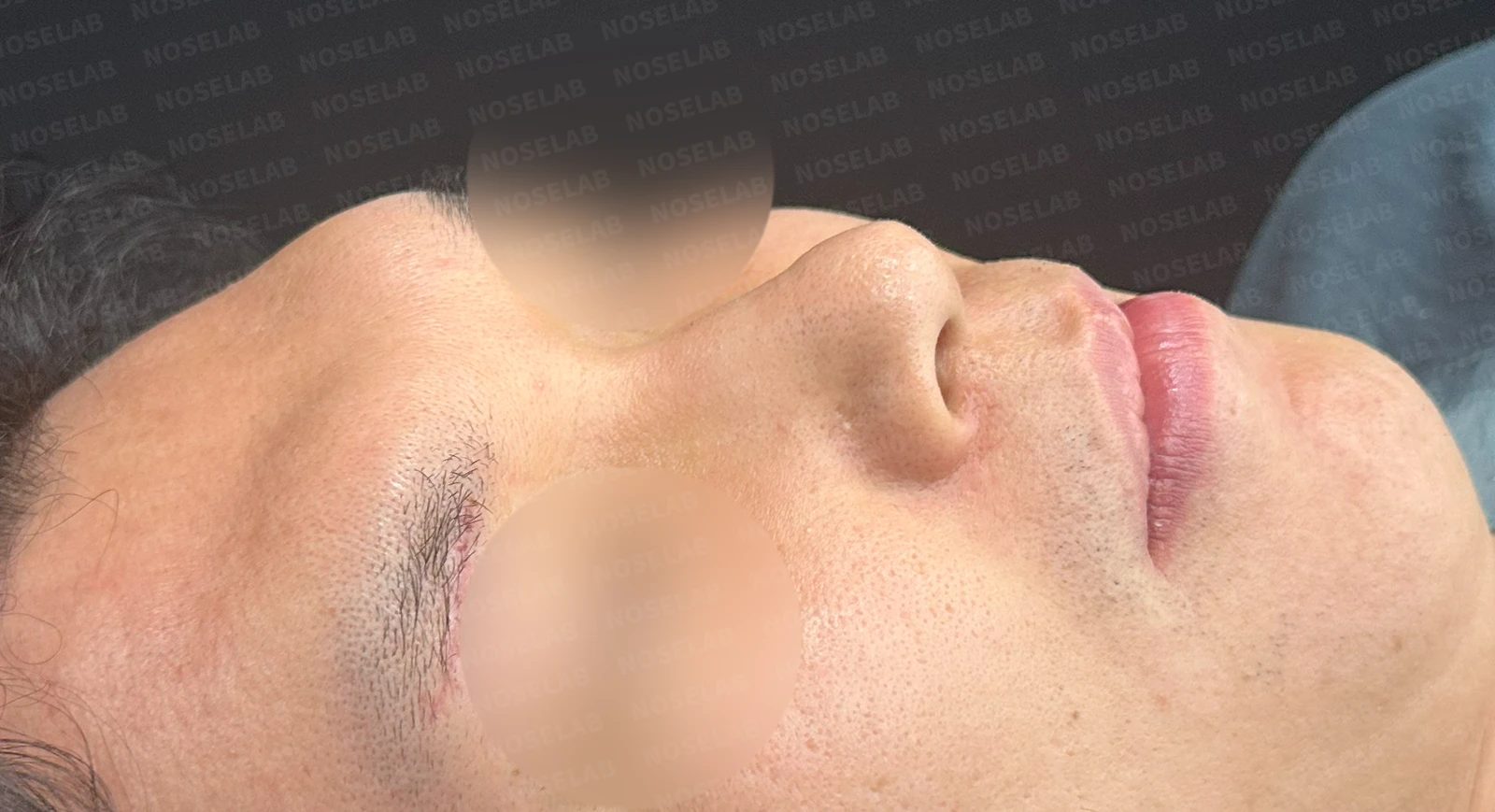
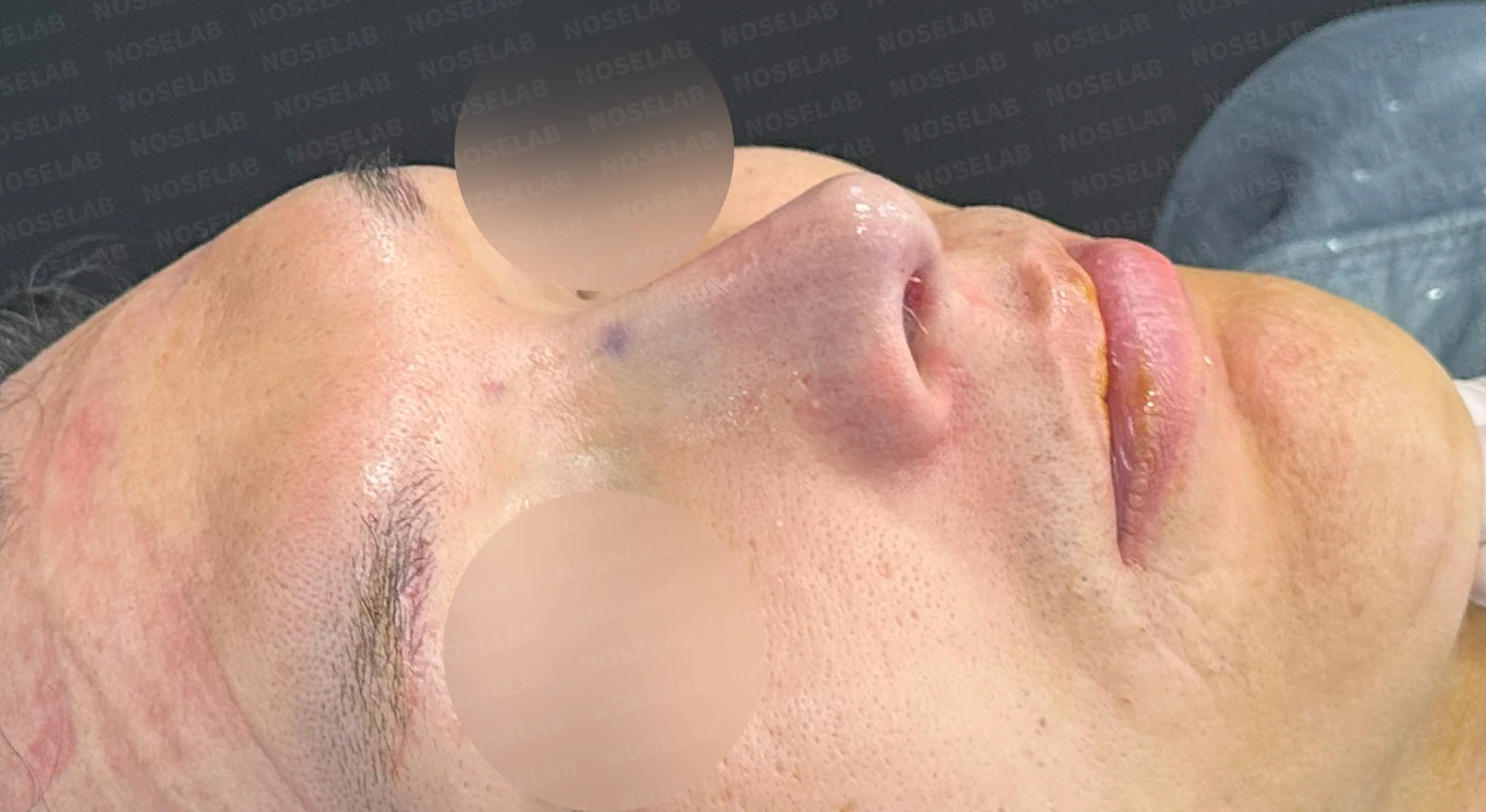
Oblique view:
- The appearance of the protruding mouth improved significantly
- The bulbous nasal tip achieved a more natural shape
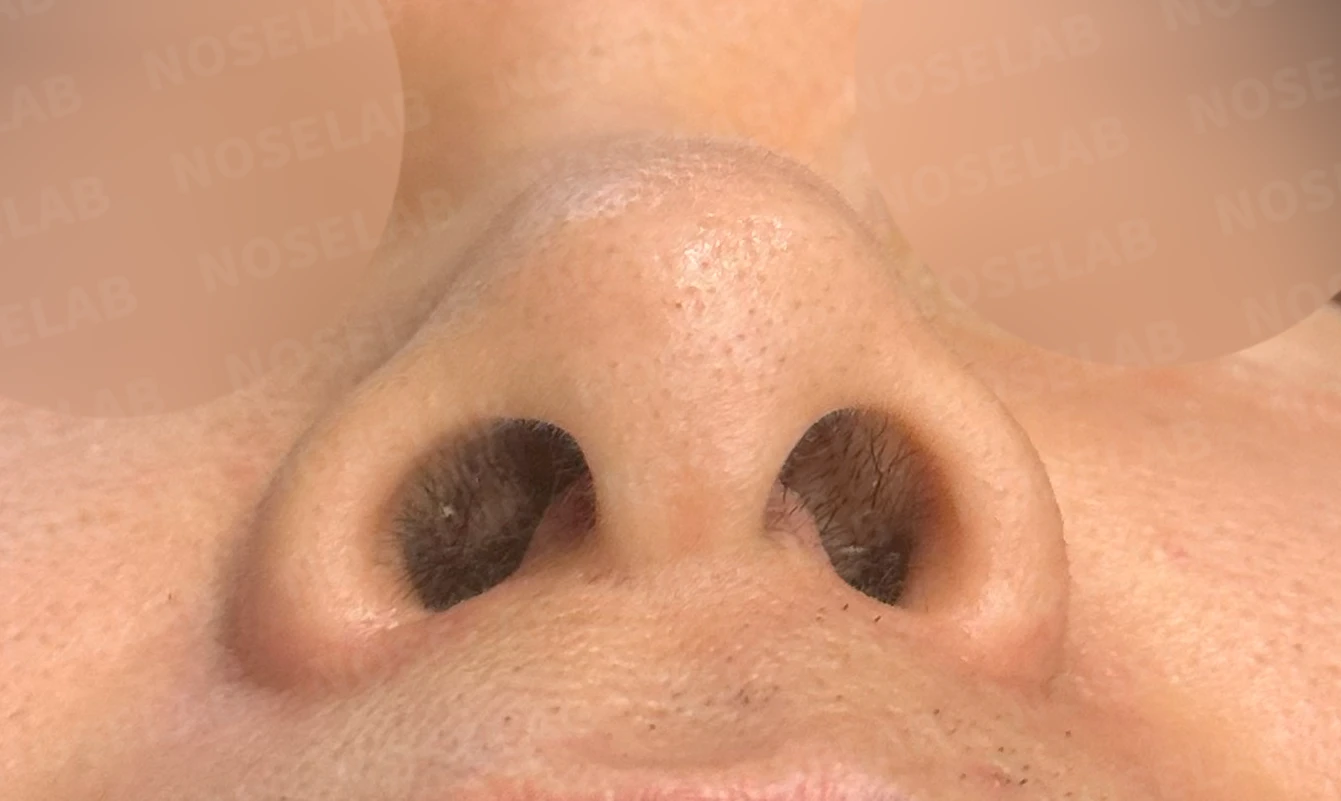
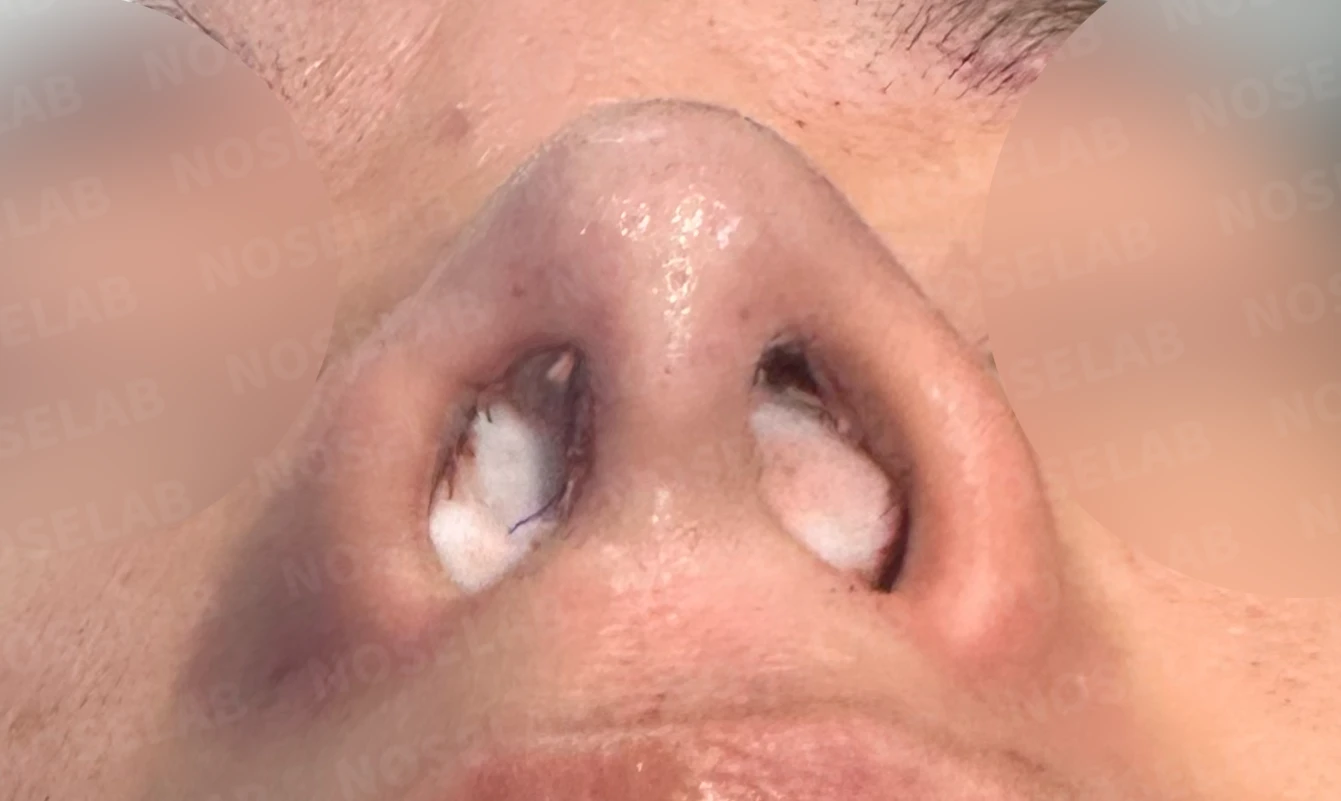
Before surgery / Day 0 immediately after surgery Photos taken immediately after surgery show swelling and may differ from the final result.
Nostrils:
- Nostril asymmetry improved substantially
- Discrepancy between the alae was reduced
Conclusion
This case addressed multiple combined concerns simultaneously, including prominent brow bones, a low nose, and a wide, spread-out shape. Notably, to address the combination of prominent brow bones and a low glabella (low nose), a properly carved implant was placed in the glabella to raise the starting point.
Septal extension using autologous rib cartilage effectively improved multiple nasal tip concerns (spreading, asymmetry, drooping), while concurrent septoplasty and inferior turbinate surgery provided functional improvement.
Removing the existing filler to smooth the uneven contours of the nasal bridge and inserting a silicone implant also delivered a favorable result.
Closing remarks
In male patients with excessively prominent brow bones and a low nose, the appropriate use of nasal bridge implants is very important. Sometimes, highly customized implants made with 3D printing are considered. In this case, however, the transition angle descending from the brow bone to the glabella was favorable, so a 3D-printed implant was not deemed necessary.
I hope this case is helpful to those concerned about a low nose, a wide nose, or prominent brow bones. Rhinoplasty is not merely about the nose alone; it must take overall facial harmony into account. In particular, it is important to consider the relationship between the glabella and brow bones, nasal height and length, and the bridge line comprehensively to create a natural, harmonious result.
I always establish a tailored surgical plan by carefully considering each patient's facial characteristics and requests. If you are considering rhinoplasty, I encourage you to consult with a specialist to find the most suitable method for you.
I will be with you every step of the way to achieve a beautiful and healthy nose.
This was Dr. Peter C. Kang. Thank you.
Thank you.
#rhinoplasty #prominentbrowbonecorrection #lownosecorrection #upturnednosecorrection #smallnosecorrection #radixelevation #shortnosecorrection #widenosecorrection #nostrilasymmetrycorrection #closedrhinoplasty #ENTspecialistrhinoplasty #rhinoplastysurgerywithsafetyinmind #naturalnose

Limitations and risks
When autologous rib cartilage is used, scarring and pain may remain at the donor site on the chest, and pneumothorax (pleural injury) can occur rarely. Over time, the grafted cartilage may warp or undergo partial resorption.
When foreign materials such as injected fillers are removed and reconstructed, contracture may recur, nasal height and length may decrease, and staged surgery may be necessary depending on the skin condition.
When the septum is corrected at the same time, nasal obstruction may persist or recur, and in rare cases, septal perforation or changes in smell may occur.
Common potential risks include infection, bleeding, asymmetry, scarring, skin necrosis, and insufficient improvement; results vary depending on individual skin condition and previous surgical history.