Hello, I am Dr. Peter C. Kang.
Today, I would like to share the case of a patient who visited our clinic concerned about implant show-through, a drooping tip, and an unnatural nostril appearance from the front.
🔍 Surgical history
Approximately 25 years ago: silicone implant placement
2 years ago: silicone implant reinsertion
After two surgeries, issues arose where the implant shifted and the nose became crooked and deviated. In particular, the implant extended deeply into the nasal tip, making the tip skin significantly thin, with show-through so severe that there was concern the implant might break through.
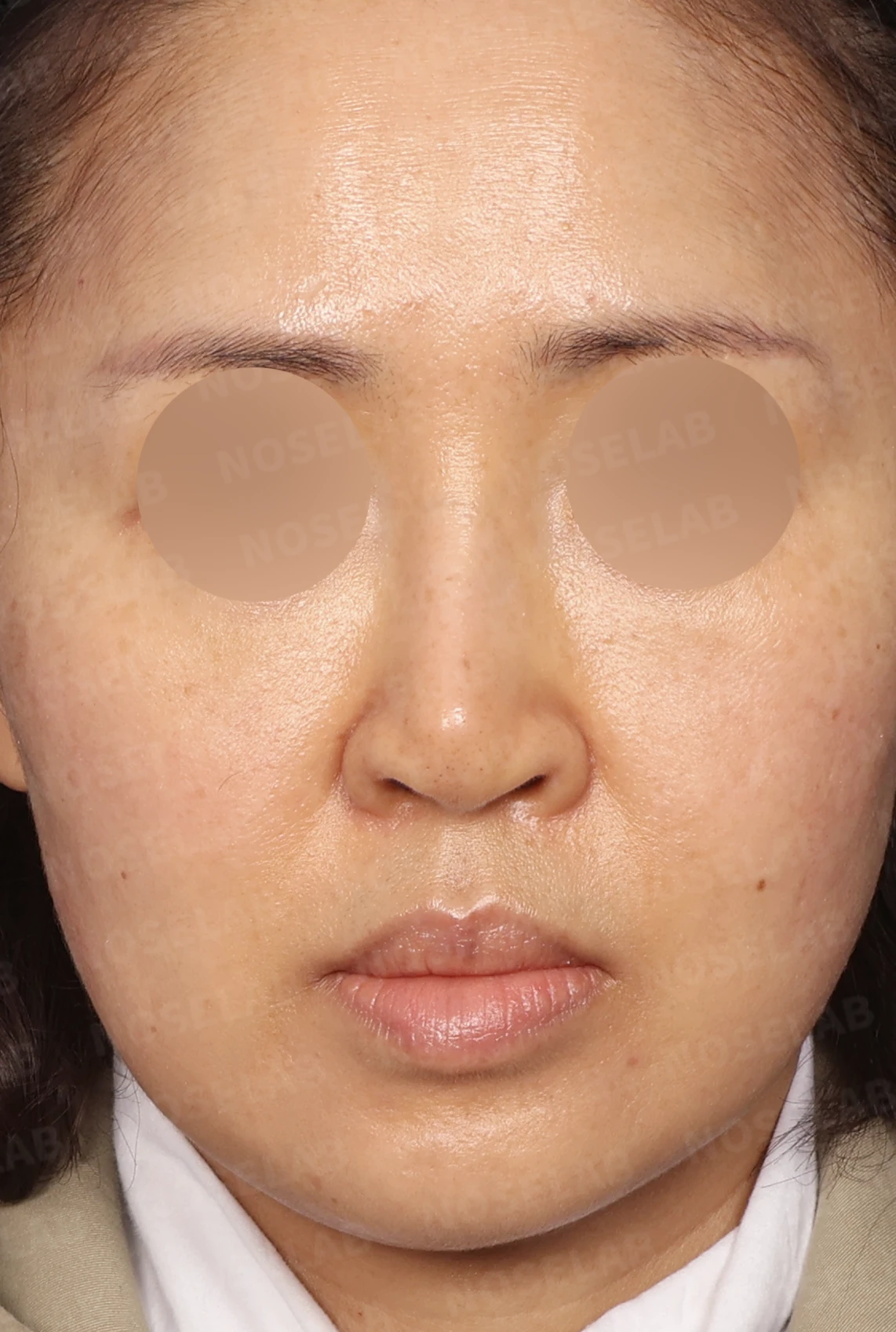
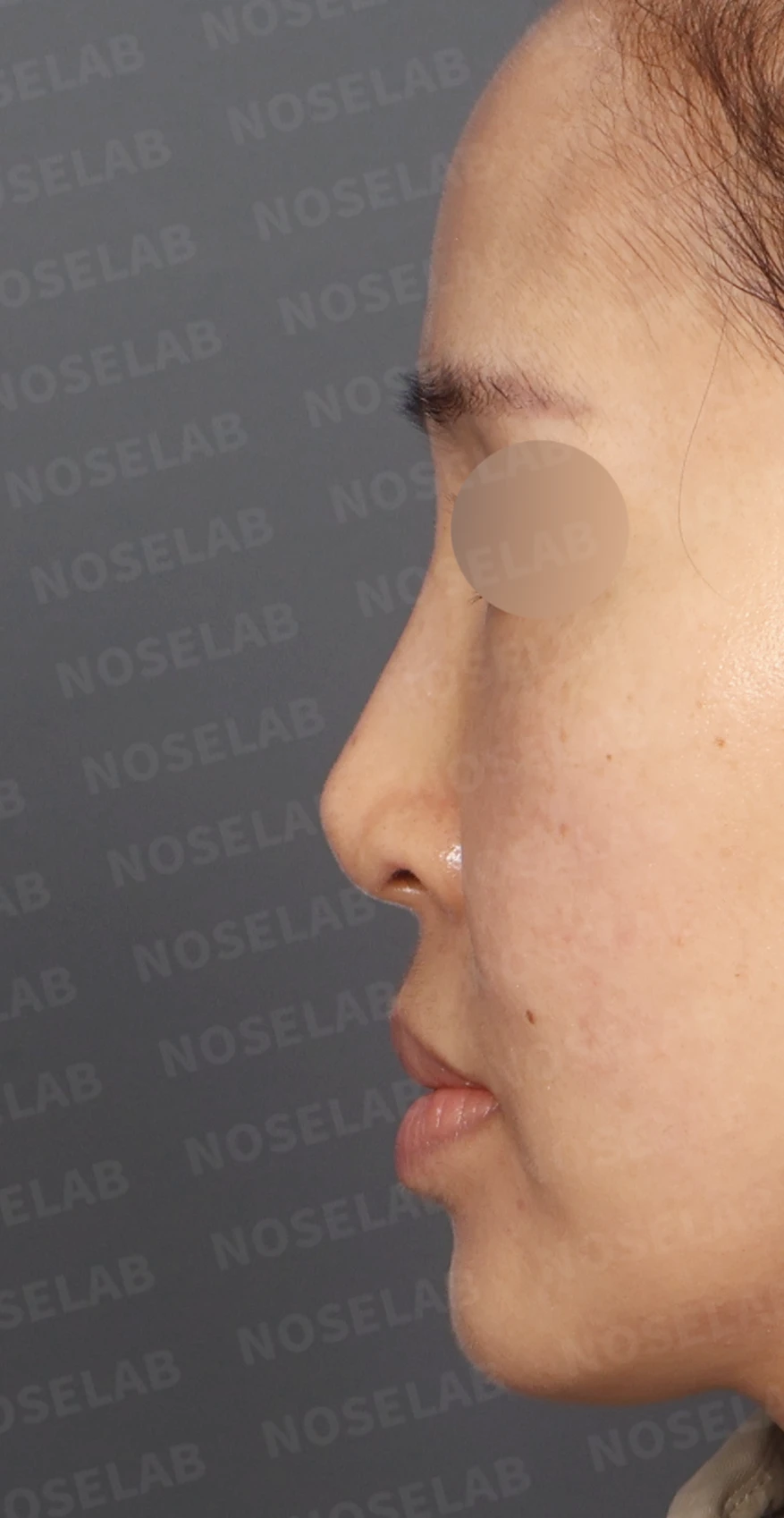
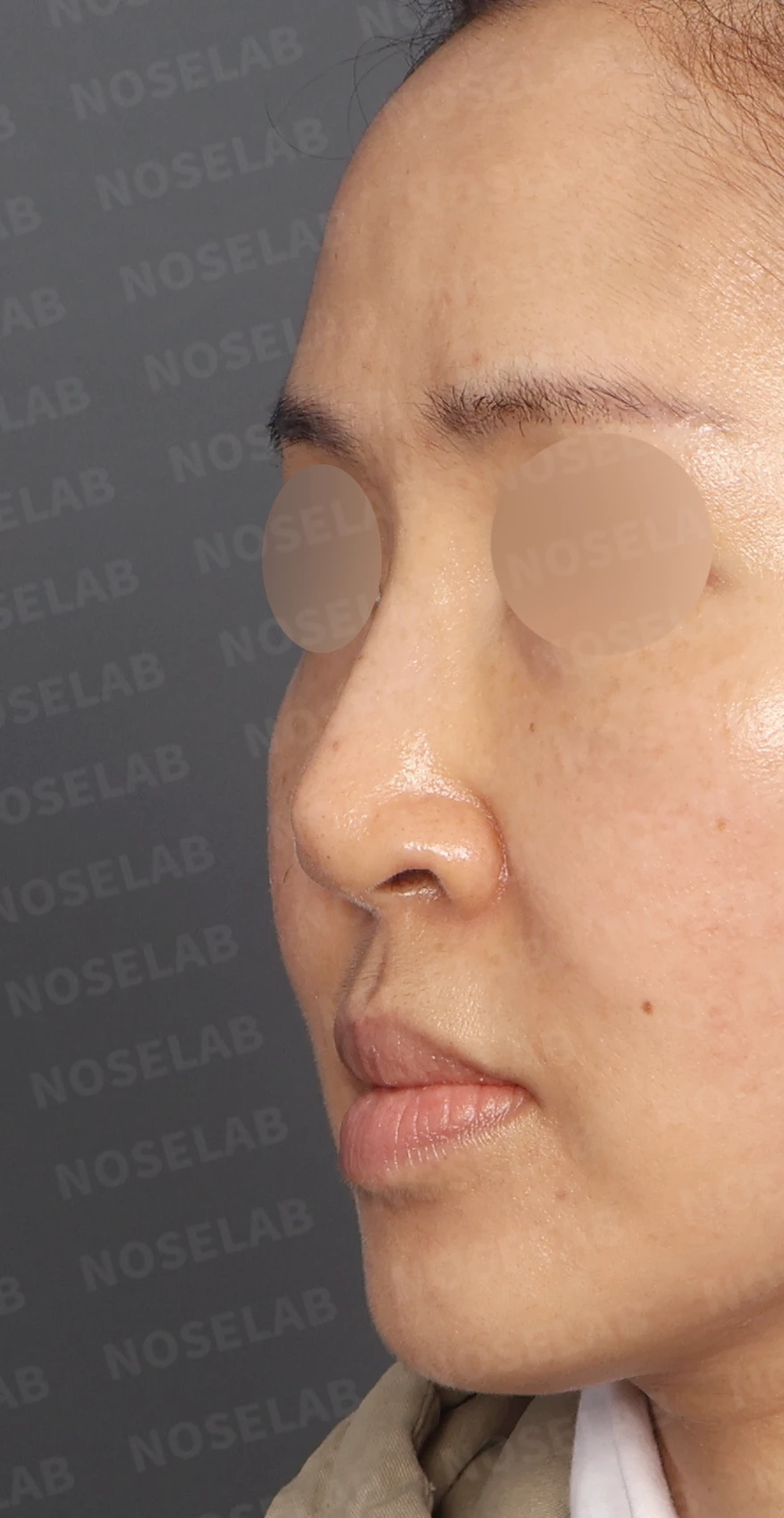
Front, left profile, and oblique views during design consultation.
💉 Patient requests
Improvement of drooping tip
Resolving implant show-through and securely reinforcing the nasal tip
Correcting the crooked nasal axis
Improving the unnatural nostril shape (dragon nose) seen from the front
Correcting the overall nasal contour naturally and safely
The patient lives overseas and had been concerned about the shape of the nose for a long time.
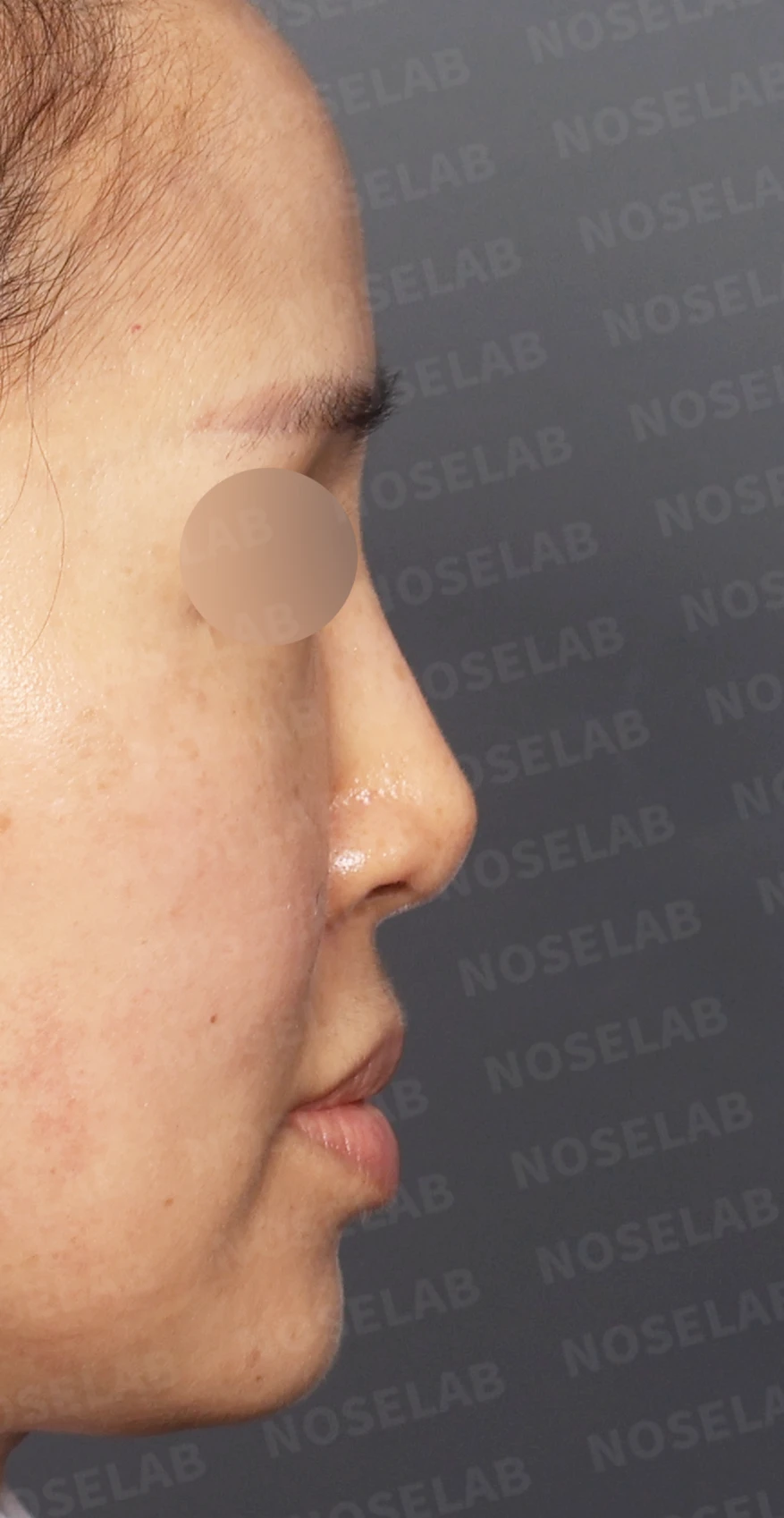
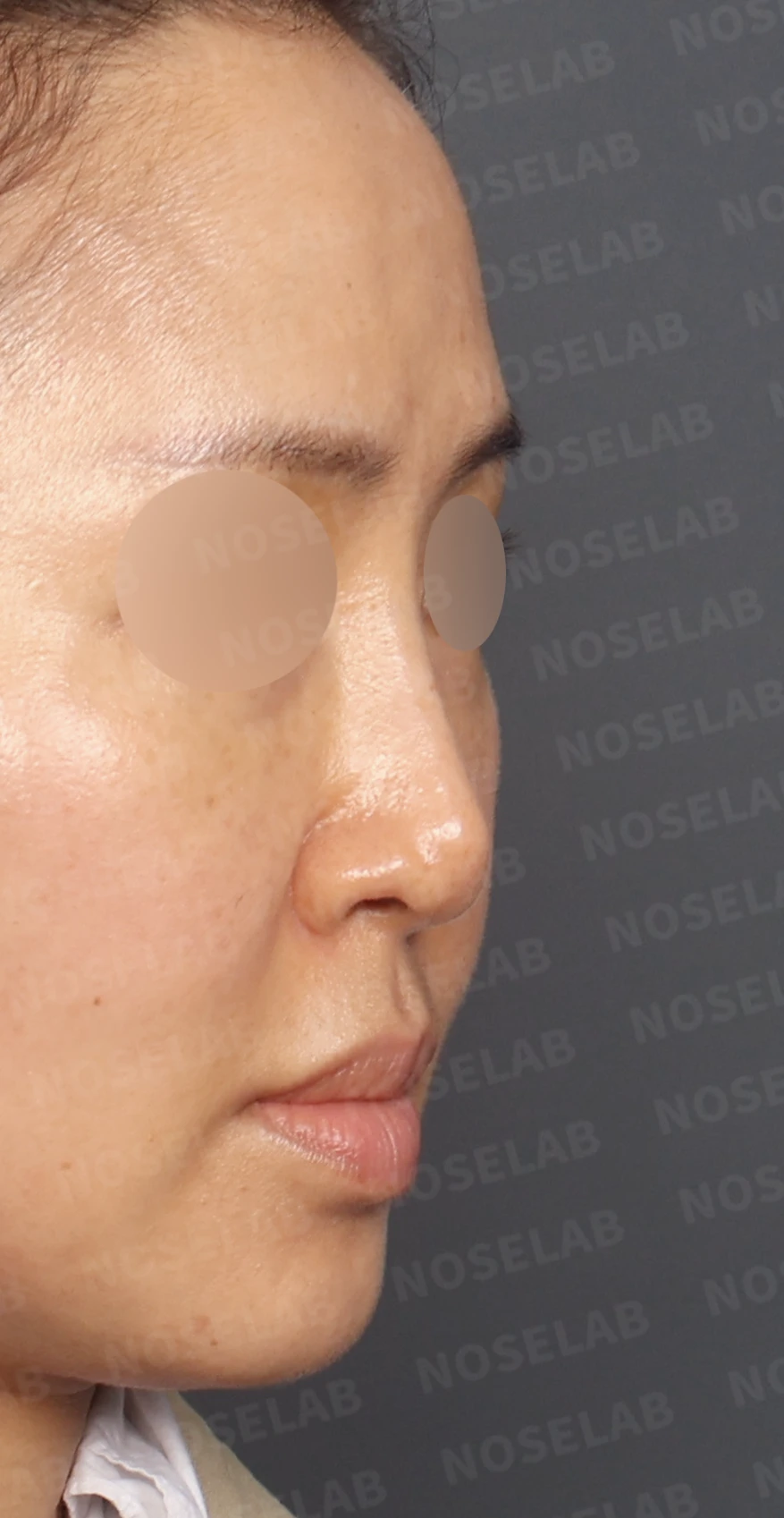
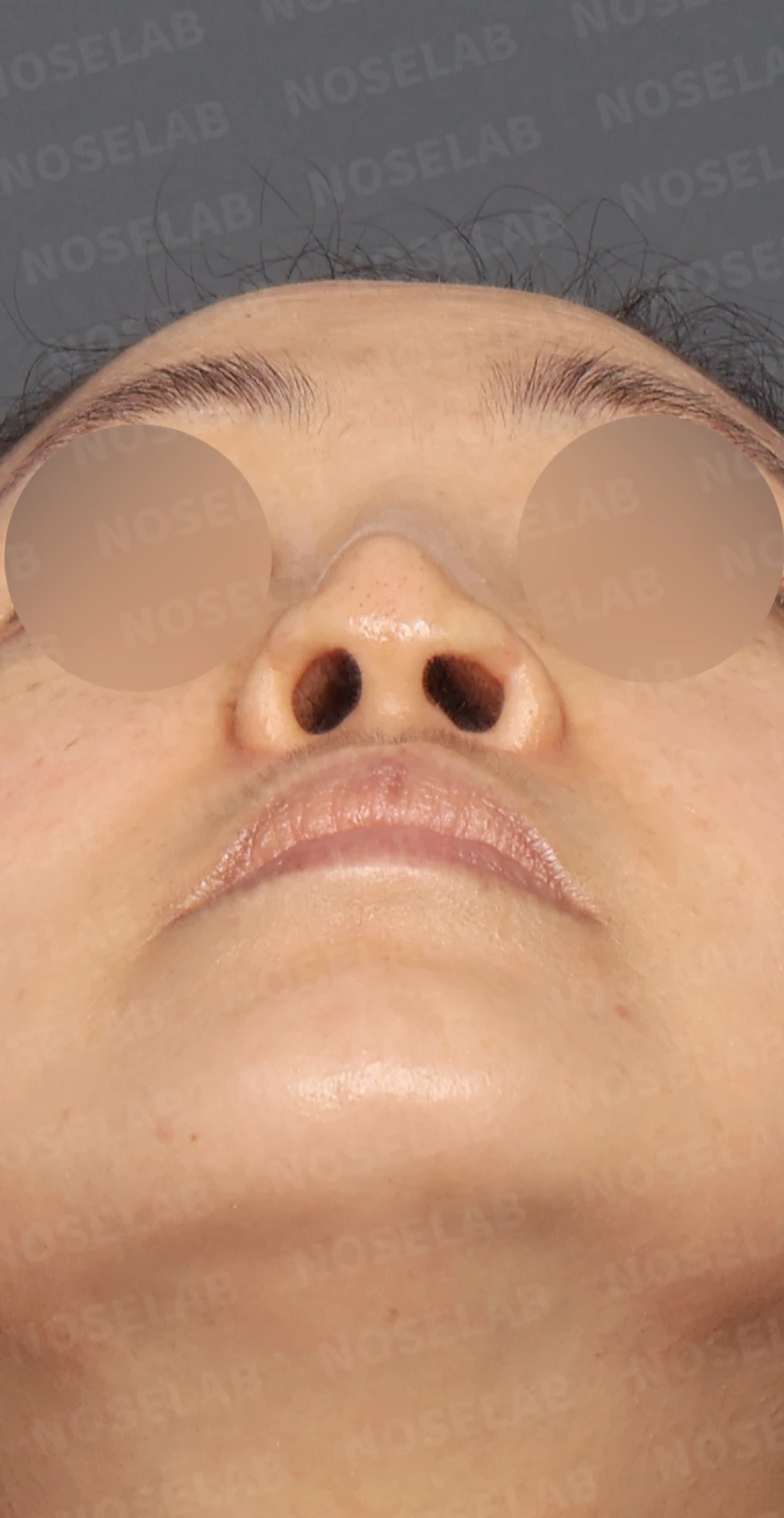
Right profile, oblique, and nostril views during design consultation.
🔧 Surgical plan and procedure
1. Nasal tip reinforcement and skin protection
Because the implant had been placed all the way to the tip, the thinned skin was reinforced with donor dermis to secure tip stability and support.
2. Foreign body removal
Foreign substances injected into the alae and glabella were meticulously removed, and the uneven surface of the nasal bridge caused by the foreign substances was smoothed out.
3. Dragon nose correction (improving the M-shaped nostrils)
Through lower lateral cartilage repositioning and cartilage grafting, the unnatural nostril shape seen from the front was corrected.
4. Nasal tip reconstruction using autologous rib cartilage
The nasal tip was elevated and projected using autologous rib cartilage to form a natural line, and the profile silhouette was improved by correcting the nasolabial angle.
5. Correction of nasal bone asymmetry
Lateral osteotomy was performed to straighten the deviated nasal bridge, and the silicone implant was precisely sculpted to fit the nasal bones, creating a smooth bridge line.
🌟 Surgical results
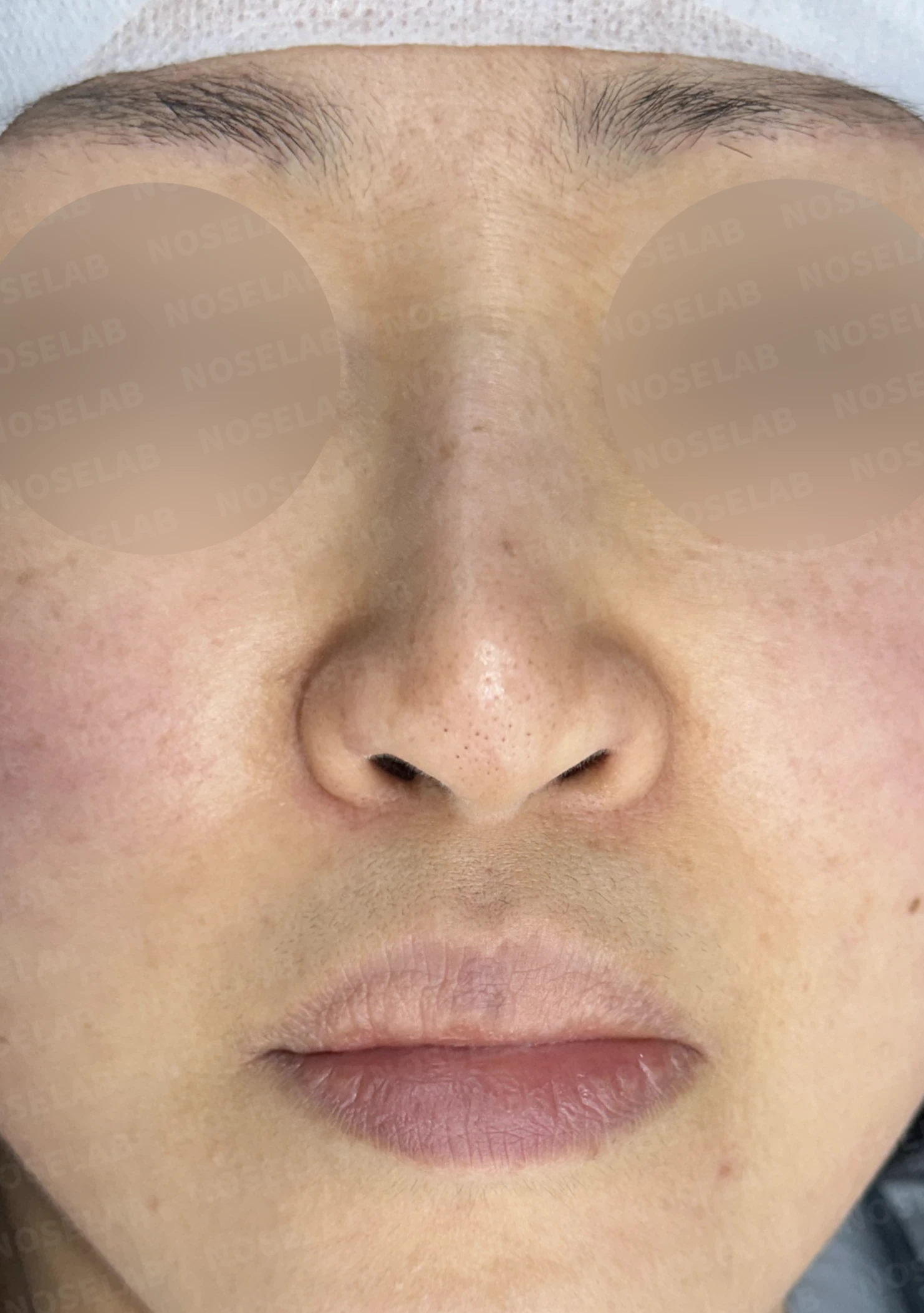
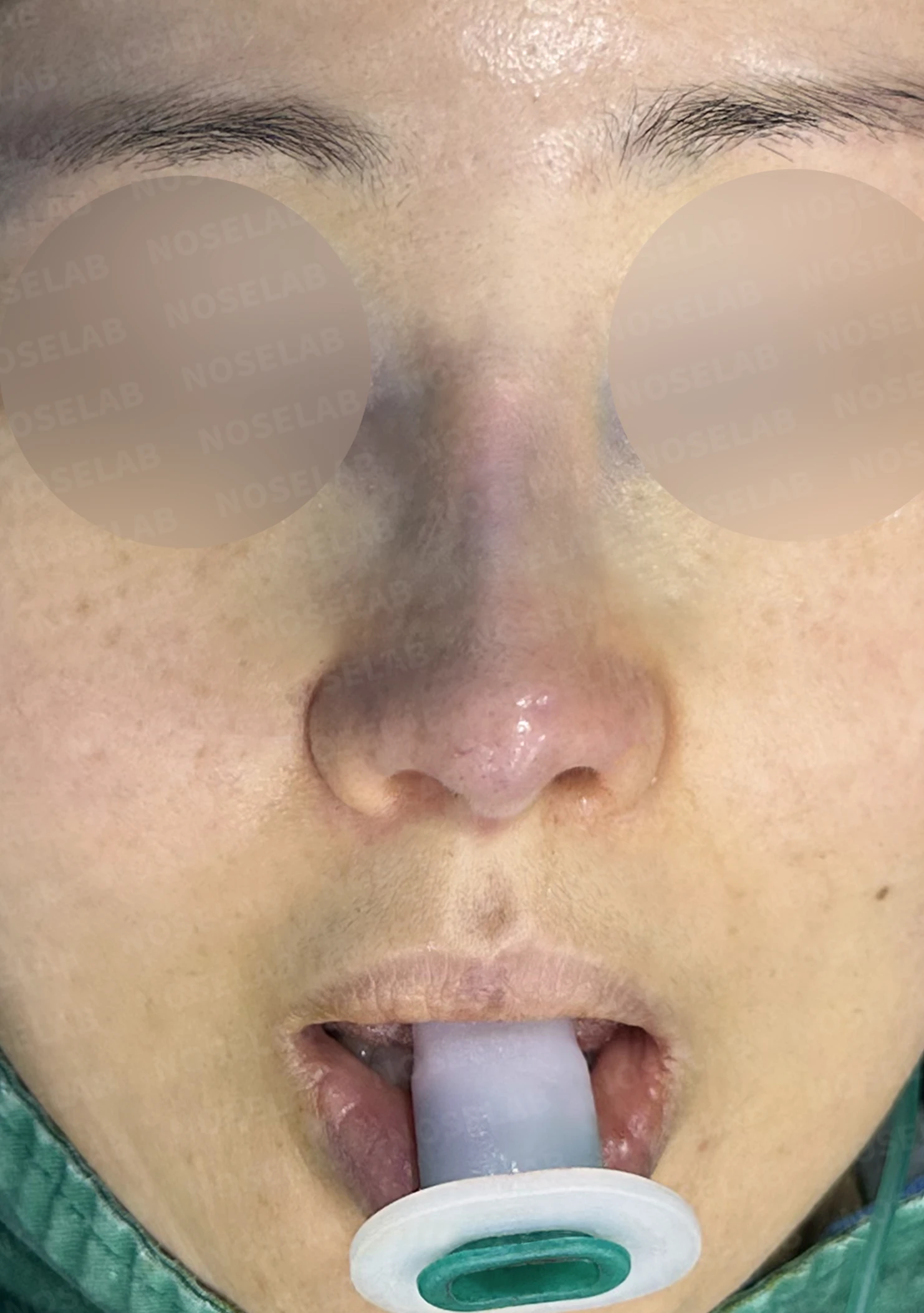
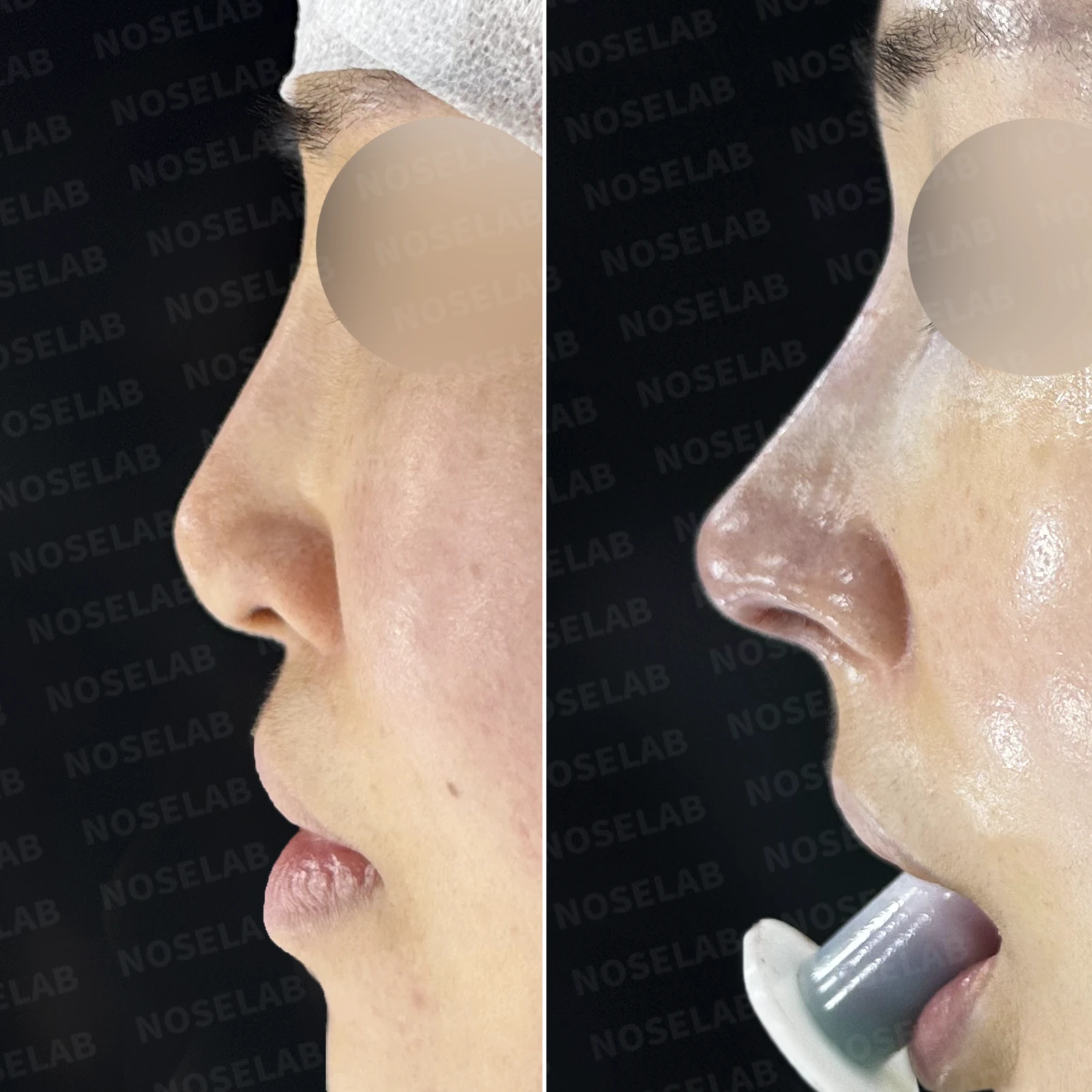
Before surgery / Day 0 immediately after surgery Photos taken immediately after surgery show swelling and may differ from the final result.
Front view changes:
The unnatural M-shaped nostril appearance was naturally improved
The previously crooked nasal axis was straightened
Implant show-through was resolved, resulting in a stable nasal tip
Before surgery / Day 0 immediately after surgery Photos taken immediately after surgery show swelling and may differ from the final result.
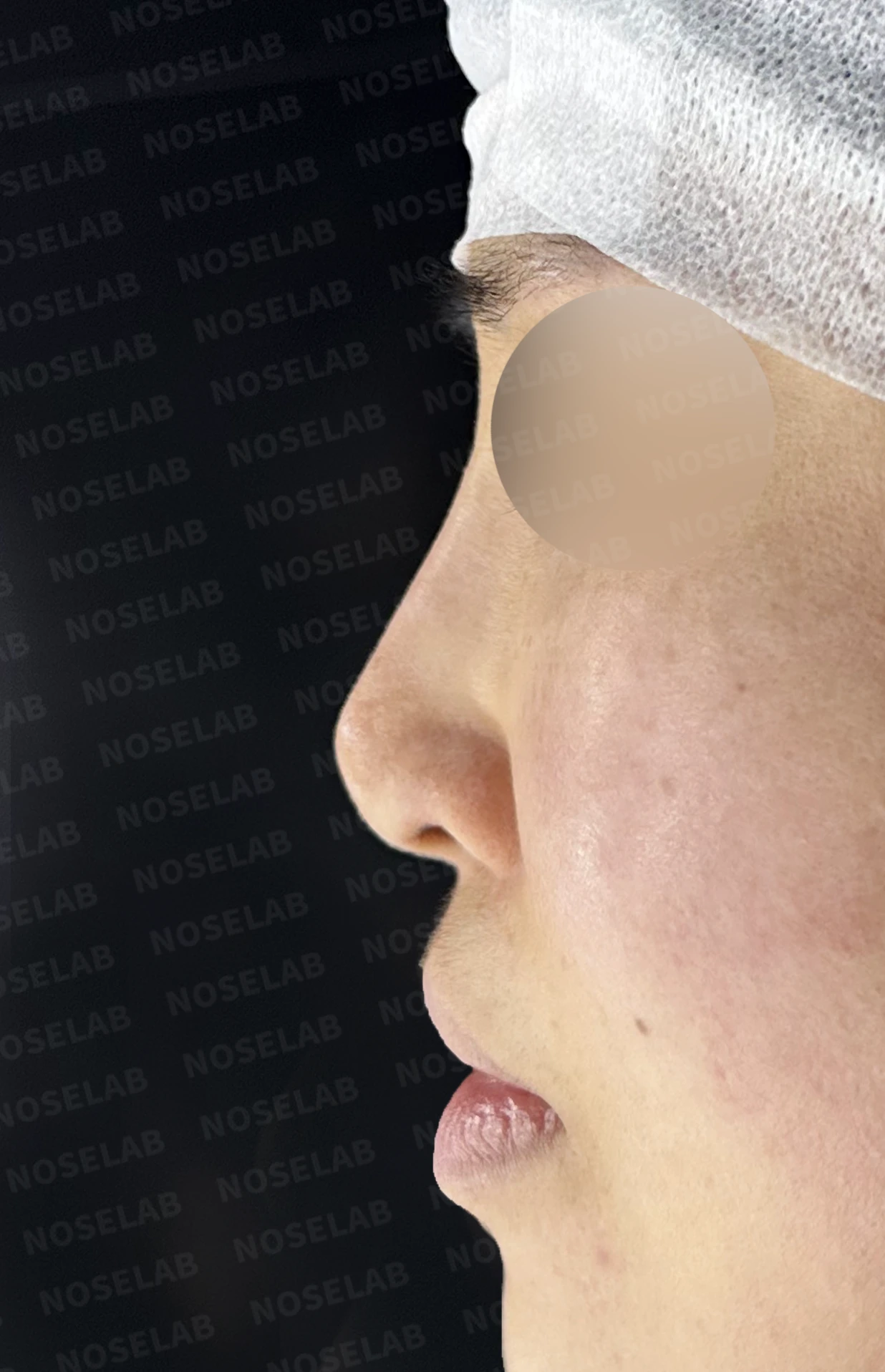
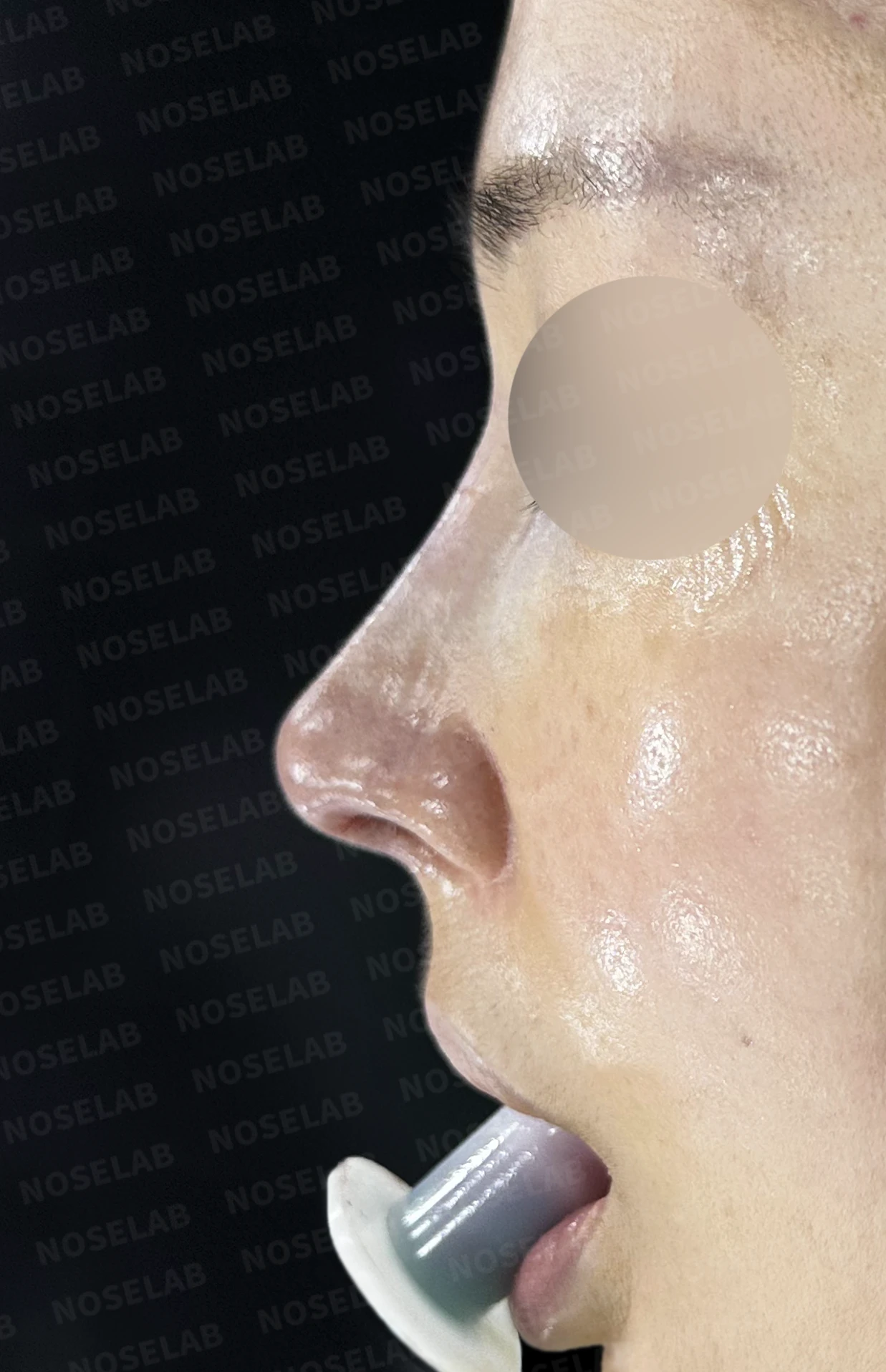
Profile view changes:
The drooping tip was elevated and well-projected
The nasolabial angle was appropriately corrected, completing a refined profile
Previously irregular nasal bridge line smoothly refined
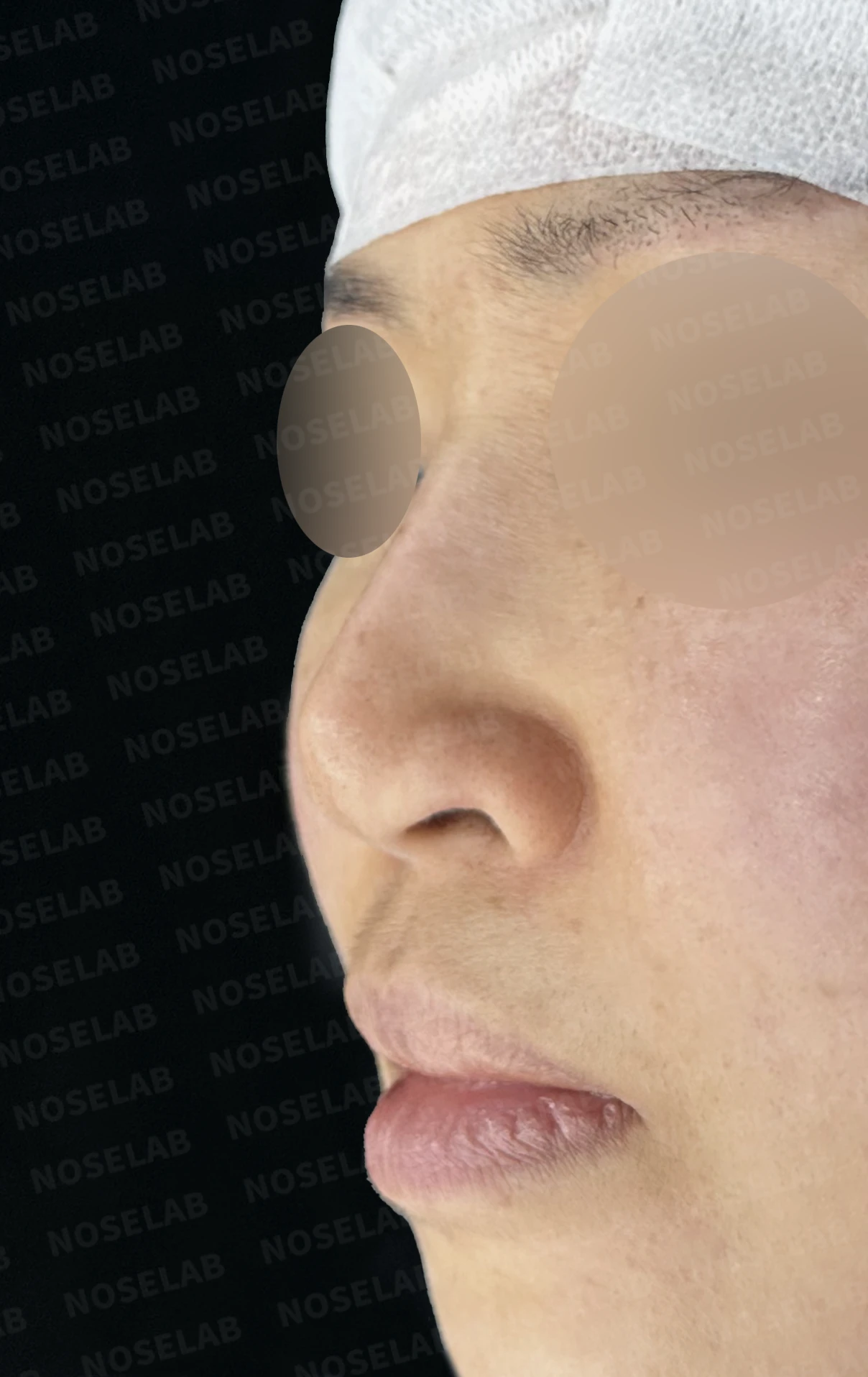
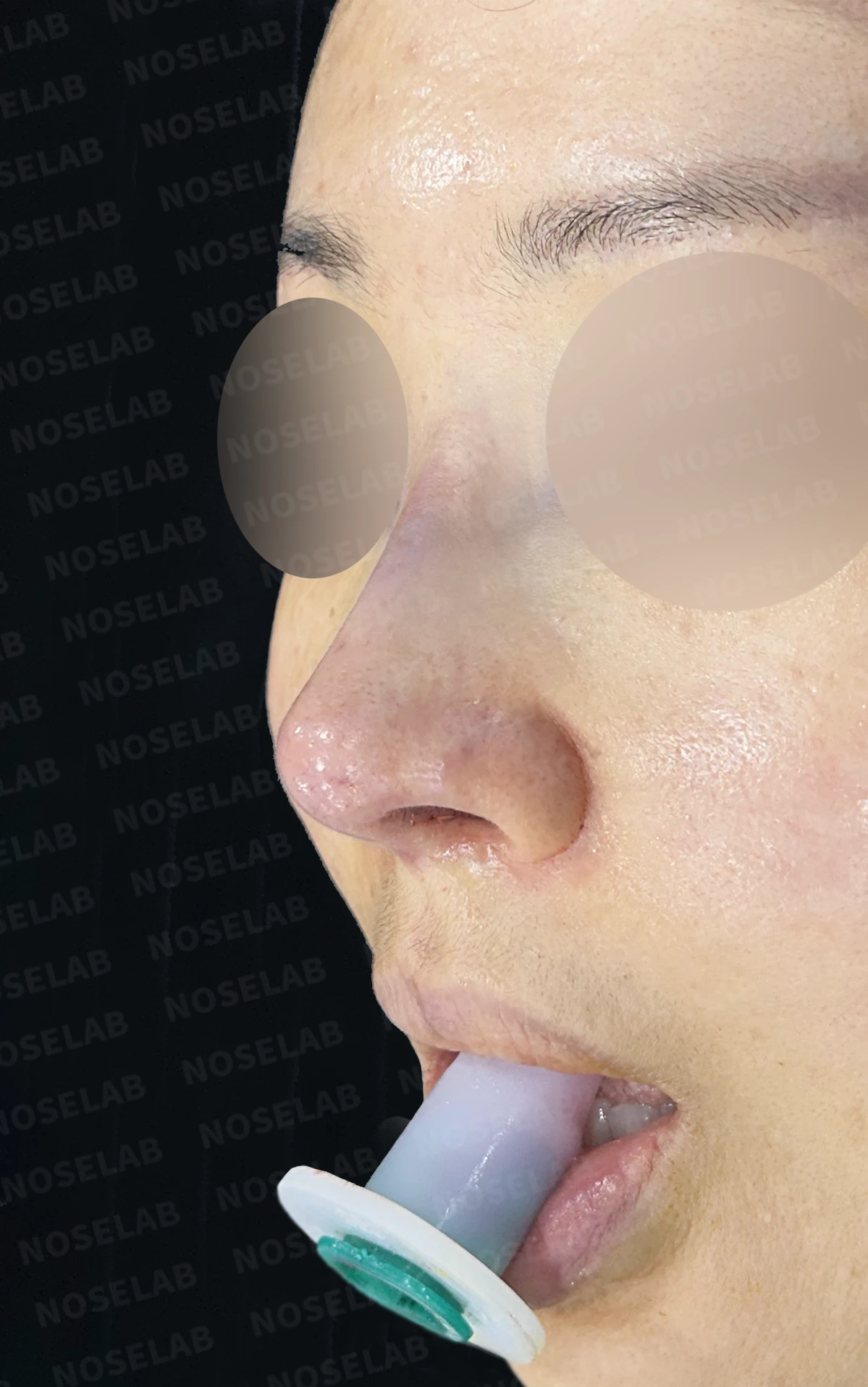
Before surgery / Day 0 immediately after surgery Photos taken immediately after surgery show swelling and may differ from the final result.
Changes in nostril shape
A balanced nostril shape was achieved through lower lateral cartilage repositioning
Improvement of asymmetry
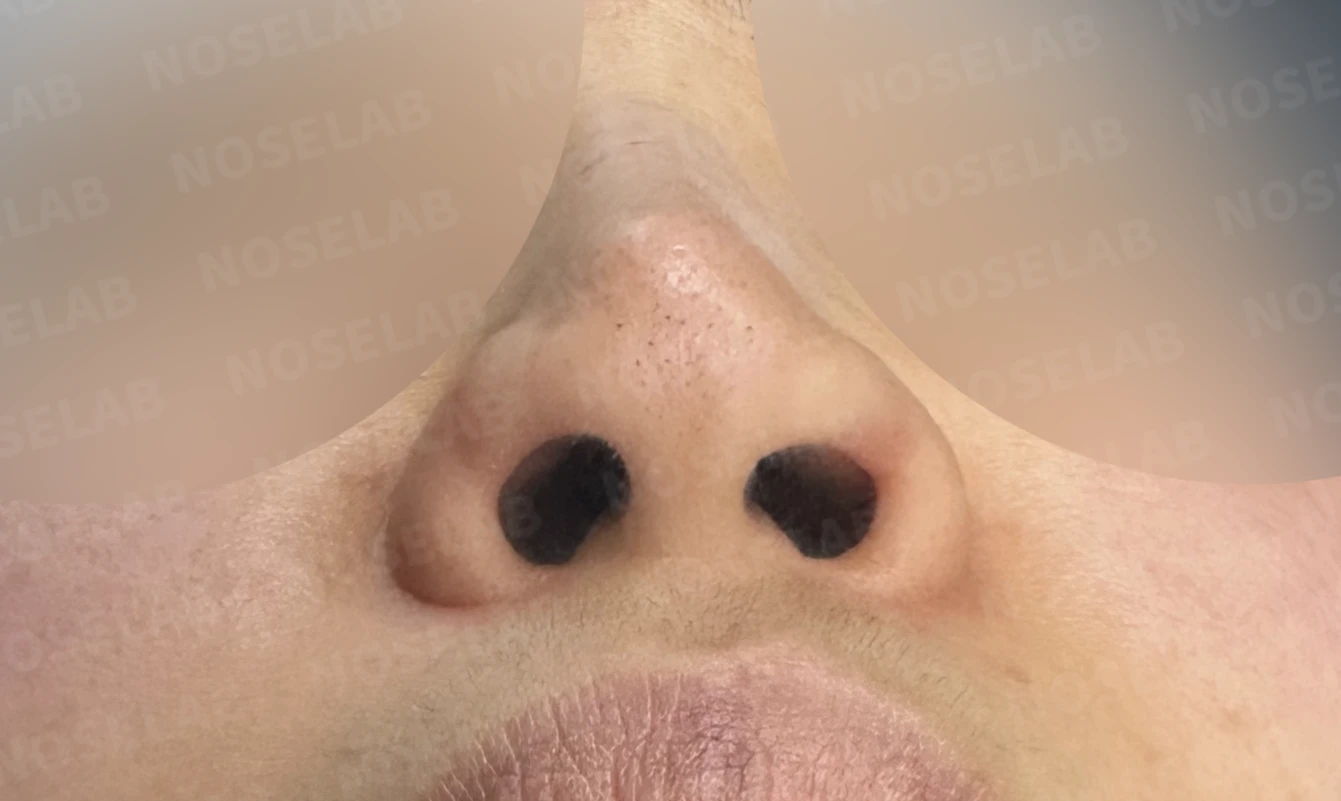
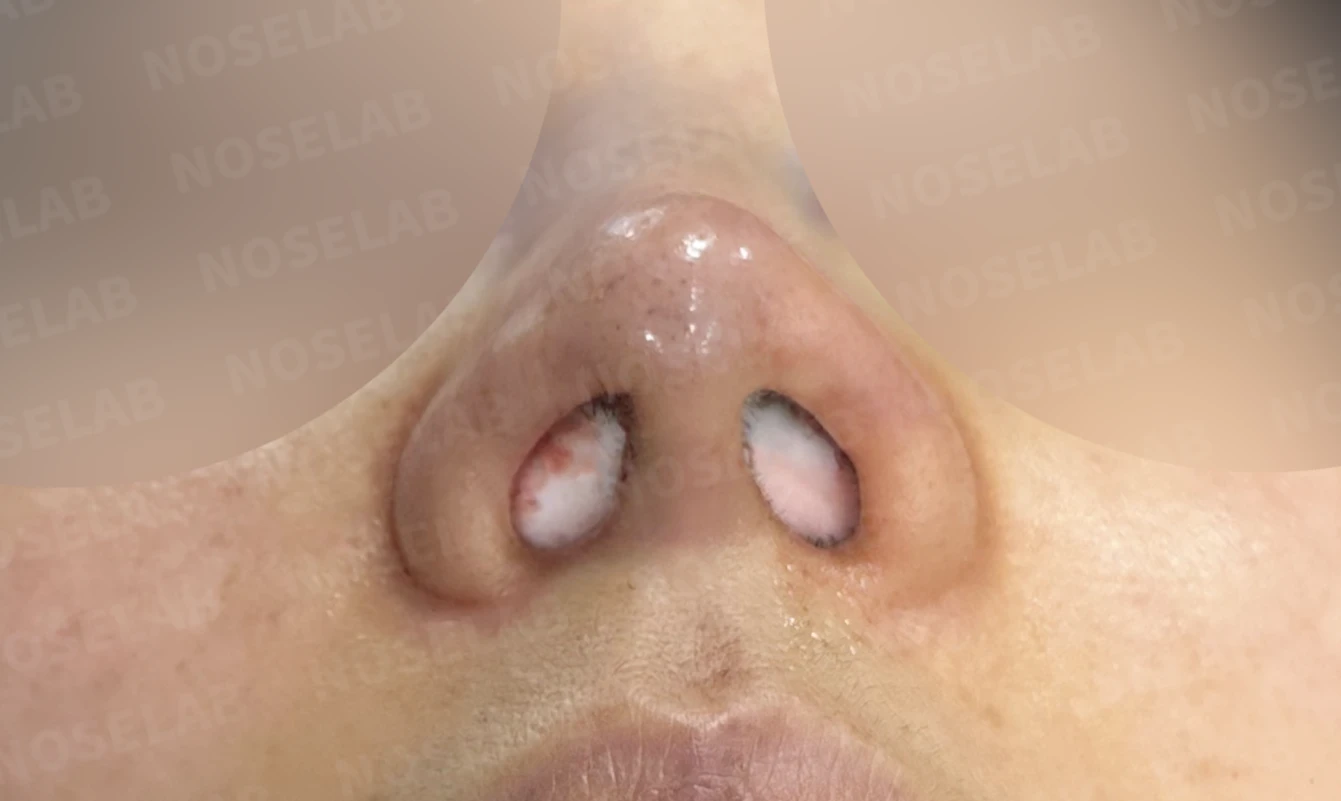
Before surgery / Day 0 immediately after surgery Photos taken immediately after surgery show swelling and may differ from the final result.
💡 Specialist opinion
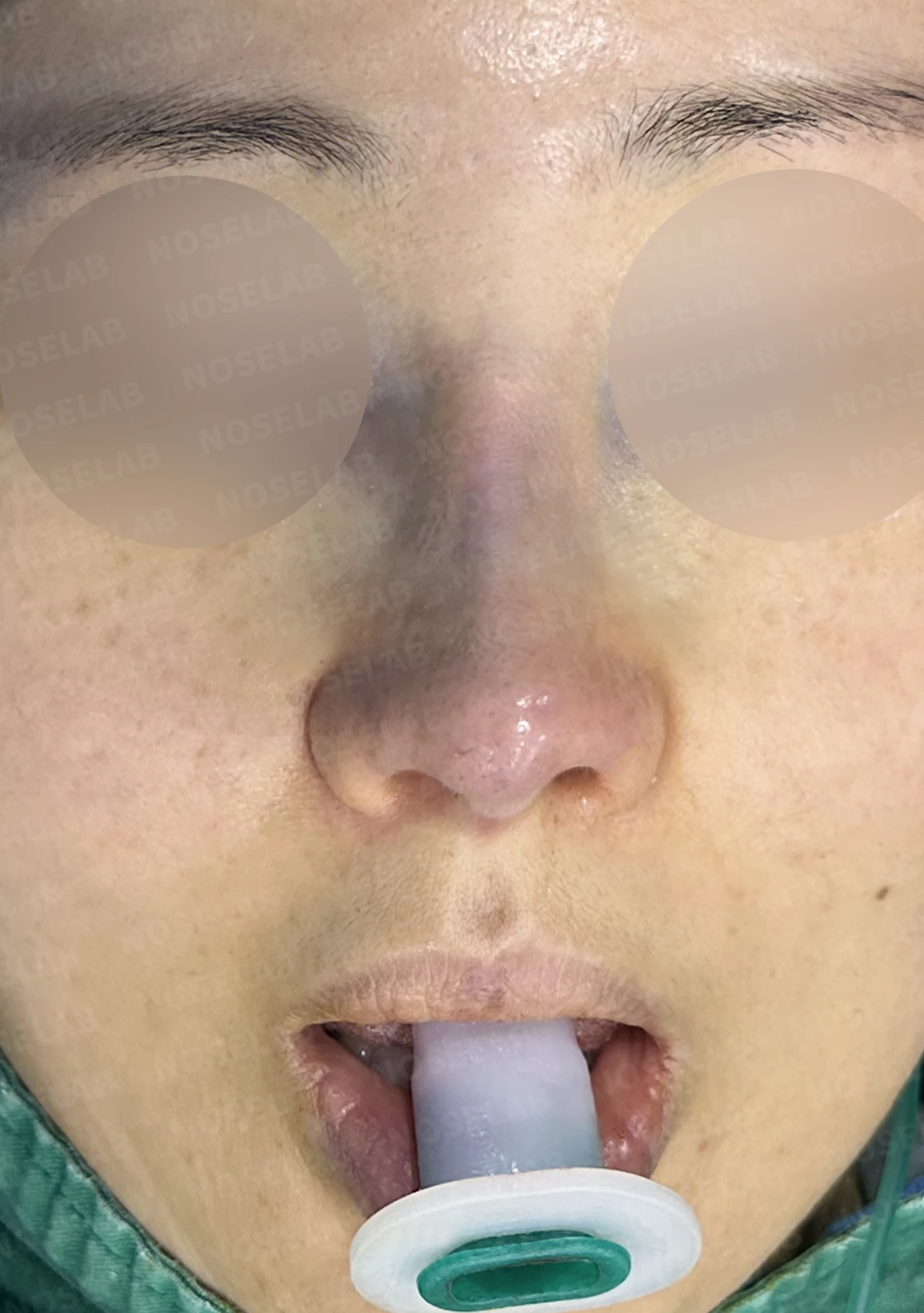
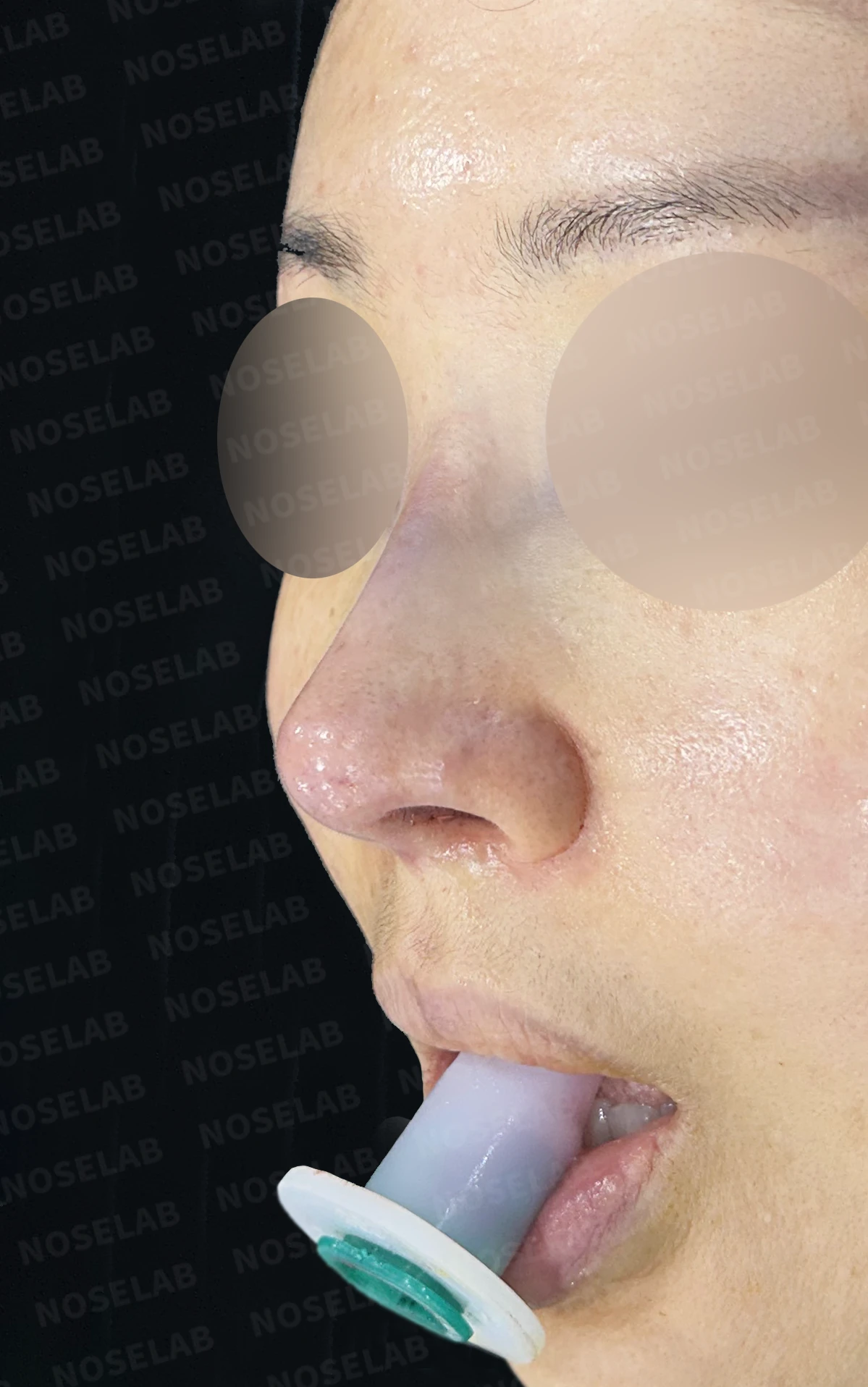
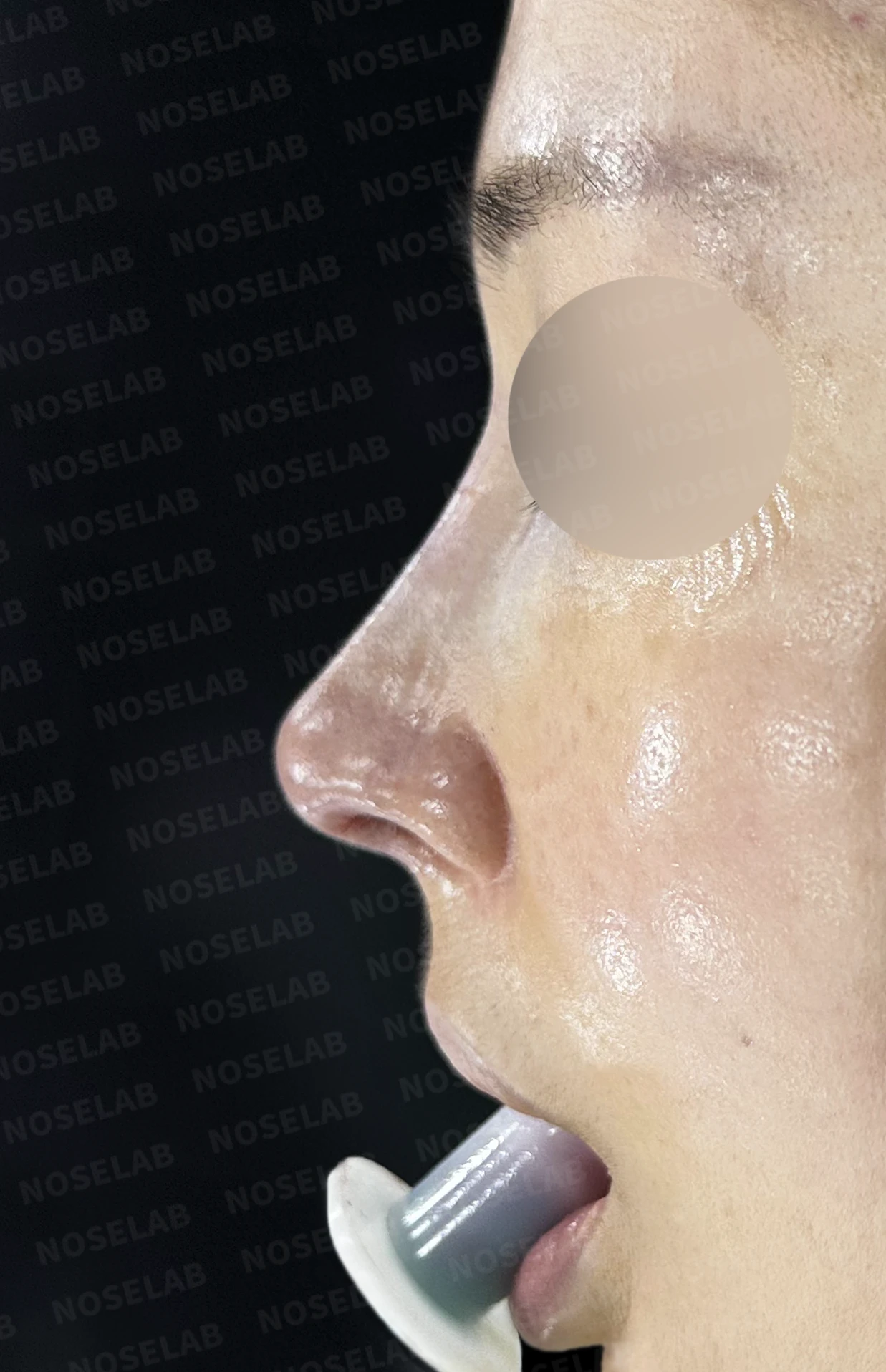
Front, oblique, and profile views on day 0 immediately after surgery. Photos taken immediately after surgery show swelling and may differ from the final result.
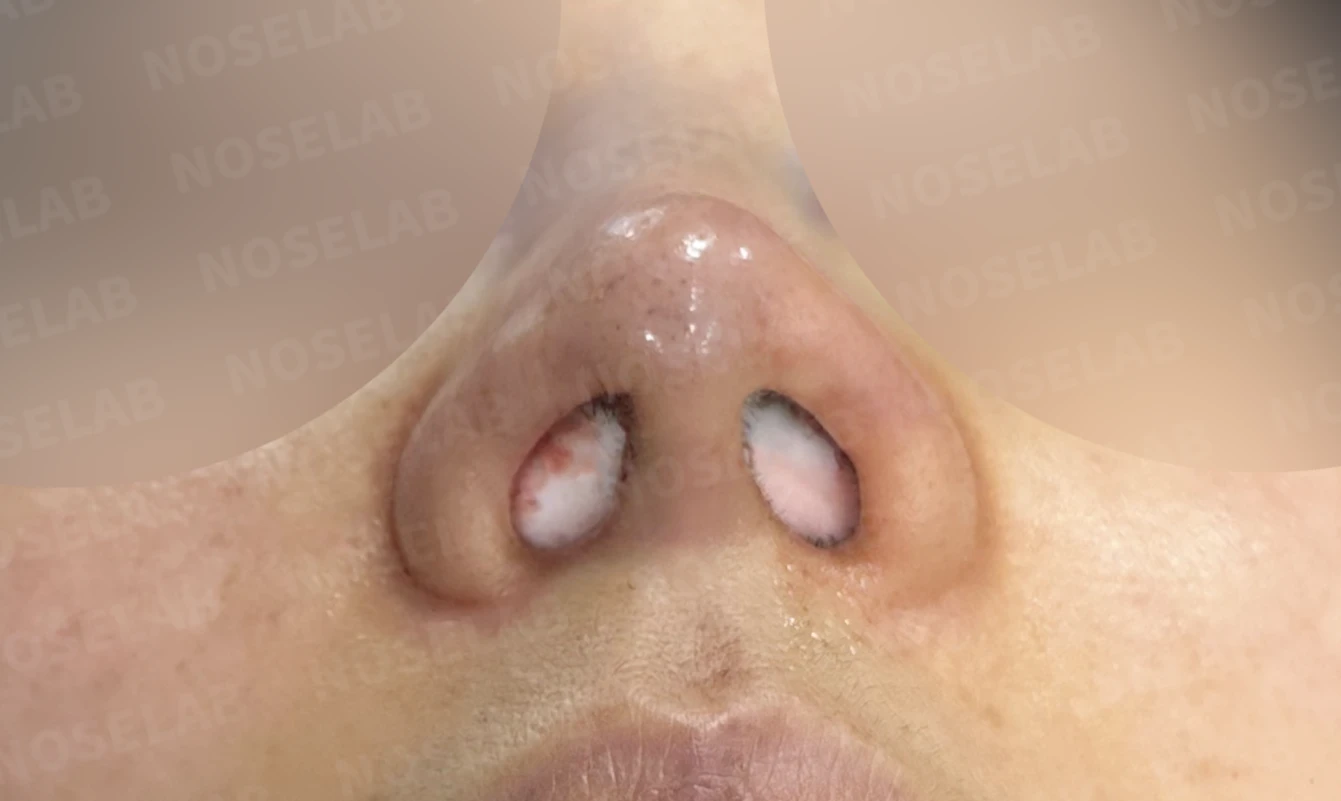
Nostril view on day 0 immediately after surgery. Photos taken immediately after surgery show swelling and may differ from the final result.
In revision rhinoplasty after multiple prior procedures, comprehensively evaluating the existing tissue condition, skin thickness, and the presence of foreign substances is of utmost importance. In this type of case, where the implant was inserted all the way to the tip and the skin had become extremely thin, skin reinforcement using donor dermis was key.
In addition, the previously injected foreign substances adhered to the surrounding tissues, requiring meticulous dissection, while the nostril deformity known as a dragon nose was corrected through cartilage repositioning and reinforcement. Reconstructing the nasal tip using autologous rib cartilage is an approach that supports a stable long-term result.
In revision rhinoplasty, accurately understanding the tissue changes caused by previous surgeries and tailoring the approach to the patient's individual condition are essential. I hope this helps those who share similar concerns.
This was Dr. Peter C. Kang. Thank you.
#closedrhinoplasty #closedrevisionrhinoplasty #revisionrhinoplasty #implantvisibility #dragonnosecorrection #autologousribcartilage #foreignmaterialremoval #droopingtip #nasolabialanglecorrection #nasalboneosteotomy

Limitations and risks
When autologous rib cartilage is used, scarring and pain may remain at the donor site on the chest, and pneumothorax (pleural injury) can occur rarely. Over time, the grafted cartilage may warp or undergo partial resorption.
When revising after implant removal, contracture may progress again after removal, the nasal height and length may decrease, and staged surgery may be necessary depending on the skin condition.
When foreign materials such as injected fillers are removed and reconstructed, contracture may recur, nasal height and length may decrease, and staged surgery may be necessary depending on the skin condition.
Common potential risks include infection, bleeding, asymmetry, scarring, skin necrosis, and insufficient improvement; results vary depending on individual skin condition and previous surgical history.